The IP landscape for small molecule drugs has never been harder to defend. R&D costs now exceed $2.23 billion per approved drug, projected ROI for 2024 sits at a fragile 5.9%, and generic penetration in the US has crossed 90% of all prescriptions dispensed. Those numbers are not abstractions — they define whether a drug program generates returns or quietly destroys capital.
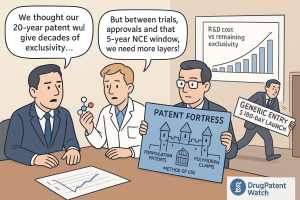
What kills small molecule programs is not bad science. It is the assumption that a single Composition of Matter (CoM) patent is sufficient protection. It is not. A single CoM patent erodes from both ends: the years consumed in clinical development eat into the 20-year nominal term, and the mere 5 years of New Chemical Entity (NCE) regulatory exclusivity granted under Hatch-Waxman is structurally insufficient to recoup investment before generic firms file Paragraph IV certifications and begin litigation.
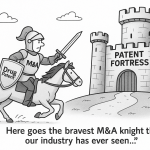
This guide is the operational playbook for IP teams, portfolio managers, R&D leads, and institutional investors who need to understand not just what a patent fortress is, but precisely how to build one, defend it globally, value it, and recognize when it is failing.
The Structural Problem: Why Small Molecules Face a Capital Efficiency Crisis
The Exclusivity Gap Between Small Molecules and Biologics
The Biologics Price Competition and Innovation Act (BPCIA) grants biologics 12 years of guaranteed regulatory exclusivity from the date of FDA approval. Small molecule NCEs get 5 years under Hatch-Waxman. That 7-year gap is not a minor regulatory wrinkle — it determines whether a drug program can support the capital structure that brought it to market.
For a $2.23 billion R&D investment, the difference between 5 and 12 years of exclusivity can represent hundreds of millions in net present value. A biologic developer has a longer runway to price at a premium, scale market penetration, and generate the revenue needed to fund the next program. A small molecule developer does not. Every year of additional exclusivity that the patent fortress generates beyond the 5-year NCE window is direct financial return.
The practical implication: small molecule IP strategy must compensate for the statutory deficit in regulatory exclusivity through aggressive, technically sophisticated layering of secondary patents. This is not evergreening in the pejorative sense — it is the mandatory use of legally available mechanisms to achieve competitive parity with the structural advantage biologics receive by statute.
The Compressed Timeline Problem
Filing a CoM patent typically happens at the lead optimization stage, often three to five years before IND filing. Clinical development for a novel small molecule averages eight to ten years. FDA review adds another one to two years. By the time the NDA is approved, 12 to 14 years of the nominal 20-year patent term are already consumed.
With 5-year NCE exclusivity on the clock from NDA approval, the practical window of dual protection — both patent and regulatory exclusivity — may be as short as 6 years. That window is the core revenue-generating period. Building and maintaining it is the purpose of every tactical decision discussed below.
Key Takeaways: The Structural Problem
The fundamental challenge for small molecule developers is that the statutory exclusivity framework awards 5 years of NCE protection, versus 12 years for biologics. Without deliberate construction of secondary patent layers, the effective commercial window after approval can be as short as 6 years. The patent fortress strategy exists to extend that window systematically, using every legally available mechanism in the Hatch-Waxman framework and its international equivalents.
Composition of Matter Patents: Getting the Foundation Right
The CoM Patent as IP Asset Anchor
The CoM patent is the most valuable single asset in the small molecule IP portfolio. It defines the novel chemical entity, triggers NCE exclusivity upon FDA approval, and is the patent most commonly cited in Orange Book listings that trigger the 30-month stay during Paragraph IV litigation.
IP valuation methodologies, including the relief-from-royalty and income approaches used by pharma M&A advisors, typically assign the CoM patent 60% to 80% of the total IP asset value for a pre-launch small molecule drug. This weighting reflects the CoM patent’s direct relationship to the drug’s ability to command branded pricing.
The three statutory requirements — novelty, utility, and non-obviousness — are all heightened by the scientific maturity of the small molecule space. Given the size of publicly accessible chemical databases (PubChem now catalogs over 111 million unique compounds), patent examiners and post-grant challengers face minimal difficulty locating prior art. Non-obviousness is where CoM applications most frequently fail or are successfully challenged in inter partes review (IPR).
Non-Obviousness: The Critical Drafting Challenge
To satisfy the non-obviousness requirement in a contested chemical space, applications should include multiple layers of evidentiary support: (a) evidence of unexpected results compared to structurally analogous prior art compounds, (b) demonstration of superior potency, selectivity, or pharmacokinetic profile relative to the closest prior art, and (c) contemporaneous documentation that the compound’s synthesis was not routine. The declaration practice under 37 CFR 1.132, where the inventor or an expert provides sworn testimony about unexpected results, is an underutilized tool that strengthens CoM claims at both the prosecution and litigation stages.
The non-obviousness argument also requires the claim to establish that the composition is a genuine chemical union — substances interacting at the molecular or atomic level — rather than a physical mixture. For combination drugs, this distinction becomes critical in litigation when generic challengers argue that the claimed combination was obvious over individual components.
Provisional Filing Strategy and the 12-Month Buffer
The provisional patent application is the single most cost-effective tool available during lead optimization. It is informal, inexpensive, and requires no formal claims. Its purpose is to establish an early priority date while the program generates the data that will support a defensible non-provisional application.
The 12-month window between provisional and non-provisional filing should be used deliberately. By the time the non-provisional is filed, the application should include preliminary in vivo data establishing efficacy in a disease model, early toxicology data that supports therapeutic index claims, stability and solubility data that demonstrates the compound’s suitability for development, and at minimum a preliminary pharmacokinetic profile demonstrating oral bioavailability if the target is an oral drug.
Each of these data categories strengthens a different element of patentability. In vivo efficacy data supports utility. Toxicology and stability data supports unexpected benefits relative to prior art. Pharmacokinetic data supports claims about specific formulations or delivery mechanisms that will be filed as secondary patents later.
The provisional filing date also anchors the patent’s priority against any subsequently published prior art, including the innovator’s own publications. A publication describing the compound before a provisional is filed creates prior art against the innovator’s own application in many jurisdictions. This is a common and avoidable error in academic-originated drug development programs.
Integrating CoM Filing into the R&D Timeline
IP milestone planning should be synchronized with R&D stage gates. The practical schedule looks like this: provisional CoM filing coincides with selection of the lead candidate from the optimization series; non-provisional conversion occurs at IND preparation, incorporating all pre-clinical data generated during the provisional window; polymorph screening initiates before first-in-human dosing; formulation development patents file after Phase 1 completion when the commercial formulation is being defined; and method-of-use patents file concurrent with the initiation of pivotal trials, as those trials define the specific indication, dose, and patient population the drug will be approved for.
This schedule is not bureaucratic box-checking. Each filing timestamp creates a priority date that determines how the patent survives an IPR challenge or an inter partes reexamination. A formulation patent filed after a competitor’s publication describing a similar formulation may not survive a prior art challenge. A formulation patent filed before that publication does.
The Patent Fortress: Secondary Patent Layers in Depth
Polymorph Patents: Technical Depth and Defensive Power
Small molecule APIs frequently exist in multiple crystalline forms. The polymorph that offers the best balance of thermodynamic stability, solubility, and manufacturability is rarely the first form characterized during synthesis. Systematic polymorph screening using high-throughput crystallization methods — varying solvents, temperatures, and supersaturation conditions — typically identifies between 5 and 20 distinct forms for a developable API.
The commercially relevant form is almost invariably the subject of a dedicated patent application. The strategic goal is not simply to protect the form used in the approved drug product, but to claim enough forms broadly enough that a generic cannot reformulate around the patent using a bioequivalent polymorph without either infringing or undertaking expensive, time-consuming alternative polymorph development.
XRPD Claim Architecture
Best-in-class polymorph patent applications use a multi-layered claim strategy. The independent claims should define the polymorph by XRPD peak positions, expressed as 2-theta values with a stated measurement tolerance, typically plus or minus 0.2 degrees. The specification should support claims at varying levels of peak specificity: a full peak list provides the broadest definition, while a short list of the five to seven most diagnostic peaks is more defensible against claims that the patentee used a non-standard analysis method.
The claims should use “characterized by” language when defining XRPD peaks, which courts have consistently interpreted as allowing the claimed polymorph to possess peaks in addition to those recited. By contrast, “consisting of” claim language limits the claim to exactly the listed peaks, which narrows the defensive scope significantly.
Complementary claims should define the polymorph using at least one additional analytical method. Fourier-transform infrared spectroscopy (FTIR), differential scanning calorimetry (DSC) thermal profiles, and solid-state NMR chemical shifts all provide independent definitions of the same physical form, increasing the claim breadth and making it harder for generic counsel to design around any single analytical claim.
Claims defining the polymorph in terms of melting point, solubility, and relative stability compared to other known forms should be included in the dependent claims. These dependent claims are rarely used in infringement analysis but serve as a reserve of claim scope during claim construction disputes.
Orange Book Listing and the 30-Month Stay Mechanism
Listing a polymorph patent in the FDA’s Orange Book has direct financial consequences. When a generic applicant files an ANDA and certifies under Paragraph IV that the listed polymorph patent is invalid or will not be infringed, and the innovator files suit within 45 days, the FDA is automatically stayed from approving the ANDA for 30 months. That stay is the primary commercial purpose of Orange Book listing.
At an average branded revenue for a successful small molecule drug of $2 billion to $6 billion annually, a 30-month stay is worth between $5 billion and $15 billion in protected revenue before accounting for price erosion from subsequent generic entry. Even partial litigation success — winning on some patents while losing on others — can extend the effective exclusivity window by 12 to 24 months beyond the core patent expiry.
The decision to list a patent in the Orange Book carries legal obligations. Under the Medicare Prescription Drug, Improvement, and Modernization Act (MMA) of 2003, listing a patent that does not properly claim the approved drug product constitutes an improper listing and can be challenged through the FDA’s dispute resolution mechanism. IP teams must verify that each listed patent genuinely claims the approved NDA drug product, which is a higher evidentiary standard than simply claiming the API.
IP Valuation: Polymorph Patent Premium
For drugs approaching their primary CoM patent expiry, polymorph patents represent the residual IP asset value. In pharma M&A transactions, acquirers of products with validated Orange Book-listed polymorph patents assign a premium of 15% to 25% to the enterprise value relative to equivalent products whose exclusivity rests solely on the expiring CoM patent, given the additional litigation-triggered protection the polymorph patents provide.
Formulation Patents: Unexpected Benefit and the European Standard
Formulation patents protect the specific composition of the final drug product: the ratio of active ingredient to excipients, the specific excipients selected, coatings, and the delivery mechanism. Extended-release formulations, modified-release tablets, and novel particle engineering approaches (such as amorphous solid dispersions or nanoparticle formulations) are the most commercially durable formulation patents because they are hardest for generic manufacturers to replicate without either infringing the patent or compromising bioequivalence.
The legal standard for formulation patentability in the US is novelty and non-obviousness. In Europe, the standard also requires the formulation to provide a technical effect not already known from the prior art, often referred to as the “unexpected benefit” requirement. For European prosecution, the application must include comparative dissolution data, pharmacokinetic data from bioavailability studies, or patient compliance data demonstrating that the new formulation is genuinely superior to the previous state of the art.
This creates a useful strategic asymmetry. A formulation patent supported by a robust comparative clinical study showing improved patient outcomes can survive challenges in both US and European courts, because the clinical data satisfies the non-obviousness requirement in the US and the unexpected benefit standard in Europe simultaneously. Formulation patents supported only by in vitro dissolution data frequently fail in European opposition proceedings.
Extended-Release Formulation as Lifecycle IP
The conversion of a twice-daily immediate-release formulation to a once-daily extended-release formulation is the most common formulation lifecycle management strategy. AstraZeneca’s Nexium (esomeprazole), the S-enantiomer of Prilosec (omeprazole), is the archetype: by developing and patenting the pure enantiomer as the approved product approached patent expiry, AstraZeneca converted a $6 billion drug into a new asset with a fresh patent term, generating approximately $5 billion in annual peak sales.
The strategic value of extended-release formulations extends beyond the patent itself. A new formulation that requires a new NDA or supplemental NDA, supported by new clinical studies, qualifies for 3-year New Clinical Investigation exclusivity. This exclusivity runs concurrent with or supplements the existing CoM patent, providing a second statutory barrier to generic entry.
Combination Drug Patents
Combination patents cover fixed-dose combinations of two or more active pharmaceutical ingredients into a single dosage form. In cardiovascular disease, fixed-dose combinations of an ACE inhibitor and a calcium channel blocker, or a statin and a cholesterol absorption inhibitor such as Vytorin (ezetimibe/simvastatin from Merck and Schering-Plough), reflect this strategy. In oncology, targeted therapy combinations such as Pfizer’s Ibrance (palbociclib) combined with aromatase inhibitors are protected by combination-use patents that remain valid after individual CoM patents expire.
A well-drafted combination patent should claim the fixed-dose combination itself, the method of treating the target disease with the combination, the specific dosing ratio if it is non-obvious over individual component doses, and the specific pharmaceutical composition that delivers both components in a bioavailable form. Each of these claim types represents a separate Orange Book listing opportunity and a separate Paragraph IV litigation trigger.
Method of Use and Treatment Patents: The Indication Expansion Strategy
Method of use patents protect specific therapeutic applications of the drug. They are the most versatile secondary patent type because a molecule approved in one indication can generate entirely new method patents when investigators identify new applications, new biomarker-defined patient populations, or new dosing regimens that were not part of the original NDA.
Revlimid (lenalidomide from Bristol-Myers Squibb, originally Celgene) exemplifies the strategy. Originally approved for myelodysplastic syndrome in 2005, Revlimid accumulated method patents covering its use in multiple myeloma, mantle cell lymphoma, and specific combination regimens with dexamethasone and bortezomib. Each new indication triggered a new NDA or supplemental application, generating 3-year exclusivity for each modification supported by new clinical studies. By 2022, when Revlimid generics finally began entering the market following litigation settlements, the drug had generated over $21 billion in annual global sales at its peak.
Biomarker-Defined Patient Population Claims
The increasing use of companion diagnostics in oncology creates a structurally durable method patent: a claim that covers treatment of patients who test positive for a specific biomarker using the claimed drug. AstraZeneca’s Tagrisso (osimertinib) is protected by method patents tied to its EGFR T790M mutation testing companion diagnostic. Because the method claims require a specific diagnostic step before administration, a generic manufacturer who wants to offer the drug for this indication must either design around the method claim or offer the drug only for unlabeled uses, which creates market access barriers independent of the branded price.
The legal risk in diagnostic method claims is split infringement. When the diagnostic step is performed by a clinical laboratory under CLIA certification and the administration step is performed by a physician, no single party performs all steps of the claimed method. Federal Circuit precedent under Akamai Technologies v. Limelight Networks requires either a single party performing all steps, or one party directing and controlling the performance of the others to establish infringement. Drafting claims that place the commercially critical steps — specifically the administration of the drug and the resulting therapeutic outcome — within the acts of a single party (the treating physician) mitigates this risk.
New Dosing Regimen Patents and 3-Year Exclusivity
A new dosing regimen supported by new clinical studies qualifies the NDA applicant for 3-year New Clinical Investigation exclusivity. This exclusivity protects only the new information in the approval — the new dose, the new dosing frequency, or the new patient population — not the entire drug. Generic firms can continue to pursue approval for previously approved indications. But if the new dosing regimen represents the majority of commercial use of the drug (as is the case when a drug shifts from a prior indication to a more prevalent indication), the 3-year exclusivity window is commercially significant.
Gilead’s Truvada (emtricitabine/tenofovir disoproxil fumarate) offers an example. Originally approved for HIV treatment in 2004, Gilead’s clinical studies demonstrating Truvada’s efficacy for HIV pre-exposure prophylaxis (PrEP) generated a new 3-year exclusivity period when the PrEP indication was added to the label in 2012. That exclusivity extended profitable branded sales into a massive new market.
Process Patents: Manufacturing as a Moat
Process patents claim the specific synthetic route, purification method, or manufacturing process used to produce the API or finished dosage form, rather than the product itself. Process patents do not prevent generic manufacturers from selling the same API using a different synthesis route, but they create economic and technical barriers to entry that are often underestimated.
Consider the asymmetry: the innovator’s process patent protects a manufacturing route developed over years of process chemistry optimization. A generic manufacturer must develop an alternative route that avoids all claims of the process patent. That route validation takes 18 to 36 months, requires a Process Analytical Technology (PAT) package for FDA filing, and may introduce different impurity profiles that complicate bioequivalence demonstration. For drugs with complex synthesis routes, such as the macrolide antibiotics or many kinase inhibitors, the process patent moat is substantial.
Pfizer’s Lipitor (atorvastatin) process patents, covering the stereospecific synthesis of the active form of atorvastatin, were vigorously litigated when Ranbaxy challenged them as part of the Paragraph IV campaign that ultimately resulted in the 2011 generic entry settlement. The settlement terms, which gave Ranbaxy 180-day exclusivity and authorized generic status, were partly shaped by the strength of Pfizer’s process patent portfolio, which imposed manufacturing costs on generic entry that influenced the settlement economics.
Tertiary Patents: Device Coupling and Product-Device Integration
Tertiary patents couple an off-patent or near-expiry API with a proprietary drug delivery device. This strategy is most prevalent in inhaled respiratory drugs and injectable biologics, but it applies equally to small molecule programs where the device is the differentiator.
AstraZeneca’s Symbicort (budesonide/formoterol) and the associated Turbuhaler inhaler device are protected by a combination of drug substance patents, formulation patents for the specific dry powder formulation, and device patents on the Turbuhaler’s metering mechanism. Even as individual drug substance patents expire, the device patents create a practical barrier to interchangeable generic substitution, because a generic inhaler must demonstrate therapeutic equivalence using the same or equivalent device.
For IP teams building fortress strategies for injectable small molecules, the auto-injector device design presents an analogous opportunity. A proprietary auto-injector design protected by device patents, combined with a drug product patent for the specific fill formulation, creates a barrier to generic substitution that is distinct from the drug patents and that survives the drug patent cliff.
Regulatory Engineering: The Full Hatch-Waxman Toolkit
NCE Exclusivity: The Mechanics and the Loopholes
New Chemical Entity (NCE) exclusivity, codified at 21 U.S.C. 355(c)(3)(E)(ii) and (j)(5)(F)(ii), grants 5 years of protection from ANDA and 505(b)(2) application submission for drugs containing no active moiety previously approved by the FDA. The exclusivity runs from the NDA approval date.
The definition of “active moiety” matters. An active moiety is the molecule or ion responsible for the physiological or pharmacological action of the drug substance. An ester, salt, or other non-covalent derivative of a previously approved active moiety does not qualify as a new active moiety and therefore does not generate NCE exclusivity. This is the reason that many reformulation strategies — such as converting a free acid to its sodium salt — cannot generate 5-year NCE protection.
The NCE bar drops to four years when a generic applicant submits an ANDA with a Paragraph IV certification, meaning the generic can challenge listed patents starting in year four. This creates the four-year/five-year analytical distinction that IP teams must track: a Paragraph IV filing in year four, with a 45-day triggering window for the innovator to file suit and secure the 30-month automatic stay, means the stay may expire before NCE exclusivity ends. When the stay and NCE exclusivity overlap perfectly, the innovator has maximum insulation. When the stay expires before NCE exclusivity ends, the FDA cannot act on the ANDA until NCE exclusivity expires anyway. The goal is to ensure that at least one patent-based stay extends beyond the NCE expiry date.
Patent Term Extension: The 14-Year Cap and Strategic Prosecution
Patent Term Extension (PTE) is codified at 35 U.S.C. 156. It compensates for time lost during mandatory pre-clinical, clinical, and regulatory review. The maximum PTE is 5 years, and the extension cannot cause the effective patent term remaining after FDA approval to exceed 14 years.
The 14-year effective term cap is the constraining variable in PTE strategy. The effective patent term remaining after approval equals the remaining patent life (20 years from filing minus time elapsed at approval) plus PTE. If a CoM patent files before the IND and the drug takes 15 years from IND to NDA approval, the patent may issue relatively early, consuming most of its nominal 20-year term during development. In that scenario, the PTE calculation can generate the full 5-year extension without hitting the 14-year cap.
Conversely, a patent that issues very close to NDA approval — perhaps due to extended prosecution — may trigger the 14-year cap and limit the PTE benefit to far less than 5 years. Aggressive prosecution timelines for foundational patents are therefore commercially necessary, not just procedurally optimal.
Only one patent per approved product may receive PTE. The innovator must elect the most commercially valuable patent for PTE, typically the CoM patent if it has the most remaining term, or a secondary patent if the CoM patent’s remaining term is already substantial. This election requires a quantitative analysis comparing the projected revenue contribution of different patents across the post-approval exclusivity period.
Patent Term Adjustment: Prosecuting for Maximum Term
Patent Term Adjustment (PTA) compensates for USPTO administrative delays under 35 U.S.C. 154(b). PTA is calculated as a day-for-day addition to the nominal 20-year patent term, accruing when the USPTO fails to meet its statutory response deadlines, when prosecution extends due to appeals, and in other defined circumstances.
PTA and PTE interact. Under the Hatch-Waxman rules, the PTE calculation uses the patent’s expiration date, including any PTA. This means PTA can extend the PTE calculation period, potentially generating more PTE. However, the 14-year effective term cap still applies to the combination of remaining term (including PTA) plus PTE.
Practitioners at firms including Akin Gump have documented cases where the PTA-plus-PTE interaction required an explicit election between maximizing PTA and maximizing PTE, with the optimal choice depending on whether the 14-year cap would be binding. IP teams should model both scenarios before deciding whether to pursue accelerated examination (which reduces PTA but may allow earlier issuance and more PTE runway) or extended prosecution (which builds PTA but may approach the cap).
Orphan Drug Exclusivity: The 7-Year Window
Orphan Drug Exclusivity (ODE) under the Orphan Drug Act grants 7 years of exclusivity from the date of NDA approval for drugs treating rare diseases affecting fewer than 200,000 persons in the US. ODE bars the FDA from approving a subsequent NDA or ANDA for the same drug for the same rare disease for the 7-year period.
The strategic value of ODE for small molecules is its independence from the patent system. ODE runs regardless of whether the drug is on-patent, off-patent, or facing Paragraph IV challenges. For a drug with a narrow CoM patent that is aging out, ODE can provide 7 years of effective commercial exclusivity that no patent challenge can shorten.
Bristol-Myers Squibb’s Revlimid accumulated ODE for multiple myeloma as part of the same lifecycle management strategy that generated multiple method patents. When generic challengers and regulators examined Revlimid’s intellectual property before the 2022 settlement-authorized generic entry, ODE was one of the most durable barriers in the portfolio because it is a regulatory exclusivity that cannot be invalidated through IPR or litigation.
The ODE strategy requires early identification of rare disease indications during development. Phase 2 oncology programs in rare hematologic malignancies routinely receive orphan designation before Phase 3 initiation, generating 7-year ODE at the time of initial approval. This adds 7 years of protected branded revenue to the drug’s commercial window before even factoring in the broader indication development strategy.
The 180-Day Generic Exclusivity: Understanding the Adversary’s Incentive
The first ANDA applicant to file a substantially complete ANDA with a Paragraph IV certification receives 180 days of generic exclusivity, during which no other generic may obtain final ANDA approval. This incentive drives the Paragraph IV challenge business model: the first generic to successfully challenge the innovator’s patents captures a temporary monopoly on generic sales before competition from other generic manufacturers begins.
The financial math for a successful first-filer is compelling. On a drug with $4 billion in annual US sales, the first generic to market typically prices at 80% of the branded price for the 180-day exclusivity period, before further generics enter and price competition drives the market price to 15% to 20% of the branded benchmark. That 180-day window generates revenue of approximately $800 million to $1.6 billion depending on market uptake speed.
Understanding the adversary’s incentive structure is indispensable for fortress strategy. Generic firms prioritize Paragraph IV challenges against drugs with the highest US revenue, the weakest or narrowest patent portfolios, and the soonest primary patent expiry. IP teams should assess their portfolio against each of these dimensions annually. Drugs where the only Orange Book-listed patent is the expiring CoM patent, with no secondary patents listed, are high-priority targets for Paragraph IV challenges because the litigation risk to the generic challenger is low and the financial reward is high.
Key Takeaways: The Hatch-Waxman Toolkit
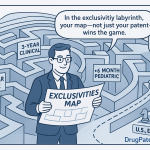
The regulatory toolkit available under Hatch-Waxman extends well beyond NCE exclusivity. PTE, PTA, ODE, Pediatric exclusivity, and the 3-year new clinical investigation exclusivity each provide independent, non-patent sources of commercial protection. None of them requires winning a patent litigation. All of them require proactive filings, dedicated clinical investment, or specific designation applications. An IP team that tracks only patent expiry dates and ignores the regulatory exclusivity map is leaving money on the table.
India’s Section 3(d): The Global IP Wildcard
The Statutory Language and Its Intent
Section 3(d) of the Indian Patents Act, 1970 excludes from patentability “the mere discovery of a new form of a known substance which does not result in the enhancement of the known efficacy of that substance.” The accompanying Explanation creates a legal presumption that polymorphs, salts, esters, ethers, metabolites, and other derivatives of a known substance are the “same substance” unless they demonstrate a significant enhancement of efficacy.
The statute was drafted explicitly to prevent the filing of secondary patents on minor modifications of known drugs as a means of extending market exclusivity. India’s Constitution and the Doha Declaration on TRIPS and Public Health both informed this legislative choice, which prioritizes access to medicines for a population of 1.4 billion people over the commercial interests of innovator pharmaceutical companies. This is not an obscure technicality — it is the considered policy of the world’s largest country by prescription volume.
Novartis v. Union of India: The Controlling Precedent
The Indian Supreme Court’s 2013 judgment in Novartis AG v. Union of India resolved the most consequential Section 3(d) dispute to date. Novartis sought to patent the beta crystalline form of imatinib mesylate, the API in Gleevec (marketed as Glivec in India), a breakthrough treatment for chronic myeloid leukemia. Novartis argued that the beta crystalline form had superior bioavailability compared to imatinib free base, and that this bioavailability advantage demonstrated enhanced efficacy sufficient to clear the Section 3(d) bar.
The Supreme Court rejected this argument. The Court held that for pharmaceutical substances, “efficacy” under Section 3(d) means only “therapeutic efficacy” — the clinical ability of the drug to treat the target disease. Improved bioavailability, thermodynamic stability, flow properties, or other physicochemical advantages are not “efficacy” within the meaning of the statute unless they demonstrably translate into superior clinical outcomes for patients.
The practical consequences for global IP strategy are substantial. The beta crystalline form of imatinib mesylate exhibited 30% greater bioavailability than the free base. In most jurisdictions, a 30% bioavailability improvement would constitute compelling evidence of unexpected benefit. The Indian Supreme Court said that 30% bioavailability improvement, without clinical evidence of superior patient outcomes, does not clear the Section 3(d) bar.
What Evidence Clears Section 3(d)
Post-Novartis, Indian patent practice for secondary pharmaceutical claims requires clinical evidence of therapeutic superiority. The standard is high and fact-specific. Evidence that has been accepted in Indian proceedings includes comparative Phase 3 data demonstrating significantly higher response rates, clinical trial data showing reduced adverse event frequency or severity leading to better treatment tolerability, pharmacodynamic data demonstrating that the claimed form reaches the therapeutic target more effectively (not just more rapidly), and post-marketing studies demonstrating clinically meaningful differences in patient outcomes.
Evidence that is insufficient on its own includes in vitro dissolution data showing faster release, single-dose pharmacokinetic studies showing higher Cmax or AUC without clinical correlation, stability data showing the claimed form resists degradation better, and bioequivalence studies that are designed to prove equivalence (not superiority) of the claimed form.
Compulsory Licensing: The Escalation Risk
India’s Patents Act includes broad compulsory licensing provisions under Section 84. If a patented drug has not been made available to the public at a reasonably affordable price, or if the reasonable requirements of the public with respect to the patented invention have not been satisfied, any person may apply for a compulsory license three years after the patent’s grant.
The 2012 compulsory license granted to Natco Pharma for sorafenib (Bayer’s Nexavar) at one-ninety-seventh of Bayer’s Indian price was the first such grant in India. The Intellectual Property Appellate Board and High Court proceedings that followed established that Bayer had failed to work the patent in India and had priced the drug beyond the reach of the Indian patient population. The compulsory license required Natco to pay Bayer a 6% royalty on net sales.
For IP teams planning global launches of high-value specialty small molecules, the Indian compulsory licensing risk is a quantifiable variable. Drugs priced above approximately 30,000 to 50,000 Indian rupees ($360 to $600 USD) per month of treatment are structurally exposed to compulsory licensing applications. Risk mitigation strategies include voluntary licensing to Indian manufacturers at differential pricing, access program establishment before commercial launch, and active engagement with the Indian patent office during prosecution to avoid filing weak secondary patents that invite challenge litigation.
Key Takeaways: The India Section 3(d) Challenge
Polymorph and formulation patents in India survive only if supported by clinical evidence of therapeutic superiority, not physicochemical improvement alone. The Novartis precedent is binding. IP teams filing secondary patents in India must budget for comparative clinical studies that generate this evidence. If the drug’s global price point exposes it to compulsory licensing risk, proactive access programs are a more effective risk mitigation tool than litigation.
IP Litigation: The Federal Circuit Cases Shaping Small Molecule Strategy
Written Description and Enablement After Entresto
The Federal Circuit’s January 2025 decision in Novartis Pharmaceuticals Corp. v. Torrent Pharma Inc. and related cases involving Entresto (valsartan/sacubitril) resolved a question that had created uncertainty for early-stage CoM filers: does the written description requirement demand that the patent specification describe the specific, commercially optimized form of the claimed composition, or only the subject matter that is actually claimed?
Entresto’s commercial formulation is a proprietary sacubitril:valsartan complex called LCZ696, an anionic complex combining the two compounds in a 1:1 molar ratio that was developed years after the original patent was filed. The filed patent claimed the combination of valsartan and sacubitril broadly, without describing the complex. Generic challengers argued that the written description was inadequate because the specification did not describe the LCZ696 complex that Novartis ultimately commercialized.
The Federal Circuit reversed the district court’s invalidity finding. The Court held that the written description requirement asks whether the specification demonstrates that the inventors possessed what they claimed, not what they commercialized. Novartis claimed a broad pharmaceutical composition combining valsartan and sacubitril. The specification fully described that combination and its therapeutic rationale. The LCZ696 complex was a superior, later-developed implementation of that claimed combination, but it was not itself claimed in the patent. The written description for what was claimed — the broad combination — was adequate.
The practical implication for small molecule IP strategy is clear. Filing broad CoM claims at the lead optimization stage, before the optimal commercial formulation is known, is a legally sound strategy under the Entresto precedent. The specification does not need to describe every subsequent optimization that will occur during development. It needs to describe the claimed subject matter adequately. This means early, broad filing is both strategically preferable (it establishes the earliest possible priority date) and legally defensible (it does not require description of after-arising technology).
IPR Challenges and the Vulnerability of Secondary Patents
Inter partes review (IPR) before the Patent Trial and Appeal Board (PTAB) has become the primary instrument for generic and biosimilar companies to challenge pharmaceutical patents without the cost structure of district court litigation. Since AIA implementation in 2012, over 4,000 pharmaceutical patent IPR petitions have been filed, and institution rates for pharmaceutical patents have historically exceeded 60%.
Polymorph patents are particularly vulnerable to IPR challenges on obviousness grounds. The challenge structure typically argues that: (a) polymorph screening was routine in the art at the time of filing, (b) a person skilled in the art would have been motivated to screen for alternative polymorphs of the known compound, and (c) the successful isolation of a specific polymorph is an expected result of routine experimentation, not a non-obvious discovery.
The counterarguments that survive IPR most reliably combine evidence of unexpected properties (superior stability or solubility that was not predictable from known forms), contemporaneous documentation of failed attempts to find suitable polymorphs, and expert testimony establishing that the specific polymorph’s properties were genuinely surprising to practitioners in the field at the time of filing.
Formulation patents have a better survival record in IPR, particularly when supported by clinical data. A formulation patent with data showing that the specific formulation achieves a clinically significant improvement over previously known formulations is difficult to invalidate on obviousness grounds, because the challenger must show that the specific combination of excipients and their ratios would have been obvious to try and would have been expected to succeed. When the formulation improvement required multiple rounds of screening and optimization, this expectation-of-success argument typically fails.
Jurisdictional Selection for Litigation and Enforcement
Pharmaceutical patent litigation strategy increasingly accounts for forum selection at both the US district court and international levels. In the US, the District of Delaware and the District of New Jersey handle the majority of Hatch-Waxman cases. Delaware has a specialized patent litigation bar, experienced judges with pharmaceutical patent backgrounds, and a reputation for predictable, technically sophisticated rulings. The Western District of Texas, which handled a large volume of pharmaceutical cases after the NHK-Fintiv decisions encouraged filing there, has become less favorable following Federal Circuit rulings limiting patent-friendly transfer denials.
Internationally, the Unified Patent Court (UPC), which became operational for European patents in June 2023, creates a new dynamic for pan-European pharmaceutical patent enforcement and challenges. A single UPC revocation action can invalidate a European patent’s coverage across all participating member states simultaneously, creating a risk concentration that did not exist under the prior national court system. Innovators should assess whether UPc opt-out procedures for European pharmaceutical patents represent a risk management tool worth exercising.
In Germany, the Dusseldorf and Mannheim district courts both maintain specialized chambers for patent matters. German courts apply a “bifurcated” system in which infringement and validity are tried separately, and German courts have traditionally granted injunctions on finding infringement without awaiting the outcome of parallel nullity proceedings. This creates leverage for innovators in German enforcement actions that does not exist in US proceedings.
IP as Competitive Intelligence: Patent Landscape Analysis in Practice
Patent Landscape Analysis: Beyond Patent Counting
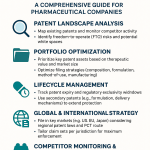
Patent Landscape Analysis (PLA) is the systematic mapping of all relevant patents in a defined technology space. In small molecule drug development, a well-executed PLA does four things that a simple patent count cannot. First, it identifies which specific claim types (CoM, polymorph, formulation, method) dominate the technology space, signaling which defensive strategies competitors prioritize. Second, it maps geographic filing patterns, revealing which markets competitors consider commercially critical and where enforcement gaps exist. Third, it identifies technology clusters where multiple companies are filing, indicating high-value, contested areas, versus white spaces where IP can be established with less litigation risk. Fourth, it tracks assignee activity over time, exposing emerging competitors and acquisition targets before their programs are publicly visible in clinical trial registries.
PLA data generates the greatest analytical value when integrated with commercial datasets. A patent cluster in a technology space with validated Phase 3 efficacy data and large addressable market size is a different signal from the same patent cluster in a technology space with no clinical validation. Platforms that integrate Orange Book data, clinical trial registrations, regulatory exclusivity schedules, and patent term expiry dates allow analysts to build a complete competitive map that informs both R&D prioritization and M&A targeting.
Freedom-to-Operate as Offensive Intelligence
Freedom-to-Operate (FTO) analysis maps the patent landscape for a specific compound and indication to determine whether a proposed drug program would infringe any existing patents. The standard FTO deliverable is a risk assessment. But the raw output of an FTO exercise — a comprehensive map of all third-party patents in the target space — is also a competitive intelligence asset.
An FTO analysis that identifies a competitor’s expiring process patent reveals a manufacturing opportunity. An FTO analysis that maps a competitor’s method patents by indication reveals the indications they have not yet claimed and where a new filing could create a blocking position. An FTO analysis that identifies a gap in a competitor’s polymorph coverage reveals a formulation development opportunity.
Generic manufacturers have operationalized this approach aggressively. Teva Pharmaceutical Industries, Sun Pharmaceutical Industries, and Mylan (now Viatris) each maintain dedicated pharmaceutical IP intelligence teams whose primary function is FTO analysis applied offensively — identifying innovator patent vulnerabilities that support Paragraph IV challenge decisions.
For innovators, the same methodology applies in reverse. Tracking which patents competitors are filing for drugs in your therapeutic area tells you where they are investing, what new indications or formulations they consider commercially viable, and when their programs will compete directly with yours.
M&A Diligence: IP Valuation in Pharma Transactions
In pharmaceutical and biotech M&A, IP is the primary asset being acquired. The valuation methodologies most commonly applied are the income approach (risk-adjusted net present value of projected cash flows over the IP-protected exclusivity period) and the relief-from-royalty approach (the hypothetical royalty the acquirer would pay to license the IP rather than own it, capitalized over the remaining IP term). Both approaches require detailed inputs: patent-by-patent expiry dates, probability of surviving litigation, regulatory exclusivity schedules by market, and projected generic entry timing in each major market.
Surface-level IP diligence that relies on the seller’s Orange Book listing and does not include independent FTO analysis and IPR vulnerability assessment consistently misvalues target assets. A drug with a robust CoM patent but polymorph patents vulnerable to IPR is worth less than its nominal exclusivity schedule suggests, because a successful IPR on the polymorph patents removes the 30-month stay protection that supplements the CoM patent’s protection after year 15 of the drug’s commercial life.
Acquirers who conduct full patent validity assessments — not just expiry date mapping — typically identify 15% to 25% discounts to headline exclusivity-based valuations in competitive landscapes where the target’s secondary patents are narrow or likely vulnerable. This valuation discipline is a competitive advantage in competitive auction processes where other bidders may be relying on face-value exclusivity schedules.
Key Takeaways: IP as Competitive Intelligence
Patent Landscape Analysis, FTO analysis, and M&A IP diligence are not compliance exercises. They are competitive intelligence tools that identify where competitors are investing, where patent vulnerabilities can be exploited, and how to assign accurate value to IP assets. Teams that integrate patent data with clinical and commercial datasets extract materially better strategic decisions than teams that analyze IP in isolation.
AI-Assisted Drug Discovery: The Inventorship Problem
How AIDD Programs Create Inventorship Risk
Artificial intelligence drug discovery (AIDD) platforms, including Insilico Medicine’s Chemistry42, Recursion Pharmaceuticals’ OS platform, and Schrödinger’s FEP+ computational suite, have become standard tools in small molecule lead identification and optimization. These platforms generate compound libraries, predict binding affinities, and suggest structural modifications with a level of output that would have required dozens of medicinal chemists working for years a decade ago.
The USPTO guidance issued in February 2024 on AI-assisted inventions reaffirmed that patents may only name natural persons as inventors. The critical legal question is not whether AI was used, but whether the human contribution rises to the level of conception — the mental formulation of a definite and permanent idea of the complete and operative invention. If the AI system conceived the claimed compound and the human’s role was limited to executing the synthesis and confirming activity, the USPTO’s position is that there is no human inventor and therefore no patentable invention.
This creates a direct commercial risk. A portfolio of small molecule patents covering AIDD-discovered compounds where the inventorship documentation does not clearly establish human conception may be invalid for failure to name a natural-person inventor. In litigation, an invalidity defense based on AIDD inventorship could reach the discovery phase, where internal emails, lab notebooks, and platform usage logs documenting the actual research workflow would be produced. If those documents show that the AI system generated the compound structure and the human’s contribution was selection and synthesis, the patent is vulnerable.
What Constitutes Sufficient Human Contribution
The standard the USPTO applies is whether the human made “a significant contribution to each claim.” In the AIDD context, this standard requires more than selecting a compound from an AI-generated list for synthesis and testing.
Human contributions that have been recognized as sufficient include: materially modifying an AI-suggested scaffold based on independent knowledge of the target’s binding site architecture, not merely because the AI ranked the modified structure higher; independently identifying a structural feature that the AI’s training data did not include and that produced unexpected activity; designing a specific prodrug modification to the AI-suggested compound to address a metabolic liability identified through independent mechanistic analysis; and synthesizing a novel analog that was not generated by the AI but was conceived based on the AI’s output in combination with the scientist’s own structural analysis.
Human contributions that are likely insufficient include: selecting the highest-scoring compound from an AI-generated ranking without independent modification; synthesizing a compound exactly as specified by the AI platform’s output; and making minor changes to the AI-suggested structure that were themselves suggested by the AI’s optimization algorithm.
Organizational Protocols for AIDD IP Protection
IP-protective AIDD research practice requires contemporaneous documentation of the boundary between AI output and human contribution. Each compound’s research record should document: the exact output of the AI platform at the relevant step, specifying compound structure, score, and ranking; the human scientist’s independent analysis of that output, including any structural features identified as targets for modification and the scientific rationale for the proposed modification; the modification made by the human scientist, clearly distinguished from the AI-generated structure; and the subsequent activity data that confirms the human’s conceptual contribution improved the compound.
This documentation practice requires a workflow change. The default in most AIDD programs is to document what the AI generated and what was synthesized, because those are the data points that advance the program. Documenting why a human scientist departed from the AI’s suggestion, and what specific knowledge drove that departure, is not the default. It needs to be a required element of the research record.
R&D organizations that have deployed AIDD platforms should conduct retrospective audits of existing compound portfolios to assess inventorship documentation quality before those compounds reach the patenting stage. Compounds where the documentation does not establish adequate human contribution should be subject to additional development work — material modification, further optimization, analog synthesis — that generates a defensible inventorship record.
Key Takeaways: AIDD and Inventorship
AI-generated compounds without documented human conceptual contribution cannot be patented under current USPTO guidance. The risk is not theoretical — it surfaces in litigation discovery. R&D organizations using AIDD platforms must implement contemporaneous documentation protocols that clearly record the boundary between AI output and human invention. The standard required is not synthesis of an AI-suggested compound; it is material modification based on independent human expertise.
Investment Strategy: Portfolio Assessment for Analysts and Portfolio Managers
Assessing Small Molecule Patent Portfolio Durability
Portfolio managers evaluating pharmaceutical assets should assess five dimensions of patent portfolio durability that standard equity research coverage typically underweights.
The primary CoM patent’s effective remaining term, accounting for both PTA and potential PTE, should be modeled with the 14-year effective term cap as a binding constraint where applicable. The secondary patent layer — specifically whether polymorph and formulation patents are Orange Book-listed and whether they have survived or are likely to survive IPR — determines whether the 30-month stay mechanism provides additional protection beyond the CoM expiry. The regulatory exclusivity schedule, including NCE expiry, ODE if applicable, Pediatric exclusivity if pursued, and any 3-year new clinical investigation exclusivities from recent label expansions, maps the FDA-enforced portion of exclusivity. The global IP position in major revenue markets — EU, Japan, China, and India — requires jurisdiction-specific analysis, as Section 3(d) in India, strict EPO written description standards, and CNIPA post-grant challenge procedures create market-specific risks. The Paragraph IV challenge history, including the number of active ANDA filers, the specific patents challenged, and the stage of any pending litigation, directly measures the defensive durability of the portfolio.
Timing Generic Entry: The Analyst’s Map
Generic entry timing is the single most important variable in small molecule drug valuation. The consensus approach of modeling generic entry at primary CoM patent expiry systematically overstates exclusivity for drugs with weak secondary patent protection and understates it for drugs with fortress portfolios that generate multiple 30-month stays.
A rigorous generic entry model assigns probability weights to each potential entry event: primary CoM expiry triggers generic entry with probability near 1 unless a secondary patent provides continued protection; each Orange Book-listed secondary patent triggers a Paragraph IV challenge probability based on the drug’s revenue level and patent vulnerability; each Paragraph IV challenge with litigation triggers a 30-month stay, which may be extended or terminated based on court rulings; and litigation settlement terms, including authorized generic provisions, may accelerate or delay generic entry relative to the patent schedule.
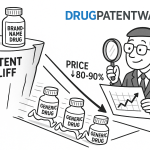
The revenue impact model then applies the modeled generic entry timing to the projected branded revenue curve, discounting by the expected generic price erosion rate — typically 70% to 85% within 12 months of generic entry for branded small molecule drugs without authorized generic programs.
Key Takeaways: Investment Strategy
The durability of a small molecule patent fortress is a financial variable, not just a legal one. Every additional month of exclusivity generated by a secondary patent, a regulatory exclusivity, or a successful Paragraph IV defense represents directly recoverable revenue. Analysts and portfolio managers who model generic entry conservatively — at primary CoM patent expiry — and who do not probability-weight the secondary patent layer consistently undervalue branded pharmaceutical assets with strong fortress strategies and overvalue assets whose apparent exclusivity rests on narrow, IPR-vulnerable secondary patents.
Key Takeaways: The Complete Framework
The small molecule patent fortress is not a single strategy. It is an integrated system of coordinated IP filings, regulatory exclusivity applications, and global enforcement decisions that collectively extend the commercial window beyond what any individual patent could achieve.
The CoM patent is the anchor. It defines the active moiety, triggers NCE exclusivity, and is the primary target of Paragraph IV challenges. Drafting it with robust non-obviousness evidence and filing it at the earliest possible stage — backed by provisional filing during lead optimization — establishes the priority date that all subsequent secondary patents depend on.
The secondary patent layer, built from polymorph patents, formulation patents, method-of-use patents, process patents, and device patents, creates the legal barriers that transform a 5-year NCE exclusivity window into a 10 to 15-year effective commercial monopoly. Each secondary patent that is Orange Book-listed and survives litigation represents millions to billions in protected branded revenue.
The regulatory toolkit, from PTE and PTA to ODE and 3-year new clinical investigation exclusivity, provides statutory barriers that no patent challenge can remove. These mechanisms require proactive applications and clinical investment, but they generate exclusivity that is litigation-proof.
The global IP map requires jurisdiction-specific strategies. India’s Section 3(d) demands clinical evidence of therapeutic superiority for secondary patents. The UPC creates new pan-European enforcement and challenge risks. Each major market needs its own analysis.
Patent intelligence, applied through systematic PLA, FTO analysis, and IPR vulnerability assessments integrated with commercial data, is what converts a static patent portfolio into an active competitive advantage. The teams that read the competitive landscape most accurately — tracking competitor expiry cliffs, identifying Paragraph IV challenge candidates, and executing M&A diligence with rigorous IP valuation — extract the most commercial value from the fortress they have built.
All drug names, company names, litigation cases, and regulatory data referenced in this article are factual and drawn from public records, FDA databases, Federal Circuit opinions, Indian Supreme Court judgments, and publicly disclosed M&A transactions.