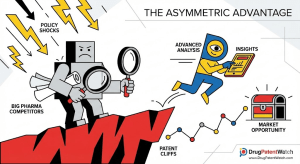
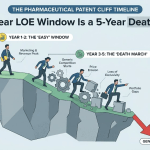
The global pharmaceutical sector is currently navigating a period of structural volatility that is unprecedented in its history. The convergence of the “patent super-cliff”—a seismic event threatening hundreds of billions in revenue between 2026 and 2030—with the aggressive price negotiation mandates of the Inflation Reduction Act (IRA) and the rapid maturation of agentic artificial intelligence has fundamentally altered the competitive landscape.1 In this environment, the traditional function of competitive intelligence (CI) as a passive reporting mechanism is not merely inefficient; it is obsolete. CI has evolved into the central nervous system of the biopharmaceutical enterprise, shifting from a discipline of static observation to one of dynamic simulation.1
The stakes of intelligence failure have never been higher. Industry data indicates that 56% of drug launches fail to meet their pre-launch expectations, a statistic that climbs to 60% in competitive therapeutic spaces.3 These failures are rarely attributable to clinical inefficacy alone; rather, they stem from a “blind spot” in market understanding—a failure to anticipate the “access friction” created by rebate walls, the agility of 505(b)(2) competitors, or the nuance of physician prescribing behavior.3 Conversely, companies that master the art of asymmetric analysis—leveraging regulatory pathways and intellectual property (IP) thickets as offensive weapons—can secure monopolies that endure years beyond the expiration of their primary patents.4
This report synthesizes data from over 200 sources to establish a rigorous framework for navigating these challenges. It posits that the distinction between market strategy, regulatory foresight, and R&D prioritization has dissolved. Executives must now grapple with a complex matrix where a single regulatory decision in Washington or a stealthy formulation switch in a competitor’s pipeline can instantly alter the commercial viability of a multi-billion-dollar asset. The following analysis serves as a blueprint for building an intelligence function capable of securing long-term dominance in a hyper-competitive market.
1. The Strategic Imperative: From Static Reporting to Dynamic Simulation
The pharmaceutical industry operates at the nexus of groundbreaking scientific discovery and immense financial risk. Historically, competitive intelligence was often relegated to a support function, tasked with collecting conference abstracts or monitoring press releases for quarterly updates. However, the velocity of market change in the mid-2020s demands “continuous, real-time intelligence”.2 The cost of a failed launch or a missed competitive signal is catastrophic, and the traditional quarterly CI cycle has become a liability.
1.1 The Collapse of the Quarterly Cycle
Traditional CI operates on a scheduled cadence, assuming that markets move predictably and that insights can wait for reporting cycles. This “waiting game” is dangerous in an on-demand world where regulatory agencies approve drugs on Tuesday afternoons, clinical trial results drop at medical conferences on weekends, and patent challenges surface in legal filings overnight.2 A competitor’s announcement of an accelerated approval or a sudden shift in payer formulary status can render a six-month strategic plan obsolete in hours.
Leading organizations are therefore embedding CI into daily decision workflows, ensuring intelligence drives portfolio, launch, and market strategies rather than sitting in unread reports.2 The disconnect is stark: while pharmaceutical markets move at “digital speed,” many legacy CI programs still operate at “quarterly speed,” creating a temporal gap that competitors can exploit.2 The companies that succeed are those that treat intelligence as a continuous flow of data—a live feed of the market’s nervous system—rather than a static snapshot.
1.2 The Financial Stakes of Intelligence Failure
The absence of a robust CI function does not merely miss upside opportunities; it exposes companies to existential downside risks. CI serves as a “loss minimization strategy,” comparable to insurance.5 Case studies abound of major pharmaceutical entities that failed to anticipate competitive shifts. For instance, Pfizer’s Exubera failed to capture the insulin market not just due to device size, but because of a fundamental misjudgment of the competitive landscape and patient willingness to switch, leading to a $2.8 billion write-off.6
Conversely, companies like AbbVie have used masterful CI and patent strategies to protect assets like Humira for years beyond their expected expiration, generating billions in additional revenue.4 The ROI of CI is thus measured not just in revenue gained, but in capital preserved.
“Companies that implement comprehensive patent intelligence strategies consistently outperform their peers in R&D productivity and return on investment… One leading pharmaceutical firm implemented an advanced patent monitoring program focused on a specific immunology pathway. Through systematic analysis of patent filings, they identified an emerging approach to modulating this pathway… allowing them to pivot before their own asset failed.” 7
2. The Regulatory Battlefield: Deconstructing 505(b)(2) and ANDA Pathways
In the modern competitive landscape, regulatory pathways are not merely compliance hurdles; they are strategic weapons. The choice between a standard Abbreviated New Drug Application (ANDA) and the 505(b)(2) pathway can determine the level of exclusivity, the speed of entry, and the nature of the competitive response. A nuanced understanding of these mechanisms is essential for any competitive strategist.
2.1 The Strategic Flexibility of the 505(b)(2) Pathway
The 505(b)(2) pathway represents a hybrid approach that allows manufacturers to rely on the FDA’s finding of safety and efficacy for a previously approved Reference Listed Drug (RLD) while introducing significant modifications.8 Unlike the ANDA (505(j)), which demands bioequivalence and “sameness,” the 505(b)(2) pathway permits changes in dosage form, strength, route of administration, or formulation.8
This pathway offers profound strategic advantages. First, it allows for the creation of “super-generics” or differentiated brands that solve specific problems with the original RLD, such as poor bioavailability or inconvenient dosing schedules. By doing so, companies can avoid direct price competition with commoditized generics.11 Second, 505(b)(2) applicants may qualify for three years of Hatch-Waxman exclusivity if new clinical investigations are essential to approval, or even five or seven years for New Chemical Entities (NCEs) or orphan indications.10 Finally, by leveraging existing safety data, the 505(b)(2) pathway significantly lowers development costs and risks compared to a full NDA, while offering higher returns on investment than a standard generic.11
2.2 The Threat of the “Paper NDA”
For incumbent brand holders, the 505(b)(2) pathway presents a unique and often underestimated threat. A competitor may file a 505(b)(2) application for a product that is pharmaceutically equivalent but legally distinct, potentially bypassing certain patent protections or creating a product that payers prefer over the original brand. This is sometimes referred to as a “Paper NDA” because it relies heavily on literature and existing data rather than new wet-lab research.
Monitoring 505(b)(2) filings is a critical component of defensive CI. Unlike ANDAs, which are often kept confidential until tentative approval, 505(b)(2) NDAs may signal their presence through different clinical trial activities or specific “bridge” studies that can be detected early.8 Competitors utilizing this pathway are often not just generic houses but innovative companies seeking to carve out a niche market share by improving upon the standard of care.
2.3 ANDA and the Race to the Courthouse
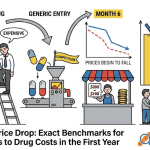
The traditional generic pathway (ANDA) is defined by the “race to the courthouse.” The first applicant to file a substantially complete ANDA with a Paragraph IV certification—challenging the validity or non-infringement of the brand’s patents—is eligible for 180 days of marketing exclusivity.13 This period is the only time a generic manufacturer can price near-brand levels, making it the primary source of profit for many generic houses.
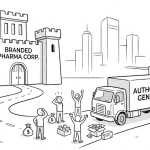
For the brand strategist, intelligence on these filings is vital. The FDA publishes a list of drug products for which an ANDA has been received containing a Paragraph IV certification. This list includes critical data fields: the RLD name, dosage form, strength, and the number of potential first filers.15 By monitoring these lists and cross-referencing them with patent litigation alerts on platforms like DrugPatentWatch, companies can confirm a generic challenge the moment it occurs.17 This early warning system allows the brand to mobilize its legal defense and prepare commercial countermeasures, such as launching an authorized generic.
3. The Patent Fortress: Intellectual Property as Strategic Warfare
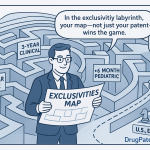
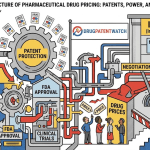
In the late 2020s, a single patent is no longer sufficient to protect a blockbuster drug. Success requires the construction of a “patent fortress”—a meticulously layered portfolio of composition of matter, method of use, formulation, and process patents.4 This strategy transforms IP from a legal safeguard into a commercial weapon.
3.1 Anatomy of a Patent Thicket
The “patent thicket” strategy, exemplified by AbbVie’s defense of Humira, involves filing hundreds of patents covering every conceivable aspect of the drug’s manufacturing, formulation, and administration. This creates a dense web of IP rights that competitors must hack through, often delaying entry by years even after the primary molecule patent has expired.4
The layers of the fortress typically include:
Composition of Matter: The core protection for the molecule itself, usually the first to expire.
Method of Use: Patents covering specific indications or dosing regimens, allowing the brand to carve out protected uses even if the molecule is off-patent.
Formulation: Protection for the specific inactive ingredients, stabilizers, or delivery mechanisms, which prevents competitors from copying the exact product.
Process Patents: Covering the specific manufacturing steps, which are particularly critical for biologics where “the process is the product.”
3.2 Evergreening and Lifecycle Management
“Evergreening” refers to the practice of obtaining new patents on minor modifications to extend the effective monopoly of a drug. While controversial, courts have largely affirmed that accumulating a large number of validly obtained patents is a permissible competitive tactic.4 CI teams must monitor “formulation flurries”—a sudden increase in patent filings related to new formulations or delivery devices—as a clear signal that a competitor is preparing to extend their franchise.4
For example, a company might shift patients from a twice-daily tablet to a once-daily extended-release capsule just months before the tablet’s patents expire. If the new capsule is patent-protected, the brand can migrate its patient base and leave the generic competitors fighting over a shrinking market for the old tablet.
3.3 Deep Patent Analytics with DrugPatentWatch
To navigate these fortresses, sophisticated intelligence tools are essential. Platforms like DrugPatentWatch allow strategists to perform deep analytics that go beyond simple expiration dates.
Key capabilities include:
Forecasting Loss of Exclusivity (LOE): Predicting the exact date of generic entry by analyzing the expiration of the last blocking patent, including Pediatric Exclusivity and Patent Term Extensions.19
Identifying “Stealth” Patents: Finding patents that may not be listed in the FDA Orange Book (e.g., manufacturing process patents) but still pose litigation risks.
Global Patent Surveillance: Monitoring filings in 134 countries to predict geographic expansion or identify jurisdictions where protection is weak.19
Prior Art Search: Identifying expired or abandoned patents that can serve as a basis for freedom-to-operate assessments or as invalidating prior art against a competitor’s new claims.21
4. Commercial Intelligence: Navigating the Payer Matrix and Rebate Walls
Regulatory approval is merely the ticket to the game; market access is where the game is won or lost. In the complex US healthcare market, “rebate walls” and formulary exclusions are the primary tools used by incumbents to block competition.
4.1 The Mechanics of Rebate Walls
A rebate wall occurs when a dominant manufacturer leverages its high volume to negotiate exclusive formulary positions with Pharmacy Benefit Managers (PBMs). They offer massive rebates (discounts) to the PBM, but make these rebates contingent on the exclusion of competitor products.22
This creates a “bundle trap.” If a rival launches a biosimilar at a 15% discount, the incumbent may threaten to withdraw rebates across their entire portfolio (e.g., insulin, oncology, and immunology drugs bundled together). The PBM, facing a massive loss of total rebate dollars, is financially incentivized to block the cheaper biosimilar. Legal analysis of these tactics often focuses on the “discount-attribution” test, which determines whether the bundled rebate, if attributed entirely to the competitive product, results in below-cost pricing—a potential antitrust violation.22
4.2 Detecting Formulary Shifts and Exclusionary Tactics
Traditional market access reporting often suffers from a 60-90 day lag. By the time a drop in prescription volume (TRx) is noticed, the damage is done.25 Advanced CI involves real-time monitoring of formulary changes, including tier status, prior authorization requirements, and “step edits”—requirements for a patient to fail on one drug before the payer will cover another.26
Engaging payers 18-24 months pre-launch is crucial to understand their specific value drivers and anticipate the “access friction” competitors will create.27 By using analog benchmarking—analyzing how payers treated similar launches in the past—companies can predict the likely barriers they will face and develop counter-strategies.
4.3 Value-Based Contracting
As payers move toward value-based formularies, CI must focus on the health economics and outcomes research (HEOR) data competitors are generating. Are they running trials to prove their drug reduces hospital readmissions? If so, they are preparing a value-based argument that could lock out competitors who lack similar data.28
5. War Gaming Methodologies: Simulating the Adversary
Static analysis, such as the traditional SWOT (Strengths, Weaknesses, Opportunities, Threats) matrix, is insufficient for predicting the behavior of reactive, intelligent opponents. “War gaming” involves structured role-playing exercises to test strategies against a “Red Team” simulating the competitor.29
5.1 Methodology of Pharma War Games
Effective war games bring together cross-functional teams—Commercial, Medical, Legal, Market Access—to simulate specific scenarios. These are not abstract discussions; they are dynamic simulations where participants must make decisions under pressure.
Common Pharma War Game Scenarios:
Scenario Type
Objective
Key Intelligence Topics (KITs) & Questions (KIQs)
New Entrant Defense
Prepare for a competitor’s launch.
How will they price relative to our brand? What is their core value proposition? Will they bundle with other products?
Loss of Exclusivity
Manage the transition to generic competition.
When exactly will the first generic launch? Can we launch an authorized generic to retain share?
Payer Negotiation
Simulate contract negotiations with PBMs.
What rebates will the PBM demand? What if a competitor offers a deeper discount in exchange for exclusivity?
Clinical Trial Failure
Plan for a negative Phase 3 readout.
How do we pivot the pipeline? How do we message this to investors? What is the backup indication?
5.2 The “Value Clinic” and Scenario Planning
Beyond simple conflict, war games help refine the value proposition. A “Value Clinic” workshop dissects the asset’s Target Product Profile (TPP) against competitor TPPs to identify gaps in evidence or messaging.31 This allows the team to “pressure-test” their strategy before millions are spent on execution. By simulating the competitor’s response to your own launch, you can identify weaknesses in your positioning and correct them while the cost of change is still low.
6. The Target Product Profile (TPP): The Blueprint of Competition
The Target Product Profile (TPP) is a planning tool introduced by the FDA that outlines the desired characteristics of a drug—efficacy, safety, dosing, route of administration—required for commercial viability.29 In the hands of a CI professional, the TPP becomes a powerful tool for reverse-engineering competitor strategy.
6.1 Reverse-Engineering the Competitor’s TPP
In a competitive context, CI teams must reconstruct the competitor’s TPP to identify vulnerabilities. By analyzing clinical trial designs (inclusion/exclusion criteria, endpoints), patent filings, and scientific publications, analysts can deduce the competitor’s “Minimum Acceptable Profile” and “Ideal Profile”.33
Signals in Trial Design:
Inclusion/Exclusion Criteria: If a competitor excludes patients with renal impairment from their Phase 3 trial, their label will likely carry a restriction for this population. This is a vulnerability that a rival can exploit by ensuring their own drug covers these patients.27
Endpoint Selection: The choice of primary versus secondary endpoints reveals what the competitor believes they can prove. A shift in endpoints mid-trial is a major red flag signaling potential efficacy issues or a strategic pivot.
6.2 Integrating TPP into Early Development
The TPP should not be a static document. It must evolve based on competitive intelligence. If a competitor announces data showing superior efficacy, your TPP must be updated to either aim higher or pivot to a different differentiation strategy—such as better safety, convenience, or a different route of administration.34
7. Manufacturing and Supply Chain: The Hidden Moat
Most CI focuses on the Active Pharmaceutical Ingredient (API). However, critical competitive advantages—and vulnerabilities—often lie in the “boring” details of formulation and manufacturing.
7.1 Excipients and Formulation Switches
Excipients (inactive ingredients) are not just fillers; they determine stability, absorption, and patentability. A “formulation switch”—changing the salt form or the stabilizer—can be used to extend patent life or improve the product.36
The Opportunity and Risk:
By tracking excipient suppliers and formulation patents, CI can predict if a competitor is preparing a “Version 2.0” of their drug to switch patients before the original goes generic.13 Conversely, neglecting this area leaves companies vulnerable to 505(b)(2) competitors who find a clever way to formulate the same API that bypasses the innovator’s formulation patents.
7.2 Manufacturing Capacity as a Strategic Moat
In the age of biologics and cell therapies, manufacturing is the strategy. A competitor may have a potent drug candidate but lack the capacity to supply the market.
Signals to Monitor:
Hiring Patterns: Monitoring hiring for manufacturing engineers or quality assurance staff at a specific site can reveal if a competitor is scaling up production.34
Facility Inspections: Regulatory filings regarding facility inspections can reveal quality control issues that might delay a launch.
Vertical Integration: Recent trends show companies acquiring manufacturing facilities (vertical integration) to secure supply chains, creating a barrier to entry for smaller biotech rivals who must rely on contract manufacturers.37
8. The Litigation Landscape: Paragraph IV Certifications and Settlements
Navigating the transition from brand dominance to generic competition is the “patent cliff.” The mechanics of this transition are governed by the Hatch-Waxman Act, and understanding the litigation landscape is crucial for accurate forecasting.
8.1 The Paragraph IV “First Filer” Advantage
The first generic company to file a Paragraph IV certification challenges the brand’s patents and, if successful (or if not sued within 45 days), gains 180 days of market exclusivity.13 This period is lucrative but risky.
Settlement Dynamics:
Historically, brands and generics often settled litigation with “pay-for-delay” deals, but Federal Trade Commission (FTC) scrutiny has made this difficult. Now, settlements often involve a negotiated entry date.38 CI analysts must track these settlements to update their erosion models.
8.2 At-Risk Launch and Triple Damages
If the 30-month stay on generic approval expires and the litigation is still ongoing, the generic manufacturer can choose to launch “at risk.” If they later lose the lawsuit, they may owe the brand treble damages. This creates a high-stakes game of chicken. Intelligence on the generic company’s financial health and risk tolerance is essential to predict whether they will pull the trigger on an at-risk launch.
8.3 Tracking PIV Activity
Using tools like DrugPatentWatch to monitor PIV certifications is essential for brands to prepare their defense (e.g., launching an authorized generic) and for investors to time the erosion of the brand’s revenue.17 The platform provides automated alerts that serve as an early warning system, allowing companies to react before the market is fully aware of the threat.
9. Macro-Economic Forces: The Inflation Reduction Act (IRA) and Policy Shocks
The Inflation Reduction Act (IRA) of 2022 introduced Medicare price negotiation, fundamentally altering the return on investment (ROI) calculations for drug development.40 This policy shock has ripple effects across the entire competitive landscape.
9.1 The “Negotiation” Effect and Pipeline Distortion
The IRA allows Medicare to negotiate “maximum fair prices” for top-spending drugs. This effectively acts as a price control mechanism, compressing the revenue lifecycle of successful drugs.
Asymmetry in Negotiation Timelines:
A critical feature of the IRA is the bifurcation of negotiation timelines: small molecule drugs are eligible for negotiation 9 years after approval, while biologics are eligible after 13 years. This policy asymmetry creates a strong incentive for companies to shift R&D investment toward biologics to gain the longer exemption period.41 CI teams must analyze how competitors are deprioritizing small molecule programs or reshuffling indications to delay the “negotiation clock.”
9.2 Inflation Penalties
Manufacturers must pay rebates to Medicare if they raise prices faster than the rate of inflation. This ends the traditional industry strategy of taking annual price hikes to meet revenue targets. Companies must now rely on volume growth and new product launches to drive revenue, making successful launch execution more critical than ever.42
10. Technological Disruption: Digital Biomarkers and AI
As efficacy gains for new drugs become incremental, digital biomarkers are emerging as a new frontier for product differentiation.
10.1 Defining Value Beyond the Pill
Digital biomarkers—objective physiological data collected via wearables or sensors—can demonstrate real-world efficacy that traditional clinical scales miss.43
Regulatory Acceptance:
The European Medicines Agency’s (EMA) qualification of a digital stride-velocity endpoint for Duchenne Muscular Dystrophy signals that regulators are increasingly accepting these novel measures.44
Competitive Edge:
If a competitor wraps their drug in a digital ecosystem that monitors patient health and improves adherence, they create a “sticky” product that payers and patients prefer, even if a generic alternative is cheaper.43 This transforms the product from a simple commodity into a comprehensive healthcare solution.
11. Launch Forensics: Autopsies of Commercial Failure
Learning from the failures of others is the most cost-effective form of intelligence. Launch failures are rarely due to the drug not working; they are due to the market not working as the company expected.
11.1 Case Study: Exubera (Pfizer)
The Failure: Pfizer launched an inhaled insulin (Exubera) expecting it to revolutionize diabetes care. It failed spectacularly, capturing less than 1% of the insulin market.
The Cause: The device was too large (nicknamed “the bong”), and patients were not as averse to needles as Pfizer assumed. Moreover, lung function monitoring requirements created friction for prescribers.
The Lesson: CI failed to accurately gauge the “switching cost” (both psychological and logistical) for patients and doctors.6
11.2 Case Study: Zanamivir (Relenza)
The Failure: GSK’s flu drug Relenza was effective but lost the market to Roche’s Tamiflu.
The Cause: Tamiflu was a pill; Relenza was a powder inhaler, which was difficult for patients with respiratory flu symptoms to use.
The Lesson: Route of administration is a critical competitive differentiator. A robust TPP analysis would have highlighted this vulnerability.6
12. Mergers, Acquisitions, and Licensing: Buying Innovation
In response to patent cliffs and IRA pressures, the industry is witnessing a surge in M&A, particularly “bolt-on” acquisitions of de-risked assets.45
12.1 The Pivot to Biologics and Antibody-Drug Conjugates (ADCs)
Deal activity in 2024-2025 has focused heavily on ADCs and immunology, driven by the desire for the longer IRA exclusivity window and the high barriers to entry for biosimilars.37
Weak Signals:
A sudden divestment of small molecule assets or a spree of licensing deals in a specific therapeutic area signals a strategic pivot. CI teams must track these “weak signals” to predict the competitor’s 5-year plan.47
13. Porter’s Five Forces in 2026: A Structural Industry Analysis
Applying Porter’s framework to the 2026 pharmaceutical landscape reveals a shift in the balance of power.
Force
2026 Status
Analysis
Threat of New Entrants
Low to Moderate
High R&D costs and regulatory barriers remain, but 505(b)(2) pathway lowers the bar for “super-generics.”
Bargaining Power of Suppliers
Low
While API suppliers are plentiful, specialized manufacturing for biologics/ADCs gives some suppliers (CDMOs) leverage.
Bargaining Power of Buyers
High
Consolidation of PBMs and the IRA’s negotiation power have drastically increased buyer leverage.48
Threat of Substitutes
Moderate
Digital therapeutics and gene therapies offer curative potential that could substitute chronic treatments.
Competitive Rivalry
High
The patent cliff and generic/biosimilar entry create intense rivalry, especially in oncology and immunology.49
14. Measuring ROI: The Economics of Intelligence
Competitive Intelligence is often viewed as a cost center. Demonstrating ROI requires linking intelligence directly to decision outcomes and financial performance.
14.1 Loss Avoidance
The primary ROI of CI is often what didn’t happen.
Example: A CI team identifies a competitor’s patent application for a similar formulation, prompting their own company to pivot R&D early, saving $50 million in wasted development costs.7
14.2 Revenue Protection
Example: By accurately predicting the launch date of a generic competitor, the commercial team implements a patient copay program three months prior, retaining 20% more market share than forecasted. This “preserved revenue” is directly attributable to the foresight provided by CI.5
15. Future Outlook: The Erosion of Monopoly (2026-2030)
As we look toward 2030, the pharmaceutical monopoly model is eroding. The “patent super-cliff” will expose massive revenue streams to competition. The winners will not be those with the best single drug, but those with the best intelligence network.
The future belongs to companies that can:
Simulate multiple regulatory and commercial scenarios in real-time.
Integrate patent data, clinical signals, and payer behavior into a unified strategic view.
Execute asymmetric strategies (like 505(b)(2) or complex biologic defenses) that leverage regulatory nuance as a competitive moat.
FAQ: Pharmaceutical Competitor Analysis
Q: What is the difference between a 505(b)(2) NDA and a 505(j) ANDA?
A: A 505(j) ANDA is for a generic drug that is bioequivalent to the reference product. A 505(b)(2) NDA allows for changes (e.g., new formulation, route of administration) and relies on some existing safety data but requires a “bridge” to the original drug. 505(b)(2) products can have their own exclusivity and patent protection, whereas ANDAs generally do not.8
Q: How can I track when a competitor will launch a generic?
A: You should monitor the FDA’s Paragraph IV Certifications List, which tracks ANDA filings challenging patents. Additionally, platforms like DrugPatentWatch track patent expiration dates, including extensions (PTE) and pediatric exclusivity, to forecast the earliest possible entry date (Loss of Exclusivity).13
Q: What is a “Rebate Wall”?
A: A rebate wall is a contracting strategy where a drug manufacturer offers a PBM large rebates on a bundle of products, contingent on the PBM excluding competitor products (often biosimilars) from the formulary. This makes it financially difficult for a cheaper competitor to gain market share.22
Q: How does the Inflation Reduction Act impact competitor analysis?
A: The IRA introduces Medicare price negotiation, which effectively shortens the revenue lifecycle of drugs (9 years for small molecules, 13 for biologics). This forces companies to prioritize biologic R&D and launch strategies that maximize volume early in the lifecycle.40
Q: What is a Target Product Profile (TPP)?
A: A TPP is a strategic document that outlines the desired characteristics (efficacy, safety, dosing) of a drug in development. In competitor analysis, you “reverse-engineer” a competitor’s TPP to identify their product’s strengths and weaknesses compared to your own.29
Q: Why is tracking excipients important?
A: Changes in excipients can signal a “formulation switch,” where a company updates its drug to improve stability or patentability before the original patents expire. This is a key lifecycle management strategy that competitors must detect early.36
Draft Guidance for Industry: Determining Whether to Submit an ANDA or 505(b)(2) Application – FDA, accessed January 20, 2026, https://www.fda.gov/media/108475/download