Part I: The Collapse of the Administrative Checkbox
The pharmaceutical industry is currently navigating a period of unprecedented legal volatility, where the once-reliable mechanisms of market entry are fracturing under the weight of judicial reinterpretation. For nearly four decades, the “skinny label”—technically known as the Section viii carve-out—served as a cornerstone of the generic drug industry’s strategy. It was a reliable, administrative maneuver derived from the “Grand Bargain” of the Hatch-Waxman Act, designed to allow generic competitors to enter the market for unpatented uses of a drug while the brand-name innovator retained exclusivity over new, patented methods of use. It was a compromise engineered to thread the needle between incentivizing innovation and ensuring public access to affordable medicine.
That compromise is effectively dead.
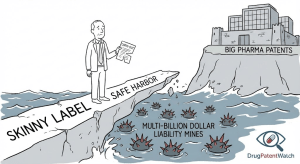
The landscape has shifted dramatically from a regulatory procedure to a high-stakes litigation minefield. The Federal Circuit’s decisions in GlaxoSmithKline LLC v. Teva Pharmaceuticals USA, Inc. and the more recent 2024 ruling in Amarin Pharma, Inc. v. Hikma Pharmaceuticals USA Inc. have fundamentally altered the risk calculus for every stakeholder in the life sciences ecosystem. The days when a “clean” FDA-approved label was sufficient to immunize a generic competitor from liability are over. Today, courts are piercing the corporate veil, looking beyond the package insert to the “totality of circumstances”—scrutinizing press releases, website metadata, sales forecasts, and even the industry-standard “AB” rating—to find evidence of “intent” to induce infringement.
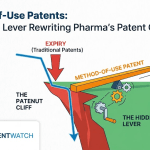
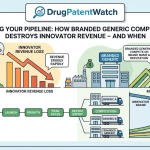
For brand-name pharmaceutical companies, this evolution offers a potent new lever for lifecycle management, transforming method-of-use (MOU) patents from secondary assets into formidable barriers to entry that can extend market exclusivity for years. For generic manufacturers and biosimilar developers, it represents an existential compliance crisis, converting routine commercial communications into potential evidence of nine-figure liability. For investors and analysts, understanding this legal nuance is no longer optional; it is a critical variable in modeling the “patent cliff” and valuing pipeline assets.
“The finding of induced infringement based on marketing materials, even with a properly ‘carved-out’ label, has transformed skinny labeling from a purely regulatory tactic into an enterprise-wide compliance imperative.”
— DrugPatentWatch, Landmark Paragraph IV Patent Challenge Decisions1
This report provides an exhaustive analysis of this new paradigm. We will dissect the legal precedents, analyze the commercial implications, and provide a strategic framework for navigating a market where the line between regulatory compliance and patent infringement has become dangerously blurred. We will leverage data intelligence principles, such as those found in platforms like DrugPatentWatch, to illustrate how proactive monitoring of patent expiration and litigation trends is essential for survival in this hostile environment.2
Part II: The Anatomy of the “Grand Bargain” and Section viii
To understand the magnitude of the current disruption, one must first appreciate the machinery of the Drug Price Competition and Patent Term Restoration Act of 1984, commonly known as Hatch-Waxman. The Act was a legislative masterpiece of compromise, designed to balance two competing public interests: the need for pharmaceutical innovation (represented by patent term restoration and data exclusivity) and the need for affordable healthcare (represented by the Abbreviated New Drug Application, or ANDA).
2.1 The Statutory Mechanism of Carve-Outs
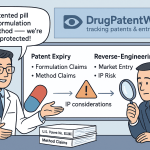
When an innovator files a New Drug Application (NDA), they must list patents covering the drug or its methods of use in the FDA’s “Orange Book” (Approved Drug Products with Therapeutic Equivalence Evaluations).4 These patents generally fall into two categories:
Composition of Matter: Patents covering the active pharmaceutical ingredient (API) itself.
Method of Use (MOU): Patents covering the use of that molecule to treat a specific condition.
The distinction is critical. A composition patent is absolute; it blocks all sales. An MOU patent is conditional; it blocks only the specific use. When a generic applicant files an ANDA, they must address these listed patents. If the core compound patent has expired but an MOU patent remains, the generic has a statutory right under 21 U.S.C. § 355(j)(2)(A)(viii) to file a “Section viii statement.”
This statement asserts that the generic is not seeking approval for the patented use. The generic proposes a label that “carves out” the patented indication, leaving only the unpatented uses.5 In theory, this pathway avoids litigation. The generic does not challenge the patent (a Paragraph IV certification); it simply sidesteps it. The FDA reviews the proposed label to ensure it does not overlap with the brand’s “use code” (the brand’s description of the patented use in the Orange Book). If the carve-out is successful, the generic launches for the unpatented indications, and the brand keeps its monopoly on the patented indication.6
2.2 The Commercial Reality: The Fiction of the Label
The friction arises from the commercial reality of the U.S. pharmaceutical market, which operates largely independently of the specific words on a package insert. Once a generic is approved as “AB-rated” (therapeutically equivalent), state substitution laws generally mandate or permit pharmacists to dispense the generic automatically, regardless of the indication for which it was prescribed.
Physicians rarely write the indication on the prescription pad. They prescribe the molecule. The pharmacist fills it with the cheapest AB-rated generic. Consequently, a generic drug with a “skinny label” (approved only for Indication A) will inevitably be dispensed to patients suffering from Indication B (which is carved out and patent-protected). This creates a situation where the generic manufacturer knows—with near 100% certainty—that their product will be used for infringing purposes.
For decades, federal courts held that this “passive” substitution did not constitute induced infringement by the generic manufacturer. Inducement, under 35 U.S.C. § 271(b), requires specific intent to encourage the infringement. Merely knowing that doctors would prescribe the drug off-label was not enough. The generic had to actively encourage it. That distinction—between knowledge and intent—is what the Federal Circuit has dismantled in recent years.
Part III: The Legal Tectonic Shift: GSK v. Teva
The case of GlaxoSmithKline LLC v. Teva Pharmaceuticals USA, Inc. is the watershed moment that destabilized the industry. It represents the death knell of the assumption that following FDA labeling regulations provides a safe harbor against patent infringement liability.
3.1 The Case That Changed Everything
The Fact Pattern:
GSK marketed Coreg (carvedilol) for three distinct indications:
Hypertension (high blood pressure).
Left ventricular dysfunction (LVD) following a myocardial infarction.
Congestive heart failure (CHF).
The patent for the compound itself expired in 2007. The patents for hypertension and LVD also expired. However, GSK held a reissued patent covering the method of treating CHF.7 Teva, seeking to launch a generic, utilized the Section viii pathway. They launched their generic carvedilol with a “skinny label” that carved out the CHF indication, marketing the drug only for hypertension and LVD.
Years later, the FDA required Teva to add the CHF indication back to the label (creating a “full label”) for safety reasons. GSK subsequently sued Teva for induced infringement, claiming that Teva was liable for infringing the CHF patent even during the period when its label explicitly excluded CHF.
The Verdict:
The Federal Circuit reinstated a $235 million jury verdict against Teva.8 The court found that Teva induced infringement despite the carve-out. This ruling sent shockwaves through the industry because it suggested that complying with the FDA’s Section viii regulations does not protect a company from patent liability.
3.2 Evidence of “Intent”: The Magic Words are Gone
What specific evidence did the court use to find that Teva “intended” to induce infringement of a use it explicitly removed from its label? The analysis focused on the “totality of the circumstances,” relying heavily on marketing materials that contradicted the limitations of the skinny label.
1. Press Releases and the “AB” Rating:
Teva issued press releases calling its product an “AB-rated generic equivalent of Coreg.” GSK argued—and the court agreed—that because Coreg is indicated for CHF, calling the generic an “equivalent” without qualification implies it is equivalent for all uses. The court effectively weaponized the industry-standard term “AB-rated,” suggesting that using this regulatory classification in marketing materials could be evidence of intent to induce infringement.7
2. Marketing Materials:
Promotional materials touted the drug as a substitute for Coreg without explicitly excluding CHF in the marketing copy. The court found that Teva’s marketing materials failed to distinguish between the approved and unapproved indications, thereby encouraging doctors to prescribe the generic for the patented CHF use.
3. Legacy Conduct:
The court looked at Teva’s conduct over the entire lifecycle of the product. Even though the label was skinny, the marketing message was broad. The court implied that the skinny label was essentially a regulatory formality that Teva’s marketing actively undermined.
3.3 The Dissent and Industry Panic
Chief Judge Prost’s dissent in GSK highlighted the existential threat this ruling posed to the generic industry. She argued that the majority opinion “nullified” the Section viii pathway, creating a situation where a generic could follow the law perfectly and still be liable for hundreds of millions in damages.8 The decision suggests that a generic manufacturer can be liable for inducement based on truthful statements about therapeutic equivalence—a cornerstone of the generic drug system.
Although the court attempted to narrow its holding to the specific facts of Teva’s marketing, the chilling effect was immediate. Generic manufacturers began scrubbing their websites, press releases, and investor decks, fearing that any mention of “equivalence” could be weaponized in court.9
Part IV: The Aftershocks: Amarin v. Hikma and the New Compliance Reality
If GSK was the earthquake, Amarin v. Hikma was the tsunami that followed in 2024, proving that GSK was not an outlier but the start of a new judicial doctrine.
4.1 The Vascepa Battleground
The Fact Pattern:
Amarin markets Vascepa (icosapent ethyl), a fish-oil derived drug, for two indications:
Severe Hypertriglyceridemia (SH): Unpatented.
Cardiovascular (CV) Risk Reduction: Protected by a thicket of method-of-use patents.
Hikma received FDA approval for a generic version of Vascepa with a skinny label covering only the SH indication. Amarin sued for induced infringement, arguing that Hikma was actively encouraging the use of its generic for the patented CV indication, which accounts for the vast majority of Vascepa’s sales.10
The District Court initially dismissed the case, adhering to the traditional view that the label dictates the intent. However, in June 2024, the Federal Circuit reversed that dismissal, allowing the case to proceed.
4.2 The Weaponization of Corporate Communications
The Amarin decision provides a granular roadmap of what constitutes “active inducement” in the modern era. The Federal Circuit found that Amarin had plausibly pleaded inducement based on several factors that generic companies previously considered routine business practices.
1. The “Generic Version” Press Release:
Hikma issued press releases calling its product a “generic version of Vascepa” without explicitly qualifying that it was only for the SH indication. The court found that this broad statement could be interpreted by the market as a claim of full interchangeability for all indications.11
2. The “Total Sales” Trap:
Hikma’s press releases cited Vascepa’s total annual sales figures (approx. $1 billion). Since the vast majority of Vascepa’s sales are for the patented CV indication (SH is a much smaller market), the court reasoned that citing the total sales figure signaled an intent to capture the entire market, including the patented portion. This is a critical insight for investor relations teams: touting the “Total Addressable Market” (TAM) of a brand drug in a generic launch deck is now potential evidence of patent infringement.12
3. Website Metadata and Categorization:
Hikma listed the drug on its website under the broad therapeutic category of “hypertriglyceridemia.” The court argued that this category was broad enough to encompass both the unpatented SH indication and the patented CV risk reduction (which involves lowering triglycerides), thereby implicitly encouraging the off-label use.11
4. Label Ambiguity:
While the CV indication was carved out, the label still contained safety warnings related to cardiovascular outcomes. The court suggested that these warnings could be read by physicians as an implicit instruction or acknowledgement of the drug’s effect on CV risk, further blurring the line between a carve-out and a full label.13
4.3 The “Silence is Liability” Doctrine
The Amarin decision confirms that marketing and public relations teams are now patent liability centers. A press release that is factually accurate (“We launched a generic of Vascepa”) can be legally fatal if it lacks precise, exclusionary language (“…approved only for the SH indication”). The court effectively held that silence regarding the carve-out in public communications can be construed as encouragement of the carved-out use.
This shifts the burden significantly. It is no longer enough to not say “use this for heart failure.” A generic must now actively say “do NOT use this for heart failure” in its commercial communications to avoid the inference of inducement.12
Part V: The Counter-Narrative: Bayer v. Lupin and the Road Not Taken
To understand the severity of the shift represented by GSK and Amarin, it is instructive to contrast these decisions with the Federal Circuit’s earlier ruling in Bayer Schering Pharma AG v. Lupin, Ltd. (2012).14
5.1 The Era of Label Supremacy
In Bayer, the brand company argued that Lupin’s skinny label for the oral contraceptive Yasmin induced infringement of a patent covering a combination of three simultaneous effects: contraceptive, anti-androgenic, and anti-aldosterone. Bayer argued that the FDA label mentioned these effects in the “Clinical Pharmacology” section, even though the “Indications” section listed only contraception.
The Federal Circuit ruled against Bayer, finding no inducement. The court held that because the FDA-approved “Indications and Usage” section did not explicitly instruct the use of the drug for the three simultaneous effects, there was no specific intent to induce infringement. At that time, the label was king. If the “Indications” section was clean, the generic was safe.15
5.2 The Shift from Textualism to Contextualism
GSK and Amarin have effectively overruled the spirit, if not the letter, of Bayer v. Lupin. The courts have moved from a textualist interpretation of the label (what does the document explicitly say?) to a contextualist interpretation of corporate conduct (what does the company’s behavior imply?).
This shift opens the door for discovery into internal emails, marketing strategies, and sales forecasts. Plaintiffs can now demand access to internal documents showing that generic executives knew and expected to capture sales from the patented indication, using that internal knowledge to bolster claims of inducement based on external marketing “winks and nods.”
Part VI: The Innovator’s Playbook: Building the Un-Carve-Out-Able Patent
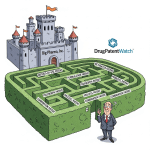
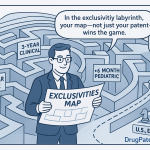
For brand-name companies (Innovators), the erosion of the Section viii safe harbor represents a massive strategic opportunity. By understanding how courts are interpreting inducement, Innovators can construct “Patent Thickets” that are virtually impervious to carve-outs.
6.1 Strategy 1: “Patenting the Label”
Innovators are increasingly using the product label as a blueprint for patent prosecution. By analyzing the “Clinical Studies,” “Dosage and Administration,” and “Warnings” sections of their own label, they draft method-of-use claims that track the label language so closely that a generic cannot carve them out without rendering their own label “less safe or effective.”
The Mechanics:
Dosage Regimens: Patenting a specific titration schedule (e.g., “start at 10mg, increase to 20mg after 2 weeks”) or a dosing adjustment for renal impairment. If the generic removes these instructions to avoid the patent, the FDA may reject the label for safety reasons. In AstraZeneca v. Apotex (the Pulmicort case), the generic tried to carve out a once-daily dosing indication but left in language about “downward titration” that the court found inevitably led to the patented once-daily use.16
Patient Sub-Populations: Patenting the use of the drug in a specific subset of patients identified in the label (e.g., “patients with a history of atrial fibrillation”).
Biomarker Monitoring: Patenting a method that involves administering the drug and monitoring for a specific biomarker or side effect. If the safety section of the label requires this monitoring, the generic cannot carve it out.
6.2 Strategy 2: Weaponizing the Orange Book Use Code
The “Use Code” is the short description of the patented method that the brand submits to the FDA for listing in the Orange Book. Crucially, the FDA plays a purely “ministerial” role in this process; they do not verify if the Use Code accurately reflects the patent claims.18
The Trap:
Brands are incentivized to draft broad, ambiguous Use Codes that overlap with unpatented uses. If the generic’s proposed carve-out overlaps with the brand’s Use Code, the FDA will reject the Section viii statement.19
Case Study: In Caraco v. Novo Nordisk, the brand (Novo) changed its use code for Prandin (repaglinide) from “method of treating hypoglycemia” to “method of improving glycemic control.” This broader code covered all uses of the drug, effectively blocking the generic (Caraco) from carving out the patented combination therapy. The Supreme Court eventually intervened to allow generics to file a counterclaim to correct the use code, but this requires litigation and delays generic entry.6
6.3 Strategy 3: Post-Launch Surveillance and Litigation
Brands are now actively monitoring generic competitors’ post-launch behavior for Amarin-style errors. Legal teams are scrubbing generic press releases, investor presentations, and websites for any statement that implies equivalence to the full brand label.
Actionable Intelligence: If a generic sales representative tells a doctor, “It’s the same as Vascepa,” or if a generic company’s website lists a “total addressable market” that includes the patented indication, the brand prepares a complaint for induced infringement. This turns every public statement by a generic competitor into potential litigation fuel.20
Part VII: The Generic Defense: Survival in a Hostile Environment
For generic manufacturers, the cost of compliance has skyrocketed. The “skinny label” is no longer a shield; it is merely the first step in a complex, multi-layered defense strategy.
7.1 The “Clean” Launch Checklist
To survive in the post-Amarin world, generic launches must adhere to a strict hygiene protocol regarding communications. Marketing departments must be integrated with IP legal teams to ensure that no “loose lips” sink the corporate ship.
1. The “Skinny” Press Release:
Press releases must explicitly state the specific indication approved. They should avoid broad phrases like “Generic Equivalent to” without immediate qualification. They must absolutely avoid citing sales figures that include the patented indication. A press release should read: “Generic version of approved for [Indication X]. Not approved for”.12
2. Website Segregation:
Products should not be listed under broad therapeutic categories that imply off-label utility. Specific disclaimers (“Not approved for [Patented Indication]”) must be prominent, not buried in footnotes or terms of use. The “AB” rating symbol should be contextualized to refer only to the approved indication.12
3. Investor Communications:
Investor decks are a major vulnerability. Showing a “Total Market Opportunity” chart that includes the revenue from the patent-protected indication is essentially an admission of intent to induce. Investor materials must carefully segment the “addressable market” to exclude the carved-out portion, even if the generic expects passive substitution to capture it.
7.2 The “At-Risk” Calculus and Damages Models
The decision to launch “at risk” (launching before patent litigation is fully resolved) has become significantly more dangerous.
Financial Impact:
In GSK v. Teva, the damages were not limited to a reasonable royalty; they were based on lost profits. Because Teva’s generic eroded GSK’s market share for the patented indication, Teva was liable for the profit GSK would have made on those sales. Since brand margins are significantly higher than generic margins, the damages can easily exceed the generic’s total revenue from the product.7
Table 1: The Escalating Cost of Infringement (Recent Verdicts & Settlements)
Case / Parties
Key Issue
Outcome / Damages
Implication
GSK v. Teva (2021)
Induced Infringement (Coreg)
$235 Million (Reinstated)
Marketing materials can override a label carve-out.
Amarin v. Hikma (2024)
Induced Infringement (Vascepa)
Remanded (Motion to Dismiss Denied)
Press releases & sales data citations = evidence of intent.
Seagen v. Daiichi Sankyo (2024)
Patent Infringement (Enhertu)
$41.8 Million (Vacated on appeal)
Demonstrates the volatility of damages in appellate review.21
General Access v. Verizon
Patent Infringement (Tech)
$847 Million (Vacated)
Jury awards in IP cases are trending aggressively high.22
Netlist v. Micron
Patent Infringement (Tech)
$445 Million
High stakes for IP violations are not limited to pharma.22
The Settlement Dynamic:
The threat of GSK-style lost profits damages increases the leverage of brand companies in settlement negotiations. Generics are more likely to settle for a licensed launch date (delayed entry) rather than risk an at-risk launch with a skinny label that could result in catastrophic liability. The NBER working paper on at-risk entry models suggests that while at-risk entry is generally profitable if the generic wins, the variance in outcomes has increased, leading to fewer at-risk launches for “complex” situations involving MOU patents.23
Part VIII: The Regulatory Gap: The FDA’s “Ministerial” Role
A critical dysfunction highlighted by this research is the disconnect between the FDA’s regulatory mandate and the Federal Circuit’s patent jurisprudence.
8.1 The Illusion of FDA Approval
The FDA approves Section viii carve-outs based on a textual comparison between the generic’s proposed label and the brand’s use code. They do not evaluate patent infringement. This creates a “safe harbor” that is illusory. The FDA may tell a generic, “Your label is acceptable,” only for a court to later say, “Your label induces infringement.”
This separation of powers leaves generics exposed. They are complying with the FDA’s requirements to get a drug to market, but that compliance is not a defense in patent court. In fact, the FDA explicitly states that its role in patent listing is “ministerial” and it lacks the expertise or authority to police patent claims.19
8.2 The “Safety” Block
Innovators often petition the FDA to reject a skinny label on the grounds that carving out the patented information would make the generic “less safe.” If a patent covers a safety warning or a dosing titration that is critical for patient welfare, the FDA faces a dilemma. If they allow the carve-out, they risk public health. If they reject it, they extend the brand’s monopoly. Brands have become adept at framing method-of-use patents as essential safety protocols to force the FDA’s hand.
Part IX: The Role of Data Intelligence: DrugPatentWatch in Action
For investors and business development teams, navigating this landscape requires more than just legal advice; it requires data intelligence. Platforms like DrugPatentWatch have become essential tools for quantifying risk and opportunity.
9.1 Predictive Modeling
DrugPatentWatch aggregates data on patent expirations, litigation histories, and Orange Book listings. This allows users to model the “patent cliff” with greater nuance. Instead of assuming a binary “loss of exclusivity” date, analysts can use the platform to identify:
The “Tail” Period: The gap between the expiration of the compound patent and the expiration of the method-of-use patents. This is the period where skinny labels are viable but risky.
Litigation Density: A drug with a high volume of past patent litigation indicates a litigious brand owner (like GSK or Amarin) who is likely to aggressively pursue inducement claims.2
9.2 Identifying Vulnerable Use Codes
Sophisticated users leverage DrugPatentWatch to compare patent claims against Orange Book use codes. By identifying overbroad use codes—where the code description is significantly broader than the actual patent claim—generics can target these drugs for Caraco counterclaims, potentially clearing the path for a Section viii launch.
Part X: The Future Landscape: Entresto and Beyond
Looking ahead to late 2025 and 2026, the industry’s eyes are fixed on several key developments that could further reshape the landscape.
10.1 The Entresto Battle: MSN v. Novartis
The most critical case on the docket is MSN Pharmaceuticals v. Novartis (the Entresto litigation). This case involves the “after-arising technology” doctrine. Novartis is using a patent filed in 2002 to block a generic of a complex (sacubitril/valsartan) that wasn’t fully developed until years later.24
The Issue: Can a patent claim a technology that didn’t exist at the time of filing?
Significance: If the Supreme Court takes this case (Petition No. 25-225), it could redefine the written description and enablement requirements.25 A ruling against Novartis would weaken the “evergreening” strategies that rely on broad genus claims to capture future inventions. This has massive implications for the Section viii landscape, as many method-of-use patents rely on broad original filings.
10.2 FTC Intervention
The Federal Trade Commission (FTC) has recently stepped up its scrutiny of Orange Book listings. In late 2023 and throughout 2024, the FTC issued policy statements and warning letters challenging “improper” patent listings, particularly regarding device patents and method-of-use codes that do not strictly align with approvals.26
Outlook: We expect the FTC to file more amicus briefs in induced infringement cases, siding with generics to argue that broad interpretations of inducement (like in GSK and Amarin) are anticompetitive and stifle the congressional intent of Hatch-Waxman.
10.3 Legislative Reform?
There is growing chatter in Washington about the need for legislative reform to “fix” the skinny label pathway. Proposals include explicitly defining a safe harbor for skinny labels that would immunize generics from inducement liability as long as their marketing does not explicitly promote the carved-out use. However, given the current gridlock, judicial resolution via the Supreme Court remains the most likely path for clarity.23
Part XI: Conclusion
The era of the “check-the-box” skinny label is over. The intersection of patent claims, regulatory requirements, and commercial strategy has become a complex web where a single marketing misstep can result in catastrophic liability.
For the Innovator, the path forward lies in precision drafting—creating a seamless lock between the product label and the patent claims to ensure that no “skinny” carve-out is viable without compromising safety. The strategy is to force the generic into a “full label” situation, which triggers infringement.
For the Generic, the future demands a discipline previously unknown in the sector. “Silence” is the new safety. Press releases must be scrutinized by IP counsel, sales data must be contextualized, and the “AB” rating must be treated as a regulatory classification, not a marketing slogan. The “at-risk” launch is now truly at risk.
As we look toward the Supreme Court’s potential review of MSN v. Novartis and the evolving Amarin remand, one thing is certain: the boundary between a legal medical product and an infringing contraband is no longer defined by the molecule, but by the intent of the company that sells it.
Key Takeaways
Marketing Equals Liability: Under GSK and Amarin, a generic’s press releases, website metadata, and sales data citations can be used as evidence of “specific intent” to induce infringement, overriding a legally compliant Section viii label carve-out.
The “Total Sales” Trap: Generics must avoid citing a brand’s total sales figures (which include patented uses) in their investor communications. This is now viewed by courts as evidence of intent to capture revenue from infringing uses.
Use Code Strategy is Critical: Brands are increasingly using complex, overlapping Orange Book use codes to block carve-outs. Generics must utilize the Caraco counterclaim to correct these codes before attempting a launch.
The “AB” Rating Paradox: Promoting a generic as “AB-rated” or “equivalent” to the brand is dangerous if the brand has patented indications. It implies substitutability for all uses, potentially serving as evidence of inducement.
Patenting the Label: The most effective brand defense is now drafting method-of-use patent claims that mirror the safety, dosing, and administration sections of the FDA label, making a safe carve-out impossible.
Frequently Asked Questions (FAQ)
Q1: If a generic manufacturer strictly follows the FDA’s guidance for a Section viii carve-out, can they still be sued for patent infringement?
A: Yes. The FDA’s review is ministerial and focuses on safety and labeling regulations, not patent infringement. As seen in GSK v. Teva, a generic can obtain FDA approval for a skinny label and still be found liable for induced infringement in federal court if their marketing or other conduct encourages the patented use.7
Q2: What is the significance of the “AB rating” in induced infringement cases?
A: The “AB rating” indicates therapeutic equivalence. In GSK v. Teva, the court found that Teva’s promotion of its drug as “AB-rated” to Coreg contributed to the finding of inducement. The logic is that by telling doctors the drug is interchangeable, the generic is implicitly encouraging its use for all of the brand’s indications, including the patented ones.8
Q3: How does the Amarin v. Hikma decision change the requirements for generic press releases?
A: Amarin suggests that generic press releases must be hyper-specific. Simply stating a product is a “generic version of” without qualification is risky. Generics should explicitly state they are approved only for the specific non-patented indication and avoid citing sales figures that encompass the patented market. Silence regarding limitations can now be interpreted as inducement.10
Q4: Can a generic manufacturer simply remove the “Use Code” information from their label to avoid trouble?
A: Not always. The FDA requires that a generic label be “the same as” the brand label, with exceptions only for patent carve-outs. If removing the patented information (like a dosing instruction or safety warning) renders the drug “less safe or effective,” the FDA will reject the carve-out. This is known as the “safety blocking” strategy used by brands.5
Q5: What tool can I use to track patent expiration dates and litigation risks for specific drugs?
A: DrugPatentWatch is a comprehensive intelligence platform that tracks drug patents, expiration dates (including pediatric and PTE extensions), and litigation histories. It provides the data necessary to identify which drugs have viable skinny label opportunities and which are protected by complex “patent thickets”.2
DrugPatentWatch not only saved us valuable time in tracking patent expirations but also streamlined our processes, accessed December 11, 2025, https://www.drugpatentwatch.com/