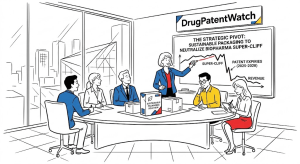
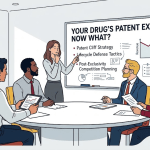
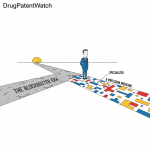
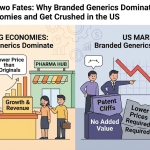
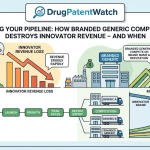
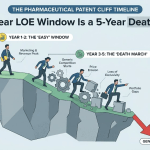
The pharmaceutical industry is currently navigating a period of structural volatility that threatens to dismantle the traditional blockbuster revenue model. Between 2025 and 2030, the sector faces an unprecedented “super-cliff” of patent expirations, exposing between $200$ billion and $400$ billion in annual branded revenue to the forces of generic and biosimilar competition.1 This transition, frequently characterized as “Patent Cliff 2.0,” targets the industry’s most sophisticated biologic assets and specialized therapies, coinciding with the aggressive implementation of the Inflation Reduction Act (IRA) and a tightening global regulatory framework regarding environmental footprints.1 For the C-suite, the challenge is no longer merely about R&D productivity; it is about protecting the P&L from systemic margin erosion. In this high-stakes environment, biopharma packaging business development has moved from a tactical procurement function to a strategic weapon. By pitching sustainable packaging not as an ESG obligation, but as a hedge against margin compression, packaging firms can offer innovators a way to recover lost value through logistics optimization, material efficiency, and intellectual property evergreening.
The Macroeconomic Vacuum: Analyzing the $400 Billion Revenue Gap
The impending loss of exclusivity (LOE) cycle is unmatched in scale and concentration. Industry data suggests that 190 medicines—including 69 blockbuster products—will lose patent protection by the end of the decade.1 Unlike the patent cliffs of the early 2010s, which primarily affected primary care small molecules like Lipitor, the 2025–2030 window targets complex biologics and specialized therapies in oncology, neurology, and anticoagulants.1
The Velocity of Value Erosion
The financial impact of LOE is governed by molecular weight and the resulting regulatory pathways. Small-molecule drugs, typically administered as oral solids, face a “vertical drop” in revenue, often losing $80\%$ to $90\%$ of their market share within the first twelve months of generic entry.1 Biologics, however, tend to follow a “patent slope,” where the manufacturing complexity and the need for clinical interchangeability studies moderate the pace of market decay.1 However, the emergence of biosimilars is accelerating, and the competitive landscape is becoming increasingly crowded.
“Industry-wide analyses project that between 2025 and 2030, nearly 70 high-revenue products will face patent expiration, putting a colossal $236$ billion in annual revenue at risk. This represents a near-tripling of the revenue impact seen in previous cycles, forcing a radical reassessment of lifecycle management and operational efficiency.” — DrugPatentWatch.1
The mechanics of this erosion are starkly illustrated by the number of market entrants. For generic manufacturers, the “brass ring” is the 180-day exclusivity period granted to the first-to-file applicant with a Paragraph IV certification, which typically captures $60\%$ to $80\%$ of a generic product’s total lifetime profits.1
Number of Market Entrants
Price Erosion (%)
Market Dynamics
1 (First-to-File)
$20\% – 40\%$
High-margin duopoly; maximum profitability for generic
2 Competitors
$50\% – 55\%$
Significant price crack; innovator margins begin to collapse
3 – 5 Competitors
$60\% – 70\%$
Commoditization begins; primary focus shifts to volume
5+ Competitors
$80\% – 95\%$
Near-total value evaporation for the branded asset
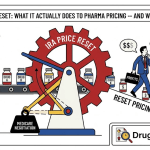
This structural decay is compounded by the IRA’s drug pricing provisions. Small-molecule drugs become eligible for price negotiation just 9 years after FDA approval, while biologics are granted 13 years.1 This 4-year gap creates a profound financial disincentive for small-molecule development, as evidenced by a $70\%$ drop in funding for these projects since 2021.1 Because small molecules typically reach peak annual global revenue in year 11, the IRA effectively shears off the most profitable years of the lifecycle.1
Packaging as a Strategic Offset: The ROI of Sustainability
In a market where top-line growth is constrained by regulation and competition, biopharma executives are turning to the “middle of the P&L” to find savings. Sustainable packaging offers a unique proposition: it simultaneously reduces operational costs, satisfies tightening environmental regulations, and enhances brand reputation in an era where patients and providers are increasingly eco-conscious.3
The Economic Imperative for Right-Sizing
One of the most immediate margin-recovery levers is data-driven “right-sizing.” The logistics industry has shifted toward Dimensional Weight (DIM) pricing, where carriers charge based on package volume rather than actual weight. Traditional oversized packaging often uses $40\%$ to $60\%$ more material than necessary, leading to massive financial inefficiencies.6
Strategy
ROI Metric
Economic Driver
Right-Sizing
$20\% – 35\%$ Reduction in Shipping Costs
Optimization of package dimensions to lower DIM charges
Material Reduction
$15\% – 25\%$ Savings on Procurement
Elimination of excess filler and redundant layers
Reusable Systems
Cost Neutrality in 12–18 Months
Transition from linear “take-make-dispose” to circular loops
Warehouse Density
$30\% – 40\%$ Improvement
Optimized stacking and storage through uniform secondary packaging
Sustainable packaging is no longer just about the substrate; it is about “logistics efficiency”.6 By utilizing algorithms to optimize package dimensions for each unique product, companies can achieve immediate financial returns while reducing their carbon footprint by $25\%$ to $40\%$.6
Material Science as an IP Shield: The Innovation Frontier
The transition from conventional plastics to advanced sustainable materials is not merely a matter of environmental responsibility; it is an exercise in material science that can support new patent filings and brand differentiation. For decades, the industry relied on PVC, aluminum foils, and complex multi-material laminates that provided excellent barriers but were virtually unrecyclable.3
The Dry Molded Fiber (DMF) Breakthrough
A prominent example of this shift is the work of the Blister Pack Collective, led by PA Consulting and PulPac. This group, which includes founding members like Sanofi and Bayer, is developing the world’s first “planet-friendly” tablet blister pack using Dry Molded Fiber (DMF) technology.10
DMF technology is designed to eliminate or minimize the use of plastics in over-the-counter and prescription drugs. The process uses $1/3$rd of the water compared to wet-molded pulp and produces up to $10\times$ less CO2 than traditional plastic processes.10 From a business development perspective, the “sell” to the innovator is the ability to match the tablet count and pitch design of commodity PVC while achieving an $80\%$ lower carbon footprint.10
Mono-Material Designs and Recyclability
The industry is also moving toward mono-material packaging—using a single polymer family such as HDPE or PET—which allows sorting plants to process materials without the need for complex separation.7 In 2025, companies like Amcor and Mondi launched fully recyclable polyethylene (PE) and polypropylene (PP) films that maintain the robust barrier properties required for moisture- and oxygen-sensitive drugs.14
As materials science facilitates thinner yet stronger films, packaging teams are reducing material thickness and removing unnecessary layers.7 This “lightweighting” reduces greenhouse gas emissions during production and lowers transport costs, creating a dual win for the sustainability officer and the CFO.14
The PFAS Regulatory Gauntlet: A Mandatory Evolution
As we enter 2025, the presence of per- and polyfluoroalkyl substances (PFAS) in packaging has moved from an environmental concern to a critical compliance risk. PFAS, utilized for their heat, grease, and moisture resistance, are being banned across major markets.16
Global Compliance Maps
In January 2025, Minnesota’s “Amara’s Law” came into effect, banning PFAS across 11 categories and setting the stage for even stricter prohibitions in 2032.17 Similar regulations in New York, California, and the European Union are forcing biopharma companies to verify their PFAS-free status throughout the entire supply chain.16
Verifying compliance is a technical challenge. It requires sophisticated analytical methods such as Total Organic Fluorine (TOF) testing and LC-MS/MS to detect residues introduced through upstream processes like paper-mill coatings or recycled fiber contamination.16 For packaging providers, offering “validated PFAS-free sourcing” is no longer a premium feature; it is a “right-to-play” requirement for procurement with global brands.16
Logistics and the Cold Chain: Circularity as a Revenue Guard
The cold chain logistics required for temperature-sensitive biologics and vaccines is one of the most resource-intensive segments of the pharmaceutical industry.19 To protect margins, companies are shifting away from single-use EPS (polystyrene) shippers toward reusable thermal containers and fiber-based insulated systems.
Route Optimization and Emissions Reduction
Advanced logistics technologies, including AI-powered route optimization and real-time IoT tracking, allow companies to select the fastest routes, avoid congestion, and combine shipments.19 Efficient route planning not only reduces transit-related emissions by $25\%$ to $40\%$ but also dramatically improves delivery reliability and reduces product spoilage.6
The Sustainable Packaging Logistics (SPL) framework emphasizes that the selection of secondary and tertiary packaging dimensions is critical. By systematically recalculating carton dimensions to maximize pallet utilization, companies can increase payload capacity and decrease the total consumption of corrugated cardboard.8
The Impact of Carbon Pricing
Global carbon pricing now covers approximately $28\%$ of global emissions.20 For biopharma manufacturers, a high carbon tax accelerates the transition to low-carbon operations but can also act as a drag on earnings if not managed through green technological innovation.21 Strategies like “carbon tax recovery” models are being analyzed to understand how environmental regulation can stimulate green technological progress, ultimately leading to higher Total Factor Productivity (GTFP).22
Intellectual Property Strategy: Using DrugPatentWatch as a Predictive Compass
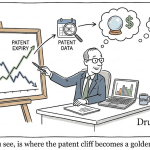
In the pharmaceutical sector, patent data is the most potent source of predictive business intelligence available.23 A robust patent strategy is the fundamental pillar upon which the entire drug development ecosystem is constructed, serving as an “insurance policy” for investors.24
Timing the Packaging Shift
The “effective patent life”—the actual time a drug spends on the market with protection—is often only 7 to 12 years.25 Strategists must time their packaging innovations to coincide with key market events:
Indication Expansion: As a company seeks to expand a drug’s use to new patient populations, a packaging redesign can support the new brand identity and clinical requirements.2
Next-Generation Formulations: Transitioning from a 30-minute IV infusion to a 2-minute subcutaneous injection (as seen with Merck’s Keytruda Qlex) extends exclusivity and preserves franchise value.27
Dosing Frequency Optimization: Packaging that enhances patient adherence—such as smart blister packs with digital tools—can be a differentiator that persists even after the primary patents expire.2
By integrating patent intelligence into supply chain strategy, companies can anticipate the “controlled descent” of a product facing the patent cliff, knowing exactly when to ramp down production and pivot toward sustainable, cost-efficient post-LOE formats.2
Case Study: Sanofi Consumer Healthcare and the Fiber Pivot
Sanofi Consumer Healthcare’s participation in the Blister Pack and Bottle Collectives serves as a blueprint for the industry.11 By joining forces with PA Consulting and PulPac, Sanofi is not just adopting a new material; it is helping to build an “ecosystem of changemakers”.11
France Depaix, Sanofi’s Global Head of Design and Product Sustainability, emphasizes that this collaboration aims to set “new benchmarks for sustainability,” inspiring peers to join the transformative journey.11 The business impact is twofold: it eliminates single-use plastics from the product portfolio, aligning with Sanofi’s mission to build a healthier world, and it prepares the company for a future where sustainable packaging is a mandatory requirement for tenders with national health systems and hospital groups.7
Pitching the C-Suite: Overcoming the Skepticism of “Green Premiums”
The primary barrier to sustainable packaging adoption is the perception that it is more expensive than conventional alternatives.30 However, expert analysis suggests that taking a sustainable approach often results in “identifying opportunities for cost saving or avoidance” by streamlining operations and cutting waste.31
Expert Quote: Subin Baral, EY Global Deals Leader
“We don’t see the pace of dealmaking slowing as the availability of biopharma firepower will remain, and loss of exclusivity demand will continue. External innovation and external access via deals and partnerships will be center stage. As the patent runway shortens, there is an urgency to ensure that they replenish their pipelines and optimize their operations.” — Subin Baral, EY.4
For the C-suite, the “pitch” must focus on three pillars:
Regulatory Resilience: Proactive adoption avoids the future costs of evolving waste regulations and carbon pricing.6
Operational Optimization: Sustainable design reduces material and shipping costs, neutralizing the margin erosion from generic competition.6
Market Differentiation: $70\%$ of consumers are willing to pay more for sustainable packaging, and sustainability metrics are increasingly a qualifying criterion for major corporate contracts.6
Frequently Asked Questions for Biopharma Executives
1. How does sustainable packaging directly offset the revenue losses from the 2025–2030 patent super-cliff?
Sustainable packaging acts as an operational hedge. While the “super-cliff” erodes top-line revenue by $80\% – 90\%$ upon generic entry, sustainable strategies such as right-sizing and material efficiency can reduce shipping and procurement costs by $20\% – 35\%$. This helps preserve the bottom line (EBITDA) even as gross margins compress. Furthermore, sustainable packaging can be part of a “lifecycle management” strategy to differentiate a branded product from commodity generics, potentially retaining a “green premium” market segment.1
2. Is there a regulatory risk in switching packaging materials for approved drugs?
Yes. Every new material or process must be thoroughly tested and approved to ensure it does not compromise the stability or safety of the drug product (FDA 21 CFR 211.94).31 However, many manufacturers view “requalification” as a strategic opportunity to modernize their lines with digital printing and eco-design tools, which ultimately accelerates ROI and reduces long-term waste.32
3. What is the difference between bio-based, biodegradable, and recyclable packaging in a pharma context?
Bio-based: Materials derived from renewable sources like sugarcane or tall oil. They may be chemically identical to fossil plastics (like bio-PET) and are recyclable but not necessarily biodegradable.14
Biodegradable: Materials that decompose into non-toxic components in specific environmental conditions (e.g., seaweed or starch-based polymers). They are often used for secondary or tertiary packaging.14
Recyclable: Materials that can be processed and reused. The industry is currently favoring mono-material recyclable plastics (HDPE, PET) over complex laminates because they align with the EU’s PPWR goals.3
4. How can DrugPatentWatch data be used by packaging companies for business development?
Packaging firms can use DrugPatentWatch “Launch Forecasts” to identify which blockbusters are nearing LOE. By approaching innovators 2-3 years before patent expiration with a “sustainable transition plan,” packaging firms can help brands prepare for the post-cliff environment. This includes developing next-gen delivery systems (like subcutaneous formulations) or sustainable secondary packaging that helps the brand maintain its premium status.2
5. What is the impact of PFAS regulations on current blister pack designs?
PFAS-free compliance is now a global obligation. Most traditional coatings that provide moisture and grease resistance may contain PFAS. Companies must shift to validated non-fluorinated alternatives, such as water-based coatings or Dry Molded Fiber, and implement rigorous testing (TOF/LC-MS/MS) to ensure no residues are introduced through the supply chain.16
The Convergence of Digital and Sustainable: A 2026 Outlook
Looking ahead, the next phase of biopharma packaging will be defined by the “digital-sustainable” nexus. Smart labeling and serialization are eliminating the need for bulky physical inserts, moving patient information into digital portals.7 This reduces material waste and allows for real-time updates to regulatory text, ensuring that companies can adapt to a global market without the need for massive inventory write-offs.7
The biopharmaceutical industry is entering a critical phase where packaging is no longer viewed as a purely protective layer but as a strategic lever for sustainability, compliance, and trust.3 Those firms that can successfully pitch sustainable solutions as a means to survive the super-cliff will not only capture market share but will also help define the next generation of pharmaceutical excellence.
Detailed Market Dynamics: Material Shares and Regional Growth
To understand the scale of the transition, it is necessary to examine the material landscape as it stands in 2024 and the projected shifts into 2030.
Material Segment
2023 Market Share
Growth Drivers
Plastics
$36.79\%$
Dominant due to versatility and cost; shift toward Bio-PET/PE
Paper & Paperboard
Growing
High recyclability; replacement of secondary plastic cartons
Glass
Stable
Essential for parenteral; focus on “circular glass” loops
Metal (Aluminum)
Significant
Strong barrier; focus on “green aluminum” and recyclability
The global market for sustainable pharmaceutical packaging is experiencing its fastest growth in the Asia Pacific region, projected at a $17.6\%$ CAGR through 2030.36 This is driven by rapid industrialization in China and India, coupled with an aging population that is increasing the overall consumption of medicines.36
The Role of ESG in Dealmaking and M&A
In 2025, global life sciences dealmaking hit $240$ billion, an $81\%$ jump from the previous year.38 As big pharma prepares for the patent cliff, they are prioritizing “de-risked” assets and operational models that are resilient to future carbon taxes and environmental regulations.4
Sustainability metrics are increasingly becoming “qualifying criteria” for major corporate contract opportunities and M&A evaluations. Companies like AstraZeneca now require every supplier with more than $250,000$ in annual spend to undergo an EcoVadis assessment.39 This trickle-down effect ensures that the entire supply chain—from API manufacturers to packaging converters—must align with the net-zero ambitions of the world’s leading pharmaceutical brands.39
Strategic Conclusion: The Decisive Shift
The $400$ billion revenue vacuum created by the 2025–2030 super-cliff is a catastrophic event for traditional business models, but it is also a powerful catalyst for modernization. Sustainable packaging offers a rare convergence of economic and environmental value. By reducing material waste, optimizing logistics, and leveraging advanced materials science to evergreen delivery systems, biopharma companies can effectively “claw back” the margins lost to generic competition and regulatory price-setting.
Business development teams must frame the sustainable pivot not as a cost to be borne, but as an investment in the “resiliency and durability” of the franchise.6 In the authoritative words of industry analysts, sustainability is no longer an optional branding endeavor; it is a strategic requirement for anyone hoping to dominate the next decade of the pharmaceutical sector.7 Those who master the “green hedge” today will be the ones who lead the market through the most volatile period in the history of medicine.
A Sustainable Packaging Logistics Framework for Reducing Greenhouse Gas Emissions in Food Supply Chains – MDPI, accessed February 26, 2026, https://www.mdpi.com/2076-3417/16/3/1274
The Impact of Carbon Taxes and Carbon Tax Recovery on the Chinese Economy: A Green Technological Progress Perspective – MDPI, accessed February 26, 2026, https://www.mdpi.com/2071-1050/17/4/1700
Find Your Next Blockbuster – Biotech & Pharmaceutical patents, sales, drug prices, litigation – DrugPatentWatch, accessed February 26, 2026, https://www.drugpatentwatch.com/about.php