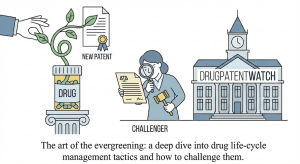
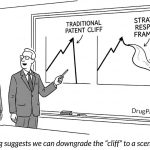
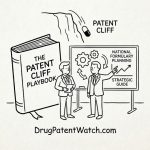
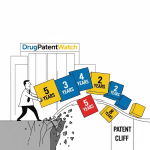
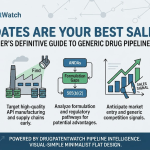
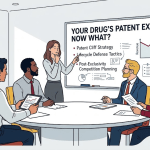
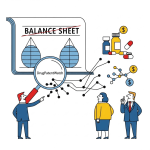
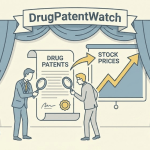
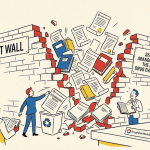
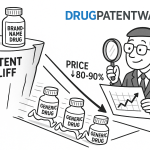
In pharmaceuticals no event looms larger or casts a longer shadow than the patent cliff. It is a moment of financial reckoning, a precipice where blockbuster drugs, the lifeblood of innovator companies, can see their market share plummet by as much as 90% within months of a key patent expiring. This is not merely a date on a calendar; it is a strategic inflection point that separates the proactive from the reactive, the masters of the long game from the casualties of market forces. The countdown is relentless, and the industry’s response has evolved into a sophisticated, and deeply controversial, art form.
At the heart of this drama lies a fundamental tension that defines the modern pharmaceutical landscape: the need to recoup the colossal investments required for drug discovery—estimated at a staggering $2.6 billion per new medicine in 2013 dollars—against the profound societal need for affordable, accessible treatments.2 This is the battleground where two powerful narratives collide. On one side, the imperative of innovation, fueled by the promise of a temporary, protected monopoly to reward the “Vegas-like odds” of bringing a new drug to market. On the other, the public health imperative, demanding that life-saving medicines not be priced out of reach for those who need them most.
Out of this crucible has emerged a set of strategies known by two very different names. The industry calls it “Life Cycle Management” (LCM), a clinical, responsible-sounding term for the stewardship of a valuable asset.6 Critics, however, have a more pointed name: “evergreening”.5 This report will pull back the curtain on this intricate chess match. We will deconstruct the evergreening playbook, examining the tactics used to extend drug monopolies far beyond their intended lifespan. We will quantify the immense economic and public health consequences of these strategies and navigate the complex legal labyrinth—from the landmark Hatch-Waxman Act to the front lines of antitrust litigation—where these battles are fought. For business professionals, brand managers, generic and biosimilar executives, investors, and legal consultants, this is a deep dive into the art of the second act—the strategic maneuvers that define market dominance and the counter-plays that challenge it. This is the art of the evergreening.
Part I: The Strategic Imperative – Defining the Landscape of Life Cycle Management and Evergreening
To understand the game, one must first understand the board and the pieces. The concepts of Life Cycle Management and evergreening are not just industry jargon; they represent two sides of the same strategic coin, a duality that lies at the very core of modern pharmaceutical commerce. One term speaks to legitimate business strategy, the other to its potential for anti-competitive abuse.
What is Pharmaceutical Life Cycle Management (LCM)? More Than Just a Timeline
At its core, Pharmaceutical Product Lifecycle Management (PLM or LCM) is the comprehensive process of managing a product’s entire journey, from its initial conception through design, development, manufacturing, commercialization, and eventual market withdrawal or disposal.9 It is, as the International Society for Pharmaceutical Engineering (ISPE) puts it, the “product information backbone for a company and its extended enterprise”. This process is not a simple linear timeline but a complex, multi-faceted operation involving a symphony of internal functions, including regulatory affairs, quality assurance (QA), and the highly technical domain of chemistry, manufacturing, and controls (CMC).
Historically, LCM strategies were often confined to the period between a new drug’s launch and its primary patent expiration. The post-exclusivity phase was viewed as an inevitable decline, a revenue free-fall to be endured rather than managed. However, in the face of increasingly aggressive and sophisticated generic competition, this view has become dangerously obsolete. Modern LCM strategies now encompass the entire product lifecycle, recognizing that the post-patent period can still account for a significant portion—up to 30% for some small-molecule drugs—of a product’s total lifetime sales.11
The goal of modern LCM is to create, maintain, and extend a product’s value in the marketplace for as long as possible. This is about more than just revenue; it’s about optimizing the product’s clinical and commercial profile at every stage. As pharmaceutical consultant Dr. Sarah Johnson aptly states, “Late-stage lifecycle management is about squeezing every ounce of value from a drug while ensuring it continues to meet patient needs. It’s a delicate balance of commercial strategy and medical responsibility”. This can involve a wide range of activities:
Improving Efficacy and Safety: Reducing side effects or finding new, more effective ways to use the drug.
Enhancing Patient Compliance: Simplifying dosage regimens or developing more convenient delivery systems to make it easier for patients to adhere to their treatment.
Leveraging Technology: Utilizing big data, pharma analytics, and artificial intelligence to accelerate clinical trials, optimize manufacturing processes, and identify new opportunities.11
Ultimately, a robust LCM plan is a proactive, forward-looking strategy that anticipates market shifts, competitive threats, and evolving patient needs, transforming the patent cliff from an endpoint into a managed transition.
Defining “Evergreening”: Strategic LCM or Anti-Competitive Ploy?
While LCM is the broad strategic framework, “evergreening” is the term used to describe a specific, and highly controversial, subset of LCM tactics. Formally, evergreening can be defined as any of a variety of legal, business, and technological strategies used by producers to “artificially extending the life of a patent or other exclusivity by obtaining additional protections to extend the monopoly period”.15 In simpler terms, it’s the practice of filing for new patents on what are often slight modifications of old drugs—a new dosage, a different release mechanism, a new combination—to keep generic competitors at bay.5
The very terminology used to describe this practice reveals the deep divide in perspective. Innovator companies and their advocates prefer the neutral language of “lifecycle management” or “incremental innovation,” framing these activities as a natural and beneficial continuation of the R&D process that improves patient care.6 They argue that even small modifications can have meaningful benefits, such as improving patient safety, reducing adverse effects, or increasing adherence.
Critics, including generic manufacturers, consumer advocacy groups, and many healthcare policymakers, use the more pejorative term “evergreening”.5 This language deliberately evokes a sense of artificial preservation, of unnaturally extending a monopoly beyond its “natural” lifespan. From this viewpoint, evergreening is not about patient benefit but about “a company’s economic advantage”. It is seen as a way to exploit loopholes in the patent system to delay competition, inflate prices, and stifle true, breakthrough innovation.7
This is not a niche practice. The scale of evergreening is startling.
A groundbreaking study by Professor Robin Feldman of UC Law San Francisco, analyzing all drugs on the market between 2005 and 2015, found that 78% of the drugs associated with new patents were not new drugs, but existing ones. The practice is especially pronounced among blockbuster drugs, the industry’s biggest revenue generators.16
This single statistic is profound. It challenges the prevailing narrative that the pharmaceutical industry’s patenting activities are primarily focused on discovering novel medicines. Instead, it suggests that a vast majority of the patent system’s activity in the pharma space is dedicated to recycling, repurposing, and extending the monopolies on products that are already on the market.16 The choice of words—”lifecycle management” versus “evergreening”—is more than just semantics. It is a strategic framing device in a high-stakes public relations and policy battle. The language used by a stakeholder is often a clear signal of their position in the larger debate over the legitimacy of the practice itself. Understanding this semantic layer is the first step in deconstructing the complex strategies at play.
Part II: The Evergreening Playbook – A Taxonomy of Offensive and Defensive Tactics
Evergreening is not a single action but a sophisticated playbook of interconnected strategies. These tactics are designed to build layers of protection around a profitable drug, creating a formidable fortress of intellectual property that is difficult, time-consuming, and expensive for any challenger to breach. Understanding these “plays” is essential for any professional seeking to navigate the competitive landscape.
Tactic 1: Secondary Patents – The Art of the Incremental Tweak
The cornerstone of nearly all evergreening strategies is the secondary patent. While a “primary” patent protects the core active pharmaceutical ingredient (API) of a new drug, secondary patents are filed on subsequent, often minor, modifications to that drug.4 These tweaks, while presented as innovations, are often incremental changes that may or may not offer significant therapeutic advantages over the original product. The goal is to create new, patent-protected versions of the drug that can be marketed as improvements, thereby extending the product’s overall monopoly lifecycle.
Common types of modifications that form the basis of secondary patents include:
New Formulations: This is perhaps the most common tactic. A company might develop an extended-release (XR) or controlled-release (CR) version of a drug that was originally an immediate-release tablet. They might also create different salt forms or crystalline structures (polymorphs) of the API, claiming these new forms have better stability or bioavailability.19 The timing of these new formulations is often highly strategic. For instance, the manufacturer of Adderall introduced its extended-release Adderall XR formulation just four months before a generic version of the immediate-release original was approved, allowing the company to aggressively shift the market to the new, patent-protected product.
New Dosages or Administration Routes: A company may patent a new dosage strength of an existing drug or develop an entirely new way to administer it. This could involve creating an orally dissolving tablet, a transdermal patch for a drug previously sold as a pill, or an inhaled version of an injectable medication.19
Polymorphs and Isomers: Beyond simple reformulations, companies can delve into the specific chemistry of the drug molecule. They may patent a specific crystalline structure (a polymorph) of the API or isolate and patent a single isomer of a drug that was previously sold as a mixture of isomers.19
These secondary patents, while individually seeming minor, collectively form the building blocks of a powerful evergreening strategy, layering protection on top of protection long after the original patent on the breakthrough invention has expired.
Tactic 2: The Chiral Switch – A Mirror Image, A New Monopoly
One of the most elegant and controversial evergreening tactics is the “chiral switch.” This strategy leverages a fundamental property of chemistry known as chirality. Many drug molecules are “chiral,” meaning they exist in two forms that are non-superimposable mirror images of each other, like a left and a right hand. These two forms are called enantiomers. Often, a drug is initially developed and marketed as a “racemic mixture,” which is a 50/50 mix of both enantiomers.15
The chiral switch strategy involves a brand company, whose patent on the racemic mixture is about to expire, isolating one of the single enantiomers, claiming it has therapeutic advantages, and patenting it as a new product.15 This allows the company to launch a “new” drug that is, in essence, half of the old drug, and migrate patients to it before generic versions of the original racemic mixture can enter the market.
Case Study: AstraZeneca’s Prilosec® (omeprazole) to Nexium® (esomeprazole)
The textbook example of a successful chiral switch is AstraZeneca’s transition from its blockbuster heartburn medication Prilosec® to its successor, Nexium®.
The Switch: Prilosec (omeprazole) was a racemic mixture. As its patents neared expiration, AstraZeneca isolated and patented the S-isomer, esomeprazole, and launched it as Nexium® just months before generic omeprazole was set to hit the market.23
The Justification and the Reality: AstraZeneca claimed that Nexium® offered pharmacokinetic advantages over Prilosec®. However, subsequent independent studies revealed that at equipotent doses—meaning doses that produce the same therapeutic effect—there was no significant clinical difference between the two drugs. The pivotal clinical trials used to gain approval for Nexium® were criticized for comparing it against omeprazole at non-equipotent doses, thus making the new drug appear more effective than it actually was.
The Strategy: The chiral switch was not just a scientific maneuver; it was a masterclass in strategic marketing and legal defense. AstraZeneca invested an estimated $500 million in the U.S. alone on direct-to-consumer advertising and other promotional activities to build the Nexium® brand, famously dubbing it “the little purple pill”.23 This was coupled with the creation of a formidable “patent thicket” around the drug—in Australia, for example, there were 61 additional patents on omeprazole/esomeprazole. This legal fortress was used to initiate litigation against generic competitors, further delaying their market entry.
The Outcome: The strategy was a spectacular commercial success. AstraZeneca successfully transferred a huge portion of its Prilosec® market share to the new, patent-protected Nexium®, which became a multi-billion dollar blockbuster in its own right. This compensated for the revenue loss from generic omeprazole but came at a tremendous cost to healthcare systems and consumers, who paid premium prices for a drug that offered little to no additional therapeutic value.23
Tactic 3: Product Hopping – Forcing the Market’s Hand
Product hopping is a particularly aggressive evergreening strategy that directly manipulates the mechanics of the U.S. drug distribution system. It occurs when a brand-name pharmaceutical company switches the market from an older version of a drug to a new, slightly modified version with the specific intent of preventing pharmacists from substituting a cheaper generic alternative.15
This tactic exploits a crucial feature of the U.S. system: state drug substitution laws. These laws generally allow or require pharmacists to automatically substitute a less expensive, “AB-rated” generic when a patient presents a prescription for a brand-name drug. To be AB-rated, a generic must be therapeutically equivalent to the brand product—meaning it has the same active ingredient, dosage form, strength, and route of administration. By making a minor change to the product—for example, switching from a capsule to a tablet, or from a 10 mg tablet to a 20 mg tablet—a brand company creates a “new” product for which the old generic is no longer AB-rated. This breaks the chain of automatic substitution, effectively forcing doctors to write new prescriptions for the new version and destroying the market for the impending generic.
Product hopping comes in two main flavors:
“Hard Switch”: This is the more overt and coercive version. The brand company completely withdraws the original product from the market, leaving doctors and patients with no choice but to switch to the new, reformulated version.26 This was the strategy attempted by Forest Laboratories with its Alzheimer’s drug Namenda, where they planned to pull the original immediate-release (IR) version from shelves to force a migration to the new extended-release (XR) version.28
“Soft Switch”: In a soft switch, the original product technically remains available, but the company employs a full-court press of marketing, physician detailing, and rebate strategies to aggressively migrate the prescription base to the new product before the generic for the old product can launch.26
Case Study: Adderall XR
The case of Adderall, a drug for ADHD, provides a clear example of how a strategically timed product hop can preserve a brand’s market dominance. The manufacturer introduced Adderall XR, an extended-release formulation, just four months before the first generic competitor for the original immediate-release version was approved. This was a classic “soft switch” executed with precision timing. By heavily promoting the “convenience” of the once-daily XR version to doctors and patients, the company successfully shifted a significant portion of the market away from the original formulation. When the generic for the immediate-release version finally launched, its potential market was already significantly eroded. Patients were now on a new prescription for Adderall XR, for which the new generic was not substitutable. This allowed the manufacturer to maintain premium pricing and high market share for years longer than it would have otherwise.27
Tactic 4: Building the Fortress – Patent Thickets and Their Chilling Effect
If secondary patents are the bricks, then a “patent thicket” is the impenetrable fortress they are used to build. A patent thicket is a dense, overlapping web of dozens, or even hundreds, of patents surrounding a single drug product.33 While the primary patent may cover the core molecule, the subsequent patents in the thicket cover every conceivable variation: different salt forms, polymorphs, formulations, dosages, manufacturing methods, and new medical uses.7
The primary purpose of a patent thicket is not necessarily to protect a series of genuine, breakthrough inventions. Instead, its main function is to create a prohibitive legal and financial barrier for any potential competitor. The sheer volume of patents creates a powerful “chilling effect.” A generic or biosimilar company wishing to enter the market must navigate this legal minefield. The cost of litigating dozens of patents simultaneously is exorbitant, and the risk is immense.35 This creates a daunting strategic asymmetry. To successfully launch its product, the challenger must win on every single patent asserted against it—a task akin to “batting a thousand” in baseball. The innovator company, in contrast, needs only one patent to be upheld in court to block competition entirely, or at the very least, to force a favorable settlement.
Case Study: AbbVie’s Humira®
There is no more infamous or illustrative example of a patent thicket than the one constructed by AbbVie around its rheumatoid arthritis drug, Humira®, the best-selling drug in the world for many years.
The Scale of the Thicket: AbbVie amassed a staggering patent portfolio for Humira, with estimates ranging from 136 patents to 247 patent applications filed in the United States alone.34 An astonishing 89% of these patent applications were filed after Humira was first approved and on the market.
The Nature of the Patents: The strategy was not about quality, but quantity. An independent, peer-reviewed study found that approximately 80% of the patents in Humira’s U.S. patent estate were duplicative or non-patentably distinct from one another.34 They were patents stacked on top of patents, often for trivial modifications.
The Impact: This impenetrable fortress of patents allowed AbbVie to delay the entry of competing biosimilars in the lucrative U.S. market until 2023. This was a full four years after biosimilars had already launched in Europe, where the patent landscape was far less dense. The cost of this delay to the U.S. healthcare system has been estimated to be an excess of $14.4 billion. Humira stands as the quintessential example of how a patent thicket can be weaponized to extend a monopoly far beyond the life of its core innovative patents, at enormous cost to society.
Tactic 5: Other Key Plays – Combination Products and Regulatory Maneuvers
Beyond the major strategies, the evergreening playbook includes a variety of other clever tactics designed to delay competition.
Combination Products: A highly effective strategy involves patenting a fixed-dose combination (FDC) of two or more existing drugs in a single pill.15 Even if the patents on the individual components have expired, the new combination product receives its own patent protection. This is often justified as improving patient compliance by reducing the number of pills a patient has to take, but it also serves as a powerful tool to reset the patent clock. This is particularly potent in the case of drug-device combination products, such as pre-filled insulin pens or asthma inhalers. Even if the drug itself is old and off-patent, a new patent on the delivery device can effectively block generic competition.38
Linkage Evergreening: This tactic involves intertwining the drug approval process with the patent system. It requires national drug regulators to “link” their standard review for safety, quality, and efficacy with an assessment of whether the impending generic product might infringe an existing patent. This can create significant administrative hurdles and delays for generic applicants, as seen in Canada’s Notice of Compliance (NOC) regulations.
Citizen Petitions: A brand company can file a “citizen petition” with the FDA, raising purported safety, efficacy, or quality concerns about a pending generic application. While the FDA is required to review these petitions, they can be used as a delaying tactic. An analysis revealed that 92% of all such petitions were filed by brand-name manufacturers, often strategically timed just as their patents were about to expire, effectively stalling competition for another 150 days or more.
Authorized Generics: This is a particularly cunning counter-move against generic challengers. The Hatch-Waxman Act rewards the first generic company to successfully challenge a brand’s patents with a 180-day period of market exclusivity. However, there is nothing to stop the brand company from launching its own generic version—an “authorized generic” which is identical to the brand drug but sold without the brand name—during that same 180-day period.15 This move severely dilutes the financial reward for the first generic challenger, undermining the very incentive designed to encourage patent challenges, and allows the brand to maintain a significant share of the “generic” market for an additional six months.
Table 1: A Taxonomy of Evergreening Strategies
Strategy Name
Description
Primary Mechanism
Classic Case Example
Secondary Patents
Obtaining new patents on minor modifications to an existing drug.
Extends monopoly through patents on new formulations, dosages, isomers, or polymorphs.
Generic strategy used across many drugs.
Chiral Switch
Patenting a single, isolated enantiomer of a previously marketed racemic (mixed-enantiomer) drug.
Creates a “new” product that is chemically similar but legally distinct, allowing market migration.
AstraZeneca’s Prilosec® (omeprazole) to Nexium® (esomeprazole)
Product Hopping
Switching the market from an old drug formulation to a new one to prevent automatic generic substitution.
Exploits state drug substitution laws that require generics to be AB-rated to the specific brand formulation.
Adderall® to Adderall XR®; Forest Labs’ Namenda® IR to Namenda® XR 22
Patent Thicket
Creating a dense, overlapping web of numerous patents around a single product.
Creates prohibitive litigation costs and risk for challengers, who must defeat every asserted patent.
AbbVie’s Humira® (adalimumab) 34
Combination Products
Patenting a fixed-dose combination of two or more drugs, or a drug-device combination.
Creates a new, patent-protected product even if the individual components are off-patent.
Requiring drug regulators to link safety/efficacy approval to patent status assessment.
Creates administrative delays and hurdles for generic approval.
Canada’s Patented Medicine (Notice of Compliance) Regulations
Citizen Petitions
Filing petitions with the FDA raising safety/quality concerns about a pending generic.
Can trigger FDA review and delay generic approval, even if the petition is baseless.
General tactic; 92% filed by brands near patent expiry
Authorized Generics
The brand company launches its own generic version during the first-filer’s 180-day exclusivity period.
Dilutes the financial reward for the generic challenger and allows the brand to retain market share.
General tactic used in pay-for-delay settlements
Part III: The Ripple Effect – Economic and Public Health Consequences
The strategic maneuvers of the evergreening playbook are not conducted in a vacuum. They create powerful ripple effects that extend across the entire healthcare ecosystem, impacting government budgets, insurance premiums, and, most critically, the wallets and well-being of patients. The consequences are both quantifiable in the billions of dollars and deeply personal in their human cost.
Quantifying the Cost: The Billion-Dollar Impact on Healthcare Systems
The financial burden of evergreening is staggering. By successfully delaying the entry of lower-cost generic and biosimilar competition, these strategies force healthcare systems, insurers, and patients to continue paying monopoly prices for years longer than the original patent bargain intended. The data paints a stark picture:
System-Wide Costs: A 2021 analysis by the Committee for a Responsible Federal Budget estimated that implementing policies to curtail evergreening could reduce federal deficits by at least $10 billion over the next decade. This includes projected savings of $7 billion for Medicare Part D and $9 billion for the private sector. Consumer advocacy group Public Citizen calculated that patent abuses by the makers of just four of the first ten drugs selected for Medicare price negotiation will cost the program between $4.9 and $5.4 billion in lost savings by the time the negotiated prices take effect.42
Drug-Specific Costs: The impact of evergreening on a single blockbuster drug can be immense. The product hopping strategy for the multiple sclerosis drug Copaxone (glatiramer acetate) is estimated to have cost consumers between $4.3 billion and $6.5 billion over a two-and-a-half-year period before the secondary patent was invalidated. The delayed U.S. market entry of biosimilars for Humira, due to its infamous patent thicket, is estimated to have cost the American healthcare system an excess of $14.4 billion compared to Europe, where competition began years earlier.
Micro-Level Impact: Even on a smaller scale, the costs are significant. A meticulous study in one canton of Switzerland analyzed eight follow-on drugs and found that evergreening strategies resulted in €30.3 million (approximately $32 million) in “extra costs” over an eight-year period that could have been saved by switching to generics.
These astronomical figures are not just abstract numbers on a balance sheet. They translate into higher insurance premiums, strained public budgets, and direct, out-of-pocket costs for patients. The National Academies of Science, Engineering & Medicine has confirmed that spending on prescription drugs has risen so dramatically that “many individuals have difficulty paying for the drugs that they or their family members need”. This financial toxicity can lead to devastating choices. We see this in the poignant testimony of individuals like Kathleen Kaiser, a patient from Wichita, Kansas, who was forced to stop taking her Humira injections because the cost would “drain what little savings I have left”. For many, the consequence of evergreening is not just a higher co-pay; it is the abandonment of necessary medical treatment.
The Innovation Paradox: Does Evergreening Stifle Breakthrough Research?
The pharmaceutical industry’s primary defense of its patenting practices, including evergreening, is that the extended revenue streams are essential to fund the next generation of breakthrough medicines.5 Innovator companies argue that without the ability to recoup the immense costs and risks of R&D—the “Vegas-like odds” where a single late-stage failure can wipe out a billion-dollar investment—the pipeline of new therapies would run dry.
However, a growing chorus of critics, from academic researchers to generic industry associations, argues that evergreening creates a dangerous “innovation paradox.” By making it relatively easy and highly profitable to secure extended monopolies for minor, low-risk modifications to existing drugs, the system may inadvertently disincentivize the far riskier and more expensive pursuit of truly novel, breakthrough therapies.7
This creates a perverse incentive structure. The R&D cost to simply tweak an existing product is a fraction of what is required to discover a new one—by some estimates, around 10%. If the patent system lavishly rewards both activities with extended monopoly pricing, a rational, profit-maximizing firm may be drawn to redirect its resources toward a portfolio of lower-risk, high-certainty evergreening projects rather than a few high-risk “moonshot” programs. The critical question, as posed by Jim Keon, president of the Canadian Generic Pharmaceutical Association, is: “Is it useful R&D? If the R&D is just to tweak a product to get more monopoly protection without really providing an improved medication, then maybe it doesn’t deserve a patent”.
This is not necessarily a question of corporate morality, but of systemic design. The current framework may have created a situation where the most logical and profitable business strategy is not to cure a new disease, but to find a new way to patent an old cure. This raises profound ethical questions about whether the system is truly rewarding the kind of innovation that benefits society most, or if it has become captured by clever legal and marketing strategies that prioritize profit over public health progress.19 The “innovation paradox” suggests that evergreening may not be the engine of future cures, but a diversion of resources that could be used to find them.
Part IV: The Counter-Play – Challenging Evergreening in the U.S. Legal Framework
The United States legal system provides the primary battleground where the strategic thrust of evergreening meets the counter-play of generic and biosimilar challengers. The framework is complex, built upon a landmark piece of legislation that, in its attempt to strike a grand bargain, inadvertently created the very loopholes that are now expertly exploited. Understanding this framework is critical to understanding how evergreening is both enabled and challenged.
The Hatch-Waxman Act: Deconstructing the Grand Compromise
The Drug Price Competition and Patent Term Restoration Act of 1984, universally known as the Hatch-Waxman Act, was a legislative grand compromise designed to balance two competing interests: incentivizing new drug innovation and facilitating the entry of low-cost generics.45
The Boon for Generics: For the generic industry, the Act was revolutionary. It created the Abbreviated New Drug Application (ANDA) pathway, which allowed generic manufacturers to gain FDA approval without having to conduct their own costly and time-consuming clinical trials for safety and efficacy.46 Instead, they could rely on the innovator’s original data and needed only to prove that their product was “bioequivalent” to the brand-name drug. This dramatically lowered the barrier to entry and has been wildly successful in one respect: today, generic drugs account for over 90% of all prescriptions filled in the U.S..
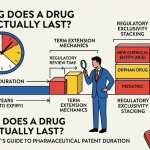
The Concession to Innovators: In exchange for this new pathway for generics, innovator companies received significant concessions. The Act established a system for patent term extension, allowing brands to add back a portion of the patent life that was consumed by the lengthy FDA regulatory review process.45 It also created several forms of regulatory exclusivity, which are distinct from patents and provide fixed periods of market protection. These include a five-year exclusivity for New Chemical Entities (NCEs), a three-year exclusivity for new clinical investigations (e.g., a new use for an old drug), and a six-month pediatric exclusivity for conducting studies in children.
The intent of this carefully constructed bargain was to create a predictable lifecycle: a period of protected monopoly for the innovator, followed by swift entry of low-cost competition for consumers. However, the reality has diverged sharply from this vision. The very mechanisms of the Act have been turned into strategic weapons. A Yale Law & Policy Review study found that a staggering 91% of drugs that receive a patent term extension under Hatch-Waxman go on to continue their monopolies well past the expiration of that extension, primarily by leveraging secondary patents. The grand compromise, intended to resolve conflict, instead became the new arena for it.
The Paragraph IV Certification: A Generic’s Declaration of War
At the heart of the Hatch-Waxman litigation process is the patent certification. When a generic company files an ANDA, it must make a certification to the FDA regarding each patent listed for the brand-name drug in the agency’s “Orange Book”.48 There are four types of certification:
Paragraph I: No patent information has been filed for the brand drug.
Paragraph II: The patent has already expired.
Paragraph III: The patent has not expired, and the generic will wait until it does to launch.
Paragraph IV (PIV): The patent is invalid, unenforceable, or will not be infringed by the generic product.47
A Paragraph IV certification is not a mere administrative filing; it is an audacious legal challenge. It is, in effect, a generic company’s declaration of war against the brand’s patent monopoly. Filing a PIV certification is considered an “artificial act of infringement” that gives the brand company the immediate right to sue the generic filer, setting in motion a high-stakes legal battle before the generic drug even hits the market.
The process is strictly timed:
Filing the ANDA: The generic company submits its ANDA to the FDA containing the PIV certification.
The Notice Letter: Once the FDA acknowledges that the ANDA is complete and ready for substantive review, the generic filer has 20 days to send a detailed notice letter to the brand company and patent owner. This letter must lay out the full factual and legal basis for the generic’s claim that the patent is invalid or not infringed.
The 45-Day Clock: Upon receiving the notice letter, a 45-day clock starts ticking. The brand company has this window to file a patent infringement lawsuit against the generic challenger.48
Navigating the High-Stakes Game: The 30-Month Stay and 180-Day Exclusivity
The brand company’s decision within that 45-day window triggers two of the most powerful and consequential mechanisms in the Hatch-Waxman framework.
The 30-Month Stay: If the brand company files suit within the 45-day period, it triggers an automatic 30-month stay of FDA approval for the generic’s ANDA.48 This means the FDA is legally prohibited from giving final approval to the generic drug for up to two and a half years, or until the court case is resolved, whichever comes first. This automatic injunction is a potent tool for the innovator, guaranteeing a significant delay in competition regardless of the underlying strength or weakness of the asserted patent. It provides a crucial window for the brand to execute defensive LCM strategies, such as a product hop.
The 180-Day Exclusivity Prize: To balance the scales and incentivize generics to undertake these risky and expensive patent challenges, Hatch-Waxman offers a powerful prize: 180 days of market exclusivity for the first generic company to file a substantially complete ANDA with a PIV certification.48 For six months, this “first-to-file” generic is the only one of its kind on the market. This duopoly with the brand allows the generic to capture enormous market share while still charging a price significantly higher than what would be seen under full multi-generic competition. The potential for this lucrative prize has transformed the PIV challenge from an occasional legal maneuver into a core and routine business strategy for the entire generic industry, leading to a steady increase in PIV litigation since 2000.
This intricate dance of certifications, stays, and exclusivities defines the modern pharmaceutical patent challenge. It is a system designed to foster litigation as the primary means of resolving disputes, with multi-billion dollar market shares hanging in the balance.
Part V: The Antitrust Gauntlet – When Strategic Management Becomes Monopolization
While the Hatch-Waxman Act provides the specific rules of engagement for patent challenges, there is another, broader legal framework that looms over the evergreening playbook: antitrust law. When a company’s Life Cycle Management strategies cross the line from legitimate competition to exclusionary conduct designed to unlawfully maintain a monopoly, they can face scrutiny under Section 2 of the Sherman Act. The area of product hopping, in particular, has become a fiercely contested frontier in pharmaceutical antitrust litigation.
Crossing the Line: Antitrust Scrutiny of Product Hopping
The core question in any product hopping case is whether the brand company’s actions constitute pro-competitive innovation or anti-competitive exclusion.26 The analysis is exceptionally nuanced, sitting at the complex intersection of patent law, FDA regulations, and core antitrust principles. The fact that these markets are unique—with doctors choosing the product, patients consuming it, and insurers paying for it—further complicates the assessment of competitive harm.
As a result, U.S. courts have offered inconsistent and evolving approaches, often hinging their analysis on the distinction between a “hard switch” (withdrawing the old product) and a “soft switch” (leaving it on the market but promoting the new one).26
Abbott Laboratories v. Teva (TriCor): This early case set an important precedent. The court denied Abbott’s motion to dismiss an antitrust claim where the company had not only introduced new formulations of its drug TriCor but had also withdrawn the older versions and, crucially, had them delisted from pharmacy databases used for automatic substitution.31 The court found that such actions went beyond simple innovation and amounted to “consumer coercion” that actively thwarted choice and prevented the market from working.53
Walgreen Co. v. AstraZeneca (Nexium): In contrast, the court in the Walgreen case dismissed the complaint against AstraZeneca for its Prilosec-to-Nexium switch. The key difference, in the court’s view, was that AstraZeneca had not withdrawn Prilosec from the market. The court reasoned that by leaving the original product available for generic substitution, AstraZeneca had “added choices” to the market, and it was not the role of antitrust law to second-guess which product was superior.31
New York v. Actavis (Namenda): The legal pendulum swung back in the Namenda case. Here, the Second Circuit Court of Appeals upheld a preliminary injunction to block Forest Laboratories (an Actavis subsidiary) from executing a “hard switch” of its Alzheimer’s drug Namenda IR to the new Namenda XR.28 The court saw this not as innovation but as a coercive move explicitly designed to “avoid the patent cliff” by forcing patients onto the new drug before generics for the old one could launch. The court found the company’s pro-competitive justifications for the switch to be “pretextual”.
Mylan Pharmaceuticals v. Warner Chilcott (Doryx): The landscape was further complicated by the Doryx case. Here, the Third Circuit affirmed the dismissal of Mylan’s product hopping suit against Warner Chilcott.55 The court found that Mylan had failed to prove two key elements: that Warner Chilcott possessed monopoly power in a properly defined market (which the court saw as all oral tetracyclines, not just Doryx) and that its conduct was anti-competitive. The court emphasized that Mylan had not been foreclosed from the market and had, in fact, “reaped generous profits” from its own generic version. It distinguished the case from Namenda, noting that the Doryx reformulations did not extend patent exclusivity and did not completely bar generics from the market.
This patchwork of rulings shows that the outcome of a product hopping case can depend heavily on the specific facts, the circuit court in which it is heard, and the perceived coerciveness of the brand’s actions.
A New Framework: The “No-Economic-Sense” Test
In an attempt to bring more rigor and predictability to this confusing area of law, legal scholars Michael Carrier and Steve Shadowen proposed a new framework for analyzing product hopping.26 Their approach moves beyond the simplistic hard/soft switch dichotomy and focuses on the underlying economics of the brand’s conduct.
At the heart of their framework is the “no-economic-sense” test. This test asks a simple but powerful question: would the brand’s decision to launch a new product and cannibalize the sales of its existing successful product have made economic sense but for its effect of blocking or impairing generic competition?.
For example, a company might spend millions to develop and market a new formulation that offers only slightly different profit margins from its existing blockbuster. If this move simultaneously prevents a low-cost generic from capturing 80% of the market, the action might be highly profitable overall. However, if you remove the competition-blocking effect from the equation, would the company have undertaken the same costly switch just to move patients from one of its own high-margin products to another? If the answer is no—if the move only makes sense as a way to stymie a competitor—then it fails the “no-economic-sense” test and can be deemed anti-competitive.
This framework also proposes crucial “safe harbors” to protect legitimate innovation. It suggests that product reformulations introduced well outside the “generic window”—the period when generic entry is imminent—should be immune from antitrust scrutiny. This ensures that companies are free to innovate and improve their products throughout their lifecycle without fear of litigation, so long as the timing and nature of the change are not clearly aimed at thwarting an impending competitive threat. This test provides a more economically grounded and predictable standard for courts, enforcers, and companies to distinguish between genuine product improvement and unlawful monopolization.
Table 2: Landmark Antitrust Product Hopping Cases
Case Name / Drug
Type of “Hop”
Key Brand Action
Court’s Ruling
Key Rationale / Legal Test Applied
Abbott v. Teva / TriCor
Hard Switch
Withdrew old product; delisted from pharmacy databases; repurchased inventory.
Denied motion to dismiss.
Brand’s actions amounted to “consumer coercion” that actively “thwarted choice.”
Walgreen v. AstraZeneca / Nexium
Soft Switch
Aggressive marketing of new product (Nexium) while leaving old product (Prilosec) on the market.
Dismissed complaint.
Brand “added choices” to the market; superiority of products is for the market, not courts, to decide.
Mylan v. Warner Chilcott / Doryx
Multiple Soft/Hard Switches
Sequential reformulations (tablets to capsules, new dosages).
Affirmed summary judgment for defendant.
Plaintiff failed to prove monopoly power in a broad market; plaintiff was not foreclosed and made significant profits.
New York v. Actavis / Namenda
Coercive Hard Switch
Planned withdrawal of old IR version to force migration to new XR version before generic entry.
Granted preliminary injunction to block the switch.
Switch was a coercive action to avoid the “patent cliff”; pro-competitive justifications were “pretextual.”
In re: Suboxone
Hard Switch with Disparagement
Withdrew tablet form after launching a new film version, accompanied by a fraudulent safety campaign against the tablets.
Denied motion to dismiss.
Combination of product withdrawal and fraudulent disparagement of the old product constituted anti-competitive conduct.
Part VI: Global Perspectives – Lessons from India and the European Union
The battle over evergreening is not confined to the United States. Around the world, nations are grappling with the same fundamental tension between intellectual property rights and public health. The approaches taken by two major jurisdictions, India and the European Union, offer starkly different models for how to manage this conflict, providing valuable lessons and strategic considerations for global pharmaceutical players.
The Indian Model: Section 3(d) and the Rejection of Gleevec
India has adopted one of the world’s most stringent legal stances against evergreening, codified directly into its patent law. The key provision is Section 3(d) of the Indian Patents Act. This powerful clause explicitly states that “the mere discovery of a new form of a known substance which does not result in the enhancement of the known efficacy of that substance” is not a patentable invention.5 This creates a high bar for secondary patents: a company cannot get a new patent for a minor modification—like a new salt form or crystalline structure—unless it can prove that the new version is significantly more effective as a medicine.
This provision was put to the ultimate test in the landmark 2013 Supreme Court of India case, Novartis v. Union of India & Others, a decision that reverberated throughout the global pharmaceutical industry.
The Challenge: The Swiss pharmaceutical giant Novartis sought a patent in India for a new beta crystalline form of its life-saving cancer drug, Gleevec (imatinib mesylate).5 Novartis argued that this new form had improved bioavailability and was therefore a patentable invention.
The Ruling: In a historic decision, India’s Supreme Court rejected Novartis’s patent application.5 The court ruled that the new form of Gleevec did not demonstrate a significant enhancement in “therapeutic efficacy” as required by Section 3(d). The Court interpreted “efficacy” in a strict, clinical sense, concluding that improved bioavailability did not automatically translate to a better therapeutic outcome for the patient.
The Global Debate: The verdict ignited a firestorm of controversy. Novartis and its industry allies argued that the decision would cripple innovation, discouraging investment in India and in the incremental research that leads to better medicines. Paul Herrling, then chairman of the Novartis Institute for Tropical Diseases, argued that India’s concept of evergreening was overreaching, asking, “what if the new product improves patient safety? Or reduces adverse effects? Or increases adherence?”. Conversely, India’s government, along with global public health advocates and generic manufacturers, celebrated the ruling as a monumental victory for access to affordable medicines. They saw it as a justified and lawful check on the abuse of the patent system.
The Gleevec case established India as a global leader in the fight against evergreening. It affirmed a legal framework where the burden of proof is on the innovator to demonstrate genuine therapeutic improvement, not just minor chemical or formulation changes. This model provides a powerful legal precedent for other developing nations seeking to prioritize public health needs within the bounds of international trade law.22
The European Union: A System Susceptible to Evergreening?
The European Union presents a more complex and nuanced landscape. On one hand, the European patent system contains several features that can facilitate evergreening strategies. The European Patent Convention (EPC) allows for the patenting of new medical uses, new dosage regimens, and new manufacturing processes, all of which can be used to build secondary patent portfolios. Furthermore, mechanisms like divisional patent applications (allowing an applicant to split off new applications from a pending one) and Supplementary Protection Certificates (SPCs) (which can extend a patent term by up to five years to compensate for regulatory delays) provide additional levers for extending market exclusivity.
However, this permissive patent environment is counterbalanced by one of the world’s most aggressive competition law authorities: the European Commission. While obtaining secondary patents may be legal under the EPC, using them as part of a broader strategy to unlawfully exclude competitors can trigger severe penalties under EU antitrust law, particularly Article 102 of the Treaty on the Functioning of the European Union (TFEU), which prohibits the abuse of a dominant market position.
This creates a high-wire act for pharmaceutical companies operating in the EU. The strategy is legally viable but fraught with risk. The European Commission has shown its willingness to intervene forcefully, levying massive fines in cases where it determines that patent strategies have crossed the line into anti-competitive abuse. For example, Teva was fined for abusing its dominant position by strategically filing and withdrawing divisional patents for Copaxone to create legal uncertainty and delay generic entry. Similarly, Servier was fined for an exclusionary strategy that included acquiring weak patents and entering into “pay-for-delay” settlements with generic companies to keep them off the market.
The role of the European Medicines Agency (EMA) adds another layer to lifecycle management in the EU. The EMA’s robust pharmacovigilance system, which continuously monitors the safety and effectiveness of all medicines after they are on the market, is a critical component of post-authorization LCM. The ongoing safety assessments by its Pharmacovigilance Risk Assessment Committee (PRAC) can impact a drug’s labeling, approved uses, and overall market standing, influencing its lifecycle independently of patent status.
In essence, the EU framework presents a fascinating duality. The patent system provides the tools for evergreening, but the competition authority polices their use with a heavy hand. Success in Europe requires a delicate balancing act: leveraging the patent system to its fullest while meticulously avoiding any conduct that could be construed as an abuse of market power.
Part VII: Forging Competitive Advantage – Intelligence and Counter-Strategy
In the intricate chess match of pharmaceutical patents, victory is not a matter of chance. It is the result of deep strategic intelligence, meticulous planning, and flawless execution. For both innovator companies seeking to defend their franchises and generic/biosimilar firms aiming to challenge them, success requires a sophisticated, multi-disciplinary approach that integrates legal, regulatory, and commercial strategy.
The Challenger’s Toolkit: Strategies for Generic and Biosimilar Firms
For a generic or biosimilar company, challenging an entrenched brand-name drug is a formidable task. However, a well-defined toolkit of offensive strategies can level the playing field.
Wielding the Paragraph IV as an Offensive Weapon: The Paragraph IV certification process should not be viewed as a mere regulatory hurdle, but as the primary offensive weapon in a generic’s arsenal. It is a proactive business strategy designed to initiate a challenge on the generic’s own terms and timeline. A successful PIV challenge, leading to the coveted 180-day exclusivity period, can be immensely profitable and is often the most viable path to market entry before price erosion from multiple competitors sets in.
Leveraging Antitrust Litigation: In cases of particularly egregious evergreening—such as blatant product hopping or the construction of a massive, duplicative patent thicket—antitrust law offers a powerful avenue for attack.31 A successful antitrust suit can not only clear the path for market entry but can also result in significant damages awarded to the challenger.
Strategic Patent Design-Arounds: A technically complex but potent strategy involves designing a generic product that intentionally “designs around” the brand’s secondary patents. This could mean developing a different salt form, a non-infringing manufacturing process, or a formulation that avoids the specific claims of the innovator’s patents. While this requires significant R&D investment, it can be a way to avoid lengthy and uncertain litigation altogether.
Exploiting Global Precedent: The global nature of the pharmaceutical industry means that a legal victory in one jurisdiction can create leverage in another. A successful patent invalidation in the European Union or a rejection based on India’s strict Section 3(d) can provide powerful arguments and prior art to bolster a patent challenge in the United States.
The Innovator’s Defense: Robust and Defensible LCM
For innovator companies, defending a blockbuster franchise against generic challengers requires more than just piling on patents. It requires a robust and defensible Life Cycle Management strategy that can withstand legal and regulatory scrutiny.
Prioritize Genuine, Demonstrable Improvement: The single most effective defense against accusations of evergreening is to ensure that any product line extension offers a genuine, clinically meaningful, and demonstrable benefit to patients.5 A new formulation that significantly improves patient safety, enhances efficacy, or dramatically increases adherence is far more defensible in court, with payers, and in the public eye than a trivial modification with no clear clinical advantage.
Build a High-Quality Patent Portfolio: The Humira case serves as a cautionary tale. While a large patent portfolio can be a deterrent, a “thicket” composed of weak, duplicative, or non-inventive patents can attract unwanted antitrust scrutiny and may ultimately prove vulnerable to a focused legal challenge.36 The strategic focus should be on securing strong, high-quality, defensible patents on genuine innovations rather than simply maximizing the number of patents filed.
Master Strategic Communication: A key part of a defensive LCM strategy is proactively and transparently communicating the value proposition of any new formulation. Innovator companies must be prepared to present compelling data to physicians, payers, patients, and regulators that clearly articulates the clinical benefits of a new product, justifying any market switch and defending against claims that the move was purely for financial gain.
The Role of Competitive Intelligence: Knowing the Battlefield
In this high-stakes, information-driven environment, comprehensive competitive intelligence (CI) is the bedrock of any successful strategy. It is not a luxury but an absolute necessity that informs every critical decision, from early-stage R&D investments to late-stage commercial and legal tactics.
Patent intelligence, in particular, serves as a powerful early warning system. Because patent applications are typically published 18 months after filing, they offer a glimpse into a competitor’s research pipeline and strategic intentions years before a product ever reaches the market. This is where specialized platforms become indispensable.
Tools like DrugPatentWatch provide the critical infrastructure for this intelligence gathering. They allow companies to move beyond reactive responses and adopt a proactive, strategic posture.
Mapping the Competitive Landscape: For both innovators and challengers, platforms like DrugPatentWatch enable the systematic tracking of competitor patent portfolios. They help map out the patent landscape for a given therapeutic area, monitor key expiration dates, and identify potential “white space”—areas with limited patent activity that may represent untapped opportunities.13
Preparing for Loss of Exclusivity (LOE): For an innovator company facing an impending patent cliff, DrugPatentWatch is crucial for identifying which generic or biosimilar manufacturers are preparing to launch a challenge. It can provide insights into their historical launch patterns, their litigation strategies, and the potential strength of their ANDA filings. This intelligence is vital for building an effective defensive LCM plan. Conversely, for a generic company, it allows for detailed tracking of the innovator’s defensive patenting strategies, helping to anticipate which secondary patents will be asserted in litigation and how best to prepare a challenge.
In the modern pharmaceutical arena, data is ammunition. The ability to gather, analyze, and act upon timely and accurate competitive intelligence is what ultimately separates the winners from the losers in the art of evergreening and the battle for market share.
Conclusion: Navigating the Evolving Landscape
The art of evergreening is a testament to the strategic ingenuity born from immense financial pressure. It is a complex and deeply ingrained feature of the pharmaceutical business model, a direct consequence of the fundamental tension between the high cost of innovation and the societal demand for affordable healthcare. The strategies, from secondary patenting and product hopping to the construction of impenetrable patent thickets, are not random acts but deliberate, sophisticated components of late-stage Life Cycle Management, designed to extend the profitable life of blockbuster drugs far beyond the original 20-year patent bargain.
As this report has detailed, the economic impact of these practices is measured in the tens of billions of dollars, shifting costs onto healthcare systems, insurers, and patients. The debate continues to rage over whether this extended profitability genuinely fuels future breakthrough research or paradoxically stifles it by rewarding low-risk, incremental tweaks over high-risk, novel discoveries.
The legal and regulatory landscape is in a constant state of flux. The U.S. Hatch-Waxman Act, a grand compromise intended to bring balance, instead created the very battleground on which these strategic wars are fought. The courts continue to grapple with where to draw the line between lawful competition and anti-competitive monopolization, delivering a patchwork of rulings that provides little certainty. Meanwhile, international jurisdictions like India and the European Union are forging their own paths, offering alternative models that prioritize public health or deploy powerful antitrust enforcement as a check on patent system manipulation.
One thing is clear: the era of quiet, unchallenged evergreening is over. The practice is under intense scrutiny from policymakers, with new legislation like the REMEDY Act gaining support from influential consumer groups like AARP. Regulators, courts, and the public are more aware and more critical than ever before.
For any player in this arena, survival and success will not be determined by a single patent or a single legal victory. It will be determined by the ability to execute a sophisticated, multi-disciplinary strategy that seamlessly integrates legal acumen, regulatory foresight, and commercial savvy. And underpinning it all must be a foundation of deep, continuous, and actionable competitive intelligence. The chess match continues, and only those who have mastered all facets of the game will be left standing.
Key Takeaways
Evergreening is a Deliberate Strategy: Evergreening is not an accidental byproduct of the patent system but a set of deliberate, sophisticated late-stage Life Cycle Management (LCM) strategies designed to extend drug monopolies and maximize revenue.
The Practice is Widespread and Quantifiable: Research shows that the vast majority (nearly 80%) of new pharmaceutical patents are for modifications to existing drugs, not for new chemical entities, with the practice being most common for blockbuster products.
A Diverse and Potent Playbook: Evergreening tactics are varied, ranging from relatively simple secondary patents on new formulations to highly complex and aggressive strategies like “product hopping” (to prevent generic substitution) and the creation of “patent thickets” (to make legal challenges prohibitively expensive).
The Economic Impact is Massive: The delay of generic and biosimilar competition due to evergreening costs healthcare systems, governments, and patients tens of billions of dollars annually and can lead to patients being unable to afford necessary medications.
Hatch-Waxman is the Central Battleground: The 1984 Hatch-Waxman Act in the U.S., intended as a compromise to balance innovation and access, ironically created the legal framework (including the Paragraph IV challenge, 30-month stay, and 180-day exclusivity) that has become the central arena for evergreening battles.
Antitrust Law is a Key Counter-Play: While patent law enables many evergreening tactics, U.S. antitrust law provides a crucial, albeit inconsistent, mechanism for challenging the most aggressive strategies like product hopping and patent thickets as unlawful monopolization.
Global Models Offer Different Approaches: International jurisdictions provide different models for addressing evergreening. India’s strict “enhanced efficacy” requirement (Section 3(d)) offers a high barrier to secondary patents, while the EU combines a more permissive patent system with aggressive antitrust enforcement.
Success Requires Integrated Intelligence and Strategy: Navigating this complex landscape successfully, whether as an innovator or a challenger, requires a holistic approach that integrates legal, commercial, and regulatory strategies, all underpinned by robust, real-time competitive intelligence from platforms like DrugPatentWatch.
Frequently Asked Questions (FAQ)
1. Is there a clear legal line between acceptable “incremental innovation” and illegal “evergreening”?
No, there is no single, bright-line rule that separates the two. The line is notoriously blurry and is often determined on a case-by-case basis through litigation. The legality of a specific action depends on the legal framework being applied. Under patent law, a modification is generally legal if it meets the statutory criteria for patentability: novelty, utility, and non-obviousness. The bar for these can sometimes be low, allowing patents for what critics consider trivial changes. Under antitrust law, however, the same action could be deemed illegal if it is part of a broader scheme to unlawfully maintain a monopoly and harm competition. Courts will look at factors like the company’s intent, the degree of coercion involved (as in a “hard switch” product hop), the actual clinical benefit to patients, and whether the action makes economic sense absent its anti-competitive effect. Ultimately, what one side calls “valuable incremental innovation,” another calls “abusive evergreening,” and the final determination often rests with a judge or jury.
2. How can a smaller generic company effectively challenge a massive patent thicket from a large pharmaceutical giant like AbbVie?
Challenging a patent thicket is a David-and-Goliath scenario, but it is not impossible. An effective strategy requires more than just filing a lawsuit. Key approaches include:
Strategic Triage: Instead of challenging all 100+ patents, the challenger should use deep technical and legal analysis to identify the weakest links in the thicket—patents with questionable validity, obviousness issues, or narrow claims—and focus the initial attack there.
Using the IPR Process: The Inter Partes Review (IPR) process at the U.S. Patent and Trademark Office (USPTO) offers a more streamlined and cost-effective venue than federal court for challenging a patent’s validity. A successful IPR can invalidate a key patent without the expense of a full-blown district court case.
Forming Alliances: Generic companies can form strategic partnerships or consortia to share the immense costs and risks of litigation. A coordinated attack by multiple challengers can exert far more pressure on the innovator company.
Leveraging Antitrust Arguments: The generic challenger can argue that the patent thicket itself is an anti-competitive tool, designed not to protect innovation but to overwhelm potential competitors with prohibitive litigation costs. While a novel argument, it is gaining traction with courts and regulators who are increasingly skeptical of these tactics.
3. If a new drug formulation offers a genuine, albeit small, patient benefit (e.g., once-daily vs. twice-daily dosing), can it still be considered anti-competitive “product hopping”?
Yes, it can. This is one of the most nuanced questions in pharmaceutical antitrust law. While a genuine patient benefit is a strong pro-competitive justification, it is not an absolute shield from liability. As seen in the Namenda case, courts will weigh the claimed benefit against the anti-competitive harm of the “hop.” If the evidence suggests the primary purpose and economic rationale for the switch were to block generic entry—especially if done coercively by removing the old product—the action may still be found anti-competitive. The court might deem the patient benefit “pretextual” if it appears to be a convenient excuse for a move designed to preserve a monopoly. The “no-economic-sense” test is particularly relevant here: would the company have made the switch if it only gained the benefit of the improved product’s sales, without the added benefit of blocking a cheaper generic? If not, it could be deemed anti-competitive.
4. From an investor’s perspective, is a company with a heavy reliance on evergreening a risky or a safe bet?
This presents a classic short-term vs. long-term risk dilemma.
Short-Term Safety: In the short term, a company that is masterful at evergreening can appear to be a very safe bet. It demonstrates an ability to protect key revenue streams, smooth out the patent cliff, and maintain high profitability and predictable earnings, which investors often reward.
Long-Term Risk: In the long term, however, heavy reliance on evergreening is a significant red flag. It signals a potential weakness in the company’s R&D pipeline and an inability to generate truly novel, breakthrough products. This strategy is also exposed to immense legal and regulatory risk. A single adverse court ruling in an antitrust case, a successful patent challenge by a generic, or the passage of new legislation aimed at curbing evergreening (like the REMEDY Act) could suddenly invalidate the strategy and cause the company’s stock value to plummet. Therefore, a sophisticated investor should view evergreening as a source of current cash flow but also as a significant, and growing, long-term liability.
5. How does the rise of biologics and biosimilars change the evergreening game compared to small-molecule drugs?
The rise of biologics makes the evergreening game significantly more complex and often more favorable to the innovator.
Longer Exclusivity Runway: Under the Biologics Price Competition and Innovation Act (BPCIA), innovator biologics receive a baseline 12-year period of data exclusivity in the U.S.. This is far longer than the standard five-year exclusivity for new small-molecule drugs, giving innovators a much longer, competition-free runway to build their patent thickets.
Manufacturing Complexity: Biologics are large, complex molecules produced in living systems, making them inherently more difficult and expensive to replicate than small-molecule drugs. This creates a higher natural barrier to entry for biosimilar competitors.
The “Patent Dance”: The legal process for challenging biologic patents, known as the “patent dance,” is even more intricate and prescribed than the Hatch-Waxman process. It involves a complex, timed exchange of information and lists of patents that will be litigated, adding layers of cost and complexity for the biosimilar challenger.
Device and Formulation Patents are Key: Many biologics are injectable and come with sophisticated delivery devices (e.g., auto-injectors). This makes patents on the device, the formulation, and the manufacturing process just as, if not more, important than the patent on the biologic molecule itself, creating even more opportunities for evergreening.