Business Intelligence on Biologic and Small Molecule Drugs
How Innovator Pharma Companies Outmaneuver Generic Rivals: The Complete Tactical Playbook for Lifecycle Management, Patent Strategy, and Post-Exclusivity Market Defense
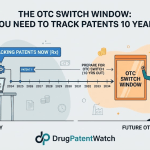
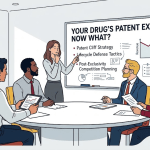
1. Why Generic Defense Requires a Ten-Year Lead Time
The time to begin planning for generic competition is the day a compound enters Phase I. That is not a rhetorical overstatement. A company that starts thinking about formulation innovation, secondary patent strategy, pediatric study design, or combination drug development in year seven of a drug’s commercial life has already foreclosed most of its high-value options. The development timelines for the tools that actually work, a new long-acting injectable, a fixed-dose combination requiring new clinical data, an over-the-counter switch, are each measured in years, not quarters.
The economics make the urgency plain. Drug development costs have climbed past $2.5 billion per new molecular entity when fully loaded for failures, and a successful blockbuster has to carry that burden for the entire portfolio. When a drug generating $5 billion annually loses market exclusivity and drops to $500 million in branded revenues within 18 months, the financial hole it leaves cannot be patched with a rushed formulation study commissioned two years before the patent expires. The math simply doesn’t close.
The competitive environment has hardened simultaneously. Generic manufacturers have become structurally better at anticipating and accelerating market entry. The largest operators, Teva, Viatris, Sun, Dr. Reddy’s, and a tier of well-capitalized specialists, maintain standing legal teams whose sole function is to file Paragraph IV certifications and build patent invalidity cases. They track Orange Book additions in real time. They run their own bioequivalence programs years before the nominal patent expiry. They know a target drug’s commercial profile better than some of the brand’s own commercial forecasters. An innovator that assumes its listed patents will hold unchallenged until their face-date expiry is operating on an outdated model of the industry.
What has changed on the biosimilar side is equally consequential. The Biologics Price Competition and Innovation Act (BPCIA) of 2009 created an abbreviated biologics license application (aBLA) pathway that, while more burdensome than the ANDA route, has produced a functioning biosimilar market for adalimumab, infliximab, trastuzumab, bevacizumab, and several other large-molecule blockbusters. The nine approved U.S. adalimumab biosimilars that entered in 2023 collectively represent a development ecosystem that spent over $1 billion in total to challenge a single molecule. That kind of organized capital commitment does not get discouraged by moderate patent thickets or incremental formulation improvements.
The tactics in this guide work. The evidence base for each is substantial. But they work when they are begun early, executed rigorously, and embedded in a company-wide lifecycle management architecture rather than treated as stand-alone defensive moves bolted onto a product in the final years of exclusivity. That distinction between early architecture and late reaction separates the companies that extract full value from their portfolios from those that watch a decade of R&D revenue evaporate in eighteen months.
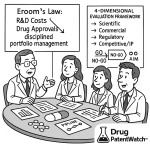
2. Lifecycle Management Architecture: The Four-Horizon Framework
2a. Defining the Framework
Lifecycle management (LCM) is a planning discipline, not a collection of tactics. Tactics without a plan produce incoherence. A company might simultaneously develop an extended-release formulation, pursue an orphan designation, and prepare an authorized generic, each executed by a different team with different timelines and different commercial assumptions, producing a product portfolio that cannibalizes itself and sends mixed signals to prescribers and payers.
An effective LCM architecture organizes all activities across four planning horizons that map to the commercial lifecycle of the drug. The horizons are not rigid time boxes; they are defined by strategic objectives and product maturity, and their appropriate timing varies by molecule, therapeutic area, and patent landscape.
2b. Horizon 1: Market Entry and Foundation Building (Approval through Year 4)
Horizon 1 begins at regulatory approval. The primary goal is market penetration for the core indication, physician education, and formulary access. But the LCM work running in parallel is just as important: gathering real-world evidence (RWE) that goes beyond the pivotal trial data, initiating pharmacokinetic studies in relevant subpopulations (pediatric, renal impairment, hepatic impairment) that will feed into regulatory filings and exclusivity applications later, and beginning the formulation work for next-generation delivery systems that have lead times of four to six years from concept to approval.
IP activity during Horizon 1 should include surveillance filing: monitoring competitors’ patent applications in the same chemical and therapeutic space, filing continuation applications on the NDA composition-of-matter patents to capture narrower but potentially more defensible claims, and beginning the identification of new polymorphic forms, salt variants, and formulation combinations that merit their own patent coverage. Filing continuations while the parent application is still pending keeps prosecution options open at minimal cost.
2c. Horizon 2: Expansion and Defense Building (Years 4-9)
This is when the drug is generating peak or near-peak revenues. The strategic priority is to convert that cash flow into defensible IP and product line extensions that will still be generating revenues when the core composition-of-matter patent is gone.
The Horizon 2 agenda typically includes: new indication approvals (each earning three years of new clinical investigation exclusivity), pediatric study completion to earn the six-month pediatric exclusivity extension, a fixed-dose combination with a complementary agent if the therapeutic area supports it, a next-generation delivery system (typically in clinical development during Horizon 1 and approaching approval during Horizon 2), and the construction of a secondary patent layer covering the formulation improvements, device designs, and method-of-use patents for new indications.
Competitive intelligence is active and systematic during Horizon 2. The first ANDA filings for a drug often begin appearing during this window. A brand that has been running a proactive surveillance program will see them coming; one that has not will learn about them in the 45-day litigation window after receiving a Paragraph IV notification letter.
2d. Horizon 3: Pre-Cliff Execution (Years 9 to LOE)
The activities planned during Horizons 1 and 2 must be in execution or final preparation during Horizon 3. This is not a time for new strategic pivots; it is a time for execution. The product migration campaign, moving prescribers from the original formulation to the next-generation product, should be underway. The authorized generic partnership or subsidiary launch plan should be finalized. The Rx-to-OTC switch application, if applicable, should be in FDA review.
Patent enforcement is intense during Horizon 3. Every Paragraph IV certification triggers a litigation decision: file suit within 45 days to invoke the 30-month stay, or allow the challenge to proceed uncontested. Legal teams need detailed claim charts and expert witnesses ready before the first certification letter arrives. The time required to prepare a strong Paragraph IV defense from scratch after receiving notification is measured in months; the 45-day window is not.
Horizon 4 is not a passive wind-down. The product still has commercial value. The authorized generic is capturing market share. The next-generation formulation or delivery system is in its own exclusivity window. The OTC version, if the switch succeeded, is competing in the consumer market. Branded loyalty, maintained through patient support programs and physician relationships built over a decade, retains a fraction of the Rx market that prices generics out of.
The financial objective in Horizon 4 is to extract maximum cash from a minimal cost base. Marketing spend shifts to targeted high-value prescriber segments rather than broad promotional coverage. Manufacturing scale adjusts to the smaller branded volume. The authorized generic subsidiary runs as a lean operation focused on volume, not margin.
Key Takeaways: Section 2
LCM is a planning discipline requiring a ten-year horizon, not a collection of reactive tactics. The Four-Horizon Framework maps R&D, IP, regulatory, and commercial activities to the product lifecycle. Horizon 2, the peak revenue period, is the most important for building the defenses that will hold in Horizons 3 and 4. Companies that treat LCM as a Horizon 3 activity have already lost most of the value it can create.
3. Tactic 1: Strategic Secondary Patenting and the Evergreening Continuum
3a. What Evergreening Actually Covers
‘Evergreening’ is used as a pejorative, mostly by generics industry advocates and health policy academics who apply it uniformly to every secondary patent ever filed on an approved drug. The term conflates genuinely valuable innovations with trivial modifications sought purely to delay competition. From an IP strategy perspective, the correct frame is different: secondary patents vary enormously in their scientific merit, their commercial value, and their legal durability.
The composition-of-matter patent, which covers the active pharmaceutical ingredient as a molecular entity, is the most valuable and most legally durable form of pharmaceutical IP. It is also the first to expire and the hardest to extend through incremental innovation. Everything that follows in the secondary patent landscape is, by definition, covering a modification rather than the original discovery. The question for any given secondary patent is whether the modification it covers represents a non-obvious advance that required real scientific effort to achieve.
The categories of secondary patents are well established, and each carries a different strategic profile.
Salt and polymorph patents cover alternative crystalline forms or salt variants of the API. Different polymorphs can have meaningfully different dissolution rates, stability, and bioavailability profiles. AstraZeneca’s Nexium (esomeprazole magnesium) is the most analyzed example: the company patented the S-enantiomer of omeprazole specifically, obtained NDA approval, and marketed it as a distinct product with a clinical program showing superiority to racemic omeprazole in certain head-to-head healing rates. Whether esomeprazole’s clinical differentiation from omeprazole was sufficient to justify its price premium was debated, but the chiral switch patent was scientifically legitimate. The polymorph and salt strategy works best when the new form delivers a demonstrable pharmaceutical improvement that can be documented in NDA-level clinical or analytical data, not merely when it creates a structural barrier.
Formulation patents cover the drug product as opposed to the API. They protect specific combinations of active ingredient, excipients, release-rate modifying polymers, coating systems, or stabilizers that produce a particular performance profile. A controlled-release formulation patent requires demonstrating that the specific polymer matrix or membrane system produces the desired pharmacokinetic profile and is non-obvious in view of the prior art. If a skilled formulation scientist would have predicted the release profile from published data on the excipients used, the patent is vulnerable to obviousness challenges. The PTAB has invalidated a number of formulation patents on these grounds, particularly when the excipient combination was drawn from a finite and known list of alternatives in the prior art.
Method-of-use patents cover the therapeutic application of the drug in a specific indication, patient population, dosing regimen, or combination therapy context. Pfizer’s experience with Lyrica (pregabalin) is the most commercially significant example. The original patent covered pregabalin as a compound. Pfizer obtained separate method-of-use patents for treating neuropathic pain and fibromyalgia, indications that were discovered and clinically validated after the compound patent was filed. Those method-of-use patents held up in litigation, and their expiry created the ‘skinny label’ dynamic in which generic pregabalin launched with a label restricted to the epilepsy indication while the neuropathic pain and fibromyalgia indications remained protected. The practical effect on brand market share is less than the patent protection implies, because prescribers routinely prescribe generics for non-listed indications (off-label substitution), but the skinny label creates legal exposure for generic manufacturers who market their product for the protected use.
Device and combination product patents cover administration systems: auto-injectors, prefilled syringes, dry powder inhalers, metered-dose inhalers, implantable devices, and transdermal delivery systems. These patents are governed by the same USPTO standards as pharmaceutical patents but involve distinct engineering considerations and are examined by different art units. For a biologic administered by a proprietary auto-injector, device patents can be as commercially important as the drug patents themselves, because a biosimilar manufacturer who replicates the molecule but not the device faces significant barriers to pharmacy-level interchangeability.
Manufacturing process patents cover the specific steps, conditions, and materials used to produce the API or finished dosage form. For small molecules, process patents are relatively less important because generic manufacturers have multiple routes to the same final compound. For biologics, where the manufacturing process is inseparable from the molecular product, process patents can be critical elements of the patent thicket.
3b. Building the Patent Thicket: Density, Timing, and Claim Architecture
A patent thicket is not built by filing a large number of patents on any modification that can be articulated. It is built by identifying the specific technical barriers that a generic or biosimilar manufacturer must overcome to produce a competing product and then filing patents that cover those barriers with broad, non-obvious claims filed at a time when they can survive a PTAB review.
The timing dimension is important and often mismanaged. A secondary patent filed late in the product’s commercial life, after the formulation has been established and the clinical data is already public, faces a much higher obviousness hurdle because the prior art includes all published data about the drug itself. A secondary patent filed early, during or shortly after clinical development, can capture innovations in formulation, method of use, or device design before the broader scientific community has had the opportunity to publish on the same topics.
AbbVie’s Humira patent strategy is the reference case for thicket architecture at scale. More than 90% of the 250+ Humira-related patents were filed after adalimumab’s initial FDA approval in 2002. The strategy involved continuous prosecution of continuation applications, incremental claims on specific formulation parameters (the citrate-free, high-concentration subcutaneous formulation being the most commercially significant), manufacturing process claims, and device claims on the auto-injector pen. The thicket’s density made the cost and complexity of challenging every individual patent prohibitive for any single biosimilar developer, which is why every major U.S. biosimilar applicant ultimately settled for deferred launch dates rather than pursuing full patent invalidation.
3c. PTAB Vulnerability and the Post-AIA Discount
The America Invents Act of 2012 created the Patent Trial and Appeal Board as an administrative forum for challenging issued patents through inter partes review (IPR) petitions. The PTAB’s impact on pharmaceutical secondary patents has been material and measurable. Institution rates for pharmaceutical IPR petitions have historically run between 60% and 70%, and petitions that are instituted result in full or partial invalidation in approximately 75% of final written decisions. These statistics apply most heavily to secondary patents: formulation patents, polymorph patents, and method-of-use patents fare worse at the PTAB than composition-of-matter patents.
Any secondary patent filed as part of a lifecycle strategy must be evaluated against its PTAB survival probability, not merely its district court survivability. The two analyses differ. The PTAB applies a ‘preponderance of evidence’ standard for invalidity (lower than the ‘clear and convincing’ standard in district court) and uses a broadest reasonable claim interpretation in some proceedings. A formulation patent that might withstand a district court invalidity challenge can be invalidated at the PTAB under the same underlying facts.
IP teams building a secondary patent portfolio need to model each patent’s expected value with a PTAB discount applied from the date of filing. A patent that contributes two years of expected exclusivity under a district court model but carries a 65% PTAB invalidation risk contributes materially less to the portfolio’s NPV when modeled probabilistically.
3d. The Global Patent Chessboard: PTE, SPC, and Regional Variance
Patent term extension (PTE) in the U.S. compensates for FDA regulatory review time and can add up to five years to one selected patent per product, subject to the constraint that the post-extension effective patent life cannot exceed 14 years from NDA approval. The mechanics of PTE calculation involve one-half the testing phase plus the full review phase, minus any period of applicant delay. The five-year ceiling and 14-year effective life cap create binding constraints that determine which patent to extend.
The standard strategic question is whether to apply PTE to the composition-of-matter patent or to a secondary patent with a later natural expiry date. The composition-of-matter patent is more legally durable but has a shorter natural term. A secondary patent with a 2031 natural expiry, fully extended by five years to 2036, might provide a later terminal protection date than the composition-of-matter patent extended to, say, 2028. The optimal choice requires modeling the probability that each patent survives PTAB and district court challenges, because a fully extended but PTAB-vulnerable secondary patent is worth less than its face value.
In Europe, the equivalent instrument is the Supplementary Protection Certificate (SPC), which compensates for time spent in EU marketing authorization review and can extend a product’s protection for up to five years. SPCs operate country-by-country within the EU and were recently reshaped by the EU SPC Manufacturing Waiver, which allows generic and biosimilar manufacturers to produce SPC-protected products in EU member states for export to markets where no SPC exists or where the SPC has expired. This waiver reduced the commercial value of SPCs for products with large export markets outside the EU.
Japan’s patent term extension system parallels the U.S. in concept: up to five years of extension for regulatory approval time, applied to one patent per product. Japan has generally been more willing to grant extensions of the full five years than the U.S. system, where the testing phase is discounted to 50% of its actual duration.
An investor or acquirer evaluating a pharma company’s IP should never accept face-date expiry dates from management presentations without independent verification. The correct process is: obtain the full Orange Book or Purple Book listing for all key products, identify every listed patent with its expiry date, assess each secondary patent’s PTAB vulnerability based on IPR petition history and filing date relative to the prior art, probability-weight each patent’s contribution to terminal protection date, and calculate the expected LOE date distribution, not a single point estimate. The delta between the management-guided LOE date and the probability-weighted expected LOE date is often the largest single source of forecast error in pharmaceutical revenue models.
Key Takeaways: Section 3
Secondary patents vary enormously in scientific merit, commercial value, and legal durability. PTAB inter partes review applies a preponderance standard and has historically invalidated 75% of instituted pharmaceutical secondary patent challenges. Patent thicket architecture should be timed for filing during development, not post-approval, to maximize the prior art advantage. PTE selection requires modeling the probability-weighted expected exclusivity contributed by each candidate patent under both district court and PTAB scenarios.
4. Tactic 2: The Regulatory Exclusivity Stack
4a. Why Regulatory Exclusivity Operates Independently from Patents
Patents and regulatory exclusivity are separate legal instruments that can reinforce each other, operate independently, or produce unexpected interactions. A drug can have strong patent coverage and no regulatory exclusivity, weak patent coverage but strong regulatory exclusivity, or both operating simultaneously with different terminal dates.
The most important conceptual distinction is that regulatory exclusivity cannot be challenged through a Paragraph IV certification. There is no administrative petition to invalidate orphan drug exclusivity or NCE exclusivity at the FDA. A generic ANDA filed while NCE exclusivity is active is simply not accepted for filing during the first four years. This makes regulatory exclusivity structurally more durable than patent protection in the near term, even though it is typically shorter in duration than a composition-of-matter patent.
The FDA grants six primary forms of exclusivity relevant to lifecycle management. Their characteristics and strategic use cases differ materially, and understanding the interactions between them is what separates a sophisticated regulatory strategy from a basic one.
4b. The Six FDA Exclusivity Types: Mechanics and Strategic Use
New Chemical Entity (NCE) exclusivity applies to drugs containing an active moiety never previously approved by the FDA and provides five years of market protection from NDA approval. For the first four years, the FDA will not accept an ANDA or a 505(b)(2) application referencing the drug’s safety and efficacy data. In year five, ANDAs with Paragraph IV certifications can be submitted. The five-year NCE exclusivity is a baseline protection that all truly novel drugs receive automatically, but its value varies by product. For a drug with weak composition-of-matter patent protection, NCE exclusivity may be the primary barrier to early generic entry.
New Clinical Investigation (NCI) exclusivity provides three years of protection for approved changes to an existing drug, whether a new indication, a new formulation, a new dosage strength, or a route-of-administration change, provided new clinical studies were essential to the approval. The NCI exclusivity applies to the change itself, not the entire drug, which means a generic can still reference the original drug’s safety and efficacy data for the unmodified version. Three years of NCI exclusivity, properly timed around an LCM milestone, can protect a new indication or formulation for long enough to establish it as the dominant prescribing standard before generic alternatives become available.
Orphan Drug Exclusivity (ODE) provides seven years of market protection for a drug approved for a rare disease. It applies only to the specific orphan indication and only to the same drug. A competitor can obtain approval of a different drug for the same orphan disease, and can obtain approval of the same drug for a different indication. ODE is the most powerful form of FDA exclusivity because it is the longest, applies from the approval date, and cannot be broken through a Paragraph IV mechanism.
Pediatric exclusivity is not a stand-alone exclusivity type; it is an additive six-month extension that attaches to all existing patents and regulatory exclusivities. It is earned by completing FDA-requested pediatric studies (in response to a Pediatric Written Request) and has been described by Grabowski and colleagues at Duke as generating the highest return on clinical development investment of any regulatory program available. For a drug with peak annual U.S. revenues exceeding $4 billion, the pediatric exclusivity period alone can generate more than $2 billion in protected branded revenue.
Biologic reference product exclusivity provides 12 years of market protection from BLA approval, during which the FDA cannot approve a biosimilar aBLA for the same reference product. The exclusivity includes a four-year period of data exclusivity (parallel to the NCE data exclusivity concept) during which the FDA will not accept an aBLA submission. The 12-year period is the primary structural barrier to biosimilar entry in the early years of a biologic’s commercial life and runs entirely independent of patent status.
New formulation exclusivity, sometimes called 505(b)(2) exclusivity, applies to drugs approved via the 505(b)(2) NDA pathway, which allows partial reliance on previously published data. A 505(b)(2) NDA that includes new clinical studies earns three years of NCI exclusivity for the approved change. This is particularly relevant for complex generic manufacturers pursuing improved formulations of off-patent molecules, but it also applies to innovators building next-generation formulations.
4c. Stacking Exclusivities: The Interaction Matrix
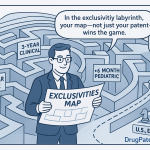
The most sophisticated regulatory lifecycle strategies stack multiple exclusivity types so that their terminal dates form a staircase rather than a simultaneous cliff. The ideal architecture looks like this: the composition-of-matter patent expires in year X; the PTE-extended secondary formulation patent expires in year X+3; the ODE for a rare disease indication expires in year X+4; the NCI exclusivity for a new dosage form approved in year X-1 expires in year X+2; and the pediatric exclusivity extension has already added six months to all of the above.
No single drug achieves this ideal perfectly, but the principle guides IP and regulatory strategy for any blockbuster with a long commercial future. Humira’s exclusivity architecture approximated this model with its overlapping patent thicket, ODE for juvenile idiopathic arthritis and pediatric Crohn’s disease, and multiple NCI exclusivities for additional indications. The result was a terminal U.S. exclusivity date of January 2023, seven years after the core composition-of-matter patents expired in 2016.
Key Takeaways: Section 4
Regulatory exclusivity is legally distinct from patents and cannot be challenged through Paragraph IV certification, making it structurally more durable in the near term. NCE exclusivity is automatic for novel molecules but only five years. ODE is seven years and applies from approval, making it the most powerful single FDA exclusivity type. Pediatric exclusivity is additive across all protections simultaneously and produces the highest return-on-investment of any regulatory exclusivity program. The staircase architecture, stacking exclusivities with different terminal dates, maximizes the effective period of market protection.
5. Tactic 3: The Pediatric Exclusivity Play in Depth
5a. The Statutory Basis and its Additive Mechanics
The Best Pharmaceuticals for Children Act (BPCA), most recently reauthorized in 2017, provides the statutory basis for pediatric exclusivity. The program creates a quid pro quo: the FDA issues a Pediatric Written Request specifying the studies it needs to characterize the drug’s pharmacokinetics, safety, and where possible efficacy in pediatric populations; the sponsor completes those studies and submits the results; and the FDA, if satisfied that the studies were fairly responsive to the PWR, grants six months of exclusivity added to all existing patents and regulatory exclusivities for the drug.
The word ‘all’ in that sentence is the operative commercial mechanism. Every patent listed in the Orange Book for every formulation and every indication of the drug receives a six-month extension. Every FDA exclusivity type attached to the drug receives a six-month extension. The net effect is that the entire patent cliff shifts six months later, not just one protection among many.
5b. Designing the Pediatric Study Program: Scientific and Regulatory Precision
The PWR is drug-specific and typically includes requirements for pharmacokinetic studies in multiple pediatric age groups (neonates, infants 28 days to 24 months, children 2 to 12 years, and adolescents 12 to under 17 years), safety data collection, and in some cases efficacy trials. The FDA does not require proof of efficacy in children to grant the exclusivity; completing the studies as requested is sufficient. A negative efficacy result still earns the exclusivity, provided the study was properly designed and executed per the PWR terms.
The clinical operations challenge for pediatric studies is recruitment. Pediatric clinical sites require specialized infrastructure, parental consent processes, dosage form adaptations (oral solutions and dispersible tablets are often needed for children who cannot swallow standard tablets), and regulatory oversight by Institutional Review Boards with pediatric expertise. Studies that would take 18 months to enroll in an adult population can take 36 months or more in pediatric cohorts. The operational planning must account for these extended timelines when mapping the study completion date against the target pediatric exclusivity grant date and the background patent expiry calendar.
Formulation development for pediatric studies deserves specific mention. The FDA’s pediatric formulation guidance emphasizes palatability, appropriate dosing precision for weight-based or age-based dosing, and avoidance of excipients contraindicated in specific pediatric age groups (certain preservatives, sweeteners, and alcohol concentrations are problematic in neonates and infants). The company that approaches pediatric studies with a well-developed, age-appropriate formulation is both better positioned to complete the studies successfully and, critically, can patent the pediatric formulation itself, adding another layer to the overall IP portfolio.
5c. IP Valuation: Lipitor Pediatric Exclusivity as a Reference Case
Pfizer’s Lipitor (atorvastatin) received six months of pediatric exclusivity following completion of pediatric studies in patients with familial hypercholesterolemia. At the time of the exclusivity period, Lipitor’s annual U.S. revenues were approximately $7 billion. Six months of protected branded sales at even a conservative 80% retention of that revenue run rate (accounting for some erosion from payers anticipating the cliff) implies approximately $2.8 billion in pediatric exclusivity-period revenue that would not have existed under a no-exclusivity scenario. Development and execution costs for the pediatric program ran in the range of $30 to $50 million by industry estimates. The return multiple on the pediatric study investment, measured against the incremental protected revenue, exceeded 50:1. No other regulatory program in the pharmaceutical toolkit approaches that ratio.
The calculation generalizes. For any drug with annual U.S. revenues exceeding $2 billion, the pediatric exclusivity period generates net present value substantially above the study costs. The threshold below which the economics become uncertain is approximately $500 million in annual revenues, where the study costs approach 10% to 15% of the expected exclusivity revenue.
5d. The PREA Pathway: Compulsory Pediatric Studies
The Pediatric Research Equity Act (PREA), the other arm of federal pediatric study legislation, mandates that sponsors of new drug applications or certain supplements submit pediatric study plans and complete pediatric studies unless an exemption applies. PREA compliance and BPCA opportunity interact strategically: a company that completes PREA-mandated studies and submits them in a form that satisfies an FDA Pediatric Written Request can earn the six-month exclusivity from studies it was already required to conduct. Structuring the PREA-required studies to also satisfy a PWR, by aligning endpoints and age group coverage with FDA PWR standards, can convert a compliance obligation into a significant commercial asset.
Investment Strategy: Pediatric Exclusivity as a Catalyst Signal
An FDA PWR issuance for a major branded drug is a public signal with precise commercial implications. The FDA publishes PWR letters, and their issuance, typically several years before the expected LOE, allows analysts to add a six-month revenue period to LOE models with high probability. The signal is more reliable than most pipeline data: the exclusivity is earned by completing studies, not by achieving a clinical outcome, so completion rates are high for well-resourced companies. Investors who model LOE dates without incorporating pending pediatric exclusivity grants consistently underestimate the terminal revenue date for affected products.
Key Takeaways: Section 5
Pediatric exclusivity shifts the entire patent cliff six months by extending every listed patent and every regulatory exclusivity simultaneously. The return on pediatric study investment exceeds 50:1 for blockbuster drugs, making it the highest-ROI regulatory program available. Pediatric formulation development for the study creates its own patentable innovations. PREA-required studies can be structured to also satisfy a BPCA Pediatric Written Request, converting a compliance cost into a commercial asset.
6. Tactic 4: Orphan Drug Designation as a Market Carve-Out Instrument
6a. The Seven-Year Shield: Mechanism and Scope
The Orphan Drug Act of 1983 grants seven years of market exclusivity from the date of FDA approval for a drug designated to treat a rare disease, defined as one affecting fewer than 200,000 people in the U.S. The exclusivity is indication-specific and drug-specific: it bars the FDA from approving the same drug for the same orphan indication during the seven-year period. A different drug targeting the same rare disease can receive approval. The same drug can receive approval for a different (non-orphan or different orphan) indication.
This combination of indication specificity and drug specificity makes ODE a carving instrument rather than a blanket shield. An innovator uses it to fence off a specific market segment, typically a defined patient population within a broader therapeutic area, where the commercial volume is smaller but the pricing power is higher and the competitive exposure is lower. A rare pediatric inflammatory disease, an ultra-rare metabolic disorder, or a small-population subset of an oncology indication all fit this profile.
Critically, ODE cannot be challenged through the Paragraph IV mechanism. A generic company cannot file a Paragraph IV certification arguing that the ODE-protected orphan indication patent is invalid. The ODE is a regulatory exclusivity, not a patent, and the FDA will not accept an ANDA seeking approval for the same orphan use until the seven-year period expires. For a company facing aggressive generic patent challenges on its core indication, ODE protection on adjacent rare disease indications provides a floor of revenue that is structurally more secure than patent-protected revenue.
6b. Strategic Orphan Designation Mapping
The practical work of ODE strategy begins with a systematic disease mapping exercise. The medical affairs and R&D teams identify rare diseases that share a pathophysiological mechanism with the drug’s primary indication. The drug must be plausibly effective in the orphan indication, which typically requires at least mechanistic or preclinical evidence before the FDA grants designation. The designation itself requires demonstrating either that the disease affects fewer than 200,000 U.S. patients (the prevalence criterion) or, for more common diseases, that the drug is unlikely to recover its development costs from U.S. sales alone (the financial profitability criterion).
For a drug in immunology or oncology, the rare disease space adjacent to its mechanism is usually extensive. An anti-TNF therapy approved for rheumatoid arthritis (affecting approximately 1.3 million U.S. patients, not an orphan disease) has mechanistic relevance to juvenile idiopathic arthritis (approximately 50,000 patients), uveitis (in its rarest forms), and several other conditions that qualify for orphan designation. AbbVie pursued orphan designations systematically for Humira across multiple indications. Those designations, each generating its own seven-year ODE upon approval, contributed to the multi-layer exclusivity architecture that maintained AbbVie’s pricing power well into the biosimilar entry period.
6c. Combination Strategy: ODE Plus Pediatric Exclusivity
The combination of ODE and pediatric exclusivity is particularly powerful for rare diseases with pediatric onset or predominance. The sequence is: obtain orphan designation for the pediatric rare disease indication; conduct the clinical program and obtain FDA approval for that indication, triggering the seven-year ODE clock; and complete a Pediatric Written Request from the FDA covering the studies conducted in the pediatric rare disease population, earning the six-month exclusivity extension that attaches to all existing protections.
The commercial value of this combination for the right molecule is substantial. The ODE carves out a seven-year protected indication. The pediatric extension adds six months to the broader portfolio. The rare disease indication, though smaller in patient population, typically commands a premium price because payers recognize the unmet medical need and the complexity of treatment. A drug priced at $50,000 per patient per year in a common indication might be priced at $150,000 to $300,000 per patient per year in an orphan pediatric indication, with less formulary restriction because alternatives are scarce.
Investment Strategy: Orphan Designation as a Revenue Floor
ODE approval dates are public FDA records. Analysts tracking a drug with multiple orphan designations across different indications should model each ODE separately, with its own seven-year terminal protection date, its own revenue contribution based on patient population and price, and its own competitive exposure. The aggregate of ODE-protected revenue streams for a multi-indication drug can represent a substantial fraction of total revenues in the post-LOE period, creating a protected base that moderates the cliff severity for investors who have correctly mapped the full ODE architecture.
Key Takeaways: Section 6
ODE provides seven years of market exclusivity from approval date, cannot be challenged through Paragraph IV, and applies to specific drug-indication pairs. Systematic orphan designation mapping in mechanistically adjacent rare diseases is a core LCM strategy for drugs in immunology, oncology, and metabolic disease. The ODE-plus-pediatric exclusivity combination maximizes protection for rare pediatric indications. ODE-protected revenues represent a structurally secure floor in the post-LOE period that patent-dependent revenues cannot match.
7. Tactic 5: The Authorized Generic Gambit
7a. The Commercial Logic: Capturing What Would Otherwise Be Lost
An authorized generic (AG) is the reference listed drug, identical in formulation, manufactured by or for the NDA holder, marketed under the NDA without the brand name at a substantially reduced price. It requires no ANDA filing, no bioequivalence testing, and no separate FDA approval. From a regulatory standpoint, it is the brand, sold at generic pricing.
The commercial logic is straightforward. When a drug’s patents expire, the generic market for that drug will exist regardless of what the innovator does. The question is not whether that market will be served, but who will serve it. An innovator that launches an AG participates directly in the generic market’s revenue while maintaining the branded product for the price-inelastic segment.
The typical AG is marketed through a subsidiary or a contracted generic partner rather than under the brand company’s own name, for two reasons: brand association with generic pricing can dilute the value perception of the branded product, and the commercial infrastructure required to compete on thin generic margins is different from the infrastructure supporting a premium-priced branded drug. Pfizer’s atorvastatin AG was launched through a partnership with Watson Pharmaceuticals (now Viatris), executed on the same day Watson’s own ANDA-based generic entered the market.
7b. The First-Filer Disruption Effect: Quantifying the Economic Impact
The most strategically significant feature of the AG is that it is not blocked by the first-filer’s 180-day exclusivity. The 180-day exclusivity under Hatch-Waxman applies to ANDA approvals. The AG is marketed under the NDA and is therefore outside the ANDA exclusivity framework entirely. An AG launched on day one of the 180-day exclusivity period converts the first-filer’s intended duopoly into a three-party competition immediately.
The FTC’s study on authorized generics, published in 2011, quantified the revenue impact: the presence of an AG during the 180-day exclusivity period reduces the first-filer generic’s revenue by approximately 40% to 52% compared to a scenario without the AG. The mechanism is direct price competition. The AG, priced below the brand and at or slightly above the first-filer generic, captures a portion of the volume that would otherwise flow exclusively to the first-filer. The first-filer’s market share during its exclusivity period drops from approximately 60-70% of dispensed prescriptions (typical duopoly share) to 35-45%, with the AG capturing the difference.
The deterrence implication is substantial. A Paragraph IV challenge requires years of expensive litigation and carries legal and financial risk for the generic challenger. The 180-day exclusivity is the prize that justifies that investment. If the expected value of the exclusivity period is reduced by 40-52% due to an anticipated AG, the NPV of the Paragraph IV challenge declines proportionally. This does not eliminate Paragraph IV challenges for major blockbusters, where even a 48%-of-exclusivity-period revenue figure is commercially attractive, but it meaningfully shifts the expected value calculation for smaller targets.
7c. Decision Framework: When to Launch an AG
An AG is not appropriate for every product facing LOE. The decision requires evaluating four variables: the expected generic market volume and margin contribution; the magnitude of branded product cannibalization; the strategic benefit of disrupting the first-filer’s exclusivity; and the reputational and channel management implications of competing with oneself.
For a drug with annual revenues above $2 billion and a high-profile Paragraph IV challenge from a well-capitalized generic manufacturer, all four variables generally support AG launch. For a drug with revenues below $500 million, where the generic market will be thin and the Paragraph IV challengers may be less aggressive, the cannibalization and complexity costs may outweigh the revenue benefit.
The partner selection decision, if the company uses an external generic manufacturer rather than a subsidiary, requires careful structuring. The key contractual terms are the AG transfer price (which determines the profit split), the quantity commitment, the AG’s market exclusivity (no competing generics from the partner), and the termination provisions. A partnership structured with insufficient attention to the partner’s incentive to maximize AG volume at the expense of minimizing the brand’s residual share is a partnership that will consistently produce worse commercial outcomes than projected.
IP Valuation: The Authorized Generic as a Revenue-Preserving Asset
For IP and financial analysts valuing a drug approaching LOE, the AG option should be modeled as a separate revenue line with its own economics, not simply netted against branded revenue decline. A drug with $5 billion in annual revenues, 60% gross margin, approaching LOE, would generate zero generic market revenue under a no-AG scenario. An AG capturing 25% of the post-LOE generic prescription volume at a 20% gross margin would contribute approximately $250 to $400 million annually in incremental revenue that the no-AG scenario misses entirely. Over four years, that contribution compounds to $1 billion or more in cumulative branded-plus-AG revenue that pure-branded-revenue models omit.
Key Takeaways: Section 7
An authorized generic is the NDA holder’s own product, marketed without brand name at generic pricing, and requires no separate ANDA or bioequivalence testing. The AG reduces the first-filer’s 180-day exclusivity revenue by 40-52%, moderating the commercial incentive for Paragraph IV challenges. Partner selection and contract structure determine whether the AG fulfills its strategic and financial objectives. AG revenue should be modeled as a separate post-LOE revenue stream, not simply deducted from branded revenue projections.
8. Tactic 6: Formulation and Delivery Innovation as a Competitive Moat
8a. Why Formulation Complexity Creates Barriers That Chemistry Alone Cannot
A small molecule generic is, by definition, chemically identical to the reference drug. If the reference drug is atorvastatin calcium in a conventional immediate-release tablet, a generic company producing atorvastatin calcium in a conventional immediate-release tablet faces a straightforward development and regulatory pathway. The barrier is legal, specifically the patent and exclusivity landscape, not scientific. Once the legal barriers fall, the drug becomes a commodity.
The innovator who has replaced or supplemented the original tablet with a proprietary delivery system changes the competitive equation. The generic manufacturer can still produce generic atorvastatin calcium, but it cannot automatically substitute that product for a once-weekly transdermal patch or a dual-chamber prefilled syringe that co-administers two drugs simultaneously. These complex formulations require their own ANDA or NDA programs, their own bioequivalence or clinical studies, their own manufacturing infrastructure, and their own regulatory review. The development cost, timeline, and regulatory complexity of matching a sophisticated proprietary delivery system are multiples of the cost of making a conventional tablet generic.
8b. Long-Acting Injectable Technology: The Adherence Moat
Long-acting injectable (LAI) formulations are the most commercially significant delivery innovation in the past two decades of pharmaceutical lifecycle management. The concept is straightforward: convert a drug that requires daily or multiple-daily oral dosing into a formulation that can be injected once every two weeks, once a month, or even once every three to six months, producing therapeutic drug levels throughout the dosing interval.
The pharmacokinetic engineering behind LAI formulations is not trivial. The dominant technologies include polymer microsphere encapsulation (polylactic-co-glycolic acid or PLGA microspheres that degrade over a defined period, releasing drug at a controlled rate), crystalline drug suspensions (drug suspended as fine crystals in an aqueous medium, where crystal dissolution kinetics control release), lipid-based nanosystems, and in-situ forming implants. Each platform has distinct manufacturing requirements, release kinetics, and regulatory challenges.
Johnson & Johnson’s Janssen developed Risperdal Consta (risperidone microspheres) as the first LAI antipsychotic approved in the U.S., gaining FDA approval in 2003. The Consta formulation used PLGA microspheres with a 14-day release profile. The development and manufacturing complexity of the Consta microsphere system was substantial: the product required lyophilization, a specific reconstitution procedure, and a 28-day lag period between injection and therapeutic drug levels requiring supplemental oral dosing during initiation. These complexities were acknowledged in the product labeling, but they also represented the technical depth of the moat. Generic risperidone in oral tablet form cannot substitute for an LAI system. A competing LAI required a separate NDA and clinical program.
Otsuka followed a parallel strategy with Abilify Maintena (aripiprazole extended-release injectable suspension), which extended the aripiprazole franchise as oral aripiprazole faced generic competition. Abilify Maintena uses a crystalline suspension technology with a 28-day dosing interval and was approved in 2013. The product’s clinical differentiation from oral aripiprazole generics rested on adherence data: patients on LAIs in schizophrenia consistently show lower hospitalization rates and better long-term functional outcomes than patients on oral agents, partly because adherence is enforced by the monthly injection visit and partly because plasma level fluctuations are smaller with LAIs. That clinical differentiation is documentable with real-world evidence and supports a premium pricing position against oral generics indefinitely.
8c. Subcutaneous Reformulation of IV Biologics: The Darzalex Faspro Model
For biologics administered intravenously in infusion center settings, subcutaneous (SC) reformulation represents a lifecycle management strategy that simultaneously improves patient experience, reduces healthcare system cost, and creates a product that biosimilars of the original IV formulation cannot automatically substitute for.
Johnson & Johnson’s Darzalex Faspro (daratumumab and hyaluronidase-fihj) is the reference case. Daratumumab was originally approved as an IV infusion requiring up to seven hours of administration for the first infusion, with subsequent infusions taking three to four hours. J&J co-formulated daratumumab with recombinant human hyaluronidase PH20, which reversibly depolymerizes hyaluronan in the subcutaneous extracellular matrix, increasing tissue permeability and allowing a large-volume SC injection (15 mL) to be absorbed and bioavailable. The SC Faspro injection takes approximately five minutes compared to several hours for the IV infusion.
The strategic consequences are layered. The SC formulation earned its own NDA approval based on new clinical studies comparing SC and IV daratumumab, generating three years of NCI exclusivity for the SC formulation. SC daratumumab is now the dominant form prescribed by oncologists who were originally writing IV daratumumab. Biosimilar developers targeting IV daratumumab face a market in which their reference product is being rapidly displaced by the SC version, limiting their commercial opportunity. A biosimilar developer targeting the SC formulation must itself develop an SC formulation with co-administered hyaluronidase and demonstrate comparability to the SC reference product, a distinct and more expensive development program.
8d. Transdermal, Inhaler, and Sublingual Systems
Transdermal patches, metered-dose inhalers (MDIs), dry powder inhalers (DPIs), and sublingual films each represent delivery technologies that convert a potentially commoditized molecule into a complex drug product with its own IP and regulatory profile.
GSK’s Advair Diskus (fluticasone/salmeterol dry powder inhaler) combined a corticosteroid and a long-acting beta-2 agonist in a proprietary inhaler device. The Diskus device itself was covered by independent device patents. The blending process for the micronized powder mixture was covered by formulation and manufacturing process patents. Demonstrating bioequivalence for an inhaled DPI requires complex pharmacokinetic and pharmacodynamic studies, including lung deposition imaging and bronchoprotection endpoints, that are significantly more demanding than the plasma concentration bioequivalence standard for oral products. Generic MDIs and DPIs require FDA product-specific guidance before developers can even design their studies, and that guidance has been slow to materialize for the most complex devices.
For sublingual films, the Suboxone (buprenorphine/naloxone) film conversion from tablet to film format is the canonical example. Reckitt Benckiser (now Indivior) converted Suboxone from a sublingual tablet to a sublingual film specifically in advance of tablet LOE. The film offered faster dissolution, reduced risk of accidental pediatric ingestion (the film was packaged in individual unit-dose pouches rather than the multi-count bottles used for tablets), and a different abuse resistance profile. The film earned its own NCI exclusivity for the new delivery form. Indivior also filed Citizen Petitions arguing that generic Suboxone tablets raised safety concerns. Some of those petitions were ultimately found by the FTC to be sham petitions filed for delay, resulting in an FTC enforcement action against Reckitt Benckiser, a regulatory and reputational outcome that illustrates where the line sits between legitimate safety advocacy and anticompetitive delay.
Key Takeaways: Section 8
Delivery innovation creates scientific barriers that pure chemical identity cannot. LAI formulations, SC biologics, inhaler device systems, and sublingual films each require separate ANDA or NDA programs for competitors and generate independent IP and regulatory exclusivity. The SC reformulation strategy for IV biologics simultaneously improves patient outcomes, reduces healthcare costs, generates NCI exclusivity, and preempts the IV biosimilar market. Competitive moats from delivery innovation are most durable when backed by clinical data showing outcomes differences, not just convenience differences.
9. Biologic Lifecycle Technology Roadmap: A Seven-Stage Defense Architecture
A full biologic LCM program operates across seven technical and commercial dimensions simultaneously. Each stage involves specific scientific, regulatory, and patent activities that must be coordinated.
Stage 1: Reference Product Excellence. Before any lifecycle work begins, the reference biologic must be characterized at the highest analytical resolution commercially available. Complete characterization of the molecular heterogeneity, glycoform distribution, aggregation profile, and forced degradation behavior generates the analytical fingerprint that any biosimilar challenger must match. This characterization data, maintained as a trade secret, is what the innovator uses to argue that its product is the gold standard in physician education and payer contracting. It also informs the development of next-generation formulations by identifying which quality attributes are most sensitive to process changes.
Stage 2: Formulation Optimization and High-Concentration Development. Moving from a dilute IV formulation to a high-concentration SC formulation, if not already accomplished, is typically the first major technical LCM milestone. The high-concentration formulation requires protein engineering work to address viscosity challenges (high-concentration protein solutions are highly viscous, creating injection force issues with standard syringes), excipient screening to replace citrate buffer (which causes injection site pain) with non-citrate alternatives, and stability studies in the new formulation matrix. Each of these developments generates formulation patents and, upon approval, NCI exclusivity.
Stage 3: Device Integration and Human Factors Engineering. The delivery device patent strategy should run parallel to the formulation program. Commissioning an auto-injector platform from a contract device developer (BD, Enable Injections, West Pharmaceutical Services) or developing a proprietary device internally, with patents covering the plunger mechanism, needle safety guard, dose visualization window, and electronic dose tracking capability, adds device IP that has a different challenge pathway than drug IP at both the USPTO and PTAB.
Stage 4: Indication Expansion and Method-of-Use Patent Architecture. Systematic pursuit of new indications through investigator-sponsored and company-sponsored clinical programs generates method-of-use patents and NCI exclusivities. Each indication approval resets the three-year NCI exclusivity clock for that use. An innovator that approves a new indication for its biologic in year eight of commercial life earns three years of exclusivity for that indication expiring in year eleven, well past the core biologic reference product exclusivity expiry.
Stage 5: Pediatric Program Integration. As described in Section 5, the pediatric program should be timed to complete several years before LOE, enabling the FDA to grant six-month pediatric exclusivity while the drug still has substantial revenues to protect. For biologics, the pediatric program typically requires age-appropriate formulations (smaller volume SC injections, lower concentration for body weight-based dosing), pediatric PK studies, and in some cases efficacy trials. The combination of pediatric ODE qualification and pediatric exclusivity, when both apply, produces maximum protection.
Stage 6: Next-Generation Molecule Development: Biobetter or Biosuperior. The most durable LCM strategy is developing a successor molecule that is genuinely clinically superior to the reference biologic, rather than merely different. A half-life extended antibody engineered using YTE or XTEND Fc technology that requires quarterly instead of weekly injection is not a biosimilar; it is a new drug with its own NDA, clinical data, patent estate, and 12-year reference product exclusivity. AbbVie’s lutikizumab and sonelokimab programs represent this strategy in IL-17 and IL-33 biology. Skyrizi (risankizumab) and Rinvoq (upadacitinib) represent AbbVie’s most successful execution of next-generation succession at scale: both drugs target the same patient populations as Humira in psoriasis, Crohn’s, rheumatoid arthritis, and ulcerative colitis with clinically superior data in several head-to-head comparisons, ensuring their commercial dominance regardless of the state of adalimumab biosimilar competition.
Stage 7: Manufacturing Process Optimization and Trade Secret Deepening. Every manufacturing improvement that increases yield, reduces variability, or improves product quality attributes simultaneously reduces cost of goods and deepens the process knowledge moat. This accumulated manufacturing intelligence, documented in batch records, technology transfer reports, and process analytical technology (PAT) data, represents the most legally durable form of biologic competitive advantage because it resides largely in trade secrets that cannot be obtained through patent examination or FOIA requests.
Key Takeaways: Section 9
Biologic LCM requires seven parallel technical tracks, not a sequential program. The SC reformulation (Stage 2) and next-generation molecule (Stage 6) tracks are the highest commercial value activities. Manufacturing trade secret deepening (Stage 7) is the most legally durable form of competitive advantage for biologics because it cannot be obtained through patent examination or litigation. AbbVie’s Skyrizi/Rinvoq succession is the canonical modern execution of Stage 6 at scale.
10. Tactic 7: Fixed-Dose Combinations and the Standard-of-Care Lock
10a. The Clinical and Commercial Rationale
A fixed-dose combination (FDC) combines two or more active ingredients in a single dosage form. The FDA requires that each component contribute to the claimed effect at the proposed dose, a standard that has been applied stringently since the Kefauver-Harris Amendment of 1962. A well-designed FDC typically addresses the polypharmacy burden in therapeutic areas where multiple agents are routinely co-administered.
The adherence literature consistently supports single-pill regimens. A meta-analysis of antihypertensive therapy published in the Annals of Internal Medicine found that patients on single-pill FDC regimens were 26% more likely to be adherent at 12 months than patients on two separate agents with identical ingredients. Better adherence produces better clinical outcomes: in hypertension, cardiovascular event reduction correlates directly with blood pressure control, which correlates directly with medication adherence. The clinical argument for an FDC is therefore not merely convenient; it is quantifiable in outcome terms that payers can model against total healthcare cost.
10b. Patenting the Combination: Overcoming the Obviousness Hurdle
The central IP challenge for an FDC is demonstrating that combining two known drugs in one dosage form is non-obvious. A patent examiner reviewing an FDC application will initially question whether combining two drugs commonly used together in clinical practice requires inventive step. The standard response involves four types of evidence.
First, the combination achieves a synergistic interaction, meaning the combined effect exceeds the sum of the individual effects at the individual doses. If a pharmacodynamic or pharmacokinetic synergy can be demonstrated, the combination is scientifically non-obvious even if both components are individually known. Second, the combination solves a formulation problem that was not predictably solvable from the prior art: two drugs that interact chemically or physically when combined, requiring a novel excipient system or layered tablet architecture to maintain stability, represent a technical challenge whose solution is patentable. Third, the clinical outcomes in a controlled trial exceed the outcomes of both components dosed separately, as established by a three-arm superiority study. Fourth, the specific dosage ratio and combination exhibits a unique safety profile not predicted from the individual agents.
10c. Gilead’s HIV FDC Architecture as a Technology Roadmap
Gilead Sciences built the most commercially successful FDC franchise in pharmaceutical history by applying a systematic FDC strategy to its HIV antiviral portfolio. The progression is instructive.
Atripla (efavirenz/emtricitabine/tenofovir disoproxil fumarate), approved in 2006, was the first once-daily single-tablet regimen for HIV, combining Gilead’s Truvada (emtricitabine/TDF) with BMS’s Sustiva (efavirenz). The combination required a clinical bridge study showing that the FDC’s pharmacokinetics matched the co-administered individual components. Atripla created the category of single-tablet HIV therapy and displaced multi-pill regimens as the standard of care, establishing Gilead as the franchise owner of HIV treatment convenience.
Subsequent Gilead FDCs, Complera (rilpivirine/emtricitabine/TDF), Stribild (elvitegravir/cobicistat/emtricitabine/TDF), Genvoya (elvitegravir/cobicistat/emtricitabine/tenofovir alafenamide), and ultimately Biktarvy (bictegravir/emtricitabine/TAF), each introduced a new proprietary component, a new formulation technology, or a new clinical differentiation (better renal or bone safety with TAF versus TDF), earning its own patents and NCI exclusivity. Biktarvy, the current market leader with approximately 46% of new HIV prescriptions in the U.S. as of 2024, contains bictegravir, an integrase inhibitor that Gilead developed internally and that is not available in any competing product. The clinical combination of bictegravir and TAF achieves virologic suppression rates above 95% at 48 weeks with a favorable renal and bone safety profile, which no generic or competitor product matches. This is the standard-of-care lock: Gilead owns the combination’s clinical data, the key patents, and the prescriber relationship built on a decade of demonstrated outcomes.
Investment Strategy: FDC Pipeline as an LOE Defense Indicator
An innovator company with an advanced-stage FDC development program targeting a drug approaching LOE is signaling that management has assessed its primary molecule’s lifecycle threat and is actively executing the standard-of-care substitution strategy. Investors should assess: the clinical differentiation of the FDC relative to the monocomponent drugs separately dosed; the patentability of the combination (synergy data, formulation complexity, unique clinical profile); the regulatory timeline to approval and NCI exclusivity grant; and the commercial infrastructure required to migrate prescribers from the incumbent monocomponent standard of care to the FDC. A company with a Phase III FDC program 24 to 36 months from approval for a drug approaching LOE deserves a materially different LOE revenue model than a company with no FDC program in its pipeline.
Key Takeaways: Section 10
FDCs earn their own patents and NCI exclusivity, restart the exclusivity clock for the new combination product, and establish a new clinical standard of care that monocomponent generics cannot replicate. The FDA requires each component to contribute to the claimed effect, demanding genuine clinical data. Patenting the combination requires overcoming an obviousness presumption through evidence of synergy, formulation non-obviousness, or superior clinical outcomes. Gilead’s HIV FDC progression from Atripla to Biktarvy is the definitive technology roadmap for franchise-building through systematic FDC iteration.
11. Tactic 8: The Rx-to-OTC Switch
11a. The Category-Creation Opportunity
An Rx-to-OTC switch is not primarily a defensive move. It is an offensive market entry into a fundamentally different commercial category. The prescription drug market is characterized by intermediated sales (physicians write the prescription, pharmacies dispense it, PBMs adjudicate it), limited patient agency, and price opacity. The OTC market involves direct consumer purchase, brand advertising, retail shelf competition, and price transparency. These two markets have different competitive dynamics, and a drug with strong brand recognition among consumers can dominate the OTC market for years after it has been commoditized in the Rx market.
The commercial basis for OTC dominance is brand trust combined with first-mover positioning. When Prilosec (omeprazole) became the first OTC proton pump inhibitor in 2003, P&G (which licensed it from AstraZeneca) had the OTC PPI market to itself for a defined period, during which it built consumer recognition of ‘Prilosec OTC’ as the category standard. Subsequent generics eventually appeared under store-brand labels, but the Prilosec OTC brand retained shelf presence and consumer loyalty that generated durable revenues years past the point where the OTC market became competitive.
The three-year OTC exclusivity, earned when the switch requires new clinical studies, provides a protected period to establish that brand position. Within those three years, the company must execute a consumer marketing program that embeds the brand name in the consumer’s decision-making process. If it succeeds, brand equity persists for years after the exclusivity expires.
11b. FDA Requirements: Safety, Label Comprehension, and Self-Selection
The FDA’s criteria for Rx-to-OTC switch approval are grounded in two questions: Can a consumer correctly self-diagnose the condition the drug treats? Can a consumer use the drug safely and appropriately without professional supervision? Both questions require clinical data specific to the OTC use case, not the prescription use case.
Label comprehension studies test whether representative consumers correctly understand the product’s indications, contraindications, dosing instructions, and warning statements when reading the proposed OTC label. The FDA sets minimum comprehension standards for key information categories. Failures in comprehension studies are common and require label revision, which delays the timeline. A company planning an OTC switch should begin label comprehension studies at least two years before the target LOE date to allow time for label iteration and retesting.
Self-selection studies test whether consumers can correctly identify themselves as appropriate candidates for self-treatment versus candidates who should consult a physician. This is particularly demanding for drugs used in conditions with variable presentations: a drug indicated for mild-to-moderate heartburn must be withheld from consumers who are actually experiencing cardiac symptoms presenting as heartburn. Self-selection studies typically use simulated consumer settings, presenting subjects with a marketing message and product label and asking them to decide whether to self-treat. Failure rates in self-selection studies are a major bottleneck in OTC switch programs.
Actual use studies (sometimes called real-world use studies) test whether consumers who correctly self-select for treatment actually use the product correctly in a real-world setting over a defined period. These studies require a consumer panel, product distribution, and diary data collection. They are the most expensive and time-consuming component of the OTC switch program.
11c. Commercial Model Transformation: The Operational Challenge
The operational challenge of an OTC switch is often underestimated. A pharmaceutical company built around Rx marketing, physician detailing, and payer contracting does not have the capabilities needed to compete in the OTC consumer market. TV advertising, digital performance marketing, retail buyer negotiations, in-store promotional programs, and consumer insights research are distinct disciplines requiring different talent, different agency relationships, and different organizational structure.
Companies that have executed successful OTC switches typically either build a dedicated consumer healthcare division (as J&J and Bayer have done with their legacy OTC portfolios) or partner with an established consumer healthcare company for commercialization. The licensing/partnership model sacrifices margin for execution capability: the consumer partner takes a royalty or margin share in exchange for providing the marketing infrastructure and retail relationships needed to build the OTC brand.
Key Takeaways: Section 11
The Rx-to-OTC switch creates a new consumer category rather than merely defending a prescription market. Three years of OTC exclusivity provides the window to build durable consumer brand equity that persists past generic OTC entry. Label comprehension and self-selection studies are the primary clinical bottlenecks and must be initiated at least two years before target LOE. The commercial model for OTC success is fundamentally different from Rx marketing, requiring either dedicated consumer healthcare infrastructure or a qualified commercial partner.
12. Tactic 9: Building the Brand Moat
12a. Physician Trust as a Durable Commercial Asset
Generic substitution is not automatic for every patient in every clinical situation. Physicians retain prescribing authority, and there are clinical circumstances in which a physician will specifically indicate ‘dispense as written’ for the branded product. These circumstances are more common than generic advocates typically acknowledge, particularly for narrow therapeutic index drugs, complex biologics, and products where the physician has accumulated years of specific clinical experience with a known formulation.
The innovator’s task is to maintain and document the clinical body of evidence that supports this prescriber judgment. Real-world evidence (RWE) generated post-approval, including registry data, large observational studies, and pragmatic trials, can document outcomes advantages for the branded product that were not visible in the original pivotal trials. Long-term safety data, detailed pharmacovigilance records, and published case series documenting specific clinical situations where the brand’s characteristics matter are all components of the evidence base that distinguishes the brand from its generic competitors in the eyes of a thoughtful prescriber.
Medical science liaisons (MSLs) are the primary vehicle for communicating this evidence in the professional medical community. An MSL program that is well-funded, scientifically credible, and operationally focused on high-decile prescribers in the brand’s most important market segments can maintain prescriber loyalty at a fraction of the cost of traditional direct-to-physician detailing, which falls precipitously in its ROI once a drug is off-patent.
12b. Patient Support Programs: Financial and Clinical Components
Patient Support Programs (PSPs) in the U.S. operate primarily through two mechanisms: co-pay assistance cards (reducing patient out-of-pocket cost for commercially insured patients) and free drug programs (providing branded medication at no cost to uninsured or underinsured patients). Both mechanisms address the cost differential that would otherwise drive patients to generic substitution.
Co-pay cards are the more commercially significant mechanism. A co-pay card that caps the patient’s contribution at $5 per month, regardless of the brand’s list price, effectively eliminates the patient’s financial incentive to accept generic substitution for as long as the card program operates. The brand pays the difference between the patient’s $5 contribution and the plan’s co-pay. The out-of-pocket cost to the brand for operating a co-pay program for a major product runs into hundreds of millions of dollars annually, but the revenue it preserves from patients who would otherwise transition to generics is generally several multiples of that cost. Pfizer’s ‘Lipitor for You’ co-pay program, launched ahead of the atorvastatin LOE, is estimated to have retained several billion dollars in cumulative branded revenue that would otherwise have migrated to generics.
For biologics, PSPs include nurse educator programs, injection training, prior authorization support, and adherence reminder systems. These services are particularly valuable in subcutaneous biologic therapies where patient self-injection technique affects efficacy and tolerability. A patient who receives structured injection training and ongoing nurse support from the brand’s PSP is less likely to experience injection site reactions attributed to the brand and is more likely to remain on therapy. Adherence data collected through the PSP can be used in RWE publications, creating a virtuous cycle of evidence generation that further supports the clinical case for the brand.
12c. Digital Health Integration: From Drug to Platform
Novo Nordisk’s approach to diabetes management illustrates the upper bound of digital health integration as a brand moat strategy. The company’s NovoPen Echo Plus records dosing data via Bluetooth to a smartphone app, integrates with continuous glucose monitor data from Dexcom and Abbott LibreLink, and connects to Noom’s behavioral health platform for lifestyle coaching. A patient using a Novo Nordisk insulin in a NovoPen Echo Plus is participating in a data-generating ecosystem that produces personalized dosing recommendations, adherence tracking, and physician reports.
This ecosystem creates switching costs that no generic insulin product can match, because the switching cost is not the price of the insulin but the loss of a personalized, data-integrated management system. A generic insulin manufacturer can produce an analytically comparable insulin at 80% below Novo Nordisk’s list price, but cannot replicate the connected pen, the dosing algorithm, the behavioral coaching integration, or the physician reporting dashboard.
The legal and regulatory framework for digital health devices accompanying drugs is still evolving. The FDA’s Digital Health Center of Excellence has issued guidance on software as a medical device (SaMD) and on the combination of drugs with software platforms. Innovators that file patents on the clinical decision support algorithms embedded in their digital health ecosystems, on the connectivity protocols linking their devices to monitoring systems, and on the data aggregation and visualization tools that generate physician reports are building IP estates that are distinct from pharmaceutical IP and challenging for any competitor to replicate.
Key Takeaways: Section 12
Physician trust built through long-term real-world evidence is a durable commercial asset that persists past patent expiry. Co-pay assistance programs eliminate the patient’s financial incentive for generic substitution and generate revenue retention multiples of several times their cost. Digital health ecosystem integration creates switching costs that pure price competition cannot overcome. The brand moat is not primarily a legal instrument; it is a clinical, relational, and technological infrastructure that takes years to build and cannot be replicated quickly.
13. Tactic 10: Data Exclusivity Mechanics and the Citizen Petition Pathway
13a. NCE and NCI Exclusivity: Operational Details
The operational mechanics of NCE exclusivity matter for competitive timing. The four-year filing bar (the FDA will not accept an ANDA during the first four years of NCE exclusivity) creates a hard floor under which no generic development program can generate an approved product, regardless of how strong its Paragraph IV case may be. A generic company that begins ANDA development on day one of a drug’s NDA approval cannot file until year four of the exclusivity period, at which point the FDA’s review typically takes 18 to 30 months. The net effect is that the earliest possible generic approval for a drug with a full five-year NCE exclusivity and typical ANDA review times is approximately five and a half to six years from NDA approval, providing the innovator a protected window of that length.
For biologics, the 12-year reference product exclusivity with its embedded four-year no-submission period creates a fundamentally different competitive entry timeline. No aBLA for a biosimilar referencing the original biologic can be submitted to the FDA until year four after BLA approval. Add three to four years of FDA review, and the earliest possible biosimilar approval approaches year seven or eight from BLA approval, with actual commercial entry typically occurring in the period from year eight to twelve depending on manufacturing readiness and business strategy.
13b. The Citizen Petition: Legitimate Tool and Antitrust Exposure
The Citizen Petition mechanism allows any interested party to petition the FDA to take or refrain from taking regulatory action. Innovator companies have used Citizen Petitions to raise substantive scientific and safety questions about generic approval standards for specific complex drug categories: narrow therapeutic index drugs (where small differences in plasma levels have clinical consequences), complex drug products with non-linear PK, inhaled products, extended-release formulations with critical rate-controlling components, and drug-device combinations.
A legitimate Citizen Petition raises a scientifically grounded concern about the adequacy of the FDA’s bioequivalence standards for a specific product. Examples include: arguing that the standard two-period crossover AUC and Cmax bioequivalence study is insufficient to characterize bioequivalence for an extended-release product with complex absorption kinetics; arguing that a specific excipient in a proposed generic has safety signals in a specific patient population not addressed in the standard bioequivalence protocol; or arguing that a proposed product-specific guidance for a complex inhaler system contains methodological flaws. These petitions require genuine scientific analysis, expert witnesses, and a good-faith belief in the concern raised.
The boundary between legitimate scientific advocacy and sham petitioning has been defined in FTC enforcement actions and in the Food and Drug Administration Safety and Innovation Act (FDASIA) of 2012, which required the FDA to respond to Citizen Petitions within 150 days, required petitioners to certify that the petition was not submitted primarily to delay generic approval, and permitted the FDA to summarily deny petitions that are meritless or submitted primarily for delay. Companies must work with regulatory counsel experienced in both FDA petition practice and FTC antitrust to ensure that any petition program is grounded in genuine scientific concern, fully documented, and submitted well before any suspect timing that could be characterized as a delay tactic. The consequences of a sham petition finding, FTC enforcement, reputational damage, and FDA hostility, are severe enough to make this a high-stakes tool requiring senior-level judgment.
Key Takeaways: Section 13
NCE exclusivity creates a four-year no-filing bar and a practical floor of five and a half to six years before generic approval is achievable. Biologic reference product exclusivity and its four-year submission bar create a practical biosimilar entry floor of seven to eight years from BLA approval. Citizen Petitions are legitimate tools for raising scientifically grounded bioequivalence concerns but require rigorous documentation and good-faith certification under FDASIA. The FTC’s sham petition enforcement record makes this tool appropriate only for genuine concerns backed by credible scientific data.
14. Tactic 11: Strategic M&A and In-Licensing as Pipeline Replenishment
14a. The Pipeline Gap Problem
The $236 billion patent cliff between 2025 and 2030 is not just a revenue problem. It is a capability problem. A company that has organized its entire commercial infrastructure around a $20 billion drug (Keytruda) or a $12 billion drug (Eliquis) cannot simply redeploy that infrastructure toward a new drug at equivalent scale without the new drug existing. Building a drug from scratch takes 12 to 15 years and costs, on a fully loaded basis, $2.5 billion or more per approved product. Waiting for internal R&D to solve the pipeline gap in time to offset the patent cliff is not a strategy that the timeline permits.
M&A and in-licensing are the instruments that close the gap. They are not substitutes for internal R&D; they are complements to it, accelerating access to late-stage assets that internal programs cannot generate in time.
14b. Strategic M&A: Valuation Frameworks for IP-Rich Acquisitions
The valuation of an acquisition target in the biopharmaceutical context is primarily an IP valuation exercise. The acquiring company is purchasing the target’s patent estate, its regulatory exclusivity periods, its clinical data, and the human capital that generated them. The financial model is a risk-adjusted NPV of the target’s pipeline, where each asset’s expected cash flows are discounted at a rate reflecting clinical development risk, regulatory risk, and commercial execution risk.
Bristol-Myers Squibb’s $74 billion acquisition of Celgene in 2019 was the largest pharmaceutical acquisition in history at the time. The strategic rationale was explicit: BMS’s own pipeline was insufficient to replace the revenue risk from its oncology and immunology portfolio, and Celgene’s late-stage assets, particularly ozanimod for MS and TYK2 inhibitors, combined with the established Revlimid/Pomalyst/Abraxane franchise, provided both immediate revenue (Revlimid still had patent protection through 2027 under its settlement agreements) and pipeline depth. The Celgene acquisition is now studied as a successful IP-acquisition strategy because BMS managed to pay a premium for late-stage assets with a clear LOE calendar and a complementary commercial footprint.
The key discipline in pharma M&A is avoiding overpayment for late-stage assets that have already been fully priced by the market. Private biotech valuations during periods of high capital availability, as in 2020-2021, incorporated full regulatory approval probability and aggressive peak sales assumptions that left little return for acquirers paying peak private valuations. The acquisition environment in 2023-2025, with biotech valuations significantly compressed from their peaks, offered more attractive entry points for acquirers willing to accept earlier-stage pipeline risk.
In-licensing is a more targeted version of the M&A playbook. Rather than acquiring an entire company, the licensor pays for rights to specific assets in specific geographies under specific conditions. Deal structures range from exclusive global licenses to co-promotion arrangements in limited territories. The royalty rate, upfront payment, and milestone schedule determine the financial outcome; the commercial infrastructure required determines whether the licensee can actually execute on the asset.
Defensive in-licensing, acquiring rights to a next-generation molecule in the same class as the licensor’s own branded drug, is a strategy with a mixed record. The commercial logic is that the licensor can develop the next-generation molecule as a successor product for its own patient franchise, maintaining prescriber relationships while upgrading the clinical profile. The risk is that if the licensed molecule fails to demonstrate superiority over the original drug in head-to-head trials, the licensor has spent development capital without creating a defensible product.
Key Takeaways: Section 14
Strategic M&A is primarily an IP acquisition exercise, and deal valuation should use risk-adjusted NPV models that explicitly account for PTAB vulnerability, clinical development probability, and LOE calendar of the target’s assets. Bristol-Myers Squibb’s Celgene acquisition is the best recent example of large-scale IP acquisition for patent cliff mitigation. In-licensing provides targeted pipeline access without full acquisition complexity, but requires clinical differentiation discipline to avoid replicating the original drug’s LOE problem with a slightly modified version.
15. Tactic 12: Manufacturing Complexity and Supply Chain as a Structural Barrier
15a. Biologic Manufacturing: Where Process IS Product
The FDA’s regulatory philosophy for biologics reflects a scientific reality: for large-molecule drugs produced in living cell systems, the manufacturing process determines the molecular structure in ways that cannot be fully captured in the final product’s analytical specification. Two batches of the same recombinant monoclonal antibody produced by different cell lines under different culture conditions will have different glycoform distributions, different aggregation profiles, and potentially different immunogenicity characteristics, even if their primary amino acid sequences are identical and their measured potencies are comparable. This is not a quality failure; it is an inherent property of biological manufacturing.
This reality is the scientific foundation of the BPCIA’s ‘no clinically meaningful differences’ standard rather than the ‘identical’ standard applied to small-molecule generics. It is also the foundation of the innovator’s manufacturing moat. The accumulated process knowledge that an innovator has developed over 15 or 20 years of commercial biologic manufacturing, including the cell line characteristics, the culture media formulation, the purification train process parameters, the in-process control limits, and the statistical process control data, is not available to a biosimilar manufacturer through any legal discovery mechanism. It resides in trade secrets, internal reports, and the tacit knowledge of the manufacturing scientists.
15b. Process Patent Architecture: Protecting the How
Manufacturing process patents are distinct from drug product patents. They cover the specific steps, conditions, and materials used to produce the API or finished product. For small molecules, process patents are relatively less commercially significant because generic manufacturers typically have multiple synthetic routes available and can design around a specific patented process. For biologics, where the process is inseparable from the product, process patents covering specific cell culture conditions, harvest protocols, or chromatography methods can block biosimilar manufacturers from achieving the highest-fidelity match to the reference product.
AbbVie’s Humira process patent portfolio is the most extensively analyzed in the industry. The company protected specific parameters of its adalimumab manufacturing process, including cell culture media compositions, purification sequences, and conjugation conditions, with patents that biosimilar developers had to design around at considerable expense. Several biosimilar developers acknowledged in their aBLA filing strategies that they had developed independent manufacturing processes specifically to avoid AbbVie’s process patents, adding complexity and cost to their programs.
15c. Supply Chain Concentration as Strategic Risk and Moat
API supply chains for complex small molecules and biologics are geographically concentrated in ways that create both competitive advantages and systemic vulnerabilities. Approximately 80% of global API production capacity is located in China and India, with Chinese API suppliers particularly dominant for high-volume commodity generics. An innovator that has built a diversified, multi-region API supply chain for a complex molecule has both a quality assurance advantage and a supply continuity advantage over generic competitors that rely on single-source Asian suppliers.
For biologics, the cell bank is the irreplaceable source of the reference product’s biological characteristics. The innovator’s master cell bank and working cell bank, protected in geographically distributed cryogenic storage, represent an IP asset that cannot be replicated. Cell line patents covering the specific CHO cell line engineering, gene integration sites, and expression cassette design add patent protection to a biological resource that has intrinsic non-replicability as its first line of defense.
Key Takeaways: Section 15
Biologic manufacturing trade secrets are the most legally durable form of competitive advantage because they are not obtainable through patent examination, litigation discovery, or FOIA requests. Process patents covering cell culture conditions and purification methods are commercially significant for biologics and require biosimilar manufacturers to develop alternative processes at material cost and time. Supply chain diversification and cell bank security provide continuity advantages that single-source generic competitors cannot match.
16. Tactic 13: Competitive Intelligence Architecture and Orange Book Surveillance
16a. The Intelligence Gap: What Most Companies Miss
Most large pharma companies have competitive intelligence functions. Fewer have CI functions that operate with the rigor and real-time data access required to provide actionable LOE forecasts. The gap is typically not in the CI team’s analytical capabilities; it is in the data infrastructure and the organizational processes that translate CI outputs into commercial and legal decisions.
A fully functional pharmaceutical CI program requires six data streams operating simultaneously: Orange Book and Purple Book patent listings updated in real time; PTAB docket monitoring for IPR petitions and institution decisions across all products and therapeutic area competitors; district court PACER docket monitoring for Paragraph IV litigation in every federal district; FDA ANDA approval database monitoring for first approvals in competitive categories; clinical trial registry surveillance (ClinicalTrials.gov, EudraCT, CTRI) for bioequivalence studies that may signal competitor development activity; and API manufacturing inspection records and Warning Letter databases at FDA and EMA.
16b. The Paragraph IV Filing as an Intelligence Signal
A Paragraph IV notification letter, received by the brand company within 20 days of FDA acknowledgment of an ANDA, is not the first signal of an impending generic challenge. It is the last signal before litigation. The preceding signals, visible to a properly equipped CI program, include the generic company’s filing of an API master file for the reference drug’s active ingredient (usually years before the ANDA), the generic company’s clinical operations registration of a bioequivalence study in a clinical trial registry, and in some cases the generic company’s published analytical chemistry work characterizing the reference drug’s release mechanism.
By the time the Paragraph IV notification letter arrives, a company running a proactive CI program should already have a claim chart prepared, expert witnesses identified, and a defense strategy documented. The 45-day litigation window is not the time to begin that work.
16c. Forecasting Generic Entry: The Probabilistic Model
Generic entry timing is a probabilistic forecast, not a deterministic date. The variables that determine actual entry timing are: the composition-of-matter patent expiry date, the PTE extension amount, the status of secondary patent litigation, the regulatory exclusivity terminal dates, the FDA’s ANDA review queue for the specific drug, the first-filer’s manufacturing readiness, and the outcome of any pending settlement discussions.
A robust generic entry forecast assigns probability weights to each scenario and calculates an expected LOE date distribution. The output is not a single date but a probability curve: a 20% probability of entry by Q2 2027, a 50% probability by Q4 2027, an 80% probability by Q2 2028, for example. Planning decisions driven by this curve, including manufacturing scale-down schedules, authorized generic launch plans, and commercial resource allocation, are materially more accurate than planning driven by a single point estimate.
Drug patent intelligence platforms aggregate and normalize the data streams described above into a structured, searchable format. Raw USPTO, FDA, and court data is voluminous and poorly normalized; a first Paragraph IV ANDA filing for a major drug may involve 200 pages of patent certification attached to a 300-page ANDA, distributed across three regulatory databases and two court dockets in different federal districts. Specialized platforms index and connect these data points into a queryable competitive intelligence layer that a brand company’s patent strategy team can use to answer the questions that matter: who is challenging which patent, when, and with what legal theory.
Investment Strategy: CI Infrastructure as a Proxy for Management Quality
Institutional investors evaluating pharmaceutical companies should assess the sophistication of the company’s competitive intelligence function as a proxy for management’s awareness of and preparedness for LOE threats. Indicators of a well-developed CI program include: precise LOE date disclosures in investor materials (not just ‘expected generic entry in 2027’ but ‘expected generic entry in H2 2027 assuming no settlement,’ with a stated confidence level); disclosure of all known Paragraph IV filers and litigation status; transparency about PTAB petition outcomes; and management commentary that distinguishes between composition-of-matter LOE and the downstream secondary patent expiry dates. Companies that provide this level of precision in investor disclosure are typically managing their patent portfolios with corresponding rigor. Companies that provide only vague LOE guidance with no discussion of the underlying patent and exclusivity architecture are often managing their portfolios with corresponding imprecision.
Key Takeaways: Section 16
A fully functional pharmaceutical CI program requires six parallel data streams: Orange Book/Purple Book, PTAB dockets, district court dockets, FDA ANDA approvals, clinical trial registries, and API inspection records. A Paragraph IV notification letter is the last signal of a generic challenge, not the first. A company prepared for that letter has been monitoring the preceding signals for years. Generic entry timing should be modeled as a probability distribution, not a single date. CI infrastructure quality correlates with management’s overall patent portfolio rigor and is assessable through the precision and transparency of LOE disclosures in investor materials.
17. IP Valuation Frameworks for Key Assets Discussed
17a. Nexium (Esomeprazole Magnesium): The Chiral Switch Valuation
AstraZeneca’s esomeprazole magnesium (Nexium) was a chiral switch from racemic omeprazole (Prilosec). The S-enantiomer of omeprazole was patented, clinically differentiated in acid suppression studies, and launched in 2001 at a premium price relative to Prilosec. At peak, Nexium generated approximately $7 billion in global annual revenues.
Valuing the IP asset created by the chiral switch requires modeling the counterfactual: what would AstraZeneca’s omeprazole revenues have been in the absence of the Nexium switch? Prilosec went OTC in 2003, establishing a consumer franchise, and Prilosec Rx faced generic competition shortly thereafter. The Nexium IP asset, through 2014 when Nexium’s core patents expired, can be estimated at approximately $20 to $25 billion in NPV generated purely from the premium pricing and volume migration from Prilosec to Nexium during the exclusivity period. The cost of the chiral switch development program, the clinical trials, and the patent prosecution was in the range of $200 to $300 million. The return multiple on the chiral switch IP investment approached 100:1.
17b. Risperdal Consta (Risperidone Microspheres): The LAI Platform Valuation
J&J’s Risperdal Consta generated peak annual global revenues of approximately $1.8 billion. The IP assets protecting Consta included the PLGA microsphere formulation patent, device patents, method-of-use patents for the 14-day injection regimen, and manufacturing process patents for the lyophilization and encapsulation process. The composition-of-matter patent on risperidone itself had long expired by the time Consta peaked commercially.
Consta’s IP valuation illustrates the formulation-and-device premium over a genericized molecule. The underlying molecule, risperidone, was available as a generic tablet at $5 to $20 per month. Consta, as a branded LAI at peak, was priced at approximately $600 to $700 per month. The premium, approximately $600 per patient per month, was sustained for over a decade by the LAI’s clinical differentiation and the difficulty of replicating the PLGA microsphere manufacturing at commercial scale. The aggregate NPV of the LAI IP premium over the life of the Consta franchise exceeded $5 billion, from a formulation development investment estimated at $150 to $250 million. The return multiple on LAI IP investment was in the range of 20-35:1.
17c. Lyrica (Pregabalin): Method-of-Use Patent as a Revenue Extender
Pfizer’s pregabalin (Lyrica) provides the clearest case study of method-of-use patent value in modern pharmaceutical IP practice. The compound patent on pregabalin was filed in the 1990s. Method-of-use patents covering the treatment of neuropathic pain and fibromyalgia were filed later and expired later than the compound patent. These method-of-use patents, validated in litigation that reached the Court of Appeals for the Federal Circuit, allowed Pfizer to maintain Lyrica as a branded prescription product for neuropathic pain and fibromyalgia even after generic pregabalin was available for the epilepsy indication.
The commercial impact was material. Pfizer’s Lyrica revenues at peak were approximately $5 billion globally, with neuropathic pain and fibromyalgia representing the majority of the indication mix. Generic pregabalin’s skinny label (epilepsy only) limited substitution for the protected indications, though prescribing data suggests some level of off-label substitution still occurred. The incremental revenue retained by Pfizer due to the method-of-use patent protection, versus what it would have earned without those patents, can be estimated at $3 to $5 billion over the extended protection period. The cost of prosecuting the method-of-use patents and defending them in litigation was in the range of $50 to $100 million.
18. Integrating the Tactics: Cross-Functional Execution Architecture
Tactics without integration produce strategic incoherence. A company running a pediatric exclusivity program on one product while its authorized generic team has no visibility into that timeline will mistime the AG launch. A formulation innovation team developing a next-generation delivery system without coordination with the patent prosecution team will miss the optimal filing window for device patents. A competitive intelligence function that reports to the legal team but not to commercial leadership will fail to translate ANDA filing alerts into timely commercial planning decisions.
Effective integration requires organizational structure, not just coordination. The most successful LCM programs involve a cross-functional Product Lifecycle Committee (PLC) that meets at regular cadence, with representation from IP/patent, regulatory affairs, clinical development, commercial strategy, medical affairs, and manufacturing. The PLC owns the LCM roadmap for each major product, reviews progress against milestones, resolves resource conflicts, and escalates timing decisions, particularly around patent filing windows and regulatory submission timing, to appropriate senior leadership.
The PLC’s analytical infrastructure requires a unified data layer that connects Orange Book patent data, regulatory exclusivity calendars, clinical development milestones, PTAB and litigation dockets, and commercial forecasts. Many companies manage these data streams in separate systems maintained by separate teams. The intelligence that drives the best LCM decisions comes from connecting them: understanding that an ANDA filing appears in the FDA’s records at the same time that a PTAB IPR petition is filed on the same product’s key formulation patent, and that the generic filer’s bioequivalence study appeared in ClinicalTrials.gov nine months earlier, changes the litigation response strategy and the authorized generic timing decision simultaneously.
19. FTC and Antitrust Constraints: Where the Lines Are
19a. The Antitrust Boundary in Pharmaceutical LCM
Every tactic discussed in this guide has a legitimate version and an abusive version. The FTC and DOJ have pursued enforcement actions against pharmaceutical companies for product hopping combined with market withdrawal, reverse payment settlements, sham Citizen Petitions, and aggregated patent listings designed to trigger automatic 30-month stays on products that the listed patents do not actually cover. The legal boundaries are not always clear ex ante, which is why every LCM strategy requires active input from antitrust counsel, not just patent counsel.
The key antitrust framework for pharmaceutical LCM is the rule of reason, as applied to restraints on competition that arise from IP enforcement. The Supreme Court’s FTC v. Actavis (2013) decision established that reverse payment settlements between brand companies and generic challengers are not immune from antitrust scrutiny and must be evaluated for their net competitive effect. Subsequent FTC consent orders have settled charges against AstraZeneca (Nexium), Warner Chilcott (various products), Abbott (AndroGel), and Cephalon (Provigil) for settlement agreements the FTC characterized as pay-for-delay arrangements.
19b. Product Hopping: The New York v. Actavis Framework
Product hopping, the introduction of a next-generation formulation combined with the withdrawal of the original formulation, was addressed by the Second Circuit in New York v. Actavis (2015). The court held that while a company has no obligation to keep a product on the market, withdrawing an original formulation specifically to block generic substitution, when the generic can only substitute for the product that has been withdrawn, can constitute an exclusionary practice under Section 2 of the Sherman Act.
The safe harbor for product hopping is genuine clinical differentiation. If the next-generation formulation delivers a measurable clinical benefit over the original, documented in clinical trial data and reflected in FDA-approved label language, the product hop is defensible because the innovation provides value to patients independent of its competitive effects. If the ‘improvement’ is trivial (a marginal change in inactive ingredients that produces no clinical difference but allows the brand to list new patents in the Orange Book), the product hop is vulnerable to challenge.
Key Takeaways: Section 19
Every major LCM tactic has a legitimate and an abusive version, and the line is not always self-evident. Reverse payment settlements require rule-of-reason antitrust analysis post-Actavis and should be reviewed by antitrust counsel before execution. Product hopping with market withdrawal is legally defensible only when backed by clinical data demonstrating genuine patient benefit. Citizen Petitions must be grounded in good-faith scientific concerns and accompanied by a FDASIA certification to avoid sham petition exposure.
20. Investment Strategy: Reading the Defensive Posture of an Innovator Company
20a. Signals of a Well-Defended Product
An investor evaluating a branded pharmaceutical company’s near-term LOE exposure should systematically assess the quality of each product’s defensive posture across six dimensions.
First, patent thicket depth: how many Orange Book or Purple Book patents are listed, what is the spread of expiry dates, and what fraction of the listed patents have survived or not yet faced PTAB review? A product with a dense thicket concentrated in the 2029-2033 timeframe, most of which has not yet been IPR-petitioned, is better protected than one with a similar number of patents all expiring simultaneously and with multiple pending PTAB challenges.
Second, regulatory exclusivity architecture: does the product have layered NCE, ODE, NCI, and pediatric exclusivities with staggered terminal dates? Is there a pending Pediatric Written Request from the FDA that could add six months to all protections? A product with ODE for multiple indications and a pending PWR has a structurally more durable exclusivity position than one relying solely on composition-of-matter patent protection.
Third, formulation and delivery pipeline: is there an approved or late-stage next-generation formulation that is medically differentiable from the original? If so, has the patient migration program begun, and what fraction of prescriptions are already written for the new formulation? A product where 60% of prescriptions have already migrated to the patent-protected next-generation version has materially lower LOE risk than one where migration has not begun.
Fourth, authorized generic preparedness: has management disclosed an AG strategy, named a partner, or indicated an owned subsidiary that can execute an AG launch? The absence of any AG plan for a major small molecule approaching LOE is a flag indicating the company may not have thought through its post-LOE revenue architecture.
Fifth, pipeline succession: does the company have Phase III assets in the same therapeutic area that can address the same patient population with a clinically differentiated profile? The Skyrizi/Rinvoq model, where successor molecules had completed Phase III programs and were generating positive commercial uptake before Humira’s LOE began, is the gold standard. A company whose pipeline has nothing in the same therapeutic area as its primary LOE asset in any phase of development is dependent on external M&A.
Sixth, competitive intelligence transparency: does management discuss LOE timelines with specificity, distinguishing between patent expiry and regulatory exclusivity terminal dates, and acknowledging pending Paragraph IV certifications and their litigation status? Management teams that are vague about LOE timelines or that characterize all secondary patents as equally strong protections regardless of their PTAB vulnerability are not managing their portfolios with the analytical rigor that the situation requires.
20b. Short-Side Indicators: When the Defense is Weak
Short indicators include: a product with all Orange Book patents expiring within a two-year window, with multiple pending PTAB petitions having been instituted, with no approved or Phase III next-generation formulation, with no authorized generic plan disclosed, and with management guidance that presents the earliest composition-of-matter expiry date as the LOE date without discussion of secondary patent durability. Such a product is facing a harder cliff than its management’s public guidance implies.
When a company with this exposure profile is trading at a revenue multiple that credits the management-guided LOE date rather than the probability-weighted earlier date, there is a short opportunity. Position sizing should reflect the uncertainty in litigation outcomes, because a single PTAB invalidation of the composition-of-matter patent can accelerate the LOE date materially, while a district court judgment upholding the thicket can defer it by years.
21. Master Key Takeaways
LCM is a ten-year discipline, not a last-minute tactic. Every high-value defensive option requires years of development. A company that commences lifecycle planning five years before patent expiry has eliminated most of its options. Planning must begin at or before Phase I for meaningful defenses to be available at the point they are needed.
Secondary patents require PTAB probability weighting, not face-value acceptance. PTAB IPR petitions have historically invalidated 75% of instituted pharmaceutical secondary patent challenges. A secondary patent’s contribution to terminal LOE date should be discounted by its PTAB survival probability, which varies materially between composition-of-matter patents (higher survival rate) and formulation, polymorph, and method-of-use patents (lower survival rate).
The regulatory exclusivity stack is more durable than the patent thicket. ODE cannot be challenged through Paragraph IV. NCE exclusivity cannot be waived or invalidated by a court. Pediatric exclusivity shifts the entire patent cliff simultaneously. These regulatory protections should be fully exploited, sequenced, and documented in investor disclosures.
Pediatric exclusivity has the highest return on clinical investment in pharmaceutical lifecycle management. For a drug with over $4 billion in annual U.S. revenues, the pediatric exclusivity period generates more than $2 billion in protected revenue from a study investment that typically runs $30 to $50 million. No other regulatory program approaches this ratio.
Authorized generics capture post-LOE revenue that would otherwise go entirely to competitors and reduce the first-filer’s 180-day exclusivity revenue by 40-52%. The decision to launch an AG is primarily financial and should be modeled as a separate revenue line, not a deduction from branded revenue.
Delivery system innovation creates scientific barriers that legal challenges cannot replicate. A long-acting injectable, a subcutaneous biologic reformulation, or a proprietary inhaler device requires a separate ANDA or NDA program from any competitor, with its own clinical data, its own manufacturing infrastructure, and its own regulatory review. The development cost for a competitor to replicate these systems is multiples of the cost of a conventional generic.
Biologic next-generation molecule development is the most durable defensive strategy. A clinically superior successor molecule in the same therapeutic area, as demonstrated by Skyrizi and Rinvoq relative to Humira, generates its own 12-year reference product exclusivity, its own composition-of-matter patent protection, and its own clinical data that renders biosimilar competition irrelevant for patients who have already transitioned to the superior product.
FDC strategy creates a new standard of care that monocomponent generics cannot enter. Gilead’s Biktarvy is the canonical example: a three-drug combination containing one proprietary component, with pivotal trial data showing superiority or non-inferiority to all competing regimens, achieves formulary dominance that persists regardless of generics for the individual components.
Manufacturing process expertise and cell line trade secrets are legally irreplaceable competitive advantages for biologics. These assets reside in trade secrets that are not obtainable through patent examination, litigation discovery, or regulatory filings. Biosimilar manufacturers must develop independent processes that produce comparable analytical profiles, at costs and timelines that sustain a commercial moat for the reference product even when patent and regulatory exclusivity protections have lapsed.
Competitive intelligence is the integrating function that makes all other tactics work. A company that cannot forecast generic entry timing within a 12-month probability window cannot plan authorized generic launches, patent migration campaigns, or manufacturing scale-down schedules with the precision required to extract maximum value from each tactic. CI is not a support function; it is a core strategic capability.
FTC antitrust constraints are real and enforce specific boundaries. Every major LCM tactic has an abusive version that has generated or could generate an enforcement action. The bright lines established in Actavis (reverse payment settlements), New York v. Actavis (product hopping with market withdrawal), and the FDASIA Citizen Petition rules define the legal perimeter. LCM strategy should be reviewed by antitrust counsel with pharmaceutical sector expertise, not only by patent counsel.
Appendix: Technical Glossary
aBLA (Abbreviated Biologics License Application): The regulatory submission used by biosimilar manufacturers to obtain FDA approval by referencing the reference biologic’s safety and efficacy data.
AG (Authorized Generic): The reference listed drug, produced by or under license from the NDA holder, marketed without a brand name at generic pricing under the existing NDA.
BPCIA (Biologics Price Competition and Innovation Act): The 2009 statute creating the aBLA biosimilar pathway and the 12-year reference product exclusivity period.
Chiral Switch: A lifecycle strategy converting a previously approved racemic drug mixture to a single-enantiomer form, which can be patented as a separate compound and approved as a new drug.
Citizen Petition: An FDA administrative mechanism allowing any interested party to petition for or against a regulatory action; regulated by FDASIA to prevent sham petitions filed primarily to delay generic approval.
FDC (Fixed-Dose Combination): A single dosage form containing two or more active ingredients; eligible for its own patent protection and NCI exclusivity based on the clinical studies required for approval.
FTC v. Actavis (2013): Supreme Court decision holding that reverse payment (pay-for-delay) settlements between brand and generic companies are not categorically immune from antitrust scrutiny.
IND (Investigational New Drug Application): The FDA application allowing human clinical trials to begin; initiates the regulatory clock relevant to patent term extension calculations.
IPR (Inter Partes Review): An administrative proceeding at the PTAB in which any party can challenge the validity of an issued patent; has resulted in full or partial invalidation in approximately 75% of instituted pharmaceutical proceedings.
LAI (Long-Acting Injectable): A formulation technology delivering therapeutic drug levels over an extended period (typically two weeks to three months) from a single injection; includes PLGA microsphere, crystalline suspension, and in-situ forming implant platforms.
NCI Exclusivity (New Clinical Investigation Exclusivity): Three years of FDA-granted market protection for an approved change to an existing drug that required new clinical studies; applies to the change, not the entire drug.
NCE Exclusivity (New Chemical Entity Exclusivity): Five years of FDA-granted market protection for a drug containing an active moiety never previously approved; includes a four-year no-filing bar preventing ANDA submission.
ODE (Orphan Drug Exclusivity): Seven years of FDA-granted market protection for a drug approved for a rare disease affecting fewer than 200,000 U.S. patients; cannot be broken by Paragraph IV certification.
Paragraph IV Certification: An ANDA applicant’s formal assertion that a brand patent is invalid, unenforceable, or will not be infringed; triggers a 45-day window for the brand to sue and invoke the 30-month automatic stay.
Product Hop: A lifecycle strategy introducing a next-generation formulation and migrating patients before the original formulation’s patent expires; legally vulnerable to antitrust challenge under New York v. Actavis if accompanied by withdrawal of the original formulation without genuine clinical differentiation.
PTAB (Patent Trial and Appeal Board): The USPTO administrative tribunal that adjudicates IPR petitions challenging issued patents; applies a preponderance of evidence standard for invalidity.
PTE (Patent Term Extension): Up to five years of additional patent life granted by the USPTO to compensate for FDA regulatory review time; limited to one patent per product and subject to a 14-year effective patent life cap.
RLD (Reference Listed Drug): The FDA-approved drug product that serves as the reference for an ANDA bioequivalence demonstration; listed in the Orange Book.
RWE (Real-World Evidence): Clinical evidence from sources outside randomized controlled trials, including registries, claims databases, and pragmatic studies; increasingly used by FDA to supplement or expand label claims.
Skinny Label: A generic ANDA approval for a subset of the reference drug’s approved indications, excluding those covered by method-of-use patents; allows generic entry for unprotected indications while the protected indications remain exclusive.
SPC (Supplementary Protection Certificate): The EU equivalent of U.S. patent term extension; compensates for EU marketing authorization review time, subject to the EU SPC Manufacturing Waiver for export production.
30-Month Stay: The automatic FDA bar on approving a Paragraph IV ANDA if the brand manufacturer sues within 45 days; requires no judicial finding and takes effect from the date suit is filed.
This analysis targets IP counsel, R&D strategists, business development leads, PLC committee members, and institutional investors in the biopharmaceutical sector. All exclusivity periods and regulatory standards reflect the framework as of March 2026. Patent term extension grants, PTAB outcomes, FDA guidance updates, and FTC enforcement actions can alter the commercial implications described herein. Independent legal and financial counsel should be consulted before executing any strategy discussed.