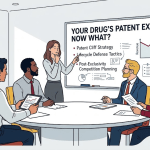
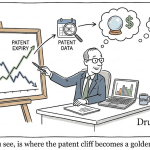
The pharmaceutical industry has historically operated under a binary commercial model: a drug was either patent-protected, generating monopoly profits, or it was generic, resulting in commoditization. This “patent cliff” paradigm, characterized by a precipitous drop in revenue the moment a primary composition-of-matter patent expired, is rapidly becoming an anachronism. In the modern biopharmaceutical landscape, the cliff has been engineered out of existence. It has been replaced by a “managed slope”—a sophisticated, multi-year erosion of revenue governed not by statutory expiration dates, but by a complex architecture of secondary intellectual property rights, regulatory exclusivities, and strategic litigation.
For the seasoned pharmaceutical executive or investor, the statutory expiration date listed in public databases is rarely the commercially relevant “Loss of Exclusivity” (LOE) date. The true commercial life of a blockbuster asset is now determined by the efficacy of “serial patent enforcement”—the practice of layering formulation, method-of-use, manufacturing, and device patents over the original active ingredient to extend market dominance. This strategy, often derided by critics as “evergreening” and defended by industry proponents as “lifecycle management,” effectively decouples the commercial viability of a drug from the patent life of the molecule itself.1
The financial stakes of this shift are astronomical. Between 2025 and 2030, the global pharmaceutical industry faces a theoretical LOE on assets generating approximately $236 billion in annual revenue, including titans like Keytruda, Eliquis, and Opdivo.3 However, the actual transfer of value from innovators to generic competitors and healthcare payers will be determined by the density of the defensive “patent thickets” erected around these assets. A difference of twelve months in the effective LOE for a drug like Keytruda represents billions of dollars in retained earnings, enough to fund entire R&D pipelines or finance strategic acquisitions.
This report analyzes the playbook of serial patent enforcement in 2025. It moves beyond the headlines to dissect the specific legal mechanisms—from “continuation” applications to “terminal disclaimers”—that enable these strategies. It examines how companies like Merck, Regeneron, and Johnson & Johnson are navigating the “Super Cliff” of the late 2020s, and how new pressures from the Federal Trade Commission (FTC) and the Inflation Reduction Act (IRA) are forcing a fundamental recalculation of Return on Investment (ROI).
The Architecture of the Patent Thicket
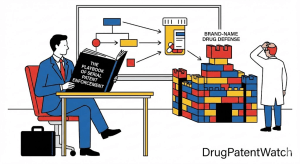
A “patent thicket” is not merely a large portfolio of patents; it is a strategic denial-of-access zone. It is a dense web of overlapping intellectual property rights designed to make the clearance of a competing product cost-prohibitive or legally impossible. The objective is to force a challenger to invalidate not just one patent, but dozens or even hundreds, creating a “Hydra” effect where severing one head leaves the body of the monopoly intact.4
The Layering Strategy
The construction of a thicket follows a predictable chronological and technological sequence. The primary patent, covering the active pharmaceutical ingredient (API) or the “composition of matter,” is the foundation. This patent is typically filed early in the drug discovery process and, due to the lengthy timeline of clinical trials and FDA approval, often has only a few years of remaining term by the time the drug launches.
To compensate for this, innovators file waves of secondary patents:
Formulation Patents: These cover specific combinations of the API with excipients, stabilizers, or buffers. For biologics, which are sensitive to environmental conditions, formulation patents are particularly robust.
Method of Use Patents: These cover the use of the drug for specific indications (e.g., treating rheumatoid arthritis vs. psoriasis) or specific dosing regimens (e.g., 40mg every two weeks).
Manufacturing Process Patents: These protect the specific steps used to synthesize the small molecule or, in the case of biologics, the cell lines and purification methods used to produce the protein. Because the “process is the product” in biologics, these patents are extremely difficult for biosimilars to design around without altering the clinical profile of the drug.6
Device Patents: For injectable drugs or inhalers, patents on the delivery mechanism—the autoinjector pen, the firing button, or the inhaler valve—can serve as a mechanical barrier to entry even after the chemical monopoly has expired.1
“Patent thickets often include ‘secondary’ patents on metabolites, methods of use, or delivery systems, many of which are filed after FDA approval… These thickets often extend exclusivity for many years past the exclusivity on the patent covering the drug’s active ingredient.” — PMC, National Institutes of Health 8
The Weaponization of Continuation Applications
A critical, often technical component of the thicket strategy is the use of “continuation” applications. Under U.S. patent law, an applicant can keep a patent family “alive” at the USPTO by filing a continuation application before the original patent issues. This allows the applicant to pursue additional claims based on the same original disclosure.9
In the context of serial enforcement, continuations allow pharmaceutical companies to engage in a form of “commercial surveillance.” By keeping a continuation pending, an innovator can monitor the development of generic or biosimilar competitors. Once a competitor’s product profile or manufacturing process becomes known (often through regulatory filings or litigation), the innovator can draft new claims in the pending continuation application that are specifically tailored to read on the competitor’s product. These new claims, once granted, can be asserted against the competitor, creating new liability years after the original invention was disclosed.10
This practice transforms the patent system from a mechanism for protecting inventions into a tool for targeting competition. It allows the thicket to grow and adapt in real-time, responding to specific threats as they emerge.
Legal Mechanics: The Terminal Disclaimer and Double Patenting
To maintain a thicket, companies often must overcome “double patenting” rejections—a rule preventing an inventor from obtaining two patents for the same invention (or an obvious variation thereof). The standard solution is the “Terminal Disclaimer.”
The Terminal Disclaimer Loophole
When a patent examiner rejects a new application on the grounds of “obviousness-type double patenting” (i.e., the new claim is too similar to an existing patent owned by the same company), the applicant can file a terminal disclaimer. This legal document aligns the expiration date of the new patent with the existing one. Crucially, it allows the new patent to issue, adding another “tree” to the thicket.11
While the term of the patent is not extended, the density of the thicket is increased. A generic challenger must now litigate against two patents instead of one. If an innovator repeats this process dozens of times, linking hundreds of patents via terminal disclaimers, they increase the cost and complexity of litigation for challengers exponentially, without extending the statutory term of any single patent.
The Failed USPTO Reform of 2024
In May 2024, the USPTO proposed a rule change that struck at the heart of this strategy. The proposal would have required that if any patent linked by a terminal disclaimer was invalidated, all linked patents would essentially become unenforceable. This would have turned the “thicket” into a “house of cards”—knock out one weak patent, and the entire estate collapses.11
However, following intense industry pushback and threats of litigation arguing the USPTO lacked statutory authority for such a substantive change, the proposal was effectively withdrawn by late 2024.13 The survival of the current terminal disclaimer practice ensures that the “hydra” model of patent defense remains viable through the 2025-2030 period. This retention of the status quo is a significant victory for brand defense teams, preserving the ability to use volume as a deterrent.
Regulatory Fortresses: The Orange Book and the 30-Month Stay
For small molecule drugs, the intersection of patent law and FDA regulation creates a unique defensive barrier known as the “30-month stay.”
The Mechanics of the Stay
Under the Hatch-Waxman Act, brand manufacturers list their patents in the FDA’s “Approved Drug Products with Therapeutic Equivalence Evaluations,” commonly known as the Orange Book. When a generic manufacturer files an Abbreviated New Drug Application (ANDA) with a “Paragraph IV” certification—claiming the listed patents are invalid or not infringed—the brand can sue. This lawsuit triggers an automatic 30-month stay on FDA approval of the generic.
This stay is a powerful tool. It grants the brand 2.5 years of guaranteed market exclusivity regardless of the weakness of their patent case, simply by filing a lawsuit. Consequently, the criteria for what can be listed in the Orange Book are of paramount strategic importance.1
The FTC’s Delisting Campaign
Historically, companies aggressively listed patents that were peripheral to the drug itself—such as patents on the distribution system (REMS) or the mechanical device (inhaler counters)—to trigger the stay. In 2024 and 2025, the Federal Trade Commission (FTC) launched a targeted enforcement campaign to purge these “improper” listings.
The FTC sent warning letters to major players like Teva, GSK, and AstraZeneca, challenging listings for asthma inhalers and other drug-device combinations. The argument was that the statute allows listing of “drug” patents, not “device” patents.15
Impact: In December 2025, Teva capitulated, delisting over 200 device patents from the Orange Book.16
Strategic Consequence: The removal of these patents does not invalidate them; Teva can still sue generics for infringing them. However, they no longer trigger the automatic 30-month FDA stay. This shifts the leverage back to generics, who can now potentially launch “at risk” or receive FDA approval faster, forcing brands to seek preliminary injunctions in court—a much higher legal bar than the automatic stay.17
The Biologic Defense: BPCIA and the “Patent Dance”
For biologic drugs (large molecules like monoclonal antibodies), the legal framework is governed by the Biologics Price Competition and Innovation Act (BPCIA), not Hatch-Waxman. This creates a different, often more protracted, defensive landscape.
The “Patent Dance”
The BPCIA mandates a complex information exchange process between the biosimilar applicant and the brand sponsor, known colloquially as the “patent dance.” Unlike Hatch-Waxman, there is no automatic 30-month stay. Instead, the process forces the parties to identify relevant patents and litigate them in waves.18
This structure inherently favors the “thicket” strategy. Because there is no 30-month cap on the dispute, brands can assert dozens of patents, dragging the litigation out for years. The sheer volume of patents asserted in BPCIA cases—often 40 to 60 patents compared to 5 to 10 in Hatch-Waxman cases—makes the “dance” a war of attrition.
Interchangeability as a Barrier
A key defensive line for biologics is the “interchangeability” designation. A standard biosimilar cannot be automatically substituted by a pharmacist; a doctor must prescribe it by name. An “interchangeable” biosimilar can be substituted like a generic small molecule.
Defensive Tactic: Brands often disparage the safety of switching between the reference product and the biosimilar, creating clinical hesitation. While the FDA is streamlining interchangeability requirements (removing the need for some switching studies), the commercial inertia remains a powerful asset for incumbents.19
Case Study I: Humira and the Blueprint for Indefinite Exclusivity
AbbVie’s defense of Humira (adalimumab) is the archetype of modern serial patent enforcement. It serves as the blueprint for every major franchise facing LOE in the 2020s.
The 250-Patent Fortress
Humira’s primary composition patent expired in 2016. Yet, biosimilars did not launch in the U.S. until 2023—a seven-year extension that generated over $100 billion in additional revenue. This was achieved by filing over 250 patent applications (and securing 130+ grants) covering:
New Indications: Treating hidradenitis suppurativa or uveitis.
Manufacturing: Specific pH levels in the fermentation process.
Formulation: High-concentration versions (citrate-free) that reduced injection pain.
The Seventh Circuit Ruling:
When generics sued, arguing this accumulation of patents was an antitrust violation, the Seventh Circuit Court of Appeals ruled in In re: Humira that the accumulation of patents—even if done with the intent to block competition—is not illegal as long as the patents themselves are not fraudulent. This ruling effectively legalized the patent thicket strategy in the U.S., signaling to the industry that “volume is valid”.5
The Settlement Pattern
AbbVie used its thicket to force settlements. It allowed biosimilars to launch in Europe (where the thicket was weaker) in 2018, in exchange for agreeing to delay U.S. entry until 2023. This “split-market” settlement preserved the lucrative U.S. monopoly for the maximum possible duration.5
Case Study II: Keytruda’s Subcutaneous Formulation Hop
Merck’s Keytruda (pembrolizumab) is the world’s best-selling drug, with sales exceeding $25 billion. With key patents expiring in 2028, Merck is executing a “product hop” strategy to render the patent cliff irrelevant.21
The IV to Sub-Q Pivot
Currently, Keytruda is administered via intravenous (IV) infusion, a process that requires a hospital visit and takes considerable time. Merck is developing a subcutaneous (Sub-Q) formulation, using a proprietary enzyme (hyaluronidase) to allow the large volume of antibody to be injected under the skin in minutes.
The Patents:
Merck has filed over 100 new patents related to this formulation and delivery method. These patents, if granted, will extend well into the 2030s and potentially 2040.21
Commercial Obsolescence
The strategy relies on shifting the standard of care before 2028.
Launch: Merck aims to launch the Sub-Q version (Keytruda Qlex) prior to the 2028 expiration of the IV patent.22
Conversion: By 2028, Merck hopes to have converted the majority of patients and oncology centers to the Sub-Q workflow. Oncology centers prefer Sub-Q because it frees up infusion chairs for other billable patients.
The Trap: When IV biosimilars launch in 2028, they will be “bioequivalent” to the old standard of care (IV Keytruda), not the new market leader (Sub-Q). They will be competing for a shrinking “remnant” market.
Data on Efficacy:
In 2025, Merck presented Phase 3 data (Trial 3475A-D77) showing the Sub-Q version is non-inferior to IV, paving the way for FDA approval. This clinical success is the linchpin of the legal strategy.23
Case Study III: Eylea and the High-Dose Cannibalization
Regeneron’s defense of Eylea (aflibercept) demonstrates how “defensive cannibalization” can preserve value even in the face of imminent competition.
The Settlement Timeline
Facing expiration of the 2mg Eylea patents, Regeneron sued multiple biosimilar applicants. Throughout 2025, it reached settlements with Sandoz, Celltrion, and Biocon, delaying their entry until late 2026 or 2027.18
Result: This bought Regeneron roughly 2-3 years of additional exclusivity beyond the expected expiry.
The High-Dose (HD) Strategy
While the lawyers delayed the 2mg biosimilars, Regeneron launched Eylea HD (8mg). The 8mg dose offers extended dosing intervals (every 12-16 weeks vs. every 8 weeks), a significant benefit for patients receiving eye injections.
Financial Engineering (Q3 2025 Data):
Eylea (2mg) Sales: Down 41% due to competition and cannibalization.
Eylea HD (8mg) Sales: Up 10% quarter-over-quarter.
Total Franchise: While the total franchise is down 28%, the value is being successfully transferred to the HD product, which has patent protection into the late 2030s. By the time 2mg biosimilars launch in 2026, the 2mg market may be a fraction of its former self, cannibalized by Regeneron’s own innovation.25
Case Study IV: Stelara, Biosimilars, and the Inflation Reduction Act
Johnson & Johnson’s Stelara (ustekinumab) highlights the interplay between patent settlements and the new price negotiation powers of the Inflation Reduction Act (IRA).
The “Bona Fide Marketing” Loophole
Stelara was selected for Medicare price negotiation. However, the IRA contains a clause: if a biosimilar is approved and “marketed” before the negotiated price takes effect, the drug can be deselected.
The Amgen Settlement: J&J settled with Amgen to allow the biosimilar Wezlana to launch in January 2025.
The Controversy: CMS (Centers for Medicare & Medicaid Services) scrutinizes whether a biosimilar is engaged in “bona fide marketing.” If Wezlana launches but has negligible volume (due to supply constraints or payer agreements), CMS might determine there is no real competition and keep Stelara in the negotiation program.
This has created a high-stakes game where J&J has an incentive to allow just enough biosimilar competition to escape government price setting, but not enough to erode their own market share—a delicate balance managed through settlement terms and payer rebates.26
The “Pill Penalty”: How the IRA Distorts Patent Strategy
The Inflation Reduction Act (IRA) creates a divergence in the value of patent protection for small molecules versus biologics, known as the “Pill Penalty.”
The 9 vs. 13 Year Gap
The IRA allows Medicare to negotiate prices for:
Small Molecules: 9 years after FDA approval.
Biologics: 13 years after FDA approval.4
This 4-year difference fundamentally alters the ROI of patent thickets. For a small molecule, even if a company builds a 20-year patent thicket, the IRA effectively renders it moot after year 9 for the Medicare population (a huge segment for cancer and cardiovascular drugs). The “effective commercial life” is capped by legislation, not litigation.
Investment Flight to Biologics
Investors have reacted rationally to this distortion. Since the IRA’s passage, R&D investment in small molecules by early-stage firms has dropped by nearly 70%, while funding for biologics has surged to be 10 times larger.28
Strategic Implication: The industry is pivoting toward biologics not just for scientific reasons, but because they offer a longer guaranteed runway (13 years) and are structurally easier to protect with patent thickets (due to manufacturing complexity). The legislation intended to lower prices is paradoxically incentivizing the development of the most expensive class of drugs with the most impenetrable patent defenses.
The Counter-Offensive: FTC Enforcement and PTAB Discretion
The pharmaceutical defense playbook is facing unprecedented institutional resistance.
PTAB and “Settled Expectations”
The Patent Trial and Appeal Board (PTAB) has introduced a new discretionary denial rationale: “Settled Expectations.” If a patent has been in force for a long time (e.g., 6-8 years) without challenge, the Board may refuse to institute a review, arguing that the industry has adapted to the patent’s existence.30
Double-Edged Sword: For brands, this helps protect the “old growth” trees in the patent thicket from late-stage attacks. For generics, it forces them to file challenges much earlier, increasing upfront legal burn rates.
Antitrust Scrutiny
The FTC is aggressively monitoring settlements for “reverse payments” or “volume restrictions.” While the courts have generally upheld volume-limited settlements (like Revlimid) as pro-competitive (because they allow entry before patent expiry), the FTC argues they are tacit market allocation schemes. The agency’s 2025 renewal of Orange Book challenges signals a move toward a “strict liability” approach to patent listing.16
Strategic Intelligence: Forecasting Launch Windows
In this volatile environment, relying on the statutory expiration date to forecast revenue is financial malpractice. Tools like DrugPatentWatch are essential for modeling the “Launch Window”—a probabilistic range of entry dates.
Litigation Analytics
By tracking “Paragraph IV” certifications and subsequent litigation dockets, analysts can assess the “fragility” of a thicket.
Settlement Zone Modeling: Strategists can calculate the point at which the cost of litigation and the risk of an “at-risk” launch outweigh the value of the remaining monopoly. For Eylea, this model correctly predicted a settlement in the 2026-2027 window.31
Pipeline Visibility: Patent surveillance allows companies to see competitor R&D pipelines 5-10 years before clinical trials. A sudden flurry of patent filings by a competitor on a specific target acts as an early warning system for a new therapeutic class.32
Table: Impact of Intelligence on Forecasting
Data Point
Traditional View
Strategic Intelligence View
Patent Expiry
Binary Event (Cliff)
Start of “Managed Erosion” Phase
Litigation
Legal Noise
Signal of “Settlement Zone” Timing
Orange Book
Compliance List
Roadmap of 30-Month Stays
Device Patent
Technical Detail
Primary Barrier to Entry (Pre-2025)
The Financial Engineering of Settlements
The modern patent settlement is a financial instrument designed to optimize the “area under the curve” for the brand’s revenue.
Volume-Limited Entry
The settlement between Bristol Myers Squibb and generic makers for Revlimid (lenalidomide) pioneered the “volume-limited” model. Generics were allowed to launch years before the patent expired, but their market share was capped (starting at ~7%).
Brand Benefit: Avoids a price collapse. Payer rebates remain effective because generics cannot supply the whole market.
Generic Benefit: Guaranteed market share at high prices (since limited supply means limited price competition).
Result: BMS preserved billions in revenue during the “entry phase” that would have been lost in a traditional “at-risk” launch scenario.33
Future Horizons: The 2026-2030 Super Cliff
Looking ahead, the industry faces the expiration of the “mega-blockbusters”: Eliquis, Opdivo, and the Keytruda cliff.
Predictions:
The Sub-Q Standard: By 2028, we expect 60-70% of monoclonal antibody markets to shift to subcutaneous formulations, rendering the “patent cliff” for IV formulations a non-event for revenue impact.
M&A Surge: Companies facing steep cliffs (like BMS with Eliquis and Opdivo) will engage in aggressive M&A to buy revenue, as internal pipelines cannot offset the speed of erosion.34
The “Biosimilar Void”: The high cost of litigation and the strength of thickets are discouraging biosimilar development for mid-sized assets. We may see a “hollowing out” where only the largest drugs face competition, while $1B-$3B biologics remain effective monopolies due to the high barrier of entry.35
Key Takeaways
Redefine “Exclusivity”: Exclusivity is no longer a date; it is a variable function of patent density, regulatory strategy, and litigation leverage. The “Patent Cliff” is dead; long live the “Managed Slope.”
The Thicket is the Asset: For biologics, the manufacturing process and formulation patents are more valuable than the composition of matter. Investing in “process innovation” is investing in legal durability.
Regulatory Risk is Rising: The FTC’s crackdown on Orange Book listings removes the “easy button” (device patents) for delaying generics. Defense strategies must now rely on more substantive technical patents.
The IRA Drives Strategy: The “Pill Penalty” is forcing a capital flight from small molecules to biologics, reinforcing the industry’s reliance on patent thickets.
Intelligence is Alpha: In a world of opaque settlements and technical legal maneuvers, granular patent intelligence (via platforms like DrugPatentWatch) is the only way to accurately value pharmaceutical assets.
Frequently Asked Questions
Q1: How does the “Pill Penalty” in the Inflation Reduction Act specifically encourage patent thickets?
A: By granting biologics 13 years of immunity from price negotiation compared to only 9 years for small molecules, the IRA incentivizes companies to invest in large-molecule drugs. Biologics are inherently more complex to manufacture, allowing companies to file hundreds of secondary patents on the process of making the drug (the “process is the product” doctrine). This creates natural “thickets” that are harder to challenge than the precise chemical formulas of small molecules. Essentially, the IRA pushes the industry toward the asset class where serial patent enforcement is most potent and sustainable.4
Q2: Why are “settled expectations” suddenly a major hurdle for challenging pharmaceutical patents?
A: In 2025, the USPTO and PTAB began using “settled expectations” as a discretionary reason to deny Inter Partes Review (IPR) petitions. If a patent has been in force for a significant period (e.g., 6-8 years), the Board argues that the industry has adapted to its existence, and invalidating it now would disrupt the status quo. This effectively creates a “statute of limitations” on challenging bad patents, allowing innovators to keep weak patents in their thicket simply because no one challenged them early enough. This shifts the burden to generics to litigate immediately upon patent issuance, increasing upfront costs.30
Q3: What distinguishes a “Volume-Limited Settlement” from a traditional “Pay-for-Delay” deal?
A: In a traditional Pay-for-Delay (which is illegal/highly scrutinized), the brand pays the generic to stay off the market entirely. In a Volume-Limited Settlement (like Revlimid), the generic is allowed to enter the market early, but with a cap on how much they can sell (e.g., 7% of total volume). This avoids the appearance of a total block while preventing the price collapse that comes with unrestricted competition. It allows the brand to maintain high prices for the remaining 93% of the market while giving the generic a guaranteed, high-margin slice of the pie.33
Q4: How does the “Product Hop” strategy for Keytruda differ from previous small-molecule hops?
A: Traditional small-molecule hops often involved minor tweaks (e.g., tablet to capsule) that offered little clinical value and were often blocked by state “forced switching” laws. The Keytruda hop involves changing a biologic from an IV infusion (requiring a hospital visit and hours in a chair) to a subcutaneous injection (minutes). This offers genuine clinical and lifestyle value to patients, making it much harder for payers or regulators to claim it is purely anticompetitive. However, the strategic timing—converting the market just before the IV patent expires—reveals its primary purpose as a lifecycle management tool.21
Q5: Why is the removal of device patents from the Orange Book significant for generic competition?
A: Listing a patent in the Orange Book grants the brand an automatic 30-month stay (delay) on generic approval if they sue for infringement. By delisting device patents (like the mechanism of an inhaler), the brand loses this automatic delay trigger for those specific patents. Generics can now “carve out” or challenge the drug patent without being held up by the device patent. This removes a “procedural hurdle” and forces brands to rely on the strength of their actual drug patents, significantly lowering the barrier to entry for generics.16