The Sovereign Discount and the End of Predictable Exclusivity
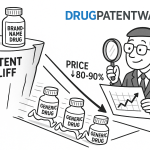
The traditional pharmaceutical valuation model, long built on the bedrock of predictable patent protection, is undergoing a forced demolition. For decades, investors and developers viewed the 20-year patent term as the primary determinant of an asset’s economic life, supplemented by regulatory exclusivities that created a clear cliff for revenue. The passage of the Inflation Reduction Act (IRA) in 2022 has introduced a new, sovereign-level disruption that acts as a de facto loss of exclusivity (LOE) long before the first generic hits the market.1
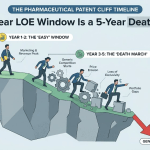
This is not merely a pricing adjustment. It is a fundamental restructuring of the risk-return profile of drug development. The federal government now possesses the statutory authority to negotiate prices for the highest-spending drugs in Medicare Part D and Part B, establishing what the law terms a Maximum Fair Price (MFP). Because this price-setting event is triggered by the time elapsed since Food and Drug Administration (FDA) approval—nine years for small molecules and thirteen years for biologics—the economic window for recouping research and development (R&D) costs has been compressed.3 For many blockbusters, the negotiation date now precedes patent expiration, effectively stripping away years of peak-revenue potential.1
The Mathematical Erosion of Net Present Value
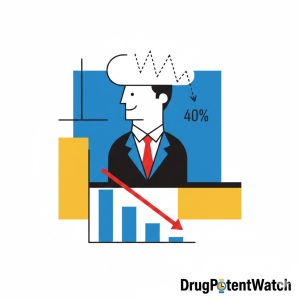
Investors and business development teams are re-running their numbers with a new, harsher set of assumptions. Research from RA Capital suggests that these price-setting provisions reduce the net present value (NPV) of a drug by approximately 40 percent at the time of launch.5 This reduction is even more pronounced for early-stage assets where the combination of the negotiation clock, discounting, and dilution can render previously viable programs economically terminal before they exit Phase II clinical trials.5
Valuation Metric
Pre-IRA Assumption
Post-IRA Reality
Impact on R&D
Peak Sales Window
12–14 years post-launch.
9 years (small molecules) / 13 years (biologics).
Compressed ROI window.
Terminal Value
Determined by generic entry (90% drop).
Determined by government MFP (40-75% drop).
Lower lifetime value (LTV).
WACC Adjustment
Standard therapeutic area risk.
Added “Policy Risk” premium of 1–2%.
Higher cost of capital.
Internal Rate of Return
Target 12–15% across portfolio.
Stagnant or declining for many assets.7
Focus on high-unmet need only.
The math is unforgiving. For a drug with a weighted average cost of capital (WACC) of 11 percent and a risk-adjusted internal rate of return of 12 percent, the loss of years 10 through 14—the period when a drug typically reaches its peak maturity and highest margins—hammers the overall valuation.5 Manufacturers of multi-indication drugs have historically sought to sequentially expand indications throughout a product’s lifetime. However, given the compressed commercial timeline, companies must now accelerate value realization earlier in the product lifecycle.8
Discounting for Sovereign Uncertainty
The industry is caught in an economic paradox. It is spending more on R&D than ever before in history—estimated at $2.23 billion to $2.5 billion per successful drug—only to see its return on that investment stagnate.2 In 2019 alone, the pharmaceutical industry collectively spent $83 billion on R&D, a figure that is ten times what was spent annually in the 1980s when adjusted for inflation.7
“The Inflation Reduction Act (IRA) undermines innovation… Price controls act as a new loss-of-exclusivity date that operates independently of patent life. The impact of a shortened lifecycle value can be immense, as it comes late when a brand is typically at its peak value.” — IQVIA Analysis 3
The sovereign risk introduced by the IRA is not a one-time event but a recurring cycle of price-setting that forces a permanent discount on drug assets. Executives must now grapple with a complex matrix where a single regulatory decision in Washington can instantly alter the commercial viability of a multi-billion-dollar asset.9 This volatility has led to a conservative shift in venture capital funding, with many investors questioning the “invest-ability” of certain sectors, particularly those with high exposure to Medicare-aged populations.10
Maximum Fair Price: The New Exclusivity Milestone
The Drug Price Negotiation Program (DPNP) operates in cycles, targeting qualifying single-source drugs that have been on the market for a specified number of years and lack generic or biosimilar competition.4 The Centers for Medicare & Medicaid Services (CMS) identifies eligible drugs from the top 50 highest-spending medications in Medicare Parts B and D.13 Once a drug is selected, the manufacturer must enter a negotiation that is backstopped by heavy excise taxes, making participation effectively mandatory.14
The 2026 Cohort: Ten Drugs That Broke the Model
The first ten drugs selected for negotiation represent the cornerstone of Medicare’s current drug spend. These products, primarily for chronic conditions like diabetes, heart disease, and cancer, accounted for $46.4 billion in total Part D gross spending in 2022—roughly 19 percent of the entire program’s drug costs.12 The negotiated prices, which take effect on January 1, 2026, represent a minimum reduction of 38 percent off the 2023 list prices.15
Drug Name
Manufacturer
Primary Indication
2022 Part D Spending ($B)
Eliquis
BMS/Pfizer
Blood Clots
$16.5
Jardiance
Boehringer/Lilly
Diabetes/Heart Failure
$7.0
Xarelto
J&J/Bayer
Blood Clots
$6.0
Januvia
Merck
Diabetes
$4.1
Farxiga
AstraZeneca
Diabetes/Heart Failure
$3.3
Entresto
Novartis
Heart Failure
$2.8
Enbrel
Amgen
Autoimmune
$2.8
Imbruvica
AbbVie/J&J
Blood Cancer
$2.6
Stelara
J&J
Autoimmune
$2.6
Fiasp/NovoLog
Novo Nordisk
Diabetes
$2.6
The fiscal impact on these manufacturers is immense. For instance, Eliquis, the top-spending drug in the group, saw its spending more than double between 2018 and 2022.12 The imposition of an MFP at year nine effectively terminates the high-margin phase of these products’ lifecycles, forcing companies to look elsewhere to fill revenue gaps as patent cliffs and negotiation cliffs converge between 2026 and 2030.9
Expansion and Contagion: Cycles 2027 and 2028
The program is designed to be cumulative, adding 15 Part D drugs for 2027 and a mix of 15 Part B and Part D drugs for 2028.15 By 2030, nearly 100 top-performing drugs are slated for negotiation.8 On January 17, 2025, CMS announced the second list of 15 drugs, which included the popular GLP-1 blockbusters Ozempic and Rybelsus, along with the obesity treatment Wegovy.13 These drugs accounted for $40.7 billion in spending between November 2023 and October 2024, with over 5.3 million beneficiaries utilizing them.13
The selection of these high-growth assets signals that CMS is moving away from looking backward at historical spend and toward capturing the value of the most innovative and widely used therapies in the Medicare program. This creates a negotiation contagion effect that competitive intelligence (CI) teams must model. If a market leader like Eliquis or Xarelto has its price capped by the CMS, competing drugs in the same class—even if not selected—face immense pressure to lower their net prices to maintain formulary positioning.16
The 2028 Selection and Part B Integration
The third round of negotiations, announced in early 2026, marks the first time drugs payable under Medicare Part B are eligible for inclusion.18 This cycle includes 15 additional medications, ranging from the HIV treatment Biktarvy to the medical uses of Botox.18
2028 Selection (Round 3)
Manufacturer
Indication
Beneficiaries Impacted
Biktarvy
Gilead
HIV
1.8M (total group) 19
Botox
AbbVie
Migraine/Bladder
1.8M (total group) 19
Trulicity
Eli Lilly
Type 2 Diabetes
1.8M (total group) 18
Cosentyx
Novartis
Autoimmune
1.8M (total group) 18
Kisqali
Novartis
Breast Cancer
1.8M (total group) 18
Verzenio
Eli Lilly
Breast Cancer
1.8M (total group) 18
The inclusion of physician-administered Part B drugs expands the reach of price setting into the heart of oncology and specialty immunology. The Trump administration, while critical of government price setting, has allowed these cycles to continue while simultaneously promoting its own international reference pricing initiatives.17
The Small Molecule Penalty and Innovation Distortion
The most contentious provision of the IRA is the differential treatment of small molecules versus large molecules (biologics). Small molecules become eligible for MFP negotiations only nine years after FDA approval, while biologics are granted thirteen years.3 This four-year gap—often called the pill penalty—has created a massive distortion in R&D incentives.2
Small molecules, which make up 90 percent of pharmaceutical drugs, are typically easier to administer and cheaper to manufacture than biologics.20 However, the shorter exclusivity window makes them less attractive to investors. Since the legislation was first drafted, funding for small molecule drug development has reportedly dropped by 70 percent.3 Investors are signaling a clear preference for biologics, antibody-drug conjugates (ADCs), and cell therapies that offer the longer 13-year window.9
Nine vs. Thirteen: The Exclusivity Gap
The logic behind the distinction remains opaque. Some believe policymakers wished to promote cutting-edge biologic therapies, while others suggest it was a simple legislative compromise.3 Regardless of intent, the result is an artificial bias in the R&D pipeline. Biopharmaceutical venture investors are increasingly focused on companies with lead programs in Phase I, II, or III that utilize biologic modalities to capture the extended exclusivity.22
In response to this distortion, the 118th Congress saw the introduction of several bills, including the EPIC Act and the Maintaining Investments in New Innovation Act (H.R. 5547), aimed at equalizing the negotiation period between small molecules and biologics.3 The Trump administration has also expressed support for ending the pill penalty through executive action, though a permanent fix likely requires legislative change.21
The Chilling Effect on Oncology R&D
In oncology, where as many as 75 percent of drugs are approved for multiple indications, the pill penalty is particularly damaging.10 Historically, a manufacturer might launch a drug for a small, rare indication to get to market quickly and then sequentially launch for larger indications as clinical data matured.8 Under the IRA, the negotiation clock starts ticking on the date of the very first approval.6
Data indicates a significant decline in industry-funded post-approval oncology trials since the IRA’s passage.10 Small molecule oncology trials dropped by 45.3 percent in monthly average initiations, compared to a 32.5 percent drop for biologics.10 Because 46 percent of subsequent indications for small molecule oncology drugs are approved seven or more years after the initial launch, manufacturers now face the prospect of their new indications being price-capped almost immediately upon entry.10
Strategic Shifts in Clinical Development
The compression of the commercial window has killed the sequential launch playbook. Companies can no longer afford to保護 their clinical timelines by launching smaller indications first to establish proof of concept.24 Instead, they are forced to adopt high-priority, high-risk strategies to maximize revenue early.
From Sequential to Concurrent: Indication Stacking
Indication stacking involves simultaneously pursuing multiple indications early in the lifecycle to maximize revenue before the MFP price-setting event occurs.8 This strategy requires massive upfront capital and increases the risk of development failure. Manufacturers are prioritizing large indications with high probability of success over smaller, high-unmet-need indications that might start the clock without providing sufficient ROI.6
The Cost of Accelerated Evidence
Accelerating value realization is capital-intensive. Smaller and emerging biopharma firms often find this infeasible, leading to a greater reliance on partnerships and licensing deals to fund early, broad R&D efforts.8 We are seeing a shift where companies tighten their focus, investing only in therapeutic areas where they have a distinct competitive edge.25 This reprioritization has led to the restructuring of entire divisions at companies like Roche and Johnson & Johnson.25
Company
Division Impacted
Strategic Rationale
Roche
Immuno-Oncology
Focus on higher-return, novel modalities.
J&J
Cardiovascular
Prioritize specialty TAs over primary care.
Biogen
General R&D
Restructuring after 14% R&D budget cut.25
BMS
Multiple Pipeline Assets
Killing “me-too” or low-growth candidates.25
This execution mode favors assets with high potential for therapeutic advance over iterative improvements. CMS’s negotiation guidance suggests that drugs offering a significant clinical improvement over existing standards of care will be eligible for higher MFPs, making novel mechanisms of action (MoAs) the new gold standard for investment.26
Beneficiary Redesign and Manufacturer Liability
While the MFP negotiations capture the headlines, the IRA’s redesign of the Medicare Part D benefit structure is arguably more disruptive to immediate-term commercial planning. Effective January 1, 2025, the coverage gap (or donut hole) was eliminated and replaced by a simplified structure with a $2,000 annual out-of-pocket cap for beneficiaries.28
The $2,000 Out-of-Pocket Cap
This cap is a victory for patient access, but it shifts the financial burden of high-cost drugs away from seniors and the government and onto Part D plan sponsors and pharmaceutical manufacturers.28 For beneficiaries taking only brand-name drugs, annual out-of-pocket costs at the catastrophic threshold will fall from around $3,300 in 2024 to $2,000 in 2025.29
Catastrophic Phase Exposure in 2025
Under the previous system, CMS covered 80 percent of costs in the catastrophic phase. In 2025, CMS’s reinsurance liability drops to 20 percent for brand-name drugs.29 Manufacturers, who previously had no liability in the catastrophic phase, are now responsible for a mandatory 20 percent discount on brand-name drugs in this phase.30
Phase
Beneficiary Pays
Plan Pays
Manufacturer Pays
CMS Pays
Deductible
100%
0%
0%
0%
Initial Coverage
25%
65%
10%
0%
Catastrophic
$0
60%
20%
20%
For specialty drugs costing $22,000 per month, the shift is staggering. A plan’s liability for a single adherent patient could triple, and manufacturers may see their discount liability for certain specialty drugs increase by over 500 percent.8 This creates immense pressure on plans to utilize aggressive formulary management, including more frequent exclusions and high rebate demands, to offset their increased exposure.8
Stakeholder Economics: Plan Sponsors vs. Manufacturers
The redesign forces both plans and manufacturers to reevaluate their contracting strategies. Plans are taking on significantly more risk, especially for beneficiaries utilizing expensive specialty medications.31 To maintain preferred formulary positioning, manufacturers may need to increase rebates to Part D plans, further eroding gross-to-net margins.28
Platforms like DrugPatentWatch are now essential for manufacturers to model these liability shifts. Success requires integrating rebate requirements and mandatory discounts into long-term financial forecasts to ensure that asset valuations reflect the true net revenue potential in the post-redesign environment.1
The Trump Administration’s Pricing Pivot
The return of the Trump administration in 2025 has added new layers of complexity to the drug pricing landscape. While the IRA’s negotiation framework remains in effect, the administration has resurrected and expanded upon “Most Favored Nation” (MFN) initiatives intended to align US prices with international benchmarks.17
Most Favored Nation (MFN) and the GENEROUS Model
In May 2025, an executive order directed federal agencies to pursue MFN pricing strategies, ensuring that American consumers receive the lowest price offered to other developed nations.21 This quickly evolved into the Medicaid GENEROUS Model, a voluntary five-year program where manufacturers provide supplemental rebates to state Medicaid programs that result in international pricing for outpatient drugs.21
The “TrumpRX” Platform and Tariff Leverage
The administration has also proposed a direct-to-consumer sales portal, “TrumpRX,” and suggested using tariff threats as leverage in drug pricing negotiations.17 The connection is clear: a company agreeing to MFN arrangements and selling drugs directly to consumers at lower prices could receive relief from threatened tariffs on active pharmaceutical ingredients (APIs) or intermediates sourced from overseas.17
Policy Initiative
Mechanism
Objective
Business Impact
GLOBE Model
Part B MFN Rebates
Align US/Global pricing.
Margin compression on IV drugs.
GUARD Model
Part D MFN Rebates
International benchmarks.
Higher rebate obligations.
TrumpRX
Direct Sales Portal
Lower sticker prices.
Disruption of PBM model.
Tariff Threats
Trade Policy
Leverage in negotiations.
Supply chain volatility.
This environment requires a multi-disciplinary approach that integrates policy forecasting with clinical and commercial strategy.1 Manufacturers can no longer plan in a vacuum; they must model how MFN initiatives, IRA negotiations, and Part D liability shifts interact to affect the total lifetime value of an asset.6
Competitive Intelligence and the Data Advantage
In the post-IRA era, the “lone wolf” competitive intelligence manager is extinct.16 Success requires the construction of a patent fortress—a layered portfolio of composition of matter, method of use, formulation, and process patents—and the advanced analytics to defend it.2
Modeling Policy Shocks with DrugPatentWatch
The modern exclusivity environment is characterized by extreme complexity. Relying on public, free data sources is insufficient for high-stakes decision making.34DrugPatentWatch serves as critical infrastructure, aggregating disparate datasets into actionable intelligence. It allows strategists to:
Map Freedom-to-Operate (FTO): Identifying white space in a competitor’s patent thicket where a 505(b)(2) or super-generic entry might be possible.1
Monitor Paragraph IV Signals: Tracking generic filings in real-time to predict the arrival of at-risk launches.1
Forecast MFP Eligibility: Integrating Medicare spending data with FDA approval dates to predict exactly when a competitor’s asset will hit the negotiation window.1
This level of granularity is essential for M&A due diligence. If the effective life of a target asset is shorter than its nominal patent life due to imminent IRA negotiation, the valuation model must be adjusted downward.34
The Biosimilar Paradox
A critical, counter-intuitive insight for 2026 is the biosimilar paradox created by the IRA. Historically, biosimilars thrived by offering a discount to high-priced brands. However, if a brand’s price is already suppressed by government negotiation, the spread available for a biosimilar to undercut shrinks.16
Targeting a drug likely to be negotiated in the near future carries a significantly higher risk profile for biosimilar developers. CI analysts must now factor in the reference product’s negotiation status when assessing pipeline viability. A biosimilar targeting a non-negotiated biologic is often a safer bet than one targeting a drug already facing an MFP.16
Case Study: The Humira Fortress vs. The Exubera Failure
The defense of AbbVie’s Humira stands as the archetype of the patent fortress strategy. While the primary compound patent expired in 2016, AbbVie used a web of secondary patents to delay biosimilar competition in the U.S. until 2023, generating billions in additional revenue.2
Conversely, Pfizer’s Exubera (inhaled insulin) serves as a warning of what happens when a company misjudges the competitive environment and patient needs. The device was too large, and patients were not as averse to needles as Pfizer assumed, leading to a $2.8 billion write-off.9 In the post-IRA world, such failures are even more costly, as the time to recover from a commercial misstep is shorter than ever.
Conclusion: Winning the Intelligence War
The pharmaceutical industry is caught in an economic paradox. It is spending more on R&D than ever before, only to see its return on investment stagnate.7 The sovereign risk of the US market continues to rise, and the ability to turn patent data into a competitive advantage is the only sustainable path to growth.
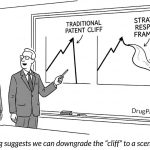
The patent cliff metaphor has evolved. It is no longer a single drop-off but a series of jagged edges—negotiation dates, liability shifts, and international reference pricing—that must be navigated with precision. Success in this era belongs to the smartest, not just the largest. The winners will be those who embrace indication stacking, pivot to high-barrier modalities, and operationalize competitive intelligence to secure long-term dominance in a hyper-competitive market.9
Key Takeaways
Valuation Impact: The IRA’s price-setting provisions reduce the NPV of a drug by approximately 40 percent at launch.5
The Pill Penalty: Small molecules face negotiation after 9 years, while biologics receive 13 years, driving a massive shift in R&D investment toward large molecules.2
Clinical Trials Decline: Post-approval oncology trials for small molecules have dropped by 45.3 percent since the IRA’s passage.10
Part D Redesign: The 2025 redesign introduces a $2,000 OOP cap and shifts high-cost liability to manufacturers (20% in the catastrophic phase) and plan sponsors.28
Strategic Shift: Indication stacking is replacing sequential launches to front-load revenue before MFP price-setting occurs.8
Intelligence is Mandatory: Tools like DrugPatentWatch are now essential for M&A due diligence and long-term lifecycle planning in a volatile policy environment.1
FAQ
Q1: How does a drug qualify for the orphan drug exclusion under the IRA? A: Originally, a drug was excluded from negotiation only if it was designated and approved for exactly one rare disease. However, legislative and regulatory updates in 2025 expanded this to allow products with multiple orphan designations, provided all approved indications are for rare diseases, helping to preserve incentives for rare disease innovation.13
Q2: What is negotiation contagion, and how does it affect non-selected drugs? A: This occurs when an MFP set for a market leader (e.g., Eliquis) forces competing drugs in the same class to lower their net prices to maintain formulary positioning, even if those competitors were not themselves selected for negotiation.16
Q3: Does the $2,000 Part D out-of-pocket cap apply to drugs administered in a doctor’s office? A: No. The $2,000 cap applies only to Medicare Part D drugs. Drugs administered in a clinical setting (like many IV chemotherapies) fall under Medicare Part B, which has different cost-sharing rules.29
Q4: Why are manufacturers pivoting to antibody-drug conjugates (ADCs)? A: ADCs are considered biologics, granting them a 13-year window before IRA negotiations begin. They also have higher manufacturing complexity, creating a natural moat against biosimilar competition compared to simple small molecules.9
Q5: How can DrugPatentWatch help with M&A due diligence? A: It allows teams to audit a target company’s portfolio for effective market life versus nominal patent life. By identifying Paragraph IV challenges and predicting IRA negotiation windows, it ensures that valuations reflect real-world policy and competitive risks.9