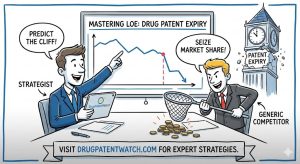
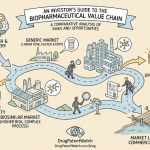
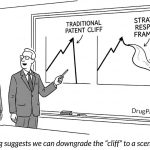
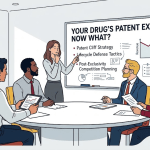
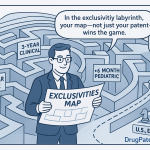
The global pharmaceutical industry is currently navigating a period of unprecedented structural transformation. We are standing on the precipice of a loss-of-exclusivity (LOE) event of tectonic magnitude—a “patent cliff” that will redefine market leadership, obliterate revenue streams for incumbents, and create fortunes for agile challengers. Between 2025 and 2030, blockbuster drugs representing an estimated $200 billion to $236 billion in annual global revenue are set to lose their patent protection.1 This is not merely a cyclical downturn; it is a fundamental resetting of the competitive landscape.
Unlike the “Lipitor cliff” of 2011–2012, which was characterized by the commoditization of high-volume, small-molecule cardiovascular drugs, the coming wave is defined by complexity. We are witnessing a “hybrid” cliff involving sophisticated biologics, intricate drug-device combinations, and a regulatory environment that has been radically altered by the Inflation Reduction Act (IRA) and an increasingly aggressive Federal Trade Commission (FTC). The “low-hanging fruit” of simple Paragraph IV certifications against weak primary patents has largely been harvested. The modern battlefield is now defined by “patent thickets” containing hundreds of secondary patents, high-stakes litigation over “skinny labels,” and the critical, market-defining distinction of biosimilar interchangeability.
For the pharmaceutical executive, the investor, or the IP strategist, the implications are binary: adapt or atrophy. The days of relying on a single “composition of matter” patent to safeguard a franchise for two decades are over. Today, success requires a multi-disciplinary approach that integrates deep legal acumen with predictive analytics. It demands the use of sophisticated intelligence platforms like DrugPatentWatch to identify vulnerabilities in competitor fortresses years before the statutory expiration dates.
This report serves as an exhaustive strategic blueprint for this new era. We will dissect the macroeconomic forces driving the cliff, analyze the divergent impacts on small molecules versus biologics, and provide a granular examination of the legal and commercial strategies—from “Section viii” carve-outs to authorized generic launches—that will determine the winners and losers of the next decade. We write not for the casual observer, but for the professional seeking to turn patent data into a definitive competitive advantage.
The Macroeconomic Tsunami: The 2025–2030 Patent Cliff
Quantifying the Exposure
The sheer scale of the revenue at risk between 2025 and 2030 is difficult to overstate. Industry analysis projects that the top pharmaceutical companies face a revenue contraction of up to 62% from their top-selling assets by 2030.1 This creates a vacuum that generic and biosimilar manufacturers are racing to fill.
The distribution of this risk is highly concentrated. A handful of “megablockbusters”—drugs generating over $5 billion annually—anchor the balance sheets of the world’s largest pharma entities. When these anchors are cut, the resulting volatility will force a scramble for M&A, pipeline acceleration, and defensive legal posturing.
Industry Insight: “The next patent cliff, between 2025 and 2030, is set to be one of the biggest since 2010 from a loss of revenue perspective… with blockbuster drugs including Merck’s Keytruda, BMS’s Eliquis, and Johnson & Johnson’s Darzalex/Faspro all losing market exclusivity.” — ResearchAndMarkets.com.1
The “Hybrid” Nature of the Cliff
The defining characteristic of this cycle is the split between small-molecule drugs and biologics. This distinction dictates everything from the speed of price erosion to the cost of market entry.
1. The Precipitous Drop: Small Molecules
For traditional small-molecule drugs (e.g., Eliquis, Revlimid), the LOE event remains a “cliff” in the truest sense. The barriers to entry for generic manufacturers are primarily legal, not technical. Once the patents are cleared, multiple competitors can flood the market simultaneously.
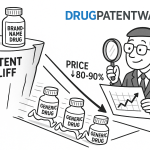
Price Erosion: We typically observe a 90% reduction in price within the first 12–24 months of generic entry.3
Market Dynamics: The brand loses the vast majority of its market share (often >80%) within the first year. The game is one of volume and supply chain efficiency.
2. The Slow Erosion: Biologics
For biologics (e.g., Keytruda, Stelara, Humira), the “cliff” is more of a steep slope. The entry barriers are high: developing a biosimilar costs $100 million to $250 million and takes 7–8 years, compared to $1–5 million for a generic small molecule.4
Price Erosion: Price declines are more moderate, typically settling at 30–50% below the reference brand price rather than 90%.5
Market Dynamics: Adoption is slower and relies heavily on payer formularies and the “interchangeability” designation.
Asset-Level Analysis: The Giants Falling
To understand the strategic landscape, we must examine the specific assets at risk. These are not just drugs; they are massive financial ecosystems.
Table 1: The “Class of 2025–2030” – Top Assets Facing LOE
Drug Name (Brand)
Active Ingredient
Innovator
Primary Indication
Est. Peak Revenue at Risk
Key Patent Expiry / LOE Window
Strategic Complexity
Keytruda
Pembrolizumab
Merck
Oncology (PD-1)
>$25 Billion
2028
Extreme. The world’s top-selling drug. Protected by a massive thicket of formulation and method-of-use patents. Biosimilar development is intense but litigious.6
Eliquis
Apixaban
BMS / Pfizer
Anticoagulant
~$12 Billion
2026–2028
High. Small molecule but heavily litigated. Settlements have likely pushed generic entry to 2027–2029.6
Stelara
Ustekinumab
J&J
Immunology
~$10 Billion
2025
Immediate. Biosimilars are launching. The battle is shifting to interchangeability and payer contracting.8
Opdivo
Nivolumab
BMS
Oncology
~$8 Billion
2028
High. BMS is using combination therapies to extend the franchise’s life beyond the single-agent patent expiry.6
Trulicity
Dulaglutide
Eli Lilly
Diabetes
~$7 Billion
2027
Medium. Device patents on the pen injector will be a key defensive line. Competition from newer GLP-1s (Mounjaro/Ozempic) complicates the generic landscape.6
Medium. Similar to Eliquis; generic entry timing will be dictated by settlement agreements.6
1
Deep Dive: The Keytruda Fortress
Keytruda is the ultimate prize. Merck has constructed a defense that relies not just on the molecule, but on the process of treating cancer. By securing patents on dosing regimens, combinations with other chemotherapies, and subcutaneous formulations, Merck aims to extend the franchise well into the 2030s, even if the primary patent falls in 2028.
Signal to Watch: Biosimilar filings and partnership deals targeting pembrolizumab are already underway. Watch for “skinny label” attempts where biosimilars try to launch for older indications (like melanoma) while carving out newer, patented indications.6
Deep Dive: The Eliquis Settlements
Eliquis illustrates the power of litigation settlements. While the primary patent challenges began years ago, BMS and Pfizer successfully fended off generics until at least 2027 through settlements.
Strategic Nuance: The likely entry of generics in 2027–2029 will be staggered. The first entrants will likely be “volume-limited” based on settlement terms, preventing a full price collapse until the final date.6
The Regulatory Tectonic Shift: The IRA and the “Pill Penalty”
The passage of the Inflation Reduction Act (IRA) has introduced a new, distortionary variable into the pharmaceutical lifecycle. For the first time, the federal government has the power to negotiate prices for top-selling Medicare drugs. This effectively caps the “upside” of exclusivity, regardless of the patent situation.
The “Pill Penalty”: Small vs. Large Molecule Disparity
The most controversial aspect of the IRA is the differential treatment of small molecules versus biologics.
Small Molecules: Eligible for price negotiation 9 years after FDA approval.
Biologics: Eligible for price negotiation 13 years after FDA approval.9
Why This Matters for Generics:
This four-year gap creates a profound disincentive for innovator companies to invest in small-molecule programs. Industry data suggests that “small-molecule drug funding has dropped 70 percent” since the drafting of these provisions.10
The “Negotiation Cliff”: For a generic manufacturer, the attractiveness of a target is based on its price at the time of launch. If a small molecule is negotiated down by Medicare in Year 9, the reference price for a generic launching in Year 12 is significantly lower. The profit pool is pre-shrunk.
Strategic Shift: We expect to see generic companies (and innovators) pivot even harder toward biologics/biosimilars to capture that extended 13-year window of free-market pricing.
Negotiation as the New Exclusivity
In the pre-IRA world, a patent thicket could theoretically extend a monopoly for 15–20 years. In the post-IRA world, the “negotiation date” acts as a de facto loss of exclusivity for pricing power, even if the patent remains valid.
Scenario: A drug has a patent valid until Year 16. However, it is selected for negotiation in Year 9. The price drops by 40%.
Generic Strategy: A generic challenger must now calculate ROI based on the negotiated price, not the launch price. This thins the margins for “at-risk” launches and expensive litigation battles. If the pot is smaller, fewer generics will fight for it.
The Legal Battlefield: Hatch-Waxman in the 21st Century
The Drug Price Competition and Patent Term Restoration Act of 1984 (Hatch-Waxman) remains the operating system of the generic industry. However, the tactics used within this framework have evolved from straightforward legal challenges to complex, multi-dimensional warfare.
The Mechanics of Paragraph IV Litigation
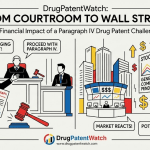
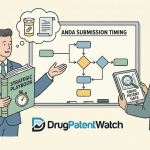
To market a generic before the patents expire, a manufacturer must file an Abbreviated New Drug Application (ANDA) with a Paragraph IV (PIV) certification. This certification asserts that the brand’s patents are either invalid, unenforceable, or will not be infringed by the generic product.
The Sequence of Conflict:
Filing: The generic files the ANDA with the PIV certification.
Notice: The generic sends a “Notice Letter” to the brand owner, detailing the legal basis for the challenge.
The Suit: The brand has 45 days to sue for infringement.
The Stay: If the brand sues, the FDA is automatically barred from approving the generic for 30 months (or until a court decision).11
Strategic Insight: The 30-month stay is a strategic weapon for brands. It buys time—two and a half years of guaranteed monopoly revenue—regardless of the merit of their patents. Generic strategists must time their filings so that the 30-month stay expires before they intend to launch.
The 180-Day Exclusivity: The Golden Ticket
The first generic applicant to file a substantially complete ANDA with a PIV certification is granted 180 days of market exclusivity. During this period, no other generic can launch.
Financial Impact: This period often accounts for 60–80% of a generic product’s total lifetime profits. The generic prices just below the brand (10–15% discount) and captures massive volume.4
The “Shared” Dilemma: For blockbusters like Eliquis, dozens of generics may file on the first possible day (NCE-1 date). In these cases, they share the exclusivity, severely diluting its value.
The “Authorized Generic” (AG) Counter-Strategy
Brand companies have perfected the art of the “Authorized Generic.” To punish the first filer, the brand will launch its own generic version (often through a subsidiary or partner) during the 180-day exclusivity period.
Economic Impact: The AG captures roughly half the generic market, cutting the first filer’s revenues by 40–52%.12
Strategic Response: Generics now factor AG entry into their “base case” financial models. Some settle litigation with a clause explicitly prohibiting the launch of an AG, though such “no-AG” clauses attract intense antitrust scrutiny from the FTC.12
Navigating the Patent Thicket: Advanced Offensive Strategies
As innovators build “thickets” of hundreds of patents to protect a single drug (e.g., AbbVie’s 132 patents on Humira), generics must use surgical legal tactics to cut through.
The “Skinny Label” (Section viii Carve-Out)
This is one of the most sophisticated tools in the generic arsenal. It allows a generic to seek approval for some but not all of a drug’s approved indications.
How It Works: If a brand drug has patents covering “Method A” (expiring 2030) and “Method B” (expired 2025), the generic can launch in 2025 with a label that only mentions Method B. They “carve out” Method A.13
The GSK v. Teva Shockwave: This strategy was considered safe until the Federal Circuit’s 2021 decision in GlaxoSmithKline v. Teva. The court ruled that Teva induced infringement of GSK’s heart failure patent even with a skinny label, because Teva’s marketing materials and press releases implied the drug could be used for the carved-out indication.
Strategic Takeaway: Legal teams must now audit all corporate communications. A press release boasting about “equivalency to the brand” can be the smoking gun that destroys a skinny label defense.13
The FTC’s War on “Junk” Orange Book Listings
In a major shift, the FTC has begun aggressively targeting “improper” patent listings in the FDA Orange Book, particularly for device patents (inhalers, injectors).
The Logic: The Hatch-Waxman Act only allows listing of patents that claim the drug or a method of using the drug. The FTC argues that patents on the device mechanism (e.g., a multidose counter on an inhaler) do not qualify.
The Crackdown: In 2024 and 2025, the FTC sent warning letters to major players like Teva, GSK, and AstraZeneca, challenging over 300 patents. In Teva Branded Pharm. Prods. R&D, Inc. v. Amneal, the courts sided with the FTC, ordering Teva to delist patents for its ProAir HFA inhaler.15
Generic Opportunity: This is a game-changer. Generics can now petition to delist these patents. Once delisted, these patents can no longer trigger the 30-month stay, potentially accelerating launch timelines by years.
Brand Defense Playbook: The Empire Strikes Back
Innovators do not give up their monopolies quietly. They employ a suite of lifecycle management strategies designed to frustrate generic entry.
1. Product Hopping
This involves switching the market to a slightly modified version of the drug just before the original patent expires.
Hard Switch: The brand withdraws the original drug from the market (e.g., Actavis withdrawing Namenda IR to force patients to Namenda XR). Courts have increasingly ruled this anticompetitive.17
Soft Switch: The brand stops marketing the old drug and aggressively promotes the new one.
Counter-Move: Generics must educate payers and physicians that the “new” drug offers no clinical benefit over the old one, encouraging them to stick with the generic version of the original.
2. REMS Abuse
Risk Evaluation and Mitigation Strategies (REMS) are safety programs mandated by the FDA for dangerous drugs. Brands have historically used REMS as an excuse to deny generics access to the samples needed for bioequivalence testing.
Cost: This tactic delays generic entry and costs the U.S. system an estimated $5.4 billion annually.19
The CREATES Act: Passed to stop this abuse, this law allows generics to sue for access to samples. The first cases (e.g., Teva v. Amicus) have shown the courts are willing to enforce this quickly, making REMS abuse a less viable long-term strategy.20
The Biosimilar Frontier: Interchangeability is King
The battle for biologic market share is fundamentally different from small molecules. In the U.S., the “Interchangeability” designation has emerged as the single most important factor for commercial success in the retail channel.
The Semglee vs. Lantus Case Study
The launch of Semglee (insulin glargine-yfgn) serves as the definitive proof-of-concept for the power of interchangeability.
The Context:Lantus (insulin glargine) was a massive franchise for Sanofi.
The Turning Point: In 2021, the FDA granted Semglee the first-ever “interchangeable” designation for an insulin. This meant pharmacists could substitute it for Lantus without calling the doctor.
The Data: Following this designation, Semglee’s market share in the commercial channel skyrocketed to 25–35% within quarters. In contrast, non-interchangeable biosimilars (like Basaglar) struggled to gain significant share despite being on the market longer.21
Table 2: The Interchangeability Advantage
Metric
Standard Biosimilar
Interchangeable Biosimilar
Substitution
Doctor must prescribe by name.
Pharmacist can auto-substitute.
Adoption Curve
Slow, “push” sales required.
Rapid, “pull” sales via pharmacy.
Marketing Cost
High (Detailing reps needed).
Lower (Focus on payer/pharmacy).
Price Erosion
Moderate.
Higher (Competes like a generic).
21
The “Biosimilar Void”
Despite the success of products like Semglee, there is a concerning “void” in the pipeline. Industry reports indicate that 90% of biologics facing LOE in the next decade currently have zero biosimilars in development.23
Opportunity: This represents a massive untapped opportunity for developers willing to take the risk. The lack of competition means the “second wave” of biosimilars could be highly lucrative for the few companies that enter.
The Financials of LOE: Modeling the Drop
For investors and strategists, accurate financial modeling of LOE events is critical. The “standard model” of 80% erosion in Year 1 is no longer universally applicable.
Price Erosion Curves: The “Rule of Competitors”
The depth of the “cliff” is directly correlated to the number of entrants.
1 Competitor: Prices drop ~15–30%. The market is a duopoly.
2 Competitors: Prices drop ~54%.
3–5 Competitors: Prices drop ~70%.
6+ Competitors: Prices drop >95%.3
Strategic Implication: Being the 5th or 6th entrant is often a losing proposition unless you have a distinct manufacturing cost advantage (e.g., vertical integration of API). The “smart money” is on being First-to-File (FTF) or securing a settlement that allows early entry as a “limited volume” player.
Calculating Effective Patent Life (EPL)
The statutory 20-year patent term is a fiction. The real commercial life of a drug is determined by the “Effective Patent Life.” Calculating this requires layering multiple datasets.
Result: The patent expires 4.5 years later than the face of the patent suggests.
Strategic Note: Platforms like DrugPatentWatch automate this calculation, but savvy analysts double-check the “diligence” deduction. If an innovator dragged their feet during the FDA review, that time should be deducted from the extension—a common point of litigation.24
Strategic Intelligence: Turning Data into Dominance
In this environment, data is not just for compliance; it is for offense.
Leveraging DrugPatentWatch
To anticipate the cliff, companies must move beyond simple expiration lists.
Freedom-to-Operate (FTO) Mapping: Visualizing the patent landscape to find “white space.” Is the formulation patent weak? Can we design a new salt form?
Litigation Analytics: Monitoring P-IV filings in real-time. If five generics file against a patent on the same day, the market is signaling that the patent is weak.
Global Filing Trends: Often, a patent is invalidated in Europe or Canada before the U.S. These international decisions serve as early warning signals for domestic vulnerability.26
Portfolio Selection Strategy
The most successful generic companies are shifting their portfolios:
From: Simple oral solids (Lipitor, Plavix).
To: Complex injectables, drug-device combinations (inhalers), and biosimilars.
Why: The entry barriers are higher, meaning fewer competitors and slower price erosion. The margins are durable.
Conclusion
The 2025–2030 patent cliff is a period of maximum danger and maximum opportunity. For innovators, the defense requires a “hybrid” strategy of legal thickets, product evolution, and regulatory navigation. For challengers, the key is precision: targeting the weak links in the Orange Book, leveraging the IRA’s negotiation timelines to predict pricing floors, and investing in the high-barrier world of interchangeable biosimilars.
The “easy” generic launches are gone. The future belongs to those who treat patent intelligence as a core business function, integrating data from platforms like DrugPatentWatch with aggressive legal strategies to carve out market share in an increasingly crowded and complex landscape.
Key Takeaways
$236 Billion at Risk: The 2025–2030 cliff is the largest in history, driven by biologics like Keytruda and Stelara, not just small molecules.
The “Negotiation Cliff”: The IRA’s price negotiation (9 years for small molecules) creates a new ceiling on exclusivity, potentially devaluing generic targets before patents even expire.
FTC as Strategic Ally: The FTC’s new war on “junk” Orange Book listings (especially device patents) provides generics with a powerful tool to remove 30-month stays.
Interchangeability is the “Killer App”: For pharmacy-dispensed biologics, achieving “Interchangeable” status is the only way to replicate the rapid market share gains of traditional generics (e.g., Semglee).
Skinny Label Peril: “Section viii” carve-outs are still viable but require strict firewalls around marketing to avoid “induced infringement” liability (GSK v. Teva).
Precision Modeling: Successful entry requires accurate calculation of Patent Term Extensions (PTE) and modeling of price erosion based on competitor density, not just statutory dates.
FAQ: Expert Strategies for Patent LOE
Q1: How does the “Authorized Generic” (AG) strategy impact the value of 180-day exclusivity for a first filer?
A: An Authorized Generic effectively halves the value of the 180-day exclusivity. By launching their own generic (often through a partner) during the first filer’s exclusivity window, the brand creates a duopoly, driving prices down by ~40–50% immediately. This reduces the “super-profits” the first filer expects. Smart generics factor AG entry into their initial financial modeling as a “base case,” not a worst-case scenario.
Q2: Why is the “Section viii carve-out” considered a double-edged sword after the GSK v. Teva decision?
A: Before GSK, carve-outs were a safe harbor to launch a generic for an unpatented use while avoiding the patented use. GSK v. Teva ruled that even with a skinny label, a generic can be liable for “induced infringement” if their marketing, press releases, or even passive communications imply the drug works for the patented indication. Legal strategy must now be tightly integrated with commercial compliance.
Q3: How does the Inflation Reduction Act’s price negotiation timeline affect the decision to challenge a patent?
A: It compresses the potential profit margin. If a drug is selected for Medicare negotiation in Year 9 (small molecule), its price may drop significantly before a generic can launch in Year 12 or 14. This lowers the reference price the generic discounts against. Generic companies may prioritize challenging patents on drugs not subject to early negotiation to preserve margin potential.
Q4: What is the significance of the “Interchangeable” designation for biosimilars compared to just being “Biosimilar”?
A: It is the difference between a “push” sale and a “pull” sale. A standard biosimilar requires a doctor to specifically write a prescription for it. An “Interchangeable” biosimilar allows a pharmacist to substitute it automatically for the brand (state laws permitting). As seen with Semglee (insulin), interchangeability drives rapid market share gains (20%+) in the retail channel, whereas non-interchangeable versions struggle.
Q5: How can a company determine the actual patent expiration date when public databases often show conflicting info?
A: You cannot rely on the basic 20-year term. You must calculate the Effective Patent Life by layering multiple data points: the statutory 20-year term, any Patent Term Extensions (PTE) granted for FDA review delays, Pediatric Exclusivity (+6 months), and any Orphan Drug Exclusivity. Platforms like DrugPatentWatch automate this, but a manual audit of the “deduction days” (diligence during regulatory review) is often required for high-value targets.