Section 1: The Strategic Foundations of Pharmaceutical Pricing
The price of a new drug is not calculated. It is constructed. Pharmaceutical manufacturers blend economic theory, competitive intelligence, payer psychology, and legal strategy into a price that is simultaneously a commercial declaration, a negotiating anchor, and an IP-valuation statement. This process starts in the pre-IND phase, when clinical development teams first estimate a compound’s addressable market, and it continues through patent expiration, when generic entrants strip away pricing power almost overnight.
Most industry coverage treats pricing models as a menu from which companies freely choose. The reality is more constrained and more strategic. A company’s choice of primary pricing model is determined largely by the therapeutic category, the competitive landscape, the payer mix, and the IP portfolio supporting the asset. Value-based pricing (VBP) is the default language for innovative drugs with clean patent positions and no near-term biosimilar threat. Competitor-based pricing governs crowded therapeutic areas. Cost-plus is a niche approach for off-patent generics. Differential pricing operates as a global revenue optimization layer on top of all three.
Understanding how these models interact, where they conflict, and what each one signals about a drug’s true IP value is the first analytic task for any investor or BD team assessing a pharmaceutical asset.
1.1. Value-Based Pricing: Mechanism, Limits, and IP Signal
Value-based pricing sets price as a function of clinical benefit, measured across three primary dimensions: therapeutic efficacy relative to standard of care, safety profile (specifically the adverse event burden that reduces compliance or quality of life), and the systemic cost offsets a drug generates by reducing hospitalizations, surgeries, or downstream disease complications. The conceptual formula is simple. The execution is not.
The most operationally rigorous version of VBP runs through a cost-per-quality-adjusted life-year (QALY) analysis. Health technology assessment (HTA) bodies use the QALY as a standardized unit of health gain. The UK’s National Institute for Health and Care Excellence (NICE) sets its implicit cost-effectiveness threshold between GBP 20,000 and GBP 30,000 per QALY. Germany’s Federal Joint Committee (G-BA) uses a benefit assessment process that classifies a new drug’s added benefit into six tiers ranging from ‘major’ to ‘less than appropriate comparator,’ with reimbursement price set by negotiation within 12 months of market entry under the AMNOG process. The Institute for Clinical and Economic Review (ICER) in the United States publishes non-binding value-based price benchmarks using thresholds of USD 100,000 and USD 150,000 per QALY.
The gap between manufacturer launch prices and these assessments is large and systematically biased upward. A cross-sectional analysis of 73 high-spend U.S. drugs found that applying ICER’s USD 150,000 per QALY threshold would have cut annual spending on those products from USD 110.4 billion to USD 55.1 billion, a reduction of 50 percent. That gap represents the premium manufacturers successfully extract by launching before payers have time to complete rigorous value assessments, and by leveraging the fragmentation of the U.S. payer market to avoid the single counterparty that would enforce a hard ceiling.
The Medicaid Best Price rule complicates any genuine value-based contract in the United States. Because Medicaid is entitled to the lowest price offered to any commercial customer, a manufacturer that offers a meaningful outcomes-based discount or rebate to a large commercial payer risks triggering that discount across the entire Medicaid population. This rule effectively creates a price floor far above the market-clearing price for many drugs. ICER’s analysis of Sanofi and Regeneron’s Praluent (alirocumab) illustrates the dynamic: after ICER rated Praluent’s cardiovascular outcomes data insufficient to justify its list price at the time, the manufacturers lowered the WAC price rather than accepting a rebate structure that would have set a destructive Medicaid Best Price precedent. The WAC reduction was a strategic concession designed to protect the rebate architecture.
IP Valuation Sub-Section: Praluent (alirocumab)
Sanofi and Regeneron’s PCSK9 inhibitor Praluent entered the U.S. market in 2015 at an annual list price of approximately USD 14,600. The core composition-of-matter patent, covering the alirocumab antibody, extends into the mid-2030s, giving the asset a long nominal exclusivity runway. However, a parallel patent dispute with Amgen over PCSK9 inhibitor technology dragged both companies through District Court and Federal Circuit litigation from 2016 through 2019. Amgen’s Repatha (evolocumab) was a direct competitor with nearly identical mechanism of action. When ICER published a 2017 assessment finding both PCSK9 inhibitors cost-effective only at prices substantially below their list prices, both manufacturers were forced to negotiate steep confidential rebates with commercial payers and PBMs to achieve formulary access. The resulting gross-to-net spread for PCSK9 inhibitors widened dramatically: by 2019, net prices were estimated at 60-70 percent below WAC. For any investor valuing Praluent’s IP, the composition-of-matter patent’s nominal duration matters far less than the competitive dynamics within the PCSK9 class. A drug with a strong patent but a head-to-head competitor with equivalent clinical data commands a net price set by payer negotiating leverage, not QALY math. The Praluent case should be modeled accordingly.
1.2. Competitor-Based Pricing: Market Dynamics and the Generic Inflection Point
Competitor-based pricing anchors a new drug’s list price to the existing standard of care in its therapeutic area. A drug with statistically superior efficacy in a head-to-head trial can command a meaningful premium. A drug with similar efficacy and a cleaner adverse event profile may command a smaller premium. A drug that is clinically equivalent to multiple existing agents, commonly called a ‘me-too,’ typically launches at or near the market price of the most widely used competitor, then competes for formulary position through rebate volume rather than clinical differentiation.
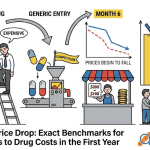
The most powerful force in competitor-based pricing is the arrival of the first generic or biosimilar entrant at loss of exclusivity. FDA data consistently show that prices drop 20-30 percent with the entry of a single generic competitor and fall an additional 40-50 percent when three to five competitors are present. With six or more generic entrants in the market, prices can fall to 80-95 percent below the branded reference price. These dynamics are well-documented in FDA’s generic competition price studies and are reflected in the bidding behavior of commercial payers, who shift formulary preference almost instantly toward the lowest-cost therapeutically equivalent option once multiple generics are available.
For pricing strategists at branded manufacturers, competitor-based analysis serves two distinct functions. Before launch, it sets the ceiling: pricing above comparable branded alternatives requires a clinical data package that genuinely justifies the premium, and payers will test that justification at every formulary cycle. After launch, competitor-based analysis sets the timeline for lifecycle management decisions. If a branded drug knows that a generic entrant is 18 months away based on Paragraph IV filing activity visible in the Orange Book, the commercial team must decide whether to defend list price and accept market share erosion or engage in authorized generic strategy to capture part of the low-price market.
IP Valuation Sub-Section: Small-Molecule Competitor Landscapes
Competitor-based pricing in small-molecule therapeutics is inseparable from Paragraph IV ANDA (Abbreviated New Drug Application) filing activity. Under the Hatch-Waxman Act, a generic manufacturer that files a Paragraph IV certification is asserting that the branded drug’s listed Orange Book patents are invalid, unenforceable, or will not be infringed by the generic formulation. The brand manufacturer then has 45 days to file a patent infringement suit, which triggers an automatic 30-month stay of FDA final approval for the generic. This stay is often the most valuable IP asset a small-molecule drug has in the final years before its primary patent expiration: it buys 2.5 years of additional exclusivity during which the brand can ramp up lifecycle management efforts, negotiate long-term formulary contracts, and launch an authorized generic at the moment the stay expires.
Investors valuing a small-molecule drug’s remaining IP life should not rely on primary patent expiration dates alone. The Orange Book filing data, the Paragraph IV notice letter activity, the 30-month stay start date, and any subsequent court rulings on invalidity or non-infringement are the operationally relevant milestones. A drug with a primary patent expiring in 2027 but a Paragraph IV suit filed in 2024 may not face generic competition until late 2026 at the earliest, and the outcome of the litigation can push that date out further or collapse it to the moment a court rules in the generic’s favor.
1.3. Cost-Plus Pricing: Why It Does Not Work for Innovation and Where It Does Work
Cost-plus pricing adds a fixed markup to fully loaded manufacturing cost. For innovative branded pharmaceuticals, this model produces a price that has no relationship to market-clearing dynamics, payer willingness to pay, or competitive positioning. The direct cost of goods sold for most oral solid-dose drugs, even highly engineered ones, is a small fraction of the WAC price. For biologics, COGS is higher given the complexity of upstream fermentation, downstream purification, and fill-finish, but it still rarely exceeds 15-20 percent of list price. The vast majority of a brand drug’s price consists of R&D amortization (itself a contested figure, as Section 1.4 addresses), marketing and promotion expenses, patent litigation costs, and profit.
Where cost-plus pricing has become strategically relevant is in the disrupted generic market. Mark Cuban’s Cost Plus Drug Company (MCCPDC), launched in 2022, applies a transparent 15 percent markup to its drug acquisition cost, plus a USD 3 pharmacist fee and USD 5 shipping charge. For the generic cancer drug imatinib (generic Gleevec), this produces a 30-day supply price of approximately USD 13.40, against a traditional pharmacy retail price of roughly USD 2,500. A RAND analysis found that Medicare could have saved several billion dollars annually had it purchased generic drugs through a cost-plus model. MCCPDC does not operate in the branded drug space and does not intend to: the model only works when the underlying drug is off-patent, manufactured by multiple API suppliers, and priced by traditional pharmacy channels at multiples of manufacturing cost.
For pharma executives and investors, MCCPDC is a useful benchmark tool rather than a competitive threat to branded products. Its pricing demonstrates the degree to which traditional pharmacy economics, specifically the spread between wholesaler acquisition cost, pharmacy acquisition cost, and retail price, have inflated the effective price of even generic drugs, creating political pressure that feeds into broader drug pricing reform. MCCPDC’s data on imatinib, for example, contributed to Congressional interest in PBM transparency legislation because it revealed that a widely used cancer drug had a manufacturing cost base that bore no resemblance to its retail price.
1.4. The R&D Investment Calculus: Deconstructing the USD 2.6 Billion Figure
The pharmaceutical industry’s canonical argument for high drug prices is R&D cost. The most-cited figure, approximately USD 2.6 billion per approved new drug, comes from studies by Joseph DiMasi and colleagues at Tufts University, using confidential company-reported data with adjustments for the cost of failures and the opportunity cost of capital (the return the invested money could have earned in alternative investments). This fully capitalized, risk-adjusted number is the industry’s preferred metric in regulatory and legislative debates.
The methodological critique of this figure is detailed and credible. A Wouters et al. analysis published in JAMA Internal Medicine estimated the mean capitalized cost at USD 879.3 million using both public and proprietary data. A January 2025 RAND analysis, which used publicly disclosed R&D spending from SEC filings rather than confidential company data, estimated a median capitalized R&D cost of USD 708 million. RAND’s researchers explicitly argued that the industry’s high average is driven by a small number of extraordinarily expensive programs, typically late-stage failures in complex indications, and that the median is more representative of what it actually costs to bring the typical new drug to market. The Congressional Budget Office’s 2021 literature review found estimates spanning less than USD 1 billion to more than USD 2 billion, depending on methodology.
None of this resolves into a clean consensus, and the divergence is not accidental. Companies with the highest lobbying exposure promote the highest possible R&D cost figures. Independent academic researchers using public data consistently arrive at numbers substantially lower. For pharmaceutical pricing analysts, the operationally relevant question is not which number is ‘true’ but what role R&D cost estimates play in the pricing process. The answer, supported by empirical research, is that there is no statistically significant association between a given drug’s R&D cost and the price it ultimately receives in the U.S. market. Drugs get priced at what the payer ecosystem will bear, not at what it cost to develop them. R&D cost figures are a policy narrative, not a pricing input.
The Innovation Elasticity Argument and Its Limits
USC Schaeffer Center research on innovation elasticity estimates that a 10 percent reduction in expected U.S. revenues reduces pharmaceutical innovation by 2.5-15 percent over the long run. This range is wide enough to be nearly unfalsifiable, which is part of its appeal as a policy argument. The CBO’s analysis of the Inflation Reduction Act projected only a 1 percent reduction in new drugs coming to market over 30 years, a far more modest estimate. The Foundation for Research on Equal Opportunity (FREOPP) assessed the first 10 IRA-negotiated drugs specifically and estimated a loss of 0.62 new drugs from the affected companies.
Investors should treat innovation elasticity arguments as directionally correct but magnitude-uncertain. Revenue reductions do reduce R&D investment at the margin. The critical variable is which R&D gets cut: early-stage exploratory programs in high-risk indications, or late-stage development of drugs targeting large, well-validated patient populations with proven commercial economics. The IRA’s structure, which targets high-revenue single-source drugs with no near-term generic competition, creates incentives to cut late-stage programs in large-market, small-molecule indications and shift capital toward biologics and toward smaller-market indications that will take longer to reach negotiation eligibility.
Key Takeaways: Section 1
The choice of pricing model for a pharmaceutical asset is determined by IP position, competitive landscape, and payer mix, not freely selected from a menu. Value-based pricing provides public justification for innovative drugs but is consistently contested by independent HTA bodies and ICER, with the gap between list price and value-based benchmarks exceeding 50 percent for high-spend branded drugs. R&D cost figures function as policy instruments, not pricing inputs; no statistical association exists between a drug’s development cost and its U.S. market price. The USD 2.6 billion industry estimate relies on confidential data and methodology that independent researchers using public disclosures cannot replicate. Competitor-based pricing dynamics are most relevant for IP investors because they determine net price trajectories and the value of the 30-month Hatch-Waxman stay in the final years before loss of exclusivity.
Investment Strategy: Section 1
Investors evaluating a branded pharmaceutical asset should build pricing models that distinguish between WAC (list price), net price after contractual rebates, and the Medicaid net price after statutory and supplemental rebates. For most large-market branded drugs, the gap between WAC and net price runs 40-60 percent. For drugs in categories with intense PBM rebate competition, such as PCSK9 inhibitors, diabetes, and multiple sclerosis, net prices can be 60-70 percent below WAC. Any revenue forecast that uses WAC as the revenue base without gross-to-net adjustment will materially overstate actual manufacturer receipts. Patent expiration modeling should incorporate Orange Book filing activity, Paragraph IV notice letters, 30-month stay start and end dates, and district court litigation timelines, not just the primary patent expiration date.
Section 2: The Architecture of Monopoly: Patents, Exclusivity, and the Patent Cliff
Pharmaceutical pricing power is a legal construct, not a market outcome. The government grants a manufacturer a temporary monopoly on a new drug through two overlapping systems: patent protection administered by the USPTO and regulatory data exclusivity granted by the FDA. Together, these protections allow a manufacturer to price a drug at multiples of its manufacturing cost for a defined period. When these protections expire, competition drives prices to near-marginal cost within months.
The strategic management of this exclusivity window, its extension through layered secondary patents, its defense through patent litigation, and the lifecycle management actions taken as the window closes, determines the financial value of a pharmaceutical IP portfolio. For pharma IP teams, this is the core technical domain. For investors, understanding which assets in a portfolio have genuine exclusivity remaining versus a nominally long patent life that is already being contested by generic filers is the difference between accurate and misleading revenue projections.
2.1. The Legal Mechanics of Pharmaceutical Monopoly
Patent Term and Patent Term Extension
A U.S. patent runs 20 years from the filing date of the earliest non-provisional application. For pharmaceutical patents, this means that a drug whose composition-of-matter patent was filed during Phase I clinical trials may have only 8-12 years of patent life remaining at the time of FDA approval, because the FDA review process consumes a substantial portion of the nominal patent term. The Hatch-Waxman Act addresses this by allowing patent term extensions (PTEs) of up to 5 years to compensate for time lost during FDA review, subject to a maximum of 14 years of remaining patent life post-approval.
The PTE mechanism is the first layer of lifecycle IP management. A manufacturer filing for a PTE must do so within 60 days of product approval, specify which patent it wishes to extend, and demonstrate that the extension request covers the first permitted commercial marketing of the product. Only one patent per approved product can receive a PTE. This constraint creates an early strategic decision: which patent in the portfolio, composition-of-matter, method of treatment, or formulation, generates the most commercial value from extension?
For most innovative small molecules, the composition-of-matter patent is the most valuable to extend because it provides the broadest protection against generic competition. A generic ANDA must demonstrate pharmaceutical equivalence to the reference listed drug, but it does not need to replicate the exact formulation. A formulation patent, without the underlying composition-of-matter protection, can be designed around by a generic manufacturer. An extended composition-of-matter patent cannot be designed around, only challenged through Paragraph IV litigation.
Regulatory Exclusivity: The FDA’s Separate Protection System
FDA exclusivity is distinct from, and additive to, patent protection. The five main categories are New Chemical Entity (NCE) exclusivity (5 years), New Clinical Investigation exclusivity (3 years for new indications or formulations supported by new clinical studies), Orphan Drug Exclusivity (7 years), Pediatric Exclusivity (6 months added to existing patents and exclusivities), and Biologics exclusivity (12 years reference product exclusivity plus 4 years data exclusivity). These protections are triggered by approval milestones, not filing dates, and they run concurrently with patents rather than replacing them.
The practical effect of stacking these protections is that the effective exclusivity period for a new innovative drug typically extends well beyond the primary patent term if the manufacturer pursues all available regulatory exclusivity strategies. A drug approved with NCE exclusivity, a PTE, and pediatric exclusivity can have 12-15 years of protected market life before the first Paragraph IV challenge succeeds. A biologic with 12 years of reference product exclusivity, a composition-of-matter patent with a PTE, and multiple method-of-use patents may face no meaningful biosimilar competition for 15-18 years post-approval if it is supported by a well-constructed patent thicket.
The Hatch-Waxman Framework: ANDA Filings, Paragraph IV Certifications, and the 30-Month Stay
The Hatch-Waxman Act created the Abbreviated New Drug Application (ANDA) pathway, allowing a generic manufacturer to rely on the brand’s clinical data and demonstrate only bioequivalence, rather than conducting full safety and efficacy trials. This dramatically lowered the cost of generic drug development. In exchange, generic applicants must certify their position with respect to each patent listed in the FDA’s Orange Book for the reference drug. Paragraph IV certification is the litigation trigger: it asserts that a listed patent is either invalid or will not be infringed by the generic product.
When a brand manufacturer receives a Paragraph IV notice letter and files suit within 45 days, the 30-month stay automatically delays FDA final approval of the ANDA. This stay is the single most valuable tactical IP tool for a small-molecule manufacturer facing imminent generic entry. Even if the brand ultimately loses the litigation, the stay guarantees 2.5 additional years of exclusive revenue. If the brand wins, the ANDA applicant may be enjoined from market entry for the remaining life of the challenged patent.
The first ANDA filer with a Paragraph IV certification is entitled to 180 days of generic marketing exclusivity before other generics can launch. This 180-day exclusivity is intended to compensate the first generic challenger for the litigation risk it assumed. In practice, brand manufacturers sometimes use settlement agreements to control when this 180-day exclusivity period is triggered, effectively managing the timing of generic competition through negotiated market entry dates. The FTC scrutinizes these settlements, particularly those with ‘reverse payments’ where the brand compensates the generic filer, for potential antitrust violations. The Supreme Court’s 2013 ruling in FTC v. Actavis established that reverse payment settlements can be anticompetitive and subject to antitrust scrutiny under a ‘rule of reason’ standard.
2.2. Evergreening: The Technology Roadmap for Extended Exclusivity
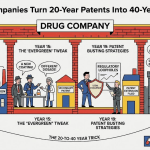
‘Evergreening’ describes a set of strategic IP filing practices designed to extend a branded drug’s effective market exclusivity beyond the expiration of its primary composition-of-matter patent. The term encompasses any practice that layers secondary patents on an existing drug to impede generic or biosimilar competition. It is not a single tactic but a coordinated program of secondary patent development, typically running in parallel with the drug’s commercial lifecycle and managed by a team that includes patent attorneys, formulation scientists, pharmacokineticists, and regulatory strategists.
The full technology roadmap for small-molecule evergreening typically includes seven categories of secondary patent filing, each targeting a different dimension of the drug’s commercial form or clinical use.
The first category is polymorphic form patents. Most APIs exist in multiple crystalline forms (polymorphs) with different physical properties, such as solubility, stability, and bioavailability. Discovering and patenting the polymorph used in the commercial product creates a secondary barrier even after the composition-of-matter patent expires. A generic manufacturer that develops its drug using a different polymorph must demonstrate that its form does not infringe the brand’s polymorph patent, or challenge the patent through Paragraph IV.
The second category is salt form and ester patents. Converting an API to a pharmaceutically acceptable salt or ester form frequently improves bioavailability or formulation stability. Filing patents on the specific salt or ester used in the commercial product creates another secondary barrier.
The third category is formulation patents. Extended-release, modified-release, and combination formulations require new clinical studies to support FDA approval of a new dosage form. The brand can then list the new formulation’s patents in the Orange Book separately from the original formulation, creating a fresh set of Paragraph IV filing targets for any generic challenging the new form.
The fourth category is method-of-use patents. A drug that receives a new indication approval generates new method-of-use patents covering that indication. Generic labels are required to ‘carve out’ indications protected by valid method-of-use patents. If a carve-out is commercially impractical because the new indication is the primary use of the drug in practice, the method-of-use patent can effectively block generic competition even after the composition-of-matter patent expires.
The fifth category is dosing regimen patents. Patents covering specific dosing schedules, titration protocols, or patient population-specific dosing (such as renal-impaired patients) can be listed in the Orange Book and challenged through Paragraph IV.
The sixth category is process patents. While not listable in the Orange Book, manufacturing process patents can be used in district court to seek injunctions against generic manufacturers whose process infringes the brand’s patented method of synthesis or purification.
The seventh category is pediatric exclusivity. Manufacturers can earn 6 months of additional exclusivity layered on top of all existing patents and exclusivities by completing FDA-required pediatric studies under the Pediatric Research Equity Act. This 6-month extension applies to all formulations and indications for the drug, not just the pediatric indication, and can be extraordinarily valuable for blockbuster drugs: each additional month of exclusivity for a drug with USD 10 billion in annual sales is worth approximately USD 833 million in gross revenue.
IP Valuation: Evergreening and the Orange Book Audit
For IP teams and investors assessing the true value of a pharmaceutical asset’s remaining exclusivity, the Orange Book is the primary database. An Orange Book audit for a target drug should inventory every listed patent by type (composition-of-matter, formulation, method-of-use, dosing regimen), expiration date, and current Paragraph IV challenge status. Patents that are not yet challenged are not necessarily safe: generic manufacturers file Paragraph IV challenges selectively based on commercial opportunity, and a patent that appears unchallenged today may be challenged the day after a prior challenge is settled or resolved.
The audit should also assess which listed patents are genuinely blocking. A formulation patent on a once-daily extended-release formulation may block generic entry for the once-daily form but not for the twice-daily original form if that form’s patents have already expired. Generic manufacturers can and do develop competing products that use the non-protected dosage form, which may recapture most of the market even without infringing the extended-release formulation patent.
The Biologics Evergreening Roadmap
For biologic drugs, the IP landscape is structurally different from small molecules, and the evergreening technology roadmap reflects that difference. Biologics are large, complex molecules produced in living cell systems. Their manufacturing process is inseparable from the product: two biologics produced by different manufacturers from the same amino acid sequence will not be structurally identical due to differences in glycosylation patterns, post-translational modifications, and formulation variables. This structural complexity creates a different IP opportunity set.
The composition-of-matter patent on an antibody covers the specific amino acid sequence. Secondary patents can cover the cell line used for production, the upstream culture media and conditions, the downstream purification process, the specific formulation (excipients, pH, concentration), the delivery device (autoinjector, prefilled syringe), and method-of-use for each approved indication. The FDA’s biosimilar pathway under the Biologics Price Competition and Innovation (BPCI) Act requires a biosimilar applicant to reference the originator biologic and demonstrate biosimilarity through a totality-of-the-evidence approach, including analytical studies, animal studies where relevant, and human clinical data.
Unlike the ANDA pathway, biosimilar applicants do not file Paragraph IV certifications against Orange Book-listed patents. Instead, Hatch-Waxman’s structure is replaced by the BPCI Act’s ‘patent dance,’ a formal exchange of information between the biosimilar applicant and the reference product sponsor that is designed to identify which patents should be litigated before biosimilar launch. The patent dance is optional for the biosimilar applicant in most circumstances: it can choose to bypass the dance and simply launch the biosimilar 180 days after notifying the reference product sponsor of its intent, risking litigation as it launches rather than before.
The patent dance creates a distinct valuation dynamic for biologic IP portfolios. A reference product sponsor with a dense portfolio of manufacturing process patents may be able to credibly threaten post-launch litigation on patents that were not included in the pre-launch patent dance, creating uncertainty for biosimilar investors about the true scope of ongoing infringement risk even after launch.
2.3. Case Study: AbbVie’s Humira and the Patent Thicket in Action
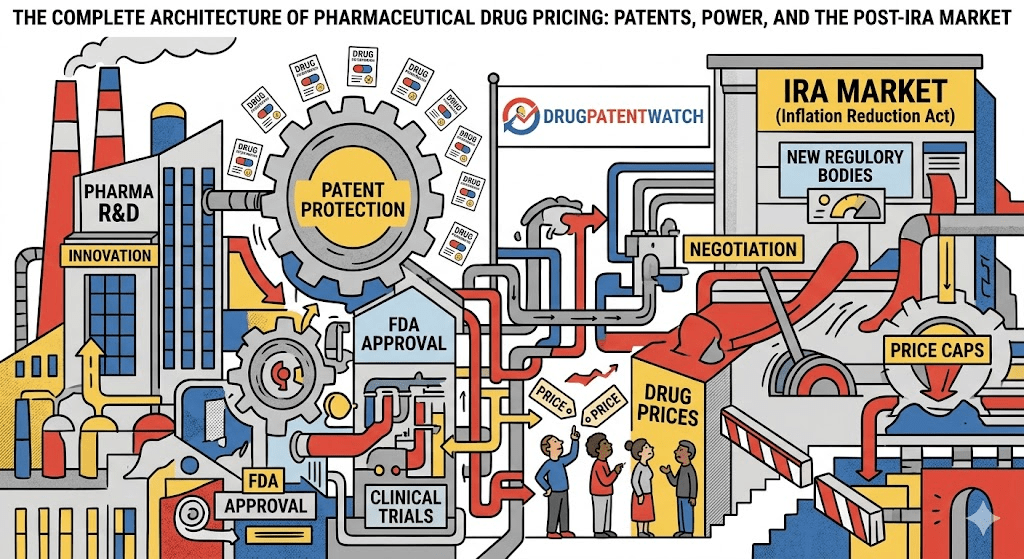
AbbVie’s Humira (adalimumab) is the most thoroughly documented example of systematic evergreening in the biologic drug market. The drug received its initial FDA approval in December 2002 for rheumatoid arthritis. Its composition-of-matter patent expired in 2016. Biosimilar competitors did not launch in the United States until January 2023, seven years after the primary patent expired.
The delay was entirely IP-driven. AbbVie filed more than 247 patent applications in the United States covering the adalimumab molecule and its manufacture. I-MAK, a non-profit IP organization, analyzed these filings and found that 89 percent were filed after the drug’s initial FDA approval, and that the portfolio covered 132 unique patents as of 2021. The U.S. portfolio was approximately three times larger than AbbVie’s European portfolio for the same drug, reflecting a deliberate strategy that exploited more permissive USPTO examination practices compared to European Patent Office standards.
AbbVie’s settlement strategy reinforced the patent thicket’s effect. Rather than litigate every Paragraph IV challenge to trial, AbbVie negotiated settlements with every major biosimilar developer, including Amgen (Amjevita), Sandoz (Hyrimoz), and multiple others, granting them U.S. market entry licenses starting no earlier than January 2023. These settlements are legal under current U.S. antitrust standards as long as they do not involve large reverse payments, but they functionally converted AbbVie’s patent portfolio into a market entry timeline management tool. The biosimilar developers accepted deferred entry in exchange for certainty of launch date and elimination of litigation expense.
In Europe, where AbbVie’s patent thicket was thinner, biosimilars launched in 2018. European biosimilar entry led to rapid price competition, with a 50-80 percent price reduction within 18 months of the first biosimilar launch. The U.S. market, protected by the settlement-enforced entry timeline until 2023, continued operating under Humira’s monopoly price throughout this period.
The financial consequences are starkly measurable. Humira’s U.S. list price rose 27 times between its 2003 launch and its 2023 loss of exclusivity, representing a cumulative increase of 470 percent. Medicare average spending per patient more than doubled from USD 16,000 to roughly USD 33,000 between 2012 and 2016. The estimated cost of the patent thicket-driven delay in U.S. biosimilar competition is USD 19 billion in excess healthcare spending compared to a counterfactual where the European competitive timeline applied to the U.S. market.
IP Valuation: Humira’s Post-LOE Portfolio
AbbVie did not passively wait for Humira’s revenue to collapse. The company deployed two parallel strategies to manage the post-LOE revenue gap. First, it invested aggressively in next-generation immunology assets. Skyrizi (risankizumab), an anti-IL-23 antibody for psoriasis, and Rinvoq (upadacitinib), a JAK1-selective inhibitor for rheumatoid arthritis and other indications, were specifically positioned to capture Humira patients transitioning off the drug and to address indications where Humira had not established a dominant position. Combined revenue for these two drugs exceeded USD 10 billion in 2024, partially offsetting Humira’s decline. Second, AbbVie executed the USD 63 billion acquisition of Allergan in 2020, adding the Botox franchise and a diversified aesthetics and neuroscience portfolio. This acquisition is examined further in Section 2.4.
For investors, the Humira case establishes a template for assessing biologic patent thicket value: count the total number of listed patents, segment them by type (composition-of-matter, formulation, manufacturing process, device, method-of-use), assess the density of the thicket relative to the originator’s home regulatory environment, and evaluate settlement agreement terms for any biosimilar entrants. A biologic IP portfolio with 50-plus secondary patents and no disclosed settlement agreements should be modeled as having genuine exclusivity potential beyond primary patent expiry. A portfolio with multiple disclosed settlements establishing specific entry dates should be modeled using those dates directly.
2.4. The Patent Cliff: Mechanics, Magnitude, and Corporate Response
The ‘patent cliff’ describes the sharp revenue decline that follows a major drug’s loss of exclusivity. For small molecules, the decline is steep and fast: a drug with USD 5 billion in annual U.S. sales can lose 70-80 percent of that revenue within 12-18 months of the first generic entry, as pharmacy dispensing systems automatically substitute the lowest-cost equivalent. For biologics, the decline is slower and less complete because biosimilar interchangeability, prescriber comfort with substitution, and PBM formulary dynamics all moderate the pace of biosimilar penetration.
The current patent cliff is historically large. Estimates from multiple research organizations, including BCG, GlobalData, and GlobeNewswire, put the total branded revenue at risk from patent expirations between 2025 and 2030 at USD 200-300 billion. The drugs at risk include some of the largest revenue generators in the industry: Merck’s Keytruda (pembrolizumab, global revenues exceeding USD 29 billion in 2024), with key U.S. composition-of-matter patents expiring around 2028; Bristol Myers Squibb’s and Pfizer’s Eliquis (apixaban), with U.S. exclusivity running to 2026-2028 depending on formulation patents; and Johnson and Johnson’s Darzalex (daratumumab), which faces its own exclusivity timeline in the late 2020s.
Table: Navigating the Patent Cliff
Drug (Manufacturer)
Peak Annual Sales
U.S. LOE Date
Cliff Mechanics
Primary Mitigation Strategy
Humira (AbbVie)
USD 21.2B (2022)
Jan 2023
Biologic LOE; U.S. biosimilar uptake slower than small-molecule generic curves
Skyrizi, Rinvoq pipeline; Allergan M&A
Lipitor (Pfizer)
~USD 13B (2006)
2011
Rapid small-molecule generic entry; 70%+ revenue lost within 18 months
Pipeline diversification; established small-molecule generic precedent for industry
Keytruda (Merck)
>USD 29B (2024)
~2028
Complex oncology biologic; biosimilar manufacturing barriers; subcutaneous reformulation as new formulation anchor
Small molecule ANDA challenges active; Orange Book patent litigation ongoing
Aggressive Paragraph IV litigation; BMS cost restructuring; Pfizer diversification
Darzalex (J&J)
>USD 9B (2024)
Late 2020s
Biologic; subcutaneous formulation extends lifecycle; new combination indications drive volume
Subcutaneous formulation (Darzalex Faspro) patent lifecycle; MAIA, CEPHEUS trial data for earlier line use
Pfizer’s Lipitor case established the canonical small-molecule cliff template. Peak sales of approximately USD 13 billion in 2006 collapsed to under USD 3 billion by 2013 as generic atorvastatin captured the overwhelming majority of prescriptions at a fraction of the branded price. The Lipitor cliff arrived after Pfizer had executed a series of settlement agreements with generic manufacturers, granting Watson Pharmaceuticals a November 2011 authorized generic launch and permitting other generics to follow. For Pfizer, the Lipitor cliff was manageable because the company had built a diversified pipeline, but it accelerated the industry-wide recognition that no single drug, regardless of its commercial success, should represent more than 30-40 percent of company revenue without a credible successor in late-stage development.
Merck’s Keytruda situation is structurally different and substantially more complex. Keytruda’s primary U.S. composition-of-matter patents are set to expire around 2028, but the drug’s complexity as a large PD-1 antibody, combined with Merck’s aggressive secondary patent filing strategy, means biosimilar entry will not follow Lipitor’s trajectory. Biosimilars require extensive comparative analytical and clinical data packages, and payer resistance to switching stable oncology patients to a biosimilar will slow penetration even after multiple biosimilar approvals. Merck is pursuing a subcutaneous formulation of Keytruda, which would receive a new regulatory exclusivity period and generate new composition-of-matter and formulation patents, as a primary lifecycle extension strategy.
Corporate Response: M&A as Cliff Management
The patent cliff is the primary driver of pharmaceutical M&A. When a company’s most important revenue source faces imminent loss of exclusivity and its internal pipeline cannot fill the gap on an acceptable timeline, acquisition is the fastest route to revenue replacement. AbbVie’s USD 63 billion acquisition of Allergan in 2020 is the clearest recent example, executed with explicit reference to Humira’s approaching U.S. LOE. Bristol Myers Squibb’s USD 74 billion acquisition of Celgene in 2019 followed the same logic: BMS needed Revlimid and the broader Celgene hematology portfolio to replace revenue from assets facing competitive pressure.
For investors, the patent cliff creates a predictable M&A screening signal. Companies with large single-drug revenue concentrations and approaching LOE dates are motivated buyers with a defined timeline for closing a deal. This creates pricing pressure on acquisition targets, particularly smaller biotechs with late-stage assets in high-revenue indications, as the acquiring company is willing to pay a premium above what the asset’s standalone clinical value would suggest because it is also paying to solve a strategic revenue problem under time pressure.
Key Takeaways: Section 2
Pharmaceutical IP value is a multi-layer construct. Primary composition-of-matter patent expiration is the starting point for any LOE analysis, not the ending point. Evergreening through polymorphic form, formulation, method-of-use, manufacturing process, and device patents can extend effective exclusivity years beyond the primary patent term, particularly for biologics that benefit from manufacturing complexity barriers. The Humira case demonstrates that a biologic patent thicket can add 7 years of effective U.S. exclusivity beyond primary patent expiration, worth an estimated USD 19 billion in excess market pricing relative to a competitive baseline. The current patent cliff, spanning USD 200-300 billion in revenue through 2030, is the primary driver of industry M&A and pipeline investment concentration in high-revenue therapeutic categories.
Investment Strategy: Section 2
For IP-focused pharma investors, the core analytical tool is an Orange Book audit combined with a USPTO filing history search for the target drug. Count secondary patents by category, assess challenge status for each, and build a probability-weighted LOE model that assigns a likelihood and expected date to each potential challenge resolution. For biologics, the patent dance filing history and any disclosed settlement agreements are the operational inputs. Drugs with large, unchallenged patent thickets in late-stage commercial life are higher-value IP assets than drugs with equivalent primary patent life but sparse secondary patent portfolios. Companies with impending patent cliffs and no disclosed late-stage pipeline assets to offset them are motivated acquirers: their willingness to pay above fundamental valuation for pipeline assets increases as the LOE date approaches.
Section 3: The Middle Market Maze: PBMs, Rebates, and the Gross-to-Net Bubble
A manufacturer sets a list price for a drug. A patient pays a co-pay or coinsurance at the pharmacy. Between those two numbers lies one of the most financially significant and least transparent systems in the U.S. healthcare market: the pharmacy benefit manager infrastructure. PBMs sit between manufacturers and payers, negotiating rebates from the former in exchange for formulary access, and determining reimbursement rates for the latter. Their business model depends on the gap between the list price manufacturers charge and the actual price the healthcare system pays, and on their ability to retain a portion of that gap as revenue.
The three dominant PBMs, CVS Caremark, Express Scripts (Cigna), and OptumRx (UnitedHealth Group), collectively process approximately 80 percent of U.S. prescription drug claims. This concentration is what makes their negotiating power over manufacturers so significant: a manufacturer that cannot achieve preferred formulary status with any of these three organizations faces commercial failure in the U.S. market, regardless of clinical differentiation.
3.1. The Formulary as a Strategic Tool
A formulary is a tiered list of drugs covered by a health plan. Drugs on the lowest tier (typically Tier 1 or ‘preferred generic’) have the lowest patient cost-sharing. Drugs on higher tiers have higher co-pays or co-insurance. PBMs set formulary tier placement through a combination of clinical evidence review and financial negotiation. Clinical committees assess therapeutic equivalence across drugs in the same pharmacological class. Commercial negotiators determine which manufacturers will offer sufficient rebates to achieve preferred status.
For a branded drug, preferred formulary placement is the difference between commercial success and market irrelevance. A drug placed on Tier 3 with a USD 100 monthly co-pay may generate one-tenth the prescription volume of a competitor placed on Tier 2 with a USD 35 co-pay, even if the two drugs are clinically equivalent. This formulary leverage is the basis of the PBM’s negotiating power and the root cause of the rebate inflation dynamic described below.
PBMs also use prior authorization and step therapy requirements as cost management tools. Prior authorization requires prescribers to obtain PBM approval before a drug is covered. Step therapy requires patients to try and fail one or more lower-cost alternatives before the PBM authorizes coverage of the preferred drug. These administrative requirements can substantially reduce utilization of high-cost drugs, which is their intended purpose, but they also create access barriers for patients who would clinically benefit from first-line use of the targeted drug.
3.2. The Rebate Architecture: Perverse Incentives at Scale
The rebate system operates on a structural flaw: rebates are calculated as a percentage of WAC, the manufacturer’s list price. This means that a higher WAC produces a larger absolute dollar rebate for any given percentage discount. When PBMs negotiate for larger rebates in exchange for preferred formulary placement, they are indirectly incentivizing manufacturers to set higher WAC prices, because a higher WAC is the only way to offer a competitive rebate in dollar terms without reducing net revenue below a commercially viable threshold.
The consequence is a self-reinforcing price inflation cycle. A manufacturer raising its WAC by 10 percent increases the absolute dollar value of the rebate it offers without changing the percentage, making the drug more competitive for preferred formulary status. PBMs retain a portion of the rebate as their compensation, typically called an ‘administrative fee’ or ‘retained rebate.’ The health plan receives the remainder and uses it to reduce overall plan costs. The patient, at the pharmacy counter, pays cost-sharing based on the inflated WAC, not the net price after rebates.
The Drug Channels Institute estimated the total gross-to-net reduction for branded drugs reached USD 356 billion in 2024. This figure represents the cumulative value of all rebates, discounts, fees, and price concessions paid by manufacturers across the U.S. pharmaceutical supply chain. It also represents the total financial value of the intermediary layer between manufacturers and patients, a layer that extracts substantial fees for organizing a market that its own incentive structure partly distorts.
For drugs that compete primarily through rebate rather than clinical differentiation, WAC inflation can become the primary competitive strategy. A manufacturer that wants preferred formulary status in a crowded therapeutic category may raise its WAC specifically to create rebate headroom, knowing that the higher list price will not reduce patient utilization as long as the drug maintains preferred status and low patient cost-sharing. This dynamic is most pronounced in categories where multiple drugs have similar clinical profiles and PBMs can credibly threaten to exclude any one of them: diabetes (particularly GLP-1 agonists and SGLT-2 inhibitors), rheumatoid arthritis biologics, multiple sclerosis disease-modifying therapies, and proton pump inhibitors in the generic-to-branded transition period.
3.3. Vertical Integration: Conflicts of Interest in the PBM Market
Each of the three major PBMs is embedded in a larger healthcare conglomerate. CVS Caremark is owned by CVS Health, which also owns the Aetna insurance plan and the CVS pharmacy retail network. Express Scripts is owned by Cigna. OptumRx is owned by UnitedHealth Group, which also owns United Healthcare insurance and the Optum pharmacy benefit and healthcare delivery business. This vertical integration creates conflicts of interest that regulators and Congressional investigators have documented extensively.
A PBM that is owned by the same corporate parent as a health insurer has an incentive to design formularies and pharmacy networks that maximize profit for the parent corporation, not minimize drug costs for the employer or patient that pays premiums. If the parent corporation owns specialty pharmacies, the PBM can steer specialty drug dispensing toward those affiliated pharmacies, increasing captured revenue from the specialty pharmacy margin even if non-affiliated pharmacies offer equivalent or superior service at lower cost. If the parent corporation owns a health insurer, the PBM can structure formularies to reduce plan liability while increasing patient out-of-pocket costs, improving insurance underwriting margins at the patient’s expense.
The FTC published a report in 2024 examining these conflicts in detail, finding that the major vertically integrated PBMs engage in practices that inflate drug costs and disadvantage independent pharmacies. Congressional response has included multiple proposed PBM reform bills, though none had passed as of early 2026. State-level action has been more rapid: multiple states passed PBM transparency and spread pricing prohibition legislation between 2023 and 2025, requiring PBMs operating in their markets to disclose rebate retention rates and prohibiting profit-taking on the spread between plan charges and pharmacy reimbursement.
3.4. Patient Out-of-Pocket Costs: The Gross-to-Net Inequity
The gross-to-net bubble has a direct and measurable impact on patient out-of-pocket costs, and it falls most heavily on the most medication-dependent patients. When a patient has a high deductible, their out-of-pocket cost is calculated against the drug’s WAC price, not the net price after rebates. A drug with a USD 10,000 annual WAC and a 50 percent rebate has a net price of USD 5,000, but a patient with a USD 5,000 deductible will pay the full USD 5,000 before their insurance begins to contribute. The insurer receives the USD 5,000 rebate from the PBM and applies it to lower aggregate plan costs, but the patient with the deductible bears the full inflated cost and receives none of the rebate benefit.
This inequity is most acute for biologics and specialty drugs, where WAC prices can exceed USD 50,000-100,000 annually and rebates can represent 40-60 percent of that figure. A rheumatoid arthritis patient on a biologic with a USD 50,000 annual WAC and a 50 percent rebate faces potential out-of-pocket exposure of USD 5,000-10,000 under common deductible and coinsurance structures, while the manufacturer receives only USD 25,000 in net revenue, and the plan and PBM split the USD 25,000 difference.
Manufacturer-sponsored patient assistance programs (PAPs) and co-pay assistance cards exist partly to address this inequity, but they create their own distortions. Co-pay assistance cards allow manufacturers to effectively subsidize the patient’s cost-sharing, making a high-list-price branded drug affordable at the point of sale even against a biosimilar competitor. PBMs and payers have pushed back against co-pay accumulator programs, which prevent co-pay card spending from counting toward a patient’s deductible or out-of-pocket maximum, removing the affordability benefit of the assistance card once the card’s annual maximum is reached.
Key Takeaways: Section 3
The PBM-managed rebate system creates a fundamental misalignment between list price inflation and net price reduction. PBMs are financially incentivized to favor high-WAC drugs that generate large absolute dollar rebates, regardless of whether those drugs offer superior clinical value relative to lower-WAC competitors. The USD 356 billion gross-to-net reduction in 2024 represents the total value extracted from the pharmaceutical supply chain by the intermediary layer. Patients with high deductibles bear out-of-pocket costs calculated on inflated WAC prices and receive none of the rebate savings. Vertical integration in the PBM market creates documented conflicts of interest that regulators and Congress have scrutinized but not yet resolved through federal legislation.
Investment Strategy: Section 3
Revenue modeling for any branded pharmaceutical asset must incorporate a gross-to-net adjustment. Drugs in rebate-intensive therapeutic categories (diabetes, immunology, cardiology, oncology with biosimilar competition) should be modeled with gross-to-net discounts of 50-70 percent applied to WAC revenue. Any drug facing formulary exclusion risk from major PBMs should be modeled with a probability-weighted market access scenario: preferred status generates one revenue trajectory, non-preferred generates 30-50 percent lower revenue in the same patient population. Co-pay assistance program costs should be modeled as an explicit drag on net revenue, not netted against gross-to-net adjustments.
Section 4: The Regulatory Gauntlet: Government Intervention and the Inflation Reduction Act
The U.S. pharmaceutical market operated for decades without direct government price controls on branded drugs. Medicare, the country’s largest drug purchaser, was legally prohibited by statute from negotiating prices directly with manufacturers. Medicaid was entitled to the lowest price offered to any commercial customer but could not negotiate below that floor. The Veterans Health Administration negotiated directly and obtained deep discounts, but its market scope is limited. This hands-off approach produced the highest branded drug prices of any high-income country, with U.S. prices averaging 2.78 times those in 33 comparable nations according to HHS ASPE analysis.
The Inflation Reduction Act of 2022 changed this. For the first time, it authorized the Secretary of HHS to negotiate a ‘Maximum Fair Price’ (MFP) for a defined and growing list of high-expenditure branded drugs covered by Medicare Parts B and D. This is not price regulation in the European sense: it is bilateral negotiation with a single large buyer, constrained by statutory price ceilings and eligible drug selection criteria. But it represents a structural break from the prior regime, and its downstream effects on pricing strategy, R&D incentives, and lifecycle management are now visible and accelerating.
4.1. The IRA’s Core Mechanisms
Medicare Drug Price Negotiation Program
The IRA authorized HHS to negotiate MFPs with manufacturers of qualifying drugs. A qualifying drug must: be approved for at least 7 years (for small molecules) or 11 years (for biologics) since its FDA approval date; have no approved generic or biosimilar alternative; be among the highest-expenditure drugs in Medicare Parts B or D; and be a single-source drug (i.e., no competing therapeutically equivalent products).
The asymmetry between 7 years for small molecules and 11 years for biologics, informally called the ‘pill penalty,’ is one of the most consequential structural features of the IRA. It creates a shorter revenue window before negotiation for small molecules and a direct financial incentive to develop biologics rather than small-molecule drugs when a developer has a choice between modalities. Industry projections suggest this differential will accelerate the ongoing shift toward biologics in pharmaceutical R&D pipelines.
The first round of 10 negotiated drugs was announced in August 2023. The list included Eliquis (apixaban, BMS/Pfizer), Jardiance (empagliflozin, Boehringer Ingelheim/Eli Lilly), Xarelto (rivaroxaban, J&J/Bayer), Enbrel (etanercept, Amgen/Pfizer), Imbruvica (ibrutinib, AbbVie/J&J), Januvia (sitagliptin, Merck), Entresto (sacubitril/valsartan, Novartis), Farxiga (dapagliflozin, AstraZeneca), Stelara (ustekinumab, J&J), and Fiasp/NovoLog insulin formulations (Novo Nordisk). The negotiated MFPs for these drugs, disclosed in August 2024, ranged from discounts of 38 percent to 79 percent below 2023 non-federal average manufacturer prices. The MFPs took effect January 1, 2026.
The second round of 15 negotiated drugs, announced in 2024, includes the blockbuster GLP-1 receptor agonists Ozempic and Wegovy (semaglutide, Novo Nordisk), along with Keytruda (pembrolizumab, Merck), Opdivo (nivolumab, BMS), Pomalyst (pomalidomide, BMS), and Ibrance (palbociclib, Pfizer), among others. The second-round MFPs will take effect in 2027.
Inflation Rebates
The IRA requires drug manufacturers to pay rebates to Medicare if their drug price increases exceed the rate of general inflation (CPI-U) from a June 2022 baseline. This provision became effective in 2023. Manufacturers that raised prices above CPI-U in the years following enactment have faced significant rebate liability. The practical effect has been to substantially slow drug list price inflation: the average branded drug price increase in 2023 was the lowest in over a decade, driven primarily by manufacturers’ efforts to avoid triggering rebate payments.
The inflation rebate provision interacts with the pre-existing Medicaid rebate system. Medicaid already requires manufacturers to pay a rebate equal to the greater of 23.1 percent of AMP (Average Manufacturer Price) or the difference between AMP and the best price, plus an additional rebate for price increases above CPI-U that is effectively unlimited in size. The IRA’s Medicare inflation rebate parallels this structure, creating dual liability for manufacturers that raise prices above CPI-U.
Part D Benefit Redesign and the USD 2,000 Out-of-Pocket Cap
The IRA’s redesign of the Medicare Part D benefit structure is as consequential as the negotiation program. The 2025 implementation of a USD 2,000 annual out-of-pocket cap for Part D enrollees removes catastrophic drug costs for the most medication-dependent patients but shifts significant financial liability to manufacturers and health plans. Under the new structure, manufacturers of drugs used in the catastrophic tier are required to provide a 20 percent discount on their net price for the utilization above the out-of-pocket cap. Health plans absorb a larger share of catastrophic-tier costs than they did under the prior structure.
For manufacturers of high-cost specialty drugs and biologics, the Part D redesign creates a new financial exposure that must be modeled explicitly in revenue projections. A manufacturer whose drug is used heavily by Medicare patients with high annual drug costs will face a mandatory discount on a growing share of its Medicare revenue as the out-of-pocket cap concentrates more utilization in the catastrophic tier. This is in addition to the MFP discount if the drug is selected for negotiation.
4.2. The IRA’s Strategic Ripple Effects
The ‘Pill Penalty’ and Pipeline Composition
The 7-versus-11-year negotiation eligibility differential will reshape pharmaceutical R&D pipelines over the next decade. Companies developing assets for large patient populations, where Medicare is a major payer, will face a 7-year clock before negotiation for small molecules, four years shorter than for biologics. For a drug generating USD 5 billion in annual Medicare revenue, four additional years of unconstrained pricing represents roughly USD 20 billion in additional pre-negotiation revenue. That financial differential creates a strong incentive to invest in biologic development over small-molecule development when the clinical science supports both modalities.
IQVIA analysis projected that the IRA’s structure would reduce small-molecule drug launches by approximately 25-30 percent over the next decade relative to a pre-IRA baseline, while biologic launches would increase. This shift has implications beyond the drug companies: small-molecule drugs are generally easier and cheaper to manufacture as generics, create faster post-LOE price competition, and have broader geographic manufacturing base. A long-term shift toward biologics in originator pipelines will result in a pipeline of drugs with more complex biosimilar pathways, slower post-LOE price competition, and higher barriers to entry for generic/biosimilar manufacturers.
Launch Sequencing and Indication Strategy
The IRA’s negotiation clock begins at first FDA approval, not at the approval date for any specific indication. This creates an incentive for manufacturers to sequence indication launches strategically. A company with a drug that has two potential indications, a small initial indication representing modest commercial revenue and a large subsequent indication representing the bulk of the commercial opportunity, may choose to delay filing for the small initial indication, or to launch it outside the U.S. first, in order to start the 7-year or 11-year negotiation clock at a point when the drug’s commercial profile already reflects the larger indication.
This behavioral response to the IRA’s clock structure was anticipated by CMS and discussed in regulatory guidance, but the IRA does not prohibit indication sequencing. It creates a legitimate strategic choice between maximizing time-to-negotiation and maximizing total indication coverage. For companies with drugs in multiple indications, indication sequencing models have become a core component of commercial strategy planning.
Commercial Market Spillover
The IRA’s negotiated MFPs are publicly disclosed. This transparency is unprecedented for government drug negotiations. Commercial payers, who cover the majority of Americans and who have historically used Medicaid Best Price as a reference for their own negotiation leverage, will use the publicly disclosed MFPs as benchmarks for their commercial negotiations. A drug with an MFP that is 60 percent below its WAC has effectively disclosed a net price floor to every commercial negotiator in the country.
The spillover effect is not certain, because commercial payers are negotiating from a different legal and market position than Medicare, and manufacturers may argue that MFPs reflect unique Medicare patient demographics. But the directional pressure is clear: MFP disclosure will pull commercial net prices toward, though not necessarily to, the Medicare MFP level, particularly for drugs where the Medicare-covered patient population is large and the MFP represents a credible floor rather than a ceiling.
Table: Key IRA Provisions and Strategic Implications
Provision
Mechanism
Effective Date
Strategic Implication for Manufacturers
Medicare Drug Price Negotiation
MFP set by HHS negotiation for qualifying high-spend, single-source drugs
First MFPs effective Jan 2026
Model MFP discount risk for all drugs exceeding negotiation thresholds; adjust pipeline modality mix
Inflation Rebates
Rebate due for price increases above CPI-U from June 2022 baseline
Effective 2023
Constrain WAC price increases; model rebate liability for any post-2022 price hike above inflation
Part D OOP Cap
USD 2,000 annual cap on Part D beneficiary out-of-pocket drug spending
Effective Jan 2025
Model manufacturer liability for catastrophic tier discounts; high-cost specialty drugs face new Medicare revenue drag
7-vs-11-Year Differential
Small molecules eligible for negotiation 4 years earlier than biologics
The IRA’s negotiation program represents the most significant structural change to U.S. pharmaceutical pricing in decades. The first-round MFPs, ranging from 38-79 percent below non-federal average manufacturer price, set a new reference point for what the largest U.S. payer is willing to pay for high-revenue branded drugs. The 7-versus-11-year pill penalty will reshape R&D pipeline composition toward biologics over the next decade. MFP public disclosure creates spillover pressure on commercial payer negotiations. The Part D redesign adds a new financial exposure for manufacturers of high-cost specialty drugs used by Medicare beneficiaries.
Investment Strategy: Section 4
Revenue models for any drug with significant Medicare exposure must incorporate IRA risk scenarios. The first analytic task is determining whether the drug qualifies for negotiation: Medicare expenditure threshold, time since first approval, absence of generic or biosimilar competitors, and single-source status are the qualifying criteria. For qualifying drugs, a probability-weighted MFP discount should be applied to the Medicare revenue component of revenue projections, with the discount range calibrated to prior MFP outcomes (38-79 percent) and therapeutic category. The inflation rebate constraint should be modeled as a cap on WAC price increases: assume zero real price growth for any drug facing Medicare negotiation risk. The Part D redesign’s catastrophic tier discount should be modeled as an explicit revenue reduction for drugs with high per-patient cost and heavy Medicare utilization.
Section 5: The Ecosystem of Influence: Payers, Providers, and Patient Advocacy
Pharmaceutical pricing is not unilaterally set by manufacturers. It is contested, negotiated, and frequently overridden by the decisions of three other actor groups: payers who control formulary access, healthcare providers who control prescribing behavior, and patient advocacy organizations that increasingly shape both policy and public perception. Each of these groups has distinct financial interests, distinct sources of leverage, and distinct information asymmetries that they exploit.
5.1. Payer Power: Formulary Control and the Insurance Architecture
Private health insurers and large self-insured employers control prescription drug spending for the majority of the U.S. commercially insured population. Their primary tool is the formulary, and their primary objective is to reduce aggregate pharmaceutical spending while maintaining coverage adequate to attract and retain enrollment. These objectives are not always aligned with patient welfare or with clinical best practices.
The most commercially significant payer segments are large employer groups (which self-insure and hire PBMs to administer their drug benefits), commercial insurance plans operating in the ACA exchanges, and Medicare Advantage plans, which cover Medicare beneficiaries through private insurers rather than traditional fee-for-service Medicare. Each of these segments uses formulary management differently and has different exposures to drug pricing reform.
Large employer self-insurance is the segment where transparency reforms have progressed most rapidly. The Consolidated Appropriations Act of 2021 required PBMs serving self-insured employers to disclose detailed drug cost information, including rebate amounts and retained fees, to plan sponsors. This was intended to allow employers to evaluate whether their PBM is administering their benefit in the plan’s financial interest. Implementation has been incomplete and contested, but the trend toward employer demand for transparency is structural.
Medicare Advantage plans face a different dynamic under the post-IRA regime. Because MFPs apply only to traditional Medicare (Parts B and D administered by CMS), Medicare Advantage plans are not required to pass MFP pricing to enrollees. However, CMS has signaled that it expects Medicare Advantage plans to reflect MFPs in their formulary designs, and plans that do not pass through MFP savings to enrollees may face regulatory scrutiny.
5.2. The Provider Role: Prescribers, GPOs, and Hospital Formularies
Physicians are the direct agents of drug demand. Their prescribing decisions determine which drugs receive utilization and which do not, regardless of payer incentives. In practice, physician prescribing behavior is shaped by clinical training, ongoing medical education, peer influence, pharmaceutical sales representative contact, patient requests driven by DTC advertising, and the practical reality of formulary coverage for their patient population. A physician who regularly prescribes a drug that requires prior authorization for most of their patients’ insurance plans will eventually reduce prescribing of that drug, not because of clinical judgment but because of administrative burden.
Pharmaceutical marketing to healthcare professionals is a USD 18 billion annual industry in the United States, directed primarily at prescribers through sales force detailing, sample distribution, sponsored medical education events, and journal advertising. FDA regulations require that all promotional materials be consistent with the drug’s approved labeling, but the boundary between clinical education and promotional influence is frequently contested. Research on HCP marketing consistently finds significant correlations between promotional contact and prescribing behavior, including increased prescribing of promoted drugs and preference for branded over generic equivalents.
Hospital Group Purchasing Organizations (GPOs) aggregate the purchasing volume of multiple hospitals and health systems to negotiate bulk pricing from manufacturers and distributors. The major GPOs, including Vizient, Premier, and HealthTrust, negotiate contracts that cover a wide range of medical products including pharmaceuticals. For drugs administered in the hospital setting, particularly chemotherapy, biologic infusions, and specialty injectables covered under Medicare Part B, GPO contract pricing is a significant determinant of the net price manufacturers receive from the hospital channel. Hospital systems use their own internal formularies to direct prescribing toward GPO-contracted drugs, creating an additional payer negotiation layer beyond the commercial PBM channel.
5.3. Patient Advocacy: Funding, Independence, and Strategic Influence
The patient advocacy landscape in pharmaceutical pricing consists of two structurally distinct categories of organization that are frequently conflated but have sharply different incentive structures and policy positions.
Disease-specific advocacy organizations, such as the American Cancer Society, the National MS Society, and disease-specific foundations focused on rare conditions, typically have funding relationships with pharmaceutical manufacturers. Industry funding covers everything from direct grants for research or patient assistance programs to corporate sponsorships for advocacy events. These organizations’ financial dependence on industry creates at least the perception of conflict of interest when they take policy positions on drug pricing. In practice, many disease-specific advocacy organizations have opposed price negotiation legislation, advance coverage mandate legislation, and other policies that would reduce drug prices on the grounds that such policies might reduce access to innovative therapies or reduce R&D investment.
Affordability-focused cross-disease advocacy organizations, of which Patients For Affordable Drugs (P4AD) is the most visible example, explicitly reject pharmaceutical industry funding as a condition of organizational independence. P4AD was founded in 2017 with a specific focus on pharmaceutical pricing reform and has taken consistently strong positions in favor of Medicare price negotiation, transparency requirements, and patent reform. The organization’s policy of refusing industry funding gives it credibility with legislators and media as a patient voice that is not commercially compromised.
The divergence between these two advocacy categories creates a complex political dynamic. In Congressional debates over the IRA and Medicare negotiation authority, disease-specific advocacy organizations frequently appeared alongside pharmaceutical industry lobbying groups in opposition, while P4AD and its allied organizations provided patient-centered political support for the legislation. Legislators were thus confronted with competing ‘patient’ perspectives, making the political cost of supporting price reform legislation lower than it might have been if the patient advocacy community had presented a unified front.
The sophistication of pharmaceutical company engagement with patient advocacy has grown substantially. Some manufacturers have moved beyond simple grant funding to more integrated partnerships: co-developing patient registries, providing disease awareness funding, and supporting patient assistance programs that reduce out-of-pocket costs for high-list-price branded drugs. These partnerships create financial interdependence that makes it difficult for the patient organization to take positions adverse to the manufacturer’s commercial interests, even absent explicit conditions on advocacy.
Key Takeaways: Section 5
Payer formulary control is the most immediate constraint on a drug’s commercial success after regulatory approval. Providers’ prescribing behavior is substantially influenced by pharmaceutical marketing, formulary structure, and prior authorization burden, not solely by clinical evidence. The patient advocacy landscape is bifurcated between disease-specific organizations with manufacturer funding relationships and cross-disease affordability organizations that reject industry funding: these two groups hold contradictory policy positions and compete for legislative influence. Employer demand for PBM transparency is structural and growing, driven by CAA 2021 disclosure requirements.
Section 6: The Future of Pharmaceutical Pricing: Curative Therapies, Indication-Specific Pricing, and HEOR
The next decade of pharmaceutical pricing will be defined by three structural tensions. Gene and cell therapies require new payment models because their one-time administration cost makes traditional utilization-based payment architecturally incompatible with their clinical and economic profiles. Indication-specific pricing offers a way to align drug prices with clinical value in multi-indication drugs but requires data infrastructure that most U.S. payers do not yet have. HEOR and real-world evidence are becoming mandatory commercial investments, not optional post-launch activities, as payers demand increasingly granular proof of real-world effectiveness.
6.1. Gene and Cell Therapy Pricing: The One-Time Payment Problem
Curative or near-curative gene therapies pose a specific pricing challenge that no existing payment model handles cleanly. When a single administration of a therapy is expected to provide clinical benefit lasting years or decades, the full cost of that therapy is due at the time of treatment, but the value accrues over the patient’s remaining lifetime. The manufacturer’s value argument is straightforward: a USD 3 million gene therapy for hemophilia is worth the price if it eliminates USD 200,000-400,000 in annual factor replacement therapy for 20-30 years. The payer’s problem is equally straightforward: they pay USD 3 million today and receive no guarantee of the therapeutic benefit, and the patient may switch insurers next year, taking the accrued benefit to a new payer that contributed nothing to the original treatment cost.
This ‘switching risk’ problem means that no individual payer has an economic incentive to cover the full cost of a curative therapy whose benefits span a period longer than the typical insurer-patient relationship. The result is coverage denials, prior authorization requirements, and step therapy mandates that delay or prevent access to therapies with genuine curative potential.
Outcomes-based agreements (OBAs) attempt to solve this problem by linking reimbursement to the achievement of pre-specified clinical outcomes over time. Under a standard OBA for gene therapy, a manufacturer might agree to return a portion of the therapy’s cost if the patient does not remain clinically responsive after one, two, or five years. Bluebird Bio’s Zynteglo (betibeglogene spartocez) for transfusion-dependent beta-thalassemia and Novartis’s Zolgensma (onasemnogene abeparvovec) for spinal muscular atrophy both have outcomes-based contracts in place with certain U.S. payers.
Medicaid Best Price historically complicated OBAs severely. If a manufacturer’s outcomes-based refund reduced the net price paid by a commercial payer below the existing Medicaid Best Price, the manufacturer would be required to retroactively lower the Medicaid price across all states, creating potentially unlimited rebate liability. CMS issued guidance in 2020 providing a safe harbor for certain OBA structures, and further regulatory flexibility has been signaled, but the implementation mechanics remain complex and discourage adoption.
The German innovation in payment-over-time installment structures offers one template for solving the switching risk problem. Under installment payment structures, sometimes called ‘annuity’ or ‘subscription’ models, the total gene therapy cost is paid in annual installments conditioned on continued therapeutic response. If the patient switches insurers, the responsibility for future installments transfers to the new insurer. CMS has proposed similar structures for gene therapies in Medicaid, and several state Medicaid programs have piloted annuity payment models.
IP Valuation: Gene Therapy Assets
Gene therapy IP is concentrated in a small number of categories: the gene editing tool (CRISPR, TALENs, zinc finger nucleases, or base editing technology), the viral vector used for delivery (AAV serotype, lentiviral construct), the therapeutic transgene or edited sequence, and the manufacturing process. For CRISPR-based therapies, the foundational IP landscape is complex and contested: the Broad Institute, UC Berkeley, and their respective licensees hold major competing patent positions that have generated extensive interference proceedings and IPR challenges. Investors in CRISPR-based gene therapy companies must assess not just whether their target company holds the relevant patent but whether that patent is subject to challenge from competing foundational IP holders.
For AAV-based gene therapies, the critical IP assets are the specific AAV capsid variant used for tissue targeting and the promoter/enhancer sequences that control transgene expression. Different tissue targets require different AAV serotypes: AAV9 for CNS and spinal cord delivery, AAV2 for retinal delivery, AAV5 or AAV8 for liver-directed therapy. Companies that hold composition-of-matter patents on superior AAV capsids, or that have in-licensed them exclusively, have a genuine IP moat in their therapeutic area.
6.2. Indication-Specific Pricing: Architecture and Operational Barriers
A single drug is often approved for indications with dramatically different clinical value profiles. Pembrolizumab (Keytruda) is approved for more than 30 cancer indications. Its clinical benefit ranges from statistically and clinically significant improvement in overall survival in specific PD-L1-high non-small cell lung cancer populations to modest progression-free survival improvements in other tumors where its benefit versus chemotherapy is more limited. Charging the same price for pembrolizumab across all 30-plus approved indications means that some indications are substantially overpriced relative to their clinical benefit and others may be underpriced.
Indication-specific pricing (ISP) assigns different drug prices based on the indication being treated. The model aligns price with QALY-based value estimates that will differ substantially across indications for the same drug. It has been widely adopted in European markets: Germany’s AMNOG process produces indication-specific benefit ratings, and the UK’s NICE routinely recommends different prices for the same biologic across different indications via patient access schemes.
In the U.S. market, ISP faces several structural barriers. First, the coding and data infrastructure to track indication-specific prescribing in real time does not exist at national scale. A pharmacy dispensing a biologic infusion must know, at the time of dispensing, which indication the dose is treating. This requires either a direct data linkage between the prescriber’s electronic health record and the pharmacy or payer system, or indication tracking at the physician’s practice management system. Neither is standard. Second, Medicaid Best Price rules complicate ISP for the same reason they complicate OBAs: if an ISP arrangement produces a lower net price for any indication, that price may constitute the new Medicaid Best Price, creating system-wide rebate liability.
Despite these barriers, ISP has begun to advance in the U.S. market. Express Scripts and CVS Caremark have piloted indication-specific formulary tiers for oncology drugs, where the price paid by the plan differs based on whether the drug is being used for an indication with strong evidence or a lower-evidence indication. Payers have also used indication-specific prior authorization, requiring a clinical indication to be documented before approval, as a proxy for indication tracking.
For pharma pricing strategists, ISP is most practically valuable as a tool for protecting high-value indications from the pricing pressure created by low-value indications. If a drug’s average price across all indications is set by the lowest-value indication’s QALY profile, the manufacturer is leaving substantial value on the table in high-value indications. ISP allows differentiated pricing that maximizes value capture in the high-benefit indication while remaining cost-effective in the lower-benefit indication.
6.3. HEOR and Real-World Evidence: The Mandatory Value Infrastructure
Health economics and outcomes research (HEOR) is no longer optional for any drug targeting a payer-controlled market. The HTA submission processes that determine reimbursement in Europe, Canada, and Australia require formal health economic models demonstrating cost-effectiveness relative to standard of care. In the U.S., ICER reviews use cost-effectiveness analysis to generate value-based price benchmarks that directly influence payer negotiating positions even without formal regulatory authority. The IRA’s negotiation process uses clinical effectiveness data as an input to MFP determination.
A contemporary HEOR program for a late-stage pharmaceutical asset includes four components. The disease burden analysis quantifies the medical and economic impact of the target condition in the relevant patient population, establishing the baseline against which the drug’s benefit is measured. The cost-effectiveness model, usually a Markov or discrete-event simulation model, projects health outcomes and costs for a cohort of patients over a lifetime horizon under treatment versus comparator. The budget impact model estimates the financial effect on a payer’s pharmaceutical spend of adopting the new drug at projected uptake rates. The value dossier synthesizes these analyses into a structured submission for HTA bodies, payers, or government negotiators.
Real-world evidence is the complement to clinical trial data in this architecture. RCTs establish internal validity, demonstrating that a drug causes the measured effect in the trial population under controlled conditions. RWE establishes external validity, demonstrating that the drug produces comparable or known effects in the broader, more heterogeneous patient population that will actually receive it. For payers making coverage decisions, RWE is often more persuasive than RCT data because it reflects their actual enrolled population rather than the narrowly selected population of a trial.
The sources of RWE include electronic health records (EHRs), insurance claims databases, disease-specific patient registries, observational studies, and data from connected medical devices and wearables. For specialty drugs, FDA’s Sentinel System and CMS’s Medicare claims data are particularly valuable sources of real-world outcome data at population scale. Companies that invest in generating RWE before and immediately after launch, rather than treating it as a post-marketing afterthought, consistently achieve faster and more favorable coverage decisions in payer negotiations.
Key Takeaways: Section 6
Gene and cell therapy pricing requires outcomes-based agreements and installment payment structures to solve the switching risk problem that makes upfront full-cost payment economically untenable for individual payers. Medicaid Best Price rules continue to complicate OBA implementation but CMS guidance has created partial safe harbors. ISP is advancing in the U.S. market despite infrastructure barriers, driven by pilot programs at major PBMs. HEOR and RWE are mandatory commercial investments for any drug targeting payer-controlled markets; companies that build these capabilities early generate faster and more favorable coverage outcomes. Gene therapy IP valuation requires specific assessment of gene editing tool patents, AAV capsid patents, and the contested foundational CRISPR IP landscape.
The pharmaceutical pricing landscape has undergone more structural change in the four years from 2022 to 2026 than in the preceding two decades. The IRA negotiation program, the gross-to-net bubble’s continued inflation to USD 356 billion in 2024, the patent cliff’s approaching USD 200-300 billion industry-wide revenue impact, and the emergence of gene therapy pricing as a new frontier have simultaneously compressed revenue windows, complicated financial modeling, and created new analytical requirements for anyone evaluating pharmaceutical assets.
The following framework consolidates the key analytical variables for pharma IP teams and institutional investors.
For Asset Valuation
Revenue projections must incorporate five distinct discount factors applied to WAC-based revenue: the gross-to-net adjustment (40-70 percent for most branded drugs in rebate-intensive categories), the Medicaid rebate adjustment (23.1 percent statutory minimum plus inflation-related supplemental rebates), the IRA negotiation risk discount (probability-weighted MFP discount, ranging from 38-79 percent of WAC for drugs that qualify), the Part D catastrophic tier manufacturer discount (20 percent on net revenue for high-cost specialty drugs with significant Medicare utilization), and the patent cliff risk adjustment (probability-weighted loss of exclusivity timeline derived from Orange Book audit, Paragraph IV filing activity, and litigation status).
Patent life analysis should be conducted at the portfolio level, not the individual patent level. An asset with a primary composition-of-matter patent expiring in 2028 but 30-plus secondary patents in formulation, method-of-use, and manufacturing process categories may have substantially longer commercial exclusivity, depending on challenge status and the density of the thicket. An asset with one primary patent and no secondary filing program should be modeled at primary LOE without thicket premium.
For Pipeline Assessment
R&D pipeline valuation in the post-IRA environment requires IRA risk modeling from the pre-clinical stage. Any asset targeting a large-market indication with expected high Medicare utilization and small-molecule formulation should be modeled with a shorter effective revenue window (7 years from approval to potential negotiation eligibility) and an MFP discount probability after that threshold. Biologics should be modeled with the 11-year threshold, but with appropriate biosimilar patent dance and switching risk adjustments that slow post-LOE revenue decline compared to small molecules.
Pipeline diversification across modalities (small molecule, monoclonal antibody, ADC, gene therapy, cell therapy, RNA therapeutics) and across therapeutic categories reduces IRA negotiation concentration risk. A portfolio where two or more assets in the same therapeutic category are negotiation candidates simultaneously faces concentrated revenue exposure.
For M&A Screening
Companies with patent cliffs of more than 30 percent of revenue within 36 months are motivated buyers. Target assets with greater than 10 years of exclusivity remaining (including secondary patent thicket premium), in indications with high unmet medical need and low IRA negotiation risk (i.e., biologics for rare indications, or drugs in categories without a large established Medicare population), command premium valuations. Sellers with gene therapy or next-generation biologic assets in Phase 2 or Phase 3 with positive proof-of-concept data in high-value indications are the highest-multiple acquisition targets in the current M&A environment.
This analysis was constructed from publicly available data sources including FDA Orange Book, CMS/HHS ASPE pricing studies, RAND Corporation R&D cost studies, IRA implementation guidance, and published HEOR literature. It does not constitute investment advice. All revenue estimates and patent lifecycle projections are subject to litigation outcomes, regulatory decisions, and market dynamics that may differ from assumptions described herein.