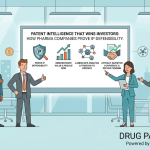
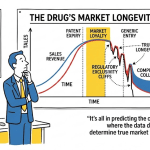
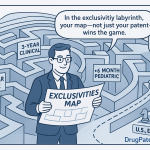
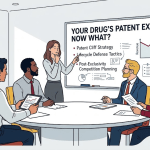
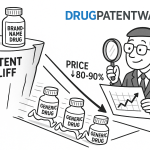
“The average branded drug loses roughly 80% of its revenue within 12 months of generic entry. What happens in the 12 months before that date is where the real money gets made.”
1. Why Patent Expiration Is a Catalyst, Not a Cliff
Every analyst covering the pharmaceutical sector eventually encounters the “patent cliff” framing. It appears in earnings calls, in sell-side research, and in the risk-factor sections of 10-Ks. It is not wrong, exactly. Revenue does fall when a drug loses exclusivity. But the framing misrepresents the economic structure of the event, and that misrepresentation costs investors money.
A drug patent expiration is not a cliff. It is a value redistribution mechanism with a predictable timeline, a defined set of actors, and a well-mapped legal framework. The value that existed in the originator’s revenue line does not disappear; it moves to generics manufacturers, biosimilar developers, payors, and ultimately patients. The investors who make money on LOE events are the ones who understand the mechanics of that redistribution and position before the market fully prices it in.
The predictability of the event is, paradoxically, what makes it so exploitable. Drug patents are matters of public record. Expiration dates are computable. Litigation timelines follow documented patterns. Clinical trial registrations for generic bioequivalence and biosimilar comparative studies are public. The entire ecosystem—from the Paragraph IV filing through the 30-month stay, the district court decision, the Federal Circuit appeal, and the eventual market entry—plays out according to rules established by statute. No other market event of comparable financial scale gives investors this much advance notice.
At the same time, complexity inside that predictable framework creates alpha. The interplay between composition-of-matter patents and secondary “thicket” patents, the BPCIA’s patent dance mechanics, the role of PBM formulary decisions in biosimilar uptake, the Inflation Reduction Act’s interference with standard LOE economics—each layer separates investors who have done the real analytical work from those who simply noted an expiration date on a calendar.
This guide covers all of it. The goal is not to give you a list of upcoming expirations. Databases already do that. The goal is to give you the analytical architecture to know what each expiration actually means for each class of capital deployed around it.
Key Takeaways: Section 1
Patent expiration redistributes value; it does not destroy it. The question is who captures it and when.
Predictability is an advantage. No other macro-scale financial event gives investors as much lead time.
Complexity inside the framework creates alpha. Surface-level expiration date awareness is table stakes; the edge is in understanding the legal, regulatory, and commercial layers underneath.
2. The Patent Ecosystem: What You’re Actually Analyzing
The Drug Patent as an Asset Class
A pharmaceutical patent is a government-granted, time-limited exclusionary right. The holder can prevent others from making, using, or selling the covered invention in the granting jurisdiction for the duration of the term, which runs 20 years from the filing date. In exchange, the invention is publicly disclosed, which is why the patent database is a primary source of competitive intelligence.
In pharma, patents are not monolithic. They form layered portfolios in which different patents cover different aspects of the same commercial product. Understanding what each layer covers, and how strong it is, is the foundation of any serious LOE analysis.
Composition of Matter Patents: The Core Asset
The composition of matter patent covers the active pharmaceutical ingredient (API) itself—the specific molecule or molecular structure responsible for the therapeutic effect. It is the broadest form of pharmaceutical patent protection. Anyone who wants to make or sell the same chemical entity needs either a license or a victory in invalidity litigation.
From an IP valuation standpoint, the composition of matter patent is almost always the primary determinant of revenue-at-risk. When analysts talk about a drug “going off patent,” they mean the composition of matter patent expiring. This date is the primary LOE event. For Pfizer’s atorvastatin, the core compound patent expired in November 2011. For AbbVie’s adalimumab, the core compound patents began expiring in 2016 in the United States. For Merck’s pembrolizumab, the primary composition patents are expected to expire around 2028, depending on jurisdiction and any Patent Term Extension calculations.
When conducting IP valuation of a branded pharmaceutical asset—for M&A due diligence, portfolio assessment, or investment thesis construction—the composition of matter patent’s remaining life, relative to the drug’s revenue trajectory, is the starting point. Every year of remaining exclusivity under this patent maps to a revenue figure, discounted by the probability of a successful Paragraph IV challenge, weighted by the competitive landscape at expiration.
Method-of-Use and Formulation Patents: The Thicket Layer
Secondary patents cover specific ways of using the drug or specific physical forms of delivering it. They do not protect the molecule itself, but they can create meaningful barriers to generic or biosimilar market entry if they are well-drafted and if the originator is willing to litigate them aggressively.
Method-of-use patents are particularly relevant for drugs with multiple approved indications. When a generic company files an ANDA, it can “carve out” the protected indication from its label—a practice called “skinny labeling.” This allows the generic to launch for unprotected uses while avoiding the protected one. The practical effectiveness of skinny labeling as a barrier has been contested in courts, and the legal landscape is still developing. GSK v. Teva, decided by the Federal Circuit in 2021, significantly complicated the calculus by finding that Teva could be liable for induced infringement even with a carve-out label.
Formulation patents protect extended-release mechanisms, specific salt forms, novel drug-device combinations, and particle size parameters. These can be worth billions when they delay the “AB”-rated generic equivalent designation that enables automatic pharmacy substitution. A branded drug and its generic are therapeutically equivalent (rated “AB”) only when the generic product is the same dosage form, route of administration, and strength. If a formulation patent forces the generic to use a different physical form, the equivalence rating may differ, reducing automatic substitution and protecting brand share.
Polymorph patents cover specific crystalline structures of the API. Since many APIs can exist in multiple polymorphic forms with different physical properties (solubility, stability, compressibility), originator companies often patent multiple polymorphs, forcing generic manufacturers to use a specific form that may have processing disadvantages or to develop their own polymorph and prove bioequivalence for that form.
Enantiomer patents cover the individual mirror-image forms (R and S enantiomers) of a racemic drug. A classic evergreening tactic is to file for the single active enantiomer of an off-patent racemic compound and market it as a “next-generation” product. AstraZeneca did this with esomeprazole (Nexium), the S-enantiomer of omeprazole (Prilosec).
IP Valuation Basics: How to Price a Pharmaceutical Patent Portfolio
Valuing a pharmaceutical IP portfolio requires integrating multiple analytical inputs. There is no single accepted methodology, but several frameworks are standard in the industry.
The income approach—discounted cash flow applied to the revenue stream attributable to the IP—is the most commonly used. The inputs are: the drug’s projected revenue over the remaining patent life, the expected rate of generic or biosimilar price erosion at LOE, the discount rate reflecting both the cost of capital and the probability of patent invalidation, and the number of years until LOE. The resulting “IP-attributable net present value” is what M&A buyers are paying for when they acquire a still-patented branded drug.
The relief-from-royalty method takes a different approach: it estimates what a licensee would pay to use the patent and treats that royalty stream as the asset’s value. Industry royalty rates for pharmaceutical compounds range from 4% to 25% of net sales, depending on the drug’s novelty, market size, and competitive position. For a drug generating $10 billion in annual revenue, a 15% royalty applied to a 7-year remaining patent life, discounted at 10%, produces an IP value of approximately $7.6 billion—and that figure shifts dramatically with each variable.
The real options approach treats the patent as a call option: the originator can “exercise” its rights by launching in a market or licensing the technology. This method is particularly useful for pipeline assets where the drug’s peak sales are uncertain. The Black-Scholes model, applied with suitable modifications, captures the value of that optionality.
For analysts building an investment thesis around an LOE event, the most practical task is not a precise valuation but a sensitivity analysis: how does the originator’s stock price change across scenarios in which (a) the secondary patents hold and entry is delayed 3-5 years; (b) a Paragraph IV challenge succeeds and the first generic enters at LOE; or (c) the originator launches an authorized generic concurrent with the first-to-file’s 180-day exclusivity period? Each scenario implies a different revenue path and a different residual IP value.
Key Takeaways: Section 2
Composition of matter patents are the primary revenue-at-risk metric. Every LOE analysis starts here.
Secondary patents (formulation, method-of-use, polymorph, enantiomer) can delay meaningful generic entry by years—or they can be invalidated, accelerating it. The quality of the thicket matters more than its size.
IP valuation uses income, relief-from-royalty, or real options approaches. For investment purposes, a scenario-based sensitivity analysis around patent term and litigation outcomes is more useful than a single-point valuation.
3. The Legislative Architecture: Hatch-Waxman and the BPCIA
The Hatch-Waxman Act: The Rules for Small Molecules
The Drug Price Competition and Patent Term Restoration Act of 1984—universally called Hatch-Waxman—governs the approval of generic small-molecule drugs and the litigation that precedes their entry. Understanding its mechanics at a granular level is not optional for anyone operating in the LOE investment space.
Before Hatch-Waxman, the generic drug industry barely existed. A company wanting to sell a copy of an off-patent drug had to run its own full-scale clinical trials proving safety and efficacy, effectively repeating the originator’s entire development program. Hatch-Waxman eliminated that requirement by creating the Abbreviated New Drug Application (ANDA). An ANDA applicant needs to demonstrate only that its product is bioequivalent to the branded reference drug—that is, that it delivers the same active ingredient to the systemic circulation at the same rate and extent. The underlying safety and efficacy data belong to the reference drug; the ANDA “piggybacks” on them.
The ANDA framework comes with a carefully designed IP protection mechanism. The originator lists its relevant patents in the FDA’s Orange Book. When a generic files an ANDA, it must make one of four “certifications” about each listed patent. A Paragraph I certification says the patent does not exist. Paragraph II says the patent has expired. Paragraph III says the applicant will not market its drug until the patent expires. Paragraph IV—the most consequential—says the patent is invalid, unenforceable, or will not be infringed by the generic drug.
A Paragraph IV filing is a legal declaration of war. It automatically constitutes a patent infringement act under 35 U.S.C. § 271(e)(2), which gives the originator the right to sue within 45 days. If the originator sues, FDA approval of the ANDA is automatically stayed for 30 months—or until the court rules, whichever comes first. This 30-month stay is the fulcrum around which most Paragraph IV strategy turns.
The 180-Day Exclusivity Period: What It Is and What It Costs
The first generic company to file a substantially complete ANDA with a Paragraph IV certification for a listed patent is eligible for 180 days of market exclusivity. During this period, FDA will not approve any other ANDA for the same drug. The first-to-file (FTF) generic operates in a duopoly with the brand—the only two choices at the pharmacy counter—and can price its product significantly above the level it would reach when multiple generics compete.
The economic value of this exclusivity window is substantial. Studies of major LOE events consistently find that the FTF generic typically captures 70-85% of its total lifetime profit during the 180-day period alone. For a drug with $5 billion in annual branded sales, the FTF exclusivity period can be worth $300-500 million in net income to the winning company. For a drug the size of Lipitor ($13 billion in peak annual sales), the prize is proportionally larger.
The FTF designation, however, is not clean. Multiple companies can file on the same day, leading to shared exclusivity. The FTF designation can be forfeited under several conditions, including failure to market the drug within 75 days of approval or court decision. And the originator can preempt the FTF economic advantage by launching an authorized generic, as Pfizer did with atorvastatin, effectively turning the 180-day “duopoly” into a three-way market and compressing the FTF’s margins.
Patent Term Extensions and Adjustments: The Calculations That Move Markets
The 20-year patent term runs from the filing date, not the grant date. For drugs requiring years of clinical development and FDA review, a significant portion of the patent term can expire before the drug ever generates a dollar of revenue. Two mechanisms exist to compensate for this.
Patent Term Adjustment (PTA) compensates for delays in the USPTO examination process itself. Under 35 U.S.C. § 154, the USPTO grants day-for-day adjustments for delays attributable to the office—failure to respond to applicant communications within prescribed timeframes, for instance. PTA calculations are highly technical, have been extensively litigated, and can result in extensions of months or occasionally years. They apply to the specific patent, not to the drug as a whole.
Patent Term Extension (PTE) compensates for time lost during FDA regulatory review. Under 35 U.S.C. § 156, an originator can apply to extend one patent per approved drug by a period equal to half the clinical trial time plus the full FDA review period, capped at five years and subject to a maximum effective patent life of 14 years from approval. The PTE calculation requires knowing the exact dates of IND filing, NDA submission, and FDA approval, and a PTE of even one year can be worth billions for a major blockbuster. Pfizer’s atorvastatin PTE was a matter of intense legal scrutiny; getting the terminal expiration date right required tracking not just the PTE but interplay with Orange Book-listed patents that had different base terms.
For any serious LOE analysis, the “raw” 20-year expiration date is insufficient. The analyst must compute both PTA and PTE for each relevant patent to arrive at the actual terminal exclusivity date. Services like DrugPatentWatch perform these calculations systematically across their database, which is precisely why they exist—the raw USPTO records require expert interpretation.
The BPCIA: Rules for Biologics and Biosimilars
The Biologics Price Competition and Innovation Act of 2010, enacted as part of the Affordable Care Act, created the regulatory pathway for biosimilar approval and established the legal framework for litigation between biosimilar applicants and reference product sponsors. The BPCIA differs from Hatch-Waxman in almost every detail, and applying a Hatch-Waxman mental model to biosimilar strategy is a common and costly error.
Biologics are large, complex molecules—proteins, monoclonal antibodies, peptides—produced in living cell systems. Manufacturing them requires mastery of cell biology, upstream fermentation, downstream purification, formulation chemistry, and analytical characterization. Because two biological manufacturing processes can never be truly identical, a biosimilar cannot be a perfect molecular copy. The FDA approves biosimilars as “highly similar” to the reference biologic, with “no clinically meaningful differences in terms of safety, purity, and potency.”
The BPCIA grants reference biologics 12 years of market exclusivity from the date of initial licensure, independent of their patent status. This is significantly longer than the 5-year NCE exclusivity for small molecules. It also means that even if a biosimilar developer were to successfully invalidate every patent covering the reference biologic, it could not receive FDA approval until 12 years after the reference product’s licensure date. That 12-year wall has shaped the investment landscape for biologics since 2010.
The BPCIA Patent Dance: A Structured Pre-Litigation Process
The BPCIA established a mandatory information-sharing process between the biosimilar applicant and the reference product sponsor (RPS). This “patent dance” unfolds over a series of defined steps spanning several months. The biosimilar applicant provides the RPS with its confidential application and manufacturing process. The RPS identifies patents it believes would be infringed. The applicant responds with its infringement and invalidity positions. The parties then negotiate a list of patents to be litigated before launch.
The patent dance is not optional—or rather, the consequences of skipping it have been contested. In Sandoz Inc. v. Amgen Inc. (2017), the Supreme Court held that failing to provide the aBLA (abbreviated Biologics License Application) to the RPS did not trigger an automatic injunction, but that the RPS could seek state-law remedies in some cases. The practical effect has been that biosimilar applicants exercise strategic discretion about compliance, using the dance’s structured disclosure to probe the strength of the RPS’s patent position before committing to full litigation.
From an investor’s standpoint, the patent dance matters because its outcome determines which patents go to court, on what timeline, and with what likelihood of injunction against launch. A biosimilar developer that mismanages the dance—by providing too much or too little information, by failing to correctly identify the weakest patents in the thicket, or by underestimating the RPS’s willingness to litigate—can face delays that cost it the first-mover advantage in the biosimilar market.
Biosimilar Interchangeability: The Commercial Differentiator
Biosimilar interchangeability is a higher regulatory designation than biosimilarity. An interchangeable product can be substituted at the pharmacy for the reference biologic without the intervention of the prescribing physician, just as a generic is substituted for a branded small-molecule drug in most U.S. states. This matters commercially because automatic substitution drives adoption volume without requiring the biosimilar to “sell” each prescription.
Achieving interchangeability requires demonstrating biosimilarity plus conducting “switching studies”—clinical trials in which patients alternate between the reference biologic and the biosimilar product and the outcomes are compared. The FDA wants evidence that patients who are switched between the two products experience no greater risk than patients who remain on one or the other.
The first interchangeable biosimilar approved for a given reference product receives its own period of exclusivity. For biosimilars approved on or after the BPCIA’s passage, that exclusivity is one year, extendable by various conditions. Boehringer Ingelheim’s Cyltezo, the first interchangeable biosimilar to adalimumab, received this designation in October 2023, giving it a meaningful structural advantage in formulary negotiations over the non-interchangeable adalimumab biosimilars that launched around the same time.
Portfolio managers and analysts evaluating biosimilar pipeline assets should apply a meaningful valuation premium to programs that include an interchangeability switching study design from the outset. The cost of the switching study is incremental, typically $50-150 million in additional clinical spending, depending on disease area and patient population. But the revenue upside from automatic substitution eligibility far exceeds that incremental cost for a biologic generating $1 billion or more annually. Analysts who evaluate two otherwise comparable biosimilar programs identically—one with and one without an interchangeability pathway—are undervaluing the one with the switching study.
Key Takeaways: Section 3
The Paragraph IV certification process is the primary mechanism for early generic entry before patent expiration. The 180-day FTF exclusivity period is the primary economic prize in the small-molecule LOE ecosystem.
PTA and PTE calculations, not raw 20-year terms, determine actual expiration dates. Errors here distort every downstream analysis.
The BPCIA’s 12-year exclusivity is independent of patents; even winning all patent litigation will not get a biosimilar approved before that barrier.
Biosimilar interchangeability is a commercial differentiator worth a meaningful valuation premium in pipeline assessments.
4. IP Valuation Framework: Pricing a Patent Portfolio
Why Standard DCF Models Miss Key Variables
The standard approach to valuing a pharmaceutical patent portfolio—discounting the revenue attributable to the protected drug over its remaining patent life—captures the basic structure of the problem but misses several variables that can swing the valuation by hundreds of millions of dollars. Institutional investors and buy-side analysts who have done serious patent work know these variables. Those who rely on sell-side models built on simple expiration date lookups often don’t.
The key inputs that standard models underweight are: (1) the probability distribution of patent invalidation, not just the binary “expires on date X” assumption; (2) the magnitude and timing of authorized generic cannibalization; (3) the “tail” revenue from secondary patents that survive the primary LOE; (4) the PBM formulary dynamics that govern how quickly generic or biosimilar substitution penetrates the market; and (5) the IRA negotiation risk that compresses the last several years of the pre-LOE exclusivity window for drugs meeting the statutory criteria.
Constructing a Scenario-Based IP Valuation Matrix
The most analytically rigorous approach to pharmaceutical IP valuation builds a scenario matrix across the key litigation and regulatory outcomes, weights each scenario by its probability, and computes an expected NPV. For a drug with a single key composition of matter patent and a Paragraph IV challenge pending, the relevant scenarios are typically: (a) originator wins litigation, full exclusivity maintained until terminal patent date; (b) originator settles with the FTF filer for a delayed entry date; (c) generic wins invalidity argument, immediate launch at LOE; (d) generic wins non-infringement argument, which may allow earlier entry even before LOE. Each scenario has different revenue implications, different authorized generic probabilities, and different secondary patent survival assumptions.
For biologics, the scenario matrix is more complex because the patent thicket is denser, the litigation timeline is longer, and the commercial dynamics (PBM formulary access, interchangeability designation, physician brand loyalty) add variables not present in the small-molecule market.
A worked example: AbbVie’s Humira generated approximately $21 billion in global revenue in 2022. In the U.S. alone, it was earning roughly $16 billion annually. At the time of biosimilar entry in January 2023, the “patent thicket” value—the NPV of the revenue stream protected by the secondary patents AbbVie had settled around—was estimated by several analysts at $40-60 billion in cumulative U.S. revenue over the 2018-2023 period during which U.S. biosimilar entry was blocked. That is the dollar value of 130 patents. The individual patents in the thicket were worth varying amounts—some essentially nothing because they would have been easily invalidated, others worth billions in effective exclusivity—but as a portfolio, they functioned as a unit.
IP Valuation as M&A Currency
In pharmaceutical M&A, patent portfolios are frequently the primary asset being acquired. When Bristol-Myers Squibb paid $74 billion for Celgene in 2019, the primary IP assets were Revlimid (lenalidomide), whose primary patent expiration was structured around a series of volume-limited consent decrees with generic manufacturers rather than a binary LOE date, and a pipeline of clinical-stage biologics with their own composition of matter protection. The Revlimid settlement structure—which allowed progressive generic entry starting in 2022 with volume caps increasing until full generic competition by 2026—was itself an IP valuation instrument, spreading the revenue erosion over four years rather than concentrating it in a single LOE event.
Analysts covering BMS during this period needed to model not just the expiration dates of Revlimid’s patents, but the specific structure of the consent decrees: how much generic volume was allowed per year, at what price discount, and when the caps lifted. That modeling exercise is IP valuation in its most applied form.
Key Takeaways: Section 4
Standard DCF-based IP valuation misses litigation probability distributions, authorized generic dynamics, secondary patent tails, and IRA negotiation risk.
A scenario-based matrix across litigation outcomes, weighted by probability, produces a more defensible expected NPV for LOE analysis.
In major M&A transactions, the patent portfolio is the asset. Modeling the specific structure of settlement agreements (volume-limited entry, staggered dates) is as important as knowing the nominal expiration date.
5. Evergreening: The Technical Roadmap Originators Use to Extend Monopolies
Evergreening is the practice of obtaining new patents to extend effective market exclusivity beyond the expiration of the original composition of matter patent. Critics call it anti-competitive. Originators call it innovation. Regulators are increasingly skeptical of both claims, which means the legal and political risk embedded in evergreening strategies has risen materially over the past five years. Understanding the technical roadmap in detail—rather than treating it as a vague category called “lifecycle management”—is essential for analysts who need to model a branded drug’s actual exclusivity runway.
Stage 1: Core Compound Protection (Filing Year to Year 8, Approximately)
The composition of matter patent is typically filed during lead optimization in the discovery phase, years before the drug enters clinical trials. This early filing date is necessary to establish priority—to prevent others from patenting the same molecule. But the consequence is that, depending on the length of clinical development and FDA review, the drug may reach market with only 10-12 years of the 20-year term remaining. PTE can restore up to 5 years, and PTA can add additional time, but the effective patent life of a successfully developed drug often falls in the range of 10-14 years from approval.
During this stage, the originator’s patent strategy focuses on securing the broadest possible claims for the API, including all pharmaceutically acceptable salts, stereoisomers, and prodrug forms of the molecule. Generic companies will later challenge these base claims, so the originator’s patent prosecution team needs to anticipate invalidity arguments based on prior art and draft claims accordingly.
Stage 2: Secondary Patent Filing (Years 3-12 of Commercial Life)
Once the drug is on the market and generating revenue, the originator begins filing secondary patents with much greater specificity. These cover the commercial formulation (tablet, capsule, injectable concentrate, subcutaneous formulation), the specific excipients used, the manufacturing process, the dosing regimen, and identified metabolites with therapeutic activity. The goal at this stage is not to protect the molecule—that is already done—but to build barriers specific to the commercial product and its manufacturing that would be difficult for a biosimilar or generic to avoid without triggering infringement.
A key element of Stage 2 strategy is filing patents that cover both the current commercial product and the next-generation product the company intends to introduce as part of its product hop. By filing early on the successor product, the originator can use the threat of patent litigation against a generic of the original product while simultaneously managing the market transition to the new, separately-patented version.
Stage 3: Formulation Innovation and Delivery System Development (Years 7-15)
The third stage of the evergreening roadmap involves genuine—though incremental—pharmaceutical innovation. The originator develops a new delivery mechanism that is clinically meaningful enough to justify separate approval and strong enough to command brand loyalty. Extended-release formulations are the classic example: if a twice-daily drug can be reformulated as a once-daily extended-release product with superior pharmacokinetic profile, that represents real patient benefit, and the new formulation’s patents protect it independently of the original compound’s fate.
More sophisticated versions of this stage involve drug-device combinations. A drug delivered via a proprietary auto-injector pen or an inhaler device gains protection through device patents in addition to drug patents, and the device IP can be substantially more durable than the underlying API IP. AstraZeneca’s Symbicort—an inhaled corticosteroid/LABA combination for asthma delivered via the Turbuhaler device—faced years of complex generic competition precisely because replicating both the drug formulation and the device in a way that achieved therapeutic equivalence required surmounting device patents that the drug’s basic patent estate did not cover.
Stage 4: Indication Expansion (Years 10-18)
New indications are the most defensible form of evergreening because they require genuine clinical evidence. A drug approved for rheumatoid arthritis that is subsequently studied in psoriatic arthritis, ankylosing spondylitis, and Crohn’s disease generates separate method-of-use patents for each new indication. Generic companies can carve out the new indications—but as noted above, GSK v. Teva complicated the assumption that skinny labeling fully insulates generics from induced infringement liability.
Merck’s pembrolizumab (Keytruda) represents the current zenith of indication expansion as an evergreening strategy. The drug has received approval in more than 40 distinct indications and indication subtypes as of early 2026, each generating its own patent filings. No biosimilar can realistically enter all of these indication markets simultaneously, and the complexity of the IP landscape across the indication portfolio functions as a de facto barrier even after the primary composition of matter patents expire.
Stage 5: Post-LOE Branded Strategy (Years 18 and Beyond)
Even after the last secondary patent has expired and multiple generics are on the market, some originator brands retain residual revenue from patient segments that the generic market serves poorly: patients with complex insurance situations, those covered by programs with formulary restrictions, and those in lower-volume international markets where generic manufacturers have not yet obtained regulatory approval. Managing this tail requires a combination of patient assistance programs, authorized generic infrastructure (to maintain distribution relationships), and investment in the successor product.
The Technology Roadmap for Biologic Evergreening
The evergreening roadmap for biologics has additional dimensions because the manufacturing complexity of biologics creates IP in the production process itself, not just in the end product.
Stage 1 for a biologic covers the protein sequence, the cell line used to produce it, and the upstream fermentation conditions. Stage 2 covers the purification process—column chromatography steps, ultrafiltration conditions, viral inactivation methods. Stage 3 covers the final formulation, including the specific stabilizers, buffering agents, and surfactants that maintain the protein’s stability in a prefilled syringe or auto-injector. Stage 4 covers device design, software-enabled dosing systems, and companion diagnostics that support the drug’s use. Each stage generates its own IP, and the cumulative portfolio can be dense enough to block a biosimilar challenger from commercializing a product that is analytically similar but uses a different manufacturing route.
AbbVie’s expansion of the Humira patent estate to cover the citrate-free formulation—which was associated with reduced injection-site pain compared to the original formulation—is the canonical example. By patenting the low-citrate formulation and transitioning U.S. patients to it before biosimilar entry, AbbVie ensured that biosimilars launching with the original higher-citrate formulation were immediately at a perceived disadvantage, even if the clinical difference was marginal.
Investment Strategy: Reading the Evergreening Roadmap
Analysts covering originators approaching LOE events should map the stage of their current evergreening strategy explicitly. A company in Stage 3 or 4—with a clinically validated successor formulation and substantial method-of-use filings in additional indications—is in a fundamentally different position than a company whose secondary patent estate consists primarily of weak polymorph and excipient filings that will not survive a Paragraph IV challenge.
The practical analytical step is to count not the number of patents in the thicket but to categorize them. How many cover the commercial formulation the prescribers currently use? How many cover indications that account for most of the revenue? How many have already been challenged in IPR (Inter Partes Review) proceedings at the USPTO and survived? A patent that has been through an IPR and maintained its claims is substantially more credible than one that has never been tested.
Key Takeaways: Section 5
Evergreening follows a five-stage technical roadmap from core compound protection through post-LOE brand management. Each stage generates distinct IP with different strength and commercial relevance.
For biologics, process patents (cell line, purification, formulation stabilization) add a manufacturing-process dimension to the thicket not present in small-molecule evergreening.
Analysts should categorize secondary patents by type and litigation history, not count them. Quantity of patents is a poor proxy for the strength of the exclusivity runway.
LOE events worth analyzing in depth meet a minimum revenue threshold. For small molecules, the practical floor for generating significant market activity from a Paragraph IV filing is approximately $500 million in annual U.S. sales. Below that level, the economics of a patent challenge—litigation costs in the range of $10-30 million per case through trial—make the first-to-file exclusivity prize insufficiently attractive for most ANDA filers. Above $1 billion in annual sales, multiple companies will file Paragraph IV challenges, driving shared exclusivity scenarios and competitive ANDA pipelines.
For biosimilars, the minimum viable revenue threshold is higher, reflecting the greater investment required to develop and manufacture a biosimilar. Most biosimilar programs target reference products with annual global sales above $2 billion, and practical constraints in the highly technical biologic manufacturing space push the commercially attractive targets to $5 billion and above.
Manufacturing Complexity: The Competitive Moat for Challengers
For a generic company considering which drug to target, manufacturing complexity is a competitive advantage, not a barrier, if the company has the expertise to meet it. The more technically demanding the generic is to produce, the fewer companies can produce it, which means less competition during the exclusivity period and slower price erosion afterward.
The generic drug market has evolved significantly in this respect. The era of “easy” generics—straightforward solid oral dosage forms of chemically simple APIs—is largely over for major products. The remaining high-value targets fall into categories that require real technical differentiation:
Complex generics include inhaled products (requiring device equivalence as well as drug bioequivalence), transdermal patches (requiring flux rate comparability through in vitro and in vivo studies), ophthalmic suspensions (requiring demonstration of uniform particle size and sterility), and modified-release formulations with complex pharmacokinetic profiles. Getting an “AB” rating for any of these requires navigating FDA guidance documents that are still evolving, and the bioequivalence study designs can be technically contentious.
Semi-synthetic and fermentation-derived APIs represent another complexity tier. Drugs like vancomycin, heparin, and enoxaparin are not simple chemical entities synthesized in a few steps; they require sophisticated biological or fermentation processes. Equivalence for these products is proven through detailed analytical characterization rather than straightforward PK studies.
Patent Thicket Assessment: Quality Over Quantity
The assessment of the secondary patent estate for a target drug requires a tiered analysis that distinguishes between patents that are commercially meaningful and those that are legally weak or easily designed around.
The most important sub-analysis focuses on the “pillar” patents: the two to five secondary patents that, if upheld, would materially delay generic or biosimilar entry. For formulation patents, the question is whether the generic can demonstrate bioequivalence using an alternative formulation without infringing the originator’s process or composition claims. For method-of-use patents, the question is whether carve-out labeling is practically feasible given prescribing patterns in the target indication.
Inter Partes Review (IPR) proceedings at the USPTO Patent Trial and Appeal Board (PTAB) are a particularly valuable tool here. A generic or biosimilar company can file an IPR petition challenging the validity of a secondary patent on written grounds (prior art, obviousness) without litigation. If the PTAB institutes the review, the process provides a faster and less expensive route to invalidation than district court litigation. It also gives investors a signal: if a company has filed an IPR against a specific secondary patent, it believes that patent is the critical barrier to entry.
IP Valuation Deep Dives: Key Upcoming LOE Assets
Merck’s Keytruda (Pembrolizumab): IP Valuation at Peak
Keytruda is the world’s top-selling drug, generating approximately $25 billion in global revenue in 2024. Its primary composition of matter patents are expected to expire in the United States around 2028, with the possibility of PTE extending certain claims further. However, Merck has built a secondary patent estate that includes formulation patents covering the current commercial IV formulation and the subcutaneous co-formulation with hyaluronidase that it is actively transitioning patients to. The subcutaneous formulation, if adopted broadly before biosimilar entry, could force biosimilar developers to develop and commercialize two distinct products (IV and subcutaneous) rather than one, roughly doubling development costs.
The IP valuation of Keytruda’s remaining exclusivity is one of the highest-stakes calculations in the industry. At $25 billion in annual revenue, each year of additional exclusivity is worth approximately $20-23 billion in NPV terms (accounting for growth trajectories and discount rates). Merck’s investment in the subcutaneous formulation and the combination therapy indications (Keytruda plus chemotherapy, Keytruda plus Lenvima for RCC, etc.) functions as IP-adjacent value preservation—even if the combination partners’ patents expire, the specific combination regimen’s method-of-use protection adds complexity to the biosimilar entry timeline.
Analysts valuing MRK’s stock ahead of the Keytruda LOE event need to model: (1) the probability that the subcutaneous formulation achieves sufficient market penetration to complicate IV biosimilar uptake; (2) the strength of the new indication method-of-use patents and their susceptibility to carve-out labeling; (3) the probability of one or more major biosimilar developers achieving interchangeability designation at or shortly after the 2028 LOE; and (4) the IRA negotiation risk on Keytruda before 2028, given its revenue scale and Medicare penetration.
Novo Nordisk’s Semaglutide (Ozempic/Wegovy): IP Architecture and LOE Timeline
Semaglutide—Novo Nordisk’s GLP-1 receptor agonist marketed as Ozempic for diabetes and Wegovy for obesity—is on a trajectory that could make it the highest-grossing pharmaceutical franchise in history. Global revenues exceeded $18 billion in 2024 and are still growing rapidly.
The primary composition of matter patent for semaglutide expires around 2032 in the United States, though Novo Nordisk has filed additional patents covering the specific fatty acid modification that confers semaglutide’s extended half-life (the C18 fatty diacid attached via a linker to position 34 of the peptide chain). This modification is the key to once-weekly dosing and is itself a distinct IP asset. The formulation patents cover the aqueous, pH-adjusted injectable formulation in the FlexTouch and FlexPen device systems.
Critically, semaglutide is a peptide, not a traditional small molecule or large biologic. This intermediate status creates regulatory ambiguity about the pathway for a “generic” version. The FDA has indicated that peptide generics follow the ANDA pathway under Hatch-Waxman, not the BPCIA biosimilar pathway—but the analytical characterization requirements for demonstrating sameness for a modified peptide are substantially more complex than for a simple chemical entity. This means the competitive entry environment at LOE will depend significantly on regulatory guidance that the FDA has not yet finalized.
Novo Nordisk’s parallel development of oral semaglutide (Rybelsus) introduces a second patent estate covering the delivery technology: the salcaprozate sodium (SNAC) carrier that enables GI absorption of the peptide. If oral semaglutide achieves comparable efficacy to injectable and Novo Nordisk can transition patients to the oral form before the injectable’s LOE, it gains an additional layer of IP protection.
Eli Lilly’s Tirzepatide (Mounjaro/Zepbound): Dual Agonism and Patent Complexity
Tirzepatide, Lilly’s dual GIP/GLP-1 receptor agonist, represents the state of the art in metabolic drug design as of early 2026. Its superiority to semaglutide in weight reduction (roughly 22% body weight reduction vs. ~15% for semaglutide in head-to-head data) gives it substantial commercial momentum. Primary composition patents are expected to run through the early 2030s.
The IP complexity of tirzepatide is higher than that of semaglutide because the dual receptor agonism mechanism itself is novel and patentable. Lilly has filed patents covering not just the specific tirzepatide peptide sequence but the structural features that confer balanced GIP/GLP-1 agonism—the C20 fatty diacid attachment, the Aib amino acid substitutions that resist dipeptidyl peptidase degradation, and the specific sequence modifications at positions that interact with the GLP-1 receptor versus the GIP receptor. If these mechanism-level patents survive, a “generic” tirzepatide would need to use precisely the same sequence and modifications, limiting the design-around options available to challengers.
Lilly’s lifecycle management for tirzepatide includes subcutaneous formulation work, once-monthly extended-release candidates in preclinical development, and oral formulation research. Each of these generates separate IP. The patent thicket for the GLP-1/GIP class, when fully built out, will be among the densest in pharmaceutical IP history.
Key Takeaways: Section 6
Revenue scale and manufacturing complexity are the two primary screening criteria for LOE target selection. High revenue with high complexity favors challengers with specialized capabilities.
“Pillar patent” identification—distinguishing the two to five secondary patents that actually control entry timing—is more analytically valuable than counting total patents.
Semaglutide and tirzepatide represent unprecedented LOE events in scale. The regulatory pathway for “generic” peptides and the IP complexity of modified peptide structures make their expiration timelines particularly analysis-intensive.
7. Intelligence Tools: Where to Get the Data
The FDA’s Orange Book and Purple Book: The Primary Official Sources
The FDA’s Orange Book lists all approved small-molecule drugs, along with the patents claimed by their originators and the regulatory exclusivity periods granted at approval. It is the definitional source for what patents are “listed” for a given drug and therefore what patents a generic ANDA filer must certify against. Orange Book listing is the originator’s legal mechanism for invoking the 30-month stay; patents not listed in the Orange Book cannot trigger the stay, which is why listing decisions are themselves strategic.
The Purple Book, the biologics equivalent, lists approved biologics and their corresponding biosimilars and interchangeables. It tracks the 12-year reference product exclusivity period and the FDA’s biosimilar and interchangeability designations. The Purple Book does not list individual patents the way the Orange Book does; biosimilar IP disputes operate through the BPCIA patent dance rather than through a patent listing mechanism.
Both databases require expert interpretation. Orange Book patent listings reflect what the originator claims covers the product; they do not reflect judicial determinations of validity or enforceability. Generic companies routinely challenge listed patents and win. An Orange Book listing is not a reliable indicator of patent strength; it is a record of what has been asserted.
DrugPatentWatch: Synthesized Business Intelligence
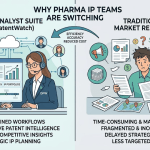
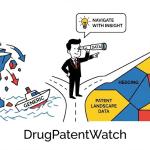
DrugPatentWatch aggregates data from USPTO patent records, FDA Orange Book and Purple Book listings, court dockets, clinical trial registries, and other sources into a proprietary database designed for business intelligence purposes rather than raw regulatory compliance. For analysts who need to know not just when a patent expires but whether it has been challenged in IPR, who has filed ANDAs against it, what the litigation status is, and what the adjusted terminal expiration date is after PTA and PTE, it is a force multiplier.
The platform’s value is particularly high in two use cases: rapid screening of a large universe of potential LOE targets (to identify which drugs are approaching expiration and have significant revenue at stake), and deep-dive due diligence on a specific target (mapping the full patent thicket, tracking Paragraph IV filings and their litigation status, monitoring biosimilar aBLA filings). An investment team that would otherwise spend weeks manually cross-referencing USPTO records, FDA databases, and PACER court filings can cover the same analytical ground in hours.
SEC Filings: The Risk Disclosure Goldmine
The “Risk Factors” section of an originator’s 10-K and the “Legal Proceedings” section of both 10-Ks and 10-Qs are among the most information-dense patent intelligence sources available. Companies are legally required to disclose material litigation, and patent cases that could affect a major revenue stream are almost always material. These disclosures frequently contain:
The specific patents being litigated against specific generic challengers
The names of the generic filers and the products they seek to sell
Trial dates, court decisions, and settlement terms (when disclosure is required)
Management’s assessment of litigation risk and likely outcomes
Reading these disclosures carefully, and tracking them across quarters, gives an investor a real-time picture of the litigation landscape that supplements the official court dockets on PACER. When an originator’s 10-K discloses a new Paragraph IV suit against a previously unknown filer, that is new information that should affect the investor’s modeling of the LOE timeline.
ClinicalTrials.gov: Early-Warning Signal for Challenger Activity
Biosimilarity studies and bioequivalence studies must be registered on ClinicalTrials.gov. A company that registers a Phase I bioequivalence study for a drug approaching LOE is publicly signaling its intent to develop a generic. For biosimilars, the registration of a comparative pharmacokinetic study followed by a comparative immunogenicity study signals that the applicant is on track for an aBLA filing within the next 18-24 months. This information reaches the database before any filing reaches the FDA and is therefore genuinely predictive.
Tracking ClinicalTrials.gov registrations for key target drugs, alongside ANDA and aBLA filing data from the FDA, gives analysts an integrated picture of the competitive entry timeline that no single source provides alone.
Key Takeaways: Section 7
Orange Book and Purple Book are the official record of what is claimed, not what is legally defensible. Always cross-reference with litigation status.
DrugPatentWatch synthesizes the multi-source data into actionable intelligence, reducing the time required for comprehensive LOE analysis.
SEC filings and ClinicalTrials.gov registrations are underutilized intelligence sources that provide real-time signals about litigation outcomes and challenger development timelines.
8. The Originator Playbook: Defensive Strategies and Their Investment Implications
Lifecycle Management: A Portfolio of Tactics, Not a Single Strategy
The “lifecycle management” category covers a wide range of activities with dramatically different risk-return profiles for the originator. Analysts covering branded pharma companies need to evaluate the specific LCM tactics being deployed, not just the existence of an LCM program.
The Product Hop: High Reward, High Scrutiny
A product hop—transitioning patients from the original branded drug to a next-generation, separately-patented product before the original’s LOE—is the most ambitious LCM strategy. When it works, it effectively sidesteps the cliff: by the time generics of the original product arrive, the market has migrated to the successor product. When it fails, the company has spent heavily on a new product launch that payors refuse to cover differentially, and the original brand loses market share to generics anyway.
The clinical bar for a successful product hop has risen materially. Payors and PBMs scrutinize successor products for meaningful clinical differentiation. A new formulation that offers purely pharmacokinetic improvements (lower Cmax, smoother absorption curve) with no demonstrated clinical outcome benefit is increasingly likely to be placed on a higher formulary tier than the now-generic original. The product hop only works if it offers something patients and physicians value enough to pay more for.
AstraZeneca’s Prilosec-to-Nexium transition is the textbook success case. By moving from racemic omeprazole to esomeprazole (the S-enantiomer) with a price point 7x the eventual generic omeprazole cost, and aggressively marketing the switch before Prilosec’s LOE, AstraZeneca retained substantial revenues in the PPI market. But even this successful hop drew regulatory scrutiny for anti-competitive switching tactics, and the FTC has since become more aggressive about challenging product hops it views as using the patent system to delay generic competition rather than to protect genuine innovation.
The Authorized Generic: Controlled Cannibalization
The authorized generic (AG) strategy involves the originator (or a partner) launching the branded drug’s exact formulation under a generic label, typically on the day of LOE or simultaneously with the FTF generic’s launch. The AG operates on the FTF exclusivity during the 180-day period, reducing the FTF’s pricing power because the AG competes with it directly.
The decision to launch an AG has four strategic functions. First, it prevents the FTF generic from capturing the full 180-day exclusivity premium, making the Paragraph IV challenge less attractive for future drugs. Second, it allows the originator to retain a revenue stream (at lower margin, but still material) from the generic market that it would otherwise cede entirely. Third, it maintains the originator’s distribution relationships with wholesalers and pharmacies by giving them a product to continue handling. Fourth, when executed through a partner rather than a subsidiary, it can generate licensing revenue while insulating the brand’s commercial team from the generic operation.
The downside is that an AG launch accelerates the branded product’s price erosion and can create confusion in the market about the company’s strategic direction. For brands that the originator intends to support long-term (with a product hop or with continued investment in new indications), an AG launch signals a concession that can damage prescriber confidence.
AbbVie’s Humira: IP Valuation of the Settlement Architecture
AbbVie’s Humira settlement strategy with biosimilar developers represents the most sophisticated application of patent thicket value in pharmaceutical history. Rather than litigating each biosimilar challenger through final judgment—a process that could take 4-6 years per case, with uncertain outcomes—AbbVie used its 130-patent portfolio as negotiating leverage to reach settlements that granted biosimilar developers U.S. launch licenses starting January 1, 2023.
The structure of these settlements was not uniform. Different biosimilar developers received different launch dates, different license terms, and different royalty arrangements. Amgen’s Amjevita launched on January 31, 2023, as the first U.S. adalimumab biosimilar. Boehringer Ingelheim’s Cyltezo, as the interchangeable biosimilar, launched in October 2023 with its one-year interchangeability exclusivity period. Sandoz, Coherus, Pfizer, Organon, Fresenius Kabi, and Samsung Bioepis all launched at various points in 2023 under their respective settlement terms.
The IP value embedded in this settlement architecture was approximately $60 billion in U.S. revenue between 2018 (when European biosimilar entry began) and 2023 (when U.S. entry was permitted). AbbVie used the threat of multi-front patent litigation—not the certainty of winning it—to negotiate five additional years of U.S. market exclusivity that the composition of matter patent alone could not have provided. This is the purest possible demonstration of the value of a well-constructed, litigated patent thicket.
For investors evaluating AbbVie’s position post-Humira, the key analytical question shifted from “when does Humira’s IP expire?” to “what is the post-settlement price erosion trajectory, and can Skyrizi and Rinvoq generate enough revenue to replace Humira’s contribution before the full erosion hits?” That question required modeling not the patent landscape but the PBM formulary dynamics and biosimilar adoption rates in rheumatology—which has proven slower than most models predicted at launch.
Strategic M&A: The Pipeline Replacement Imperative
When a company’s patent cliff is large enough that no combination of LCM tactics can bridge the gap, M&A is the structural solution. The calculus is simple: the originator has cash (or debt capacity) generated by the blockbuster’s exclusivity period, and it needs to deploy that capital into assets that will generate revenue after the cliff.
The quality of M&A as a LOE response depends on the valuation at which assets are acquired, the probability of the acquired pipeline assets reaching market, and the timing relative to the originator’s cash flow trajectory. AstraZeneca’s acquisition of MedImmune in 2007 for $15.6 billion gave it the biologics platform that produced Fasenra and the co-development pathway for Imfinzi. Pfizer’s $43 billion acquisition of Wyeth in 2009, following Lipitor’s approaching LOE, brought Enbrel, Prevnar, and a biologics manufacturing infrastructure. Neither acquisition solved the short-term cliff, but both contributed to long-term platform value.
The worst version of M&A as an LOE response is acquiring late-stage clinical assets at premium valuations when the acquirer is under time pressure. A company facing a $5 billion annual revenue loss in 36 months is a motivated buyer, and motivated buyers get poor terms. Analysts should discount the projected returns from M&A executed under LOE pressure by 15-25% relative to similar acquisitions made from a position of strength.
Key Takeaways: Section 8
Product hops require genuine clinical differentiation to succeed against increasingly skeptical payors. “Better PK” is no longer sufficient.
Authorized generics serve multiple strategic functions: competing with FTF generics during exclusivity, maintaining distribution relationships, and generating license revenue. The decision is drug-specific.
AbbVie’s Humira settlement architecture is the canonical use of patent thicket value as negotiating leverage. It extracted approximately $60 billion in additional U.S. exclusivity from a 130-patent portfolio.
M&A as LOE response is most effective when executed from a position of financial strength, not under time pressure. Discount projections from pressure-driven acquisitions accordingly.
Investment Strategy: Originator Companies
For portfolio managers holding originator stocks, the key metrics to monitor quarterly ahead of a major LOE event are: secondary patent litigation status (are the pillar patents holding?), product hop market penetration rates (is the successor formulation gaining formulary access?), authorized generic launch decision signals, M&A pipeline capacity relative to the revenue gap, and management guidance specificity on LOE impact. A company that provides granular, confident guidance on post-LOE revenue recovery has a management team that has done serious modeling. Vague references to “long-term pipeline value” without quantification are a red flag.
9. The Challenger Playbook: Generic and Biosimilar Investment Strategies
First-to-File Economics: The Math Behind the Race
The 180-day FTF exclusivity period is the most highly contested prize in generic pharmaceutical strategy, and the math explaining why is straightforward. For a drug with $3 billion in annual U.S. sales, the first generic launching at a 30-40% discount to brand captures roughly $1.8-2.1 billion in annual revenue during its exclusivity window. With COGS for a well-manufactured oral solid dosage form typically 15-25% of revenue, and no marketing spend comparable to the brand, a six-month FTF exclusivity period can generate $200-400 million in gross profit for a single product. That is transformational for a mid-size generic company.
The race to FTF status operates on two competitive dimensions. Legal speed—filing the ANDA with a Paragraph IV certification before competitors—requires a formulation and bioequivalence study program that moves faster than rivals. Scientific speed—completing a bioequivalent formulation and the supporting analytical package—requires manufacturing expertise and well-run clinical pharmacology operations. Both dimensions favor companies that have done this repeatedly for similar drug classes, which is why the list of consistent FTF filers—Teva, Viatris, Sandoz, Sun Pharma, Aurobindo—changes slowly over time.
When multiple companies file ANDAs with Paragraph IV certifications on the same day, the FTF designation is shared among all of them. All shared filers launch simultaneously on day one of the 180-day period, immediately creating a multi-way competition that compresses pricing more aggressively than a sole FTF launch. Shared exclusivity events are common for major blockbusters because any company tracking the target drug’s composition of matter patent expiration will aim to file as early as possible—often years before LOE—to maximize its chance of obtaining sole FTF status or sharing it with a small group.
At-Risk Launch Analysis: The Highest-Stakes Decision in Generic Strategy
An at-risk launch occurs when a generic company launches its product before the resolution of pending patent litigation. It is not a strategy; it is a calculated bet that the litigation will be resolved in the generic’s favor, and a acceptance of enormous financial exposure if it is not.
The financial downside of a failed at-risk launch is typically calculated as the brand’s damages for the profits the generic made during the at-risk period, plus injunctive relief requiring the generic to exit the market. These damages can be massive. Teva’s at-risk launch of generic pantoprazole (Protonix) resulted in a $1.6 billion settlement payment to Pfizer. At-risk launches of major products have resulted in individual verdicts in the $2-4 billion range.
For investors, the decision to evaluate a company engaging in an at-risk launch requires a legal probability assessment, not just a financial one. The investor must form a view on the probability that the specific patent being challenged will be invalidated or found not infringed, and must understand the damage calculation methodology the court would apply if the company loses. Companies rarely communicate their legal position on pending Paragraph IV litigation with sufficient specificity for outside investors to form independent probability estimates, which means at-risk launch situations carry an irreducible information asymmetry that should be reflected in position sizing.
Biosimilar Developer Selection: The Five Variables That Matter
Choosing which biosimilar company to back—either as a pure-play investment or as part of a larger pharma holding—requires assessing five dimensions that do not appear directly in financial statements.
The first is manufacturing capability. Does the company own and operate commercial-scale bioreactor capacity, or does it rely on contract manufacturers? In-house biologics manufacturing provides cost control, quality oversight, and the ability to scale production ahead of launch without depending on a third party’s capacity schedule. Companies like Amgen and Pfizer have decades of large-molecule manufacturing experience; companies entering the biosimilar space through recent CDMO partnerships are less proven.
The second is analytical characterization expertise. Demonstrating biosimilarity requires extensive structural, functional, and clinical characterization of both the biosimilar and the reference product. Mass spectrometry, NMR, surface plasmon resonance, cell-based potency assays—the analytical toolkit for biosimilar characterization is complex and expensive. Companies with established analytical development groups have a speed-to-submission advantage.
The third is patent dance experience. The BPCIA’s information-exchange process is heavily lawyered, but it is also a substantive scientific negotiation. Companies that have been through the dance multiple times have institutional knowledge about which disclosures to make, which patents to put on the litigated list, and when to break off the dance and move to litigation independently.
The fourth is commercial infrastructure in biologics markets. Biosimilar adoption, unlike generic adoption, is not automatic at the pharmacy. It requires physician education, hospital formulary committee presentations, PBM negotiations, and in many cases patient support programs comparable to those of the reference product. A biosimilar developer without an established oncology or immunology sales force is at a commercial disadvantage against biosimilar competitors who have one.
The fifth is interchangeability strategy. Has the company designed its development program to include switching studies from the outset, or is interchangeability an afterthought? Companies that front-load switching studies accept higher upfront development costs in exchange for the pharmacist substitution right that drives faster market share gains.
Building a Challenger Portfolio: Diversification Principles
A portfolio constructed entirely of FTF Paragraph IV plays for major blockbusters is high-variance. A portfolio constructed entirely of niche generics with few competitors is low-variance but also low-return. The optimal construction balances several dimensions:
Across complexity tiers: combining simpler oral solid generics (lower risk, faster timelines) with complex generics (higher risk, better margin at entry) and biosimilar programs (highest risk and capital requirements, but the largest upside). Across therapeutic areas: overconcentration in any single specialty area (e.g., oncology biosimilars) creates correlated regulatory risk if FDA guidance shifts or if a single reference product’s patent thicket proves stronger than expected. Across development stages: mixing near-term launches (products with ANDA or aBLA already filed) with earlier-stage programs (products in development for LOE events 5-7 years out) provides revenue visibility alongside long-term optionality.
Key Takeaways: Section 9
The 180-day FTF exclusivity period is the primary economic prize in small-molecule LOE competition. The math justifies major legal and scientific investment for blockbuster targets.
At-risk launches carry damages exposure that can exceed $1-4 billion for major products. Investors must form their own probability-weighted view of litigation outcomes rather than relying solely on company statements.
Biosimilar developer selection requires assessing manufacturing capability, analytical expertise, patent dance experience, commercial infrastructure, and interchangeability strategy—not just pipeline breadth.
Investment Strategy: Challenger Companies
Analysts evaluating generic and biosimilar companies should look for three indicators of high-quality LOE execution capability: a documented FTF win rate (successful Para IV outcomes as a percentage of total challenges pursued), a biosimilar approval track record with the FDA (time-to-approval from aBLA filing is a proxy for regulatory relationship quality), and commercial execution metrics at launch (how quickly does the company capture market share in the first 90 days? Do they secure major wholesaler volume agreements before launch?). Companies that score well on all three dimensions consistently outperform those that are strong on pipeline but weak on execution.
10. Ancillary Plays: Picks-and-Shovels Exposure to LOE Events
CDMOs: The Manufacturing Enablers
Both originator companies developing next-generation biologics and biosimilar developers outsource portions of their manufacturing to Contract Development and Manufacturing Organizations. The growth in biosimilar programs globally—driven by the wave of biologic LOE events expected through the 2020s and 2030s—is a structural demand driver for CDMOs with large-molecule manufacturing capability.
Lonza Group, with its Ibex Solutions platform for viral vectors and cell therapies in addition to conventional biologics manufacturing, and Samsung Biologics, with its large-scale bioreactor capacity in Incheon, South Korea, are among the primary beneficiaries of biosimilar manufacturing outsourcing. Catalent, now part of Novo Holdings following the 2024 acquisition, had been a major CDMO for both originator next-generation products and biosimilar development programs.
The investment thesis for CDMOs in the context of LOE events is that demand for their services is correlated with the overall volume of biosimilar development activity, which in turn is a function of the number of major biologic LOE events on the horizon. The pipeline of biologic LOE events through 2035—Keytruda, the GLP-1 class, Dupixent, Skyrizi, Tremfya—represents a sustained demand environment for large-molecule manufacturing capacity that should support CDMO revenue growth for a decade.
CROs: The Clinical Development Enablers
Biosimilar developers must run comparative clinical trials. IQVIA, Labcorp Drug Development, PPD (now part of Thermo Fisher), and smaller specialist CROs receive a meaningful revenue contribution from biosimilar development programs. The typical comparative clinical study for a monoclonal antibody biosimilar runs 12-18 months with 500-1,000 patients, and costs $30-80 million. As the number of biosimilar programs in active development globally approaches several hundred, the aggregate CRO demand from this segment has become material.
The analytical point for investors is that CRO revenue from biosimilar programs is more predictable than revenue from novel drug development programs, because biosimilar study designs are standardized (comparative PK, comparative immunogenicity, comparative safety and efficacy in at least one indication), and the regulatory requirements are well-defined. A CRO that has run multiple biosimilar programs for major biologics has a reproducible service offering with documented timelines and costs—lower execution risk than novel Phase II or Phase III oncology programs.
PBMs: The Gatekeepers of Generic Uptake
Pharmacy Benefit Managers occupy a paradoxical position in the LOE ecosystem. They are the most powerful force driving generic and biosimilar substitution (through formulary tiering and co-pay differentials) and simultaneously the entities most likely to maintain branded drugs on formulary when the rebate economics justify it.
CVS Caremark, Express Scripts (now part of Evernorth), and OptumRx collectively manage drug benefits for a majority of commercially insured Americans. Their formulary decisions—which drugs are on which tier, which require prior authorization, which are excluded—drive prescription behavior at scale. When a PBM places a biosimilar on its preferred formulary tier at a lower co-pay than the brand, biosimilar uptake accelerates dramatically. When it maintains the brand on formulary in exchange for a larger rebate from the originator, biosimilar uptake stalls.
For investors, the key insight is that the PBM’s decision is not driven by the lowest list price; it is driven by the lowest net price (list price minus rebate) for equivalent clinical outcomes. An originator that offers a large enough rebate—funded by the drug’s ongoing high list price—can retain preferred formulary status even after biosimilars launch. This is the mechanism that allowed AbbVie to retain a meaningful portion of the Humira formulary for years after biosimilar entry, and it is the same mechanism that will govern GLP-1 biosimilar adoption when that class reaches LOE.
Key Takeaways: Section 10
CDMOs with large-molecule manufacturing capability have a structural demand tailwind from the approaching wave of major biologic LOE events. The decade-long pipeline of Keytruda, GLP-1 class, and next-generation immunology biosimilar programs provides revenue visibility.
CRO biosimilar revenue is more predictable than novel drug revenue due to standardized study designs and regulatory requirements.
PBM formulary decisions—not regulatory approval—often determine the pace of biosimilar market penetration. The “lowest list price wins” model does not apply to U.S. biosimilar markets.
11. Case Study: Lipitor (Atorvastatin) — The Definitive Small-Molecule Cliff
IP Valuation at Peak: What Pfizer Was Defending
At its 2011 pre-LOE peak, Lipitor generated $9.6 billion in U.S. sales and approximately $13 billion globally. The core composition of matter patent (U.S. Patent 4,681,893 for atorvastatin calcium) expired November 30, 2011. The drug had been on the market since 1997, meaning its effective patent life was approximately 14 years—near the maximum allowed under the PTE framework.
In IP valuation terms, Pfizer was defending an asset that generated the equivalent of $26 million per day in U.S. revenue. Each month of additional exclusivity was worth approximately $800 million. The legal costs of defending even weak secondary patents were trivially small relative to this revenue rate, which explains why Pfizer litigated aggressively against all comers and why the authorized generic strategy it ultimately deployed was economically rational even at the cost of cannibalizing brand sales.
The secondary patent estate for atorvastatin was not particularly strong. Pfizer held formulation patents and several polymorph patents, but the core molecule was the primary barrier. By 2011, after 14 years of generic challenge activity, the secondary patent litigation was largely resolved in favor of challengers, leaving the November 2011 date as effectively final.
The Authorized Generic Architecture: Pfizer’s Tactical Masterstroke
Rather than simply accepting that Ranbaxy (the FTF filer, holding 180-day exclusivity) would capture the first six months of generic market profits, Pfizer executed a deal with Watson Pharmaceuticals to launch an authorized generic on day one. This transformed what would have been a branded/FTF-generic duopoly into a three-way competition.
The effect on Ranbaxy’s economics was severe. Instead of pricing its generic at 25-30% below brand with limited competition, Ranbaxy faced immediate competition from an AG priced equivalently. The 180-day period’s economic premium—the entire rationale for the $200+ million Ranbaxy had invested in the Paragraph IV challenge and litigation—was substantially eroded. Pfizer, meanwhile, captured the AG’s revenue stream through its Watson agreement, retaining a portion of the atorvastatin market even as the brand collapsed.
The lesson for investors: when a company announces an AG launch in connection with a major LOE event, model not just the originator’s revenue retention but the impact on the FTF generic company’s margins. An AG-impacted FTF exclusivity period can be 40-60% less profitable than an AG-free one.
Post-LOE Market Structure: How Fast the Price Falls
Within 18 months of Lipitor’s LOE, atorvastatin was available from multiple generic manufacturers at prices more than 95% below the branded list price. The pattern is consistent with academic literature on generic market dynamics: for a widely prescribed oral solid dosage form with no manufacturing complexity and many entrants, price erosion is rapid and near-total.
The atorvastatin case is instructive for the GLP-1 LOE analysis precisely because it is the opposite benchmark. Semaglutide and tirzepatide are injectable peptides requiring cold chain logistics, proprietary device systems, and manufacturing capabilities that very few companies possess. The post-LOE competitive environment for GLP-1 drugs will look nothing like atorvastatin’s—it will be slower, more concentrated among a small number of technically capable manufacturers, and characterized by device competition as much as API price competition.
For analysts modeling the next major small-molecule LOE event, the Lipitor template provides four specific inputs: (1) the authorized generic opportunity for the originator and its deal economics; (2) the FTF generic’s net margin per unit after AG competition; (3) the rate of market share transfer from brand to generics in the target therapeutic area and patient population; and (4) the originator’s stock price recovery trajectory (Pfizer’s stock bottomed roughly 12 months after Lipitor LOE and recovered as Prevnar 13 growth took over as the revenue narrative). The recovery timeline depends on what the originator’s next revenue driver is, which is why pipeline quality assessment belongs in any LOE-based valuation model for branded pharma.
Key Takeaways: Section 11
Lipitor’s LOE at $13 billion global peak revenue remains the defining small-molecule cliff event. Pfizer’s AG strategy is the canonical defensive playbook.
Price erosion for simple oral solid generics is 90-95% within 18 months of multi-competitor entry. Analyst models that assume slower erosion for comparable drugs are optimistic.
The Lipitor template applies to simple oral solid dosage forms. For complex delivery systems (injectables, inhaleds, modified-release), apply a different, slower erosion model.
12. Case Study: Humira (Adalimumab) — The Patent Thicket as Weapon
AbbVie’s IP Position: 130 Patents and Their Functional Structure
The canonical figure cited for AbbVie’s Humira patent estate is “more than 130 patents.” This number, while accurate, is analytically meaningless without decomposition. Of those 130+, the majority were filed after the drug’s initial approval in 2002—meaning they do not protect the original molecule but rather the commercial product that evolved from it. The “pillar” patents—those that would have been the most difficult for biosimilar developers to design around or invalidate—covered the adalimumab formulation (specifically the citrate-free, high-concentration formulation for the pen device) and the manufacturing process for producing adalimumab at commercial scale with consistent glycosylation profiles.
The formulation patents were the ones with the most commercial relevance to the product-hop element of AbbVie’s strategy. By transitioning U.S. patients to the citrate-free formulation—marketed as associated with less injection site pain—AbbVie ensured that biosimilars launching with the original citrate-containing formulation were not a perfect like-for-like substitute in the minds of prescribers and patients. This formulation differentiation was AbbVie’s equivalent of Pfizer’s authorized generic: a way of ensuring that the competitive entry environment was on its terms rather than the biosimilar’s.
The manufacturing process patents were the most legally robust in the estate. Demonstrating non-infringement of a manufacturing process patent is harder than demonstrating non-infringement of a product patent, because the process is not observable in the final product—it requires independent investigation of the biosimilar manufacturer’s production methods. Several biosimilar developers settled rather than litigate the process patents, even when they believed the product patents were weak.
IP Valuation of the U.S. Exclusivity Extension
The settlement structure AbbVie negotiated—granting U.S. biosimilar entry dates of January 2023 or later—was worth approximately $60 billion in cumulative U.S. Humira revenue between 2018 (when European biosimilar competition began eroding European sales) and 2023. This $60 billion figure represents the NPV of five additional years of U.S. market exclusivity for a drug generating $16+ billion annually in that market.
To put this in patent portfolio terms: AbbVie’s secondary patent estate, through its use as litigation leverage rather than through actual judicial victories, generated roughly $60 billion in IP value above and beyond what the composition of matter patent alone would have produced. That is the highest documented return on a secondary patent estate in pharmaceutical history.
The 2023 Biosimilar Wave: Commercial Reality
Nine adalimumab biosimilars launched in the U.S. during 2023, the largest simultaneous biosimilar launch in history. One year after launch, AbbVie’s U.S. Humira revenue had declined approximately 35% from peak—significantly less than the 80%+ that many analysts had modeled. Several factors explain the more moderate erosion:
The rebate retention effect: AbbVie offered PBMs rebates on Humira large enough that some PBMs—including CVS Caremark—chose to keep Humira on their preferred formulary while placing biosimilars on a non-preferred tier or excluding them entirely from coverage. This meant that for patients covered by CVS PBM plans, biosimilar prescriptions carried higher co-pays than Humira, reversing the normal economic incentive for substitution.
The physician inertia effect: Rheumatologists, dermatologists, and gastroenterologists managing patients on stable Humira therapy were reluctant to switch stable patients to a new agent absent a compelling clinical or economic reason. Unlike statins, where any cholesterol-lowering generic is clinically equivalent, biologics in autoimmune disease carry a perception of individualization—physicians and patients know that the specific biologic matters for a specific patient, even if the population-level evidence suggests equivalence.
The fragmented competition effect: With nine biosimilars launching nearly simultaneously, no single biosimilar had a dominant formulary position. PBMs could choose among multiple biosimilar options with slightly different presentations, prices, and rebate structures. This fragmentation diluted the market share of each individual biosimilar and reduced the urgency with which any one competitor pursued formulary exclusivity.
Investment Strategy: The Biosimilar Wave Model
For analysts modeling the next major biologic biosimilar launch, the Humira case establishes several modeling assumptions that are now supported by empirical data: post-LOE Year 1 brand revenue erosion in an immunology/rheumatology biologic is likely 25-40%, not 80%; the interchangeable biosimilar has a meaningful formulary advantage and should be modeled with 1.5-2x the market share of non-interchangeable biosimilars at Year 2; PBM rebate dynamics can maintain brand formulary position for 2-4 years post-LOE; and a wave of simultaneous biosimilar launches slows adoption for each individual product while accelerating the overall category shift away from the brand.
Key Takeaways: Section 12
AbbVie’s 130-patent Humira estate was worth approximately $60 billion in additional U.S. exclusivity when used as settlement leverage. The process patents were the most legally defensible pillar.
Post-LOE brand revenue erosion for a major biologic in autoimmune disease is 25-40% in Year 1, not the 80%+ seen in small-molecule primary care markets.
The interchangeable biosimilar designation drives meaningful commercial differentiation; the first interchangeable product should be modeled with premium market share assumptions.
13. Case Study: Gleevec (Imatinib) — Specialty Market Dynamics Post-LOE
IP Valuation in a Concentrated Prescriber Market
Novartis’s Gleevec (imatinib mesylate) generated approximately $4.6 billion in global revenue in 2015, the year before its primary U.S. patent expired. It is a targeted kinase inhibitor for chronic myeloid leukemia (CML) and a few other malignancies. The prescriber base is concentrated—perhaps 3,000-4,000 U.S. oncologists account for the vast majority of CML prescriptions—and the patient population is small, approximately 9,000 new CML diagnoses annually in the United States.
For IP valuation purposes, the specialty market structure of Gleevec—high price, small patient population, concentrated prescriber base—implies a fundamentally different post-LOE dynamic than a primary care drug like Lipitor. The IP value is not just in the composition of matter patent but in the prescriber relationships, the patient assistance programs, and the clinical data that give the originator a “soft” competitive advantage that persists well beyond the legal IP expiration.
Novartis priced Gleevec at approximately $120,000 per year in the U.S. at the time of LOE. The first-entry generic from Sun Pharma was priced at approximately 30% below brand—not the 70-90% discounts seen for primary care generics. Even at 30% below, the generic was priced at approximately $84,000 annually, which required specialty pharmacy infrastructure, patient support, and payer authorization support that most generic companies are not set up to provide. This practical barrier to rapid generic penetration is an underappreciated feature of specialty drug LOE events.
The India Supreme Court Ruling: Global IP Policy Implications
Before Gleevec lost U.S. exclusivity, Novartis fought a decade-long legal battle in India to protect a polymorph patent (the beta crystalline form of imatinib mesylate) that it claimed distinguished the commercial Gleevec formulation from the free base imatinib that was already in the prior art. The Indian Supreme Court rejected the patent in 2013 under Section 3(d) of India’s Patents Act, which prohibits patents for new forms of known substances unless they demonstrate significantly enhanced efficacy.
The ruling established a template for developing countries seeking to resist secondary “evergreening” patents on essential medicines. It has been invoked by health advocates in multiple subsequent negotiations over pharmaceutical IP in low- and middle-income countries. For the investment community, the ruling is relevant because it illustrates that a patent estate that is legally robust in the U.S. can be non-existent in markets with different patentability standards—requiring geographic differentiation in global LOE models.
Co-pay Cards as a Brand Defense Mechanism
Novartis’s post-LOE strategy for Gleevec in the U.S. relied heavily on its patient assistance program (PAP) infrastructure. By offering commercially insured CML patients effectively free or very-low-cost branded Gleevec through co-pay cards and patient assistance programs, Novartis ensured that the net out-of-pocket cost to the patient was lower for the brand than for the generic, even though the brand’s list price was higher than the generic’s.
This is the “rebate trap” applied at the patient level: the insurer pays more for the brand than the generic, but the patient pays less. The patient therefore prefers the brand. The physician, knowing the patient’s preference and not personally bearing the price difference, maintains the brand prescription. The insurer pays the higher brand cost minus a rebate from Novartis, which may or may not make the brand economically preferred at the plan level.
Sun Pharma and other generic entrants captured significant market share in managed Medicaid, government plans, and situations where the PAP did not apply—but Novartis retained a disproportionate share of the commercially insured market for longer than pure pricing dynamics would have predicted.
Key Takeaways: Section 13
Specialty drug LOE dynamics differ fundamentally from primary care LOE. Small patient populations, concentrated prescribers, and high drug prices slow generic market share gains.
Patient assistance programs and co-pay cards can invert the normal price incentive at the patient level, maintaining brand market share among commercially insured patients despite generic availability.
India’s Section 3(d) and comparable developing-world IP standards create geographic IP risk for secondary evergreening patents. Global LOE models must differentiate by jurisdiction.
14. The Policy Horizon: IRA Price Negotiation and International Patent Law
The Inflation Reduction Act: A Structural Change to LOE Economics
The Inflation Reduction Act of 2022 introduced direct Medicare drug price negotiation, which became a significant reality in 2024 with the publication of the first 10 negotiated drug prices. The law’s design targets drugs in the late phases of their exclusivity cycle—after they have been on the market long enough to generate large Medicare expenditures but before LOE has introduced price competition.
For small molecules, the statute allows Medicare negotiation to begin 9 years after market approval. For biologics, the window opens at 13 years. Given that major LOE events typically occur 12-14 years after approval, the IRA’s negotiation window and the natural LOE event can overlap. For a biologic, the IRA could begin negotiating the drug’s Medicare price in its 13th year while a biosimilar developer is simultaneously pursuing an aBLA filed after the 12-year exclusivity period. The practical result is that the reference product’s price is already being compressed by IRA negotiation in the period when biosimilar competition would normally be providing the first downward price pressure.
This creates what analysts now call the “compressed value window” problem: the drug’s revenue in its final 2-3 years before LOE is lower than historical models would have projected because IRA negotiated prices apply to Medicare volume, which can represent 40-50% of total U.S. prescription volume for major chronic disease drugs. The biosimilar that eventually launches enters a market where the reference product’s price is already well below its historical peak, reducing the addressable revenue at which the biosimilar aims its discount.
Modeling IRA Impact on Biosimilar ROI
The practical implication for biosimilar investment models is that the “size of the prize”—the reference product’s revenue at the time of biosimilar entry—must be adjusted downward for drugs that will be subject to IRA negotiation before LOE. The adjustment depends on Medicare penetration in the target indication, the specific negotiated price reduction (which has ranged from 38% to 79% below list price for the first ten drugs selected), and the percentage of total U.S. revenue attributable to Medicare volume.
For Enbrel (etanercept), one of the first 10 drugs selected for IRA negotiation, the negotiated Medicare price for 2026 represents a reduction of approximately 67% from the drug’s list price. The adalimumab biosimilar Humira-competing products already exist; the Enbrel biosimilar market has been more limited by PBM strategy and physician inertia. But the IRA’s price compression of the reference product will factor into the revenue model for any Enbrel biosimilar investment thesis.
International Patent Laws: A Geographic Mosaic
The European Patent Office (EPO) operates under different patentability standards than the USPTO, particularly for secondary and incremental patents. The EPO applies an “inventive step” requirement that is generally stricter than the U.S. non-obviousness standard—particularly for pharmaceutical formulation and dosing patents. This means that a patent that survives USPTO examination and even PTAB inter partes review may not have been granted by the EPO in the first place.
The practical consequence is that major European markets often lose exclusivity earlier than the U.S. Humira is the most prominent example: European adalimumab biosimilar competition began in 2018, five years before the U.S. AbbVie’s formulation patents, which carried significant weight in the U.S. settlement negotiations, were either not filed or not granted in key European jurisdictions.
For global LOE models, this jurisdictional divergence is material. A drug that retains U.S. exclusivity through a secondary patent estate may already face generic or biosimilar competition in Germany, France, and the UK, which collectively represent 30-40% of European pharmaceutical revenues. Analysts building revenue bridges for branded drugs approaching LOE must build country-specific patent expiration assumptions, not a single global LOE date.
Key Takeaways: Section 14
The IRA’s Medicare price negotiation window overlaps with the LOE period for many major drugs. Biosimilar ROI models must incorporate the “compressed value window” effect on the reference product’s revenue at the time of biosimilar entry.
European patentability standards—stricter on secondary patents—often produce earlier LOE dates in European markets than in the U.S. Global LOE models require jurisdiction-level patent analysis.
Regulatory scrutiny of patent thicketing and product hopping is increasing in both the U.S. and EU. The legal risk of evergreening strategies has risen materially since 2020.
Investment Strategy: IRA-Adjusted Valuation
Portfolio managers covering branded pharma need an IRA adjustment layer in their valuation models for any drug meeting the following criteria: annual U.S. sales above $2 billion, Medicare volume representing more than 30% of U.S. prescriptions, and an LOE date more than 9 years (small molecule) or 13 years (biologic) after approval. For drugs meeting all three criteria, model the IRA negotiated price at a 40-60% discount to current net list price, applied to the Medicare volume share, beginning 12-18 months before the statutory negotiation start date to account for pre-negotiation price competition effects. This adjustment will reduce the projected revenue in the drug’s last 2-4 years of exclusivity by 10-25% depending on indication.
15. AI, Real-World Evidence, and the Next Generation of LOE Competition
AI in Generic and Biosimilar Development: Speed as a Competitive Weapon
Machine learning applications are accelerating every phase of generic and biosimilar development. For small-molecule generics, generative chemistry AI models can identify non-infringing synthetic routes for complex API synthesis, potentially weeks faster than human medicinal chemistry teams. Predictive formulation modeling can reduce the number of experimental iterations needed to achieve bioequivalence for complex generics, cutting development timelines by 20-30%.
For biosimilars, AI’s most significant contribution is in structural characterization. Predicting the three-dimensional structure of a biologic from its sequence—and mapping the structural differences between a proposed biosimilar and the reference product—requires processing data from mass spectrometry, X-ray crystallography, cryo-electron microscopy, and multiple functional assays. AI-assisted data integration accelerates this characterization process and helps identify which structural differences are likely to be clinically meaningful versus analytical noise.
The commercial implication is that AI capability is becoming a differentiator in the biosimilar development race. Companies with proprietary AI characterization platforms—or with access to leading AI tools through research partnerships—can complete their analytical similarity packages faster and with greater confidence than companies relying entirely on traditional analytical chemistry. In the biosimilar space, where the difference between a six-month lead over a competitor and a six-month lag can determine FTF status, this matters.
AI is also being applied to patent claim analysis. Natural language processing tools can parse patent claims and prior art to predict the probability of invalidity in PTAB inter partes review proceedings. Several law firms and IP analytics companies now offer AI-assisted freedom-to-operate analyses that identify the specific claims most likely to be challenged and predict their vulnerability. For investors, access to this type of analysis—even in summary form—provides a qualitative input into the litigation probability estimates that underlie LOE scenario models.
Generative AI in Patent Strategy: Offensive and Defensive Applications
Originator companies are using AI generatively in patent prosecution. AI tools can identify gaps in the current claim structure that could be exploited by generic challengers and suggest continuation filings to close them. They can also monitor competitor patent filings in real time, flagging when a biosimilar developer files formulation or manufacturing patents that suggest its product development direction.
For challengers, the same tools work in reverse. AI monitoring of the originator’s continuation filings—particularly late-stage continuation filings in the years immediately before LOE—identifies when the originator is attempting to extend the effective filing date of new claims. A continuation filed 15 years after the parent application, with claims drafted to cover the challenger’s specific product design, is a common litigation tactic; AI monitoring can alert a generic development team to a newly filed continuation before it publishes, giving them time to adjust their product design.
Real-World Evidence in Post-LOE Competition
Real-world evidence—drawn from electronic health records, insurance claims, pharmacy databases, and patient registries—is an increasingly formal part of pharmaceutical competitive strategy. Originator companies and challengers alike are building RWE programs with specific post-LOE commercial objectives.
For originators, RWE programs before LOE serve two purposes: establishing a strong “real-world effectiveness” data package that shows the brand performing well in a heterogeneous patient population, and identifying patient subgroups that show superior response to the brand relative to the average. These subgroup findings, if robust, can be used to defend a premium formulary position for specific patient types even after generic entry.
For biosimilar developers, RWE collected in European markets where biosimilar entry occurred earlier provides evidence of real-world biosimilar performance that can accelerate physician adoption in the U.S. If European rheumatologists have been prescribing a specific adalimumab biosimilar for five years with outcomes data equivalent to Humira, that five-year RWE dataset is a commercial asset in U.S. formulary negotiations.
Key Takeaways: Section 15
AI is accelerating biosimilar characterization and generic formulation development. Companies with proprietary AI platforms or strong AI partnerships will have timeline advantages in the development race.
AI-assisted patent claim analysis is providing probabilistic invalidity assessments that improve scenario probability weighting in LOE investment models.
RWE programs serve specific post-LOE commercial objectives for both originators (defending brand market share in specific patient subgroups) and challengers (demonstrating equivalence in real-world use). They are now a standard element of launch planning.
16. The Next LOE Wave: Keytruda, GLP-1s, and Cell and Gene Therapy
Keytruda (Pembrolizumab): The Largest Single-Product LOE Event in Oncology
Merck’s pembrolizumab generated approximately $25 billion in global sales in 2024 and has approvals across more than 40 cancer indication/stage combinations. The primary composition of matter patent is expected to expire around 2028 in the U.S., with potential PTE calculations that could extend certain claims.
The biosimilar entry environment for pembrolizumab will be unlike any previous LOE event in oncology. The prescriber base is not a small community of specialists, as with Gleevec—oncologists across a dozen different tumor types prescribe Keytruda, meaning the commercial challenge for biosimilar developers spans medical oncology, thoracic oncology, urologic oncology, gynecologic oncology, head and neck surgery, and dermatology. Building a commercial organization capable of reaching all these prescriber communities is a different challenge than the rheumatology/dermatology/GI focus required for adalimumab biosimilars.
The Merck LCM strategy is visible in its capital allocation. The subcutaneous pembrolizumab formulation—co-formulated with hyaluronidase for rapid subcutaneous delivery rather than the current IV infusion—is in late-stage clinical development with results expected before 2028. If Merck achieves broad adoption of subcutaneous pembrolizumab before the IV formulation’s LOE, biosimilar developers face the choice of developing a biosimilar to the IV reference product (which may have declining market share) or developing one to the subcutaneous formulation (which has its own patent protection). The same sub-Q switch strategy that AstraZeneca used with Fasenra and that Amgen used with Repatha is being deployed at an order of magnitude larger revenue scale.
The indication-specific patent estate for pembrolizumab is among the densest method-of-use patent portfolios in pharmaceutical history. Each of the 40+ approved indications represents a separately patented method of use, and Merck has continued filing method-of-use patents as new combinations (pembrolizumab plus specific chemotherapy regimens, pembrolizumab plus Lenvima in RCC and HCC) have been approved. Biosimilar challengers will face a version of the skinny labeling problem that is unprecedented in complexity: carving out 40+ protected indications while labeling the biosimilar for whatever residual unprotected uses remain—if any—is a novel regulatory and legal exercise.
The GLP-1 Patent Cliff: The Largest Value Transfer in Pharmaceutical History
The combined annual global revenues of Novo Nordisk’s semaglutide products (Ozempic, Wegovy, Rybelsus) and Eli Lilly’s tirzepatide products (Mounjaro, Zepbound) exceeded $35 billion in 2024 and are still growing. Projections for peak combined annual revenue, before LOE compression, range from $80 billion to over $100 billion. The primary composition patents expire in the early 2030s, with the specific timeline depending on jurisdiction and PTE calculations.
For context: the total value of the atorvastatin market at Lipitor’s LOE was approximately $13 billion annually. The total value of the GLP-1 market at LOE could be 6-8 times that. This will be the largest single value-redistribution event in pharmaceutical market history, and preparation for it among generic companies, CDMOs, and regulatory agencies is already visible.
The regulatory pathway for “generic” GLP-1 peptides is the key unresolved question. The FDA has indicated that modified peptides with fewer than 40 amino acids (like semaglutide, at 31 amino acids) are regulated as small molecules under the Hatch-Waxman framework rather than as biologics under the BPCIA. This means generic semaglutide would be approved as a New Drug Application (NDA) with a Paragraph IV process, not as an aBLA biosimilar. It also means the 12-year BPCIA exclusivity does not apply; only the 5-year NCE exclusivity and the patent term govern exclusivity.
The practical challenge for generic semaglutide developers is the manufacturing complexity. Semaglutide is a modified GLP-1 peptide with a C18 fatty diacid attached via a linker and two Aib substitutions. Synthesizing it at commercial scale with sufficient purity and the correct modification profile requires solid-phase peptide synthesis (SPPS) capabilities that few generic manufacturers currently possess. The world’s largest synthetic peptide manufacturing capacity is in China and India, and several companies have been building out GLP-1 peptide synthesis capacity for years in anticipation of the LOE event. Teva, Hikma, and several Indian manufacturers have announced GLP-1 generic programs; the technical quality of their manufacturing programs is the key variable.
The device challenge is equally significant. Wegovy and Ozempic are delivered via proprietary auto-injector pen systems that Novo Nordisk has patents covering independently of the drug itself. A generic semaglutide would need a delivery device that achieves therapeutic equivalence for the drug-device combination product—including demonstration that patients can use the device correctly at the dose accuracy required for the therapeutic effect. This extends the LOE timeline beyond the drug patent alone.
Cell and Gene Therapies: Loss of Exclusivity Without a Precedent
The first approved commercial cell and gene therapies—Novartis’s Kymriah (tisagenlecleucel) for B-cell ALL (approved 2017), Kite/Gilead’s Yescarta (axicabtagene ciloleucel) for large B-cell lymphoma (approved 2017), and Spark Therapeutics’ Luxturna (voretigene neparvovec) for inherited retinal dystrophy (approved 2017)—are approximately 8-9 years from their approval dates as of early 2026. Their LOE periods are approaching within the decade.
The concept of “generics” or “biosimilars” for personalized cell therapies like CAR-T is still being developed at the regulatory level. Kymriah is a one-time treatment in which the patient’s own T-cells are extracted, genetically modified in a proprietary manufacturing process, and reinfused. The “active ingredient” is the patient’s own cells. The IP is primarily in the manufacturing process (viral vector design, T-cell activation conditions, genetic modification protocol) rather than in a defined molecular entity.
A “follow-on” CAR-T product—if such a concept were to be regulated—would need to demonstrate similar clinical outcomes using a different manufacturing process. The FDA has not yet issued definitive guidance on the approval pathway for such products. The likely framework will require comparative clinical data rather than just manufacturing equivalence, which means the “generic” CAR-T investment case will not resemble the ANDA framework at all.
For gene therapies like Luxturna, which deliver a functioning copy of the RPE65 gene via an AAV vector, the relevant IP includes the vector serotype, the promoter sequence, the manufacturing process for the viral vector, and the surgical delivery technique. A “follow-on” would need to use either the same vector elements (requiring a license) or demonstrate equivalence with a different vector (requiring comparative clinical data). The regulatory pathway for this category is, as of 2026, still undefined.
The investment implication is that the “LOE” for cell and gene therapies will not look like the LOE for any previous drug category. The value redistribution will not happen through an ANDA filing or a biosimilar aBLA. It will happen through competitive innovation—new CAR-T platforms using different co-stimulatory domains, allogeneic (“off-the-shelf”) CAR-T approaches that avoid the personalized manufacturing burden, and next-generation gene editing therapies that functionally displace the first-generation approved products. The “generic” of a CAR-T therapy is not a copy; it is a successor.
Key Takeaways: Section 16
Pembrolizumab’s LOE will be the largest oncology biosimilar event in history. Merck’s subcutaneous formulation transition and 40+ indication method-of-use patent estate are the primary barriers to rapid biosimilar market penetration.
GLP-1 LOE will be the largest single-product-class value redistribution in pharmaceutical market history. The regulatory pathway (Hatch-Waxman, not BPCIA, for modified peptides), manufacturing complexity (SPPS capacity concentration), and device patents all shape the timeline.
Cell and gene therapy LOE has no regulatory precedent. “Follow-on” products will require comparative clinical data and will likely emerge as competitive innovations rather than traditional generic or biosimilar copies.
Investment Strategy: The Next LOE Wave
For the 2026-2035 investment horizon, the highest-value LOE plays by category are: (1) biosimilar developers with the manufacturing and commercial scale to compete in the pembrolizumab market—Amgen, Pfizer Biopharmaceuticals, Samsung Bioepis, and Formycon are among those with disclosed programs; (2) synthetic peptide manufacturers building GLP-1 SPPS capacity at commercial scale; (3) CDMOs with the large-molecule and peptide manufacturing breadth to serve multiple programs simultaneously; and (4) AI-powered drug development platforms that can accelerate characterization and formulation timelines in the race to file first. For originators, the investment thesis centers on how convincingly they can demonstrate revenue bridge from the current franchise to the post-LOE platform—Merck’s subcutaneous pembrolizumab and Lilly’s oral tirzepatide program are the critical datapoints to watch.
17. Analyst FAQ: The Questions Investors Get Wrong
Q: How does the IRA change the ROI model for a biosimilar targeting a drug already subject to Medicare price negotiation?
The IRA compresses the reference product’s Medicare revenue before the biosimilar launches. If a biologic’s negotiated Medicare price is already 50% below its prior net list price, the biosimilar discount—typically 15-30% off the reference product price—applies to a smaller base. The addressable revenue pool the biosimilar is competing for is smaller than pre-IRA models would have calculated. Biosimilar developers targeting drugs with large Medicare penetration and IRA negotiation exposure should discount their projected Year 1-3 revenue by 15-25% relative to pre-IRA baseline models.
Q: What is the single biggest analytical error in patent thicket assessment?
Equating the number of patents with the strength of the exclusivity barrier. Most large pharma patent thickets contain a minority of “pillar” patents—those covering the commercial formulation, the primary indication, or the manufacturing process—and a majority of peripheral patents that provide marginal additional protection. The peripheral patents inflate the count but not the legal durability. A generic challenger that successfully invalidates or designs around the two or three pillar patents can often launch regardless of the 100 other patents in the estate. Analysts should ask specifically which patents have survived IPR or district court invalidity challenges and focus their assessment on those.
Q: Why would a PBM keep the higher-priced brand on formulary after a biosimilar launches?
The PBM’s procurement decision is based on net cost, not list price. An originator that offers large enough rebates to the PBM can make the branded drug’s effective cost to the plan lower than the biosimilar’s lower list price without rebate. For major immunology biologics like adalimumab, rebates have represented 60-70% of list price in some contracts. A biosimilar launching at 15-30% off a list price that is itself 60-70% of the brand’s list price, with a smaller percentage rebate offered, can end up being more expensive on a net basis than the brand. This is the core mechanism by which AbbVie retained significant Humira formulary share in 2023-2024.
Q: For an originator company, what is the optimal timing for an authorized generic launch?
The optimal timing depends on the structure of the FTF exclusivity and the originator’s strategic priorities. If the originator’s primary goal is to maximize revenue retained through the LOE transition, the AG should launch on day one of the FTF exclusivity period, giving it the maximum possible time to capture generic market revenue. If the originator’s primary goal is to deter future Paragraph IV challenges against other drugs in its portfolio (by making the current challenge unprofitable for the FTF filer), the AG should be announced early—during the litigation phase—to signal that the Paragraph IV strategy will not generate the expected returns, potentially discouraging other companies from filing challenges against the originator’s portfolio. The Pfizer/Lipitor AG decision accomplished both objectives simultaneously.
Q: How will AI change the economics of the 180-day FTF exclusivity period?
AI-accelerated formulation development and patent claim analysis are likely to increase the frequency of shared FTF exclusivity rather than reduce it, because multiple generic companies using AI tools will reach filing-ready status at approximately the same time. This means the FTF exclusivity period’s economic premium will be shared among more companies on average. The implication for generic company investment theses is that the “sole FTF” scenario—the most profitable outcome—will become rarer, while “shared FTF” scenarios with two to four simultaneous filers will become more common. Revenue projections for FTF plays should model a higher weighting on shared-exclusivity scenarios than historical data would suggest.
Q: What defines a “pillar patent” in a biosimilar thicket challenge?
A pillar patent is one that, if upheld, would block the specific biosimilar product from launching as designed. Practically, it is identified by asking: “If this patent were upheld and the biosimilar could not design around it, would the biosimilar need to change its manufacturing process, its formulation, or its target indication in a way that would require new clinical data or FDA approval?” If the answer is yes, the patent is a pillar. If the answer is no—the challenger can simply use a different excipient, a different column in purification, or a different dosing schedule that is not covered—the patent is peripheral. IPR petition filing is the clearest public signal that a challenger considers a specific patent to be a pillar, because companies do not spend $100,000-300,000 on an IPR petition for patents that are easy to design around.
Conclusion
Patent expiration is not a discrete event. It is the culmination of a decade-long strategic contest—between originators building IP estates and challengers developing strategies to enter—that produces predictable patterns at the aggregate level while generating highly specific, analyzable variables at the individual drug level. The investors who generate consistent returns from LOE events are those who understand the difference between the aggregate pattern and the specific variables.
The frameworks in this guide—scenario-based IP valuation, pillar patent identification, evergreening roadmap analysis, challenger capability assessment, and ancillary exposure via CDMOs, CROs, and PBMs—provide the analytical architecture for translating LOE event awareness into actionable investment positions. The data infrastructure to support that analysis—Orange Book, Purple Book, PACER court dockets, ClinicalTrials.gov, SEC filings, and synthesized platforms like DrugPatentWatch—is accessible. The analytical work is the differentiator.
The $236 billion in branded drug revenue facing LOE events over the next decade represents one of the most predictable and analyzable value redistribution opportunities in capital markets. Prepare accordingly.
This article is intended for informational purposes only and does not constitute investment advice. Patent status and litigation outcomes change frequently; readers should verify current data through up-to-date sources before making investment decisions.
References
DiMasi, J.A., Grabowski, H.G., & Hansen, R.W. (2016). Innovation in the pharmaceutical industry: New estimates of R&D costs. Journal of Health Economics, 47, 20-33.
Grabowski, H., Long, G., & Mortimer, R. (2014). Recent trends in brand-name and generic drug competition. Journal of Medical Economics, 17(3), 207-214.
House Committee on Oversight and Reform. (2021). Drug Pricing Investigation: AbbVie – Humira. Majority Staff Report.
U.S. FDA. (2023). Orange Book: Approved Drug Products with Therapeutic Equivalence Evaluations.
U.S. FDA. (2023). Purple Book: Lists of Licensed Biological Products.
Centers for Medicare & Medicaid Services. (2024). Medicare Drug Price Negotiation Program: Negotiated Prices.
Sandoz Inc. v. Amgen Inc., 582 U.S. 1 (2017).
GlaxoSmithKline LLC v. Teva Pharmaceuticals USA, Inc., 7 F.4th 1320 (Fed. Cir. 2021).
Novartis AG v. Union of India & Others, Civil Appeal Nos. 2706-2716 of 2013, Supreme Court of India.
DrugPatentWatch. (2025). Drug Patent Expiration Intelligence Database. drugpatentwatch.com.
IQVIA Institute. (2024). Global Use of Medicines 2024: Outlook to 2028.
Congressional Budget Office. (2022). How the Inflation Reduction Act Will Affect Manufacturers’ Drug Prices and Revenues.
Grabowski, H., & Vernon, J. (1992). Brand loyalty, entry, and price competition in pharmaceuticals after the 1984 Drug Act. Journal of Law and Economics, 35(2), 331-350.