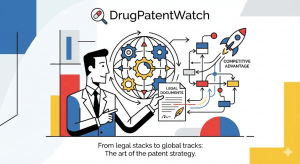
The pharmaceutical industry operates on a foundation unlike any other. At its core, it is a high-stakes, capital-intensive ecosystem built on a singular, foundational concept: the innovation-for-exclusivity bargain. This isn’t just a business model; it is a compact between society and the innovator. In this arrangement, a company that undertakes the immense financial and scientific risk of developing a new life-saving therapy is granted a limited, temporary monopoly. In exchange, it publicly discloses its invention, ensuring that the knowledge can be used to advance science and, eventually, to make the therapy more accessible and affordable once the monopoly expires. The global drug patent strategy is the master plan for navigating this complex bargain, a discipline that transforms legal rights into the lifeblood of a company’s financial health and its competitive position in the market.
This strategic endeavor extends far beyond the confines of a legal department. It requires a deep, cross-functional understanding that integrates intellectual property law with R&D, business development, market analysis, and corporate finance. For those who view patent data as a mere legal hurdle or an administrative checkbox, a wealth of untapped value remains hidden. The ability to decode patent filings, anticipate legal and market shifts, and proactively manage a drug’s entire lifecycle is what truly separates market leaders from those who merely react to change.
The Foundations of Pharmaceutical Patents: The Innovation-for-Exclusivity Bargain
The modern pharmaceutical industry is a monument to intellectual property. Patents, in this context, are not simply legal documents; they are the fundamental pillars that enable innovation, secure essential investment, and ensure commercial viability.1 Without the capacity to protect their discoveries and recoup the staggering costs of R&D, the financial model for drug development would be unsustainable. The scale of this investment is truly astronomical. The top 20 global pharmaceutical companies alone collectively spent $145 billion on R&D in 2022-23.2 For a single successful drug, the total ecosystem investment can be well over $5 billion.3 This figure accounts for the myriad of failed projects that precede a single triumph. It is this high-cost, high-risk reality that makes the temporary market exclusivity granted by a patent not a luxury, but an absolute necessity for the industry to remain financially viable and continue to push the boundaries of medical science.1
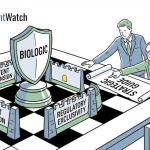
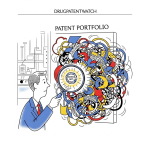
A comprehensive drug patent strategy is not built on a single, monolithic patent. Instead, it is a layered defense designed to protect an invention from every conceivable angle throughout its lifecycle. This approach creates a complex portfolio that can extend market protection far beyond the initial discovery of a core molecule.
Deconstructing the Patent Portfolio: The Layered Defense
The core of any pharmaceutical IP strategy is the base or product patent. This foundational patent covers the active pharmaceutical ingredient (API) itself, or the core protein sequence for a biologic.1 It is the most critical patent, but a savvy company understands that its value is limited without subsequent layers of protection.
As a drug progresses through development and clinical trials, the strategic focus shifts to securing secondary patents. These are the “layers of the onion” that provide a more robust and nuanced defense. Examples include:
Formulation Patents: These protect the unique combination of ingredients, delivery mechanisms, or packaging that optimizes a drug’s performance. A time-release capsule or a novel delivery system for targeted drug administration falls into this category.1
Methods of Use/New Indications: This type of patent safeguards a new therapeutic use for an existing drug. This practice encourages the repurposing of medicines, allowing companies to find new applications and create value from their existing research assets.1
Combination Patents: These patents protect new therapies that combine multiple active ingredients to achieve a synergistic effect, particularly valuable in treating complex diseases like cancer or HIV/AIDS.4
Beyond protecting the product itself, a global strategy must also consider process patents, which are focused on the method of producing a drug rather than the product itself.1 These are vital for protecting manufacturing efficiency, quality control, and reducing production costs.
Finally, some companies employ tertiary patents to extend market exclusivity by using a medical device paired with an active ingredient that may be off-patent.1 This systematic and holistic approach ensures that a company continuously identifies and protects innovations throughout a drug’s entire commercial lifecycle.1
The Innovation-for-Exclusivity Bargain: A Perpetual Tension
The very nature of the innovation-for-exclusivity bargain places it in a state of perpetual tension with broader societal demands for public access to affordable medicines.6 A patent’s capacity to grant a temporary monopoly allows the rights holder to charge “higher-than-competitive prices” 7—a necessary condition for them to recoup the immense R&D costs. However, this high pricing directly leads to public and governmental backlash. This dynamic manifests in various forms, from calls for government price negotiations, such as those initiated by the U.S. Inflation Reduction Act 8, to the controversial practice of compulsory licensing, where a government may authorize the use of a patented invention without the patent holder’s consent under a “national emergency” or “circumstances of extreme urgency”.9 A prime example of this was India’s 2012 issuance of a compulsory license for the cancer drug Sorafenib tosylate, which sparked intense debate and illustrated the legal and political dimensions of this tension.9
This intricate web of economic necessity and public pressure makes a global patent strategy far more than a simple legal exercise. It is a nuanced socio-economic and political balancing act. Companies must not only secure their legal rights but also manage their public perception and anticipate regulatory interventions that are a direct consequence of their pricing and patenting decisions.
Patent Type
What it Protects
Strategic Purpose
Base/Product Patent
The core active ingredient or protein sequence 1
Secures the fundamental monopoly on a new drug 4
Secondary Patent (Formulations)
Unique combinations of ingredients, carriers, or delivery mechanisms 1
Enhances drug performance, patient compliance, or stability 4
Secondary Patent (Methods of Use)
New therapeutic uses for an existing drug 1
Encourages repurposing and optimizes existing products 4
Process Patent
The method of manufacturing a product 1
Improves manufacturing efficiency and quality control 1
Tertiary Patent
A medical device paired with a drug 5
Prolongs market exclusivity after the core drug patent expires 1
Navigating the Global Patent Landscape: From PCT to a Multi-Polar World
In an industry where a single discovery can have global implications, a company’s patent strategy cannot be confined to one country. The pursuit of international protection, however, is an expensive and time-consuming undertaking. To manage this complexity, a streamlined pathway is essential.
The Gateway to Globalization: The Patent Cooperation Treaty (PCT)
The Patent Cooperation Treaty (PCT) is the primary mechanism that allows a company to seek patent protection for an invention in over 150 countries by filing a single “international” patent application.11 This treaty does not grant a global patent itself; rather, it serves as a powerful administrative tool that postpones the high costs of national-phase filings. The most significant benefit of the PCT is that it gives applicants up to 18 months longer than they would have if they had not used the PCT to decide on which foreign countries to enter, prepare necessary translations, appoint local patent agents, and pay national fees.11 This delay is invaluable, providing critical time to assess the commercial viability of a drug in various markets before committing vast resources to the national phase.
The PCT process also provides a “strong basis for patenting decisions”.11 Once the international application is filed, it is subjected to an international search and a non-binding written opinion from an International Searching Authority (ISA).11 This report lists prior art that could affect the patentability of the invention, giving the applicant a clear-eyed view of their chances of success before committing to the expensive national phase.11
The Rulebook of the Game: USPTO vs. EPO
While the PCT streamlines the administrative process, the fundamental legal differences between major jurisdictions still dictate strategy. A key distinction exists between the United States Patent and Trademark Office (USPTO) and the European Patent Office (EPO). These differences are more than bureaucratic; they impose different strategic imperatives on innovators.
For instance, the USPTO is “somewhat liberal” in its novelty standard, offering a one-year grace period for an inventor to apply for a patent after disclosing a novel invention.14 This means a researcher could present a finding at a conference and still file a valid patent application in the U.S. within 12 months. In contrast, the EPO operates on a strict “absolute novelty” standard, which rejects all patent applications for a publicly available invention, regardless of who disclosed it.14 For a company with global aspirations, this seemingly minor legal difference creates a de facto global standard. The most restrictive rule must apply to all R&D and publication policies, dictating a culture of strict secrecy until a patent application is filed to avoid inadvertently surrendering rights in a key international market.
Other critical differences include:
Disclosure: The USPTO requires an inventor to disclose the “best method” to practice the invention to prevent a patentee from withholding secrets.14 The EPO’s standard is more lenient, requiring only a method to use the invention.14
Claim Structure: The EPO typically requires a two-part claim structure that lists features found in prior art before specifying the new, inventive aspects.14 In the U.S., single-part claims are more common.14
Post-Grant Opposition: The EPO has a robust post-grant opposition system that allows any individual to file a challenge against a granted patent with evidence and valid arguments within nine months of its issuance.14 This adversarial process is managed by a panel of three examiners.15
Feature
USPTO
EPO
Novelty Standard
One-year grace period for inventor-caused disclosure 14
Strict “absolute novelty” 14
Disclosure Requirement
Must state the “best mode” to practice the invention 14
Must only provide a method to use the invention 14
Claim Structure
Typically single-part claims 14
Claims are often split into a two-part structure 14
Post-Grant Challenges
Reexamination and inter partes review (IPR) processes 16
Robust opposition system within nine months of grant 14
Jurisdictional Scope
A single patent covers all U.S. territories 14
A granted patent is a “bundle of national patents” for each member state 14
The Evolving Powerhouses: China and India
A truly global strategy must also account for the evolving intellectual property landscapes in key Asian markets. China, for example, has undergone a dramatic transformation, introducing a patent linkage system in 2020 that is comparable to the U.S. Hatch-Waxman Act.17 This system established a “Chinese Orange Book” platform for innovators to list their patents and created a framework for resolving patent disputes before generic drugs enter the market.17 While still in its early stages and facing some criticism that its mechanisms favor generic manufacturers 17, the system represents a significant step toward procedural protection for innovative drugs.
In contrast, India has historically charted a course that prioritizes public health and its domestic generic drug industry.19 The country has been a prominent example of using compulsory licensing to ensure its citizens have access to life-saving drugs at affordable prices.9 This anti-evergreening stance highlights the diverse and often conflicting legal philosophies that a global patent strategist must navigate.
Proactive Lifecycle Management: The Nuanced Reality of Evergreening and Extension Strategies
In the fiercely competitive pharmaceutical market, a 20-year patent term is a fixed resource, but the regulatory and clinical timeline that eats into it is not.1 A new drug, on average, enjoys only 7 to 12 years of market exclusivity before its foundational patents expire.20 This reality creates immense pressure on innovator companies to maximize revenue during this relatively brief window and to strategically extend their market exclusivity. This is the context in which the controversial practice of “evergreening” has become a central and often misunderstood component of lifecycle management.
The Dual Perspective on Evergreening
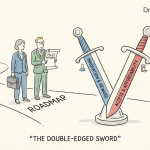
“Evergreening” refers to the alleged practice of filing for new patents on secondary features of a drug as earlier patents expire, thereby extending effective patent exclusivity past the original 20-year term.6 This can involve minor modifications to a drug, such as a change in dosage form (e.g., from a tablet to a liquid), a new production method, or a different dosage regimen.6 This practice has become a heated, controversial topic with conflicting opinions from various interest groups.6
For supporters, often from within the pharmaceutical industry, evergreening is viewed as an incentive for continuous, incremental innovation. It encourages companies to invest in improvements that can enhance a drug’s efficacy and safety, for instance, by reducing side effects or improving dosage management.6 From this perspective, it is a way to protect the massive R&D investment required to develop new products and to fund the next wave of innovation.6
Opponents, including consumer groups and healthcare advocates, contend that evergreening is an anti-competitive practice that stifles competition from more affordable generic products.6 By delaying generic market entry, it keeps drug prices artificially high, directly increasing healthcare costs and restricting patient access to essential medications.6
The legal battle between AstraZeneca and Ranbaxy over the blockbuster drug Nexium is a prime example of this debate in action.22 The case directly addressed evergreening and highlighted the fundamental tension between incentivizing pharmaceutical innovation and ensuring that life-saving medications are affordable and accessible to the public.22 The resolution of this and similar cases shapes the strategies used by both branded and generic manufacturers, influencing how they navigate patent law to either protect or contest drug patents.
Evergreening, when viewed through a purely economic lens, is a rational response to the short “effective patent life” of a drug and the immense pressure to recoup R&D costs.20 It is a symptom of a systemic issue—the fundamental disconnect between a fixed patent term and an unpredictable, lengthy development timeline. For the expert audience, this understanding provides a more sophisticated view. It implies that true reform would require addressing the underlying timelines, not just the practice itself, and recognizes that the practice is driven by the economic reality of the industry.
Other Lifecycle Extension Tactics
Beyond traditional evergreening, companies employ a variety of other strategies to extend their market exclusivity. “Product hopping,” or “product switching,” is a tactic where a company patents a minor variation on a product and then encourages prescriptions for the new version, often by discontinuing the original, to further delay the entry of a generic onto the market.21 Innovator companies can also file “citizen petitions” with the Food and Drug Administration (FDA) to delay action on a pending generic drug application, another tactic that has come under scrutiny for its potential to be misused.21
Another common tactic is the launch of an “authorized generic”.21 By law, the first generic company to market a drug receives a 180-day exclusivity period during which no other generic can be marketed.20 However, the brand company is not barred from launching its own “authorized generic,” which is chemically identical to the brand-name drug but marketed under a different name.21 This strategy allows the innovator to capture a significant portion of the generic market share during this highly lucrative duopoly period, a move that is both legally sound and highly effective.20
From Data to Decisions: The Art and Science of Patent-Driven Competitive Intelligence
In the modern pharmaceutical landscape, information is power, and patent filings are a goldmine of strategic intelligence.23 They represent one of the most valuable yet underutilized sources of data, offering an unparalleled window into competitor R&D pipelines, technological innovations, and potential market entries years before products reach the market.24 Patent applications are typically published 18 months after they are filed 24, providing an early warning system that can fundamentally transform a company’s strategic decision-making.
Strategic Applications and Use Cases
Systematic patent intelligence gathering offers multiple strategic advantages that go far beyond simple legal awareness.
An Early Warning System: By monitoring new patent filings in a therapeutic area, a company can detect emerging competitive products years before they enter clinical trials or receive regulatory approval.24 This intelligence allows for more accurate forecasting of market dynamics and provides an opportunity to redirect internal R&D investments to more promising or less crowded therapeutic areas.24
Risk Mitigation and Freedom-to-Operate (FTO) Analysis: Patent data is essential for assessing FTO constraints on a company’s own pipeline products, identifying potential infringement risks, and guiding R&D efforts to “design around” existing patents.24 A rigorous FTO analysis can provide a “green light” for commercialization or identify specific blocking patents that must be licensed or invalidated.26
Identifying Technology and Market Trends: Patent activity provides early signals of shifting research priorities.24 A systematic analysis can reveal shifts in target selection, emerging modalities (e.g., from small molecules to biologics), and changes in formulation and delivery technologies.24
Uncovering White Space Opportunities: A gap analysis of the patent landscape can identify therapeutic targets, delivery approaches, or combination opportunities with limited competitive activity.24 This provides a strategic roadmap for a company’s own R&D, helping them to focus on areas that offer the greatest potential for proprietary development and market leadership.
The true power of patent intelligence lies not in a single patent but in the identification of patterns and the ability to interpret them as strategic signals. A sudden spike in patent filings by a competitor, a new geographic market for which patents are being filed, or an increase in joint patent filings with an academic institution can all be indicators of a new business strategy or a potential alliance.23 This elevates patent analysis from a data-gathering exercise to a strategic, forward-looking discipline. It’s about asking, “What does this pattern mean for our business?” rather than just “What new patents were filed?” This is the core of turning raw data into a competitive advantage.
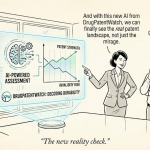
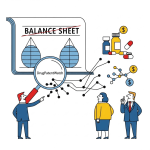
Of course, the sheer volume of global patent data is overwhelming. This is where advanced intelligence platforms become indispensable. A service like DrugPatentWatch provides a fully integrated, searchable database of drug patents, litigation, and regulatory information, covering over 130 countries.27 It allows for the proactive management of email alerts on patent expirations and provides insights into business intelligence, forecasting, and due diligence.27 By offering dynamic browsing, freeform searching, and access to dashboards on small molecules, biologics, and drugs in development, platforms like this enable companies to transform terabytes of technical information into a clear, actionable roadmap for market entry and portfolio management.27
Key Metric to Watch
Strategic Insight
Sudden Spike in Filings
Signals a new player entering a market or an existing player pivoting to a new domain 23
New Geographic Markets
Indicates where a competitor plans to expand 23
Focus on Emerging Technologies
Reveals where the next wave of competition will come from, such as in AI or advanced therapies 23
Collaboration Patterns
Joint patent filings can reveal new alliances or partnerships that may disrupt the industry 23
Citation Counts
High citation counts for a patent indicate influential technology that could disrupt the market 23
Patents in High-Stakes Financial Scenarios: M&A, Valuation, and the Patent Cliff
A drug patent is more than a legal right; it is a financial asset. In no other industry is this more evident than in pharmaceutical mergers and acquisitions (M&A) and the high-stakes financial event known as the patent cliff.
Confronting the Patent Cliff: A Catalyst for Change
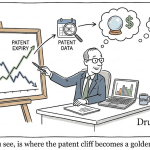
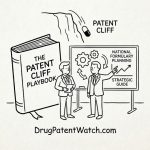
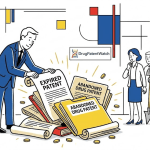
The patent cliff describes a sharp decline in revenue that a company experiences when the patent protection for a blockbuster drug expires.8 This is not a minor event; it is an economic phenomenon of “tectonic magnitude”.20 An estimated $200 billion to $300 billion in annual branded drug sales are at risk globally by 2030, with approximately 190 drugs, including 69 blockbusters, slated to lose market exclusivity.20 The financial ramifications are staggering, as a blockbuster drug can lose up to 80% of its revenue within the first year of facing generic or biosimilar competition.8
However, to view the patent cliff solely as a threat is to miss its deeper function within the system. It is, in fact, the primary mechanism that forces the industry to fulfill its side of the innovation-for-exclusivity bargain. The immense pressure of an impending patent cliff compels innovator companies to aggressively reinvest their earnings into their R&D pipelines, searching for the next breakthrough therapy to replace the revenue streams of today.20 It also triggers strategic responses like M&A, as companies acquire new assets and diversify their portfolios to offset losses.30 The patent cliff, therefore, is not a market failure but a vital feature of the system, ensuring that the profits generated during a period of exclusivity are a finite resource that must be reinvested to fuel the next wave of innovation.
Intellectual Property as the Core Asset in M&A
In the high-stakes world of pharmaceutical and biotech M&A, intellectual property is not merely an asset; it is the business itself.16 Unlike industries where value resides in factories or equipment, the vast majority of a pharma company’s valuation is tied to its intangible IP assets.16 A single patent on a molecule or a biological pathway can be worth hundreds of millions of dollars.25 Without strong, enforceable IP, there is often no product to sell and no reason for a deal to be made.25
This reality makes patent due diligence a foundational element of corporate strategy and a primary driver of deal value.16 The purpose of this rigorous investigation is threefold:
Risk Mitigation: To identify and quantify potential liabilities, such as infringement risks or weaknesses in the patent’s validity.16
Accurate Valuation: To assess the true value of the target’s IP by verifying the validity, enforceability, and scope of its patent portfolio.16
Strategic Alignment: To confirm that the patents can actually fulfill the buyer’s strategic purpose, such as providing market protection in relevant geographical territories.16
The due diligence process in life sciences is uniquely challenging due to the inherent complexity of the patent portfolios. A single drug may be protected by a complex web of hundreds of patents covering the molecule, its manufacturing process, its delivery system, and its use for specific diseases.25 A crucial part of this process is a thorough
freedom-to-operate (FTO) analysis.25 A company may hold strong patents on its product but still need licenses to use certain manufacturing processes or technologies owned by others. Failing to check FTO can lead to a costly and dangerous situation where a buyer acquires a drug they cannot legally sell.25 This process must also account for the additional layer of regulatory exclusivity, which can provide additional years of market protection beyond a patent’s expiration date.20
Litigation as a Strategic Tool: Navigating the Legal Battleground
For the uninitiated, patent litigation can appear to be a breakdown of the system. However, in the pharmaceutical industry, a lawsuit is often a calculated and predictable component of the business model. The legal framework itself is designed to trigger these disputes, making them a strategic tool for market control.
The Hatch-Waxman Framework: A Planned Confrontation
The U.S. Hatch-Waxman Act is the canonical example of this strategic legal framework. It incentivizes generic drug manufacturers to challenge branded drug patents by creating a “Paragraph IV certification” system.32 This certification essentially requires a generic company to state that a branded drug’s patent is either invalid or will not be infringed by their product.32 The act of filing this certification is treated as an “artificial” act of patent infringement, which is designed to trigger a lawsuit.32
For a brand, this planned confrontation comes with a significant reward: if the patent holder files a lawsuit within 45 days, the FDA is automatically prevented from approving the generic drug application for 30 months.32 This is a guaranteed period of continued market exclusivity, regardless of the ultimate outcome of the litigation. For a generic company, a successful challenge brings the reward of a 180-day exclusivity period, which is highly lucrative as it allows them to capture significant market share before other generic competitors can enter.20 The framework turns a legal dispute into a value-generating strategy for both sides.
The “Patent Dance” and the High Stakes
A similar, though even more complex, framework exists for biologics under the Biologics Price Competition and Innovation Act (BPCIA). This framework, often called the “patent dance,” is a structured process of information exchange between a biosimilar applicant and the brand-name biologic manufacturer, designed to resolve patent disputes before the biosimilar enters the market.32
These high-stakes legal battles are incredibly resource-intensive. The median time to trial for patent litigation in the U.S. is 24.5 months 33, and the average cost is a substantial $3 million.33 The majority of cases, 40%, are settled before reaching trial 33, as companies seek to avoid the costs and uncertainties of a full legal battle. A significant legal development was the Supreme Court’s
FTC v. Actavis decision, which has led to a dramatic decline in the use of “pay-for-delay” settlements where a brand-name company pays a generic competitor to keep their product off the market.34 However, settlements still occur, and companies continue to find ways to reach agreements, such as payments for “litigation costs”.34
The fact that the legal framework is designed to trigger litigation means a lawsuit is a strategic move, not a last resort. The legal team must be prepared to litigate and even use the threat of litigation as a key component of the global strategy. This shifts the perception of litigation from a defensive measure to a proactive, value-generating tool.
The rise of patent litigation is a testament to the increasing value of intellectual property. In 2023, the U.S. district courts saw approximately 3,700 patent litigation cases filed, with an increase of 12% over the previous year.33
Recent Litigation Case
Parties & Drugs
Core Dispute
Outcome & Significance
Bayer’s Xarelto Defense
Bayer vs. Generic Manufacturers (Xarelto)
Dosage patent infringement after the base patent expired 35
Continued legal battles across multiple countries highlight the ongoing strategic importance of secondary patents for market protection 35
Incyte v. Sun Pharma
Incyte vs. Sun Pharmaceutical (ruxolitinib)
A post-grant review challenge where Incyte claimed a patent was unpatentable 36
The Federal Circuit ruled Incyte lacked standing to appeal, highlighting a trend where companies must have “concrete plans” for a product to show “injury in fact,” creating a dilemma for drug developers 36
AstraZeneca v. Guowei
AstraZeneca vs. Guowei (dapagliflozin)
Patent linkage dispute in China over a drug 37
The Supreme People’s Court of China sided with the brand in a landmark decision, showing the patent linkage system is beginning to mature and offer procedural protection for innovators 37
Future-Proofing Your Strategy: Patently Pondering Biologics, Gene Therapy, and AI
The pharmaceutical industry is at a crossroads, where traditional small molecules are being supplanted by a new generation of transformative therapies. This shift requires a fundamental reassessment of patenting strategy, as the legal frameworks established for chemical compounds are not always suited for complex biological inventions.
The Biologics Revolution and a New Legal Standard
Biologics—large, complex molecules derived from living cells—are fundamentally different from small molecule drugs and are at the forefront of this revolution.38 The global biologics market is projected to soar past $612 billion by 2030, driven by groundbreaking therapies for cancer and autoimmune disorders.39 However, patenting these therapies presents unique challenges. The central legal and strategic concern has long revolved around the scope of a patent claim, specifically the use of broad, functionally-defined “genus” claims that attempt to cover an entire class of molecules by defining what they do rather than what they are.39
This legal ambiguity was addressed in a landmark 2023 Supreme Court ruling in Amgen Inc. v. Sanofi.39 The unanimous decision did not create new law but reinforced a principle that had been signaled by lower courts for years: “the more one claims, the more one must enable”.39 The Court’s ruling suggests that because the relationship between an antibody’s amino acid sequence and its function is considered profoundly “unpredictable,” an inventor cannot rely on a single, broad functional claim. They must instead provide a robust enabling disclosure with a large number of working examples and detailed protocols to support the full scope of their claims.39
This decision is a tectonic shift for both sides of the industry. For innovator companies, the era of securing a dominant market position with a single, broad genus claim is over.39 They must now draft more specific claims, focused on structural details like an antibody’s complementarity-determining regions (CDRs), and provide extensive disclosure to “future-proof” their patents against challenge.39 For
biosimilar developers, the ruling is a golden opportunity.39 The court has provided a powerful tool for invalidating the older, overly broad patents that have historically protected blockbuster biologics.39 Biosimilar companies can now systematically identify patents that define an invention by what it does rather than what it is, and then challenge them with the support of the Supreme Court’s guidance.39
Strategic Implications of the Amgen Ruling
For Innovators
Shift from broad, functional “genus” claims to narrow, structure-based claims 39
Requirement for extensive working examples and detailed protocols in the patent specification 39
Need for “claim layering” and diversification to provide fallback positions during examination or litigation 39
The AI Conundrum: Can an Algorithm be an Inventor?
As artificial intelligence (AI) becomes an indispensable part of drug discovery, it is introducing a new set of complex legal questions. The core legal principle, both in the U.S. and in other major jurisdictions, is that a patent inventor must be a “natural person”.40 This creates a conundrum: how do you attribute inventorship when a drug candidate is proposed by a sophisticated AI algorithm? Key questions arise:
Who is responsible for the “conception” of an AI-assisted invention?
How much human input is necessary to establish inventorship?
Does the act of training or fine-tuning an AI system qualify as a contribution? 40
The U.S. Patent and Trademark Office (USPTO) has clarified that an AI system cannot be an inventor on its own, but humans who are involved in activities like training the system, prompting it with specific queries, or making meaningful modifications to its outputs may qualify.40 For life science companies, this means that the most essential risk mitigation strategy is meticulous documentation of human contributions. Maintaining detailed records of the rationale behind prompts, the training logs of the AI system, and any human interventions or modifications to the AI’s outputs is crucial to defending the patent’s validity in future litigation.40
Digital Health and the Convergence of Technologies
The patent landscape for digital health technologies is another area of rapid evolution. These innovations combine traditional life sciences with software, AI, and medical devices to create a multi-layered product.41 The strategic challenge is to protect a product that is not just a drug but a comprehensive system. This requires a multi-layered IP strategy that spans utility patents, design patents, and software patents to cover everything from the core algorithm to the user interface and the physical device itself.41 A company’s success in this space depends on its ability to weave these different IP protections into a cohesive, holistic strategy that protects the full scope of its technology.
Key Takeaways
Patents are a Strategic Asset, Not a Legal Burden: A comprehensive global drug patent strategy is the master plan for the innovation-for-exclusivity bargain. It is not an administrative task but a proactive discipline that drives R&D prioritization, informs M&A and valuation, and dictates a company’s competitive position.
Embrace a Layered IP Strategy: The most successful companies build a deep, dense, and layered patent portfolio that protects every aspect of a drug, from the core molecule to its formulation and method of use. This layered defense is the most effective way to protect massive R&D investments and withstand legal challenges.
The Global Playing Field is No Longer US- and EU-Centric: With the rise of Asia as an intellectual property powerhouse and the development of new frameworks like China’s patent linkage system, a global strategy can no longer be a one-size-fits-all model. It must be a multi-polar approach that accounts for the unique legal and regulatory nuances of each key market.
Turn Patent Data into a Competitive Advantage: Patent filings are an early warning system and a source of unparalleled competitive intelligence. By systematically monitoring and analyzing patent activity, a company can anticipate market shifts, identify emerging threats, and uncover white space opportunities years before a product reaches the market. Tools like DrugPatentWatch are indispensable for this process.
Anticipate the Future, Don’t React to It: The legal landscape is rapidly evolving to address new technologies. The Amgen v. Sanofi ruling signals a new legal standard for biologics, while the rise of AI in drug discovery creates a new set of challenges around inventorship. A forward-looking strategy must not only follow the law but also anticipate its evolution based on the underlying technology and judicial philosophy.
Frequently Asked Questions
Q1: How can a small biotech company with limited resources compete with a Big Pharma’s patent portfolio?
A: A small biotech company cannot win a head-to-head portfolio battle against a Big Pharma giant. Instead, its strategy should be to use patent intelligence to identify “white space” opportunities, which are niche therapeutic areas or technologies with limited patent coverage. By focusing on a deep, narrow, and highly defensible portfolio within one of these underserved areas, a small company can build a valuable asset that is attractive for licensing or acquisition, thereby turning competition on its head.
Q2: What is the single most important metric for a business development team to monitor in patent data?
A: The most important metric is not a single number but a pattern of behavior: a sudden spike in patent filings by a competitor or a potential partner in a new therapeutic area or geography. This is the clearest signal of a competitor’s strategic pivot and a potential M&A or licensing target. A savvy business development professional will interpret this pattern as a sign of a new program or a shift in focus, providing an invaluable first-mover advantage.
Q3: How has the rise of Asia as a patenting powerhouse changed the global strategy playbook?
A: The rise of Asia, particularly China and India, has fundamentally changed the global strategy playbook. A plan can no longer be US- and EU-centric. The maturation of IP systems in these regions, with their unique legal frameworks, demands a multi-polar approach. Companies must now proactively track patent filings in these jurisdictions and adapt their strategies to a new landscape that includes features like China’s “Orange Book” and India’s historical stance against evergreening.
Q4: Is the use of AI in drug discovery creating more risk or opportunity from a patent perspective?
A: It is creating both. The opportunity is in accelerating discovery and unlocking new therapeutic pathways. The risk, however, comes from the legal gray area of inventorship. As long as a patent inventor must be a natural person, companies face the risk of a patent being invalidated if the human contribution to the AI-driven discovery is not considered significant enough. Therefore, meticulous documentation of human involvement is now a non-negotiable risk mitigation strategy.
Q5: Beyond patents, what is the single most misunderstood form of exclusivity in the drug development process?
A: Regulatory exclusivity, such as Orphan Drug Exclusivity or regulatory data protection, is often the most misunderstood form of exclusivity. Many companies and analysts focus solely on patent expiration dates, but regulatory exclusivity can provide additional years of market protection, significantly altering a drug’s commercial runway and a generic’s market entry timeline. A comprehensive strategy must account for both patent and regulatory exclusivity to accurately predict a drug’s lifespan on the market.
Find Your Next Blockbuster – Biotech & Pharmaceutical patents, sales, drug prices, litigation – DrugPatentWatch, accessed August 18, 2025, https://www.drugpatentwatch.com/about.php