Patent Cliffs Are Not Disruptions. They Are Schedules.
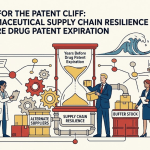
Every year, dozens of blockbuster drugs reach the end of their patent protection. In the twelve months surrounding that event, the pharmaceutical supply chain undergoes a structural reorganization of procurement, manufacturing, and commercial strategy. What separates sophisticated vendors from reactive ones is the recognition that loss of exclusivity (LOE) events are not surprises — they are filed, docketed, and published years in advance.
A drug losing exclusivity does not announce a problem. It announces a window. Manufacturers restructure. Generics accelerate. Procurement teams revisit supplier relationships. Regulatory dossiers get dusted off. Capacity gets reallocated. Pricing models get rebuilt. For vendors positioned upstream of these decisions, LOE dates are the most reliable forward indicator of commercial activity in the industry.
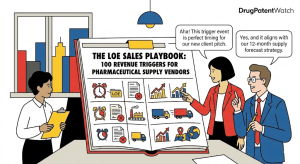
This playbook exists because most pharmaceutical supply vendors treat LOE as news rather than as intelligence. The companies that win LOE revenue cycles are those that enter the conversation 18 to 36 months before the drug goes off-patent — not after the press release.
The Commercial Timeline Model
The behavioral arc surrounding a patent expiration follows a predictable structure. Understanding where a drug sits within that arc determines what conversations are possible, what procurement decisions are pending, and which internal champions at the brand or generic manufacturer are most likely to be in acquisition mode.
The table below maps corporate decision-making by LOE stage across three stakeholder classes: brand manufacturers defending market position, generic manufacturers preparing for entry, and the supplier ecosystem that serves both.
LOE Stage
Brand Behavior
Generic Behavior
Supplier Opportunity
5–3 Years Pre-LOE
Lifecycle defense planning begins. R&D funds shifted toward reformulation, line extensions, and new indications. Legal team activates patent portfolio review. Key account managers receive retention briefings.
Paragraph IV filers begin patent challenges. ANDA submissions escalate. API sourcing negotiations initiated with low-cost manufacturers.
CDMO capacity pre-booking discussions. Reformulation feasibility studies. API supply agreements for new indications. Lifecycle extension packaging design.
3–1 Years Pre-LOE
Authorized generic strategy decided. Patent litigation intensifies. Manufacturing contracts renegotiated or allowed to lapse. Pricing adjustments signal defensive repositioning.
Tech transfer contracts. Process validation support. Commercial-scale API supply agreements. Regulatory filing support for both brand and generic clients.
12 Months Pre-LOE
Sales force realignment. Price increases on remaining brand volume. Authorized generic launch preparations finalized. Some manufacturing shifted to contract.
Final manufacturing readiness. Launch inventory build. Pricing strategy locked. Distribution agreements signed.
Surge in commercial API orders. Packaging materials procurement spike. Equipment qualification and validation. Stability testing acceleration.
0–12 Months Post-LOE
Rapid market share erosion. Price defense on specialty segments. AG competes at discount. Layoffs and field force restructuring common.
Market entry, aggressive price competition. Shelf capture. Second and third entrants arrive if market supports volume.
Multi-customer supply relationships. Price compression on API. Volume commitments essential for margin. Equipment utilization maximized.
12+ Months Post-LOE
Asset review. Divestitures of mature brands. R&D reallocation. Some brands withdrawn or sold to specialty players.
Market consolidation. Lowest-cost manufacturers survive. Branded generics emerge in some markets.
Ongoing generic supply contracts. Biosimilar pipeline development begins. Equipment upgrade cycles. Reformulation projects for next-generation products.
LOE as a Behavioral Trigger
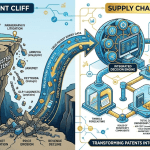
The central insight of this playbook is that LOE dates are behavioral triggers, not just calendar events. Each stage in the lifecycle creates a distinct set of organizational pressures that manifest as specific procurement decisions, outsourcing conversations, regulatory submissions, and capital allocations.
A brand manufacturer facing LOE in 24 months is not managing a product. It is managing a clock. Every strategic decision — reformulation, authorized generic, co-promotion, divestiture — creates a downstream requirement in the supply chain. A generic manufacturer with an approved ANDA sitting behind a settlement agreement knows the exact date its exclusivity window opens. That company is not speculating about capacity. It is booking it.
The vendors who understand these behavioral sequences can approach customers at the moment of decision rather than the moment of publication. That is the difference between a vendor and a strategic partner.
The question is never whether LOE will generate supply-chain activity. It always does. The question is whether you are positioned to capture it before your competitors learn the drug is going off-patent.
Section Two
The Five Commercial Phases of LOE
Loss of exclusivity does not happen at a single moment. It is the endpoint of a multi-year sequence of corporate decisions, each of which generates procurement activity. The five phases below describe that sequence with enough operational specificity for vendor sales and business development teams to map their outreach accordingly.
Phase
1
Lifecycle Defense Engineering
5–3 Years Pre-LOE
Corporate Decision-Making Dynamics
At this stage, the brand manufacturer’s commercial leadership has accepted that the primary compound’s exclusivity is finite. The strategic conversation shifts from “how do we grow this drug” to “how do we protect margin and transition revenue.” This typically triggers three parallel workstreams: lifecycle extension (new formulations, dosing regimens, delivery mechanisms), authorized generic strategy (deciding whether to self-compete or license), and portfolio rationalization (identifying which assets to divest or let expire).
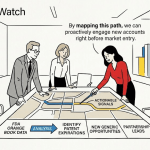
Medical affairs teams are building new indication data packages. Regulatory affairs are preparing supplemental NDA filings. Intellectual property teams are conducting freedom-to-operate analyses on new formulations and identifying secondary patents with defensible term extensions. This is a period of high internal activity with limited external visibility — which is precisely why vendors who track patent filings and litigation activity gain competitive intelligence before the market moves.
Procurement Signals
Watch for requests for feasibility assessments on alternative dosing forms — extended-release, transdermal, or subcutaneous formulations often indicate lifecycle extension work. New indication studies require additional API batches. Stability studies for new formulations drive excipient procurement. If a company previously manufactured entirely in-house, conversations about CDMO partnerships often begin at this stage as internal resources are reallocated toward the new program.
Supplier Entry Points
Reformulation feasibility and development contracts
New indication clinical supply manufacturing
Extended-release or modified-release technology partnerships
Secondary patent strategy support (IP consultants)
Regulatory strategy for supplemental NDA filings
Outreach Framing
“We track the LOE timelines and patent litigation activity for your major assets. Given that [Drug X] faces first ANDA challenge resolution in 2026, we wanted to open a conversation about your lifecycle extension strategy and whether our [formulation / API / regulatory] capabilities can support the supplemental filing program.”
Phase
2
Generic Positioning & Paragraph IV Activity
3–2 Years Pre-LOE
Corporate Decision-Making Dynamics
On the generic side, this phase represents the highest-activity litigation and regulatory period. Paragraph IV certifications — where generic filers challenge the validity or applicability of listed patents — typically trigger a 30-month stay on FDA approval. The outcome of that stay determines the launch date, which determines when generic manufacturers need their manufacturing infrastructure ready.
Settlement agreements, which resolve Paragraph IV litigation by granting generic manufacturers a specific launch date in exchange for withdrawing their patent challenge, are a critical intelligence signal. A settlement means a confirmed LOE date for at least one generic entrant — and often means other generics receive the same authorized entry date. This is a procurement trigger of the highest reliability.
Procurement Signals
Generic manufacturers with settled or approved ANDAs begin active API sourcing. Volume commitments are sought from multiple suppliers to ensure continuity in a competitive launch environment. CDMOs receive inquiries for process validation slots and commercial-scale manufacturing timelines. Regulatory consultants are engaged for launch readiness audits.
Supplier Entry Points
Commercial API supply agreements for confirmed generics
Process development and tech transfer for generic entrants
Paragraph IV litigation support (IP analysis, prior art research)
CDMO capacity reservation for multiple potential first-filers
Launch readiness regulatory consulting for ANDA holders
Outreach Framing
“We monitor Paragraph IV activity and settlement patterns for [Therapeutic Area / Drug]. We have identified three ANDAs in review for [Drug X] and know that at least one settlement is publicly disclosed. We help companies in this position secure API supply and manufacturing capacity before the launch window opens. Are you in that planning cycle?”
Phase
3
Operational Ramp & Capacity Allocation
12–18 Months Pre-LOE
Corporate Decision-Making Dynamics
This is the most operationally intense period in the LOE cycle. Generic manufacturers are finalizing launch inventories. Brand manufacturers are executing on whatever lifecycle strategy they chose — whether that means launching an authorized generic, transferring manufacturing to a lower-cost contractor, or preparing a modified-release formulation for the market. Capacity is the critical constraint for everyone.
CDMOs and API manufacturers face competing demands from multiple clients simultaneously. The companies that secured capacity commitments 18 to 24 months earlier have a significant advantage. Those approaching capacity conversations at this stage find equipment booked and process slots occupied. For supply vendors, this phase represents maximum leverage precisely because demand is highest.
Procurement Signals
Purchase orders for commercial-scale API batches increase. Equipment qualification and process validation requests spike. Packaging materials procurement accelerates. Stability study programs for the launch formulations are in final stages. Regulatory submissions for any manufacturing site changes must be filed with sufficient lead time — this creates a defined deadline that procurement teams cannot move.
Supplier Entry Points
Commercial-scale API manufacture and batch release
Process validation support and equipment qualification
Packaging component supply for launch inventory
Serialization and track-and-trace implementation
Manufacturing site change regulatory filings (Prior Approval Supplements)
Outreach Framing
“With [Drug X] LOE projected in Q3 2025, your launch readiness window is closing. We work with companies who need to confirm capacity, complete process validation, and have API on shelf before the exclusivity window opens. Our current capacity availability in [timeframe] is limited. Are you at the point where you want to discuss a formal commitment?”
Phase
4
Launch Shock & Price Compression
0–12 Months Post-LOE
Corporate Decision-Making Dynamics
The first 12 months post-LOE are defined by price erosion and market share redistribution. Generic entry — particularly when multiple filers receive simultaneous approvals — triggers rapid price compression. For small-molecule drugs with multiple generic entrants, API prices fall 40 to 70 percent within the first year. Brand volume collapses. The brand manufacturer’s only profitable segment becomes specialty channels, hospital formularies where switching costs are high, or markets where generic penetration is slower.
This phase also generates a secondary set of supplier opportunities that are underappreciated: the brand manufacturer is rationalizing its supply chain. Manufacturing contracts are terminated, transferred, or renegotiated at substantially lower prices. Equipment that supported brand-volume manufacturing becomes available. Some assets are divested outright.
Supplier Entry Points
Asset acquisition of brand manufacturing infrastructure
Specialty CDMO services for residual brand volume
Rapid-response API supply for generic manufacturers managing demand surges
Commercial strategy consulting on brand defense and authorized generic positioning
Outreach Framing
“Now that [Drug X] is off-patent, we know that your supply chain is being rationalized. We specialize in supporting brands that are transitioning to lower-volume specialty manufacturing and want to preserve margin without maintaining full in-house infrastructure. That conversation is usually best had before the next contract renewal cycle.”
Phase
5
Portfolio Restructuring & Asset Monetization
12+ Months Post-LOE
Corporate Decision-Making Dynamics
One year post-LOE, the market has largely reached its new equilibrium. The brand has lost the majority of its volume to generics. The surviving generic manufacturers are those with the lowest cost of goods and most reliable supply chains. The brand manufacturer’s leadership is conducting a portfolio review: which mature assets can be divested, which can be licensed to specialty players, and which should be sunset entirely.
This phase is also when the next wave of LOE planning begins. Every pharmaceutical company with a marketed portfolio is looking at its patent expiry schedule and making decisions about the next three to five years. The portfolio review is not just about what is expiring — it is about what needs to be replaced in the revenue stream.
Supplier Entry Points
Divestiture advisory for mature brand assets
In-licensing support and due diligence for replacement assets
Biosimilar pipeline development as brands look to expand in biologics
Next-generation formulation development for pipeline compounds
Long-term API supply contracts with multi-year price structures
Outreach Framing
“As you model your revenue gap from [Drug X] going off-patent, we are seeing companies in similar positions move aggressively into biosimilars and next-generation small molecules. Our platform lets you map the LOE exposure across your full portfolio and identify where your supply chain needs to be repositioned over the next five years.”
Section Three
The 100 Revenue Triggers
The triggers below translate LOE phase dynamics into specific, actionable commercial opportunities for each vendor category. Each trigger identifies a precise market change, its causation in the LOE cycle, and the corresponding sales action. Use these as frameworks for account scoring, outreach sequencing, and pipeline prioritization.
CDMOs & API Manufacturers
# Trigger
What Changes
LOE Stage
Sales Action
T-01Reformulation Feasibility Request
Brand initiates study for modified-release or new delivery form of primary compound.
5–3 Yrs Pre-LOE
Approach lifecycle management teams at brand with capability decks for ER/DR/transdermal technology. Position as development partner, not CMO.
T-02New Indication Clinical Supply
Brand sponsor begins Phase II/III study for secondary indication to support sNDA.
5–3 Yrs Pre-LOE
Target clinical supply managers. Highlight small-batch GMP capability, rapid turnaround, and regulatory documentation support for sNDA dossier.
T-03Generic ANDA Filing Surge
Multiple ANDAs submitted for high-value compound; API suppliers face sourcing inquiries.
3–2 Yrs Pre-LOE
Map all ANDA filers for target drugs. Contact API procurement leads with supply security messaging before competition for capacity intensifies.
T-04Paragraph IV Settlement Signal
Brand and generic reach settlement; launch date now confirmed, creating hard manufacturing deadline.
3–2 Yrs Pre-LOE
Settlement dates are public. Contact generic ANDA holder immediately with capacity availability. Time is the differentiator at this stage.
T-05Tech Transfer Initiation
Generic initiates technology transfer from development-scale to commercial manufacturing site.
2–18 Mo Pre-LOE
Tech transfer engagements are multi-year revenue relationships. Pitch process characterization, analytical method transfer, and validation support as a full-service package.
T-06Commercial-Scale API Commitment
Generic manufacturer locks in API supply for launch inventory build.
18–12 Mo Pre-LOE
Multi-year supply agreement with volume commitments. Price stability messaging resonates because API costs are the largest COGS driver for generic launches.
T-07Process Validation Campaign
Manufacturing site completes process performance qualification (PPQ) for FDA compliance.
12–6 Mo Pre-LOE
PPQ campaigns require analytical support, validation documentation, and often third-party oversight. Full-service offering preferred over component contracts.
T-08Launch Inventory Build
Generic manufacturer schedules commercial batch production for launch stock.
6–0 Mo Pre-LOE
Secure batch slots with minimum-order commitments. Offer storage or logistics integration to reduce client’s inventory risk.
T-09Authorized Generic Manufacturing Transfer
Brand outsources AG production to contract manufacturer at lower cost structure.
12 Mo Pre/Post-LOE
AG manufacturing is high-volume, lower-margin, and typically multi-year. Pitch reliability and regulatory track record over price.
T-10Post-LOE API Price Renegotiation
Price compression forces all parties to renegotiate supply terms.
0–12 Mo Post-LOE
Proactively approach clients with revised pricing structures before they go to market. Volume lock-ins protect margin for both parties.
Use patent expiry data to identify biologics in the 5-year window. Approach biosimilar developers with cell line development, upstream process, and analytical characterization services.
T-14Interchangeability Designation Push
Biosimilar developer pursues interchangeability to enable pharmacy-level substitution.
3–2 Yrs Pre-LOE
Interchangeability requires switching studies and additional clinical data. CMC support for these studies is a distinct revenue opportunity from core biosimilar development.
Litigation delay does not stop manufacturing readiness work. Approach biosimilar sponsors with development continuation framing — “be ready the moment the court rules.”
T-16Biosimilar Launch Inventory Build
Biosimilar developer commits to commercial batch production ahead of approval.
12–6 Mo Pre-Approval
Stainless-steel or single-use manufacturing capacity booking. Fill/finish partnerships critical at this stage.
T-17Drug Substance / Drug Product Split Sourcing
Biosimilar sponsor separates DS and DP manufacturing across vendors.
2–18 Mo Pre-Approval
Pitch integrated DS/DP capabilities or specialized fill/finish partnership depending on your positioning.
Originator reduces internal manufacturing as biosimilar erodes share.
Post-LOE
Approach originator with contract manufacturing for residual reference product volume — a niche but profitable segment.
T-19Second-Generation Biologic Development
Originator invests in next-generation biologic to defend franchise post-LOE.
3+ Yrs Pre-LOE
Next-generation biologics require full development CDO services. Position early in R&D partnership conversations.
T-20Analytical Method Validation for Biosimilarity
FDA requires extensive analytical comparability data for biosimilar approval.
2–3 Yrs Pre-Approval
Analytical CRO services are high-value and early-cycle. Approach with specific biosimilarity package offerings.
Excipient & Formulation Vendors
# Trigger
What Changes
LOE Stage
Sales Action
T-21Lifecycle Extension Formulation Development
Brand initiates R&D on new formulation to support sNDA and extend exclusivity.
5–3 Yrs Pre-LOE
Identify lifecycle extension activity through patent filings for new formulations. Approach with excipient technology for ER/DR/dispersible platforms.
T-22Generic Formulation Optimization
Generic developer works to match reference product performance while reducing COGS.
3–2 Yrs Pre-LOE
Generic formulators are cost-sensitive but quality-constrained. Position excipients with dual messaging: bioequivalence reliability and cost efficiency.
T-23Authorized Generic Formulation Parity
Brand AG must match RLD exactly; excipient sourcing must be demonstrably equivalent.
12–18 Mo Pre-LOE
Approach brand supply chain teams with excipient lot traceability and quality documentation support for AG regulatory submissions.
T-24Fixed-Dose Combination Formulation
Brand develops FDC to reset patent clock and create prescription dependency.
5–4 Yrs Pre-LOE
FDC formulation is technically demanding. Pitch excipient compatibility studies, co-processed excipients, and combined dissolution profiling.
T-25Pediatric Formulation Extension
Brand pursues pediatric indication to earn 6-month exclusivity extension under PREA or BPCA.
4–3 Yrs Pre-LOE
Pediatric formulations require specialized excipients. Approach regulatory-facing formulation teams with pediatric-appropriate ingredient portfolios.
T-26Solubility Enhancement for New Salt or Polymorph
Brand files composition patents on new salt, polymorph, or cocrystal of primary compound.
4–2 Yrs Pre-LOE
Solubility enhancement excipients (cyclodextrins, HPMC-AS, lipid systems) are technology-specific. Target formulation scientists at brand and specialty pharma.
T-27Generic Dissolution Profile Matching
ANDA filer must demonstrate BE with reference product; dissolution is primary barrier.
2–18 Mo Pre-LOE
Offer dissolution optimization studies as a fee-for-service engagement. Builds relationship ahead of commercial supply contract.
T-28Post-LOE COGS Reduction Drive
Generic manufacturer rationalizes formulation to reduce ingredient costs after launch.
12+ Mo Post-LOE
Reformulation for cost reduction is ongoing post-launch. Position lower-cost excipient alternatives with equivalence documentation.
Packaging & Device Companies
# Trigger
What Changes
LOE Stage
Sales Action
T-29Delivery Device Lifecycle Extension Patent
Brand files device patents to extend protection beyond compound exclusivity.
5–3 Yrs Pre-LOE
Device patents are a primary lifecycle defense strategy. Approach brand packaging and device teams as they evaluate next-generation inhaler, auto-injector, or pen designs.
T-30Combination Product Regulatory Pathway
Brand pursues 505(b)(2) for drug/device combination to reset exclusivity.
4–3 Yrs Pre-LOE
Combination products require device design, human factors testing, and regulatory strategy. Offer as integrated package.
T-31Serialization and Track-and-Trace for Generic Launch
DSCSA compliance required for all commercial prescription drug packaging.
12–6 Mo Pre-LOE
Generic launch is a forced serialization implementation event. Approach ANDA holders without serialization capability with turnkey solutions.
T-32Child-Resistant Packaging for New OTC Switch
Brand pursues OTC switch as Rx exclusivity ends; packaging must meet PPPA requirements.
3–2 Yrs Pre-LOE
OTC packaging requirements differ fundamentally from Rx. Position child-resistant and senior-friendly packaging solutions for switch projects.
T-33Cold Chain Packaging for Biologic LOE
Biosimilar market entry requires validated cold-chain packaging to match reference product standards.
18–12 Mo Pre-Approval
Cold-chain validation is time-consuming and regulatory-sensitive. Engage biosimilar developers early with validated shipping solutions.
T-34Unit-Dose Packaging for Hospital Channel Defense
Brand retains hospital segment by converting to unit-dose format that generics do not immediately match.
12–18 Mo Pre-LOE
Hospital channel retention strategies frequently involve packaging differentiation. Approach brand packaging teams with unit-dose and blister configurations.
T-35Generic Launch Packaging Scale-Up
First generic requires rapid scale-up of packaging operations to meet launch inventory requirements.
6–0 Mo Pre-LOE
Scale-up contracts for launch inventories are high-volume, time-sensitive. Position as launch-experienced packaging partner.
Brand conducts formal review of patent portfolio strength and extension opportunities.
5–4 Yrs Pre-LOE
Offer patent portfolio gap analysis as a scoped engagement. Entry point for long-term IP strategy relationship.
T-38Orange Book Listing Strategy
Brand evaluates which patents to list in FDA Orange Book to maximize Para IV litigation exposure.
4–3 Yrs Pre-LOE
Orange Book strategy is high-stakes. Engage regulatory counsel teams at brand with listing analysis services.
T-39Paragraph IV Defense Support
Brand receives Para IV certification; must respond within 45 days to trigger 30-month stay.
On Filing
Para IV response is time-sensitive and consequential. Regulatory and IP consultants with pharma litigation experience are immediately sought at this moment.
T-40Pediatric Exclusivity Application
Brand applies for 6-month exclusivity extension through pediatric study completion.
4–3 Yrs Pre-LOE
Pediatric exclusivity is a defined regulatory pathway. Offer pediatric study design and regulatory submission support.
T-41Patent Term Extension Application
Brand applies for PTE to recover patent time lost during FDA review.
At Product Approval
PTE applications have narrow eligibility windows. Monitor new approvals and offer PTE strategy review as a rapid-response service.
T-42sNDA Regulatory Strategy for New Formulation
Brand prepares regulatory package for modified-release or new delivery form to support 3-year exclusivity.
4–2 Yrs Pre-LOE
505(b)(2) strategy for new formulations is complex and high-value. Engage brand regulatory teams with a defined 505(b)(2) pathway analysis service.
T-43ANDA Technical Complete Response
Generic receives CRL from FDA; must remediate deficiencies to achieve approval.
2–12 Mo Pre-LOE
CRL remediation engagements are urgent and typically unbid. Position as rapid-response regulatory consulting resource for generic clients.
T-44Manufacturing Site Change PAS
Brand or generic transfers manufacturing; FDA Prior Approval Supplement required.
18–6 Mo Pre-LOE
Manufacturing transfers are regulatory-intensive and time-constrained by LOE timelines. Offer PAS preparation and submission management.
T-45REMS Program Transition
REMS programs must be transferred or modified when generics enter; creates regulatory complexity.
12–6 Mo Pre-LOE
REMS transitions are among the most complex regulatory events in generic entry. Approach ANDA holders for REMS implementation support.
T-46Post-Market Surveillance Restructuring
Brand reduces pharmacovigilance infrastructure as branded sales decline.
Post-LOE
PV infrastructure rationalization creates outsourcing opportunities for safety surveillance of residual branded volume.
Commercial Strategy Firms
# Trigger
What Changes
LOE Stage
Sales Action
T-47LOE Revenue Impact Modeling
Brand commercial team quantifies expected revenue loss from generic entry.
4–3 Yrs Pre-LOE
Revenue impact modeling is an entry point for broader commercial strategy engagement. Offer as a scoped LOE readiness assessment.
T-48Authorized Generic Launch Strategy
Brand decides whether to launch own AG, partner with generic company, or license.
3–2 Yrs Pre-LOE
AG strategy decisions involve pricing, distribution, and channel conflict management. Offer AG strategy assessment with competitive intelligence support.
T-49Brand Segmentation and Retention Analysis
Brand identifies which payer and prescriber segments can be retained post-LOE.
2–18 Mo Pre-LOE
Retention analysis leverages claims data and prescriber behavior modeling. Position with payer strategy and managed care expertise.
T-50Generic Pricing Strategy Development
Generic entrant models pricing to optimize market share capture vs. margin.
2–12 Mo Pre-LOE
Generic launch pricing is counterintuitive — too low destroys margin, too high cedes share. Offer pricing strategy with real-market data support.
T-51Portfolio Divestiture Valuation
Brand evaluates sale of mature asset to specialty pharma company.
Post-LOE
Divestiture advisory for pharmaceutical assets requires understanding of IP, manufacturing, and remaining commercial potential. Offer LOE-adjusted valuation models.
T-52In-Licensing Pipeline Gap Fill
Brand models revenue gap from LOE and begins in-licensing search to replace revenue.
3+ Yrs Pre-LOE
In-licensing strategy engagements are long-cycle but high-value. Position early with pipeline landscape analysis.
T-53Biosimilar Commercial Launch Planning
Biosimilar developer prepares market access and commercial strategy for launch.
18–12 Mo Pre-Approval
Biosimilar commercial strategy differs fundamentally from small-molecule generics. Offer specialty-channel market access and payer strategy.
T-54Field Force Restructuring Consulting
Brand reduces sales force post-LOE; reallocation requires commercial restructuring.
0–12 Mo Post-LOE
Field force restructuring creates immediate consulting demand. Approach commercial operations teams at brands with confirmed LOE-driven headcount changes.
Equipment & Automation Providers
# Trigger
What Changes
LOE Stage
Sales Action
T-55High-Speed Tablet Press for Generic Launch
Generic manufacturer scales from development to commercial solid-dose production.
18–12 Mo Pre-LOE
Capital equipment decisions are made 12–18 months before launch. Approach with ROI models based on projected launch volume and market share.
T-56Continuous Manufacturing Conversion
Generic or brand converts batch manufacturing to continuous process for cost reduction.
3–2 Yrs Pre-LOE
Continuous manufacturing for LOE products is an emerging trend. Position FDA process analytical technology (PAT) experience and regulatory filing support.
T-57Bioreactor Capacity Expansion for Biosimilar
Biosimilar developer scales upstream manufacturing for commercial launch.
2–18 Mo Pre-Approval
Single-use bioreactor systems are preferred for biosimilar scale-up. Offer rapid deployment timelines as a competitive differentiator.
T-58Filling Line Upgrade for Injectable Generic
Generic manufacturer prepares parenteral filling capacity for injectable LOE product.
18–12 Mo Pre-LOE
Injectable filling lines require substantial lead times for installation and qualification. Engage procurement teams well in advance of LOE date.
T-59Serialization System Implementation
Generic launcher must install DSCSA-compliant track-and-trace before commercial shipment.
12–6 Mo Pre-LOE
Serialization is a mandatory implementation event at launch. Approach all ANDA holders without installed serialization systems.
T-60Plant Capacity Audit Post-LOE
Brand or generic reassesses equipment utilization after market share redistribution.
12+ Mo Post-LOE
Post-LOE equipment rationalization creates refurbishment and optimization opportunities. Offer utilization analysis as entry-point engagement.
T-61Quality System Automation Upgrade
Generic manufacturer implements automated QMS to support multiple LOE product launches.
2+ Yrs Pre-LOE
Quality system automation is a platform investment that pays off across multiple product launches. Position as multi-LOE ROI.
Supply chain risk assessment services. Position with audit capability and redundancy planning methodology.
T-93Post-Merger LOE Portfolio Integration
Acquiring company inherits LOE-exposed portfolio through M&A and must rationalize supply chain.
Ongoing
Post-merger supply chain integration consulting. Monitor pharmaceutical M&A and approach acquirers with LOE rationalization frameworks.
T-94Patient Advocacy Engagement for Biosimilar Adoption
Biosimilar developer works with patient advocacy organizations to build confidence in switching.
18–12 Mo Pre-Approval
Patient advocacy consulting and medical communication. Approach biosimilar commercial teams with patient education and advocacy programs.
T-95Regulatory Intelligence Subscription for BD Team
Business development team monitors approval activity and LOE dates to identify acquisition targets.
Continuous
Regulatory intelligence subscription products. Approach BD teams at mid-size and large pharma companies actively building portfolios.
T-96LOE-Triggered Debt Covenant Review
Highly leveraged pharma company faces LOE-driven revenue decline that may trigger debt covenants.
2–3 Yrs Pre-LOE
Financial restructuring advisory. Approach portfolio companies of private equity firms with LOE-concentrated assets.
T-97Manufacturing Network Optimization Post-LOE
Brand or generic rationalizes global manufacturing network after market share stabilizes.
12+ Mo Post-LOE
Supply chain network optimization consulting. Approach operations leadership at companies with dispersed manufacturing footprints.
T-98API Secondary Sourcing Qualification
Regulatory agencies and large buyers require secondary API source qualification for supply resilience.
Ongoing
Secondary source qualification is a defined regulatory process. Approach buyers with pre-qualification packages and accelerated approval timelines.
T-99Patent Watch Service for Licensing Negotiation
Company uses real-time patent intelligence to negotiate more favorable licensing terms.
Continuous
Patent intelligence subscription with licensing negotiation support. Approach in-licensing and out-licensing teams at pharma BD departments.
T-100Annual LOE Horizon Report for Executive Planning
Executive team needs annual LOE exposure report covering next 5 years for board-level strategic planning.
Annual
Annual LOE horizon analysis is a recurring consulting or data product engagement. Position as strategic planning infrastructure rather than an ad hoc service.
Section Four
Case Studies in LOE Commercial Dynamics
The three case studies below are operational frameworks — illustrations of how the LOE commercial cycle generates specific, identifiable supplier opportunities at each stage. Strategic and commercial details described are drawn from publicly available regulatory filings, litigation records, and market data.
Humira
adalimumab · AbbVie
$21B+
Peak Annual Sales
130+
Orange Book Patents
7
US Biosimilar Entrants (2023)
Timeline to LOE
AbbVie’s adalimumab (Humira) is the highest-revenue pharmaceutical product in history. The U.S. patent expiration timeline was among the most aggressively litigated in pharmaceutical history. AbbVie filed over 130 patents related to adalimumab in the FDA Orange Book, creating a patent thicket that delayed U.S. biosimilar entry by nearly six years relative to European markets. While European biosimilars launched in 2018, U.S. entry was delayed until January 2023 under a negotiated settlement framework that granted biosimilar manufacturers a specific launch date in exchange for withdrawing patent challenges.
For suppliers monitoring this timeline, the settlement disclosures — which began appearing in SEC filings from multiple parties starting in 2022 — provided confirmed visibility into the January 2023 U.S. launch date. Companies that began capacity and supply conversations in 2021 or early 2022 had an 18-month lead over those who waited for actual launch.
Competitive Entry Pattern
Seven biosimilar manufacturers launched in the U.S. in 2023, including interchangeable designations for several products. The market structure that emerged was more complex than typical small-molecule LOE: a tiered market developed with high-concentration and citrate-free formulations commanding premiums, interchangeable designations enabling pharmacy-level substitution, and payer-negotiated preferred formulary positioning creating non-price differentiation.
Biosimilar manufacturers who invested in formulation differentiation — citrate-free versions, high-concentration presentations, autoinjector device improvements — earned significantly better commercial outcomes than those who replicated the reference product exactly. The supply-side implication: CDMO and formulation partners who helped clients develop differentiated presentations captured a larger portion of available margin.
Manufacturing Implications
Adalimumab is manufactured via mammalian cell culture in Chinese hamster ovary (CHO) cells, requiring large-scale bioreactor infrastructure with complex purification processes. Commercial biosimilar manufacturing requires bioreactors in the 2,000 to 10,000-liter range, fill/finish capacity for prefilled syringes and autoinjectors, and device assembly capabilities. Several biosimilar manufacturers used CDMOs for fill/finish and device assembly even when performing upstream fermentation internally.
Cold-chain requirements for adalimumab created packaging and logistics supply requirements that drove specific procurement activity. Companies with established cold-chain validation protocols were better positioned to serve multiple biosimilar entrants simultaneously.
Supplier Revenue Implications
The Humira biosimilar market created an estimated $2 to 3 billion annual opportunity in contract manufacturing, biologic substance supply, device manufacturing, and regulatory services. The concentration of that revenue among suppliers who had entered conversations early — 2020 to 2022 — was substantial. Suppliers approaching the market after January 2023 faced established relationships and committed supply agreements that were difficult to displace.
The Humira case demonstrates that biologic LOE cycles reward early positioning more decisively than small-molecule LOE events, because biosimilar development timelines are longer and switching costs between manufacturing partners are higher.
Revlimid
lenalidomide · Bristol Myers Squibb
$12B+
Peak Annual Sales
2022
Limited Generic Entry
2026
Full Competition
Timeline to LOE
Bristol Myers Squibb’s lenalidomide (Revlimid) generated over $12 billion in annual revenues at peak, primarily in multiple myeloma. The LOE timeline was managed through a combination of REMS program complexity, authorized generic strategy, and volume-limited settlement agreements. BMS negotiated settlements with multiple generic manufacturers under which generics could enter the market before full patent expiration, but with annual volume caps — a structure specifically designed to limit price erosion while technically complying with antitrust constraints.
Generic entry began in 2022 under these volume-limited terms, with full market competition permitted from 2026. Suppliers serving generic clients needed to understand not only the entry date but the volume cap structure — because the cap directly constrained how much manufacturing capacity would be utilized during the limited-entry period.
Competitive Entry Pattern
The volume-limited settlement structure created unusual market dynamics. Generic entrants could sell lenalidomide but only up to defined thresholds, which limited the revenue upside and initially slowed generic capital investment in capacity. When full competition commences in 2026, the market is expected to see rapid price erosion similar to what occurred with other oncology generics.
Suppliers need to understand that the 2026 inflection point — when volume caps lift — represents a procurement surge event. Generic manufacturers who have been operating under caps will dramatically expand their purchase volumes. API supply agreements, manufacturing capacity, and packaging procurement will all accelerate simultaneously in 2025 as companies prepare for the unrestricted market.
Manufacturing Implications
Lenalidomide is an IMiD compound with specific manufacturing requirements including hazardous handling procedures (it is a thalidomide derivative with strict pregnancy prevention requirements), specialized equipment for cytotoxic compound handling, and a REMS-compliant distribution system. Not all CDMOs have the infrastructure for cytotoxic API synthesis, which limits the competitive field and supports pricing for specialized suppliers.
The REMS transition — where both the brand REMS and any generic product must be integrated into a single shared REMS program under FDA requirements — created a specific regulatory consulting opportunity requiring specialized expertise.
Supplier Revenue Implications
The lenalidomide case illustrates that LOE events with complex settlement structures create a different supplier opportunity pattern than clean patent expiries. Suppliers who understood the volume cap mechanics could calibrate their capacity commitments appropriately rather than overbuilding for a temporarily constrained market. The 2026 unrestricted entry event is the higher-value commercial inflection point, and suppliers positioning conversations now — in the 2024 to 2025 window — will be better placed to capture it.
Volume-limited settlements are a growing feature of blockbuster LOE events. Suppliers must read settlement structures — which are publicly disclosed in SEC filings — to understand the true shape of demand rather than assuming a standard LOE pattern.
Lipitor
atorvastatin · Pfizer
$100B+
Cumulative Revenue
Nov 2011
US LOE Date
80%
Generic Share by End 2012
Timeline to LOE
Pfizer’s atorvastatin (Lipitor) lost U.S. exclusivity in November 2011 after generating cumulative revenues exceeding $100 billion — the highest-revenue pharmaceutical product in history at the time of its LOE. The event is instructive precisely because it happened before the current level of LOE intelligence was available, and the consequences for Pfizer and its supply chain were more severe than many anticipated.
Pfizer pursued multiple lifecycle strategies simultaneously: launching an authorized generic through Watson Pharmaceuticals, negotiating retail pharmacy partnerships to maintain branded market share through discount programs, and investing in post-LOE marketing to retain brand loyalty. Each strategy had supply chain implications identifiable from patent filings, litigation records, and regulatory submissions well before the LOE date.
Competitive Entry Pattern
Multiple generic manufacturers entered simultaneously in November 2011. Market pricing collapsed from approximately $5 per tablet for branded Lipitor to under $0.10 per tablet for generic atorvastatin within 18 months. By the end of 2012, generic atorvastatin had captured approximately 80 percent of total atorvastatin prescriptions. This extreme price compression is a defining characteristic of high-volume, multi-entrant small-molecule LOE events.
The speed of erosion caught some branded supply-chain partners off guard. Manufacturers who had long-term API supply agreements with Pfizer faced abrupt volume reductions. Those who had simultaneously developed generic client relationships were positioned to redirect capacity.
Manufacturing Implications
Atorvastatin is a synthetic small molecule manufactured through multi-step chemical synthesis. The API manufacturing requirements were technically established and broadly available among global API manufacturers, which contributed to the rapid entry of generic competitors and the extreme price collapse. No single API supplier had technical leverage in this market.
The volume scale of the atorvastatin market — millions of prescriptions monthly at LOE — required generic manufacturers to build significant manufacturing infrastructure in advance. Companies that secured CDMO partnerships and API supply agreements 18 to 24 months before November 2011 were able to meet launch demand. Those that scrambled for capacity in the six months before LOE faced significant constraints.
Supplier Revenue Implications
The atorvastatin LOE generated an enormous commercial manufacturing opportunity. But the margin structure was unfavorable for API manufacturers who had not built cost-efficient production processes at scale. The lesson for API and CDMO suppliers: high-volume, multi-entrant LOE events are volume plays, not margin plays. The commercial opportunity is in securing large, long-term supply agreements early — not in attempting to compete on price in the spot market after launch.
For regulatory consultants and commercial strategy firms, the atorvastatin event also demonstrated that brands which waited too long to implement authorized generic strategies were severely disadvantaged. Companies advised on authorized generic strategy in the 2009 to 2010 window captured significantly more strategic value than those brought in at the last minute.
The atorvastatin LOE remains the benchmark for large-scale commodity generic entry. For vendors serving high-volume small-molecule markets, the primary competitive advantage is not technical — it is commercial: securing supply agreements early and building cost-efficient capacity before the price floor arrives.
Section Five
Operationalizing LOE Intelligence with DrugPatentWatch
The analysis and trigger framework in this playbook is only as valuable as the underlying data that drives it. Identifying where a specific drug sits in the LOE cycle — and what procurement activities are imminent — requires access to real-time patent status, litigation tracking, regulatory submissions, and settlement intelligence.
⊞
LOE Filtering by Date and Geography
Filter LOE events by jurisdiction, therapeutic area, molecule type, and exact expiry date. Build targeted account lists — specific drug programs facing specific LOE windows in specific markets — rather than relying on aggregated reports too broad to drive action.
⊕
Patent Term Extension Visibility
PTE applications can add up to five years of exclusivity, materially shifting the LOE date from base patent expiry. DrugPatentWatch provides PTE-adjusted expiry dates, eliminating the planning risk of operating from unadjusted timelines.
⊗
Litigation-Triggered Exclusivity Shifts
Court decisions invalidating patents move effective LOE dates forward — potentially by years. Real-time monitoring of Paragraph IV dockets and rulings converts litigation outcomes from legal events into active commercial triggers.
⊜
Paragraph IV Monitoring
Para IV certifications are the earliest public signal of generic intent, typically filed four to six years before an anticipated LOE. Monitoring by drug and filer identifies which companies are positioning for entry well before they become publicly active customers.
⊙
Settlement-Driven Early Entry Detection
Settlement agreements are disclosed in SEC filings and FTC reports. Systematic monitoring converts disclosed terms into actionable LOE dates. From settlement announcement to launch is typically the highest-urgency procurement period in the entire LOE cycle.
⊚
Portfolio-Level LOE Exposure Scoring
A company with five products facing LOE in a 24-month window has a fundamentally different strategic posture than one with a single event. Portfolio scoring enables both manufacturers and vendors to prioritize the accounts most likely to be in active restructuring mode.
From Insight to Workflow to Subscription
The transition from LOE intelligence to recurring commercial value follows a defined path. Initial engagement typically begins with a one-time analysis — a portfolio-level LOE exposure review, a Paragraph IV monitoring alert, a settlement intelligence report. That analysis surfaces specific opportunities that drive immediate commercial action. Those actions create demand for ongoing monitoring as new LOE events emerge, new Para IV filings are made, and litigation outcomes shift the competitive landscape.
The subscription model reflects the operational reality that LOE intelligence is not a periodic research project. It is a continuous commercial workflow requirement. Companies that treat LOE intelligence as an annual subscription rather than a quarterly research exercise maintain a persistent commercial advantage over those who engage episodically.
The companies that treat patent expiry monitoring as infrastructure rather than research will consistently outperform those that engage with LOE intelligence reactively. The former category builds a pipeline from patent data. The latter reads press releases.
Section Six
Conversion Strategy
LOE Intelligence as Revenue Infrastructure
The pharmaceutical supply vendors that consistently capture LOE revenue are not those with the most sophisticated capabilities. They are those with the earliest, most precise commercial intelligence. The difference between a CDMO that books capacity commitments 18 months before LOE and one that receives RFPs 3 months before is not capability — it is timing. And timing is a function of intelligence.
DrugPatentWatch is not a research database. It is revenue infrastructure. The executives who use it effectively treat patent expiry monitoring as a permanent commercial workflow, not an occasional reference tool. They integrate LOE filtering into their CRM, use Paragraph IV alerts to trigger account outreach, and calibrate their capacity planning against confirmed settlement dates rather than estimated LOE timelines.
The question for supply-chain executives is not whether LOE events will generate revenue opportunities. They always do. The question is whether your organization has the intelligence infrastructure to capture those opportunities before your competitors enter the conversation.
Are You Leaving LOE Revenue on the Table?
Use the checklist below to assess your organization’s current LOE intelligence posture. Each item represents a commercial workflow gap that LOE monitoring can close.
Your business development team has a prioritized list of the top 20 drugs by value facing LOE in the next 36 months, filtered by the therapeutic areas and molecule types most relevant to your capabilities.
You receive automated alerts when a new Paragraph IV certification is filed against drugs in your target market, allowing you to contact the ANDA filer before competitors.
Your LOE planning accounts for patent term extension adjustments, not just base patent expiry dates.
You monitor SEC filings and FTC disclosures for settlement agreements that confirm specific generic entry dates, giving you a confirmed planning anchor rather than an estimated window.
Your account plans for pharmaceutical clients include an LOE exposure score that reflects the client’s portfolio-level risk over the next five years.
You have a defined outreach protocol triggered by Paragraph IV filings, settlements, and litigation outcomes — not just public announcements of generic launches.
You understand the difference between a drug with two ANDA filers (moderate competition, reasonable margin) and one with twelve filers (extreme price compression, volume play), and calibrate your commercial model accordingly.
Your pricing and capacity planning for CDO/CDMO services explicitly accounts for the LOE-driven demand cycle, rather than using flat annual growth projections.
You track international LOE dates separately from U.S. dates, recognizing that supplementary protection certificates and national patent portfolios create jurisdiction-specific entry windows.
Your executive team reviews an annual LOE horizon report covering the next five years, using it as a strategic planning input for capacity investment, capability development, and M&A targeting.
Three Actions You Can Take Today
01
Run a Free LOE Portfolio Audit on DrugPatentWatch
Enter your three highest-value target therapeutic areas and receive a ranked list of drugs facing LOE in the next 36 months, with Paragraph IV status and settlement intelligence included. This takes ten minutes and produces a prioritized pipeline list that most business development teams spend weeks building manually.
02
Set Up Paragraph IV Alerts for Your Top 10 Target Accounts
Identify the ten pharmaceutical companies most relevant to your capabilities. Configure DrugPatentWatch alerts for any new Paragraph IV filing against their products. Each alert is a confirmed outreach trigger — the generic filer is now a potential customer planning a launch that needs your services.
03
Schedule an LOE Intelligence Briefing with the DrugPatentWatch Team
In a 30-minute call, the DrugPatentWatch commercial team will walk you through your specific LOE landscape — which drugs in your target market are approaching critical windows, which have confirmed settlement dates, and where the most concentrated procurement activity is likely to occur in the next 18 months. This is a strategic briefing, not a product demo.
Patent cliffs are the most predictable revenue events in pharmaceutical commerce.
The vendors who build their commercial workflows around LOE intelligence will outperform those who treat patent data as a research function rather than a revenue system.