Executive Overview: The High-Stakes Architecture of Market Exclusivity
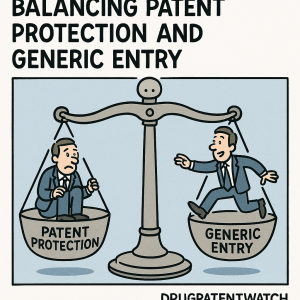
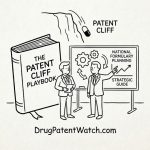
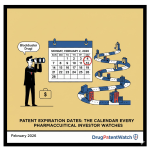
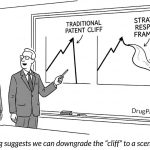
The global pharmaceutical industry operates at the precarious intersection of intellectual property protection and public health necessity, a junction governed by a complex, multi-jurisdictional web of legal mechanisms known collectively as “patent linkage.” As we navigate through 2025, the “Grand Compromise”—the legislative philosophy intended to balance the incentives for innovation with the economic imperative of generic competition—is facing unprecedented structural strain. The stakes are quantified in the hundreds of billions; between 2025 and 2030, the industry faces a massive “patent cliff,” with blockbusters like Keytruda, Eliquis, and Stelara losing exclusivity, putting an estimated $200 billion to $400 billion in branded drug revenue at risk.1
This report provides an exhaustive, granular analysis of the patent linkage systems and infringement resolution mechanisms across the world’s primary pharmaceutical markets: the United States, China, Canada, South Korea, and the European Union. While originally a construct of the U.S. Hatch-Waxman Act, patent linkage has proliferated and mutated, creating a fragmented global map of risk and opportunity. In the United States, the system is characterized by high-cost “artificial infringement” litigation and the erosion of safe harbors like the “skinny label.” In China, a newly implemented dual-track system prioritizes speed, offering a 9-month stay that contrasts sharply with the American 30-month standard. Canada presents a liability minefield for innovators through its “Section 8” damages regime, while the European Union is actively reforming its regulatory framework to reject linkage entirely in favor of accelerated generic entry.
For pharmaceutical executives, legal counsel, and investors, understanding these divergent pathways is no longer merely a compliance exercise; it is a fundamental component of corporate valuation. The ability to navigate the “patent thickets” of biologics, manage the “at-risk” launch calculus, and mitigate the impact of “Authorized Generics” determines the flow of billions in market capitalization.
Part I: The United States – The Hatch-Waxman Standard and its Modern Erosion
The Drug Price Competition and Patent Restoration Act of 1984, commonly known as the Hatch-Waxman Act, established the modern template for pharmaceutical competition. However, four decades later, the statute’s mechanisms have been weaponized, heavily litigated, and economically distorted by market forces that its drafters could not have anticipated.
1.1 The Jurisprudence of “Artificial Infringement” (35 U.S.C. § 271(e)(2))
The cornerstone of the U.S. linkage system is the concept of “artificial infringement.” In a standard patent regime, infringement requires the manufacture, use, or sale of a patented invention. This creates a “launch-at-risk” paradox for generic manufacturers: to challenge a patent, they would traditionally have to bring a product to market, thereby exposing themselves to potentially ruinous treble damages if the patent were upheld.
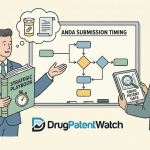
Congress resolved this by enacting 35 U.S.C. § 271(e)(2), which creates a statutory fiction: the mere act of submitting an Abbreviated New Drug Application (ANDA) with a “Paragraph IV” certification—asserting that the innovator’s patents are invalid, unenforceable, or will not be infringed—constitutes an act of infringement.3 This provision confers subject matter jurisdiction on federal courts to resolve the patent dispute before the generic product enters the commercial market.
The strategic implications of this “artificial” act are profound. Because the infringement is technical rather than commercial, the remedies available to the patent holder are limited by § 271(e)(4). Monetary damages are generally unavailable because no sales have occurred. Instead, the primary remedy is injunctive: an order preventing the FDA from approving the generic application until the patent expires or is found invalid.4
However, the definition of what constitutes the “submission” of an ANDA has led to complex venue battles. Following the Supreme Court’s decision in TC Heartland, which limited patent venue to the defendant’s state of incorporation or where they have a regular and established place of business, innovators attempted to argue that the “submission” of an ANDA was a nationwide act. The Federal Circuit, in cases involving Valeant and Mylan, rejected this broad “conceptual” interpretation. The court held that the act of submission occurs where the documents are generated or where the applicant resides, not everywhere the future drug might be sold.5 This has concentrated ANDA litigation in specific jurisdictions, primarily Delaware and New Jersey, increasing the strategic importance of those district courts.
Furthermore, the “safe harbor” provision of § 271(e)(1), which exempts activities “reasonably related to the development and submission of information” to the FDA, stands in tension with the infringement provisions. While clinical trials and formulation work are protected, the line blurs when companies engage in “commercial preparation” activities, such as stockpiling inventory or engaging in pre-launch marketing discussions. Recent jurisprudence suggests that courts look to the “objective intent” of the research; if the work supports strategic positioning or investor readiness rather than strict regulatory compliance, the safe harbor may be pierced.4
1.2 The Economic Engine: 180-Day Exclusivity and Authorized Generics
If “artificial infringement” is the legal hook of the Hatch-Waxman Act, the 180-day exclusivity period is its economic engine. The statute grants the first generic applicant(s) to file a substantially complete ANDA with a Paragraph IV certification a 180-day period during which the FDA cannot approve any subsequent generic applications.1
During this six-month window, the market structure shifts from a monopoly (Brand only) to a duopoly (Brand + First Generic). This duopoly allows the first generic entrant to price their product significantly higher than they could in a fully competitive market—often at 70-80% of the brand price—generating “supranormal” profits. For many generic firms, the revenue generated during these 180 days can exceed the total profits earned over the remaining lifecycle of the product.1
The Authorized Generic Counter-Strategy:
Innovator companies have developed a powerful counter-strategy to neutralize this incentive: the Authorized Generic (AG). An AG is the brand company’s own drug, manufactured on the same production lines, but relabeled and marketed as a generic, either by a subsidiary or a third-party partner. Crucially, the launch of an AG is not blocked by the 180-day exclusivity provision because it is approved under the brand’s original New Drug Application (NDA), not a new ANDA.
The economic impact of AG entry is devastating for the first-filing generic. According to data from the Federal Trade Commission (FTC) and subsequent economic analyses:
Revenue Erosion: The presence of an AG reduces the first-filer’s revenues by 40% to 52% during the exclusivity period.6
Price Compression: Retail generic prices are 4% to 8% lower, and wholesale prices are 7% to 14% lower when an AG is present.6
Long-Term Impact: The revenue impairment persists even after the exclusivity period ends, with first-filer revenues remaining 53% to 62% lower over the subsequent 30 months due to the loss of initial market share momentum.6
This dynamic has forced generic strategists to model an “AG Tax” into their litigation budgets. To mitigate this, generics often attempt to negotiate “no-AG” clauses in settlement agreements—promises by the brand not to launch an AG. However, these clauses attract intense scrutiny from the FTC, which views them as potential “pay-for-delay” arrangements where the “payment” is the preserved value of the exclusivity period.6
1.3 The “Skinny Label” Crisis: GSK v. Teva and the Inducement Trap
Perhaps the most disruptive development in U.S. patent linkage in the 2020s has been the judicial erosion of the “Section viii” carve-out, colloquially known as the “skinny label.”
The Statutory Mechanism: Under the Hatch-Waxman Act, if a brand drug is approved for multiple indications (e.g., congestive heart failure and hypertension), but only one indication is protected by a method-of-use patent (heart failure), a generic can seek approval only for the unpatented use (hypertension). By “carving out” the patented indication from its label, the generic theoretically avoids infringing the method-of-use patent.9
The GSK v. Teva Shockwave: This safe harbor was severely compromised by the Federal Circuit’s decision in GlaxoSmithKline LLC v. Teva Pharmaceuticals USA, Inc. In this landmark case, GSK sued Teva for induced infringement regarding the drug Coreg (carvedilol). Teva had launched its generic with a skinny label that carved out the patented heart failure indication, marketing it only for hypertension and post-MI LVD.11
Despite the carved-out label, the court found Teva liable for inducing infringement. The evidence cited was not the label itself, but Teva’s marketing conduct:
Press Releases: Teva advertised its product as an “AB-rated generic equivalent” of Coreg.
Marketing Materials: The materials failed to explicitly warn against the off-label (patented) use.
Real-World Reality: The court relied on the fact that pharmacists and insurers automatically substitute the generic for the brand regardless of indication, a structural reality of the U.S. market.9
Strategic Implications for 2025:
The GSK decision implies that merely operating in a market with automatic substitution laws could constitute inducement if coupled with standard statements of “equivalence.” This creates a paradox: generics are required by the FDA to demonstrate bioequivalence to get approved, yet citing that equivalence to investors or the public can now be evidence of intent to induce infringement.
Mitigation Strategies: In 2025, generic manufacturers are aggressively auditing their investor relations communications and press releases. Some are engaging in “active discouragement” campaigns, explicitly notifying providers not to use their drug for the carved-out indication—a commercially counter-intuitive move designed solely to build a legal defense against inducement claims.10
1.4 The Cost of Conflict: Litigation Economics
Litigation under the Hatch-Waxman Act is capital-intensive, favoring large players with deep balance sheets.
GDUFA Fees: For the fiscal year 2024, the FDA set the Generic Drug User Fee Amendments (GDUFA) fee for a standard ANDA application at $252,453.13 This fee is merely the ticket to enter the regulatory queue.
Litigation Costs: For high-stakes patent litigation where more than $25 million is at risk, the median legal cost through trial and appeal is approximately $4 million per party.14
Total Investment: When combining formulation development, bioequivalence studies ($1M – $5M), GDUFA fees, and litigation, the cost to launch a single first-to-file generic can easily exceed $10 million before a single unit is sold. This high barrier to entry drives consolidation in the generic sector, pushing smaller players toward niche markets or authorized generic partnerships.15
Part II: The Biologics Frontier – BPCIA and the “Patent Thicket” Strategy
While the Hatch-Waxman Act governs small molecules, the Biologics Price Competition and Innovation Act (BPCIA) of 2010 established the pathway for biosimilars—large, complex molecules derived from living cells. The litigation dynamics here are fundamentally different, defined by “patent thickets” and a procedural mechanism known as the “Patent Dance.”
2.1 The “Patent Dance” vs. The Orange Book
Unlike the Hatch-Waxman system, which relies on the “Orange Book” to list relevant patents, the BPCIA utilizes the “Purple Book,” which historically functioned more as a reactive list than a proactive litigation roadmap. The BPCIA replaces the automatic Paragraph IV notice with a complex, multi-step information exchange called the “Patent Dance.”
Feature
Hatch-Waxman (Generics)
BPCIA (Biosimilars)
Patent Listing
Orange Book (Mandatory listing of substance/method/formulation)
Purple Book (Reactive/Informational) 16
Trigger
Paragraph IV Notice Letter
Disclosure of aBLA and manufacturing info (Day 0)
Discovery
Standard civil discovery
Pre-suit exchange of contentions (“The Dance”) 17
Stay
Automatic 30-month stay
No automatic stay; Preliminary Injunction required 16
Launch Notice
None required
Mandatory 180-day notice of commercial marketing
Strategic Divergence: The Supreme Court ruling in Sandoz v. Amgen confirmed that the “Patent Dance” is optional. A biosimilar applicant can choose not to disclose its application. However, opting out of the dance allows the Reference Product Sponsor (RPS) to sue immediately on all potential patents, creating a chaotic “patent avalanche.” Consequently, most sophisticated biosimilar applicants now engage in the dance to force the RPS to narrow the list of asserted patents and streamline the litigation.18
2.2 The “Patent Thicket” Strategy: The Humira Case Study
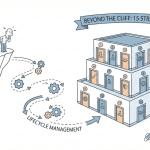
Biologic originators have mastered the art of the “patent thicket”—filing hundreds of overlapping patents on formulations, manufacturing processes, and devices to create an impenetrable barrier to entry. This strategy shifts the defense from the expiration of the core molecule patent to a maze of secondary patents that can extend exclusivity for decades.
The AbbVie/Humira Archetype:
Humira (adalimumab) serves as the definitive case study for this strategy.
The Scale: AbbVie accumulated over 130 patents on Humira. Crucially, 90% of these were filed after the drug’s original approval in 2002.19
The Composition:
Formulation Patents: AbbVie patented high-concentration, citrate-free formulations that reduced injection pain, transitioning the market to these new versions just as biosimilars for the original formulation were approaching approval.
Manufacturing Patents: Patents covered specific upstream and downstream processing steps, such as temperature controls in the bioreactor or specific filtration methods.20
Terminal Disclaimers: A 2024 study revealed that 80% of Humira’s U.S. patents were non-patentably distinct from one another, linked by terminal disclaimers. This means they covered obvious variations of the same invention but served to multiply the number of lawsuits a competitor had to fight.21
The Outcome: The thicket was so dense that every major biosimilar competitor (Amgen, Sandoz, Samsung Bioepis, Boehringer Ingelheim) chose to settle rather than litigate to judgment. They agreed to delay their U.S. entry until 2023, while launching in Europe in 2018. This five-year delay cost the U.S. healthcare system an estimated $7.6 billion in lost savings.20
2.3 Legislative Countermeasures: The ETHIC Act and 2025 Reforms
The overwhelming success of the thicket strategy has triggered a legislative backlash. As of 2025, several bills are advancing through the U.S. Congress aimed at dismantling these fortresses.
The Affordable Prescriptions for Patients Act: Introduced by Senators Cornyn and Blumenthal, this bill seeks to limit the number of patents an RPS can assert in BPCIA litigation. The proposed framework would cap the number of patents in the “first wave” of litigation (e.g., to 20 patents), preventing the “litigation by attrition” strategy where an innovator overwhelms a smaller competitor with legal costs.22
The ETHIC Act (Eliminating Thickets to Increase Competition): This more aggressive proposal targets the practice of terminal disclaimers. It would essentially force the RPS to assert only one patent per “family” of patents linked by terminal disclaimers. If enacted, this would reduce the assertion of 100+ patents to a manageable handful of distinct inventions, dramatically lowering the barrier to entry for biosimilars.24
2025 Market Status: While these bills are debated, the market is already shifting. The 2024 launch of biosimilars for Stelara (ustekinumab) and the anticipated 2025 launches for other biologics are proceeding under the shadow of these potential reforms. Biosimilar uptake is accelerating, with new approvals like Steqeyma (Celltrion) and Selarsdi (Teva/Alvotech) challenging the Stelara franchise, forcing innovators to rely more on device innovation (e.g., on-body injectors) rather than just patent volume.25
Part III: The Asian Powerhouses – Speed and Dual Tracks
While the U.S. system is characterized by extensive discovery and prolonged litigation, the major Asian markets—China and South Korea—have implemented systems designed for speed and efficiency.
3.1 China: The Article 76 Dual-Track System
Effective in 2021, Article 76 of China’s Patent Law introduced a formal patent linkage system. It is distinguished by its unique “dual-track” resolution mechanism and rapid timelines.
The Dual Tracks: Unlike the U.S., where patent disputes are exclusively judicial, China allows patent holders to choose their venue 26:
Civil Litigation: Filed with the Beijing Intellectual Property Court. This venue allows for damages and is preferred for complex infringement arguments (e.g., formulation equivalence).
Administrative Adjudication: Filed with the China National Intellectual Property Administration (CNIPA). This track is faster, often concluding within 3-6 months, and is preferred for straightforward validity challenges.
Key Mechanics:
The Stay: China provides a 9-month stay on regulatory approval.26 This is significantly shorter than the U.S. 30-month stay, placing immense pressure on the innovator to secure a favorable ruling quickly. If the case is not resolved within 9 months, the National Medical Products Administration (NMPA) can approve the generic.
Exclusivity: A 12-month market exclusivity period is granted to the first generic that successfully challenges a patent.26
Type 4.2 Declaration: China introduced a unique “Type 4.2” certification: “The generic does not fall within the scope of the patent.” Due to China’s broad Bolar exemption, mere submission of an application is arguably not an act of infringement. This has created a jurisdictional nuance where courts must determine if they even have standing to hear a case before commercial launch, although recent judicial interpretations have largely affirmed the right to sue based on the application itself.28
2024 Statistics: China’s IP ecosystem is operating at a massive scale. In 2024, China granted 1.05 million invention patents and handled nearly 39,000 civil patent cases.29 Notably, foreign plaintiffs (typically Western pharma) have a high success rate, winning 77% of civil cases against Chinese defendants.30 This data refutes the perception of local protectionism and underscores China’s commitment to a rigorous IP regime to support its own burgeoning biotech sector.
3.2 South Korea: The “K-Hatch-Waxman” and the Sale Stay
South Korea’s patent linkage system, implemented under the Korea-U.S. Free Trade Agreement (KORUS), is often termed the “K-Hatch-Waxman.” It shares features with the U.S. system but includes unique “sale stay” provisions.
The Mechanism:
Sales Stay: Instead of blocking approval, the Korean system imposes a “prohibition of sales” for 9 months once a patentee files an infringement action.31
PMS Period as Data Exclusivity: The system interacts heavily with the Post-Marketing Surveillance (PMS) period. Generics cannot even file for approval until the PMS period (usually 4-6 years) expires. This effectively creates a hard data exclusivity barrier that precedes patent linkage.31
Exclusivity: Successful challengers are granted 9 months of market exclusivity. This has led to a “rush to file” phenomenon, where hundreds of generic companies file simultaneous invalidation actions with the Korean Intellectual Property Trial and Appeal Board (IPTAB) to secure shared exclusivity.31
Part IV: The Canadian Anomaly – Section 8 Liability
Canada’s Patented Medicines (Notice of Compliance) Regulations (PM(NOC)) create what is arguably the most hostile environment for innovators among developed nations due to the “Section 8” damages regime.
4.1 The Uncapped Liability Risk
In the U.S., if a brand sues a generic and loses, they essentially lose their monopoly. In Canada, they lose the monopoly and must compensate the generic for the time they were kept off the market.
Section 8 Damages: If an innovator obtains a statutory stay (24 months) to block a generic, and the patent is subsequently found invalid or not infringed, the innovator is liable for all losses suffered by the generic during that period.32
No Cap: Unlike preliminary injunction bonds in other jurisdictions, Section 8 liability is uncapped. This creates a massive financial risk for enforcing patents that are anything less than ironclad.
4.2 The “Ramipril” Precedent and the Multiverse of Damages
The calculation of Section 8 damages requires the court to construct a hypothetical “but-for” world: What would have happened if the stay had not been issued? This calculation became exponentially complex in the Sanofi v. Apotex (Ramipril) litigation.
The “Ramipril” Dilemma:
Sanofi blocked multiple generic entrants (Apotex, Teva, Riva) simultaneously. When the patent was invalidated, all three sought damages. Sanofi argued for a single “but-for” world where all three generics launched simultaneously, splitting the market share (e.g., 33% each). This would cap Sanofi’s total liability at the total value of the generic market.
The Ruling:
The Federal Court of Appeal rejected the single world theory. Instead, it ruled that each generic’s claim is assessed in its own independent “but-for” world.
Apotex’s World: Apotex argues, “But for the stay, I would have launched. Teva and Riva might not have been ready or might have been blocked by other issues. Therefore, I claim 100% of the market.”
Teva’s World: Teva makes the same argument.
The Result: This creates the legal possibility of “double recovery” or even “triple recovery”, where the innovator pays damages exceeding the total size of the actual market.33
Calculation Nuances: The damages calculation also includes “pipefill” (the initial stocking of pharmacy shelves) and lost “trade spend” allowances. In recent cases, courts have scrutinized these calculations heavily, but the fundamental risk of multiple independent damage awards remains a powerful deterrent against litigation in Canada.35
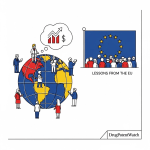
Part V: The European Union – Rejection of Linkage and Regulatory Reform
The European Union maintains a strict separation between regulatory approval and patent status. Regulatory authorities (EMA and national bodies) are explicitly forbidden from considering patent status during the Marketing Authorization (MA) process. Instead, enforcement relies on national courts and the “Clearing the Way” doctrine.
5.1 The “Clearing the Way” Doctrine (UK)
While the EU lacks statutory linkage, the UK (a key reference jurisdiction) has developed a common law doctrine that effectively imposes a pre-launch duty on generics.
The Doctrine: A generic entrant has a duty to “clear the way” by seeking a declaration of non-infringement or revocation before launch.
The Consequence: If a generic launches “at risk” without attempting to clear the way, the court views this as a strategic ambush. This failure is a strong factor in granting a Preliminary Injunction (PI) to the innovator, as it tips the “balance of convenience” toward the patent holder.36
Recent Case Law: In AstraZeneca v. Glenmark (2024), the UK Court of Appeal reaffirmed this principle. Even though the validity trial had concluded, judgment was pending. Glenmark attempted to launch during this interim. The court granted an injunction, emphasizing that the status quo must be preserved and that Glenmark’s failure to clear the way earlier weighed heavily against them.38
5.2 The 2025 Pharma Package: Expanding the Bolar Exemption
The EU is currently undertaking the most significant overhaul of its pharmaceutical legislation in decades, known as the “Pharma Package.” A key component is the expansion of the “Bolar exemption.”
Historic Limitations:
Historically, the Bolar exemption in Europe allowed generics to conduct studies only for the purpose of regulatory approval (bioequivalence). It did not clearly cover commercial preparatory acts like negotiating pricing or submitting tender bids.
The 2025 Expansion:
The new reforms aim to explicitly broaden the exemption to include:
Health Technology Assessments (HTA): Generics can submit data to HTA bodies to prove cost-effectiveness.
Pricing and Reimbursement (P&R): Generics can negotiate pricing with national health systems.
Tender Bids: Generics can bid on hospital supply contracts.
Strategic Impact: This reform legalizes pre-launch commercial activities that were previously gray areas or grounds for infringement suits. It allows generics to complete all commercial and administrative hurdles during the patent term, enabling a true “Day 1” launch the moment the patent expires. This effectively dismantles the “soft linkage” barriers that innovators used to delay generic uptake by months.39
Part VI: Strategic War Games – At-Risk Launches and Settlements
6.1 The “At-Risk” Launch Calculus
An “at-risk” launch occurs when a generic markets its product while patent litigation is ongoing or before a final appellate ruling. It is the highest-stakes gamble in the industry.
The Plavix Lesson: The defining case remains the “at-risk” launch of generic Plavix (clopidogrel) by Apotex. Apotex launched while litigation with Bristol-Myers Squibb was pending. The launch decimated Plavix’s sales. However, Apotex eventually lost the patent case. The resulting damages award was staggering: Apotex was ordered to pay 50% of its net sales in damages, totaling hundreds of millions of dollars. The case proved that while the rewards are high, the “triple damages” risk of willful infringement can be fatal.1
2024 Trends: Despite the risks, at-risk launches are rising. In 2023-2024, IPD Analytics tracked 51 separate at-risk launches affecting $25.7 billion in brand sales.42 This uptick suggests that generics are becoming more aggressive, calculating that in fragmented markets with multiple competitors, the “first-mover” advantage of an at-risk launch outweighs the litigation risk, especially if they can settle before a final damages ruling.
6.2 Settlement Dynamics: Pay-for-Delay and No-AG Clauses
Settlements remain the most common outcome of linkage litigation, but the nature of these settlements has evolved under antitrust pressure.
Reverse Payments: Direct cash payments from brand to generic (“pay-for-delay”) are largely illegal post-Actavis.
No-AG Clauses: The modern alternative is the “No-Authorized Generic” clause. The brand agrees not to launch its own authorized generic during the generic’s 180-day exclusivity. As established in Part 1, this effectively doubles the generic’s revenue.
Antitrust scrutiny: The U.S. FTC and European Commission are increasingly treating “no-AG” clauses as value transfers equivalent to cash. In 2025, we expect intensified enforcement actions against these provisions, potentially forcing parties to find new, less visible ways to settle disputes.6
Part VII: Future Outlook (2025-2030)
7.1 The Looming Patent Cliff
The industry is barreling toward a massive “patent cliff.” Between 2025 and 2030, exclusivity will be lost on major franchises:
Keytruda (Merck): ~$29.5 billion revenue at risk.
Eliquis (BMS/Pfizer): ~$12 billion revenue at risk.
Stelara (J&J): ~$10.9 billion revenue at risk.2
This volume of revenue will trigger a tsunami of Paragraph IV filings and BPCIA litigation. The sheer number of cases will test the capacity of the U.S. federal courts (particularly in Delaware and New Jersey) and the newly established Chinese IP tribunals.
7.2 The Rise of Complex Generics
The era of simple small-molecule litigation is fading. The future battles are over complex generics (injectables, inhalers, long-acting injectables) and biosimilars.
Litigation Shift: Litigation will move from “composition of matter” patents (which are expiring) to “device” and “process” patents. For example, the battle over asthma inhalers (Symbicort, Advair) focuses on the delivery mechanism, not the drug itself.
Regulatory Support: The FDA is issuing specific guidance to help complex generics demonstrate “sameness” without extensive clinical trials, lowering the scientific barrier to entry. This will shift the primary barrier back to the legal realm—specifically, the patent thickets surrounding the delivery devices.43
7.3 Conclusion: The Fragmentation of Global Strategy
For global pharmaceutical companies, a “one-size-fits-all” litigation strategy is obsolete. The 2025 landscape demands a bespoke approach for each jurisdiction:
United States: Focus on dismantling (or building) patent thickets and securing 180-day exclusivity.
China: Prioritize speed. Innovators must be trial-ready immediately upon Article 76 registration.
Canada: Exercise extreme caution with the statutory stay to avoid Section 8 liability.
Europe: Utilize the “clearing the way” doctrine to block at-risk launches while preparing for faster generic entry due to Bolar reforms.
The winners in the 2025-2030 cycle will be those who can integrate these disparate legal strategies into a cohesive commercial roadmap, leveraging the nuances of each jurisdiction to protect value or disrupt monopolies.