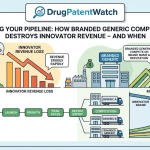
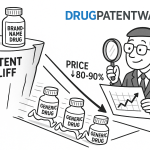
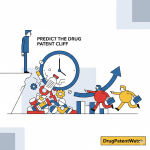
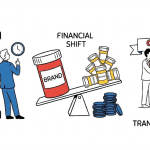
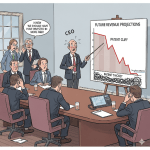
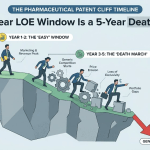
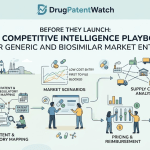
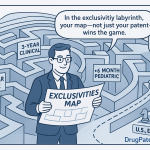
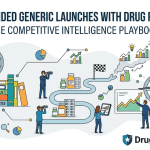
The phrase ‘patent cliff’ describes the sharp revenue decline an innovator drug company experiences when a brand-name product loses market exclusivity (LOE) and generic or biosimilar competitors enter the market. The visual metaphor is apt for one specific scenario: a company that has done nothing to prepare for a scheduled, date-certain event. The patent filing date is public record. The regulatory exclusivity expiry is disclosed in the FDA’s Orange Book. Every relevant date in a drug’s exclusivity architecture is knowable years, often a decade or more, in advance. A company ‘falling’ off the patent cliff has not been ambushed; it has walked to the edge while looking at its feet.
The period from 2025 through 2030 is shaping up to be the most consequential patent expiration wave in pharmaceutical history. Conservative estimates put between $236 billion and $300 billion in annual global branded drug revenue at risk, with some projections stretching higher when biologic lifecycle and indication extension patents are factored in. The 2000–2012 cliff, which claimed Lipitor, Plavix, Singulair, and dozens of other blockbusters, eroded revenues that were primarily anchored in oral solid-dose small molecules. The current wave is structurally different: the largest assets at risk are complex biologics, and the competitive response mechanism (biosimilars, not traditional generics) is governed by a separate legal framework, carries development costs one to two orders of magnitude higher, and operates under its own distinct litigation choreography.
For pharmaceutical IP teams, R&D leads, and institutional investors, treating patent expiration as a threat to be managed rather than a scheduled market event to be traded around is itself a strategic failure. The companies that perform best in this environment do not merely defend their franchises; they use the cliff’s predictability as a pricing and timing tool across their entire capital allocation cycle.
The Dual Economics of LOE
Revenue lost by an innovator does not disappear. It is redistributed, first to generic and biosimilar manufacturers capturing margin during early exclusivity windows, then to the healthcare system as prices compress, and ultimately to patients through lower out-of-pocket costs. Generic and biosimilar medicines saved the U.S. healthcare system $445 billion in 2023, building on a cumulative decade-long savings figure that exceeded $2.9 trillion. Generics fill more than 90% of U.S. prescriptions while accounting for roughly 17.5% of total prescription drug spending. The delta between those two numbers represents the largest cost-efficiency mechanism in modern healthcare.
This redistribution is not incidental; it is the designed outcome of the Hatch-Waxman Act’s ‘grand bargain,’ which is examined in detail in Section 4. The policy intent is to fund brand innovation through temporary monopoly profits, then return value to the system through competitive entry. The tension between those two goals, balancing incentives for genuine innovation against the social cost of delayed generic entry, is the central fault line in every major pharmaceutical policy debate today.
Key Takeaways: Section 1
The patent cliff is a scheduled market event, not a crisis. The 2025–2030 wave is the largest on record, with $236–$300 billion in annual revenue at risk. It is dominated by biologics, which introduces BPCIA mechanics and biosimilar development economics that small-molecule generic analysis does not capture. The companies best positioned are those that have built multi-year LOE management plans, not those scrambling to respond when a court date or expiry arrives.
Section 2: The Architecture of Pharmaceutical Exclusivity
The 20-Year Term and Its Commercial Irrelevance
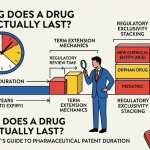
Under the Agreement on Trade-Related Aspects of Intellectual Property Rights (TRIPS), the standard patent term in the United States, European Union, Japan, and most major pharmaceutical markets is 20 years from the filing date of the patent application. That figure is nearly meaningless for commercial planning purposes. Drug companies file patent applications on promising chemical entities early in preclinical development. By the time a compound completes Phase 1, 2, and 3 clinical trials, survives FDA review, and receives approval, 10 to 15 years of that 20-year term have already elapsed. The commercially relevant metric is ‘effective patent life,’ the window between first commercial sale and first generic entry, which averages 7 to 14 years for small molecules.
The gap between the 20-year statutory term and the 7–14-year effective commercial window is the foundational economic pressure driving every lifecycle management behavior the industry deploys: patent thickets, authorized generics, product hopping, over-the-counter switches, and authorized biosimilar deals.
A Layered Exclusivity System, Not a Single Wall
Pharmaceutical exclusivity is not a single patent. It is a stacked system of overlapping protections that draws from both patent law and regulatory statute. An IP analyst or litigator approaching a drug’s exclusivity structure must model every layer simultaneously.
The composition of matter patent, covering the active pharmaceutical ingredient (API) itself, is the strongest form of protection. It blocks any competitor from making, using, or selling the same drug substance regardless of formulation or therapeutic application. When a composition of matter patent expires or is invalidated, the core protection is gone, and no secondary patent can fully substitute for it.
Secondary patents include method-of-use patents covering specific therapeutic applications, formulation patents covering excipient compositions, delivery systems, or dosage forms, and process patents covering novel manufacturing routes. These secondary patents differ in filing date, expiration date, and litigation vulnerability. A generic challenger can formulate its product to avoid a specific excipient covered by a formulation patent. It cannot avoid the API itself if the composition of matter patent is still in force. Secondary patents therefore serve primarily as barriers to entry for specific formulations and as sources of litigation delay rather than as true monopoly protections.
Regulatory Exclusivities: Independent of Patent Status
Layered on top of the patent system are FDA-granted regulatory exclusivities, which are statutory and do not require an underlying patent to be enforceable. Key categories include the following.
New Chemical Entity (NCE) exclusivity grants five years of protection from the date of first approval for drugs containing a previously unapproved active ingredient. The FDA cannot accept an ANDA from a generic competitor for the first four years of this period (or all five if the generic does not file a Paragraph IV certification challenging the brand’s patents). NCE exclusivity is separate from and cumulative with patent protection.
Orphan Drug Exclusivity (ODE) grants seven years of market exclusivity for drugs approved to treat rare diseases (fewer than 200,000 affected patients in the U.S.). During ODE, the FDA cannot approve another application for the same drug in the same orphan indication. This exclusivity runs independently of patents and can be powerful protection for niche biologics that would not otherwise attract biosimilar development.
Biological product exclusivity under the BPCIA grants 12 years from first licensure before the FDA can approve a biosimilar application. This is longer than any standard pharmaceutical patent’s effective commercial life and is the primary exclusivity protection for most approved biologics.
Pediatric exclusivity adds six months to any existing patent or regulatory exclusivity if the manufacturer completes pediatric studies in response to a Written Request from the FDA. On a drug generating $5 billion or more annually, six months of additional exclusivity is worth $2.5 billion or more in protected revenue.
Patent Term Extension and Supplementary Protection Certificates
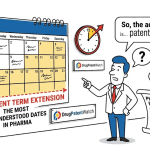
The Patent Term Extension (PTE) program established by Hatch-Waxman allows innovators to recapture some patent life lost during FDA review. Extensions are capped at five years, and the resulting total patent term after extension cannot exceed 14 years from the drug’s approval date. Only one patent per approved product is eligible. Companies almost always apply the extension to the composition of matter patent, the most commercially valuable protection.
The European equivalent is the Supplementary Protection Certificate (SPC), which operates on a similar principle but with different procedural rules and a maximum extension of five years, with an additional six-month pediatric extension possible.
Investment Strategy: Exclusivity Architecture as Valuation Input
Institutional investors modeling a drug’s revenue runway must map the full exclusivity matrix, not just the composition of matter patent expiration date shown in widely available databases. Discounted cash flow models that terminate at first patent expiry systematically undervalue drugs with strong secondary patent thickets and active ODE or pediatric exclusivity protections. They also overvalue drugs where the composition of matter patent is the only meaningful protection and is already being challenged in Paragraph IV proceedings. Accurate NPV modeling requires layer-by-layer exclusivity accounting with probability-weighted litigation outcomes attached to each disputed patent.
Key Takeaways: Section 2
The effective commercial window for small molecules averages 7–14 years, far shorter than the 20-year statutory term. Exclusivity is a multi-layer system combining composition of matter patents, secondary patents, and independent regulatory exclusivities. Biologics carry 12 years of BPCIA exclusivity from first licensure, making the exclusivity architecture for large molecules structurally different from small molecules. PTEs and ODE can add years of protected revenue that standard expiration date tracking will miss.
Section 3: IP Valuation Deep Dive — Key Assets at Risk (2025–2030)
Keytruda (pembrolizumab) — Merck’s Crown Jewel
Keytruda generated $29.5 billion in global revenue in 2024, making it the best-selling pharmaceutical product in the world. Its IP position is correspondingly complex. The core pembrolizumab antibody composition of matter patent in the U.S. is expected to face its primary expiration around 2028, although Merck has assembled a secondary patent portfolio covering specific formulations, dosing regimens, and combination-use methods. As of early 2026, Merck faces multiple Paragraph IV challenges across its PD-1 antibody patent portfolio, and at least two biosimilar development programs are in clinical-stage development. The 12-year BPCIA exclusivity period for Keytruda’s original licensure provides some additional runway, but the exact BPCIA exclusivity end date is subject to ongoing legal interpretation.
The IP valuation of Keytruda is not reducible to a single expiry date. Merck has sought and obtained patents covering Keytruda’s use in specific tumor types, including non-small cell lung cancer with PD-L1 expression above specific thresholds, melanoma, MSI-H tumors, cervical cancer, and more than 30 other approved or studied indications. Each approved indication with method-of-use patent protection represents a separately defensible revenue stream. A biosimilar entering post-2028 will initially compete only in indications where all patent protection has lapsed or been invalidated. Merck’s strategy of continually adding new approved indications creates a progressively more complex litigation landscape for biosimilar challengers.
For investors: Keytruda’s $29.5 billion in 2024 revenue and projected LOE beginning around 2028–2030 represent the single largest individual drug revenue exposure in the current patent expiration wave. Analysts should model a range of biosimilar penetration scenarios from 20% market share capture in year one (reflecting biologic market dynamics and formulary stickiness) to 60% in year three, stress-tested against Merck’s pipeline contributions from co-formulated pembrolizumab combinations and next-generation PD-1 assets.
Eliquis (apixaban) — Bristol Myers Squibb and Pfizer’s Shared Franchise
Eliquis generated approximately $12 billion in global sales in 2024, shared between BMS and Pfizer under their co-commercialization agreement. The primary U.S. patent protection on apixaban faces expiration in 2026. Both companies have mounted an extensive secondary patent defense, and the litigation history around Eliquis is instructive: multiple Paragraph IV filers challenged BMS’s patents, and the resulting 30-month stays and settlement agreements with generic manufacturers have produced a complex authorized entry landscape. At least one settlement permitted a licensed generic entry before final patent expiration under terms that preserve some economics for the innovator.
For BMS specifically, Eliquis represents approximately 35% of total revenue. The LOE event in 2026 will be the largest single revenue erosion event in BMS’s recent history, coinciding with critical pipeline decisions for the Revlimid generic erosion maturation and anticipated ramp of deucravacitinib (Sotyktu) and the cell therapy franchise.
Darzalex (daratumumab) — Johnson & Johnson’s Hematology Anchor
Darzalex generated $11.67 billion globally in 2024 and is the centerpiece of J&J’s hematology portfolio. The core daratumumab composition of matter patent is expected to provide U.S. market protection through approximately 2029, with a cluster of secondary patents covering the subcutaneous formulation (Darzalex Faspro), extended dosing schedules, and combination regimens. J&J’s subcutaneous daratumumab/hyaluronidase product is protected by a separate set of formulation patents that extend beyond the primary composition patent, meaning biosimilar manufacturers cannot simply replicate the subcutaneous delivery method without designing around or litigating those additional patents.
Even after the core antibody patent expires, J&J’s formulation and subcutaneous delivery patents may allow the Faspro product to maintain differentiated pricing and formulary positioning relative to biosimilars that enter only with IV-equivalent products. The subcutaneous form commands both a pricing premium and strong physician and patient preference due to dramatically shorter administration time (3–5 minutes vs. several hours for IV).
Stelara (ustekinumab) — J&J’s LOE Now In Progress
Stelara began facing U.S. biosimilar competition in 2025 after J&J reached settlement agreements with multiple biosimilar manufacturers permitting entry at the beginning of the year. This makes Stelara the first major biologic in the 2025–2030 wave to experience LOE, and its market dynamics are being closely watched as a leading indicator for subsequent biologic expiries. Biosimilar penetration data from the first months of 2025 provides real-time evidence on the speed of biologic market share migration, which has historically been slower than small-molecule generic penetration due to physician inertia, biosimilar interchangeability designations, and payer formulary management timelines.
Opdivo (nivolumab) — BMS’s PD-1 Asset
Opdivo generated $9.3 billion globally in 2024. Its primary U.S. patent protection is expected to expire around 2028, creating simultaneous LOE pressure alongside Eliquis for BMS. The clinical differentiation challenge for Opdivo biosimilars is that many of the drug’s efficacy claims in specific indications are tied to dosing schedules and combination regimens covered by method-of-use patents. A biosimilar manufacturer must prove structural and functional biosimilarity to the reference product but cannot launch in indications still covered by method-of-use patents without infringement exposure.
The shared PD-1 pathway competition between Keytruda and Opdivo creates an unusual dynamic: when biosimilars of each eventually enter, they will compete not only against their respective reference products but potentially against each other. The PD-1 biosimilar market by 2030 may be the most competitive single mechanism class in pharmaceutical history.
Key Takeaways: Section 3
Each blockbuster asset requires individual IP layer mapping. Composition of matter expiry dates are a starting point, not a conclusion. Secondary patent thickets, formulation patents (especially for subcutaneous biologics), method-of-use portfolio depth, and settlement-negotiated authorized entry timelines all materially affect the actual LOE date and the revenue erosion slope. Per-drug IP NPV modeling is the minimum required analytical standard for any position exceeding 2% of portfolio weight in a single-drug-dependent company.
Section 4: The Hatch-Waxman Act — Mechanics, Strategy, and the 180-Day Prize
The 1984 Grand Bargain
The Drug Price Competition and Patent Term Restoration Act of 1984 (Hatch-Waxman) restructured the U.S. pharmaceutical market with two simultaneous moves. It created the Abbreviated New Drug Application (ANDA) pathway, allowing generic manufacturers to reference the brand’s established safety and efficacy record rather than repeat full clinical trials; they need only demonstrate bioequivalence, meaning the generic delivers the same amount of active ingredient into systemic circulation within an equivalent time window. At the same time, the Act gave innovators Patent Term Extension to compensate for regulatory review time. In 1983, the year before Hatch-Waxman passed, generics filled 19% of U.S. prescriptions. Today that figure exceeds 90%.
The ANDA Pathway and Bioequivalence Standards
A generic manufacturer submitting an ANDA must show its product is bioequivalent to the Reference Listed Drug (RLD) as identified in the Orange Book. FDA bioequivalence standards require the 90% confidence interval for the ratio of key pharmacokinetic parameters (Cmax and AUC) between the generic and reference product to fall within 80–125% bounds. For drugs with narrow therapeutic indices, the FDA applies tighter standards. The bioequivalence requirement does not mandate that the generic use the same inactive ingredients, same physical appearance, or same manufacturing process; it requires that the same amount of drug reaches the bloodstream at the same rate. This distinction matters clinically for narrow-window drugs like warfarin or cyclosporine and commercially for brand companies that cite formulation differences to create patient hesitation.
The Orange Book: The Official Competitive Intelligence Database
The Orange Book lists every patent covering an approved drug product that the NDA holder has submitted to the FDA, plus all regulatory exclusivities. Under Hatch-Waxman, NDA holders must certify that listed patents are accurate and must update listings when new patents issue. The Orange Book provides a public, continuously updated map of every IP barrier protecting every brand-name drug. Strategic teams at both innovator and generic companies treat it as the primary raw data source for portfolio planning.
Orange Book data has one important limitation: NDA holders sometimes list patents that courts later find are not actually infringed by a generic product or are not properly listable. The FDA does not adjudicate patent listing disputes; it accepts what NDA holders submit. Generic companies that believe a patent is improperly listed can petition the FDA to delist it, and that delisting petition process itself triggers strategic maneuvering.
The Paragraph IV Certification: The Legal Declaration of War
When filing an ANDA for a drug with Orange Book-listed patents, the generic applicant must certify one of four things. Paragraph I certifies no patents are listed. Paragraph II certifies all listed patents have expired. Paragraph III certifies the generic will not enter until listed patents expire. Paragraph IV, the aggressive filing, certifies that the listed patents are invalid, unenforceable, or will not be infringed by the generic product.
A Paragraph IV (P-IV) certification is a legal declaration. The generic must simultaneously notify the NDA holder. If the NDA holder sues for patent infringement within 45 days of receiving that notice, the FDA is automatically prohibited from granting final ANDA approval for 30 months. This 30-month stay is not contingent on the strength of the innovator’s legal position; it is automatic. A brand company that files a lawsuit of questionable merit still gets 30 months of market exclusivity protection from the lawsuit alone.
This asymmetry explains why innovator companies frequently file patent infringement lawsuits immediately upon receiving P-IV notice, even when internal IP teams assess chances of prevailing as moderate at best. The 30-month stay is worth billions of dollars in protected sales. The cost of losing the lawsuit is the legal fee and, potentially, an obligation to pay the generic’s legal costs under exceptional case findings.
The 180-Day Exclusivity: First-to-File Economics
The Hatch-Waxman Act created a direct financial incentive for generic companies to challenge innovator patents before expiration: 180 days of market exclusivity for the first ANDA applicant to submit a substantially complete application containing a P-IV certification. During those 180 days, the FDA cannot approve any other ANDA for the same drug from any other generic manufacturer. The first-filer and the brand operate as a duopoly.
The economics of this duopoly are often lucrative. In a market where a blockbuster generates $3 billion annually, the branded market at a 20–30% generic discount still produces substantial revenue. With only one generic competitor, the first-filer can price near the brand rather than being forced down to the 20–30% of brand price that a fully competitive multi-generic market produces. Generics that launched with 180-day exclusivity saved the U.S. healthcare system approximately $20 billion in 2020, implying they also captured several billion dollars in premium margins for themselves.
First-Filer Race Dynamics and the ‘Substantially Complete’ ANDA Standard
Because the 180-day exclusivity is won by the first to file a substantially complete ANDA with a P-IV certification, generic companies invest heavily in ANDA preparation well in advance of the date they can legally submit. When multiple generic firms file on the same day (a common occurrence for major drugs), all of them share first-filer status and the 180-day exclusivity runs simultaneously for all of them. This has eroded the economics of the 180-day prize for heavily anticipated LOE events where everyone knows the filing opportunity date years in advance.
Settlement Agreements and Authorized Entry Deals
The majority of Hatch-Waxman P-IV cases settle before trial. These settlements typically involve the brand company granting the generic challenger a license to enter the market at a specified future date (the ‘authorized entry date’), in exchange for the generic dropping its patent challenge. The settlement preserves the brand’s exclusivity until the agreed date and avoids the litigation risk of an invalidating court ruling.
The FTC scrutinizes these settlements for potential antitrust violations, particularly ‘reverse payment’ settlements where the brand pays the generic to delay entry. The Supreme Court ruled in FTC v. Actavis (2013) that reverse payment settlements can violate antitrust law under a rule of reason analysis. Non-cash reverse payments, such as no-AG agreements, have become common substitutes and remain subject to ongoing FTC scrutiny.
Investment Strategy: Hatch-Waxman as a Timing Signal
For institutional investors, P-IV certification activity is a publicly trackable signal of impending generic competition. When a major brand receives its first P-IV notification and files a patent infringement lawsuit, the 30-month clock starts. Add 30 months to the lawsuit filing date to identify the earliest possible FDA final approval date for the generic, absent a settlement or court ruling. Settlement negotiations typically occur 12–18 months after the lawsuit is filed, once both sides have sufficient discovery data to assess their legal positions. If no settlement is announced within 24 months of the initial lawsuit, the probability of an adverse court ruling for the brand increases materially. These timelines are modelable and generate actionable trade signals.
Key Takeaways: Section 4
The ANDA pathway requires bioequivalence but not identity. The 30-month stay is automatic upon P-IV lawsuit filing and is worth billions in protected sales regardless of patent merit. The 180-day first-filer exclusivity is the industry’s most powerful competitive incentive, but its economics are diluted for predictable LOE events where many generic firms file simultaneously. Settlement agreements with authorized entry dates are the most common resolution of P-IV disputes and are legally permissible unless they involve reverse payments that impede competition under the Actavis rule of reason standard.
The Price Erosion Curve: Mechanics and Rate Drivers
When generic competitors enter a market, prices fall in a curve with a steep initial phase and a gradually flattening tail. With one generic competitor, prices typically fall to 70–80% of the brand price. With two to three generic competitors, prices fall to 40–60% of brand. With five or more competitors, prices reach 15–30% of brand. In highly commoditized oral solid-dose markets with ten or more generic manufacturers, prices can reach 5–10% of brand within two to three years of initial multi-generic entry.
The rate of erosion is not uniform across all drugs. It varies with product technical complexity. Simple oral solids with widely available APIs and standard manufacturing processes attract many competitors quickly. Sterile injectables require aseptic manufacturing capability and are governed by significantly more stringent FDA inspection standards. Transdermal drug delivery systems require specialized adhesive and permeation expertise. Inhalation products (dry powder inhalers, metered-dose inhalers) require highly specialized device engineering and face demanding bioequivalence standards. Complex products in these categories attract fewer competitors, support higher post-LOE prices, and display shallower erosion curves.
For large-molecule biologics transitioning to biosimilar competition, price erosion is structurally slower than for small molecules. Biosimilar interchangeability designation is required for automatic substitution, and manufacturers must conduct specific switching studies with the FDA to obtain that designation. As of early 2026, fewer than a dozen biosimilars have received interchangeability designation, meaning most biosimilar market share gains require active prescriber or payer promotion rather than passive pharmacy substitution.
Market Share Migration: Speed and Magnitude
In well-contested small-molecule markets, brand-name drugs lose 80–90% of their prescription volume within 12 to 24 months of multi-generic entry. This migration is driven by automatic substitution at the pharmacy counter, PBM formulary restructuring that moves generics to Tier 1 (lowest patient co-pay), and institutional purchasing contracts at hospital systems and group purchasing organizations. The brand retains a residual share, typically 5–15% of its original prescription volume, from patients on patient assistance programs, co-pay cards that neutralize the price differential, or physicians who specifically prescribe the brand by name.
For biologics, market share migration is materially different. The U.S. adalimumab biosimilar market experience (Humira LOE began January 2023) provides the most current large-scale data point. Humira biosimilars had penetrated approximately 20–25% of the adalimumab market by the end of their first year, far below small-molecule analogy projections. Formulary conversions at PBMs were the primary driver, not pharmacy-level substitution. This experience supports modeling biologic biosimilar penetration at 15–30% in year one and 40–60% by year three for major indications with PBM-driven formulary management.
The Authorized Generic: A Detailed Anatomy
An Authorized Generic (AG) is the brand-name drug sold at a generic price, typically through a separate distribution channel or subsidiary. It is not approved through the ANDA pathway; it is sold under the original NDA because it is, in every molecular and formulation sense, the identical product. This identity distinguishes AGs from standard generics, which are required to match only the active ingredient and pharmacokinetic profile.
The competitive function of an AG is to destroy the economics of the first-filer’s 180-day exclusivity. Without an AG, the first-filer operates in a duopoly and can price at 70–80% of brand, capturing significant margin. With an AG competing, it becomes a three-way market (brand at full price, first-filer generic, AG at generic price). The AG forces the first-filer to compete on price rather than exclusivity, compressing its margins during the period when it expected maximum profit. AGs can typically be priced at first-filer parity or slightly below because the innovator company has no incremental manufacturing cost and no development cost to recover.
The threat of an AG launch also functions as a deterrent in settlement negotiations. A brand company that credibly commits to AG launch regardless of settlement can offer the first-filer a better authorized entry date in exchange for a settlement, knowing the first-filer’s 180-day economics will be degraded if they go to trial and win.
Key Takeaways: Section 5
Price erosion follows a predictable curve from one competitor to many, with final prices settling at 5–30% of brand depending on product complexity. Small-molecule oral solids experience the fastest and deepest erosion. Biologics face slower biosimilar penetration due to interchangeability requirements and formulary inertia. The authorized generic is a deliberate economic weapon designed to devalue the 180-day first-filer prize. Its deployment converts a two-player duopoly into a three-way competitive market during the most profitable period for the generic challenger.
Section 6: At-Risk Launches — The Legal and Economic Calculus
What ‘At-Risk’ Actually Means
An at-risk launch occurs when a generic company begins commercial sales after receiving FDA approval but before all patent litigation with the brand company has concluded. The remaining legal exposure is typically an appellate proceeding; the generic has already won at the district court level but the brand has appealed. Launching at-risk means accepting potential liability for patent infringement damages covering the full period of market sales, calculated at the brand’s lost profits, with the possibility of treble damages if the court finds willful infringement.
The Probability Model
Research published in a National Bureau of Economic Research working paper modeled the at-risk launch decision quantitatively. The key empirical finding: in cases where a generic received FDA approval after winning at the district court level, 100% of those generics launched at risk. The model predicts this outcome when the probability of appellate reversal is low (appellate courts rarely overturn detailed district court patent findings), the duration of the appellate period is meaningful (typically 12–18 months), and the daily revenue during the exclusivity period is substantial.
For a drug generating $8 million per day in brand sales, even a 10% reversal probability translates to a significant expected liability. The generic launches anyway if its probability-adjusted expected profits still exceed the expected liability, which they typically do when district court findings are based on strong validity or non-infringement grounds.
Damages Calculation and the Treble Damages Exposure
If an at-risk launch results in a reversal on appeal and a final infringement finding, damages are calculated based on the brand’s lost profits during the infringement period. Courts use the Panduit multi-factor test that includes demand for the patented product, absence of acceptable non-infringing substitutes, manufacturing capacity to meet demand, and reasonable profit margin. For a blockbuster drug with no therapeutic substitutes and high demand, this calculation produces very large numbers.
Treble damages under 35 U.S.C. Section 284 are available for willful infringement. A generic company that launches at risk without seeking a written opinion of counsel supporting non-infringement is at elevated risk of a willful infringement finding. Standard practice before any at-risk launch is to obtain a written legal opinion confirming the non-infringement or invalidity position.
Market Signaling Through Commercial Launch
An at-risk launch sends a market signal that extends beyond the litigation itself. It communicates to payers, PBMs, and hospital formulary committees that a generic product is commercially available. PBMs act on availability; they restructure formularies to include the generic and begin driving substitution. Once formulary migration begins, reversing those formulary decisions is administratively complex even if the innovator ultimately wins its appeal. The market penetration achieved during an at-risk period can create durable market share gains even if a court later rules against the generic.
Key Takeaways: Section 6
At-risk launches are a rational economic decision when a generic has won at district court, the appellate period is long relative to the first-filer exclusivity window, and expected revenues exceed probability-weighted liability. The NBER empirical finding that 100% of eligible generics launch at risk after district court wins confirms the economic model. The at-risk launch also functions as a market signal that accelerates PBM formulary adoption and creates durable penetration even if the appellate outcome is adverse.
Section 7: Biologics and the BPCIA ‘Patent Dance’
Why Biologics Are Not Generics
Small-molecule drugs like atorvastatin or clopidogrel have simple, well-defined chemical structures that can be replicated exactly. A generic is, for practical purposes, chemically identical to its reference. Biologics are large proteins or antibodies produced in living cell lines (typically Chinese Hamster Ovary cells, E. coli, or yeast). Their three-dimensional structures, including glycosylation patterns, post-translational modifications, and higher-order folding, are directly determined by the manufacturing process. Different cell lines, culture conditions, purification sequences, and storage protocols produce proteins that are structurally similar but not identical.
Because exact replication is scientifically impossible, the regulatory standard for biosimilar approval is not identity but biosimilarity. A biosimilar must show no clinically meaningful differences from its reference biologic in terms of safety, purity, and potency. Separately, ‘interchangeability’ is a higher standard requiring switching studies demonstrating that patients can alternate between the biosimilar and the reference product without increased safety or efficacy risk. Interchangeable biosimilars are eligible for automatic substitution at the pharmacy counter in states that have enacted substitution laws, a commercial advantage that non-interchangeable biosimilars do not have.
The BPCIA Exclusivity Framework
Under the BPCIA, a reference biologic receives 12 years of exclusivity from its first licensure date. The FDA cannot accept a biosimilar aBLA until four years after first licensure and cannot approve it until 12 years. This 12-year period is independent of patents; even if all patents on the reference biologic are invalidated in litigation, the FDA’s hands are tied for 12 years.
This is the single most important structural difference between small-molecule and biologic IP protection. For a small molecule, invalidating the composition of matter patent opens the ANDA pathway (barring other patents or regulatory exclusivities). For a biologic, 12 years of statutory exclusivity remains regardless of patent validity.
The Optional Patent Dance: Structure and Strategic Logic
The BPCIA created a detailed, multi-step process for patent information exchange between a biosimilar applicant and the reference product sponsor. The sequence runs approximately eight months and involves the biosimilar applicant providing manufacturing process details, the innovator listing relevant patents, both parties exchanging non-infringement and invalidity contentions, the innovator providing a rebuttal, and both parties negotiating a final list of patents for the first litigation wave.
In Amgen v. Sandoz (2017), the U.S. Supreme Court ruled that this entire patent dance is optional. A biosimilar applicant can decline to participate. If it does, the BPCIA provides a remedy: the innovator may immediately file a broad patent infringement suit asserting any and all relevant patents simultaneously rather than in the structured, limited first-wave format the dance would have produced.
Strategic Implications of the Dance-or-Opt-Out Decision
Participating in the dance produces a narrowed, predictable first-wave litigation scope. The biosimilar applicant knows which patents it must defeat and can concentrate resources accordingly.
Opting out exposes the applicant to a broad initial suit but signals confidence that the innovator’s full patent portfolio is weak. Companies opt out when their IP analysis concludes that the innovator’s secondary patents are thin (likely formulation or process patents of limited validity) and that broad early litigation would quickly expose that weakness, potentially leading to faster resolution or a more favorable settlement.
The first communication between a biosimilar applicant and an innovator, the decision to engage in the dance or decline, is a crucial piece of competitive intelligence. It reveals the challenger’s assessment of the IP fortress it is attacking and how it plans to wage the legal war.
The 180-Day Commercial Marketing Notice: The Second Wave
The BPCIA requires that a biosimilar applicant notify the reference product sponsor at least 180 days before planned commercial marketing. This notice gives the innovator a second litigation window to seek a preliminary injunction and litigate patents not part of the initial wave, creating a two-phase litigation system. Innovators use the second wave to assert any remaining patents and to seek preliminary injunctions delaying commercial launch.
Technology Roadmap: The Biosimilar Development Path
A fully developed biosimilar program follows a defined sequence. Structural and functional characterization occupies the first 18–36 months. The development team acquires commercial quantities of the reference product from multiple markets, capturing batch-to-batch variability, and performs exhaustive analytical characterization using mass spectrometry, X-ray crystallography, size-exclusion chromatography, surface plasmon resonance, and cell-based potency assays. The analytical fingerprinting program must cover dozens of specific quality attributes addressing purity, potency, structure, and stability.
Cell line development and manufacturing process optimization follow over the next 24–48 months. The manufacturer selects or engineers an expression system (most commonly CHO cells for antibodies), optimizes upstream culture conditions, and develops downstream purification sequences including protein A affinity chromatography, ion exchange chromatography, and viral inactivation steps.
Comparative clinical pharmacology studies in healthy volunteers establish PK/PD equivalence. One or two comparative efficacy/safety studies in relevant patient populations chosen for sensitivity to detect product differences complete the clinical package. The FDA and EMA have progressively accepted smaller, more targeted clinical programs as analytical characterization methods have improved, gradually reducing biosimilar development costs at the margin.
The aBLA submission compiles the full analytical package, clinical comparative data, manufacturing information, and proposed labeling. FDA review typically runs 12 months.
Investment Strategy: Biosimilar Program Valuation
Biosimilar development programs in Phase 1 clinical development for major biologic targets should be valued at a significant discount to the market opportunity due to the combination of development cost ($100–$250 million), regulatory risk (FDA may require additional clinical data), patent litigation exposure, and market penetration uncertainty. Risk-adjusted NPV models for a biosimilar program targeting a $5 billion reference biologic should assign a 50–65% probability of reaching commercial launch, apply a conservative penetration curve (20% year one, 40% year three), and use a price assumption of 35–50% discount to the reference product’s net price. At those parameters, only programs targeting $3 billion or more in reference biologic revenue typically generate positive NPV when development costs are fully loaded.
Key Takeaways: Section 7
Biosimilars are not generics; they are structurally similar but not identical to their reference products. BPCIA exclusivity runs 12 years from first licensure regardless of patent validity. The patent dance is optional; the choice between dancing and opting out reveals the biosimilar applicant’s assessment of the innovator’s patent portfolio strength. Interchangeability designation is required for automatic pharmacy substitution and requires additional switching studies. Biosimilar development costs of $100–$250 million make only mega-blockbuster targets commercially viable under current development economics.
Section 8: Biosimilar Development Economics and the Biosimilar Void
The Cost Structure Problem
Developing a small-molecule generic requires analytical chemistry capability, formulation development, a bioequivalence study in typically 24–36 healthy volunteers, and ANDA preparation. All-in costs typically run $1 million to $5 million for a straightforward oral solid-dose product, rising to $10–$25 million for complex products. These costs are recoverable from any drug with more than $50 million in annual brand sales.
Biosimilar development requires the full analytical characterization program described in Section 7, plus cell line development, manufacturing process development, at least one comparative PK study, and usually one comparative efficacy study in patients. Total program costs run $100–$250 million, with some complex biologics reaching $300–$400 million. These costs are recoverable only from drugs with several billion dollars in annual revenue.
This cost asymmetry creates a selection filter: only the largest biologics attract biosimilar development. An IQVIA Institute report found that approximately 90% of the 118 biologic drugs losing exclusivity in the decade through 2032 had no biosimilars in publicly disclosed development. For biologics with orphan drug designations, the uncontested share is even higher, at 88%.
The Mid-Tier Biologic Opportunity: Quantifying the Void
The ‘biosimilar void’ is most acute in the $500 million to $2 billion annual revenue range. Below $500 million, biosimilar development is almost never commercially viable. Above $2 billion, competitive biosimilar development is standard, with six or more programs typically in development for major targets. The $500 million to $2 billion band represents dozens of branded biologics, many with strong efficacy profiles and broad clinical use, that will face patent expiration with no biosimilar competition because the development math does not work.
This represents a specific market failure: patients relying on these drugs will not see the cost reductions that biosimilar competition would produce, and health systems will continue paying brand prices for drugs that have technically lost their IP protection.
Cost-Reduction Strategies in Biosimilar Development
Several technological and regulatory pathways are narrowing the cost gap. The FDA’s increasing acceptance of abbreviated clinical packages for biosimilars with strong analytical characterization (the ‘totality of the evidence’ standard) has reduced clinical development requirements for well-characterized antibodies. For some biosimilar programs approved in recent years, the clinical package consisted of a single PK equivalence study without a comparative efficacy trial. This trend, if it continues, could cut development costs by 30–50% for antibody biosimilars.
Platform manufacturing approaches allow companies with established biologic manufacturing infrastructure to redeploy existing cell lines, culture processes, and purification sequences across multiple biosimilar programs with incremental marginal cost. AI-assisted structural characterization is compressing the analytical development timeline, with machine learning models trained on protein structure databases predicting glycosylation variability, aggregation propensity, and stability behavior faster than purely experimental approaches.
Orphan Biologic Market Dynamics
Biologics with orphan indications represent a particularly complex category. Reference biologics for rare diseases are often priced at $100,000 to $500,000 per patient per year. A 30% biosimilar discount from a $200,000 annual treatment cost still leaves the product priced above the range where normal formulary economics apply. Orphan disease patient populations are small by definition, limiting total market revenue regardless of per-unit price. With small patient populations, even a high per-unit price may not generate sufficient total revenue to justify $100–$250 million in biosimilar development. Some of the highest-priced drugs in existence will never face biosimilar competition, not because they are scientifically challenging to biosimulate, but because the commercial math fails.
Key Takeaways: Section 8
The $100–$250 million biosimilar development cost creates a minimum viable market size of approximately $2–$3 billion in annual reference biologic revenue. Below that threshold, development is commercially unviable under current economics. This produces the ‘biosimilar void’: the majority of expiring biologics will face no biosimilar competition. The mid-tier biologic segment ($500 million to $2 billion revenue) and the orphan biologic segment represent multi-billion dollar uncontested markets. Platform manufacturing and AI-assisted characterization are narrowing development costs at the margin but have not yet changed the fundamental commercial calculus for mid-tier programs.
Section 9: Evergreening — A Full Technology Roadmap
Defining Evergreening and Why the Term Is Contested
‘Evergreening’ refers broadly to the practice of obtaining additional patents on modifications or extensions of an existing drug product to maintain market exclusivity after the original composition of matter patent expires. The pharmaceutical industry dislikes the term because it implies that all lifecycle management is trivially incremental. The generic industry and patient advocates prefer it because it describes observed behavior regardless of whether individual modifications are clinically meaningful. Some post-approval innovations are genuine improvements; others are minor reformulations with no patient benefit, patented specifically to complicate generic entry.
Formulation Extensions: The Most Common Evergreening Tactic
Extended-release formulations represent the most frequently used lifecycle extension tool. An immediate-release drug requiring twice-daily or three-times-daily dosing can often be reformulated into an extended-release (ER) or modified-release (MR) product achieving therapeutic drug levels with once-daily dosing. The clinical benefit is real in many cases: better patient compliance, reduced peak-to-trough plasma variability, potentially improved tolerability. The ER formulation can be patented independently of the original immediate-release product, and the ER patent typically has a later expiration date.
The commercial transition strategy involves promoting the ER product aggressively before the IR patent expires, then discontinuing the IR product (or reducing its availability) as the IR patent expiration approaches. Patients and physicians who have switched to the ER product are effectively locked into a patent-protected asset even as the original IR product goes generic. This is the ‘product hop’ in its most explicit form. Examples of successful ER-based evergreening include AstraZeneca’s transition from Prilosec (omeprazole, twice daily) to Nexium (esomeprazole, once daily) and Forest Laboratories’ controlled-release reformulations.
New Chemical Entity Derivatives: Salt Forms, Polymorphs, and Enantiomers
Drug substances often exist in multiple solid-state forms (polymorphs), multiple ionization states (salts), and, for chiral molecules, mirror-image forms (enantiomers). Each can be patented as a distinct chemical entity if novel and non-obvious.
Salt form patents cover the specific ionic form of an API. In some cases a specific salt form offers genuine improvements in solubility, stability, or manufacturability. In others, the choice of salt form is essentially arbitrary and the patent provides exclusivity without clinical benefit.
Polymorph patents cover specific crystalline arrangements of the same molecular structure. The 2013 Indian Supreme Court ruling on Novartis’s Gleevec (imatinib) specifically addressed this: the court applied India’s Section 3(d) standard, requiring that a new form of a known substance demonstrate ‘enhanced therapeutic efficacy’ over the original form. The ruling established a meaningful bar for patenting incremental modifications in India and influenced policy discussions globally.
Enantiomeric switches involve developing the single active enantiomer of a racemic drug after the racemate’s patent expires. AstraZeneca’s esomeprazole (the S-enantiomer of omeprazole) is the most cited example. Whether that metabolic differentiation produces clinically meaningful benefit compared to the racemic mixture remains debated.
Combination Products and Fixed-Dose Strategy
Fixed-dose combination (FDC) products combine two or more active ingredients in a single dosage form. If both components are already on the market, the combination can still be patented if the specific ratio, formulation, or clinical synergy is novel and non-obvious. FDC development can extend a product’s commercial life by migrating patients to a patented combination before the individual components go generic.
Pharmaceutical technologies used in combination products include specialized multi-layer tablet technology (allowing drugs with incompatible pH requirements to be combined), biphasic capsule systems, and drug-in-matrix extended-release approaches that allow different components to release at different rates. Each of these delivery technologies is independently patentable and adds layers to the IP structure surrounding a combination product.
Pediatric Indication Development as a Lifecycle Tool
Pediatric exclusivity (an additional six months added to existing patent and regulatory exclusivities) is earned by completing FDA-requested pediatric studies. For a drug generating $5 billion annually, six months of exclusivity is worth $2.5 billion in protected sales. The FDA issues Written Requests for pediatric studies based on whether the drug is likely to provide therapeutic benefit in children. Companies that comply receive the exclusivity extension even if the studies are negative. This creates a structural incentive to study all major drugs in pediatric populations, generating genuine public health benefit (pediatric dosing data) alongside the commercial benefit.
Technology Roadmap: Decision Tree for Lifecycle Extension Selection
When a brand team begins lifecycle management planning 5–8 years before primary patent expiration, the first question is whether a next-generation compound (different API, meaningfully improved efficacy or safety profile) is available from the pipeline. If so, the preferred strategy is a full next-generation transition. If not, the team evaluates the full menu of available options in approximate order of IP defensibility and clinical justification.
New indication approval is the strongest post-approval extension because it generates a method-of-use patent tied to a new regulatory approval with its own exclusivity period. The clinical investment is substantial (full Phase 2–3 program in the new indication) but the resulting IP position is the hardest to design around or challenge.
Subcutaneous or auto-injector reformulation (for drugs currently administered intravenously) generates formulation patents and device patents, creates genuine patient convenience benefit, and requires biosimilar manufacturers to separately develop their own subcutaneous formulations or accept the competitive disadvantage of offering only IV product.
Pediatric formulation development (liquid or chewable formulations for oral drugs) earns pediatric exclusivity and creates a separately patented dosage form.
Extended-release development is the most widely used and the most legally vulnerable option. Courts have found ER formulation patents to lack sufficient inventive step when the ER technology itself is conventional and the only ‘improvement’ is dosing frequency reduction.
Salt or polymorph patents are the weakest form of lifecycle extension and the most likely to face invalidity challenges in litigation. They should be filed as part of a comprehensive secondary patent portfolio but are not reliable as primary LOE barriers.
The Regulatory and Legal Backlash Against Evergreening
The Affordable Prescriptions for Patients Act, which passed the U.S. Senate unanimously in July 2024, specifically targets patent thickets in biologics litigation by limiting innovators to no more than 20 patents in certain categories in the first wave of biosimilar infringement suits. The proposed USPTO terminal disclaimer rule change would link the enforceability of secondary patents to the validity of the primary reference patent they disclaim, potentially allowing generic challengers to collapse an entire family of linked patents by invalidating a single key patent.
The FTC has been active in challenging what it characterizes as anti-competitive product hopping, arguing that discontinuing an existing product specifically to foreclose generic competition can violate Section 2 of the Sherman Act.
For investors evaluating a brand company’s LOE defense, the key variables are the depth and defensibility of the secondary patent portfolio, the advancement of the next-generation asset or indication expansion program, and the status of any pending Paragraph IV or BPCIA litigation. A company with three or more method-of-use or high-quality formulation patents that have survived Paragraph IV challenges, combined with a credible next-generation asset in Phase 3, is significantly better positioned than a company relying solely on formulation patents that have not yet been litigated. Analysts should model the probability of each secondary patent surviving litigation and construct a probability-weighted LOE date rather than using a single expiration date.
Key Takeaways: Section 9
Evergreening encompasses a spectrum from genuine innovation (new indications, subcutaneous reformulation for biologics) to incrementally patentable modifications with limited clinical benefit (new salts, new polymorphs). The strongest and most legally defensible lifecycle extensions are new therapeutic indications and meaningful formulation improvements. ER formulation patents are widely used but increasingly scrutinized. Pediatric exclusivity rewards clinical investment with six months of protected revenue, commercially significant for any drug above $2 billion in annual sales. Regulatory and legislative pressure is shifting the viable evergreening toolkit toward genuinely differentiated innovations.
Section 10: Case Study — Pfizer and the Lipitor Defense (2011–2013)
The Scale of the Problem
Lipitor (atorvastatin) reached peak sales of $12.9 billion in 2006, making it the best-selling drug in pharmaceutical history at the time. By 2010, it was still generating $10.7 billion annually, representing approximately one-sixth of Pfizer’s total corporate revenue. Over its commercial life, Lipitor contributed more than $120 billion to Pfizer’s top line. The U.S. composition of matter patent was scheduled to expire November 30, 2011. Ranbaxy had filed the first P-IV challenge and, after complex litigation including a consent decree related to Ranbaxy’s manufacturing compliance, emerged as the first authorized generic entrant. Pfizer had years of advance notice. Its LOE planning began well before 2010.
The Multi-Front Defense
Pfizer’s first move was to partner with Watson Pharmaceuticals to launch an authorized generic of atorvastatin simultaneously with Ranbaxy’s first generic entry. Watson sold the Pfizer-manufactured product under Watson’s label at generic pricing. Pfizer reportedly retained approximately 70% of the profits from Watson’s AG sales. This maneuver instantly converted what should have been a Ranbaxy duopoly into a three-way market where Ranbaxy was forced to compete on price from day one.
The second component was a direct-to-consumer advertising investment that exceeded $220 million in 2011 alone, the year of patent expiration. Pfizer ran national television campaigns specifically designed to reinforce patient loyalty to the Lipitor brand and to communicate hesitation about generic switching, centering the messaging on Lipitor’s decades of clinical evidence.
The third component was an aggressive co-pay card program that offered commercially insured patients Lipitor at $4 per month, directly matching the out-of-pocket cost of a generic tier prescription. By eliminating the patient’s financial incentive to switch, Pfizer removed the mechanism through which PBM formulary tiering normally drives generic adoption. Pfizer supplemented this by paying pharmacies to mail co-pay card information directly to existing Lipitor patients.
The Financial Outcome
Pfizer could not prevent revenue decline. Global Lipitor sales fell from $10.7 billion in 2010 to $4 billion in 2012. In Q1 2012, Pfizer’s overall earnings fell 19% year-over-year. However, Pfizer’s market share retention at the end of the 180-day period was approximately 30% of U.S. prescription volume, far above what models based on historical brand/generic dynamics would have predicted. The AG and co-pay card program together generated an estimated additional $383 million in Q1 2012 U.S. sales that would have been entirely lost without active defense. Ranbaxy captured approximately 50% of the atorvastatin market and generated an estimated $600 million during its exclusivity period, but its margins were compressed far below projections by the Watson AG competition.
The Paradigm Shift
Before Lipitor, the industry default was passive LOE management: gradually reduce brand promotion spending as the expiry date approaches and harvest remaining brand revenues. Pfizer proved that active LOE defense generates meaningful incremental revenue even when it cannot prevent the ultimate revenue fall. The Lipitor case installed the authorized generic, co-pay card, and DTC retention advertising as standard components of any major LOE defense playbook. Every major brand company now has a dedicated LOE management team whose specific function is to maximize the slope of the post-exclusivity revenue curve rather than passively manage its decline.
Key Takeaways: Section 10
Pfizer’s Lipitor defense generated hundreds of millions in incremental revenue through simultaneous deployment of an authorized generic, DTC advertising, and co-pay card programs. The AG launch converted the 180-day duopoly into a three-way market, compressing Ranbaxy’s margins. The final outcome (30% U.S. market share retention at the end of 180 days) substantially exceeded passive LOE model projections. This established the modern LOE defense playbook that all major innovators now execute.
Section 11: Case Study — The Plavix Expiration and Therapeutic Class Spillover
The BMS and Sanofi Exposure
Plavix (clopidogrel), the antiplatelet agent jointly marketed by Bristol-Myers Squibb and Sanofi-Aventis, generated $6.15 billion in U.S. sales in 2010, representing 48.79% of BMS’s total U.S. revenue. The concentration of one company’s revenue in a single product at that level is extreme. The U.S. patent expired in May 2012.
BMS had a preview of the generic dynamic in 2006 when generic manufacturer Apotex launched an at-risk version of clopidogrel. The at-risk launch period lasted several months before a court order stopped it, demonstrating how rapidly market dynamics could shift. The 2012 official expiry was a known and feared date years in advance.
Price Collapse and Market Share Migration
Unlike the heavily contested Lipitor expiry, the clopidogrel market saw rapid, near-complete generic substitution. Some analyses show the price of generic clopidogrel falling to approximately 6.6% of the Plavix pre-expiry brand price within 24 months. Market share data from the years following the 2012 expiry showed generic versions capturing between 56% and 92% of all prescriptions globally depending on market and payer segment.
The Therapeutic Class Spillover: Repricing All Competitors
The most instructive element of the Plavix case is not what happened to Plavix but what happened to the rest of the antiplatelet market. Before May 2012, competing branded antiplatelet agents including ticagrelor (Brilinta, AstraZeneca) and prasugrel (Effient, Eli Lilly/Daiichi Sankyo) competed against Plavix primarily on clinical differentiation. Both newer agents demonstrated superior efficacy to clopidogrel in clinical trials (PLATO for ticagrelor, TRITON-TIMI 38 for prasugrel) but at higher prices. Clinical differentiation arguments justified the price premium when the comparator was a $300/month brand.
After May 2012, the comparator was a $15/month generic. PBMs restructured antiplatelet formularies to use generic clopidogrel as the mandatory first-line agent, requiring step therapy for any patient seeking a branded antiplatelet. To maintain formulary access, AstraZeneca and Lilly/Daiichi Sankyo were forced to offer substantially deeper rebates on Brilinta and Effient than they had before clopidogrel went generic. The net effective price of these still-patent-protected agents fell significantly, not because their own patents expired but because their principal comparator’s price fell by more than 90%.
This is the spillover effect in its most economically clear form. A single major patent expiration reset the pricing benchmark for the entire therapeutic class. Investors who modeled Brilinta’s value only against Effient and Plavix at brand pricing systematically overvalued the drug.
IP Valuation Implications for Portfolio Competitors
Any drug whose primary clinical competition includes a product approaching LOE is exposed to therapeutic class spillover risk. This requires competitive patent monitoring of peers, not just management of the target drug’s own IP. A drug with five years of remaining exclusivity whose primary competitor is approaching LOE may face effective net price reduction two to three years before its own patents expire due to spillover-driven rebate pressure. Buy-side models that do not account for this effect overestimate revenue for drugs in classes undergoing major LOE events.
Key Takeaways: Section 11
The Plavix expiration illustrates that LOE events in one drug affect the entire therapeutic class. Generic clopidogrel reset the pricing benchmark for the antiplatelet market, forcing deep rebate concessions from still-patent-protected competitors. BMS’s 48.79% revenue concentration in a single product amplified the impact. The spillover effect is quantifiable and should be incorporated into competitive intelligence models as a standard component of class-level LOE analysis.
Section 12: The 2025–2030 Biologic Cliff — A Strategic Battle Map
Scale and Composition
The 2025–2030 patent expiration wave is projected to expose $236–$300 billion in annual global pharmaceutical revenue to competitive entry. Nearly 70 high-revenue products will face their first generic or biosimilar competition during this period. The critical structural difference from prior patent cliffs is that the largest assets are biologics. Pembrolizumab, nivolumab, apixaban, daratumumab, ustekinumab, aflibercept, ocrelizumab, and secukinumab together represent well over $70 billion in annual sales. Each faces a different LOE timeline, a different competitive landscape, and a different biosimilar development economics picture.
The 2025 LOE Events: Stelara and Eylea as Leading Indicators
Stelara (ustekinumab, J&J) and Eylea (aflibercept, Regeneron/Bayer) both faced their primary patent pressures in 2025. Stelara’s U.S. LOE was enabled by negotiated settlement agreements permitting biosimilar entry at the beginning of 2025. Eylea’s situation is more complex due to the introduction of Eylea HD (high-dose aflibercept, 8 mg), which Regeneron has positioned as a next-generation product requiring less frequent injections than the original 2 mg formulation. Patients and physicians are migrating to the patent-protected higher-dose product as biosimilars enter for the original formulation. Regeneron’s IP valuation shifts from the 2 mg formulation to the 8 mg formulation’s patent protection, and biosimilar developers targeting the original Eylea face a reference biologic that is actively losing prescriber share.
The 2026–2027 Events: Oral Small Molecules and the GLP-1 Class
Eliquis (apixaban) and Xarelto (rivaroxaban) are the two dominant novel oral anticoagulants and face overlapping LOE timelines in 2026. Together they represent approximately $16 billion in annual global sales. Their combined LOE will produce a therapeutic class spillover compressing net pricing for any branded anticoagulant still under patent. Trulicity (dulaglutide, Eli Lilly) faces LOE around 2027, in the GLP-1 receptor agonist class. The GLP-1 class is already competitively dynamic, and its trajectory is dominated by innovation competition (semaglutide vs. tirzepatide vs. next-generation agents) rather than simply brand/generic dynamics. Dulaglutide generic entry will reduce the floor for GLP-1 pricing but will not replicate the wholesale market restructuring seen in simpler therapeutic classes.
The 2028–2029 Biologic Events: PD-1 Antibodies and Hematology
Keytruda and Opdivo both face primary patent pressure beginning around 2028. The biosimilar development landscape for pembrolizumab and nivolumab is at an active stage, and by 2028 there will likely be three to five FDA-filed aBLAs for each. The litigation complexity will be substantial given the breadth of each molecule’s method-of-use patent portfolio across dozens of approved oncology indications. Darzalex faces LOE around 2029. Biosimilar developers must decide whether to develop IV-only biosimilars (simpler, but commercially disadvantaged against the dominant subcutaneous Faspro form) or to develop their own subcutaneous formulation (requiring additional device and formulation development and potentially infringing Faspro patents).
Reference Table: Key Assets, LOE Dates, and Biosimilar Development Status
Drug (INN)
Brand
Company
2024 Sales (Global)
Primary U.S. LOE
Biosimilar Programs
pembrolizumab
Keytruda
Merck
$29.5B
~2028
3–5 known
apixaban
Eliquis
BMS/Pfizer
$12.0B
2026
Multiple P-IV filers
daratumumab
Darzalex
J&J
$11.67B
~2029
2–3 known
nivolumab
Opdivo
BMS
$9.3B
~2028
2–4 known
ustekinumab
Stelara
J&J
$10.0B
2025
Multiple (launched)
aflibercept
Eylea
Regeneron/Bayer
$9.0B
2025
Multiple (launched)
ocrelizumab
Ocrevus
Genentech/Roche
$7.6B
~2029
1–2 known
rivaroxaban
Xarelto
Bayer/J&J
$4.5B
2026
Multiple P-IV filers
secukinumab
Cosentyx
Novartis
$5.19B
~2029
2–3 known
dulaglutide
Trulicity
Eli Lilly
$5.3–7.0B
~2027
Multiple P-IV filers
Sales figures are approximations; LOE dates are subject to litigation outcomes and settlements.
Investment Strategy: Portfolio Positioning for the 2025–2030 Cliff
A forward-looking equity analysis of major pharmaceutical companies should weight LOE-exposed revenue as a percentage of total revenue and compare it against the probability-adjusted value of pipeline assets scheduled to launch before or during the LOE window. Companies with more than 40% of their revenue in assets with LOE by 2030 and weak Phase 3 pipeline coverage are fundamentally different risk profiles from companies with the same absolute LOE exposure but strong late-stage pipeline coverage.
For generic and biosimilar manufacturers, the most attractive commercial opportunities in the 2025–2030 window are assets with moderate technical complexity (neither trivially simple oral solids already contested by dozens of manufacturers nor extraordinarily expensive biologic programs), limited competition from other filers, and large enough markets to recover development and litigation costs. The mid-range biologic ($2–$5 billion) with two or three biosimilar development programs is a better commercial opportunity than the $30 billion mega-blockbuster with ten.
Key Takeaways: Section 12
The 2025–2030 patent cliff is the largest on record and is dominated by biologics. Stelara and Eylea LOE events in 2025 provide the earliest real-world data on biologic market share transfer dynamics under current conditions. Keytruda’s LOE around 2028 is the single largest individual revenue risk event in the wave. PD-1 antibody biosimilar competition may create the most competitive single mechanism class in pharmaceutical history by 2030. Therapeutic class spillover from apixaban and rivaroxaban LOE will compress NOAC net pricing broadly in 2026–2027.
Section 13: Brand Defense Playbook
The Mitigation Spectrum
Brand defense strategies operate across four dimensions: timing (pre-LOE revenue extraction vs. post-LOE market share retention), commercial (pricing, promotion, distribution), regulatory (new indications, new formulations, pediatric studies), and legal (secondary patent litigation, authorized entry settlements). Effective LOE management combines all four.
Pre-LOE Revenue Surge
In the 12–18 months before primary patent expiration, a standard tactic is systematic price increases on the brand product, implemented in three to four rounds per year to avoid single large-headline price hikes that attract congressional or media attention. The economic logic is straightforward: during the monopoly period, there is no competitive price ceiling, and any price increase that maintains demand adds directly to the revenue base.
Co-Pay Card and Patient Loyalty Programs
Co-pay assistance programs directly neutralize the financial incentive for commercially insured patients to switch to a generic or biosimilar. By reducing the brand’s patient co-pay to match the generic co-pay tier (typically $4–$10), the brand eliminates the price differential that PBM formulary tiering normally uses to drive generic adoption. These programs are structurally limited to commercially insured patients; they are not available for Medicare or Medicaid beneficiaries. For drugs with high Medicare utilization, primarily oncology and cardiovascular, co-pay cards have limited overall impact.
Authorized Entry Agreements
The most economically efficient LOE defense outcome for a brand company is a negotiated settlement with generic challengers that establishes an authorized entry date. These agreements give the brand company certainty about its exclusivity runway, allow it to optimize pricing and supply chain ahead of a known entry date, and typically include the brand’s authorization of the first-filer’s generic, giving the brand a revenue share of the first-filer economics in exchange for eliminating the no-AG commitment.
OTC Switch: The Pharmacy Shelf as a Competitive Moat
Over-the-counter switching is viable for drugs with well-understood, easily self-diagnosed indications, benign safety profiles at label doses, and strong consumer brand recognition. The OTC switch converts the prescription market into a consumer health market where brand name recognition, a competitive liability when bioequivalence is the standard, becomes a major asset. Proton pump inhibitors (Prilosec, Nexium, Prevacid), second-generation antihistamines (Claritin, Zyrtec, Allegra), and sleep aids have all been successfully OTC-switched, allowing brand companies to maintain dominant market share positions in the OTC segment even as their prescription patent protection ended.
Key Takeaways: Section 13
Effective LOE defense requires simultaneous commercial, regulatory, legal, and IP strategy. Pre-LOE price surge extracts maximum monopoly revenue. Co-pay cards neutralize the payer formulary mechanism for commercially insured patients but cannot be used in government programs. Authorized entry agreements allow certainty in LOE planning and can preserve revenue share through brand AG participation. OTC switch is viable for a specific subset of drugs and converts patent expiry from a competitive loss to a channel change.
Section 14: Generic and Biosimilar Offense Playbook
Portfolio Selection: The First and Most Consequential Decision
A generic or biosimilar company’s portfolio decisions determine its competitive position for the following decade. Selection criteria include market size, patent expiration timeline (first-mover opportunity vs. multi-competitor market), technical complexity (higher complexity means fewer competitors but higher development cost), litigation feasibility (is a valid P-IV argument available), and manufacturing capability match.
For biosimilars, the portfolio selection framework adds several additional variables: does the company have a biologic manufacturing platform that can be adapted to the target molecule, what is the reference biologic’s complexity, how many biosimilar competitors are already in development, and what is the interchangeability designation strategy.
Regulatory Pathway Mastery as Competitive Advantage
In a market where multiple companies file on the same day for the same product, regulatory execution speed differentiates the winners. Companies that receive FDA approval first (even by weeks) capture market share ahead of competitors with minor timing delays. Complete Response Letters from FDA requesting additional data are costly and time-consuming; avoiding them requires meticulous ANDA or aBLA preparation. Companies with dedicated regulatory affairs teams, strong FDA relationships, and deep experience with the FDA’s specific requirements for complex dosage forms have a structural advantage.
Manufacturing and Supply Chain as a Competitive Moat
In the generic market, manufacturing excellence and supply chain reliability are primary competitive differentiators. Generic profit margins are thin, and serving a market at 99%+ service levels with 24–48 hour delivery windows while maintaining minimal inventory requires supply chain sophistication that many entrants underestimate.
The generic supply chain must handle extreme demand volatility; when a competitor goes out of stock, demand for remaining in-stock suppliers can double or triple overnight. Conversely, when a new competitor enters, existing suppliers see demand drop precipitously. Leading generic manufacturers operate centralized control towers with visibility into distribution channel inventory, real-time order flow, and manufacturing WIP across global facilities. They implement postponement strategies (completing bulk manufacturing and holding product in intermediate forms before final packaging for specific markets), allowing flexible allocation as demand shifts.
For biosimilar manufacturers, manufacturing consistency is directly tied to regulatory compliance. FDA’s comparability protocol requires manufacturers to demonstrate that any changes to the manufacturing process do not affect the product’s similarity to the reference biologic. This creates a structural incentive for biosimilar manufacturers to minimize manufacturing changes after initial approval, which in turn means that biosimilar manufacturing cost reduction after approval is slower than in small-molecule generics.
Key Takeaways: Section 14
Portfolio selection is the foundational strategic decision, requiring simultaneous analysis of market size, technical complexity, competitive landscape, and manufacturing fit. First-filer race success depends on regulatory execution quality as much as filing timing. Supply chain excellence is a primary competitive differentiator in thin-margin generic markets. Biosimilar interchangeability designation is a buildable competitive moat.
Section 15: The PBM Layer — Formulary Power, Rebate Mechanics, and Spread Pricing
The PBM as Market Architect
Pharmacy Benefit Managers manage prescription drug benefits for health insurers, employers, and government programs. The three largest U.S. PBMs (CVS Caremark, Express Scripts, OptumRx) collectively manage the pharmacy benefits of roughly 80% of commercially insured Americans. Their formulary decisions determine which drugs are covered, at what patient cost-sharing level, and under what access conditions. For generic and biosimilar manufacturers, PBM formulary placement is the primary mechanism of market access.
Formulary Tiering: The Market Access Gateway
PBMs organize covered drugs into tiers with different patient co-pays. Tier 1 (lowest co-pay, typically $0–$10) is almost exclusively generics and preferred biosimilars with interchangeability designation. Tier 2 (moderate co-pay, typically $25–$50) covers preferred brands and some non-interchangeable biosimilars. Higher tiers cover non-preferred brands and specialty drugs. A drug placed on Tier 1 will see rapid patient uptake driven by financial incentive; a drug placed on Tier 3 faces adoption friction regardless of clinical profile.
For generic drugs, formulary placement is largely automatic: any FDA-approved generic deemed therapeutically equivalent to a reference brand is placed on Tier 1 upon launch. For biosimilars without interchangeability designation, formulary placement requires active negotiation because the PBM must actively steer prescribers or structure benefits to incentivize biosimilar use.
The Rebate System: Incentives and Distortions
Brand manufacturers pay PBMs rebates in exchange for formulary position, calculated as a percentage of the drug’s list price or as a fixed amount per unit dispensed. Because rebates scale with list price, manufacturers have an incentive to maintain high list prices while offering large rebates, rather than setting lower net prices directly. This dynamic inflates list prices across the industry and produces a situation where the PBM may be financially incentivized to prefer a high-list-price drug offering a large rebate over a low-price drug offering no rebate.
Spread Pricing: The Generic Revenue Model
For generic drugs, PBMs generate revenue through spread pricing. The PBM bills the health plan a specific amount for each dispensed generic prescription and reimburses the pharmacy a lower amount. The PBM retains the difference. Research in health economics literature has found that PBMs generate four times more gross margin per generic prescription than per brand prescription, largely through spread pricing. A significant portion of generic cost savings is captured by PBMs rather than plan sponsors or patients.
Implications for Biosimilar Market Access
The PBM layer creates a specific challenge for biosimilar uptake that does not exist for small-molecule generics. Because a non-interchangeable biosimilar cannot be automatically substituted at the pharmacy, the PBM must actively manage the transition through formulary restructuring. This requires redesigning prior authorization criteria, communicating formulary changes to contracted pharmacies and prescribers, and handling patient inquiries and transition support. This administrative burden means that PBMs are selectively aggressive in driving biosimilar adoption only for major drugs where potential savings justify the investment.
Key Takeaways: Section 15
PBMs are the dominant market access gatekeepers in the U.S. pharmaceutical market. Their formulary tiering mechanism drives generic substitution largely automatically for small molecules. For biosimilars without interchangeability designation, PBM formulary management requires active investment and negotiation. Spread pricing means a significant portion of generic cost savings is captured by PBMs rather than plan sponsors or patients. Biosimilar manufacturers must build PBM relationships and commercial support programs that generic manufacturers can largely forgo.
Section 16: The Shifting Legal Landscape — Patent Quality vs. Quantity
The Policy Backdrop
Two decades of accumulating evidence that pharmaceutical patent thickets and product-hopping delay generic and biosimilar entry have generated legislative and regulatory responses. The core criticism is that the patent system, as applied to pharmaceuticals, allows incremental and clinically insignificant modifications to be patented in ways that extend commercial monopolies beyond what genuine innovation would justify. AbbVie’s Humira accumulated more than 250 patents and took more than a decade to face U.S. biosimilar competition after its primary antibody patent expired, and that case became the defining example of biologic patent thicket strategy.
The Affordable Prescriptions for Patients Act
The Affordable Prescriptions for Patients Act passed the U.S. Senate with unanimous bipartisan consent in July 2024. Its primary mechanism limits the number of patents an innovator can assert in the first wave of biosimilar patent infringement litigation to no more than 20 patents meeting specific criteria, primarily patents filed more than four years after first approval or claiming manufacturing processes the innovator does not actually use. Courts retain discretion to expand the limit for good cause, but the default cap is intended to force innovators to litigate only their strongest and most relevant patents.
If enacted into law (as of early 2026, House passage remains pending), the act would reduce the average time from aBLA acceptance to biosimilar launch by an estimated 12–18 months, according to modeling by biosimilar industry associations.
The USPTO Terminal Disclaimer Rule
The U.S. Patent and Trademark Office proposed a rule change requiring that terminal disclaimers include language stating that the disclaimed patent becomes unenforceable if the reference patent it is linked to is ever found invalid. This would allow a generic or biosimilar challenger to collapse an entire family of linked secondary patents by invalidating a single key reference patent, rather than challenging each patent individually in court. Innovators that rely heavily on terminal disclaimers to build secondary patent portfolios would face substantially higher patent invalidation risk under this rule.
PhRMA’s Counter-Position
PhRMA argues that both proposals conflate trivially incremental modification with genuine post-approval clinical advancement. The association contends that new indications treating additional diseases, new formulations improving tolerability or convenience, and new dosage forms expanding use to different patient populations represent genuine innovation deserving IP protection. Weakening patent protections for these improvements, they argue, removes the incentive for companies to continue investing in their products after initial approval.
Strategic Implications: From Quantity to Quality
Whether or not either proposal advances into law, the direction of regulatory and legislative pressure is clear: tolerance for volume-based secondary patent strategies is declining. Companies that have built LOE defense primarily on secondary patent thickets should not assume those strategies will be as effective in five years as they have been historically. The sustainable strategic direction is a quality-based patent portfolio focused on genuinely differentiated inventions, specifically new indications with clinical evidence and formulation advances with measurable patient benefit, that can be defended not only in court but also to payers, physicians, and policymakers.
Key Takeaways: Section 16
The Affordable Prescriptions for Patients Act (Senate-passed, July 2024) targets biologic patent thickets by limiting first-wave infringement suits to 20 specifically defined patents. The USPTO terminal disclaimer proposal would enable cascading invalidity across linked secondary patent families. Both proposals signal a strategic shift from quantity-based to quality-based patent strategy. Companies investing in genuine post-approval clinical innovation are better positioned for this regulatory environment than those relying primarily on marginal secondary patents.
Section 17: Predictive Analytics and Competitive Intelligence Infrastructure
The Orange Book as Raw Material
The FDA’s Orange Book provides the foundational data for pharmaceutical competitive intelligence. It lists every patent associated with an approved brand drug, every regulatory exclusivity, and, in its companion ANDA/P-IV tracking, every ANDA filing and associated Paragraph IV certification. The Purple Book provides comparable information for biologic reference products and approved biosimilars. Neither database is fully self-interpreting; understanding what a listed patent actually covers requires reading the patent itself, and predicting whether a listed patent will survive litigation requires legal analysis of its claims, prosecution history, and analogous case law.
Litigation Data as Predictive Signal
Patent litigation outcomes correlate with identifiable factors: the type of patent being challenged (composition of matter patents are more predictive of litigation outcomes than formulation patents, which have lower survival rates), the specific claims at issue (narrow dependent claims are easier to invalidate than broad independent claims), the track record of the presiding judge (district courts vary significantly in pharmaceutical patent jurisprudence), the law firms representing each side, and the procedural history.
Companies that systematically track and model these variables across large datasets of historical pharmaceutical patent litigation can build predictive models assigning probability of generic prevailing on specific patent types in specific courts with specific counsel combinations. These probability estimates, applied to the legal landscape of a target drug, produce more accurate LOE date estimates than models based solely on nominal patent expiration dates or uniform probability assumptions.
Commercial Intelligence Platforms
Specialized pharmaceutical intelligence platforms aggregate Orange Book and Purple Book data, ANDA and aBLA filing activity, P-IV notification letters, litigation docket data, regulatory approval notifications, and authorized generic launch tracking. These platforms enable systematic monitoring of competitive activity at a scale not feasible with raw primary source review. For a large pharmaceutical company monitoring 100 or more products in its portfolio and competitive landscape, automated alerting to new P-IV filings, new ANDA approvals, biosimilar development program announcements, and litigation developments is operationally necessary.
The AI-Assisted Patent Analysis Layer
Machine learning approaches to patent analysis are compressing the time required for patent claim analysis, prior art searches, and claim scope mapping. Natural language processing models trained on large corpora of pharmaceutical patents and litigation outcomes can predict, with statistical accuracy, the likelihood that a specific patent claim is invalid given a specific proposed prior art reference. They can also cluster related patents by claim scope overlap, identifying where a proposed design-around for one patent might create infringement exposure to a related patent. These tools do not replace legal judgment; they reduce the time required for attorneys and paralegals to perform the mechanical portions of patent analysis and surface relevant information faster.
Key Takeaways: Section 17
Orange Book and Purple Book data provide the raw material for pharmaceutical competitive intelligence. Litigation outcome models using patent type, claim scope, court jurisdiction, and counsel track record produce more accurate LOE probability estimates than nominal expiration date analysis. Commercial intelligence platforms automate monitoring at scale. AI-assisted patent analysis compresses the time required for claim analysis and patent landscaping. For institutional investors, this intelligence infrastructure translates directly into trading signals around near-term litigation milestones.
Section 18: Master Investment Strategy — Allocating Capital Around the Patent Cliff
A Framework for Quantifying LOE Exposure
The first step in building a pharmaceutical portfolio around patent cliff dynamics is quantifying each company’s LOE-exposed revenue as a percentage of total revenue for the next three and five years. LOE-exposed revenue should be risk-adjusted by litigation probability (is the primary composition patent under active P-IV challenge?) and by the depth of lifecycle management (does the company have a genuine next-generation product in progress, or is it relying primarily on co-pay card programs and ER formulation patents?). The resulting risk-adjusted LOE exposure is a more useful portfolio variable than raw patent expiration calendars.
Short-Side Signals: Brand Company LOE Events
Short positions on innovator companies are most defensible when the following conditions converge: the company has more than 40% of its revenue in a drug facing LOE within 24 months; the P-IV litigation timeline points to first generic entry within that window; the secondary patent portfolio is shallow or has not survived prior Paragraph IV challenges; the company has no authorized generic or LOE defense program publicly disclosed; and the company’s pipeline has no Phase 3 assets expected to launch before the LOE revenue drops.
The 30-month stay filing date is a publicly trackable event that initiates a calendar with defined milestones. Short positions initiated 12–18 months after the initial Paragraph IV lawsuit filing, when settlement negotiations typically begin to show their trajectory, have a better risk-reward profile than positions initiated at P-IV filing, when the full 30-month stay period still provides price support.
Long-Side Signals: Generic and Biosimilar First-Filer Events
Long positions on generic companies that have won district court patent challenges and are approaching FDA final approval carry a well-defined catalyst. FDA approval after a P-IV win is followed by at-risk launch in nearly 100% of cases. The revenue capture during first-filer exclusivity is a bounded, predictable event. Position sizing should be calibrated against the specific drug’s annual revenue (higher revenue means larger short-term first-filer earnings impact) and the probability of AG launch by the brand (which compresses first-filer economics by converting the duopoly to a three-way market).
Biosimilar Developer Positioning
For biosimilar-focused companies, key catalysts are aBLA submission, FDA advisory committee meetings, FDA approval announcements, interchangeability designation filings, and formulary inclusion announcements from major PBMs. Each is a de-risking milestone that should be reflected in the stock price with an associated expected value shift. Investors with access to the full development timeline (which requires monitoring FDA submission activity through publicly available acceptance and refusal-to-file notifications) can model the probability-weighted timing of each catalyst.
Cross-Portfolio Spillover Trades
The therapeutic class spillover dynamic creates a cross-portfolio trade: when a major LOE event is imminent in a therapeutic class, reduce or sell positions in other branded products in that class that depend on class-level pricing floors for their revenue projections. The spillover effect typically materializes 6–18 months after the first major generic entry, when PBM formulary restructuring is complete and the generic becomes the mandated first-line option. This trade requires therapeutic area knowledge to identify which specific competing brands are exposed and what percentage of their revenue depends on pricing that will be reset downward.
Key Takeaways: Section 18
Risk-adjusted LOE exposure is the primary portfolio construction variable for pharmaceutical equity positions. Short positions are best calibrated to the P-IV litigation timeline, not the nominal patent expiration date. First-filer generic wins create bounded, predictable catalyst events suitable for long positions with defined holding periods. Biosimilar developer positions have multiple de-risking catalysts that are publicly trackable through FDA submission and approval announcements. Therapeutic class spillover creates cross-portfolio sell signals when major LOE events approach.
Section 19: Frequently Asked Questions
What distinguishes the effective patent life from the 20-year statutory term, and why does the distinction matter for investment models?
The 20-year statutory patent term begins at filing, not at approval. Drug development and regulatory review consume 10 to 15 years of that term before any commercial sale occurs. The resulting effective patent life averages 7 to 14 years. Investment models that use the full 20-year term to project cash flows systematically overstate the protected revenue period. Accurate DCF models must calculate the date of first FDA approval, add the effective remaining patent life from that date, and layer in all regulatory exclusivities to identify the last day of exclusivity protection.
How does the BPCIA’s 12-year exclusivity interact with patent protection for biologics?
They are independent. A biologic can have its composition of matter patent challenged and invalidated in court, yet still benefit from the full 12-year BPCIA exclusivity. Conversely, a biologic’s 12-year exclusivity can expire while multiple secondary patents remain in force. For LOE planning, biologic exclusivity modeling must account for both the BPCIA exclusivity end date and the full secondary patent portfolio, since the later of the two determines when biosimilar competition can actually begin.
Why does the patent dance being optional make strategic sense for some biosimilar developers?
Participating in the dance narrows the first wave of litigation to a specific set of patents. Opting out results in a broad initial suit where the innovator can assert any patent it chooses. Developers opt out when they believe the innovator’s full portfolio is weak enough that broad litigation would expose that weakness quickly and force a favorable settlement faster than the structured dance process would allow. It is a calculated decision to accept higher initial chaos in exchange for potentially faster overall resolution.
What makes the biosimilar void a structural market failure rather than just a commercial risk assessment?
The market failure label applies because a drug losing BPCIA exclusivity without biosimilar competition continues generating brand-level prices even though no IP barrier prevents biosimilar development; the barrier is solely economic. Patients continue paying $50,000 to $300,000 annually for products that have no IP protection but also no competitor, because the development cost makes competition commercially non-viable. This is not the outcome the BPCIA was designed to produce.
How does a no-AG settlement provision function, and why do generic first-filers demand it?
A ‘no-AG commitment’ is a settlement term in which the brand company agrees not to launch an authorized generic during the first-filer’s 180-day exclusivity period. Without this commitment, the brand can launch an AG immediately upon patent expiration and compete directly with the first-filer, compressing the duopoly margin that makes the 180-day prize valuable. A no-AG commitment preserves the first-filer’s duopoly economics. Brand companies grant no-AG commitments when the value of authorized entry certainty outweighs the foregone AG revenue. The FTC has flagged no-AG commitments as potential reverse payment equivalents in some contexts, but they remain common in Hatch-Waxman settlements.
Section 20: Key Takeaways — Master Reference
The patent cliff is a scheduled, date-certain market event. Companies that fail to plan for it are not victims of an unpredictable disruption; they are victims of inadequate long-range portfolio management.
The exclusivity architecture for any drug is a multi-layer system. Composition of matter patents, secondary patents (formulation, method-of-use, process), and independent regulatory exclusivities (NCE, ODE, pediatric, BPCIA) must all be modeled simultaneously to determine the actual LOE date.
Biologics operate under a fundamentally different legal framework than small molecules. The BPCIA’s 12-year exclusivity, the optional patent dance, the interchangeability designation requirement, and the 180-day commercial marketing notice create a biosimilar litigation and market entry environment with no direct analogy in the small-molecule Hatch-Waxman world.
The 2025–2030 patent cliff is the largest in pharmaceutical history and is dominated by biologics. Keytruda’s LOE around 2028 represents the single largest individual revenue risk event. Stelara and Eylea LOE data from 2025 are providing real-world calibration for biologic market share transfer modeling.
Biosimilar development costs of $100–$250 million limit commercial viability to reference biologics with $2–$3 billion or more in annual revenue. Approximately 90% of expiring biologics have no biosimilar in development as a result. This biosimilar void is both a market failure and a structural commercial opportunity for any organization that can reduce development costs.
The Hatch-Waxman 180-day first-filer exclusivity is the primary incentive for early patent challenges. Its economics are diluted when many companies file simultaneously on the same date. No-AG commitments in settlements preserve the duopoly value of the exclusivity period and are frequently negotiated.
At-risk launches are rational and near-universal when a generic has prevailed at district court and at-risk revenue during the appellate period exceeds the probability-weighted expected infringement liability.
PBMs are the dominant market access gatekeepers. Their formulary decisions, driven by rebate economics and spread pricing models, determine whether generic and biosimilar substitution actually occurs. For non-interchangeable biosimilars, PBM active management is required to drive substitution.
Legislative and regulatory pressure is shifting pharmaceutical IP strategy from quantity-based patent portfolios to quality-based ones. The Affordable Prescriptions for Patients Act and the USPTO terminal disclaimer proposal both specifically target secondary patent thickets. Companies investing in genuine post-approval clinical differentiation are better positioned than those relying on marginal secondary patents.
For institutional investors, the most actionable signals are P-IV notification and lawsuit filing dates (starting the 30-month clock), district court decision dates (triggering at-risk launch decisions), aBLA FDA submission and acceptance notices (biosimilar pipeline tracking), and PBM formulary change announcements (measuring biosimilar uptake rate). Accurate pharmaceutical equity valuation requires full exclusivity layer modeling, probability-weighted litigation outcomes, and therapeutic class spillover analysis, not simply nominal patent expiration dates.
All sales figures are approximate and sourced from publicly available company reports and third-party pharmaceutical market research. Patent expiration dates are subject to litigation outcomes, settlement agreements, patent term extensions, and regulatory exclusivity interactions. Nothing in this document constitutes legal or investment advice.