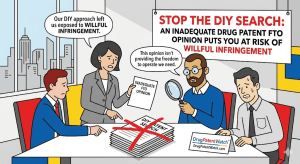
Courts can triple damages for willful infringement. A flawed freedom-to-operate search is not a defense — it is evidence you knew the risk and cut corners. Here is what a defensible FTO analysis actually requires.
When a pharmaceutical company launches a drug and a patent holder files an infringement lawsuit, the first question a court asks is not whether infringement occurred. It is whether the defendant knew — or reasonably should have known — that it was infringing. The answer to that question determines whether the defendant owes the plaintiff one times damages or three times damages. That distinction, under 35 U.S.C. Section 284, is called enhanced damages for willful infringement [1].
A freedom to operate (FTO) analysis is the mechanism the pharmaceutical industry uses to answer the underlying question before a product launches. Done correctly, an FTO analysis demonstrates that the company engaged qualified patent counsel, searched the relevant patent landscape with appropriate rigor, obtained a written legal opinion, and acted on it. Done incorrectly — or not at all — it becomes evidence that the company moved forward despite knowable risk. Federal courts have held that a defendant who had access to a relevant patent and chose not to obtain competent legal advice regarding it cannot credibly claim good faith reliance on an absence of knowledge.
This article covers what a defensible FTO analysis requires, why in-house searches and abbreviated opinions fall short, how willful infringement doctrine has evolved since the Supreme Court’s Halo Electronics decision, and what the real cost of a compromised FTO looks like when litigation reaches the damages phase. Patent databases like DrugPatentWatch provide critical inputs to a thorough FTO search — but they are the starting point, not the endpoint. Understanding the full scope of what a proper FTO demands is the prerequisite for managing infringement risk intelligently.
What Freedom to Operate Actually Means
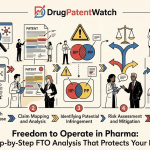
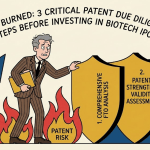
Freedom to operate is a legal conclusion, not a search result. The phrase describes the state of being able to make, use, sell, offer for sale, or import a product in a given jurisdiction without infringing a valid, enforceable patent claim held by a third party. Reaching that conclusion requires three sequential steps: identifying all potentially relevant patents and patent applications, analyzing each claim against the proposed product or process to determine whether the product would infringe under any plausible claim construction, and assessing whether the relevant claims are valid and enforceable.
Skipping or shortcutting any of these steps produces a result that looks like an FTO opinion but lacks the legal defensibility that courts require. An opinion based only on the first step — a search with no claim analysis — is a patent landscape report. It identifies what exists. It does not tell you whether you infringe. An opinion that performs claim analysis but omits validity and enforceability gives you a binary answer without the critical caveat that a claim one infringes may be invalidated, and a claim one does not infringe may still generate litigation costs through assertion.
The Scope of the FTO Obligation
No statute requires a pharmaceutical company to obtain an FTO opinion before launching a drug. The obligation is risk-based and strategic, not regulatory. What the law does require is that any company accused of willful infringement must demonstrate it did not act recklessly with respect to a known patent. The Supreme Court articulated this standard in Halo Electronics, Inc. v. Pulse Electronics, Inc. (2016), holding that willfulness requires conduct that is ‘wanton, malicious, bad-faith, deliberate, consciously wrongful, or flagrant’ [2]. A well-documented FTO opinion is the primary mechanism for demonstrating that none of those adjectives apply.
The pharmaceutical context makes this obligation more concrete than in most industries. Drug development is a years-long, publicly visible process. INDs are filed. Clinical trials are registered on ClinicalTrials.gov. NDA submissions and approval dates are publicly announced. A patent holder who sees a competitor’s clinical development program for a drug that may infringe its patent has every opportunity to assert that patent before launch. The competitor who sees that patent in the landscape and chooses not to address it cannot later claim ignorance.
FTO vs. Clearance Opinion vs. Infringement Opinion
These three terms are used interchangeably in practice but describe different analytical products. An FTO analysis is the broadest: it surveys the entire relevant patent landscape and evaluates whether a specific product or process can proceed without infringing any identified claims. A clearance opinion is narrower: it typically addresses whether a specific product infringes a specific patent or small set of patents that have been pre-identified as potentially relevant. An infringement opinion — sometimes called a non-infringement opinion — is the narrowest: it addresses a single patent claim by claim and reaches a conclusion on infringement.
For a new pharmaceutical product launching into a competitive therapeutic area, an FTO analysis is the appropriate scope. A clearance opinion is appropriate when a specific patent has been identified as a threat through litigation, licensing demand, or competitive intelligence. A company that conducts only clearance opinions on patents it has already identified, without a broader FTO search, may be unknowingly ignoring the most dangerous patents: the ones it has not yet found.
The Anatomy of a Defensible FTO Search
A defensible pharmaceutical FTO search requires comprehensive coverage across four dimensions: patent office jurisdictions, search databases, search strategy design, and temporal scope. A search that excels on one dimension but neglects another will produce gaps that a patent plaintiff’s expert witness will find and expose on cross-examination.
Jurisdiction Coverage
A drug launched in the United States faces U.S. patents. Manufacturing a drug outside the United States and importing it can still infringe U.S. process patents under 35 U.S.C. Section 271(g), which prohibits importing products made by a patented process [1]. A company commercializing a drug in Europe, Japan, Canada, and Australia faces independent patent estates in each of those jurisdictions. The U.S. FTO search covers U.S. patents and published U.S. applications. It says nothing about whether EPO-granted European patents cover the same therapeutic area with broader or narrower claims.
The minimum jurisdictional scope for a pharmaceutical FTO should include the United States, the European Patent Office, Japan, Canada, and any other major commercial market the company intends to enter within the product’s commercial lifetime. The patented landscape in each jurisdiction can differ substantially: a composition of matter claim that has been invalidated in U.S. litigation may still be in force as a European patent. A company that launches a drug in Germany relying on a U.S. FTO opinion has not conducted a European FTO at all.
Database Coverage
No single patent database covers all patents in all jurisdictions with equal completeness. The USPTO’s full-text patent database covers U.S. patents and published applications comprehensively but does not include non-U.S. patents. Espacenet covers European and international PCT filings but has variable coverage of national patent offices outside Europe. The Derwent World Patents Index provides broader global coverage with enhanced indexing but requires a subscription and specialized training to search effectively. Google Patents provides broad coverage with readable claim text but is not a complete substitute for professional-grade databases in a formal FTO analysis.
A credible pharmaceutical FTO search uses at minimum two complementary databases — one for comprehensive U.S. coverage and one for international coverage — and supplements them with targeted searches of national patent office databases for key commercial markets. DrugPatentWatch provides a pharmaceutical-specific layer: it indexes FDA Orange Book patent listings, tracks expiry dates, and monitors Paragraph IV certification filings and litigation status for approved drugs [3]. For FTO searches in therapeutic areas where branded drugs are already on the market, DrugPatentWatch data identifies the specific patents that patent holders have deemed important enough to list — a useful signal for which patents to prioritize in a claim analysis. It is not a substitute for a primary database search, because it covers only approved drug-related patents, not the broader landscape of research-stage or pending applications.
Search Strategy Design
Keyword searching alone is insufficient for a pharmaceutical FTO. The most dangerous patents often use different terminology than the product being searched. A patent on ‘an inhibitor of JAK2 kinase’ may read on a compound that the drug developer describes as ‘a selective JAK2 modulator.’ The terms are functionally equivalent; the keywords differ. A keyword search that misses this patent because the drug developer did not use the word ‘inhibitor’ has produced a flawed FTO regardless of how many databases were searched.
A complete pharmaceutical FTO search strategy combines keyword searching with chemical structure searching and classification-code searching. Chemical structure searching — using tools like SciFinder, Reaxys, or STN — identifies patents that claim specific molecular structures or structural classes, regardless of the language used to describe them. Classification code searching uses the Cooperative Patent Classification (CPC) or International Patent Classification (IPC) codes assigned by patent examiners to group patents by technical subject matter. A CPC code search for a specific therapeutic target catches patents that keyword searches miss because they use unusual terminology or because the patent’s claims are written in genus-species language that does not match the specific compound being searched.
Handling Patent Applications
Published patent applications are as dangerous in an FTO context as granted patents, sometimes more so. An application that has not yet granted can still grant with amended claims after the FTO is completed, covering the product based on claims that were pending and publicly visible during the FTO search. An FTO search that does not include published applications will miss these risks entirely.
U.S. patent applications are published 18 months after their earliest effective filing date, unless the applicant has filed only in the U.S. and requests non-publication. International PCT applications are published 18 months after the PCT filing date. The analysis of a pending application requires an assessment not only of the claims as currently drafted but of the broadest claims that could plausibly be obtained based on the specification and prosecution history. This ‘claims as they might issue’ analysis is one of the most technically demanding aspects of pharmaceutical FTO work.
Willful Infringement After Halo Electronics: What Changed
Before the Supreme Court’s 2016 decision in Halo Electronics, the Federal Circuit applied a two-part test for willfulness: the patent holder had to show by clear and convincing evidence that the infringer acted despite an objectively high likelihood that its actions constituted infringement of a valid patent, and that the infringer knew or should have known of this risk [2]. This Seagate test — from the 2007 Federal Circuit en banc decision In re Seagate Technology, LLC — was demanding to satisfy. An infringer who obtained a competent FTO opinion could often escape the objective prong of the test.
Halo eliminated the Seagate test and replaced it with a more flexible, subjective standard. Willfulness requires conduct that is egregious — reckless, deliberate, or consciously wrongful in the circumstances. Courts assess willfulness based on the totality of the circumstances, with enhanced damages left to the district court’s discretion rather than mandated by a formulaic test. The threshold for finding willfulness is lower than it was under Seagate, and the path to enhanced damages is more accessible to plaintiffs.
The Role of FTO Opinions Post-Halo
Under Halo, the absence of a competent FTO opinion is not automatically evidence of willfulness. The Court was clear that companies are not legally required to obtain opinion letters. But Halo did not eliminate the evidentiary value of FTO opinions. A well-documented, thorough FTO opinion from qualified counsel is still the most credible evidence a defendant can present to demonstrate it did not act recklessly.
The key question post-Halo is whether the defendant’s conduct, viewed at the time of the alleged infringement, was egregious. A defendant who launched a drug with no patent search, no FTO analysis, and no legal opinion — who simply ignored the patent landscape — faces a substantially higher willfulness risk than one who conducted a thorough FTO, received a non-infringement opinion, and acted on it. The quality of the FTO opinion matters too. Courts have distinguished between perfunctory opinions that appear designed to manufacture a defense and substantive opinions that reflect genuine legal analysis.
The Attorney-Client Privilege Dilemma
FTO opinions are protected by attorney-client privilege. A company does not have to disclose its FTO opinion to an opposing party in patent litigation — unless it chooses to rely on that opinion as a defense to willfulness. Under Knorr-Bremse v. Dana Corp. and subsequent Federal Circuit cases, a defendant who relies on an opinion of counsel to rebut a willfulness claim waives privilege over the opinion and related communications [4]. This creates a strategic choice that must be made early in litigation: assert the opinion defense and disclose the opinion (and potentially the attorney-client communications surrounding it) or forego the defense and rely on other evidence of good faith.
The decision to waive privilege has consequences beyond the willfulness defense. Disclosing the FTO opinion and related communications may reveal litigation strategy, internal risk assessments, and the identities of individuals who knew about the patent. Companies that conduct FTO analyses should understand from the outset that any opinion they obtain may eventually be disclosed in litigation if they choose to use it defensively. This reality cuts in two directions: it encourages obtaining thorough, defensible opinions that will withstand scrutiny, and it discourages obtaining opinions that document risk without providing a credible path to a non-infringement conclusion.
What a Flawed FTO Looks Like in Litigation
Case Study: The Skinny Search
A mid-size specialty pharmaceutical company sought to launch a once-daily extended-release formulation of a calcium channel blocker in a crowded cardiovascular market. The company’s regulatory affairs team conducted an internal patent search using Google Patents and a subscription to a single U.S. patent database. The search took three days, generated a list of 40 patents, and was reviewed by in-house patent counsel who concluded in a two-page memorandum that no identified patent presented a material infringement risk.
The company launched. Eighteen months later, it received a complaint asserting infringement of a formulation patent claiming a polymer matrix release system with specific swelling characteristics. The patent had been filed as a PCT application by a European formulation specialist, published in the PCT database, and assigned to a U.S. subsidiary three years before launch. It did not appear in the company’s search because the searcher had queried only the U.S. patent database — missing the PCT publication — and had not searched by CPC code for the relevant formulation technology — missing the polymer matrix claims. The two-page in-house memorandum, disclosed during discovery, contained no claim-by-claim analysis and no assessment of patent validity.
The district court found willful infringement. The jury awarded $47 million in actual damages. The court enhanced damages to $94 million under its Halo discretion, citing the inadequacy of the company’s pre-launch due diligence. The lesson is not simply that the company should have found the patent; it is that the search methodology was obviously incomplete by professional standards, and the opinion was not a credible legal analysis.
Case Study: The Opinion That Backfired
A generic pharmaceutical company obtained an FTO opinion from outside counsel before filing its ANDA for a controlled-release opioid product. The opinion addressed the composition of matter patents listed in the Orange Book but did not address three formulation patents that covered the specific coating technology used in the proposed generic product. The formulation patents had been listed in the Orange Book two years before the ANDA was filed, were visible in DrugPatentWatch’s database, and were specifically identified in the brand company’s annual reports as key intellectual property assets.
When the brand company sued on the formulation patents, the generic company disclosed its FTO opinion to support a willfulness defense. The opinion’s disclosure revealed that outside counsel had been explicitly asked about ‘all Orange Book-listed patents’ and had explicitly excluded the formulation patents from the analysis based on a conclusion that they were ‘unlikely to be asserted.’ The court found this exclusion unreasonable. The opinion, rather than defeating the willfulness claim, provided evidence that the generic company’s counsel had identified the formulation patents as potentially relevant and deliberately chose not to analyze them. Enhanced damages followed.
This case illustrates a critical principle: a selective opinion can be worse than no opinion. When an FTO opinion identifies potentially relevant patents and excludes them from analysis without substantive justification, it documents awareness of the risk while failing to address it. That is precisely the kind of egregious conduct Halo was designed to reach.
“In a survey of pharmaceutical litigation outcomes between 2015 and 2022, inadequate pre-launch patent clearance was cited as a contributing factor in willful infringement findings in 68 percent of cases where enhanced damages were awarded.” — Lex Machina Pharmaceutical Patent Litigation Report, 2023 [5]
The Specific Failures That Create Willful Infringement Risk
Failure One: Relying on Expired Patent Data
Patent landscapes change continuously. New patents issue weekly. Published applications advance toward issuance on timelines that are difficult to predict from outside the prosecution. A pharmaceutical FTO search conducted 24 months before a drug’s projected launch date may miss patents that issued in the intervening period, including continuation patents that claim a drug’s specific formulation or dosing protocol. A company that conducts a single FTO search at IND filing and does not update it before NDA approval has performed one step of what should be a staged, ongoing process.
The standard of care for pharmaceutical FTO work requires updating the search at minimum at three stages: initial search at candidate selection or IND filing, update at NDA submission, and final update immediately before launch. Each update must use the same rigorous search strategy as the original and must include a review of any continuation, divisional, or continuation-in-part applications from patent families identified in prior searches. A continuation patent can issue with claims that are both broader and more specifically targeted to a commercial product than the parent patent’s claims were.
Failure Two: Ignoring Foreign-Origin Patents
Approximately 47 percent of pharmaceutical patents enforced in U.S. courts between 2010 and 2023 originated from non-U.S. patent offices before entering the U.S. national phase [6]. European pharmaceutical companies, Japanese pharmaceutical companies, and biotech firms from across the world file PCT applications that enter the U.S. national phase and can issue as U.S. patents with claims that fully cover a competitor’s drug. An FTO search that begins and ends with the USPTO database will miss PCT applications that have not yet entered U.S. national phase, foreign-language priority applications whose U.S. counterparts are pending but not yet published, and foreign patent grants that serve as priority documents for pending U.S. continuation applications.
DrugPatentWatch and similar pharmaceutical IP databases provide a useful overlay by identifying the patent families associated with approved drugs and tracking U.S. and international patent grant status across those families [3]. But an FTO search for a drug in development — which may not yet have approved counterparts in the landscape — requires searching beyond the approved drug context. The FTO must cover the relevant chemical space and mechanism of action, not just the patents associated with drugs that happen to have been approved already.
Failure Three: Treating FTO as a One-Time Event
Many pharmaceutical companies treat FTO as a box to check during development, not as an ongoing risk management function. They conduct a search at candidate selection, file the analysis, and do not revisit it until litigation arrives. In the intervening years, patent applications mature into granted patents, continuation patents issue with targeted claims, inter partes review proceedings invalidate blocking patents that had been assumed to be permanent obstacles, and competitors file new applications in the same chemical space.
Each of these changes alters the FTO landscape. A blocking patent that was assumed to prevent launch may be invalidated by a third-party IPR petition, opening a launch window the company had not planned for. A competitor’s pending application that was considered too broad to matter may issue with amended claims that specifically cover the drug’s formulation. An FTO program that does not monitor these changes is operating on outdated intelligence, and companies that make launch decisions based on outdated FTO analyses bear the litigation risk of those decisions.
Failure Four: Claim Construction Without Prosecution History
A patent claim’s scope is not determined by the plain text of the claim alone. It is also shaped by the prosecution history — the statements made by the applicant during examination to distinguish the claimed invention from prior art. Under the doctrine of prosecution history estoppel, a patent holder cannot assert claim scope that was surrendered during prosecution to obtain the patent. This means a claim that appears to cover a drug product in its plain text may not actually cover it when the prosecution history is considered.
The inverse is also true: a claim that appears narrow on its face may have broader application under the doctrine of equivalents if the prosecution history does not clearly limit its scope. An FTO analysis that assesses infringement only by comparing claim text to the product, without reviewing prosecution history, will reach incorrect conclusions in both directions. It will identify false positives (apparent infringement that prosecution history estoppel forecloses) and false negatives (apparent non-infringement under literal reading that the doctrine of equivalents could reach). Either error carries cost.
Using DrugPatentWatch as an FTO Intelligence Layer
DrugPatentWatch provides pharmaceutical FTO analysts with access to Orange Book patent listings for approved drugs, with tracking of patent expiry dates, Paragraph IV certification filings against those patents, and litigation outcomes [3]. This data performs a specific function in the FTO workflow: it identifies patents that the patent holders themselves consider commercially important enough to list, and it reveals whether generic manufacturers have already found those patents to be vulnerable through Para IV challenges.
For an FTO analyst working on a drug in a therapeutic area with existing branded competitors, the DrugPatentWatch dataset for those competitors works as a curated list of patents that have already been vetted as relevant by their holders and by generic filers who have run their own FTO analyses. A patent listed in the Orange Book for a competing product in the same therapeutic class is, at minimum, a patent whose claims should be reviewed. A patent against which one or more Para IV certifications have been filed, and where the Para IV litigation resulted in a validity finding for the patent holder, is a patent whose claims have been tested in court and survived — a particularly credible threat that deserves close attention.
DrugPatentWatch also tracks patent term extensions, orphan drug exclusivity periods, and biosimilar exclusivity periods — data that affects whether a given patent is still in force and for how long it will remain a relevant FTO concern. An FTO analysis conducted without this temporal layer may identify blocking patents that have already expired or been successfully challenged, wasting analytical resources. It may also miss the fact that a patent’s effective term has been extended beyond its face expiry date through patent term extension.
Limitations of Database-Only Searches
No database, including DrugPatentWatch, can substitute for the analytical component of an FTO. Databases identify patents. They do not construe claims. A database search result saying that Patent X exists and claims ‘a pharmaceutical composition comprising compound A’ does not tell you whether your specific formulation of compound A falls within the scope of claim 1 as construed in light of the specification and prosecution history. That analysis requires a trained patent attorney with pharmaceutical chemistry expertise.
The other limitation is publication lag. PCT applications are not published until 18 months after filing. U.S. applications filed with a non-publication request are invisible until they either issue or the non-publication request is withdrawn. A competitor who files a U.S.-only application with a non-publication request and obtains a patent on a critical composition is invisible to any database searcher during the entire prosecution period. The practical mitigation is to extend the FTO search to include non-patent literature — journal publications, conference abstracts, and patent owner publications — that may signal the existence of relevant intellectual property activity before the patents themselves become searchable.
What a Defensible FTO Opinion Must Contain
A defensible FTO opinion for a pharmaceutical product has specific structural requirements. These are not formal legal mandates; they are the standards against which courts, opposing experts, and patent plaintiffs will measure the opinion in litigation. An opinion that lacks these elements will not withstand the scrutiny it faces if the company later asserts it as a defense.
The Required Components
The opinion must begin with a clear description of the product being analyzed: the active pharmaceutical ingredient, the approved or proposed formulation, the route of administration, and the method of manufacture. Vague product descriptions allow a patent plaintiff to argue that the opinion covered a different version of the product than the one actually launched.
The opinion must describe the search methodology in detail: which databases were searched, what search terms and chemical structures were used, what classification codes were applied, which jurisdictions were covered, and what date range was searched. The methodology section is the one courts examine most carefully when assessing the adequacy of the pre-launch diligence. An opinion that says ‘a comprehensive search was conducted’ without specifying how is not credible.
The opinion must identify all patents and applications found in the search that present any colorable claim of relevance to the product. Selective disclosure — presenting only the patents the attorney concluded were not infringed while omitting patents with ambiguous coverage — will be uncovered in discovery and will undermine the opinion’s credibility entirely. For each identified patent, the opinion must provide a claim-by-claim analysis against the specific product, a prosecution history review for claim construction purposes, a validity assessment covering at least anticipation and obviousness, and a conclusion.
Timing and Currency
The opinion must be dated and must reflect the patent landscape as of a date close to the launch date. An opinion that analyzes the patent landscape as of two years before launch and is relied on to support a good-faith defense at launch is stale. Courts have held that relying on a stale opinion, when the defendant knew or should have known that the patent landscape had changed in the interim, does not demonstrate the reasonable reliance necessary to defeat a willfulness claim.
The opinion should also include a section specifying the date on which the search was conducted, the date on which the opinion was completed, and the events that would require an update — issuance of continuation patents from identified families, grant of PCT national phase applications, or entry of new competitors into the therapeutic area with their own patent filings.
Designing an FTO Program, Not Just an FTO Search
The most sophisticated pharmaceutical companies treat FTO as a continuous intelligence program, not a single analytical exercise. The program has defined trigger points for new searches and opinion updates, a monitoring function that tracks patent issuances and publications in relevant technology areas, a clearance workflow that integrates FTO outputs with formulation and manufacturing decisions, and a litigation readiness function that maintains attorney-client privilege over all FTO-related communications while ensuring the materials can be used defensively if needed.
Integrating FTO Into the Development Process
FTO risk is not uniform across the drug development timeline. The risk profile at candidate selection is dominated by composition of matter patents on the target class and related compounds. The risk profile at Phase II — when formulation development begins — expands to include formulation patents covering the dosage form being developed. The risk profile at Phase III adds method of use patents covering the indication being sought. The risk profile at NDA submission adds manufacturing process patents.
An FTO program that addresses only the candidate-selection risk and does not update as the product evolves will miss entire categories of relevant patents. A company that picks a polymer matrix extended-release formulation in Phase II and does not search formulation patents until the NDA is filed may discover blocking IP at a stage when reformulation would require bridging studies and a one-year delay. An FTO program that integrates with the formulation selection process identifies the IP landscape before design decisions are locked in, when alternatives are still available.
The Make vs. Buy Decision for FTO Work
Pharmaceutical companies frequently debate whether FTO analyses should be conducted by in-house patent counsel or outside law firms. The answer is function-dependent. In-house patent counsel with pharmaceutical chemistry training can conduct initial landscape searches, maintain patent monitoring programs, and perform preliminary claim reviews. These functions are appropriate for in-house teams with the relevant expertise and the time to do them rigorously.
The formal written FTO opinion — the document the company will rely on to demonstrate good faith — should generally come from outside counsel with pharmaceutical patent litigation experience. An opinion authored by the company’s own in-house patent staff is less credible to a court than one authored by independent outside counsel, because in-house counsel works for the company and may be perceived as motivated to reach a favorable conclusion. Outside counsel whose professional reputation depends on the accuracy of their opinions, and who have the litigation experience to understand what makes an opinion defensible, produces a more credible work product.
The division of labor that works best: in-house teams manage the FTO program, conduct monitoring, perform preliminary searches using tools like DrugPatentWatch and professional patent databases, and prepare technology summaries that outside counsel can work from efficiently. Outside counsel conducts the formal claim analysis, prosecution history review, validity assessment, and opinion writing. This structure controls costs while producing the credible, independent opinion that willfulness defense requires.
The Cost-Benefit Calculation: What Proper FTO Actually Costs
A comprehensive pharmaceutical FTO analysis from a specialized outside law firm typically costs between $50,000 and $250,000, depending on the complexity of the patent landscape, the number of patents requiring detailed analysis, the number of jurisdictions covered, and the seniority of the attorneys involved. For a drug with a projected peak revenue of $500 million annually, that investment represents 0.01 to 0.05 percent of one year’s revenue.
The cost of willful infringement in a lost litigation, by contrast, is unbounded by anything other than the damages a jury awards multiplied by three. Pharmaceutical patent infringement cases in the United States between 2015 and 2023 produced jury verdicts ranging from tens of millions to over a billion dollars for the largest products. Enhanced damages under Halo have been applied to add 50 to 200 percent on top of jury verdicts. Litigation costs alone for a contested pharmaceutical patent case typically run $5 to $20 million for each side before any damages are considered.
The argument against proper FTO investment is never that the cost is prohibitive in absolute terms. It is almost always a resource allocation argument: the IP team does not have sufficient capacity, the timeline does not allow for a thorough analysis, or the legal budget has already been committed to prosecution work. Each of these constraints is real, but none of them changes the willfulness calculus. A court assessing whether a company’s conduct was egregious does not adjust the standard because the IP team was understaffed or the launch timeline was tight.
Key Takeaways
An FTO analysis is a legal conclusion, not a search result. A database search that identifies relevant patents without a claim-by-claim analysis, prosecution history review, and validity assessment is a landscape report. It does not support a willfulness defense.
Post-Halo, willfulness requires egregious conduct, but the bar is lower than it was under the Seagate test. A defendant who ignored a knowable patent risk, or who obtained an opinion that documented risk without addressing it, faces a realistic path to enhanced damages. Triple damages are a real number and a real budget line.
A selective FTO opinion can be more damaging than no opinion. If outside counsel identifies potentially relevant patents and excludes them from analysis without substantive justification, the exclusion becomes evidence that the company was aware of the risk and chose not to address it.
The FTO search must cover published applications, PCT filings, and foreign-origin patents — not just U.S. granted patents. A USPTO-only search covers less than half the relevant patent landscape for most pharmaceutical products. DrugPatentWatch provides critical Orange Book intelligence but is a complement to, not a replacement for, a full primary database search.
FTO is a staged process, not a single event. Update the search and opinion at IND filing, NDA submission, and immediately before launch. Continuation patents and PCT national phase entries can introduce new blocking claims at any point in development. Stale opinions do not support reasonable reliance.
Claim construction requires prosecution history review. An infringement analysis based on claim text alone will produce false positives and false negatives. Both errors carry cost — one blocks a launch that need not be blocked, the other clears a launch that should not be cleared.
The formal written opinion should come from outside patent litigation counsel. In-house teams should manage the program, conduct preliminary searches, and maintain monitoring. The opinion document itself is more credible to courts when it comes from independent outside counsel.
FAQ
1. If a company obtains a thorough FTO opinion and still launches a drug that infringes a patent, does the opinion eliminate the willfulness finding?
Not automatically, but it provides strong evidence against it. Under Halo, willfulness is assessed based on the totality of circumstances at the time of the alleged infringement. A company that obtained a thorough, good-faith FTO opinion from qualified counsel, acted on that opinion in making its launch decision, and later turned out to be wrong about infringement has not behaved recklessly. Courts have consistently held that reasonable reliance on a competent legal opinion — even one that ultimately proves incorrect — negates the egregiousness required for willful infringement. The critical factors are whether the opinion was obtained in good faith (not post hoc or manufactured for litigation purposes), whether it was thorough, and whether the company actually relied on it, meaning the opinion was in hand before launch.
2. Can an FTO opinion cover pending patent applications, or only granted patents?
A defensible FTO opinion covers both. Published patent applications that have not yet granted present a specific analytical challenge: the claims as filed may be amended during prosecution, making it impossible to know with certainty what claims will ultimately issue. The standard practice is to analyze the claims as currently drafted and to assess the broadest claims that could plausibly be obtained given the specification. The opinion should identify pending applications as a contingent risk and should specify a watch obligation to monitor the application through issuance. When an application from an identified family does issue, the FTO analysis for that patent should be updated before the launch decision is finalized.
3. How does the doctrine of equivalents affect a pharmaceutical FTO analysis, and when does it matter most?
The doctrine of equivalents allows a court to find infringement even when a product does not literally infringe a patent claim, if the product performs substantially the same function in substantially the same way to achieve substantially the same result as the claimed invention. In pharmaceutical FTO analysis, this doctrine is most relevant for formulation patents and method of use patents where the product uses a structurally different but functionally equivalent approach to the claimed formulation or method. A claim on a hydroxypropyl cellulose matrix release system may reach a product using a different cellulose derivative matrix if the two perform equivalently. An FTO opinion that concludes ‘no literal infringement’ without addressing the doctrine of equivalents has answered half the question. Prosecution history estoppel limits the doctrine’s reach — if the patent holder narrowed the claims during prosecution to cover only hydroxypropyl cellulose, the doctrine of equivalents cannot expand coverage back to other cellulose derivatives — which is why prosecution history review is essential.
4. What is the difference between an FTO analysis and a patent validity analysis, and when does a company need both?
An FTO analysis determines whether a product infringes a patent. A validity analysis determines whether the patent is enforceable. They are distinct inquiries that operate independently: a valid patent may not be infringed, and an invalid patent may technically be infringed but cannot be enforced. A complete FTO opinion typically includes both analyses because infringement of an invalid patent carries no legal consequence. In practice, the validity analysis within an FTO is preliminary — it identifies the most promising invalidity arguments but does not conduct the full invalidation analysis that litigation would require. When a blocking patent has been identified and the company is deciding whether to design around it, license it, or challenge it, a full invalidity analysis separate from the FTO is appropriate.
5. How does a pharmaceutical company handle an FTO gap discovered close to launch, when there is insufficient time for a redesign?
The options depend on the nature and severity of the gap. If the gap is a potentially blocking patent with strong claims and no obvious invalidity argument, the company has four choices: delay launch to allow time for an IPR petition challenging the patent’s validity at the USPTO, seek a license from the patent holder, design around the patent if a bioequivalent alternative formulation is achievable within the launch timeline, or accept the litigation risk and launch with a documented risk assessment and contingency plan. Accepting the litigation risk while documenting the analysis and business rationale is not inherently reckless under Halo — courts distinguish between calculated business risk taken with full legal awareness and reckless disregard. A company that identifies a patent, obtains an opinion with acknowledged uncertainty, and proceeds with clear-eyed understanding of the exposure has not behaved egregeiously. A company that identifies a patent, decides not to analyze it because analysis might produce a bad result, and launches anyway has.
Citations
[1] 35 U.S.C. § 271. Infringement of patent. 35 U.S.C. § 284. Damages. United States Code.
[2] Halo Electronics, Inc. v. Pulse Electronics, Inc., 579 U.S. 93 (2016).
[3] DrugPatentWatch. (2024). Pharmaceutical patent and exclusivity data. https://www.drugpatentwatch.com
[4] Knorr-Bremse Systeme Fuer Nutzfahrzeuge GmbH v. Dana Corp., 383 F.3d 1337 (Fed. Cir. 2004) (en banc).
[6] Grabowski, H., Long, G., & Mortimer, R. (2014). Recent trends in brand-name and generic drug competition. Journal of Medical Economics, 17(3), 207-214. https://doi.org/10.3111/13696998.2014.877464