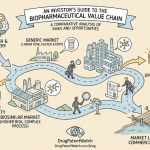
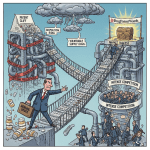
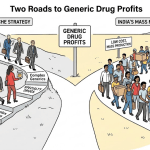
The pharmaceutical industry is currently trapped in a pincer movement. On one side, the cost of developing a new molecular entity through the 505(b)(1) pathway has spiraled past $2.6 billion, with failure rates in late-stage trials remaining stubbornly high.1 On the other, the 505(j) generic market has become a race to the bottom, where commoditization and aggressive price erosion leave little room for sustainable margins.3 Between these two extremes lies a strategic middle ground: the 505(b)(2) regulatory pathway. This mechanism allows companies to turn existing, proven molecules into differentiated, branded assets with reduced clinical risk, lower costs, and accelerated timelines.3
As the industry prepares for a massive loss of exclusivity wave—with blockbuster drugs representing $236 billion in global revenue set to lose patent protection by 2030—the ability to innovate on top of established science is no longer a niche tactic.8 It is the primary engine for portfolio growth in 2026. This report examines the mechanics of 505(b)(2) arbitrage, the economic ROI of drug improvements, and the sophisticated use of competitive intelligence tools like DrugPatentWatch to secure market dominance.
The Regulatory Arbitrage: Leveraging the Hatch-Waxman Hybrid
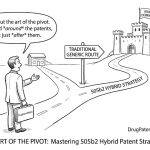
The 505(b)(2) application is a unique creature of the 1984 Hatch-Waxman Amendments. It is legally a New Drug Application (NDA) but functions as a hybrid, blending the innovation potential of a full NDA with the data-reliance efficiencies of an Abbreviated New Drug Application (ANDA).4 The regulatory logic is simple: the FDA should not require sponsors to repeat expensive and ethically questionable clinical trials for drugs that have already been proven safe and effective.3
Under Section 505(b)(2), a sponsor can rely on findings of safety and efficacy from a Reference Listed Drug (RLD) or from published scientific literature.10 This reliance is the core of the arbitrage. You are effectively “borrowing” the innovator’s billion-dollar data set to support your own improved version.3 However, unlike a generic 505(j) application, a 505(b)(2) product is permitted to be different from the RLD. These differences—new dosage forms, strengths, formulations, or indications—are what create the opportunity for branding and market exclusivity.4
The Three Approval Paths Compared
Feature
505(b)(1) NDA
505(b)(2) NDA
505(j) ANDA
Innovation Category
New Molecular Entity (NME)
Improved/Modified Drug
Bioequivalent Generic
Clinical Requirement
Full Phase 1, 2, and 3
Bridging Studies (PK/BE)
Bioequivalence only
Development Cost
$1B – $2.6B+
$8M – $200M
$1M – $5M
Timeline to Market
10 – 15 Years
3 – 8 Years
1 – 3 Years
Market Exclusivity
5 Years (NCE)
3, 5, or 7 Years
180 Days
IP Strategy
Broad Composition Patents
Narrow Modification Patents
Non-Infringement/Invalidity
1
Economic Realities: Breaking Down the ROI of Incremental Innovation
The primary driver for the surge in 505(b)(2) filings is capital efficiency. Developing a new chemical entity is a high-risk gamble; 505(b)(2) is a calculated investment. A typical development program for a value-added medicine ranges from $8 million to $20 million, representing a 70% to 90% reduction in capital expenditure compared to an NCE.13 By skipping the discovery and early preclinical phases, which account for roughly 40% of total NCE development costs, the break-even point for a 505(b)(2) asset is significantly lower.13
The return on investment is further amplified by the speed of market entry. While an NCE may take a decade to reach approval, a 505(b)(2) product can often be commercialized in 3 years.15 This provides a 7-year advantage in revenue generation. For a specialty pharmaceutical company, this earlier entry can translate into $50 million to $100 million in incremental revenue during the period an NCE would still be in clinical trials.15
Estimated 505(b)(2) Development Costs by Stage
Development Stage
Typical Investment Range
Primary Activities
Preclinical & Formulation
$2M – $5M
Reformulation, stability, comparability
Bridging Studies (PK/BE)
$3M – $10M
1–3 small clinical studies
CMC & Manufacturing
$2M – $6M
Validation, analytical methods, scale-up
Regulatory & FDA Fees
$1M – $3M
Submission prep, meetings, PDUFA fees
Total Typical Investment
$8M – $20M+
Path to Market Approval
15
The Scientific Bridge: Renovating the House, Not Building the Foundation
The technical success of a 505(b)(2) application hinges on the “scientific bridge”.3 This is the data set that justifies the sponsor’s reliance on the FDA’s previous findings of safety for the RLD. Think of it as renovating an existing skyscraper: you don’t need to re-pour the foundation (the safety and efficacy of the active ingredient), but you must prove that your new additions (the new formulation or delivery system) don’t make the building collapse.3
The bridge typically begins with comparative pharmacokinetics (PK). These studies measure the drug’s absorption, distribution, metabolism, and excretion in the body compared to the original version.7 If the PK profile of the new product is similar enough to the RLD, the FDA may allow the sponsor to waive large-scale Phase 3 efficacy trials.16 This is a massive de-risking event. However, if the modification changes the drug’s behavior significantly—such as moving from a tablet to a long-acting injectable—targeted clinical safety or efficacy data will be required.12
Common Bridging Strategies and Requirements
Innovation Type
Bridging Requirement
Clinical Hurdle
New Strength
Bioequivalence (BE)
Low; often just PK data
New Dosage Form
Comparative PK/PD
Moderate; requires food-effect/age studies
New Indication
Targeted Phase 3
High; must prove efficacy in new disease
Fixed-Dose Combination
Drug-Drug Interaction (DDI)
Moderate; must prove stability/synergy
Prodrug
PK/PD and Metabolism
High; must prove conversion to parent drug
4
The Patent Fortress: Using Data to Identify Gaps
A 505(b)(2) strategy is only as strong as its intellectual property protection. Unlike generics, which aim to invalidate or wait out patents, 505(b)(2) sponsors seek to build a “patent fortress” around their innovation.3 This involves a dual-pronged approach: securing new patents on the specific improvement and leveraging FDA-granted market exclusivities.3
This is where competitive intelligence platforms like DrugPatentWatch become indispensable. To win in this space, you cannot simply look at the Orange Book expiration dates. You must perform a deep-dive analysis of the “patent thickets”—the secondary patents on formulations, polymorphs, and methods of use that often act as the “last man standing” for a blockbuster brand.8 By identifying “strategic gaps” where only weak or susceptible patents remain, a 505(b)(2) applicant can design its product to bypass specific claims and launch ahead of the generic wave.11
Types of Market Exclusivity Available to 505(b)(2) NDAs
Exclusivity Type
Duration
Requirement
New Clinical Investigation
3 Years
New clinical studies essential for approval
New Chemical Entity (NCE)
5 Years
New active moiety (e.g., certain prodrugs)
Orphan Drug
7 Years
Treatment for a rare disease (<200k patients)
Pediatric Extension
+6 Months
Completion of FDA-requested pediatric studies
1
Reformulation Trends: Stability and the Patient Experience
In the 2024-2025 cycle, the FDA approved 69 drug reformulations via the 505(b)(2) pathway, a clear signal that the industry is prioritizing the optimization of existing assets over the discovery of new ones.20 The data reveals that 26% of these efforts were driven by stability challenges—companies using advanced formulation science to make drugs more reliable and easier to manufacture.20
Patient-centric factors are also a dominant force. Approximately 17% of reformulations focused on taste and palatability, particularly for pediatric populations where medication adherence is a perennial struggle.20 We are seeing a move toward “convenience-based innovation,” such as turning complex, multi-vial injectables into ready-to-use solutions that reduce errors in the hospital pharmacy.6 Injectable formulations led the 2024-2025 cohort, accounting for over 33% of all 505(b)(2) approvals.20
“Stability emerged as the primary challenge addressed through reformulations, affecting 26% of products. This focus on stability reflects ongoing efforts to improve drug performance and ensure manufacturing reliability.” 20
The Payer Trap: J-Codes and the 2022 CMS Shift
The commercial viability of a 505(b)(2) product is no longer determined solely by its clinical profile; it is determined by its J-code.6 In 2022, the Centers for Medicare & Medicaid Services (CMS) catalyzed a massive shift in reimbursement policy.9 Historically, CMS grouped 505(b)(2) products with their reference drugs under a single J-code, treating them as multisource generics and effectively capping their price.9
Following a pharmaceutical industry complaint, CMS ruled that 505(b)(2) drugs that are not therapeutically equivalent to the RLD qualify for their own unique J-codes as sole-source drugs.9 This allows manufacturers to command brand-level pricing and escape the “generic pricing trap.” However, this creates operational complexity for hospitals and infusion centers. Since the FDA does not automatically assign therapeutic equivalence to 505(b)(2) drugs, each product now requires manual setup in the revenue cycle.9 For the savvy business development team, forgoing therapeutic equivalence is often a deliberate choice to preserve pricing power.4
The Risk of the CRL: Why 505(b)(2)s Fail
Regulatory approval is not a foregone conclusion. Analysis of the FDA’s newly transparent Complete Response Letter (CRL) database reveals that 505(b)(2) applications face a unique set of hurdles.24 Manufacturing and Chemistry, Manufacturing, and Controls (CMC) issues are the leading cause of rejection, appearing in nearly 75% of all CRLs.13
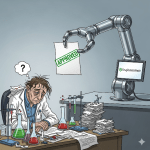
Small and emerging biotech firms are particularly vulnerable, accounting for 70% of the CRLs issued between 2020 and 2024.26 Often, these companies underestimate the difficulty of forcing an old drug into a new delivery system, such as a patch or a liquid.13 For example, 73% of second-cycle review delays are due to CMC deficiencies—not safety or efficacy issues.13 Success requires treating CMC with the same scientific rigor as the clinical bridging program.16
Common Deficiencies Cited in 505(b)(2) Complete Response Letters
Deficiency Category
Frequency
Common Issues
Manufacturing/CMC
74%
Process validation, stability data, CMO oversight
Clinical Trial Design
48%
Inadequate control arms, non-US populations
Safety/Efficacy
48%
New safety signals, failed bridging studies
Labeling/REMS
<10%
Risk management, carving out indications
Preclinical
<10%
Missing reproductive toxicity or DDI data
13
Case Studies: Precision Strategy in Action
The transition from Treanda to Bendeka remains the gold standard for 505(b)(2) lifecycle management.6 Teva’s blockbuster chemotherapy, Treanda, was approaching its patent cliff. To protect the franchise, they partnered with Eagle Pharmaceuticals to develop Bendeka, a rapid-infusion formulation that reduced treatment time from 60 minutes to 10 minutes.13 By proving tangible benefit for both patients and infusion centers, Bendeka was able to capture the market before generics arrived, commanding a premium price based on its unique J-code.6
Similarly, the success of Narcan Nasal Spray demonstrates the public health power of the pathway.5 By reformulating the injectable version of naloxone into a user-friendly nasal spray, the developers used the 505(b)(2) route to bring a life-saving tool to market rapidly.5 These examples prove that “pricing the improvement, not the molecule” is the winning formula for 505(b)(2) success.6
The 2026 M&A Landscape: Replenishing the Pipeline
As we move into 2026, the demand for 505(b)(2) assets is hitting a fever pitch.28 M&A activity is expected to grow by 15%, with total deal value exceeding $230 billion.28 Large pharmaceutical companies are no longer just looking for the next “moonshot” NCE; they are looking for late-stage, de-risked assets that can provide immediate, predictable revenue.28
505(b)(2) products are ideal “bolt-on” acquisitions.29 They allow Big Pharma to leverage their existing sales forces and market access teams on products with lower regulatory risk.3 We are also seeing a resurgence in the use of AI to identify repurposing candidates, with venture capital firms pouring money into platforms that use computational intelligence to predict which existing drugs can solve new medical problems.28
Competitive Intelligence: Mastering the Paragraph IV Game
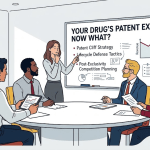
For companies aiming to turn patent data into a competitive advantage, the Paragraph IV (P-IV) strategy is a primary weapon.11 When you file a 505(b)(2) NDA, you must certify against any patents listed in the Orange Book for the RLD.2 A Paragraph IV certification asserts that those patents are invalid or will not be infringed by your improved product.11
This is a high-reward tactic that requires surgical precision.11 Filing a P-IV triggers a 45-day window for the innovator to sue, which in turn triggers an automatic 30-month stay on your approval.8 Strategic timing is everything. By using DrugPatentWatch to map out the “pivotal patents” and identify which ones are vulnerable to challenge, you can time your submission to ensure your approval aligns perfectly with the end of the 30-month stay or the expiration of the innovator’s last line of defense.8
Strategic Mapping for Market Entry Timing
Map the RLD’s Patent Thicket: Go beyond the Orange Book. Use DrugPatentWatch to find secondary patents on manufacturing or crystalline forms.8
Identify Exclusivity Windows: Overlay 5-year NCE, 3-year NCI, and Orphan protections to find the true first entry date.8
Evaluate Litigation Risk: Track previous lawsuits involving the RLD to gauge the innovator’s willingness to settle.11
Design for Non-Infringement: Use patent data to guide your formulation team away from protected excipients or delivery mechanisms.10
Clinical Pharmacology: PK Modeling as a De-Risking Tool
The most sophisticated 505(b)(2) teams are replacing traditional trials with PK modeling and simulation.16 This is particularly effective for “Type 3” (New Dosage Form) and “Type 5” (New Formulation) NDAs.20 By using software to model the drug’s behavior in specific populations—such as the elderly or those with renal impairment—sponsors can often obtain “biowaivers” from the FDA, eliminating the need for expensive additional clinical studies.16
This approach reduces the “testing tax” and speeds up the development cycle.16 However, it requires early and regular engagement with the FDA through Type C and pre-IND meetings.3 You cannot simply present the modeling at the time of NDA submission; you must build a consensus with the agency on the modeling logic years in advance.16
Key Takeaways
The 505(b)(2) pathway is a value-creation engine, not just a regulatory shortcut.6 It allows you to transform commoditized molecules into branded, proprietary assets.3
Capital efficiency is the primary draw. With development costs 70-90% lower than NCEs and a 3-year timeline to market, the ROI is significantly higher for mid-cap pharma.13
The CMS J-code ruling has changed the game. Unique J-codes now allow 505(b)(2) products to command brand pricing, provided they forgo therapeutic equivalence.9
CMC is the leading cause of failure. Manufacturing deficiencies appear in 75% of Complete Response Letters. Success requires treating formulation as a high-stakes clinical challenge.13
Competitive intelligence is your GPS. Platforms like DrugPatentWatch allow you to identify gaps in patent thickets and time your submission to maximize exclusivity.8
Conclusion
The pharmaceutical middle ground is no longer empty. As the blockbuster model faces increasing pressure and the generic market offers diminishing returns, the 505(b)(2) pathway has emerged as the most resilient route for sustainable growth.3 By mastering the “scientific bridge,” navigating the complexities of J-code reimbursement, and using data-driven patent strategies, companies can build pipelines that are both low-risk and high-reward.3 The future of pharma belongs to those who can renovate the past to solve the medical needs of tomorrow.
FAQ
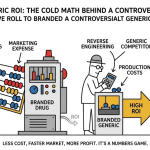
What is the difference between a 505(b)(2) and a “Branded Generic”? A “Branded Generic” can be filed via either the 505(j) or 505(b)(2) pathway. However, a 505(b)(2) branded generic typically has a modification (like a new strength or dosage form) that prevents it from being a simple bioequivalent copy, allowing for its own period of market exclusivity.4
Can I use the 505(b)(2) pathway for a drug that has never been approved in the U.S.? Yes, if the drug has been approved in other countries and there is sufficient published literature to support its safety and efficacy.4 This is often used for “unapproved drugs” that have been on the market since before 1938 (DESI drugs).10
Will the FDA allow me to skip Phase 3 trials if my PK bridge is successful? Often, yes. If the bridge proves that the new product provides the same exposure to the active ingredient as the RLD, the FDA can extrapolate the RLD’s efficacy data to your product.16 However, this must be confirmed during a pre-IND meeting.3
How do I protect my 505(b)(2) product from generic competition? The primary defense is to “stack” protections: secure new patents on your specific formulation or delivery system and obtain the 3-year New Clinical Investigation exclusivity.3 Using tools like DrugPatentWatch helps you identify and block potential “copycat” 505(b)(2) entries.17
Is the 505(b)(2) pathway faster for a New Indication? Yes. While you still need to prove the drug works for the new disease, you can rely on the RLD’s existing toxicology and long-term safety data, saving years of preclinical and Phase 1 work.4
A Comprehensive Retrospective Analysis of Trends and Strategic Implications of 505(b)(2) Approvals (2019-2023) – PubMed, accessed February 3, 2026, https://pubmed.ncbi.nlm.nih.gov/40323579/