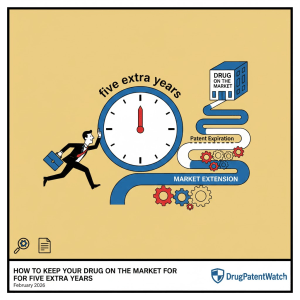
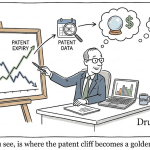
In the pharmaceutical business, time is the only currency that truly matters. Inventors often spend a decade and billions of dollars developing a new medicine, only to watch the 20-year patent clock tick away while the drug sits in a laboratory or a regulator’s inbox.1 By the time a product finally reaches a pharmacy shelf, the “effective patent life”—the period where the company actually earns a return without generic competition—has often shriveled to just seven or 12 years.1 This compression creates an economic crucible. If a blockbuster drug generates $10 million in revenue every single day, losing even a few months of exclusivity is not a legal footnote; it is a billion-dollar catastrophe.5
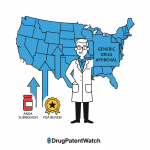
The Hatch-Waxman Act, passed in 1984, was designed to patch this leaky bucket. It created a “grand bargain”: generic manufacturers got a faster path to market through the Abbreviated New Drug Application (ANDA) process, and in exchange, innovator companies received a mechanism to restore some of the patent life lost to the regulatory bureaucracy.1 This mechanism, Patent Term Extension (PTE), is the primary tool for maximizing a drug’s lifecycle. However, the game has changed. Federal regulators and the courts are no longer passive observers of how companies list these patents. The recent crackdown on “junk” listings in the Orange Book and the landmark Teva v. Amneal decision have turned patent strategy into a defensive necessity.11
The mechanics of restoration: Deconstructing 35 U.S.C. 156
Defining eligibility for the extension
Not every patent can be saved. To qualify for an extension under 35 U.S.C. § 156, a patent must meet a series of strict criteria. First, the term of the patent must not have expired before the application is submitted.16 This sounds simple, but in the chaos of a multi-year clinical trial, missing a filing window is an unforced error that can destroy a franchise. Second, the patent must never have been extended under this section before—the statute allows only one extension per approved product.1
The third requirement is that the application must be submitted by the owner of record or their agent.8 Fourth, the product must have been subject to a regulatory review period before its commercial marketing.16 Finally, the permission for commercial marketing must be the first permitted use of the product under the law.10 This “first permitted use” rule is a frequent stumbling block. If a company approves a new salt or ester of an active ingredient that has already been approved in a different form, the new version generally does not qualify for a PTE.10
The 60-day filing window and the 4:30 PM rule
Precision is the hallmark of a successful IP team. An application for PTE must be submitted within a 60-day window beginning on the date the product receives marketing approval.8 This window is unforgiving. Under the America Invents Act, the timing is even more specific: if the FDA transmits its approval after 4:30 P.M. Eastern Time on a business day, or on a weekend or holiday, the “permission date” is deemed to be the next business day.8
For global companies, this requires a synchronized “war room” approach. Decisions made in a foreign jurisdiction can impact U.S. filings. Sterne Kessler’s 2025 insights suggest that IP teams should docket deadlines for foreign PTE equivalents immediately upon receiving approval in markets like Japan or the EU, where requirements vary significantly from American law.20
Navigating the formula: How to claw back lost days
The regulatory review period: Testing vs. approval
The length of an extension is not a random grant; it is the result of a mathematical formula that bifurcates the regulatory process. The “Testing Phase” for a human drug begins when the Investigational New Drug (IND) application becomes effective and ends when the NDA or BLA is submitted.1 The “Approval Phase” begins on the date of that submission and ends on the date the product is approved.16
Deductions are the silent killers of patent life. Any period during which the applicant did not act with “due diligence” is subtracted day-for-day.1 Furthermore, any time in the testing phase that occurred before the patent was actually issued is also deducted.1 This creates a massive incentive to file and secure patents as early as possible in the discovery phase.2
The arithmetic of statutory caps
Even if the formula yields a result of seven years, the law imposes absolute ceilings. The first is a five-year maximum: no extension can exceed 60 months.1 The second, and often more restrictive, is the 14-year cap.1 This rule dictates that the total remaining patent term, including the extension, cannot exceed 14 years from the date of the drug’s approval.1
Caps and Limits
Statutory Provision
Strategic Impact
PTE Maximum
5-Year Limit
Caps recovery for drugs with exceptionally long development timelines.
Exclusivity Ceiling
14-Year Limit
Penalizes products that are approved relatively quickly after patent issuance.
One Patent Rule
1 Patent per Product
Forces a choice between composition, method, or manufacturing patents.
Active Ingredient
First Permitted Use
Prevents extensions for simple salt/ester changes or “evergreening.”
Source: 1
For a drug that takes 12 years to reach the market, the 14-year cap is rarely an issue. But for a product that reaches approval in six years, the cap might truncate a five-year extension down to just one or two years.1 Identifying these limits early allows a company to manage investor expectations and adjust its R&D portfolio accordingly.
The one-patent rule: Choosing your champion
Composition of matter vs. secondary patents
Since a company can only extend one patent per approved product, the selection process is the most important tactical decision in lifecycle management.16 The “Composition of Matter” (CoM) patent is usually the primary candidate because it provides the broadest possible protection—it claims the molecule itself.2 However, the “effective life” of a CoM patent might already be nearing its end by approval.
In some cases, a “Method of Use” or “Formulation” patent that was filed later in the development cycle might have a natural expiration date that is already beyond the CoM patent.20 If the later patent is eligible for a PTE, it might push the total exclusivity period several years further than an extension on the CoM patent would.20 Sophisticated teams use tools like DrugPatentWatch to model these different scenarios, comparing the “terminal value” of each patent candidate to maximize the revenue tail.21
Reissue patents and the sugerammadex precedent
What happens if the original patent has a flaw? Companies often use the reissue process to correct errors or refine claims. In Merck v. Aurobindo, the Federal Circuit clarified that a PTE can be applied to a reissue patent based on the issue date of the original patent.24 This is vital for maintaining protection when a patent has been challenged or needs correction late in the game. The court reasoned that the purpose of Hatch-Waxman is to compensate owners who were “disabled” from benefiting from their invention during the regulatory review.24 If the original patent had claims directed to the drug, the extension is valid.24
Interim extensions: Bridging the gap
The approval phase bridge (d)(5)
Sometimes the regulatory clock is slower than the patent clock. If a patent is set to expire while the FDA is still reviewing the application, the owner can apply for an interim extension under 35 U.S.C. § 156(d)(5).16 These are granted in one-year increments as long as the product is in the “approval phase” and would be eligible for a full PTE once approved.16 This prevents a “monopoly gap” where a drug could technically be generic for a few months before the innovator receives its restoration.
The processing bridge (e)(2)
A different problem arises when the drug is approved, but the USPTO is still crunching the numbers for the PTE. Under Section 156(e)(2), the Director can grant interim extensions of up to one year to keep the patent alive while the administrative processing is completed.16 These “bridge” extensions are pure administrative grace, ensuring that the innovator’s rights do not lapse due to a backlog at the patent office.
Due diligence challenges: When the timeline is a target
Third-party petitions and the “degree of attention”
The length of a PTE is not just a conversation between the company and the FDA. The law allows any person to file a “due diligence petition” during the 180-day window after the FDA publishes its initial determination of the regulatory review period.18 A successful petitioner must prove that the applicant failed to act with the “degree of attention, continuous directed effort, and timeliness” expected of a reasonable person.18
“A lack of due diligence by the applicant during the regulatory review period may be taken into account in calculating the PTE period, potentially stripping years off the extension.” — 35 U.S.C. § 156(d)(2)(B).27
This creates a “litigation of the timeline.” Competitors will scour every interaction with the FDA—every delay in responding to a clinical hold, every postponed meeting—to find a gap they can use to reduce the extension.17 High-performing regulatory teams maintain a “chronology of events” specifically to defend against these challenges, treating every day in the FDA queue as a potential legal battleground.17
The Orange Book: A mandatory map of the fortress
The ministerial role of the FDA
The Orange Book is more than a database; it is the map of a company’s intellectual property fortress. Every NDA holder is required to list patents that claim the drug substance, drug product, or method of use.15 The FDA’s role in this process is “ministerial”—it does not check if the patents are valid or even if they actually cover the drug; it simply lists what the company provides.28
This lack of vetting created an environment where companies could list patents that only tangentially related to the drug—such as manufacturing processes or packaging—to trigger the automatic 30-month stay on generic approval.15 But the era of the “unvetted” Orange Book is over.
The OBTA and the DS/DP distinction
The Orange Book Transparency Act (OBTA) of 2021 was a turning point. it codified what could and could not be listed, specifically excluding patents for manufacturing, metabolites, and intermediates.9 It also introduced “DS” (Drug Substance) and “DP” (Drug Product) flags to provide more granularity for competitive analysis.23 For business development teams, these flags are an early warning system. If a competitor’s “fortress” is built entirely on “DP” patents (formulations) rather than “DS” (the molecule itself), the fortress may be easier to siege through a Paragraph IV challenge.7
Orange Book delisting: The new front in lifecycle strategy
The FTC’s policy of scrutiny
In late 2023, the Federal Trade Commission (FTC) issued a policy statement that changed the risk calculus for IP departments. The FTC declared that “improperly” listing patents in the Orange Book could be considered an unfair method of competition under Section 5 of the FTC Act.30 This was not an idle threat. By May 2025, the FTC had issued three rounds of warning letters to companies like Novartis, Teva, and Mylan, challenging over 300 patents.13
The FTC’s focus is on “junk listings” that delay generic entry. If a brand manufacturer uses an improper listing to trigger a 30-month stay, it may now face an antitrust investigation.13 For investors, this adds a new layer of risk: the “exclusivity tail” they are modeling might be cut short not by a generic’s clinical success, but by a regulator’s delisting order.11
The “Active Ingredient” standard in Teva v. Amneal
The legal theory behind the FTC’s crackdown was tested and validated in Teva v. Amneal. Teva had listed five patents covering the dose counter and mechanical components of its ProAir HFA inhaler.11 Amneal challenged these listings, arguing that a patent for a piece of plastic (a dose counter) does not “claim the drug” as required by the statute.11
The Federal Circuit sided with Amneal. It held that to be listable in the Orange Book, a patent must claim at least the active ingredient of the approved drug.11 The court rejected the argument that because the inhaler contains the drug, every part of the inhaler is the drug.11 This decision has forced a mass re-evaluation of drug-device combination portfolios across the industry.11
The $10 million-a-day decision: ROI of exclusivity
Quantifying the “Patent Cliff 2.0”
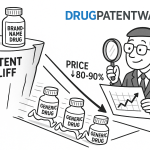
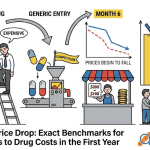
The industry is currently facing what analysts call “Patent Cliff 2.0.” Between 2025 and 2029, over $90 billion in revenue is at risk as blockbusters lose protection.37 For a small-molecule drug, the cliff is catastrophic: revenues typically plummet by 80% to 90% within the first year of generic entry.1
Blockbuster Asset
Company
Therapeutic Area
Sales at Risk
Keytruda
Merck
Oncology
~$29 Billion
Eliquis
BMS / Pfizer
Anticoagulant
~$12 Billion
Stelara
J&J
Immunology
~$10 Billion
Ozempic
Novo Nordisk
Diabetes/Obesity
~$13.9 Billion
Source: 5
When a drug generates $12 billion in annual sales, like Eliquis, every single day of exclusivity is worth roughly $32.8 million.39 In this context, the ROI of a successful PTE application is higher than almost any other activity in the pharmaceutical chain. It is “pure, high-margin cash flow” added to the end of the valuation model.21
Case study: The $14 billion pediatric turbocharger
While PTE extends a single patent, pediatric exclusivity is the “turbocharger” of the patent system. Under the Best Pharmaceuticals for Children Act (BPCA), if a company completes FDA-requested studies in children, it receives an additional six months of market exclusivity.1 Crucially, this extension attaches to every patent and regulatory exclusivity period listed for the drug in the Orange Book.1
For a drug like Merck’s Keytruda, which generates nearly $30 billion annually, a six-month extension represents roughly $14.5 billion in additional revenue.5 A JAMA Pediatrics study found that for cancer drugs, the mean investment for these trials was just $39 million, but they generated an average revenue gain of over $300 million per drug.42 For a blockbuster, the return-to-cost ratio is astronomical, making it arguably the highest ROI activity in the entire industry.38
Competitive intelligence in the post-exclusivity world
Turning patent data into competitive advantage
In the “super-cliff” era of 2025-2030, static spreadsheets are no longer sufficient. Companies are now using Agentic AI to monitor millions of patents, clinical trial updates, and regulatory filings in real-time.4 The goal is no longer just to “protect” an internal drug, but to “attack” the exclusivities of competitors.
Sophisticated CI teams use “Filing Velocity Heatmaps” and “White Space Analysis” to identify where a competitor’s patent thicket is vulnerable.45 For example, if DrugPatentWatch data shows that a competitor’s primary protection is a device patent that does not recite the active ingredient, a generic company can anticipate a successful delisting challenge and plan a “Day 1” launch that catches the brand manufacturer off-guard.7
The “Shared Exclusivity” dilemma and duopoly economics
For generic firms, the “180-day exclusivity” prize is the golden ticket. The first company to file a Paragraph IV challenge against a listed patent receives six months of “duopoly” market conditions, where they can capture 60% to 80% of their total lifetime profits.7
However, brand manufacturers have a defensive counter-move: the Authorized Generic (AG). An AG is the branded drug sold in generic packaging. Because it is the same drug, it does not need a new approval and can be launched immediately.7 Launching an AG during a first-filer’s 180-day window “destroys” the generic’s duopoly profits, reducing their revenue by 40% to 50%.7 This “scorched earth” strategy is now a standard part of the brand’s defensive playbook.
Strategic advice for the new regulatory landscape
Drafting for listability: The laundry list approach
The Teva v. Amneal decision has fundamentally changed how mechanical patents are drafted. IP counsel can no longer allow device-patent drafters to “stay in their own lane”.36 Every device patent intended for the Orange Book must now explicitly name the active ingredient.11
Strategic advice from industry experts includes adding dependent claims that create a “laundry list” of drugs that could be used with the device.36 By stating, “The device of Claim 1, wherein the medication is selected from the group consisting of,” the company secures a patent that not only protects its own drug but could also be a valuable licensing asset for other products in the same delivery class.36
The duty of disclosure and inequitable conduct
Obtaining a PTE requires total transparency. There is a continuous “duty of disclosure” during the application process.20 In the In re Zetia antitrust litigation, the patent owner was accused of inequitable conduct for withholding material information from the USPTO during the PTE review period.20 For business professionals, this means that the regulatory and legal departments must be perfectly aligned. A typo or a “slapstick” administrative error in an FDA submission can lead to “draconian” requirements for information that delay or jeopardize the entire extension.27
Future outlook: Centralization and reform
EU SPC reforms and global harmonization
The US is not the only market where patent terms are in flux. Europe uses Supplementary Protection Certificates (SPCs), which offer up to five years of additional protection.1 Historically, SPCs were fragmented, requiring applications in every individual EU member state.1 However, the EU is moving toward centralized and unitary procedures that will simplify the process for global manufacturers.49
Meanwhile, markets like China and Japan are becoming more sophisticated. Japan’s PTE system is notably more flexible, allowing multiple extensions for different indications on a single patent.1 China amended its laws in 2020 to align more closely with Western restoration standards.1 For a global pharmaceutical firm, maximizing ROI now means coordinating these different regimes into a single, synchronized global exclusivity strategy.
Key Takeaways
PTE is a mathematical right: It is not a gift from the regulator; it is a calculated restoration of time lost. TheIssuance Date of the patent is your most important leverage point—every day the patent sits in the USPTO during clinical trials is a day of credit you can never claw back.1
The 14-year cap is absolute: If your drug is approved quickly, you may be capped regardless of how much time was “lost.” Always model your “worst-case” exclusivity based on 14 years from the NDA approval date.1
Active ingredient is the new standard: Following Teva v. Amneal, device-only patents are an Orange Book liability. If your patent doesn’t name the drug, it won’t trigger the 30-month stay.11
FTC scrutiny is the new risk: Improperly listing patents can now trigger antitrust investigations and delisting counterclaims. IP strategy must include an audit of current listings for compliance with the Teva standard.30
Pediatric exclusivity is the highest-leverage move: Six months of additional time for a blockbuster like Keytruda or Eliquis is worth billions in high-margin cash. It is the single most effective way to offset a patent cliff.7
CI is agentic and predictive: Strategic teams use platforms like DrugPatentWatch to monitor competitor weaknesses and identify windows for generic entry years before they happen.21
Frequently Asked Questions
1. Can I extend more than one patent for a single drug? No. Under 35 U.S.C. § 156(c)(4), only one patent may be extended for the regulatory review period of a single product. Companies must choose the patent that provides the most commercial value, which is usually the composition of matter patent, but may be a method of use patent if it has a later natural expiration.1
2. How does a terminal disclaimer affect my PTE? While a terminal disclaimer can limit Patent Term Adjustment (PTA) for USPTO delays, it does not prevent you from receiving a Patent Term Extension (PTE) for FDA delays. The courts have ruled that PTE is added to the date the patent would otherwise expire, even if that expiration was moved up by a terminal disclaimer.20
3. What is the difference between PTE and pediatric exclusivity? PTE is a formal extension of a specific patent’s term granted by the USPTO. Pediatric exclusivity is an additional six-month period of “marketing exclusivity” granted by the FDA. The PTE only extends one patent, while pediatric exclusivity attaches to the end of every patent and exclusivity listed for that drug.1
4. Why is the “4:30 P.M. Rule” so important for filing? The 60-day window for a PTE application starts on the date of approval. If the FDA sends the approval at 4:31 P.M. on a Friday, the “date of approval” for filing purposes becomes the following Monday. Missing this by even one day can result in the total forfeiture of the extension.8
5. Are biologics subject to the same Orange Book delisting rules? Technically, biologics are listed in the “Purple Book,” and the legal framework for biosimilars (the BPCIA) is different from the Hatch-Waxman Act. However, the Federal Circuit’s focus on “active ingredients” and the FTC’s scrutiny of “junk” listings are signaling a broader shift toward tighter standards for all drug-device combination products.9
Estimating the Value of Adding 30 Days to the 180-Day Market Exclusivity of the First-to-File Generic Drug Manufacturer – PMC – NIH, accessed February 1, 2026, https://pmc.ncbi.nlm.nih.gov/articles/PMC12796020/