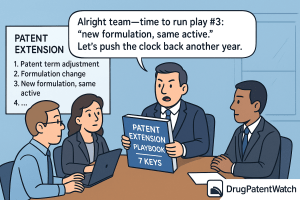
The average branded drug reaches pharmacy shelves with roughly 10 to 12 years of effective patent life remaining. The average top-50 blockbuster retires from the market with closer to 20. That gap is not an accident. It is the product of a deliberate, multi-decade legal and regulatory strategy that every major pharmaceutical company runs on its highest-revenue assets, and that every investor, generic manufacturer, IP litigator, and policy analyst needs to understand in precise mechanical detail.
This page covers every layer of that strategy: the statutory foundations, the secondary patent architectures, the regulatory exclusivity stacking, the device IP overlays, the litigation mechanics, and the antitrust battleground where the whole system is now being tested. Each section is structured around the questions that drug companies, investors, and competitors actually type into search engines. Read it in order or jump to the section that is directly relevant to what you are tracking.
Why Effective Patent Life Is Not 20 Years for Any Major Drug
A patent filed on a new chemical entity the day a Phase I trial starts has roughly 8 to 10 years of its 20-year term consumed before FDA approval. That leaves 10 to 12 years of branded exclusivity on paper. In practice, it is shorter, because not all of that period coincides with peak commercial sales, and a patent challenge can shorten it further.
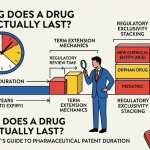
Patent Term Extension (PTE) under the Hatch-Waxman Act restores some of that lost time, but the statutory cap is five years, and the 14-year effective-exclusivity ceiling means many drugs only recover two to three years in practice. The European Supplementary Protection Certificate (SPC) has a matching five-year cap with a 15-year ceiling from the first EU marketing authorization.
Neither mechanism, on its own, gets a company to the exclusivity duration it needs to fully monetize a drug that cost $2 billion and took 12 years to develop. That gap between what statute provides and what financial models require is where the rest of the strategies in this playbook originate.
The U.S. Patent Term Extension Mechanics Every Investor Should Know
How the PTE Calculation Actually Works, and Where It Caps Out
The PTE formula under 35 U.S.C. § 156 has two components. The first is half the time between IND effectiveness and NDA/BLA submission. The second is the full time between NDA/BLA submission and FDA approval. The sum cannot exceed five years, and the total remaining patent life post-approval cannot exceed 14 years.
For a drug approved after a standard review, the approval phase alone is often 12 months. A typical 18-month Phase I-II-III trial period contributes nine months (50% credit). The raw PTE is roughly 21 months in that scenario. For drugs that spent 14 years in development, the formula often yields results above five years, but the cap cuts it to five. That is why the most commercially important drugs rarely extract the full theoretical extension.
The 60-day filing window following FDA approval is absolute. Missing it forfeits the right entirely. There is no grace period.
Which Patents Are Actually Eligible for PTE, and Why It Is Not Just the Compound Patent
This is frequently misunderstood. The statute extends to any patent claiming “a product, a method of using a product, or a method of manufacturing a product” that was subject to regulatory review. The compound patent is the obvious candidate, but a manufacturing process patent or a method-of-use patent covering a specific approved indication can also receive a PTE, provided the other eligibility criteria are met.
Only one patent can be extended per regulatory review period, but the brand company chooses which patent to extend. The rational choice is usually the patent with the longest remaining term after the PTE calculation is applied, since that maximizes the post-extension expiry date. A company holding both a compound patent expiring in 2027 and a formulation patent expiring in 2029 will typically extend the formulation patent, particularly if the compound patent is already facing Paragraph IV challenges.
How EU SPCs Differ From U.S. PTEs in Ways That Affect Biosimilar Timing
The structural difference between the U.S. and EU systems shows up most clearly in biologics. In the EU, an SPC is a sui generis right that attaches to the specific product authorized in the marketing authorization, not the patent. An SPC on Humira (adalimumab) in Germany protects that product in that country for the duration of the certificate. In the U.S., a PTE on one of AbbVie’s adalimumab patents protects all uses covered by that patent.
The practical consequence: EU regulators issued SPCs for Humira on a product-specific basis and did not allow the same layering of secondary patents that AbbVie built in the U.S. Humira biosimilars entered the EU in October 2018. They did not enter the U.S. market until January 2023, a gap of more than four years attributable primarily to the U.S. patent thicket, not to any fundamental difference in the underlying science.
Japan’s PTE framework adds a wrinkle not available in the U.S. or EU: multiple patent extensions are permitted on a single drug for different approved indications, and multiple patents can be extended for one drug approval. That feature makes Japan’s system the most expansive for lifecycle management purposes and explains why multinational companies file disproportionately large Japanese patent portfolios relative to market size.
Secondary Patents: The Engine of Exclusivity Extension
Why Formulation Patents Outlast Compound Patents on Most Major Drugs
The compound patent on a new small molecule typically expires 10 to 14 years post-launch. By that point, the drug is at peak commercial maturity. The formulation patents filed during Phase III or post-approval, covering extended-release delivery systems, salt forms, or optimized dosing regimens, often expire four to seven years later. When a generic company files an ANDA, it typically faces not one patent but a family of formulation patents that must each be either designed around or challenged individually.
Bristol-Myers Squibb’s strategy with metformin (Glucophage) illustrates this. The original immediate-release compound patent expired and generics entered the market. Glucophage XR, the extended-release formulation, held its own separate patent position with a later expiry and required a separate ANDA/Paragraph IV challenge. The result was two sequential periods of branded revenue from a single active ingredient, separated by a generic entry window in between.
Tricor (fenofibrate), managed by Abbott through four successive reformulations, is the more aggressive version of the same strategy. Each reformulation came with new patents, new dosage strengths, and product switches designed to migrate prescriptions to the newly protected formulation before the prior version’s patents expired. The FTC investigated this practice, resulting in a settlement consent order that became a reference document in subsequent product-hopping cases.
Why Extended-Release Formulations Command a Premium Beyond the Patent
Extended-release patents do two things simultaneously. They protect against generic substitution on the new formulation itself. They also shift physician prescribing patterns to the new product, making a simple generic substitution of the original immediate-release formula commercially less effective even after it becomes available. If a physician prescribes “Glucophage XR” rather than metformin, a pharmacist cannot substitute the immediate-release generic without the physician’s authorization in most U.S. states.
That behavioral lock-in is commercially durable even after the ER patent expires, because prescribing habits persist. The lifecycle management value of an extended-release formulation is therefore the sum of the patent extension period plus the post-patent prescribing inertia.
The Chiral Switch: How AstraZeneca Built a $6 Billion Drug From a Molecule It Already Owned
Omeprazole (Prilosec) was a racemic mixture of two enantiomers. The S-enantiomer, esomeprazole, was isolated, separately patented, and launched as Nexium in 2001 before the Prilosec compound patent expired. AstraZeneca spent heavily marketing Nexium as a superior acid-reduction therapy, and U.S. peak annual sales reached $6.3 billion.
The clinical evidence for superiority over generic omeprazole was disputed, but the commercial execution was not. By the time cheap omeprazole generics were widely available, Nexium was embedded in prescribing patterns as a distinct product with its own formulary position, its own patient adherence relationships, and its own patent-protected standing.
The chiral switch is replicable wherever a racemic drug has a dominant therapeutic enantiomer. Escitalopram (Lexapro) from racemic citalopram (Celexa), which Lundbeck and Forest Laboratories used to extend SSRI revenue by roughly six years, is the second most cited example. The strategy requires early chemistry work and the ability to prove non-obviousness of the isolated form, which courts have scrutinized increasingly closely since the early 2000s.
What Makes a Polymorph Patent Enforceable—and When Courts Throw Them Out
Crystalline polymorphs—different solid-state arrangements of the same active molecule—can produce measurable differences in solubility, bioavailability, and stability. If those differences are clinically meaningful, the polymorph is likely patentable. If they are not, the patent faces an obviousness challenge.
AstraZeneca’s polymorph patent on the magnesium salt of omeprazole was held valid in Europe in key markets and was used to prevent generic entry for several years beyond the base compound patent. The same approach has been attempted with varying success across multiple therapeutic categories, and the enforceability analysis depends heavily on the jurisdiction and the specific clinical differentiation data available.
How Drug Repurposing Creates New Patent Life From Off-Patent Molecules
The IP Architecture of Method-of-Use Patents After Compound Expiry
When a compound patent expires, the molecule enters the public domain. Any manufacturer can make it. What remains protectable is the specific method of using that molecule to treat a newly discovered condition, provided the method is novel and non-obvious. Merck’s finasteride lifecycle is the textbook case.
Proscar (finasteride 5 mg) for benign prostatic hyperplasia was approved in 1992. The observation that finasteride inhibited 5-alpha-reductase in hair follicles, the same mechanism responsible for its prostate effect, led to new clinical trials and a method-of-use patent for androgenetic alopecia. Propecia (finasteride 1 mg) launched in 1997, targeting a completely different commercial market, at a lower dose, under a different brand, with new method-of-use patent protection.
Eli Lilly ran a parallel play with fluoxetine. Sarafem—the same molecule, rebranded, at the same dose, in new packaging—was FDA-approved for premenstrual dysphoric disorder in 2000, just as Prozac generic competition was beginning. The commercial impact was modest compared to Proscar/Propecia, but the IP logic was identical: new indication, new method-of-use patent, new exclusivity window.
How 505(b)(2) Applications Enable Repurposing Without Full Clinical Redundancy
The 505(b)(2) pathway allows an NDA applicant to rely on the FDA’s previous safety and efficacy findings for an already-approved drug, supplemented with new data specific to the new use. This reduces the clinical development cost for a repurposing program by 40 to 60 percent compared to a full 505(b)(1) application. For a company with an expiring franchise, the 505(b)(2) route makes repurposing economically viable even at modest commercial scale.
The method-of-use patent that accompanies a successful 505(b)(2) creates the skinny label problem for generics. If a generic manufacturer carves out the newly protected indication from its label (a Section viii carve-out under Hatch-Waxman), it may still face an induced infringement claim if the FDA determines the carved-out indication drives a substantial share of prescriptions. The GSK v. Teva litigation over carvedilol (Coreg) for heart failure, decided in favor of GSK by the Federal Circuit in 2021, confirmed that courts will examine prescription data to determine whether a generic’s label, in practice, encourages infringement of a patented method-of-use even when that indication is formally excluded.
Oncology combination regimens generate some of the most durable method-of-use patent portfolios in pharma. A drug approved as a monotherapy has one patent family. The same drug approved in combination with an immune checkpoint inhibitor, a targeted therapy, or a chemotherapy backbone has additional method-of-use patents covering each approved combination. Bristol-Myers Squibb holds method-of-use patents on nivolumab (Opdivo) combinations across multiple indications that expire years after the core nivolumab compound patent.
Merck’s pembrolizumab (Keytruda) portfolio operates identically. The compound patent on pembrolizumab expires in 2028 in the U.S. The method-of-use and combination-therapy patents on specific Keytruda indications extend materially past that date, though the commercial exposure post-compound patent is substantial regardless of method-of-use protection—biosimilar pembrolizumab competitors will target the broadest, highest-revenue indications regardless of patent position on narrower uses.
Why Combination Products Are Now the Default Biologic Defense Strategy
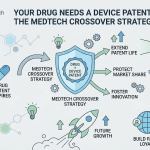
How Drug-Device Combination Patents Build a Second Wall Around Biologic Revenue
A biosimilar manufacturer replicating an originator biologic faces two distinct IP barriers: the biologic itself and the delivery system. For many large-molecule drugs, the originator has spent years patenting the autoinjector, the prefilled syringe mechanism, the needle shield, the dose dialing function, and the human factors design. Each of these is a separate patent family, some held by the device manufacturer under license, some by the originator directly.
A biosimilar applicant must demonstrate biosimilarity through structural and functional analysis of the drug, which is expensive and time-consuming. If the originator’s approved device is the one covered by clinical bridging studies in the BLA, and the biosimilar manufacturer wants to use a different device, it must conduct its own device-drug compatibility studies, adding time and cost.
The EpiPen situation—where epinephrine, a century-old molecule with no patent protection, supported a multi-billion dollar branded franchise at Mylan through device patents alone—shows the strategy at its most extreme. The autoinjector patents on the EpiPen device covered needle delivery mechanics, dose verification, and training features. Generic epinephrine autoinjectors had to design around each of those patents or wait for them to expire. Congressional scrutiny and FTC investigation followed, but the core IP strategy was never declared unlawful.
Why AstraZeneca’s Symbicort Device Patent Strategy Has Lasted Longer Than the Drug Patents
Symbicort (budesonide/formoterol) is a fixed-dose combination delivered through the Turbuhaler dry powder inhaler device. AstraZeneca holds patents on the device mechanics, the aerosol formulation, and the combination of the two active ingredients. The drug component patents have faced Paragraph IV challenges successfully. The device patents have proven more durable because the aerosol delivery and device mechanics involve distinct engineering claims that are harder to design around without affecting the drug’s performance characteristics.
Generic inhaled combinations targeting Symbicort must demonstrate pharmaceutical equivalence of the drug and device substitutability from a regulatory standpoint, which requires device bioequivalence data. The FDA’s draft guidance on complex inhaled products has created additional regulatory complexity that extends the practical timeline for generic entry beyond what the patent expiry calendar alone would suggest.
What the Orphan Drug Act Does to Competitive Timelines—and Why It Is Being Weaponized at Scale
How Seven Years of Orphan Drug Exclusivity Blocks FDA Approval, Not Just Patent Enforcement
Orphan Drug Exclusivity (ODE) is categorically different from a patent. A patent gives the holder the right to sue an infringer. ODE gives the holder a statutory prohibition on FDA approval for the same drug for the same orphan indication. There is no infringement action to file; the FDA simply will not approve a competing application during the exclusivity period.
For a biologic in an indication with fewer than 200,000 U.S. patients, seven years of ODE provides complete market protection regardless of the patent estate. A company with a weak or narrow patent portfolio can still hold off competition by securing the orphan designation and completing the approval.
The IQVIA analysis of 503 orphan drugs found that ODE was the longer-lasting protection compared to patent exclusivity for 60 of those drugs. In rare disease oncology, where development timelines are compressed through accelerated approval, Breakthrough Therapy designation, and rolling NDA review, a drug can reach approval with several years of compound patent life remaining—and then receive seven years of ODE that outlasts all of the patents.
Strategic Orphan Designation for Sub-Populations of Common Diseases
The FDA allows orphan designation for a “subset” of a common disease if the subset itself affects fewer than 200,000 people and has distinct pathophysiology. Companies have used this provision to seek orphan status for rare subpopulations of common cancers, rare genetic subsets of metabolic diseases, and pediatric variants of common conditions.
If approved for the orphan subset and subsequently approved for the broader common disease (which can happen through a separate NDA or sNDA), the ODE on the rare subset coexists with the broader approval. The competitive dynamics differ: for the subset, no competing drug can receive FDA approval for that specific orphan use during the seven-year period, even if competitors enter the broader indication freely.
The FTC and academic researchers have documented this practice. A Health Affairs analysis of FDA orphan approvals between 2000 and 2022 found a growing share of orphan designations covering sub-populations of common diseases, with the commercial value of each designation accruing primarily to the brand company rather than to patients with the rare sub-indication.
Pediatric Exclusivity: The Six-Month Extension That Routinely Pays Back 100x Its Development Cost
Why One Pediatric Trial Can Add $1 Billion to a Drug’s Exclusivity Value
The Best Pharmaceuticals for Children Act (BPCA) grants six months of additional exclusivity attached to every existing patent and regulatory exclusivity for a drug’s active moiety when the sponsor completes an FDA-requested pediatric study. The key word is “attached”—the six months extends the end date of every patent and exclusivity that would otherwise expire.
For Pfizer’s Lyrica (pregabalin), the compound patent and several formulation patents were all set to expire at the end of December 2018. Lyrica had U.S. annual sales of $3.5 billion. Pfizer completed a pediatric study in response to an FDA Written Request, and the agency granted pediatric exclusivity in November 2018, pushing generic entry from December 30, 2018 to June 30, 2019. That six months protected roughly $1.75 billion in sales.
The return on investment for the pediatric program itself—clinical trial costs typically in the $20 to $50 million range for a single study—is among the highest of any lifecycle management investment in pharma. It is also one of the few strategies that regulators have explicitly endorsed as beneficial to public health, since the pediatric data serves genuine clinical purposes.
The Stacking Effect: How Pediatric Exclusivity Multiplies Across Multiple Expiry Dates
When a drug has multiple patents expiring at different times, the pediatric extension pushes each one back by six months. A compound patent expiring in 2026, a formulation patent expiring in 2027, and an ODE period ending in 2029 all get extended by six months if the BPCA Written Request is fulfilled. This stacking effect can materially extend the last date on which any competitor could receive FDA approval.
The commercial value is therefore not just the six months added to the earliest-expiring patent, but the cumulative delay to full generic market access across all protection layers. For drugs with complex multi-patent estates, this can translate to more than six months of effective delay to the first generic entry if the last patent or exclusivity before the extension is the binding constraint.
How AbbVie Built a 247-Patent Wall Around a Single Drug
The Full Architecture of the Humira Patent Thicket and What It Actually Achieved
AbbVie’s adalimumab (Humira) is the reference case for patent thicket construction in biologics, and the numbers bear examination. I-MAK’s analysis documented 247 U.S. patent applications filed on Humira. Eighty-nine percent of those were filed after the drug’s initial 2002 FDA approval. Nearly half were filed after 2014, more than a decade post-launch. The cumulative effect was to push the last U.S. patent expiry on a Humira-related claim to 2034—a potential 39-year span from the original biologics license to the final patent expiry.
In Europe, AbbVie filed materially fewer patents. The EU Humira portfolio contained approximately eight substantively distinct patent families. The U.S. portfolio, by contrast, contained an estimated 73 core patents, of which roughly 80 percent were non-patentably distinct from one another according to a Journal of Law and the Biosciences analysis published in 2022. Biosimilars entered the EU in October 2018. They did not launch in the U.S. until January 2023, a 52-month delay attributable entirely to the U.S. patent estate.
The healthcare system cost of that delay has been quantified. One analysis estimated $14.4 billion in excess spending on adalimumab in the U.S. attributable to the delayed biosimilar entry. AbbVie’s total Humira revenue through 2023 exceeded $200 billion, the majority from the U.S. market, where the thicket held.
How AbbVie’s Settlement Strategy Extended the U.S. Monopoly to 2023
AbbVie’s patent litigation strategy against Humira biosimilar developers was not primarily about winning individual cases. It was about using the litigation process as a delay mechanism. When Amgen, Samsung Bioepis, Sandoz, Mylan, Fresenius Kabi, and other biosimilar developers filed biologics license applications (BLAs) for their adalimumab products, AbbVie initiated patent litigation under the Biologics Price Competition and Innovation Act (BPCIA) biosimilar patent dance.
The settlements that followed were structured to allow U.S. entry in January 2023 in exchange for dropping patent challenges. AbbVie also granted licenses to its device patents as part of the settlement terms. From AbbVie’s standpoint, a negotiated 2023 U.S. entry was preferable to contested litigation that might have resulted in earlier entry if patents were invalidated.
From the biosimilar developers’ standpoint, a license and a certain January 2023 launch date was preferable to years of additional litigation with an uncertain outcome. The public paid the carrying cost of that private arrangement through five more years of branded-drug pricing.
The Antitrust Challenge to Humira’s Patent Thicket and Why the Seventh Circuit Let AbbVie Win
Humira antitrust litigation filed by insurance companies and labor union health funds argued that AbbVie’s construction and enforcement of the Humira patent thicket was an unlawful monopolization scheme. The plaintiffs argued that the sheer number of duplicative, overlapping patents was itself evidence of anticompetitive intent.
In August 2022, the Seventh Circuit affirmed dismissal. Judge Frank Easterbrook’s opinion set the current limiting principle: the patent statute does not cap the number of patents a company may hold, and accumulating many valid patents is not, standing alone, a Sherman Act violation. The court distinguished between asserting invalid patents (potentially actionable) and holding a large number of patents (not actionable without further anticompetitive conduct).
That ruling established the legal floor for patent thicket antitrust liability as it currently stands, and it is the reason the FTC has shifted its attention to upstream patent quality mechanisms—terminal disclaimer rules, Orange Book listing challenges, and IPR proceedings—rather than antitrust litigation directly.
How the Hatch-Waxman 30-Month Stay Became a Guaranteed Delay Mechanism
What the 30-Month Stay Actually Does and Why Brand Companies Sue Every ANDA Challenger
When a generic company files an ANDA with a Paragraph IV certification—asserting that the brand’s listed patents are invalid or not infringed—the brand company can sue for patent infringement. The filing of that suit, within 45 days of receiving the Paragraph IV notice, triggers an automatic 30-month stay of FDA final approval for the generic. The stay runs regardless of whether the infringement claim has any merit.
For a drug with $3 billion in annual U.S. sales, a 30-month stay is worth $7.5 billion in protected revenue, less the legal costs of the litigation. The expected value of filing suit is almost always positive. This is why every major brand company sues on every Paragraph IV challenge to every significant patent, regardless of the strength of the asserted patent.
The 30-month stay system was designed to give courts time to resolve patent disputes before generic entry. Its effect in practice has been to create a near-universal two-and-a-half-year delay in generic approval timelines for contested drug patents. The FDA cannot approve the ANDA while the stay is in effect unless the district court enters a judgment of non-infringement or invalidity, or the brand and generic agree to a settlement.
Why First-to-File ANDA Status Is a Commercial Asset Worth Hundreds of Millions
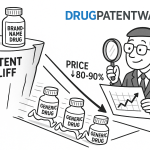
The first generic company to file a Paragraph IV ANDA receives 180 days of marketing exclusivity upon approval. During those 180 days, no other generic may launch. This exclusivity position allows the first-to-file generic to price at a modest discount to the brand—typically 20 to 30 percent—rather than the 80 to 90 percent discount that characterizes a fully contested generic market with multiple competitors.
For a drug with $2 billion in annual U.S. branded sales, 180 days of first-filer exclusivity can generate $400 to $600 million in generic revenue for a single company. That value drives generic companies to file Paragraph IV challenges early, aggressively, and on the broadest possible range of listed patents, accepting the 30-month stay as a standard commercial cost.
Reverse Payment Settlements: The Legal Geography After FTC v. Actavis
What FTC v. Actavis (2013) Actually Changed About Pay-for-Delay
The Supreme Court’s 5-3 decision in FTC v. Actavis, Inc. held that reverse payment settlements—where the brand pays the generic to drop a patent challenge and delay entry—are not immune from antitrust scrutiny. Justice Breyer’s majority opinion established that such settlements must be analyzed under the “rule of reason,” with the size of the payment serving as a signal of potential competitive harm.
What Actavis did not do: it did not declare reverse payment settlements per se illegal. It did not require courts to presume anticompetitive harm from large payments. It did not create a bright-line standard for when a payment is too large. The rule of reason analysis requires fact-specific inquiry into the competitive effects of each individual settlement.
The practical result is that cash payments from brand to generic, which were the most common pre-Actavis mechanism, became legally risky and commercially unattractive. Companies quickly shifted to non-cash value transfers structured to be less visible.
How Pay-for-Delay Evolved After Actavis Into Non-Cash Value Transfers
Post-Actavis settlements frequently involve the brand company agreeing not to launch an authorized generic (AG) during the first-filer’s 180-day exclusivity period. An AG—a brand-marketed generic launched by the originator under the ANDA pathway—competes directly with the first-filer generic and typically erodes the first filer’s price advantage by 30 to 50 percent. Agreement not to launch an AG is commercially equivalent to a cash payment to the generic company.
Other non-cash value structures include: branded distribution agreements where the generic company receives co-promotion revenue on the brand’s product; licensing arrangements for other drugs in different therapeutic categories; supply agreements at favorable terms; and upfront payments structured as “litigation settlement” fees rather than as exclusivity payments.
The FTC has challenged several of these structures, arguing that they represent the same anti-competitive exchange as a cash payment dressed in different financial clothing. Courts have applied the Actavis rule of reason to non-cash transfers with mixed results, and the legal landscape remains unsettled.
The GLP-1 Patent Wars: What Novo Nordisk and Eli Lilly Are Defending Through 2035
Why the GLP-1 Patent Landscape Is More Complex Than It Appears
Semaglutide (Ozempic, Wegovy) and tirzepatide (Mounjaro, Zepbound) are the two most commercially significant drug franchises in pharma as of 2025. Their combined annual revenue is projected to exceed $50 billion by 2026. Both face eventual patent cliffs, but the structure of those cliffs is considerably more complicated than the expiry dates on the compound patents suggest.
Novo Nordisk’s core semaglutide composition-of-matter patent (U.S. Patent No. 9,457,066) expires in 2032. But Novo holds additional patents on the specific GLP-1 peptide modifications, on the fatty acid side chains that enable once-weekly dosing, on the autoinjector device, on formulations optimized for subcutaneous delivery, and on manufacturing processes for producing the molecule at commercial scale. The device and formulation patents extend into 2033 and beyond in some cases.
Eli Lilly’s tirzepatide patents cover the dual GIP/GLP-1 agonist mechanism, the specific amino acid sequence, and the dosing regimen across multiple weight management and diabetes indications. The compound patent expiry is currently anticipated around 2036, with formulation and device patents extending further. Lilly has also sought orphan designations for specific obesity-related comorbidity indications, which would layer ODE protection atop the patent estate.
What Makes GLP-1 Manufacturing a Meaningful Barrier to Biosimilar and Generic Entry
Semaglutide is not a biologic in the statutory sense—it is a 31-amino acid synthetic peptide small enough to be classified as a small molecule drug for regulatory purposes. Generic manufacturers can file ANDAs rather than BLAs for semaglutide copies. But the synthetic chemistry required to produce a semaglutide generic with pharmaceutical-grade purity, at scale, and at a cost that supports a generic price point is substantially more demanding than most small molecule generic manufacturing.
The 31-amino acid peptide requires solid-phase peptide synthesis at commercial scale, followed by fatty acid conjugation chemistry, followed by formulation in a delivery system designed for subcutaneous injection. Each step requires specialized equipment and expertise that most generic manufacturers do not currently have. Estimates for the capital investment required to build a viable semaglutide generic manufacturing capability run into hundreds of millions of dollars.
This manufacturing complexity is not an IP right, and it will not prevent generic entry indefinitely. But it materially extends the time between patent expiry and competitive generic launch, adding two to four years of de facto exclusivity beyond what the patent calendar shows. Companies like Teva, Sun Pharma, and Hikma are building the relevant capabilities, but the capital requirements limit the number of credible near-term competitors.
Key Patent Expiry Dates: Revenue Exposure Through 2032
Drug
Company
Active Ingredient
U.S. Compound Patent Expiry
Estimated Last U.S. Patent Expiry
Annual U.S. Revenue at Risk
Keytruda
Merck
Pembrolizumab
2028
2031+ (method-of-use)
~$17B
Eliquis
Pfizer/BMS
Apixaban
2026
2026 (primary)
~$12B
Ozempic/Wegovy
Novo Nordisk
Semaglutide
2032
2033+ (device/formulation)
~$14B
Mounjaro/Zepbound
Eli Lilly
Tirzepatide
2036
2037+
~$8B
Stelara
J&J
Ustekinumab
LOE began 2025
2025
~$6B
Dupixent
Regeneron/Sanofi
Dupilumab
2031
2033+
~$5B
Skyrizi
AbbVie
Risankizumab
2030
2032+
~$4B
Symbicort
AstraZeneca
Budesonide/Formoterol
2023 (primary)
2026 (device)
~$3B
Entresto
Novartis
Sacubitril/Valsartan
2025
2025
~$4B
Imbruvica
AbbVie/J&J
Ibrutinib
2027
2028+
~$3B
Revenue figures are approximate and subject to formulary, rebate, and market dynamics. “Last U.S. patent expiry” reflects publicly available patent term information and does not guarantee the absence of additional post-filing patents.
What Investors Are Watching: The Commercial Signals That Precede a Patent Cliff
How to Read Paragraph IV Filing Volume as a Leading Indicator of Brand Erosion
When a brand drug’s patents approach the period where Paragraph IV challenges become commercially viable—typically when 8 to 10 years remain on the compound patent—generic manufacturers begin filing ANDAs. The volume and timing of Paragraph IV filings are public record, disclosed through FDA Orange Book data and 30-month stay court filings.
A drug with five or more Paragraph IV challengers already in litigation faces a fundamentally different competitive trajectory than one with zero or one. Multiple challengers means multiple at-risk launch threats, settlement negotiations with multiple parties, and a higher probability that at least one challenger has a strong invalidity case on the compound patent. When J&J’s Stelara began accumulating Paragraph IV challengers in 2023 and 2024, the commercial signal was that biosimilar entry was certain and its timeline was compressing.
Why Biosimilar Uptake Curves Matter as Much as Entry Dates
Biosimilar entry does not produce the same rapid generic substitution that follows small molecule patent expiry. Pharmacists cannot automatically substitute a biosimilar for a biologic at the point of dispensing unless the FDA has granted an interchangeability designation. Most biosimilars launched in the U.S. through 2024 lacked interchangeability, requiring physician-level prescribing switches.
Humira biosimilars entered the U.S. in January 2023 with a price range from 5 percent to 85 percent below Humira’s list price. By mid-2024, Humira’s U.S. volume market share had declined to roughly 70 percent, not the 90 percent decline typical of small molecule generic entry. AbbVie’s rebate strategy—offering pharmacy benefit managers large rebates to maintain Humira’s formulary position over biosimilars—blunted the volume erosion.
Investors tracking AbbVie’s revenue through 2025 and 2026 need to model both the biosimilar price erosion and the formulary switching rates, which depend on rebate renegotiations at each PBM contract renewal. The commercial trajectory of a biologic post-LOE is slower and more negotiable than the patent cliff analogy implies.
How the FTC Is Now Attacking Patent Thickets From Three Directions
Orange Book Delisting: The FTC’s Direct Challenge to 30-Month Stay Abuse
The FTC began challenging Orange Book patent listings in 2023, arguing that pharmaceutical companies were listing patents covering devices, inhalers, and accessories that do not actually cover the approved drug product and therefore do not qualify for listing. The consequence of an improper listing is that it triggers a 30-month stay on a generic’s approval when the brand sues, even though the listed patent has no valid claim on the drug itself.
In May 2025, the FTC renewed challenges to more than 200 such listings across multiple therapeutic categories. The agency’s theory is that improper listings are themselves anticompetitive conduct, because they use the Hatch-Waxman automatic stay mechanism to delay generic approvals on patents that never should have been listed in the first place.
Device patents on inhalers and autoinjectors are the primary targets. A patent on the needle shield mechanism of an autoinjector arguably covers a device component, not a drug product. If the FDA delists such patents following FTC challenge, the 30-month stay does not trigger on future Paragraph IV certifications against those patents, removing the guaranteed delay.
Terminal Disclaimer Rules and Why They Could Dismantle Humira-Style Thickets
Terminal disclaimers are a USPTO mechanism used to prosecute multiple patents on the same inventive concept within a single patent family. A company files a terminal disclaimer on a second patent in the family, agreeing that the second patent is enforceable only as long as the first is valid. The quid pro quo is that the second patent receives an extended prosecution period to cover additional claims.
The FTC supported a proposed USPTO rule in 2024 that would make all patents within a terminally disclaimed family unenforceable if a key patent in the family is successfully challenged and invalidated. Under existing law, invaliding one patent in a thicket does not affect the others. The proposed rule would allow a successful invalidity challenge on one patent to cascade through the entire terminally disclaimed family.
If finalized, this rule change would fundamentally alter the economics of patent thicket construction. Building a 247-patent wall around a single drug would carry the risk that a successful IPR or district court invalidity finding on one key patent could bring down a large portion of the related portfolio. That risk would change the make-versus-settle calculus for biosimilar developers and potentially incentivize challenges that are currently not pursued due to the cost-of-litigation deterrent.
The Inter Partes Review Process as a Patent Thicket Dissolution Tool
Inter Partes Review (IPR) proceedings at the Patent Trial and Appeal Board (PTAB) allow any party to challenge the validity of an issued patent on prior art grounds, at a cost substantially lower than district court litigation. IPR petitions can be filed for $40,000 to $100,000 in filing and preparation fees, compared to millions in district court. PTAB grants review in roughly 60 percent of petitions and has a historical invalidity rate of approximately 50 to 60 percent on petitions it accepts.
For biosimilar developers, IPR is an increasingly important tool for clearing individual patents in a thicket. AbbVie has faced multiple IPR petitions on Humira-adjacent patents, and several have resulted in invalidity findings. The limitation is time: IPR proceedings take 18 months after institution, and the estoppel provisions mean a petitioner cannot later raise the same prior art in district court. Strategic IPR petition selection—targeting the patents with the highest commercial impact and strongest prior art—requires detailed patent analysis and competitive intelligence.
Revenue at Risk: Which Drugs Face the Largest Absolute Exposure Through 2030
Merck’s Keytruda faces the largest single-drug revenue exposure to patent expiry of any product currently on the market, with U.S. sales approaching $17 billion annually against a compound patent expiry of 2028. The question is not whether biosimilar pembrolizumab will enter the U.S. market post-2028 but how quickly the market will fragment, how aggressively Merck will use settlement and device strategies to slow it, and whether the method-of-use patent portfolio will provide meaningful differentiation revenue post-LOE.
Pfizer and Bristol-Myers Squibb’s Eliquis (apixaban) had its primary compound patent expire in 2026, with generics already in litigation. Eliquis generates roughly $12 billion in combined annual sales. The cardiovascular anticoagulant market absorbs generic competition faster than oncology biologics, because substitution happens at pharmacy dispensing. Formulary managers at major PBMs have already begun anticipating Eliquis generic entry in pricing and contracting decisions.
Novo Nordisk’s entire commercial strategy through 2035 depends on whether the semaglutide patent estate can hold off not just the 2032 compound patent expiry but the emergence of sub-5-percent-discount GLP-1 generics from Indian and Chinese manufacturers who have already begun investing in the peptide synthesis capability.
Common Investor Questions
Does a patent expiry date equal a loss-of-exclusivity date?
No. The last patent expiry date from the Orange Book or Purple Book is an upper bound on branded exclusivity. Regulatory exclusivity may expire earlier. Paragraph IV litigation may accelerate entry. Manufacturing complexity may delay actual generic launch. The binding constraint on the first generic approval date is the latest of all applicable protections, but the first commercial launch may come years after the first generic approval due to manufacturing scale-up and supply chain readiness.
What is the difference between a compound patent and a composition-of-matter patent in pharma?
They are the same thing. Both terms refer to a patent that covers the chemical structure of the active pharmaceutical ingredient. This is the primary, foundational patent and the one most often litigated in Paragraph IV proceedings. Its expiry is the reference point for all secondary patent analysis.
How do biosimilar settlements differ from small molecule generic settlements?
Biologic patent litigation under the BPCIA follows a different procedural framework than ANDA/Hatch-Waxman litigation. The “patent dance”—a staged information exchange between the originator and biosimilar applicant—governs which patents are litigated and in what order. Settlement terms in BPCIA cases often include licensing provisions for device patents, manufacturing know-how transfers, and market entry dates that are negotiated bilaterally rather than governed by the automatic 30-month stay mechanism. The absence of an automatic 30-month stay in the BPCIA framework has historically meant that some biologic patent disputes resolved faster than equivalent small molecule cases.
Can a company get new patents on a drug after its compound patent is invalidated?
The invalidation of the compound patent does not affect secondary patents already issued. A formulation patent, a method-of-use patent, or a device patent remains fully enforceable even if the compound patent on the underlying molecule is invalidated. Generic entry post-invalidation still requires designing around or challenging any remaining secondary patents that would be infringed by the generic product.
What happens commercially when multiple biosimilars enter simultaneously at launch?
Price and volume dynamics in multi-entry biologic launches differ substantially from single-entry launches. When Humira biosimilars entered in January 2023 with eight competitors simultaneously, pricing did not converge to the typical 80 to 90 percent discount seen in small molecule multi-generic markets. Biosimilar prices ranged from 5 percent to 85 percent discounts, reflecting the rebate-based formulary competition for PBM contracts. The brand Humira actually retained formulary position at many PBMs through 2023 and 2024 through aggressive rebate offers.
What Happens After Exclusivity Ends: The Commercial Trajectory Brands Manage
Why Authorized Generics Are Both a Revenue Strategy and a Competitive Weapon
An authorized generic is the brand drug sold under a generic label by the brand manufacturer or by a licensee. The brand company pays no development costs because no new ANDA is required—it simply licenses the approved NDA to a generic subsidiary or partner. During the first-filer generic’s 180-day exclusivity period, an authorized generic can only be prevented from launching by a no-AG agreement in a reverse payment settlement.
If there is no no-AG agreement, the authorized generic competes directly with the first-filer generic from day one of the exclusivity period. This competition cuts the first filer’s 180-day revenue by 30 to 50 percent. It also signals to subsequent generic entrants that the market will be aggressively competed, which can deter some smaller generic manufacturers from investing in the launch infrastructure.
From the brand’s perspective, the authorized generic captures some of the generic market revenue and reduces the economic incentive for Paragraph IV challengers to pursue future challenges on other drugs in the portfolio.
How Brand Companies Manage Formulary Transition After LOE
The commercial strategy post-LOE for a major brand drug typically involves three concurrent tracks. The brand price is cut to maintain formulary inclusion in the tier-two or tier-three payer slot alongside the generics, or the brand is removed from formulary entirely and managed through a patient support program targeting loyal high-volume patients. A disease management or adherence program around the brand captures patients with strong physician preference or reimbursement complexity. A next-generation molecule, if in development, is positioned as the clinical successor in the same therapeutic category.
AstraZeneca’s transition from Prilosec to Nexium followed this playbook precisely. When Prilosec’s compound patent expired in 2001 and generics entered aggressively, AstraZeneca had already spent two years building Nexium’s formulary position and physician awareness. The switch was commercially successful: Nexium’s U.S. peak sales exceeded $5 billion annually, even as generic omeprazole was available for cents per pill.
How to Track the Competitive Landscape: The Data Infrastructure
What the Orange Book and Purple Book Tell You—and What They Don’t
The FDA’s Orange Book lists all patents for approved small molecule drugs as submitted by the NDA holder, along with their expiry dates and the regulatory exclusivities applicable to each approved product. Paragraph IV certifications and 30-month stays are tracked against these listings. The Orange Book is the primary reference for small molecule patent and exclusivity analysis.
The FDA’s Purple Book performs an analogous function for biologics approved under BLAs—it lists approved biologics, their reference product designations, and biosimilar and interchangeable product approvals. Patent information for biologics is not listed in the Purple Book; biologic IP disputes are managed through the BPCIA patent dance process, with litigation disclosures in court filings rather than a central FDA registry.
Neither database provides a complete picture of the secondary patent landscape. A drug may have dozens of issued patents not listed in the Orange Book because only patents that are relevant to the approved drug product (compound, formulation, method of use directly applicable to an approved indication) are required to be listed. Patents on manufacturing processes, intermediates, polymorphs not commercially used, and unrelated indications are not listed and may not appear in standard patent watch screens.
Key Takeaways
The pharmaceutical patent playbook is not a collection of independent tactics. It is an integrated strategy designed to maintain a continuum of exclusivity across the full commercial lifecycle of a high-value drug.
Statutory extensions—PTE and SPC—are the foundation, providing a partial recovery of time lost to regulatory review, capped at five years in both the U.S. and EU. They are necessary but insufficient for full monetization of a major franchise.
Secondary patents on formulations, delivery systems, new indications, and combination products are the primary mechanism through which companies extend effective exclusivity past the compound patent expiry. The economic value of these patents depends not just on their legal strength but on the product switch strategies that migrate physician prescribing before the original drug faces generic competition.
Regulatory exclusivities—ODE and pediatric exclusivity in particular—provide protection that is structurally different from a patent and harder to challenge. ODE blocks FDA approval outright; pediatric exclusivity is a statutory cascade across the entire IP portfolio of an approved active moiety.
Patent thickets work through deterrence, not through the individual validity of each patent in the portfolio. Their effectiveness depends on the volume and complexity of litigation required to clear a path to market. The Humira case shows that a thicket built over 20 years can delay competitive entry by more than four years in a market where the EU showed that earlier entry was pharmacologically and regulatorily feasible.
The regulatory and legal environment is shifting. The FTC’s Orange Book listing challenges, the proposed terminal disclaimer rule change, and continued IPR activity at PTAB are all targeted at reducing the structural effectiveness of thicket and delay strategies. The direction of travel is toward reduced exclusivity duration, particularly for secondary patents on incremental innovations.
Investors, IP teams, and competitive strategy functions need current, granular data to navigate this landscape. Patent expiry dates, Paragraph IV filing histories, IPR petition outcomes, FDA exclusivity records, and litigation settlement terms are all material inputs to commercial forecasting and IP strategy. The companies that get this right will protect substantially more revenue through exclusivity transitions than those operating on incomplete intelligence.
Investment Strategy Implications
For equity analysts and portfolio managers, pharmaceutical patent analysis requires modeling three distinct scenarios for every drug approaching LOE: base case, early entry, and extended entry. The base case assumes the last Orange Book patent expiry governs. Early entry models Paragraph IV litigation success by challengers at the earliest credible date, typically two to three years before the compound patent expiry if IPR petitions are already filed. Extended entry models successful secondary patent enforcement, no-AG agreements, and regulatory exclusivity stacking.
The revenue delta between the early entry and extended entry scenarios for a drug like Keytruda exceeds $30 billion in net present value terms. Pricing that risk correctly requires knowing the current litigation docket, the IPR petition history, the settlement terms already agreed with first-wave biosimilar developers, and the state of Merck’s next-generation PD-1 pipeline that will eventually absorb the Keytruda patient base.
Companies trading at peak-revenue multiples for drugs that are three to five years from their compound patent expiry carry structural downside risk that generic equity research underweights. Companies with well-constructed secondary patent portfolios, defensible device IP, and regulatory exclusivity stacking on their highest-revenue assets carry meaningful value that is also frequently underweighted when patent cliffs are modeled as discrete step-function revenue events rather than as multi-year managed transitions.
The strategies in this playbook are how that transition is managed. Understanding them in detail is not optional for anyone making capital allocation decisions in pharma.