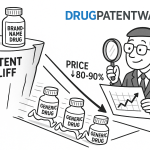
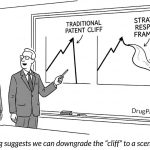
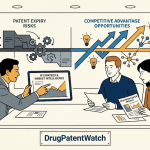
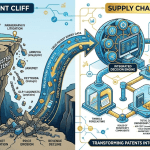
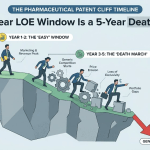
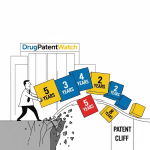
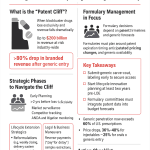
The global generic drug market sits at an unusual intersection: structural demand that will not shrink, a near-term patent cliff larger than any in the industry’s history, and margin economics that punish nearly everyone who shows up late or underprepared. Between 2025 and 2030, roughly $200-$300 billion in branded annual revenues will face loss of exclusivity (LoE), covering molecules like Merck’s Keytruda (pembrolizumab), Johnson & Johnson’s Stelara (ustekinumab), and Bristol Myers Squibb’s Eliquis (apixaban). The math sounds straightforward. It is not.
Price erosion is the industry’s defining contradiction. A molecule with $2 billion in pre-LoE annual sales can see its genericized price fall by more than 95% once six or more ANDA holders reach the market. The companies that have built durable businesses in this space did so not by competing for the same oral solid tablets as everyone else but by mastering the IP thicket, the regulatory timeline, and the commercial execution window in ways their competitors could not replicate.
This guide is a full-spectrum tactical resource. It maps the patent intelligence frameworks that identify the right targets before the crowd arrives, the ANDA mechanics and Paragraph IV (P-IV) certification strategy that determine who earns the 180-day marketing exclusivity, the biosimilar development roadmap that is now the single highest-value frontier in generic pharma, the supply chain architecture that keeps costs low enough to survive commoditization, and the launch execution playbook that separates first-movers from also-rans.
For portfolio managers and institutional investors, each major section includes an Investment Strategy sub-section that translates operational detail into capital allocation signals.
Section 1: The Affordability Paradox: Market Structure and Growth Trajectory (2025-2035)
1.1 Market Sizing: A Synthesis of Competing Forecasts
The global generic drug market was valued at approximately $431-$519 billion in 2025, depending on methodology and whether biosimilars are included. Most consensus forecasts project the market reaching $700-$930 billion by the early 2030s, with compound annual growth rates ranging from 4.2% (Mordor Intelligence, excluding biosimilars) to 10.5% at the upper bound. The variance across those estimates is methodologically meaningful: models that include biosimilars and account aggressively for the 2025-2030 patent cliff produce higher figures; models anchored to small-molecule oral solids alone come in lower.
Report Source
Base Year
Base Value (USD Bn)
Forecast Year
Forecast Value (USD Bn)
CAGR (%)
Vision Research Reports
2025
$515.07
2033
$775.61
5.25%
Custom Market Insights
2025
$519.11
2034
$926.54
6.55%
Precedence Research
2025
$468.08
2034
$728.64
5.04%
Stellar Market Research
2024
$453.65
2032
$681.57
5.22%
PharmiWeb
2024
$487.21
2035
$898.00
5.75%
Mordor Intelligence
2025
$431.10
2030
$530.32
4.23%
Towards Healthcare
2025
$513.02
2034
$816.75
5.30%
The U.S. remains the largest single market, accounting for more than a third of global generic revenue. That dominance traces back to three structural features: high branded drug utilization relative to other OECD nations, the Hatch-Waxman Act’s well-established ANDA pathway, and aggressive payer mandates for generic substitution. In 2021 alone, generic drugs generated $373 billion in savings for the U.S. healthcare system, accounting for roughly 91% of prescriptions filled while representing only 18.2% of total drug spend. Asia-Pacific is the fastest-growing region, propelled by government access initiatives, expanding insurance coverage, and a domestic API manufacturing base that has made countries like India and China both suppliers to and increasingly independent competitors within the global generic ecosystem.
1.2 The Patent Cliff: LoE Dates, Revenue Exposure, and IP Valuation of Target Assets
‘Patent cliff’ describes the revenue drop that occurs when a branded drug loses its last significant exclusivity protection and generic competition enters. The 2025-2030 wave is historically large. The drugs below represent the highest-value LoE events by peak annual sales exposure.
Keytruda (pembrolizumab) – Merck
Keytruda had global sales of approximately $25 billion in 2023, making it the world’s best-selling drug. The primary compound patent expires around 2028, though Merck holds a dense secondary patent estate covering formulation, dosing regimens, and manufacturing processes that extends potential litigation timelines into the early 2030s. IP valuation for Keytruda-related biosimilar opportunities is extraordinary: the total biosimilar addressable market on pembrolizumab could exceed $10-15 billion annually at full market maturation, though the development cost per biosimilar candidate for a PD-1 checkpoint inhibitor will likely run $150-250 million given the complexity of demonstrating clinical equivalence. Samsung Bioepis, Formycon, and Coherus Biosciences are among the organizations already in early development programs. The patent thicket here is intentionally dense; Merck has filed more than 100 secondary patents globally, many covering specific tumor types and combination regimens, creating a multi-front litigation landscape that smaller entrants cannot sustain.
Stelara (ustekinumab) – Johnson & Johnson
Ustekinumab had global sales of approximately $10.9 billion in 2022. The core compound patent expired in Europe in 2024 and in the U.S. in September 2023. Samsung Bioepis’s Pyzchiva (ustekinumab-ttwe) and Amgen’s Wezlana received FDA approval in 2023 and launched in 2024, with J&J initially defending its position through authorized biosimilar deals. The IP valuation lesson from Stelara is instructive: J&J’s response to biosimilar entry was not purely litigative. The company negotiated authorized biosimilar licensing arrangements with multiple entrants, including Amgen and Samsung Bioepis, generating royalty streams that partially offset revenue erosion while delaying fully independent competition. For biosimilar developers, understanding whether a brand company will pursue authorized biosimilar agreements or full litigation is a material input to NPV modeling.
Apixaban had combined global sales of approximately $17.8 billion in 2022. Multiple P-IV filers challenged the Eliquis patent estate, and the primary compound patent expires in 2026-2031 depending on jurisdiction and ongoing Patent Trial and Appeal Board (PTAB) proceedings. The IP valuation picture here reflects the complexity of a co-promotion arrangement: both BMS and Pfizer hold economic interests in the Eliquis revenue stream, which complicates settlement negotiations with generic challengers. Generic apixaban in the U.S. alone represents a market opportunity worth several billion dollars annually at early-entry pricing.
Ozempic/Wegovy (semaglutide) – Novo Nordisk
Semaglutide deserves its own category in the patent cliff discussion. Global semaglutide revenues exceeded $21 billion in 2023 and are still growing. The compound patent in the U.S. runs through approximately 2032, and Novo has layered multiple device patents and formulation patents on top of the core molecule. For generic developers, semaglutide presents a long-dated but exceptionally high-value opportunity. The technical barriers to a generic or biosimilar semaglutide are significant: it is a GLP-1 receptor agonist peptide that requires a highly specific auto-injector device, and regulators will likely require clinical endpoint data, not just pharmacokinetic bioequivalence. At least six companies, including Hikma, Sun Pharma, and Biocon, have publicly disclosed semaglutide development programs targeting the 2032 LoE window.
1.3 Price Erosion Mechanics: The Commoditization Curve
The price erosion curve for generic entry is well-documented and reliably steep. The entry of the first generic typically generates a price reduction of 6-39% relative to the brand’s Wholesale Acquisition Cost (WAC). By the time six or more generic manufacturers are competing, the average generic price falls more than 95% below the original brand WAC. This data comes from analysis of Medicare Part D claims and FDA ANDA activity from 2007 to 2022.
Number of Generic Competitors
Average Price Reduction vs. Brand WAC
Source Basis
1 (180-day exclusivity window)
6-39%
HHS ASPE; FDA GDUFA data
2
~54%
CBO generic competition study
3-4
50-79%
HHS ASPE drug competition series
6+
>95%
DrugPatentWatch / FTC analysis
10+ (year 3+)
70-80% (price stabilization)
Medicare Part D longitudinal data
The stabilization effect after year three is real but limited. Markets with 10+ competitors do not continue to erode indefinitely; they reach a floor determined by the lowest-cost manufacturer’s production economics. That floor has been falling as API manufacturing shifted to India and China over the past two decades, but nearshoring and supply chain diversification pressure post-COVID are beginning to raise it again.
1.4 The Strategic Bifurcation: Commodities vs. Specialty Generics
The generic market has split into two structurally different competitive environments, and the strategies for succeeding in each are almost entirely distinct.
The first environment is commoditized oral solids: immediate-release tablets and capsules with well-understood formulations, dozens of ANDA filers per product, and margins that require massive manufacturing scale to survive. Companies like Teva, Mylan (now Viatris), and Sun Pharma have spent decades optimizing this model. It is not dead, but it is a scale game, not an innovation game.
The second environment is specialty generics and biosimilars: sterile injectables, long-acting depot formulations, transdermal patches, inhalation products, complex drug-device combinations, and biologic molecules. Fewer than 15 companies globally have the scientific infrastructure and capital to compete at the front end of this space. The barriers to entry are not regulatory paperwork; they are analytical chemistry expertise, specialized manufacturing infrastructure, and the clinical development capacity that complex generics and biosimilars increasingly require. The reward for clearing those barriers is a market with fewer competitors and prices that do not collapse to near-zero within 18 months of launch.
Any company entering the generic market in 2025 or after must consciously choose which game it is playing, and then organize its capital, R&D, manufacturing, and regulatory functions around that choice. Trying to compete in both without the scale of a Teva or the scientific depth of a Sandoz is the most reliable path to mediocre returns in both segments simultaneously.
Key Takeaways: Section 1
The global generic market is growing at 4-7% CAGR, but growth masks severe margin compression in oral solids; the real value creation is in complex generics and biosimilars.
The 2025-2030 patent cliff puts $200-$300 billion in branded revenues at risk. Keytruda, Eliquis, Ozempic/Wegovy, and Stelara represent the highest-value LoE events.
Price erosion below 95% of brand WAC occurs reliably once six or more generic competitors enter. First-mover advantage during the 180-day exclusivity window is the most profitable window in the entire product lifecycle.
The commodity/specialty bifurcation is not new, but it is sharpening. Investors and operators must pick a side.
Section 2: Pillar I – Patent Intelligence, Opportunity Selection, and IP Valuation
2.1 Reading the Patent Landscape: Beyond the Orange Book
The FDA’s Orange Book (officially ‘Approved Drug Products with Therapeutic Equivalence Evaluations’) is the starting point for U.S. generic patent intelligence, but it is a starting point only. The Orange Book lists patents that brand manufacturers have self-certified as covering a product, and it is not an exhaustive or independently verified record of a drug’s entire patent estate. Innovators routinely hold issued or pending patents on a molecule that they have chosen not to list in the Orange Book, whether because those patents cover methods of manufacture, upstream API processes, or formulations that are not directly tied to the specific drug product’s approval.
A comprehensive patent intelligence workflow requires parallel searches across USPTO’s Patent Full-Text Database, the European Patent Office’s esp@cenet, WIPO’s PatentScope, and national registers for target markets including Japan (J-PlatPat), China (CNIPA), and Canada. Each jurisdiction’s patent term, extension mechanism, and linkage to regulatory approval differs, which means the LoE date for a given molecule can vary by as much as five to seven years across major markets.
The FDA’s Purple Book performs an analogous function for biologic drugs that an ANDA filer’s team must understand before pursuing biosimilar development. The Purple Book lists reference product exclusivity end dates, 12-year data exclusivity periods, and interchangeability designations, all of which directly affect the timeline for a biosimilar’s market entry.
2.2 Calculating True Loss of Exclusivity: Patent Term Extensions, Pediatric Exclusivity, and NCE Data Exclusivity Stacking
A drug’s nominal 20-year patent term from filing date almost never corresponds to the actual exclusivity period that a generic developer must plan around. Regulatory mechanisms that extend effective exclusivity include:
Patent Term Extension (PTE) under 35 U.S.C. Section 156 compensates innovators for time lost during FDA review. The maximum PTE is five years, and the extended patent term cannot exceed 14 years from NDA approval. Calculating the precise PTE for a given compound requires knowing the IND filing date, the NDA approval date, and whether the company has already applied for and received an extension.
Patent Term Adjustment (PTA) compensates for USPTO delays during prosecution. PTA can add months to years to the nominal term of individual patents, and because brand companies regularly file continuation patents during the review period for an original NDA, PTA-extended continuation patents can have expiry dates significantly later than the original compound patent.
Pediatric exclusivity adds six months to any regulatory exclusivity that is in effect at the time it is granted. It applies to patents listed in the Orange Book and to NCE, orphan drug, and other exclusivity periods. For large-market drugs, brand companies almost always conduct required pediatric studies to secure this six-month extension, meaning the effective LoE date for generic entry is typically at least six months later than the compound patent expiry date.
New Chemical Entity (NCE) data exclusivity provides five years of protection from NDA approval during which the FDA cannot accept an ANDA for the same molecule. New Clinical Investigation exclusivity provides three years for drugs approved with new clinical studies. These exclusivities stack with patent protection and can, in some configurations, extend the window during which a P-IV certification cannot even be filed.
A generic company performing due diligence on a target molecule must map all of these layers simultaneously and calculate a range of possible LoE dates, not a single date, to reflect the litigation scenarios that could affect timing. Platforms like DrugPatentWatch automate substantial portions of this multi-layer LoE calculation and provide ongoing tracking of P-IV filings, litigation status, and exclusivity databases.
2.3 Decoding Patent Thickets: Evergreening Architecture and Its Vulnerabilities
Patent thickets are not accidents. They are the output of deliberate IP lifecycle management strategies that innovators begin executing within the first few years after an NDA approval, typically before clinical adoption is even established. Understanding the architecture of a typical thicket is necessary for identifying which patents are vulnerable to invalidity or non-infringement arguments and which represent genuine barriers.
A mature thicket on a blockbuster small molecule typically contains layers in the following structure:
The core compound patent (often filed 10-15 years before NDA approval) covers the active pharmaceutical ingredient itself, the base salt forms, and primary synthetic routes. This is the most defensible patent in the estate but also the first to expire. A generic developer who waits for this patent alone is usually not first to file.
Formulation patents cover specific drug product compositions, including excipient combinations, particle size distributions, polymorphic forms of the API, and pH-adjusted or buffer-stabilized preparations. These patents are filed around or after NDA approval and typically run 7-12 years beyond the compound patent. They are vulnerable to prior art challenges when the formulation elements were published in academic literature before the patent filing date.
Method-of-use patents cover specific therapeutic indications, dosing regimens, and patient population restrictions. These are the most strategically vexing patents for generic developers because a generic product can be approved for all non-patented indications while being labeled to carve out patented uses. This ‘skinny label’ strategy allows a generic to enter the market legally while avoiding the specific method claims. The risk is that off-label prescribing for the carved-out indication could still expose the generic company to induced infringement liability under certain judicial interpretations, a risk the Supreme Court addressed in GSK v. Teva (2021) in ways that complicate skinny label strategy.
Device and delivery system patents cover auto-injectors, pre-filled syringes, dry powder inhalers, transdermal patch adhesives, and other delivery mechanisms. These patents frequently run well beyond all other IP protections and are the primary reason why many branded specialty drugs maintain near-monopoly pricing long after the compound patent has expired. AstraZeneca’s Symbicort inhaler device portfolio is a well-cited example.
Manufacturing process patents cover synthetic routes, purification methods, and scale-up techniques that reduce production costs. These are the least visible but often the most commercially material patents in a thicket, because a generic company that cannot use the patented low-cost process faces a structural cost disadvantage relative to the brand’s authorized generic.
A Freedom-to-Operate (FTO) analysis must map all four layers. The output is not a binary ‘clear/not clear’ assessment; it is a risk-tiered landscape that separates patents the generic developer can work around, patents that are probably invalid and worth challenging via P-IV certification or Inter Partes Review (IPR) at PTAB, and patents that present genuine blocking positions requiring either a licensing arrangement or a development redesign.
2.4 IP Valuation Framework: Quantifying the Asset Value of a Generic Target
IP valuation in the generic context differs from traditional brand-side pharmaceutical IP valuation because the asset being valued is not the IP itself but the right to compete after the IP expires. A generic developer is essentially performing a real options analysis: the option to enter a market at a defined future date, at a projected price point, against a modeled competitive landscape.
The core inputs to a generic opportunity NPV model are:
Pre-LoE brand revenue (typically the three-year average trailing the LoE date, adjusted for market growth), from which a total addressable market is derived. This figure is the ceiling, not the floor, for the generic opportunity.
Generic price erosion curve, modeled as a function of the projected number of ANDA filers at launch. A market with two or three competitors at Day 1 has a fundamentally different NPV than a market with eight or ten.
Development and regulatory cost, including ANDA preparation (typically $1-5 million for a simple oral solid, $5-25 million for a complex generic, $100-250 million for a biosimilar), bioequivalence study costs, and litigation costs if a P-IV challenge is pursued.
Time to approval, accounting for the ANDA review timeline (FDA GDUFA goal is 10 months for a ‘first cycle’ review, though complex generics frequently receive Complete Response Letters that add 12-24 months), the 30-month stay period if litigation is triggered, and the probability of prevailing in the underlying patent litigation.
Manufacturing scale-up costs, which for sterile injectables or complex dosage forms can represent capital investments of $20-100 million or more in dedicated production lines.
The 180-day exclusivity period, if achievable, adds a discrete revenue premium that is often worth more than all subsequent years of competition combined. Modeling this premium accurately requires an estimate of the probability of being the first-to-file and maintaining that status through any forfeiture events.
For biosimilars, IP valuation requires an additional layer of analysis: the probability of achieving FDA interchangeability designation, which allows automatic pharmacy substitution and dramatically expands market penetration relative to a biosimilar that requires a physician’s explicit substitution decision. The interchangeability designation for biosimilars requires additional clinical data demonstrating that switching between the reference product and the biosimilar does not produce clinically meaningful differences. Only a handful of biosimilars have achieved interchangeability status to date, and those that have command meaningfully higher market shares than non-interchangeable biosimilars.
2.5 Quantitative Candidate Scoring: A Cross-Functional Decision Framework
Candidate selection in a well-run generic operation is a cross-functional exercise, not a business development or legal function alone. The following scoring framework weights four dimensions simultaneously to produce a composite opportunity score that drives capital allocation.
Evaluation Dimension
Drug A: High-Complexity Sterile Injectable
Drug B: Modified-Release Oral
Drug C: Standard Oral Tablet
Drug D: Complex Biologic
Pre-LoE Brand Revenue (USD Bn)
$2.5 Bn
$400 Mn
$1.8 Bn
$8.2 Bn
Projected Day-1 Competitors
2-3
3-4
10+
1-2
Market Viability Score (1-10)
9
7
4
10
Secondary Patent Count
15
6
2
40+
Known P-IV Filers
1
2
8
0 (biosimilar)
IP Vulnerability Score (1-10)
6
8
3
5
Formulation Complexity
High (liposomal)
Medium (extended-release)
Low (IR tablet)
Extreme (mAb)
Internal Capability Match
Partial
Full
Full
Requires JV
Technical Achievability Score (1-10)
5
9
10
3
Composite Score (weighted average)
6.7
8.0
5.7
6.0
The weighting applied to each dimension should reflect the company’s strategic position. A company with deep sterile injectable infrastructure would weight Technical Achievability lower (because the internal capability match for Drug A is actually strong) and Market Viability higher. The framework is not a black box that replaces judgment; it is a structured process that forces cross-functional alignment on the trade-offs.
2.6 The 505(b)(2) Pathway: Value-Added Generics and IP Exclusivity Architecture
The 505(b)(2) application pathway allows approval of drugs that represent modifications of previously approved products, relying in part on the FDA’s safety and effectiveness finding for the reference drug. For generic developers, it is the clearest route to creating a product that competes on clinical value rather than price alone.
A 505(b)(2) product can be a new dosage form (injectable to oral), a new strength, a new formulation (standard tablet to abuse-deterrent formulation), or a new indication for an existing molecule. Critically, products approved via 505(b)(2) can qualify for their own three- to seven-year market exclusivity, giving the developer a protected window to recoup the incremental investment in clinical studies.
The IP architecture of a 505(b)(2) product is also its own competitive weapon. Because the developer can patent the new formulation, new delivery system, or new indication, it builds a secondary patent estate around its own value-added product, making it harder for subsequent generic developers to undercut the product’s economics during the exclusivity period. This is, ironically, the same evergreening logic that innovator companies use, deployed defensively by a company that started as a generic developer.
AstraZeneca’s transformation of Prilosec (omeprazole) into Nexium (esomeprazole, the S-enantiomer of omeprazole) is the canonical example of 505(b)(2) product hopping, generating billions in revenues while generic Prilosec eroded the original market. For a generic developer, the lesson is not to imitate this specific tactic but to understand that the 505(b)(2) pathway creates a structural opportunity to generate proprietary data exclusivity on modifications of molecules that are already well-understood from a safety perspective.
Key Takeaways: Section 2
True LoE dates require stacking PTE, PTA, pediatric exclusivity, and NCE/New Clinical Investigation exclusivity across all relevant jurisdictions. The nominal compound patent expiry is almost never the operative date.
Evergreening patent thickets have predictable architecture: compound patents, formulation patents, method-of-use patents, device patents, and process patents. Each layer has different vulnerability profiles.
Generic opportunity NPV models must include the probability of 180-day exclusivity, projected competitor count at launch, the 30-month litigation stay as a development window, and the cost of PTAB or district court patent invalidity proceedings.
The 505(b)(2) pathway creates genuine IP value for generic developers: data exclusivity, proprietary patent filings on the value-added product, and a clinical differentiation story that supports higher pricing.
Section 3: Pillar II – The ANDA Pathway, Hatch-Waxman Mechanics, and Regulatory Strategy
3.1 The ANDA Architecture: CMC, Bioequivalence, and the eCTD Submission
The Abbreviated New Drug Application is the mechanism through which a generic drug reaches market in the United States. It is ‘abbreviated’ in the specific sense that it omits the requirement for independent preclinical and clinical safety and efficacy data, instead demonstrating therapeutic equivalence to a Reference Listed Drug (RLD) already approved via a full NDA. The legal foundation is Section 505(j) of the Federal Food, Drug, and Cosmetic Act, as established by the Drug Price Competition and Patent Term Restoration Act of 1984 (Hatch-Waxman).
An ANDA submission in eCTD format organizes data across five modules: regional administrative information (Module 1), common technical document summaries (Module 2), quality data including CMC (Module 3), nonclinical study reports (Module 4, typically limited for generics), and clinical study reports including bioequivalence (Module 5). The quality module is the most resource-intensive component of a generic ANDA, requiring complete characterization of the API’s physical and chemical properties, the finished drug product’s formulation and manufacturing process, container-closure system validation, and stability data under ICH-recommended storage conditions.
Stability testing requirements for a generic ANDA mirror ICH Q1A(R2) guidelines: at minimum, six months of accelerated stability data (40°C/75% relative humidity) at the time of submission and ongoing real-time stability data (25°C/60% RH for Zone I/II climates, 30°C/65% RH for Zone III/IV) that must continue through the product’s proposed shelf life. For products that show degradation trends under accelerated conditions, bracketing and matrixing designs under ICH Q1D can reduce the number of individual stability samples without compromising data integrity.
Labeling must match the most recently approved labeling for the RLD, including all revisions made through Dear Healthcare Provider letters and labeling supplements. The narrow exception covers active ingredient source, manufacturer identification, and permissible differences in inactive ingredients for solid oral dosage forms. For products subject to a Risk Evaluation and Mitigation Strategy (REMS), the generic applicant must comply with the same REMS requirements as the brand, which can involve shared REMS programs requiring coordination with the brand manufacturer.
3.2 Bioequivalence: Statistical Standards, Study Design, and Complex Product Considerations
Bioequivalence (BE) is the scientific and regulatory cornerstone of the ANDA. The FDA’s formal standard requires that the 90% confidence interval for the geometric mean ratio of the test (generic) product to the reference (brand) product for both Cmax and AUC0-t falls within 80.00% to 125.00%. This standard applies to the primary pharmacokinetic parameters for the drug’s active moiety.
For most orally administered, systemically absorbed drugs, the study design is a crossover pharmacokinetic (PK) study in healthy volunteers under fasted conditions, with a second study under fed conditions if the labeling specifies food effects. Sample sizes typically range from 24 to 36 subjects for well-characterized molecules with low intrasubject variability. Highly variable drugs (intrasubject coefficient of variation above 30%) qualify for Reference-Scaled Average Bioequivalence (RSABE) methodology, which expands the acceptance limits proportionally to the reference product’s variability, capped at a maximum expansion of 69.84% to 143.19% of the reference mean. RSABE requires a minimum of 24 crossover sequences and additional point-estimate constraints (the geometric mean ratio must fall within 80-125%).
BE study failures are a material operational and financial risk. Common causes include inadequate sample size calculations based on incorrect variability estimates, use of the wrong reference product lot (the reference product must be from a U.S.-purchased lot for U.S. ANDAs), imprecise analytical method validation for the PK assay, and formulation issues that produce different dissolution profiles in vivo despite equivalent in vitro dissolution testing. A failed BE study for a complex product can cost $3-10 million and delay market entry by 12-18 months.
For complex generics, the FDA publishes Product-Specific Guidances (PSGs) that define the required BE approach for individual drug-device combinations, topicals, ophthalmics, inhalers, and other non-standard dosage forms. PSG compliance is essential: an applicant who designs a BE study that deviates from the PSG without prior agreement from the FDA risks receiving a Complete Response Letter (CRL) that requires redesigning and repeating the BE program. The Office of Generic Drugs (OGD) offers pre-ANDA meeting types (Type B and Type C) to resolve critical questions about BE methodology before the formal submission, and experienced regulatory affairs teams use these meetings aggressively.
Biowaivers (waived BE studies) are available for certain well-characterized drugs under the Biopharmaceutics Classification System (BCS). A BCS Class I drug (high solubility, high permeability) can qualify for an in vivo BE biowaiver when additional strength approvals are supported by in vitro dissolution data demonstrating rapid dissolution (at least 85% dissolved in 30 minutes in three pH media). BCS Class III biowaivers are available in some jurisdictions outside the U.S. under EMA guidelines but are not routinely granted by the FDA without specific compositional similarity requirements.
3.3 The Paragraph IV Chess Match: Filing Strategy, Notice Letters, and Patent Litigation Mechanics
A Paragraph IV (P-IV) certification is an assertion in an ANDA that a patent listed in the Orange Book is invalid, unenforceable, or will not be infringed by the manufacture, use, or sale of the proposed generic drug. Under 21 U.S.C. Section 355(j)(2)(A)(vii)(IV), this certification constitutes a statutory act of patent infringement, which triggers the brand company’s right to sue without the generic having actually sold a single unit.
The mechanics of the P-IV process require precision. The generic applicant must serve a Detailed Statement Notice Letter on the NDA holder and each Orange Book patent holder within 20 days of FDA acceptance of the ANDA for filing. The notice letter must identify each patent being challenged and provide a detailed explanation of why the patent is invalid, unenforceable, or not infringed. The statutory requirement is that this explanation be detailed enough to put the brand company on notice of the specific legal and factual bases for the P-IV challenge.
If the brand company files a patent infringement lawsuit within 45 days of receiving the notice letter, a 30-month stay of final ANDA approval automatically takes effect. The FDA cannot grant final approval during this stay unless the district court enters a judgment of invalidity, non-infringement, or unenforceability before the stay expires, or unless the stay expires without a resolution. Courts can extend or reduce the 30-month stay under limited circumstances, including unreasonable delay by either party in prosecuting or defending the case.
The 30-month stay is simultaneously a threat and a planning tool. Generic companies that are well-prepared treat it as a hard deadline for completing all pre-launch activities: API sourcing and qualification, manufacturing scale-up and process validation, packaging and labeling finalization, contracts with wholesale distributors (AmerisourceBergen/Cencora, Cardinal Health, McKesson), payer formulary submissions, and the operational readiness review that culminates in a formal Day-1 launch plan.
PTAB Inter Partes Review (IPR) is an increasingly important parallel track. An IPR petition challenges the validity of an Orange Book patent at the USPTO’s administrative court, on a potentially faster and less expensive timeline than district court litigation. The PTAB’s claim construction standard and the burden of proof (preponderance of the evidence, rather than the district court’s clear and convincing standard) make IPR a tactically attractive option for attacking formulation and method-of-use patents with prior art vulnerabilities. However, IPR is not always coordinated well with the district court proceeding, and the estoppel provisions of the America Invents Act mean that grounds raised and lost at PTAB cannot be re-raised in subsequent district court litigation.
3.4 The 180-Day Exclusivity: Mechanics, Forfeiture Traps, and Deal Structures
The 180-day first-filer exclusivity is the most valuable provision in the Hatch-Waxman Act. The first applicant to file a substantially complete ANDA containing a P-IV certification on any listed patent earns an exclusivity period during which the FDA cannot grant final approval to any subsequent ANDA containing the same P-IV certification for the same drug product. The effect is a duopoly market: the brand (which can still sell its own product) and the first-filer generic, with all other ANDA holders frozen in the queue.
The financial value of this exclusivity period varies by molecule. For a blockbuster drug with $2-3 billion in pre-LoE annual U.S. revenues, the 180-day period can generate $300-700 million in gross profit for the first filer, depending on the pricing strategy adopted and whether the brand deploys an authorized generic to dilute the duopoly (discussed in Section 7). For smaller molecules, the exclusivity period may be worth only $10-30 million, which changes the risk calculus for whether to pursue a P-IV challenge at all.
Forfeiture of the 180-day exclusivity is a risk that receives insufficient attention in strategic planning. The FDA can declare exclusivity forfeited when the first filer fails to market its product within 75 days of receiving final ANDA approval, fails to obtain final ANDA approval within 30 months of the P-IV filing date (absent court resolution), or enters into a settlement agreement that delays market entry in violation of antitrust law. The last forfeiture trigger connects directly to the legality of reverse-payment settlements (pay-for-delay agreements), which the Supreme Court in FTC v. Actavis (2013) held subject to antitrust scrutiny under a rule-of-reason analysis. Companies that structure settlements involving large cash payments from brand to generic in exchange for delayed generic entry face both antitrust liability and exclusivity forfeiture risk.
Exclusivity also applies in multi-filer scenarios. When multiple generic companies file ANDAs containing P-IV certifications on the same day, all of those companies share the 180-day exclusivity period. This creates incentives to file early and precisely, and it has led to the phenomenon of ANDAs submitted on the same day for the same molecule from dozens of generic companies, particularly for high-value products with well-known patent expiry timelines.
3.5 Global Regulatory Comparison: EMA, CDSCO, Health Canada, and the Trend Toward Harmonization
Outside the U.S., generic approval pathways share the scientific objective of demonstrating therapeutic equivalence but differ significantly in legal structure, data requirements, and linkage between patent status and regulatory approval.
Feature
FDA (U.S.)
EMA (European Union)
CDSCO (India)
Health Canada
Key Legislation
Hatch-Waxman Act (1984)
Directive 2001/83/EC; Reg. 726/2004
Drugs and Cosmetics Act (1940)
Food and Drugs Act (C.08.004)
Application Type
ANDA (505(j))
Generic MAA
Form 44
ANDS
Core Standard
Bioequivalence to RLD
Bioequivalence to Reference Medicinal Product
Bioequivalence to innovator
Bioequivalence to Canadian reference product
Review Timeline
10 months (GDUFA goal; often 15-24 months with CRLs)
150-210 days (procedure-dependent)
~90 days
12-18 months
Patent Linkage
Orange Book; P-IV certification; 30-month stay
Weak linkage; patent disputes in national courts
Patent linkage; Bolar exemption; Sect. 3(d) novelty bar
Patent Register; Notice of Compliance with conditions
Data Exclusivity
5 yrs (NCE); 3 yrs (new clinical investigation)
8+2+1 years (‘Roche/Bolar formula’)
4 years
6-8 years
First-Filer Incentive
180-day marketing exclusivity
No equivalent; CE Mark structure applies
No direct equivalent
No formal equivalent
A 95% concordance rate between FDA and EMA final approval decisions (based on FDA’s analysis of 2017-2020 parallel submissions) tells the quality story: a scientifically rigorous application tends to succeed in both jurisdictions. The divergence is procedural, not scientific, meaning a company with strong regulatory affairs infrastructure can file simultaneously in the U.S. and EU without fundamentally different data packages, adjusting primarily for reference product sourcing and procedural pathway selection.
3.6 Investment Strategy Note: Regulatory Risk as a Valuation Input
From a portfolio manager’s perspective, regulatory risk in generic drug development is quantifiable and often underweighted in initial deal valuations. A generic ANDA program that has received a CRL extending approval timelines by 18 months typically loses 20-35% of its projected NPV if the molecule has strong first-mover dynamics, because competing filers may receive approval during the delay and erode the first-mover premium before the delayed applicant launches. When evaluating generic drug companies, the quality and speed of their regulatory affairs function, particularly their historical first-cycle approval rates (approvals without CRLs), is a durable proxy for the health of their pipeline economics.
Companies with first-cycle approval rates above 60% (the industry median is closer to 40-45% for complex generics) consistently outperform on time-to-market and capture disproportionate first-mover premiums. This metric is publicly visible through FDA approval databases and GDUFA annual performance data.
Key Takeaways: Section 3
ANDA preparation is a $1-25 million investment depending on complexity; BE study failures are the single most common cause of CRLs and represent a 12-18 month delay risk.
P-IV certification triggers the 30-month stay automatically if the brand sues. Treating the stay as a project deadline rather than a delay is the operational discipline that separates first-movers from late entrants.
The 180-day exclusivity can be worth hundreds of millions of dollars for blockbuster molecules but is subject to forfeiture risks that require precise management of filing timelines, marketing activation dates, and settlement agreement structures.
EMA and FDA approval decisions are highly concordant (95%) at the scientific level. The regulatory divergence is procedural and manageable for well-resourced organizations.
Section 4: Pillar III – API Sourcing, Supply Chain Resilience, and cGMP as Competitive Moat
4.1 The API Sourcing Decision: DMF Quality, Regulatory Pedigree, and Supplier Qualification
The Active Pharmaceutical Ingredient is the most consequential input in a generic drug product, and the decision of which supplier to qualify for commercial API supply is one of the highest-risk decisions in the development program. An API supplier change after ANDA approval requires submission of a Prior Approval Supplement (PAS) to the FDA, a process that typically takes 6-12 months and during which the approved product cannot use the new supplier. Choosing the wrong supplier at the development stage is not a correctable mistake on a short timeline.
API supplier qualification requires assessment across several dimensions. The Drug Master File (DMF) that the supplier maintains with the FDA is the formal record of the manufacturing process, quality controls, and analytical methods for the API. A Type II DMF (the relevant category for APIs) must be current, complete, and responsive to any outstanding FDA queries. An applicant references the supplier’s DMF in the ANDA, but the FDA’s review of the DMF during ANDA review is a separate and critical evaluation; deficiencies in the DMF can hold up ANDA approval even when all other sections of the application are satisfactory.
Supplier audits must cover the full cGMP system: documentation practices, laboratory controls, stability programs, change control procedures, deviation management, and data integrity. The last point has received heightened regulatory attention following a series of warning letters and import alerts against Indian and Chinese API manufacturers for data integrity violations. Synthetic data, altered chromatography records, and backdated analytical certificates are not hypothetical risks; they led to criminal charges and import bans for several major API suppliers in the 2015-2020 period, disrupting supply chains for hundreds of generic products simultaneously.
Analytical characterization of the API itself requires full compliance with ICH Q6A (specifications for new drug substances and drug products), including identity, purity, assay, residual solvents (ICH Q3C), elemental impurities (ICH Q3D), and genotoxic impurities (ICH M7). The nitrosamine impurity crisis that emerged in 2018, beginning with N-nitrosodimethylamine (NDMA) contamination in sartan blood pressure medications, demonstrated how an API-level analytical failure cascades into mass product recalls, brand damage, and patient harm.
4.2 Geopolitical Risk and Supply Chain Architecture: Post-COVID Redesign
More than 80% of global API supply originates in China and India, with China additionally dominating the production of Key Starting Materials (KSMs) and advanced intermediates that Indian API manufacturers depend on. This concentration was the rational outcome of three decades of cost-driven offshoring. It is now a structural liability.
The COVID-19 pandemic exposed the mechanism of failure in granular detail. When Chinese API production halted in early 2020, Indian manufacturers that depended on Chinese KSMs could not sustain production for antibiotics, antivirals, and cardiovascular generics. Export restrictions layered on top of production disruptions. Drug shortages in the U.S. and Europe reached levels not seen in decades. The FDA and EMA both identified API supply concentration as a systemic risk requiring policy response.
The U.S. legislative response includes the BIOSECURE Act (2024), which restricts federal agencies from contracting with companies that use certain Chinese biotechnology manufacturers, and provisions in the Inflation Reduction Act (IRA) that incentivize domestic manufacturing of specific essential medicines. These policy signals are not reversals of globalization, but they are structural changes that alter the cost-benefit calculation for nearshoring and domestication of critical supply chains.
A resilient supply chain design for a major generic product in 2025 should include at least two qualified API suppliers in geographically distinct regions, with at least one supplier outside of China. It should maintain a strategic API inventory buffer of 6-12 months of commercial demand for any product where supply disruption risk is rated high. It should also map the KSM sourcing geography for each API supplier, not just the API itself, because a supplier in India that sources 90% of its KSMs from a single Chinese facility is not genuinely diversified.
Nearshoring economics have improved since the COVID disruption. European API manufacturers in Ireland, Spain, and Eastern Europe, and North American manufacturers in Mexico and Canada, have invested in capacity expansion specifically to serve customers seeking supply chain resilience. The cost premium relative to Chinese API sourcing has narrowed to 15-25% for many commodity APIs and is partially offset by reduced logistics costs, lower regulatory inspection risk, and the avoided cost of supply disruption.
4.3 cGMP Compliance: The Intersection of Regulatory Risk and Competitive Advantage
Current Good Manufacturing Practice compliance is both a minimum regulatory requirement and, when executed well, a genuine competitive differentiator. In a market where multiple ANDA filers produce chemically equivalent products, a company with a pristine cGMP compliance record can negotiate preferential supply agreements with large pharmacy chains, hospital GPOs, and federal purchasers that explicitly require a clear FDA inspection history.
The FDA’s Site Inspection Program evaluates manufacturing facilities against cGMP requirements codified in 21 CFR Parts 210 and 211 for finished dosage forms and 21 CFR Part 212 for positronium emission tomography drugs. Inspection outcomes are classified as No Action Indicated (NAI), Voluntary Action Indicated (VAI), or Official Action Indicated (OAI). An OAI outcome from an inspection of a manufacturing site for an ANDA can hold up final approval indefinitely and trigger a Warning Letter. An import alert restricts the affected site’s products from entering the U.S. market entirely.
The compliance track record of a company’s entire manufacturing network matters, not just its primary ANDA-referenced site. The FDA evaluates the applicant’s Quality Management System (QMS) holistically, and a pattern of cGMP deficiencies across a company’s facilities creates a halo effect on how vigorously the agency scrutinizes new submissions from that company.
4.4 The U.S. Distribution Oligopoly: AmerisourceBergen/Cencora, Cardinal Health, McKesson
Approximately 92% of U.S. prescription drug volume flows through three wholesale distributors: AmerisourceBergen (which rebranded as Cencora in 2023), Cardinal Health, and McKesson. These three companies collectively process roughly $600 billion in pharmaceutical revenues annually, giving them extraordinary pricing leverage over generic manufacturers in particular.
For a generic manufacturer, securing a supply agreement with all three wholesalers before launch is a practical prerequisite for achieving broad market distribution. Wholesalers negotiate pricing through generic sourcing programs that set formulaic price adjustments tied to market competition levels; as more ANDAs enter the market for a given molecule, the wholesaler’s contracted price from manufacturers falls automatically under many agreements. This mechanism accelerates the price erosion curve from the manufacturer’s perspective.
Group Purchasing Organizations (GPOs) like Premier and Vizient aggregate the purchasing power of hospital systems and use it to negotiate further discounts from manufacturers. The institutional market (hospitals, clinics, long-term care facilities) accounts for approximately 20-25% of generic prescription volume but is especially important for sterile injectable generics and specialty products where hospital formulary placement is the primary driver of utilization.
Pharmacy Benefit Managers (PBMs) led by CVS Caremark, Express Scripts (Cigna), and UnitedHealth’s OptumRx control formulary placement for the vast majority of insured Americans’ prescription drug benefits. PBM formulary decisions for generic drugs operate primarily through tier placement: a generic placed on Tier 1 (preferred) has the lowest patient copay and receives automatic substitution at pharmacy dispensing; a generic on Tier 2 or 3 carries higher patient out-of-pocket costs that reduce adherence and market share. PBM negotiations for preferred generic status are primarily price-driven, with manufacturers offering rebates or contracted WAC discounts in exchange for preferred placement.
Key Takeaways: Section 4
API supplier selection is a long-term commitment, not a procurement decision. Changing suppliers post-approval requires a Prior Approval Supplement and 6-12 months of additional regulatory review.
Geopolitical risk from China/India API concentration is quantifiable and should be priced into supply chain design. Dual-sourcing with geographic diversification and 6-12 month strategic API inventory buffers are the practical mitigation standard.
cGMP compliance record is a competitive asset. Manufacturers with clean FDA inspection histories command preferential supply agreements from hospital GPOs, government purchasers, and large pharmacy chains.
Distribution access in the U.S. requires contracts with Cencora, Cardinal Health, and McKesson. These negotiations should begin 12-18 months before the anticipated launch date.
Section 5: Pillar IV – Commercial Launch Execution and Market Dominance Tactics
5.1 Day-1 Launch Readiness: Why the 30-Month Stay Is a Project Timeline
The difference between a generic company that captures 70% of a genericized market in year one and one that captures 10% is almost always attributable to pre-launch preparation, not to anything that happens after the FDA grants approval. Approval without operational readiness is not a launch; it is a delayed launch, and in a market where first-mover advantage is as durable as the research indicates, delay is permanent profit destruction.
The 30-month litigation stay following a P-IV challenge gives a well-prepared organization exactly the runway it needs to complete all pre-launch activities with margin for error. The organizational discipline required is to treat approval day as a fixed date, not an uncertain future event, and to reverse-engineer every operational milestone from that date.
The pre-launch activity sequence for a U.S. generic launch covers: API procurement and build-up of strategic inventory; manufacturing scale-up from development batches to full commercial production, including process validation batches; packaging and labeling finalization, including verification that the label matches the FDA-approved labeling package; distribution agreements finalized with all three major wholesalers; PBM formulary submissions with supporting ANDA number and NDC codes (NDC codes must be registered with the FDA 6 months before intended marketing); contracts with major retail pharmacy chains and hospital GPOs; and the internal sales and customer service infrastructure to process orders within 24 hours of approval.
The competitive intelligence dimension of Day-1 readiness is often underweighted. A generic company that enters the market on Day 1 of LoE also needs to know, in real time, whether an authorized generic from the brand is launching simultaneously, whether any of the other ANDA filers have received approval, and what price points those competitors are entering the market at. This intelligence function requires active monitoring of FDA’s daily ANDA approval listings and wholesale pricing signals.
5.2 Pricing Strategy: The Multi-Phase Framework from Launch Through Commoditization
Generic drug pricing is not a static decision. It is a multi-phase strategy that must adapt to a rapidly changing competitive landscape over the product’s commercial life. A single pricing decision made at launch will be incorrect within 12-18 months if it does not account for the rate at which new competitors will enter and the floor cost structure that will eventually determine market viability.
During the 180-day exclusivity window, the first-filer generic typically enters at 15-30% below the brand’s WAC. This is not a number chosen arbitrarily; it reflects the price point at which payers and PBMs will place the generic on a preferred tier, driving maximum volume, while still maintaining a substantial margin above manufacturing costs. At $2 billion in pre-LoE annual brand revenues, even a 25% discount to WAC implies pricing that generates gross margins of 60-75% for a well-run manufacturer, because the variable cost of producing most oral generics is 5-15% of brand WAC.
When the first non-180-day-exclusivity competitors enter the market (at the end of the 180-day period, or earlier if exclusivity is forfeited), pricing transitions from a value-capture to a market-share-defense phase. The practical pricing tool here is a tiered rebate structure offered to wholesalers and pharmacy chains: the manufacturer sets a nominal WAC that is visible to price transparency databases but negotiates substantial back-end rebates that make the net price competitive. This structure gives the manufacturer visibility into the nominal pricing database while maintaining flexibility to compete on net price without triggering automatic downstream price adjustments in existing contracts.
Once a market reaches 10 or more generic competitors, pricing optimization shifts entirely to cost structure management. The manufacturer with the lowest cost of goods manufactured (COGM), the most favorable API supply contracts, and the most efficient manufacturing operations will be the last one standing with positive margins. This is why the most durable participants in the commoditized oral solid market are manufacturers with 40+ product portfolios that can spread fixed overhead across a large revenue base, achieving what is effectively an economies-of-scope advantage.
5.3 Stakeholder Engagement: Physicians, Pharmacists, and the Perception Problem
Generic drug marketing is not what brand marketing looks like. There are no direct-to-consumer campaigns, no speaker bureau dinner programs, and no formulary representatives calling on KOLs with clinical data dossiers. The commercial challenge for a generic manufacturer is narrower: ensure the product is accessible at pharmacy, positioned correctly on formulary, and not actively undermined by physician or patient resistance.
Physician engagement for generic substitution is most relevant in three scenarios. The first is complex generics where the product’s equivalence to the brand requires scientific explanation: a generic version of a metered-dose inhaler with a different propellant formulation, for example, requires the prescribing pulmonologist to understand that the product has been demonstrated bioequivalent through the specific in vitro and in vivo methods specified in the PSG for that product. The second is biosimilars, which are discussed in Section 6. The third is any product where a change in tablet size, shape, or color could prompt patient-reported concerns about efficacy that result in physician requests to specify ‘dispense as written’ on the prescription.
The ‘dispense as written’ (DAW) problem is a measurable drag on generic market share in specific therapeutic categories. A well-organized generic manufacturer anticipates this by equipping both physician offices and pharmacists with brief, factual reference materials explaining the FDA’s bioequivalence standard and the specific data submitted in the ANDA. The messaging is not promotional; it is educational and defensive.
Pharmacist engagement has become more commercially significant with the expansion of pharmacist prescribing authority in several states and the growing role of pharmacy chains in care management programs. Large retail chains like CVS, Walgreens, and Rite Aid have their own generic substitution programs and private-label generic lines (notably, CVS Health’s store-brand generics). A manufacturer that supplies a retail chain’s private-label generic program effectively locks out competitors from that chain’s high-volume substitution flow, a distribution exclusivity arrangement that can be structurally valuable even if the per-unit margin is thin.
5.4 Case Study: Teva’s Sildenafil Launch (2017) and What It Actually Demonstrates
When Pfizer’s compound patent on Viagra (sildenafil citrate) expired in December 2017, Teva Pharmaceuticals had been the first-to-file ANDA and had earned 180-day exclusivity. The launch is frequently cited as a model for first-mover execution. The specifics reward closer examination.
Teva secured FDA approval and launched on December 11, 2017, pricing generic sildenafil at approximately $30-35 per tablet, against Viagra’s brand WAC of $65-70. This was a 50%+ discount, well below the typical 15-30% first-filer entry level. Teva made a deliberate decision to price more aggressively than the conventional first-mover playbook would suggest, prioritizing rapid volume capture over margin maximization during the exclusivity window. The logic was that sildenafil’s demand was highly price-elastic in the out-of-pocket segment (Medicare Part D did not cover erectile dysfunction drugs, meaning most patients paid entirely out of pocket), and that aggressive pricing would pull patients off the brand permanently before the 180-day period ended and Pfizer’s authorized generic arrived.
The authorized generic element is critical. Pfizer launched its own authorized generic of Viagra through its subsidiary Greenstone on the same day Teva launched, immediately converting the expected duopoly into a three-way competition with the brand still selling at $65. Teva’s aggressive pricing preempted the authorized generic from capturing significant share, because patients who had already been paying $30 for Teva’s generic had no reason to switch to Greenstone’s authorized generic at a higher price. Teva reportedly captured approximately 70% of the generic market (not the total sildenafil market) within the first year.
The lesson for launch strategists is that an authorized generic arrival on Day 1 must be assumed and priced for. A first-filer that plans for a clean duopoly will be structurally disrupted by an authorized generic launch; a first-filer that prices and contracts with knowledge that an authorized generic will arrive is positioned to compete effectively.
Key Takeaways: Section 5
Pre-launch preparation during the 30-month stay is the operational determinant of first-day market capture. NDC registration, wholesaler contracts, and manufacturing scale-up cannot wait for FDA approval.
Generic pricing is a three-phase strategy: value capture during exclusivity, market-share defense at multi-competitor entry, and cost-structure optimization at commoditization. Each phase requires different tools.
Pharmacist and physician engagement for complex generics and biosimilars requires factual, scientific communication about the FDA’s bioequivalence standard. It is defensive, not promotional, in character.
Authorized generics arrive on Day 1 for high-value molecules. Launch pricing and contracting strategy must account for three-way competition from the start.
Section 6: Biosimilars – The $300 Billion Frontier and Its IP Architecture
6.1 The Biosimilar Market Opportunity: BPCIA, the Purple Book, and the 12-Year Data Exclusivity Wall
Biosimilars are the highest-value and most technically demanding segment of the generic pharmaceutical industry. They are highly similar versions of complex biologic drugs, molecules produced through living cell systems, and they require a fundamentally different development and regulatory pathway from small-molecule generics. The Biologics Price Competition and Innovation Act (BPCIA) of 2009 established the U.S. regulatory framework for biosimilars, codified under Section 351(k) of the Public Health Service Act.
Unlike the Hatch-Waxman Act’s 180-day exclusivity incentive for generic small molecules, the BPCIA provides reference product manufacturers with 12 years of data exclusivity from the date of first licensure. No biosimilar application referencing that product can receive FDA approval until this period expires. The BPCIA also provides a four-year exclusivity period during which no biosimilar application can even be submitted. This creates a much longer window of protected revenues for biologic innovators than the Hatch-Waxman framework provides for small molecules, which is why biosimilar markets open later and more slowly than small-molecule generic markets.
The BPCIA also established the ‘patent dance’ – a structured pre-litigation information exchange between the biosimilar applicant and the reference product sponsor. The exchange involves disclosure of the biosimilar manufacturing process, followed by identification of patents the reference sponsor believes would be infringed, followed by identification of patents the applicant believes are invalid or not infringed. This process is supposed to narrow patent disputes before litigation begins, though in practice it has been used by reference product sponsors to delay biosimilar entry through procedurally complex information-exchange requirements.
6.2 Biosimilar Development Roadmap: Analytical Similarity, Clinical Package, and the Interchangeability Path
The development of a biosimilar is not reverse-engineering in the same sense as a small-molecule generic. A biologic drug’s active substance is a large, complex molecule, a monoclonal antibody, a fusion protein, or a peptide hormone, whose three-dimensional structure, glycosylation pattern, and higher-order structure are all critical to its function and immunogenicity. Two products made in two different living cell expression systems will have differences at the molecular level, even when the amino acid sequence is identical. The regulatory challenge is demonstrating that those differences are not clinically meaningful.
The FDA’s totality-of-evidence standard for biosimilar approval requires a stepwise development program:
Step 1: Analytical characterization. This is the most data-intensive phase. The biosimilar candidate must be exhaustively characterized against reference product lots from multiple commercial batches, covering primary sequence confirmation, higher-order structure (circular dichroism, hydrogen-deuterium exchange mass spectrometry), glycoform profiling, charge variant analysis, size exclusion chromatography for aggregation, and potency assays (binding affinity, cell-based functional assays). The analytical similarity assessment typically requires 30-50 lots of both the reference product and the biosimilar candidate. This phase alone can take 18-24 months and represents a materials cost of $5-15 million.
Step 2: Nonclinical assessment. In vitro pharmacology and toxicology studies using the biosimilar candidate are required unless the analytical characterization is so robust that nonclinical studies would add no residual uncertainty. For most monoclonal antibodies, the nonclinical package is relatively limited compared to an innovator NDA because the reference product’s clinical safety profile is well-established.
Step 3: Clinical pharmacokinetics and pharmacodynamics. A Phase 1 PK/PD study comparing the biosimilar to the reference product in a relevant patient population or healthy volunteers is the minimum clinical requirement. For some biosimilars, this is the only clinical study required if analytical similarity is high and the mechanism of action is well-characterized.
Step 4: Comparative clinical study. For complex molecules where residual analytical uncertainty cannot be fully resolved by PK/PD studies alone, a comparative efficacy and safety study is required. These studies are typically randomized controlled trials of 300-500 patients per arm, powered to demonstrate therapeutic equivalence using a pre-specified equivalence margin. They are the primary driver of biosimilar development costs, which the FDA estimates range from $100 million to $250 million per product including clinical trials.
Step 5: Interchangeability designation. An interchangeable biosimilar can be automatically substituted at pharmacy without prescriber intervention, like a small-molecule generic under state pharmacy substitution laws. The interchangeability designation requires additional data demonstrating that switching between the reference product and the biosimilar does not produce clinically meaningful differences in safety or effectiveness. The data package typically requires at least one switching study comparing alternating use of the reference product and biosimilar against continuous use of the reference product. As of 2025, fewer than 15 biosimilars have achieved interchangeability status, but those that have demonstrate meaningfully higher market penetration than non-interchangeable biosimilars for the same reference product.
6.3 Biosimilar IP Valuation: The Cost of Entry vs. the Revenue Opportunity
The IP valuation calculation for a biosimilar opportunity is categorically different from a small-molecule generic calculation because the development costs are one to two orders of magnitude higher, the regulatory timeline is longer, and the patent landscape is more complex.
Development cost for a biosimilar monoclonal antibody: $100-250 million. Development timeline from IND filing to BLA approval: 5-8 years. These inputs alone mean that the NPV model for a biosimilar program is sensitive to assumptions that small-molecule generic programs can treat as approximate: discount rate, revenue ramp trajectory, number of biosimilar competitors at launch, and the probability of achieving interchangeability.
The market opportunity for leading biosimilar targets by reference product annual U.S. revenue:
Humira (adalimumab, AbbVie): U.S. revenues of approximately $21 billion at peak. AbbVie’s 100+ patent estate on Humira delayed biosimilar entry in the U.S. until January 2023, despite biosimilars launching in Europe in 2018. By 2025, roughly nine adalimumab biosimilars are approved or have filed BLAs in the U.S. The price erosion in the biosimilar segment has been more modest than in small-molecule generics; most adalimumab biosimilars entered at 5-40% discounts to Humira’s WAC, partly because PBM rebate structures had kept Humira’s net price much lower than its WAC for payers.
Keytruda (pembrolizumab, Merck): The biosimilar opportunity for pembrolizumab is estimated at $10-15 billion annually at full market penetration. The development challenge is demonstrating clinical equivalence for a checkpoint inhibitor across multiple tumor types and combination regimens, which may require indication-specific data beyond the standard PK/PD plus one comparative trial.
Stelara (ustekinumab, J&J): Multiple biosimilars approved or in late development as of 2025, including Wezlana (Amgen), Pyzchiva (Samsung Bioepis), and products from Alvotech and Teva. Ustekinumab biosimilar market maturation in the U.S. is proceeding faster than adalimumab biosimilars did, partly because the patent estate was less complex and partly because J&J pursued authorized biosimilar deals rather than total litigation.
6.4 Investment Strategy Note: Biosimilar Portfolio Construction for Institutional Investors
For institutional investors evaluating biosimilar developers, the key financial metrics differ from those used to evaluate small-molecule generic companies. In biosimilars, the most relevant signals are:
Pipeline depth relative to capital base. A biosimilar program costs $100-250 million and takes 5-8 years. A company with three or fewer programs in its pipeline and fewer than $500 million in available capital is likely to face a financing crunch before any program reaches approval. Companies with diversified pipelines of 8-12 biosimilar programs across development stages, and partnerships or co-development arrangements that share costs, have demonstrably lower per-program risk.
Interchangeability designation rate. A biosimilar portfolio’s commercial potential is meaningfully higher if the programs are designed from the outset to support interchangeability applications. The incremental development cost for interchangeability (primarily switching study design and execution) is typically $5-15 million per program, but the commercial return from interchangeability designation is an estimated 15-25 percentage point increase in market share relative to a non-interchangeable biosimilar for the same molecule.
Manufacturing platform depth. Companies with proven, FDA-inspected cell culture and downstream purification manufacturing platforms, whether proprietary or through contract development and manufacturing organization (CDMO) partnerships, have lower technical execution risk than companies building manufacturing capability for the first time. AstraZeneca/MedImmune, Amgen, Sandoz, and Samsung Bioepis have scale and platform advantages that materially reduce their per-program development costs.
Partnership economics. Many biosimilar development programs involve co-development and co-commercialization partnerships between scientific developers and commercial partners with established market access infrastructure. Understanding the economics of these partnerships, including profit-sharing ratios, milestone structures, and co-promotion obligations, is essential for projecting free cash flow from a biosimilar approval.
Key Takeaways: Section 6
The BPCIA’s 12-year data exclusivity wall means biosimilar markets open much later than small-molecule generic markets. Development programs must be initiated 7-10 years before the first eligible filing date.
Biosimilar development costs of $100-250 million per program require careful capital allocation. Only companies with deep manufacturing platforms, diversified pipelines, and strong commercial partnerships can manage the risk profile efficiently.
Interchangeability designation adds 15-25 percentage points of market share relative to non-interchangeable biosimilars. It should be designed for from the outset, not added after BLA approval.
The adalimumab biosimilar market demonstrated that patent estate complexity, not data exclusivity alone, is the primary determinant of biosimilar market entry timing.
Section 7: Anticipating the Counter-Attack: Authorized Generics, Evergreening, and Product Hopping
7.1 The Authorized Generic Weapon: FTC Data, Revenue Impact, and Strategic Countermeasures
An authorized generic (AG) is the brand company’s own approved drug product, marketed under the original NDA but distributed and sold as a generic product, either through a wholly-owned subsidiary or through a licensing arrangement with a generic company. Because the AG requires no new regulatory approval, it can be launched on the same day as the first-filer generic, converting the first filer’s expected duopoly market into three-way competition.
The FTC’s comprehensive study of authorized generics found that during the 180-day exclusivity period, markets with an authorized generic have retail prices for generic products that are 4-8% lower than markets without an AG, and wholesale prices that are 7-14% lower. More materially, the first-filer generic’s revenues during the 180-day period are 40-52% lower in the presence of an AG than in its absence. This erosion persists beyond the exclusivity period: in the 30 months following exclusivity expiration, first-filer revenues in markets with an AG remain 53-62% lower than in markets without.
The strategic implication is clear: any NPV model for a P-IV challenge that does not model the probability of an authorized generic deployment significantly overstates expected value. For molecules where the brand manufacturer has a history of deploying authorized generics (AstraZeneca, Pfizer, J&J all have documented AG track records), the baseline NPV assumption should include AG competition from Day 1.
No-AG settlement agreements, in which a brand company agrees not to deploy an authorized generic in exchange for the first-filer generic agreeing to a delayed launch date, are a documented response to this dynamic. The FTC and DOJ have both challenged these arrangements under antitrust law, and the Supreme Court’s Actavis decision subjects any large reverse payment to rule-of-reason antitrust scrutiny. A no-AG agreement combined with a delayed entry date is almost certain to trigger FTC enforcement interest.
7.2 Evergreening Technology Roadmap: How Innovators Build and Sustain Patent Thickets
Evergreening is not a single tactic; it is a systematic IP lifecycle management program with a predictable multi-stage architecture. Understanding the roadmap in detail allows generic developers to anticipate where secondary patents will appear, when they are most likely to be filed, and which categories are most vulnerable to invalidity or design-around.
Stage 1 (pre-NDA, years 0-7 of drug development): Compound patents, salt form patents, polymorph patents, and broad method-of-use patents are filed. These form the core of the thicket and are the most defensible because they are supported by genuine innovation.
Stage 2 (NDA filing and approval, years 7-12): Formulation patents covering specific excipient combinations, processing methods, and dosage optimization are filed. Manufacturing process patents covering scale-up techniques that reduce production costs are filed. These are often filed simultaneously with regulatory submissions and reference data in the submission documents, which can create prior art complications if the patent filing date is after the submission date.
Stage 3 (post-approval, years 12-15): Secondary indication patents covering newly-approved indications or patient sub-populations are filed. Combination product patents covering the approved molecule paired with a co-prescribed drug are filed. Delivery device patents covering specialized administration equipment are filed. These are the most tactically vulnerable patents in the thicket because the innovations they cover are often modest and the prior art landscape is extensive.
Stage 4 (approaching LoE, years 15-20): New dosage form patents covering next-generation formulations (extended-release, once-weekly, subcutaneous-to-oral switches) are filed in conjunction with 505(b)(2) applications for the new product. This is the product-hopping phase. Generic developers who track Stage 4 filings can anticipate the brand company’s product-hopping strategy 2-3 years before it executes, giving them time to pursue either the original product’s launch (with the thicket’s earlier layers having expired) or a competing 505(b)(2) product.
Beyond patent litigation, brand manufacturers have four additional regulatory mechanisms for delaying generic entry, all of which carry reputational and legal risk if used in bad faith but remain active tools.
Citizen petitions to the FDA are ostensibly public interest submissions requesting that the agency impose additional scientific requirements on generic applications. When filed with a genuine scientific basis, they are legitimate. When filed close to a competitor’s expected approval date with claims designed primarily to trigger a mandatory FDA response period that delays the clock, they are a delay tactic. The FDA has explicit authority under the 2007 FDAAA to deny petitions that are filed primarily to delay approval, and it uses this authority regularly. However, even a denied petition adds 90-150 days to the approval timeline in some cases.
REMS restrictions on sample access have been used by brand manufacturers with FDA-mandated Risk Evaluation and Mitigation Strategy programs to deny generic developers access to the reference product samples needed for bioequivalence studies. The FDA and Congress have both addressed this tactic; the 2017 FDA Reauthorization Act includes provisions requiring brand manufacturers to negotiate commercially reasonable access to REMS-restricted products for generic development purposes. Despite this, sample access disputes remain a source of litigation between brand and generic companies.
Product hopping, as discussed in Section 2.6, is the tactic of switching the commercial market from an about-to-go-generic product to a new, patent-protected formulation before the generic can enter. AstraZeneca’s Prilosec-to-Nexium switch and the Warner Chilcott Doryx tablet-to-capsule conversion (challenged unsuccessfully by the FTC) are frequently cited examples. Courts have generally been reluctant to treat product hopping as per se anticompetitive unless the brand company takes affirmative steps to remove the original product from the market and thereby force the switch.
Authorized generic deal structures as defensive tools deserve separate mention. When a brand company licenses its own AG to one or more generic companies shortly before LoE, it often does so in exchange for agreements on launch timing, market share allocation, and pricing bands. These deals effectively allow the brand company to capture a portion of the generic market’s economics through royalty arrangements while using the licensed generic as a competitor that may deter independent first-filers from undertaking expensive P-IV challenges.
Key Takeaways: Section 7
Authorized generic deployment by brand manufacturers reduces first-filer revenues by 40-52% during the 180-day exclusivity period. NPV models that assume a clean duopoly are structurally optimistic for high-value molecules.
Evergreening follows a predictable four-stage architecture. Tracking Stage 4 patent filings 2-3 years before LoE is the earliest warning of a product-hopping strategy.
Citizen petitions, REMS sample restrictions, and product hopping are delay tactics with regulatory and legal constraints but real operational impact. A well-prepared generic company builds these into its timeline risk model.
Section 8: Technology Roadmap: Continuous Manufacturing, AI-Assisted Formulation, and Digital Twins
8.1 Continuous Manufacturing: The Operational Case for a $50-200 Million Capital Investment
Continuous manufacturing (CM) replaces the traditional batch-processing model, in which pharmaceutical products are made in discrete lots over hours or days, with an uninterrupted production process where raw materials enter and finished product emerges continuously. The FDA has actively encouraged CM adoption through its Emerging Technology Program and the 2019 draft guidance on CM for solid oral dosage forms.
For generic manufacturers, the business case for CM is primarily economic. A batch manufacturing line for a solid oral dosage form requires cleaning validation between each batch, a process that can take 4-8 hours and requires significant labor and materials. A CM line operating for 30 days continuously generates far more product per unit of labor, per unit of facility footprint, and per kilogram of API than a batch line. At commercial scale, CM can reduce manufacturing cost per unit by 20-40% and reduce cycle time from raw material to finished goods by 50-70% relative to batch processing.
The quality case for CM is equally strong. Continuous manufacturing with integrated process analytical technology (PAT) tools, Raman spectroscopy, near-infrared spectroscopy, and inline dissolution testing, allows real-time quality monitoring throughout production rather than retrospective release testing. This reduces both the cost of quality failures and the regulatory risk of out-of-specification batch results.
The capital investment is significant: a CM line for solid oral dosage forms costs $50-200 million to install and validate, depending on capacity and the level of PAT integration. For manufacturers with high-volume products and mature internal CM expertise, like Eli Lilly and Johnson & Johnson on the brand side, and increasingly Amneal and Aurobindo on the generic side, the economics are strongly favorable. For smaller manufacturers entering a new CM platform, the investment thesis requires a clear volume commitment across multiple products to justify the capital.
8.2 AI and Machine Learning in Generic Formulation Development
Artificial intelligence applications in generic drug formulation development are past the proof-of-concept stage and entering early commercial deployment at the largest generic manufacturers. The most mature applications are in three areas.
Formulation prediction models use historical ANDA and development data to predict the performance characteristics of a proposed formulation before bench experiments are run. Given a defined API with known physicochemical properties (BCS class, particle size distribution, polymorphic form, hygroscopicity) and a target dosage form specification, an ML model trained on comparable products can rank excipient combinations by predicted dissolution performance, stability outcomes, and manufacturability. The practical result is reducing the number of bench formulations that need to be physically made and tested from 40-80 formulations to 8-15, compressing formulation development timelines by 6-12 months per product.
Bioequivalence risk prediction models use in vitro dissolution data, API absorption modeling (PBPK modeling), and historical BE study outcomes to flag formulations with elevated BE failure risk before clinical studies are initiated. Given that a failed BE study costs $2-10 million and 12-18 months, even a model with 70% predictive accuracy for BE failure risk creates substantial value by redirecting development resources before the clinical investment is made.
Regulatory intelligence systems apply natural language processing to FDA Complete Response Letter text, PSG updates, and published scientific literature to flag specific deficiency patterns that are common causes of ANDA rejection for a given product type. A well-trained system can reduce the probability of a CRL for a complex ANDA by identifying and resolving likely deficiencies in the submission package before it is filed.
8.3 Digital Twins and In Silico Manufacturing Optimization
A digital twin is a computational model of a physical manufacturing process that is continuously updated with real-time sensor data and can be used to simulate process changes, troubleshoot deviations, and optimize parameters without disrupting live production. For generic pharmaceutical manufacturers, digital twins are becoming increasingly relevant to both commercial manufacturing optimization and regulatory filing strategy.
In commercial manufacturing, a process digital twin allows a manufacturer to test the impact of process parameter changes on product quality virtually, without consuming API or requiring production downtime. When a process change needs to be reported to the FDA as a Change Being Effected (CBE) or Prior Approval Supplement, the digital twin data can support the technical justification for the change and reduce the amount of physical validation data required to demonstrate that product quality is maintained.
In regulatory strategy, in silico bioequivalence models based on PBPK simulations are increasingly accepted by the FDA as supporting data for biowaiver applications and for first-in-human dose projection in 505(b)(2) programs. The FDA’s recent Physiologically Based Pharmacokinetic guidance (2018) provides a framework for using PBPK modeling to support BE waivers for specific strength approvals and drug-drug interaction assessments.
Key Takeaways: Section 8
Continuous manufacturing reduces cost per unit by 20-40% and cycle time by 50-70% versus batch processing. The capital investment of $50-200 million is justified for manufacturers with volume commitments across multiple products.
AI formulation models reduce the number of bench experiments per product by 50-80%, compressing formulation development timelines by 6-12 months and reducing BE failure risk.
Digital twins and PBPK modeling are moving from research tools to regulatory instruments, with growing FDA acceptance for biowaiver support and change management justification.
Section 9: Investment Strategy – What the Patent Cliff Signals to Portfolio Managers
9.1 Identifying Generic Drug Investment Opportunities from Patent Data
For institutional investors, patent expiration data is a leading indicator for generic drug company earnings revisions, M&A activity, and licensing deal flow. The relationship between a patent cliff event and financial impact on both the brand manufacturer and generic entrants is well-established but not simple.
On the brand manufacturer side, a major LoE event typically creates an earnings headwind that becomes visible in sell-side consensus estimates 12-18 months before the expiry date. The magnitude of the headwind depends on the drug’s contribution to total revenues (drugs representing more than 15% of revenue at LoE are material), the company’s pipeline to offset the revenue loss, and the rate at which the generic erosion unfolds (complex generics and biologics erode more slowly than simple oral solids). Investors who track LoE calendars have an opportunity to position ahead of consensus by modeling the revenue bridge more precisely than the street does, particularly for molecules where the patent estate complexity creates uncertainty about the actual generic entry date.
On the generic company side, a first-mover win on a major LoE event can add 20-40% to annual revenues in the year of the exclusivity period, creating an earnings beat that is often underappreciated until the launch occurs. Tracking P-IV filings, PTAB activity, and settlement agreement filings against molecules with upcoming LoE dates allows investors to identify which generic companies are positioned for a significant first-mover event 2-3 years before it occurs.
9.2 M&A and Licensing Deal Signals: Using Patent Cliff Data as a Predictor
Mergers and acquisitions in the generic pharmaceutical sector are heavily driven by the desire to acquire approved ANDAs, P-IV first-filer positions, and biosimilar pipelines. A company that has accumulated five or more first-filer P-IV positions on molecules with LoE dates in the next three years is a structurally attractive acquisition target for a larger generic company or a brand manufacturer looking to build generic capabilities.
Licensing deals are the preferred transaction structure for biosimilar programs, because the upfront capital requirements ($100-250 million per program) make independent development difficult for all but the largest generic companies. Tracking the origin party, indications, and royalty rate economics of disclosed biosimilar licensing deals provides a real-time picture of which molecules are attracting development interest and which companies are accumulating the strongest biosimilar pipelines.
The post-IRA (Inflation Reduction Act) environment has created new signals for generic drug investment. The IRA’s Medicare Drug Price Negotiation provisions target drugs without generic or biosimilar competition, which means that any molecule selected for price negotiation has an implicit signal embedded in it: the government has determined that generic or biosimilar competition is insufficient or absent. For generic developers, the list of CMS-negotiated drugs is both a competitive opportunity (these are high-revenue molecules where payers are desperate for lower-cost alternatives) and a regulatory tailwind (agencies are likely to expedite generic and biosimilar approvals for negotiated drugs).
9.3 Key Financial Ratios and Metrics for Generic Drug Company Evaluation
Portfolio managers evaluating generic drug companies should weight the following metrics differently from how they would weight equivalent metrics for an innovator pharmaceutical company.
First-cycle ANDA approval rate measures the percentage of ANDA submissions that receive approval without a Complete Response Letter. Industry median is 40-45% for complex generics. Companies consistently above 60% have a regulatory affairs function that is creating measurable economic value through faster time-to-market.
Pipeline quality score measures the concentration of P-IV first-filer positions and complex generic/biosimilar programs relative to total pipeline. A portfolio that is 80% commodity oral solids and 20% complex products will generate declining returns over time as commodity margins compress. A portfolio that is 40%+ complex products or biosimilars has a more durable margin structure.
API supply chain concentration risk measures the percentage of commercial products that are single-sourced for API, and the percentage of API sourcing from any single geography. Companies with more than 30% single-sourced products or more than 60% API sourcing from China alone carry supply risk that is not fully visible in current earnings.
Days sales outstanding (DSO) in the wholesale channel tracks payment collection velocity from AmerisourceBergen/Cencora, Cardinal Health, and McKesson. Deteriorating DSO in the wholesale channel often precedes pricing pressures or contract renegotiations.
Key Takeaways: Section 9
Patent expiration calendars are leading indicators for both brand manufacturer earnings headwinds and generic company revenue inflections. P-IV first-filer positions 2-3 years before LoE are often the most actionable investment signals.
Biosimilar licensing deal terms and pipeline depth are the primary financial metrics for biosimilar-focused companies. Interchangeability designation rates and manufacturing platform depth are structural differentiators.
Post-IRA CMS price negotiation lists are an unintentional competitive intelligence tool for generic developers: they identify high-revenue molecules where payers urgently want generic or biosimilar competition.
Section 10: Strategic Synthesis and Actionable Recommendations
10.1 The Integrated Four-Pillar Model
The four-pillar framework presented in this guide, patent intelligence and IP valuation, regulatory strategy and ANDA execution, supply chain architecture, and commercial launch execution, only generates returns when the pillars are planned simultaneously and treated as interdependent. The most common strategic failure in generic drug development is sequential planning: a business development team selects a target, hands it to R&D, which hands it to regulatory affairs, which hands it to manufacturing, which hands it to commercial. By the time the product reaches launch, the original strategic thesis is three to five years old and the competitive landscape has changed in ways the sequential plan could not adapt to.
The alternative is a concurrent planning model. From the moment a target molecule is selected, a cross-functional team models the complete NPV of the program under multiple scenarios: winning 180-day exclusivity as first-to-file; entering as a non-first-filer after exclusivity expires; entering a market with an authorized generic from Day 1; and a delayed entry scenario caused by a CRL or extended litigation. Each scenario has a different optimal regulatory strategy, supply chain configuration, and commercial pricing plan. Building all four scenarios simultaneously forces the team to identify decision points where early investments (qualifying a second API supplier, scaling manufacturing capacity, obtaining PTAB counsel) hedge against the downside scenarios.
10.2 Portfolio Bifurcation: The Commodity/Specialty Decision
The strategic imperative to bifurcate the generic portfolio into commodity and specialty segments is not a future-state recommendation; it is a present-tense operational requirement. The economics of competing in undifferentiated oral solids against Teva (880+ generic products), Viatris (1,400+ products), and Sun Pharma (600+ ANDA filings) with a portfolio of fewer than 100 products are structurally unfavorable, because fixed overhead cannot be spread sufficiently to achieve cost parity with manufacturers operating at that scale.
For a mid-sized generic company with 50-150 marketed products, the executable strategy in commodity oral solids is focus: select the 20-30 highest-volume, most margin-stable products in the portfolio, achieve the lowest possible COGM on those products through dedicated manufacturing lines and optimized API procurement, and harvest cash flow from them to fund the transition toward complex generics or biosimilars. Concurrently investing in R&D programs for complex products with defensible margins, even if the first approvals are three to five years away, is the capital allocation discipline that converts short-term commodity earnings into long-term competitive positioning.
For a specialty generic company already operating in sterile injectables, inhalation, or complex drug-device combinations, the priority is deepening technical platform expertise rather than broadening the product range. A company with genuine expertise in liposomal injectable formulations, for example, has a replicable technical advantage across an entire class of molecules that share formulation challenges. Building the second and third programs on the same technical platform is always more capital-efficient than building across four different platforms simultaneously.
10.3 The Regulatory Affairs Mandate: First-Cycle Approval as a Strategic KPI
Regulatory affairs in a generic company must be evaluated and resourced as a revenue-generating function, not a cost center. First-cycle ANDA approval, the submission of an application that receives approval without a CRL, shortens time-to-market by 12-24 months relative to a program that receives a CRL and requires one or more amendment cycles. For any product where first-mover economics are material, that 12-24 months is worth the entire ongoing annual cost of a high-quality regulatory affairs team.
The investment in first-cycle approval performance requires dedicated resources for pre-ANDA meeting preparation with the FDA (Types B and C meetings), bioequivalence study design review against current PSGs before studies are initiated, CMC package completeness reviews against recent CRL precedents for similar product types, and electronic submission quality control to prevent eCTD technical deficiencies that trigger formal review clock resets.
A 30-month stay should always be used to complete a technical review of the ANDA in anticipation of what the FDA is most likely to query. Companies that have received CRLs for similar products in the past have specific intelligence about the agency’s known concerns, and that intelligence should be systematically incorporated into every new submission for products with similar formulation or API characteristics.
10.4 Supply Chain Resilience Roadmap: A Five-Year Program
Building genuine supply chain resilience is a multi-year program, not a procurement decision. A five-year supply chain resilience roadmap for a mid-sized generic company would proceed in three phases.
In the first 18 months, the program focuses on risk assessment: audit the current supplier base for all marketed products and products in development, identify every single-sourced API, map the KSM sourcing geography for each API supplier, and score each product on a supply disruption risk matrix. This inventory does not need to result in immediate sourcing changes; it creates the visibility needed to prioritize the subsequent phases.
From months 18-36, the program focuses on risk mitigation for the highest-exposure products: qualify second API suppliers for any product where single-source API represents more than $20 million in annual revenues, initiate the Prior Approval Supplement process for the highest-priority supplier additions, and build strategic API inventory buffers for products where the qualification process will take longer than 12 months.
From months 36-60, the program focuses on structural improvements: build or expand manufacturing capacity in nearshore or domestic facilities for products with chronic supply risk, invest in KSM backward integration for the two or three highest-volume products where the full supply chain is exposed to a single geography, and implement digital supply chain monitoring to provide real-time inventory visibility across the supplier network.
10.5 Final Recommendations: Seven Actions for Generic Drug Market Leadership
The seven recommendations below apply across portfolio sizes and product complexity levels. They are ordered by immediacy of impact.
The first is to implement a cross-functional portfolio scoring committee. No product investment should proceed without a formal evaluation across all four dimensions: market viability, IP vulnerability, technical achievability, and strategic alignment. This committee should meet monthly for new opportunity reviews and quarterly for portfolio rationalization.
The second is to mandate a Day-1 Launch Standard Operating Procedure. Create a standardized 30-month launch readiness checklist that is activated automatically when an ANDA is filed for any P-IV program. The checklist should have assigned owners and milestone dates from the filing date through launch readiness certification.
The third is to treat first-cycle ANDA approval rate as a board-level KPI. The regulatory affairs function’s performance should be reported alongside revenue and operating margin. A decline in first-cycle approval rates is a leading indicator for revenue timing risk that is not captured in current-period financial statements.
The fourth is to begin dual-sourcing qualification for every product with more than $15 million in annual revenues and a single-source API. The Prior Approval Supplement process takes 6-12 months, meaning the organization will not have resilient supply on these products for at least two years even if qualification work begins today.
The fifth is to build an authorized generic response protocol for every P-IV filing. Before any 180-day first-filer launch, the commercial team should have a pre-approved pricing response matrix that covers three scenarios: the brand deploys no authorized generic, the brand deploys an authorized generic through a subsidiary, and the brand licenses an authorized generic to an existing generic competitor.
The sixth is to invest in AI-assisted formulation tools for any complex generic or biosimilar program. The reduction in bench experiment cycles and BE failure risk from well-implemented formulation prediction models pays for the technology investment in the first two or three programs.
The seventh is to conduct an annual LoE calendar review that updates IP valuations on all pipeline products. The patent landscape around a target molecule changes continuously as the brand company files continuation patents, as PTAB proceedings resolve validity questions, and as other P-IV filers enter or exit the field. An annual refresh of the IP valuation model keeps pipeline investment decisions calibrated to current information.
Appendix: Regulatory Quick-Reference Tables
Global Approval Pathway Comparison
Feature
FDA (U.S.)
EMA (EU)
CDSCO (India)
Health Canada
TGA (Australia)
Key Legislation
Hatch-Waxman Act (1984)
Directive 2001/83/EC
Drugs & Cosmetics Act (1940)
Food & Drugs Act (C.08.004)
Therapeutic Goods Act (1989)
Application Type
ANDA 505(j)
Generic MAA
Form 44
ANDS
ANDS (generic)
BE Standard
90% CI 80-125%
90% CI 80-125%
90% CI 80-125%
90% CI 80-125%
90% CI 80-125%
Typical Review Time
10-24 months
150-210 days
~90 days
12-18 months
~11 months
Data Exclusivity
5 yrs NCE / 3 yrs NCI
8+2+1 years
4 years
6-8 years
5 years
First-Filer Incentive
180-day marketing exclusivity
None
None
None
None
Price Erosion Reference Table
Generic Competitors at Launch
Approximate Generic Price vs. Brand WAC
Cumulative Market Share Captured by Generics
1 (180-day exclusive)
61-94% of brand WAC
20-40% of volume
2
46% of brand WAC
50-65% of volume
3-4
21-50% of brand WAC
70-80% of volume
6+
<5% of brand WAC
>90% of volume
10+ (year 3+)
3-7% of brand WAC (floor)
>95% of volume
Biosimilar Development Cost and Timeline Benchmarks
This page was developed for informational and strategic planning purposes. It does not constitute legal, regulatory, or investment advice. Patent landscapes, regulatory guidance, and market data are subject to change. Always engage qualified legal counsel for P-IV certification strategy and qualified regulatory affairs professionals for ANDA and BLA submission planning.
Key data sources: FDA ANDA and BLA approval databases; FTC authorized generic study; HHS ASPE drug competition series; BPCIA statutory text; ICH guidelines Q1A(R2), Q3C, Q3D, Q6A; DrugPatentWatch LoE and litigation tracking databases; company public filings and press releases.