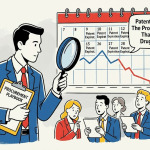
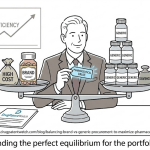
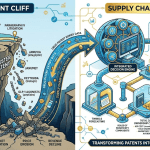
Russia’s pharmaceutical market reached 2.9 trillion roubles in 2025, up 17%, according to a report by DSM Group and Ozon Pharmaceuticals [1]. Local factories made finished drugs worth 999 billion roubles at manufacturer prices [2]. One segment moved the other way. In full-cycle production, where the factory makes the active substance as well as the finished drug, sales fell 22% in 2025 [3].
That gap is the useful part of the story. Russia grows in roubles, but the state decides who gets the growth. It uses four tools: procurement exclusion, price control, patent override, and track-and-trace. This article reviews each tool with dated documents, court rulings, and public data. It also adds calculations that no single source reports. Every calculated figure carries the label “derived.”
Status date: this article uses sources published up to July 2026. Several events described here, including a May 2026 compulsory licence ruling, can still change on appeal.
The Short Answer: Seven Findings That Matter
Each finding below stands alone. Each one has a source in the reference list.
The Russian pharmaceutical market reached 2.9 trillion roubles in 2025, a 17% increase. Analysts expect it to pass 3 trillion roubles in 2026 [1].
Local production reached 999 billion roubles in 2025, up 15.7% in value. Pack volume fell 2% to about 4.03 billion packs, while minimum dosage units rose 2.5% to 85.1 billion [2].
The full-cycle segment shrank from 150.2 billion roubles in 2024 to 116.9 billion roubles in 2025. Biocad held about 42% of it [3].
Russia has replaced imports for 88 active substances, which hold 294 marketing authorizations. The state wants domestic production of 186 more INNs by 2030 [4]. Derived: 88 is 47% of 186.
Courts upheld compulsory licences on Novo Nordisk’s semaglutide patents. SemaVic, the Geropharm analogue, ranked second among retail brands by value share in 2025, with growth of 165% [5][6].
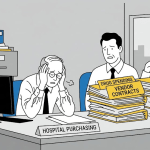
Under Decree 1289, a state buyer must reject foreign-made bids on essential drugs when two unaffiliated EAEU manufacturers bid with the same INN [7]. A 15% price preference applies to EAEU-origin goods in many procurement formats [8].
Russian drug exports were about 1.3 billion US dollars in 2025 [9]. The Pharma 2030 target is 3.4 billion dollars [10]. Derived: that target needs about 21% compound annual growth over five years.
Methodology and Definitions: How We Built This Analysis
What Data Did We Analyze, and How?
We used public documents published between 2015 and July 2026. We took market figures from DSM Group, RNC Pharma, and Forbes rankings as reported by trade press. We took legal rules from law-firm analyses of Russian decrees. We took court events from published reports of Russian court decisions. We took sanctions text from the US Treasury Office of Foreign Assets Control (OFAC).
We did not run a new patent database query for this article. The patent analysis here relies on documented court and government actions, not on a count of patent filings.
How Did We Handle Conflicts Between Sources?
Sources disagree on some points. Reports date the end of Ozempic supply to Russia from March 2023 to 1 January 2024 [5][11]. We give both dates. Market totals also differ between DSM, RNC Pharma, and other trackers, because each uses a different price basis. Do not add or divide numbers from different trackers.
We calculated percentages and ratios from reported figures. Each calculation is labeled “derived.” A derived figure is our arithmetic. It is not a statistic that a source reported.
What Do the Key Terms Mean?
Full-cycle production: manufacture that includes the active pharmaceutical ingredient (API) step, not only formulation and packaging. Russian rules check this through a stages-of-production (SP) document [8].
VED list: the list of vital and essential drugs. It controls price regulation and some procurement rules [8][12].
EAEU: the Eurasian Economic Union. Procurement rules treat EAEU-origin goods as domestic [7].
Compulsory licence: a licence to use a patent without the holder’s consent. Russian law allows it under Article 1360 of the Civil Code [13].
Data exclusivity: a period in which a generic applicant cannot use the originator’s trial data without consent [14].
Limits of This Analysis
Three limits apply. First, several figures come from trade-press summaries of reports whose full text we did not review. Second, the ranking of full-cycle producers uses procurement results, so it does not cover private sales. Third, court cases listed here can change on appeal.
How Big Is the Russian Pharmaceutical Market in 2025?
What Is the Market Size and Growth Rate?
The market reached 2.9 trillion roubles in 2025, a 17% rise [1]. Derived: 17% growth implies a 2024 base near 2.48 trillion roubles. Other publications report a different 2024 base because they use other methods. Use the growth rate and the 2025 total from one source, not a mix.
Industry statistic: The Russian pharmaceutical market reached 2.9 trillion roubles by the end of 2025, up 17%. Analysts forecast 1.6-fold growth by 2030, driven by biosimilars. Source: DSM Group and Ozon Pharmaceuticals, “Drivers of Pharma Market Growth,” as reported by GxP News, 10 April 2026 [1].
Prescription drugs hold 72% of the market [1]. Analysts expect the commercial segment to grow 10% to 11% in 2026, mainly from inflation. They expect government program funding to stay at 2025 levels [1].
Why Do Pack Volumes Fall While Rouble Value Rises?
RNC Pharma data show the pattern in local production. Packs fell 2% in 2025 while value rose 15.7% [2]. The study behind the market report links flat pharmacy pack volumes to lower use of traditional drugs and a shift to larger pack sizes [1].
Derived: 85.1 billion units across 4.03 billion packs gives 21.1 units per pack in 2025. Working backward from the reported changes (packs down 2%, units up 2.5%) gives about 20.2 units per pack in 2024. That is a 4.6% rise in pack size.
Rx Versus OTC: Where Did Volume Growth Come From?
For January to November 2025, prescription packs rose 2.2%. Over-the-counter packs fell 9.5% [15]. RNC Pharma titled its December 2025 note “Pharmaceutical production in Russia in 2025 grew exclusively due to prescription medicines” [15].
How Large Is the Retail Segment?
The retail market reached 1.89 trillion roubles in 2025, up 15.8%, according to RNC Pharma data reported by Pharmprom [6]. This figure uses a different tracker than the 2.9 trillion total. It covers pharmacy sales only.
Which Brands Led Retail Sales in 2025?
Pfizer’s Eliquis ranked first by value share at 0.94%, up 7% [6]. SemaVic from Geropharm ranked second at 0.89%, up 165% [6]. AstraZeneca’s Forxiga ranked fourth at 0.70%, up 54% [6]. Bayer’s Xarelto ranked third at 0.71%, down 22% [6].
Rank
Brand
Company
Value share
Change vs. 2024
Source
1
Eliquis
Pfizer
0.94%
+7%
[6]
2
SemaVic
Geropharm
0.89%
+165%
[6]
3
Xarelto
Bayer
0.71%
-22%
[6]
4
Forxiga
AstraZeneca
0.70%
+54%
[6]
No single brand holds a full percentage point of retail value. The market is fragmented at the brand level. A semaglutide copy made under a compulsory licence is the only locally made brand in the top four.
Who Makes Russia’s Drugs? Production Data and Full-Cycle Producers
How Much Did Russia Produce in 2025?
Russian plants made finished drugs worth 999 billion roubles at manufacturer selling prices, including VAT. Value rose 15.7% from 2024 [2]. Volume reached about 4.03 billion packs and 85.1 billion minimum dosage units [2]. RNC Pharma counts the output of foreign companies at their own and contract sites in these totals [2].
Do not divide 999 billion by 2.9 trillion to estimate a domestic share. The first figure uses manufacturer prices. The second figure comes from a different tracker and a different price basis.
Which Companies Lead Full-Cycle Production?
A ranking by the analytics platform Cursor uses 2025 government procurement results and Ministry of Industry and Trade documents that confirm full-cycle production [3]. The full-cycle market totaled 116.9 billion roubles in 2025, down 22% from 150.2 billion roubles in 2024 [3].
Rank
Company
2025 sales (billion roubles)
Derived share of 116.9 billion
Source
1
Biocad
48.8
41.7%
[3]
2
R-Pharm
19.9
17.0%
[3]
3
Pharmstandart
16.4
14.0%
[3]
4
Geropharm
7.7
6.6%
[3]
5
PharmFirma Sotex
3.25
2.8%
[3]
6
Velfarm
2.68
2.3%
[3]
7
Pharmapark
2.39
2.0%
[3]
8
Advanced Pharma
1.86
1.6%
[3]
9
Natsimbio
1.48
1.3%
[3]
10
Medsintez Plant
1.42
1.2%
[3]
Derived: the top four companies hold 79.4% of full-cycle sales. The top ten hold 90.6%. The sum of squared top-ten shares gives a Herfindahl-Hirschman Index (HHI) of at least 2,295. That is a lower bound, because smaller firms add a little more. It describes procurement-based sales only, not the whole market.
Biocad: The Largest Full-Cycle Producer
Biocad held 42% of the full-cycle market, with sales up 3% from 2024 [3]. The ranking credits it with 21 SP documents [3].
R-Pharm: The Fastest Grower
R-Pharm, counted with R-Opra and Tekhnologiya Lekarstv, grew 89%. That was the fastest rate in the ranking [3].
Pharmstandart: The Largest Decline
Pharmstandart, counted with its subsidiaries, fell 44% from 2024 [3]. Velfarm ranked sixth by sales but holds the most SP documents, covering 27 full-cycle INNs [3]. The count of SP documents does not track sales rank.
Are Foreign Companies Still Making Drugs in Russia?
Yes. For January to November 2025, RNC Pharma reported AstraZeneca’s local pack output up 43% and Menarini’s up 27% [15]. The count includes local sites and contract sites. A foreign name on a Russian-made pack does not mean the product is full-cycle. Full-cycle status depends on where the active substance is made [7][8].
What Is Pharma 2030, and What Does It Target?
What Did the Government Approve in June 2023?
The Russian government approved the Pharma 2030 strategy on 7 June 2023 under Order No. 1495-r. The Ministry of Industry and Trade had to submit an action plan within six months [10].
Metric
Stated starting value
2030 target
Derived change
Source
Domestic share of drug consumption
61.8%
66.6%
+4.8 percentage points
[10]
Drug exports
1.28 billion USD
3.4 billion USD
2.66 times
[10]
Strategically significant drugs made full-cycle in Russia
67.44%
80%
+12.56 percentage points
[10]
The source does not give the baseline year for these starting values [10]. Treat the starting values as approximate.
How Did Pharma 2020 Perform?
Between 2009 and 2022, drug production rose from 96 billion to 607.9 billion roubles. The domestic share of the market rose from 24% to 36%, according to the same report [10]. Derived reading: Pharma 2020 raised output and local share. Pharma 2030 sets targets for full-cycle production and exports.
How Far Has Import Substitution Progressed in 2026?
Deputy Industry and Trade Minister Ekaterina Priezzheva spoke on 17 March 2026 at the Healthy Society forum. She said Russia had replaced imports for 88 active substances. Those substances have 294 marketing authorizations. She said this is nearly half of the volume planned through 2030. She also said Russia must start domestic production of 186 INNs by 2030, and that more than half of them are under patent protection [4].
Derived: 88 of 186 is 47.3%. The 294 marketing authorizations spread over 88 substances give 3.3 authorizations per substance. Many local firms register copies of the same substance. This fits the crowded generic market in the volume ranking [6].
What Is the “Products for the Shelves” Program?
The program supports Russian firms that develop and register patent-protected drugs. The first list, in December 2023, had 25 INNs. The ministry announced a second list in March 2024. The third round will add 33 medicines [4]. The ministry also reviews a plan to extend the investment phase for biotech firms to five years [4].
Scenario Analysis: What Do the Targets Require?
Two scenarios use stated targets as inputs. Both are derived and not forecasts.
Scenario A, exports: exports were about 1.3 billion dollars in 2025 [9]. Reaching 3.4 billion dollars by 2030 [10] needs about 21.2% growth each year for five years.
Scenario B, market size: analysts forecast 1.6-fold growth by 2030 [1]. From a 2.9 trillion rouble base, that gives about 4.6 trillion roubles, or about 9.9% growth each year. The same report expects biosimilar share to rise from 45% to 56% [1]. The source does not say whether this share is by value or volume.
How Does Russia’s “Third Wheel” Procurement Rule Work?
What Does Decree 1289 Say?
Government Decree 1289 of 30 November 2015 restricts public purchase of foreign-made essential drugs. A buyer must reject foreign-drug bids when two or more bids offer drugs with the same INN, made in the EAEU by different manufacturers that are not affiliated [7]. The decree took effect on 10 December 2015 [7]. Practitioners call it the “third extra” or “third wheel” rule.
The rule covers one INN per lot and drugs on the VED list. The VED list in force when the law firm reviewed the rule was Government Order 2406-r of 12 October 2019 [8]. It applies to competitive procurement only [8].
What Counts as EAEU-Origin?
A buyer decides origin under the 2009 CIS treaty on rules of origin [7]. Foreign drugs with primary and secondary packaging in the EAEU got a transition period to 31 December 2016. From 1 January 2017, they no longer escaped exclusion when two local competitors bid [7].
Bidders prove origin with a Form ST-1 certificate from the Chamber of Commerce and Industry [8]. A bid for a Russian drug without an ST-1 counts as a foreign bid [8].
What Is the Second Stage: Full-Cycle Localization?
Since 2019, buyers run a second check after foreign bids drop out. They look at whether the remaining bids offer drugs fully produced in the EAEU, including active substance synthesis [8]. Two documents support this check. One is a GMP certificate issued under Ministry of Industry and Trade Order 261 of 4 February 2016. The other is an SP document under Order 4368 of 31 December 2015 [8].
Where Do Procurement Disputes Arise?
Practice varies on two points. First, whether a bid that lists both foreign and domestic drugs counts as foreign. The law firm reports that such a bid counts as foreign [8]. Second, whether two domestic drugs from one manufacturer count as two bids. Regional antimonopoly offices and courts disagree, and the Ministry of Industry and Trade took a position in a letter dated 17 December 2019 [8].
How Large Is the Price Preference for EAEU Drugs?
Ministry of Finance Order 126n of 4 June 2018 gives a 15% preference to bids that offer only EAEU-origin goods. In an auction, the system cuts the winner’s price by 15% when the winner’s bid includes a foreign product and an EAEU bid exists. In other formats, a 15% coefficient applies during bid evaluation [8]. A 25% threshold also applies. An EAEU bid wins if its price is no more than 25% above a winning bid that uses a domestic drug made from a foreign substance [8].
What Does the Localization Rulebook Look Like in 2026?
DrugPatentWatch has published its own analysis of these rules. It describes a points-based localization system under Decree 719, effective 1 January 2026, and a “second extra” rule for strategically significant medicines [16]. We could not check the points weights against the decree text. Treat those weights as unverified until you read the decree itself [16].
How Does Russia Regulate Drug Prices?
Which Drugs Have Price Caps?
Maximum manufacturer selling prices for VED drugs follow Resolution 1771 [12]. Timofey Nizhegorodtsev, Deputy Head of the Federal Antimonopoly Service, said at the Pharmaliga forum that price regulation is “practically complete” and under fine-tuning. GxP News reported his remarks on 27 February 2026 [12].
What Happens When a Price Rise Raises Shortage Risk?
The reported mechanism has two steps. Regulators first agree to a new price. If reference-country prices stay high, they confirm it. If reference-country prices stay low, they roll back the increase [12]. Producers of generics may keep prices above the thresholds recorded in reference countries [12].
What Is Happening With Markups and Online Sales?
Officials said that companies generally respect wholesale and retail markups. They also said some manufacturers try to avoid price rules for VED and non-VED drugs [12]. Distance sales of over-the-counter drugs have run since before the COVID-19 pandemic. An experiment on online sales of prescription drugs is underway [12]. Deputy Health Minister Sergey Glagolev said the labeling system (MDLP) needs better accounting based on actual sales data [12].
Can Russia Override a Drug Patent? Compulsory Licensing Explained
What Is the Legal Basis?
Article 1360 of the Civil Code lets the government permit use of a patented invention without the holder’s consent for defense, state security, and public health reasons. The licensee must notify the holder and pay fair compensation [13][5].
What Does Decree 299 Say About Compensation?
Government Decree 299 of 6 March 2022 sets compensation at 0% of the user’s revenue when the patent holder is linked to a state that acts against Russian persons. The link can be citizenship, place of registration, place of main business, or main profit source [5].
Timeline: Compulsory Licences and Related Patent Disputes
Date
Drug
Patent holder
Event
Source
Early 2021
Remdesivir
Gilead
Government grants a one-year licence to Pharmasintez under Decree 3718-r
[13]
6 Mar 2022
All
Holders linked to unfriendly states
Decree 299 sets 0% compensation
[5]
Dec 2023
Semaglutide
Novo Nordisk
Government permits Geropharm and Promomed Rus to produce until 31 Dec 2024
[11]
Nov and Dec 2024
Semaglutide
Novo Nordisk
New government orders for PSK Pharma and Promomed Rus, valid to end of 2025
[17]
20 Nov 2024
Osimertinib
AstraZeneca
FAS finds Axelpharm’s generic sales to be unfair competition
[18]
30 May 2025
Osimertinib
AstraZeneca
Moscow Arbitration Court cancels the FAS ruling, fine, and sales ban
[18]
Aug 2025 (reported)
Semaglutide
Novo Nordisk
Supreme Court Appeals Board rejects Novo Nordisk’s complaint
[17]
May 2026 (reported)
Semaglutide
Novo Nordisk
Moscow Arbitration Court grants Biokhimik a simple licence at 1.75% royalty; ruling not yet in force
[19]
Remdesivir: The First Public-Security Licence in This Set
Lidings reported that Russia granted a licence on Gilead’s remdesivir patent to Pharmasintez at the start of 2021. The licence ran for one year under Decree 3718-r and relied on Article 1360. The “fair compensation” criteria had not been set at that time [13].
Semaglutide: Court Review of the Emergency Basis
Novo Nordisk stopped Ozempic and Rybelsus supply to Russia. Reports date this from March 2023 to 1 January 2024 [17][19]. In December 2023, the government permitted Geropharm and Promomed Rus to make semaglutide until 31 December 2024. The permission covered Russian patents 2401276, 2421238, 2434019, 2643515, 2657573, 2768283, and 2777600, and the report’s list ends with an ellipsis [11]. The same report says the patent runs until 2035 [11].
Novo Nordisk challenged the November and December 2024 orders. The Supreme Court Appeals Board rejected the complaint. The court found that ending Ozempic and Rybelsus supply from 1 January 2024 threatens the health of many patients, and it accepted a “state of extreme necessity” [17]. Semaglutide is on the VED list [17]. Novo Nordisk said it received no notice and no compensation [17].
Biokhimik v. Novo Nordisk: A Court-Ordered Licence at 1.75%
In May 2026, GxP News reported a Moscow Arbitration Court ruling for Biokhimik, a Promomed Group company. The court granted a simple, non-exclusive licence on two semaglutide production patents for their full term. The royalty is 1.75% of actual revenue. Novo Nordisk must also pay 50,000 roubles for the claimant’s state duty. The ruling had not entered into force and could be appealed [19].
Derived observation: the 1.75% royalty is above the 0% rate that Decree 299 sets for holders linked to unfriendly states [5][19]. The sources do not explain the difference.
Osimertinib: Patents, Antitrust, and the FAS
AstraZeneca holds a Russian patent on osimertinib (Tagrisso) that expires in 2032 [18]. Axelpharm registered a generic in May 2023 and applied for a compulsory licence [18]. On 20 November 2024, the FAS ruled for AstraZeneca. On 24 January 2025, it told procurement participants that a generic supply offer in a procurement application breaks Russian law [18]. On 30 May 2025, the Moscow Arbitration Court cancelled the FAS ruling on four grounds. The FAS had not shown competitive relations between the firms, had no admissible evidence of use of the patented invention, did not apply Eurasian patent law, and calculated the fine wrongly [18].
A later comment under the same post, dated May 2026, says a cassation court sided with the FAS and AstraZeneca. We found no primary document for that claim, so the final status is open [18].
What Do These Cases Show About Patent Risk?
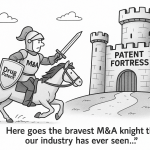
Derived classification, original to this article: Russian pharmaceutical patent risk has three channels. The first is government override through Article 1360. The second is a court-ordered licence on a non-use argument. The third is antitrust enforcement that can protect or fail to protect a patent holder. The semaglutide cases used the first two channels. The osimertinib case used the third.
Data Exclusivity in Russia: When Can Generics File?
What Are the Exclusivity Periods Under Federal Law 61-FZ?
Federal Law 61-FZ sets a 4-year wait before a generic application and a 3-year wait before a biosimilar application, counted from registration of the reference drug. It also bars commercial use of the originator’s preclinical and clinical data without consent for 6 years [14]. The source page cites Article 18, Parts 20 and 21 for the filing waits and Part 18 for the 6-year data period, but its own footnote numbering is inconsistent. Check the statute text before you cite a part number [14].
Window
Length
Starts at
Source
Wait before generic filing
4 years
Registration of reference drug
[14]
Wait before biosimilar filing
3 years
Registration of reference drug
[14]
No commercial use of data without consent
6 years
Registration of reference drug
[14]
Does Data Exclusivity Replace Patent Protection?
No. Patent protection runs separately and applies whatever the data exclusivity position [14]. In the osimertinib case, the dispute ran through antitrust and civil channels [18].
What Does This Mean for Loss-of-Exclusivity Planning?
An originator should map three clocks: the Russian or Eurasian patent term, the 4-year and 6-year regulatory windows, and the risk of a compulsory licence. The third clock does not follow a fixed schedule. In the semaglutide case, the first licences came in December 2023, within months of the reported supply halt [11][17]. Patent expiry played no role, because the patent runs to 2035 [11].
What Happened to Western Drugmakers in Russia After 2022?
What Did Big Pharma Say in March 2022?
KFF Health News reported on 10 March 2022 that no major pharmaceutical or device maker had announced plans to shut manufacturing or halt sales in Russia [20]. Pfizer’s chief executive, Albert Bourla, said the company would make no new investments in Russia and would not cut ties [20]. GSK said it would stop advertising and continue to supply products “while we can” [20]. Novartis and Pfizer both ran plants in St. Petersburg [20].
Do US Sanctions Block Medicine Sales to Russia?
No. OFAC General License 6D authorizes transactions related to agricultural commodities, medicine, and medical devices. OFAC lists foreign financial institutions as able to rely on the authorization. The FAQ page shows a release date of 12 June 2024 and an update date of 11 June 2026 [21].
Four Postures of Foreign Drugmakers: An Original Classification
We group the documented behavior of foreign firms into four postures. This is an original framework, not an industry standard.
Posture
Definition
Documented example
Source
Maintain
Keep supplying with no new investment
Pfizer statement, March 2022
[20]
Produce locally
Raise Russian output under local rules
AstraZeneca local packs up 43%, Jan to Nov 2025
[15]
Hold the brand
Keep a top retail brand
Eliquis, rank 1 by value share in 2025
[6]
Stop supply
End deliveries of a product
Novo Nordisk, Ozempic and Rybelsus
[17][19]
The postures are not exclusive. A company can hold a brand and produce locally. The cost of the fourth posture is visible in the data. After Novo Nordisk stopped supply, domestic analogues took nearly 100% of the Russian semaglutide market by 2024, and analogue sales rose more than threefold to 8.8 billion roubles [17].
Exports, Biosimilars, and Radiopharmaceuticals: Where Russian Pharma Grows
How Much Does Russia Export?
Russian pharmaceutical exports were about 1.3 billion US dollars in 2025. Andrey Dobritsa of the Russian Export Centre put the contribution at about 150 billion roubles [9]. The main buyers, listed without ranking, include Kazakhstan, Belarus, Uzbekistan, Turkey, Turkmenistan, Algeria, Lithuania, Kyrgyzstan, Armenia, and Tajikistan [9]. The report says Russian products reach more than 150 countries [9].
Why Do Biosimilars Drive the Forecast?
The DSM Group and Ozon report forecasts biosimilar share rising from 45% to 56%. It also expects 1.6-fold market growth by 2030 on this basis [1]. Biocad, the largest full-cycle producer, holds 42% of that segment [3]. Our analysis cannot say how much of the biosimilar growth will come from import replacement and how much from new demand.
Is Russia Self-Sufficient in Radiopharmaceuticals?
Russian-made drugs held 100% of the domestic radiopharmaceutical market in 2026 by volume and value, according to Deputy Minister Priezzheva on 8 July 2026. In 2025, the shares were 98% by packs and 85% by value [22]. Rosatom plans a radiopharmaceutical plant in the Kaluga region by the end of 2026 [22].
Which Segments Still Depend on Imports?
The reviewed sources do not give a segment-level import table. They do show that over half of the 186 INNs still to be localized are under patent protection [4]. That points to patented, newer drugs as the segment with the most import exposure.
What This Means for Brand Manufacturers, Generic Makers, and Investors
What This Means for Brand Manufacturers
Brand holders face four documented exposures. First, a supply halt can open the door to a compulsory licence [17][19]. Second, Decree 299 sets zero compensation for holders linked to unfriendly states [5]. Third, procurement rules exclude foreign-made essential drugs when two EAEU makers bid [7]. Fourth, the 15% price preference applies in many tender formats [8].
Local production counters some of these exposures. AstraZeneca’s local pack growth in 2025 shows one route [15]. Local production does not remove the need to check where the active substance is made [8].
What This Means for Generic and Biosimilar Makers
The data favor makers that own the active substance step. Biocad holds 42% of the full-cycle market [3]. R-Pharm grew 89% [3]. For a new entrant, an SP document is a gate to the second procurement stage [8]. A firm should check whether an INN already has two unaffiliated EAEU bidders before it plans an entry. Under Decree 1289, a third bidder from outside the EAEU is excluded [7].
The 3-year and 4-year filing waits give a clear earliest date for a biosimilar or generic application. Patent status still controls launch. The osimertinib case shows that a registered generic can face antitrust action, and that a court can later cancel that action [14][18].
What This Means for Investors and Analysts
Rouble growth overstates real volume growth. Packs fell 2% while value rose 15.7% in local production [2]. Concentration is high in the full-cycle segment [3]. Policy targets are far from current levels in two areas: exports need about 21% annual growth, and 80% full-cycle share for strategic drugs needs a 12.56 point gain [9][10].
What This Means for Medical Affairs and Pharmacovigilance Teams
Product switching changes safety data. When a domestic analogue replaces a withdrawn brand, the active substance stays the same, but excipients, manufacturers, and batch tracking change. Semaglutide shows the scale: eleven Ozempic analogues were registered in Russia by May 2026 [19]. Teams that track adverse events by brand need to track by INN and by manufacturer.
How Can a Company Track Russian Patent and Exclusivity Dates?
Start with primary records at Rospatent and the Eurasian Patent Organization. Then cross-check with a commercial database. DrugPatentWatch publishes its own Russian-market analyses and related guides on the Russian rules, including its pieces on the third-wheel rule and on the market overall [16][23]. Treat any aggregator as a pointer, and confirm the patent number, term, and any extension in the primary record.
What Happens Next? Dated Events and Open Questions
What Dates Matter in the Next 12 Months?
Event
Status
Source
Biokhimik v. Novo Nordisk licence ruling
Not in force at time of report; appeal possible
[19]
Products for the Shelves, third round
Will add 33 medicines
[4]
Rosatom radiopharmaceutical plant, Kaluga region
Planned by end of 2026
[22]
Commercial market growth in 2026
Analysts expect 10% to 11%
[1]
Market above 3 trillion roubles
Expected in 2026
[1]
What Risks Could Change the Forecast?
Four risks stand out. First, appeals could change the compulsory licence outcomes. Second, price regulators could change the reference-price method [12]. Third, the localization scoring in Decree 719 could change who qualifies as domestic. We could not verify its weights [16]. Fourth, the full-cycle segment fell 22% in one year, so procurement volume can swing quickly [3].
Key Takeaways
The market reached 2.9 trillion roubles in 2025, up 17% [1].
Local production reached 999 billion roubles, with packs down 2% and units up 2.5% [2].
Full-cycle sales fell 22% to 116.9 billion roubles. The top four firms hold about 79% (derived) [3].
Russia has replaced imports for 88 substances. 186 more INNs are targeted by 2030 [4].
Decree 1289 excludes foreign essential drugs when two unaffiliated EAEU makers bid [7].
Courts have upheld or granted compulsory licences on semaglutide patents. One ruling is not yet in force [17][19].
Russian generics face a 4-year filing wait, biosimilars a 3-year wait, and data use is barred for 6 years [14].
Exports of 1.3 billion dollars must reach 3.4 billion dollars by 2030, a derived 21% annual rate [9][10].
FAQ
How big is the Russian pharmaceutical market?
It reached 2.9 trillion roubles in 2025, up 17%, per DSM Group and Ozon Pharmaceuticals [1]. RNC Pharma reports retail sales of 1.89 trillion roubles, using a different method [6].
What is the “third wheel” rule in Russian drug procurement?
Decree 1289 requires state buyers to reject bids for foreign-made essential drugs when two unaffiliated EAEU makers bid with the same INN [7].
Can Russia license a foreign drug patent without consent?
Yes. Article 1360 of the Civil Code allows it in cases such as public security or emergency, with notice and fair compensation [13][5]. The Supreme Court Appeals Board upheld semaglutide orders on this basis [17].
How much compensation does a compulsory licensee pay?
Decree 299 sets 0% when the holder links to an unfriendly state [5]. A May 2026 Moscow court ruling set 1.75% of revenue for Biokhimik, and that ruling was not yet in force [19].
How long is data exclusivity in Russia?
The commercial use of originator data without consent is barred for 6 years from registration of the reference drug. Generic filing waits 4 years and biosimilar filing waits 3 years [14].
Do US sanctions stop medicine exports to Russia?
OFAC General License 6D authorizes transactions related to medicine and medical devices, with a reliance provision for foreign financial institutions [21]. Other legal limits, such as export controls and partner screening, are outside the scope of this article.
Which Russian company leads full-cycle drug production?
Biocad led the 2025 procurement-based ranking with 48.8 billion roubles, about 42% of the 116.9 billion rouble segment [3].
What did Novo Nordisk’s supply halt do to the semaglutide market?
By 2024, Russian makers held nearly 100% of the domestic semaglutide market. Analogue sales rose more than threefold to 8.8 billion roubles [17]. Pharmacy sales of semaglutide and tirzepatide obesity drugs reached 17 billion roubles in Q1 2026, from 5.2 billion in Q1 2025 [19]. Derived: that is 3.3 times.
How much does Russia export, and where?
About 1.3 billion US dollars in 2025. Kazakhstan, Belarus, Uzbekistan, and Turkey are among the main buyers [9].
Is parallel import legal for medicines in Russia?
Decree 506 of 29 March 2022 legalized parallel import for goods on a ministry list, with examples such as clothing and electrical machinery. The source does not list medicines among its examples [5]. Check Ministry of Industry and Trade Order 1532 for the current list before you plan a parallel import of any drug.
RNC Pharma. (2026, February 24). In 2025, the production volume of finished medicinal products in Russia approached the RUB 1 trillion mark. https://en.rncph.ru/blog/240226/
RNC Pharma. (2025, December 25). Pharmaceutical production in Russia in 2025 grew exclusively due to prescription medicines. https://en.rncph.ru/blog/251225/
U.S. Department of the Treasury, Office of Foreign Assets Control. (2026, June 11). Frequently asked question 1182 (General License 6D). https://ofac.treasury.gov/faqs/1182