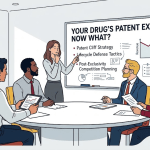
Every year, billions of dollars in branded drug revenue evaporate on a single day: the day a generic or branded generic competitor enters the market. For the companies on the winning side of that transition, the difference between a good outcome and a great one often comes down to how early and how precisely they tracked the patent landscape. For those on the losing side, late intelligence means late strategy, and late strategy in pharmaceutical markets almost always means lost revenue.
This guide is for analysts, business development teams, managed care organizations, and generic manufacturers who need to do more than watch the Orange Book. It covers how to systematically track branded generic launches using drug patent data, which data sources actually matter, how to read patent expiration timelines in the context of regulatory exclusivities, and what the most consequential recent launches reveal about competitive dynamics that will shape the next decade of LOE forecasting.
The term ‘branded generic’ gets used loosely. Here it means a product sold under a brand name by a manufacturer that is chemically identical or bioequivalent to an existing reference listed drug, often launched by the originator company itself, a licensing partner, or a generic manufacturer with a differentiated commercial approach. These products sit in the commercial space between innovator brands and commodity generics, and they create a specific intelligence challenge: the patent data is present, but interpreting it correctly requires knowing which patents are listed, which are challenged, which are licensed, and what the authorized generic strategy looks like.
What Is a Branded Generic and Why Does the Distinction Matter for Patent Strategy?
A branded generic is not a biosimilar, not a new molecular entity, and not a line extension. It is a prescription drug sold under a proprietary trade name that is therapeutically and bioequivalently equivalent to an existing product whose data exclusivity and key compound patents have expired or been successfully challenged. The category includes authorized generics launched by originators, licensed generics with their own brand identities, and independently branded generics from companies like Par Pharmaceutical, Hikma, or Amneal.
The distinction matters for patent analysis because the legal and commercial trajectory of a branded generic depends entirely on whether the underlying intellectual property was defeated through litigation, licensed, or simply expired. Each path creates a different competitive structure. A product entering under a Paragraph IV certification that prevailed in court carries 180-day exclusivity for the first filer. A product entering under a licensing deal may have supply restrictions or field-of-use limitations baked into the settlement. A product entering after natural patent expiry competes in a fully open market from day one.
Getting this distinction wrong produces forecasts that miss the actual launch window by months or years.
How Authorized Generics Differ from Independently Branded Generics in Patent Terms
An authorized generic (AG) is a product the brand manufacturer itself introduces, often through a subsidiary or licensing partner, at or near the time of generic entry. The originator can launch an AG at any time, including during a first-filer’s 180-day exclusivity period, because the AG is not itself an ANDA filer and is not subject to the exclusivity provision that blocks other ANDAs. This is one of the most commercially significant, and most misunderstood, features of the Hatch-Waxman framework.
The competitive impact of AG entry during exclusivity can cut first-filer revenue by 40 to 60 percent, according to analyses from the Federal Trade Commission’s reports on authorized generics. From an intelligence standpoint, tracking whether a brand company has filed a New Drug Application supplement for an AG, or whether subsidiary relationships suggest one is coming, is as important as tracking the Paragraph IV litigation itself.
Independently branded generics, by contrast, are products where a generic manufacturer has chosen to invest in brand equity rather than competing purely on price. These are more common in specialty markets, controlled substances, and therapeutic categories where physician relationships matter. Their patent status typically mirrors that of any other ANDA filer, though the commercial overlay is different.
Why the FDA Orange Book Alone Is Not Enough for Competitive Intelligence
The Orange Book lists approved drug products with therapeutic equivalence evaluations and the patents associated with each NDA. It is the starting point for any Hatch-Waxman analysis. But it has documented limitations that matter for competitive intelligence work.
Patent listing in the Orange Book is self-reported by the NDA holder. Courts, including the U.S. District Court for the District of Delaware, have found instances where patents were listed that did not actually claim the approved product or a method of using it. The FTC has brought enforcement actions over improper Orange Book listings. For analysts, this means that a listed patent is not necessarily a valid or enforceable barrier to entry.
The Orange Book also does not show patent family relationships, divisional applications, continuation patents, or patent term extensions beyond what the NDA holder has chosen to list. A brand company defending a product may have a dozen continuation patents in prosecution that could be listed later, none of which appear in current Orange Book records. Tracking those requires USPTO patent family data, which tools like DrugPatentWatch aggregate and cross-reference against Orange Book records.
Regulatory exclusivities also do not appear comprehensively in the Orange Book’s public interface. NCE exclusivity, orphan drug exclusivity, pediatric exclusivity, and GAIN Act exclusivity each impose market exclusivity periods that are separate from patent protection, and each can extend the effective exclusivity of a product beyond what patent expiration dates alone would suggest.
The Hatch-Waxman Framework: How Patent Litigation Creates Generic Entry Windows
The Drug Price Competition and Patent Term Restoration Act of 1984, commonly called Hatch-Waxman, is the statutory architecture for almost every branded generic launch involving a small molecule drug. Understanding it is not optional for anyone doing serious LOE forecasting.
When a generic manufacturer files an Abbreviated New Drug Application (ANDA) for a drug with unexpired Orange Book-listed patents, it must certify its relationship to each listed patent. The Paragraph IV certification, which asserts that the patent is invalid, unenforceable, or will not be infringed by the generic product, triggers a 45-day window in which the brand company can file a patent infringement lawsuit. If it does, a 30-month stay of ANDA approval goes into effect automatically, unless the court rules earlier.
The first ANDA filer to submit a Paragraph IV certification for a given product earns 180-day marketing exclusivity if it prevails or if the brand does not sue within the 45-day window. During that 180 days, no other ANDA can be approved except for the first filer’s. This exclusivity is the primary economic incentive that drives generic companies to challenge patents.
What Triggers the 30-Month Stay and How Courts Determine Its Outcome
The 30-month stay begins from the date the NDA holder receives the Paragraph IV notice letter, not from the filing date of the ANDA or the date litigation begins. Courts have complete discretion to shorten or lengthen the stay if either party fails to cooperate in the litigation. In practice, most Hatch-Waxman cases in the District of Delaware or the District of New Jersey resolve within 24 to 30 months, often through settlement rather than a court ruling on the merits.
From a competitive intelligence standpoint, the 30-month stay creates a predictable litigation timeline that analysts can model. If a Paragraph IV certification was filed in January 2023 and the brand sued within 45 days, the stay expires in approximately July 2025 unless litigation concludes earlier. That July 2025 date is a soft floor on generic entry, not a ceiling: the ANDA cannot be approved before the stay expires absent a court ruling for the generic, but it can be approved later if FDA review is slower or the litigation drags on.
Paragraph IV Certification Timelines: How to Calculate the Real Generic Entry Date
Calculating the real generic entry date requires layering four inputs: the date of the earliest Paragraph IV certification, whether the brand filed suit within 45 days, the 30-month stay expiration, and any regulatory exclusivities that survive the stay. Getting this right is the core skill in LOE forecasting.
Consider a drug with a compound patent expiring in 2027 and a formulation patent expiring in 2029. If a Paragraph IV filer successfully challenges only the compound patent, the formulation patent still blocks entry until 2029 unless it too is challenged or licensed. If the brand’s litigation strategy is to defend the formulation patent while conceding the compound patent, the effective exclusivity runs to 2029, not 2027. Analysts who model only compound patent expiry will be off by two years.
DrugPatentWatch provides aggregated Paragraph IV filing histories, certifications by patent number, and court case cross-references that allow this kind of multi-patent layering. It is one of the few tools that links Orange Book listing data, patent expiry dates, and ANDA certification history in a single interface without requiring manual USPTO lookups for each case.
How Pediatric Exclusivity Extends Drug Patent Protection by Six Months
Pediatric exclusivity, granted under 21 U.S.C. § 355a, adds six months to every existing patent or regulatory exclusivity for drugs studied in pediatric populations at FDA’s written request. This six-month extension applies regardless of whether the pediatric studies showed clinical benefit. It is a legislative incentive to generate data in children, not a reward for efficacy.
The commercial value of six months of additional exclusivity on a multi-billion-dollar drug is significant. For a drug generating $3 billion per year in U.S. sales, six months of pediatric exclusivity is worth approximately $1 to 1.5 billion in incremental revenue, depending on how quickly generic price erosion occurs post-LOE. Brand companies actively pursue pediatric exclusivity as a standard lifecycle management tool, and tracking FDA’s issued written requests through the published Pediatric Exclusivity Determinations is a standard part of LOE date modeling.
How to Build a Drug Patent Expiration Tracker for Competitive Intelligence
Building a functional patent expiration tracker is not complicated, but it requires discipline about data sourcing and a clear understanding of what each data layer represents. The tracker serves two functions: flagging near-term LOE events and identifying competitive windows where generic or branded generic entry is imminent.
The minimum viable data set for a patent tracker includes: the reference listed drug (RLD) and NDA number; all Orange Book-listed patents with their expiration dates; all known regulatory exclusivity expiration dates; the status of any Paragraph IV certifications; the court status of any pending Hatch-Waxman litigation; and any known licensing or settlement terms that would affect entry timing. For each of these elements, the data source matters as much as the data itself.
Which Data Sources Are Most Reliable for Pharmaceutical Patent Expiry Dates?
Four primary sources feed a reliable patent expiry tracker. The FDA Orange Book provides the authoritative list of patents associated with each NDA, along with patent numbers and expiration dates as reported by the NDA holder. The USPTO Patent Center provides the actual patent documents, prosecution history, and any patent term extensions (PTE) or patent term adjustments (PTA) that affect expiry. The court PACER system provides access to litigation filings in Hatch-Waxman cases. And commercial aggregators, including DrugPatentWatch, Cortellis from Clarivate, and Evaluate’s patent analytics module, cross-reference these public sources and add ANDA filing data, first-filer status, and historical LOE events.
The choice between building from raw public data and using a commercial aggregator depends on team size, analytical volume, and budget. A team tracking five to ten products annually can work from Orange Book and USPTO data with acceptable effort. A team running ongoing competitive intelligence across a therapeutic portfolio of fifty or more products needs a platform that updates in real time and surfaces changes automatically.
DrugPatentWatch is particularly useful for identifying patent family relationships and continuation applications that have not yet been listed in the Orange Book but could be. The platform’s patent expiration forecasting combines listed expiry dates with PTE and PTA calculations, giving analysts a more accurate effective expiry date than the Orange Book date alone.
Patent Term Extension vs. Patent Term Adjustment: What’s the Difference and Why It Matters
Patent term extension (PTE) and patent term adjustment (PTA) are both mechanisms that lengthen patent protection, but they apply under different statutes and serve different purposes.
PTE, governed by 35 U.S.C. § 156, compensates patent holders for time lost during FDA regulatory review. It applies only to the patent most directly covering the approved drug product and extends protection by up to five years, with a cap at 14 years of effective protection post-approval. A single PTE can be granted per approved product, and it is listed in the Orange Book when granted.
PTA, governed by 35 U.S.C. § 154(b), compensates patent holders for USPTO prosecution delays. It can apply to any patent in the family and may add months or years to the expiry date. PTA is included in the patent’s face date at issuance but is sometimes overlooked in Orange Book analysis because it is not separately identified in the Orange Book listing. Analysts relying only on the Orange Book-listed expiry date for a patent with significant PTA will underestimate actual exclusivity by the adjustment period.
Step-by-Step: How to Map Patent Clusters Around a Single Drug Franchise
Mapping the complete patent cluster around a drug franchise requires moving beyond the Orange Book to patent family analysis. The process has five steps.
First, pull all Orange Book-listed patents for the NDA and any supplemental NDAs (sNDAs) for approved line extensions. Second, use the USPTO Patent Center to identify the application numbers and assignees for each listed patent, then search for related applications with the same priority date, parent application, or shared claim language. Third, identify continuation applications and divisional patents that share priority with listed patents, even if they have not yet been listed. Fourth, search for patents assigned to the same assignee in the same IPC or CPC classification codes that describe the drug’s mechanism, formulation, or delivery system. Fifth, search for any patent term extension certificates on file with the USPTO for the relevant NDA.
The result is a map of the full patent cluster: the listed patents that carry Hatch-Waxman implications, the unlisted patents that could be listed in the future, and the orphaned patents that might support a citizen petition or a new listing attempt. This full map is what a brand company’s litigation counsel actually works from when defending against a Paragraph IV challenge. Generic companies and their investors should work from the same map.
Reading the Orange Book: Listed Patents, Delisted Patents, and What Courts Have Said About Improper Listings
The Orange Book is a regulatory publication, not a court document, and courts have repeatedly held that listing a patent in the Orange Book does not establish its validity, enforceability, or actual relevance to the approved product. What the Orange Book listing does establish is the trigger for Hatch-Waxman certification requirements: an ANDA filer must certify to every listed patent, which means every listed patent is a potential litigation hook regardless of its actual merit.
Brand companies have used this dynamic strategically. By listing continuation patents with broad claims shortly before an expected Paragraph IV certification, a brand can reset the litigation timeline: the new patent listing triggers new certification requirements, and if the certifying ANDA filer challenges the new patent, a new 30-month stay begins.
How Courts Have Handled Improper Orange Book Patent Listings: The Lantus and Restasis Cases
The litigation landscape around improper Orange Book listings changed after two high-profile cases. In the Restasis (cyclosporine ophthalmic emulsion) litigation before Judge William Bryson sitting by designation in the Eastern District of Texas, the court found several Allergan patents invalid after a bench trial in 2017, allowing generic entry. The case drew attention because Allergan had attempted to transfer the patents to the Saint Regis Mohawk Tribe to claim sovereign immunity from inter partes review, a strategy the Federal Circuit ultimately rejected.
The Lantus (insulin glargine) situation illustrated a different dynamic: the brand company’s improper Orange Book listing allegations came not from a generic company but from the FTC. In 2023, the FTC sued Sanofi and AstraZeneca under a new enforcement theory using the FTC Act’s Section 5 authority to challenge Orange Book listings for device patents on combination drug-device products like pens and injectors. This represented a significant shift in how regulators view Orange Book gamesmanship, and it created new risk for brand companies that have listed device patents to extend exclusivity.
What FTC v. Sanofi Means for Future Orange Book Strategy
The FTC’s 2023 enforcement actions against Orange Book listings for drug-device combination products signaled that the Commission would actively police listing practices. The FTC’s theory was that listing patents covering only the delivery device, not the drug itself, improperly triggers 30-month stays that delay generic competition without legitimate Hatch-Waxman justification.
For competitive intelligence analysts, this shift means that Orange Book listings for combination products now carry a litigation risk discount: a listed patent that is subject to FTC challenge or a court’s delisting order will not provide the full 30-month stay benefit the listing would otherwise trigger. Modeling the stay as fully effective for device-only patents in the current enforcement environment overstates the brand’s effective exclusivity.
How to Identify High-Risk Orange Book Listings That May Be Challenged or Delisted
Several markers suggest a patent listing is at elevated risk of challenge or delisting. Patents covering only the delivery device, patient support system, or co-packaging rather than the drug molecule or its method of use are the most obvious category. Patents issued long after the drug’s first approval, where the claims appear designed to extend rather than protect a genuine innovation, draw scrutiny. Patents where the prosecution history shows repeated rejections on prior art grounds followed by claim narrowing to a very specific formulation parameter are candidates for invalidity challenges under obviousness grounds.
Cross-referencing the patent’s claims against the approved product labeling is a practical first screen. If the approved product’s formulation, as described in the label, does not appear to fall within the patent’s claims as written, the listing may not satisfy the FDA’s listing regulations under 21 C.F.R. § 314.53. An ANDA filer in that situation may be able to seek delisting from FDA directly rather than challenging the patent in litigation, potentially eliminating the 30-month stay without a patent trial.
The 180-day exclusivity period is the most commercially valuable prize in U.S. generic drug development. During those six months, only the first ANDA filer can market the generic product. The effective market share capture during exclusivity, combined with the premium pricing that generics can sustain when there is only one competitor, produces revenue that often exceeds the total lifetime revenue of any subsequent generic entrant.
Estimates from IQVIA and IMS data historically show that a first-filer with 180-day exclusivity on a major brand can capture 70 to 90 percent of the brand’s prescription volume within the first 90 days of launch, while pricing at 20 to 40 percent below brand WAC. The economics degrade quickly once exclusivity expires and additional ANDAs are approved: by the time five or more generics are on market, pricing typically settles at 80 to 95 percent below brand WAC.
When Does 180-Day Exclusivity Begin and What Triggers Its Forfeiture?
The 180-day exclusivity clock starts on the date of the first commercial marketing of the generic product. This date is controlled by the first filer, within limits. If the first filer delays commercial launch beyond the 75-day window that follows a final court decision or agency action, and certain other conditions are met, it can forfeit the exclusivity to the next ANDA applicant. The MMA 2003 amendments created a complex forfeiture framework with six independent forfeiture triggers designed to prevent first filers from ‘parking’ exclusivity without actually launching.
The most commonly triggered forfeiture ground is the failure-to-market provision: if the first filer fails to market within 75 days of a final court decision that the patent is invalid or not infringed, or within 75 days of the date the brand’s NDA holder consents to an earlier effective date, exclusivity can be forfeited. Courts have interpreted this provision in ways that create genuine uncertainty for first filers trying to time their launch.
Authorized Generics During 180-Day Exclusivity: Commercial Impact and Detection Strategies
The FTC studied authorized generics in detail in its 2011 report ‘Authorized Generic Drugs: Short-Term Effects and Long-Term Impact.’ The report found that AG entry during 180-day exclusivity reduced the first-filer’s revenues by 52 percent on average compared to scenarios without AG competition. This finding, while over a decade old, is consistent with more recent market analyses and remains the benchmark for modeling AG impact on first-filer economics.
‘Authorized generic competition during the 180-day exclusivity period reduces the first-filer generic manufacturer’s revenues by an average of 52 percent compared with situations where no authorized generic competes during the exclusivity period.’ — Federal Trade Commission, Authorized Generic Drugs: Short-Term Effects and Long-Term Impact (2011), p. ES-3.
Detecting likely AG entry before it happens is possible but requires attention to several signals. Brand companies routinely supply the market through their own subsidiaries, and identifying subsidiary relationships through SEC filings and business entity registrations can flag potential AG arrangements. Licensing agreements disclosed in 10-K filings may reference arrangements with generic distributors. NDA supplements filed with FDA under the same NDA number for a new labeler code can indicate an AG NDA supplement is in process. DrugPatentWatch and Orange Book tracking tools flag new labeler associations with existing NDAs, which is an early indicator of AG launch preparation.
Lifecycle Management Strategies That Delay Generic Entry: Evergreening, Product Hopping, and Citizen Petitions
Brand companies use a range of strategies to extend commercial exclusivity beyond the initial patent and exclusivity periods. Understanding these strategies is as important as tracking patent expiry dates, because the strategies can shift the effective LOE date by months or years.
What Is Product Hopping and How Courts Have Responded to It?
Product hopping is the practice of switching the market from one drug formulation to another just before generic entry on the original formulation, using physician relationships and formulary management to drive prescriptions toward the new product before generics can establish parity. The new formulation gets its own NDA, its own Orange Book listing, its own patent cluster, and often a new pediatric exclusivity or orphan drug designation that restarts the clock.
Courts have responded to product hopping with increasing skepticism when the switch appears designed to impede competition rather than to offer genuine clinical benefit. In Mylan Pharmaceuticals v. Warner Chilcott, decided by the Third Circuit in 2015, the court declined to find antitrust liability in a product hop for Doryx (doxycycline hyclate), finding that Warner Chilcott’s moves from capsule to tablet to scored tablet, while inconvenient for generic competitors, did not constitute illegal monopoly maintenance. The Second Circuit reached a different conclusion in New York ex rel. Schneiderman v. Actavis PLC in 2015, upholding a preliminary injunction against Forest Laboratories’ product hop from Namenda IR to Namenda XR for Alzheimer’s disease. The distinguishing factor: Forest had announced it would discontinue Namenda IR, effectively forcing patients to switch before generic Namenda IR was available, which the court found to be coercive rather than merely competitive.
Citizen Petitions as a Delay Tactic: How to Detect and Model the Risk
Citizen petitions filed under 21 C.F.R. § 10.30 allow any party to ask FDA to take or refrain from taking action regarding a drug product. When filed by brand companies shortly before an expected generic approval, citizen petitions have the practical effect of delaying FDA action while the agency evaluates the petition. FDA is required by FDAASIA 2007 to act on citizen petitions no later than 150 days after receipt, and to deny petitions that are filed primarily to delay generic competition.
Between 2000 and 2012, FDA received over 150 citizen petitions related to pending ANDAs, and academic research published in the New England Journal of Medicine found that petitions filed within 30 months of expected generic entry delayed approval by a median of 2.7 months, with some cases exceeding 12 months of delay. Even 2.7 months on a $2 billion annual revenue drug is worth approximately $450 million to the brand holder.
Detecting citizen petition risk is straightforward: FDA maintains a public docket of all citizen petitions at regulations.gov. Searching the docket for petitions referencing a specific NDA or active ingredient, particularly petitions filed by the NDA holder, its subsidiaries, or related entities within the 18 months before expected generic approval, flags the risk. Analysts modeling LOE timelines for products approaching expiry should run this search as a standard step.
How Pay-for-Delay Settlements Affect Branded Generic Entry Timelines
Pay-for-delay settlements, also called reverse payment settlements, resolve Hatch-Waxman patent litigation by having the brand company pay the generic challenger to delay market entry until an agreed future date. The Supreme Court’s 2013 ruling in FTC v. Actavis held that such settlements are subject to antitrust scrutiny under the rule of reason, establishing that paying a potential competitor to stay out of the market raises legitimate antitrust concerns.
Post-Actavis, explicit cash payments to generic companies in settlement agreements declined, but alternative value transfers, including patent litigation support, supply agreements, licensing of other products, and co-promotion arrangements, continued. Identifying these arrangements requires reviewing settlement terms as disclosed in SEC filings (10-K, 8-K) and FTC’s annual reports to Congress on drug patent settlements, which provide aggregate data on the structure of settlements without necessarily naming specific parties.
From a competitive intelligence standpoint, a product with a settled Paragraph IV certification, where the settlement terms are known and include a specific negotiated generic entry date, provides the clearest possible LOE forecast input. The date is contractual, not a prediction. The risk is whether the settlement terms include any conditions, such as a change-of-control provision or a product approval condition, that could move the date.
Biosimilar Patent Litigation vs. Hatch-Waxman: How the BPCIA Changes the Intelligence Framework
For biological drugs, the Biologics Price Competition and Innovation Act (BPCIA) of 2009 creates a separate exclusivity and litigation framework that differs from Hatch-Waxman in ways that matter significantly for competitive intelligence on branded biologics and biosimilars.
Under the BPCIA, a biological product approved under a biologics license application (BLA) receives 12 years of reference product exclusivity from the date of first licensure, during which no biosimilar can be approved. The 12-year period is separate from any patent protection and cannot be circumvented by patent challenges alone. This is a longer and harder floor than Hatch-Waxman’s 5-year NCE exclusivity for small molecules.
The BPCIA Patent Dance: What It Is and How It Affects Biosimilar Entry Timelines
The BPCIA’s information exchange process, commonly called the ‘patent dance,’ requires the biosimilar applicant and the reference product sponsor to exchange information about the biosimilar’s manufacturing process and the sponsor’s patents, then negotiate which patents will be litigated in an immediate patent phase and which will be litigated later. The process is complex and its mandatory versus optional character has been litigated, most notably in Sandoz Inc. v. Amgen Inc. (2017), where the Supreme Court held that the patent dance steps are optional for the biosimilar applicant but that the 180-day commercial marketing notice is mandatory.
For analysts, the patent dance creates information asymmetry: the reference product sponsor receives detailed manufacturing information from the biosimilar applicant during the exchange, while public visibility into which patents are being litigated and on what timeline depends on court filings that may lag the actual negotiations by months.
Key Differences Between Small Molecule LOE Modeling and Biosimilar Exclusivity Forecasting
Small molecule LOE modeling and biosimilar exclusivity forecasting differ in four key respects. First, the exclusivity floor: 5 years for NCE versus 12 years for reference biological products, with no pathway to shorten the 12-year period through successful patent challenges. Second, the patent challenge mechanism: Paragraph IV with Orange Book listing for small molecules versus the BPCIA patent dance with BLA and manufacturing patent lists for biologics. Third, the substitutability framework: automatic substitution at pharmacy for AB-rated small molecule generics versus interchangeability designation (a separate, higher-standard approval) required for automatic substitution of biosimilars in most states. Fourth, market dynamics post-entry: small molecule generics typically reach 80 to 90 percent market penetration within 12 months; biosimilars have shown much slower uptake, with some products plateauing below 20 percent market share even five years after launch.
The slower biosimilar uptake reflects physician prescribing habits, payer formulary decisions, the brand’s patient support programs, and market access strategies rather than patent issues per se. But the intelligence implication is that the effective commercial LOE for a biological, measured in revenue terms, may be significantly longer than the regulatory LOE date would suggest.
Reading Paragraph IV Certification Data: How to Find First Filers Before They Go Public
Paragraph IV certifications are publicly disclosed in the FDA’s Orange Book and in court filings when litigation follows. But there is a lag: FDA publishes notice of Paragraph IV certifications in the Federal Register after the NDA holder or applicant sends the required notice letter, and court cases appear in PACER after they are filed, which must happen within 45 days of the brand receiving the notice letter.
The practical result is that by the time a Paragraph IV challenge to a major brand product is publicly visible, sophisticated competitors typically already know about it through other means. Monitoring USPTO continuity data for pending continuation applications, tracking ANDA activity through FDA’s drug approval database, and reviewing 10-K disclosures from major generic companies are all ways to develop earlier intelligence than the Federal Register provides.
How to Track ANDA Filing Activity for a Target Drug Before FDA Announces Approvals
FDA’s ANDA approval database updates regularly with approvals and tentative approvals. A tentative approval, issued when an ANDA is otherwise approvable but blocked by patent or exclusivity, is a strong signal that generic entry is coming: the product has passed scientific review and is waiting only for the legal pathway to clear. Tracking tentative approvals for a target drug gives an inventory of generic competitors positioned to launch as soon as the exclusivity barrier lifts.
DrugPatentWatch’s ANDA tracking module aggregates tentative approvals and first-filer status by product, allowing analysts to see how many competitors are queued, which have filed Paragraph IV certifications, and what the estimated approval sequence looks like. For a brand team managing LOE strategy, the number of tentatively approved ANDAs at the time exclusivity expires is a leading indicator of how fast and deep price erosion will be.
Paragraph IV Certification Trends by Therapeutic Area: Where Challengers Are Focused in 2024-2025
ANDA filing activity is not evenly distributed across therapeutic areas. Challengers concentrate where revenues are highest and where patent estates are perceived as vulnerable. Historically, CNS, cardiovascular, and gastrointestinal drugs have generated the most Paragraph IV activity. More recently, oncology small molecules, diabetes drugs, and immunology products have attracted increasing challenge activity as the patent estates on major products from AbbVie, Eli Lilly, Bristol Myers Squibb, and Pfizer have entered the challenge zone.
The shift toward oncology is driven partly by the high per-unit price of oncology products, which makes the economic case for generic development more compelling even for drugs with smaller patient populations. A generic imatinib or dasatinib generates substantial revenue despite relatively modest prescription volumes compared to a cardiovascular blockbuster. As GLP-1 receptor agonists from Novo Nordisk and Eli Lilly face their first patent expirations in the coming decade, expect a significant concentration of ANDA activity in the metabolic disease space as well.
Commercial Intelligence: How Branded Generic Launch Timing Affects Formulary Strategy and Payer Contracting
For pharmacy benefit managers, integrated delivery networks, and payer organizations, branded generic launch timing is a formulary management trigger. When a generic or branded generic enters the market, formulary tiers shift, prior authorization criteria change, and step therapy requirements adjust. Tracking patent expirations and litigation outcomes is not just a pharma company function; it is an essential payer intelligence capability.
The formulary impact of generic entry follows a predictable pattern. Within 30 to 60 days of first generic approval, major PBMs typically move the reference brand to a non-preferred tier or require step therapy through the generic. Plans that delay this formulary move continue paying brand prices for a product that has a substantially cheaper alternative. The stakes are high: on a drug with $500 million in plan spend, a 60-day delay in formulary action at 80 percent generic substitution rates costs the plan approximately $65 million in excess brand spend.
How PBMs Use Patent Expiry Data to Negotiate Brand Rebates Before LOE
PBMs and large payer organizations actively use patent expiry intelligence to negotiate brand rebates. As a drug approaches its LOE date, the brand’s rebating leverage diminishes because the payer knows a low-cost alternative is coming. Sophisticated payer contracting teams build patent expiry forecasts directly into their rebate negotiation timelines: they use the approaching LOE as leverage to extract higher rebates in the final years of a brand’s exclusivity, then transition to generic contracting as the LOE date arrives.
Brand companies are aware of this dynamic and often try to lock in multi-year contracts with PBMs at favorable rebate levels before the LOE date becomes public and well-understood. Tracking patent expiry timelines independently gives payers the information they need to avoid being locked into unfavorable multi-year terms on products that are about to face generic competition.
What Happens to Drug Pricing After the First Generic Launch: A Realistic Timeline
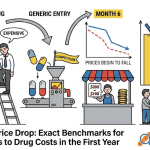
The price erosion curve after first generic launch follows a fairly consistent pattern, though the slope varies by the number of generic entrants and the presence of an authorized generic. Research from the FDA and IQVIA shows that within the first six months, when a single generic (or AG and generic) is on market, generic pricing typically settles at 20 to 40 percent below brand WAC. When exclusivity expires and multiple ANDAs gain approval, pricing drops further: 60 to 80 percent below brand WAC with four to five competitors, and 80 to 95 percent below with 10 or more competitors.
The brand’s own price behavior post-generic entry varies by company and product. Some brands continue to price near the original WAC, maintaining revenue from patients with insurance who prefer the brand or where the brand’s copay card makes it cheaper than the generic copay. Others implement price cuts to remain competitive. Specialty brands, particularly those with established hub programs and patient assistance, tend to retain a larger portion of their volume at near-brand pricing than primary care products.
How to Model Revenue at Risk for a Drug Approaching Patent Expiry
Revenue at risk modeling for a drug approaching patent expiry involves four inputs: current U.S. net revenue (not WAC-based gross revenue, which overstates actual brand revenue by the rebate amount); estimated generic market share penetration curve by month post-LOE; estimated generic price level relative to current brand WAC; and the probability distribution over possible LOE dates given the patent and exclusivity landscape.
The probability distribution over LOE dates is where patent intelligence earns its value. A product with a clear LOE date, one settled Paragraph IV case with a known negotiated entry date and no other ANDA filers, has a tight distribution. A product with multiple unresolved Paragraph IV certifications, pending continuation patents, and a citizen petition on file has a wide distribution. The difference between these scenarios can be worth hundreds of millions of dollars in NPV, which is why institutional investors, licensing teams, and business development professionals pay for high-quality patent landscape analysis rather than relying on public information alone.
Case Study: How Teva’s Revlimid Challenge Reshaped Myeloma Market Dynamics
Revlimid (lenalidomide), developed by Celgene and acquired by Bristol Myers Squibb in 2019, became one of the most commercially protected oncology drugs in history through an aggressive and legally defensible patent estate layering strategy. Understanding what happened with Revlimid provides a template for the kind of patent intelligence analysis that the playbook in this guide supports.
Revlimid’s patent protection, at its peak, included patents covering the compound, manufacturing processes, polymorphic forms, formulations, and methods of use that collectively extended potential exclusivity well beyond the initial compound patent’s expiry. Paragraph IV certifications from Natco Pharma, filed as early as 2013, triggered litigation that resulted in a settlement in 2015. Under the settlement terms, Natco received a license to sell capped volumes of generic lenalidomide beginning in March 2022, with volume caps that increased over time before full open market competition in 2026.
The capped-volume settlement was a novel structure that allowed BMS to control the pace of market share erosion rather than facing immediate full generic competition. Subsequent settlements with other Paragraph IV filers, including Teva, Sun Pharma, and Alvogen, incorporated similar volume-cap structures. The result was a managed LOE rather than an abrupt one, with each generic partner receiving a defined volume allowance that collectively displaced a predictable fraction of brand revenue per year.
What Revlimid Teaches About Capped-Volume Settlement Strategy and Generic Entry Forecasting
The Revlimid settlements illustrate a category of LOE event that standard patent expiry models handle poorly: the capped-volume entry scenario. In this structure, generic competitors are on market but their collective volume is contractually limited, so price erosion is slower and brand volume retention is higher than it would be in an open market scenario. Analysts modeling a drug with similar settlement structures need to account for the volume cap schedule, not just the entry date, when projecting revenue at risk.
From a formulary perspective, capped-volume entry creates unusual dynamics: generics are available for substitution, so formulary tier changes and prior authorization requirements apply, but supply constraints mean substitution rates may be lower than usual. Some payers managed the Revlimid LOE by implementing formulary changes that directed prescriptions to generic lenalidomide, then found that the capped supply required them to maintain brand access for patients who could not access the generic due to supply limitations.
Case Study: Humira Biosimilar Entry and the Patent Thicket That Delayed It
AbbVie’s Humira (adalimumab) is the most studied example of a biological patent thicket, a collection of overlapping patents covering different aspects of the molecule, its formulation, manufacturing processes, and methods of administration that collectively delayed biosimilar entry in the U.S. market by several years relative to Europe.
Humira biosimilars were approved in Europe beginning in 2018. In the U.S., the first Humira biosimilar was not launched until January 2023, despite multiple products receiving FDA approval years earlier. The delay resulted from AbbVie’s settlement strategy: AbbVie reached licensing agreements with every major biosimilar developer, including Amgen, Samsung Bioepis, Sandoz, Pfizer, Boehringer Ingelheim, and others, establishing a July 2023 U.S. launch date in each agreement.
The patent thicket that supported AbbVie’s negotiating position involved over 130 patents. Critics, including the Initiative for Medicines, Access and Knowledge (I-MAK), argued that many of these patents covered incremental improvements rather than genuine innovations. AbbVie and its defenders argued that the patents were valid grants for real innovations in formulation and manufacturing. What is not disputed is that the thicket made it economically rational for biosimilar developers to settle rather than litigate: challenging 130+ patents in BPCIA proceedings would cost more than accepting a licensing arrangement.
How to Assess the Strength of a Biological Patent Thicket Without Full Litigation Discovery
Assessing a biological patent thicket without the information asymmetry of litigation discovery is genuinely difficult. Analysts can work through several public signals. First, identify the total count of patents in the BPCIA patent list and compare it to the drug’s regulatory history: more patents than years of active development suggests lifecycle management filings rather than discovery-era innovations. Second, review the issuance dates relative to biosimilar ANDA filing dates: a cluster of new patents issued in the two to three years before expected biosimilar entry suggests defensive filing. Third, examine inter partes review petitions filed against the patents: if multiple IPR petitions have been filed by different parties on the same patents and the Patent Trial and Appeal Board has instituted review, it signals that the Patent Office’s own judges found reasonable likelihood that the patents are invalid.
For Humira specifically, the IPR track did not produce significant invalidity findings because most developers settled rather than pressing IPR challenges. For future biosimilar analyses, the presence or absence of instituted IPR proceedings on the dominant thicket patents is a useful signal of patent strength.
Using DrugPatentWatch for Competitive Intelligence: Specific Use Cases and Data Interpretation
DrugPatentWatch has become a standard reference for pharmaceutical patent intelligence across a range of professional functions, from licensing and business development to managed care analytics. The platform aggregates Orange Book data, USPTO patent information, ANDA approval records, and litigation case data into a searchable interface. For analysts new to the platform, understanding its specific use cases is more valuable than a feature overview.
How to Use DrugPatentWatch to Identify Products Approaching First Generic Entry
DrugPatentWatch’s patent expiration calendar allows users to filter by therapeutic class, expiry year, and current litigation status to identify products approaching their first generic entry window. For a therapeutic area team, this feature helps prioritize competitive monitoring resources: products with expiry dates within 18 to 36 months, active Paragraph IV litigation, and high current revenue are the highest-priority tracking targets.
The platform’s first-filer identification, which cross-references ANDA filing dates with Paragraph IV certification history, allows analysts to identify which generic company is in the first-filer position for a given product. This matters for forecasting the exclusivity period dynamics: the first filer’s financial condition, its manufacturing capacity, and its historical launch behavior affect when commercial marketing begins after approval and whether the 180-day exclusivity will be fully utilized or forfeited.
DrugPatentWatch Patent Expiry Data vs. Orange Book Data: Understanding the Differences
DrugPatentWatch incorporates PTE and PTA calculations into its effective expiry date estimates, which means the displayed expiry dates may differ from the raw Orange Book dates. This is a feature, not a discrepancy. The Orange Book shows the patent’s face expiry date; DrugPatentWatch shows what the effective expiry date is after accounting for regulatory extensions and USPTO prosecution adjustments. For an analyst tracking a product with a five-year PTE and two years of PTA, the effective expiry could be seven years later than the face date.
The platform also flags patents that have been involved in litigation, including case outcomes where available. For products where litigation has already resolved, DrugPatentWatch’s case tracking identifies which patents were found valid, which were found invalid or not infringed, and what the settlement date was. This historical resolution data is essential for understanding the actual barrier to entry rather than the theoretical barrier.
Integrating DrugPatentWatch Data with SEC Filings for Full LOE Intelligence
Patent data from DrugPatentWatch or the Orange Book answers the question of when generic entry is legally possible. SEC filings from brand and generic companies answer a different question: what are the companies actually doing about it? Combining both data streams is what produces actionable intelligence.
Brand company 10-K filings regularly disclose pending Paragraph IV certifications, litigation status, and in some cases, settlement terms. Generic company 10-K and 10-Q filings disclose ANDA filings, tentative approvals, and estimates of launch timelines. For publicly traded generic companies, management commentary in earnings calls often provides qualitative color on launch timing, pricing strategy, and competitive dynamics that is not available in patent data alone.
A practical intelligence workflow combines DrugPatentWatch’s patent timeline data with a quarterly review of SEC filings from the five to ten largest ANDA filers, filtered to flag disclosures related to the products in the monitored portfolio. This workflow can be automated using SEC EDGAR’s full-text search API to flag filings mentioning specific drug names or NDA numbers.
Regulatory Exclusivity Types That Override Patent Expiry: A Reference Guide
Patent expiration and regulatory exclusivity are separate legal mechanisms, and they interact in ways that require careful modeling. A drug can have expired patents and still be protected by regulatory exclusivity; a drug can have unexpired patents and still face generic competition if the relevant patents are invalid or not infringed. The full effective exclusivity period is the maximum of the remaining patent protection and the remaining regulatory exclusivity, not the average of the two.
NCE Exclusivity: The Five-Year Lock That Applies to New Chemical Entities
New chemical entity (NCE) exclusivity, codified at 21 U.S.C. § 355(c)(3)(E)(ii), provides five years of market exclusivity for drugs containing active moieties never previously approved by FDA. During the first four years of NCE exclusivity, no ANDA can be submitted at all. After four years, ANDAs with Paragraph IV certifications can be submitted but cannot be approved until five years from the NCE approval date, with the 30-month stay running from the ANDA submission date if litigation is filed.
For competitive intelligence purposes, an NCE approval in 2020 means that the earliest any ANDA can be approved (if a Paragraph IV challenge is filed immediately in the fifth year and the litigation resolves quickly in the generic’s favor) is approximately 2026 to 2027. If the brand also has a compound patent expiring in 2032 and that patent is listed and unchallenged, the effective exclusivity runs to 2032. The NCE exclusivity period is effectively moot in this scenario because the patent runs longer. Where NCE exclusivity matters is when the patent landscape is weak or already cleared: for a drug with no compelling listed patents, NCE exclusivity is the primary protection.
Orphan Drug Exclusivity: Seven Years That Can Coexist with or Extend Patent Protection
Orphan drug exclusivity, under the Orphan Drug Act at 21 U.S.C. § 360cc, provides seven years of marketing exclusivity for drugs approved for rare diseases affecting fewer than 200,000 people in the U.S. During that period, FDA cannot approve another application for the same drug for the same indication unless the new applicant can demonstrate clinical superiority.
The ‘same drug’ and ‘same indication’ conditions create significant analytical complexity. A competitor can receive approval for the same drug for a different orphan indication without triggering the exclusivity bar. A competitor can also receive approval for a different drug that treats the same condition without being barred. And a biosimilar or generic of an orphan drug product can be approved for non-orphan indications of the same product without conflicting with the orphan exclusivity.
For branded generic analysis, orphan drug exclusivity is most relevant when the reference product has multiple indications, only some of which are protected by orphan exclusivity. A generic entering for a non-orphan indication of an orphan drug product can often do so without triggering the exclusivity, creating a partial generic market that the originator did not fully anticipate.
GAIN Act Exclusivity: The Five-Year Extension for Qualifying Infectious Disease Products
The Generating Antibiotic Incentives Now (GAIN) Act, enacted as part of FDASIA 2012, provides qualifying infectious disease products (QIDPs) with five additional years of exclusivity on top of any other applicable exclusivity. For a new antibiotic with NCE exclusivity, QIDP status extends the total regulatory exclusivity period to 10 years. For an antibiotic with three-year exclusivity (for a new indication without NCE), QIDP extends to eight years.
QIDP designations and the resulting additional exclusivity are tracked by FDA and are available in the Orange Book’s exclusivity records. Analysts modeling LOE timelines for recent antibiotic approvals should routinely check for QIDP designation, as it substantially extends the exclusivity period relative to what patent expiry dates alone would suggest.
Generic Manufacturing Risk: How Supply Chain Intelligence Complements Patent Data
A drug can have a cleared patent landscape, an approved ANDA, and a first-filer positioned to launch, and still face delayed generic entry if the generic manufacturer cannot source active pharmaceutical ingredient (API) at commercial scale or if manufacturing quality issues prevent FDA clearance of the production facility. Supply chain intelligence is the complement to patent intelligence that determines whether a theoretically possible generic launch actually happens on schedule.
How FDA Warning Letters and Import Alerts Affect Generic Launch Timelines
FDA’s Warning Letters and Import Alerts directly affect ANDA approval timelines. An ANDA filer whose manufacturing site is subject to an outstanding FDA Warning Letter cannot receive final ANDA approval until the Warning Letter issues are resolved, regardless of patent and exclusivity status. Import Alerts on API suppliers block the use of those APIs in U.S. products, which can eliminate a generic’s supply source and force reformulation or resourcing.
Tracking FDA Warning Letters and Import Alerts is publicly possible through FDA’s enforcement databases. For a given generic company’s major manufacturing sites, reviewing the enforcement action history for the past three to five years provides a baseline risk assessment for their launch capability. Companies with multiple recent Warning Letters at the sites relevant to their pending ANDAs face higher launch execution risk than companies with clean inspection histories.
API Supplier Concentration Risk and Its Effect on Post-LOE Supply Adequacy
Post-LOE drug shortages occur more often than the market anticipates. When a major drug loses exclusivity and multiple generic manufacturers launch simultaneously, API demand spikes faster than the supply chain can respond if the API is sourced from a small number of manufacturers in concentrated geographic areas. India and China supply the majority of pharmaceutical APIs for U.S. generic products, and regulatory, quality, or geopolitical disruptions to those supply chains create shortage risk even when multiple generic manufacturers are authorized.
For payer and health system analysts, modeling drug shortage risk post-LOE should be part of any formulary transition planning. Products where the API supply chain is highly concentrated, where API manufacturers have prior enforcement actions, or where the manufacturing chemistry is complex enough to limit the number of qualified API suppliers are higher risk for post-LOE shortage than products with diverse, well-established API supply chains.
What This Means for Business Development, Licensing, and Portfolio Strategy
For business development professionals at generic companies, patent intelligence drives the product selection pipeline. The economics of an ANDA development program depend heavily on the competitive landscape at expected entry: how many first filers are competing for 180-day exclusivity, how many total ANDAs are expected to be approved, and what the pricing dynamics will look like at launch. A product with a single first filer and two to three total ANDAs expected at launch is worth substantially more than a product with 15 first-filer applicants and 30 ANDAs expected, even if both have the same current brand revenue.
How to Value Generic Development Opportunities Using Patent Landscape Analysis
Valuing a generic development opportunity requires five inputs from patent landscape analysis. First, the estimated entry date, based on patent expiry, exclusivity expiry, and litigation timeline. Second, the probability distribution of competitive entrants, based on ANDA filing activity and first-filer status. Third, the probability that the entrant is a first filer eligible for 180-day exclusivity, which drives the share and pricing model in the first six months. Fourth, the risk of an authorized generic, which halves the exclusivity economics. Fifth, the regulatory timeline risk, including Warning Letters, import alerts, and any pending citizen petitions that could delay FDA approval.
These five inputs, combined with current brand revenue and historical generic price erosion curves for comparable products, produce a risk-adjusted NPV for the ANDA development investment. This is standard practice at major generic companies and should be the framework for any business development team evaluating in-licensing of ANDA rights or acquisition of generic development programs.
In-Licensing vs. Building: How Small Generic Companies Use Patent Intelligence to Compete
Small and mid-sized generic companies without the resources for large-scale ANDA development programs use patent intelligence to identify niche opportunities: products with cleared patent landscapes, limited competitive interest from larger players, and markets where a single generic entrant can sustain favorable pricing for several years before the next competitor arrives.
The niche generic market has grown in importance as the economics of commodity generic manufacturing have deteriorated due to price erosion and quality compliance costs. Products with complex formulations, limited API supplier options, or specialized manufacturing requirements create barriers that sustain higher generic prices even in competitive markets. Identifying these products from patent data, specifically by looking for products with expired key patents but ongoing manufacturing complexity, is a genuine competitive advantage for smaller companies.
The Patent Cliff Forecast for 2025–2030: Which Drugs Are at Risk and When
The term ‘patent cliff’ refers to the period when a significant number of high-revenue drugs simultaneously face generic entry, creating a concentrated revenue decline for the branded pharmaceutical sector. The 2011 to 2015 cliff, which included Lipitor, Plavix, Singulair, and others, produced LOE events that cost branded manufacturers an estimated $150 billion in global revenues. The current forecast for 2025 to 2030 suggests a second, potentially larger cliff driven by the LOE of major biologics and the end of Humira’s settlement moratorium.
Drugs Facing Patent Expiry Between 2025 and 2027: Key LOE Events to Watch
Several high-revenue products face near-term LOE events that are well-documented in patent data. Eliquis (apixaban), co-developed by BMS and Pfizer, generated over $12 billion in U.S. revenues in 2023. The apixaban compound patent expired in late 2022, triggering Paragraph IV litigation from multiple ANDA filers. Settlement agreements negotiated by BMS and Pfizer established a licensed generic entry date in the U.S. in April 2028 under most settlement terms, though litigation continued with non-settling parties. The effective LOE date is a function of whether non-settling litigation succeeds in achieving earlier entry.
Biktarvy (bictegravir/emtricitabine/tenofovir alafenamide), Gilead’s HIV combination product, is among the highest-revenue products with patent protection running into the late 2030s for its key components. The complexity of the patent cluster, covering the three active components separately and in combination with formulation and process patents, creates a litigation scenario that would require enormous generic investment to fully challenge. The effective LOE date for Biktarvy is likely well after the face patent expiry dates on individual components.
Jardiance (empagliflozin) and Keytruda (pembrolizumab) represent different segments of the near-term LOE landscape. Jardiance, an SGLT-2 inhibitor from Boehringer Ingelheim and Eli Lilly, faces Paragraph IV challenges that are working through litigation. Keytruda, Merck’s anti-PD-1 antibody and the world’s best-selling drug, is a biologic subject to BPCIA exclusivity that will not face biosimilar entry before 2028 at the earliest, and the full reference product exclusivity runs to 2028 based on its first licensure date, separate from any patent protection.
GLP-1 Receptor Agonist Patent Timelines: When Will Generic Semaglutide and Tirzepatide Enter the Market?
Semaglutide (Ozempic, Wegovy, Rybelsus), Novo Nordisk’s GLP-1 receptor agonist for type 2 diabetes and obesity, and tirzepatide (Mounjaro, Zepbound), Eli Lilly’s dual GIP/GLP-1 agonist, are the most commercially significant drugs of the current decade. Both products face eventual LOE events that will fundamentally reshape the obesity and metabolic disease market.
Semaglutide’s compound patents run to the early 2030s in key markets, with U.S. patent protection covering the GLP-1 analog peptide structure expected to extend into 2026 to 2032 depending on the specific patent and any PTE. Paragraph IV certifications have been filed by multiple ANDA applicants for generic semaglutide. FDA has added semaglutide to its drug shortage list in prior years due to demand exceeding manufacturing capacity for the brand products, which creates both a regulatory complexity and a commercial rationale for generic entry. The compounding pharmacy market’s unauthorized use of semaglutide API during the shortage period, which FDA ultimately moved to curtail, foreshadowed the intensity of commercial interest in lower-cost access to the molecule.
Tirzepatide’s patent estate, being a newer approval, extends further. The core peptide patents are expected to run into the mid-2030s. But the commercial pressure on Lilly to maintain access and affordability in the face of GLP-1 market competition from Novo Nordisk and emerging competitors will shape licensing strategy well before natural LOE.
How to Build a Patent Intelligence Dashboard for Ongoing Competitive Monitoring
A functional patent intelligence dashboard does not require proprietary software. It requires three things: disciplined data sourcing, a structured update cadence, and clear analytic outputs tied to decisions the organization actually needs to make.
Which Metrics Belong in a Pharmaceutical Patent Expiry Dashboard?
The core metrics for a patent intelligence dashboard are: the LOE date range (earliest possible, most likely, latest possible) for each monitored product; the number of ANDA filers and their first-filer status; the count of tentatively approved ANDAs; the litigation status for each pending Paragraph IV challenge; the regulatory exclusivity expiry dates separate from patent dates; and any outstanding citizen petitions, Warning Letters, or import alerts that affect entry timing. For biologics, add: biosimilar BLA approvals and tentative approvals, interchangeability designation status, and the negotiated launch dates from known BPCIA patent dance settlement agreements.
Secondary metrics include the authorized generic risk flag (has the brand company filed any NDA supplements indicating AG preparation?), the API supply chain concentration score for each product approaching LOE, and the formulary position of key competitors in major national PBM formularies.
Building an Automated Orange Book Change Alert System
FDA updates the Orange Book regularly with new patent listings, delistings, exclusivity changes, and approval actions. The Orange Book is available in machine-readable format through FDA’s data download page, and building a simple alert system that compares sequential Orange Book downloads and flags changes for monitored products is a practical automation project for a data analyst.
The alert system should flag four types of changes: new patent listings for monitored NDAs (which can trigger new Paragraph IV requirements for pending ANDAs); patent delistings (which may remove barriers to generic entry); new exclusivity grants or expirations; and new Paragraph IV certifications published in the Federal Register for monitored products. Each flag type has a different strategic implication and warrants a different response from the business team.
How Biosimilar Interchangeability Designation Changes the Competitive Picture
Interchangeability is a higher regulatory standard than biosimilarity. A biosimilar with interchangeability designation can be substituted for the reference product at pharmacy without a prescriber intervention, in states that allow it. A biosimilar without interchangeability designation requires a physician’s specific prescription for the biosimilar product.
As of 2024, only a handful of biosimilars have received interchangeability designation from FDA. Semglee (insulin glargine-yfgn), from Biocon and Viatris, was the first biosimilar to receive interchangeability designation, in 2021. The designation substantially changed the formulary and substitution dynamics for insulin glargine, allowing PBMs and pharmacies to substitute Semglee for Lantus without physician authorization in participating states.
States With Automatic Substitution Laws for Interchangeable Biosimilars: The Commercial Implications
As of early 2025, 49 states have enacted laws allowing automatic substitution of interchangeable biosimilars. The specific substitution rules, including patient notification requirements and pharmacist documentation obligations, vary by state. For manufacturers of interchangeable biosimilars, this patchwork creates a state-by-state launch strategy consideration: formulary access, pharmacist education, and dispense-as-written override rates differ significantly across the country.
For reference product manufacturers, the interchangeability designation of a competing biosimilar is effectively a new LOE event: it allows substitution at pharmacy, which is structurally similar to automatic generic substitution for small molecule drugs. The impact on reference product volume depends on formulary tier decisions and the extent to which payers promote substitution, but the structural mechanism now exists for much faster market share shifts than before interchangeability designation was available.
Litigation Strategy and Patent Validity: How IPR Proceedings Complement ANDA Challenges
Inter partes review (IPR), available since the America Invents Act of 2011, allows any party to challenge the validity of a patent before the Patent Trial and Appeal Board (PTAB) within one year of being served with a complaint alleging infringement of that patent. For generic companies facing Hatch-Waxman litigation, IPR is a parallel track to the district court litigation: while the court resolves infringement questions, PTAB can resolve invalidity questions on overlapping patents, sometimes faster.
IPR vs. District Court Litigation: How Generic Companies Choose Between Them
The choice between IPR and district court litigation, or using both simultaneously, depends on the strength of the invalidity case, the patent’s prosecution history, and the timeline. IPR is generally faster than district court trial on invalidity grounds: the PTAB process from filing to final written decision takes about 18 months if trial is instituted, compared to 24 to 36 months for a district court bench trial. IPR is limited to challenges on prior art grounds (novelty and obviousness); it cannot address enforcement, unenforceability due to inequitable conduct, or claim scope issues that matter for non-infringement arguments.
District court litigation addresses all defenses simultaneously but is slower and more expensive. For patents where the invalidity case rests primarily on prior art, IPR is an efficient adjunct to or substitute for district court proceedings. For patents where the infringement question is contested and the validity defense is secondary, district court proceedings are necessary.
How PTAB Institution Rates Signal Patent Vulnerability for Competitive Intelligence Purposes
PTAB’s institution rate, the percentage of IPR petitions where the Board finds a reasonable likelihood that at least one claim is unpatentable and institutes a trial, is a signal of patent vulnerability. Historically, PTAB has instituted trials in approximately 60 to 70 percent of petitioned cases, and has found claims unpatentable in a high percentage of instituted cases. When an IPR on a key pharmaceutical patent is instituted by PTAB, it indicates that at least three administrative patent judges found the patent’s claims plausibly vulnerable.
Tracking IPR filings on Orange Book-listed patents is a practical competitive intelligence tool. For a brand product facing potential generic challenges, monitoring whether any IPR petitions have been filed on its key patents, whether those petitions have been instituted, and what the PTAB’s preliminary findings indicate, provides an early warning system for patent vulnerability before a district court ruling is years away.
International Patent Considerations: How U.S. Generic Entry Timing Relates to Global LOE Timelines
U.S. patent expiry dates do not map directly to patent expiry dates in other major markets. European patent terms are governed by European Patent Convention rules, supplementary protection certificates (SPCs), and national extension mechanisms that differ from U.S. PTE and PTA. Japanese, Canadian, and Australian patent terms have their own extension mechanisms and their own linkage frameworks between drug approval and patent protection.
For global pharmaceutical companies, the international patent portfolio creates a matrix of LOE dates by country that can be staggered by several years. A drug that faces generic competition in Germany in 2024 may retain full exclusivity in the U.S. until 2028, creating a global supply chain in which API manufactured for European generics becomes available in the U.S. market but cannot legally be marketed there. This dynamic has occasionally affected API pricing and supply availability in ways that influence U.S. generic launch economics.
How European Supplementary Protection Certificates Affect U.S. Competitive Intelligence
European SPCs extend patent protection for up to five years beyond the European patent term for pharmaceutical products, analogous to U.S. PTE. The SPC term in each EU member state is calculated separately based on the date of first marketing authorization in the EU, which means SPC terms can vary by member state for the same product.
For U.S. competitive intelligence, European SPC data matters as an indicator of the total global exclusivity runway and the timing of international generic API entry. When a major drug’s European SPC expires, generic API production for European markets begins, which can create API supply capacity that global generic manufacturers then direct toward U.S. launch preparation. Tracking European SPC expiry dates, available through the European Patent Office’s SPC database, provides a leading indicator of when API supply for U.S. generic products will become available from European-oriented manufacturers.
Key Takeaways
Patent expiry dates in the Orange Book are a starting point, not an endpoint. Effective exclusivity requires integrating patent expiry, regulatory exclusivity, PTE/PTA calculations, litigation status, and settlement terms.
The 30-month automatic stay is a predictable litigation timeline that allows LOE date modeling from the date a Paragraph IV certification is filed.
Authorized generics can cut first-filer exclusivity economics by more than half. Detecting AG preparation requires monitoring NDA supplements and subsidiary relationships, not just litigation dockets.
Citizen petitions, product hopping, and additional patent listings are brand company tools for extending effective exclusivity beyond nominal patent expiry dates. Each requires its own monitoring stream.
Biosimilar exclusivity analysis requires the BPCIA framework, not Hatch-Waxman. The 12-year reference product exclusivity is a hard floor that patent challenges cannot shorten.
Revenue at risk modeling for LOE events requires probabilistic LOE date distributions, not point estimates. The width of the distribution reflects the patent and litigation landscape.
DrugPatentWatch provides cross-referenced patent, ANDA, and litigation data that addresses the most common gaps in Orange Book-only analysis.
Manufacturing risk, including Warning Letters, import alerts, and API supply concentration, can delay generic launches that are legally cleared but operationally constrained.
GLP-1 receptor agonist patent timelines are the most commercially significant near-term intelligence target for the next decade of pharmaceutical market analysis.
IPR institution decisions at PTAB provide early signals of patent vulnerability that complement district court litigation tracking and can accelerate a competitive intelligence timeline by 12 to 18 months relative to waiting for trial outcomes.
Frequently Asked Questions
1. What is the difference between a patent expiry date and an LOE date in pharmaceutical competitive intelligence?
A patent expiry date is the date a specific patent loses legal force. An LOE (loss of exclusivity) date is the date when a drug product actually faces generic competition. These can differ significantly. If a drug has multiple listed patents with different expiry dates, the LOE date is the date of the last enforceable listed patent to expire, assuming all patents are valid and listed. If litigation results in a patent being found invalid, the LOE date moves up to whenever the next-to-expire valid patent ends. Regulatory exclusivities can also push the LOE date later than any single patent’s expiry date. Modeling the LOE date correctly requires analyzing all of these elements together.
2. How many ANDA filers on a product typically triggers full price erosion?
Historical data shows that price erosion below 20 percent of brand WAC typically requires 10 or more generic entrants. With two to five generics on market, generic pricing commonly stabilizes in the 30 to 50 percent below WAC range. The first generic entrant, particularly one with 180-day exclusivity and no authorized generic competition, can price at 15 to 25 percent below WAC and still capture the majority of the market.
3. Can a brand company list new patents in the Orange Book after ANDA filings have already occurred?
Yes. Brand companies can list new patents in the Orange Book after ANDA filings, and existing ANDA filers must certify to newly listed patents within a specified period. This can trigger new Paragraph IV certifications and new 30-month stays, even if the original patent landscape had already been cleared. Courts have some authority to limit the stay when new listings appear designed solely to delay competition, but this requires affirmative litigation steps by the generic company.
4. What is a ‘skinny label’ ANDA and how does it affect branded generic competition?
A skinny label ANDA, also called a carve-out ANDA, omits patented methods of use from the generic product’s labeling, allowing generic approval for non-patented indications while the brand retains exclusivity for patented indications. The skinny label strategy has faced legal challenges: GlaxoSmithKline v. Teva (Federal Circuit, 2021) held that Teva’s generic carvedilol could be liable for inducing infringement of GSK’s method-of-use patent for heart failure, even with a carve-out label, because promotional materials encouraged the patented use. This ruling created uncertainty about the viability of skinny labels for high-value patented indications.
5. How do I track pay-for-delay settlements to forecast generic entry dates?
The FTC’s annual reports to Congress on drug patent settlements, required under the Medicare Prescription Drug Improvement and Modernization Act, provide aggregate data on settlement structures, including the share that involve value transfers and how many specify a generic entry date. For specific settlements, SEC filings (10-K, 8-K, and MDAs from both brand and generic companies) routinely disclose material settlement terms, including agreed entry dates. The agreed entry date in a settlement is contractually binding and is the most reliable LOE date input available when it exists.
6. What triggers forfeiture of 180-day generic exclusivity?
The six statutory forfeiture triggers include: failure to market within 75 days of a final court decision or agency action; withdrawal of the ANDA; amendment of the ANDA to remove the Paragraph IV certification; failure to obtain tentative approval within 30 months without good cause; entering an agreement found to violate antitrust law; and a first filer whose application was not substantially complete on the day of first filing. The failure-to-market trigger is the most commonly at issue and has been the subject of significant litigation about what constitutes a ‘final court decision’ for forfeiture purposes.
7. How does orphan drug exclusivity interact with generic ANDA filings?
FDA will not approve an ANDA for the same drug for the same orphan indication during the seven-year orphan exclusivity period unless the new applicant demonstrates clinical superiority. An ANDA applicant can obtain approval for the same drug in a non-orphan indication or for a different indication without triggering the orphan exclusivity bar. For drugs with both orphan and non-orphan indications, a carve-out ANDA limited to the non-orphan indications can often proceed despite orphan exclusivity.
8. How far in advance should companies start tracking patent expiry for products in their competitive set?
Monitoring should begin at least five years before the expected LOE date for major products, and three years out is too late for a first-filer ANDA development program. Business development teams licensing ANDA rights or acquiring generic development companies need a seven-to-ten-year horizon on the products they care about. Payer and managed care organizations need actionable intelligence 18 to 24 months before expected LOE to execute formulary change planning and rebate renegotiation strategies.
9. What are the signs that a biologics company is preparing to launch an authorized biosimilar to compete with independent biosimilar developers?
Signals of an originator-authorized biosimilar strategy include: licensing agreements disclosed in SEC filings with biosimilar developers that include supply or distribution terms; BLA supplements filed under the originator’s NDA for alternative manufacturer sites; press releases describing ‘biosimilar partnerships’; and interchangeability applications filed by entities related to the originator company. Tracking NDA holder relationships and BLA supplement activity in FDA’s biologics database provides the earliest visibility into these arrangements.
10. What is the most common mistake analysts make when modeling pharmaceutical LOE dates from patent data alone?
The most common mistake is treating the earliest patent expiry date as the LOE date. A drug can have multiple listed patents with staggered expiry dates, regulatory exclusivities that extend beyond all patent expiry dates, pediatric exclusivity extensions that add six months to every exclusivity period, and pending continuation patents not yet listed in the Orange Book. A rigorous LOE model uses the maximum effective exclusivity across all applicable mechanisms as its base case, then applies probability discounts for litigation risk, settlement scenarios, and regulatory exclusivity uncertainty.
Citations
Federal Trade Commission. (2011). Authorized generic drugs: Short-term effects and long-term impact. Federal Trade Commission. https://www.ftc.gov/reports/authorized-generic-drugs-short-term-effects-long-term-impact-report-federal-trade-commission
Federal Trade Commission. (2023). FTC warns drug companies of potential FTC Act violations arising from improper Orange Book patent listings. Federal Trade Commission. https://www.ftc.gov/news-events/news/press-releases/2023/04/ftc-warns-drug-companies-potential-ftc-act-violations-arising-improper-orange-book-patent-listings
Hemphill, C. S., & Sampat, B. N. (2012). Evergreening, patent challenges, and effective market life in pharmaceuticals. Journal of Health Economics, 31(2), 327–339. https://doi.org/10.1016/j.jhealeco.2012.01.004
IQVIA Institute for Human Data Science. (2023). Global trends in R&D 2023: Activity, productivity, and enablers. IQVIA. https://www.iqvia.com/insights/the-iqvia-institute/reports/global-trends-in-r-and-d-2023
FTC v. Actavis, Inc., 570 U.S. 136 (2013).
New York ex rel. Schneiderman v. Actavis PLC, 787 F.3d 638 (2d Cir. 2015).
Mylan Pharms. v. Warner Chilcott PLC, 838 F.3d 421 (3d Cir. 2016).
Sandoz Inc. v. Amgen Inc., 582 U.S. 1 (2017).
GlaxoSmithKline LLC v. Teva Pharms. USA, Inc., 7 F.4th 1320 (Fed. Cir. 2021).
Feldman, R., & Wang, E. L. (2017). A patent new world? Courts, evergreening, and the failure of the Affordable Care Act to rein in pharmaceutical patent abuse. UC Hastings Research Paper. https://doi.org/10.2139/ssrn.2996870
United States Food and Drug Administration. (2024). Orange Book: Approved drug products with therapeutic equivalence evaluations (44th ed.). FDA. https://www.accessdata.fda.gov/scripts/cder/ob/
United States Patent and Trademark Office. (2023). Patent term extension. USPTO. https://www.uspto.gov/patent/laws-and-regulations/patent-term-extension
Initiative for Medicines, Access and Knowledge (I-MAK). (2021). Overpatented, overpriced: Special report on AbbVie’s Humira. I-MAK. https://www.i-mak.org/humira/
Berndt, E. R., Conti, R. M., & Murphy, S. J. (2018). The landscape of US generic prescription drug markets, 2004–2016. NBER Working Paper No. 23640. https://doi.org/10.3386/w23640
United States Food and Drug Administration. (2012). Drug price competition and patent term restoration act of 1984 (Hatch-Waxman Act). FDA. https://www.fda.gov/drugs/abbreviated-new-drug-applications-andas/hatch-waxman-act-resources
Grabowski, H., Long, G., Mortimer, R., & Boyo, A. (2016). Updated trends in US brand-name and generic drug competition. Journal of Medical Economics, 19(9), 836–844. https://doi.org/10.1080/13696998.2016.1176578
DrugPatentWatch. (2024). Pharmaceutical patent and regulatory intelligence platform. DrugPatentWatch. https://www.drugpatentwatch.com
Federal Trade Commission. (2024). Agreements filed with the Federal Trade Commission under the Medicare Prescription Drug, Improvement, and Modernization Act of 2003: Overview of agreements filed in FY 2022. FTC. https://www.ftc.gov/reports/fy2022-mma-agreements
Grabowski, H., & Vernon, J. (1992). Brand loyalty, entry, and price competition in pharmaceuticals after the 1984 Drug Act. The Journal of Law and Economics, 35(2), 331–350. https://doi.org/10.1086/467258
Kesselheim, A. S., Wang, B., Franklin, J. M., & Darrow, J. J. (2015). Trends in utilization of FDA expedited drug development and approval programs, 1987–2014: Cohort study. BMJ, 351, h4633. https://doi.org/10.1136/bmj.h4633