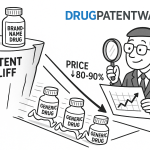
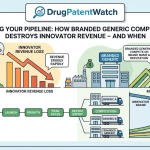
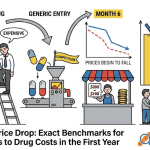
A single successful Paragraph IV challenge on a blockbuster drug can redirect $2-5 billion in annual revenue from an innovator’s income statement to a generic entrant’s launch pipeline. That’s not a theoretical number. When Teva’s generic atorvastatin hit the market in November 2011 after its successful challenge of Pfizer’s Lipitor patents, Pfizer lost roughly 80% of that drug’s U.S. revenue within 12 months. The molecule itself, atorvastatin, had generated $125 billion in cumulative global sales by that point. The patent estate protecting it was worth more than most companies’ entire market capitalizations.
Patent challenges in pharma are, at their core, IP valuation destruction events. Generic manufacturers don’t just compete on price after patent expiry; they engineer expiry through litigation, administrative proceedings, and regulatory maneuvering. Brand companies build patent estates specifically to withstand this assault. The interaction between these two forces determines when patients get cheaper medicines, when generic manufacturers earn outsized exclusivity profits, and when innovator stocks take the market-cap haircuts that show up in LOE models.
This guide maps the full strategic landscape, from ANDA mechanics to PTAB tactics to biosimilar patent thickets, with enough technical depth to be operationally useful to IP counsel, portfolio managers pricing patent-cliff risk, and R&D leads evaluating freedom-to-operate on next-generation formulations.
The Hatch-Waxman Architecture: What You’re Actually Fighting
The Drug Price Competition and Patent Term Restoration Act of 1984, known universally as Hatch-Waxman, created the legal scaffolding for every small-molecule patent challenge in the U.S. market. Understanding its structure precisely is prerequisite to executing within it.
The Orange Book and Its Listings
The FDA’s Approved Drug Products with Therapeutic Equivalence Evaluations, the Orange Book, is the central registry for drug patents and exclusivities. Brand companies submit patents for listing within 30 days of NDA approval or patent issuance, and those listings trigger automatic 30-month stays when a Paragraph IV certification is filed. The Orange Book currently lists three categories of listable patents: drug substance (active ingredient) patents, drug product (formulation/composition) patents, and method-of-use patents. Process patents, metabolite patents, and patents covering packaging or manufacturing equipment are explicitly not listable, though brands have historically pushed the boundaries.
As of 2024, the Orange Book contained roughly 40,000 patent-drug associations. The FTC has estimated that improper listings, patents that should not qualify under FDA’s listing criteria, are disproportionately concentrated in reformulated products designed to trigger stays and delay generic competition. The FDA’s October 2023 guidance tightening device-patent listing criteria for combination drug-device products, following FTC pressure, signals that the regulatory perimeter of what qualifies for Orange Book listing is actively contracting.
The Four Paragraph Certifications
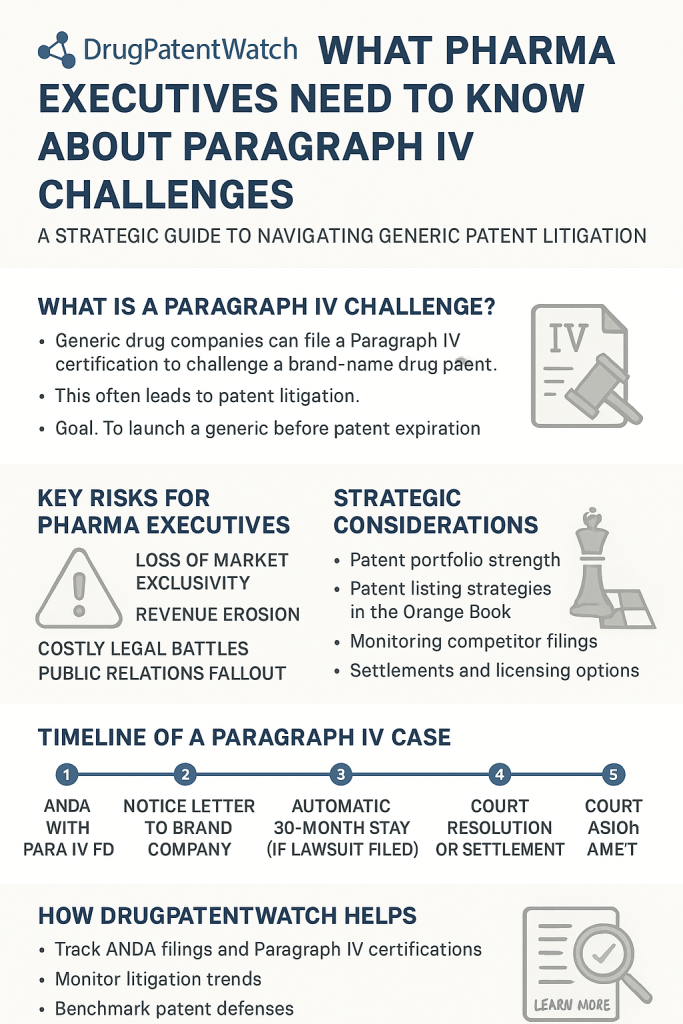
When a generic manufacturer files an Abbreviated New Drug Application, it must certify with respect to each listed Orange Book patent. Paragraph I certifies no patent information was filed. Paragraph II certifies the patent has expired. Paragraph III certifies the applicant will wait for patent expiry. Paragraph IV certifies the patent is invalid, unenforceable, or will not be infringed by the proposed generic. Only Paragraph IV triggers litigation rights, exclusivity rewards, and the strategic game described throughout this guide.
The choice between a Paragraph III and Paragraph IV certification is itself a strategic decision with material financial consequences. A Paragraph III approach avoids litigation costs and certainty of 30-month stays but surrenders 180-day exclusivity and, crucially, cedes market timing to whatever date the brand’s last listed patent expires. For a drug with five patents expiring sequentially through 2031, a Paragraph III filing against the earliest-expiring patent could mean waiting years for market entry. Paragraph IV against all five is expensive and risky, but the NPV calculation often favors aggression.
Key Takeaways: Hatch-Waxman Architecture
The Orange Book listing system is a brand company’s first line of patent defense, and its boundaries are more contestable than most generic filers appreciate. Paragraph IV certification is not a single decision but a portfolio choice across multiple patents with differentiated validity profiles. Every IP team reviewing an ANDA target should run a separate validity and listability assessment on each Orange Book patent before committing to a certification strategy.
Paragraph IV Certification: Mechanics, Timing, and the 180-Day Prize
Filing Mechanics and the 45-Day Window
When a generic manufacturer files an ANDA with Paragraph IV certifications, it must notify both the NDA holder and each patent owner within 20 days of FDA notification that the ANDA is accepted for filing. The notice must include a detailed statement of the factual and legal basis for the invalidity or non-infringement position, commonly called the ‘detailed statement’ or ‘notice letter.’ This document is, in practice, the first draft of a litigation complaint. Its quality signals to the brand whether the generic’s position is serious and technically grounded, or a weak probe likely to fold under litigation pressure.
Brand companies have 45 days from receipt of the notice letter to file an infringement suit in federal district court. Filing suit within that window automatically triggers a 30-month stay of FDA final approval, running from the date the brand received the notice letter. If the brand does not sue within 45 days, FDA can grant final approval without waiting for litigation resolution, though the patent dispute doesn’t disappear.
First-Filer Exclusivity: The 180-Day Commercial Window
The first ANDA applicant to file a substantially complete Paragraph IV certification against a listed patent earns the right to 180-day exclusivity upon FDA approval. During those 180 days, FDA cannot approve any other ANDA for the same drug. The financial value of this exclusivity period is roughly proportional to the brand drug’s annual U.S. net revenue, discounted for immediate price competition from the brand itself and from any authorized generic the innovator launches to dilute the exclusivity.
For drugs with $1 billion or more in U.S. annual sales, 180-day exclusivity is commonly worth $100-300 million in gross profit to the first filer, even after litigation costs. For drugs with $3-5 billion in annual sales, that figure can exceed $500 million. This explains why multiple generic manufacturers sometimes file on the same day, creating shared first-filer status, which splits the exclusivity value but reduces each party’s litigation exposure.
The exclusivity period begins running from the first commercial marketing date or a court decision of invalidity or non-infringement, whichever comes first. Forfeiture provisions, added by the Medicare Modernization Act in 2003, trigger exclusivity clock expiration if the first filer fails to market within specified windows or fails to maintain its application. Forfeiture analysis is a specialized subspecialty of ANDA litigation that routinely generates its own secondary litigation.
The 30-Month Stay: Running Out the Clock
Brand companies file infringement suits within the 45-day window primarily to secure the 30-month FDA stay, not necessarily because they believe they will prevail at trial. The stay imposes a minimum delay before the generic can enter, even if the generic’s non-infringement position is strong. During those 30 months, brand companies often engage in procedural strategies, claim construction disputes, and discovery battles designed to push litigation toward the stay’s expiration rather than toward trial resolution.
Generic manufacturers can accelerate past the stay by seeking summary judgment of non-infringement or invalidity, by winning at trial before the stay expires, or by obtaining a court-ordered shortening of the stay period where the brand’s delay tactics are particularly egregious. The average ANDA litigation from filing to final district court judgment runs approximately 2.5 to 3 years, roughly coinciding with the 30-month stay, which is not accidental.
IP Valuation: Paragraph IV Target Selection
Before committing litigation resources to a Paragraph IV challenge, generic IP teams should build a quantitative patent valuation model for the target asset. The core inputs are listed Orange Book patents organized by expiry date and claim scope, estimated brand revenues through each patent’s expiry, probability of invalidity or non-infringement by patent type (compound patents invalidated less frequently than formulation or method-of-use patents), expected litigation costs by patent count and complexity, 180-day exclusivity value net of authorized generic probability, and probability-weighted entry dates across scenarios.
For a drug like AbbVie’s Humira at peak U.S. sales of $21 billion annually, the IP valuation exercise that Sandoz, Boehringer Ingelheim, Amgen, and others ran through the early 2010s concluded that the patent thicket, ultimately exceeding 130 U.S. patents, made district court litigation untenable without coordinated IPR proceedings targeting the weakest secondary patents simultaneously. This shaped the settlement architecture that ultimately gave biosimilar entrants 2023 U.S. market access dates, still delayed by roughly three years from biologics license application approval dates.
Key Takeaways: Paragraph IV Certification
First-filer exclusivity is the primary financial reward driving Paragraph IV filings against high-value targets. The 30-month stay is a brand company delay mechanism, not a signal of patent strength. Any ANDA strategy team should model the NPV of each Paragraph IV target with explicit probability estimates for invalidity by patent category, authorized generic launch probability, and forfeiture risk on exclusivity.
Prior Art and Validity Demolition: Building the Technical Case
The written invalidity case determines whether a patent challenge wins at trial or at PTAB. This is the part of patent litigation where bench science, chemical knowledge, and pharmacological expertise translate directly into commercial outcomes.
Prior Art Categories and Search Strategy
U.S. patent law invalidates claims that lack novelty under 35 U.S.C. 102, are obvious under 35 U.S.C. 103, or fail written description and enablement requirements under 35 U.S.C. 112. Each ground requires different evidence and different expert testimony.
Novelty challenges require identifying a single prior art reference that discloses every element of the asserted claim. For pharmaceutical compound patents, this often means searching historical literature, older patents, and conference abstracts for prior disclosure of the specific chemical structure, salt form, or polymorph. Drug substance patents on novel molecular entities are generally the hardest to invalidate on novelty grounds, because the molecule itself was typically undisclosed before the innovator synthesized it.
Obviousness challenges under Section 103 are the most productive validity ground for pharmaceutical secondary patents, which cover formulations, dosing regimens, combinations, metabolites, and methods of treatment. The legal standard asks whether a person of ordinary skill in the art (POSITA) would have been motivated to make the claimed invention with a reasonable expectation of success, given the prior art landscape. This standard gave generic manufacturers their opening in Genentech v. Sandoz, where the Federal Circuit found that adjusting antibody dosing parameters was routine optimization requiring no inventive step, thereby invalidating method-of-use claims Genentech had used to delay biosimilar entry.
Written description and enablement challenges target patent claims that exceed what the specification actually teaches. For biologic patents covering broad genus claims, such as an antibody that binds any epitope on a target antigen, written description challenges have become increasingly potent since the Supreme Court’s 2023 ruling in Amgen v. Sanofi, which invalidated Amgen’s broad genus claims covering any antibody that blocks PCSK9 from binding LDL receptors. That ruling has rewritten the landscape for how biologic innovators draft claims and how biosimilar challengers attack them.
Drug Label Prior Art
FDA-approved drug labels carry timestamps from their approval dates and constitute prior art when they contain disclosure relevant to patent claims filed after label approval. Particularly for method-of-treatment patents on new indications or new dosing regimens, the existing label often discloses clinical information that predates the asserted patent’s priority date. PTAB and district courts have both recognized the evidentiary value of label-based prior art, though applicants must carefully establish the label’s public accessibility date.
Prosecution History Estoppel
Every patent has a prosecution history, the full record of communications between the applicant and the USPTO during examination. When applicants narrow claims to distinguish prior art during prosecution, they create prosecution history estoppel, which can prevent them from later asserting that the narrowed claim covers subject matter they surrendered. For generic manufacturers arguing non-infringement, prosecution history analysis is often the fastest path to a dispositive argument. If a brand company argued during prosecution that its formulation patent covers only extended-release matrix tablets and not osmotic pump delivery systems, it cannot later assert that claim against a generic using an osmotic pump.
This analysis requires a thorough review of the patent’s complete file wrapper at the USPTO, including responses to office actions, interview summaries, and request for continued examination filings. IP teams should treat prosecution history review as the first analytical step, not a secondary check.
Secondary Patent Categories and Their Vulnerability Profiles
Not all pharmaceutical patents are equally durable. Compound patents on novel molecular entities, which typically expire 20 years from filing with possible Patent Term Extension under 35 U.S.C. 156, are the hardest to challenge because they protect the molecule itself and were usually filed before substantial public disclosure. Polymorph patents, covering specific crystalline forms of an active ingredient, are moderately vulnerable because prior art often teaches related crystal forms, and courts have increasingly scrutinized claimed polymorphic distinctions that lack demonstrated clinical relevance. Formulation patents covering extended-release or combination products are frequently challenged on obviousness grounds with moderate success rates. Method-of-use patents, particularly those covering new patient populations or new dosing schedules for existing molecules, are among the most vulnerable patent types because the prior art base is broad and POSITA motivation arguments are readily available.
Key Takeaways: Prior Art and Validity
Obviousness under Section 103 is the most productive invalidity ground for secondary pharmaceutical patents. Prosecution history estoppel analysis should precede all other litigation planning. The Amgen v. Sanofi written description ruling has materially weakened broad genus claims in biologic patents and opens new invalidity avenues for biosimilar challengers that did not exist before 2023.
PTAB Inter Partes Review: The Faster, Cheaper Kill Shot
IPR Mechanics and Petition Standards
Inter Partes Review is a Patent Trial and Appeal Board proceeding established under the America Invents Act of 2011 that allows any person who is not the patent owner to petition PTAB to cancel issued patent claims. The threshold for institution is whether there is a reasonable likelihood that the petitioner would prevail on at least one challenged claim, a lower bar than the clear-and-convincing evidence standard required for invalidity at trial. PTAB proceedings operate on a statutory 12-month schedule from institution to final written decision, compared to the 2.5-3 year average for district court ANDA litigation.
IPR petitions are limited to prior art grounds, novelty and obviousness under Sections 102 and 103. Enablement and written description challenges under Section 112 are not available at PTAB and must go to district court. This limitation matters for biologics strategy, where Section 112 challenges have become the primary invalidity vehicle post-Amgen v. Sanofi.
Success Rates and Strategic Deployment
PTAB institutes IPR on roughly 60-65% of petitions it receives, and of those it institutes, cancels at least one challenged claim in approximately 75-80% of final written decisions. The overall cancellation rate across filed petitions, including those denied institution, runs approximately 45-50%. These figures are substantially better than the generic win rate in district court ANDA litigation, which historically hovers around 40-50% depending on how win is defined.
The strategic value of combining IPR with parallel district court ANDA litigation is well established. Winning an IPR creates collateral estoppel that forecloses the brand from asserting the cancelled claims in the related district court case. Losing an IPR, however, triggers estoppel against the generic petitioner, blocking the use of any prior art ground that was raised or reasonably could have been raised in the IPR. This asymmetric estoppel structure means IPR petition drafting requires careful prior art selection, because a poorly constructed petition can foreclose stronger arguments.
Patent Owner Responses and Claim Amendment Procedures
Patent owners can respond to IPR petitions with claim amendments, though PTAB’s claim amendment procedures have evolved significantly since the America Invents Act. Under the current framework established in Aqua Products v. Matal and subsequent developments, patent owners bear the burden of showing that proposed amended claims are patentable. In practice, claim amendments during IPR are difficult and rarely succeed, because any amendment that narrows claim scope creates its own prosecution history estoppel and can undermine the commercial value of the patent even if the amended claim survives.
IPR Timing Relative to ANDA Litigation
IPR petitions must be filed within one year of service of a district court complaint alleging infringement of the patent being challenged. For ANDA filers, this means the one-year clock starts running when the brand files its Hatch-Waxman infringement suit. Missing the one-year window eliminates IPR as a tool, making early case assessment critical.
Some generic filers strategically delay ANDA filing to allow time for IPR petitions filed by other parties, including non-ANDA competitors or hedge-fund-backed patent challengers, to mature before the ANDA case goes to trial. A favorable IPR outcome against the same patent claims asserted in the ANDA litigation can resolve the case before trial, reducing litigation costs substantially.
Coalition IPR Strategy
For blockbuster drugs with extensive patent thickets, individual generic manufacturers sometimes file coordinated IPR petitions targeting different portions of the same patent estate simultaneously. This requires careful coordination to avoid duplicative filings that PTAB may consolidate or deny on redundancy grounds. Coalition petitions have been used effectively against formulation and method-of-use patents where the primary compound patent is either expired or not listed in the Orange Book, isolating the secondary protection layer for administrative attack.
Key Takeaways: PTAB IPR
IPR’s 12-month timeline and lower evidentiary threshold make it the preferred first-line attack against formulation and method-of-use patents. The asymmetric estoppel structure demands disciplined prior art selection at the petition stage. Coalition IPR strategies targeting patent thickets are operationally complex but can deplete a brand’s secondary patent estate faster than sequential district court challenges.
Orange Book Manipulation and How to Counter It
Improper Listings and the 30-Month Stay Abuse
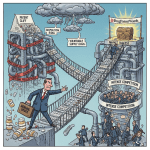
The Orange Book listing system has become one of the primary evergreening mechanisms available to brand pharmaceutical companies. By listing patents of questionable scope or relevance, brands can trigger multiple successive 30-month stays against generic challengers, even when the listed patents cover packaging devices, manufacturing equipment, or inactive ingredient compositions that have no relationship to the drug’s therapeutic profile.
The FTC’s 2023 study on improper Orange Book listings identified over 100 brand drug products where listed patents appeared to fail FDA’s statutory listing criteria, including device patents listed for drug-device combination products where the patent’s claims covered only the delivery device and not the drug itself. The FTC sent warning letters to Pfizer, Sanofi, and others, and filed amicus briefs supporting generic manufacturers’ delisting petitions in several district court cases.
The Delisting Petition Mechanism
Generic ANDA applicants can challenge an Orange Book patent listing by submitting a delisting petition to FDA under 21 U.S.C. 355(c)(3)(D), arguing that the listed patent does not meet the statutory criteria for inclusion. FDA historically moved slowly on delisting petitions, but the agency’s 2023-2024 guidance updates have shortened its review timeline and signaled greater willingness to remove improperly listed patents.
A successful delisting petition eliminates the 30-month stay that would otherwise flow from a Paragraph IV certification against that patent. For a drug with a device patent listed alongside its compound patent, delisting the device patent can eliminate one or more successive 30-month stays and accelerate market entry by one to two years.
Process Patent Listings and Their Limits
Process patents covering manufacturing methods are explicitly not listable in the Orange Book under FDA’s regulations at 21 C.F.R. 314.53(b). Brands have tested this boundary by characterizing manufacturing patents as product-by-process claims, arguing that the product is defined by the process used to make it. Courts and FDA have increasingly rejected this characterization where the claimed product can be adequately defined by its structural or functional properties without reference to the manufacturing process.
Key Takeaways: Orange Book Challenges
Orange Book delisting petitions are an underutilized tool that can eliminate 30-month stays for improperly listed patents without the cost of full ANDA litigation. The FTC’s active enforcement posture on improper listings has created a regulatory ally for generic manufacturers. Any ANDA target analysis should include a systematic assessment of whether each listed patent meets FDA’s statutory listing criteria.
Evergreening: The Brand Playbook You Need to Know Cold
Understanding the brand company’s defensive strategies is prerequisite to defeating them. Evergreening, the practice of extending a drug’s commercial exclusivity beyond its original compound patent’s expiry through secondary patent filings and regulatory exclusivities, takes several technically distinct forms.
The Polymorph Patent Strategy
A single drug molecule can exist in multiple crystalline forms, polymorphs, as well as amorphous forms, with different physical properties including solubility, stability, and bioavailability. A brand company that obtains a compound patent expiring in 2025 can potentially extend commercial protection by securing separate patents on a specific polymorph that improves formulation performance, with those patents potentially expiring in 2032 or later.
The commercial logic is straightforward: after the compound patent expires, the brand reformulates around the preferred polymorph, patents the polymorph separately, and lists that patent in the Orange Book. Generics seeking to use a different polymorph may need to demonstrate that their alternate polymorph achieves bioequivalence, which can require additional clinical data and regulatory effort. If the brand’s marketed product uses the patented polymorph, a generic using the same polymorph faces patent infringement; a generic using a different polymorph may need an NDA rather than an ANDA if FDA determines the polymorphs have materially different performance characteristics.
AstraZeneca’s esomeprazole (Nexium) is the textbook case. The compound patent on omeprazole expired, and AstraZeneca patented the S-enantiomer as esomeprazole, listing it as a separate drug. This allowed market exclusivity for Nexium years after generic omeprazole became available, generating revenues that made Nexium a $6 billion annual product by 2012 despite omeprazole’s generic availability.
Continuation Application Strategy
Patent applicants can file continuation applications that claim the benefit of a parent application’s filing date but contain new or narrowed claims, as long as the parent application remains pending. Brand companies use continuation strategies to keep a family of related patent applications in prosecution simultaneously, allowing them to tailor new claims in response to competitor product developments as generics become public through ANDA filings or biosimilar BLA filings.
The result is that patents issuing from continuation applications filed years after the original priority date can appear in the Orange Book after a generic has already filed its ANDA. These ‘submarine’ continuations emerge post-filing and require supplemental Paragraph IV certifications, potentially triggering additional 30-month stays. The number of continuation-based Orange Book patents per listed drug has grown substantially, with some products accumulating 15-20 patents from a single original filing through successive continuations.
New Dosage Form and Salt Patents
Converting a drug from a twice-daily immediate-release formulation to a once-daily extended-release formulation, then obtaining patents on the extended-release formulation and the specific polymer matrix used to achieve controlled release, is one of the most commercially successful evergreening tactics. The brand then engages in what is called ‘product hopping’: discontinuing the old formulation, switching pharmacy-level promotion to the new patented product, and using formulary management tools to accelerate the switch before generics can enter.
The Namenda (memantine) product hop from immediate-release to extended-release provided the fact pattern for one of the most important recent antitrust cases in this area. The Second Circuit, in New York v. Actavis, held that a brand company’s combination of discontinuing the old product and flooding the market with the new patented formulation could constitute anticompetitive conduct under Section 2 of the Sherman Act, even if each individual act was otherwise lawful. That ruling created the legal basis for generics to seek preliminary injunctions against product hops, though the doctrine’s application remains fact-specific.
New Indication Patents and Method-of-Use Claims
Obtaining FDA approval for a new indication generates three years of additional non-patent exclusivity for the new indication under Hatch-Waxman. Separately, method-of-use patents on the new indication can receive Orange Book listing and trigger 30-month stays for generic ANDA filers with Paragraph IV certifications against those patents. An ANDA applicant can file a ‘section viii carve-out’ for a method-of-use patent, certifying that the generic’s proposed labeling will not include the patented indication, which eliminates the 30-month stay for that patent but limits the generic’s labeling to non-patented indications.
The strategic tension between full Paragraph IV certification and section viii carve-out is commercially significant for drugs where the patented indication is a minority of actual prescriptions. If 80% of a drug’s prescriptions are for non-patented indications, a generic can capture most of the market through a carve-out label while avoiding the litigation cost and 30-month delay associated with a full Paragraph IV challenge.
The Technology Roadmap for Biologic Evergreening
Biologics present a more complex evergreening landscape than small molecules because they cannot be substituted at the pharmacy level based on chemical equivalence alone. Instead, biosimilar interchangeability, the designation that allows pharmacy-level substitution without physician authorization, requires additional clinical demonstration of switching equivalence, typically through one or two switching studies showing that alternating between the reference biologic and biosimilar produces no greater risk than continuous use.
The biologic evergreening roadmap typically runs as follows. The reference product sponsor obtains 12-year biological exclusivity under the Biologics Price Competition and Innovation Act for the original product. During that exclusivity period, it files device patents on the auto-injector or prefilled syringe delivery system, formulation patents on the buffer and excipient composition, and manufacturing patents on cell line modifications or purification methods. As the 12-year exclusivity approaches, it files new BLAs for reformulated versions, combination products, or new devices, each potentially generating new regulatory exclusivities. It also pursues additional patent filings through continuation applications targeting the biosimilar competitor’s specific manufacturing approach once that approach becomes public through litigation or regulatory filings.
AbbVie executed this strategy precisely with Humira. The original adalimumab compound patent expired in 2016, but AbbVie built a U.S. patent thicket of over 130 patents covering formulations, methods, and manufacturing processes, then executed settlement agreements with every major biosimilar manufacturer that granted U.S. market access in January 2023, approximately seven years after the compound patent expired. The biosimilar market in Europe, where AbbVie did not maintain the same patent coverage, launched in 2018.
Key Takeaways: Evergreening
The most dangerous evergreening tactics are polymorph patents combined with formulation switches, continuation applications filed after ANDA submission, and product hops with aggressive formulary management. Generic IP teams tracking high-value LOE events should map every pending continuation application in a brand’s patent family as early as two to three years before anticipated compound patent expiry.
Settlement Strategy and Reverse Payment Agreements
Anatomy of a Patent Settlement in ANDA Litigation
Most ANDA patent litigations settle before trial. The settlement market reflects rational expected-value calculations by both parties: the brand company knows its patent may be invalidated and wants to guarantee at least some exclusivity extension; the generic manufacturer wants market entry certainty and litigation cost relief. The negotiation space covers entry date, exclusivity protections during the settlement period, authorized generic provisions, royalty structures if any, and supply chain arrangements.
Reverse Payment Settlements and the FTC v. Actavis Framework
In a traditional commercial settlement, the plaintiff pays the defendant if anything changes hands. In pharmaceutical patent settlements, the payment often flows from the brand company to the generic challenger, a ‘reverse payment’ that functions as compensation for the generic agreeing to delay market entry. The Supreme Court held in FTC v. Actavis (2013) that reverse payment settlements can violate the Sherman Act and must be evaluated under a rule-of-reason antitrust framework rather than being automatically lawful under the patent grant.
Post-Actavis, parties have structured settlements to avoid straightforward cash payments by substituting non-cash value transfers: authorized generic agreements, co-promotion arrangements, supply agreements, or licenses to other drugs. Courts have varied in how they characterize these non-cash transfers as ‘payments’ under the Actavis framework. The FTC continues to challenge settlements it views as functionally equivalent to cash reverse payments regardless of the form of consideration.
From a generic manufacturer’s perspective, any settlement term that provides value to the generic beyond the avoided litigation cost of the case warrants antitrust counsel review before signing. The 2020 case FTC v. AbbVie, where the Third Circuit found that AbbVie’s settlements with generic testosterone gel manufacturers constituted illegal reverse payment settlements partly through an authorized generic arrangement, demonstrates that non-cash value transfers remain in the FTC’s crosshairs.
Entry Date Negotiation and LOE Modeling
The primary settlement variable is the entry date. Generic manufacturers should model the NPV of all plausible entry dates relative to the expected litigation outcome, including the probability of winning outright before the 30-month stay expires, winning after trial, losing at trial and appealing, and settling at each stage. The brand’s reservation price is typically anchored to the NPV of exclusivity from the latest date a court would likely confirm patent validity, discounted for litigation risk.
Early entry dates, even three to four years before the nominal patent expiry, routinely have NPVs exceeding $200 million for billion-dollar drugs. The generic’s litigation cost in a complex ANDA case, with multiple patents and parallel IPR proceedings, can reach $15-30 million, making the settlement zone for NPV-rational parties fairly wide.
Key Takeaways: Settlement Strategy
Reverse payment settlements remain antitrust-sensitive regardless of the payment’s form. The NPV framework for entry date negotiation requires precise probability estimates on trial outcomes, which demands rigorous prior art analysis before negotiations begin. Authorized generic provisions in settlement agreements require independent antitrust review.
Litigation Venue, Expert Strategy, and Parallel Global Challenges
Venue Selection After TC Heartland
The Supreme Court’s 2017 TC Heartland decision restricted venue in patent cases to districts where the defendant is incorporated or has a regular and established place of business. For ANDA litigation, this means suits against domestic generic manufacturers are typically filed in Delaware (where most generics are incorporated) or in the district where the generic’s manufacturing or research operations are located. The District of Delaware handles the majority of ANDA patent litigation in the U.S. and has developed specialized expertise in Hatch-Waxman cases, complex claim construction, and pharmaceutical prior art.
Delaware’s judicial expertise is a double-edged factor. Delaware judges are familiar with brand company litigation tactics and less likely to grant procedural delays that lack substantive justification. They are also familiar with generic manufacturers’ prior art arguments and have developed nuanced obviousness jurisprudence in pharma contexts. Both sides benefit from experienced judges, but the elimination of procedural inefficiencies generally favors the party with the stronger technical case.
Expert Witness Strategy
Pharmaceutical patent litigation requires experts in at least three disciplines: medicinal chemistry or the relevant pharmaceutical science for the molecule, pharmacology for efficacy and safety claims, and formulation science for product patents. For ANDA litigation involving biologics, protein biochemistry and immunology expertise are typically required in addition to formulation science.
Expert witness selection is a competitive differentiator in ANDA litigation. The strongest experts are typically academic researchers who have published extensively in the relevant drug class, who can speak with authority about POSITA knowledge at the patent’s priority date, and who do not carry significant prior testimony history that opposing counsel can use for impeachment. Some IP firms have developed proprietary expert databases tracking testimony records, publication histories, and outcome correlations for pharmaceutical patent experts.
Cross-Border Patent Challenges and International Coordination
A U.S. ANDA strategy does not exist in isolation. For drugs with significant ex-U.S. revenue, parallel patent challenges in the European Patent Office (EPO) opposition proceedings, the UK Intellectual Property Office, Canadian patent courts, and Australian patent courts can deplete the brand’s IP enforcement resources, establish favorable validity precedents, and accelerate global market entry timelines.
EPO opposition proceedings offer particular strategic value because they are inexpensive relative to district court litigation, are centralized rather than country-by-country, and produce decisions that have persuasive influence in national courts across EPC member states. A successful EPO central revocation creates immediate patent invalidity across all EPC states that have ratified the relevant unitary patent protection, which has expanded since the Unified Patent Court began operations in June 2023. Coordinating IPR petitions with EPO oppositions against the same patent family requires careful claim mapping and prior art coordination but can produce mutually reinforcing outcomes.
Key Takeaways: Litigation Strategy
Delaware ANDA litigation rewards technical preparation over procedural maneuvering. Expert witness selection and preparation is a material competitive variable. International patent challenges, particularly EPO oppositions synchronized with PTAB IPR petitions, can maximize prior art leverage while distributing litigation costs.
Biologics and Biosimilar Patent Challenges: The 12-Year Problem
The BPCIA’s Patent Dance
The Biologics Price Competition and Innovation Act created a separate approval pathway for biosimilar biologics through section 351(k) of the Public Health Service Act, with its own patent dispute resolution mechanism known colloquially as the ‘patent dance.’ The patent dance involves a staged exchange of information: the biosimilar applicant provides its manufacturing and product information to the reference product sponsor, which then identifies patents it believes would be infringed by the biosimilar’s manufacture, use, or sale. The parties negotiate a list of patents for immediate litigation and a list for later litigation, constrained by the BPCIA’s procedural rules.
Participation in the patent dance is technically optional for biosimilar applicants following the Federal Circuit’s 2017 Amgen v. Sandoz decision, but non-participation triggers different procedural consequences, including the reference product sponsor’s right to seek a preliminary injunction based on the biosimilar’s failure to provide manufacturing information. In practice, most biosimilar applicants participate in the dance because it provides litigation certainty and constrains the reference product sponsor to a defined list of patents.
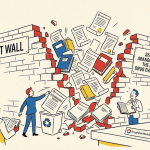
The 12-Year Exclusivity Wall
Reference biologic products have 12 years of regulatory exclusivity from the date of first licensure under the BPCIA, during which FDA cannot approve a biosimilar application referencing that product. This exclusivity is independent of patents, means a biosimilar can have all relevant patents invalidated and still cannot reach the U.S. market until the 12-year period expires, and runs concurrently with a 4-year period during which a biosimilar application cannot even be submitted.
For products first approved in the late 2010s and early 2020s, including many oncology biologics and newer immunology agents, the 12-year exclusivity is the binding constraint, not the patent estate. This inversion of the usual small-molecule dynamic, where patents typically define exclusivity boundaries, fundamentally changes the biosimilar investment thesis: biosimilar manufacturers should target biologics approved in the early-to-mid 2010s, where the 12-year clock has already run, rather than recent approvals where the exclusivity wall remains intact.
Biosimilar Interchangeability Designation
Biosimilar interchangeability is the FDA designation that permits pharmacists to substitute a biosimilar for the reference biologic without prescriber intervention, equivalent to pharmacy-level generic substitution for small molecules. Achieving this designation requires demonstrating that alternating between the biosimilar and the reference product does not produce greater clinical risk than continued use of the reference product alone, typically through switching studies in a patient population.
Only products with interchangeability designation can be substituted at pharmacy level in states with substitution laws permitting it. Without interchangeability, biosimilar uptake depends on formulary-level decisions by payers and PBMs, physician prescribing habits, and patient counseling, all of which are slower and less certain than pharmacy substitution. The commercial impact of interchangeability designation for a biosimilar competing in a high-volume therapeutic area like insulin or adalimumab is substantial. Boehringer Ingelheim’s Cyltezo, an adalimumab biosimilar, received interchangeability designation in 2021, the first adalimumab biosimilar to do so, providing a significant formulary access advantage over non-interchangeable competitors in the crowded post-2023 adalimumab biosimilar market.
Post-Amgen v. Sanofi: Genus Claim Invalidity in Biologics
The Supreme Court’s June 2023 ruling in Amgen Inc. v. Sanofi held that Amgen’s genus claims covering any antibody that blocks PCSK9 from binding LDL receptors were invalid for lack of enablement. The specification disclosed approximately 26 representative antibodies by amino acid sequence, but the claims covered potentially millions of antibodies within the functional genus. The Court held that a patent claiming a genus must enable the full scope of the claimed genus, not merely representative members of it.
This ruling has direct practical implications for biosimilar patent strategy. First, it opens broad genus claims in existing biologic patents to Section 112 invalidity attacks that were theoretically available before but now have clear Supreme Court endorsement. Second, it constrains how reference product sponsors draft new biologic patent claims, pushing toward structure-based claims with more limited functional scope. Biosimilar IP teams reviewing a reference product sponsor’s patent estate should systematically audit genus claims using the Amgen v. Sanofi enablement framework as the primary invalidity lens for Section 112 challenges.
Key Takeaways: Biosimilar Patent Strategy
The 12-year BPCIA exclusivity is a harder constraint than the patent estate for recently approved biologics. Interchangeability designation is a material commercial differentiator warranting its own development and regulatory investment. Amgen v. Sanofi opened genus claims in existing biologic patents to enabled-scope invalidity challenges that biosimilar IP teams should systematically apply.
IP Valuation: What a Challenged Patent Is Actually Worth
The Patent Estate as a Balance Sheet Asset
In M&A transactions and licensing negotiations, pharmaceutical patent estates are valued using several methodologies adapted from general IP valuation practice. The most commonly used approach for pharma patent portfolios is the relief-from-royalty method, which calculates the value of a patent as the present value of royalty payments the company would need to pay to third parties if it did not own the patent and had to license the rights instead. The royalty rate used in this calculation is benchmarked against comparable license agreements in the same therapeutic area and claim scope category.
A compound patent on a drug generating $2 billion in annual U.S. sales with 8 years of remaining exclusivity might support a relief-from-royalty valuation of $800 million to $1.5 billion, depending on the benchmark royalty rate (typically 5-15% for pharmaceutical primary compound patents) and the discount rate applied to the royalty stream.
Probability-Adjusted Valuation for Challenged Patents
When a patent faces an active ANDA Paragraph IV challenge or an IPR petition, its value requires probability adjustment. A compound patent with an 8-year exclusivity runway has a theoretical terminal value, but if a generic manufacturer has filed a credible prior art-based IPR petition with institution probability of 65%, and district court invalidity probability of 40% conditional on the IPR failing, the probability-adjusted patent value is materially lower than the unadjusted figure.
The precise adjustment depends on the specific invalidity claims, the quality of the prior art, and the claim construction landscape. For portfolio managers pricing exposure to LOE risk, scenario analysis across four states, patent upheld, patent invalidated at PTAB, patent invalidated at district court, and settlement, with probability weights and entry date estimates for each, provides a distribution of revenue outcomes more useful than a single base-case model.
Transaction Value and Litigation Risk Disclosure
In pharma M&A transactions, acquirers increasingly use third-party patent validity assessments as part of due diligence on the target’s revenue-generating products. A target company whose lead drug faces a meritorious Paragraph IV challenge or a pending IPR petition will carry a transaction risk discount reflecting the probability-adjusted entry date. Legal teams evaluating acquisition targets should generate independent invalidity opinions on all Orange Book-listed patents for the top five revenue products, not merely the compound patent.
Key Takeaways: IP Valuation
Patent estate valuation requires probability adjustment for active challenges that most standard relief-from-royalty models ignore. M&A due diligence should include independent invalidity opinions on all revenue-relevant Orange Book patents. For portfolio managers, scenario-based LOE models with explicit patent challenge probability inputs produce more accurate revenue forecasts than single-point entry date estimates.
Investment Strategy for Analysts Tracking Patent Cliffs
Identifying Actionable Patent Cliff Events
A patent cliff, the revenue decline following loss of exclusivity, is predictable in timing and directionally certain in magnitude for most high-revenue drugs. The analytic challenge for institutional investors is not identifying that a cliff exists but accurately timing its onset and sizing the post-cliff revenue trajectory.
Timing the cliff requires tracking not just the listed Orange Book patent expiration dates but the active Paragraph IV challenges against those patents, pending IPR petitions, the litigation status of each challenge, and the probability-adjusted settlement value. A drug with a nominal compound patent expiry of 2029 but active, meritorious Paragraph IV challenges and a pending IPR with strong prior art may realistically face generic entry in 2026 or 2027, three years ahead of the Orange Book date. Revenue models anchored to nominal Orange Book expiry dates systematically overvalue drugs with credible active challenges.
Monitoring PTAB and Court Dockets
Public PTAB dockets at patents.google.com and the USPTO’s PTAB trial tracker provide real-time information on IPR petition filings, institution decisions, and final written decisions. District court dockets for ANDA cases are public in PACER. Patent analytics platforms, including Docketbird, RPX, and Docket Navigator, provide systematic surveillance across multiple cases simultaneously. Any institutional investor with meaningful exposure to pharma LOE risk events should have systematic docket monitoring on the five to ten highest-revenue drugs facing imminent patent expiry across their portfolio.
First-Filer Identification as a Long Signal
When a credible, well-resourced generic manufacturer files a first Paragraph IV certification against a major brand drug’s compound patent, that filing is a material market signal. It indicates that internal valuation analysis at the generic manufacturer concluded the target’s patent was vulnerable enough to justify litigation investment. It also initiates the 45-day window after which the brand must sue or lose its automatic stay, and it sets the clock on 180-day exclusivity that will be the primary reward for the successful challenger.
Tracking first Paragraph IV filer identities and their historical win rates in similar patent classes provides a signal on the patent’s likely durability. Teva, Mylan, and Sandoz historically have had larger litigation budgets and more aggressive filing records on high-value targets than smaller generic manufacturers, and their first-filer filings against a brand’s primary compound patent carry different probability implications than a first filing by a smaller ANDA applicant with limited litigation resources.
Biosimilar Entry Timing Models
For reference biologic products, the investment model requires tracking four variables: the 12-year BPCIA exclusivity expiry date, the status of biosimilar applications in FDA review, the outcome of patent dance proceedings or any litigation under the BPCIA, and the interchangeability application status of lead biosimilar applicants. Products where the 12-year exclusivity has expired, multiple biosimilar applications have received tentative approval, and at least one applicant has filed for interchangeability designation are within 12-24 months of material formulary substitution pressure.
Key Takeaways: Investment Strategy
Revenue models anchored to nominal Orange Book patent expiry dates overvalue drugs with credible active Paragraph IV challenges. First Paragraph IV filer identity is a probabilistic signal on patent vulnerability worth tracking systematically. Biosimilar LOE models require four distinct inputs beyond compound patent expiry.
Policy Reforms That Would Actually Change the Math
Orange Book Listing Criteria Reform
The FTC and a growing number of legislators have argued for substantive reform of Orange Book listing standards, specifically restricting device patents from listing for drug-device combination products where the patent’s claims do not encompass the drug itself. FDA’s 2023 guidance moved in this direction for certain combination products, but a statutory fix through Hatch-Waxman amendment would create clearer and more enforceable criteria.
Tightening listing criteria would reduce the number of 30-month stays triggerable by improperly listed patents, directly shortening the average time from Paragraph IV filing to generic market entry for affected products. FDA data suggests that device patent listings were involved in approximately 12% of 30-month stays over a five-year period, a non-trivial contribution to aggregate generic entry delay.
PTAB Funding and Capacity
PTAB operates under resource constraints that create meaningful delays in scheduling IPR institution decisions. The 3-month window between petition filing and institution decision has stretched in practice due to case volume increases following post-AIA reforms. Increased USPTO funding directed specifically to PTAB pharmaceutical patent review capacity would reduce this delay and improve the system’s value as a complement to district court ANDA litigation.
180-Day Exclusivity in Smaller Drug Markets
Current 180-day exclusivity calculations provide insufficient financial incentive to challenge patents on drugs with annual U.S. revenues below approximately $100 million. The exclusivity value at that revenue scale, after litigation costs, frequently produces negative NPVs for generic challengers. Extending the 180-day exclusivity period for smaller-market drugs, or creating tiered exclusivity periods calibrated to market size, would improve the economics of challenging patents on drugs where generic competition would provide the greatest relative price reduction for patients.
Medicare Drug Price Negotiation and Patent Incentives
The Inflation Reduction Act’s Medicare drug price negotiation provisions, applicable to a defined set of high-expenditure drugs, theoretically reduce the brand revenue that patent protection preserves, which should affect the calculus for both brand patent investment and generic challenge NPVs. For the first set of drugs subject to negotiation, where negotiated prices took effect in 2026, the effective monopoly profit protected by the patent estate has been reduced, potentially affecting generic challenge incentives for drugs in the same revenue tier.
The long-term policy interaction between mandatory price negotiation and patent challenge incentives is not yet empirically settled. Reducing the prize protected by the patent reduces both the brand’s incentive to maintain the patent estate aggressively and the generic’s incentive to challenge it, with uncertain net effects on competition timing.
Key Takeaways: Policy Landscape
Orange Book listing reform has administrative momentum and FTC enforcement backing; generic IP teams should monitor FDA rulemaking closely. PTAB capacity constraints are a real operational friction in high-volume IPR strategies. The Inflation Reduction Act’s price negotiation provisions create a new variable in LOE economic modeling that has not yet been empirically calibrated.
Key Takeaways by Segment
For ANDA IP Teams
Paragraph IV certification strategy requires a per-patent validity assessment, not a global decision. Prosecution history estoppel review is the fastest path to dispositive non-infringement arguments. Orange Book delisting petitions are underused and can eliminate 30-month stays for improperly listed patents. IPR petitions with well-constructed prior art records, filed within the one-year statutory window, produce better probability-adjusted outcomes than waiting for district court trial. Coalition IPR strategies are operationally complex but effective against dense secondary patent thickets.
For Biosimilar Strategy Teams
The 12-year BPCIA exclusivity is the binding constraint for recently approved biologics, not the patent estate. Amgen v. Sanofi (2023) opened genus claims to Section 112 enablement challenges that should be systematically applied to reference product sponsor patent estates. Interchangeability designation is a material commercial differentiator that warrants early switching study investment. Patent dance participation, while technically optional, provides strategic predictability that non-participation forfeits.
For Portfolio Managers and Institutional Investors
Revenue models anchored to nominal Orange Book expiry dates are systematically biased upward for drugs with active Paragraph IV challenges. Probability-adjusted LOE scenario modeling, with explicit estimates for PTAB and district court invalidity probabilities, produces more accurate forecasts. First Paragraph IV filer identity on compound patent challenges is a useful prior on patent durability. Biosimilar LOE models require tracking 12-year exclusivity status, biosimilar application review progress, interchangeability designation status, and patent dance litigation outcomes as four distinct inputs.
For R&D and IP Portfolio Leads at Branded Companies
Continuation application strategies generate secondary patent coverage but create prosecution history estoppel that can undermine the primary compound patent’s scope. The Amgen v. Sanofi enablement ruling constrains functional genus claims in biologics patent prosecution and should be incorporated into claim drafting guidelines immediately. Product hop strategies carry antitrust exposure under the New York v. Actavis framework that requires counsel review before implementation. Building a patent thicket deep enough to support multi-year settlement delay, as AbbVie did with Humira, requires starting continuation and secondary patent prosecution years before compound patent expiry.
This analysis draws on publicly available patent data, FDA regulatory records, court decisions, and FTC enforcement actions. It does not constitute legal advice. Patent challenge strategy involves case-specific legal analysis that requires qualified IP counsel.
Related Resources
FDA Orange Book: Approved Drug Products with Therapeutic Equivalence Evaluations