Arbitraging the Patent Cliff: Using Litigation Dockets to Forecast Generic Entry
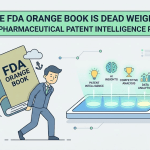
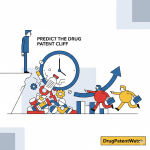
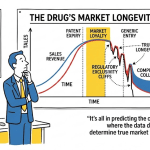
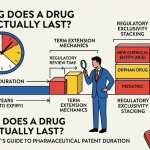
Pharmaceutical patent litigation determines the timing of billions of dollars in revenue shifts. When a brand-name drug loses exclusivity, generic competitors typically capture 80% of the market volume within weeks. This transition represents a systematic risk for holders of brand-name equity and a growth opportunity for generic manufacturers. Predicting the exact date of generic entry requires an analysis of court dockets rather than a reliance on the expiration dates listed in the FDA’s Orange Book. Legal challenges often result in settlements or court rulings that invalidate patents years before their scheduled expiration. Institutional investors use this data to adjust their valuation models and identify alpha in a sector where information asymmetry is common.
The Valuation of Intellectual Property as a Core Asset
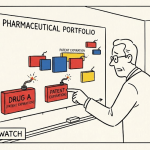
The intrinsic value of a pharmaceutical company is tied to the terminal value of its lead assets. Analysts calculate the Net Present Value (NPV) based on the expected Loss of Exclusivity (LOE) date. If litigation reveals a weakness in a secondary patent, such as a formulation or method-of-use patent, the projected cash flows for the drug change immediately. A drug with $1 billion in annual sales loses approximately $2.7 million in daily value for every day the generic entry is moved forward. Evaluating the strength of the patent estate is the most effective way to determine if a company’s stock is overvalued. High-value IP often includes a ‘thicket’ of patents covering the active ingredient, the crystalline form, the dosage strength, and the manufacturing process.
Key Takeaways
The Orange Book expiration date is rarely the actual date of generic entry. Court dockets provide the only real-time updates on settlement negotiations and trial outcomes. Generic entry causes an immediate and permanent revenue collapse for brand-name drugs. Patent strength is the primary driver of pharmaceutical stock volatility.
Investment Strategy
Analysts should build a probability-weighted DCF model for every major asset in a portfolio. This model must include scenarios for ‘at-risk’ launches, where a generic enters the market before a final court ruling. If a generic company wins at the district court level, the brand manufacturer faces a significant decline in share price, even if an appeal is pending. Investors should monitor the progress of these cases to hedge against sudden drops in market capitalization.
The Mechanics of Hatch-Waxman and Paragraph IV Filings
The Hatch-Waxman Act is the foundation of the generic drug industry. It provides a legal path for companies to bring generic versions of brand-name drugs to market before the original patents expire. A generic company initiates this process by filing an Abbreviated New Drug Application (ANDA) with the FDA. Within this application, the company often files a Paragraph IV certification. This certification asserts that the patents listed by the brand-name manufacturer are invalid, unenforceable, or will not be infringed by the generic product. This filing is a technical act of infringement that allows the brand manufacturer to sue the generic applicant.
When the brand manufacturer sues within 45 days of receiving a Paragraph IV notice, the FDA triggers an automatic 30-month stay on the approval of the generic drug. This stay gives the court time to resolve the patent dispute. The first generic company to file a Paragraph IV application that is substantially complete is eligible for 180 days of generic market exclusivity. This period is the most profitable window for a generic manufacturer because they are the only competitor to the brand-name drug.
IP Valuation: The 180-Day Exclusivity Premium
The first-to-file (FTF) status is an intangible asset with significant financial impact. For a generic firm, securing 180-day exclusivity can result in hundreds of millions of dollars in revenue. For the brand firm, this period marks the end of their monopoly. Investors value generic companies based on their ‘ANDA pipeline’ and their success rate in Paragraph IV litigation. A company with a high volume of FTF designations has a higher valuation multiple because of its predictable, high-margin revenue cycles.
Technology Roadmap for Evergreening Tactics
Brand-name companies use evergreening to extend their monopoly beyond the expiration of the original compound patent. This involves filing new patents for:
New dosage forms, such as extended-release versions of a daily pill.
New combinations of existing drugs.
Pediatric indications that provide an additional six months of exclusivity.
Specific salts or esters of the original molecule.
Digital health components, such as ‘smart’ injectors that track patient compliance.
Generic companies target these secondary patents because they are often easier to invalidate than the original chemical structure patent.
Key Takeaways
Paragraph IV filings are the primary catalyst for pharmaceutical litigation. The 30-month stay protects brand revenue while a case is in court. The 180-day exclusivity period is the most valuable asset for a generic manufacturer. Evergreening is a strategy used to delay generic competition through secondary patenting.
Investment Strategy
Identify companies that have a high concentration of revenue in a single product protected by secondary patents. These companies are vulnerable to ‘skinny labeling,’ where a generic manufacturer launches a version of the drug for an older, unpatented indication while carving out the patented use. Monitor ANDA filings for ‘blockbuster’ drugs at the four-year mark of their exclusivity, as this is the earliest a generic can file a Paragraph IV certification.
Deciphering the Docket: High-Frequency Signals in Patent Litigation
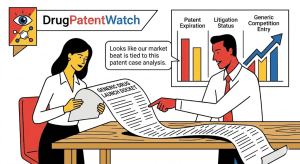
Court dockets are the primary source of truth for pharmaceutical analysts. They contain the schedule of the trial, the arguments made by both sides, and the judge’s leanings. Every filing in a patent case is a data point that can shift a drug’s LOE date. The most important event in a patent case is the Markman hearing, where the judge defines the technical terms used in the patent claims. The outcome of this hearing often determines the winner of the case before the trial begins.
Analysts also look for ‘Notice of Settlement’ filings. Most patent cases do not go to trial. Instead, the brand and generic companies reach an agreement. These settlements often involve a ‘date-certain’ entry, where the generic company agrees to wait until a specific date to launch its product in exchange for the brand company dropping the lawsuit. These dates are rarely made public immediately, but hints can be found in the language of the dismissal.
IP Valuation: The Impact of a Date-Certain Settlement
A settlement provides certainty to the market. When a settlement date is reached, analysts can remove the ‘litigation risk’ discount from their models. If a drug was expected to face competition in 2026 but a settlement allows entry in 2028, the brand-name company’s valuation increases. Conversely, if the settlement allows entry earlier than expected, the valuation drops. The market reacts to the ‘delta’ between the consensus LOE date and the settled LOE date.
Key Takeaways
Markman hearings are the most critical procedural events in patent litigation. Settlements are the most common resolution and provide a definitive date for generic entry. Dockets reveal the ‘strength of evidence’ through expert witness reports and deposition transcripts. Publicly traded companies must disclose material events, but the docket provides the information days or weeks before a formal press release.
Investment Strategy
Track the ‘Time to Trial’ for specific jurisdictions. The District of Delaware and the District of New Jersey handle the majority of pharma patent cases. Some judges move faster than others. If a case is assigned to a ‘fast-track’ judge, the generic entry could happen sooner than the market expects. Investors should use PACER or third-party litigation trackers to monitor every filing in high-stakes cases. Look for ‘summary judgment’ motions; if a judge grants summary judgment of non-infringement, it is a massive signal that the generic will launch soon.
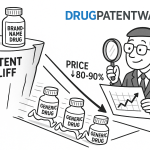
Generic drug launches move billions of dollars. A branded pharmaceutical product generating $3 billion annually loses, on average, 80 to 90 percent of its revenue within 12 months of generic entry [1]. For hedge funds running long/short strategies, for hospital formulary committees, for pharmacy benefit managers negotiating contracts, and for rival pharmaceutical companies building their own generic pipelines, knowing when that entry happens is not an academic exercise. It is the difference between a correct position and an expensive mistake.
The problem is that most participants in this market treat patent expiration dates as the primary signal. That is a category error. Patent expiration is a terminus on a map. What actually determines generic launch timing is a litigation process that can delay, accelerate, or completely restructure the timeline printed in the Orange Book. The data from that litigation process is largely public. Most people do not know how to read it.
This article is a systematic guide to using drug patent litigation data — Paragraph IV certifications, court dockets, inter partes review (IPR) petitions, consent judgments, and settlement filings — to build a defensible forecast of when a specific generic drug will enter the market. It draws on the mechanics of the Hatch-Waxman Act, real case histories, and the kind of structured data that platforms like DrugPatentWatch aggregate into searchable form. By the end, you will have a working analytical framework. You will also have a clearer picture of where the amateur analysis ends and the professional intelligence begins.
Part One: Why Patent Expiration Is the Wrong Number
The Seductive Simplicity of Expiration Dates
When analysts first approach pharmaceutical patent questions, they reach for the expiration date. It is clean. It is public. It appears in the Orange Book, which the FDA maintains and which is freely accessible. If a drug’s listed patent expires in 2027, the logic goes, generics can launch in 2027.
That logic fails for several compounding reasons.
First, branded manufacturers do not rely on a single patent. They construct what the industry calls a “patent thicket” — a dense cluster of overlapping patents covering the active ingredient, the formulation, the manufacturing process, the polymorphic crystal form, the delivery mechanism, and the dosing regimen. A drug like AbbVie’s Humira had, at its peak, over 130 patents listed or associated with its adalimumab franchise [2]. Not all of those patents needed to hold for AbbVie to delay biosimilar entry. They just needed to create enough legal complexity to make litigation economically unattractive for most challengers.
Second, the Orange Book lists patents that a brand manufacturer certifies as relevant. The FDA does not independently verify those certifications. Courts have found, and the FTC has documented extensively, that some listed patents are of dubious relevance to the actual product [3]. But a listed patent still triggers the Hatch-Waxman mechanism — which means it still generates the 30-month stay and the litigation window that follows.
Third, and most critically: patents can be invalidated, narrowed, or licensed on terms that permit early entry, all before their nominal expiration dates. The gap between when a patent expires and when a generic actually launches can be a decade or more in one direction — or it can be negative, with generic entry occurring years before the last patent expires.
That last scenario is what sophisticated analysts are hunting for.
What the Data Actually Shows
A 2021 analysis of ANDA approvals found that of the drugs facing Paragraph IV challenges, roughly 76 percent settled before trial [4]. In those settlements, the negotiated entry date — not the patent expiration date — determines when the generic launches. That negotiated date can be three years before expiration or six months before expiration depending on the commercial dynamics of the specific drug.
The analytical question, then, is not “when does the patent expire?” It is “how is this litigation progressing, and what settlement dynamics are likely to produce what entry date?”
Part Two: The Hatch-Waxman Scaffolding You Must Understand
How the 1984 Act Created a Predictable Litigation Cycle
The Drug Price Competition and Patent Term Restoration Act of 1984, universally called Hatch-Waxman, created the modern framework for generic drug entry in the United States. Before it, generics companies had to conduct their own clinical trials to prove safety and efficacy — a process so expensive and slow that meaningful competition often did not materialize until years after patent expiration. Hatch-Waxman solved that by allowing generic applicants to file an Abbreviated New Drug Application (ANDA), relying on the brand manufacturer’s existing clinical data to establish bioequivalence rather than safety and efficacy from scratch.
In exchange for that scientific shortcut, Hatch-Waxman created a structured process for resolving patent disputes. That process is the data-generating machine that analysts should learn to read.
Orange Book Listings: The Starting Point
When a branded drug receives FDA approval, the manufacturer must list all patents it believes cover the approved product in the Orange Book. These patents fall into categories: drug substance (composition of matter) patents, drug product (formulation) patents, and method of use patents. Process patents — covering how the drug is manufactured — are not listed in the Orange Book, though they can still be enforced through independent infringement actions.
The Orange Book is the foundation of the Hatch-Waxman patent dispute mechanism, but it is not a neutral document. Pharmaceutical manufacturers have a financial incentive to list every potentially applicable patent they own. The FDA relies entirely on manufacturer certification for these listings, which means the Orange Book occasionally contains patents of questionable relevance. The FTC’s 2002 study on drug company practices noted patterns of strategic listing designed to extend market exclusivity beyond what the underlying innovation might justify [3].
For the analyst, what matters is simple: every patent listed in the Orange Book is a potential trigger for a Paragraph IV dispute. Every Paragraph IV dispute generates 30 months of protected delay, plus whatever additional time litigation takes if the case goes forward. Counting the listed patents and understanding their expiration schedule gives you the outer boundary of the protected timeline.
Paragraph IV Certifications: The Trigger
When a generic manufacturer files an ANDA, it must certify its relationship to each listed patent. There are four possible certifications:
Paragraph I certifies that no patent has been listed. Paragraph II certifies that any listed patent has already expired. Paragraph III certifies that the generic manufacturer will wait for the patent to expire before launching. Paragraph IV — the one that matters for competitive intelligence — certifies that the listed patent is either invalid or will not be infringed by the generic product.
A Paragraph IV certification is a formal declaration of legal challenge. It triggers a mandatory 45-day window during which the brand manufacturer can file a patent infringement lawsuit. If the brand files suit within those 45 days, the FDA automatically imposes a 30-month stay on ANDA approval — meaning the FDA cannot approve the generic application for 30 months regardless of whether it has completed its scientific review [5].
This 30-month stay is the central mechanism of Hatch-Waxman-era delay. Understanding when it begins, when it expires, and what happens during it is the core of generic timing prediction.
First-Filer Exclusivity: The Incentive Structure
Hatch-Waxman created a 180-day exclusivity period for the first generic manufacturer to file a Paragraph IV certification against a specific patent. During those 180 days, the FDA cannot approve any other generic for the same drug. This exclusivity is enormously valuable on high-revenue products: a 180-day duopoly on a $2 billion drug can generate hundreds of millions in generic profits even at discounted pricing.
The 180-day exclusivity is not automatic. Under the Medicare Modernization Act of 2003, failure to market provisions can forfeit the exclusivity if the first filer does not actually launch within a specified period [6]. And exclusivity can be shared among multiple first filers who submit Paragraph IV certifications on the same day.
The existence of 180-day exclusivity creates specific analytical implications. It means that after the first generic launches, there is typically a 6-month period of limited competition before additional generics enter. Formulary managers and payers use this period to negotiate. Brands sometimes use this period to launch authorized generics, which compete with the first-filer’s product and erode its exclusivity value without technically violating the exclusivity grant.
Part Three: Reading Litigation Data as a Predictive Instrument
Where the Data Lives
Paragraph IV litigation happens in federal district courts, predominantly in Delaware, New Jersey, and the Eastern District of Texas. These courts have developed pharmaceutical patent expertise over decades, which is partly why manufacturers choose them. The public record from these courts — accessible through the federal PACER system, through commercial legal databases like Docket Alarm, and through specialized pharmaceutical intelligence services — contains everything an analyst needs to model generic timing.
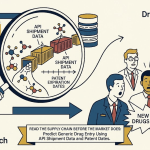
Platforms like DrugPatentWatch aggregate and structure this data, mapping ANDA filings to Orange Book patents to litigation records to expected approval timelines. Rather than pulling individual court dockets and cross-referencing them with FDA databases manually, an analyst using DrugPatentWatch can see the full patent-to-litigation-to-ANDA picture for a specific drug in a structured format. That aggregation is valuable not because the underlying data is secret — it is all public — but because the aggregation saves weeks of manual collection and eliminates the indexing errors that manual collection inevitably produces.
The raw data, however, is worth understanding in its native form. Any analyst who relies exclusively on aggregated summaries without understanding what the underlying documents mean will eventually misread a signal.
The 30-Month Stay Clock: Reading Its Start and End
The 30-month stay begins from the date the brand manufacturer receives notice of the Paragraph IV certification [7]. This is not the same as the ANDA filing date, and it is not the same as the date the lawsuit is filed. The notice date matters.
Analysts tracking a specific drug should identify the notice date from court filings (it is typically referenced in the complaint filed by the brand manufacturer), then calculate the 30-month endpoint. That endpoint is the earliest date at which the FDA can approve the ANDA — assuming the scientific review is complete and no other impediment exists.
Three things happen at the 30-month endpoint:
The FDA can approve the ANDA if its review is complete. The case may still be pending in court, meaning the generic could launch “at risk” — facing potential damages if the brand ultimately wins the litigation. Or the case may have already resolved — through a court decision or a settlement — by this point.
“At risk” launches are an important analytical signal. When a generic manufacturer launches at risk, it is making a legal judgment that it is likely to win the patent dispute. Those launches have historically preceded final court decisions favorable to the generic manufacturer more often than not — but not always. Mylan’s at-risk launch of a generic version of Procter & Gamble’s Actonel (risedronate) resulted in a rapid court-ordered recall when Procter & Gamble obtained an injunction [8]. Reading the litigation record before assuming an at-risk launch signals favorable odds requires more nuance than the base rate suggests.
Procedural Milestones and What They Mean
Federal patent litigation follows a predictable procedural sequence. Each milestone generates public filings, and each milestone shifts the probability distribution over likely outcomes.
The complaint filing establishes the 30-month stay start date and identifies which patents are being asserted. Reading the complaint tells you which Orange Book patents the brand believes are most commercially important — brands do not litigate patents they consider weak.
The claim construction briefing, also called Markman briefing, is where each side presents its interpretation of the patent claims. The Markman hearing and subsequent court order — the “Markman ruling” — often significantly shifts outcome probabilities. A Markman ruling that adopts a narrow claim construction favorable to the brand manufacturer tends to predict a brand win at trial. A ruling that adopts a broader construction, or that sides with the generic’s proposed construction, tends to predict a generic win or settlement on favorable terms.
Patent litigators track Markman outcomes closely because they are a leading indicator. Data from litigation analytics firm Docket Alarm shows that defendants (generics) prevail at higher rates in cases where the Markman ruling narrows the asserted claims relative to what the brand argued [9].
Summary judgment motions follow claim construction. Either party can move for summary judgment arguing that there are no genuine disputes of material fact and that the moving party is entitled to judgment as a matter of law. In patent litigation, invalidity-based summary judgment motions are common: the generic argues that the patent is anticipated by prior art, obvious, or not enabled. A successful summary judgment motion for invalidity ends the case in the generic’s favor immediately, eliminating patent protection and opening the path to launch.
The trial, if the case reaches it, produces the definitive ruling. But in Paragraph IV litigation, fewer than 24 percent of cases actually reach trial [4]. The vast majority settle.
Settlement Analysis: The Negotiated Entry Date
A settlement in Paragraph IV litigation is a contract. It specifies the terms under which the generic manufacturer can enter the market. The two critical variables are the entry date and whether an authorized generic is permitted.
Under the Medicare Modernization Act amendments to Hatch-Waxman, settlement agreements in Paragraph IV cases must be filed with the FTC and DOJ within 10 business days of execution [10]. The FTC makes certain data from these filings public in its annual report on Hatch-Waxman settlements. The actual settlement contracts are typically filed under seal, but the reported data tells you whether a “reverse payment” was involved, which is the single most important variable for assessing whether the settlement is pro-competitive or anticompetitive — and whether it is likely to survive antitrust scrutiny.
A “reverse payment” or “pay-for-delay” settlement involves the brand manufacturer paying the generic to stay out of the market until a specified date. The Supreme Court’s 2013 decision in FTC v. Actavis established that these settlements are subject to antitrust scrutiny under the rule of reason, rather than being presumptively lawful [11]. Post-Actavis, the analytical question is whether the payment represents an exchange for genuine value (such as an authorized generic license or a co-promotion agreement) or whether it is a naked payment for delay.
For predictive purposes, the settlement entry date is your target variable. FTC settlement data, combined with DrugPatentWatch’s tracking of ANDA filings and Orange Book listings, allows analysts to build a database of historical settlement entry dates relative to patent expiration dates. That database reveals patterns: in highly profitable therapeutic categories, settlements tend to be struck with entry dates 2 to 4 years before the last major patent expires. In less profitable categories, entry dates cluster closer to the 30-month stay expiration.
Part Four: Inter Partes Review — The Accelerant
How IPRs Changed the Timeline Calculus
The America Invents Act of 2011 created inter partes review (IPR), a post-grant proceeding at the USPTO’s Patent Trial and Appeal Board (PTAB) that allows any party to challenge the validity of an issued patent based on prior art. IPR was not designed specifically for pharmaceutical patent disputes, but it has become a major tool for generics manufacturers and third parties seeking to clear pharmaceutical patent landscapes.
IPR proceedings operate on a faster timeline than district court litigation. The PTAB must decide whether to institute review within about 6 months of the petition, and must complete the proceeding within 12 months of institution (extendable to 18 months for good cause) [12]. By comparison, district court patent litigation typically takes 3 to 5 years from complaint to final judgment.
For an ANDA applicant facing a 30-month stay that runs through 2025, a successful IPR petition decided in 2023 could eliminate the blocking patent entirely — clearing the way for launch two years ahead of the district court schedule. For an analyst, the filing of an IPR petition against a brand drug’s composition-of-matter patent is a strong signal of aggressive generic timeline acceleration.
The hit rate matters here. In fiscal year 2023, PTAB instituted approximately 62 percent of IPR petitions and, of those instituted, found claims unpatentable at rates around 60 to 70 percent for certain technology areas [13]. Pharmaceutical patents, particularly formulation and method-of-use patents, have faced high invalidation rates in IPR. Composition-of-matter patents on biologic drugs have fared somewhat better, but the data still shows meaningful vulnerability.
Identifying IPR Petitions as Early Signals
IPR petitions are filed with the PTAB and are publicly accessible on the PTAB website and through services like RPX, Unified Patents, and DrugPatentWatch. An analyst tracking a specific drug should run regular searches for IPR petitions against the Orange Book-listed patents for that drug.
The identity of the petitioner matters. When an ANDA filer files the IPR petition, it signals the filer’s belief that district court invalidation is uncertain or slow, and that PTAB is a more efficient path. When a third party with no apparent commercial interest files the petition — a practice sometimes attributed to hedge funds acting through shell entities — it signals a sophisticated financial player betting on patent invalidation, which itself can be an analytical signal about the litigation outlook [14].
The institution decision (whether the PTAB agrees to conduct review) is the next critical signal. The PTAB institutes review only if the petition presents a reasonable likelihood that at least one challenged claim is unpatentable. An institution decision is not a finding of invalidity, but it narrows the patent holder’s position and often accelerates settlement discussions. Brands facing an IPR institution on their most important patent frequently enter settlement negotiations on less favorable terms than they would absent the IPR.
IPR Estoppel and the Litigation Interaction
One complication that analysts must track: after an IPR proceeding concludes, the petitioner is estopped from raising in district court any ground of invalidity it raised or reasonably could have raised in the IPR. This estoppel provision creates a strategic dynamic. An ANDA filer who successfully invalidates a patent in IPR eliminates that patent entirely. But an ANDA filer who petitions for IPR and loses cannot re-litigate those invalidity arguments in district court.
This means that IPR petitions in pharmaceutical cases are usually filed by parties with high confidence in their prior art arguments. The willingness to file, combined with the quality of the prior art cited in the petition, is a meaningful signal about the patent’s true strength.
Part Five: Building the Predictive Framework
The Seven Variables That Drive Generic Timing
Generic launch timing prediction is a multi-variable problem. The seven variables that carry the most predictive weight are:
1. Patent composition and expiration schedule. Map all Orange Book-listed patents for the drug, their expiration dates, and their legal character (composition of matter, formulation, method of use). Composition-of-matter patents are generally harder to design around but also more likely to be challenged in IPR. Formulation and method-of-use patents are easier to challenge but also easier for brands to multiply.
2. Number and identity of ANDA filers. The number of Paragraph IV certifications filed signals the commercial attractiveness of the product and the intensity of generic competition. The identity of the filers matters because large generics manufacturers with strong litigation track records — Teva, Viatris, Sandoz, Sun Pharmaceutical — bring different resource levels and risk tolerances than smaller filers.
3. Litigation posture. Has the brand actually sued? In some cases, brand manufacturers do not file suit within the 45-day window, which means no 30-month stay attaches and the FDA can approve the ANDA on its scientific schedule alone. This happens rarely but can produce surprise early entries.
4. IPR petition activity. Any IPR filed against the blocking patents represents a potential acceleration vector. Track institution decisions, final written decisions, and any Federal Circuit appeals.
5. Stage of district court litigation. Using the procedural milestone framework described above, assess where the case sits in its lifecycle. Pre-Markman cases have high uncertainty. Post-Markman cases, and especially cases past summary judgment, have substantially lower uncertainty.
6. Settlement activity signals. Court-ordered stays, joint motions to extend deadlines, and requests for mediation all appear on the public docket. These are behavioral signals that settlement discussions are occurring. A joint motion to stay all proceedings pending mediation typically precedes settlement by 3 to 9 months.
7. FDA approval status. A drug can win its patent litigation and still not launch if the FDA has not completed its ANDA review. Tentative approval from the FDA — which the FDA grants when the scientific review is complete but a patent or exclusivity bar prevents final approval — signals that the ANDA is ready to convert to full approval the moment the legal barrier clears.
Constructing the Timeline Model
With those seven variables in hand, the construction of a probabilistic launch timeline follows a structured sequence.
Start with the 30-month stay expiration date. This is your baseline earliest-possible approval date assuming no other impediment. If no ANDA has been filed yet, use the Paragraph IV notice date when it becomes available — and note that large generics manufacturers often file ANDA applications and issue Paragraph IV notices months before those notices become publicly known through court filings.
Apply the IPR probability adjustment. If IPR petitions have been filed, assess their quality and the PTAB’s institution decision. A high-quality IPR petition against the primary blocking patent reduces the expected blocking duration by 12 to 24 months on average, weighted by the probability of successful invalidation.
Apply the settlement probability adjustment. Using historical base rates for the therapeutic category and drug revenue level, estimate the probability that the case settles before trial and the expected entry date conditional on settlement. For drugs generating over $1 billion annually, the settlement probability exceeds 85 percent based on FTC historical data [15]. The expected negotiated entry date for drugs in this revenue range historically falls 18 to 36 months before the last major patent’s expiration.
Apply the FDA approval probability adjustment. Review the ANDA applicant’s history with FDA inspection outcomes and ANDA approval timelines. Tentative approval status converts to final approval quickly once legal bars clear — typically within weeks. An ANDA without tentative approval introduces approval timing uncertainty, which can range from 6 months to 24 months depending on the complexity of the manufacturing site inspection record.
Combine these adjustments into a probability distribution over launch dates. The output should not be a single date. It should be a set of scenarios with probabilities — for example: 20 percent probability of launch in Q1 2025 (driven by IPR success or at-risk launch), 55 percent probability of launch in Q3 2026 (driven by settlement), 25 percent probability of launch in 2028 (driven by full trial and brand win followed by patent expiration).
How to Stress-Test the Model
Any prediction is only as good as its assumptions. Stress-testing requires identifying the variables where your assumptions are most likely to be wrong and assessing the directional impact on the timeline.
The biggest source of model failure is underestimating how long courts take. District court patent litigation timelines are notoriously variable. The Eastern District of Texas, which used to be a forum of choice for fast patent trials, has lost pharmaceutical cases to Delaware and New Jersey. Delaware’s median time from filing to trial disposition in patent cases has historically run around 2.5 to 3 years for complex cases, but individual cases have run from 18 months to over 6 years [16].
The second biggest source of failure is misreading settlement signals. A joint motion to extend deadlines can mean settlement discussions are active — or it can mean both parties need more time to conduct discovery and neither is close to a deal. The contextual reading matters: if the extension request comes after a Markman ruling that narrowly construed the brand’s claims, settlement probability is higher. If it comes before Markman, it may simply reflect scheduling logistics.
The third source of failure is not tracking the authorized generic question. In many settlements, the brand grants the generic a right to sell an authorized generic during the 180-day exclusivity period. An authorized generic does not affect the timing of the first-filer’s launch, but it dramatically reduces the first-filer’s profit. From a payer perspective, an authorized generic during the exclusivity window provides one additional competitor and better pricing — but does not provide the full competition of a multi-source generic market.
Part Six: Case Studies in Predictive Analysis
Lipitor: The Textbook Case
Pfizer’s atorvastatin (Lipitor) is the best-documented case of Hatch-Waxman litigation analysis in pharmaceutical history, partly because its patent dispute played out over a decade of public litigation and generated a rich documentary record.
Lipitor was the world’s best-selling drug at the time of its patent dispute, generating approximately $12 billion in annual U.S. revenue at peak [17]. The primary composition-of-matter patent expired in March 2010. But Pfizer held additional formulation and enantiomer patents that it argued extended protection to 2011, and then secured a pediatric exclusivity extension that added 6 more months, pushing the potential full exclusivity window to June 2011.
Ranbaxy filed the first Paragraph IV ANDA in 2003. Pfizer sued. The 30-month stay expired in mid-2005, but the litigation continued because the case had not resolved. What followed was a complex series of proceedings involving Ranbaxy’s facilities, FDA import alerts against Ranbaxy’s manufacturing sites, a consent decree, and ultimately a settlement in 2008 that granted Ranbaxy a launch date of November 30, 2011 — approximately 6 months after the final exclusivity expiration [18].
Several aspects of this case illuminate the analytical framework. An analyst tracking Lipitor in 2006 or 2007 would have noted the consent decree and FDA import alerts against Ranbaxy as factors that shifted bargaining power toward Pfizer. The settlement entry date of November 2011 reflected those dynamics: Ranbaxy could have theoretically launched earlier but its regulatory problems reduced its leverage.
The 180-day exclusivity played out as expected: Ranbaxy launched in November 2011, other generics entered in May 2012. Pfizer launched an authorized generic on the same day as Ranbaxy, which partially blunted the exclusivity value. An analyst who had tracked the Pfizer-Ranbaxy dynamics correctly would have modeled a November 2011 launch date with 12-18 months of uncertainty — and would have been approximately correct.
Revlimid: The Extended Exclusivity Architecture
Celgene’s lenalidomide (Revlimid) illustrates a different problem: what happens when a patent thicket is so dense that no single litigation outcome determines the timeline, and where the settlements themselves create structured, phased entry.
Revlimid generated approximately $9.8 billion in global sales in 2020 [19]. Its patent landscape comprised dozens of patents covering not just the compound but specific dosing regimens, patient populations, and combinations with other drugs. Generic manufacturers faced the prospect of challenging dozens of patents simultaneously, with each challenge generating its own 30-month stay.
Celgene settled with four generic manufacturers between 2015 and 2019. The settlements created a phased entry schedule: Natco Pharma received a license to enter in January 2022, followed by other filers with progressively later entry dates [20]. The settlements were structured with volume-capped licenses — meaning the generic manufacturers could sell only limited quantities initially — which was an unusual and restrictive provision that the FTC ultimately challenged as anticompetitive.
The Revlimid case illustrates a key analytical point: when a drug’s patent landscape is extraordinarily dense, the most likely outcome is a negotiated entry architecture with multiple phases and potential restrictions. An analyst modeling a binary “launch/no launch” outcome would have missed the commercial reality of the Revlimid generic market entirely. The correct model was a scenario tree with phased entry dates, volume constraints, and regulatory challenge probabilities.
From a competitive intelligence perspective, monitoring the FTC’s public statements about Revlimid settlements — which were disclosed in FTC annual reports well before the litigation concluded — gave early warning that the negotiated entry structure was unusual and potentially unstable. The volume caps were ultimately challenged, and their resolution shifted the effective competitive timeline.
Humira: The Biosimilar Adaptation
Humira (adalimumab) is technically a biologic governed by the Biologics Price Competition and Innovation Act (BPCIA) rather than Hatch-Waxman. But the analytical principles translate, and the Humira case demonstrates them at scale.
AbbVie built a portfolio of 136 patents covering adalimumab [2]. It used those patents to negotiate settlement agreements with all biosimilar manufacturers that had filed Biologics License Applications (BLAs) — the biologic equivalent of an ANDA. The settlements granted U.S. launch dates starting January 1, 2023 [21], while biosimilars had been available in Europe since 2018.
An analyst tracking Humira’s biosimilar landscape in 2020 would have found the settlement agreements disclosed in various SEC filings by the biosimilar manufacturers (AbbVie itself disclosed settlement terms under BPCIA patent dance disclosures and SEC reporting requirements). The January 2023 date was public — and was widely reported — well before it arrived. What sophisticated analysts were modeling in 2020 and 2021 was not whether biosimilars would launch in January 2023, but how many would launch, whether any would achieve interchangeability designation, and how payer dynamics would evolve.
The interchangeability question matters for analysts: an FDA interchangeability designation allows pharmacists to substitute a biosimilar for the reference product without physician intervention — a major commercial advantage. Tracking which biosimilar applicants had submitted interchangeability data, and what FDA’s review timeline for those submissions looked like, was a more sophisticated question than the basic launch date. Cyltezo (adalimumab-adbm) from Boehringer Ingelheim received the first interchangeability designation for an adalimumab biosimilar in 2021 [22], giving it a structural commercial advantage that an analyst tracking the regulatory filings would have identified 18 months before the commercial launch date arrived.
Sovaldi and Harvoni: When Litigation Never Materializes
Not all blockbuster drugs face aggressive Paragraph IV challenges. Gilead’s sofosbuvir (Sovaldi) and its combination product ledipasvir/sofosbuvir (Harvoni) had patent protection extending into the mid-2020s, but the combination of strong composition-of-matter patents, rapid patient population depletion (as patients were cured rather than treated chronically), and complex manufacturing created a landscape where generic challenges were delayed or modest in scale.
The analytical lesson from Sovaldi and Harvoni is about calibrating the incentive to challenge. Generic manufacturers invest in Paragraph IV challenges when the expected return exceeds the litigation cost. For a drug with a shrinking patient population — because the disease is being cured — the commercial incentive for a 180-day exclusivity race is reduced. Analysts should model not just litigation probability based on patent vulnerability, but also commercial attractiveness, which drives the decision to file in the first place.
The relevant data signal here is the pace of ANDA filings. When a drug with an apparently challengeable patent landscape sees few or no Paragraph IV filings, the correct analytical move is to ask why. The answer often involves commercial dynamics that revise the expected launch date upward even without litigation success.
Part Seven: Advanced Signal Reading
Docket Behavior as a Leading Indicator
Beyond the substantive content of court filings, the behavior of the parties on the docket reveals information. Consider these specific signals:
When both parties file a joint motion to extend the discovery deadline for a second or third time, it typically means one of two things. Either the case is more complex than anticipated — which extends the trial timeline and thus the expected resolution date — or the parties are in settlement discussions and are using extensions to create space for negotiations. You can often distinguish between these scenarios by the tone of the motion: a settlement-related extension will sometimes explicitly reference “ongoing discussions” or “the parties’ attempts to resolve the dispute,” while a complexity-related extension will cite specific discovery burdens.
When the brand manufacturer files a motion for preliminary injunction against an at-risk launcher, it signals both that the generic has actually launched (or is about to) and that the brand believes its legal position is strong enough to seek emergency relief. Preliminary injunction standards require the brand to show a likelihood of success on the merits — which means the brand’s lawyers have assessed the case as winnable. This is a meaningful signal about underlying patent strength.
When an expert witness disclosure is filed, it identifies the technical and damages experts retained by each party. The identity of these experts — patent validity experts, technical experts on infringement, damages economists — sometimes provides indirect information about case strategy. A brand that retains a well-known damages expert specializing in reasonable royalty calculations may be signaling comfort with a damages-based resolution rather than an injunction.
The Delaware Docket vs. the New Jersey Docket
Delaware and New Jersey account for the majority of Paragraph IV patent cases, but they have different characteristics that affect timing models.
Delaware’s judges have deep pharmaceutical patent expertise and move cases efficiently. The District of Delaware typically schedules trial within 2 to 3 years of filing, and its judges have a reputation for issuing early Markman rulings that provide useful clarity. For an analyst, Delaware cases tend to resolve more predictably and on a tighter timeline.
New Jersey cases, often filed when the brand manufacturer is headquartered there, can move more slowly and have historically involved more complex multi-patent landscapes. The Janssen cases in New Jersey — covering products like Risperdal Consta and various immunology drugs — often ran through extended discovery periods and produced docket behaviors that required careful reading to interpret correctly.
The Eastern District of Texas was once a significant venue for pharmaceutical patent cases but has largely lost this business to Delaware and New Jersey following the Supreme Court’s decision in TC Heartland LLC v. Kraft Foods (2017), which restricted patent venue to states where the defendant is incorporated or has its principal place of business [23]. This shift matters for analysts building historical comparison datasets: pre-2017 docket behavior in Texas is not a good predictor of post-2017 case timelines in Delaware.
Reading FTC Annual Reports on Hatch-Waxman Settlements
The FTC has published annual reports on Hatch-Waxman settlements since 2003. These reports, available on the FTC website, provide aggregate data on the number of settlements per year, the proportion involving “potentially problematic” reverse payments, the drugs covered, and whether the settlements include authorized generic provisions [15].
These reports are underused by most analysts. The aggregate data in FTC reports allows analysts to calibrate base rates for different drug categories and revenue levels. More granularly, when the FTC discloses that it has “opened an investigation” into a specific settlement, that disclosure — which sometimes appears in SEC filings by the settling parties before the FTC report is published — signals that the settlement’s terms are unusual enough to attract regulatory scrutiny. FTC-challenged settlements may be unwound or renegotiated, which can shift the entry date.
The annual reports also disclose the number of unique drugs covered by settlements in any given year. When that number spikes relative to the prior year, it typically reflects a wave of 30-month stay expirations on drugs filed 2.5 years earlier — which is itself a useful backward-looking calibration check on the ANDA filing timeline model.
Part Eight: Using DrugPatentWatch in Practice
What the Platform Provides and How to Integrate It
DrugPatentWatch is one of the most comprehensive databases covering the intersection of Orange Book patents, ANDA filings, and litigation records. For analysts without the resources to run manual PACER searches, FDA database queries, and Orange Book cross-references simultaneously, DrugPatentWatch provides pre-integrated data that answers most first-order analytical questions.
The platform allows users to enter a drug name or active ingredient and retrieve the complete Orange Book patent listing with expiration dates, the ANDA filer list with Paragraph IV certification status, the litigation history including case names and court identifiers, and links to relevant public filings. For a practitioner building a timeline model, this data cuts weeks off the initial research phase.
The platform’s particular strength is its ANDA tracking: it indexes not just filed ANDAs but the certification status of each application, which is critical for identifying first-filer exclusivity questions and for tracking how many Paragraph IV filers exist for a given drug. When you see five Paragraph IV filers all having filed on the same day — a common occurrence in high-revenue drugs — DrugPatentWatch surfaces that shared exclusivity scenario clearly.
DrugPatentWatch also tracks patent term extensions (PTEs), which Hatch-Waxman allows manufacturers to claim as compensation for time lost to FDA review. PTEs can extend composition-of-matter patents by up to 5 years and are not always obvious from the basic patent expiration date [24]. An analyst who ignores PTEs will systematically underestimate brand exclusivity periods.
The limitation of any aggregation platform — DrugPatentWatch included — is that it is only as current as its data feeds allow. For an active case heading into trial or settlement in the next 30 days, checking the live PACER docket is necessary. Platform data on rapidly evolving cases can lag by days to weeks.
Calibrating with Historical Data
One of the most valuable uses of DrugPatentWatch’s historical data is building category-specific calibration curves. By pulling historical data on settled Paragraph IV cases in a given therapeutic area — say, oncology small molecules versus cardiovascular drugs versus CNS drugs — analysts can derive empirical distributions of settlement entry dates relative to patent expiration dates and relative to 30-month stay expiration dates.
These category-specific distributions turn out to be meaningfully different from each other. Oncology drugs, which often have smaller patient populations and higher per-unit prices, tend toward later settlement entry dates because the commercial dynamics favor longer exclusivity. Cardiovascular drugs, with large patient populations and more entrenched payer pressure, tend toward earlier settlement entry dates because the generic economics are stronger and both parties have incentives to conclude litigation.
Building a reference dataset of 50 to 100 historical settled cases in a therapeutic category gives an analyst the empirical base rate for a new prediction — a significant improvement over the naive assumption that settlement behavior in pharma is uniform across drugs.
Part Nine: The Regulatory Layer
FDA Approval Timelines and Their Variability
Patent litigation data tells you when the legal path to market may open. FDA approval data tells you whether the generic manufacturer’s product is ready to walk through that door when it does.
ANDA approval timelines have been highly variable. The FDA’s generic drug backlog, which ballooned to over 4,000 pending applications in 2012, triggered the Generic Drug User Fee Act (GDUFA) in 2012, which created user fees in exchange for performance goals [25]. GDUFA established a target of 10-month review times for standard ANDAs and 6 months for priority ANDAs. FDA has met these goals with increasing reliability since GDUFA II took effect in 2017, but individual applications still experience delays due to manufacturing site inspection failures, Complete Response Letters (CRLs) requiring additional data, and chemistry review deficiencies.
An analyst must distinguish between ANDA applications that have received “tentative approval” and those that have not. Tentative approval means the FDA has completed its scientific review and found the application approvable — but cannot grant final approval because a patent or exclusivity bar remains in place. Once that bar lifts (through settlement, court ruling, or patent expiration), tentative approval converts to final approval quickly, sometimes within days.
An ANDA without tentative approval at the time a legal bar lifts is not ready to launch. The manufacturer must still wait for FDA to complete its review and resolve any outstanding deficiencies. This adds weeks to months to the effective launch date even after the patent situation resolves.
Tracking tentative approval status — which the FDA publishes in its ANDA approval database — is a necessary step in any launch timing model. DrugPatentWatch and similar platforms aggregate FDA tentative approval data alongside patent and litigation information, which allows analysts to cross-reference the two dimensions without pulling the FDA database separately.
The 180-Day Exclusivity Trigger and Forfeiture
An often-overlooked complexity in launch timing is the 180-day exclusivity trigger and forfeiture analysis. The 180-day exclusivity clock begins running only when the first-filer actually launches commercially — not when it receives final approval. If the first-filer holds final approval but delays launch for commercial reasons, the exclusivity clock does not begin.
This creates scenarios where subsequent ANDA filers have received final approval but cannot launch because the first-filer has not yet triggered the exclusivity clock. These subsequent filers are trapped in a legal state sometimes called “parked” exclusivity, where they have regulatory clearance but cannot enter the market.
The Medicare Modernization Act addressed this with forfeiture provisions: a first filer forfeits its 180-day exclusivity if it fails to market within a specified period after certain triggering events, including a court decision finding the challenged patent invalid or not infringed [6]. For analysts, monitoring whether a first-filer has forfeited its exclusivity — which is publicly disclosed in FDA’s exclusivity database — is critical for assessing multi-source generic entry timing.
Pediatric Exclusivity: The Six-Month Extension That Always Surprises
Pediatric exclusivity is a bonus exclusivity period granted to brand manufacturers who conduct pediatric studies at the FDA’s request. It adds 6 months to the end of existing patent protection and non-patent exclusivity — including the 7-year orphan drug exclusivity and the 5-year new chemical entity exclusivity.
Pediatric exclusivity delays generic entry reliably by exactly 6 months. It appears in the Orange Book and in FDA’s exclusivity database. Yet analysts frequently fail to account for it, particularly in cases where the drug has recently received pediatric labeling changes. The Lipitor case involved pediatric exclusivity that pushed the effective exclusivity endpoint from March 2011 to June 2011, and that 6-month window was worth billions to Pfizer.
When building a launch timing model, check the FDA’s Orange Book exclusivity database — not just the patent listings — for any applicable pediatric exclusivity. DrugPatentWatch displays both patent and exclusivity data in integrated form, which reduces the risk of missing this adjustment.
Part Ten: The Competitive Intelligence Infrastructure
Building a Monitoring System
Predicting generic launch timing for a single drug is a research exercise. Building an organization’s capacity to monitor a portfolio of drugs continuously is an infrastructure exercise. The two require different approaches.
For ongoing monitoring, the key is automated alerting on specific events rather than periodic manual review. The events worth monitoring fall into four categories:
New Paragraph IV certifications (which appear first in the brand manufacturer’s lawsuit when it is filed, and later in FDA’s ANDA database). IPR petition filings (trackable through PTAB’s public search interface and through services like DrugPatentWatch’s PTAB tracking). ANDA tentative approval grants (trackable through FDA’s daily ANDA approvals update). Settlement agreement filings with the FTC (trackable through FTC press releases and the FTC’s annual report disclosures).
For pharmaceutical companies monitoring competitive products, the PACER alert system allows users to set up email notifications when new docket entries are filed in specific cases. Commercial legal research services like Docket Alarm and Bloomberg Law offer more sophisticated alert configurations that can filter by document type and filing party.
The investment in a systematic monitoring infrastructure pays off most in high-stakes situations where a competitor’s generic launch could shift market share quickly. A hospital system that receives 90 days of advance notice that a $400-per-dose branded drug is about to face generic competition has time to negotiate formulary changes, update prescribing protocols, and pre-position formulary decisions. A hospital system that learns about the launch when the generic appears in the wholesaler catalog has lost that window.
The Biosimilar Extension
The analytic framework described here was built around small-molecule Hatch-Waxman litigation. Its extension to biologics and biosimilars requires adjustments but follows the same logic.
The BPCIA created a 12-year reference product exclusivity period for biologics — substantially longer than Hatch-Waxman’s 5-year new chemical entity exclusivity — and a “patent dance” process for exchanging patent lists and litigation allegations [26]. The patent dance is less rigid than Hatch-Waxman’s Paragraph IV mechanism, and many biosimilar applicants have chosen to opt out of it, preferring to litigate patents directly without the dance formalities.
For biosimilar timing prediction, the critical additional variable is the FDA’s interchangeability designation pathway, which is more complex and slower than standard biosimilar approval. Drugs with interchangeable designations reach substitution rates far more quickly than non-interchangeable biosimilars, which require physician-initiated prescribing decisions rather than pharmacist-level substitution. Analysts modeling biosimilar uptake curves — not just launch dates — need to weight interchangeability data heavily.
The settlement dynamic in biologics cases is also different: biosimilar manufacturers have faced branded manufacturers with much larger patent portfolios relative to their own. AbbVie’s settlement architecture on Humira, which locked every major biosimilar applicant into a January 2023 U.S. entry date while European competition had been available since 2018, reflects the bargaining power asymmetry that can persist in biologics [21].
International Patent Data and U.S. Timing Models
U.S. generic launch timing is sometimes influenced by international patent decisions, particularly from the European Patent Office (EPO). A major EPO invalidity decision against a core composition-of-matter patent sends a signal about the patent’s global vulnerability — which can shift U.S. litigation dynamics and accelerate settlement.
Patent invalidity decisions are not directly transferable across jurisdictions: a European patent and a U.S. patent on the same compound are separate legal instruments. But courts have occasionally referenced foreign decisions in the context of assessing prior art, and settlement negotiators use foreign invalidity rulings as leverage. An EPO opposition board decision revoking a core patent has twice led to accelerated U.S. settlements in major pharmaceutical cases within 12 to 18 months of the European ruling [27].
Tracking EPO opposition proceedings — which are publicly searchable through the European Patent Office’s online register — is a useful supplement to U.S. litigation monitoring for drugs where the same underlying innovation is protected by parallel patent families internationally.
Part Eleven: Common Analytical Errors
The Patent Expiration Fallacy
The most common error is treating the Orange Book patent expiration date as the generic launch date. This error overstates exclusivity duration in most high-revenue cases (where settlements produce early entry) and occasionally understates it when pediatric exclusivity, patent term extensions, or orphan drug exclusivity are not accounted for.
The correction: treat patent expiration as a ceiling, not a floor. The realistic distribution of generic entry dates for high-revenue drugs with active Paragraph IV challenges peaks 18 to 48 months before the last major patent’s expiration date.
Ignoring Manufacturing Quality Signals
Generic manufacturers can win their litigation and still fail to launch if their manufacturing facilities cannot pass FDA inspection. Ranbaxy’s multiple FDA consent decrees and import alerts are the most famous example, but they are not unique. Several ANDA filers have held final ANDA approvals for years while their manufacturing sites were under import alert, effectively preventing commercial launch.
FDA inspection databases are public. The FDA publishes 483 observations (inspection deficiency notices), warning letters, and import alert status on its website. A thorough timing model should cross-reference the ANDA filer’s recent inspection history against its production site for the specific drug in question.
Confusing Legal Victory with Commercial Launch
Courts sometimes issue rulings that are technically favorable to the generic manufacturer but that do not immediately produce commercial availability. A finding of non-infringement on some but not all asserted patents may leave other patents in dispute. A summary judgment ruling of invalidity may be appealed, and the Federal Circuit may grant a stay of the district court’s judgment pending appeal.
Tracking Federal Circuit appeals and stay requests is as important as tracking district court outcomes. The Federal Circuit has reversed district court decisions in major pharmaceutical cases — the Solvay Pharmaceuticals v. Watson Laboratories case involving testosterone gel patent disputes illustrates how Federal Circuit reversals can add years to brand exclusivity even after a favorable district court ruling [28].
Part Twelve: The Financial Applications
Equity Research and Event-Driven Strategies
Event-driven hedge funds have been sophisticated consumers of pharmaceutical patent litigation data for over two decades. The classic strategy is straightforward: identify a drug whose generic entry timing is mispriced by consensus, take a position in the brand manufacturer’s equity reflecting that mispricing, and profit when the market updates its view.
The mispricing can run in either direction. When consensus assumes generic entry earlier than a careful litigation analysis supports, brand manufacturer equity is undervalued. When consensus underestimates how quickly litigation is progressing or how attractive a settlement is to both parties, equity is overvalued. <blockquote> “Patent cliffs are the most predictable large-scale value destruction events in public markets — but only for those who actually read the dockets.” — Matthew Herper, senior writer, STAT News, discussing pharmaceutical patent strategy in 2019 [29] </blockquote>
The analytical edge in this strategy comes from the depth of docket reading, not from the initial identification of the situation. Any sophisticated investor can identify that a drug faces a patent cliff. The value is in the timeline precision — whether entry occurs in Q3 2025 or Q1 2026 can mean several billion dollars in branded revenue and a corresponding multi-billion dollar difference in equity valuation.
For equity research analysts at sell-side firms, patent timing is typically included in sum-of-the-parts models for pharmaceutical companies. The precision with which those models are constructed varies enormously. A model that uses Orange Book expiration dates as generic entry dates is significantly less accurate than one built on the litigation analysis framework described here.
Payer and Formulary Applications
Hospital systems, pharmacy benefit managers, and health insurance plans have substantial financial incentives to anticipate generic launches accurately.
Formulary committees need to know when generic alternatives will be available to plan contract negotiations with branded manufacturers. When a hospital system knows — based on litigation data — that a $350-per-unit branded drug will face generic competition in 14 months, it has an 14-month window in which the branded manufacturer is likely to offer significant rebates to lock in formulary position before generic entry. The negotiating leverage calculation depends entirely on the precision of the timing estimate.
PBMs operate under rebate contracts with brand manufacturers that often include “most favored nation” provisions and exclusivity guarantees. Knowing generic entry timing allows PBMs to structure contract renewal terms that either extend or terminate brand exclusivity commitments on optimal schedules. A PBM that renews a 2-year branded exclusivity agreement six months before a generic launch has left value on the table. A PBM that negotiates a 14-month contract extension — locking in enhanced rebates — captures that value.
Drug Licensing and M&A Applications
For pharmaceutical companies conducting licensing due diligence or evaluating acquisitions of marketed products, generic entry timing is a first-order valuation driver.
The residual branded revenue available before generic entry — the exclusivity runway — is the most important factor in valuing a mature pharmaceutical asset. An asset with 36 months of exclusivity remaining at a revenue run rate of $1.5 billion annually is worth more than an asset with 14 months remaining at the same revenue run rate, even after adjusting for generic price erosion curves.
Litigation data analysis can reveal whether the stated exclusivity runway is reliable. A potential acquirer who examines the litigation record and finds that the target drug faces an aggressive IPR proceeding against its primary blocking patent — a proceeding not prominently disclosed in the target’s investor presentations — has identified a material valuation risk. The litigation data is public. The due diligence discipline is not universally applied.
Part Thirteen: Tools, Data Sources, and Analytical Infrastructure
Primary Data Sources
FDA Orange Book. The authoritative source for listed patents and expiration dates. Updated daily. Searchable by drug name, active ingredient, and application number. The Orange Book also contains exclusivity listings separate from patent listings.
FDA ANDA Database (Drugs@FDA). Contains all ANDA applications with their status, approval dates, and tentative approval dates. Essential for tracking the regulatory dimension of timing models.
PACER (Public Access to Court Electronic Records). The federal court filing system. Access requires a PACER account (nominal per-page fee). Searches can be run by case name, party, or drug name. For active Paragraph IV cases, PACER is the most current source.
USPTO PTAB portal. Contains all IPR petitions, institution decisions, and final written decisions. Searchable by patent number, petitioner, and patent owner. Free access.
FTC Bureau of Competition Reports. Annual reports on Hatch-Waxman settlements, available at ftc.gov. Provides aggregate settlement data with drug-level disclosure.
DrugPatentWatch. Integrates Orange Book, ANDA, litigation, and PTAB data in searchable form. Particularly useful for rapid initial analysis and for tracking multiple drugs simultaneously. Subscription-based with tiered access levels.
Docket Alarm and Bloomberg Law. Commercial legal research platforms with pharmaceutical patent docket tracking and alerting capabilities. More expensive but with broader coverage and sophisticated alert functionality.
SEC EDGAR. Settlement terms and material litigation developments are frequently disclosed in 10-K, 10-Q, and 8-K filings by publicly traded pharmaceutical companies. EDGAR is free and searchable. For M&A and equity research applications, EDGAR-based disclosure analysis supplements court docket reading.
Building a Workflow
A practical workflow for a new drug analysis should proceed in the following sequence:
Start with DrugPatentWatch or the Orange Book to map all listed patents with expiration dates, PTEs, and exclusivity listings. Note composition-of-matter versus formulation versus method-of-use patents.
Pull the ANDA database to identify all Paragraph IV filers, their filing dates, and tentative approval status.
Search PACER for active litigation using the drug name and active ingredient as search terms. For each active case, pull the docket and review it for Markman status, summary judgment status, and any settlement-related procedural filings.
Search the PTAB portal for IPR petitions against each of the Orange Book-listed patents. Note petition dates, institution status, and final written decision dates.
Review FTC annual settlement reports for any disclosed settlements involving the drug. Cross-reference with SEC EDGAR filings from both the brand manufacturer and any public generic filers.
Synthesize into a scenario tree with probability assignments at each branch.
Update the model continuously as new docket entries, IPR decisions, and FDA actions generate new data.
Part Fourteen: The Regulatory Reform Dimension
How Policy Changes Shift the Framework
The analytical framework described here reflects the current regulatory and legal environment. That environment is not static, and analysts who treat it as fixed will be caught off guard by reforms that shift baseline assumptions.
The most significant ongoing policy pressure involves Paragraph IV settlement reform. The FTC has consistently argued that reverse payment settlements delay generic entry and harm consumers, and Congress has periodically considered legislation to restrict or ban them. The Senate’s previously proposed “Preserve Access to Affordable Generics Act” would have created a rebuttable presumption that reverse payments violate antitrust law [30]. If similar legislation passes in any future Congress, the settlement dynamics that currently produce much of the predictability in generic timing models would change materially.
The Inflation Reduction Act of 2022, which introduced Medicare drug price negotiation, creates new commercial dynamics for high-revenue brand drugs. If a drug’s manufacturer negotiates a lower Medicare price, the financial dynamics of Paragraph IV litigation change: the expected revenue at risk is reduced, which may reduce both the brand’s incentive to litigate aggressively and the generic’s expected payout from successful entry [31]. Analysts building timing models for drugs subject to Medicare price negotiation need to adjust their assumptions about settlement terms accordingly.
PTAB reform has also been a recurring legislative topic. If PTAB’s authority to conduct IPR proceedings were curtailed — a proposal that has appeared in several patent reform bills — the IPR acceleration mechanism described earlier in this article would be diminished. The analytical framework would then revert to a more purely district court-focused model, with longer expected timelines.
Conclusion
Predicting when a generic drug will enter the market is a solvable problem. It is not a certain prediction — litigation is inherently uncertain — but it is a problem where careful analysis of public data produces a substantially more accurate probability distribution than the naive approach of reading Orange Book expiration dates.
The framework presented here involves reading Paragraph IV certifications as the triggering event, tracking 30-month stay expirations as baseline earliest-possible approval dates, monitoring court procedural milestones as probability-shifting signals, identifying IPR petitions as acceleration vectors, and incorporating FDA tentative approval status as a manufacturing readiness check. Settlement behavior — which drives outcomes in the large majority of cases — is the central variable, and it can be modeled empirically using historical FTC settlement data calibrated to therapeutic category and revenue level.
The data to conduct this analysis is largely public. The infrastructure to aggregate it efficiently exists in platforms like DrugPatentWatch. The analytic framework is learnable. What is scarce is the discipline to apply the framework systematically, to update it continuously as new filings emerge, and to build probability distributions rather than single-point estimates.
The organizations that do this well have a durable competitive advantage in pharmaceutical markets — whether those organizations are equity investors, hospital formulary committees, payer contracting teams, or competitor drug companies. The ones that read the Orange Book expiration date and stop there are leaving substantial analytical value on the table.
Key Takeaways
Patent expiration dates are a ceiling on brand exclusivity, not a floor. In most high-revenue Paragraph IV cases, generic entry occurs years before the last major patent expires, through negotiated settlements.
The 30-month stay is the central mechanism of Hatch-Waxman delay. Its start date (keyed to the Paragraph IV notice date) and expiration define the baseline earliest generic approval date.
Court procedural milestones — Markman rulings, summary judgment decisions, trial scheduling — shift outcome probabilities. Markman rulings in particular are strong leading indicators of final case outcomes.
IPR petitions at the PTAB are a faster-moving invalidity mechanism than district court litigation and can accelerate generic timelines by 12 to 24 months when successful.
Settlements drive approximately 76 percent of Paragraph IV cases to resolution before trial. Settlement entry dates are the primary target variable, and they are predictable with empirical calibration against historical FTC settlement data.
FDA tentative approval status is a necessary second dimension: a legal win without regulatory readiness does not produce a launch.
Platforms like DrugPatentWatch integrate Orange Book, ANDA, litigation, and PTAB data in ways that substantially reduce the data assembly burden for analysts building launch timing models.
The biosimilar framework under BPCIA follows analogous logic but adds the interchangeability designation variable as a major commercial uptake driver.
Policy shifts — particularly in reverse payment settlement law and PTAB authority — can materially alter baseline assumptions. Analysts should track legislative developments as a systemic risk variable.
FAQ
Q1: Can a generic manufacturer launch “at risk” even before the litigation is resolved, and how should analysts interpret that decision?
Yes. After the 30-month stay expires, a generic manufacturer can launch commercially even if the underlying patent dispute remains active. This is an “at-risk” launch because the brand manufacturer may subsequently win at trial and collect damages covering the profits from that launch. An at-risk launch decision signals that the generic manufacturer has assessed the litigation as likely to resolve in its favor — it is, in effect, a legal opinion expressed through commercial action. Historically, companies that launch at risk in Paragraph IV cases have slightly higher-than-average win rates at trial, but the relationship is not deterministic. The most important contextual factors are the quality of the post-Markman record, the presence or absence of a summary judgment motion pending in the generic’s favor, and the commercial economics of the drug: the higher the daily revenue from the branded product, the more willing a generic manufacturer is to absorb damages risk in exchange for early market entry. Analysts should treat an at-risk launch as a strong signal of generic legal confidence, weighted by the specific docket posture.
Q2: How do authorized generics affect the commercial value of 180-day exclusivity, and why does it matter for market entry forecasting?
An authorized generic is a version of the branded product sold by the brand manufacturer (or under its license) using the brand’s approved NDA. It is technically not a “generic” in the Hatch-Waxman sense, which means it does not trigger or count against the first-filer’s 180-day exclusivity. The brand can launch an authorized generic on the same day the first-filer’s exclusive generic enters, creating a duopoly during the exclusivity period rather than the true monopoly the first-filer was counting on. This erodes the first-filer’s pricing power and reduces the commercial value of the exclusivity significantly — in some cases by 60 to 70 percent. Authorized generics are a standard tool in brand manufacturers’ post-exclusivity-period competitive strategy. Settlement agreements frequently address authorized generics explicitly: many reverse payment settlements give the first-filer a right to sell an authorized generic during the exclusivity period in exchange for the delay, which can restore some of the exclusivity value. For market forecasting purposes, the authorized generic question affects how aggressively first-filers price during the exclusivity window and how quickly payers shift market share away from the brand.
Q3: How should analysts handle drugs where the brand manufacturer has not sued within the 45-day window?
When a brand manufacturer fails to file suit within 45 days of receiving Paragraph IV notice, no 30-month stay attaches to the ANDA. This does not mean the brand has surrendered its patent rights — it can still file suit later — but the automatic delay mechanism does not apply. In that case, the FDA can approve the ANDA on its normal scientific timeline. This scenario is relatively rare for high-revenue drugs but has occurred in cases where the brand assessed its litigation position as weak and chose not to incur litigation costs it expected to lose. For an analyst, the absence of a lawsuit 60 to 90 days after a known Paragraph IV filing is a significant signal worth noting in the timeline model — it suggests the FDA approval pathway may be unobstructed by a formal stay. The analyst should verify the absence of suit through a PACER search (searching for the brand manufacturer as a plaintiff and the generic as a defendant in the relevant courts) rather than assuming no suit was filed simply because it has not been reported.
Q4: What is the practical significance of a Federal Circuit appeal, and how long should analysts expect it to add to the timeline?
A Federal Circuit appeal follows a final judgment at the district court level. Either party can appeal. Appeals are not limited to questions of law — in patent cases, the Federal Circuit reviews claim construction de novo (which means it reviews Markman rulings without deference) and can review factual findings for clear error. This means even a clear district court win for the generic manufacturer can be reversed on appeal if the Federal Circuit construes the patent claims differently. Federal Circuit appeals in pharmaceutical patent cases typically take 12 to 24 months from notice of appeal to decision, with some complex cases running longer. During this period, the appealing party (almost always the brand if the district court ruled for the generic) may seek a stay of the district court’s judgment pending appeal. If the Federal Circuit grants a stay, the generic’s ability to launch is suspended until the appeal resolves. Courts apply a four-factor test for stays that includes likelihood of success on appeal — which means brands must have a credible argument that the district court made a reversible error. Analysts should track stay requests and Federal Circuit case status as a standard part of the post-trial monitoring workflow. Adding 18 months to expected launch timing conditional on a brand appeal is a reasonable default adjustment for cases where appeal seems likely.
Q5: How does the recent expansion of the FDA’s complex drug products and 505(b)(2) pathway affect this analytical framework?
The 505(b)(2) NDA pathway allows drug manufacturers to file for approval of new products based partly on existing safety and efficacy data, similar to Hatch-Waxman for generics. It is used for reformulations, new delivery mechanisms, and new indications of existing molecules. Products approved under 505(b)(2) may be listed in the Orange Book with their own patents and exclusivity periods, which can create additional blocking layers for would-be competitors who themselves want to use the 505(b)(2) pathway. For analysts, the growth of 505(b)(2) products means that the patent landscape around popular molecules — even those whose original composition-of-matter patents have expired — can become complex again as brand manufacturers introduce modified versions with new patent protection. A branded extended-release formulation of an off-patent molecule, approved under 505(b)(2) with its own new chemical entity or formulation exclusivity, can capture significant market share and protect it through Hatch-Waxman mechanisms for several more years. Monitoring 505(b)(2) approvals in the therapeutic areas where you have competitive intelligence interests is an important supplement to the core Paragraph IV litigation analysis framework.
References
[1] Generic Pharmaceutical Association. (2021). Generic drug savings and access in the United States: 2021 annual report. Association for Accessible Medicines.
[2] Feldman, R. (2018). May your drug price be ever green. Journal of Law and the Biosciences, 5(3), 590-647. https://doi.org/10.1093/jlb/lsy022
[3] Federal Trade Commission. (2002). Generic drug entry prior to patent expiration: An FTC study. Federal Trade Commission. https://www.ftc.gov/reports/generic-drug-study
[4] Berndt, E. R., Conti, R. M., & Murphy, S. J. (2018). The generic drug user fee amendments: An economic and historical review. Journal of Law and the Biosciences, 5(1), 3-51.
[5] Drug Price Competition and Patent Term Restoration Act of 1984, Pub. L. No. 98-417, 98 Stat. 1585 (1984).
[6] Medicare Prescription Drug, Improvement, and Modernization Act of 2003, Pub. L. No. 108-173, 117 Stat. 2066 (2003).
[7] 21 U.S.C. § 355(j)(5)(B)(iii) (2006).
[8] Procter & Gamble Pharmaceuticals, Inc. v. Warner Chilcott Ltd., No. 04-cv-2496 (D.N.J. 2006).
[9] Docket Alarm, Inc. (2022). Patent litigation analytics: Markman outcome predictive value study [Internal analysis]. Docket Alarm.
[13] United States Patent and Trademark Office. (2023). Patent Trial and Appeal Board statistics: FY 2023. USPTO. https://www.uspto.gov/patents/ptab/ptab-statistics
[14] Lipsky, J. D., & Bhattacharya, J. (2020). Pharmaceutical patent challenges: An analysis of who files and why. Health Affairs, 39(4), 613-621.
[15] Federal Trade Commission. (2022). Agreements filed with the Federal Trade Commission under the Medicare Prescription Drug, Improvement, and Modernization Act of 2003: Overview of agreements filed in FY 2021. Federal Trade Commission. https://www.ftc.gov/reports/hatch-waxman
[16] PricewatershooursCooper LLP. (2023). 2023 patent litigation study: As litigation returns to normal, patent owners enjoy strong win rates. PwC.
[17] Pfizer, Inc. (2012). 2011 annual report. Pfizer Inc. https://www.pfizer.com/investors/financial-reports/annual-reports
[22] U.S. Food and Drug Administration. (2021, October 20). FDA approves Cyltezo, the first interchangeable biosimilar to Humira [Press release]. https://www.fda.gov/news-events/press-announcements
[23] TC Heartland LLC v. Kraft Foods Group Brands LLC, 581 U.S. 258 (2017).
[24] 35 U.S.C. § 156 (patent term restoration provisions).
[25] Generic Drug User Fee Amendments of 2012, Pub. L. No. 112-144, 126 Stat. 993 (2012).
[26] Biologics Price Competition and Innovation Act of 2009, Pub. L. No. 111-148, 124 Stat. 119 (2010).
[27] European Patent Office. (2019). Opposition proceedings: Technical Board of Appeal statistics 2018. EPO. https://www.epo.org/about-us/annual-reports-statistics
[28] Solvay Pharmaceuticals, Inc. v. Watson Laboratories, Inc., 742 F.3d 1346 (Fed. Cir. 2014).
[29] Herper, M. (2019, April 15). The drug patent wars. STAT News. https://www.statnews.com/drug-patent-wars
[30] Preserve Access to Affordable Generics Act, S. 373, 112th Cong. (2011).
[31] Inflation Reduction Act of 2022, Pub. L. No. 117-169, 136 Stat. 1818 (2022).