Introduction: Beyond the Crystal Ball—Forecasting as a Strategic Weapon
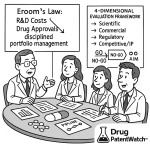
Biopharmaceutical innovation operates under the shadow of “Eroom’s Law”—Moore’s Law spelled backward—where the cost of developing a new drug doubles roughly every nine years, yet the rate of new drug approvals remains stubbornly flat.1 This unforgiving reality means that every decision to advance a molecule from the lab bench to the clinic is a multi-billion-dollar bet against overwhelming odds. With development costs ranging from a staggering USD 43.4 million to over USD 4.2 billion per drug, the price of a single misstep can be catastrophic.2
Given these stakes, how do we, as leaders and strategists, navigate this minefield? How do we decide which assets to champion, which to shelve, and how to construct a portfolio that can weather the inevitable storms of clinical failure, regulatory hurdles, and the ever-approaching patent cliff? The answer lies not in a crystal ball, but in mastering a discipline that is too often relegated to a back-office financial function: sales forecasting.
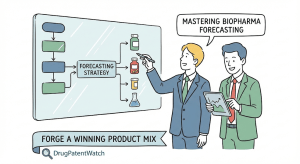
Let’s be clear. In the biopharma context, forecasting is not merely an exercise in predicting revenue. It is the strategic heart of the enterprise.1 It is the crucible where scientific possibility is forged with commercial reality. A robust forecast is a narrative—a data-driven story about a product’s potential journey through a complex ecosystem of patients, physicians, payers, and competitors. It is the ultimate tool for strategic alignment, forcing the difficult, data-driven conversations that are essential for making disciplined trade-offs and building a product mix capable of delivering sustainable growth.4
Yet, for all its importance, our industry has a dismal track record. Forecasts are notoriously, almost systemically, inaccurate. One comprehensive study found a median overestimation of actual sales by 33%, with over half of all forecasts missing the mark by more than 100% (on the high side) or 50% (on the low side).5 Another analysis of 1,700 forecasts revealed that actual peak sales differed by an average of 71% from predictions made just one year before launch.6
This glaring disconnect—making the highest-risk decisions based on often deeply flawed inputs—points to a fundamental misunderstanding of the role of forecasting. Its primary function is not just to predict the future, but to empower us to shape it. The very process of building a rigorous forecast, of forcing teams to quantify the addressable market, model competitive responses, and confront the brutal mathematics of the patent cliff, imposes a commercial discipline that is the bedrock of sound corporate governance and risk management.
This report is designed for the seasoned professional who understands these stakes. It is a deep dive into the art and science of balancing a biopharma product mix through the lens of accurate, strategic forecasting. We will deconstruct the components of a modern portfolio, from blockbuster biologics to the rising tide of biosimilars. We will dissect the methodologies, from the ground-up patient-based models for new assets to the sophisticated time-series analyses for in-market products. We will confront the systemic causes of inaccuracy head-on and, through real-world case studies, learn from both spectacular failures and hard-won successes. Most critically, we will provide an actionable framework for integrating the looming threat of patent expiration and the value-creating potential of lifecycle management directly into your long-range forecasts. Finally, we will look to the horizon, exploring how artificial intelligence is poised to transform this critical discipline.
Welcome to the new era of biopharma strategy, where the forecast is not the end of the conversation, but the beginning. It is our most powerful weapon for turning uncertainty into opportunity and data into a durable competitive advantage.
Anatomy of a Modern Biopharma Portfolio: Deconstructing the Assets that Drive Value
To forecast accurately, we must first understand precisely what we are forecasting. The term “biopharmaceutical” is not monolithic; it represents a diverse and increasingly complex ecosystem of products, each with its own unique scientific, regulatory, and commercial profile. A modern biopharma portfolio is a carefully curated collection of these assets, a strategic blend of risk and reward designed to navigate a dynamic market. Understanding the distinct characteristics of each component is the foundational first step in building a credible and defensible sales forecast.
The Core Components: From Blockbuster Biologics to Niche Therapies
At its core, a biopharmaceutical, or biologic, is a therapeutic drug product manufactured in, extracted from, or semi-synthesized from biological sources.7 This distinguishes them from traditional small-molecule drugs, which are typically synthesized through chemical processes. This biological origin—be it microbial cells, mammalian cell lines, or even transgenic plants—is the source of their complexity and their power.7 These are large, intricate molecules like proteins and nucleic acids, often far more difficult to characterize and manufacture than their small-molecule counterparts.8
The modern biopharma portfolio is dominated by several key asset classes, each playing a distinct strategic role:
Monoclonal Antibodies (mAbs): Without question, mAbs are the reigning monarchs of the biopharma world. These “custom-designed” proteins mimic the body’s own immune system to target specific cells or substances, forming the backbone of modern oncology and immunology.7 Their therapeutic success has translated into staggering commercial dominance. The global mAb market reached an astonishing USD 234.37 billion in 2023 and continues to grow, representing the largest single segment of the biopharma market.9 For any forecaster, understanding the dynamics of the mAb landscape is paramount.
Vaccines: As the COVID-19 pandemic vividly demonstrated, vaccines are a public health-critical segment capable of generating immense volume and revenue.2 They represent a unique forecasting challenge, often subject to government purchasing, public health policy, and the unpredictable nature of infectious disease outbreaks.
Hormones and Enzymes: These are foundational therapies, often recombinant versions of the body’s own signaling proteins, that treat a wide range of metabolic and rare diseases. Products like recombinant insulin, growth hormones, and erythropoietin are mainstays of the market, providing stable, long-term revenue streams.7
Next-Generation Therapies: This is the high-risk, high-reward frontier of biopharma. It includes revolutionary technologies like cell therapies (e.g., CAR-T), gene therapies, and sophisticated antibody-drug conjugates (ADCs) that attach a potent chemical payload to a targeted mAb.7 While their current market share is smaller, they represent the future of personalized medicine and hold the potential for truly curative outcomes, making them a critical, albeit highly uncertain, component of any long-range forecast.2
The very nature of these products introduces a crucial strategic element that is often overlooked in forecasting models. The FDA itself notes that biologics have “inherent variations that can result from the manufacturing process”.8 This is not merely a technical footnote; it is a strategic moat. The complexity of growing and purifying these large molecules in living systems creates a significant barrier to entry for competitors. Unlike a small-molecule generic, which is a perfect chemical copy, a biosimilar can only ever be “highly similar”.8 This manufacturing complexity creates a “soft” barrier that complements formal patent protection. When forecasting the competitive landscape for a biologic, one must account for the fact that it is simply harder for rivals to replicate the product and the process. This inherent difficulty slows market entry and must be factored into any realistic model of post-exclusivity revenue erosion.
The New Power Brokers: Integrating Biosimilars and Biobetters into the Mix
No modern portfolio strategy is complete without a clear plan for navigating the world of “follow-on” biologics. This category is broadly split into two crucial, and strategically distinct, types of products: biosimilars and biobetters.
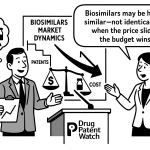
A biosimilar is a biological product that is “highly similar to and has no clinically meaningful differences from an existing FDA-approved reference product”.8 They are the biologic equivalent of generic drugs, offering lower-cost alternatives that increase patient access and drive market competition.12 As blockbuster biologics begin to lose their patent protection, the biosimilar market is exploding, representing both a formidable threat to innovator revenues and a major growth opportunity for companies equipped to compete in this space.10
A biobetter, in contrast, is not a copy but an improvement. It contains an altered active pharmaceutical ingredient designed to have enhanced efficacy, a better safety profile, or a more convenient delivery mechanism than the original biologic.14 A biobetter is a new, innovative product in its own right and follows a full regulatory approval pathway, rather than the abbreviated pathway used for biosimilars.
For a long time, innovator companies viewed biosimilars purely as a threat to be defended against. However, the most sophisticated players in the industry now understand their dual nature. Building a robust biosimilar portfolio is no longer just a generic-company play; it is a powerful defensive and offensive strategy for innovators as well. Consider a company like Amgen, which maintains a strong portfolio of its own innovative biologics alongside a growing stable of biosimilars targeting competitors’ products.15
What is the strategic calculus here? It goes far beyond simply generating revenue from off-patent products. By developing and marketing biosimilars, an innovator company gains an invaluable, real-world education in the very market dynamics that will one day threaten its own blockbusters. It forces the organization to engage directly with payers on the front lines of cost-containment, negotiating on price, volume, and interchangeability.11 This experience provides priceless intelligence on payer behavior, rebate strategies, and physician acceptance—intelligence that can then be used to build more effective defensive strategies for its own high-value innovator brands when their patents expire.
In this light, a biosimilar business unit functions as a strategic “sparring partner” and an intelligence-gathering operation. The true return on investment from a biosimilar portfolio is not just its profit and loss statement; it’s the deep institutional knowledge it generates to better protect the company’s multi-billion-dollar crown jewels. This strategic value is often completely missed in simple financial models, but it is a critical component of a truly balanced and resilient product mix.
The Forecaster’s Toolkit: A Deep Dive into Methodologies for a Diverse Product Mix
With a clear understanding of the assets that comprise a biopharma portfolio, we can now turn to the tools we use to predict their future performance. Sales forecasting is a discipline of “horses for courses”; no single methodology is universally superior. The right choice depends on the specific context: the stage of the product’s lifecycle, the nature of the therapeutic area, and the quality of available data. A first-in-class gene therapy in Phase 2 requires a fundamentally different approach than a mature monoclonal antibody with a decade of stable sales history. Mastering the forecaster’s toolkit means knowing which tool to deploy, when to deploy it, and, most importantly, understanding the inherent strengths and weaknesses of each.
The Bottom-Up Build: Epidemiology-Based Forecasting for New Assets
For any new product without a sales history—from a preclinical candidate to a newly launched drug—the “patient-based” or “bottom-up” model is the industry standard. It is a logical, step-by-step process of building a potential market from the ground up, starting with the entire population and progressively narrowing it down to the patients who will ultimately receive your drug.18
The process typically follows a clear cascade:
Potential Market Size Estimation: The first step is to define the total patient pool. This requires a deep dive into epidemiological data to determine the prevalence of a disease (the total number of people with the condition at a given time, best for chronic therapies) or its incidence (the number of new cases per year, best for acute treatments).18
Addressable Market Segmentation: Not all patients are potential customers. The model must be refined by segmenting the market. This involves filtering the total pool down to the percentage of patients who are actually diagnosed, the percentage of those who seek treatment, and the specific subgroups (e.g., by disease severity, line of therapy, or biomarker status) for whom the new drug is indicated and most appropriate.18
Penetration and Uptake Modeling: This is often the most challenging and subjective part of the forecast. Here, we model the drug’s adoption curve, or its projected market share over time. This is a function of numerous variables: its clinical profile (efficacy and safety) versus competitors, its convenience, the intensity of the commercial and marketing effort, and the prescribing behavior of physicians.18 This step often relies on analog analysis (how similar drugs performed at launch) and primary market research with physicians.
Pricing and Commercial Factors: Finally, the patient numbers are translated into revenue. This involves assumptions about the price per day of the drug, the average duration of treatment, patient compliance and adherence rates, and, critically, the level of reimbursement that will be granted by payers.18
It’s easy to see why this methodology is so powerful. It forces a rigorous, structured thought process. However, its greatest strength is also its most profound weakness: its heavy reliance on a long chain of assumptions.
A recent study has shown that many sales projections for new pharma products are glaringly inaccurate. The study of 1,700 forecasts for 260 drugs found actual peak sales differing by 71 percent from predictions a year before launch; and that many forecasts overstated projections by more than 160 percent. The data also showed that even six years after launch, forecasts were 45 percent off from actual results.
— IQVIA, “Commercial pharma forecasts are surprisingly inaccurate: Here are 5 ways to make them better” 6
The core issue is the compounding effect of variability. Even a small, seemingly reasonable error in an early-stage assumption—say, overestimating the diagnosis rate by 15%—can snowball through the model, resulting in a massively inflated final revenue number.19 One analysis showed that overestimating just two key variables, the addressable population and the peak uptake, by 20% each results in a compounded overestimation of the final forecast by a staggering 44%.19
This reveals the true purpose of the bottom-up model. It is fundamentally a narrative-building tool. The final number it produces is less important than the process of arriving at it. The model’s primary function should be to force the project team to construct, articulate, and defend a coherent story about the product’s future. The real value is unlocked not by accepting the model’s output, but by rigorously challenging every assumption within it. Best practice, therefore, is not to generate a single “point forecast,” but to use the model for intensive scenario planning. By identifying the most sensitive assumptions—the inputs where a small change creates the biggest swing in the outcome—we can build a range of forecasts (a base case, an upside case, and a downside case). This fundamentally shifts the strategic conversation from the unhelpful question of “What is the number?” to the far more powerful question: “What must we believe to be true for this number to be achievable?”
The Top-Down View: Time-Series Analysis for In-Market Products
Once a product is on the market and has generated a history of sales data, we can deploy a different set of tools: quantitative time-series analysis. These methods work from the “top-down,” using historical performance to project future results based on statistical patterns.20
The core idea behind time-series forecasting is that past data contains components that can be isolated and used for prediction. A typical sales data series can be decomposed into three parts 20:
Trend: The long-term upward or downward movement of the data.
Seasonality: Predictable, cyclical patterns that repeat over a specific period (e.g., higher sales of flu medication in the winter).
Randomness (or Residuals): The irregular, unpredictable fluctuations that remain after accounting for trend and seasonality.
A variety of models exist to capture these components, ranging from the simple to the highly complex:
Benchmark Models: These are the simplest methods, often used to establish a baseline against which more sophisticated models can be compared. They include the Naïve method (the forecast for the next period is simply the value of the last observed period, ft+1=ot), the Seasonal Naïve method (useful for seasonal data), and the Average method (the forecast is the mean of all historical data).20
Exponential Smoothing (ES): This family of models calculates forecasts using weighted averages, where the weights decrease exponentially for older observations. Single Exponential Smoothing (SES) is used for data with no trend or seasonality. Holt’s Linear Method extends SES to handle data with a trend. The Holt-Winters methods (both additive and multiplicative) further extend the model to incorporate seasonality.20
ARIMA Models: Auto-Regressive Integrated Moving Average (ARIMA) models are the workhorses of time-series forecasting. They are powerful tools for modeling univariate, stationary time-series data. A non-seasonal ARIMA model is defined by three parameters, (p,d,q):
p: The order of the Auto-Regressive (AR) part, representing the number of lagged observations included in the model.
d: The degree of differencing, representing the number of times the raw data have been differenced to make it stationary.
q: The order of the Moving Average (MA) part, representing the size of the moving average window. For data with a seasonal component, a Seasonal ARIMA (SARIMA) model is used, which adds four more seasonal parameters: (P,D,Q,m).20
These quantitative models can produce forecasts with a high degree of statistical precision. However, this precision can be dangerously seductive. Time-series models operate under one fundamental assumption: that the future will behave like the past. They are excellent at projecting existing trends forward but are inherently blind to structural shifts in the market.
This is the central peril of relying solely on quantitative methods for strategic biopharma forecasting. Our industry is not defined by stable continuity; it is defined by disruptive, game-changing events. A competitor’s unexpected positive Phase 3 data, a major change in clinical treatment guidelines, a new payer policy restricting access, or the looming loss of exclusivity—these are the events that truly shape a product’s long-term trajectory. An ARIMA model will not see them coming. It will happily continue to forecast steady growth right up to the quarter where sales fall off a cliff.
Therefore, the most robust forecasting systems employ a hybrid approach. They leverage the precision of time-series models for short-term, operational forecasting—predicting next month’s or next quarter’s sales to manage the supply chain and set inventory levels. But for strategic, long-range planning, this quantitative forecast must be overlaid with a qualitative, event-driven analysis. This strategic layer explicitly models the financial impact of future market shocks. To rely on the elegant mathematics of ARIMA for a five-year strategic plan is to navigate a minefield with a rearview mirror.
Comparative Analysis of Biopharma Forecasting Methodologies
To aid strategists in selecting the appropriate tool, the following table provides a comparative overview of the primary forecasting methodologies used in the biopharma industry.
Methodology
Description
Best Application
Data Requirements
Key Strengths
Common Pitfalls/Biases
Epidemiology-Based (Bottom-Up)
Builds a forecast from the patient level up, starting with disease prevalence/incidence and cascading through diagnosis, treatment, and market share assumptions.
New product launches, pipeline assets, new indication assessments where no historical sales data exists.
Provides a structured, logical framework; forces detailed articulation of market assumptions; excellent for scenario planning.
Highly sensitive to assumptions; prone to compounding errors; strong tendency toward internal optimism bias; often underestimates payer constraints.
Time-Series Analysis (e.g., ARIMA)
Uses historical sales data to identify statistical patterns (trend, seasonality) and project them into the future.
Mature, in-market products with stable sales patterns; short-to-medium term operational forecasting (e.g., supply chain management).
At least 2-3 years of consistent, granular historical sales data (monthly or quarterly).
Statistically rigorous; objective and data-driven; can produce highly accurate short-term forecasts for stable products.
Blind to future structural market changes (e.g., new competition, patent expiry); can create a false sense of long-term precision; requires stationary data.
Analog Analysis
Forecasts a new product’s uptake curve by identifying and analyzing the historical performance of “analogous” products launched in similar circumstances.
New product launches, particularly when entering an established therapeutic class with historical launch precedents.
Historical launch data for comparable products; deep qualitative understanding of market dynamics for both the analog and the new product.
Grounded in real-world historical performance; can be a powerful reality check on overly optimistic bottom-up models.
Finding a truly comparable analog is difficult and subjective; fails to account for how the current market may differ from the past; can lead to “me-too” thinking.
AI/Machine Learning-Driven
Utilizes advanced algorithms to analyze vast, complex datasets (sales, clinical, real-world evidence, etc.) to identify non-linear patterns and generate predictive models.
Demand forecasting for large portfolios; identifying at-risk patient populations; optimizing commercial resource allocation.
Large, clean, and diverse datasets (both internal and external); significant computational power and specialized data science expertise.
Can uncover complex patterns invisible to traditional methods; improves accuracy by incorporating a wider range of variables; enables dynamic, real-time modeling.
“Black box” nature can make models difficult to interpret and defend; highly dependent on data quality (“garbage in, garbage out”); requires significant investment in technology and talent.
The Anatomy of Inaccuracy: Confronting the Systemic Challenges in Biopharma Forecasting
Before we can fix a problem, we must first have the courage to admit its scale and diagnose its root causes. The uncomfortable truth is that the biopharmaceutical industry has a systemic forecasting problem. The evidence is overwhelming: our predictions are frequently and spectacularly wrong. This is not for lack of effort or intelligence. It is because the challenges are deeply embedded in our models, our processes, and, most critically, our organizational cultures. Confronting these challenges directly is the necessary first step toward building a more credible and strategically valuable forecasting capability.
The Optimism Bias: Why Are Forecasts So Often Wrong?
The data paints a sobering picture. A landmark study of sales forecasts submitted for reimbursement in Austria found a median overestimation of 33%. More alarmingly, 55.9% of all forecasts examined were wildly inaccurate, either overshooting actual sales by more than 100% or undershooting them by more than 50%.5 This is not an isolated finding. IQVIA’s analysis of 1,700 forecasts found that even six years
after a drug’s launch, when ample real-world data was available, forecasts were still off from actual results by an average of 45%.6
Why does this keep happening? The technical reasons are well-documented and often serve as the primary culprits in post-mortems 19:
Aligning Market Size with the Addressable Population: A common and fundamental error is confusing the total epidemiological size of a disease with the realistic, addressable patient population. Forecasters often fail to adequately account for the nuances of complex disease profiles, diagnostic challenges, and patient drop-offs at each stage of the care continuum, leading to an inflated starting number.19
Avoiding Overcomplication with Too Many Variables: In an attempt to achieve a higher degree of accuracy, models can become bloated with dozens of variables. This not only creates unnecessary complexity but can also lead to double-counting effects, where the impact of a single market driver is inadvertently factored in multiple times.19
Managing the Compounding Effect of Variability: As we’ve discussed, the cascade structure of bottom-up models means that even small, seemingly conservative errors in early-stage assumptions can amplify each other, snowballing into significant deviations in the final forecasted revenue.19
Sourcing Reliable Inputs and Ensuring Transparency: Forecasts are often built by multiple stakeholders using different data sources and methodologies. Without clear, rigorous documentation of every input—its origin, its calculation, and the rationale for its use—the forecast becomes an indefensible “black box,” impossible to scrutinize, update, or learn from.19
While these technical flaws are real, they often mask a deeper, more insidious problem: forecasting inaccuracy is not just a technical issue, it’s a cultural and organizational one. The persistent “optimism bias” that pervades our industry is not necessarily irrational. It is often a perfectly rational response to internal incentive structures.
Within any large biopharma company, R&D portfolio planning is a fiercely competitive internal marketplace.22 Project teams must compete for a finite pool of capital and human resources. To secure funding and keep their programs alive, these teams are implicitly—and sometimes explicitly—incentivized to present the most compelling, optimistic vision of their asset’s future commercial potential. The forecast, in this context, ceases to be an objective assessment of reality and becomes an advocacy document, a tool of internal salesmanship. As one industry expert starkly warns, “The forecast should be developed independently and without the bias of financial objectives”.24
This is why the most powerful intervention to improve forecasting accuracy is often not a new algorithm, but a change in organizational design. Leading companies are recognizing this and establishing independent forecasting Centers of Excellence. These groups are structurally firewalled from the R&D and commercial teams whose assets are being evaluated. Their compensation is tied not to the success of any single program, but to the accuracy of their predictions. Their sole mandate is to provide an unbiased, unvarnished, and data-driven view to the senior leaders making the capital allocation decisions. This structural change is essential to break the cycle of incentivized optimism and transform the forecast from a sales pitch into a genuine strategic tool.
Case Studies in Forecasting: Learning from Successes and Failures
Abstract principles come to life through concrete examples. By examining real-world cases where forecasts went right—and horribly wrong—we can distill actionable lessons that transcend theoretical models.
Failure Case Study: The Gilead Hepatitis C “Cure” and the Payer Revolt
When Gilead Sciences prepared to launch its revolutionary treatments for Hepatitis C (HCV), Sovaldi and Harvoni, the forecasting challenge seemed straightforward. Here was a curative therapy for a widespread, chronic disease with a massive pool of diagnosed patients. A standard epidemiology-based model would have pointed toward an unprecedented, vertical launch trajectory and astronomical peak sales. The models accurately predicted the immense clinical need for the drugs.
What they catastrophically failed to predict was the healthcare system’s violent economic reaction to their price tag. Priced at over $80,000 for a course of treatment, the drugs created a budget-impact shockwave unlike anything payers had ever seen. A retrospective analysis of budget impact models from the Institute for Clinical and Economic Review (ICER) for HCV treatments found that the forecasts, which assumed “unmanaged uptake,” overestimated real-world consumption by a factor of 54.25
Payers did not—and could not—simply pay the bills. They responded by erecting formidable access barriers. They instituted strict prior authorization requirements, limiting initial access to only the sickest patients with advanced liver disease. They created preferred drug lists, leveraging the entry of a competitor (AbbVie’s Viekira Pak) to spark a brutal price war. In essence, they took control of the uptake curve, throttling demand to a level their budgets could withstand.
The Gilead HCV saga is a landmark case study in how a forecast can be technically correct in its clinical and epidemiological assumptions but strategically blind to the realities of market access and political economy. The critical lesson is this: for any high-cost drug targeting a large patient population, the single most important variable in the forecast is not the number of patients, but the behavior of payers. A modern forecast must go beyond epidemiology and model the payer’s budget constraints, predicting the access restrictions they will be forced to impose to manage their spend. This requires a fundamental shift in expertise, from a reliance on clinicians and epidemiologists to a deep integration of health economists and market access strategists into the core forecasting team.
Success Case Study: Shire’s Disciplined Diligence
Success stories are often quieter, marked by the deals that didn’t happen. An executive from Shire (now part of Takeda) recounted a pivotal moment in the company’s history.24 The company was evaluating an in-licensing opportunity for a promising new asset. The licensor’s sales forecast was, as is often the case, incredibly bullish.
Rather than accepting the external numbers, Shire convened its own strong, cross-functional evaluation team, bringing together experts from clinical, regulatory, marketing, managed care, competitive intelligence, and finance. This integrated team built its own forecast from the ground up, informed by their diverse perspectives and proprietary market research. Their conclusion was starkly different: their forecast came in 65% lower than the licensor’s expectations.
Based on the strength and conviction of their internal forecast, Shire made the difficult decision to walk away from the deal. It was a decision that was soon vindicated in dramatic fashion. When the asset’s next set of clinical data was released, it failed to meet expectations. The licensor’s company value plummeted by approximately 70%—falling almost exactly to the level that Shire’s sober, data-driven forecast had projected.
This case is a powerful testament to two core principles of forecasting excellence. First, the immense value of cross-functional integration. A forecast built in a commercial silo is destined to be flawed. It is the creative tension and diverse expertise from clinical, regulatory, and market access that stress-tests assumptions and grounds the model in reality. Second, it highlights the courage required to trust your own data, even when it means saying “no” to a seemingly exciting opportunity. The role of forecasting is not to validate a desired outcome, but to illuminate the most rational path forward, even if that path is to do nothing at all.
The Patent Cliff: Transforming the Ultimate Threat into a Quantifiable Forecast Variable
In the biopharmaceutical industry, all roads eventually lead to the patent cliff. It is the single greatest and most predictable threat to a product’s revenue stream, a force of creative destruction that reshapes markets and determines the long-term fate of companies. For decades, executives have spoken of it in hushed, fearful tones. But for the modern strategist and forecaster, fear is not a strategy. The patent cliff is not an unknowable terror; it is a complex but ultimately quantifiable variable. The key to mastering long-range forecasting is to deconstruct this threat, understand its component parts, and build its impact directly into our models with precision and foresight.
The $200 Billion Precipice: Quantifying the Impact of LOE
The scale of the challenge is breathtaking. Between now and 2030, drugs with over $200 billion in annual revenue are projected to lose patent protection, putting that revenue at risk from generic and biosimilar competition.26 This is not a distant threat; it is an imminent reality for some of the industry’s biggest products, including Merck’s Keytruda (expected LOE 2028), Bristol Myers Squibb’s Opdivo, and Johnson & Johnson’s Stelara.26
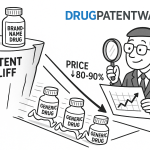
History provides a brutal lesson in the velocity of value destruction. For a traditional small-molecule blockbuster, it is not uncommon for revenues to plummet by 80-90% within the first year of generic entry.26 The quintessential example is Pfizer’s Lipitor, once the best-selling drug in history. In 2011, its last year of exclusivity, it generated $9.5 billion in worldwide revenue. In 2012, after facing generic competition, that number collapsed to $3.9 billion—a 59% drop in a single year.27
However, it is a dangerous oversimplification to apply this classic “cliff” metaphor to the entire industry today. The very nature of the products facing expiry has changed. The last great patent cliff of the early 2010s was dominated by small-molecule drugs. The coming wave is dominated by large-molecule biologics.26 This is a critical distinction that fundamentally changes the shape of the revenue erosion curve.
As discussed, biosimilars are not perfect copies. They face higher manufacturing hurdles, more complex regulatory pathways, and are not always deemed “interchangeable” at the pharmacy level, meaning a physician must actively prescribe them.8 Furthermore, innovator companies have become far more sophisticated in their defensive strategies, using tactics like negotiating exclusive contracts with payers and launching their own “authorized generics” to manage the decline. We saw this with AbbVie’s Humira, which experienced a less severe drop than many anticipated in its first year of biosimilar competition due to these defensive maneuvers.27
This means a sophisticated forecast no longer models a single, sharp “cliff.” Instead, it must model a multi-year “erosion slope.” The key strategic question is not just when the decline will start, but how steep that slope will be. The steepness is a variable determined by a host of factors: the product type (biologic vs. small molecule), the number and timing of competitive filers, the innovator’s defensive LCM strategy, and the specific dynamics of payer formularies. Forecasting the shape of this decline is every bit as important as forecasting the date it begins.
Beyond the Expiration Date: The Critical Role of Patent Intelligence
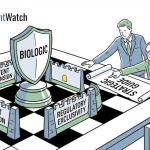
Perhaps the most common and costly mistake in forecasting is confusing a drug’s patent expiration date with its actual loss of market exclusivity. The two are not the same. True market exclusivity is a dual-headed beast, born of two distinct but overlapping systems of protection.28
Patent Protection: This is the intellectual property right granted by a patent office (like the USPTO) that protects the invention itself—the molecule, its method of use, its formulation. It is a property right that prevents others from making, using, or selling the invention.28
Regulatory Exclusivity: This is a separate marketing right granted by a regulatory body (like the FDA) upon a drug’s approval. It is designed to incentivize research in specific areas of public health by guaranteeing a period of protection from competition, regardless of the patent status. Key examples in the U.S. include New Chemical Entity (NCE) exclusivity (5 years), Orphan Drug Exclusivity (ODE) for rare diseases (7 years), and Biologics Exclusivity (12 years).28
These two forms of protection can run concurrently or sequentially. The effective period of monopoly is determined by whichever protection lasts longer. Therefore, for any forecaster or valuation analyst, the single most critical variable is the Loss of Exclusivity (LOE) date—the final expiration date of all relevant patents and regulatory exclusivities.28
Finding this date is far from simple. Innovator companies do not rely on a single patent. They strategically construct a defensive fortress around their blockbuster products using a variety of tactics designed to delay competition, often referred to as “evergreening” or the creation of “patent thickets”.28 This involves filing dozens, sometimes hundreds, of secondary patents later in a drug’s lifecycle that cover incremental improvements:
Method-of-Use Patents: Protecting the use of the drug for a new disease or patient population.
Formulation & Delivery Patents: Protecting a new extended-release version or a novel delivery device.
Process Patents: Protecting a more efficient way of manufacturing the drug.28
This dense, overlapping web of intellectual property makes it incredibly difficult and expensive for a generic or biosimilar manufacturer to challenge, effectively pushing out the true LOE date for years beyond the expiration of the original composition-of-matter patent.
The Strategist’s Edge: Leveraging DrugPatentWatch for LOE Accuracy
Given this complexity, relying on a simple lookup of the base patent in a public database like the FDA’s Orange Book is an open invitation to gross forecasting error. To cut through this legal minefield and arrive at a realistic, risk-adjusted LOE date, strategists must turn to specialized competitive intelligence platforms. Services like DrugPatentWatch are indispensable tools for the modern forecaster. They aggregate, clean, and link data from myriad global sources—patent offices, regulatory filings, clinical trial registries, and court dockets—to provide a comprehensive, 360-degree view of a product’s exclusivity landscape.28
Using a platform like DrugPatentWatch allows a forecasting team to move beyond a single date and model a range of LOE scenarios based on the strength of the patent thicket, the history of litigation, and the specific jurisdictional differences in patent law between the U.S., Europe, and other key markets. This transforms the LOE from a static assumption into a dynamic, risk-weighted input.
But the strategic value of patent intelligence goes even deeper. It is not just a tool for calculating your own LOE; it’s a window into your competitors’ future strategies. By systematically analyzing a rival’s patent portfolio, you can see their lifecycle management strategy taking shape years in advance. For example, if you see a competitor filing a cluster of patents around a new subcutaneous formulation for their market-leading intravenous drug, it’s a clear signal that they are planning a “product hop.” They will likely launch the new, more convenient version a year or two before the original drug’s LOE and put their full marketing muscle behind switching patients to the new, patent-protected product.
This intelligence fundamentally alters your own forecast. You are no longer modeling a future where your drug competes against a cheap generic of their old product. You must now model a future where you compete against their new, improved, and heavily promoted brand. This proactive use of patent intelligence transforms forecasting from a reactive, historical exercise into a forward-looking, strategic discipline of competitive wargaming.
The Second Act: Integrating Lifecycle Management (LCM) into Long-Range Forecasts
The end of a drug’s primary patent life is not the end of its story. The most successful biopharma companies view their products not as assets with a single, finite lifespan, but as platforms for continuous innovation and value creation. This is the discipline of Lifecycle Management (LCM): a set of strategic activities designed to maximize the value of an asset throughout its entire commercial life, especially in the years leading up to and following the loss of exclusivity.30
Effective LCM is not a last-ditch defensive maneuver; it is a proactive, long-range strategy. A well-executed LCM plan can add years of meaningful revenue, defend market share against competitors, and provide a crucial financial bridge while the company’s R&D engine develops the next wave of innovative products. For forecasters, this means that a simple revenue curve that peaks and then falls off a cliff at LOE is incomplete. A truly strategic forecast must model the potential upside from a range of LCM initiatives, turning them from vague possibilities into quantified scenarios. As pharmaceutical consultant Dr. Sarah Johnson puts it, “Late-stage lifecycle management is about squeezing every ounce of value from a drug while ensuring it continues to meet patient needs. It’s a delicate balance of commercial strategy and medical responsibility”.32
Extending the Runway: Indication Expansion and Reformulation Strategies
The most powerful LCM strategies are those rooted in genuine R&D, creating new clinical value for patients and, in turn, new commercial value for the company. The two primary levers are indication expansion and reformulation.33
Indication Expansion (Drug Repurposing): This involves discovering and gaining regulatory approval for new therapeutic uses for an existing drug. This is a highly efficient form of innovation. Because the drug’s safety profile is already well-established from its original development, the cost and risk of developing it for a new use are dramatically lower than starting from scratch with a new molecule. The average cost for a repurposing program is around $300 million, a fraction of the $2.6 billion+ for a new chemical entity.32 The commercial impact can be transformative, opening up entirely new patient populations and revenue streams. In 2004, a remarkable 84% of the top 50 selling prescription drugs had obtained at least one additional indication after their initial approval.33
The classic, albeit serendipitous, case study is Pfizer’s Viagra (sildenafil). Originally developed to treat angina, researchers in early trials noticed a consistent and unexpected side effect in male subjects. Pfizer’s strategic genius was in recognizing the massive commercial potential of this “side effect,” pivoting the entire development program to create a multi-billion-dollar blockbuster for erectile dysfunction.32 While today’s repurposing efforts are more systematic, often using AI to screen known molecules against new disease targets, the principle remains the same: unlocking hidden value within an existing asset.
Reformulation and Delivery Innovation: This strategy focuses on creating new, improved versions of a drug that offer tangible benefits to patients, such as enhanced convenience, better tolerability, or reduced side effects. This is a common “evergreening” tactic that, when done right, provides real clinical value and can be protected by new formulation patents.33 Examples are legion:
Developing an extended-release (ER) version that reduces dosing from twice a day to once a day.37
Creating a fixed-dose combination (FDC) that co-formulates two separate therapies into a single pill, reducing the patient’s pill burden.37
Switching from an injectable to an oral formulation or from a capsule to a more user-friendly orally dissolving tablet.37
A powerful case study is Suboxone (buprenorphine/naloxone), a treatment for opioid use disorder. For years, it was available as a sublingual tablet. Responding to patient feedback about long dissolution times and unpleasant taste, the manufacturer, Indivior, developed a new sublingual film version. The film dissolved faster and was preferred by 80% of patients in one study.32 This reformulation created a clear patient benefit, which Indivior leveraged to successfully defend its market share against the entry of generic tablets.
The critical takeaway for strategists is that these LCM options cannot be an afterthought. The most effective lifecycle management is designed into a product’s development plan from the very beginning. The choice of biological mechanism, the design of early clinical trials, the selection of patient populations and biomarkers—these early-stage decisions can either open the door for future indication expansions or slam it shut. A company that asks “What will the second and third acts of this drug be?” before it even enters Phase 2 is practicing strategic LCM. A company that only starts thinking about it three years before patent expiry is merely playing defense.
Switching the Channel: The Rx-to-OTC Switch as a Capstone Strategy
One of the most powerful, and most complex, LCM strategies is the prescription-to-over-the-counter (Rx-to-OTC) switch. This involves taking a drug that was once only available via prescription and gaining regulatory approval to sell it directly to consumers on pharmacy shelves.33 For the right product, an OTC switch can be a brilliant capstone to its lifecycle, creating a new, durable, long-tail revenue stream that can persist for decades after the original patents have expired.39
The strategic rationale is compelling. While the price per package is much lower in the OTC market, the potential volume is vastly larger. A successful switch taps into a broad consumer market, builds a powerful consumer brand, and can even benefit from a new period of three-year market exclusivity granted for the clinical studies required to prove that consumers can safely self-diagnose and use the product without a doctor’s supervision.40 In recent years, we’ve seen many successful switches in categories like allergy medications, nasal corticosteroids, and heartburn relief.40
A key success factor is creating a truly patient-centric product. The OTC shelf is a crowded and competitive space. A product must be easy to understand, easy to use, and offer a superior user experience to stand out. A great example is the switch of Voltaren Arthritis Pain Gel. The manufacturer highlighted its “non-greasy” formulation as a key consumer benefit, a feature that likely contributed to its successful transition to the OTC market.39
However, forecasting the success of an OTC switch is fraught with peril if one only looks at the financial model. An Rx-to-OTC switch is not just a regulatory filing; it is a complete business model transformation. It requires a seismic shift in corporate capabilities, from a B2B (business-to-business) model focused on physicians to a B2C (business-to-consumer) model focused on mass-market consumers.
Think about it: the core competencies of a traditional biopharma company are R&D, navigating regulatory pathways, and marketing to a concentrated audience of highly educated healthcare professionals through clinical data and sales representatives. The core competencies of a successful consumer healthcare company are brand building, television advertising, retail channel management, and supply chain logistics on a massive scale. These are fundamentally different worlds.
This “capability gap” is the biggest hidden risk in any OTC switch forecast. A biopharma company’s internal culture and expertise are often ill-suited to the task of building a consumer brand from scratch. They risk underestimating the immense investment required in advertising and promotion and lacking the talent to execute effectively. Therefore, a realistic forecast for an OTC switch must include a cold, hard assessment of the company’s B2C capabilities. Does the organization have the right people, the right budget, and the right agency partners to compete with consumer giants like Procter & Gamble or Johnson & Johnson’s consumer division? Often, the most strategically sound path for a biopharma company is not to go it alone, but to partner with, license, or divest the asset to a consumer healthcare specialist. This strategic option must be modeled as a key scenario in the forecast, as it may represent the most realistic path to maximizing the asset’s post-patent value.
The Synthesis: Aligning Forecasting and Product Mix with Enterprise Strategy
We have deconstructed the assets, dissected the methodologies, confronted the inaccuracies, and explored the strategic levers of patents and lifecycle management. Now, we arrive at the synthesis: the process of weaving these threads together to create a cohesive portfolio strategy that is greater than the sum of its parts. An accurate forecast for a single product is valuable. But its true power is only unlocked when it is placed within a broader framework of strategic portfolio management—a framework that aligns every R&D investment and commercial decision with the overarching goals of the enterprise. This is where data meets direction, and where disciplined execution forges a winning product mix.
From Data to Decisions: Building a Strategic Portfolio Management Framework
Effective portfolio management is the continuous, dynamic process of selecting, prioritizing, and optimizing assets to achieve a delicate balance between maximizing potential returns, minimizing inherent risks, and making the most efficient use of limited resources.1 It is the bridge that connects high-level corporate strategy to the day-to-day decisions of individual asset teams.42 A best-in-class framework is built on three pillars:
Strategic Alignment: The portfolio must be a direct reflection of the company’s long-term vision. If the corporate strategy is to be a global leader in oncology, then the portfolio’s composition, resource allocation, and business development priorities must be heavily weighted toward oncology assets.4 This ensures that the company builds deep expertise, leverages commercial synergies, and establishes a defensible leadership position in its chosen therapeutic areas.
Balancing Risk and Reward: A healthy portfolio is a diverse portfolio. It must strike a deliberate balance between high-risk, high-reward “shots on goal”—such as first-in-class molecules with novel mechanisms of action—and lower-risk, more predictable projects, like line extensions for established products or a strategic entry into biosimilars.1 This diversification mitigates the risk of a single late-stage clinical failure derailing the entire company and provides a more stable foundation for long-term growth.
Data-Driven Prioritization and Ruthless Culling: Perhaps the most difficult, and most important, function of portfolio management is making the tough “kill/keep” decisions. In an industry with staggering R&D attrition rates, the ability to terminate unpromising projects early is a critical capability. Leading biopharma companies are not afraid to prune their pipelines, discontinuing an average of 21-22% of their programs annually to reallocate capital and talent to the most promising assets.45 Best practice is to fail fast and cheap, with about 50% of discontinued assets being terminated in Phase 1, before the truly massive costs of late-stage trials are incurred.45
This process must be governed by objective, data-driven criteria, using tools like scoring models and risk-reward matrices to compare projects on an “apples-to-apples” basis.1 However, the most sophisticated frameworks understand that a simple risk-adjusted Net Present Value (rNPV) calculation is not enough. They explicitly incorporate “strategic fit” as a key decision criterion, which can, and sometimes should, override a purely financial metric.
Consider two hypothetical projects. Project A is a first-in-class asset in a therapeutic area where the company has no presence. Its rNPV is projected at $500 million. Project B is a “me-too” asset in the company’s core therapeutic area of immunology. Its rNPV is only $350 million. A purely financial model would prioritize Project A. But a strategic framework would recognize that Project B, while less innovative, leverages the company’s existing commercial infrastructure, deep scientific expertise, and strong relationships with key opinion leaders. It strengthens the company’s leadership in a core franchise. Therefore, Project B might receive a higher “strategic value” score and be prioritized over the financially superior but strategically disconnected Project A. This ensures that the portfolio builds synergistic value, preventing the company from becoming a scattered collection of opportunistic but unrelated assets. The forecast for an individual drug must always be contextualized by its contribution to this broader enterprise strategy.
Case Studies in Portfolio Strategy: Learning from the Leaders
Examining the real-world portfolio strategies of major biopharma companies provides a masterclass in how these principles are applied in practice.
Amgen: The Four-Pillar Balancing Act
Amgen exemplifies a balanced, “build and buy” approach to portfolio management. Their strategy is explicitly organized around four therapeutic pillars of growth: General Medicine, Oncology, Inflammation, and, following a major acquisition, Rare Disease.15 This structure provides clarity and focus for both internal R&D and external business development.
Amgen’s product mix demonstrates a sophisticated balancing of risk. They have a stable of mature, cash-cow products like Prolia and Repatha. They are investing heavily in their innovative pipeline, with promising assets in areas like obesity and severe asthma.15 Critically, they have also built one of the industry’s leading biosimilar portfolios. In 2023, just three of their biosimilar products generated $1.1 billion in sales, providing a steady revenue stream while also saving the healthcare system money.15 This biosimilar business serves as a hedge and an intelligence-gathering operation, as previously discussed.
Furthermore, Amgen is not afraid to use its balance sheet for strategic, pillar-bolstering M&A. Their $27.8 billion acquisition of Horizon Therapeutics in 2023 was not an opportunistic purchase; it was a deliberate, strategic move to establish “Rare Disease” as their fourth core pillar, instantly giving them a leadership position in that space.15 Amgen’s strategy is one of steady, deliberate, and diversified growth. For their forecasters, the challenge is to model the performance across these distinct pillars, capturing both the high-growth potential of new launches and the more predictable dynamics of their mature brands and biosimilars.
Pfizer: The All-In Bet on Oncology
If Amgen’s strategy is about balance, Pfizer’s recent moves represent a more concentrated, high-stakes response to an existential threat. The company is staring down one of the largest patent cliffs in industry history, with an estimated $17 to $18 billion in annual revenue from blockbusters like Eliquis and Ibrance set to evaporate between 2026 and 2028.47
Pfizer’s response has been a multi-pronged but clear-eyed strategy. First, aggressive cost-cutting to improve operational efficiency. Second, a laser focus on maximizing the potential of their recent and near-term launches. But the centerpiece of their strategy is a massive, transformational bet on oncology, crystallized by their $43 billion acquisition of Seagen in 2023.47 This single move fundamentally reshaped their pipeline, making them a world leader in antibody-drug conjugates (ADCs) and dramatically increasing their exposure to the highest-growth segment of the pharmaceutical market.
This represents a different philosophy of portfolio management. Rather than a diversified, four-pillar approach, Pfizer has effectively gone “all-in” on oncology as its primary growth engine for the next decade. This is a higher-risk, higher-reward strategy. The forecasting implications are profound. Pfizer’s long-term financial health is now inextricably linked to the successful integration of Seagen and the clinical and commercial performance of a relatively small number of high-potential oncology assets. Their forecast is less about balancing diverse inputs and more about getting the big bets right.
Gilead Sciences: The Challenge of Prioritization
Even with a clear strategy, execution is paramount. Alaina Kupec, Executive Director of Portfolio Strategy & Analytics at Gilead Sciences, highlights the core function of her team: “I lead our team and we support all the teams working with new therapies… in understanding the opportunity for those therapies, the cost to develop, risks involved, and options for development”.48 This statement encapsulates the daily reality of portfolio management—it’s about providing the clear, data-driven analysis that enables leadership to make informed decisions about complex trade-offs. The role is to bring clarity to the inherent uncertainty of drug development, ensuring that every decision about a product’s lifecycle or development path is grounded in a rigorous understanding of its potential risks and rewards.
These cases illustrate that there is no single “right” way to structure a portfolio. The optimal strategy depends on a company’s unique circumstances: its existing assets, its scientific capabilities, its financial strength, and the specific threats it faces. What is universal, however, is the need for a clear, data-driven framework that links forecasting, product mix, and enterprise strategy into a single, cohesive whole.
The Next Frontier: AI and Machine Learning in the Pursuit of Predictive Excellence
As we look to the future, the tools and techniques of biopharma forecasting are on the cusp of a profound transformation, driven by the exponential power of artificial intelligence (AI) and machine learning (ML). For an industry that runs on data, the ability of AI to analyze vast, complex datasets at a scale and speed far beyond human capability promises to move us from an era of reactive, assumption-driven forecasting to one that is more predictive, dynamic, and integrated. While the hype must be tempered with realism, the strategic application of AI is no longer a futuristic fantasy; it is rapidly becoming a competitive necessity.
From Reactive to Predictive: How AI is Reshaping Forecasting
The application of AI in biopharma is broad, touching everything from early-stage drug discovery to manufacturing optimization. Several of these applications have a direct and powerful impact on the accuracy and efficiency of sales and demand forecasting.49
Enhanced Demand Forecasting and Supply Chain Management: This is one of the most mature and impactful applications of AI. Traditional forecasting models often struggle to accurately predict demand, leading to costly stockouts or wasteful overstocking. AI algorithms can analyze a far richer tapestry of data—including historical sales, market trends, seasonal patterns, real-world prescribing data, and even external factors like epidemiological surveillance or social media sentiment—to generate more granular and accurate demand forecasts.51 In a compelling case study, Johnson & Johnson’s Indian manufacturing facility used AI-driven demand forecasting to improve its on-time, in-full (OTIF) delivery scores by 4.5 percentage points, a significant gain in supply chain efficiency.52
Optimizing Commercial Strategy: AI is also revolutionizing how commercial teams operate. By analyzing real-world data on physician prescribing patterns, patient journeys, and payer behavior, AI models can help sales and marketing teams identify the “next best action” for engaging with a specific healthcare provider. This allows for more personalized and effective communication, optimizing the allocation of commercial resources and improving launch uptake.54 Takeda Oncology, for example, built an AI application that combined real patient attributes with oncologist treatment choices to provide its sales team with contextually relevant messages and recommended actions, improving the quality of their outreach.54
Accelerating R&D and Reshaping Long-Term Forecasts: While not a direct sales forecasting tool, the impact of AI on R&D productivity will fundamentally reshape our long-term portfolio forecasts. AI is being used to accelerate nearly every stage of drug discovery and development, from identifying novel biological targets to optimizing clinical trial design and patient recruitment.51 By increasing the speed and probability of success in R&D, AI will increase the “shot on goal” velocity, meaning more assets will enter the pipeline. This will force portfolio managers and forecasters to evaluate and prioritize a larger number of candidates, making AI-driven portfolio optimization tools themselves an essential part of the process.
However, the true revolution of AI in biopharma forecasting may not be in simply generating a single, “more accurate” number. The real game-changer lies in its ability to enable dynamic, real-time scenario planning on a scale that was previously unimaginable.
Traditional forecasting is a laborious process. Building a complex, multi-variable Excel model for a base case, an upside case, and a downside case can take weeks or months.19 It is inherently static. An AI-powered forecasting platform, however, can run thousands or even millions of simulations in minutes. It can model the complex, non-linear interactions of countless variables simultaneously.
This transforms the forecast from a static annual report into a living, interactive strategic dashboard. It allows senior leadership to move beyond asking “What will our sales be next year?” to asking far more sophisticated and strategically vital questions:
“What is the probability of our revenue falling below our debt covenant threshold if our main competitor launches six months earlier than expected and payers impose a 10% price cut?”
“Which five variables across our entire portfolio represent the greatest source of risk to our five-year financial plan? What is the expected value of investing in mitigation strategies for each?”
“Simulate the impact of reallocating $200 million in R&D spend from our inflammation portfolio to our oncology portfolio under 1,000 different market scenarios.”
This is the ultimate evolution of the discipline. AI allows us to transform the forecast from a deterministic prediction into a probabilistic risk management engine. It provides the ability to not just see one possible future, but to understand the entire landscape of potential futures, identify the greatest vulnerabilities, and develop robust contingency plans before a crisis hits. This represents a fundamental shift from predictive analytics to prescriptive strategy, and it is the frontier that will define the next generation of industry leaders.
Conclusion and Key Takeaways
The journey through the intricate world of biopharmaceutical forecasting and product mix strategy reveals a discipline in transformation. We have moved from the art of educated guesswork to a rigorous science of data-driven decision-making, where success is defined not by a single perfect prediction, but by the strategic resilience of a well-balanced portfolio. The stakes, driven by the relentless pressure of Eroom’s Law and the looming patent cliff, have never been higher. Yet, the tools at our disposal—from sophisticated patent intelligence platforms to the nascent power of artificial intelligence—have never been more powerful.
The central thesis of this report is that accurate forecasting and strategic portfolio management are not separate functions; they are two sides of the same coin. A forecast that is not deeply integrated with the company’s lifecycle management plans, competitive strategy, and long-term vision is merely a number. A portfolio strategy that is not grounded in the sober, data-driven reality of a range of forecast scenarios is merely a wish list. The fusion of these two disciplines is the engine of sustainable value creation in the modern biopharma landscape.
As we navigate this complex terrain, it is the companies that embrace this integrated, strategic approach that will thrive. They will be the ones who see the patent cliff not just as a threat, but as a predictable event to be planned for years in advance. They will view lifecycle management not as a defensive tactic, but as a core part of the innovation process. They will treat their forecasts not as static reports to be filed away, but as dynamic, living tools for wargaming, risk management, and strategic alignment. Ultimately, they will succeed because they understand that in the high-stakes balancing act of biopharma, the goal is not to predict the future, but to build a portfolio robust enough to prosper within it, whatever it may hold.
Key Takeaways
Forecasting is a Strategic Weapon, Not a Financial Exercise: The primary value of forecasting is not just predicting a number, but imposing a rigorous, data-driven commercial discipline on R&D and portfolio decisions. The process itself is as valuable as the output.
Manufacturing Complexity is a Strategic Moat: For biologics, the difficulty and variability of the manufacturing process create a “soft” barrier to entry for biosimilars, slowing revenue erosion post-LOE. This must be factored into erosion curve models.
A Biosimilar Portfolio is an Intelligence Asset: For innovator companies, running a biosimilar business provides invaluable, real-world intelligence on payer behavior and pricing dynamics, which can be used to better defend their own blockbuster products.
Stress-Test Assumptions, Don’t Trust the Point Forecast: Bottom-up models are highly sensitive to compounding errors in early assumptions. Best practice is to use them for scenario planning (base, upside, downside) to understand key sensitivities, rather than relying on a single number.
Inaccuracy is a Cultural Problem: Persistent optimism bias is often a rational response to internal incentives. Creating independent, firewalled forecasting Centers of Excellence is a key organizational design solution to improve objectivity.
The “Patent Cliff” is a “Managed Slope” for Biologics: Unlike the sharp revenue drop for small molecules, biologics face a slower, more gradual erosion from biosimilars. Forecasting the shape of this slope is as critical as predicting its start date.
LOE is Not Patent Expiry: The true Loss of Exclusivity (LOE) date is the later of all relevant patent expiries and all regulatory exclusivities. Using specialized tools like DrugPatentWatch to determine a risk-adjusted LOE is non-negotiable for accurate long-range planning.
Lifecycle Management (LCM) Starts at Phase 1: The most effective LCM strategies (indication expansion, reformulation) are enabled or foreclosed by decisions made in early-stage development. It must be a proactive, not reactive, strategy.
The AI Revolution is in Scenario Planning: The true power of AI in forecasting is its ability to run thousands of real-time simulations, transforming the forecast from a static report into a dynamic, probabilistic risk management dashboard.
Frequently Asked Questions (FAQ)
1. How should a smaller biotech with only one or two assets approach portfolio management and forecasting differently than a large pharma company?
A smaller biotech’s approach must be fundamentally different, focusing on capital efficiency and strategic signaling. For them, the “portfolio” is often just one lead asset and a few preclinical concepts. Their primary forecasting goal is not internal resource allocation, but securing the next round of funding or attracting a partnership/acquisition. Therefore, their forecast must be a robust, defensible valuation tool. They should invest heavily in a rigorous, bottom-up, epidemiology-based model, stress-tested with multiple scenarios. While they lack the internal diversification of Big Pharma, they can “diversify” their single asset by thoroughly exploring and forecasting multiple indication pathways. This demonstrates the full platform potential of their technology to investors and potential partners, maximizing the asset’s valuation even at an early stage.
2. What is the single biggest mistake you see companies make when incorporating the Inflation Reduction Act (IRA) into their forecasts?
The biggest mistake is treating the IRA as a simple price-cut variable. Its impact is far more strategic and nuanced. The differential between the negotiation-free period for small molecules (9 years) and biologics (13 years) is fundamentally reshaping R&D investment decisions. Companies are now explicitly weighing this difference when deciding which modality to pursue for a given biological target. A proper forecast must go beyond simply modeling a price reduction in year 9 or 13. It must be part of a strategic assessment at the very beginning of a program, influencing the choice of modality itself. The forecast should compare two risk-adjusted NPVs: one for a small molecule version of a drug that launches faster but faces earlier price negotiation, and one for a biologic version that takes longer to develop but has a longer protected runway. The IRA has turned a scientific decision into a complex financial and strategic trade-off that must be modeled from day one.
3. How do you recommend balancing the input of a quantitative model (like ARIMA) with the qualitative judgment of a commercial team?
The best practice is a “structured override” system. The quantitative model provides the objective, data-driven baseline forecast. The commercial team then proposes adjustments based on their qualitative market intelligence (e.g., “We have intelligence that our main competitor is having manufacturing issues and will be supply-constrained for the next two quarters”). However, this override cannot be based on simple gut feel. The team must be required to document their rationale, quantify the expected impact (e.g., “We believe this will allow us to capture an additional 5% market share, translating to $50M in revenue”), and define the time period over which the override applies. This creates an auditable, accountable process. Over time, the organization can track the accuracy of these structured overrides, learning which commercial teams and which types of market intelligence are reliable predictors, thereby continuously improving the human-machine hybrid forecasting model.
4. With the rise of personalized medicine and ultra-rare disease drugs, how does forecasting change when the target patient population is extremely small (hundreds or a few thousand patients)?
Forecasting for ultra-rare diseases inverts the traditional model’s sensitivities. In a blockbuster forecast, market share and uptake rate are key uncertainties. In an ultra-rare forecast, the single most critical variable is patient identification. The total patient pool (prevalence) is the biggest source of uncertainty and the primary driver of the forecast. The strategy shifts from mass marketing to genetic screening, diagnostic development, and building relationships with a small number of key academic centers. The forecast model becomes less about predicting market share (it will likely be near 100% if the drug is effective) and more about modeling the rate of patient diagnosis and access. The key inputs are no longer physician surveys on prescribing intent, but the projected rollout of diagnostic programs and the capacity of treatment centers. It’s a shift from commercial forecasting to logistical and diagnostic forecasting.
5. How can a company use forecasting to make better “kill” decisions for pipeline assets without demoralizing R&D teams or stifling innovation?
The key is to separate the evaluation of the science from the evaluation of the asset. This is achieved by establishing clear, objective, and pre-agreed-upon “stage-gate” criteria before a project even begins. These criteria should be multi-faceted, including not just clinical endpoints but also commercial and market access hurdles (e.g., “To advance to Phase 3, this asset must not only demonstrate statistical significance on the primary endpoint, but also a profile that can secure a Tier 2 formulary position with major payers at a price point of at least $X”). When a project is terminated, it’s not because the “science failed” or the team “did a bad job.” It’s because the asset, as it evolved, failed to clear a pre-defined business threshold. This reframes the decision from a subjective judgment to an objective outcome. This process, when transparent and consistently applied, builds trust and predictability. It allows R&D teams to innovate freely within a clear strategic framework, knowing the rules of the game in advance.
Assessing the Accuracy of Sales Forecasts Submitted by Pharmaceutical Companies Applying for Reimbursement in Austria – PubMed Central, accessed August 17, 2025, https://pmc.ncbi.nlm.nih.gov/articles/PMC8414520/