This guide is written for IP counsel, portfolio managers, R&D leads, and institutional investors who need to understand exactly how U.S. patent doctrine applies to drug candidates generated or optimized with machine learning tools. It does not provide legal advice. It does provide the level of technical and strategic detail that should inform decisions before you pick up the phone and call outside counsel.
The regulatory landscape shifted materially in late 2025. The USPTO rescinded its February 2024 Inventorship Guidance for AI-Assisted Inventions on November 26, 2025, replacing the Pannu-factors framework with a return to the traditional conception standard. That single change has significant downstream effects on how pharma and biotech IP teams structure their internal inventor determination processes, how they draft lab notebooks, and how acquirers should value AI-heavy pipelines.
If you came here to understand what the 2024 guidance said, you need to update your mental model. That guidance is gone.
2. The IP Stakes: What AI-Discovered Drugs Are Actually Worth
Why the Patent Question Is Also a Valuation Question
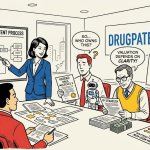
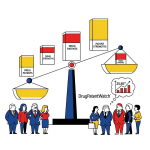
A compound patent on a blockbuster drug can be worth more than the physical manufacturing assets of the company that holds it. The IP protecting AbbVie’s adalimumab (Humira) generated approximately $21.2 billion in global revenue in 2022 alone, and the thicket of over 130 patents AbbVie built around that molecule delayed biosimilar entry in the United States until 2023. That is what a well-constructed patent portfolio does: it converts R&D expenditure into durable cash flows.
For AI-discovered compounds, the IP value calculus runs through a different set of variables. Three factors drive the premium or discount on AI-derived IP:
Patent Vulnerability Based on Inventorship Defects. If a company did not clearly document human conception before, during, and after AI output, its patents are vulnerable to inventorship challenges under 35 U.S.C. § 256. A patent with defective inventorship is unenforceable. For AI-heavy discovery programs, this is not a remote risk; it is the central exposure.
Breadth of the AI Platform Patent Portfolio. Companies that hold patents on the AI methods themselves, not just the drug candidates, carry a compounded IP moat. Insilico Medicine, for example, applied for platform patents covering generative biology approaches in 2018 and received grants in 2022. Those patents on Chemistry42 and PandaOmics protect not just specific molecules but the generative process, giving the company leverage in licensing negotiations with large pharma.
Disclosure Risk and Trade Secret Erosion. To obtain a compound patent, a company must enable a person of ordinary skill in the art (POSITA) to reproduce the invention. For AI-discovered drugs, that enablement analysis increasingly bleeds into territory where the company must describe AI training data, model architecture, or selection criteria. Each disclosure narrows what remains protectable as a trade secret.
The Market Context in 2026
AI drug discovery has moved from proof-of-concept to a commercially validated approach. Insilico Medicine closed a $293 million Hong Kong IPO at the end of 2025, with its generative AI platform cited explicitly as a core asset in its valuation. Partnerships between AI-native companies and large pharma, including deals Insilico signed with Lilly, Sanofi, Exelixis, Fosun Pharma, and Menarini that collectively reach into the billions, are now structured partly around the IP generated by the AI platforms rather than just around specific compounds. The Deloitte Pharma Innovation Report from 2025 found that 78 percent of pharma companies now mandate inventorship audits specifically for AI-generated candidates.
That audit requirement is not administrative overhead. It is the price of maintaining a defensible patent portfolio in an environment where patent examiners, PTAB judges, and district court judges are increasingly sophisticated about how generative chemistry platforms work.
3. How AI Functions Across the Drug Discovery Pipeline
The Five Technical Layers Where AI Creates Patentable (or Unpatentable) Output
Understanding the patent exposure at each stage of the AI-assisted pipeline requires understanding what the AI is actually doing. The output of each layer has a different claim type, a different inventorship analysis, and a different disclosure risk.
Layer 1: Target Identification. AI platforms analyze multi-omic datasets, including genomics, transcriptomics, proteomics, and published clinical data, to rank disease-associated targets. Insilico’s PandaOmics platform identified TNIK as the primary anti-fibrotic target for its IPF program in 2019 by integrating gene expression profiles, genome data, publication text, and patent databases. The output here is typically a ranked list of biological targets. Patenting this output is difficult because the claim would be on a naturally occurring gene or protein without a practical application, which runs into 35 U.S.C. § 101 problems. The strategic play at this layer is usually a combination of trade secret protection for the ranking model and a provisional patent application staking a date on the specific target-indication pairing.
Layer 2: Molecule Design and Generative Chemistry. This is where the most commercially significant patents originate. Generative models trained on chemical space propose candidate molecules that meet specified property profiles, such as binding affinity, selectivity, and ADMET parameters. Insilico’s Chemistry42 designed ISM001-055 (rentosertib) as a selective TNIK inhibitor within approximately 12 months of target identification. The compound patent granted as U.S. Patent No. 11,530,197 protects the TNIK inhibitor scaffolds and specifically covers the chemical structure corresponding to rentosertib. The inventorship analysis at this layer is where the 2025 conception standard bites hardest: the human researchers who directed Chemistry42’s search parameters and selected specific molecules from its output need to have formed a “definite and permanent idea” of the complete operative molecule before or during that selection process.
Layer 3: ADMET Prediction and Lead Optimization. AI models predict absorption, distribution, metabolism, excretion, and toxicity profiles to triage candidates before expensive synthesis. The human decisions made at this stage, specifically which candidates to deprioritize and why, constitute significant input for the inventorship record. These decisions should be captured in timestamped research logs at the time they occur, not reconstructed later.
Layer 4: Clinical Trial Design and Patient Stratification. Machine learning models that predict responder populations or optimize dose-ranging study design can generate patentable methods. Method-of-treatment claims built on AI-identified biomarker-defined patient populations are a relatively underutilized category in AI-native company patent portfolios.
Layer 5: Formulation and Drug-Device Combination Optimization. Reinforcement learning models can optimize controlled-release formulations or combination drug-device delivery systems. These claims are typically prosecuted as separate continuation applications and contribute to a lifecycle management portfolio, or what the industry calls an evergreening strategy.
Key Takeaway for Section 3
Each stage of AI involvement produces a different category of potential IP. The patentability analysis is not uniform across the pipeline. IP counsel who treat all AI-assisted drug discovery as a single legal problem will miss opportunities at some stages and take on unnecessary risk at others.
4. The Legal Architecture of a Pharmaceutical Patent
Claim Types and Their Strategic Value in AI-Assisted Programs
Pharmaceutical patents are not monolithic instruments. A well-constructed pharmaceutical patent estate combines several claim types, each protecting a different commercial dimension of the asset.
Compound Claims protect the specific chemical structure of a drug molecule and are the most valuable claim type in small-molecule drug development. They are the foundation of market exclusivity. For AI-discovered molecules, compound claims require that the named human inventors conceived of the molecule in the legal sense of that term. The AI platform is a tool, not an inventor.
Method-of-Use Claims protect the specific indication or dosage regimen. These are often filed in continuation applications as clinical trial data generates new insights about efficacy in defined patient subpopulations. For AI programs, method claims built on AI-identified biomarker signatures represent a distinct and defensible patent category.
Method-of-Manufacturing Claims protect synthesis routes and process chemistry. If the AI platform generated the synthesis route, the same inventorship analysis applies: a human must have conceived the claimed manufacturing process with the specificity required by the Federal Circuit’s standard from Burroughs Wellcome Co. v. Barr Labs.
Formulation Claims protect specific excipient combinations, release profiles, or dosage forms. These are the core tool of evergreening strategies when a compound patent approaches expiration.
Platform Method Claims protect the AI methods themselves, treating the computational approach as a separate invention. These are distinct from the drug compound and require their own § 101 eligibility analysis under the July 2024 subject matter eligibility guidance and the August 2025 examiner memorandum.
The Role of Continuations and Divisionals
Large pharma builds patent thickets not through single patents but through families of continuation and divisional applications that extend prosecution over years. The compound patent files first, staking the priority date. Continuation applications, which claim priority to the original filing, are prosecuted over the following years as the R&D program generates new data that supports additional claim types. For an AI-discovered compound, the company should be filing continuations on method-of-use claims, formulation claims, and polymorph claims at each meaningful clinical or formulation milestone. An Orange Book listing for a small-molecule drug typically includes between five and fifteen patents from a single patent family.
5. The Inventorship Problem: From Pannu Factors to the 2025 Conception Standard
The Regulatory Timeline You Must Know
The legal standard for inventorship in AI-assisted pharmaceutical patents has changed three times in three years. Getting this wrong in either direction, being overly restrictive about what counts as human invention or being insufficiently rigorous about documenting it, has direct consequences for patent enforceability.
February 2024: The Pannu-Factors Framework. The USPTO issued its first substantive inventorship guidance for AI-assisted inventions on February 13, 2024. That guidance directed applicants to apply the Pannu factors, drawn from the Federal Circuit’s 1998 decision in Pannu v. Iolab Corp., to evaluate whether a human made a significant contribution to an AI-assisted invention. The factors required that each named inventor contribute significantly to conception or reduction to practice, that the contribution not be insignificant in quality relative to the full invention, and that the inventor do more than explain well-known concepts. For AI-assisted drug discovery, the USPTO mapped these factors to specific human activities: directing the AI model, selecting specific inputs, or modifying AI outputs through wet-lab experimentation.
The Problem with the Pannu Approach. The February 2024 guidance created an unintended implication: by applying joint-inventorship factors to the relationship between a human and an AI system, it appeared to treat AI as a quasi-inventor even while stating AI cannot be an inventor. That structural inconsistency made the guidance difficult to apply and left practitioners uncertain about edge cases, particularly for single-inventor situations where no joint-inventorship analysis was needed.
November 26, 2025: The Conception Standard. The USPTO rescinded the February 2024 guidance in its entirety and replaced it with guidance grounded in the traditional conception standard. The governing document was published in the Federal Register on November 28, 2025, and was issued under Executive Order 14179 of January 23, 2025 (Removing Barriers to American Leadership in Artificial Intelligence), which directed agencies to revise policies established under the prior administration to promote U.S. AI leadership.
What the 2025 Standard Actually Requires
Under the 2025 revised guidance, the central question is conception. Conception in patent law, as established by Burroughs Wellcome Co. v. Barr Labs. and its progeny, requires that the inventor form “a definite and permanent idea of the complete and operative invention.” The USPTO frames the key question as whether the natural person “possessed knowledge of all of the limitations of the claimed invention such that it is so clearly defined in the inventor’s mind that only ordinary skill would be necessary to reduce the invention to practice, without extensive research or experimentation.”
The Pannu factors are gone for single-inventor situations. For multi-inventor situations, the Pannu factors continue to apply among human contributors, but AI is not part of that analysis. AI is treated as a tool, equivalent in legal status to laboratory instrumentation, computational databases, or synthesis equipment.
The practical consequences for pharma IP teams are significant:
First, the 2025 guidance makes clear that listing an AI system as an inventor on any U.S. application will result in rejection and that any foreign applications naming only an AI system as inventor cannot serve as the basis for U.S. priority claims.
Second, the USPTO confirmed that the same inventorship standard applies to utility, design, and plant patents. No category receives a more permissive analysis because AI was involved.
Third, companies must implement version control for AI-generated materials to document how human inventors conceived the invention and then refined, selected, or integrated AI outputs. The guidance specifically identifies the selection of inputs provided to AI tools and configuration or training of AI tools as activities that may contribute to human conception.
What Does Not Satisfy the Conception Standard
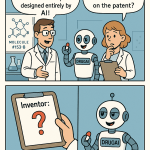
The guidance is explicit that merely running an AI tool and accepting its outputs does not constitute invention. A researcher who enters a target protein into a generative chemistry platform, receives a ranked list of candidate molecules, and selects the top-ranked candidate without modification or independent scientific judgment has not conceived of a chemical invention in the legal sense. The selection must reflect a “definite and permanent idea” formed by the human researcher. That means the researcher must be able to articulate why a specific molecular scaffold was chosen, what property profile it was selected to achieve, and how the selection reflects a technical judgment rather than a passive acceptance of machine output.
Conception should be documented before or during AI tool use, not reconstructed after the fact. The Morgan Lewis analysis published in December 2025 recommends that companies require inventors to document their thought conception, including problem framing and design choices, before running AI tools. When an AI proposes multiple outputs, the researcher should document why a particular output was selected or modified.
Key Takeaway for Section 5
The Pannu-factors era is over. The 2025 guidance returns inventorship to the traditional conception standard and treats AI as a tool, not as a quasi-inventor. Companies that built their AI patent strategy around the 2024 framework need to audit their documentation practices and revise their inventor determination protocols before filing new applications.
6. Subject Matter Eligibility Under 35 U.S.C. § 101: The USPTO’s Evolving Framework
The Abstract Idea Problem for AI Pharmaceutical Patents
Under 35 U.S.C. § 101, patent-eligible subject matter covers processes, machines, manufactures, and compositions of matter, but not abstract ideas, laws of nature, or natural phenomena. The Supreme Court’s Alice Corp. v. CLS Bank International (2014) created a two-step eligibility analysis that has been the principal litigation risk for software-related patents, including AI method claims.
For pharmaceutical AI claims, the § 101 problem is not symmetrical across claim types. Compound claims covering specific small molecules with novel chemical structures generally do not face meaningful § 101 problems because a novel chemical compound is a composition of matter, not an abstract idea. The eligibility problem concentrates in platform method claims covering AI-based screening methodologies, predictive models, and computational drug design processes.
The July 2024 Subject Matter Eligibility Guidance
The USPTO’s July 2024 guidance introduced Examples 47 through 49 specifically addressing AI inventions. It established three conditions for a claimed AI method to qualify as a patent-eligible “practical application”: the claim must limit the AI concept to a particular field of use; the specification must provide a technical explanation of how the invention improves the underlying technology; and the claim must include non-abstract limitations that implement that technical improvement. A claim for a generative AI system that designs molecules with improved binding selectivity for a specific receptor class, where the specification explains the technical mechanism of the selectivity improvement, is more likely to be patent-eligible than a claim for a general molecular property optimization algorithm.
The August 2025 Examiner Memorandum
The USPTO published an examiner memorandum in August 2025 to address examiner inconsistency in applying the July 2024 guidance. The memo introduced two additional analytical questions examiners must consider: whether a claim recites only an idea of a solution or outcome, versus a particular solution to a particular problem; and whether a claim invokes computers merely as a tool for performing an existing process, versus claiming an improvement to an existing technology. The memo cautioned examiners against oversimplifying claim meaning during eligibility analysis, a common source of erroneous rejections that was generating costly prosecution disputes.
Notably, as of early 2026, not all patent examiners have applied the August 2025 memo consistently. The Caldwell law firm reported receiving examiner rejections where the examiner stated uncertainty about how to apply the memo, suggesting that the guidance has not yet been uniformly adopted at the examiner level. Companies prosecuting AI method claims should expect continued § 101 rejections in technology centers that have not caught up with the guidance and should be prepared to argue the practical application analysis with specific technical evidence from the specification.
Strategic Filing Implications for Platform Claims
For an AI-native pharma or biotech company, platform method claims protect the core commercial asset: the AI system itself. A company that secures broad, enforceable platform claims owns a licensing asset that operates independently of any specific compound’s commercial success. The strategic priority should be:
Filing platform claims with specifications that provide explicit technical explanation of how the AI system improves on prior art methods, not just describes what it does. Claiming specific technical improvements to existing drug discovery technology, such as a reduction in false-positive rate in virtual screening, rather than abstract optimization goals. Framing the practical application in terms of measurable technical improvements that distinguish the AI method from the prior art, with quantitative data in the specification wherever possible.
Key Takeaway for Section 6
Compound claims for AI-discovered molecules face relatively limited § 101 risk. Platform method claims face the full Alice analysis and require careful drafting under the July 2024 and August 2025 guidance. Prosecution of platform claims requires technical specifications that go beyond describing AI function to explaining technological improvement.
7. Written Description and Enablement: The ‘Black Box’ Disclosure Problem
The Fundamental Tension
Patent law requires that a specification enable a POSITA to make and use the invention without undue experimentation. For AI-discovered drugs, the “how did you find this molecule” question has a technically correct but legally complicated answer: a deep learning model trained on proprietary data found it. That answer raises two distinct statutory problems under 35 U.S.C. § 112.
Written Description. The written description requirement demands that the specification demonstrate that the inventor possessed the claimed invention at the time of filing. For AI-discovered compounds, this means the patent application must describe the molecule with enough chemical and biological specificity to demonstrate possession, even if the AI found it. The compound structure, synthesis route, and biological data are the core of the written description for a compound claim. The description of how the AI generated the molecule is generally not required for a compound claim and can actually create risks by prompting prior art arguments if the training data contains analogous compounds.
Enablement. For a compound claim, enablement requires that a POSITA could synthesize and test the claimed molecule without undue experimentation. As a 2024 commentary in the journal Science noted about AI-assisted patenting, there is growing concern that compound patents generated by AI disclose little evidence of real-world testing, exacerbating an issue already present in conventional drug development. Claim breadth must be proportionate to the experimental data in the specification. A compound claim that encompasses an entire chemical scaffold when the application provides wet-lab data for only one or two specific members of that class risks an enablement challenge, particularly after the Supreme Court’s Amgen Inc. v. Sanofi (2023) decision, which tightened the enablement standard for broad functional claims in biologics.
Managing the Disclosure-Trade Secret Tension
Platform method claims present an acute tension between enablement and trade secret protection. Fully enabling an AI platform method claim may require disclosing training data sources, model architecture details, or hyperparameter choices that the company considers proprietary. The options are narrow:
A company can file broad platform claims with limited technical disclosure, accepting the risk of an enablement rejection during prosecution or an invalidity challenge post-issuance. It can file narrower platform claims that are fully enabled but protect only a subset of the platform’s capability. Or it can protect the platform exclusively as a trade secret, accepting that competitors who independently develop similar platforms will face no IP barrier. Relay Therapeutics has pursued the third path for significant portions of its molecular dynamics simulation technology, patenting specific drug candidates while keeping the computational infrastructure confidential.
Key Takeaway for Section 7
Written description for AI-discovered compound patents focuses on chemical and biological characterization, not on AI methodology. Enablement requires proportionate wet-lab data supporting claim breadth; post-Amgen v. Sanofi, broad functional claims in any modality face heightened enablement scrutiny. Companies should model their disclosure strategy against the worst-case invalidity scenario in litigation, not against the easiest path to grant.
8. Non-Obviousness in the Age of Generative AI
The Standard and Its AI Complication
Under 35 U.S.C. § 103, an invention is obvious if the differences between the claimed invention and the prior art would have been obvious to a POSITA at the time of filing. The obviousness analysis requires examining whether the prior art provides a motivation to combine references, a reasonable expectation of success, and whether the claimed invention is a predictable result.
For AI-discovered molecules, the non-obviousness question has a structural ambiguity. If a generative AI model, trained on prior art chemistry, produces a molecule as its highest-ranked output when given a target specification, does that molecule’s appearance on the AI’s ranked list constitute a “reasonable expectation of success” that the prior art would have motivated a POSITA to pursue? This is not a resolved question in Federal Circuit jurisprudence as of early 2026.
The argument for non-obviousness runs as follows: prior art compounds may exist in the same chemical class, but the specific combination of structural features that generates the novel molecule’s activity profile was not predictable without the AI model. The AI did not simply recombine known elements; it navigated a chemical space too large for human intuition to explore, finding structural solutions that prior art approaches would not have suggested. That argument is strongest when: the target is itself novel (as TNIK was for IPF), the molecule’s structural features diverge meaningfully from the closest prior art compound, and the unexpected results doctrine can be invoked if the compound demonstrates superior activity relative to what the prior art would have predicted.
The Crowding-Out Risk
There is a commercially significant flip side to the non-obviousness question. As generative AI platforms become standard tools across the industry, the POSITA may increasingly be defined as a chemist with routine access to generative AI tools. If a POSITA with a generative chemistry tool would routinely generate the same class of molecules when pointed at a given target, then the entire class of molecules that generative AI naturally produces for that target may eventually be deemed obvious. This crowding-out dynamic has not yet been addressed by the USPTO or the Federal Circuit, but it has significant implications for compound patent breadth in competitive programs. Companies with multiple generative chemistry programs targeting the same receptor family are developing overlapping prior art for each other’s compound claims.
Key Takeaway for Section 8
Non-obviousness for AI-discovered compounds is strongest when the target is novel, the molecule diverges structurally from the closest prior art, and unexpected results data is available. The longer-term risk is that generative AI tools become part of the POSITA’s standard toolkit, making AI-generated chemical classes easier to challenge as obvious. Filing compound claims promptly and with strong unexpected results data in the specification mitigates this risk.
9. Case Study: Insilico Medicine and the Rentosertib IP Blueprint
Company Profile and Platform IP
Insilico Medicine is a clinical-stage AI-driven biotech founded in 2014 and listed on the Hong Kong Stock Exchange at the end of 2025, raising $293 million. Its core commercial asset is Pharma.AI, an end-to-end generative AI platform with modules covering target identification (PandaOmics), generative chemistry (Chemistry42), and clinical development optimization. The platform operates as both a drug discovery engine for Insilico’s internal pipeline and a licensed product for pharma partners.
Insilico’s IP strategy has two distinct layers: patents on the AI platform methods, and patents on the drug candidates the platform generates.
On the platform side, Insilico applied for patents covering generative biology approaches in 2018, with grants issued in 2022, covering the ability to generate molecules for desired expression patterns. Its 2019 publication on Generative Tensorial Reinforcement Learning (GENTRL) established scientific priority for small molecule design using reinforcement learning. These platform patents protect the methodology independently of any specific drug candidate.
On the compound side, the lead asset is rentosertib (formerly ISM001-055), protected under U.S. Patent No. 11,530,197, which covers TNIK inhibitor compounds for the treatment of fibrotic diseases. Compound 112 in claim 5 of that patent corresponds to the rentosertib structure. The patent provides synthesis procedures and characterizes the compound through human liver microsome stability assays, TNIK and MAP4K4 enzyme inhibition assays, cell-based fibrosis models, and in vivo lung and skin fibrosis models.
What the Rentosertib Patent Does and Does Not Disclose
U.S. 11,530,197 covers the chemical structures of TNIK inhibitors. It provides extensive characterization data. What it does not disclose is the AI discovery methodology. The patent does not describe how the compounds were initially identified or designed. The AI platform’s role, target identification via PandaOmics and molecule design via Chemistry42, was published in the scientific literature (Nature Biotechnology, March 2024) but is absent from the patent specification.
This is deliberate. Publishing the AI methodology in peer-reviewed literature establishes scientific credibility and generates academic citations that support the novelty of the TNIK target, while keeping the AI platform’s technical details out of the patent’s public disclosure. The trade-off is that the patent’s enablement and written description are grounded entirely in conventional chemical and biological data, which is exactly what the USPTO’s examination process requires.
The IPF Market Opportunity and Patent Value
Idiopathic pulmonary fibrosis affects approximately 5 million people worldwide and carries a median survival of 3 to 4 years. Current approved antifibrotic drugs, pirfenidone and nintedanib, slow progression but do not reverse it. A disease-modifying first-in-class agent in this space carries a market opportunity that analysts have estimated at $4 to 6 billion in peak annual revenues for a successful entrant.
Rentosertib’s Phase IIa GENESIS-IPF trial, which enrolled 71 patients across 22 sites in China and was published in Nature Medicine in June 2025, showed dose-dependent improvement in forced vital capacity. At the highest dose of 60 mg QD, patients showed a mean FVC change of +98.4 mL compared to a mean decline of -20.3 mL in the placebo group. The trial met its primary safety endpoint, and exploratory biomarker analyses showed reductions in profibrotic proteins including COL1A1, MMP10, and FAP, with an increase in anti-inflammatory marker IL-10.
For IP valuation purposes, the Phase IIa data transforms the rentosertib patent estate from a speculative asset into a clinically validated asset with defined mechanism of action, quantitative efficacy signal, and a clear path to a pivotal trial. The compound patent, U.S. 11,530,197, becomes the anchor of an Orange Book listing if rentosertib receives FDA approval, and the priority date of that patent defines the competitive window for branded exclusivity.
Inventorship Considerations for the Rentosertib Program
Insilico’s published methodology for ISM001-055 provides a template for how human inventorship can be documented in an AI-assisted program. The PandaOmics target identification step involved human researchers selecting which omics datasets to integrate, setting the analytical parameters, and deciding which targets from the ranked output to pursue. The Chemistry42 design step involved medicinal chemists and biologists guiding the generative model’s exploration of chemical space and selecting and validating specific molecular candidates. The subsequent in vitro and in vivo testing, which included synthesis, ADMET profiling, and multi-organ fibrosis models, constitutes reduction to practice with extensive human scientific input.
Under the 2025 conception standard, the critical question is whether the human researchers at Insilico formed “a definite and permanent idea” of the complete TNIK inhibitor before or during the AI-assisted design process. The published record, including the Nature Biotechnology paper and the patent’s Examples section, suggests they did, in that they specified the binding profile, selectivity requirements, and in vivo performance criteria that defined the invention before Chemistry42 generated candidates.
Key Takeaway for Section 9
The Insilico rentosertib program is the most advanced clinical example of AI-driven drug discovery with a published patent record. Its IP architecture, separating platform patents from compound patents and keeping AI methodology in scientific publications rather than patent specifications, is a model others in the industry are increasingly following. The Phase IIa data published in Nature Medicine in June 2025 converts the patent estate from a pre-clinical IP position to a clinically anchored one with significantly higher licensing and M&A valuation.
10. Case Study: Relay Therapeutics and the Trade Secret / Patent Hybrid Model
A Different IP Architecture
Relay Therapeutics uses a computational platform called Dynamo that integrates protein motion simulation with structure-based drug design. Where Insilico has pursued patent protection for significant portions of its Chemistry42 methodology, Relay has largely kept Dynamo’s molecular dynamics architecture as a trade secret, patenting only the drug candidates it generates.
This model reflects a specific risk calculus. Relay’s competitive advantage is not in the general category of AI-assisted drug design but in the specific computational approach that captures protein motion rather than static structure. Filing a patent on that approach would require enabling disclosure that competitors could use to develop equivalent platforms. The trade secret approach forfeits the exclusionary right to the method in exchange for maintaining the proprietary information barrier.
The trade-off has limits. Trade secrets provide no protection against independent development. If a competitor independently develops equivalent molecular dynamics methodology, it has no obligation to license Relay’s trade secrets. And reverse engineering through publication of competing structural data, as has happened in protein structure prediction with AlphaFold2, can erode the trade secret rapidly. Relay’s strategy works as long as the proprietary computational methods remain genuinely ahead of publicly available alternatives.
For portfolio managers, the distinction between the Insilico model and the Relay model has direct valuation implications. An Insilico-type platform with granted method patents carries a more transparent, auditable IP moat. A Relay-type platform with trade secret protection requires a different due diligence protocol, one focused on competitive intelligence about alternative approaches rather than patent scope analysis.
Key Takeaway for Section 10
Patent protection for AI platforms and trade secret protection are not mutually exclusive but they do represent different risk-return profiles. Platform patent protection provides an auditable, durable IP moat with disclosure costs. Trade secret protection provides an information barrier without disclosure but offers no protection against independent development or rapid competitive erosion if the methodology becomes publicly available.
11. Evergreening Tactics for AI-Discovered Compounds
Lifecycle Management in the AI Era
Pharmaceutical evergreening, the practice of layering additional patents around a core compound to extend effective market exclusivity beyond the original compound patent’s expiration, is as old as pharmaceutical IP strategy. For AI-discovered compounds, the tools are the same. The timing and execution differ because AI platforms can accelerate the generation of lifecycle management IP in ways that were not previously practical.
Polymorph Patents. Many small molecules can be crystallized in multiple polymorphic forms with distinct physical properties. Polymorph patents typically expire later than the original compound patent and can be listed in the Orange Book if a specific polymorph is used in the approved drug product. AI tools trained on crystal structure data can predict polymorphic forms and identify those with superior stability or solubility profiles faster than conventional solid-state chemistry approaches.
Formulation Patents. Modified-release, co-crystal, or nanoparticle formulations of an approved drug compound can generate new patent protection and new New Drug Application filings that reset Orange Book listing timelines. For an AI-discovered compound with established in vivo activity, formulation optimization is often the first lifecycle management step initiated once Phase IIb data confirms clinical viability.
Method-of-Use Patents for New Indications. Rentosertib’s preclinical anti-fibrotic activity was demonstrated across lung, kidney, and skin fibrosis models. Clinical data in IPF does not preclude separate patent applications on the use of rentosertib, or a rentosertib analog, in renal fibrosis or systemic sclerosis. Each new indication with its own clinical data supports an independent method-of-use claim with its own patent term.
Combination Therapy Patents. AI-assisted analysis of drug synergy data can identify novel two-drug combinations with activity profiles not predictable from either agent alone. Combination patents covering a specific drug pair and dosing regimen, supported by clinical data, are defensible even when both individual components are off-patent.
Pediatric Exclusivity. Under the Best Pharmaceuticals for Children Act, a company that conducts FDA-requested pediatric studies receives six months of additional exclusivity appended to all existing patents and exclusivities for the drug. For AI-discovered compounds moving through adult clinical trials, early engagement with FDA on pediatric study requirements is standard lifecycle management practice.
The Paragraph IV Filing Dynamic
For AI-discovered small molecules that reach NDA approval and Orange Book listing, the standard Hatch-Waxman challenge timeline applies. A generic manufacturer files an ANDA with a Paragraph IV certification asserting that a listed patent is invalid or will not be infringed. The filing triggers a 30-month stay of generic approval while litigation proceeds. The strength of the compound patent’s inventorship documentation and disclosure, precisely the issues discussed in sections 5 and 7, determines how well the patent survives invalidity challenges in that litigation.
Key Takeaway for Section 11
Evergreening for AI-discovered compounds uses the same legal tools as conventional pharmaceutical lifecycle management. AI accelerates the generation of lifecycle management IP, particularly in polymorph prediction and formulation optimization, which can compress the timeline for filing secondary patents. The broader the clinical program, the more method-of-use and combination patent opportunities accumulate.
12. Global Jurisdiction Comparison: U.S., EU, China, UK
Why Jurisdiction Matters for AI Patent Strategy
Pharmaceutical companies file patents globally. The legal standards for AI-assisted inventorship, subject matter eligibility, and disclosure vary significantly across major markets, creating a multi-jurisdictional risk and opportunity map that IP teams must account for in their filing strategies.
United States. As discussed throughout this guide, the U.S. standard as of November 2025 requires human conception under the traditional legal standard. AI is a tool. Priority claims to foreign applications listing only AI as inventor are rejected. The July 2024 and August 2025 USPTO guidance govern AI method claim eligibility.
European Union. The European Patent Convention requires that inventors be natural persons, consistent with U.S. law. The EPO has consistently rejected applications listing AI as inventor, including in the Thaler DABUS applications. For subject matter eligibility, European patent law does not have a § 101 equivalent for pharmaceutical compound claims, making European prosecution of AI-discovered compound patents generally more straightforward on eligibility grounds than U.S. prosecution. Supplementary Protection Certificates (SPCs) provide up to five years of additional exclusivity after the compound patent expires, extending the European market exclusivity window.
China. China’s National Intellectual Property Administration revised its patent examination guidelines in 2024 to permit AI systems to be acknowledged as contributors to an invention, though human oversight remains required and listing a non-human as the named inventor is not accepted under current law. China represents an increasingly significant market for AI drug patents both because of its large patient population and because China-based AI drug discovery companies, including Insilico (incorporated in Hong Kong), are generating substantial filings. The patent linkage system in China grants a 9-month stay compared to the U.S. Hatch-Waxman system’s 30-month stay, a gap with significant competitive implications for innovative drug manufacturers.
United Kingdom. The UK Supreme Court in the Thaler v. Comptroller-General case reinforced human-only inventorship requirements for patent purposes in 2023. The UK Intellectual Property Office has taken a conservative approach consistent with that ruling. Post-Brexit, the UK patent system operates independently of the EPO, requiring separate prosecution if UK coverage is desired alongside EU coverage.
Patent Cooperation Treaty (PCT). For companies filing internationally, PCT applications allow a single application to be examined through the international phase before national phase entry in individual jurisdictions. The international preliminary examination under the PCT will apply the standards of the elected examining authority, typically the USPTO or EPO for pharma companies. AI inventorship issues must be resolved before national phase entry in each jurisdiction according to that jurisdiction’s requirements.
Key Takeaway for Section 12
The U.S. conception standard and the European natural-person requirement are functionally aligned as of 2026. China’s 9-month patent linkage stay versus the U.S. 30-month stay creates a structurally different competitive environment for branded drugs in the Chinese market. International filing strategies must account for these differences at the PCT stage, not as an afterthought during national phase entry.
13. IP Valuation Framework for AI-Discovered Drug Assets
The Five-Factor IP Valuation Model
Standard pharmaceutical IP valuation applies risk-adjusted net present value (rNPV) models to forecast revenues, apply discount rates based on clinical stage probability of success, and subtract development costs. For AI-discovered assets, five additional factors require specific analysis alongside the standard rNPV inputs.
Factor 1: Inventorship Documentation Quality. A patent with a well-documented human invention record is materially more defensible in litigation than one with ambiguous inventor contribution records. In due diligence for an M&A transaction, the absence of contemporaneous inventor documentation for AI-assisted programs is a discount trigger. A 2025 Deloitte survey found that 78 percent of pharma companies now require inventorship audits for AI-generated candidates, suggesting that documentation quality has become a standard diligence item.
Factor 2: Platform Patent Coverage. Does the company hold granted platform method patents, or does it rely exclusively on compound patents? Platform patents extend IP protection to future compounds generated by the same methodology, creating option value beyond the current pipeline. An AI-native company with both platform and compound patents commands a higher platform multiple in licensing negotiations.
Factor 3: Claim Breadth vs. Enablement Risk. Wide compound claims covering entire chemical scaffolds based on limited experimental data carry invalidity risk under the post-Amgen enablement standard. Narrower claims with dense experimental support are more defensible. The trade-off between claim breadth and invalidity risk is a direct input to patent asset value.
Factor 4: Competitive IP Overlap. As generative AI tools converge on similar chemical solutions for the same targets, the risk of overlapping compound patents increases. IP counsel should map the patent landscape in the target class before making valuation judgments, specifically to identify whether third-party compound claims could block key structural analogs or formulation claims.
Factor 5: Trade Secret Durability. For companies with trade-secret-protected AI platforms, the valuation must account for the probability that the trade secret is eroded by competitor development or publication within the asset’s commercial horizon. AlphaFold2’s public release in 2021 eroded significant proprietary value that structural biology companies had built around protein structure prediction. Equivalent risks exist for other computational approaches.
Key Takeaway for Section 13
Standard rNPV models undervalue or misvalue AI-discovered drug assets if they do not separately score inventorship documentation quality, platform patent coverage, claim breadth-to-enablement ratio, competitive IP overlap, and trade secret durability. These factors should be explicit line items in any AI drug asset diligence process.
14. Investment Strategy for Analysts
Screening AI Drug Discovery Companies on IP Fundamentals
For institutional investors and portfolio managers, the AI drug discovery space requires a different screening framework than conventional biotech. The key variables are:
Platform IP Maturity. Has the company secured granted platform method patents, or does it rely on patent-pending positions? Granted patents have survived at least one round of examination and provide more reliable IP coverage. Patent-pending positions in early prosecution are substantially less certain. Insilico’s 2022-granted generative biology patents, for example, represent a more mature IP position than a company with only 2024 or 2025 provisional filings on its AI methodology.
Inventor Determination Protocol. Has the company implemented a formal inventor determination process for AI-assisted inventions that is consistent with the 2025 USPTO conception standard? A company that was operating under the 2024 Pannu-factors framework and has not updated its inventor determination protocols since November 2025 carries execution risk in its patent prosecution.
Clinical Validation of AI Output. The most important derisk event for an AI drug platform is clinical proof-of-concept with a compound designed by that platform. Insilico’s Phase IIa data for rentosertib published in Nature Medicine in June 2025 represents the first industry proof-of-concept for an end-to-end AI-designed drug. Companies whose AI platforms have not yet generated clinical data carry a significantly higher platform-level discount.
Partnership Structure as IP Signal. Large pharma partnership deals carry embedded IP terms that signal the licensor’s own assessment of its platform’s durability. A deal structured with milestone payments tied to patent grant events signals that the licensor believes its platform method claims are prosecutable. Insilico’s partnerships with Lilly, Sanofi, and Exelixis, with aggregate deal values reportedly in the billions, reflect large pharma’s own due diligence conclusion about the underlying IP.
Litigation History and PTAB Exposure. AI drug companies with significant compound patent portfolios will eventually face Paragraph IV challenges and inter partes review (IPR) petitions at the PTAB. A company with no litigation history has simply not yet reached the stage where competitors find it worth challenging. Evaluating patent claim quality proactively, rather than waiting for IPR petitions to identify weaknesses, is standard practice for institutional holders of biotech equity.
Short-Side Risk. The clearest short-side IP risk in AI drug discovery is a company with broad platform and compound patent claims that are not supported by sufficient experimental data in the specification. Post-Amgen, the Federal Circuit has made clear that claim breadth must be earned by experimental demonstration. A company whose compound claims purport to cover thousands of analogs based on computational prediction without wet-lab validation for more than a handful of compounds is carrying meaningful invalidity risk that may not be priced into the equity.
Key Takeaway for Section 14
AI drug discovery equity requires IP-specific screening criteria beyond standard biotech analysis. Platform IP maturity, inventor determination protocols, clinical validation of AI output, partnership structure, and litigation exposure are the primary IP variables. The most important derisk catalyst for platform valuation is clinical proof-of-concept, which rentosertib delivered in June 2025.
15. Patent Analytics Tools: How to Work the Landscape
What Patent Databases Tell You That Company Filings Do Not
Competitive patent intelligence in AI drug discovery requires systematic monitoring of filing activity across multiple dimensions: compound class, target, platform methodology, formulation, and litigation.
Orange Book Cross-Reference. For approved drugs, the FDA’s Orange Book lists patents certified by the NDA holder as covering the approved product. Monitoring Orange Book listings for competitor compounds reveals the scope of their patent claims, the claim types they have sought (compound vs. formulation vs. method of use), and their patent expiration timeline. For an AI-discovered compound in the same target class, Orange Book data maps the landscape of potential Paragraph IV challenges.
PAIR and Global Dossier. The USPTO’s Patent Center and its predecessor Patent Application Information Retrieval (PAIR) system allow public access to the prosecution history of published patent applications. Prosecution history is invaluable for understanding how examiner rejections were addressed and what arguments the applicant made to distinguish prior art. For AI drug patents, the prosecution history often reveals whether and how the company argued human inventorship under applicable guidance.
Competitive Family Monitoring. A single compound patent is the visible fraction of a patent family. Monitoring PCT publications, national phase entries, and continuation filing activity for competitor patent families reveals the full scope of their IP strategy and gives advance notice of pending claims that have not yet published.
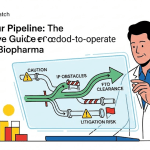
Freedom-to-Operate (FTO) Analysis. Before initiating a drug discovery program on a specific target, an FTO analysis maps the existing compound, method, and formulation patents to identify whether any program output would infringe issued claims. For generative AI programs, FTO analysis should be conducted not just on the initial lead compound but on the chemical space the AI is exploring, since adjacent compounds generated during optimization may fall within existing claim scopes.
DrugPatentWatch as a Workflow Tool. Platforms like DrugPatentWatch aggregate compound-level patent data, expiration schedules, litigation history, and Orange Book data in a searchable format designed for pharmaceutical IP workflows. For monitoring patent expiration timelines in a competitive therapeutic area, identifying generic entry windows, or conducting rapid landscape analysis before a target selection meeting, structured pharmaceutical patent databases reduce the manual work of monitoring dispersed USPTO, FDA, and litigation filings.
16. Documentation Protocols: The Internal Audit Playbook
What Good Inventor Records Look Like Under the 2025 Standard
The November 2025 USPTO guidance identifies specific documentation practices that support defensible inventorship determinations. Internal IP teams should implement these practices at the program initiation stage, not at patent filing.
Pre-AI Conception Records. Before running an AI tool on a target, the human researchers should document in a timestamped research record: the specific problem they are trying to solve, the technical criteria that define a successful solution, and their own prior art knowledge that constrains the solution space. This record establishes that the human inventor had a defined inventive concept before AI assistance.
AI Tool Configuration and Input Records. Version control for AI tool configurations, including model version, training data identifier, and parameter settings, should be maintained with timestamps. The selection of inputs, including which datasets are used and which target-binding constraints are specified, is a human decision that contributes to the inventive concept under the 2025 guidance.
Output Selection Records. When the AI generates multiple candidate outputs, the researcher’s documented rationale for selecting or modifying a specific output is the most important invention record. This rationale should be contemporaneous, not reconstructed from memory after filing. It should explain the technical basis for selection in terms of the compound’s properties and how those properties relate to the therapeutic objective.
Wet-Lab Validation Records. In vitro and in vivo experimental data generated after AI output constitutes both reduction to practice and independent human contribution to the inventive process. Lab notebooks for synthesis, biological assay, ADMET profiling, and animal model studies should be maintained with standard practices: signed and dated, with witnessed entries where possible.
Inventorship Audit Protocol. Given the 2025 guidance’s emphasis on traditional conception analysis, companies should conduct formal inventorship determination before filing each patent application. The audit should review the complete record from target selection through lead candidate designation, identify each human contributor’s specific contributions, and confirm that at least one named inventor formed a “definite and permanent idea” of the complete claimed invention. Legal counsel, not R&D management, should conduct or supervise inventorship audits.
Correction Risk Management. Incorrect inventorship can render a patent unenforceable as fraud on the patent office. The cost of correcting inventorship under 35 U.S.C. § 256 before grant is low. The cost of correcting it after grant is higher and the risk of leaving inventorship errors uncorrected through litigation is significant. Pre-filing audits prevent problems that post-grant corrections cannot always remedy.
17. Key Takeaways by Section
Section 2 (IP Stakes). AI-discovered drug patents carry additional valuation variables: inventorship documentation quality, platform patent coverage, claim breadth-to-enablement ratio, competitive IP overlap, and trade secret durability. Standard rNPV models do not capture these variables without modification.
Section 3 (Pipeline). Each stage of AI-assisted drug discovery generates a different category of IP with different claim types and inventorship requirements. The legal analysis is not uniform across the pipeline.
Section 4 (Legal Architecture). Patent thickets in AI drug programs, as in conventional pharma, are built through compound claims, continuation-based method-of-use claims, formulation claims, and lifecycle management filings. AI accelerates generation of lifecycle management IP.
Section 5 (Inventorship). The Pannu factors are gone. The 2025 USPTO guidance returns inventorship to the traditional conception standard. AI is a tool. Human researchers must form a “definite and permanent idea” of the complete invention before or during AI-assisted design. Documentation must be contemporaneous.
Section 6 (§ 101). Compound claims face limited § 101 risk. Platform method claims require drafting under the July 2024 and August 2025 USPTO guidance, with specifications that describe technological improvement, not just AI function.
Section 7 (Disclosure). Enablement requires wet-lab data proportionate to claim breadth. Post-Amgen, broad functional claims are high-risk. The trade secret-vs.-patent tension is acute for AI platform method claims.
Section 8 (Non-Obviousness). Non-obviousness for AI-discovered compounds is strongest when the target is novel and the compound diverges structurally from prior art. The longer-term risk is that generative AI becomes part of POSITA’s standard toolkit.
Section 9 (Insilico/Rentosertib). Insilico’s rentosertib program is the industry’s best-documented AI drug patent case study. Its IP architecture, separating platform patents from compound patents and keeping AI methodology in scientific publications, is a replicable model.
Section 11 (Evergreening). AI accelerates generation of polymorph and formulation lifecycle management IP. Multiple method-of-use patents are available for compounds with broad anti-fibrotic or multi-indication activity.
Section 12 (Global). U.S. and EU inventorship standards are functionally aligned. China’s 9-month patent linkage stay versus the U.S. 30-month stay creates different competitive dynamics for branded drug manufacturers.
Section 14 (Investment). The clearest derisk catalyst for AI platform valuation is clinical proof-of-concept. Platform IP maturity, inventor determination protocols, and claim breadth-to-enablement ratio are the primary IP screening variables for institutional investors.
18. Frequently Asked Questions
Q: Can a company list its AI platform as an inventor to protect its contributions?
No. U.S. patent law, as confirmed by the Federal Circuit in Thaler v. Vidal (2022) and codified in the November 2025 USPTO guidance, permits only natural persons to be listed as inventors. An application listing an AI system as inventor will be rejected. Priority claims to foreign applications that list only AI as inventor will also be rejected.
Q: Does the 2025 USPTO guidance require companies to disclose which AI tools were used in the inventive process?
The 2025 guidance does not impose a categorical duty to disclose AI tool use in patent applications. However, applicants are expected to meet the written description and enablement requirements of § 112, and incorrect or incomplete inventorship declarations can constitute fraud on the patent office. Companies should consult with patent counsel about their specific disclosure obligations, particularly if AI involvement was substantial enough to raise questions about human conception.
Q: What happens to patents filed under the 2024 Pannu-factors guidance?
The 2025 guidance replaces the 2024 guidance going forward. Patents filed and prosecuted under the 2024 framework are subject to the inventorship law at the time they issued; the 2025 guidance does not retroactively invalidate them. However, any post-grant inventorship challenge would be evaluated under current law, which applies the conception standard. Patents whose inventorship was determined using Pannu-factors analysis should be reviewed to confirm that the named inventors satisfy the conception standard as well.
Q: How does post-Amgen v. Sanofi (2023) affect AI compound patent strategies?
The Supreme Court’s Amgen decision tightened the enablement standard for patents claiming broad functional claim scope without sufficient experimental demonstration. For AI drug patents that claim large chemical scaffolds based on computational prediction data, Amgen requires that the specification provide experimental support proportionate to claim breadth. Companies should assess whether existing broad compound claims are supportable by the wet-lab data in the specification and file continuation applications with narrower, better-supported claims if there is a gap.
Q: What is the fastest way to assess a competitor’s AI drug patent position?
A three-step process covers the core of the landscape. Run a compound class search in a pharmaceutical patent database to identify all issued and pending patents in the relevant chemical space. Cross-reference with Orange Book listings for any approved products in the target therapeutic area to identify what compounds and formulations are currently protected. Review the prosecution history of the most relevant competitor patents through USPTO Patent Center to understand the claim scope and any arguments made about AI-assisted invention during prosecution.
Xu, Z. et al. A generative AI-discovered TNIK inhibitor for idiopathic pulmonary fibrosis: a randomized phase 2a trial. Nature Medicine 31, 2602-2610 (2025)
Wang, J. Navigating the USPTO’s AI inventorship guidance in AI-driven drug discovery. Journal of Law and the Biosciences, Vol. 12, Issue 2 (2025)
Ropes & Gray, Patentability Risks Posed by AI in Drug Discovery (October 2024)
Morgan Lewis, USPTO Issues Revised Inventorship Guidance for AI-Assisted Inventions (December 2025)
Mayer Brown, United States Patent and Trademark Office Issues Revised Guidance on Inventorship for AI-Assisted Inventions (December 2025)
Eckert Seamans, U.S. Patent Office Provides New Guidance on AI-Assisted Inventions (December 2025)
U.S. Patent No. 11,530,197 B2 (Insilico Medicine, TNIK inhibitors for fibrotic diseases)
Insilico Medicine Hong Kong IPO Prospectus (December 2025)
Copyright notice: This guide synthesizes publicly available regulatory, legal, and scientific materials. It does not constitute legal advice. Companies should consult qualified patent counsel for guidance specific to their IP programs.