Business Intelligence on Biologic and Small Molecule Drugs
Win the Tender: A Business Development Guide for Biopharma Commercial Vendors Selling Tender Strategy Consulting in EU Markets Timed Around Drug Patent Loss of Exclusivity Dates
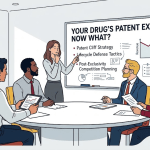
Every year, billions of euros in pharmaceutical procurement value shifts from branded drug budgets to competitive tender processes across the European Union. The trigger is always the same: a patent expires. When loss of exclusivity (LOE) arrives for a blockbuster molecule, hospital procurement directors, regional health authorities, and national payers start rewriting their formularies. Generic and biosimilar manufacturers mobilize. And a narrow window of commercial consulting opportunity opens that closes faster than most vendors realize.
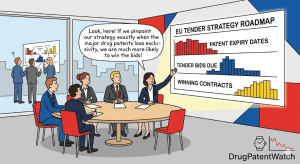
This guide is for the biopharma commercial and market access vendors who want to sell tender strategy consulting to manufacturers, hospital groups, or procurement bodies in EU markets. It is built around one operational insight: the calendar of drug patent LOE dates is your sales calendar. Miss the window before a tender opens, and you miss the deal entirely.
You will find here a systematic approach to identifying target accounts by molecule and country, entering those accounts at the right moment in the procurement cycle, and differentiating your consulting offer in a market where everyone claims to know European HTA and pricing frameworks. Where relevant, data from DrugPatentWatch, the industry-standard patent intelligence database, is incorporated to show how patent expiry timelines can be operationalized for business development.
The EU Tender Window: Why LOE Dates Are Your Sales Calendar
What Loss of Exclusivity Actually Means for Procurement
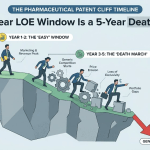
Loss of exclusivity is not a single event. It is a sequence. First, the primary composition-of-matter patent expires. Then secondary patents covering formulations, dosing methods, or delivery devices fall. Regulatory data exclusivity, which in Europe runs eight years from initial approval under the EU’s 8+2+1 framework, may extend effective market protection beyond the primary patent date. Supplementary Protection Certificates (SPCs) can add up to five additional years on top of the primary patent term.
For vendors selling market access consulting, each of these expiry layers is a potential trigger point. A generic manufacturer eyeing a molecule needs to plan 18 to 36 months ahead of the first anticipated tender. A hospital system renegotiating its oncology formulary needs pricing strategy support 12 to 18 months before its framework agreement expires. Both of those timelines start with the same input: the patent expiry date.
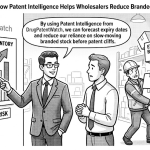
DrugPatentWatch tracks patent and exclusivity expiration dates across major markets, including EU member states, and its data allows vendors to build a forward-looking pipeline based on real dates rather than guesswork. A company preparing a biosimilar launch for adalimumab in Germany, for instance, needed to engage market access consultants well before the molecule’s SPC expiry. The vendors who knew that date owned the conversation. The ones who did not were pitching into a process already underway.
The Gap Between LOE and Tender Opening: Where Vendors Get Locked Out
In most EU countries, the procurement process for off-patent medicines through public tenders begins between 12 and 24 months before the tender award date. That means the relevant consulting work, including market analysis, pricing strategy, dossier preparation, and stakeholder mapping, happens before most vendors even know a tender is being planned.
The vendor who calls a procurement director six weeks before a tender deadline is not a strategic partner. They are a vendor of last resort. The ones who win retainers and long-term consulting agreements arrive 18 months early, with a data-backed view of the competitive landscape, a country-specific regulatory map, and a clear model of where their client’s product can win on price without destroying margin.
That 18-month planning horizon is only achievable if you are tracking LOE dates systematically. Without that, your business development is reactive, event-driven by press releases and competitor announcements rather than by the underlying structural calendar that drives procurement decisions.
Reading the Patent Cliff Map
Key Molecules Approaching LOE in the EU Through 2027
The EU patent cliff between 2024 and 2027 is substantial. Several high-revenue biologic and small-molecule products are losing exclusivity during this window, creating a surge of tender activity across multiple therapeutic areas. Understanding which molecules are on the list, and in which countries their SPCs expire at different times, is the first step in building a prospecting map.
Among the molecules generating the most significant procurement activity are high-dose subcutaneous immunology biologics, oncology checkpoint inhibitors approaching their first SPC expirations in leading EU markets, and mature cardiovascular and diabetes compounds where biosimilar and generic competition is intensifying. The variation between countries matters: a molecule may have a German SPC expiring in Q3 2025 while its French equivalent runs through Q2 2026. That eight-month difference determines which country’s tender cycle you target first.
Data from DrugPatentWatch allows you to build this kind of country-level granularity. Rather than relying on aggregated global LOE forecasts, which tend to smooth over the national SPC variation that drives EU tender timing, you can model the procurement calendar country by country, molecule by molecule. That granularity is what separates a credible consulting pitch from a generic market overview.
How Patent Intelligence Changes Your Prospecting
The practical workflow for most commercial vendors is to query a patent intelligence database for molecules with LOE dates between 18 and 36 months from the current quarter, filter by therapeutic area and country relevance, then cross-reference against the known tender calendars in each target market. The output is a prioritized list of accounts where a conversation about tender strategy is both timely and welcome.
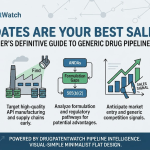
This is not a manual process you can run from public sources alone. Patent families are complex. A single active ingredient may have dozens of patents filed across different jurisdictions, each expiring on a different date, with SPC extensions filed and sometimes contested. DrugPatentWatch aggregates and structures this data in a way that is actionable for commercial planning, not just for IP attorneys.
Vendors who build this workflow into their CRM prospecting outperform those who rely on trade press or conference intelligence. When you call a procurement director or a generic manufacturer’s market access team with a specific view of their exclusivity timeline, the conversation starts at a different level. You are not explaining what a patent cliff is. You are discussing their specific situation in a specific market.
Country-Level Complexity Across the Five Major EU Markets
The European Union is not a single pharmaceutical market. It is a collection of national systems with different regulatory frameworks, procurement structures, reimbursement timelines, and competitive dynamics. A molecule losing exclusivity in Germany triggers a different procurement process than the same molecule losing exclusivity in Spain, even if both countries are members of the same union.
Germany operates through the statutory health insurance (GKV) system, where the AMNOG early benefit assessment process for new products has created a complex interaction between the originator’s negotiated price and the reference price framework that governs generic and biosimilar procurement. France operates through a negotiated pricing system overseen by the CEPS committee, where the first generic or biosimilar entry triggers an immediate price cut to the originator and sets a reference price band. Spain’s tender market is fragmented across 17 autonomous communities, each of which can issue its own procurement tender, though the Ministry of Health provides national reference pricing guidance. Italy’s AIFA agency manages both national price negotiations and the regional procurement tenders issued through CONSIP and regional central purchasing bodies. The Netherlands uses ZIN’s preferred medicine policies and insurance company formularies to drive volume to specific products within a therapeutic class.
Each of those systems has a different timeline between LOE and active tender procurement. Vendors who understand these timelines at the operational level, not just the conceptual level, bring something worth paying for.
How EU Tender Systems Work and When They Open
Centralized vs. Decentralized Procurement
EU pharmaceutical procurement sits on a spectrum. At one end, national-level centralized purchasing bodies issue framework tenders that cover an entire country’s public hospital or community pharmacy market. At the other, hospital pharmacy committees in individual teaching hospitals negotiate directly with manufacturers, using their formulary decisions to drive volume commitments. Most EU markets sit somewhere in between.
Centralized procurement gives vendors a clear event to target: a single national tender with a defined publication date, submission deadline, and award period. The Italian CONSIP oncology tenders and the Dutch insurance company preferred medicine designations follow this logic. Decentralized procurement, as seen across Spanish autonomous communities and in the German hospital sector, requires a different approach: identifying the highest-volume regional purchasers and timing outreach to their individual procurement cycles rather than a national event.
For vendors, the practical implication is that a country like Spain may require 17 separate business development conversations and 17 separate tender strategy engagements, while a country like Portugal can be addressed through a single national procurement body. That difference affects your account management model, your pricing for consulting engagements, and your staffing requirements.
Framework Agreements and Multi-Year Contracts
Most large EU public procurement is conducted through framework agreements rather than one-off purchase orders. A framework agreement sets the terms, prices, and eligible suppliers for a category of products over a defined period, typically two to four years. Individual call-off contracts are then issued within that framework.
The strategic opportunity for consulting vendors exists in the framework agreement setup phase, not in the individual call-offs. A generic manufacturer who wins a favorable position in a German GKV rebate contract has locked in volume for the contract period. A biosimilar company that achieves preferred medicine status in the Netherlands has secured a predictable share of the market for the duration of that designation.
The consulting work that produces those outcomes, the pricing analysis, the health economic dossier, the stakeholder engagement plan, happens 12 to 24 months before the framework agreement is signed. That is the window your business development needs to target.
The 18-to-24-Month Pre-Tender Window You Must Target
The most valuable clients for EU tender strategy consulting are not the ones who are already preparing their tender submission. They are the ones who are 18 to 24 months away from needing to submit and do not yet have a plan. That is where the full strategic consulting value is created: market analysis, competitive positioning, regulatory pathway planning, health economic modeling, and stakeholder mapping.
Vendors who wait until a client is six months from submission are entering a process that is already defined. They are competing on execution support, not on strategic value. The fees are lower, the engagement is shorter, and the renewal rate is worse. The vendors who build a pipeline based on LOE dates 18 to 24 months out are positioning for the high-value, multi-year relationships.
Biosimilar medicines are expected to generate savings of EUR 100 billion across Europe between 2024 and 2030, with the majority of those savings flowing through competitive tender processes at national and regional level.— European Biosimilars Group, Policy Outlook 2024 [1]
Building Your Business Development Pipeline Around LOE Dates
Tiering Your Prospects by LOE Proximity
Not every molecule approaching LOE in the EU is a prospecting priority for your consulting business. The relevant filter criteria are: market size (defined by the molecule’s current EU revenue), competitive intensity (how many generic or biosimilar entrants are expected), procurement mechanism (tender-based vs. negotiated price), and your firm’s existing capabilities in the relevant therapeutic area and country market.
A practical tiering approach uses four categories. Tier one covers molecules with EU revenues above EUR 500 million, LOE within 18 months, and tender-based procurement as the primary market access mechanism. These are your immediate pipeline priorities. Tier two covers molecules with EU revenues between EUR 100 million and EUR 500 million, LOE within 24 months, and mixed procurement mechanisms. These are your medium-term pipeline. Tiers three and four cover smaller molecules or longer LOE timelines where you build awareness but do not yet allocate significant business development resources.
This tiering should live in your CRM as a dynamic view, updated quarterly as LOE dates shift and as competitive intelligence changes your assessment of market attractiveness. The vendors who do this systematically have a fundamentally different prospecting motion than those who rely on inbound inquiries and word-of-mouth referrals.
The Account Entry Playbook: Who to Call and When
The correct entry point into a generic or biosimilar manufacturer depends on where the company is in its launch planning cycle. At 30 months before LOE, you are talking to the head of EU market access strategy or the chief commercial officer. The question on the table is: which EU markets offer the best risk-adjusted returns, given the expected competitive dynamics and procurement mechanisms? That is a strategic consulting question, and it justifies a senior-level conversation.
At 18 months before LOE, you are talking to the country managers for Germany, France, Italy, Spain, and the Netherlands. The questions are operational: what does the German GKV rebate contract require? Who are the CEPS contacts in France? Which Spanish autonomous communities account for 80 percent of the volume for this therapeutic class? Those are questions your consultants should be able to answer with data, not with a proposal to go and find out.
At 12 months before LOE, you are talking to the tender managers and regulatory affairs directors. The work is execution-level: dossier preparation, submission timelines, pricing models calibrated to specific tender requirements. This is valuable work, but it is not where your highest-margin consulting relationships are built.
Mapping Stakeholders Across Procurement, Pharmacy, HTA, and Clinical
Successful tender strategy in EU markets requires engagement across four stakeholder groups, not one. Procurement is where the tender is issued and awarded. Pharmacy is where formulary decisions are made and formulary compliance is enforced. HTA is where the comparative effectiveness and health economic evidence base is reviewed. Clinical is where the prescribing patterns that determine actual market uptake are set.
Consulting vendors who only help clients with the procurement dimension miss three-quarters of the value they could create. The companies that win EU tenders at favorable prices and then fail to achieve the volume projections built into their pricing models have almost always underinvested in pharmacy and clinical stakeholder engagement. The companies that hit their volume targets alongside their tender wins are the ones where someone mapped all four stakeholder groups and built an engagement plan for each.
Tender Strategy Consulting as a Service: What Clients Need
The Documents Procurement Teams Actually Use
When you are pitching tender strategy consulting, you are eventually pitching the work that produces specific documents. Understanding what those documents are, and what quality looks like, is how you build credibility with clients who have worked with mediocre consultants before.
The four core deliverables in a EU tender strategy engagement are: a country-level competitive landscape analysis, a pricing strategy and price band analysis, a health economic dossier or summary, and a stakeholder engagement plan. Each of these has a specific audience inside the client organization and a specific point in the procurement calendar when it is most useful. Delivering a comprehensive health economic summary twelve months after the tender submission deadline is not consulting. It is documentation.
The competitive landscape analysis maps the expected entrants into the tender by country, their likely pricing behavior based on their cost structures and strategic priorities, and the resulting price band within which your client needs to bid to be competitive. This work requires access to public tender award data, knowledge of competitor manufacturing costs, and a working understanding of the reference pricing linkages between EU markets that cause a price decision in Germany to affect the reimbursed price in Hungary or Portugal.
Competitive Benchmarking and Price Band Analysis
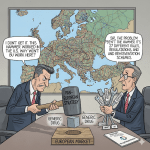
EU pharmaceutical price referencing is one of the most consequential and least understood dynamics in the European generic and biosimilar market. Thirty of the 38 OECD countries use some form of international reference pricing (IRP), in which the reimbursed price in one country is linked to or capped by prices in other countries [2]. The practical effect is that a price decision made to win a German tender will affect a client’s negotiated price in Austria, Belgium, and a dozen other markets within months of the German award.
Consultants who understand the IRP network, including which markets are reference countries for which, which countries update their reference prices quarterly vs. annually, and which therapeutic classes are subject to more or less strict referencing, provide a materially different caliber of advice than those who approach each national tender in isolation. The German statutory rebate contracts issued under Section 130a of the Social Code Book V are widely referenced across Central and Eastern Europe. A price point chosen to win a German GKV contract can undermine a client’s pricing in markets where they expected to hold a higher price for longer.
Vendors who build this IRP network expertise into their consulting offer, and who can model the cascading price effects of a specific bid price in a specific country, are worth significantly more per engagement than those who focus only on the immediate tender.
Regulatory Dossier Readiness and Biosimilar Considerations
For biosimilar manufacturers in particular, EU market access consulting must include a regulatory dimension that small-molecule generic consulting does not require. The biosimilar approval pathway through the EMA requires demonstration of biosimilarity via a comprehensive comparability exercise. The extrapolation of indications, the interchangeability designation that varies by EU member state, and the substitution policies that determine whether a pharmacist can switch a patient from originator to biosimilar without physician intervention all affect the competitive dynamics of a biosimilar tender.
In Germany, substitution of biosimilars is now permitted at the pharmacy level following changes to the GKV framework. In France, the substitution law for biosimilars was updated to allow it under specific conditions. In other EU markets, substitution remains restricted or clinically discouraged. These differences affect volume projections, peak market share assumptions, and therefore the pricing models that underpin tender bids.
Consulting vendors who understand the regulatory-commercial interface for biosimilars, and who can advise clients on how regulatory status affects tender competitiveness in specific countries, have a clear differentiation from generalist market access advisors.
Differentiating Your Consulting Offer in a Crowded Market
The Data-Led Pitch vs. the Relationship-Led Pitch
Two business development models dominate EU pharma consulting: the relationship-led firm, which wins work through personal networks cultivated over years at pharma companies or regulatory bodies, and the data-led firm, which wins work by demonstrating analytical capability before a proposal is even submitted.
Both models work, but they are vulnerable in different ways. The relationship-led firm is exposed when its key relationship holders leave, retire, or shift to non-relevant roles. The data-led firm struggles to build the trust required for high-sensitivity work like pricing strategy or competitive intelligence. The most resilient consulting businesses combine both: they use data to open doors and demonstrate competence, then build the relationships that create retention.
For vendors who are newer to the EU market or who lack the deep personal networks of established players, the data-led approach is the more accessible entry point. A pitch built around a specific molecule’s LOE timeline, a country-by-country analysis of tender mechanisms, and a clear model of where the competitive price point is likely to land demonstrates more credibility than a firm biography and a list of past clients. DrugPatentWatch data, combined with public tender award databases and published HTA outcomes, gives you the raw material for that kind of pitch.
Framing ROI for Manufacturer Market Access Teams
Hospital procurement directors are not your primary client for EU tender strategy consulting. The primary clients are manufacturers. But hospital procurement directors are the end users whose behavior your consulting work is designed to influence, and understanding their decision logic is what makes the manufacturer-facing advice credible.
A hospital procurement director managing a large oncology budget cares about two things: clinical outcome equivalence and total cost of care. They will not switch from an originator biologic to a biosimilar purely on price if there is clinical uncertainty, even if the price difference is substantial. They will switch if clinical equivalence is established, if the switching protocol is clear, and if the administrative burden of the transition is manageable. The consulting work that helps a biosimilar manufacturer win hospital formulary adoption addresses all of those concerns, not just the bid price.
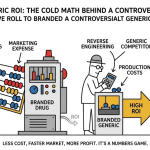
When you pitch your services to a biosimilar manufacturer, frame the ROI around volume as well as price. A consulting engagement that results in a EUR 10 lower price per unit to win a tender is not necessarily good advice if it costs 30 percent market share because the hospital formulary committee was not adequately engaged. The full value of the engagement is realized when the client wins the tender and achieves the volume projection, and that requires work across all four stakeholder groups.
Case Studies That Close Deals
In EU pharma consulting, case studies are the primary tool for converting a prospect who is interested into a prospect who is ready to engage. The most persuasive case studies are specific, quantified, and recent. A case study that describes how your firm helped a biosimilar manufacturer achieve preferred medicine status in the Netherlands, with a specific market share figure and a specific timeline, closes deals. A case study that describes how your firm ‘supported a major manufacturer in navigating the European market access landscape’ does not.
Build your case study library around the specific deliverables you produced, the client outcome those deliverables contributed to, and the timeline of the engagement relative to the LOE date. If you helped a client prepare their AMNOG dossier 22 months before their SPC expiry in Germany, and the client achieved a GKV rebate contract covering 40 percent of the market within six months of LOE, that is a case study that a competitor’s market access director will find compelling.
Country-by-Country Tender Strategy: Five Markets in Depth
Germany: AMNOG, GKV Rebate Contracts, and the Tender Timeline
Germany is the largest pharmaceutical market in the EU by value. For off-patent biologics and small molecules, the primary procurement mechanism is the GKV statutory rebate contract (Rabattvertrag) under Section 130a SGB V. These contracts are issued by individual health insurance funds (Krankenkassen) or groups of funds acting through purchasing cooperatives, and they grant an exclusive or preferred position in the market for a defined contract period in exchange for a price rebate below the GKV reference price.
The AMNOG process applies to new molecules entering the market after 2011, but its interaction with biosimilar pricing is significant: the negotiated price for the originator biologic in AMNOG sets a reference point against which biosimilar entrants price. Biosimilar manufacturers who understand the AMNOG file for the originator, including the benefit assessment outcome, the negotiated price, and the therapeutic positioning, are better equipped to model the price space in which they need to bid.
German GKV rebate contract tenders typically run on two-year cycles. The tender calendar is not centrally published, but procurement notices appear in the Official Journal of the EU (TED) database and in the DVSV procurement portal. Vendors who monitor these portals systematically and correlate tender openings with LOE dates can identify client opportunities months ahead of the formal market. A manufacturer whose GKV tender window opens 18 months post-LOE needs consulting support starting now, not when the procurement notice appears.
France: CEPS Negotiations and the Generic Entry Price Trigger
France is the second-largest EU pharmaceutical market and one of the most heavily regulated for pricing and reimbursement. The Economic Committee for Health Products (CEPS) negotiates prices for reimbursed medicines, and the pricing framework for generics and biosimilars is set by ministerial convention with the generic industry.
When the first generic of a molecule enters the French market, the originator’s reimbursement price is cut by 20 percent, and then by a further 12.5 percent six months later. The generic enters at a price at least 60 percent below the original tariff. These price cuts are automatic and are applied regardless of the originator’s commercial response. Biosimilar pricing in France follows a similar but distinct path, with required price reductions applied through the liste en sus for hospital products.
The consulting work that has the highest value in France is not the bid preparation itself, which is relatively formulaic, but the pre-launch market positioning work: developing the pharmacoeconomic evidence base, engaging CEPS early with health economic arguments, and working with hospital pharmacy associations to establish clinical comfort with biosimilar substitution before the first tender opens.
Spain: Autonomous Community Variation and National Reference Pricing
Spain’s pharmaceutical market reflects the tension between national price regulation and regional procurement autonomy. The Ministry of Health sets the reimbursed retail price for all medicines through the national price commission, but hospital procurement is the responsibility of each of the 17 autonomous communities, which issue their own tenders through regional central purchasing bodies.
The result is a market where a manufacturer can hold a national reference price designation but still needs to compete in 17 separate regional tenders to access the hospital volume. The most efficient approach to the Spanish market is to identify the four or five largest autonomous communities by volume for a given therapeutic class and focus tender strategy consulting resources on those regions while using national reference pricing compliance as the baseline for the remaining communities. Catalonia, Madrid, Andalusia, and Valencia typically account for the majority of hospital pharmaceutical spending.
Consultants who map the Spanish regional procurement calendar for a specific molecule, identifying which communities are in active tender processes and when the next framework agreement renewal is due in each, provide a level of operational value that generic market access advice cannot match.
Italy: AIFA, Regional Procurement, and the Payback Mechanism
Italy’s pharmaceutical market is managed at two levels: national reimbursement and pricing through AIFA (the Italian Medicines Agency) and regional procurement through the regional health services and their purchasing bodies. AIFA sets the reference price and the reimbursement classification for all medicines. Regional procurement bodies then issue tenders for hospital volumes within the AIFA-approved price framework.
One distinctive feature of the Italian system is the payback mechanism, through which manufacturers whose products exceed the regional pharmaceutical expenditure cap are required to pay back a proportion of their revenues to the regional health system. This mechanism creates a real financial incentive for manufacturers to calibrate their pricing and volume projections carefully. A biosimilar manufacturer who wins a large Italian regional tender at an aggressively low price may find that the volume they generate triggers a payback obligation that erodes the margin benefit of the price reduction.
Consulting vendors who understand the Italian payback mechanism and who can model its financial impact on a client’s P&L alongside the tender bid price provide a commercially sophisticated service that is genuinely rare in the market.
The Netherlands: ZIN Preferred Medicine Policies and Insurer Competition
The Dutch pharmaceutical market operates through a combination of ZIN (Zorginstituut Nederland) health technology assessments and the competitive formulary negotiations between insurance companies. The preferred medicine designation, under which an insurance company designates one product in a therapeutic class as the preferred option for new patients, is the primary lever for driving market share in the Netherlands.
For generic and biosimilar manufacturers, achieving preferred medicine status with a major Dutch insurer is effectively winning the Dutch tender. The insurer’s preferred medicine decision is based on price, supply chain reliability, and the clinical evidence base for the product, including real-world evidence from the Dutch market where available.
The Netherlands is one of the EU markets where biosimilar adoption has been highest, driven by active policy support from ZIN, the insurance companies, and hospital pharmacy associations. Manufacturers entering the Dutch market with a biosimilar should be engaging preferred medicine negotiations 12 to 18 months before their target launch date. Consultants who have established relationships with the insurance company formulary teams and who understand the preferred medicine process from the inside can materially shorten this timeline.
Integrating LOE Intelligence Into Your CRM and Outreach
Building LOE-Triggered Outreach Sequences
The operational challenge for most consulting vendors is not identifying that LOE dates matter, but building the systems that translate LOE data into timely, relevant client outreach. The vendors who solve this problem build a compounding business development advantage that is difficult for competitors to replicate.
The core system is straightforward. You maintain a live database of molecules, organized by LOE date, EU country, and current originator market share. This database is sourced from DrugPatentWatch and supplemented with public tender award data and competitive intelligence from conference presentations and published pipeline reports. You set up alerts for molecules entering the 18-to-24-month LOE window in your priority therapeutic areas. Those alerts trigger a review of your existing client relationships and your prospect list for manufacturers with exposure to that molecule.
The outreach sequence for a newly prioritized prospect starts with a molecule-specific, country-specific brief: two pages that show the LOE timeline, the expected tender mechanism in each target country, the likely competitive landscape, and the key strategic questions the manufacturer needs to answer. That brief is your business development calling card. It demonstrates that you have done the work before you ask for a meeting, and it creates a reason for the prospect to engage that is specific to their situation rather than generic to your service offering.
Content Marketing That Attracts Biopharma Buyers
The most efficient channel for building awareness among EU biopharma market access professionals is publishing. Not general brand content, but specific, actionable analysis of upcoming LOE events and their procurement implications in specific EU markets. A four-page analysis of the tender mechanics for a blockbuster biologic approaching its German SPC expiry will attract exactly the audience that needs EU tender strategy consulting: the market access directors and business development leads at the manufacturers who are preparing for that launch.
This content does not need to be comprehensive. It needs to be accurate, specific, and useful to someone who is currently managing that problem. A brief that accurately models the German GKV rebate tender timeline for a specific molecule, using publicly available LOE data from DrugPatentWatch and procurement award data from TED, has more business development value than a white paper on biosimilar market access trends in Europe. The former attracts a prospect who is ready to buy. The latter attracts a prospect who is still learning.
The Compliance Minefield: Anti-Corruption and Tender Integrity
EFPIA Codes and National Transparency Requirements
EU pharmaceutical tender markets operate within a strict legal and ethical framework. The EFPIA Code of Practice governs the relationships between pharma manufacturers and healthcare professionals and institutions. National-level anti-corruption laws, including the UK Bribery Act for UK-headquartered consultants operating in EU markets, the French Sapin II law, and Germany’s anti-corruption provisions in the healthcare sector, set out criminal liability for payments or benefits that influence procurement decisions.
For consulting vendors, the compliance risk sits in two areas: advisory work that edges from legitimate strategic consulting into facilitating inappropriate payments or advantages to procurement decision-makers, and the use of confidential procurement information from one client engagement to inform a competing client’s bid in the same tender.
Both risks are manageable with clear engagement structuring, but they require explicit attention. A consulting firm that advises both a hospital procurement body and a biosimilar manufacturer competing in that body’s tender has an obvious conflict of interest. Firms that work on both sides of the EU tender market need robust conflict-checking procedures and, in many cases, formal information barriers between practice teams.
Prior Involvement Rules and Tender Participation
EU public procurement law, governed by Directives 2014/24/EU and 2014/25/EU, includes provisions that restrict market participants from participating in a tender process if they have been involved in its preparation. This prior involvement rule can affect consulting vendors whose work on market analysis or specification development for a procurement body later puts them in conflict when a manufacturer client wants to bid in the same tender.
This rule is not absolute, and its application varies by country, but vendors who provide consulting services to both procurement bodies and manufacturers in the same therapeutic area and geographic market need legal advice on how to structure their engagements to avoid disqualifying their manufacturer clients from tenders they want to win. This is not a theoretical risk. It has resulted in tender disqualifications in Germany and the Netherlands in recent years.
Key Takeaways
LOE dates are your sales calendar. The 18-to-24-month window before a patent cliff is where the highest-value consulting relationships are built and won.
EU pharmaceutical procurement is national, not European. Germany, France, Spain, Italy, and the Netherlands each have distinct mechanisms, timelines, and stakeholder dynamics that require country-specific expertise.
Data-led business development outperforms relationship-only models for vendors without deep personal networks. Patent intelligence from DrugPatentWatch, combined with public tender award data, gives you the raw material for a credible, specific pitch.
IRP network expertise is a genuine differentiator. Consultants who can model the cascading price effects of a tender bid across reference-pricing-linked EU markets deliver materially different value than those who optimize individual national tenders in isolation.
Compliance is not optional. EFPIA codes, national anti-corruption laws, and EU procurement prior involvement rules create real exposure for vendors who do not structure their engagements carefully.
The highest-margin consulting engagements are strategic, not executional. Arrive 18 months before the tender opens, not six weeks before the submission deadline.
Frequently Asked Questions
1. How do I identify which EU countries to target first when a molecule approaches LOE?
Start with market size: the countries with the highest current revenue for the molecule are the ones where tender strategy consulting has the most commercial value for your client. Cross-reference that against procurement mechanism, since countries with competitive tender processes (Germany, the Netherlands) create more consulting work than countries where prices are simply set by regulation. Then check LOE timing by country, since SPC expiry dates vary across EU member states. A molecule may lose exclusivity in Germany 12 months before it loses exclusivity in France. That sequence defines your consulting engagement timeline.
2. What is the difference between SPC expiry and data exclusivity, and why does it matter for tender timing?
An SPC (Supplementary Protection Certificate) extends the core composition-of-matter patent by up to five years, compensating for time spent in regulatory review. Data exclusivity, the EU’s 8+2+1 framework, prevents a generic or biosimilar from relying on the originator’s regulatory data for a defined period regardless of patent status. A generic manufacturer can receive marketing authorization after data exclusivity expires even if an SPC is still running, but they cannot commercially launch until the SPC expires. Tender preparation, however, can begin well before commercial launch. Understanding both timelines allows you to advise clients on when to start their tender preparation, which is typically determined by the SPC date.
3. How should a consulting vendor handle the conflict between advising a procurement body and advising a manufacturer competing in the same tender?
Do not do both without legal advice and formal information barriers. EU procurement law’s prior involvement rule can disqualify a manufacturer from a tender if their consultant was involved in preparing the tender specification. Most EU procurements now explicitly ask bidders to declare any prior involvement of their advisors. Firms that work on both sides of the market need a deliberate policy on which clients to take in a given therapeutic area and country market, backed by written conflict-of-interest procedures and team segregation.
4. Can small consulting firms without a large EU presence compete against global market access advisories for EU tender strategy work?
Yes, on specific molecules and specific country markets. The global advisories have breadth but often lack depth in specific national procurement systems that a focused boutique can offer. A consulting firm that has deep expertise in the German GKV rebate contract mechanism, built through several completed engagements and proprietary analysis of contract award data, can compete against a global firm’s Germany practice on most mandates. The key is to be specific about where your expertise is concentrated and to demonstrate that specificity in your business development materials. A pitch that specifies six completed GKV rebate contract engagements in three years is more credible than one that claims pan-European capability without evidence.
5. How do price referencing linkages between EU countries affect the advice I should give a client on their German tender bid price?
Significantly. Approximately 25 EU and EEA countries include Germany as a reference country in their IRP frameworks, meaning that a low price awarded in a German GKV rebate contract will appear in the reference price basket used to cap reimbursement in those countries within a defined period, typically six to 12 months. The practical advice is to model the P&L impact of your proposed German bid price across all markets that reference Germany before recommending it to a client. A German market share gain that comes at the cost of a double-digit price reduction across Central and Eastern Europe may be value-destructive on a portfolio basis even if it looks attractive at the German level. This cross-market modeling is the kind of analysis that earns repeat engagements.
Citations
[1] European Biosimilars Group. (2024). Policy Outlook 2024: Biosimilar Savings and Market Dynamics in Europe. European Biosimilars Group.
[2] OECD. (2023). Pharmaceutical pricing and reimbursement policies. In Health at a Glance 2023 (pp. 142-158). OECD Publishing. https://doi.org/10.1787/7a7afb35-en
Patent expiry and market exclusivity data referenced in this article is available via DrugPatentWatch (www.drugpatentwatch.com), the industry-standard database for pharmaceutical patent intelligence. LOE date verification is recommended directly through that platform before making client-facing commercial decisions.