Business Intelligence on Biologic and Small Molecule Drugs
Sell to the Drug Patent Cliff: How Biopharma Packaging Companies Win Deals by Tying Serialization and Anti-Counterfeit Solutions to Drug Patent Loss of Exclusivity
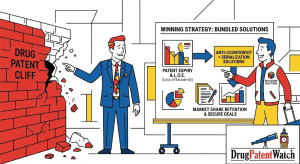
Every drug patent that expires is a commercial event for at least a dozen industries. For generic manufacturers, it is the starting gun. For brand pharmaceutical companies, it is a scramble to protect revenue. For biopharma packaging companies that sell serialization and anti-counterfeit solutions, it is the single best moment to open a sales conversation, and most business development teams are not using it.
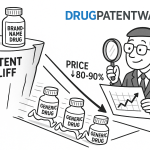
Loss of exclusivity (LOE) describes the point when a drug’s patent protection, regulatory data exclusivity, or both expire, allowing generic or biosimilar competitors to enter the market. Between 2024 and 2030, drugs generating more than $200 billion in combined annual brand revenue face LOE in the United States alone [1]. Each of those transitions creates pressure on brand owners to defend their products from counterfeiting, diversion, and gray-market incursion. Each creates pressure on generic entrants to meet the Drug Supply Chain Security Act (DSCSA) serialization requirements that govern market entry. Packaging companies that understand this dynamic close deals earlier, at better margins, and with longer contract durations than those that sell on specification sheets alone.
This guide is for business development professionals and commercial teams at contract packaging organizations (CPOs), primary and secondary packaging suppliers, and serialization technology vendors selling into the pharmaceutical sector. It shows you how to read the patent landscape, match your solution portfolio to the LOE event cycle, and structure conversations that reach the right buyer at the right time.
What LOE Actually Means, and Why It Drives Packaging Decisions
The Mechanics of Patent Expiry
A branded drug can hold multiple patent types simultaneously: composition-of-matter patents on the active pharmaceutical ingredient (API), formulation patents on how the drug is delivered, process patents on manufacturing methods, and method-of-use patents covering specific treatment indications. The Hatch-Waxman Act in the United States created a framework that lists these patents in the Orange Book, establishes a 30-month stay on generic approval when brand holders file patent challenges, and grants first-filer exclusivity to the first generic applicant that successfully challenges a patent [2].
The practical effect is that LOE does not happen on a single day. It unfolds over months or years as individual patents expire or are invalidated. Brand holders often extend their revenue window through authorized generics, new formulations, or abuse-deterrent packaging strategies. Generic manufacturers time their ANDA filings carefully to position for market entry the moment exclusivity breaks. All of this creates a predictable, research-able calendar of commercial transitions.
DrugPatentWatch, a patent intelligence platform used by pharmaceutical and financial professionals, tracks this calendar in granular detail. It maps individual patent expiry dates, regulatory exclusivity windows, ANDA filings, and paragraph IV challenges by drug, allowing analysts and commercial teams to model LOE timelines years in advance [3]. For a packaging company’s business development team, it is the closest thing to a qualified lead list built from public data.
What Changes in Packaging When LOE Arrives
Before LOE, the brand pharmaceutical manufacturer controls the entire supply chain. They dictate packaging specifications, serialization systems, and authentication features. The commercial incentive to invest in anti-counterfeit packaging is real but often diffuse, because the brand’s distribution network is tight and counterfeiting risk is managed through channel exclusivity.
LOE changes that calculus in four distinct ways. First, the drug enters distribution channels it never occupied before: retail pharmacy, mail-order generics, international gray markets, and wholesale distribution paths that carry substantially higher counterfeit risk. Second, the appearance of multiple generic versions creates consumer confusion that bad actors exploit by packaging counterfeit drugs in packaging that mimics the appearance of both branded and generic products. Third, brand holders who pursue a brand retention strategy must now compete on visible differentiation that generic packaging cannot easily replicate. Fourth, every generic manufacturer entering the market must comply with DSCSA serialization requirements as a condition of market access.
Each of these four pressures is a commercial opportunity for a packaging company that can articulate its solution in those terms.
The Regulatory Mandate That Creates Your Opening
DSCSA: The Floor, Not the Ceiling
The Drug Supply Chain Security Act, signed into law in 2013 and fully phased in through a series of enforcement milestones, requires that every prescription drug product sold in the United States carry a unique product identifier (UPI) on its packaging [4]. That identifier includes the National Drug Code (NDC), a serial number, a lot number, and an expiration date encoded as a 2D Data Matrix barcode. The law requires manufacturers, repackagers, wholesale distributors, and dispensers to exchange transaction data electronically, creating an auditable chain of custody from manufacturer to patient.
The November 2023 enforcement deadline for lot-level traceability under DSCSA represented the most significant supply chain compliance event in U.S. pharmaceutical history. FDA extended enforcement discretion through November 2024 for certain trading partner transactions, but the directional requirement is unambiguous: serialization is not optional for any drug sold in the United States [5].
For a business development conversation, DSCSA is your floor. It is the minimum a generic entrant must meet to be in the market, and it represents a mandatory capital expenditure that every new generic launch must plan for. It is the opening line of a compliance-framed sales pitch, but it should not be the closing argument. The closing argument is margin protection and brand premium, which is where anti-counterfeit technology lives.
EU FMD and the Global Compliance Stack
The European Falsified Medicines Directive (EU FMD), implemented through Commission Delegated Regulation (EU) 2016/161, requires all prescription drugs sold in the EU to carry a unique identifier and anti-tampering device. The identifier uses a 2D Data Matrix encoding a product code, serial number, batch number, and expiration date, authenticated against the European Medicines Verification System (EMVS) at the point of dispensing [6].
Most large generic manufacturers entering markets after LOE sell into both the U.S. and EU simultaneously, or sequence their launches closely. A packaging company that can deliver a compliant, integrated serialization system for both jurisdictions in a single contract has a structurally stronger value proposition than one that addresses only one market. The cross-jurisdictional pitch is one of the most defensible positions in the category because the integration cost of stitching together two vendor solutions is real and quantifiable.
Brazil’s SNCM system, China’s drug traceability code requirements, and Saudi Arabia’s Track and Trace system round out the major regulatory frameworks a global generic launch must address. BD teams that map their solution to each of these regulatory requirements, and present that map as a compliance calendar tied to the target drug’s LOE timeline, compress the buyer’s decision-making process substantially.
The Anti-Counterfeit Technology Portfolio: What You Are Selling
Overt Features: The First Line of Consumer Defense
Overt anti-counterfeit features are visible to any person holding the package without special equipment. They include holographic labels, color-shifting inks, tamper-evident seals, security printing patterns, and specialty substrates that are difficult to reproduce at commercial scale. Their commercial value is direct: they make counterfeiting more expensive and technically demanding, and they give patients and pharmacists a visible signal to authenticate.
In a post-LOE environment, overt features carry an additional function. A brand holder executing a brand-retention strategy can use overt authentication features to differentiate the branded product from authorized generics and counterfeit generics simultaneously. A well-designed holographic label or a tamper-evident closure that carries the brand identity does three things at once: it authenticates, it signals quality, and it creates a visual anchor for brand loyalty in a market newly flooded with alternative packaging.
The critical sales error most packaging companies make is presenting overt features as a cost line item rather than as a revenue-protection asset. The correct framing for a brand pharma buyer facing LOE is: the cost of adding an anti-counterfeit hologram to your packaging is a fraction of the revenue you lose when patients switch to a generic because they cannot tell the difference between your product and a counterfeit.
Covert Features: The Enforcement Layer
Covert authentication features are invisible or non-obvious to the naked eye and require specialized equipment, reagents, or knowledge to verify. They include taggants embedded in substrates or inks, forensic markers, UV-reactive inks, microtext, and cryptographic watermarks readable only by authenticated devices. Their primary audience is not the patient but the brand’s supply chain enforcement team, customs agencies, and law enforcement.
Covert features are especially valuable in markets where over-the-counter authentication by patients or pharmacists is unrealistic, or where the counterfeiting operation is sophisticated enough to replicate overt features. The 2017 WHO report on substandard and falsified medical products estimated that 1 in 10 medical products in low- and middle-income countries was either substandard or falsified, with anti-infectives and antimalarials most commonly targeted [7]. High-volume generic drugs entering those markets after LOE carry exactly this risk profile.
For a packaging company’s BD team, covert features present a recurring revenue model that overt features alone do not. Authentication reagents, reader device maintenance contracts, and forensic testing services generate annuity revenue tied to the volume of product in market, not just to the packaging production run. Structuring a contract that bundles covert feature implementation with a multi-year authentication service agreement materially changes the lifetime value of each deal.
Digital and Serialized Authentication
The fastest-growing segment of pharmaceutical anti-counterfeit packaging is digital authentication tied to the serialization code already required for DSCSA compliance. Rather than treating the 2D Data Matrix barcode as a pure regulatory compliance tool, advanced solutions use the serialized identifier as the entry point for a consumer-facing authentication experience. The patient scans the code, the system checks it against an authenticated database of issued serial numbers, and returns a confirmation or a flag.
Companies like Systech International, Authentix, and Covectra have built verification platforms that layer on top of existing serialization infrastructure [8]. For a packaging company selling serialization hardware or software to a generic manufacturer, the ability to offer or partner on a digital authentication layer converts a compliance sale into an ongoing supply chain intelligence relationship. The data generated by consumer scans, pharmacy verifications, and distributor checks creates a real-time visibility map of where the product is moving, which serial numbers are being reused, and where counterfeits may be entering the channel.
“The global pharmaceutical anti-counterfeiting market was valued at $4.1 billion in 2023 and is projected to reach $9.4 billion by 2032, expanding at a CAGR of 9.8%.” — Global Market Insights, Pharmaceutical Anti-Counterfeiting Market Report, 2024 [9]
Building the BD Strategy Around the LOE Calendar
How to Read the Patent Landscape
The first practical step for a pharmaceutical packaging BD team is building a rolling 36-month watch list of LOE events for high-revenue drugs. The data to build this list is publicly available. The FDA Orange Book publishes patent expiration dates for all listed drugs. The ANDA filing tracker on the FDA website shows which generic manufacturers have filed for approval of specific products. PTAB (Patent Trial and Appeal Board) decisions show which patents are under challenge.
DrugPatentWatch synthesizes this information into searchable, sortable databases that allow commercial teams to filter by therapy area, revenue tier, and time-to-LOE [3]. A packaging company focused on oncology injectables, for example, can pull a list of every cancer drug facing LOE in the next 24 months, identify the top-five generic filers for each, and begin building a target account list with more specificity than any conference attendance list provides.
The screening criteria that matter most for a serialization and anti-counterfeit packaging sale are four in number: annual branded revenue above $500 million (because the serialization investment is easier to justify), presence of complex dosage forms (injectables, inhalers, and patches require more sophisticated packaging and command higher margins), existing multi-market distribution (indicating multi-jurisdiction serialization need), and three or more ANDA filers (meaning competition among generics will be intense, creating a window to differentiate on packaging quality and compliance infrastructure).
Timing the Conversation: 24, 12, and 6 Months Out
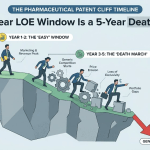
LOE-driven packaging decisions do not happen in a single meeting. They follow a procurement timeline that starts 18 to 24 months before commercial launch. A BD team that initiates contact only when a drug is 6 months from LOE is entering a process that has already been substantially decided.
At 24 months before LOE, the brand pharmaceutical company is making decisions about whether to launch an authorized generic, re-brand the product, or invest in packaging differentiation to retain market share. This is when the anti-counterfeit conversation with the brand holder is most productive. The buyer is in strategic planning mode, not procurement mode, and the conversation can happen at VP or Chief Commercial Officer level.
At 12 to 18 months before LOE, the generic manufacturer is finalizing its packaging supplier selection as part of the ANDA approval and commercial launch preparation process. The serialization compliance requirement is real and pressing; the timeline risk is a credible sales lever. A packaging company that has already been in conversation with the brand holder sometimes finds itself in the room with the generic manufacturer through the same channel, because brand holders occasionally retain a serialization technology partner and require their authorized generic licensee to use compatible infrastructure.
At 6 months before LOE, the decisions are largely locked. A BD team entering at this stage is likely competing on price for a commodity component of a procurement already under contract elsewhere. The commercial leverage has evaporated. This is the stage you want to avoid.
Using Intelligence Platforms to Prioritize Accounts
The systematic use of patent intelligence to prioritize BD outreach is still not common practice among packaging sales teams, which creates an advantage for those who adopt it. Beyond DrugPatentWatch, BD teams can layer in data from IQVIA or EVERSANA for revenue estimates on specific drug products, Bloomberg Law or Docket Navigator for patent litigation status, and FDA ANDA filings for generic filer identification [10]. The combination gives a BD professional the ability to walk into an initial account meeting having already mapped the buyer’s LOE exposure, identified the regulatory requirements they must meet, and modeled a rough cost structure for a compliant packaging solution.
This level of preparation is rare in B2B packaging sales and almost invariably shifts the dynamic of the first meeting. Instead of presenting a capabilities deck, the BD professional opens with: “We pulled the Orange Book data on your top five products by revenue, and you have $1.4 billion of annual sales facing LOE by Q3 2027. Here is what a serialization-first packaging transition looks like for each of those.” That is not a vendor pitch. That is a strategic conversation.
Two Buyers, Two Value Propositions
The Brand Pharmaceutical Manufacturer
A brand pharmaceutical company facing LOE is not primarily worried about serialization compliance. Their legal and regulatory teams own that. They are worried about revenue erosion, brand dilution, and the risk that counterfeits packaged to look like their product reach patients and generate both clinical harm and brand liability.
The value proposition for this buyer is brand defense. Anti-counterfeit packaging extends the defensible perimeter of the brand into a market that is about to become dramatically more hostile. The conversation should be anchored to three financial frames: the cost of a counterfeit incident after LOE in terms of product liability, regulatory enforcement, and brand damage; the revenue premium captured by patients and payers who can authenticate the branded product; and the cost of the packaging upgrade relative to the margin on a product that, even at reduced volume after LOE, still generates hundreds of millions of dollars annually.
Brand pharma buyers also respond to competitive precedent. If a competitor’s LOE product adopted a specific authentication technology and retained a measurably higher brand share post-LOE, that is a case study with direct relevance to their decision. The packaging company that can cite that precedent, with data, wins attention that catalog specs cannot reach.
The Generic Manufacturer
The generic manufacturer’s primary concern is speed to market, regulatory compliance, and unit cost. They are not building brand equity; they are capturing market share in a commodity competition where the first compliant product at the lowest price wins the pharmacy contract. That does not mean they are uninterested in anti-counterfeit features. It means the framing must change.
For a generic manufacturer, anti-counterfeit packaging is a market access feature in two respects. In regulated markets, some drug procurement programs, particularly in emerging markets and government health systems, require authentication features as a condition of tender award. A generic manufacturer without authentication-capable packaging is excluded from those tenders. In competitive markets, a generic that can demonstrate supply chain integrity to a large pharmacy chain or pharmacy benefit manager differentiates itself from other filers on a dimension that is not purely price.
The serialization compliance sale to a generic manufacturer should be positioned around launch timeline risk. DSCSA compliance is not a nice-to-have; failure to meet it blocks market entry. A packaging company that can demonstrate validated, FDA-compliant serialization capabilities with a track record of on-time launch support is selling insurance against the most expensive outcome in the generic pharmaceutical business: being ready to launch and having a compliance deficiency that delays your market entry while a competitor captures the pharmacy contracts.
Building the Commercial Offer
The Total Cost of Ownership Argument
Pharmaceutical packaging procurement decisions are often driven by unit cost comparisons that systematically undercount the real cost of a serialization or authentication implementation. A packaging company that wants to win on value rather than on price should build a total cost of ownership (TCO) model that makes the comparison explicit.
TCO for pharmaceutical serialization includes packaging component costs, but it also includes serialization system integration costs, validation costs (IQ/OQ/PQ for each line), regulatory filing costs, serialization software licensing, exception management costs (for serial number exceptions and decommissioning events), and the cost of remediation if a compliance deficiency is identified after launch [11]. A low-cost per-unit quote from a packaging vendor without integrated serialization capabilities typically requires the buyer to source and integrate a separate serialization platform, which adds $500,000 to $2 million in implementation cost for a new product line.
A packaging company that delivers integrated serialization, meaning the hardware, software, and regulatory documentation are part of the packaging contract, can justify a higher per-unit price by making the total implementation cost lower, faster, and less risky. The TCO model is the commercial tool that makes that argument concrete.
Structuring Deals That Last Beyond the Launch
The highest-margin packaging contracts in the pharmaceutical sector are those structured as multi-year supply agreements with volume commitments, not those won as one-time launch contracts. The LOE cycle creates a natural opportunity to structure longer deals because the buyer’s commitment to a specific drug’s commercial trajectory is itself multi-year.
For brand pharmaceutical companies, a 3-to-5-year anti-counterfeit packaging agreement covering the post-LOE period locks in revenue for the packaging company and gives the brand holder the certainty of a consistent authentication specification across multiple markets. For generic manufacturers, a supply agreement that covers the first three years of post-LOE commercial production captures the period of maximum volume, before market saturation reduces unit volumes.
The addition of anti-counterfeit authentication services, rather than just packaging components, creates the recurring revenue stream that makes the contract economics most compelling. A covert taggant program, a serialization exception management service, or a consumer authentication platform all generate revenue per unit dispensed, per authentication event, or per year of service. That revenue model compounds as the product scales in the market.
Case Studies: What Good Looks Like
Case Study 1: Humira’s LOE and the Biosimilar Packaging Race
AbbVie’s Humira (adalimumab) faced biosimilar competition in the United States beginning in January 2023, following years of patent settlements that had protected its exclusivity beyond the core composition-of-matter patent expiry. With $21.2 billion in 2022 U.S. revenue at stake, it became the largest LOE event in pharmaceutical history [12].
The Humira LOE created an unusually large packaging market. More than 10 biosimilar entrants each required distinct packaging with serialization compliance, FDA-required labeling differentiating their product from both AbbVie’s Humira and each other’s biosimilars, and, in several cases, auto-injector device packaging with device-specific authentication features. Packaging companies and device manufacturers that had built relationships with biosimilar filers during the ANDA and BLA preparation period, beginning in 2020 and 2021, were well-positioned for launch contracts. Those that entered conversations in late 2022 competed primarily on price for commodity secondary packaging components.
AbbVie, for its part, invested in enhanced packaging for its branded Humira program, including the Humira Citrate-Free formulation, which used differentiated packaging and device aesthetics to retain patients who preferred the brand product. The packaging differentiation was part of a commercial strategy that retained a meaningful portion of the market even after biosimilar entry, according to AbbVie’s investor communications [13].
Case Study 2: Revlimid and the Serialization Compliance Window
Bristol Myers Squibb’s Revlimid (lenalidomide) faced generic entry beginning in March 2022 under a negotiated settlement with generic filers. The product had additional complexity: as a thalidomide derivative, lenalidomide is subject to a restricted distribution program (REMS) under FDA oversight, requiring specialized packaging, authentication, and documentation that goes well beyond standard DSCSA serialization [14].
Generic manufacturers approved for lenalidomide entry had to implement REMS-compliant packaging that met both DSCSA serialization requirements and the specific dispensing and authentication requirements of the lenalidomide REMS program. Packaging companies with experience in REMS-compliant packaging, including unit-of-use packaging with patient-specific dispensing labels and authentication features compatible with the REMS registry system, commanded a significant premium over standard secondary packaging suppliers.
The commercial lesson is that the combination of LOE, DSCSA compliance, and specialized regulatory programs like REMS creates a packaging complexity premium that rewards specialized vendors. BD teams that identify drugs with multiple regulatory layers in advance, and build the technical capability to address them, find fewer competitors in the room when the RFP goes out.
A 90-Day BD Implementation Roadmap
Weeks 1 Through 4: Build the Intelligence Foundation
The first month is about building a qualified target account list from patent and regulatory data. Pull the FDA Orange Book and filter for brand drugs with U.S. revenues exceeding $300 million and LOE timelines in the next 36 months. Cross-reference with DrugPatentWatch to validate patent expiry dates and identify any paragraph IV challenges that could accelerate the LOE timeline. Pull the ANDA tracker to identify which generic manufacturers have filed for each product.
The output is a tiered target list. Tier 1 accounts are brand holders with more than $1 billion in annual revenue facing LOE in 12 to 24 months. Tier 2 accounts are generic manufacturers with confirmed ANDA filings for those same drugs. For each account, map the primary contacts in regulatory affairs, commercial operations, and supply chain packaging procurement. LinkedIn Sales Navigator and commercial intelligence platforms like ZoomInfo or Definitive Healthcare can provide contact-level data to complement the patent intelligence.
Weeks 5 Through 8: Build the Account-Specific Value Case
For each Tier 1 account, build a one-page LOE impact summary that models their revenue exposure and maps your serialization and authentication solution to their specific LOE timeline and regulatory requirements. Include the multi-market serialization stack if they have EU or emerging market distribution. Include a rough TCO comparison between an integrated packaging solution and a fragmented vendor approach.
For Tier 2 accounts, build a DSCSA compliance timeline showing the specific milestones they must meet from ANDA approval through commercial launch, and map your product capabilities to each milestone. Generic manufacturers respond well to reference customers and validated performance data; include line speeds, exception rates, and time-to-compliance documentation from comparable product launches you have supported.
Weeks 9 Through 12: Initiate Conversations and Qualify
Initial outreach to Tier 1 brand pharma accounts should target VP-level commercial or supply chain leadership, not packaging procurement managers. The LOE-framed conversation is strategic, and it needs an audience with P&L accountability. A cold outreach that opens with a reference to the specific drug’s LOE timeline and quantifies the revenue exposure demonstrates research that procurement managers and VPs alike find uncommon and credible.
For Tier 2 generic accounts, the appropriate entry point is regulatory affairs or supply chain operations, because the serialization compliance requirement is their most immediate pain point. An outreach that leads with DSCSA compliance capability, validated line speeds, and reference to the target drug’s expected approval timeline gets traction because it is directly relevant to a deadline they are already managing.
Qualify both account types against four criteria: budget authority identified, serialization decision timeline confirmed, technical fit between your capabilities and their packaging format, and willingness to consider a multi-year supply agreement. Accounts that pass all four move to formal proposal stage. Those that do not are moved to a nurture track with regular LOE intelligence updates to maintain the relationship until the timing aligns.
Pricing Strategy and Commercial Models
Tiered Pricing Tied to Regulatory Complexity
The strongest pricing architecture for serialization and anti-counterfeit packaging ties price to the number of regulatory jurisdictions the solution must address and to the complexity of the authentication technology deployed. A single-market DSCSA-compliant serialization solution for a standard solid oral dosage form occupies the lower end of the pricing range. A multi-market solution covering the U.S., EU, and two or more emerging market track-and-trace requirements, with integrated covert authentication and a digital consumer verification platform, occupies a substantially higher range and is defensible on TCO grounds.
Per-unit pricing for serialization packaging ranges from $0.02 to $0.15 for standard secondary packaging with 2D Data Matrix labeling, depending on volume, format, and system complexity [15]. Authentication features including holographic labels add $0.05 to $0.25 per unit. Covert taggant programs, depending on the technology and authentication service commitment, are typically priced as a combination of per-unit material cost and an annual service fee for the authentication platform.
The Service Agreement as a Margin Expansion Tool
The highest-margin revenue in pharmaceutical packaging is not the packaging component; it is the service agreement attached to it. Authentication service agreements, serialization exception management contracts, and regulatory compliance support retainers all generate recurring revenue at margins substantially higher than hardware and substrate manufacturing.
A packaging company that sells a brand pharmaceutical client a three-year authentication service agreement for a post-LOE product is building an annuity that scales with product volume, requires no capital investment beyond the initial platform setup, and generates customer retention that is structurally difficult for a competitor to displace mid-contract. The customer cannot switch authentication service providers mid-deployment without reprinting packaging, re-registering with the EMVS, and revalidating their serialization system, all of which are expensive and time-consuming.
Handling the Four Objections You Will Always Face
“We already have a serialization vendor.”
This objection is an opening, not a door close. The question to ask is: “Is your current vendor integrated with your packaging production line, or are you managing serialization as a separate system?” Most pharmaceutical manufacturers using first-generation serialization systems have a gap between their packaging line and their serialization platform, often managed through manual data reconciliation or middleware that requires ongoing IT support. The LOE launch is the natural moment to rationalize that architecture, and the cost of doing so is often lower than the cost of the ongoing gap.
“Anti-counterfeit features add cost we cannot justify.”
The response is a number, not an argument. Ask for the brand’s estimated annual revenue on the product post-LOE and the market share they expect to retain. Then ask for the brand’s estimate of counterfeit incidence in their target distribution channels. The annual cost of an authentication program is almost always less than 0.5% of the revenue at risk. Present the math, not the principle.
“We are going straight to a CMO and they will handle packaging.”
Contract manufacturing organizations are your channel, not your competition. Many CMOs do not have integrated serialization capabilities and actively prefer to work with a packaging partner that does. Offer to participate in the CMO selection conversation as the packaging and serialization subject matter expert. A packaging company that helps a brand holder evaluate CMO capabilities positions itself as the packaging vendor for the resulting relationship, regardless of which CMO wins the manufacturing contract.
“The launch timeline does not give us time to change packaging suppliers.”
This objection almost always means the BD team came in too late. Acknowledge the timeline constraint, propose a transition path that begins with the current launch and plans for the first packaging refresh, and leave a concrete proposal for the review. Drug products rarely maintain their initial packaging specification for more than 18 months after launch; label updates, REMS changes, and formulation modifications all create natural reset points. Being positioned as the next supplier is worth maintaining the relationship.
Metrics That Define Success
A BD team executing a LOE-focused packaging strategy should track four categories of performance: pipeline coverage ratio (the ratio of LOE-qualified opportunities to annual revenue target, with a 3x coverage minimum being standard for complex B2B sales); average deal cycle length from first meeting to signed contract, which should decrease as the LOE-intelligence-led approach becomes standard practice; annual contract value versus initial transaction value, reflecting the success of upselling from component sales to service agreements; and time-to-LOE at initial contact, the key leading indicator of whether you are entering conversations early enough.
Most pharmaceutical packaging BD teams that shift to a LOE-intelligence approach find that their deal cycle shortens and their average contract value increases within two to three quarters, because they are having fewer cold conversations and more informed ones. The investment in patent intelligence and account preparation is typically recovered in the first deal closed through the new process.
Key Takeaways
LOE events are predictable commercial triggers. Using patent intelligence platforms like DrugPatentWatch to build a 36-month watch list turns public data into a qualified prospecting tool that most packaging BD teams are not using.
Brand pharmaceutical companies and generic manufacturers are both buyers, but they need different conversations. Brand holders need a brand defense argument; generic manufacturers need a compliance and launch risk argument.
The 24-to-12-month window before LOE is when packaging decisions are made. BD teams that enter at 6 months are competing on price for a decision already in progress.
DSCSA serialization is the compliance floor, not the commercial ceiling. The commercial ceiling is a multi-year authentication service agreement that generates recurring revenue and creates genuine switching costs.
Total cost of ownership models outperform per-unit price comparisons in complex B2B pharmaceutical packaging sales. Build the TCO model before the first meeting and present it as research, not as a sales pitch.
Anti-counterfeit packaging is a revenue protection argument. The correct financial frame is margin on revenue at risk, not cost per unit.
Frequently Asked Questions
1. How do we identify which generic manufacturers are most likely to win market share on a specific LOE drug?
The ANDA filing date is the most reliable predictor of competitive position. First filers under the Hatch-Waxman Act earn 180 days of generic exclusivity, which translates to the highest volume window for the first two generics on market. FDA’s Paragraph IV certification tracker and resources like DrugPatentWatch both show the order of ANDA filing, any patent certifications filed, and the status of 30-month stays. For practical BD targeting, the first two ANDA filers on any high-revenue LOE product are worth prioritizing even if they have not yet received approval, because they will capture the largest volume share and they are preparing for launch well before approval is granted.
2. What is the minimum contract size that justifies building a custom LOE-focused BD approach for a packaging account?
A useful rule of thumb is any account representing an LOE drug with more than $200 million in annual U.S. revenue. At that revenue level, the brand holder’s packaging investment is substantial enough to justify a consultative sales process, and the generic manufacturers chasing that market have meaningful serialization and compliance infrastructure spend. Below that threshold, the packaging procurement is usually managed through standard RFP processes where price is the dominant factor and the LOE-intelligence approach adds less differentiated value.
3. How do biosimilar LOE events differ from small-molecule generic LOE events from a packaging BD perspective?
Biosimilars require significantly more complex packaging than small-molecule generics for two reasons. First, biologic drugs often require cold-chain packaging, specialized primary containers (pre-filled syringes, auto-injectors, vials), and device-integrated secondary packaging that commands much higher margins than solid oral dosage forms. Second, biosimilar interchangeability designations under FDA guidance affect how the product is labeled and dispensed, creating additional labeling and authentication complexity. The biosimilar market is growing faster than small-molecule generics and carries higher packaging margin potential, making it the highest-priority segment for packaging companies with device-integrated packaging capabilities.
4. Can a packaging company sell anti-counterfeit solutions to brand pharmaceutical companies that have no immediate LOE event?
Yes, but the value proposition and sales cycle are different. Without the LOE urgency driver, the anti-counterfeit conversation is primarily about therapy area risk profile and geographic distribution into markets with known counterfeit risk. The most productive approach is to anchor the conversation to specific counterfeit incidents the brand has experienced or to tender requirements in target emerging markets that mandate authentication features as a condition of award. The LOE event compresses the decision timeline; the underlying risk and value argument applies to any drug with meaningful revenue and distribution in high-risk channels.
5. What technical capabilities does a packaging company need before launching a LOE-focused serialization and anti-counterfeit BD strategy?
At minimum, you need: demonstrated DSCSA-compliant serialization across at least two production line formats (one for solid oral dosage forms and one for injectables covers the majority of the LOE market), integration capability with at least one major pharmaceutical ERP system (SAP or Oracle), and documented validation packages (IQ/OQ/PQ) for your serialization hardware. Before selling anti-counterfeit features, you need a supply agreement with an established authentication technology provider for at least one covert or overt technology tier, and at least one reference customer whose product is in commercial production with that feature. BD strategy that outpaces technical capability creates exactly the kind of launch-timeline risk that pharmaceutical buyers fear most and will disqualify you from the most valuable accounts regardless of how good your patent intelligence is.
References
IQVIA Institute for Human Data Science. (2024). The Global Use of Medicines 2024: Outlook to 2028. IQVIA Holdings.
U.S. Food and Drug Administration. (2023). Orange Book: Approved Drug Products with Therapeutic Equivalence Evaluations (43rd ed.). FDA.
DrugPatentWatch. (2026). Patent and exclusivity data platform. https://www.drugpatentwatch.com
Drug Supply Chain Security Act, Pub. L. No. 113-54, 127 Stat. 587 (2013). U.S. Food and Drug Administration.
U.S. Food and Drug Administration. (2024). Drug Supply Chain Security Act (DSCSA) implementation: Enhanced drug distribution security at the package level. FDA Guidance Document.
European Commission. (2016). Commission Delegated Regulation (EU) 2016/161 supplementing Directive 2001/83/EC. Official Journal of the European Union, L 32.
World Health Organization. (2017). A study on the public health and socioeconomic impact of substandard and falsified medical products. WHO/EMP/RHT/2017.02.
Systech International. (2023). Pharmaceutical serialization and authentication solutions overview. Systech.
Global Market Insights. (2024). Pharmaceutical anti-counterfeiting market size, share and COVID-19 impact analysis, 2024-2032. GMI Research.
EVERSANA. (2024). Launch excellence and commercial analytics in pharmaceutical markets. EVERSANA Intelligence.
TraceLink. (2023). Total cost of serialization: A framework for pharmaceutical manufacturers. TraceLink White Paper.
AbbVie Inc. (2023). 2022 Annual Report. AbbVie Investor Relations.