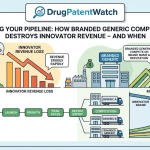
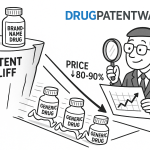
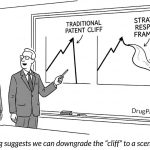
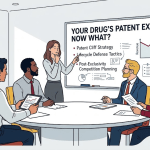
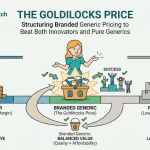
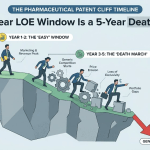
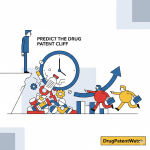
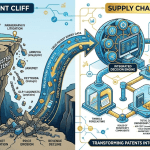
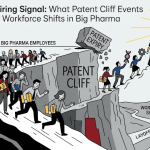
The global pharmaceutical industry is currently undergoing a structural realignment driven by a contraction of revenue that is unprecedented in both scale and velocity. Between the years 2025 and 2030, a phenomenon commonly termed Patent Cliff 2.0 is projected to expose between $300 billion and $400 billion in annual branded drug revenue to generic and biosimilar competition.1 This wave of expirations represents a financial drain three times larger than the previous cycle observed in 2011–2012, which was characterized by the transition of foundational small-molecule blockbusters like Lipitor into the public domain.2 For pharmaceutical innovators and their downstream vendors, the capacity to track the Loss of Exclusivity (LOE) date with surgical precision is no longer an administrative luxury; it is the fundamental determinant of corporate valuation, supply chain integrity, and long-term research and development sustainability.
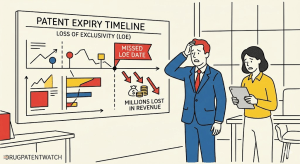
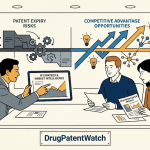
The consequences of miscalculating these dates are multifaceted and frequently catastrophic. When a firm “misses the date,” it typically implies one of two failures: either an innovator company loses high-margin revenue because it failed to maximize its legal protections, or a vendor—whether an Active Pharmaceutical Ingredient (API) supplier or a generic manufacturer—misallocates millions in capital based on an incorrect assumption of market entry.4 The industry operates on a model where a single day of exclusivity for a top-tier blockbuster can be valued at $10 million or more.4 In this environment, an error of a single fiscal quarter can result in a revenue variance exceeding $900 million.
The Illusion of the Statuary Calendar and the Complexity of the Exclusivity Stack
A primary source of tracking error lies in the oversimplification of patent life. While the statutory term for a United States patent is 20 years from the date of filing, the effective market exclusivity—the actual period during which a drug is sold without competition—is significantly shorter.2 Due to the intensive requirements of clinical trials and regulatory review, most drugs reach the market with only 7 to 12 years of remaining protection.2 This compression creates a massive financial incentive to employ a “stack” of layered protections, including Patent Term Adjustment (PTA), Patent Term Extension (PTE), and various regulatory exclusivities, which render the initial patent expiration date listed in public databases misleading or outright incorrect.4
The Mathematical Components of the Exclusivity Stack
The actual LOE date is the expiration of the last relevant patent or regulatory exclusivity, whichever occurs later.7 This date is a moving target influenced by several variables:
Patent Term Adjustment (PTA): This mechanism compensates patent holders for administrative delays caused by the U.S. Patent and Trademark Office (USPTO) during the examination process.4 Savvy intellectual property teams can bank hundreds of days of additional term by identifying USPTO failures, such as the failure to issue an office action within 14 months of filing.11
Patent Term Extension (PTE): Enacted via the Hatch-Waxman Act, PTE allows for the restoration of up to five years of patent life lost during the mandatory clinical trial and FDA review phases.4 For a drug generating $3 billion in annual sales, a maximum PTE can be valued at $9 billion in protected revenue.10
Pediatric Exclusivity: This is a regulatory grant that adds six months of market protection to every existing patent and regulatory exclusivity covering the drug.4 It is frequently described as the “most valuable six months in business” because it is granted regardless of whether the drug is actually approved for children, provided the requested studies are completed.4
Exclusivity Type
Jurisdiction
Duration
Primary Purpose
Patent Term (Standard)
US / EU
20 years from filing
Baseline intellectual property protection.7
Patent Term Extension (PTE)
US
Up to 5 years
Restoration of time lost to FDA review.7
Supplementary Protection Certificate (SPC)
EU
Up to 5 years
EU equivalent to PTE for regulatory delays.7
New Chemical Entity (NCE)
US
5 years
Data exclusivity for novel active moieties.4
Orphan Drug Exclusivity (ODE)
US / EU
7 years / 10 years
Incentivizes R&D for rare diseases.4
Pediatric Exclusivity
US / EU
+ 6 months
Added to all existing protections for pediatric studies.4
Biologics Exclusivity
US
12 years
Extended protection for complex large molecules.7
The failure to account for these extensions is often a result of relying on unverified public databases. Many automated tracking systems fail to incorporate the specific PTA and PTE calculations, leading to a “dangerous, expensive hallucination” where analysts assume a monopoly ends on the nominal calendar date.4 For instance, in the case of Humira, the primary composition patent expired in 2016, but a “fortress” of secondary patents and strategic settlements delayed competition until 2023.4 Analysts who tracked only the 2016 date were off by seven years and approximately $100 billion in revenue.4
Organizational Pathologies: Data Silos as a Catalyst for Error
The technical complexity of LOE tracking is exacerbated by fragmented organizational structures within pharmaceutical firms. In a typical large-scale organization, the data required for accurate LOE forecasting is distributed across Legal, Regulatory, Clinical, and Commercial departments, often in incompatible formats and isolated systems.14
The Anatomy of the Data Silo
Silos form naturally through departmental specialization and the adoption of disparate tools.15 The Legal department may track patent litigation in a proprietary IP management system, while the Regulatory team manages FDA submissions in a separate document management platform. Meanwhile, the Commercial and Supply Chain teams often operate using Excel-based models derived from outdated reports.15
This fragmentation creates a “fractured view of business operations,” where no single team possesses the “single source of truth” required for precision.15 A common failure point occurs when the Legal team settles a patent challenge with a generic firm, agreeing to an “at-risk” launch date or a volume-limited entry, but fails to communicate the nuances of this settlement to the Supply Chain department.5 This lack of integration leads to the “bullwhip effect,” where small miscommunications at the top of the planning hierarchy result in massive operational inefficiencies at the bottom.17
Human Error in Manual Workflows
Despite the digital nature of the modern economy, many pharmaceutical regulatory teams are “drowning in submissions” and continue to rely on manual data entry.16 A single company may handle hundreds of submissions annually across various product types and jurisdictions, each requiring the manual population of dozens of attributes.16 This environment is a breeding ground for clerical errors; for example, a major firm was found to be processing 20,000 labeling documents manually each year, leading to frequent delays and a constant risk of human error.14 Transitioning these workflows to automated, AI-driven systems has been shown to reduce processing time from 45 minutes per document to just 2 minutes, while improving accuracy to over 90% and saving $5.2 million annually.14
The Supply Chain Domino Effect: Lead Times and Bullwhips
The pharmaceutical supply chain is characterized by extreme rigidity and long lead times, often exceeding 300 days.5 Manufacturing a complex molecule is not a simple chemical synthesis; it involves extensive validation, quality assurance, and regulatory compliance checks that can take anywhere from two to twelve months.5
The Rigidity of Production Schedules
Once a production schedule is locked in, it can take days or weeks to adjust due to procedural constraints.5 This lack of agility means that any error in the forecasted LOE date has immediate and severe financial consequences.
Over-Forecasting (The “Inventory Cliff”): If an innovator company incorrectly tracks an LOE date and assumes protection will last longer than it actually does, it will over-produce branded inventory. When generic competition enters the market, demand for the branded product collapses almost overnight—small-molecule drugs typically lose 80% to 90% of their market share within the first 12 months.2 This results in bloated inventory, with companies often carrying 10% to 15% in excess stock.5
Under-Forecasting (The “Stockout Penalty”): If a company prematurely ramps down production, anticipating a patent cliff that is later delayed by a court ruling or a pediatric extension, it faces life-critical drug shortages.5 Stockouts lead to loss of trust with healthcare providers (HCPs) and patients, and can result in significant regulatory fines or the loss of market share to other branded competitors before generics even arrive.18
Supply Chain Metric
Typical Value
Impact of 1-Month LOE Error
Total Cycle Time
300 Days 5
High; production cannot be stopped or started quickly.
Inventory Write-Off Rate
3% – 5% (Standard) 5
Can double or triple due to sudden demand collapse.
Forecast Error (Average)
40% 19
Exacerbates the volatility of the patent cliff.
Cost of Product Recall
$8M – $25M 19
Financial and reputational damage from “firefighting.”
Inventory Write-Offs and the $10.3 Billion Leak
The financial magnitude of supply chain inefficiency is staggering. A comprehensive study revealed that 7.1% of all pharmaceutical stock is lost somewhere in the supply chain, a loss valued at $10.3 billion.5 A significant portion of this loss is attributed to expiration and obsolescence, particularly for biologics and vaccines which have short shelf lives.5 For these products, the timing of the patent cliff is the “starting gun” for a strategic inventory ramp-down. Miscalculating this date by even a few weeks prevents a “controlled descent,” turning millions of dollars of high-value medicine into hazardous waste.5
The Generic Challenger’s Risk: First-to-File and Forfeiture
For generic manufacturers, tracking the LOE date is an exercise in identifying the “brass ring” of 180-day exclusivity.3 Under the Hatch-Waxman framework, the first generic company to file an Abbreviated New Drug Application (ANDA) containing a Paragraph IV certification (challenging the brand’s patent) is granted a six-month window of semi-exclusivity.6
The 180-Day Bounty
During this 180-day period, the first-to-file generic operates in a duopoly with the brand-name manufacturer. This window typically accounts for 60% to 80% of a generic product’s total lifetime profits.3 Because the generic can price its product only slightly below the brand (often at 70% to 80% of the branded price), it captures massive margins before the market commoditizes.6
Number of Generic Entrants
Price Reduction vs. Brand
Market Dynamic
1 (First-to-File)
20% – 40% 21
High-margin duopoly; “brass ring” phase.3
2 Competitors
~50% – 55% 21
Price crack; significant margin compression.3
3 – 5 Competitors
60% – 70% 21
Commoditization; volume-driven competition.3
6+ Competitors
> 95% 21
Complete commoditization; marginal cost pricing.3
Administrative Forfeiture: The Million-Dollar Missed Deadline
The Medicare Prescription Drug, Improvement, and Modernization Act (MMA) of 2003 introduced mandatory forfeiture triggers that force generic firms to “use it or lose it” regarding their 180-day exclusivity.21 A generic firm can lose this multi-million dollar prize through several administrative errors:
Failure to Obtain Tentative Approval: A first applicant must obtain “tentative approval” (meaning the ANDA meets all scientific and manufacturing standards) within 30 months of filing.21 Missing this by a single day results in the forfeiture of exclusivity, allowing other generics to enter the market simultaneously and crushing the first-filer’s profit model.21
Failure to Market: If a generic firm wins its patent challenge but fails to launch the product within 75 days of a final court decision or approval, it forfeits its exclusivity.21 This often occurs when a company has miscalculated the LOE of secondary patents or has manufacturing delays that prevent a timely launch.21
The “Authorized Generic” Tax: Branded manufacturers often launch their own “Authorized Generic” (AG) during the 180-day window.6 This transforms the duopoly into a three-player market and reduces the first-filer’s revenue by 40% to 52%.6 Generic firms that track LOE without accounting for the brand’s AG strategy often over-estimate their return on investment (ROI).
The Complexity of Biologics: Cliffs vs. Slopes
One of the most profound shifts in the current patent cliff is the increasing prevalence of biologics. Unlike small-molecule drugs, which face a vertical revenue cliff, biologics experience a “patent slope”.2
Biosimilar Inertia and the Brand Defense
The manufacturing of biologics is significantly more complex, involving living cell lines and specialized facilities.7 Developing a biosimilar can cost over $100 million and take years longer than a simple generic.2 Furthermore, market uptake is slower due to physician hesitancy, the lack of automatic substitution at the pharmacy level in many states, and the aggressive contracting strategies of branded firms.23
Innovative biologic manufacturers often use “volume-limited settlements” to manage their sunset period.4 They may allow a biosimilar to launch but cap its market share at 5% or 10%, preserving the brand’s pricing power for the majority of the market.4 A vendor tracking only the “launch date” of a biosimilar without understanding these volume caps will profoundly miscalculate the resulting demand for raw materials or distribution capacity.
The Pricing Paradox: Net vs. Gross
Even when biosimilars enter the market, the revenue erosion for the brand may not be immediately apparent in gross sales figures. For example, AbbVie’s Humira maintained brand share post-LOE but lost 60% of net sales due to the steep discounting and rebates required to remain on payer formularies.2 This “hidden erosion” is a frequent trap for vendors who track market share as a proxy for financial health; a brand can appear healthy in terms of volume while being financially decimated by rebates.23
Case Studies in Precision Failure
Historical examples illustrate the varying ways that tracking errors and strategic maneuvers redefine the LOE landscape.
Pfizer’s Lipitor: The Gold Standard for Lifecycle Management
As the top-selling drug for over a decade, Lipitor’s patent expiry was the primary focus of the industry in 2011.25 Pfizer employed an “all-of-the-above” strategy to manage the cliff:
Direct-to-Consumer Marketing: Maintaining brand loyalty until the final hour.25
Authorized Generic: Partnering with Watson (now Teva) to launch an AG on day one, capturing a share of the generic market.9
Aggressive Rebating: Offering massive rebates to payers to maintain “preferred” status on formularies even after generics arrived.9
OTC Transition: Exploring over-the-counter versions to extend the brand’s life in a different market segment.25
The “At-Risk” Launch: AstraZeneca v. Apotex
An “at-risk” launch occurs when a generic manufacturer begins selling its product before patent litigation has concluded.6 If the generic wins, it captures a massive first-mover advantage. If it loses, it is liable for “lost profits” of the brand, which can be far greater than the generic’s actual revenue.4 In some cases, courts can award “enhanced damages” for willful infringement, reaching up to triple the lost profits.6 Generic vendors who miscalculate the strength of an innovator’s patent (a failure of tracking and legal intelligence) risk corporate bankruptcy from these damages.4
The Global Labyrinth: Jurisdictional Divergence in LOE
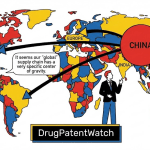
A critical mistake in LOE tracking is the assumption that a drug expires “globally” on a single date. In reality, the legal and regulatory frameworks in the US and EU are diverging, creating a fragmented landscape where a product may be fully generic in Germany while remaining under monopoly protection in the United States.4
EU Reforms: The Transition from “8+2+1”
The European Medicines Agency (EMA) framework is shifting. The traditional “8+2+1” formula—eight years of data exclusivity, followed by two years of market protection, and a potential one-year extension for new indications—is being replaced by an “8+1+1+1” model.27 This new structure reduces the standard market exclusivity period from two years to one, but offers additional one-year extensions for addressing unmet medical needs or conducting comparative clinical trials.27 This creates more volatility and “moving parts” for analysts to track in the European market.
The Unified Patent Court (UPC) and the “Long-Arm” Injunction
The introduction of the UPC in 2023 has significantly increased the risk for vendors.27 A single court decision can now result in a cross-border injunction that applies to all participating EU member states.27 This “long-arm” enforcement capability means that a tracking error in one jurisdiction can have immediate, cascading effects across an entire continent, potentially shutting down distribution networks overnight.27
Strategic Mitigations: Toward a Data-Driven Defense
To avoid the multi-million dollar losses associated with missed LOE dates, pharmaceutical organizations are adopting integrated intelligence strategies that move beyond simple calendar tracking.
Integrated Business Planning (IBP)
Integrated Business Planning (IBP) is a strategic evolution of Sales and Operations Planning (S&OP) that explicitly links operational plans to financial outcomes.28 In the context of LOE, IBP allows leadership to understand the P&L impact of an LOE shift in real time.28
Financial Integration: Operational plans are continually translated into revenue and profit projections.28
Cross-Functional Alignment: Commercial, S&OP, and Procurement teams collaborate on risk assessments, breaking the silos that previously hindered fast response.28
Scenario Modeling: Firms can simulate the impact of an “at-risk” launch, a successful pediatric extension, or a manufacturing delay, allowing them to adjust inventory levels before the crisis hits.28
AI and Machine Learning in Exclusivity Forecasting
The “data-driven decade” has introduced AI as a critical tool for identifying undervalued companies with overlooked patent portfolios and predicting “market-shaking events” like the patent cliff.29 AI excels at:
Target Identification: Sifting through vast volumes of biological data to predict which molecules are most likely to receive NCE or Orphan Drug status.8
Litigation Analytics: Predicting court outcomes by analyzing the historical behavior of specific judges and the strength of “Paragraph IV” challenges.6
Lead Time Optimization: Using Recurrent Neural Networks (RNNs) to predict supply chain delays with a mean absolute error of less than five days, allowing for more precise inventory tapering.30
AI-driven drug discovery is also being used to “rebuild the pipeline” ahead of the cliff, reducing R&D costs by 40% to 50% and shortening development timelines by up to four years.8 This allows firms to launch “next-generation” products—such as subcutaneous versions or combination therapies—before the original patent expires, effectively “killing the cliff”.3
The Valuation Impact: M&A as a Survival Tactic
The ultimate consequence of the patent cliff is the erosion of corporate valuation. Major firms like Bristol Myers Squibb (BMS), Merck, and Pfizer face “revenue exposure” levels of 33% to 56% through 2030.2
Company
Revenue at Risk (by 2030)
Primary Exposure Asset
Merck
56% 2
Keytruda ($29.5B annual sales).2
BMS
47% 2
Eliquis, Opdivo ($38B gap).2
Pfizer
33% 2
Prevnar, Ibrance, Xtandi.2
This “super-cliff” is a primary catalyst for industry consolidation. Approximately 77% of life sciences executives expect M&A activity to increase in 2025 as companies race to acquire early-stage assets to fill the revenue void left by expiring blockbusters.1 Strategic competitive intelligence (CI) is used to identify these targets before valuations peak, but the success of these deals hinges on accurate LOE tracking; an acquirer who overestimates the remaining exclusivity of a target’s lead asset will inevitably overpay, leading to massive write-downs in subsequent years.2
Conclusion: The Strategic Imperative of Precision
The phrase “We missed the LOE date” is a post-mortem for a failure of organizational intelligence. In a sector where a single day of exclusivity is worth $10 million, and a single generic forfeiture is worth hundreds of millions in lost margin, precision in tracking is the only viable defense against the tectonic shifts of the patent cliff.
The modern pharmaceutical environment demands a transition from deterministic, calendar-based tracking to a probabilistic, multi-dimensional model of market entry. This requires:
The Unification of Data: Breaking down the silos between Legal, Regulatory, and Supply Chain to create a “single source of truth.”
The Adoption of Advanced Analytics: Leveraging AI and ML to predict administrative delays, litigation outcomes, and supply chain volatility.
A Shift in Culture: Moving away from a “clerical” view of patent management toward a “strategic” view that recognizes LOE tracking as a core driver of corporate value.
For those who master this complexity, the patent cliff is not a catastrophic end, but a managed transition that provides the capital and the urgency required for the next generation of medical innovation. For those who do not, the cliff represents a vertical drop from which few organizations successfully recover.