From Lagging Indicators to Leading Signals: The Strategic Imperative of Alternative Data
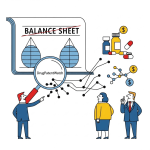
For decades, investment decisions in the pharmaceutical and life sciences sectors have relied on a predictable set of traditional data sources. Annual reports, quarterly earnings calls, official company filings, and broker forecasts have served as the fundamental compass for investors. However, in an industry defined by its protracted and capital-intensive journey from conception to market, this reliance on historical and lagging indicators is proving to be a competitive liability.1 The financial community is increasingly recognizing that a balance sheet, while essential, is a rearview mirror; it reflects where a company has been, not where it is headed.3
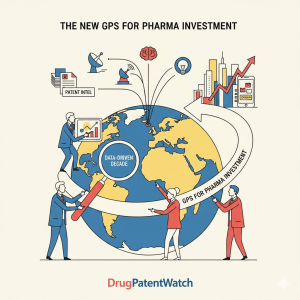
This paradigm is undergoing a profound transformation with the rise of alternative data. Defined as non-traditional information that provides a real-time indication of a company’s future performance, alternative data is now considered “just as essential as fundamental data” by many investors.1 It comes from a multitude of unconventional sources: satellite imagery, web search trends, social media sentiment, and transaction records, among others.4 The core strategic advantage of this new data is its ability to exploit information asymmetry. By accessing real-time, bottom-up metrics before the broader market, sophisticated investors can capitalize on this informational edge and generate outsized returns.4 This is the very essence of alpha generation—discovering and acting on a unique perspective that the market has not yet priced in.6
The pharmaceutical industry, with its long development cycles and high-stakes clinical milestones, is particularly ripe for this data-driven revolution. The stock price of a company can move significantly in the days or even weeks leading up to a major public announcement, such as a clinical trial readout.7 This movement is often a clear signal that a select group of market participants has access to information or has successfully inferred an outcome ahead of time. Alternative data provides a legal and ethical pathway to bridge this gap, enabling an investor to turn a speculative hunch into a confirmed investment thesis supported by quantifiable evidence.4 The following sections will explore the diverse ecosystem of this data and provide a blueprint for how to use it to forge a sustainable competitive edge.
The Unseen Ecosystem: A Taxonomy of Alternative Data in Life Sciences
The universe of alternative data is vast and often disorganized. For the purpose of strategic analysis in the life sciences sector, it is most useful to categorize these data streams based on their primary source: those generated through individuals, business processes, and sensors.1 Within this framework, several specific data types stand out as having the most direct and profound impact on pharmaceutical and biotech valuation.
Clinical and Scientific Data: The Pulse of Innovation
In an industry where a company’s value is directly tied to the success of its pipeline, clinical and scientific data are the most critical alternative data sources. This information provides a view into a drug’s core value proposition: its efficacy, safety, and operational trajectory.
For a long time, clinical trial data was considered the private property of the sponsoring entity, with limited access for external parties.8 Today, publicly available data from registries like ClinicalTrials.gov and the EU Clinical Trials Register can be analyzed to provide a real-time pulse of a drug’s journey.9 A major pharmaceutical company, Pfizer, uses large, de-identified datasets from prior clinical trials, medical records, and insurance claims to forecast trial timelines and predict patient availability.10 This ability to reliably calculate how long it will take to hit milestones is a direct de-risking factor for a drug’s pipeline, a matter of life or death for a small, single-product biotech company.11 In addition, computational approaches are now being used to predict the likelihood of clinical trial failure for toxicity reasons by integrating chemical properties and drug-likeness measures into predictive models.12 This suggests that sophisticated investors who can access or model this data have a profound advantage in assessing pipeline risk.
Beyond the controlled environment of a clinical trial, Real-World Evidence (RWE) and claims data offer a holistic view of a patient’s experience in actual clinical practice.13 RWE is data collected outside of traditional randomized controlled trials, often from electronic health records (EHRs), insurance claims, and patient registries.14 Providers like IQVIA and Optum offer rich, de-identified claims data that can be used for patient journey mapping, market share assessments, and post-launch risk monitoring.13 The value of this data lies in its ability to provide a complete and contextualized story of a patient’s care journey, from diagnosis to treatment, capturing both medical and pharmacy transactions.13 This provides a fuller picture of a company’s market and product performance.13
The frontier of this data type is synthetic data, which is artificially generated by machine learning models trained to replicate the statistical patterns of real-world datasets without including any actual patient records.17 While hailed as a solution to privacy concerns and data sharing bottlenecks, synthetic data faces a significant regulatory roadblock. The FDA is cautiously exploring its use, particularly for medical device development and AI model training, but has not yet committed to accepting it as standalone evidence for drug approvals.17 Until a clear regulatory framework is established, synthetic data remains a valuable tool for internal research and development, but not a replacement for the real-world evidence required for market approval.17 The inability to use this data to accelerate the approval process directly impacts a drug’s net present value (NPV), representing a material financial risk that investors must weigh.17
Prescriptive and Behavioral Data: Mapping the Patient Journey
This category of alternative data provides a real-time proxy for product demand and market access. Traditional sales forecasts are often slow to reflect real-world prescribing behavior.
Prescription and claims data serve as a leading indicator of market and product demand.16 The IQVIA National Prescription Audit (NPA) provides weekly insights into prescription dispensing, offering a timely and accurate picture of competitive performance that far outpaces traditional quarterly reports.16 By analyzing this data, a pharmaceutical company can understand real-world treatment behavior and identify and remove access barriers for patients.15 A case study involving AstraZeneca demonstrated this power, with the company using prescription data to identify and engage with payers. The result was a 23% reduction in prescription abandonment and a 14.5% improvement in overall script conversion, improvements which led to an estimated $43 million in annual revenue impact.22
This case illustrates a powerful positive feedback loop. When a pharmaceutical company uses data to improve its go-to-market strategy, it generates stronger financial signals. This, in turn, makes the company more attractive to data-driven investors. While traditional forecasting models may rely on an epidemiology-based approach that trends past performance into the future, a more robust method uses longitudinal prescription data to build a demand-based model that provides context into real-world behavior and identifies the likely causes of variations in sales.23
Beyond prescriptions, behavioral data from Key Opinion Leaders (KOLs) and social media sentiment offers a qualitative layer of intelligence. KOLs, often physicians or researchers, play a critical role in shaping a drug’s lifecycle, from clinical trials to commercialization.24 Monitoring their activity provides a human-centric layer of competitive intelligence. Similarly, analyzing social media sentiment and web traffic can offer early insights into consumer interest and public attitudes toward a specific drug or company.26
Intellectual Property and Corporate Data: The Fortress of Value
In the life sciences, intellectual property (IP) is the most tangible intangible asset. A company’s balance sheet tells you its financial health today, but its patent portfolio tells you what it owns—the defensible, revenue-generating IP that underpins its entire valuation.3
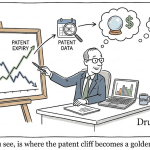
Analyzing patent data is akin to using a crystal ball for future innovation. A study by the National Bureau of Economic Research found a “highly significant correlation” between unexpected changes in patent applications and “quite large movements in stock market values”.28 This is not merely about counting patents; it’s about understanding their quality, scope, and strategic positioning.3 A company’s portfolio is a carefully constructed “fortress” built with different types of patents: the “crown jewels” of a composition of matter patent on a new chemical entity (NCE), and the “life-cycle extenders” of method-of-use and formulation patents.3 For a small biotech, the strength and remaining term of a single composition of matter patent is often the most significant driver of its valuation.3
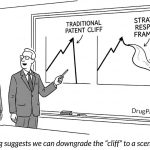
This is where a dedicated platform like DrugPatentWatch provides a competitive edge. It allows investors to identify undervalued companies with overlooked patent portfolios, track litigation, and predict market-shaking events like the “patent cliff”—the steep revenue decline following a drug’s loss of exclusivity.3 The platform provides a view of expired patents, litigation records, and generic entry opportunities.30 It enables a strategic analysis of a company’s patent landscape, revealing not just defensive “patent thickets” 32, but also offensive opportunities known as “white spaces”—areas with limited patent activity but significant therapeutic potential.2 This analysis transforms competitive intelligence from a defensive tool into a powerful driver of innovation and investment.2
This intellectual property intelligence is also a cornerstone of mergers and acquisitions (M&A) due diligence and valuation.2 As the importance of data as an intangible asset grows, a thorough IP analysis is critical for assessing a target company’s true value.33
Turning Insight into Alpha: Real-World Applications and Case Studies
The ultimate test of any data is its ability to inform profitable action. In the investment world, this means generating alpha. Alternative data provides the raw material, but it is the speed and confidence of the human or algorithmic analyst that converts it into a tangible return.
The Investor’s Playbook: Strategies for Capitalizing on Data
The value of alternative data is not limited to algorithmic trading floors. Real-world case studies demonstrate its power for fundamental investors as well. The now-legendary investment by hedge fund SAC in Vertex Pharmaceuticals is a powerful example. A simple Freedom of Information Act (FOIA) request—a form of public alternative data—cost the fund a mere $72.50 to confirm a hunch.4 When positive trial results were announced, the investment popped 62% in a single day, proving that significant ROI is not limited to expensive, high-tech datasets.4
Another example of the power of velocity comes from a case study involving alternative data provider Thasos. By tracking the anonymized locational data of workers at a production plant, a client was able to infer an increase in shift hours and congestion, which preceded a quarterly report showing higher production and sales. This early signal allowed clients to buy shares before the broader market and saw a 9.1% increase in value once the report was released.26 Similarly, the stock price of Gilead Sciences fell by 9% after rumors of a failed clinical trial for its experimental COVID-19 treatment, only to rebound 11% a week later when official results suggested the opposite.7 These examples show how real-time data and even unverified signals can precede public announcements and create trading opportunities.
The agility with which an investor conducts due diligence and executes based on alternative data can mean the difference between beating the market and underperforming it.4 For institutional investors who have the financial capital to invest in AI-powered platforms and data scientists, alternative data is no longer a luxury but a core component of their process.34 The I Know First algorithm, for instance, demonstrated returns of up to 25.22% in just three days on biotech stocks, beating the S&P 500 by a significant margin.35 The quantitative ROI is a function of speed and confidence, and alternative data provides the foundation for both.
The Corporate Strategist’s Guide: Driving Internal Competitive Advantage
Alternative data is not just an investor’s weapon; it is a strategic necessity for pharmaceutical companies themselves. By leveraging these data streams, corporate strategists can optimize their own operations and create a positive feedback loop that ultimately increases shareholder value.
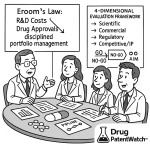
A fundamental application is in informing R&D and pipeline management. Patent data can be used to identify “white spaces” or untapped biological targets, allowing companies to strategically guide their R&D investments toward areas with higher potential for return on investment and reduced competitive pressure.2 This transforms competitive intelligence from a reactive tool to a powerful driver of offensive innovation.2
Furthermore, alternative data can supercharge business development and market access strategies. A company can track its competitors’ pricing moves and market share in real-time, allowing it to refine its own pricing, reimbursement, and market access plans.9 As one expert in the field stated, “Competitive Intelligence is a Positive NPV Activity”.37 The benefits, such as tangible cost savings and first-mover advantages, consistently demonstrate that the value generated exceeds the investment, making it a “strategic necessity” in a high-stakes landscape.9 This creates a virtuous cycle where a data-driven company becomes more attractive to data-driven investors, reinforcing a higher valuation.
A Taxonomy of Alternative Data for Life Sciences Investment
Category
Individuals
Individuals
Business Processes
Business Processes
Business Processes
Sensors
Sensors
The Double-Edged Sword: Navigating the Challenges and Risks
While the benefits are clear, a full appreciation of alternative data requires a sober assessment of its inherent challenges and risks. The skeptical, data-driven professional understands that no tool is a magic bullet, and the path to alpha is filled with potential pitfalls.
The Data Conundrum: Quality, Integration, and the Cost of Insight
The sheer volume of alternative data is staggering, but its value is often buried in a mountain of “messy and unstructured” information.1 A study by Greenwich Associates found that 48% of respondents cited the difficulty of cleaning and integrating data as a key obstacle.38 It is not enough to simply acquire the data; it must be validated, structured, and linked to traditional datasets before any meaningful analysis can begin.38 As one commentator put it, “Without clean data, or clean enough data, your data science is worthless”.39 This “heavy lifting” is the true cost of alternative data, and it requires a significant investment in talent and technology. Starting an alternative data team can cost between $1.5 million and $2.5 million.40 While many hedge funds spend between $100,000 and $1 million annually on data, budgets are expected to increase significantly, with over 90% of current users planning to raise their budgets.41 The value of the data, therefore, is not in its raw form but in the process of transforming it from a liability into an asset.
Regulatory Ambiguity: HIPAA, GDPR, and the Re-identification Risk
For the life sciences sector, legal and regulatory compliance is not a passive activity; it is a critical business function. The use of patient-level data, even when de-identified, is a material financial risk. The Health Insurance Portability and Accountability Act (HIPAA) protects “individually identifiable health information” and mandates that consent is required for disclosure.43 However, the process of de-identification is not foolproof. A famous case involving a graduate student demonstrated how a governor’s “anonymous” medical records could be easily re-identified by cross-referencing them with a public voter registration database.46 This re-identification risk can lead to massive financial penalties, reputational damage, and a loss of investor confidence.46
Furthermore, the legal landscape surrounding emerging data types remains ambiguous. The GDPR is silent on the matter of synthetic data.17 The FDA, while showing “cautious optimism,” has not issued definitive guidance and is still far from allowing synthetic data to serve as standalone evidence for drug approvals.17 This lack of a clear regulatory framework represents a significant time-to-market risk. A sponsor cannot use synthetic data to accelerate its regulatory submission, directly impacting the timeline for a drug to begin generating revenue.17
“A company’s balance sheet tells you its financial health today. Its clinical pipeline tells you what it hopes to achieve tomorrow. But its patent portfolio tells you what it owns—the defensible, revenue-generating intellectual property (IP) that underpins its entire valuation.”
— An IP Professional, as quoted on DrugPatentWatch.com 3
Key Legal and Regulatory Risks for Alternative Data
Risk Type
Re-identification
Regulatory Ambiguity
Data Quality
Evergreening
Building a Sustainable Competitive Edge: A Blueprint for the Future
For a firm to successfully navigate the data-driven decade, it must do more than simply acquire new datasets. It must cultivate a strategic culture that aligns people, processes, and technology to convert raw information into a perpetual source of competitive advantage.
Cultivating a Data-First Culture: People, Process, and Technology
The most common barrier to success is not a lack of data but a lack of organizational readiness. Deloitte’s analysis shows that the process of fully incorporating alternative data into investment decisions can span two to three years and requires a concerted effort to align stakeholders.48 This requires bringing the frontline data scientist and the investment analyst onto the same page through leadership communication, awareness programs, and training.48
A deeper understanding suggests that the value of alternative data is not in the “bits” but in the “talent” that can make sense of them.39 As one expert noted, “Analytics is 50% math and 50% communication”.39 The ultimate competitive advantage is not a secret dataset but a team of skilled professionals who can “extract and distinguish relevant data from a large volume of data” and translate complex findings into actionable recommendations.41 This investment in talent, process, and technology creates a virtuous cycle where a firm’s data-driven approach to investment becomes a source of sustainable, self-reinforcing alpha.
The Convergence of AI and Alternative Data: What Comes Next
The next frontier is the convergence of AI and alternative data. A growing number of firms are already using AI in conjunction with alternative data on an operational basis.50 AI-powered tools are now capable of reading and classifying millions of patents 3 and analyzing unstructured data from physician notes and EHRs.15 This synergy creates a powerful feedback loop. AI models can help identify gaps in patient-based forecasts and reconcile them with real-world demand.23 The resulting insights improve a company’s operational efficiency and market success, which in turn generates more data to train and refine the AI models, further enhancing the firm’s competitive edge.
The Investor’s Signal-to-Insight Framework
Data Source
Clinical Trial Registries
Patent Filings
Prescription/Claims Data
Expert Call Transcripts
The Correlation of Biotech Catalysts and Stock Performance
Catalyst Event
Positive Phase III Announcement
Negative Phase III Announcement
Key Takeaways
The investment landscape for the pharmaceutical and life sciences industry is undergoing a fundamental shift. While traditional financial data remains a critical foundation, the firms that will outperform are those that supplement it with a strategic, data-driven approach.
Alternative data is not a fad; it is a proven source of alpha. As demonstrated by case studies ranging from a low-cost FOIA request to multi-million dollar algorithmic trading platforms, alternative data provides a unique view into a company’s performance, from its core scientific innovation to its real-world market traction.
The value is not in the data itself, but in the talent and process. The true competitive advantage lies in a firm’s ability to acquire, clean, and interpret alternative data. This requires a dedicated investment in people and technology to transform messy, unstructured information into a reliable, actionable intelligence.
Intellectual property is the ultimate leading indicator. A company’s patent portfolio is not just a legal document; it is a strategic blueprint. By analyzing the quality, scope, and strategic purpose of a company’s patents—with tools like DrugPatentWatch—an investor can gain a deeper understanding of its core valuation and a clear view of its future.
Managing risk is as important as generating alpha. The use of alternative data comes with significant legal and regulatory risks, particularly concerning patient privacy. A firm must proactively engage with legal counsel and leverage secure data platforms to mitigate the risks of re-identification and regulatory scrutiny.
Ultimately, the firms that will thrive are those that embrace this new reality, recognizing that the most powerful investment decisions are no longer made in a vacuum of traditional reports, but within the rich, interconnected ecosystem of both traditional and alternative data.
Frequently Asked Questions
Q1: How do you calculate the ROI of an alternative data investment?
A: Calculating a precise, one-size-fits-all ROI for alternative data is challenging because its value is often multifaceted. It can be measured through “alpha attribution analysis,” which compares the performance of a portfolio using both traditional and alternative data against a hypothetical one using only traditional data. The difference in returns can be attributed to the alternative data. Indirect benefits, such as reduced risk from enhanced due diligence or improved confidence in a thesis, are also significant but less quantifiable. For corporate strategists, ROI can be measured through specific operational improvements, such as the 14.5% increase in script conversion demonstrated in the AstraZeneca case study.
Q2: What is the most valuable type of alternative data for my investment strategy?
A: The most valuable data depends entirely on your investment strategy and time horizon. For a long-term venture capital or private equity firm, intellectual property data and clinical trial information are paramount for assessing a company’s foundational value and pipeline risk. For a short-term hedge fund or algorithmic trader, real-time data from prescription audits, web traffic, or social media sentiment can provide the velocity needed for timely execution. The key is to select data sources that directly address the specific questions you need to answer.
Q3: Is it possible to generate alpha from publicly available data sources?
A: Yes, absolutely. The success of the investment in Vertex Pharmaceuticals, driven by a simple, low-cost FOIA request, is a powerful reminder that significant returns are not limited to prohibitively expensive, proprietary data sets. The real value is not in the data’s exclusivity but in the analyst’s ability to ask a strategic question and find an unconventional way to answer it. Public records, government filings, and research papers, when analyzed with a sharp eye for detail, can still provide a powerful informational edge.
Q4: How do I ensure I’m compliant with regulations like HIPAA and GDPR when using alternative data?
A: Legal and regulatory compliance requires a proactive approach, not just a passive check-the-box mentality. It is crucial to partner with reputable data providers who have demonstrated a clear commitment to privacy through robust de-identification techniques, clear data governance frameworks, and a history of compliance. It is equally important to engage with your legal and compliance teams to establish internal policies and procedures for handling sensitive data, ensuring that all uses are ethical, legal, and aligned with the firm’s risk tolerance.
Q5: Will AI and machine learning make human analysts obsolete?
A: No, AI will not make human analysts obsolete. Instead, it will augment their capabilities and shift their focus from the rote, time-consuming tasks of data collection, cleaning, and basic analysis to high-level strategic thinking. AI is a powerful tool for pattern recognition and automation, but it lacks the nuance, creativity, and qualitative judgment of a human. The most successful firms will be those that integrate AI as an accelerator, freeing their analysts to perform the complex, “soft” due diligence that artificial intelligence cannot yet replicate.
ANDAs for Certain Highly Purified Synthetic Peptide Drug Products That Refer to Listed Drugs of rDNA Origin – FDA, accessed August 20, 2025, https://www.fda.gov/media/107622/download