The complete operational guide for pharma IP teams, portfolio managers, and supply chain leads on converting patent intelligence into production schedules, inventory decisions, and competitive positioning.
1. Why Patent Data and Supply Chain Have Always Been the Same Problem
In most pharmaceutical organizations, the legal team tracks patent expiration dates, Orange Book listings, and Paragraph IV litigation in one system, while supply chain planners manage demand forecasts, production schedules, and inventory positions in an entirely separate one. The two groups rarely attend the same meetings. Their KPIs do not overlap. Their language is incompatible.
This organizational structure is a strategic liability.
A patent’s expiration date is not just a legal milestone. It is the single most consequential demand signal a supply chain team will ever receive. It predicts an 80-to-90% collapse in branded product revenue within 24 months. It triggers a cascade of procurement activity at every competing generic manufacturer. It sets off reformulation projects, authorized generic launches, and product-hop campaigns that each require multi-year supply chain planning. The date is known years in advance, published in a federal database accessible to anyone with an internet connection, and yet most supply chain organizations fail to build it systematically into their planning cycles.
This article closes that gap. The goal is not to turn supply chain planners into patent attorneys. The goal is to identify the 12 to 15 specific data points that routinely appear in patent filings, Orange Book records, and litigation dockets, and to map each one directly to a concrete operational decision: when to cut a production run, when to lock in an API contract, when to begin qualification of a secondary supplier, when to model a 90% demand drop.
The companies that treat patent intelligence as a supply chain input rather than a legal output run leaner inventories at end-of-life, launch generics faster, and negotiate stronger CDMO contracts. The ones that do not end up with warehouses full of soon-to-be-discounted branded stock, or generic manufacturing lines that go dark waiting for litigation to resolve.
Key Takeaways: Section 1
Patent expiration dates are demand signals, not legal events. The failure to route them through supply chain planning systems is the single most preventable source of inventory write-offs and missed generic launch windows. Every operational decision from production tapering to API sourcing depends on having accurate Loss of Exclusivity (LOE) dates loaded into forecasting models years before the event.
2. The Unique Pressure Architecture of Pharmaceutical Supply Chains
To understand why patent intelligence matters so much for operations, you first need a clear picture of what makes pharmaceutical supply chains structurally different from other industries. The pressures are not independent. They compound each other, and patent events are frequently the trigger that transforms a manageable single-variable problem into a multi-system crisis.
Demand Volatility That Dwarfs Consumer Goods
Pharmaceutical demand forecasting carries an average error rate of up to 40%. This is not a planning failure. It reflects the reality that external variables are genuinely difficult to model: regulatory decisions arrive on unpredictable timelines, epidemiological events like COVID-19 or RSV surges drive demand swings of 300 to 400%, and patent cliffs produce near-vertical demand drops with almost no warning period built into traditional forecasting cycles. The consequence of over-forecasting is inventory carrying costs that run 10 to 15% above target, with parallel write-off risk for any product nearing its shelf-life boundary. Under-forecasting produces drug shortages with direct patient impact, regulatory scrutiny, and reputational exposure.
Lead Times That Eliminate Reactive Planning
The average pharmaceutical supply chain cycle runs approximately 300 days from raw material synthesis to packaged finished product, with manufacturing lead times ranging from two months for simpler solid oral dosage forms to twelve months for complex biologics requiring extended upstream cell culture runs and downstream purification sequences. More than 60% of pharmaceutical companies identify these lead times as a binding constraint on their ability to meet customer service targets. Once a production schedule is locked, regulatory and procedural requirements mean that re-planning can take weeks. The practical implication is that by the time a patent-related market event becomes visible to a reactive planning organization, the window to respond has already closed.
Regulatory Compliance That Makes Every Node a Risk Point
Good Manufacturing Practice (GMP) requirements, Good Distribution Practice (GDP) mandates, the U.S. Drug Supply Chain Security Act (DSCSA), and the EU Falsified Medicines Directive (FMD) wrap every node of the supply chain in compliance obligations that are non-negotiable and expensive. A product recall costs between $8 million and $25 million on average before reputational damage is factored in. Serialization, batch traceability, and temperature monitoring requirements add cost and complexity at every step. Any supply chain restructuring triggered by a patent event, whether a product-hop ramp-up or a generic launch scale-up, must be executed within this compliance envelope, which is why the planning horizon needs to be years, not quarters.
Cold Chain Fragility at Scale
Approximately 70% of top-selling pharmaceutical products require temperature-controlled transportation and storage. A single temperature excursion in a narrow 2-to-8 degree Celsius window can destroy a multi-million dollar biologic shipment. The industry loses an estimated $35 billion annually to cold chain failures. Roughly 3 to 5% of biologic inventory is written off annually due to expiration, and total pharmaceutical stock losses across all categories reach $10.3 billion per year. For any supply chain plan built around a patent cliff, these figures are not background noise. They are the difference between a controlled descent and a costly write-off event.
Siloed Planning That Amplifies Every Other Risk
A PwC survey found that only 28% of pharmaceutical executives describe their planning capabilities as integrated and agile. The majority operate with demand planning, supply planning, and inventory management running in disconnected silos, frequently managed through legacy local systems and spreadsheets that cannot ingest patent data feeds or litigation updates. This fragmentation is what turns patent-driven market events into crises. An unexpected Paragraph IV filing that legal tracks but supply chain never sees means that API sourcing decisions are made without knowledge of the competitive threat. A new formulation patent that regulatory tracks but manufacturing never sees means a product-hop is planned without the lead time needed to establish the new SKU’s supply chain. The integration failure is where most of the industry’s avoidable losses originate.
Key Takeaways: Section 2
The pressures on pharmaceutical supply chains are structurally interlocked. Patent events do not just create a legal challenge. They trigger demand volatility, compress lead times, raise compliance stakes, and strain cold chain capacity simultaneously. A planning function that receives patent intelligence late, or not at all, cannot manage these compounding risks. The solution is upstream data integration, not faster downstream reaction.
3. Decoding the Patent Stack: What Every Data Point Actually Means for Operations
Supply chain professionals do not need to interpret claim language or assess freedom-to-operate. They need to understand which specific patent filings and legal events map to which operational decisions. The following is a functional translation guide.
The Composition of Matter Patent: The Only Date That Resets the Market
The composition of matter patent, often called the API patent, protects the active pharmaceutical ingredient at the molecular level. If the molecule is in the product, the patent applies, regardless of formulation, delivery mechanism, or therapeutic context. This is the foundational IP asset for any drug, and its expiration date is the primary trigger for the patent cliff. For supply chain purposes, it is the most critical date in any product’s lifecycle. It sets the countdown for branded inventory ramp-down, activates the generic entry window, and determines when the procurement economics for the API will shift from branded-grade pricing to commodity-grade competition. Tracking this date to the day, and building it into demand forecasting models with a 3-to-5-year lead, is the baseline expectation for any mature pharmaceutical planning function.
The Patent Thicket: Secondary Filings as Early Warning Signals
Originator companies almost never rely on a single composition of matter patent. They build layered portfolios of secondary patents designed to extend effective market exclusivity beyond the API patent’s life. These secondary filings are, from a supply chain perspective, some of the most actionable early warning signals available.
Formulation and delivery patents protect the specific recipe and administration mechanism of the finished drug product: a once-daily extended-release tablet replacing a twice-daily immediate-release version, a pre-filled auto-injector replacing a vial-and-syringe presentation, a subcutaneous formulation replacing an intravenous one. When a formulation patent is filed, it almost always signals an imminent product-hop, the classic evergreening strategy where the brand company migrates the market to a new, patent-protected SKU before the old one’s exclusivity expires. For supply chain planning, this is a direct trigger to begin modeling a synchronized dual-track transition: ramp-down of the existing SKU’s production and inventory, and parallel ramp-up of the new SKU’s API sourcing, manufacturing validation, and channel stocking requirements. Getting this transition right requires 18 to 24 months of advance planning minimum, and the formulation patent filing is often the earliest possible signal that the transition is coming.
Method-of-use patents protect the application of an existing molecule to a new therapeutic indication. A new method-of-use filing means the company has identified an additional patient population. For supply chain, this translates directly to an upward revision of demand forecasts, potentially across a multi-year horizon, and a corresponding reassessment of manufacturing capacity, API procurement volumes, and distribution network capacity.
Manufacturing process patents protect the specific synthesis route for the API. These rarely appear in the FDA Orange Book, but they can force a generic competitor to use a more expensive, less efficient alternative synthesis route, directly affecting the generic’s cost of goods sold. API sourcing teams at generic companies must conduct process patent clearance before committing to a supplier’s Drug Master File (DMF), because the supplier’s synthesis route must not infringe on any process patent held by the originator.
Regulatory Exclusivities: The Dates That Override Patent Expiration
Patents are not the only form of market protection, and conflating patent expiration with loss of exclusivity is a common and expensive planning error. The FDA grants regulatory exclusivities that function independently of patent protection and can extend a drug’s period of market exclusivity beyond what the patents alone would provide.
New Chemical Entity (NCE) exclusivity grants five years of protection for a drug containing a novel active ingredient. Orphan Drug Exclusivity (ODE) grants seven years for drugs targeting rare diseases affecting fewer than 200,000 U.S. patients. Pediatric exclusivity adds six months to existing patent and exclusivity protections as compensation for conducting pediatric studies. Biologics qualify for 12 years of reference product exclusivity under the Biologics Price Competition and Innovation Act (BPCIA), with a four-year period during which no biosimilar application can even be filed. The true Loss of Exclusivity date for any drug is the latest of: the final patent expiration, any Patent Term Extension (PTE) grant, and the end of any applicable regulatory exclusivity. Supply chain models that use only the composition of matter patent expiration will systematically produce incorrect LOE dates, leading to either premature ramp-downs that leave revenue on the table or delayed ramp-downs that create write-off exposure.
IP Valuation as a Core Asset: What the Patent Stack Is Worth
For portfolio managers and analysts assessing a pharmaceutical company’s pipeline, the composition of matter patent and its associated exclusivity protections are the primary determinants of an asset’s net present value (NPV). A composition of matter patent with 10 years of remaining life on a product generating $2 billion annually in U.S. revenues represents a fundamentally different risk profile than the same patent with 18 months remaining. The standard industry approach to IP valuation applies a risk-adjusted NPV (rNPV) framework, discounting projected revenues by the probability of successful patent defense against Paragraph IV challenges, the probability of regulatory exclusivity surviving BPCIA patent dance litigation for biologics, and the estimated time and cost of enforcement litigation.
For supply chain and portfolio planning, the key metric is not just the raw LOE date but the probability distribution around it. A drug whose patents have never been challenged and whose manufacturing process is difficult to replicate has a narrow, high-confidence LOE distribution. A drug whose formulation patents have already been successfully challenged in European markets, and whose U.S. Paragraph IV filings are active, has a wide distribution with meaningful probability of earlier-than-anticipated generic entry. Supply chain plans for the latter must be built with more flexibility and shorter inventory commitments.
Key Takeaways: Section 3
The LOE date is a probability distribution, not a point estimate. Composition of matter patent expiration, regulatory exclusivities, PTEs, and the litigation history of the specific patent portfolio all feed into the true LOE forecast. Any supply chain model that uses only the base patent expiration date will be wrong with predictable frequency. The correction requires systematic ingestion of all Orange Book listings, exclusivity grants, and active litigation records into the planning function’s forecasting infrastructure.
4. The Orange Book, USPTO, and Commercial Platforms: A Data Source Hierarchy
The data required to build patent-informed supply chain plans is largely public. The challenge is not access but integration. Understanding the structure and limitations of each data source is essential for building a reliable intelligence workflow.
The FDA Orange Book: The Mandatory Starting Point
The Approved Drug Products with Therapeutic Equivalence Evaluations database, universally called the Orange Book, is the official federal link between approved drug products and their associated patents and regulatory exclusivities. It contains New Drug Application (NDA) numbers, active ingredient names, brand names, patent numbers, patent expiration dates, and exclusivity codes. For supply chain planners, it is the primary source for confirmed LOE dates on small-molecule drugs. The equivalent resource for biologics is the FDA Purple Book, which tracks biosimilar applications and interchangeability designations. Neither database provides litigation data, clinical trial information, or global patent coverage. Both are updated regularly and are freely accessible, but querying them at scale requires either API access or a commercial platform that ingests and normalizes the data.
Global Patent Offices: Technical Depth for Sourcing Teams
The USPTO, the European Patent Office (EPO) via Espacenet, and the World Intellectual Property Organization (WIPO) via PATENTSCOPE contain the full text of patent documents, including the specification sections that describe synthesis routes, formulation chemistries, and analytical methods in technical detail. These documents are the primary resource for CDMO business development teams conducting technical due diligence, for API sourcing teams assessing whether a supplier’s synthesis route infringes on a process patent, and for generic company R&D teams designing around existing formulation patents. Reading a patent specification requires technical expertise, but the data within it, particularly the working examples and analytical data tables, is specific enough to inform manufacturing feasibility assessments, COGS projections, and API qualification timelines.
Commercial Intelligence Platforms: Where Data Becomes Operational
The practical limitation of public databases is that they are siloed. Connecting an Orange Book expiration date to its Paragraph IV litigation history, to the clinical trial status of the underlying molecule, to the identity and manufacturing readiness of the ANDA filers, and to global patent coverage across the 30 to 40 markets that matter commercially requires either a large internal team or a commercial platform built to do exactly that.
Platforms like DrugPatentWatch aggregate patent data, regulatory exclusivities, Paragraph IV filing records, litigation outcomes, tentative approvals, and API supplier information into a single queryable interface. IQVIA’s ARK Patent Intelligence provides similar consolidation with integration into IQVIA’s broader market analytics infrastructure. Clarivate’s Cortellis covers the global competitive intelligence layer, including clinical trial data linked to patent assets. IPD Analytics targets payer and formulary management use cases, with particular depth on exclusivity modeling and LOE timing.
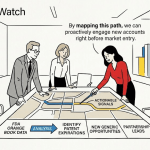
The strategic value of these platforms for supply chain teams is not the data itself but the integration. A supply chain planner who can query a single interface for ‘all products in our therapeutic area with LOE dates between 2025 and 2028, sorted by current U.S. revenue, with active Paragraph IV filings flagged’ is operating with fundamentally better foresight than one who manually reconciles Orange Book spreadsheets against court record databases.
Data Point Reference Table
Data Point
Source
Direct Supply Chain Implication
Composition of Matter Patent Expiry
Orange Book, DrugPatentWatch
Triggers branded inventory ramp-down. Begin 3-5 years prior.
Method-of-Use Patent Filing
USPTO, WIPO, DrugPatentWatch
Signals new patient population. Revise demand forecasts upward.
Formulation Patent Filing
USPTO, DrugPatentWatch
Signals incoming product-hop. Model synchronized SKU transition.
180-Day First-Filer Exclusivity Grant
FDA, DrugPatentWatch
Narrows generic launch window to specific company. Track their operational readiness.
Adjusts final LOE date. Update all forecasting models immediately.
Biologic Reference Product Exclusivity
Purple Book
Sets 12-year minimum exclusivity for biologic. Governs biosimilar entry window.
Manufacturing Process Patent Filing
USPTO
Constrains generic API sourcing. May force alternative synthesis route.
Key Takeaways: Section 4
Public databases provide the raw data. Commercial platforms provide the integration. For any organization managing more than 10 to 15 active products near LOE, the manual approach of reconciling public sources is not scalable and produces systematic gaps. The ROI on a commercial intelligence platform is measurable in avoided inventory write-offs and captured generic launch windows, both of which dwarf the platform cost.
5. The Patent Cliff: A $400 Billion Forcing Function
The pharmaceutical industry is currently navigating the largest loss-of-exclusivity cycle in its history. Between 2024 and 2030, an estimated $200 billion to $400 billion in annual branded revenue is at risk as patents expire on some of the most commercially successful drugs ever approved. AbbVie’s Humira biosimilar wave has already arrived. Merck’s Keytruda (pembrolizumab), the world’s highest-grossing drug with over $25 billion in 2023 U.S. revenues, faces its composition of matter patent cliff in 2028. Bristol-Myers Squibb’s Eliquis (apixaban) and Johnson & Johnson’s Stelara (ustekinumab) are in the same wave.
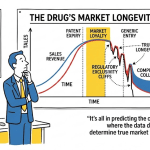
The financial mechanics are well-documented. Branded products lose 80 to 90% of their market share within the first 12 to 24 months of facing generic or biosimilar competition. The historical cases of Pfizer’s Lipitor (atorvastatin) and the Bristol-Myers Squibb/Sanofi Plavix (clopidogrel) established the pattern: a drug generating billions in annual revenue can see sales collapse to hundreds of millions within two years of generic entry. The word ‘cliff’ is accurate. This is not erosion.
What the Cliff Does to the Supply Chain Ecosystem
The patent cliff is not a single event. It is a market restructuring that triggers different imperatives for every actor in the supply chain simultaneously.
For brand manufacturers, the immediate threat is inventory obsolescence. A product that generated $3 billion in annual U.S. sales can see its branded revenue fall to $300 million within 18 months of generic entry. Any inventory in the channel, at the manufacturer, at wholesalers, or at pharmacy distribution centers, that was produced at branded-margin manufacturing cost and cannot be sold at branded pricing represents a direct write-off. Avoiding this requires a controlled production ramp-down that begins 3 to 5 years before the LOE date, executed against a forecast that models the 80 to 90% demand drop with precision.
For generic manufacturers, the cliff is the entire business model. First-mover advantage in generic markets is substantial: the first filer benefits from 180-day exclusivity and premium generic pricing before the market commoditizes with additional entrants. Missing the launch window by even 30 to 60 days can cost tens of millions in foregone revenue on a major generic. This economics drives the entire Paragraph IV litigation and at-risk launch playbook.
For API suppliers and CDMOs, the cliff is a long-range demand signal with a known timeline. Tracking patent expiration dates on major drugs gives these suppliers a 3-to-7-year horizon for forecasting demand for specific APIs and contract manufacturing services. It allows capital investment decisions on new manufacturing lines to be made against confirmed market data rather than speculative projections.
For wholesalers, distributors, and payers, the cliff signals the moment to aggressively draw down branded inventory and pivot to generic procurement. Being caught with warehouses stocked with branded product when an 80%-cheaper generic becomes available is a direct financial loss with no upside.
The Cliff as Operational Modernization Pressure
High branded margins during a drug’s exclusivity period mask supply chain inefficiencies that become critical liabilities post-LOE. A 10% inventory carrying cost is a minor line item when the product generates 80% gross margins. It becomes a major P&L problem when post-generic entry pricing compresses margins to 20 to 30%. The same logic applies to write-offs, cold chain failures, and distribution inefficiencies. The patent cliff functions as a forcing function for supply chain modernization: it removes the margin buffer that allows operational waste to persist.
Companies that treat LOE planning as a multi-year operational transformation, rather than a 12-month commercial wind-down, come through the cliff with leaner, better-integrated supply chains. Companies that treat it as primarily a marketing and pricing problem tend to emerge with write-offs, channel disputes, and operational costs that were always present but were previously invisible.
Key Takeaways: Section 5
The $200-to-$400 billion patent cliff of 2024-2030 is the most consequential demand restructuring event the pharmaceutical industry has faced. Every supply chain planning function should have a complete inventory of products within its portfolio and its competitive landscape with LOE dates in this window, ranked by revenue exposure. This is not a future planning exercise. For drugs like Keytruda, Eliquis, and Stelara, the supply chain transitions that will determine competitive outcomes are already underway.
Investment Strategy Note
Portfolio managers tracking large-cap pharma through the 2025-2030 LOE cycle should weight supply chain operational efficiency as a key differentiating variable. Companies with demonstrated capability in executing controlled inventory descents, executing product-hops, and launching authorized generics at LOE will preserve more asset value than those that manage LOE as a pure commercial event. Assess each company’s disclosure on inventory carrying costs, write-off rates, and new SKU launch timelines as leading indicators of operational maturity. Companies with well-integrated patent intelligence and supply chain planning functions will show lower write-off rates and faster post-LOE margin stabilization.
6. The Brand Manufacturer’s LOE Playbook: IP Valuation, Controlled Descent, and LCM Tactics
For an originator pharmaceutical company, the period from 3 to 5 years before LOE to 12 months after generic entry is the most operationally demanding window in a product’s lifecycle. Commercial strategy, R&D, legal, and supply chain must all operate from a single integrated plan, and that plan must be anchored to an accurate LOE date derived from a complete patent and exclusivity analysis.
IP Valuation at End-of-Life: What the Asset Is Still Worth
A drug approaching its LOE date has IP value beyond the primary composition of matter patent. The complete portfolio of secondary patents, regulatory exclusivities, and any pending Patent Term Extension applications determines the asset’s residual value, which in turn governs how aggressively the company should invest in lifecycle management tactics versus executing a controlled exit.
A useful framework is to assess the secondary patent portfolio on two dimensions: enforceability and commercial impact. Enforceability is a legal assessment of whether each secondary patent would likely survive a Paragraph IV challenge based on prior art, claim scope, and the track record of the specific patent claims in litigation. Commercial impact is an operational assessment of whether each secondary patent, if successfully enforced, would meaningfully shift the LOE date and allow the company to maintain premium pricing for an additional period sufficient to justify continued LCM investment.
Patents that score high on both dimensions are worth defending aggressively. Patents that score low on enforceability but high on commercial impact may still be worth listing in the Orange Book to trigger the 30-month stay mechanism and buy time for operational transitions, even if the company expects to ultimately lose the litigation. Patents that score low on both dimensions are sunk costs. Continuing to invest in enforcing them delays generic entry by months while costing more in legal fees and management attention than the revenue protected.
The Controlled Descent: Operational Mechanics
The primary supply chain objective at end-of-life is to arrive at the LOE date with channel inventory at or near zero for the branded product. Any inventory that remains in the channel on the day a generic launches at an 80% price discount is effectively worthless at branded margins. Achieving this requires a multi-year production taper calibrated against a demand forecast that models the patent cliff accurately.
The starting point is building a probabilistic LOE date. For drugs with straightforward patent landscapes and no active Paragraph IV challenges, the LOE date is well-defined. For drugs with active litigation and complex secondary patent portfolios, the LOE date is a probability distribution. The supply chain plan must account for both: a base case LOE date and an accelerated scenario if a Paragraph IV challenge succeeds ahead of schedule. Inventory positions and production commitments must be sized to avoid catastrophic overstocking under the accelerated scenario.
Real-time inventory visibility across the distribution network is a prerequisite for executing the controlled descent. Platforms like Supplylogix (McKesson) and pharmacy-level inventory management systems provide demand signal data that allows central planning teams to monitor channel inventory depletion rates and adjust outbound shipments accordingly. The goal is to maintain service levels for patients who are still receiving the branded product, including patients on programs that prevent generic substitution, while drawing down speculative channel inventory at wholesalers and pharmacy chains.
The final step in the controlled descent is channel partner coordination. Wholesalers and large pharmacy chains hold significant inventory of any major branded product, and managing that inventory during the transition to generic availability requires active communication and sometimes contractual incentives for lower stock positions. Failure to manage this results in product returns from the channel after generic launch, which are financially and operationally costly.
Lifecycle Management Tactics and Their Supply Chain Consequences
Lifecycle Management (LCM) is the set of strategic actions used to extend a drug’s commercial life and defend revenue against generic entry. Each tactic has direct and specific supply chain implications that must be planned for years in advance.
Reformulation and product-hop is the most operationally complex LCM tactic. The company develops a new, patent-protected version of the drug, typically with a meaningful therapeutic improvement such as improved dosing frequency, reduced side effects, or a more convenient administration mechanism, and executes a market migration from the old formulation to the new one before the old patent expires. From a supply chain perspective, this is a simultaneous ramp-down of one product and ramp-up of another, with a shared customer base, overlapping distribution channels, and different manufacturing requirements. The new formulation typically requires a new or modified manufacturing process, different API specifications, and potentially different excipients and packaging. Planning must begin the moment the reformulation patent is filed, often 5 to 7 years before the product-hop is commercially executed. The new formulation’s supply chain, including API sourcing, manufacturing validation, and clinical supply for the Phase III bridging studies required for the new NDA, must be built in parallel with the ongoing management of the existing product’s end-of-life.
Indication expansion involves conducting new clinical trials to gain FDA approval for additional therapeutic uses of the existing molecule. Each new approval adds a method-of-use patent and potentially a regulatory exclusivity period. For supply chain, each new indication adds a patient population to the demand forecast and may require different dosing strengths, presentations, or geographic distribution capabilities. New indication filings are the earliest signal that demand projections need to be revised upward. They also identify which markets and patient segments will be served by the drug beyond the original LOE horizon, which informs decisions about whether to continue investing in manufacturing efficiency improvements or to begin the exit process.
Authorized generic (AG) launch is a supply chain strategy as much as a commercial one. At the moment of patent expiry, the brand company launches its own generic version, either through a subsidiary or a licensing agreement with a generic partner. The AG captures a share of the generic market that would otherwise go entirely to third-party generic manufacturers. Operationally, the AG requires a parallel, low-cost supply chain running on the same manufacturing lines as the branded product but with different packaging, labeling, and distribution agreements. The AG supply chain must be fully established and validated before LOE, which means the planning horizon for an AG launch is the same as for the brand’s controlled descent: 3 to 5 years out. The financial modeling for an AG must account for the cannibalization of residual branded sales against the revenue captured from the generic market, and for the impact on gross margins when the same manufacturing lines produce both branded and generic product.
Key Takeaways: Section 6
The brand manufacturer’s LOE playbook requires treating the 3-to-5-year period before patent expiry as a full operational transformation project, not a commercial wind-down. The controlled descent, product-hop, indication expansion, and AG launch are not mutually exclusive. Companies frequently execute two or three simultaneously. Each requires its own supply chain track, and all tracks must be orchestrated from a single integrated plan anchored to an accurate probabilistic LOE date.
Investment Strategy Note
When evaluating a branded pharmaceutical company’s pipeline for LOE exposure, assess the secondary patent portfolio depth for each major revenue asset. A drug with a robust thicket of defensible secondary patents and a credible reformulation pipeline has a more gradual and manageable revenue cliff than one relying entirely on its composition of matter patent. Companies with demonstrated product-hop execution track records, measured by the speed and completeness of market migration to new formulations, are better positioned to defend revenues through patent cliffs than those without.
7. The Generic and Biosimilar Entry Playbook: Paragraph IV Strategy and At-Risk Launch Economics
Generic and biosimilar manufacturers run a fundamentally different business model from originators. Their strategic objective is not to extend a product’s commercial life but to enter the market on the first possible day of generic competition and capture as much market share as quickly as possible. Patent intelligence is the targeting system for this entire operation.
Freedom-to-Operate Analysis: Mapping the Minefield
Before committing any capital to a generic development program, the company must complete a Freedom-to-Operate (FTO) analysis of the target drug’s full patent portfolio. This is not a review of the composition of matter patent alone. It covers every patent listed in the Orange Book, every patent that could plausibly be asserted in an infringement action even if not Orange Book-listed, and the full thicket of secondary patents protecting formulation, delivery, manufacturing process, and method of use.
The FTO analysis serves two purposes. First, it identifies whether the generic can be manufactured and marketed without infringing any valid, enforceable patent. If it cannot, the analysis identifies which patents represent the clearest invalidity or non-infringement arguments, informing the Paragraph IV strategy. Second, it establishes the risk profile of the program: the number and strength of patents that must be cleared, the estimated litigation cost and timeline, and the probability of winning each challenge. This risk profile feeds directly into the investment case for the program, including the decision on how much capital to commit to API sourcing and manufacturing scale-up before litigation is resolved.
The Hatch-Waxman Act: The Statutory Architecture of Generic Competition
The Drug Price Competition and Patent Term Restoration Act of 1984, the Hatch-Waxman Act, created the modern U.S. generic pharmaceutical industry by establishing the Abbreviated New Drug Application (ANDA) pathway and the statutory process for patent challenge and resolution. Its two core mechanisms have profound supply chain implications.
The Paragraph IV certification is the ANDA applicant’s assertion that the brand’s listed patents are invalid, unenforceable, or not infringed by the generic product. Filing a Paragraph IV certification is legally treated as an act of patent infringement, which gives the brand company standing to sue immediately. This mechanism allows patent disputes to be litigated before any generic product reaches the market, giving both parties a structured, predictable timeline for resolving IP disputes.
The 30-month stay is the automatic suspension of FDA ANDA approval that takes effect when a brand company files an infringement lawsuit within 45 days of receiving the Paragraph IV notice. During this period, the FDA cannot grant final approval to the ANDA. For brand companies, the stay is a delay mechanism. For generic companies, it is something more operationally useful: a guaranteed, government-mandated planning window. The generic company knows it has at minimum 30 months to build its supply chain without the risk of suddenly facing an open market before it is ready. This transforms a legal stay into a project management timeline.
The 180-day exclusivity period rewards the first ANDA filer that successfully challenges a patent with six months of market exclusivity before other generics can enter. This is the most commercially valuable position in the generic market and the primary driver of competition to be first to file Paragraph IV certifications on major drugs.
The 30-Month Supply Chain Build-Out: What the Timeline Requires
During the 30-month stay, the generic company executes the following in parallel with the ongoing patent litigation.
API supplier selection and contracting must be completed within the first six months of the stay. The API supplier’s Drug Master File (DMF) must be submitted to the FDA as part of the ANDA, and if the supplier is not yet DMF-registered, the registration and FDA review process adds months to the timeline. If the brand holds manufacturing process patents, the API supplier must demonstrate that its synthesis route does not infringe those patents, which may require alternative chemistry development. Securing the API supply agreement early also locks in pricing and volume commitments before competing ANDA filers create supply pressure in the market for the same API.
Manufacturing scale-up and process validation is the most capital-intensive activity in the 30-month window. The formulation developed in the R&D lab must be transferred to a commercial-scale GMP manufacturing environment. This process validation, demonstrating that the commercial-scale process consistently produces product meeting all quality specifications, is a regulatory requirement for ANDA approval and a practical prerequisite for a commercial launch. It typically takes 12 to 18 months, meaning it must begin within the first months of the stay to be complete before the stay expires.
Distribution agreements with major wholesalers must be in place before launch. Wholesaler contracts for a new generic product cover pricing, volume commitments, return policies, and logistics terms. Major wholesalers often want to see a fully validated, launch-ready supply chain before finalizing agreements, which means the manufacturing scale-up must be sufficiently advanced before these negotiations can be concluded.
At-Risk Launch Economics: The Financial Model
The at-risk launch is the decision to begin selling a generic product after winning at the district court level but before the brand company’s appeal to the Federal Circuit is resolved. It is the highest-risk, highest-return play in the generic pharmaceutical business.
The financial model is built around a probability-weighted expected value calculation. Historical data shows that generic companies that win patent cases at the district court level go on to win at the Federal Circuit approximately 96.4% of the time. But the consequences of losing, and being required to pay damages for the period of at-risk sales, are severe. Damages can exceed the generic company’s own profits from the at-risk period because they are calculated based on the brand company’s lost revenues and profits, which are typically much larger.
The model’s key inputs are: the probability of winning the appeal, the brand’s annual U.S. revenue (which sets the scale of potential damages), the generic’s expected market capture during the at-risk period, the rate of generic price erosion over time, and the length of the expected appeal process. The decision threshold is simple: if the expected profit from launching immediately, risk-adjusted for the probability of a damages judgment, exceeds the expected profit from waiting, launch at risk.
For supply chain, the at-risk decision creates an extreme operational demand. The entire commercial rationale for launching before the appeal is resolved is to maximize revenue capture during a limited window. Any operational delay, a quality hold on finished goods, a distribution bottleneck, a wholesaler contract not yet signed, reduces the financial benefit of the at-risk strategy and can jeopardize its entire economic justification. The supply chain must be not just launch-ready but launch-perfect on the day FDA final approval arrives.
The Biosimilar Entry Pathway: Additional Complexity Under the BPCIA
Biosimilar market entry operates under the Biologics Price Competition and Innovation Act (BPCIA) rather than Hatch-Waxman, and the two frameworks are structurally different in ways that matter for supply chain planning.
Under the BPCIA, the biosimilar applicant and the reference product sponsor engage in a ‘patent dance,’ a complex, multi-stage information exchange process that identifies which patents will be litigated and in what sequence. This process has no equivalent in the Hatch-Waxman framework and adds a layer of legal uncertainty to the biosimilar launch timeline that is absent from small-molecule generic planning. The BPCIA also provides for a 12-year reference product exclusivity period (with a 4-year ‘data exclusivity’ bar on filing), compared to Hatch-Waxman’s 5-year NCE exclusivity. And the patent thicket for a major biologic typically involves dozens to over a hundred individual patents, each of which can be litigated separately, creating a multi-year sequence of legal proceedings rather than a single Paragraph IV lawsuit.
The supply chain consequence is that biosimilar manufacturers must design for uncertainty in ways that small-molecule generic manufacturers do not. A favorable district court ruling on one patent may open a partial market opportunity while other patents remain in litigation. A supply chain plan built around a single, definitive launch date will fail. The effective biosimilar supply chain plan includes multiple launch scenarios with defined trigger conditions, flexible manufacturing capacity that can be scaled up or down on short notice, and qualified secondary API suppliers that can be activated if primary supply is disrupted.
Key Takeaways: Section 7
The Paragraph IV 30-month stay is the supply chain planning window that makes at-risk launch economics possible. Every day of that window spent without a confirmed API supply agreement or advancing manufacturing validation is a day of competitive advantage lost. For biosimilars, the absence of a single definitive launch date requires a fundamentally different supply chain architecture, one built for optionality and rapid scaling rather than precision timing.
Investment Strategy Note
When analyzing a generic company’s pipeline for near-term revenue potential, assess the operational readiness signals visible during active Paragraph IV litigation. API supplier DMF filings, new manufacturing facility inspections at a company’s plants, and wholesaler contract announcements all occur during the 30-month stay and are observable market signals of a company’s confidence in its legal position and its readiness to launch. A generic company that files a Paragraph IV certification but shows no corresponding supply chain build-out activity is signaling either low conviction in its legal case or operational unreadiness.
8. The CDMO and API Supplier Playbook: Patent Intelligence as Business Development Infrastructure
The global CDMO market is projected to exceed $465 billion by 2032. Competition for high-value contracts has intensified as the number of qualified CDMOs has grown, specialty modalities like antibody-drug conjugates (ADCs) and cell and gene therapies have created new capability requirements, and large pharmaceutical companies have increasingly outsourced manufacturing to focus capital on R&D. In this environment, the CDMOs and API manufacturers that win the best contracts are those that can demonstrate technical relevance before the client writes the RFP.
The 18-Month Intelligence Window
Patent applications are published 18 months after their initial filing date. This creates an 18-month gap between the time a pharmaceutical company files a patent on a new compound or formulation and the time the filing becomes publicly visible. For a CDMO business development team, this 18-month window is the earliest available signal of what a potential client is working on, long before any press release, clinical trial registration, or procurement outreach.
A CDMO specializing in sterile injectable manufacturing can set up automated monitoring of patent filings related to parenteral formulations across the target client list. When a filing appears, the business development team has 18 months of head start on any competitor that waits for a formal RFP. A CDMO with high-potency API (HPAPI) handling capabilities can monitor patents describing compounds with structural features associated with high potency and cytotoxicity, identifying clients whose pipeline will require exactly those capabilities before those clients have formally articulated the need.
This proactive intelligence model transforms CDMO business development from a reactive, bid-response function into a consultative, relationship-building function. It is the difference between being a vendor on a list and being a partner who understood the client’s technical challenge before the client fully understood it themselves.
Emerging Modality Forecasting: Capital Alignment with Patent Trends
Aggregated patent filing data provides a macroeconomic view of where the pharmaceutical industry is directing its R&D investment. A sustained increase in patent filings for a specific molecular class, delivery technology, or therapeutic modality is a leading indicator of where manufacturing demand will be concentrated in 5 to 10 years.
The ADC example is instructive. Patent filings for antibody-drug conjugate technology began growing meaningfully in the mid-2010s, years before the commercial ADC market exploded. CDMOs that tracked these filing trends and invested early in bioconjugation suites, high-potency API handling infrastructure, and sterile fill-finish capacity for biologics were in a position to capture premium contracts when the market arrived. CDMOs that waited for the market to materialize before investing faced 2-to-3-year lead times for facility construction and equipment procurement, and entered the market after pricing and contract terms had already been established by early movers.
The same dynamic is visible today in areas including mRNA manufacturing platforms, cell therapy process development, targeted protein degradation (TPD) modalities, and radiopharmaceuticals. API manufacturers and CDMOs with technology and forecasting teams systematically tracking patent filing volumes by modality have a measurable lead over those relying on market research reports and conference presentations, which typically lag patent filing trends by 3 to 5 years.
Value-Based Selling Through Patent Specification Analysis
The specification section of a patent document, specifically the working examples and analytical characterization data, contains detailed technical information about the compound’s physical and chemical properties, the synthesis challenges encountered during development, and the formulation approaches tested. For a CDMO business development team, this section is a technical briefing on the client’s problem before the client has asked for help.
A CDMO team that has read the patent specification for a client’s lead compound before the first meeting can enter that conversation with a specific technical hypothesis: this compound, based on its crystalline form and log P value, will likely present bioavailability challenges that the client’s current formulation approach may not adequately address. Our amorphous solid dispersion platform has solved this class of problem for three other programs, reducing time to Phase I by an average of five months compared to conventional approaches.
This specificity is not achievable through generic capability marketing. It requires systematic patent reading as a business development workflow. The CDMOs and API manufacturers who have built this workflow into their commercial operations are consistently winning higher-margin, longer-term contracts than those competing on price and general capability claims.
Key Takeaways: Section 8
For CDMOs and API manufacturers, patent intelligence is business development infrastructure. The 18-month patent publication window provides the earliest available signal of client pipeline progression. Aggregated filing trend analysis guides capital investment decisions for emerging modalities. Patent specification analysis enables technical consultative selling that differentiates on value rather than price. Building these workflows requires investment in business intelligence capability, but the ROI is directly measurable in contract win rates and average contract value.
9. Biologics and Biosimilars: Where Patent Thickets Dictate Supply Chain Architecture
Biologics represent approximately 40% of global pharmaceutical revenue and a disproportionate share of the patent cliff exposure in the 2024-2030 window. Their supply chain characteristics are fundamentally different from small-molecule drugs in ways that require distinct planning frameworks and operational capabilities.
What Makes Biologic Supply Chains Structurally Different
Biologics are large, complex proteins produced in or derived from living biological systems: mammalian cell cultures, microbial fermentation, or yeast expression systems. This biological origin creates supply chain challenges with no equivalent in small-molecule manufacturing.
Inherent batch variability is unavoidable. No two batches of a biologic are perfectly identical. Attributes including glycosylation patterns, aggregation profiles, and charge heterogeneity vary across production runs within defined acceptable ranges. Managing this variability requires extensive analytical testing at every stage of manufacturing and a sophisticated quality system capable of distinguishing acceptable natural variation from out-of-specification results. For supply chain planning, this variability means yield uncertainty is higher than for small-molecule drugs, and buffer stock requirements need to reflect that uncertainty.
Environmental sensitivity is extreme. Biologics denature, aggregate, or degrade in response to temperature excursions, mechanical agitation, light exposure, and pH changes. A temperature excursion of even a few degrees Celsius for a few hours can render a multi-million dollar batch of a monoclonal antibody clinically unusable. The industry loses an estimated $35 billion annually to cold chain failures, and biologics account for a disproportionate share of that figure.
Manufacturing lead times are longer. Growing a cell culture in a bioreactor, harvesting the expressed protein, and purifying it through multiple chromatography steps takes weeks to months before the drug substance is ready for fill-finish. Total cycle times for a biologic, from cell culture initiation to finished drug product release, routinely exceed six months. This extends the planning horizon for production scheduling and means that demand forecast errors are more costly and harder to correct.
Cost of goods is high. A single biosimilar costs between $100 million and $250 million to develop, and biologic manufacturing costs per unit are substantially higher than small-molecule equivalents. This makes inventory write-offs more financially damaging and inventory management decisions more consequential.
Mastering the Cold Chain: Non-Negotiable Operational Standards
For most biologics, the required storage and transport temperature is 2 to 8 degrees Celsius. For cell and gene therapies and some mRNA products, ultra-low temperature storage at minus 70 to minus 80 degrees Celsius is required. Managing these requirements across global supply chains, from manufacturing site through distribution center to hospital pharmacy to patient, is one of the most operationally demanding challenges in the pharmaceutical industry.
Validated packaging systems are the first line of defense. Passive systems using vacuum-insulated panels and phase-change materials that absorb or release thermal energy can maintain internal temperature stability for 72 to 96 hours without external power. Active systems with battery-powered temperature control extend this window and provide real-time monitoring capability. For ultra-low temperature products, dry ice or liquid nitrogen-based systems add complexity and require specialized handling training at every node.
Real-time IoT monitoring is the operational standard for any biologic supply chain. Sensors embedded in shipments transmit temperature, humidity, GPS location, and shock event data continuously to cloud-based monitoring platforms. Exceptions trigger immediate alerts to logistics coordinators who can intervene before a temperature excursion accumulates to a point where product integrity is compromised. Retrospective data logging is no longer sufficient for high-value biologics.
Lane validation studies are a regulatory and quality expectation for any new shipping lane used for a biologic. These studies involve sending test shipments along the intended route under representative worst-case conditions, including summer and winter temperature extremes, and confirming that the chosen packaging system maintains temperature integrity throughout. All logistics partners, including freight forwarders, ground carriers, and last-mile delivery services, must be qualified against GDP standards before they handle commercial biologic shipments.
How Biologic Patent Thickets Create Multi-Year Supply Chain Uncertainty
The patent thicket around a major biologic is categorically different from the IP landscape around a small-molecule drug. Humira (adalimumab), AbbVie’s monoclonal antibody that was the world’s best-selling drug for most of the 2010s, was protected by a portfolio of over 200 patents at its peak. These patents covered the antibody sequence, specific formulations, manufacturing process steps, methods of use across multiple inflammatory diseases, and the device used for patient self-injection. Clearing this thicket required multiple biosimilar developers to each navigate dozens of separate patent disputes across different jurisdictions over a period of years.
For biosimilar supply chain planning, this complexity creates a fundamental problem. The LOE date for a biologic is not a single date. It is a probability distribution spanning several years, driven by the sequential resolution of dozens of patent challenges across multiple courts. A biosimilar developer that builds its supply chain plan around a single expected launch date will either over-invest too early, carrying the carrying cost of unused manufacturing capacity, or under-invest too late, missing the market window when it opens.
The operational response is to design the biosimilar supply chain explicitly for flexibility. This means securing manufacturing capacity that can be ramped up on relatively short notice, rather than building dedicated fixed-capacity lines years in advance. It means qualifying multiple API suppliers so that volume can be increased quickly if a patent ruling opens an unexpected market window. It means maintaining strategic inventory of key raw materials, including cell culture media components and downstream processing consumables, that can reduce the time from a positive patent ruling to a commercial launch by several months.
Biosimilar interchangeability designation adds another strategic layer. The FDA can designate a biosimilar as ‘interchangeable’ with its reference product if it meets additional evidence standards demonstrating that switching between the two products does not produce greater risk than staying on the reference product. Interchangeable biosimilars can be substituted by pharmacists without prescriber intervention, just like small-molecule generics, which substantially increases their market penetration potential. Achieving interchangeability designation requires conducting switching studies, which adds cost and time to the development program but significantly changes the commercial and supply chain planning case for the product.
Key Takeaways: Section 9
Biologic supply chains require operational capabilities, cold chain infrastructure, and planning frameworks that are fundamentally different from small-molecule drugs. The combination of high unit cost, extreme environmental sensitivity, long manufacturing lead times, and legal uncertainty created by complex patent thickets makes biologic and biosimilar supply chain planning one of the most demanding functions in the pharmaceutical industry. Organizations that treat biologic supply chains as a variant of small-molecule operations rather than a distinct discipline will systematically underperform on cost, quality, and launch timing.
10. The Technology Stack: AI, NLP, and Integrated Planning Systems
The strategies outlined in this guide are operationally demanding. Executing them at scale requires a technology infrastructure that most pharmaceutical organizations have not yet fully built. The gap between the capabilities required and those currently deployed is where most of the industry’s avoidable patent-cliff losses originate.
AI-Powered Demand Forecasting: What Machine Learning Actually Changes
Machine learning demand forecasting models outperform traditional statistical approaches in pharmaceutical applications primarily because they can simultaneously ingest and weight a much larger and more diverse set of input variables. Where a traditional forecasting model might use 3 to 5 variables (historical sales, seasonality, promotional activity), an ML model for a drug approaching LOE might use 30 to 50 variables including weekly prescription data, channel inventory levels, competitor ANDA filing status, payer formulary changes, physician prescribing behavior by geography, and the LOE date itself as a step-change trigger.
The LOE-triggered demand drop is a particularly useful test case for ML forecasting. The historical data from previous patent cliffs provides a rich training set: Lipitor’s 2011 cliff, Plavix’s 2012 cliff, Nexium’s 2014 cliff, and others each produced branded demand collapse curves that, while varying in exact shape, follow consistent patterns. An ML model trained on these historical cases can produce probabilistic demand forecasts for an upcoming LOE event that are substantially more accurate than traditional time-series approaches, and can update those forecasts in real time as new signals (a generic launch date announcement, a wholesaler inventory drawdown, a first-mover generic price point) arrive.
NLP for Patent Analysis at Scale
The volume of global pharmaceutical patent filings makes manual review impractical for competitive intelligence purposes. Natural Language Processing (NLP) algorithms trained on patent text can extract structured data from unstructured patent documents at scales and speeds that human analysts cannot match. Relevant applications include automated identification of new compound filings by a specific company or in a specific therapeutic area, classification of patents by type (composition of matter, formulation, manufacturing process, method of use), extraction of key chemical descriptors and structural features from specification sections, and flagging of patents that may infringe or be infringed by a specific product in development.
Research has demonstrated that incorporating patent specification data into pharmaceutical sales forecasting models improved forecast accuracy by approximately 32% compared to brand-based models alone. This finding has significant implications: it means that the technical content of a drug’s patents, not just the legal protection they provide, contains commercially relevant predictive information that can improve revenue and demand forecasting when systematically extracted and integrated into planning models.
The Enterprise Planning Technology Landscape
Supply chain planning technology for pharmaceutical organizations spans several categories, each with distinct strengths and integration requirements.
Integrated Business Planning (IBP) platforms from vendors including SAP (IBP), Kinaxis (RapidResponse), and Blue Yonder provide enterprise-scale demand planning, supply planning, S&OP orchestration, and inventory optimization. These platforms are built to handle the volume and complexity of pharmaceutical supply chain data, but they typically lack native integration with pharmaceutical IP databases. Patent data must be imported as external inputs through configurable assumption parameters or as integration feeds from specialist platforms.
Pharmaceutical IP intelligence platforms including DrugPatentWatch, IQVIA ARK Patent Intelligence, Clarivate Cortellis, and IPD Analytics are purpose-built for patent portfolio analysis, LOE forecasting, and competitive intelligence. They are not supply chain platforms and do not manage physical inventory or production scheduling. Their value for supply chain teams lies in the structured, integrated LOE dates, litigation status updates, and competitive intelligence they produce, which must then be fed into the IBP systems where operational decisions are made.
Chemistry, Manufacturing, and Controls (CMC) data management platforms, such as ACD/Labs Luminata, manage the scientific and analytical data that governs batch quality and supply chain traceability for pharmaceutical products. They create a digital thread connecting the analytical results that characterize each batch to the sourcing and logistics records that track its movement through the supply chain. For biologics, where batch variability is inherent and analytical data is voluminous, this category of platform is critical for maintaining the data integrity required by regulatory agencies.
Key Takeaways: Section 10
No single platform currently provides what pharmaceutical supply chain planners need: seamless integration of patent intelligence, regulatory exclusivity tracking, litigation status monitoring, and operational supply chain planning. The most effective organizations build integration layers between specialist IP platforms and enterprise IBP systems, using configurable data feeds to ensure that LOE date updates, Paragraph IV filing alerts, and competitive patent filings automatically update the assumptions that drive demand forecasts and inventory targets.
11. Building the Cross-Functional Intelligence Framework
Technology is a necessary but insufficient condition for patent-informed supply chain planning. The organizational structure, processes, and culture required to make this work are the harder problem. Most pharmaceutical organizations have the data somewhere in the enterprise. The barrier is getting it to flow systematically to the people who need to act on it.
The Four-Layer Integration Framework
An effective cross-functional patent intelligence framework operates across four layers, each of which must be explicitly designed and maintained.
The governance layer defines who owns the patent-to-supply-chain intelligence workflow, what decisions require patent intelligence input, and how disagreements between IP analysis and operational planning are resolved. Without this layer, the workflow devolves to informal information sharing that is inconsistent and unreliable. The governance structure should include a standing cross-functional team with representation from Supply Chain, IP/Legal, Commercial, Finance, and R&D, with a defined meeting cadence tied to the S&OP cycle and a clear decision rights framework.
The data layer defines what data is needed, where it comes from, who is responsible for maintaining it, and how it flows between systems. The minimum viable data set for patent-informed supply chain planning includes confirmed LOE dates for all products in the commercial portfolio and the competitive landscape, updated on a defined schedule. It also includes a log of all active Paragraph IV filings against the company’s products, with status updates as litigation progresses. New patent filings by major competitors in therapeutic areas relevant to the portfolio belong in this data set, as do any changes to regulatory exclusivity status for key products. This data must be structured, maintained, and available in a format that can be imported into IBP systems as planning assumptions.
The process layer defines the specific workflows through which patent intelligence reaches supply chain decision-making. The most important integration point is the S&OP process. Every monthly S&OP cycle should include a structured review of patent and competitive intelligence for any product within 5 years of its LOE date. This review should be a standing agenda item, not an ad hoc addition, and should produce documented updates to LOE date assumptions and demand forecast scenarios that are formally incorporated into the operational plan.
The talent layer ensures that each function has sufficient literacy in the other’s domain to participate in cross-functional intelligence workflows. Supply chain planners do not need to interpret patent claims, but they do need to understand what a Paragraph IV filing means for their demand forecast and why a new formulation patent changes the product-hop planning timeline. IP attorneys do not need to build demand models, but they do need to understand that their LOE date assessment will be used as the central parameter in a production plan that commits tens of millions of dollars of manufacturing capacity. Structured cross-functional literacy training and joint workshops are required to build this shared understanding.
Practical First Steps for Organizations Starting This Journey
For organizations that currently have no formal patent-to-supply-chain integration, the starting point is not enterprise-wide transformation. It is a single, high-stakes LOE event that provides the business case and the proof-of-concept.
Identify the product in the portfolio with the largest revenue exposure to a patent cliff in the next 3 to 5 years. Convene a joint workshop between the IP/Legal team, the Supply Chain planning team, and the Commercial team, with the specific objective of building a single, shared, integrated LOE preparedness plan for that product. In the workshop, have the IP team present the complete patent and exclusivity landscape, including a probabilistic LOE date range. Have the Supply Chain team present the current inventory position, production schedule, and demand forecast. The gaps between what the IP team knows and what the supply chain plan reflects are the integration failures that need to be fixed.
The output of this workshop is a joint action plan with specific data responsibilities, system update requirements, and a defined review cadence. This plan becomes the template for all subsequent LOE preparedness planning across the portfolio. The first workshop will almost always surface decisions that have already been made incorrectly due to the integration gap, and the financial impact of those corrections is the business case for building the full framework.
Key Takeaways: Section 11
Organizational structure and process design determine whether patent intelligence reaches supply chain decisions in time to matter. The technology stack and the data sources are solvable problems. The harder problem is building the governance, workflows, and cross-functional literacy that make the data actionable. The ROI on getting this right is measurable: lower write-offs at LOE, higher generic launch readiness, and stronger CDMO contracting positions.
12. Key Takeaways by Stakeholder Type
For Brand Pharmaceutical IP Teams
The secondary patent portfolio is a supply chain asset, not just a legal defense mechanism. Every secondary patent that credibly extends the LOE date adds measurable NPV to the asset and additional planning time for lifecycle management execution. Patent thicket construction should be explicitly coordinated with supply chain planners so that product-hop timelines, authorized generic launches, and manufacturing transitions are designed into the patent strategy from the beginning rather than retrofitted later.
For Generic and Biosimilar Portfolio Managers
The Paragraph IV 30-month stay is the most valuable planning asset in the generic business model. Every week of that window used effectively for API sourcing, manufacturing validation, and wholesaler contracting increases the probability and speed of a successful commercial launch. Programs where the IP team is winning in court but the supply chain is not ready to launch are leaving the most valuable commercial window in generic pharmaceuticals unused.
For API Suppliers and CDMO Business Development Teams
Patent publication timing gives CDMOs and API manufacturers an 18-month head start on proactive client engagement relative to competitors that wait for formal procurement processes. Building systematic patent monitoring into the business development workflow is the highest-return investment a CDMO commercial team can make. The technical detail in patent specifications makes it possible to enter client conversations with specific, credible technical proposals rather than generic capability claims.
For Supply Chain and Operations Leaders
The LOE date is the most consequential demand signal in your planning horizon. If it is not loaded into your forecasting models as a formal parameter, updated every time the IP team produces a new LOE assessment, and reviewed at every S&OP cycle for products within 5 years of their cliff, your inventory strategy for those products is built on incomplete information. The correction is organizational and process-level, not primarily technical.
For R&D and Regulatory Affairs Leaders
New method-of-use filings and formulation patent applications are supply chain planning triggers, not just IP strategy milestones. When R&D files a new patent, the supply chain team needs to know immediately, because the planning implications of a new indication or a product-hop can span 3 to 5 years of manufacturing and sourcing decisions. Building a formal patent-filing notification process that routes new applications to supply chain planning as a standard workflow is a low-cost, high-impact operational improvement.
13. Investment Strategy Notes for Institutional Analysts
LOE Exposure Assessment
Any DCF or sum-of-the-parts valuation for a major pharmaceutical company must include a probability-weighted LOE analysis for each revenue asset. The LOE date used in the model should reflect the full patent and exclusivity analysis, including secondary patents, PTEs, and regulatory exclusivities, not just the composition of matter patent expiration. Using only the base patent expiration will systematically overstate the duration of revenue protection for many assets.
Supply Chain Operational Quality as a Valuation Variable
The quality of a pharmaceutical company’s supply chain operational execution at LOE is a measurable differentiating variable that directly affects the financial outcomes at the cliff. Companies with demonstrated capability in controlled inventory descent, product-hop execution, and authorized generic launch will preserve more asset value through the cliff than operationally less mature competitors. Relevant observable metrics include inventory write-off disclosures in annual reports, product return rates at LOE, time-to-launch for new formulations, and the speed and completeness of market migration during product-hops.
Generic Company Launch Readiness as a Lead Indicator
For investors in generic pharmaceutical companies, operational readiness signals during active Paragraph IV litigation are leading indicators of revenue potential. DMF filings by API suppliers supporting a specific ANDA, facility inspection records for a generic company’s manufacturing sites, and wholesaler contract announcements are all publicly observable signals of a company’s intention and readiness to launch. A generic company with an active Paragraph IV challenge but no corresponding supply chain build-out activity is either low-conviction on its legal case or operationally unprepared. Either condition is a negative signal for the revenue event.
CDMO Sector: Patent Trend Alignment as Quality Signal
When evaluating CDMO sector investments, the quality of a company’s technology and business development strategy in aligning with emerging pharmaceutical patent trends is a forward indicator of revenue growth. CDMOs with early-mover positions in ADC manufacturing, cell and gene therapy process development, or targeted radiopharmaceutical production, built through systematic patent trend monitoring and proactive capital investment, have sustainable competitive advantages over those that followed market demand after it arrived. Assess whether management teams can articulate a patent-trend-informed rationale for their capital investment priorities.
14. Frequently Asked Questions
Q: Our supply chain team is overwhelmed with daily operations. How do we realistically add patent analysis to the workflow?
The answer is signal extraction rather than full patent analysis. Supply chain planners do not need to read patents. They need to receive a structured set of LOE date updates, new Paragraph IV filing alerts, and formulation patent filing notifications from the IP team or a commercial intelligence platform, in a format that can be directly loaded into forecasting model assumptions. The supply chain team’s role is to translate these signals into demand and inventory decisions. Building this translation workflow requires a joint process design session with the IP team and takes days to design, not months. The ongoing operational burden, once the workflow is established, is a quarterly 30-minute review of IP intelligence outputs as a standing S&OP agenda item.
Q: We are a mid-sized generic company with limited budget. How do we prioritize?
Focus on surgical target selection rather than broad market surveillance. Use patent intelligence to identify programs where the composition of matter patent is strong but the secondary patent thicket is thin or has been successfully challenged in other jurisdictions. These programs have lower FTO risk, lower expected litigation costs, and a cleaner path to a launch-ready supply chain within the 30-month window. Avoid programs where the secondary thicket is deep and where the originator has demonstrated a pattern of aggressive, well-resourced Paragraph IV litigation. For a mid-sized company, one well-executed launch on a high-revenue, legally clean target is worth more than three parallel programs on complex, heavily litigated assets.
Q: Our data is fragmented across legacy systems. Where do we start with AI-driven forecasting?
Build a single-product pilot on the highest-revenue LOE event in your portfolio within the next 24 months. Create a dedicated data set for that product only, pulling together historical sales, channel inventory, prescription data, and the confirmed LOE date range. Build a forecasting model on this clean, focused data set. The pilot will produce a better forecast than your current approach for that product, and will generate the business case and the organizational learning needed to expand the approach across the portfolio. Attempting enterprise-wide AI forecasting transformation before demonstrating value on a single use case is a common implementation failure.
Q: How do we bridge the cultural gap between the legal team and supply chain?
Create a shared commercial objective rather than a shared process. The objective should be ‘maximize asset value through the LOE transition for Product X.’ Both teams contribute to this objective in different ways: legal by optimizing the IP defense and exclusivity calendar, supply chain by executing the inventory descent and LCM transition. Framing the collaboration around a shared financial outcome rather than a process requirement changes the dynamic from interdepartmental compliance to joint problem-solving. A single annual ‘LOE preparedness workshop’ for each major asset at risk, with both teams presenting their current state and their forward plan, is the most effective starting mechanism.
Q: For biologics specifically, how does the patent dance under the BPCIA change the supply chain planning approach?
The BPCIA patent dance means that the LOE timeline for a biologic is not a single date but a sequential series of patent-clearing events, each with its own probability and timing. Supply chain planning for a biosimilar program must therefore be scenario-based: what does launch readiness look like if patent A is cleared in Q3 2026, what does it look like if patents A and B are both cleared by Q1 2027, and what does it look like if all patents survive to 2028? Each scenario has a different launch timeline and a different required supply chain investment profile. The scenario with the earliest potential launch date sets the floor for manufacturing validation completion. The scenario with the latest launch date sets the ceiling for committed inventory investment before a market window is confirmed. Managing the investments between these bounds, scaling up capacity as legal milestones are cleared rather than front-loading everything against a single assumed date, is the core operational skill in biosimilar supply chain management.
This guide was prepared for pharmaceutical IP teams, portfolio managers, supply chain leads, CDMO business development professionals, and institutional investors with positions in the pharmaceutical and biotechnology sectors.
Primary data sources include FDA Orange Book, USPTO patent databases, IQVIA market analytics, NBER working paper on at-risk generic entry (w29131), and pharmaceutical supply chain benchmarking research from SAP IBP implementation studies and PwC pharmaceutical operations surveys.