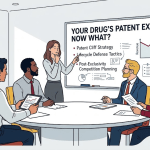
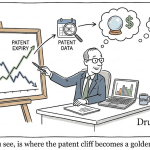
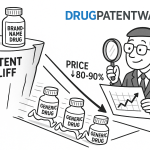
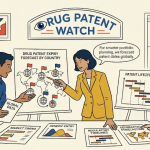
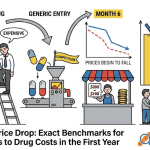
In the sanitized, fluorescent-lit boardrooms of the pharmaceutical industry, the “patent cliff” is often discussed with the hushed reverence usually reserved for natural disasters. It is the singularity event of the drug lifecycle: the moment a blockbuster product, generating perhaps $10 million in revenue every single day, loses its protective shield and is effectively devoured by a swarm of generic piranhas. For decades, the industry’s central nervous system—its analysts, investors, and business development executives—has been wired to track this event by fixing its gaze on a single data point: the patent expiration date.
They mark it in red on Gantt charts. They build Discounted Cash Flow (DCF) models that essentially flatline revenue the day after the date passes. They make multi-billion-dollar acquisition offers based on the presumption that the date listed in a database is the date the monopoly ends.
This fixation is a dangerous, expensive hallucination.
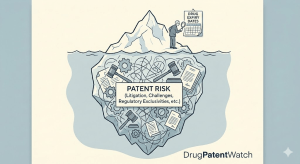
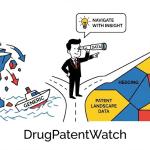
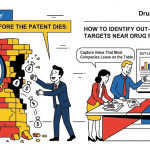
In the modern biopharmaceutical landscape, relying on the printed expiry date of a primary patent to predict market entry is akin to navigating the North Atlantic by looking only at the tips of the icebergs. It is a profound oversimplification of a system that has evolved into a labyrinth of legal, regulatory, and strategic mechanisms designed to render the calendar date irrelevant. The “expiry date” is merely the opening bid in a high-stakes negotiation between innovators, regulators, competitors, and the judiciary.
The numbers at stake are staggering. Between 2025 and 2030, the global pharmaceutical industry faces a wave of patent expirations that puts an estimated $200 billion to $400 billion in branded drug revenue at risk.1 Yet, the companies holding these assets are not passive victims of the calendar. They are active architects of “patent thickets,” creators of “regulatory fortresses,” and masters of “continuation practice”—strategies that can extend a franchise’s life by years, or even decades, beyond its nominal expiration.
Consider the case of Humira (adalimumab). Its primary composition of matter patent expired in 2016. In a simple world, biosimilars would have launched immediately, saving the US healthcare system billions. In the real world, AbbVie, the manufacturer, constructed a fortress of intellectual property that delayed competition until 2023.2 That seven-year gap was not a rounding error; it was a period that generated over $100 billion in additional revenue. An analyst looking only at the 2016 date would have been wrong by nearly a decade and off by the GDP of a small nation.
This report serves as a navigational chart for the submerged reality of patent risk. We will dismantle the simplistic math of “filing date plus 20 years.” We will explore the regulatory exclusivities that shield unpatentable drugs, the “skinny label” traps that can bankrupt a generic launcher, and the hidden “freedom to operate” risks that kill M&A deals. For the professional aiming to turn patent data into competitive advantage, understanding these dynamics is no longer optional—it is the baseline for survival.
2. The Mathematics of Monopoly: Deconstructing the “20-Year” Myth
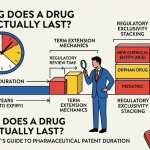
To understand why the expiry date is unreliable, we must first dissect the fundamental mathematics of patent life. The statutory term of a US patent is 20 years from the date of filing. However, in the pharmaceutical sector, this “20 years” is a fiction—a theoretical maximum that is battered by the realities of drug development and then artificially inflated by the complexities of patent law.
2.1 The Erosion of Effective Life
The clock starts ticking the moment a patent application is filed, which typically occurs during the discovery phase, long before a molecule enters clinical trials. The average drug development timeline is 12 to 13 years.3 This means that by the time a drug receives FDA approval and reaches the pharmacy shelf, more than half of its patent life has effectively evaporated. The “effective patent life”—the period of actual market exclusivity—is often compressed to just 7 to 10 years.1
This compression creates a desperate economic imperative. Innovator companies must claw back every possible day of exclusivity to recoup their multi-billion-dollar R&D investments. To do this, they utilize two distinct but powerful levers: Patent Term Adjustment (PTA) and Patent Term Extension (PTE). While they sound similar, they are mechanically distinct, and confusing them is a cardinal sin in IP analysis.
2.2 The Administrative Bonus: Patent Term Adjustment (PTA)
Patent Term Adjustment (PTA) is a correction mechanism for bureaucratic inefficiency. It is designed to compensate the patent holder for delays caused by the United States Patent and Trademark Office (USPTO) during the prosecution of the patent application.
The USPTO has statutory deadlines. For instance, it must issue a first office action within 14 months of filing. It must issue a patent within three years of filing. If it fails to meet these “Guarantees,” the delay is added to the patent term, day for day.4
However, this is not a one-way street. The calculation of PTA is a subtraction equation:
$$PTA = (USPTO \ Delays) – (Applicant \ Delays)$$
“Applicant delays” include asking for extensions of time, filing seemingly unnecessary papers, or failing to respond promptly to office actions. This creates a strategic game for patent attorneys: they must aggressively push the USPTO to acknowledge its own delays while scrupulously avoiding any action that could be construed as “applicant delay.”
Insight: A savvy IP team can manipulate the prosecution timeline to maximize PTA. By allowing the USPTO to miss deadlines while keeping their own responses pristine, they can bank hundreds of days of additional term. For a blockbuster drug, 500 days of PTA is not just administrative trivia; it is half a billion dollars in protected revenue.
2.3 The Regulatory Restoration: Patent Term Extension (PTE)
Far more potent than PTA is the Patent Term Extension (PTE). Enacted as part of the Hatch-Waxman Act, PTE explicitly acknowledges the “regulatory delay” caused by the FDA approval process. It allows a company to restore a portion of the patent term lost while the drug was stuck in clinical trials and FDA review.
The calculation for PTE is specific and reveals the legislative compromise at the heart of the Act:
Testing Phase (Clinical Trials): The patent holder gets credit for one-half of the time spent in the IND (Investigational New Drug) phase.
Approval Phase (FDA Review): The patent holder gets credit for 100% of the time spent in the NDA (New Drug Application) review phase.5
There are, however, critical caps that limit this generosity:
The 5-Year Cap: The extension cannot exceed 5 years.
The 14-Year Cap: The total patent life remaining after the drug is approved (including the extension) cannot exceed 14 years.5
One Patent Rule: PTE can be applied to only one patent per product.
Strategic Implication: The “One Patent Rule” forces a strategic choice. A company might have a composition of matter patent, a method of use patent, and a formulation patent. They must calculate which one serves as the strongest “anchor” for their exclusivity. Often, they will choose the patent with the longest original term, but sometimes they choose a narrower patent that is harder to invalidate.
Table 1: The Critical Differences Between PTA and PTE
Feature
Patent Term Adjustment (PTA)
Patent Term Extension (PTE)
Origin
American Inventors Protection Act (AIPA)
Hatch-Waxman Act
Trigger
USPTO administrative delays
FDA regulatory review delays
Calculation
Day-for-day compensation for USPTO sloth
1/2 of clinical testing time + 100% of FDA review time
Limits
No statutory cap (theoretically)
Max 5 years; Total remaining term cannot exceed 14 years
Application
Applies to any patent (if delayed)
Applies to one patent per product
Strategic Value
Can add months or years to every patent in a family
Adds a massive “tail” to the most critical patent
4
3. The “Pediatric Privilege”: The Most Valuable Six Months in Business
If PTE is the engine of exclusivity, Pediatric Exclusivity is the turbocharger. It is an obscure provision of the FDA Modernization Act of 1997 that has become perhaps the single most lucrative incentive in the history of commerce.
The premise is altruistic: drugs are rarely tested on children, leaving pediatricians to guess at dosages. To encourage companies to conduct these difficult and ethically complex trials, Congress offered a “carrot”: six months of additional market exclusivity.
But here is the detail that turns this policy into a goldmine: This six-month extension attaches to every single existing patent and regulatory exclusivity covering the drug.1 It is not a new patent; it is a magic wand that extends the expiry date of the entire portfolio.
3.1 The ROI of Pediatric Studies
The economics of this incentive are staggering. A pediatric trial might cost a pharmaceutical company between $5 million and $35 million to conduct.8 For a niche drug, this might be a break-even proposition. But for a blockbuster drug generating billions in annual sales, six months of monopoly is worth hundreds of times the investment.
“Pediatric exclusivity provided pharmaceutical manufacturers with a median net return of $176.0 million and a median ratio of net return to cost of investment of 680%.” — Study on Pediatric Exclusivity.9
For a mega-blockbuster like Lipitor or Humira, the return is measured in billions. This creates a perverse incentive structure where the scientific value of the pediatric data is secondary to the financial value of the extension. Companies will often wait until the twilight of a drug’s patent life to file for this exclusivity, using it as a final firewall to push the generic entry date just past a critical fiscal quarter or year-end.
3.2 The Strategic Timing
The timing of the pediatric “Written Request” (the formal document from the FDA asking for the study) is a crucial signal for investors. A company will typically initiate these discussions years in advance but aim to time the submission of data so the extension kicks in exactly when the primary patents are fading.
For analysts, the “Pediatric Exclusivity” flag in a database like DrugPatentWatch is a critical toggle. Without it, your expiry model is six months short—a discrepancy that, for a drug like Revlimid, represents a revenue gap of over $6 billion.
4. The Regulatory Moat: Exclusivities That Supersede Patents
In the popular imagination, patents are the only shield against competition. In reality, the FDA wields a separate and equally powerful set of shields called Regulatory Exclusivities. These are statutory periods during which the FDA is barred from approving—or sometimes even accepting—a generic application, regardless of the patent status.
Crucial Insight: A drug can have zero valid patents and still be protected from competition for years.
4.1 New Chemical Entity (NCE) Exclusivity
When a company develops a truly new active ingredient (a “New Chemical Entity”), the FDA grants it 5 years of data exclusivity.1 During this period, no generic company can rely on the innovator’s safety and efficacy data to file an ANDA.
This is an absolute shield. Unlike a patent, which can be challenged in court, NCE exclusivity is a regulatory lock. The only exception is that a generic can file an ANDA at the 4-year mark if they certify that the patents are invalid (a “Paragraph IV” filing). This structure essentially guarantees the innovator a minimum of 5 to 7 years of market solitude before a generic can practically launch.
4.2 Orphan Drug Exclusivity (ODE): The Golden Ticket
If NCE is the shield for the masses, Orphan Drug Exclusivity (ODE) is the shield for the niche. If a drug is designated to treat a rare disease (affecting fewer than 200,000 people in the US), it receives 7 years of market exclusivity for that indication.1
The strategic abuse of ODE has become a sophisticated art form. Companies engage in “salami slicing,” where they take a common disease and find a narrow, genetically defined sub-population that qualifies as “rare.” Once they get the Orphan designation and the 7-year shield, they may use off-label prescribing or subsequent approvals to broaden the market while keeping the exclusivity.
Case Study: Revlimid (Lenalidomide)
Bristol Myers Squibb’s Revlimid is a masterclass in stacking exclusivities. Originally approved for a subset of Myelodysplastic Syndromes (MDS), it received Orphan status. It subsequently received Orphan designations for Multiple Myeloma and Mantle Cell Lymphoma. By layering these 7-year periods (along with patent thickets), Revlimid maintained a monopoly that generated tens of billions of dollars, far exceeding the typical lifecycle of a small molecule drug.10
4.3 The Biologics Price Competition and Innovation Act (BPCIA)
For biologics—the large-molecule drugs that drive modern pharma growth—the exclusivity is even more generous. The BPCIA grants 12 years of regulatory exclusivity to a new biologic.11
This 12-year floor is independent of patents. In a legal environment where patents are increasingly vulnerable to invalidation via Inter Partes Review (IPR), this statutory 12-year lock-in provides a bedrock of certainty. It ensures that biosimilars cannot enter the market for over a decade, regardless of the strength of the IP estate.
Table 2: Hierarchy of Regulatory Exclusivities
Exclusivity Type
Duration
Trigger
Strategic Impact
Orphan Drug (ODE)
7 Years
Approval for rare disease (<200k patients)
Can be “stacked” for multiple indications; protects specific use.
New Chemical Entity (NCE)
5 Years
Approval of new active moiety
Absolute bar on generic filing for 5 years (4 w/ PIV challenge).
New Clinical Investigation (NCI)
3 Years
New use/formulation requiring new trials
Protects changes to existing drugs (e.g., product hops).
Pediatric Exclusivity
+6 Months
Completion of FDA-requested pediatric studies
Adds 6 months to all existing patents and regulatory exclusivities.
Biologics (BPCIA)
12 Years
Approval of new biologic reference product
The strongest regulatory shield; immune to patent challenges.
1
5. The Fortress Strategy: Anatomy of a Patent Thicket
The traditional view of patent risk envisions a single, strong “composition of matter” patent standing like a solitary sentinel. When it falls, the gates open. This model is obsolete. Today’s pharmaceutical giants do not build walls; they build patent thickets.
A patent thicket is a dense, overlapping web of intellectual property rights designed to make the cost of challenging the monopoly prohibitive. The goal is not necessarily to win every patent suit but to create a litigation landscape so complex and costly that competitors are forced to settle or delay entry.2
5.1 Case Study: The Humira Labyrinth
There is no better example of this strategy than AbbVie’s management of Humira (adalimumab), the best-selling drug in history. Humira’s primary patent expired in the United States in 2016. In a rational market, biosimilars would have entered shortly thereafter. Instead, AbbVie maintained its monopoly until 2023—a seven-year extension that generated over $100 billion in additional revenue.1
How? By constructing a thicket of over 247 patent applications, with 132 patents granted.
The genius—and the controversy—of the Humira strategy lay in the timing and nature of these patents. A staggering 89% of the patent applications were filed after Humira was first approved by the FDA in 2002.2 As the primary patent approached expiration, AbbVie accelerated its filing, creating a “wall of fire” around the drug.
These secondary patents did not cover the core molecule. They covered:
Formulations: New versions of the drug that were less painful to inject (citrate-free) or higher concentration.2
Methods of Use: Patents for treating specific diseases like Crohn’s or juvenile arthritis, filed years after the drug was in use.
Manufacturing Processes: Detailed patents on the specific temperature, pH, or stirring speeds used to grow the cells that make the drug.
Devices: Patents on the firing button of the injector pen or the grip mechanism.
An independent analysis revealed that approximately 80% of these patents were “non-patentably distinct,” meaning they were duplicative, overlapping variations of the same invention.12 Yet, because they were linked by terminal disclaimers, they formed a valid legal barrier.
5.2 The Strategy of Attrition
For a biosimilar competitor like Amgen or Samsung Bioepis, the challenge was not invalidating one patent; it was invalidating one hundred. The sheer volume meant that litigation would take 4 to 5 years and cost hundreds of millions of dollars in legal fees alone.
Facing this “death by a thousand cuts,” every single biosimilar competitor chose to settle. They agreed to delay their launch until 2023 in exchange for a license.13
This is the new reality. Tracking the expiry of the “main” patent is meaningless if the “ancillary” patents—the formulation, the device, the process—create a maze that no competitor can navigate in time.
6. The Litigation Arena: Hatch-Waxman vs. The Patent Dance
If patents are the map, litigation is the terrain. The mere existence of a patent does not stop a generic; the enforcement of that patent does. The legal frameworks governing this enforcement create specific timelines and bottlenecks that are far more predictive of entry dates than the patents themselves.
6.1 The Hatch-Waxman Crucible (Small Molecules)
For traditional drugs (small molecules), the battlefield is defined by the Hatch-Waxman Act. When a generic files an ANDA with a “Paragraph IV” certification (claiming the brand’s patents are invalid or not infringed), the brand company has 45 days to sue.
If they sue, a critical mechanism triggers: the 30-Month Stay.
The FDA is automatically barred from approving the generic for 30 months (or until the district court issues a decision).11 This is a strategic weapon. Brand companies will list marginal patents in the “Orange Book” precisely to trigger this stay. It gives them 2.5 years of guaranteed breathing room to execute product hops, squeeze out revenue, or negotiate a settlement.
6.2 The BPCIA “Patent Dance” (Biologics)
For biologics, there is no Orange Book and no automatic 30-month stay. Instead, the BPCIA mandates a complex, ritualized exchange of information known as the “Patent Dance“.15
Phase 1: The biosimilar applicant provides their application and manufacturing details to the brand (Sponsor).
Phase 2: The Sponsor lists patents they believe are infringed.
Phase 3: The applicant responds with detailed invalidity or non-infringement contentions.
Phase 4: The parties negotiate which patents will be litigated immediately.
This “dance” consumes months—often up to 8 months—before a lawsuit is even filed. This procedural drag allows brand companies to control the pace of litigation. They can choose to litigate a few patents early and save others for later, creating a “second wave” of litigation risk just as the biosimilar prepares to launch (the “Notice of Commercial Marketing”).
Table 3: Litigation Framework Comparison
Feature
Hatch-Waxman (Small Molecules)
BPCIA (Biologics)
Patent Listing
Orange Book: Mandatory listing of relevant patents.
No Book: Patents identified during the “Patent Dance.”
Notification
Paragraph IV Notice Letter to brand.
Disclosure of aBLA (biosimilar application) to brand.
Automatic Stay
Yes: 30-month stay of FDA approval upon suit.
No: No automatic stay; brand must seek preliminary injunction.
Exclusivity for Challenger
180 Days: First-to-file generic gets 6 months of monopoly.
None: No automatic exclusivity for the first biosimilar filer (only for “interchangeable” biosimilars, which is rare).
Litigation Timing
Immediate suit triggers stay.
“Patent Dance” delays suit by months; multi-phase litigation common.
11
7. The Evolution of Settlement: From Pay-for-Delay to Volume Limits
The vast majority of patent lawsuits never reach a verdict. They settle. In 2024, approximately 39-50% of Hatch-Waxman cases ended in settlement.17 The terms of these settlements are the true determinants of market entry.
7.1 The End of “Pay-for-Delay”
Historically, brand companies used “reverse payment” settlements (often called pay-for-delay), where the brand simply paid the generic millions of dollars to stay off the market. Following the Supreme Court’s scrutiny in FTC v. Actavis (2013), these explicit cash deals became antitrust magnets and have largely disappeared.
7.2 The Rise of the Volume-Limited License
Nature, and lawyers, abhor a vacuum. The modern successor to pay-for-delay is the Volume-Limited License. This strategy allows the generic to enter the market before the patents expire, but with strict handcuffs.
Case Study: Revlimid (Lenalidomide)
Bristol Myers Squibb executed a masterclass in this strategy with Revlimid. Facing a patent cliff, BMS settled with generic challengers (Natco, Dr. Reddy’s, etc.) by allowing them to launch in 2022—years before the final patents expired.
The catch? The settlements strictly limited the volume of generic Revlimid they could sell. In the first year, the generics were capped at a low single-digit percentage of the total market volume. This cap gradually increases each year until a final “unrestricted” date in 2026.18
The Financial Alchemy:
By controlling the volume, BMS prevented price erosion. If generics can only supply 5% of the market, they have no incentive to drop the price by 90%. They sell their limited supply at near-brand prices, and BMS retains 95% of the market share at full price.
For an investor or analyst, reading the headline “Generic Settlement Reached” is insufficient. A volume-limited settlement preserves the brand’s pricing power and the majority of its revenue, turning what looks like a “loss of exclusivity” into a managed, highly profitable sunset. This nuance is completely invisible if one looks only at patent expiration dates.
8. The Skinny Label Minefield: The End of the Safe Harbor
Perhaps the most insidious risk in modern patent strategy is the erosion of the “skinny label” safe harbor. Under the law (Section viii of Hatch-Waxman), a generic can seek approval for a drug while “carving out” indications that are still patented. This allows them to market the drug for unpatented uses (e.g., hypertension) while avoiding the patented use (e.g., heart failure).
For decades, this was a reliable, federally sanctioned pathway to market. Then came GSK v. Teva.
8.1 The Case That Changed Everything
In this landmark case, Teva launched a generic version of GSK’s heart drug Coreg (carvedilol). Teva used a “skinny label,” carving out the patented indication for congestive heart failure (CHF), which was still protected by GSK’s method-of-use patents. Teva marketed the drug only for its unpatented indications: hypertension and left ventricular dysfunction.
However, GSK sued Teva for induced infringement, arguing that Teva’s marketing materials, press releases, and even its reliance on the FDA’s “AB rating” (equivalence rating) effectively encouraged doctors to prescribe the drug for the protected CHF indication.20
8.2 The “Intent” Trap
The US Court of Appeals for the Federal Circuit sided with GSK, reinstating a $235 million verdict against Teva. The court found that Teva had “induced” infringement despite the label carve-out.
The evidence cited was chilling for the generic industry:
Press Releases: Teva issued releases calling its product an “AB-rated generic equivalent” of Coreg. The court interpreted “equivalent” to mean “equivalent for ALL uses,” including the patented one.
Marketing Materials: Promotional materials that touted the drug as a substitute for Coreg without explicitly excluding CHF in every instance.
The “AB” Rating: The court effectively weaponized the industry-standard regulatory classification.
8.3 The Strategic Fallout
The GSK v. Teva ruling turned the skinny label from a shield into a target. Generics can no longer rely on the label alone to protect them. Every press release, website update, and sales conversation is now a potential liability.
For investors, this introduces a new risk vector: Induced Infringement Liability. An “at-risk” launch with a skinny label was once considered a calculated, moderate risk. Now, it carries the threat of massive damages for “inducing” infringement of a patent the generic explicitly tried to avoid. Tracking the expiry of the “main” patent is useless if a secondary method-of-use patent can be weaponized to block the entire product via this legal theory.
9. The “At-Risk” Calculus: Gambling with Company Survival
When a generic or biosimilar receives FDA approval but patent litigation is still pending, they face a decision that defines careers: The “At-Risk” Launch.
Launching “at risk” means selling the product while the patent lawsuit is ongoing. If the generic eventually loses the case, they are liable for the brand’s lost profits.
9.1 The Asymmetric Warfare of Damages
The damages in these cases are punitive. The generic is not just liable for the revenue they made; they are liable for the revenue the brand lost.
Consider the math:
Brand Price: $100
Generic Price: $10
Generic Units Sold: 1 million
Generic Revenue: $10 million
If the generic is found to infringe, they must pay the brand for the lost sales. Since the brand would have sold those units at $100, the damages are $100 million (minus marginal costs).
Result: The generic made $10 million but owes $100 million. They are bankrupt.
This asymmetry creates a powerful deterrent. Brand companies know this and use the threat of these damages to force settlements, even on weak patents.
9.2 Case Study: The Biogen Tecfidera Shock
In 2020, the market witnessed the flip side of this risk: when a patent fortress collapses unexpectedly. Biogen relied on a key patent (the ‘514 patent) to protect its multiple sclerosis drug Tecfidera until 2028.
In a stunning ruling, a district court in West Virginia invalidated the patent for “lack of written description.” The news caused Biogen’s stock to plummet, erasing billions in market capitalization overnight.23 Generics, led by Mylan, launched immediately “at risk,” banking on the strength of the district court’s ruling. Biogen appealed, but the damage was done. An analyst tracking the “2028” expiry date would have been blindsided by the 2020 collapse.
Key Insight: Financial modeling of litigation outcomes has become critical. Tools like DrugPatentWatch and legal analytics platforms allow companies to quantify the specific tendencies of judges and the historical success rates of specific patent types.17 If the probability of invalidating the patent is high (e.g., >70%), aggressive generics may pull the trigger, destroying the brand’s monopoly years ahead of schedule.
10. Continuation Practice: The Weaponization of Procedure
In the shadows of the USPTO lies a procedural tactic that has been honed into a strategic weapon: the Continuation Application.
A continuation allows a patent applicant to keep a “family” of patents alive indefinitely. They file a parent application, then before it issues, they file a “child” (continuation) claiming priority to the same parent. This allows them to draft new claims years later, as long as the original description supports them.24
10.1 The “Submarine” Tactic
Smart innovator companies use continuations to ambush competitors. They keep a continuation application pending in the USPTO, effectively “hovering” over the market. When a competitor launches a product or publishes a new design that “designs around” the existing patents, the innovator drafts new claims in their pending continuation specifically tailored to cover the competitor’s product.
This is particularly lethal in the biotech and device sectors. A competitor might design around your issued patent, thinking they are safe. Six months later, you issue a new patent from your continuation family that covers their exact workaround.
“Continuation practice allows these companies to create a thicket of patents, making it harder for competitors to navigate without infringing… It creates a moving target.”25
10.2 The Due Diligence Nightmare
For a generic or biosimilar, this creates a “moving target.” You cannot clear FTO (Freedom to Operate) against a patent that hasn’t been written yet. Due diligence teams must look not just at issued patents, but at the status of pending families. If a hostile competitor has an “open family” (pending continuations), the risk profile is exponentially higher.
11. Freedom to Operate (FTO): The M&A Blind Spot
In Merger & Acquisition (M&A) scenarios, the failure to distinguish between Patentability and Freedom to Operate (FTO) is a common and fatal error.
Patentability: “Can I get a patent on my invention?” (Positive Right)
Freedom to Operate: “Can I sell my product without infringing someone else’s patent?” (Negative Right check)
Owning a patent does not give you the right to sell your drug. You might own the patent for a new cancer drug formulation, but if a competitor owns the patent for the method of treating cancer with that class of drugs, you are blocked.
11.1 The $6.4 Billion Mistake: BMS and the CVR
The acquisition of Celgene by Bristol Myers Squibb (BMS) offers a stark lesson in how regulatory and patent timelines can destroy value. The deal included Contingent Value Rights (CVRs) worth $6.4 billion, payable to shareholders if three specific drugs (including Liso-cel) were approved by strict deadlines.26
BMS missed the deadline for Liso-cel by just 36 days. The CVRs expired worthless. Lawsuits followed, alleging BMS “slow-rolled” the approval to avoid the payout. While this was primarily a regulatory delay, it highlights the fragility of deal value tied to specific dates.
In M&A due diligence, a superficial check of “patent expiry” is negligence. The diligence must perform a deep FTO analysis:
Identify Blocking Patents: Are there third-party patents on the delivery mechanism, the dosing regimen, or the manufacturing process?
Analyze Licensing Needs: Does the target rely on in-licensed IP? Are there “poison pill” clauses in those licenses triggered by a change of control?
Check Pending Continuations: Is a competitor sitting on an open family that could be weaponized post-acquisition?
Deals are frequently repriced or abandoned when FTO analysis reveals that the target’s “proprietary” technology is actually encumbered by a thicket of third-party rights.28
12. The Biosimilar Reality: Why Europe is Years Ahead
The divergence between the US and European markets highlights the impact of these strategies. In Europe, where patent thickets are harder to enforce and “pay-for-delay” is aggressively policed, biosimilars often launch immediately upon the expiry of the primary patent.
In the US, the launch is often delayed by years due to the factors discussed above:
Interchangeability: In the US, a biosimilar is not automatically substitutable at the pharmacy unless it has a special “interchangeable” designation, which requires additional, expensive switching studies.13
The Patent Dance: The procedural delays of the BPCIA dance push US launches back.
Recent Trends (2024-2025):
We are seeing a surge in biosimilar approvals in 2025 for drugs like Stelara, Eylea, and Prolia.30 However, the launches are often staggered or delayed by settlements. For example, Amgen launched Pavblu (a biosimilar to Eylea) “at risk” in late 2024, a bold move that signals a potential shift in risk tolerance for large biosimilar players.32
Investors must model the US and EU markets as completely different entities. A drug might “expire” globally in 2025, but the revenue stream will collapse in the EU in 2025 and persist in the US until 2029.
13. Strategic Forecasting: Moving from Dates to Probabilities
The era of deterministic patent tracking is over. The “drug expiry date” is a relic of a simpler time. In the modern pharmaceutical landscape, it is merely a baseline—a suggestion that is aggressively manipulated, extended, and litigated by the world’s most sophisticated legal teams.
For the executive or investor, the lesson is clear: Stop looking at the calendar and start looking at the docket.
To turn patent data into competitive advantage, one must move from Deterministic Models (“It expires on Jan 1, 2028”) to Probabilistic Models (“There is a 40% chance of entry in 2026 via settlement, and an 80% chance by 2028”).
Tools for the Modern Analyst:
Platforms like DrugPatentWatch are essential because they provide the layers of data required for this modeling:
Litigation Status: Is the patent currently being challenged?
Tentative Approvals: Has the FDA tentatively approved a generic (signaling readiness)?
Regulatory Flags: Is there an Orphan Drug designation or Pediatric Exclusivity attached?
Patent Family Trees: Are there open continuations or foreign counterparts?
By integrating this data, stakeholders can visualize the entire “iceberg,” not just the tip.
Key Takeaways
Expiry Dates are Deceptive: The listed patent expiration is rarely the actual date of generic entry. It is modified by Patent Term Adjustments (PTA), Patent Term Extensions (PTE), and Pediatric Exclusivity (+6 months).
Regulatory Exclusivity is a Separate Shield: FDA-granted exclusivities (NCE, Orphan Drug, BPCIA) operate independently of patents and can block competition even if all patents are invalidated.
Thickets Trump Strong Patents: Companies like AbbVie (Humira) use “patent thickets”—hundreds of overlapping, sometimes weak patents—to create a “litigation wall” that forces settlements and delays competition for years.
“Skinny Labels” Are No Longer Safe: The GSK v. Teva ruling means generics can be liable for induced infringement even if they carve out patented indications, forcing them to rethink “at-risk” launch strategies.
Settlements Dictate Market Entry: Most patent disputes end in settlements, often involving volume-limited licenses (e.g., Revlimid) that allow brands to maintain market dominance long after “technical” loss of exclusivity.
M&A Requires Deep FTO Analysis: Acquiring a company based on its patent ownership is dangerous without a “Freedom to Operate” analysis to ensure the technology doesn’t infringe third-party rights or pending continuation applications.
FAQ: Competitive Intelligence in Pharma IP
Q1: Why do different databases show different “expiry dates” for the same drug?
A: This discrepancy usually arises because databases track different things. Some track the primary composition of matter patent (the API). Others may include secondary patents (formulations, methods of use) which expire later. Furthermore, some databases may not account for real-time updates like Pediatric Exclusivity (which adds 6 months to all dates) or Patent Term Extensions granted post-approval. To get an accurate picture, you must look at the “Orange Book” (for small molecules) or “Purple Book” (for biologics) and layer on litigation status data from sources like DrugPatentWatch.
Q2: Can a generic launch “at risk” if they are 100% sure the patent is invalid?
A: They can, but it is a “bet the company” move. Even with high confidence, the risk of “treble damages” (paying 3x the brand’s lost profits) if a jury disagrees is catastrophic. For a blockbuster drug, damages could exceed the net worth of the generic company. Thus, even “weak” patents can deter launch if the financial asymmetry is high enough. Generics usually only launch at risk if they have a favorable district court ruling in hand, even if it’s under appeal.
Q3: How does “Pediatric Exclusivity” apply if the drug isn’t for children?
A: Surprisingly, the drug doesn’t even need to be approved for children for the company to get the bonus. The company simply needs to complete the pediatric studies requested by the FDA. Even if the studies show the drug doesn’t work in kids, or is unsafe, the company still gets the 6-month exclusivity extension on their adult products as a reward for generating that scientific data. It is a “bounty” for the research, not the result.
Q4: What is the “Patent Dance” and why does it matter for biosimilars?
A: The “Patent Dance” is a statutory information exchange mandated by the BPCIA for biologics. Unlike standard litigation, it requires the biosimilar maker to show their hand (their application and manufacturing process) to the brand company before litigation starts. This process is slow and allows the brand to strategically select which patents to assert. It creates a “procedural drag” that delays market entry, independent of the merits of the patents themselves.
Q5: How can an investor identify if a company is using a “Continuation” strategy to hide risk?
A: Investors should look for “open patent families” in the company’s IP portfolio. If a company has a pending application that claims priority to an issued patent, that family is “open.” This means they can file new claims at any time. In due diligence, asking “Are there any open continuations?” is critical. If a target company has open continuations, they have a hidden weapon to attack competitors; if their competitor has them, the target is at risk of being ambushed by new claims.
Labeling Changes and Costs for Clinical Trials Performed Under the US Food and Drug Administration Pediatric Exclusivity Extension, 2007 to 2012 – PubMed Central, accessed December 14, 2025, https://pmc.ncbi.nlm.nih.gov/articles/PMC6248195/
Congressional Investigation of RevAssist-Linked and General Pricing Strategies for Lenalidomide | JCO Oncology Practice – ASCO Publications, accessed December 14, 2025, https://ascopubs.org/doi/10.1200/OP.23.00579