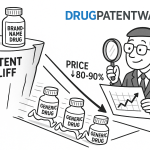
In pharmaceutical lifecycle management no event looms larger or casts a longer shadow than the loss of exclusivity (LOE). It is the financial precipice, the moment a blockbuster drug, often the result of a decade of research and billions in investment, faces the onslaught of generic competition. The scale of this impending challenge is staggering. Between 2023 and 2030, the industry is bracing for a patent cliff of tectonic magnitude, with an estimated $200 billion to $300 billion in annual branded drug sales at risk globally.1 For an innovator company, this cliff can trigger an erosion of 80-90% of a drug’s revenue within the first year of generic entry, a catastrophic drop that can reshape a company’s future.1
In this relentless battle against the patent clock, every single day of market exclusivity is a precious commodity. What if you could add 180 more of those days to your most valuable asset? What if you could erect a final, powerful shield against generic entry, one that stands firm even when your core patents are under assault? This is not a hypothetical scenario; it is the strategic promise of pediatric exclusivity.
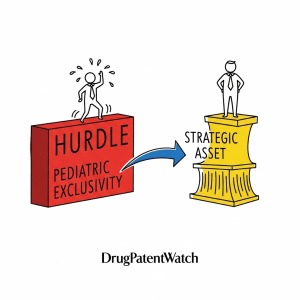
For too long, the process of conducting pediatric studies has been viewed through a narrow lens of regulatory compliance—a box to be checked, a hurdle to be cleared. This perspective is not just outdated; it is a profound strategic miscalculation. The six-month market extension offered under the Best Pharmaceuticals for Children Act (BPCA) is one of the most potent, valuable, and consistently underestimated tools in the modern pharmaceutical arsenal. A proactive, data-driven approach to securing this exclusivity can mean the difference between a predictable revenue collapse and a significant, multi-hundred-million or even billion-dollar extension of a product’s peak earning potential.
This report is designed as a strategic playbook for the leaders tasked with maximizing that value. For the intellectual property strategist, the business development lead, the R&D director, or the life sciences investor, understanding the intricate nuances of the BPCA and its mandatory counterpart, the Pediatric Research Equity Act (PREA), is no longer optional—it is a core competency for competitive advantage. We will move beyond the legalese to dissect the powerful mechanics of this incentive, from its unique application across an entire product franchise to its role as a formidable weapon in patent litigation. We will conduct a rigorous financial analysis, weighing the real-world costs of pediatric trials against the well-documented and often massive return on investment.
Ultimately, this report will reframe the conversation around pediatric drug development. It is not merely a public health obligation but a critical opportunity. By navigating this complex regulatory landscape with foresight and strategic intent, you can transform a perceived burden into a decisive competitive edge, securing a final, lucrative period of market dominance for your most important assets.
The Regulatory Architecture: Deconstructing the “Carrot and Stick” of Pediatric Drug Development
To unlock the strategic value of pediatric exclusivity, one must first master the foundational legal framework that governs it. The U.S. approach to encouraging pediatric drug studies is a masterclass in legislative design, built upon a complementary “carrot and stick” model. Two landmark acts, the Best Pharmaceuticals for Children Act (BPCA) and the Pediatric Research Equity Act (PREA), work in tandem, creating a system of incentives and requirements that shape nearly every aspect of modern drug development. Understanding their distinct roles, their triggers, and their complex interplay is the first step toward building a sophisticated lifecycle management strategy.
The “Carrot”: The Best Pharmaceuticals for Children Act (BPCA)
At its core, the Best Pharmaceuticals for Children Act (BPCA) is a powerful incentive program designed to entice, not compel.2 It addresses a long-standing market failure: without a specific reward, pharmaceutical companies historically had little financial motivation to undertake the costly, complex, and ethically fraught process of studying drugs in children. The BPCA’s solution is elegant and direct: it offers a prize of six additional months of marketing exclusivity to sponsors who
voluntarily conduct and submit pediatric studies that the Food and Drug Administration (FDA) has formally requested.3
This incentive has a rich legislative history, originating in the Food and Drug Administration Modernization Act (FDAMA) of 1997 before being formally established as the BPCA in 2002.8 After several reauthorizations, the FDA’s BPCA program was made permanent, cementing its role as a cornerstone of U.S. pharmaceutical policy.9 The overarching goal has always been to fill the critical knowledge gap surrounding pediatric medicine, improving drug labeling to ensure safer and more effective use in children.9 In parallel to the commercial incentive, the BPCA also authorizes the National Institutes of Health (NIH) to sponsor clinical trials for off-patent drugs, ensuring that public health needs are addressed even when the profit motive is absent.9
The Written Request (WR): The Golden Ticket to Exclusivity
The entire BPCA incentive hinges on a single, crucial document: the Written Request (WR). This is the golden ticket. A sponsor cannot simply conduct pediatric studies and claim the six-month reward. The studies must “fairly respond” to the specific requirements laid out in a formal WR issued by the FDA.4 This is a point of frequent confusion and critical importance: prior correspondence with the FDA, agreements made in meetings, discussions of Phase 4 post-market commitments, or any other informal communication
do not constitute a WR.12 The WR is a detailed, official document specifying the necessary studies, the indications to be explored, the required age groups, the trial design, and the timeframe for completion.12 It is the definitive contract between the sponsor and the agency for earning pediatric exclusivity.
Recognizing the need for a more proactive approach, the framework allows sponsors to initiate this process themselves. A company can submit a Proposed Pediatric Study Request (PPSR) to the FDA, outlining the studies it intends to conduct.4 The FDA then reviews the PPSR and can either issue a formal WR based on the proposal or respond with a letter detailing any deficiencies. This PPSR pathway is a vital strategic tool, transforming the process from a passive waiting game into an active negotiation, allowing sponsors to help shape the scope of the required research to align with both public health needs and their own development capabilities.
The “Stick”: The Pediatric Research Equity Act (PREA)
While the BPCA provides the incentive, the Pediatric Research Equity Act (PREA) provides the mandate. Enacted in 2003, PREA is the “stick” that complements BPCA’s “carrot”.2 It grants the FDA the authority to
require pharmaceutical companies to conduct pediatric assessments for certain drug and biologic applications.13 This is not an optional program; it is a regulatory obligation for approval.
PREA is triggered whenever a sponsor submits an application for a new active ingredient, a new indication, a new dosage form, a new dosing regimen, or a new route of administration.4 In essence, any significant innovation or change to a product that is likely to be used in a substantial number of children, or that would provide a meaningful benefit over existing pediatric treatments, falls under PREA’s purview.13
The Pediatric Study Plan (PSP) and Navigating Compliance
To manage this requirement, sponsors must submit an initial Pediatric Study Plan (iPSP) to the FDA. This document is a mandatory part of the development process and is typically due no later than 60 days after the end-of-phase-2 meeting.4 The PSP must outline the sponsor’s complete plan for the pediatric assessment, including the design of planned studies, timelines, and any requests for waivers or deferrals of the pediatric study requirement.8
The FDA has the authority to grant waivers if, for example, the necessary studies are impossible or highly impractical, if there is strong evidence the drug would be ineffective or unsafe in children, or if the product offers no meaningful therapeutic benefit over existing treatments.13 Deferrals are also common and may be granted if a drug is ready for approval in adults before the pediatric studies can be completed.2 A crucial feature of PREA is its exemption for orphan drugs—those designated for diseases affecting fewer than 200,000 people in the U.S..2 This exemption, intended to avoid overburdening development for rare diseases, creates a significant regulatory gap. It is a gap that the voluntary BPCA program is uniquely positioned to fill, as orphan drugs are fully eligible to receive a WR and earn the six-month exclusivity incentive.4
A Tale of Two Acts: A Strategic Comparison
The distinct yet overlapping nature of BPCA and PREA creates a complex strategic environment. While both aim to generate more pediatric data, their mechanisms, scope, and outcomes for the sponsor are fundamentally different. For business development and IP teams, mastering these differences is essential for navigating the regulatory landscape and identifying opportunities.
Feature
Best Pharmaceuticals for Children Act (BPCA)
Pediatric Research Equity Act (PREA)
Nature
Voluntary Incentive (“Carrot”)
Mandatory Requirement (“Stick”)
Trigger
FDA issues a Written Request (WR), often in response to a sponsor’s PPSR.
Sponsor submits an NDA/BLA for a new active ingredient, indication, dosage form, etc.
Scope of Studies
Broad. Can include any indication with a potential health benefit in children, including “off-label” uses not approved for adults.2
Narrow. Limited to the specific indication being sought in the adult application (“on-label”).2
Orphan Drugs
Eligible. Can receive a WR and earn exclusivity for conducting studies.4
Exempt. Not required to conduct pediatric studies (with some exceptions for cancer drugs).2
Outcome for Sponsor
Potential for a highly valuable 6-month extension of all existing patent and regulatory exclusivities.5
Fulfillment of a regulatory requirement necessary for drug approval. No direct grant of exclusivity.2
Key Document
Written Request (WR) / Proposed Pediatric Study Request (PPSR)
Pediatric Study Plan (PSP)
For many years, these two acts existed in a state of strategic symbiosis. A savvy sponsor could align its mandatory PREA studies with a voluntary BPCA request. By obtaining a WR for the very same studies it was already required to perform, the company could satisfy its regulatory obligation and earn the lucrative six-month exclusivity bonus in a single, efficient process—a classic “two-for-one” deal.
However, this convenient alignment is now under threat. In May 2023, the FDA issued new draft guidance that signals a monumental policy shift.11 The agency’s position is that PREA has been successful in compelling necessary research, and therefore, the BPCA “carrot” is no longer needed to ensure compliance with the PREA “stick.” The FDA now believes that Written Requests—the key to pediatric exclusivity—should be reserved for sponsors who conduct
additional pediatric studies that go beyond what is already required under PREA.11
This change, if finalized, fundamentally alters the strategic calculation. The pursuit of pediatric exclusivity is no longer a potential bonus for required work but a distinct and deliberate investment decision. A sponsor must now ask a more complex question: “Is the potential six-month market extension on our blockbuster drug worth the additional cost, time, and risk of conducting a new set of pediatric studies, perhaps in an off-label indication we would not otherwise have explored?” This decoupling of the mandatory requirement from the voluntary incentive dramatically raises the strategic stakes, demanding a more sophisticated and forward-thinking approach to pediatric development planning.
The Mechanics of Monopoly: How the 6-Month Extension Rewrites the Rules of Market Protection
Understanding the legislative framework is only the beginning. The true strategic power of pediatric exclusivity lies in the unique and often counterintuitive ways it is applied. It is not a simple patent extension. It is a flexible, powerful form of regulatory exclusivity that interacts with a company’s entire intellectual property portfolio in ways that can create formidable barriers to competition. Mastering these mechanics is the key to transforming the six-month period from a simple timeline shift into a multi-layered defensive strategy.
More Than a Patent Extension: An “Add-On” to Your Entire Exclusivity Fortress
A common misconception is that pediatric exclusivity “extends a patent.” This is not technically accurate and the distinction is critical. Pediatric exclusivity is not granted by the U.S. Patent and Trademark Office (USPTO); it is a regulatory protection granted by the FDA.21 Its defining characteristic is that it is an “add-on” incentive.12 The six-month period is tacked onto the
end of all existing patent protections and other regulatory exclusivities a drug may have, such as New Chemical Entity (NCE) or Orphan Drug Exclusivity (ODE).21
This has a clear and visible impact on a drug’s regulatory status. In the FDA’s “Approved Drug Products with Therapeutic Equivalence Evaluations,” better known as the Orange Book, a patent that has been granted pediatric exclusivity will be listed twice: once with its original expiration date, and a second time reflecting the additional six-month period.21 This dual listing serves as an unambiguous signal to generic manufacturers, clearly delineating the new, later date for potential market entry.
Perhaps the most commercially significant aspect of this mechanism is its de-risking of the research investment. To earn the six-month reward, a sponsor’s submitted studies must be deemed by the FDA to have “fairly responded” to the Written Request. Crucially, this determination is not contingent on the studies achieving their primary endpoints or leading to the approval of a new pediatric indication or labeling change.12 The exclusivity can be granted simply upon the agency’s acceptance of the study reports as complete and compliant with the WR. This means a company can invest in the required research knowing that even if the scientific results are inconclusive or negative, the financial reward of the market extension is still attainable, provided the work was conducted properly.
The “Active Moiety” Multiplier: The Most Powerful Feature of Pediatric Exclusivity
The single most powerful and strategically important feature of pediatric exclusivity lies in how broadly it is applied. The six-month extension is not limited to the specific product, formulation, or indication that was the subject of the pediatric trials. Instead, it attaches to the active moiety—the core molecule responsible for the drug’s physiological or pharmacological action.12
The strategic implication of this rule is profound. It means the six-month extension applies to all of the sponsor’s approved drug products that contain the same active moiety and are still protected by existing patents or exclusivities.12 This creates remarkable opportunities for strategic lifecycle management. For instance, a company could conduct a relatively straightforward and less expensive pharmacokinetic (PK) study on an older, less profitable oral solution formulation of a drug. If this study is done in response to a WR, the resulting six-month exclusivity would then attach to
all products containing that active moiety, including a blockbuster, patent-protected, extended-release tablet that generates billions in annual revenue.12 The investment in the smaller study acts as a lever to protect the far more valuable asset.
This “active moiety” rule allows for what can be termed a “portfolio shield” strategy. Many successful drugs become franchises, with an innovator company developing multiple products around a single successful molecule—different dosage forms, new formulations, or combination products. Generic challenges are typically aimed at the patents protecting the most profitable product within that family. By securing pediatric exclusivity on the shared active moiety, the innovator company extends the protective shield across the entire franchise. A generic competitor is now blocked from launching a competing version of any of the protected products for an additional six months. This move complicates the generic’s entire launch strategy and protects multiple revenue streams simultaneously, magnifying the value of the exclusivity far beyond the sales of a single product. It effectively builds a defensive moat around the entire molecular franchise.
Stacking the Deck: How Pediatric Exclusivity Interacts with Hatch-Waxman and Other Exclusivities
The true defensive strength of pediatric exclusivity becomes apparent when examining how it interacts with the complex web of other protections, particularly those established by the landmark Drug Price Competition and Patent Term Restoration Act of 1984, commonly known as the Hatch-Waxman Act. Hatch-Waxman created several key regulatory exclusivities, including the five-year exclusivity for a New Chemical Entity (NCE) and the three-year exclusivity for a new clinical investigation, which are granted for changes to previously approved drugs.24 Separately, the Orphan Drug Act provides a seven-year exclusivity period (ODE) for drugs treating rare diseases.22
Most of these exclusivities run concurrently with a drug’s patent term. Pediatric exclusivity is unique in that it is an “add-on” that attaches to the very end of all other existing patent and exclusivity periods.12 This “stacking” effect creates a final, unambiguous barrier. For a product with multiple patents expiring at different times, the application of pediatric exclusivity to each of these can create a “cascading” blockade. As seen in the case of AstraZeneca’s NEXIUM, this can effectively delay generic approval for a prolonged period as each patent’s expiration is pushed out by six months in succession, creating a frustrating and costly moving target for generic planners.30
This stacking effect can be weaponized against generic challengers who utilize the Paragraph IV certification pathway. Under Hatch-Waxman, a generic company can file an Abbreviated New Drug Application (ANDA) with a Paragraph IV certification, asserting that the innovator’s patent is invalid, unenforceable, or will not be infringed by their generic product.27 A successful court challenge can allow the generic to enter the market before the patent’s natural expiration.
However, pediatric exclusivity acts as a powerful, essentially ironclad backstop in these litigation scenarios.30 Even if a generic company invests millions in litigation and successfully invalidates an innovator’s patent in court, if that patent has pediatric exclusivity attached to it, the FDA is still barred from approving the ANDA until the six-month exclusivity period has run its course.30 The generic company’s only recourse during that six-month window is to obtain a waiver from the innovator (a highly unlikely prospect), secure a final, non-appealable court decision before the original patent expires (a difficult race against the clock), or successfully petition to have the patent delisted from the Orange Book.30
This dynamic fundamentally alters the calculus of patent litigation. For the innovator, securing pediatric exclusivity provides a guaranteed six-month victory lap, a final period of monopoly revenue regardless of the outcome of the court battle. This certainty provides immense leverage in settlement negotiations with generic challengers and can be a decisive factor in protecting a product’s final, and often most profitable, months on the market.
The Strategic ROI: A Financial Deep Dive into Costs vs. Rewards
While the legal mechanics of pediatric exclusivity are fascinating, for business leaders, investors, and strategists, the ultimate question is one of economics: What is the return on investment? The decision to pursue this powerful incentive requires a clear-eyed analysis of the significant costs of pediatric clinical trials weighed against the potentially enormous financial windfall of a six-month market extension. The data reveals a story of highly asymmetric returns, where a calculated investment can yield rewards that are orders of magnitude greater, particularly for high-revenue products.
The Investment: Deconstructing the Costs of Pediatric Clinical Trials
Conducting clinical research in children is an inherently complex and costly endeavor. The costs can vary dramatically depending on the type of study, the therapeutic area, the number of patients, and the duration of the trial. At the lower end of the spectrum, a pharmacokinetic (PK) study, which primarily examines how a drug is absorbed, distributed, metabolized, and excreted, might cost between $250,000 and $750,000 per age group.31 However, a full-scale safety and efficacy trial is a far more significant undertaking, with costs that can range from $1 million to well over $35 million.31
A comprehensive 2018 study published in JAMA Internal Medicine, which analyzed 54 drugs that received pediatric exclusivity, found that the median cost of investment for the required trials was $36.4 million per drug program.33 More recently, a 2024 analysis of four cancer drugs found that the total investment required to secure pediatric exclusivity was $156 million, averaging out to
$39 million per drug.35
Several factors drive these high costs. Patient recruitment can be exceptionally challenging due to the smaller patient pools and the understandable caution of parents and guardians.37 Developing age-appropriate formulations—such as palatable liquids or smaller tablets instead of adult-sized pills—can require significant R&D investment.8 Furthermore, the ethical oversight required for research in a vulnerable population adds layers of administrative and procedural complexity, increasing the burden on clinical sites and families.38
A 2018 analysis of 54 drugs that received pediatric exclusivity extensions between 2007 and 2012 found that while the trials cost the companies a median of $36.4 million, the exclusivity provided a median net return of $176 million, representing a median ratio of net return to cost of investment of 680%.33
The Windfall: Quantifying the Revenue from a Six-Month Market Extension
Against the multi-million-dollar investment in trials stands the monumental revenue potential of delaying the patent cliff. The financial benefit can be estimated with a straightforward, yet powerful, calculation: Financial Benefit = (Estimated Monthly Revenue) x 6 months.41
When applied to a blockbuster drug, the numbers become staggering. Consider a product with annual sales of $2 billion. This drug generates approximately $167 million in revenue each month. A six-month extension of its market monopoly is therefore worth an astonishing $1 billion in top-line revenue—a figure that dwarfs even the most expensive pediatric trial programs.37
This is not merely a theoretical exercise; real-world data consistently demonstrates the immense and highly lucrative returns generated by the program.
A landmark 2007 study in JAMA examined nine drugs and found that the net economic return from pediatric exclusivity was wildly variable but often massive, ranging from a slight loss of -$8.9 million for one product to a staggering gain of +$507.9 million for another.31
The aforementioned 2018 JAMA Internal Medicine study found a median net return of $176 million across 48 drugs, with a staggering median return on investment (ROI) of 680%.33
The 2024 study focusing on four cancer drugs revealed a combined revenue gain from exclusivity of $1.237 billion against the total trial investment of $156 million. For one drug, ruxolitinib (Jakafi), the estimated revenue from the six-month extension was $741 million.35
These figures illustrate a clear pattern: while the investment is significant, the reward for successfully navigating the BPCA process can be astronomical, providing a powerful financial incentive for companies to undertake this research.
The ROI Matrix: When Does Pursuing Pediatric Exclusivity Make Financial Sense?
The decision to pursue pediatric exclusivity is a classic risk-reward calculation. To provide a clear, actionable framework for strategic planning, we can model the potential ROI across different product revenue tiers, using a conservative range for trial costs.
Annual Drug Revenue
Estimated 6-Month Revenue
Estimated Trial Cost Range
Estimated Net Return Range
Estimated ROI % Range
Blockbuster ($2 Billion)
$1 Billion
$20M – $50M
$950M – $980M
1,900% – 4,900%
Mid-Tier Product ($500 Million)
$250 Million
$20M – $50M
$200M – $230M
400% – 1,150%
Niche/Specialty Product ($100 Million)
$50 Million
$20M – $50M
$0 – $30M
0% – 150%
Orphan Drug ($50 Million)
$25 Million
$20M – $50M
-$25M – $5M
-50% – 25%
This ROI matrix reveals a critical dynamic at the heart of the BPCA program: the “Blockbuster Bias.” The cost of conducting pediatric trials is relatively inelastic; a trial for a $100 million drug is not dramatically cheaper than one for a $2 billion drug. The reward, however, scales directly with sales. This creates a powerful incentive distortion. Research has confirmed that pharmaceutical companies are far more likely to pursue and conduct pediatric studies for their drugs with the largest adult sales markets, rather than for drugs that may have the most significant medical importance to children but smaller overall revenue.43
This mismatch between the private financial incentives of the company and the public health goals of the legislation is the program’s greatest strength and its greatest vulnerability.44 For an innovator company’s strategist, this bias provides a clear directive: the decision to pursue pediatric exclusivity should be heavily weighted toward high-revenue assets where the ROI is not just positive but virtually guaranteed to be immense. For generic competitors, payers, and policymakers, this same dynamic is the foundation of the criticism that the program provides an unnecessary “windfall” to the industry at the expense of the healthcare system.31 Understanding this Blockbuster Bias is crucial, as its very success in incentivizing research for top-selling drugs makes the program a perpetual target for reform, as evidenced by the FDA’s recent moves to tighten eligibility.
The Innovator’s Playbook: Integrating Pediatric Exclusivity into Lifecycle Management
Securing pediatric exclusivity is not a matter of luck; it is the result of deliberate, long-range strategic planning. Companies that treat it as a last-minute tactic to stave off patent expiration are destined for failure. The most successful innovators view pediatric development not as an afterthought but as an integral component of a drug’s lifecycle, planned and executed with the same rigor as the pivotal adult trials. This playbook outlines the key steps and strategic considerations for transforming pediatric exclusivity from a potential opportunity into a tangible asset.
From Afterthought to Forethought: Timing is Everything
The single most critical element of a successful pediatric exclusivity strategy is timing. The process, from initial discussions with the FDA to the final submission of study reports, can take several years. Therefore, planning must begin early in the drug development timeline.
The ideal starting point is in conjunction with the mandatory PREA planning process. Sponsors are required to submit an initial Pediatric Study Plan (iPSP) no later than 60 days after their end-of-phase-2 meeting with the FDA.4 This is the perfect moment to simultaneously begin formulating a strategy for BPCA. By thinking about the voluntary “carrot” at the same time as the mandatory “stick,” companies can develop a cohesive and efficient pediatric development program.
A key tool in this early phase is the Proposed Pediatric Study Request (PPSR). Rather than waiting for the FDA to issue a Written Request on its own terms, a sponsor can use the PPSR to proactively propose a research plan.4 This opens a strategic dialogue with the agency, allowing the company to help shape the scope, design, and timing of the required studies. A well-crafted PPSR can align the FDA’s public health objectives with the company’s internal capabilities and strategic goals, increasing the likelihood of receiving a feasible and achievable WR.
This long-range planning is made all the more critical by a hard statutory deadline. For pediatric exclusivity to be granted, the FDA must make its final determination—that the sponsor has fairly responded to the WR—at least nine months before the expiration of the patent or other exclusivity to which it will attach.45 This nine-month buffer is non-negotiable. It creates a definitive backstop that dictates the entire project timeline. Working backward from this deadline, it becomes clear that the clinical trials must be completed and the final reports submitted well over a year before the loss of exclusivity, making early and meticulous planning an absolute necessity.
Leveraging Patent Intelligence for Competitive Advantage
In the strategic chess match of pharmaceutical lifecycle management, information is power. A sophisticated pediatric exclusivity strategy cannot be executed in a vacuum; it requires a deep and dynamic understanding of the entire patent and regulatory landscape for both your own products and those of your competitors. This is where patent intelligence platforms become indispensable.
Services like DrugPatentWatch provide the comprehensive, real-time data necessary to inform these critical decisions. Business development and IP teams can use such platforms to meticulously track the full exclusivity portfolio of any given drug. This includes not just the expiration dates of key patents, but also the timelines for regulatory exclusivities like New Chemical Entity (NCE), Orphan Drug (ODE), and, of course, any pending or granted pediatric exclusivities.23
This intelligence can be leveraged in several powerful ways:
Identifying Strategic Windows: By monitoring the patent expiration dates of your own key assets, you can identify the optimal time to initiate and complete pediatric studies to maximize the duration of the monopoly period. For example, if a key patent expires in 2030, you know you need to have the exclusivity granted by early 2029 at the latest.
Anticipating Competitive Threats: Tracking the exclusivity status of a competitor’s drug allows you to more accurately predict their loss of exclusivity and the potential entry of your own generic or “me-too” product. If you see a competitor has been granted pediatric exclusivity, you can immediately adjust your own launch timelines by six months.41
Informing Generic Strategy: For generic manufacturers, this intelligence is equally vital. It allows for precise planning, preventing the costly mistake of preparing for a launch only to be blindsided by a last-minute pediatric exclusivity grant that delays market entry by six months.41
Using a dedicated patent intelligence platform like DrugPatentWatch transforms strategic planning from an exercise in guesswork into a data-driven discipline. It enables the precise modeling of different exclusivity scenarios, the anticipation of competitive moves, and the proactive management of your own asset timelines to extract maximum value.23
The Art of the “Fair Response”: Navigating the FDA Process
The ultimate gatekeeper for pediatric exclusivity is the FDA, and the standard for success is whether a sponsor’s submission constitutes a “fair response” to the Written Request. While adhering to the letter of the WR is the most straightforward path, the FDA’s interpretation of this standard allows for some flexibility.
The agency’s primary goal is the generation of meaningful clinical information that benefits child health. Therefore, even if a sponsor does not meet the precise terms of the WR—for example, if enrollment targets are missed or a study arm is modified—the FDA may still grant exclusivity if the data package as a whole is deemed to have met the WR’s underlying scientific objectives.11 This provides a small but important buffer for the inherent unpredictability of clinical research.
However, this flexibility should not be mistaken for laxity. If a sponsor intends to deviate significantly from the studies described in the WR, it is imperative to engage with the FDA before conducting the studies to seek a formal amendment to the request.12 Simply conducting a different set of studies, no matter how scientifically valid, and submitting the results is a near-certain path to denial.
Finally, the administrative execution of the submission is critical. The study reports must be prepared and submitted in the proper format—typically as a supplement to an approved application or an amendment to a pending one—and must be complete and well-organized.12 A high-quality, professional submission that clearly demonstrates how the conducted research addresses the questions posed in the WR will facilitate a smoother and more timely review by the agency, which is essential for meeting the strict statutory deadlines for the exclusivity grant.
Navigating the Headwinds: The Evolving Landscape and Future of Pediatric Incentives
The landscape of pediatric drug development is not static. It is a dynamic environment shaped by evolving regulatory philosophies, ongoing legislative debates, and new scientific advancements. For strategists, looking ahead and anticipating these changes is just as important as mastering the current rules. Several key trends and controversies are poised to redefine the risks and rewards of pursuing pediatric exclusivity in the coming years.
The FDA Draws a Line in the Sand: The May 2023 Draft Guidance
The single most significant recent development in this space is the FDA’s issuance of two new draft guidance documents in May 2023.11 These documents represent the agency’s first comprehensive update on its approach to pediatric drug development in nearly two decades and signal a fundamental shift in policy.
The core change is a proposal to dramatically curtail the circumstances under which a Written Request for pediatric exclusivity will be granted. As discussed previously, the FDA’s new position is that it will no longer issue WRs solely for studies that a sponsor is already obligated to perform under the Pediatric Research Equity Act (PREA).11
The agency’s rationale is straightforward and data-driven. After two decades, the FDA believes that PREA has proven effective on its own. The mandatory nature of the act is successfully compelling companies to conduct the necessary studies to get their drugs approved, meaning the additional “carrot” of a BPCA exclusivity grant is no longer needed simply to ensure compliance.11 Therefore, the agency argues, this powerful incentive should be reserved for its intended purpose: encouraging
additional research that goes above and beyond the mandatory requirements and is likely to produce new health benefits for children.53
If this policy is finalized, its strategic impact cannot be overstated. It effectively severs the convenient link between PREA and BPCA, raising the bar for obtaining the six-month extension. Companies will no longer be able to “double dip” by getting rewarded for work they were already required to do. The pursuit of pediatric exclusivity will now demand a separate, proactive investment in studies that are not part of the primary approval pathway, potentially involving different indications or pediatric populations. This increases the cost, complexity, and risk of the endeavor, making the initial ROI calculation and strategic planning process more critical than ever.
The “Windfall” Debate and Ethical Tightrope
The FDA’s move to tighten eligibility is, in part, a response to a long-simmering controversy surrounding the BPCA program. From its inception, the program has faced criticism that it provides a “windfall” to pharmaceutical manufacturers.26 The argument, supported by the financial data, is that for blockbuster drugs, the monetary reward from a six-month market extension is vastly disproportionate to the cost of the pediatric trials. Critics contend that this system forces the healthcare system—and by extension, patients and payers—to bear the high costs of delayed generic competition to pay for research that the companies can easily afford.26
This financial debate is intertwined with the complex ethical considerations inherent in pediatric research. Children are recognized as a vulnerable population, and any research involving them must be conducted with the highest ethical standards to balance the moral imperative to test drugs for safety and efficacy against the need to protect children from unnecessary risks.54 The entire regulatory framework is built upon this ethical tightrope. The “windfall” debate adds another layer, questioning whether the financial structure of the incentive itself is ethically balanced, or if it overly rewards private interests at the public’s expense. Strategists must be aware of this ongoing debate, as it provides the political and social context for future legislative and regulatory reforms.
The Future of Pediatric Research Incentives
The broader ecosystem of incentives for pediatric research is also in flux, a fact that will have significant downstream effects on the strategic value of the BPCA. A key development is the sunsetting of the Rare Pediatric Disease Priority Review Voucher (PRV) program. This program, which officially ended for new designations in September 2024, provided a highly valuable, tradable voucher to companies that developed treatments for rare pediatric diseases.2 These vouchers, which grant the holder a priority review for any future drug application, have sold on the secondary market for as much as $350 million, providing a massive financial incentive for R&D in this area.58
The expiration of the PRV program removes one of the most significant financial carrots from the pediatric development landscape. This development elevates the relative importance of the BPCA’s six-month exclusivity. With the PRV gone, the BPCA extension now stands as the preeminent, high-value financial incentive available to spur pediatric research.
This creates a fascinating and complex strategic tension. On one hand, the end of the PRV program makes the BPCA’s six-month exclusivity more valuable and strategically critical than ever before. On the other hand, this elevated importance puts the program under an even brighter spotlight. As the FDA simultaneously moves to tighten the eligibility requirements for BPCA, pharmaceutical companies will find themselves navigating a new landscape defined by fewer, but potentially more valuable and certainly more difficult to obtain, incentives. This environment will demand a hyper-strategic and selective approach, forcing companies to carefully choose which assets to advance for pediatric development and to execute those programs with an unprecedented level of precision and foresight.
Conclusion: Key Takeaways for Strategic Decision-Makers
Navigating the intricate world of pediatric exclusivity requires a blend of legal acuity, financial modeling, and long-range strategic vision. The landscape is complex and evolving, but for those who master its rules, the rewards are substantial. Distilling this comprehensive analysis into its most critical, actionable components provides a clear roadmap for senior leaders in the pharmaceutical and biotech industries.
Pediatric Exclusivity is a Core Strategic Asset, Not a Compliance Task. The most significant mistake a company can make is to treat pediatric studies as a late-stage compliance issue. To capture the immense value of the six-month extension, planning must be integrated into the development lifecycle from the outset, ideally beginning at the end of Phase 2. This requires a proactive, cross-functional approach involving R&D, regulatory affairs, IP law, and business development.
The “Active Moiety” Rule is Your Most Powerful Strategic Lever. The fact that exclusivity attaches to the core molecule, not just the product studied, is the program’s most potent feature. A relatively modest investment in a study for one formulation can be leveraged to create a protective shield around an entire multi-billion-dollar franchise. This “portfolio shield” strategy should be a central consideration when evaluating which assets are candidates for the BPCA pathway.
The ROI is Asymmetric and Favors Blockbusters. The financial calculus of pediatric exclusivity is heavily skewed. While the costs of pediatric trials are significant, they are dwarfed by the revenue generated from a six-month extension for a high-selling drug. The return on investment can often be in the hundreds or even thousands of percent. This “Blockbuster Bias” makes the program a near-certain financial win for top-tier assets, but it is also the source of the “windfall” criticism that makes the program a perennial target for reform.
The FDA is Raising the Bar: Adapt or Be Left Behind. The May 2023 draft guidance represents a paradigm shift. The era of easily aligning mandatory PREA work with a voluntary BPCA reward is likely coming to an end. Strategists must now operate under the assumption that earning the six-month extension will require conducting studies that go above and beyond existing regulatory obligations. This necessitates a more creative and resource-intensive approach to identifying and justifying additional pediatric research.
Patent and Regulatory Intelligence is Non-Negotiable. Executing a sophisticated lifecycle strategy in this environment is impossible without a clear, real-time, and comprehensive view of the competitive landscape. Leveraging advanced patent intelligence tools to monitor the full patent and exclusivity timelines for both your own and your competitors’ products is no longer a luxury—it is a foundational requirement for making informed, data-driven decisions that can secure hundreds of millions of dollars in revenue.
Ultimately, pediatric exclusivity remains one of the most valuable lifecycle management tools available. By embracing its complexity, understanding its powerful mechanics, and anticipating its evolution, strategic leaders can continue to harness its power to maximize asset value and secure a decisive competitive advantage.
Frequently Asked Questions (FAQ)
1. Can we get pediatric exclusivity for a biologic? What’s the difference compared to a small-molecule drug?
Yes, biologics are fully eligible for pediatric exclusivity. The Biologics Price Competition and Innovation Act (BPCIA) of 2010 extended the program to products regulated under the Public Health Service Act.59 The mechanism is similar: conducting studies in response to a Written Request can add six months to the end of a biologic’s 12-year regulatory market exclusivity period. The critical difference, however, is the interaction with patents. By statute, pediatric exclusivity for small-molecule drugs attaches to both regulatory exclusivities and listed patents. For biologics, it does
not formally extend the term of any associated patents.45 It is a purely regulatory extension. Nonetheless, it remains a highly valuable safeguard that can block biosimilar approval for an additional six months, especially if patent protections are challenged or expire before the 12.5-year regulatory period ends.45
2. What happens if our pediatric study fails to show efficacy or reveals a new safety concern? Can we still get the exclusivity?
Yes, and this is one of the most crucial features of the BPCA program from a business perspective. The grant of pediatric exclusivity is not contingent on the outcome of the clinical trials. It is awarded based on a determination that the sponsor has “fairly responded” to the FDA’s Written Request.11 This means the studies were conducted and the reports were submitted in accordance with the agreed-upon plan and timeline. Whether the results are positive, negative, or inconclusive does not affect eligibility for the six-month extension.12 This structure significantly de-risks the financial investment for the sponsor, as the substantial commercial reward is not tied to the unpredictable nature of scientific discovery.
3. We have a drug with an orphan designation. How do PREA and BPCA apply to us?
This scenario presents a significant strategic opportunity. Under the law, drugs with an orphan designation are exempt from the mandatory pediatric study requirements of PREA (with narrow exceptions for certain molecularly targeted cancer drugs).2 This frees the sponsor from a major regulatory obligation. However, these same orphan drugs are fully eligible to participate in the voluntary BPCA program. A sponsor can proactively seek a Written Request from the FDA to study their orphan drug in a pediatric population. If the studies are completed successfully, the sponsor can earn the six-month exclusivity, which would be added to the end of the drug’s seven-year orphan drug exclusivity (ODE) and any existing patents.4 This creates an ideal situation: the sponsor can pursue the powerful “carrot” of the BPCA without being compelled by the “stick” of PREA.
4. Our key patent expires in 10 months. Is it too late to pursue pediatric exclusivity?
Almost certainly, yes. The window of opportunity has likely closed. The statute includes a critical deadline: the FDA must make its final determination on granting pediatric exclusivity at least nine months prior to the expiration of the underlying patent or exclusivity to which it would attach.45 The entire process—from submitting a PPSR, negotiating and receiving a WR, enrolling and conducting the trials, analyzing the data, and submitting the final reports—is a multi-year endeavor. It cannot be used as a last-minute tactic to delay imminent patent expiration. This deadline underscores the absolute necessity of proactive, long-range planning, ideally initiating the process several years before the loss of exclusivity.
5. With the FDA’s new draft guidance, what is the single most important change we need to make in our strategic approach?
The most critical strategic adaptation is to completely decouple your mandatory PREA planning from your voluntary BPCA ambitions. You must now operate under the working assumption that the pediatric studies you are required to conduct to get your drug approved will not be eligible for the six-month exclusivity extension. To win the extension, your strategy must now focus on identifying and proposing additional studies that go above and beyond your PREA requirements. This means looking for new indications, different pediatric populations, or novel endpoints that provide a clear health benefit to children and can be justified to the FDA as worthy of the BPCA incentive. The PPSR process becomes more vital than ever, as it is the primary mechanism for negotiating this additional scope of work with the agency and building the business case for the investment.
The Study and Labeling of Drugs for Pediatric Use under the Best Pharmaceuticals for Children Act | U.S. GAO, accessed August 19, 2025, https://www.gao.gov/products/gao-07-898t
Pediatric Medicine Development: An Overview and Comparison of Regulatory Processes in the European Union and United States – PMC – PubMed Central, accessed August 19, 2025, https://pmc.ncbi.nlm.nih.gov/articles/PMC5493316/
Labeling Changes and Costs for Clinical Trials Performed Under the US Food and Drug Administration Pediatric Exclusivity Extension, 2007 to 2012 – PubMed Central, accessed August 19, 2025, https://pmc.ncbi.nlm.nih.gov/articles/PMC6248195/