For pharma IP teams, portfolio managers, R&D leads, and institutional investors assessing Russia exposure in 2025-2030.
The Rouble Economy: Why Dollar-Denominated Thinking Gets You Killed Here
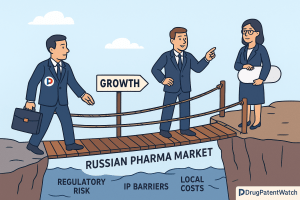
The Russian pharmaceutical market’s headline numbers are designed to mislead anyone who doesn’t read them carefully. Total market value reached 2.85 trillion roubles in 2024, a 10% year-on-year increase, with near-term projections pointing toward 3.2 trillion roubles. In isolation, that looks like a compelling growth story. It isn’t, at least not for foreign companies measuring returns in hard currency.
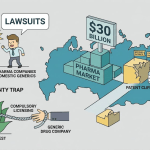
In U.S. dollar terms, the market sat flat at $30.9 billion in 2024, identical to 2023. In euros, it contracted 0.5% to 28.4 billion euros. Projections for 2025 range from $24.5 billion to $25 billion, depending almost entirely on rouble exchange rate assumptions. That divergence, strong local-currency growth coexisting with flat or declining hard-currency value, is the single most important framing device for any external stakeholder.
What this represents is not mere currency volatility. The Russian state has deliberately engineered a pharmaceutical ecosystem that creates value in roubles, measures success in roubles, and reinvests in roubles. Companies that continue tracking Russian revenue in repatriated dollars will systematically misread both the opportunity and the risk. The strategic question is whether your company can build a self-sustaining, rouble-denominated business, not whether you can extract hard-currency returns from a market that is structurally designed to prevent it.
Drug price inflation of 7.8% in 2024 compounds this. A significant share of the market’s nominal rouble growth reflects price increases, not volume expansion or therapeutic innovation. For companies with products on the government’s Essential Drugs List (EDL), that price inflation is largely captured by the state through administered price controls, not by the manufacturer. The real margin story is far thinner than the headline numbers suggest.
Key Takeaways: Market Valuation
The 2.85 trillion rouble market is real but rouble-denominated growth does not translate into dollar-equivalent value for foreign shareholders. Drug inflation at 7.8% inflates nominal figures without corresponding volume gains. Forecast ranges for 2025 are wide precisely because they hinge on exchange-rate assumptions. Any financial model that does not separate rouble-unit economics from hard-currency repatriation is structurally flawed for this market.
Investment Strategy: Valuation Implications
Portfolio managers tracking Russian pharma exposure should discount rouble-revenue projections using a conservative exchange rate band, not spot rates. The structural argument for a sustained rouble recovery is weak given sanctions-related capital flow restrictions. Assets valued on rouble EBITDA multiples without a hard-currency sensitivity analysis are likely overpriced in cross-border M&A contexts. Institutional investors with existing Russian positions should model scenarios at 80 and 90 roubles per dollar to stress-test book value.
Anatomy of the Market: Two Segments, Two Operating Logics
The Russian pharmaceutical market is two functionally separate systems that happen to share a regulatory framework. One is consumer-driven, relatively market-responsive, and growing at double-digit rates in rouble terms. The other is state-controlled, policy-driven, and the primary enforcement mechanism for the government’s industrial strategy. Each demands a different commercial model, a different distribution strategy, and a different legal posture.
The Commercial Retail Segment
The commercial segment reached 1.635 trillion roubles in 2024, up 13.8% year-on-year. Prescription consumption was broadly stable, but OTC volumes spiked during the cold and flu season, reflecting both consumer health patterns and the relative absence of state price controls outside the EDL. This is where foreign companies without Russian manufacturing partnerships retain meaningful commercial optionality. The catch is that commercial segment participation is not enough, on its own, to justify the operational overhead of a full Russian market presence.
E-commerce has become the most structurally interesting sub-segment. Online pharmacy sales hit 283 billion roubles in 2024, capturing 14% of the total pharmacy market. Apteka.ru holds approximately 32% of that online market, making it both the dominant platform and a critical channel-access decision point for any brand seeking direct-to-consumer reach. The rise of e-commerce does not, however, eliminate the power of traditional distributors. Protek, Pulse, Katren, and R-Pharm control the logistics infrastructure that feeds even the major online platforms. Attempting to build a direct-to-pharmacy model without leveraging existing distributor networks requires capital investment and political capital that very few foreign companies currently possess.
The Public Procurement Segment
State procurement accounts for 33% to 36% of total market value and is the primary arena where the government’s import substitution policy plays out in concrete financial terms. In Q1 2025, government procurement of medicines grew 15% year-on-year to 261 billion roubles, significantly outpacing the 8.4% expansion of the broader pharmacy market. Hospital purchases grew 16% in the same period. Regional Drug Provision, which covers subsidized outpatient dispensing, grew 23%.
This procurement surge is not a market signal in the conventional sense. It reflects deliberate state allocation decisions, budget increases for specific national health programs, and the accelerating displacement of foreign manufacturers by domestic ones. For international companies that have already invested in Russian manufacturing, the procurement growth is a revenue tailwind. For those still importing, it is increasingly inaccessible.
The public segment’s pricing logic is administered, not market-determined. The EDL lists maximum manufacturer prices for every included product, and all downstream wholesale and retail mark-ups are also regulated. Margins on high-volume state-purchased generic drugs are thin and getting thinner in real terms as procurement volumes grow without proportional price relief. Profitable participation in this segment requires scale, localization, and either a cost structure built around rouble-denominated production or a portfolio weighted toward higher-cost specialty and biologic drugs that command premium EDL prices.
Segment
2024 Value (RUB)
2024 Growth
Q1 2025 Value (RUB)
Q1 2025 Growth
Total Market
2.85 trillion
10.0%
—
—
Commercial (Retail)
1.635 trillion
13.8%
553 billion
8.4%
E-commerce Sub-segment
283 billion
—
—
—
Public Procurement
~940 billion
2.6%
261 billion
15.0%
Hospital Purchases
—
—
124 billion
16.0%
Preferential Drug Provision
—
—
59 billion
4.9%
Regional Drug Provision
185.6 billion
-7.4%
78 billion
23.0%
Sources: DSM Group, RNC Pharma, Russian Ministry of Health procurement data.
Product Mix: Generics as Infrastructure, Biosimilars as the Growth Vector
Generics are not a product category in Russia; they are the load-bearing structure of the entire market. They represent 68.4% of all prescription sales by value, with share by volume even higher. The Russian generics market carries a projected CAGR of 9.1% to reach $14.3 billion by 2028, a figure that reflects both volume growth and the government’s systematic effort to displace high-cost foreign originators with locally produced equivalents.
The import value-volume paradox reveals precisely why this substitution effort is happening. In 2023, imported medicines accounted for 54.9% of market value but only 31.4% of unit volume. Domestic drugs accounted for 68.6% of units but only 45.1% of value. Russia consumes the majority of its pharmaceutical volume domestically, but the highest-cost, highest-value products are still overwhelmingly foreign. ‘Pharma-2030’ is specifically designed to close that gap by targeting the 30 to 40 foreign blockbusters that account for a disproportionate share of the value differential.
Within generics, biosimilars are the fastest-growing and most strategically consequential sub-segment. Patent expirations on major biologics, combined with state pressure to reduce biologic costs and the advanced manufacturing capabilities of domestic players like BIOCAD, are converging to make Russia one of the most active biosimilar markets globally. Any company holding originator patents on a biologic with a Russian expiry date within five years should treat Russian biosimilar entry as a near-certainty, not a risk scenario.
Therapeutic Area Demand: What Drives the Spend
Cardiovascular disease is the largest therapeutic category by spend, which is consistent with Russia’s mortality burden. In 2024, the top two selling drugs by rouble value were both cardiovascular agents: Bayer’s rivaroxaban (Xarelto) at 18.08 billion roubles and Pfizer’s apixaban (Elikvis) at 18.02 billion roubles. Both are patented anticoagulants, both are on the EDL, and both are prime targets for the government’s localization pressure. The fact that foreign-held patented products occupy the top two slots in a market nominally committed to domestic substitution is not ironic; it illustrates how far the localization agenda still has to travel.
Oncology is the second major category, reflecting both disease burden and strategic priority under the ‘Health System’ national project. Antiviral sales grew 21% in monetary terms in Q1 2025, driven partly by seasonal demand and partly by continued HIV and hepatitis program spending. HIV, diabetes, respiratory illness, and neurological disorders round out the high-priority demand categories.
Of the top 10 best-selling drugs in 2024, eight were produced by foreign manufacturers. That concentration is not a sign of foreign market strength; it is the target list for the next wave of mandatory localization negotiations.
‘Pharma-2030’: The State as Rule-Setter, Customer, and Competitor
No single document shapes the Russian pharmaceutical operating environment more than the ‘Strategy for the Development of the Pharmaceutical Industry until 2030,’ approved by the government in 2022. It is not a policy aspiration. It is an enforceable industrial program backed by procurement rules, investment incentives, regulatory preferences, and the credible threat of compulsory licensing. Every foreign company with a Russian market presence is operating within a framework this document defines.
From ‘Pharma-2020’ to ‘Pharma-2030’: The Escalation of Ambition
The predecessor program, ‘Pharma-2020,’ launched in 2009, was directionally successful. It targeted a domestic market share of 75% by volume and, while that precise figure was not reached, the strategy drove a dramatic structural shift. By 2024, the domestic share of the market by unit volume exceeded 64%, up from 28.5% at the program’s inception. That is a 35-percentage-point shift in 15 years, achieved almost entirely through policy instruments rather than organic market dynamics.
‘Pharma-2030’ does not replicate ‘Pharma-2020.’ It escalates. The conceptual shift from import substitution, which could include simple secondary packaging of foreign-made drug substance, to ‘technological sovereignty,’ which requires full-cycle domestic manufacturing from API synthesis to finished dosage form, is qualitative, not incremental. The driving rationale, explicitly stated in government communications, is national security. Dependence on pharmaceutical imports from ‘unfriendly’ countries is treated as a strategic vulnerability in the same analytical category as dependence on foreign energy technology or foreign weapons systems. That framing matters because it means the policy will not be relaxed in response to commercial lobbying.
The Three Structural Targets
The strategy’s quantitative targets are specific enough to function as operational benchmarks. The overall share of Russian-made drugs in the domestic market, measured by value, must reach approximately 70% by 2030. For medicines on the government’s list of strategically important drugs, full-cycle local production must reach 90% by 2030. The current baseline for full-cycle biotech production is approximately 32.3%, meaning the gap to target is wide and the timeline is short.
The API self-sufficiency target is the most technically ambitious component. Russia currently imports more than 80% of the APIs required for domestic drug manufacturing, with China and India as the primary sources. Achieving meaningful API self-sufficiency, estimated to require RUB 100-120 billion in capital investment plus three to five years of construction and qualification time, by 2030 is not realistic across all therapeutic areas. The government’s practical focus will be on strategically critical molecules: antibiotics, antineoplastics, antiretrovirals, and insulin analogues. That selective focus is itself a planning input for international API suppliers, who should expect to remain embedded in the Russian supply chain for the foreseeable future in lower-priority categories.
The innovation pillar, shifting from generic replication to original drug development, is the longest time horizon objective. Domestic R&D investment has increased through grant programs and state-funded research partnerships, but less than 2% of the Russian market consists of genuinely original domestic drugs. Closing that gap requires building a clinical development infrastructure, a regulatory pathway for novel molecules, and an IP protection environment credible enough to incentivize private R&D investment. None of those conditions are currently reliable.
Strategic Objective
2024 Baseline
2030 Target
Domestic Market Share (Value)
~37%
~70%
Strategic Medicines Full-Cycle Production
32.3% (biotech)
90%
API Self-Sufficiency
<20%
75%
Original Russian Drug Share
<2%
Not specified
Pharmaceutical Export Value
~EUR 391 million (2017 baseline)
Five-fold increase
How the Government Enforces Compliance: The Carrot-and-Stick Toolkit
Government Regulation No. 1289, universally known in the market as the ‘Third Wheel’ or ‘Third Man Out’ rule, is the primary enforcement mechanism. It mandates that any EDL drug procurement tender must reject all bids from non-EAEU manufacturers if at least two EAEU-manufactured equivalents are submitted. The practical effect is absolute: a foreign company without a local manufacturing footprint is structurally excluded from the public procurement market for any product with two or more domestic alternatives. Given that the domestics are rapidly building out their manufacturing capacity in every major therapeutic category, the number of products where foreign importers can still compete in state tenders is shrinking each year.
Special Investment Contracts (SPICs) are the primary ‘carrot.’ They offer tax breaks and guaranteed tender access in exchange for long-term, quantified capital commitments to Russian manufacturing. The SPIC framework is designed to make deep localization financially viable for multinationals that can stomach the geopolitical risk of committing assets to Russian soil. For companies that have already made that decision, the SPIC structure is a meaningful commercial tool. For those still weighing it, the SPIC is also the government’s mechanism for locking in commitments before the political environment changes again.
Simplified registration pathways for domestically developed drugs accelerate the market entry of Russian products relative to foreign ones. While a foreign innovator works through the 160-working-day standard registration timeline plus mandatory local clinical trial requirements, a Russian biosimilar developer can follow an accelerated pathway that meaningfully compresses time-to-market. The asymmetry is intentional.
Key Takeaways: ‘Pharma-2030’
The strategy’s targets are enforceable via procurement rules, not just aspirational. The ‘Third Wheel’ rule already excludes non-localized companies from 33-36% of the market. API self-sufficiency by 2030 is aspirationally stated but operationally constrained; expect selective progress in high-priority therapeutic areas. SPICs remain the clearest pathway for foreign companies to access state procurement with legal certainty. The innovation pillar is the weakest structural component and will not materially displace import dependence in the 2030 timeframe.
Drug Registration and Market Authorization: The Regulatory Architecture
Getting a drug registered in Russia is a multi-stage, sequential process that is resource-intensive in both capital and calendar time. The regulatory structure is split between two bodies: the Ministry of Health of the Russian Federation (Rosminzdrav), which sets policy, manages the drug register, and approves clinical protocols; and the Federal Service for Surveillance in Healthcare (Roszdravnadzor), which handles inspections, pharmacovigilance, and compliance enforcement. Both must be engaged correctly for market authorization to proceed.
The GMP Inspection: The Mandatory Starting Gate
Before a marketing authorization dossier can be accepted, the manufacturing site must hold a valid Russian GMP certificate issued by the State Institute of Drugs and Good Practices (SID&GP). Russia has enforced its own national GMP regulations since January 2016, based on but distinct from EU GMP. The distinction matters: EU GMP certification from the EMA does not automatically satisfy Russian requirements. A physical inspection of the manufacturing facility by Russian inspectors is mandatory, and that inspection must be initiated before or in parallel with dossier submission.
Early in the enforcement of this requirement, the GMP certification timeline created a structural bottleneck. Russian GMP inspectors had limited availability for overseas site inspections, effectively queuing foreign applicants for months before their dossiers could even be reviewed. The parallel submission pathway, allowing dossier filing and GMP inspection application to proceed simultaneously, reduced this bottleneck but did not eliminate it. Manufacturing sites that have never hosted a Russian inspection should budget nine to eighteen months for the GMP certification process, including travel scheduling, inspector availability, and remediation of any observations.
Local Clinical Trials: A Technology Transfer Mechanism Disguised as a Safety Requirement
Russian regulations require that at least one clinical trial be conducted within the Russian Federation for most drug categories, even for products with comprehensive approval packages from the FDA, EMA, or other major regulatory authorities. The scientific rationale offered is that ethnic and genetic population differences may affect pharmacokinetics and dose-response relationships. The functional effect is that foreign companies must invest directly in the Russian clinical research ecosystem, creating partnerships with local contract research organizations, employing Russian investigators, generating Russian-language trial data, and building relationships with the Ministry of Health long before their product reaches commercial launch.
The local trial requirement is also a time asymmetry mechanism. A Phase III-equivalent confirmatory trial in Russia can take 12 to 24 months plus enrollment lead time. During that window, any Russian biosimilar or generic developer who has already completed a simplified registration pathway can establish market presence, negotiate procurement contracts, and build prescriber relationships. By the time the foreign originator launches, the domestic competitor is already entrenched. Planning for the local trial as a central element of the market entry timeline, rather than an afterthought, is operationally essential. Companies that begin local CRO selection and site qualification before their European or U.S. approval is final gain meaningful time advantages.
The Standard Registration Timeline and Exceptions
The standard marketing authorization timeline is 160 working days from dossier acceptance, not including the local clinical trial period or query response time. An accelerated pathway of approximately 90 days applies to orphan drugs, the first three generics registered for a given molecule, and pediatric-only products. The accelerated pathway for the first three generics is explicitly designed to promote generic competition: it rewards speed, which domestic companies with existing manufacturing infrastructure and no GMP inspection lag are structurally better positioned to exploit.
All dossier documentation must be in Russian. All product labeling and packaging must comply with local language requirements. For multinational companies managing global product lifecycle documentation in English, the translation and legalization burden for a Russian registration dossier is substantial. Apostille requirements for non-EAEU country documents add another procedural layer.
EDL Inclusion and Pricing: The Reimbursement Gateway
The EDL (Vital’yevyye i Neobkhodimyye Lekarstvennyye Preparaty, or VED in Russian) is both a price control instrument and a market access gateway. Inclusion on the EDL is the prerequisite for participation in state reimbursement and procurement programs. Without EDL status, a product competes only in the private, out-of-pocket commercial market, which limits its addressable patient population and revenue ceiling.
Maximum manufacturer prices on the EDL are registered and cannot be exceeded. Wholesale and retail mark-ups are also regulated, creating a fully administered pricing stack from factory gate to dispensing point. In a high-inflation environment where input costs in roubles are rising, fixed nominal price ceilings compress margins over time. Companies with EDL-listed products have historically sought compensating relief through procurement volume growth rather than price renegotiation, because price appeals to Rosminzdrav are slow and rarely successful.
Reference pricing for generics entering the EDL caps their registered price at 80% of the reference originator’s price. Biosimilars are capped at 90% of the reference biologic’s price. These differentials are intentional: they ensure that generic and biosimilar entry produces automatic cost savings for the state, while still leaving a price premium for the domestic manufacturer over what fully price-competitive bidding might produce.
Key Takeaways: Regulation and Pricing
Russian GMP certification requires physical site inspection and cannot be substituted by EU or FDA certification. The local clinical trial requirement functions as a de facto technology transfer mechanism and adds 12-24 months to the market entry timeline for most foreign products. EDL inclusion is mandatory for state market access but comes with price controls that compress margins over time. Generic price caps at 80% of the reference product and biosimilar caps at 90% are administered, not negotiated.
Pharmaceutical IP in Russia: A Geopolitical Asset Class
For research-based pharmaceutical companies, Russia’s IP environment is the highest-stakes dimension of market participation. The formal legal architecture, anchored in Rospatent and aligned with international treaty obligations, looks adequate on paper. In practice, patent rights are subject to override by industrial policy, judicial decisions shaped by national interest considerations, and government decrees that, since March 2022, effectively nullify compensation requirements for patent holders from ‘unfriendly’ states. Understanding the gap between formal protection and practical enforceability is the prerequisite for any IP strategy in this market.
The Patent System: 15,000 Pharma Patents, Uncertain Enforceability
Rospatent currently maintains approximately 15,000 active pharmaceutical patents. Patentable subject matter covers new chemical substances, pharmaceutical compositions, dosage forms, and methods of treatment, broadly comparable to other major jurisdictions. Secondary patents on polymorphs, crystalline forms, formulations, and delivery mechanisms are grantable, and Russian companies have become increasingly sophisticated at using secondary patent filings as both competitive intelligence tools and pre-emptive blocking strategies against foreign originators.
The Federal Antimonopoly Service (FAS) has positioned itself as the system’s primary anti-evergreening enforcer. The FAS actively challenges secondary patents it characterizes as designed to extend exclusivity beyond the commercially reasonable life of an innovation, and has consistently argued for earlier generic entry in high-cost therapeutic areas. This creates a structural tension: FAS anti-evergreening positions can conflict with Rospatent grant decisions, leaving courts to adjudicate cases where two government bodies have taken incompatible positions on the same IP asset.
IP Valuation: The ‘Xarelto’ and ‘Elikvis’ Case Studies
Rivaroxaban (Xarelto, Bayer) and apixaban (Elikvis, Pfizer) together generated approximately 36 billion roubles in Russian sales in 2024, placing them first and second in the national market by value. Their IP position in Russia illustrates the valuation complexity foreign innovators face. Both drugs hold active patent protection covering the compound and key formulation claims. Both are on the EDL. Both are subject to mandatory administered pricing.
From an IP asset valuation standpoint, the relevant questions for an analyst are not simply when the core compound patents expire, but how many biosimilar-equivalent small-molecule generics will be ready to file immediately after expiry (using the Bolar provision window), whether Russian companies have already filed secondary patents on the crystalline forms or coformulations, what Patent Term Extension eligibility exists, and whether the FAS has taken positions on secondary patent legitimacy in these specific molecules. Each of those inputs materially changes the expected revenue curve post-expiry.
Rivaroxaban’s Russian patent position extends through the mid-2020s on compound claims, with secondary formulation patents potentially providing additional years of protection, subject to FAS challenge. Apixaban is in a similar position. Both products face domestic generic development programs that are already in progress; Russian generics firms do not wait for patent expiry to begin synthesis and formulation work. By the time primary patents lapse, multiple domestic products will be ready for immediate commercial launch.
The Osimertinib Litigation: A Case Study in Russian IP Unpredictability
AstraZeneca’s osimertinib (Tagrisso), an EGFR-targeted kinase inhibitor used in non-small cell lung cancer, produced the most instructive recent case study in Russian pharmaceutical IP litigation. When the Russian generic company Axelpharm registered a generic version of osimertinib while AstraZeneca’s patent remained in force, the ensuing litigation ran through multiple contradictory decisions. An initial court dismissed AstraZeneca’s patent infringement claim, prioritizing patient access to a cheaper oncology treatment, a ruling that aligned with the import substitution agenda. AstraZeneca appealed to the FAS, which ruled in its favor on unfair competition grounds and ordered Axelpharm to cease sales. A Moscow Arbitration Court subsequently overturned that FAS decision, reinstating the generic’s ability to sell.
The back-and-forth produced three years of legal uncertainty for both the originator and the generic. More importantly, it revealed that no single regulatory or judicial body has definitive, consistent authority over pharmaceutical patent disputes when the outcome touches on access and industrial policy. For an IP team modelling Russian revenue certainty, the Tagrisso litigation is a calibration event: it demonstrates that even a valid, actively enforced patent can be rendered commercially uncertain by litigation alone, regardless of its ultimate outcome.
Compulsory Licensing and Government Use: The Nuclear Options
Two Civil Code provisions give the Russian state the legal authority to override patents without the holder’s consent. Article 1362 allows courts to grant compulsory licenses when a patent is ‘not used or insufficiently used’ or when a dependent patent creates a deadlock. This provision was used by Nativa, a Russian generic firm, to secure a compulsory license for Celgene’s lenalidomide (Revlimid), a multiple myeloma treatment. The decision turned on Russia’s domestic production and access needs, not on the global originators’s commercialization timeline.
Article 1360 is the more significant provision for post-2022 risk modelling. It grants the government the right to authorize use of any patented invention without the patent holder’s consent in cases of ‘extreme need’ related to national defense and security or protection of citizens’ health. In March 2022, a government decree invoked this provision and specifically removed the compensation requirement for patent holders from ‘unfriendly’ states, a category that includes the U.S., EU member states, UK, Japan, Switzerland, and most other major innovator-company home jurisdictions. The practical consequence: Russian manufacturers can currently produce patented drugs from covered companies without paying royalties, subject to the government designating the relevant national health need. This is not a theoretical risk. It is an active legal reality.
For IP valuation purposes, this means that patents held by companies from ‘unfriendly’ states carry a real probability of state-authorized infringement, particularly for high-cost drugs in oncology, HIV, diabetes, and cardiovascular categories. Any valuation model for a Russian patent asset that does not incorporate a compulsory licensing probability discount is incomplete.
Patent Term Extensions and Strategic Filing
Russia offers Patent Term Extensions to compensate for regulatory delay, capping additional protection at five years. Extensions apply to product-claim patents covering the active substance or composition, not to method-of-treatment or manufacturing process claims. This is a narrower scope than PTEs in the U.S. or SPCs in the EU. Companies that file Russian patent applications with primarily method or process claims, common in portfolios drafted for the U.S. litigation context, may find they cannot claim PTE protection that would otherwise be available. Aligning Russian claim drafting strategy with Russian PTE eligibility criteria is a real revenue decision, not a procedural formality.
Using Patent Intelligence for Competitive Positioning
In a market where the gap between patent expiry and generic launch can be measured in weeks, patent intelligence is a time-sensitive operational tool. DrugPatentWatch data shows Pfizer’s crizotinib (Xalkori) had a key Russian patent estimated to expire in December 2025; Novo Nordisk’s semaglutide (Ozempic) carries a key Russian patent expiry estimated for March 2026. Each of those expiry events represents a commercialization window, in either direction: domestic generics and biosimilar firms planning for launch, and originators planning lifecycle management responses.
For generic and biosimilar developers, the Bolar provision, established through Russian court precedent, allows manufacture of trial batches and regulatory submission work before the originator’s patent expires, without that activity constituting infringement. The practical effect is that a domestic generic developer can complete its full registration package and stand ready for day-one launch. Originator companies cannot rely on regulatory approval timing to provide a post-expiry grace period; domestic competitors will be commercially ready at expiry, not six to twelve months after it.
Key Takeaways: IP Strategy
The March 2022 government decree effectively nullified compensation obligations for patent use by ‘unfriendly state’ companies. Compulsory licensing under Article 1362 has been successfully invoked (Nativa/lenalidomide). Russian PTE eligibility applies to product claims only, excluding method and process claims. The FAS functions as an anti-evergreening enforcement body and has intervened in multiple pharma patent disputes. The osimertinib litigation demonstrates that even a formally valid patent cannot guarantee exclusivity when national interest arguments are raised.
Investment Strategy: IP Risk-Adjusted Valuation
Portfolio managers valuing Russian patent assets for licensing revenue or M&A purposes should apply a country-specific IP risk discount to all patents held by ‘unfriendly state’ companies. A reasonable modelling approach is a probability-weighted scenario combining: (1) full exclusivity through patent expiry, (2) compulsory license granted mid-cycle with zero royalties, and (3) government use decree invoked for high-priority therapeutic categories. Weight each scenario by therapeutic area priority, with oncology and HIV carrying the highest government-use probability. Ignore any Russian patent asset as a reliable exclusivity instrument for valuation purposes unless it covers a molecule where no domestic substitute exists and where global supply alternatives are not available.
Dominant Market Players: The New Competitive Calculus
The Russian pharmaceutical competitive landscape has undergone a structural transformation since 2022. The dominant model, in which multinationals supplied high-value branded drugs while domestic companies produced generic commodity volumes, no longer holds. Domestic companies have moved aggressively up the value chain, targeting biosimilars, complex small molecules, and, in some cases, original biologics. State support has accelerated this transition. International companies have simultaneously retreated from new investment while working to defend existing revenue streams through localization.
Pharmstandard: The Manufacturing Platform
Pharmstandard is the largest domestic manufacturer by sales volume, with a portfolio exceeding 400 products and an annual production capacity of 1.7 billion packages. Its core competitive position is not in innovative drug development but in manufacturing scale, regulatory expertise, and its established role as the preferred Russian manufacturing partner for multinational companies. Its facilities in the Moscow region, Tomsk, and elsewhere hold Russian GMP certification and have successfully passed international audits, making them credible CMO platforms for products requiring ‘Made in Russia’ status.
Pfizer uses Pharmstandard for full-cycle manufacturing of key oncology products. Sanofi has engaged it for certain vaccine and small-molecule manufacturing programs. For Pharmstandard, these partnerships provide revenue stability and technology access; for the multinationals, they provide procurement eligibility without the capital commitment of building proprietary Russian facilities.
From an IP perspective, the CMO relationship creates a specific asset question: who owns the manufacturing process know-how that accumulates when a foreign drug is produced at a Russian site? Pharmstandard’s deepening technical understanding of multinationals’ manufacturing protocols is a strategic asset that accrues to the domestic company over time, regardless of contractual IP protections, which may be limited in enforceability under current Russian law.
BIOCAD: The Biosimilar and Biologic Technology Platform
BIOCAD is Russia’s most technically sophisticated pharmaceutical company and the primary vehicle for the government’s ambition in biologic drug development. Its differentiation is full-cycle biologic competency: cell line development, upstream and downstream bioprocessing, fill-finish, and analytical characterization, all conducted within Russian territory. It has commercially launched biosimilars for rituximab (reference: Roche’s MabThera/Rituxan), bevacizumab (reference: Roche’s Avastin), and trastuzumab (reference: Roche’s Herceptin), all in the oncology biologics category, and all targeted at products where originator patents had significant value.
BIOCAD’s IP portfolio is an asset in its own right. The company has filed patents in Russia and internationally on its biologic manufacturing processes, formulations, and, in some cases, novel biologic entities. Its Russian patent filings in oncology biologics serve as early warning signals for originators tracking biosimilar development programs. A BIOCAD patent application on a novel crystalline form or cell line for a specific biologic can indicate an 18-to-24-month lead time before a biosimilar registration filing.
For institutional investors, BIOCAD’s valuation is primarily driven by its pipeline of biosimilars targeting global blockbusters with post-2025 Russian patent expiries and its potential to export biosimilars to non-CIS markets where originator biologics face similar cost pressure. Its estimated enterprise value has fluctuated significantly with geopolitical conditions, but its technical assets are not correlated with Russian market risk in the same way that revenue-dependent valuations are.
R-Pharm: The State-Aligned Integrator
R-Pharm’s business model is best understood as strategic alignment with Russian government healthcare priorities, pursued through vertical integration. Founded in 2001, it has grown through a combination of organic expansion and state-adjacent business development. Its product portfolio is concentrated in the highest-priority government procurement categories: oncology, autoimmune diseases, antivirals, and antibiotics. It manufactured Sputnik V COVID-19 vaccine alongside other Russian producers. It holds API manufacturing capabilities that are directly relevant to the government’s self-sufficiency targets.
R-Pharm’s strategic value to foreign companies is access to its procurement relationships and regulatory positioning, particularly in categories where the ‘Third Wheel’ rule is most aggressively applied. Joint venture structures with R-Pharm for high-priority drugs can provide more reliable state tender access than CMO arrangements with Pharmstandard, where the procurement relationship is one step removed. The trade-off is greater dependence on a partner with direct government ties, which creates its own governance and control considerations.
Pharmasyntez: The Procurement Specialist
Pharmasyntez occupies a focused niche: it is the leading domestic supplier of antineoplastic, anti-tuberculosis, and systemic antibiotic drugs to the public health system. Its competitive position is built on sustained compliance with Russian GMP standards in these specific therapeutic categories, reliable supply chain management for state tender contracts, and the absence of the manufacturing quality issues that have occasionally affected competitors in the generic space. It does not compete broadly across the market; it dominates a set of procurement categories where the government’s access and security interests are most acute.
For multinationals assessing partnership options in these therapeutic areas, Pharmasyntez represents a specialized alternative to the broader manufacturing platforms offered by Pharmstandard. The specificity of its therapeutic focus also makes it less useful as a general-purpose localization partner.
The dominant playbook for Western multinationals since 2022 has been a studied avoidance of full exit paired with a halt to new capital allocation. Most major companies, including AstraZeneca, Novartis, Pfizer, Sanofi, Roche, Bayer, and Novo Nordisk, have suspended new Russian clinical trial enrollments, stopped marketing and promotional activity, and shelved plans for new manufacturing facilities or R&D centers. None have completed a full commercial withdrawal, citing the humanitarian obligation to maintain supply of essential medicines to patients.
The operational consequence of this posture is a freezing of the asset base. AstraZeneca’s Kaluga facility, which it opened in 2015 with a $224 million investment and which now produces more than 30 products spanning oncology, cardiovascular, and respiratory categories, remains operational and generating rouble-denominated revenue. Novartis’s St. Petersburg facility, backed by a $500 million multi-year commitment made before 2022, is in various stages of operation and is the company’s primary instrument for maintaining state procurement access. These are legacy assets, not new commitments.
Pfizer’s Russia strategy has relied heavily on its partnership with NovaMedica, a joint venture with state-aligned shareholders, for the manufacturing of essential medicines including sterile injectables. The NovaMedica structure provides procurement access while limiting Pfizer’s direct asset exposure in Russia. Sanofi runs a hybrid model: a proprietary insulin manufacturing facility (Sanofi-Aventis Vostok) in the Orel region for its diabetes portfolio, and a technology transfer partnership with Nanolek for a pediatric pentavalent vaccine, which required full process transfer to the Russian partner.
For each of these companies, the Russian portfolio is increasingly managed as a contained, isolated revenue stream, ring-fenced from global financial consolidation, with minimal new capital flows and maximal reliance on existing infrastructure. The strategic question each faces is not whether to maintain this posture in the short term but what it looks like in three to five years as domestic competitors gain market share and as the government’s localization requirements intensify.
Key Takeaways: Competitive Landscape
Pharmstandard, BIOCAD, and R-Pharm are the primary domestic beneficiaries of ‘Pharma-2030’ capital and procurement preferences. BIOCAD’s biosimilar launches against Roche oncology biologics have already displaced meaningful originator revenue. Multinationals are operating on a ‘harvest’ model: protecting existing revenue through localization without new capital deployment. CMO and JV partnerships remain the practical localization mechanisms for companies unwilling to build proprietary Russian facilities. Domestic companies’ manufacturing and technical capabilities are advancing faster than originator companies’ strategic plans are adapting.
Entry Models: A Decision Framework for IP Teams and Portfolio Managers
The optimal Russian market entry model is not a generic strategic recommendation. It is a function of specific variables: therapeutic area, patent lifecycle position, portfolio value, risk tolerance, and whether the company has existing manufacturing assets in Russia or EAEU partner states. What follows is a decision framework calibrated to those variables.
Model Comparison: Capital, Control, IP Exposure, and Market Access
Entry Model
Capital Investment
Control Level
IP Risk Exposure
Public Tender Access
Speed to Market
Direct Investment (Greenfield)
Very High
Full
High (assets on Russian soil)
Excellent
Slow (3-5+ years)
Joint Venture
High
Shared
Medium (partner influence)
Very Good
Medium (2-3 years)
Contract Manufacturing (CMO)
Low
Operational only
Low (IP remains offshore)
Good
Fast (1-2 years)
License/Distribution
Very Low
None
Very Low
Poor (excluded by Third Wheel)
Very Fast (<1 year)
Direct Investment
The AstraZeneca and Novartis models represent the full-commitment end of the spectrum. AstraZeneca’s Kaluga investment ($224 million, opened 2015) and Novartis’s St. Petersburg program ($500 million, multi-year) secured these companies maximum procurement access and the ability to register products as Russian-manufactured under full-cycle criteria. The trade-off is the highest exposure to asset-specific risks: regulatory creep, forced partnership requirements, asset seizure in extreme scenarios, and the severance of supply chain access for inputs that depend on sanctioned technology.
This model is appropriate for large multinationals with strategically important, high-volume products that command premium EDL pricing, a long-term horizon in Russia, and boards that have resolved the reputational risks of ongoing Russian market presence. As of 2025, the number of companies in that position is shrinking, not growing.
Joint Venture
The JV model, exemplified by Pfizer/NovaMedica, provides a capital-lighter route to ‘local’ manufacturing status while leveraging the Russian partner’s procurement relationships and regulatory knowledge. The critical JV-specific risks are governance, IP protection, and exit rights. Russian courts’ treatment of foreign partner interests in JV disputes has been inconsistent, and the political position of the JV partner relative to state-aligned interests matters enormously. A JV with a partner whose shareholders include state entities provides political protection but reduces operational independence.
IP protection within a JV structure requires explicit contractual delineation of which manufacturing process know-how is licensed (not transferred), what audit and monitoring rights the foreign partner retains, and what happens to Russian-registered product dossiers on JV dissolution. These provisions are enforceable under Russian law, but enforcement requires functioning Russian courts and a counterparty who has not been directed by state actors to act adversarially.
Contract Manufacturing
The CMO model has become the most operationally pragmatic route for companies unwilling to commit capital to Russia but needing ‘localized’ status for procurement purposes. Under a CMO arrangement, the Russian manufacturer produces the drug to the foreign company’s specifications, registers it as a locally manufactured product, and the foreign company retains IP ownership (theoretically). The limitation is process transparency: the CMO accumulates manufacturing knowledge that is difficult to protect, and Russian courts have shown limited appetite for enforcing technology secrecy obligations against domestic manufacturers in industrial policy-sensitive cases.
The CMO model is also subject to the government’s evolving definition of ‘full-cycle’ localization. Secondary packaging-only CMO arrangements no longer qualify for the most preferred procurement status. API synthesis at the Russian site is increasingly required for full-cycle designation, which pushes the technical requirements and therefore the cost of CMO arrangements upward.
License and Distribution
Licensing to a Russian distributor or local company, with no manufacturing footprint, is the lowest-capital, lowest-control option. It provides access to the commercial retail market but is structurally excluded from state tenders by the ‘Third Wheel’ rule. For OTC products, niche therapeutics without domestic competitors, or as a transitional arrangement while building manufacturing capacity, this model can generate revenue. It is not a sustainable long-term model for any prescription drug in a therapeutic area where Russian domestic companies are active.
Risk Mitigation: An Operational Checklist
Supply chain risk mitigation requires active diversification away from European logistics corridors, which have been disrupted by sanctions-related restrictions. Indian and Chinese API suppliers have largely replaced European sources for most Russian manufacturers; foreign companies should align their Russian-specific supply chains with these routes rather than continuing to route through sanctioned pathways. Strategic inventory buffers of 90 to 180 days for critical inputs provide meaningful protection against point-source disruptions.
IP risk mitigation requires treating localization partnerships as a defensive IP tool, not merely a market access tool. A company that localizes production of a high-value product in Russia through a credible CMO arrangement has reduced, though not eliminated, the probability that the government will invoke compulsory licensing for that product. The implicit logic is that a government use decree against a product already being manufactured in Russia serves the industrial policy less well than one targeting a purely imported product. This is not a legal protection; it is a political calculus that can shift.
Regulatory risk requires engaging experienced Russian regulatory consultants from the earliest planning stage, not after a dossier has been assembled. The Russian regulatory environment has specific documentation requirements, translation standards, legalization procedures, and query response protocols that are not intuitive from EU or U.S. regulatory experience. Local expertise reduces timeline surprises, which are the primary source of financial model variance in Russian market entry planning.
Operational Realities: Geography, Cold Chain, and the Cultural Code
The physical and cultural dimensions of Russian pharmaceutical operations are as significant as the legal and regulatory ones. Russia’s geography is not a marketing abstraction; it is a logistics constraint that directly affects product integrity, delivery reliability, and cost structures. The country spans eleven time zones, contains urban centers with world-class infrastructure alongside remote regions with limited road access in winter months, and has a climate that creates continuous cold chain challenges for biologic and vaccine products.
The API Supply Chain Rupture
The Russia-Ukraine conflict and subsequent Western sanctions severed traditional European API supply routes, many of which had served as the dominant logistics corridor for APIs from Indian and Chinese manufacturers transiting European logistics hubs. Re-routing through Turkey, the UAE, China directly, and Kazakhstan has extended transit times, increased freight costs, and reduced supply chain predictability. Russian manufacturers of finished drugs have absorbed these disruptions to varying degrees; companies with buffer inventory strategies and diversified sourcing have fared better than those reliant on just-in-time API delivery.
For foreign companies still supplying Russia from European manufacturing sites, the sanctions logistics environment is a compounding risk layered on top of the regulatory and IP risks. Any manufacturing transfer analysis should include a realistic assessment of how supply chain re-routing affects cost-of-goods, quality assurance sampling requirements for transit-impacted shipments, and shelf-life consumption during extended transit times.
Cold Chain: The Biologic Complexity Multiplier
The shift toward biologics and vaccines in global pharmaceutical portfolios collides with Russia’s logistical reality. An unbroken cold chain from manufacturing site to dispensing point is the technical requirement; maintaining it across eleven time zones, in a climate that ranges from subtropical to subarctic, with infrastructure quality that varies dramatically between urban centers and rural oblasts, is the operational challenge. A single cold chain failure, whether from a refrigeration equipment fault, a power outage during transit, or inadequate temperature monitoring at a regional distribution center, can destroy an entire product lot and create patient safety risks.
Russian pharmaceutical distributors have invested substantially in cold chain infrastructure over the past decade, driven partly by the growth of biologics and partly by post-COVID-era vaccine distribution experience. But the infrastructure remains uneven. Any company distributing temperature-sensitive products through Russia’s regional distribution network should conduct site audits of cold chain capabilities at major distribution centers and implement continuous temperature monitoring with real-time alert systems, not periodic manual checks.
Customs and Labeling: The Bureaucratic Overhead
Russian customs procedures for pharmaceutical imports are document-intensive and subject to discretionary interpretation at ports of entry. Import licenses, product registration certificates, certificates of conformity, and sanitary-epidemiological certificates are all potentially required depending on product type, and the documentation requirements have been subject to revision without reliable advance notice. Customs delays of two to four weeks for standard pharmaceutical imports are common; delays of longer duration occur frequently enough to require buffer inventory management as a standard operational practice.
All product labeling and packaging must meet Russian language requirements, which means maintaining Russia-specific packaging variants that are not compatible with EU or U.S. packaging lines without modification. For global product lifecycle management, this creates a separate Russian packaging stream with its own art approval process, inventory management requirements, and regulatory update obligations when labeling content changes.
The Cultural Architecture of Russian Business
Business in Russia operates within a relationship structure called svyazi, the network of personal trust relationships through which significant decisions are actually made. The formal organizational hierarchy exists, but consequential decisions, approvals, and commitments flow through personal trust networks that have been built over years of sustained engagement. A foreign executive who meets a Russian counterpart twice before a negotiation should not expect the same level of decision-making authority that a counterpart with a decade of relationship history would access.
Decision-making in Russian pharmaceutical companies and government bodies is concentrated at the top of the hierarchy. Mid-level managers typically lack the authority to make binding commitments on pricing, volume, or partnership terms. Investing weeks of negotiation time with personnel who do not have final decision authority is a common and expensive mistake. Identifying and accessing the actual decision-maker, whether a company’s general director or a ministry official, is a prerequisite for any commercially meaningful conversation.
Russian negotiation style rewards patience and formal positioning. Initial positions are typically presented as firm and non-negotiable; expecting an immediate movement toward compromise will misread the dynamic. The willingness to hold a well-researched position, return to the negotiating table repeatedly, and invest in relationship maintenance between formal sessions is more predictive of successful outcome than applying Western-style collaborative negotiation frameworks.
Russia’s Most Valuable Patent Expiries: The Opportunity Pipeline for Generics and Biosimilars
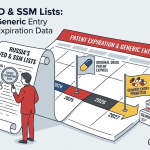
The near-term patent expiry calendar in Russia represents a defined, quantifiable opportunity for domestic generic and biosimilar developers, and a corresponding revenue cliff for originators. The following products face key Russian patent expirations in the 2025-2027 window, based on DrugPatentWatch data and public patent registry information.
Crizotinib (Pfizer’s Xalkori), a first-generation ALK/ROS1 inhibitor used in non-small cell lung cancer, had a key Russian patent estimated to expire in December 2025. The oncology priority makes it a high-value target for domestic biosimilar-adjacent small molecule development. Semaglutide (Novo Nordisk’s Ozempic), the GLP-1 receptor agonist that has become the global blockbuster in type 2 diabetes and obesity management, carries a key Russian patent estimated to expire in March 2026. Given Russia’s significant diabetic population and the government’s interest in reducing insulin analog and GLP-1 spending, semaglutide generic entry will almost certainly be state-encouraged. The regulatory and manufacturing barriers to semaglutide generics are non-trivial, involving peptide synthesis capabilities that few Russian manufacturers currently possess, but BIOCAD and R-Pharm are the most likely to attempt entry in this category.
These expiry events are planning inputs for both sides. Generic and biosimilar developers should be in active synthesis and formulation work now if they intend to file for registration within the Bolar provision window and launch at expiry. Originators should be implementing lifecycle management programs, where credible secondary patents exist, and assessing localization strategies that reduce the government’s incentive to encourage generic substitution through procurement preferences.
Conclusion: Russia Rewards Commitment, Punishes Ambiguity
The Russian pharmaceutical market in 2025 is not the market of 2019, and strategic frameworks built for that earlier environment will systematically generate wrong conclusions. The state is the dominant force, the primary customer, the regulator, and the de facto IP adjudicator. Companies that treat engagement with Russian state interests as a political risk to be managed rather than a strategic variable to be optimized will underperform against companies that have made explicit decisions about alignment.
The winning posture for any company that has concluded Russia is a market worth participating in is the rouble-economy commitment: build or partner for full-cycle local manufacturing, treat your localization investment as a defensive IP tool against compulsory licensing, engage in procurement programs as a strategic relationship rather than a transactional revenue channel, and model returns in rouble-denominated unit economics rather than repatriated hard currency.
Companies that have not resolved their governance position on Russia, that are neither committed to deep localization nor willing to withdraw, face the worst outcome: progressive exclusion from state tenders as domestic competitors expand, thinning commercial margins as the EDL pricing environment tightens, and escalating compulsory licensing risk as the government identifies their high-value patented products as targets for import substitution. Ambiguity is the highest-cost position in this market.
For those who cannot make the localization commitment under current geopolitical conditions, an honest assessment of the harvest model is the right starting point: what is the realistic revenue trajectory for existing products under current market access, what is the IP attrition rate as domestic alternatives emerge, and at what revenue threshold does the operational overhead of maintaining a Russian market presence no longer justify the return? That calculation is different for every portfolio, but it is the calculation that most multinational pharma companies have not yet completed rigorously.
Master Key Takeaways
The 2.85 trillion rouble market is growing in local currency and flat to declining in hard currency. Do not conflate nominal rouble growth with dollar-equivalent value creation. ‘Pharma-2030’ is a legally backed industrial program, not an aspiration; it enforces localization through procurement rules that exclude non-localized companies from 33-36% of the market. The ‘Third Wheel’ rule is in active daily use. Full-cycle localization, meaning API synthesis through finished dosage form within the EAEU, is the standard the government is moving toward; secondary packaging arrangements no longer provide the most preferred procurement access. Compulsory licensing under Article 1362 and government use under Article 1360 are active instruments, and the March 2022 decree eliminated compensation obligations for ‘unfriendly state’ patent holders. BIOCAD, Pharmstandard, and R-Pharm are not legacy generic companies; they are sophisticated state-backed competitors moving into biologic manufacturing, complex small molecules, and original drug development. The most commercially rational posture for a foreign company is a clearly committed one, either deep localization with explicit alignment to ‘Pharma-2030’ targets, or a disciplined harvest and exit plan. Ambiguity between these positions is the highest-cost strategic choice.
Data sourced from DSM Group, RNC Pharma, Russian Ministry of Health procurement reports, Yakov and Partners, IQVIA, DrugPatentWatch patent expiry database, and company public disclosures. All rouble figures are nominal; dollar equivalents converted at prevailing 2024 exchange rates.