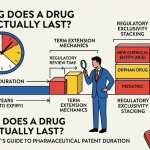
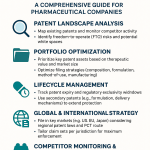
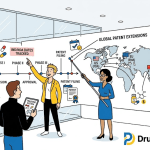
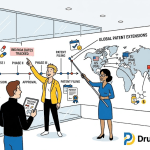
The pharmaceutical and biotechnology sectors operate within a uniquely compressed commercial environment where the traditional twenty-year patent term is frequently a mathematical fiction. While a utility patent provides two decades of protection from the date of filing, the actual window for commercializing a new molecular entity is structurally reduced by the decade-long regulatory review process required to ensure safety and efficacy.1 This development deficit creates an economic imperative for innovator firms to master the dual mechanisms of statutory patent term restoration and the strategic layering of secondary intellectual property. For a blockbuster drug generating $3 billion in annual revenue, a single day of market exclusivity is valued at approximately $8.2 million, making the optimization of every possible day of protection a matter of multi-billion-dollar consequence.1
The Economic Imperative of Life-Cycle Management in Modern Pharmaceuticals
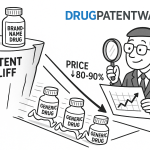
The financial stakes associated with the current and upcoming wave of patent expirations are staggering. Industry-wide analyses project that between 2025 and 2030, nearly 70 high-revenue products will face patent expiration, putting a colossal $236 billion to $400 billion in annual revenue at risk.3 For a company heavily reliant on a single blockbuster product, the “patent cliff” represents an existential threat, capable of eroding 80% to 90% of a drug’s revenue within the first year of generic entry.1
The average cost to bring a new molecular entity (NME) to market ranges from $2.2 billion to $2.6 billion, including the costs of failed candidates.1 Returns on research and development (R&D) have shown signs of recovery, rebounding to 5.9 percent in 2024 from a nadir of 1.2 percent in 2022, but the window to recoup this investment remains structurally compressed to often fewer than 10 years.1 This reality drives the strategic necessity of Life-Cycle Management (LCM), a core business strategy used to extend the commercial life and market exclusivity of a drug beyond foundational patent expiry.7
Financial Metric
Industry Average/Statistic
Average Cost to Develop NME
$2.2 Billion – $2.6 Billion 1
Blockbuster Daily Exclusivity Value
$8.2 Million (based on $3B annual revenue) 1
Revenue Erosion Post-Generic Entry
80% – 90% in first 12–24 months 3
R&D Return on Investment (2024)
5.9% 1
Total Revenue at Risk (2025–2030)
$236 Billion – $400 Billion 3
The Statutory Mechanics of Patent Term Extension
The 1984 Drug Price Competition and Patent Term Restoration Act, commonly known as the Hatch-Waxman Act, established the foundational framework for restoring patent life lost during the federal regulatory review process.8 Codified under 35 U.S.C. § 156, Patent Term Extension (PTE) serves as a compensatory bridge for patent owners who were unable to benefit from their exclusive rights while their products were undergoing testing and approval by the Food and Drug Administration (FDA).8
Eligibility Criteria and Filing Rigor
The criteria for PTE eligibility are stringent. To qualify, a patent must claim a product, a method of using it, or a method of manufacturing it.8 Crucially, the product must have been subject to a regulatory review period before its commercial marketing or use, and this must represent the first permitted commercial marketing or use of the product under the relevant provision of law.8
Administrative compliance is paramount. The application must be filed within a strict 60-day window from the mailing date of the marketing approval (e.g., NDA, BLA, or PMA approval).8 Only one patent may be extended per approved product, forcing a strategic selection process where the patentee must evaluate which patent—whether composition of matter, method of use, or manufacturing—offers the most valuable extended duration.8
PTE Requirement
Statutory/Regulatory Detail
Filing Deadline
Within 60 days of marketing approval mailing date 8
Eligible Entities
Patent owner of record or their authorized agent 8
Scope of Extension
One patent per approved product 8
Application Fee
$1,120 for all entity sizes (as of 2025) 8
Patent Status
Must not have expired at the time of application 8
The Technical Calculus of PTE Duration
The length of a PTE award is determined by a weighted calculation involving two distinct phases: the “testing period” and the “approval period”.8 The testing period begins on the effective date of the Investigational New Drug (IND) application and ends on the date the marketing application is initially submitted to the FDA.8 The approval period begins on the submission date and ends on the date of regulatory approval.8
$RRP$: Total days in the regulatory review period (Testing + Approval).
$PGRRP$: Days of the RRP occurring on or before patent issuance.
$DD$: Days the applicant failed to act with due diligence.
$TP$: Total days in the testing period.
$PGTP$: Days of the testing period occurring on or before patent issuance. 8
This formula reflects a legislative compromise: innovators are fully compensated for the time the FDA spends reviewing the marketing application, but only 50 percent of the time spent in clinical trials (testing phase) is restored.8 Furthermore, any time during the testing period that occurred before the patent was issued is excluded, emphasizing the importance of early patent filing and issuance relative to clinical trial starts.8
Statutory Caps and the 14-Year Constraint
Even when the PTE formula yields a significant restoration period, the final grant is truncated by three rigid statutory caps. Strategists must model these years in advance to manage stakeholder expectations and portfolio valuations.1
The first cap limits any single PTE to a maximum of five years.1 The second, often more restrictive “14-year rule,” mandates that the total remaining patent term plus the granted extension cannot exceed 14 years from the date of FDA approval.1 If a drug moves rapidly through development and launches with 12 years of term remaining, the maximum PTE will be two years, regardless of how many years were lost in the clinic.1 Finally, for “pipeline” drugs that were in clinical trials when Hatch-Waxman was enacted (1984), the extension was capped at two years.11
Cap Type
Restriction Description
Five-Year Cap
Maximum restoration for any single patent is 5 years 1
14-Year Rule
Remaining term + PTE cannot exceed 14 years post-FDA approval 1
Pipeline Cap
2-year maximum for drugs in trials at the time of 1984 enactment 11
Original Term Limit
Extension is appended to the original expiration, not a new term 1
Advanced Administrative Strategies for PTE Optimization
Navigating the PTE process requires more than simple math; it involves strategic administrative maneuvers to preserve flexibility and account for judicial developments.
Interim Extensions and Reissue Strategy
If a regulatory review period is expected to extend beyond the original expiration date of a patent, an interim extension can be sought to maintain the patent term until approval.8 These must be filed between six months and 15 days before the patent expires and are available for one year at a time.8
Recent jurisprudence has clarified the application of PTE to reissued patents. In the 2025 Federal Circuit decision Merck Sharp & Dohme B.V. v. Aurobindo Pharma USA, Inc., the court ruled that PTE calculations for a reissued patent must be based on the issue date of the original patent, not the reissue date.9 This decision is a significant win for patentees, as it ensures that seeking a reissue to strengthen claims during the regulatory process does not penalize the owner by resetting the clock for PTE calculation.9 The USPTO has even permitted applicants to suspend action on a PTE application for up to six months to allow a pending reissue patent to be granted, so the PTE can then be applied to the reissued instrument.8
The Election Decision
Because only one patent can be extended per product, firms often face a difficult choice between a composition-of-matter patent and a method-of-use patent. The USPTO typically provides a one-month window for the patent owner to elect the desired patent after the eligibility determination is made.8 This postponement can be helpful when there are differences in the projected expiration dates of various patents or differences in the markets for different approved products (if a single patent covers multiple drugs).8 During the PTE period, the right to exclude only reaches the approved drug and the approved indications, a narrower scope than the full claim coverage afforded during the original patent term.8
The Strategic Layering of Secondary Intellectual Property
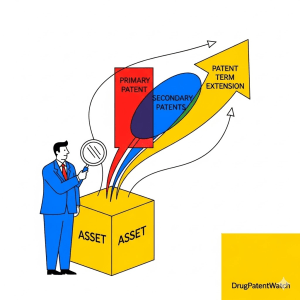
While PTE provides a vital restoration of foundational protection, the construction of “patent thickets”—layers of secondary patents on top of the core molecule—is the primary driver of extended market life.3 Secondary patents cover peripheral but commercially vital features such as new formulations, methods of use, specific dosage regimens, or manufacturing processes.3
The LCM Playbook: Categories of Secondary Claims
Secondary patents are often filed late in a drug’s lifecycle, with roughly 66% of applications for top-selling drugs filed after FDA approval.4 These layers are designed to create a litigation environment so complex that generic entry is delayed by years or forced into restrictive settlements.1
Secondary Patent Type
Average Market Life Added
Strategic Utility
Formulation Patents
6.5 Years 1
Covers stable liquids, pH stabilizers, or extended-release forms.1
Device Patents
4.7 Years 7
Covers mechanics of inhalers or insulin pens; can last 1.3 to 15 years.7
Method of Use
Indication-specific 1
Protects new diseases, specific patient populations, or dosing regimens.3
Chiral Switches
Full New Term 7
Isolating a single enantiomer (e.g., Nexium from Prilosec).7
Manufacturing Process
Variable 3
Protects unique synthesis or purification methods.3
Formulations and Product Hopping
“Product hopping” or “switching” is a classic LCM tactic where a company launches a new, patented version of a drug (e.g., transitioning from an immediate-release tablet to an extended-release capsule) shortly before the original patent expires.7 Aggressive marketing is used to “hop” patients to the new version, often accompanied by the withdrawal of the original product to erode the market for future generics.7 A notable example is Boehringer Ingelheim’s transition from Viramune IR to Viramune ER.7 Similarly, Merck is executing a “subcutaneous pivot” for its oncology blockbuster Keytruda, moving from a 30-minute IV infusion to a 2-minute SC injection (Keytruda Qlex) to preserve $9–$12 billion in annual revenue as its primary patents expire in 2028.5
Chiral Switches and Polymorphs
A chiral switch involves isolating the more effective mirror-image form (enantiomer) of a drug molecule and patenting it as a purified version just as the original racemic mixture’s patent nears expiration.7 This requires expensive research but results in a new composition-of-matter patent with a full term.7 Polymorph patents cover different crystalline structures of the same active ingredient, claiming improved stability or solubility to create additional barriers for generic formulation.7
Case Studies in Portfolio Fortification: Humira and Revlimid
Analyzing the portfolios of the most successful blockbuster drugs reveals the sheer scale of modern LCM.
The Humira Archetype
AbbVie’s management of Humira (adalimumab) involved the construction of a thicket comprising over 250 patent applications and 130 granted patents.3 By layering patents on manufacturing, formulations (such as citrate-free versions to reduce injection pain), and specific dosing for various autoimmune conditions, AbbVie delayed biosimilar entry in the US for seven years after the primary patent expired in 2016.1 This delay generated an estimated $75 billion in additional US revenue and cost the US healthcare system approximately $7.6 billion in lost savings.1
Revlimid’s Managed Entry
Celgene’s Revlimid (lenalidomide) is a prime example of using a “slope” strategy rather than facing a “cliff.” By obtaining 27 additional patents and eight orphan drug exclusivities, the manufacturer extended the drug’s monopoly for 18 years beyond its 2005 introduction.14 Instead of a sudden collapse, the innovator entered into settlements that allowed limited quantities of generics to enter the market starting in 2022, with volumes increasing over time until 2026.7 This created a predictable, albeit declining, revenue stream while avoiding the legal risks of cash-based “pay-for-delay” settlements.7
The Biologic Frontier and BPCIA Dynamics
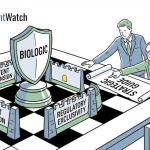
The regulatory framework for biologics, established by the Biologics Price Competition and Innovation Act (BPCIA), creates a distinct exclusivity environment compared to small molecules.2
The Patent Dance and Data Exclusivity
Under the BPCIA, biologics receive 12 years of data exclusivity, significantly longer than the five years granted to small-molecule New Chemical Entities (NCEs).3 The BPCIA also establishes a “Patent Dance,” a highly structured exchange of patent information and litigation intended to resolve disputes before biosimilar launch.2 Because biosimilars are highly similar but not identical to the reference product, price erosion is typically slower (15% to 40% initial discounts) and market uptake more protracted than for small-molecule generics.3
Feature
Small-Molecule (Hatch-Waxman)
Biologic (BPCIA)
Data Exclusivity
5 Years (NCE) 1
12 Years 3
Generic Entry Path
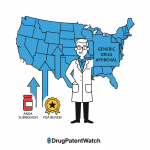
Abbreviated NDA (ANDA) 3
Biosimilar Application 3
Generic Price Erosion
Severe (80% – 90%) 3
Moderate (15% – 40%) 3
Regulatory Barrier
High (Chemical identity) 3
Very High (Process-dependent) 3
Global Divergence: Navigating the US-EU Exclusivity Divide
Global IP teams must account for the radical divergence between the US Patent Term Extension system and the European Supplementary Protection Certificate (SPC) framework. While both seek to compensate for regulatory delays, their mathematical formulas and legal definitions differ significantly.12
Mathematical and Formulaic Differences
The US PTE formula shares the “cost” of clinical trials between the patentee and the public (50% restoration) but fully compensates for FDA review time.12 In contrast, the EU SPC formula is (Date of first EEA Marketing Authorization – Date of Basic Patent Filing) – 5 Years.12 The EU system assumes the patent holder should bear the first five years of regulatory delay themselves.12
Strategic Variable
US PTE Framework
EU SPC Framework
Exclusivity Cap
14 Years from FDA Approval 8
15 Years from First EEA Auth 12
Formula Logic
100% Approval + 50% Testing 12
RRP minus 5 Years 12
Definition of “Product”
Active ingredient, use, or manufacture 15
Strictly active ingredient(s) 15
Multi-Country Filing
Centralized (USPTO/FDA) 8
National level per country 15
Negative Term SPCs as Strategic Vessels
A unique European strategy involves “negative term” SPCs. In the Merck Sharp & Dohme case regarding Januvia, the CJEU ruled that an SPC could be granted with a negative duration.12 This is strategic because a negative SPC (e.g., -3 months) can still serve as a “vessel” for a +6 month pediatric extension, resulting in a net positive exclusivity (e.g., 3 months) that justifies the filing costs for blockbusters.12 In the US, the pediatric reward is a flat six-month add-on to all existing patents and exclusivities, which is much simpler but lacks the “vessel” nuance of the EU system.1
Plausibility and Secondary Patent Vulnerability
The legal standards for secondary patents are generally stricter in Europe. For the anticoagulant Eliquis, the US primary patent was successfully extended to 2026, but the UK High Court revoked the corresponding European patent because the therapeutic effect was not “plausible” across the entire scope of the claim at the time of filing.12 Europe’s “problem-and-solution” approach to inventive step is often considered more predictable than the US non-obviousness standard, but the exclusion of medical methods (Article 53(c) EPC) forces European applicants to use “purpose-limited product claims” for second medical uses, a hurdle not found in the US.16
Litigation Dynamics and PTAB Challenges
The “Patent Trial and Appeal Board” (PTAB) and the rise of Inter Partes Review (IPR) have fundamentally altered the risk profile of secondary patents. These administrative challenges are faster and less expensive than district court litigation, making them a primary tool for challengers.17
PTAB Trends and Success Rates
Secondary patents are often considered “lower quality” than primary patents, making them highly susceptible to IPR.17 In 2024, the institution rate for IPRs was 68% by petition and 74% by patent, reflecting the rigorous scrutiny applied to these filings.18
Litigation Venue (2024)
Outcome/Trend Statistic
PTAB IPR Institution (Bio/Pharma)
67% 2
District Court Success (Innovator)
20% (Prevailing on contested issues) 19
District Court Success (Challenger)
2% (Prevailing on contested issues) 19
Hatch-Waxman Settlement Rate
39% 19
Federal Circuit Affirmance Rate
81% 20
In district court, patent owners generally fare better than in administrative reviews. In 2024, approximately 46% of patent infringement trials resulted in a complete win for the patent owner on all issues.21 However, the high rate of summary affirmance at the Federal Circuit (81% in 2024) means that losing at the trial or PTAB level is often fatal for the innovator.20
Terminal Disclaimers and the “Double Patenting” Trap
To build thickets, innovators often file “continuation” applications. If the USPTO rejects these for “obviousness-type double patenting,” the applicant may file a terminal disclaimer.4 This agrees that the new patent will expire on the same day as the old one, but it allows the company to create a maze of related patents that each must be challenged individually by a generic competitor.4 Research indicates approximately 80% of patents in dense thickets are held together by these terminal disclaimers.4
Regulatory Intelligence and Generic Entry Prediction
Sophisticated IP analysts do not rely solely on patent dockets; they monitor regulatory signals to model generic drug entry through the “exclusivity stack”.2
Drug Master Files (DMFs) and Supply Chain Readiness
Analysts track DMF submissions by Active Pharmaceutical Ingredient (API) vendors. A spike in DMF filings for a specific molecule serves as a leading indicator that multiple generic firms are preparing their supply chains for a potential launch, often years before an ANDA is filed.2
Citizen Petitions as Regulatory Hurdles
Branded firms often file Citizen Petitions to raise scientific or safety objections regarding a generic version of their drug.2 While often criticized as a delaying tactic, these petitions can force the FDA to spend hundreds of days in review, effectively extending the innovator’s monopoly by delaying generic approval.2 Analysts use these filings to adjust their predictive models for the actual date of competition.2
The Inflation Reduction Act: A Paradigm Shift in Exclusivity
The Inflation Reduction Act (IRA) of 2022 represents the most significant shift in US pharmaceutical policy since Hatch-Waxman. By introducing price negotiations for high-expenditure drugs, the IRA effectively decouples the period of high-margin pricing from the length of the patent term.3
The 7/11 Rule and the Biologic Preference
Under the IRA, drugs become eligible for “Maximum Fair Price” (MFP) negotiation after a set period from approval: seven years for small molecules and 11 years for biologics.3 Because the negotiated price takes effect two years after selection, manufacturers effectively have nine years of pricing freedom for small molecules and 13 years for biologics.3
Drug Tier (Years Since Approval)
Negotiated Price Ceiling (% of Non-FAMP)
9 to 12 Years
75% 2
12 to 16 Years
65% 2
More than 16 Years
40% 2
This four-year disparity has created a “biologic preference” in the industry, as the 13-year window for biologics aligns more closely with traditional patent expiries, whereas the 9-year window for small molecules severely compresses the ROI for chemical-based assets.1
Impact on Settlement and Follow-on Indications
The IRA may reduce the value of prevailing in patent litigation, as a single-source drug remains at risk of price negotiation if no competitor enters.3 This could lead to settlements that allow generic entry shortly before the negotiation threshold is reached to avoid government-mandated price cuts.3 Furthermore, the law may discourage manufacturers from pursuing additional rare disease indications for an existing product, as doing so could trigger price negotiations if the drug no longer meets the single-orphan-indication exclusion.3
Future Readiness: AI and the Next Era of Discovery
As the industry faces a continuing R&D productivity crisis, the most “future-ready” companies—such as Johnson & Johnson, Roche, and AstraZeneca—are pairing therapies with AI, digital health tools, and complex delivery systems.22
AI-Guided Discovery and IP
Artificial intelligence is expected to power 30% of new drug discoveries by 2025, potentially cutting the time to preclinical candidates by 40%.22 For IP strategists, this raises critical questions about inventorship and the patentability of AI algorithms and data-driven innovations in the drug development process.23 Forward-looking companies are moving from “build-only” AI strategies to fluid networks of innovation, linking internal capabilities with AI-first startups to raise the odds of success from the historical average of 10%.22
Strategic Therapeutic Concentration
Market leaders are moving away from broad portfolios toward 2–3 core areas of deep expertise, such as metabolic disease (GLP-1s) or oncology.25 Companies generating 70% or more of their revenue from their top two therapeutic areas have delivered 65% higher total shareholder returns over the past decade.25 This concentration allows for deeper layering of intellectual property and more specialized regulatory intelligence within a narrower, more defensible landscape.25
Strategic Conclusions for Global Portfolio Optimization
Maximizing asset value in the current environment requires a holistic synthesis of statutory restoration, secondary patenting, and regulatory strategy.
Prioritize PTE-Eligible Patents Early: Because only one patent can be extended per product, firms must identify the strongest candidate for extension (typically the composition-of-matter patent) and ensure it is issued before the testing phase progresses too far to maximize the restoration period.8
Model the 14-Year Cap Rigorously: The 14-year post-approval limit is often the “hard stop” for blockbuster value. Strategic planning should focus on launching with approximately 6–9 years of original term remaining to ensure the full five-year PTE can be utilized without breaching the 14-year ceiling.1
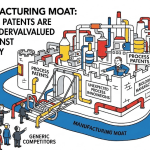
Construct “Process and Formulation” Moats for Biologics: Given the 13-year pricing freedom window under the IRA and the complex “Patent Dance” of the BPCIA, biologics offer a more resilient lifecycle than small molecules. Focus IP strategy on manufacturing processes and subcutaneous reformulations (like Keytruda Qlex) to extend protection toward 2040 and beyond.3
Synchronize US and EU Filings: Teams must account for the divergent definitions of “product” and the EU’s simpler RRP formula. In Europe, the focus must be on maintaining the active ingredient patent as the “vessel” for SPC and pediatric rewards, whereas the US allows for broader protection of formulations and methods.12
Utilize Managed Entry Settlements: For assets facing multiple challengers, the “slope” strategy utilized for Revlimid—gradually increasing generic volume—offers a more stable revenue outlook and lower legal risk than fighting a protracted battle against a dense generic field.7
Monitor Regulatory Signals for Competitive Advantage: Success in the post-Hatch-Waxman era requires tracking “non-patent” indicators like DMF filings and Citizen Petitions to accurately model generic entry dates and identify potential windows for asset divestiture or secondary launches.2
By integrating these disparate legal and regulatory mechanisms into a unified lifecycle narrative, pharmaceutical innovators can navigate the complexities of the modern patent landscape and ensure that the value of their scientific breakthroughs is preserved for the maximum possible duration.
Patents, Innovation, and Competition in Pharmaceuticals: The Hatch-Waxman Act After Forty Years Online Appendix, accessed February 12, 2026, https://www.aeaweb.org/articles/materials/22976