I. Market Context: Why the CDMO Sector Is Repricing
The global pharmaceutical CDMO market hit approximately $181.93 billion in 2025, and consensus forecasts put it at $333.79 billion by 2034, a 7.10% compound annual growth rate. The U.S. segment alone is on a 6.43% CAGR trajectory, rising from $39.14 billion in 2025 to $68.57 billion by 2034. The biologics CDMO subset is the fastest mover at 13.7% CAGR through 2029, a rate that reflects both the pipeline composition shift toward complex molecules and the structural capacity deficit in biomanufacturing globally.
These figures explain the M&A activity that has defined the sector over the past four years. Lonza’s continued investment in its Ibex Solutions platform, Samsung Biologics’ $2.6 billion capacity expansion at its Incheon campus, and Thermo Fisher Scientific’s sustained investment in its Patheon network are all responses to the same underlying demand signal: sponsors want fewer, deeper CDMO relationships, and they want those partners to hold more risk on their behalf.
This repricing of the CDMO value proposition has direct implications for how projects are managed. When a CDMO was a simple fee-for-service vendor, project management was an administrative function. When a CDMO is a strategic partner holding milestone-contingent commercial rights, IP cross-licenses, or royalty obligations, project management becomes a fiduciary function. The discipline determines whether those financial instruments ever pay out.
Key Takeaways
The biologics CDMO segment is growing nearly twice as fast as the broader market, creating selective capacity constraints that give operationally excellent CDMOs pricing power.
Consolidation is converting transactional CDMO relationships into strategic ones. Sponsors who manage these relationships with transactional tools will underperform.
Institutional investors pricing CDMO equity should weight project management quality alongside manufacturing capacity, because execution failures are more likely to destroy asset value than capacity shortfalls.
II. The Taxonomy Problem: CDMO vs. CMO vs. CRO, and Why the Distinction Drives Contract Value
Imprecise use of these three acronyms costs money. A Contract Research Organization (CRO) operates in the research and clinical trial space: preclinical studies, Phase I-III management, regulatory submission support. A Contract Manufacturing Organization (CMO) focuses narrowly on production of a product that has already been developed and process-locked. A Contract Development and Manufacturing Organization (CDMO) integrates both functions, running a single program from formulation development and process optimization through clinical trial manufacturing, scale-up, commercial supply, and packaging.
The integration matters commercially because it determines where IP is generated. A CMO executing a locked process against a fully specified batch record generates almost no foreground IP. A CDMO conducting formulation screening, solubility enhancement, or upstream process development is generating potentially patentable inventions with each experiment run. Sponsors who sign CDMO agreements without explicit foreground IP assignment clauses are routinely surprised to discover that a CDMO’s scientists have co-inventorship claims on their own drug’s manufacturing process.
The financial consequence is concrete. A process patent covering a proprietary crystallization method or a biologics cell culture optimization step can extend effective market exclusivity well beyond the compound patent expiration, and it can form the basis of an Orange Book listing that forces a Paragraph IV filer to challenge not just the molecule but the manufacturing process. That is the definition of evergreening, and it starts in the CDMO development suite.
Key Takeaways
CDMOs generate foreground IP during development work. Every development contract requires an explicit IP ownership clause before work begins.
Process patents created at the CDMO level are listable in the FDA Orange Book if they claim the approved product’s method of manufacture, extending exclusivity and raising the cost of generic entry.
Sponsors using a CMO to manufacture a process-locked product face a different IP profile than those using a CDMO for development work. The due diligence scope for each engagement type differs accordingly.
III. Partnership Architecture: Structuring the Sponsor-CDMO Relationship for IP Control and Operational Efficiency
The Six Structural Pillars
World-class CDMO partnerships share six structural characteristics: mutual economic benefit, earned trust, long-term duration orientation, communication transparency, demonstrated reliability, and defined growth potential. Each of these sounds obvious stated baldly. The implementation is where most partnerships fail.
Mutual benefit is not a platitude. It is a contract design requirement. A sponsor who pushes a CDMO to accept unrealistic timelines and margins in the initial negotiation is manufacturing a future project execution problem. The CDMO will under-resource the program. Scientists and engineers who are allocated to a chronically underfunded project will transfer to better-funded work within the same organization. The sponsor ends up with a junior team on their most critical program because they squeezed the quote by 15%.
Trust is operationalized through information sharing. Sponsors who treat their own process development data as classified material and then complain that the CDMO’s tech transfer failed have reversed the causal chain. A CDMO cannot reproduce a process it has never been fully shown. This means sharing development reports, failure mode data, and the scientific rationale behind critical process decisions, not just the batch record.
Long-term duration orientation drives investment behavior. A CDMO that expects to work with a sponsor for one batch has no incentive to invest in specialized equipment for that product. A CDMO with a five-year commercial supply agreement will purchase or build the capacity. Sponsors seeking custom capabilities need to offer duration commitments or pay a premium that funds the CDMO’s capital investment out of contract revenue.
Governance: The Joint Steering Committee as Risk Management Infrastructure
The Joint Steering Committee (JSC) is the primary governance mechanism for strategic CDMO partnerships. It sits above the project team, draws in senior functional heads from R&D, manufacturing, quality, regulatory, supply chain, and commercial, and meets quarterly to assess milestone progress, approve major scope changes, and resolve issues that the project team cannot absorb.
The JSC’s role in a consolidating industry goes beyond routine oversight. When a CDMO is acquired, which happened at least a dozen times in the CDMO sector between 2022 and 2025, the JSC becomes the institutional memory of the relationship. The pre-acquisition JSC charter, established KPIs, and documented escalation pathways give the acquiring company’s leadership an objective record of what was agreed and how performance was being measured. Without a functioning JSC, a post-acquisition leadership change can effectively reset a partnership to zero, with the sponsor having to re-establish everything from scratch with a new team that has different priorities.
Escalation pathways within the governance framework need to specify decision-making thresholds, responsible contacts by name and title at each tier, and response timelines. An escalation framework that says ‘senior management should be notified of significant issues’ is not functional. One that says ‘any deviation expected to delay a GMP batch by more than five business days must be communicated to the sponsor’s Head of CMC within 24 hours, with a root cause hypothesis and preliminary remediation options’ is functional.
Partnership Models Matched to Outsourcing Drivers
Sponsors outsource for one of four reasons: capacity, expertise, both simultaneously, or strategic supply chain diversification. The partnership model must match the driver. A sponsor seeking second-source capacity for a commercially approved product wants a transactional engagement with a qualified site, a well-defined technology transfer protocol, and predictable batch costs. That sponsor should not be negotiating a preferred provider agreement with integrated project teams and shared KPI dashboards.
A virtual biotech with a Phase I asset in a novel therapeutic modality and no in-house CMC capability needs the opposite: a strategic partnership with a CDMO that has development expertise, regulatory writing capability, and a clinical trial supply chain. For this sponsor, the CDMO’s project manager is their de facto CMC team. The selection criteria and the governance design are entirely different from the capacity-seeking scenario.
Mismatching the model to the driver is a leading cause of partnership dissatisfaction. Sponsors who engage a strategic CDMO on transactional terms will not get strategic engagement. CDMOs structured for deep integration will be frustrated by the arms-length management style. Both parties should define the engagement model explicitly before the Master Service Agreement (MSA) is signed.
Key Takeaways
Joint Steering Committee governance is a resilience mechanism against M&A disruption, not just a progress reporting forum.
Escalation pathways require named contacts, defined thresholds, and specific timelines to function.
Partnership model selection should precede and inform contract negotiation, not follow it.
IV. IP Valuation as a Core CDMO Asset: How Manufacturing Know-How Becomes a Balance Sheet Item
CDMO IP: What It Is and Where It Lives
The pharmaceutical industry treats drug patents as the primary IP asset class. Process patents covering manufacturing methods, analytical techniques, formulation compositions, and drug delivery systems are secondary in the popular narrative but primary in practice for life cycle management.
A CDMO’s accumulated process knowledge, proprietary platform technologies, and manufacturing trade secrets constitute an IP estate that directly affects the valuation of every asset it touches. This IP lives in several places: granted patents, patent applications, trade secrets protected by confidentiality agreements, regulatory filings that contain undisclosed manufacturing data under 21 CFR 314.50(d)(1), and the tacit knowledge embedded in the CDMO’s scientific staff.
For sponsors, the critical question during due diligence of a CDMO engagement is whether that IP estate will create future obligations or restrictions. For investors in CDMOs, the question is whether the IP estate creates defensible competitive advantages that translate into pricing power and customer retention.
Foreground IP: The Critical Clause
Every CDMO development agreement generates foreground IP, the inventions and know-how created during the performance of the contract. Without explicit contractual assignment, foreground IP ownership defaults to the inventor, which in most jurisdictions means the CDMO’s employees, not the sponsor. The CDMO then owns a potentially Orange Book-listable process patent on the sponsor’s own drug.
Three contract structures govern foreground IP in CDMO agreements. Full assignment to the sponsor gives the sponsor complete ownership of all inventions arising from the engagement; this is standard for custom development work and should be the default for any sponsor who intends to commercialize the product. License-back structures give the CDMO a non-exclusive license to use the technology they developed for other clients; this is commercially reasonable for platform technologies but problematic if the platform becomes integral to the drug’s quality attributes. Shared ownership arrangements create joint inventorship situations that restrict each party’s freedom to use, license, or enforce the IP without the other’s consent, an outcome that almost no sponsor actually wants.
IP Valuation Method for CDMO-Held Process Assets
For institutional analysts and IP teams, valuing a CDMO’s process IP estate requires applying a specific methodology. The income approach, discounting the net present value of royalties or licensing fees attributable to the process technology, is most directly applicable. Inputs include the commercial sales of drugs manufactured using the protected process, the applicable royalty rate (typically 0.5%-3% for manufacturing process licenses in pharma), the remaining patent term, and the probability that the patent survives generic challenge.
The market approach compares the IP estate against observable transactions involving similar technology licenses. Comparable transactions in the pharma sector, particularly Paragraph IV challenge settlements and voluntary license agreements, provide data points. The ANDA settlement database maintained by the Federal Trade Commission offers a public record of royalty rates and exclusion periods negotiated under litigation pressure, which serves as a floor-price reference for technology licenses.
The cost approach, which values the IP at the cost to develop it independently, is less useful for process IP because development costs are often poorly documented and because the cost to recreate a proven process is often much less than its commercial value once validated.
Case: Lonza’s Cocoon Platform and Its IP Asset Value
Lonza’s Cocoon platform for autologous cell therapy manufacturing illustrates how process IP creates durable CDMO value. The platform integrates automated cell expansion, transduction, and formulation into a closed, single-use system. Lonza holds patents covering the hardware design, the process control software, and specific operating parameters for particular cell types.
Sponsors who build their cell therapy CMC programs around Cocoon are not merely purchasing manufacturing services. They are licensing Lonza’s process IP, and their NDA or BLA will reference Lonza’s proprietary platform as the approved manufacturing method. Switching to a competitor after approval requires a prior approval supplement (PAS) to the FDA, a 12-18 month process under best circumstances. That switching cost is Lonza’s IP moat, and it is worth quantifying explicitly when a sponsor considers the long-term commercial implications of their CDMO selection.
Investment Strategy
Institutional investors in CDMO equity should score each company’s IP estate along four dimensions: the number of Orange Book-listed patents covering manufacturing processes for commercially approved drugs, the number of active Paragraph IV certifications filed against those patents (a signal that generic challengers believe the patents are invalid or not infringed, which is a devaluation signal), the diversity of the proprietary platform technology portfolio, and the contractual depth of IP cross-licenses or assignment agreements with key sponsors. A CDMO with thin IP protections is selling time-limited capacity. One with a defensible process IP estate is selling market access, and those two assets have very different terminal values.
V. The Project Management Lifecycle: Phase-by-Phase Execution from IND to Commercial Supply
Phase 1: Project Design and Initiation
Project failure is usually seeded in the initiation phase. The most common failure mode is not technical. It is a scope of work (SOW) that is specific enough to get the contract signed but too vague to govern execution. A SOW that says ‘develop and validate a scalable manufacturing process for Compound X’ will generate twelve months of scope disputes. One that specifies the target batch size, the acceptable process yield range, the regulatory filing it must support, the number of GMP batches in scope, and the analytical release specifications is executable.
The project manager should be embedded in the business development process before the SOW is finalized. PMs who receive a fully executed contract and are asked to ‘make it work’ are starting from a position of deficit. They were not present when the timeline was negotiated, when the resource requirements were estimated, or when the technical assumptions were made. That information asymmetry damages the project from day one.
Assembling the cross-functional team at initiation means defining not just the roster but the decision-making authority of each function. Process development, analytical development, QC, QA, GMP manufacturing, and regulatory affairs each need a designated lead with defined responsibilities and a clear escalation path. The kick-off meeting with the sponsor should document team alignment on project objectives, milestone definitions, communication protocols, and the project’s criticality classification, which determines the oversight intensity and meeting cadence for the entire program.
Phase 2: Execution — Where Science and Bureaucracy Collide
Execution in a GxP environment is harder than execution in a commercial software project or an engineering build, because every experiment is a regulatory record. A change to the process mid-development that is not captured in a formal change control record can invalidate months of validation data. A batch record discrepancy that is not investigated through a formal deviation process is a warning letter waiting to happen. The PM’s role during execution is to maintain the velocity of the science while ensuring the documentation keeps pace.
Communication protocols during execution require specificity. ‘Regular meetings’ is not a communication plan. A functional communication plan specifies: weekly project team calls with a structured agenda distributed 48 hours in advance, bi-weekly reports to the sponsor covering timeline status, batch results, emerging risks, and any change control actions opened since the last report, monthly steering committee updates for programs at a defined criticality level, and an immediate notification protocol triggered by any event that is likely to affect a GMP batch or a regulatory filing date.
The use of centralized, GxP-compliant shared platforms for document exchange eliminates one of the most common sources of project friction: the version control problem. When both parties are working from the same document management system with controlled versioning, the probability of a sponsor reviewing an outdated analytical method or an obsolete batch record drops to near zero. That single operational improvement eliminates a class of errors that historically causes weeks of rework.
Phase 3: Close-Out — Capturing Institutional Knowledge Before It Walks Out the Door
Project close-out is where most CDMOs underinvest. The formal wrap-up meeting, lessons-learned documentation, and knowledge transfer to the commercial manufacturing team are treated as administrative overhead once the last batch ships. That underinvestment compounds over time.
The lessons-learned database is an asymmetric asset. Each project adds a data point. After fifty projects on similar molecules or processes, the database contains validated hypotheses about what causes tech transfer failures, which analytical methods consistently perform poorly in transfer, and which risk categories are most predictively correlated with timeline overruns. That data, systematically organized and queried, is the intellectual foundation of the CDMO’s next proposal to a new client. It is also the empirical basis for the realistic timeline and contingency estimates that a risk-quantified project plan requires.
Ongoing support after the final batch should be defined in the contract, not improvised. For a sponsor preparing an NDA, the CDMO will need to respond to FDA questions about the manufacturing process, potentially years after the last batch was manufactured. If the key scientists have moved on and the project records are poorly organized, that response quality degrades. A contractual obligation for post-project regulatory support, with defined response timelines and compensation terms, is standard practice in well-structured CDMO agreements.
Agile vs. Waterfall in a GxP Environment
The waterfall model’s sequential phase structure maps well onto the FDA’s three-stage process validation lifecycle: Stage 1 process design, Stage 2 process qualification, Stage 3 continued process verification. Each stage has defined inputs, required documentation, and a formal completion criterion before the next stage begins. That structure is not bureaucratic inertia. It is designed to produce a regulatory record that a health authority reviewer can follow from first principles to commercial batch.
Agile’s iterative sprint model offers genuine advantages in early-phase development, where experimental results from one week define the experimental plan for the next. But ‘iterative’ in a GxP context still requires contemporaneous documentation, reviewed and approved records, and a change control system that captures deviations from plan. A hybrid approach works: Agile sprint planning for the scientific work, with Waterfall documentation controls applied to every deliverable produced within a sprint. The sprint output is a completed, reviewed experiment report, not just working code.
Key Takeaways
SOW vagueness is a root cause of project failure, not a downstream symptom.
Communication protocols must specify format, frequency, triggers, and recipients to function.
Lessons-learned databases compound in value. CDMOs that treat close-out as overhead are paying a hidden compounding cost.
VI. The Project Manager as Competitive Moat: Why Talent Is the Real Differentiator
Two CDMOs can occupy facilities of identical capability, hold the same regulatory qualifications, and quote the same price. The project manager is often the deciding variable in sponsor selection, and it is almost always the deciding variable in sponsor retention.
An effective CDMO project manager holds three overlapping competencies. First, technical depth: a working knowledge of CMC sufficient to ask the right questions of the process development team, to read a batch record for red flags, and to understand what a regulatory reviewer will demand from the manufacturing section of a filing. A PM who cannot interpret a deviation investigation report cannot communicate it credibly to a sponsor. Second, operational skill: experience managing cross-functional teams of scientists who do not report directly to the PM, setting realistic milestones against uncertain experimental timelines, and managing resource conflicts across a portfolio of concurrent programs. Third, commercial awareness: the PM must understand that a Phase II biotech client’s timeline is tied to a Series B financing tranche. If a batch fails in March and the client presents to investors in April, a ‘standard’ eight-week deviation investigation timeline may be commercially catastrophic. The PM needs to know that context and either compress the investigation timeline appropriately or give the client enough advance warning to manage their investor communications.
The instability of CDMO project teams is documented and consequential. A 2023 Contract Pharma analysis of failed CDMO relationships cited team turnover as a top-three contributing factor to project breakdown, alongside scope disputes and communication failures. Sponsors consistently report that the single most disruptive event in a CDMO engagement is the departure of the project manager mid-program, because the PM’s relationship knowledge, institutional memory of the sponsor’s preferences, and operational momentum do not transfer automatically to their replacement.
Investment Strategy
Investors doing due diligence on CDMO acquisitions or equity positions should treat PM turnover rate as a leading indicator of customer churn, not a lagging one. Ask for average PM tenure per client account, the percentage of programs that change PM mid-project, and the correlation between PM turnover events and project overruns. This data is rarely published but can be requested in a management meeting. Its absence or the refusal to provide it is informative in itself.
VII. Proactive Risk Navigation: Quantifying, Pricing, and Communicating Project Threats
The Risk-Quantified Project Plan
Virtually every CDMO project encounters an unforeseen technical or logistical problem. Industry experience places this rate at close to 100% for programs of any meaningful complexity. This fact has a single practical implication: a project plan built to a best-case scenario is a plan built to fail.
The error is not in the risk log. Most project teams identify risks. The error is in the failure to translate identified risks into budget and timeline contingencies that are approved by the Joint Steering Committee before work begins. A risk flagged in a log but without an associated cost estimate and schedule buffer is informational, not protective. When that risk materializes, the PM goes back to the client requesting additional funds and time from a position of crisis rather than from a pre-agreed contingency account.
Risk-quantified planning requires assigning a probability-weighted cost and schedule impact to each high-priority risk. A batch failure with a 30% probability of occurring and a $200,000 rework cost carries an expected value of $60,000. If the project has four independent risks of similar magnitude, the rational contingency budget is at least $240,000. Presenting this calculation to the JSC at project initiation, rather than presenting individual crisis requests after each risk materializes, is a fundamentally different and more functional approach to sponsor-CDMO financial management.
Risk Taxonomy
The six principal risk categories in CDMO project management are people, process, technology, regulatory, supply chain, and market competition. People risk is underweighted in formal risk assessments because it feels impolitic to document that the lead analytical chemist is a flight risk. It is also the category with the most actionable mitigation options: cross-training backup scientists, documenting methods thoroughly enough that a new analyst can execute them without the original developer present, and building succession plans into team design.
Process risk in pharmaceutical manufacturing is distinct from process risk in software development, because a failed batch is not analogous to a failed code deployment. A failed GMP batch at clinical scale costs $100,000 to $2 million depending on the molecule type, destroys material that may have taken six months to synthesize, and may require an NDA amendment if the failure root cause points to a critical process parameter outside its validated range. The risk assessment must reflect that cost structure.
Supply chain risk has been repriced since 2020. COVID-19 demonstrated that single-source raw material strategies for critical starting materials and excipients are not acceptable. The API supply disruptions of 2022-2023, driven by China’s zero-COVID policy and Indian API manufacturing shutdowns, provided a second demonstration. A project plan that does not include a qualified backup supplier or a minimum three-month safety stock for critical raw materials is operating without a margin of safety.
Advanced Risk Tools: HAZOP and FMEA in CMC
Hazard and Operability Analysis (HAZOP) and Failure Modes and Effects Analysis (FMEA) are the standard tools for systematic process risk assessment in pharmaceutical manufacturing. Both were adapted from the chemical and nuclear engineering industries, and both produce structured outputs that are directly usable in regulatory filings under ICH Q9 quality risk management principles.
FMEA’s Risk Priority Number (RPN), the product of severity, occurrence probability, and detectability scores for each failure mode, provides a rank-ordered list of process vulnerabilities. The practical value is that it forces the team to score detectability separately from severity and occurrence. A catastrophic failure mode that is always detected before it affects product quality carries a lower RPN than a moderate failure mode that is nearly undetectable. That distinction matters operationally and for the design of in-process controls.
Key Takeaways
A risk identified but not budgeted is a risk deferred, not managed.
Supply chain risk mitigation now requires documented backup supplier qualification and safety stock targets as minimum standards, not optional enhancements.
FMEA RPN calculations belong in the process development report, not just in an internal quality file. They provide the evidentiary basis for justifying in-process control limits to a regulatory reviewer.
VIII. The Quality and Regulatory Backbone: Quality Agreements, Process Validation Lifecycles, and the FDA vs. EMA Divide
The Quality Agreement as Operational Charter
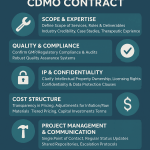
The Quality Agreement (QA) governs every quality-related decision in the CDMO partnership. It is not the Master Service Agreement, which governs commercial terms. It is a separate, technically detailed document that specifies who is responsible for every quality function: raw material testing and release, in-process testing, batch record review and approval, stability testing, deviation investigation ownership, corrective and preventive action (CAPA) management, change control approval, regulatory inspection response, and data integrity oversight.
A QA without specific names and timelines for each responsibility is bureaucratic decoration. A functional QA states, for example, that the CDMO is responsible for completing an investigation report for any out-of-specification (OOS) result within 30 calendar days, that the sponsor has 10 business days to review and approve the report, and that any proposed CAPA requires joint sign-off before implementation. Those specifics convert the QA from a statement of intent into a management tool.
The QA must also address data integrity explicitly, including compliance with 21 CFR Part 11 for electronic records in the US and EudraLex Annex 11 for the EU. ALCOA+ data integrity principles, requiring attributability, legibility, contemporaneity, originality, accuracy, completeness, consistency, enduring availability, and traceability, must be embedded in the operational SOPs referenced by the QA, not just asserted in the document header.
Process Validation: The Three-Stage Lifecycle in Practice
The FDA’s three-stage process validation lifecycle, formalized in its 2011 guidance document, reframed validation from a discrete event into a continuous commitment. Stage 1 Process Design occurs during development and generates the scientific evidence that the process can reliably produce quality product. It includes the identification of Critical Quality Attributes (CQAs), the determination of Critical Process Parameters (CPPs), and the design of a control strategy linking CPPs to CQAs.
Stage 2 Process Performance Qualification (PPQ) is the traditional ‘three-batch validation,’ but it sits within a larger qualification framework that includes Installation Qualification (IQ), Operational Qualification (OQ), and Performance Qualification (PQ) of equipment and utilities. The FDA’s guidance calls for a minimum of three commercial-scale batches for Stage 2, but the ‘minimum’ is not a target. A molecule with high process variability or a complex manufacturing train may require five or six PPQ batches to demonstrate statistical confidence in process capability.
Stage 3 Continued Process Verification (CPV) is the most underimplemented stage in the industry. CPV requires a formal statistical process control (SPC) program, with control charts tracking CPPs and CQAs across commercial batches, trend analysis to detect process drift before it results in an OOS event, and a defined protocol for escalation when process metrics approach action limits. CDMOs that treat CPV as a retrospective annual report rather than a real-time monitoring program are accumulating regulatory risk.
FDA vs. EMA Process Validation: The Differences That Matter for Global Programs
The EMA does not use the FDA’s formal three-stage framework. EU GMP Annex 15, revised in 2015, requires a Validation Master Plan (VMP) as a mandatory document, which the FDA does not require. The VMP is a living document that describes the overall validation strategy for a product, including the scope of all qualification and validation activities, the responsible parties, and the reference documents.
The EMA also permits retrospective validation for legacy processes with extensive historical data, an approach the FDA explicitly discourages for new products. For projects targeting both US and EU approval, the PM must manage a dual-documentation strategy: a Stage 1/2/3 framework for the FDA dossier and a VMP-centered approach for the European Marketing Authorization Application (MAA).
The number of PPQ batches is a concrete difference. The FDA’s three-batch minimum is a general guideline but is widely treated as the de facto standard. The EMA requires a documented risk-based justification for the number selected. That justification, drawing on Stage 1 process capability data, gives the sponsor flexibility to propose two batches for a well-characterized process with low variability, or to justify five batches for a complex biologic with high inherent batch-to-batch variability. The PM needs to ensure that the analytical data from Stage 1 is preserved and organized specifically to support this justification.
Key Takeaways
Quality Agreements must include specific names, timelines, and action triggers to function as management tools.
CPV is a real-time SPC obligation, not an annual summary report. CDMOs treating it as the latter are accumulating FDA inspection findings.
Global programs require a dual-documentation strategy. The FDA’s three-stage model and EMA’s VMP framework are not interchangeable.
IX. Technology Transfer and Analytical Method Transfer: The Two Activities That Live on the Critical Path
Technology Transfer: The Knowledge Problem
Technology Transfer (TT) moves a manufacturing process from the sending unit (typically the sponsor or a clinical-stage CDMO) to the receiving unit (a commercial CDMO). The most common failure mode in TT is incomplete documentation from the sending unit. A batch record describes what to do. A process development report explains why each parameter was set at its current value, what happened in the experiments that led to each decision, and which parameters are robust versus sensitive. Without the process development history, the receiving CDMO’s team is executing against a protocol they cannot interrogate, troubleshoot, or defend to a regulator.
The Technical Gap Analysis is the TT’s risk assessment instrument. It compares the sending site’s equipment specifications, process parameters, and operating procedures against the receiving site’s capabilities, identifies gaps, and prioritizes mitigation actions before the first batch is run at the receiving site. A gap analysis conducted after manufacturing problems emerge is a post-mortem, not a risk management tool.
Staged execution, moving from laboratory-scale feasibility runs through a pilot-scale engineering batch to GMP-scale PPQ, gives the team three progressively more expensive opportunities to identify problems. The engineering run is the most valuable investment in TT risk management. A $300,000 engineering batch that reveals a mixing scale-up challenge is far cheaper than discovering the same problem during a $1.5 million PPQ batch that fails.
Analytical Method Transfer: The Hidden Critical Path Item
Analytical Method Transfer (AMT) is where project plans most commonly underestimate both the required timeline and the downstream consequences of delay. AMT must be complete and fully validated before the CDMO can generate reportable analytical data, which means it must be complete before TT comparability data can be assessed, before PPQ batches can be formally released, and before any regulatory filing data can be generated at the receiving site.
The practical implication is that AMT is not a parallel workstream that can be compressed to fit into unused timeline capacity. It sits on the critical path. A three-week delay in completing an HPLC method transfer can delay the start of PPQ manufacturing by the same three weeks, because PPQ batches cannot be formally assessed without the validated analytical methods to characterize them.
The USP General Chapter outlining AMT strategies defines four approaches: comparative testing, co-validation, revalidation (partial or full), and waiver. Comparative testing is the standard: both laboratories analyze the same homogeneous sample set and the results are statistically compared against pre-defined acceptance criteria. The acceptance criteria are where most AMT failures originate. Criteria set without reference to the method’s validated performance characteristics and historical variability are arbitrary. Too tight, and the transfer appears to fail due to normal inter-laboratory variability. Too wide, and a genuinely biased method at the receiving laboratory passes the transfer, generating incorrect release data for months before the problem is detected.
Key Takeaways
TT documentation packages must include process development history, not just batch records and SOPs.
AMT is on the critical path for PPQ and regulatory filing. Project plans that treat it as a background task will miss milestones.
AMT acceptance criteria require statistical derivation from historical method performance data. Arbitrary numerical targets cause both false failures and false passes.
X. The Biologics Manufacturing Technology Roadmap: From Upstream Process Development to Continuous Bioprocessing
Stage 1: Cell Line Development and Early Process Characterization
Biologics manufacturing begins with cell line development, typically using Chinese Hamster Ovary (CHO) cells for monoclonal antibodies and other recombinant proteins. The cell line development phase generates the production clone expressing the target protein at commercially viable titers, and it is the phase with the most direct IP implications. The expression vector design, the selection marker system, and the cloning methodology are all patentable components of the cell line, and the originator’s cell line patents have historically been one of the most litigated IP domains in biosimilar disputes.
CDMOs that maintain proprietary CHO expression platforms, such as Lonza’s GS Gene Expression System (GS System), Catalent’s GPEx cell line development technology, or WuXi Biologics’ WuXiUP platform, are licensing those platforms to sponsors who use them. The GS System has been central to the manufacturing of over 25 marketed biologics, and Lonza has successfully enforced its GS-related IP against competitors. A sponsor building a biologic program on a CDMO’s proprietary expression platform must understand that their manufacturing process is inseparable from that platform’s IP estate, with the switching cost implications discussed earlier.
Early process characterization in fed-batch bioreactor development defines the CPPs for the upstream process: pH, dissolved oxygen, temperature, agitation rate, feed timing, and feed volume. Each of these parameters has a functional relationship to a CQA of the protein product, whether that is glycosylation profile, charge variant distribution, high molecular weight aggregate content, or titer. The Design of Experiments (DoE) studies conducted during this phase generate the data that supports the process design space definition in the regulatory filing’s CMC section.
Stage 2: Downstream Process Development and Scale-Up
Downstream processing, encompassing protein capture chromatography, viral inactivation steps, polishing chromatography, and ultrafiltration/diafiltration, is where biologics manufacturing achieves product quality and safety. It is also where scale-up challenges concentrate. A Protein A capture step optimized on a 5 cm diameter column may not perform identically on a 80 cm column, because mass transfer kinetics scale with column geometry in ways that are predictable in principle but require empirical verification in practice.
The viral safety testing requirements for biologics add another layer of complexity. Each lot of drug substance must pass viral clearance studies demonstrating that the downstream process reduces viral contamination by a specified number of log units, as defined in ICH Q5A. These clearance studies are expensive, ranging from $200,000 to $500,000 per study, and they must be completed before Phase III clinical trial material can be released. A PM who omits viral clearance study planning from the critical path in a Phase II biologics program is building an invisible schedule bomb.
Stage 3: Continuous Bioprocessing
Continuous manufacturing for biologics integrates perfusion cell culture in the upstream step, where fresh medium replaces spent medium continuously, with a connected downstream processing train that maintains a steady-state flow of protein through capture and polishing steps. The theoretical advantages are significant: higher volumetric productivity per bioreactor, smaller facility footprint, more consistent product quality through reduced batch-to-batch variation, and faster response to demand changes.
The practical adoption barriers are also significant. Perfusion cell culture requires specialized hollow-fiber or alternating tangential flow (ATF) filtration equipment that is not standard in most bioreactor suites. Continuous downstream processing requires synchronized integration of multiple chromatography columns on multi-column countercurrent solvent gradient purification (MCSGP) or similar systems. The regulatory pathway for continuous manufacturing remains less defined than for batch processes, with the FDA’s 2019 guidance on quality considerations for continuous manufacturing providing a framework but leaving significant interpretation to sponsors and CDMOs.
CDMOs that have invested in continuous bioprocessing capability, including Rentschler Biopharma, Boehringer Ingelheim Biopharmaceuticals, and Sartorius as an equipment provider, are positioning for a market that is growing but not yet dominant. Sponsors selecting a CDMO for a biologic with a 2030+ commercial launch date should ask whether the CDMO’s current batch process is continuous-manufacturing-ready, meaning whether its facility design and control systems can accommodate future conversion without a complete technology transfer.
Investment Strategy
For institutional investors assessing biologics CDMO equity, the key valuation driver in the technology roadmap is the speed of adoption of continuous bioprocessing. CDMOs that have already qualified continuous processes for at least one commercial product are two to four years ahead of the industry on the learning curve, and that lead translates into competitive advantage for the next generation of biologic drug launches. Ask management teams about their continuous manufacturing pipeline, the number of programs in development using perfusion culture, and whether their regulatory affairs team has a precedent for filing a continuous manufacturing process with the FDA.
XI. Evergreening Tactics: How CDMO Partnerships Extend Exclusivity Windows
The Mechanics of Pharmaceutical Evergreening
Evergreening refers to the set of legal and regulatory strategies that branded pharmaceutical companies use to extend effective market exclusivity beyond the expiration of the original compound patent. These strategies do not require scientific fraud or regulatory manipulation. They rely on the legitimate IP and regulatory systems that govern pharmaceutical development, applied strategically.
Process patents covering the manufacturing method are the primary CDMO-relevant evergreening tool. A process patent covering a specific crystallization procedure, a proprietary solvent system, or a cell culture optimization method that demonstrably improves product quality or yield is legitimately patentable, independently of the underlying compound patent. If that process patent is listed in the FDA Orange Book as covering the approved product, a generic manufacturer seeking ANDA approval must either design around the process (not always possible without affecting product quality) or file a Paragraph IV certification challenging the patent’s validity or non-infringement.
A Paragraph IV filing triggers a 30-month stay on ANDA approval, providing the branded company with additional de facto market exclusivity while the litigation proceeds. The average Paragraph IV litigation timeline, according to the FTC’s 2010 study of pharmaceutical patent settlements, ran 2.5 years from filing to resolution. Current litigation timelines are longer due to PTAB inter partes review procedures. A single process patent listed in the Orange Book can effectively buy 30 to 36 months of additional exclusivity.
CDMO Development Work as Evergreening Infrastructure
The CDMO’s development work during the drug’s lifecycle is the manufacturing pipeline for these process patents. Every formulation optimization study, every process improvement campaign, every new analytical method that provides superior product characterization is a potential patent application. Sponsors who maintain active patent prosecution programs covering their manufacturing processes, and who sequence those patent applications to expire as late as possible within the 20-year patent term from filing date, are systematically building an exclusivity timeline that extends beyond the base compound patent.
Secondary patents covering new formulations are another avenue where CDMOs contribute directly. A CDMO specializing in controlled-release oral dosage forms that develops a new polymer matrix formulation reducing a drug’s dosing frequency from twice-daily to once-daily is simultaneously creating a patient benefit and a new Orange Book-listable patent that may expire years after the original compound patent. Concerta (methylphenidate), AstraZeneca’s Nexium (esomeprazole), and Bristol-Myers Squibb’s Reyataz (atazanavir) are historical examples where formulation patents contributed meaningfully to commercial exclusivity maintenance.
Key Takeaways
Process patents generated during CDMO development work are directly eligible for Orange Book listing if they cover the method of manufacturing the approved product.
A single Orange Book-listed process patent triggers a 30-month stay on ANDA approval upon Paragraph IV filing, providing commercially significant additional exclusivity.
IP teams should conduct a quarterly audit of all patentable inventions generated during CDMO development programs, with a structured review for Orange Book listing eligibility.
XII. The Digital Toolkit: ERP, GxP Cloud Platforms, and Agentic AI in CMC
ERP Systems: The Operational Backbone
A CDMO’s ERP system, typically SAP or Oracle, provides the integration layer connecting raw material procurement, inventory management, production scheduling, batch record management, quality control testing, and financial accounting. For a CDMO managing 50 to 200 concurrent client programs, each with distinct raw material specifications, GMP documentation requirements, and regulatory status, a functional ERP is not optional infrastructure.
The integration of ERP with Manufacturing Execution Systems (MES) and Laboratory Information Management Systems (LIMS) creates the data flow that makes real-time project visibility possible. When a GMP batch is released in the MES, the ERP records the inventory movement, updates the production schedule, and triggers the QC hold status in the LIMS. When analytical results are entered in the LIMS, the ERP can flag out-of-trend results for review and update the batch disposition record. That integration eliminates the manual data transcription steps that are both time-consuming and a primary source of data integrity violations.
Box GxP, Microsoft Azure for Healthcare and Life Sciences, Google Cloud’s GxP compliance framework, and AWS GxP environments have made validated cloud platforms the standard for CDMO-sponsor collaboration. The compliance architecture these platforms provide, including complete audit trails, role-based access controls, 21 CFR Part 11-compliant e-signatures, and version control, allows CDMOs to share GMP documentation with sponsors and regulators in real time without compromising data integrity.
The regulatory inspection use case is particularly valuable. An FDA inspection team conducting a remote records review can be granted temporary, read-only access to a specific folder containing the relevant batch records, SOPs, and validation reports, with the access itself logged in the audit trail. The sponsor’s regulatory affairs team can review the same documents simultaneously from a different location. This replaces the physical binder shipment model that characterized FDA inspections as recently as 2018.
Agentic AI in CMC: Beyond Predictive Analytics
The AI applications most discussed in pharmaceutical project management are predictive analytics for risk flagging and automated reporting for milestone tracking. These are the 2024-era applications. The 2026-era applications are agentic: AI systems that not only identify a scheduling conflict but propose a resolution and draft the stakeholder communication; systems that not only detect a CPP trending toward its action limit but automatically generate the investigation initiation record in the quality system and notify the responsible analyst.
Platforms including Benchling, TetraScience, and Veeva Vault are deploying AI layers over their laboratory data management infrastructure. TetraScience’s Tetra Data Platform, for example, ingests raw instrument data from HPLC, mass spectrometers, bioreactor controllers, and other analytical instruments across a CDMO’s facility network, normalizes it into a unified data schema, and makes it available for AI-powered trend analysis. A CDMO running TetraScience can deploy a predictive model that correlates upstream bioreactor process parameters with downstream product quality attributes across 100 previous programs, generating a probability distribution of expected product quality for a new program based on its early upstream data.
That capability changes the risk management conversation. Instead of a project manager saying ‘the batch is at risk because the temperature excursion on day 6 is concerning,’ the AI system can say ‘based on 47 previous programs with similar cell line and media characteristics, a temperature excursion of this magnitude at this stage of culture has preceded a high molecular weight aggregate content exceedance in 34% of cases. Recommended action: collect a 48-hour pull sample and run size exclusion chromatography immediately.’
Investment Strategy
Institutional investors should assess CDMO digital infrastructure maturity using three proxies: the percentage of manufacturing documentation in a validated electronic system (versus paper), the existence of an integrated MES-LIMS-ERP data flow, and whether the company has a deployed AI application in production use for process monitoring or project risk management. CDMOs that are still running batch records on paper in 2026 are not competing for the biologics programs that will define the market over the next decade.
XIII. Patent Intelligence as Business Development Infrastructure: How CDMOs Monetize Public Patent Data
The Patent as a Prospecting Document
A pharmaceutical patent application discloses the molecule, the intended indication, the synthesis route, and often the formulation approach and stability data collected to date. For a CDMO’s business development team, that document is a client brief describing a product that will need development and manufacturing support within two to five years, depending on where the company is in the development pipeline.
Services such as DrugPatentWatch aggregate and normalize patent data with clinical trial records, FDA regulatory filing data, and commercial drug information to create an integrated pipeline intelligence system. A CDMO analyst using DrugPatentWatch can identify all patent applications filed by a target sponsor in the past 24 months, filter for molecules in active clinical development, assess the technical characteristics disclosed in each patent to identify capability alignment, and map the expected timeline from current development stage to first GMP manufacturing need.
This capability converts the CDMO’s business development function from a reactive bid-response operation into a proactive strategic engagement operation. The CDMO that approaches a biotech company two years before they issue an RFP, with a technical proposal addressing the formulation challenge disclosed in their Phase I patent application, is not competing against a dozen other CDMOs in a standard procurement process. They are in a bilateral conversation with a client who has not yet started looking.
IP Landscape Analysis for Capability Investment Decisions
Patent trend analysis at the therapeutic area or technology level provides the empirical foundation for CDMO capacity investment decisions. A consistent increase in patent applications covering lipid nanoparticle formulations, which was observable in the patent database from 2018 onward, predicted the demand surge for LNP manufacturing capability that materialized during COVID-19 mRNA vaccine development. CDMOs that had invested in LNP formulation expertise before the pandemic had a two-year head start on competitors who began building the capability in response to RFPs they could not yet fulfill.
Antibody-drug conjugate (ADC) patent filings have followed a similar pattern. The number of ADC-related patent applications filed globally grew from approximately 1,800 per year in 2018 to over 4,500 per year by 2024, according to patent database analyses. CDMOs that read this trend and invested in high-potency active pharmaceutical ingredient (HPAPI) synthesis capability and cytotoxic conjugation facilities, including Lonza, Samsung Biologics, and Novatek, are now positioned to capture a disproportionate share of ADC manufacturing demand as the 15+ ADCs currently in Phase III clinical trials advance toward commercial approval.
Building the Intelligence Program: Six-Stage Implementation
A patent intelligence program for CDMO business development requires six sequential investments. The first is internal capability assessment: understanding which therapeutic areas, molecule types, and technology platforms the CDMO can credibly serve, and where the competitive differentiation lies. The second is target company identification: using patent data to build a list of companies whose development stage, technology profile, and development pipeline match the CDMO’s capability set. The third is monitoring infrastructure: setting up automated alerts for new patent applications from target companies and new FDA IND filings in relevant therapeutic areas. The fourth is analysis capability: training a designated analyst, not necessarily a lawyer, to read patent claims for technical content and business development implications. The fifth is CRM integration: building a systematic workflow that converts patent intelligence into qualified business development leads with clear next actions. The sixth is ROI measurement: tracking the conversion rate of patent-intelligence-sourced leads through to signed contracts and measuring the average contract value relative to the cost of generating the lead.
Key Takeaways
Patent applications are client briefs for CDMO business development. Systematic monitoring converts public data into proprietary pipeline intelligence.
LNP and ADC patent trend analysis provides a documented historical case for the predictive value of patent data in CDMO capacity investment decisions.
Intelligence programs require six structured investments to function. Most CDMOs have implemented steps one through three and have not built the analytical and CRM integration that converts monitoring into revenue.
XIV. Geopolitical Supply Chain Dynamics: The BIOSECURE Act, Onshoring Economics, and Dual-Sourcing Mandates
The BIOSECURE Act: Commercial Implications
The BIOSECURE Act, which proposes to restrict US federal agencies from contracting with or funding entities that use biotechnology equipment or services from certain Chinese companies, has generated significant commercial discussion in the CDMO sector since its introduction in the US Congress in 2024. The named companies in the Act’s initial provisions include WuXi AppTec, WuXi Biologics, BGI Genomics, MGI Tech, and Complete Genomics.
If enacted in its current or similar form, the Act would require US government contractors and federally funded research institutions to eliminate or wind down their relationships with the named Chinese CDMOs and genomics companies by a compliance deadline. The practical effect on the broader commercial CDMO market, beyond direct federal contracting, is indirect but real: US-based pharmaceutical companies with significant government business, including defense-related pharmaceutical contracts or NIH-funded research, would need to restructure their supply chains to avoid the restrictions.
The CDMO beneficiaries of this structural shift are US- and EU-headquartered companies with significant domestic capacity. Samsung Biologics and Fujifilm Diosynth Biotechnologies, both with significant North American and European operations, have already seen increased RFP activity that appears correlated with sponsor supply chain reviews driven by BIOSECURE Act compliance planning.
Dual-Sourcing as Standard Practice
The pandemic-era supply chain disruptions established dual-sourcing of CDMO capacity for commercial products as a standard risk management practice rather than an optional enhancement. A drug generating $500 million in annual revenue that has a single commercial manufacturing site is carrying a concentration risk that is indefensible on an actuarial basis. The probability of a site-level disruption, whether from a natural disaster, an FDA warning letter, a fire, or an equipment failure, is not zero over a 10-year commercial product lifetime.
Qualifying a second manufacturing site requires a full technology transfer, analytical method transfer, and process performance qualification at the second site. The cost ranges from $2 million to $15 million depending on product complexity. Amortized over the risk reduction across a 10-year commercial supply period, the economics are straightforward for any product above roughly $100 million in annual revenue. Project managers overseeing commercial supply programs should have a second-site qualification on the program roadmap if it does not already exist.
XV. Future Horizons: Cell and Gene Therapy, ADCs, and the ‘Risk-Sharing Specialist’ Model
Cell Therapy: The Chain-of-Identity Challenge
Autologous cell therapy programs, where a patient’s own cells are extracted, engineered, and reinfused, convert pharmaceutical manufacturing into a personalized logistics operation. Each patient’s apheresis material is a unique starting material that is processed through a manufacturing campaign sized for a single person, then returned to the same patient. The chain-of-identity and chain-of-custody tracking requirements make this the most operationally intensive manufacturing model in the industry.
Project management for autologous cell therapy requires expertise that is entirely distinct from batch manufacturing management. The PM must track individual patient materials through a manufacturing process while managing the clinical site’s apheresis scheduling, the courier logistics for cryo-preserved material, the CDMO’s manufacturing slot availability, and the release testing timeline, all against the backdrop of a patient whose disease may be progressing. A scheduling failure is not a batch delay. It is a patient harm event.
CDMOs that have built autologous cell therapy manufacturing capability, including Catalent (now part of Novo Nordisk’s manufacturing network following a 2024 acquisition), Lonza Cell & Gene Technologies, and Waisman Biomanufacturing, have invested in the process and information technology infrastructure required for closed-system manufacturing with real-time material tracking. The capital and operational requirements create high barriers to entry that translate into durable competitive positions for established players.
ADCs: The Dual-Capability Requirement
Antibody-drug conjugates require two distinct manufacturing capabilities that are rarely co-located: GMP biologics manufacturing for the antibody component and high-potency small molecule manufacturing for the cytotoxic payload. The conjugation step, which covalently links the payload to the antibody via a chemical linker, requires a facility designed to handle both biological and cytotoxic chemical materials simultaneously.
As of 2025, fewer than 15 CDMOs globally have the combined capability to manufacture ADCs at clinical scale. The capital requirement for a compliant HPAPI synthesis suite, with contained manufacturing, dedicated equipment, and occupational hygiene controls, starts at $30 million and scales to over $100 million for commercial-scale capability. This capital intensity creates significant barriers to entry that support premium pricing and high margins for established ADC CDMOs.
The Risk-Sharing Specialist: The Winning CDMO Model
The CDMO that wins the next decade’s most valuable programs will combine four characteristics that are currently independent sources of competitive advantage. It will be a therapeutic area specialist with deep technical expertise in at least one advanced modality. It will offer risk-sharing commercial terms, including milestone-contingent fee structures, deferred payment arrangements, or revenue-sharing for programs where the sponsor is capital-constrained. It will have a domestic manufacturing presence in North America and Europe that satisfies BIOSECURE Act compliance and onshoring preferences. It will have a digital infrastructure that provides real-time data access, AI-powered process monitoring, and GxP-compliant collaboration platforms.
No single CDMO in 2025 excels equally in all four dimensions. That gap is both the commercial opportunity for CDMOs investing in the combination and the analytical framework that institutional investors should use to assess which companies are most likely to capture premium program economics over the next five to ten years.
Investment Strategy
The investment thesis for the Risk-Sharing Specialist rests on two premises. First, the most valuable pharmaceutical programs in the current pipeline, including cell therapies, ADCs, and next-generation mRNA therapeutics, require the combination of specialized manufacturing capability, risk-sharing commercial terms, and regulatory-market presence that only a small number of CDMOs can provide. Second, the willingness to share risk is a leading indicator of confidence in execution capability. A CDMO that accepts milestone-contingent payments or revenue-sharing arrangements is staking its own economics on its ability to deliver. That alignment of incentives, when combined with the technical capability to back it up, is the highest-quality signal of long-term partnership reliability available to a sponsor or investor.
XVI. Investment Strategy: A Framework for Institutional Analysts
The following framework synthesizes the preceding analysis into a scoring model for institutional analysts evaluating CDMO equity, licensing transactions, royalty-backed debt instruments, or strategic acquisition targets.
Dimension 1: IP Estate Quality. Score the CDMO on number of Orange Book-listed process patents, active patent applications in growing technology areas (LNP, ADC, CGT), and the structure of foreground IP provisions in standard client agreements. A CDMO with zero Orange Book listings and broad license-back provisions in its development agreements is building client IP, not its own.
Dimension 2: Project Management Operational Maturity. Score on PM tenure per client account, the existence of a formal lessons-learned database, adoption of GxP-compliant project management systems, and the percentage of programs with risk-quantified project plans approved at JSC level. PM turnover above 30% annually is a red flag regardless of the stated reasons.
Dimension 3: Digital Infrastructure. Score on the integration of MES, LIMS, and ERP with a validated electronic document management system, the existence of a deployed AI application for process monitoring or project risk management, and the GxP validation status of the collaboration platforms used for sponsor data sharing.
Dimension 4: Technical Specialization. Score on the depth and breadth of proprietary platform technologies, the number of commercial products manufactured using each platform, and the switching cost embedded in those platform relationships (i.e., how many of the platform’s commercial programs would require a prior approval supplement to transfer to a competitor).
Dimension 5: Geopolitical and Supply Chain Positioning. Score on the percentage of manufacturing capacity in BIOSECURE Act-compliant jurisdictions, the existence of dual-sourcing arrangements for key commercial programs, and the proportion of critical raw materials with two or more qualified suppliers.
Dimension 6: Commercial Model Innovation. Score on the percentage of contracts that include milestone-contingent or revenue-sharing components, the average contract duration for strategic partnerships versus transactional engagements, and the ratio of development revenue to commercial supply revenue as a proxy for pipeline exposure.
A CDMO scoring in the top quartile across all six dimensions represents the risk-sharing specialist archetype and commands a premium valuation multiple. The historical range for CDMO acquisition multiples has been 15x to 30x EBITDA for premium assets, a range that reflects the market’s recognition that the best CDMOs are not manufacturing businesses. They are IP-generating, data-producing, therapeutically specialized service platforms, and they should be valued accordingly.
This analysis draws on publicly available regulatory guidance, market research data, patent database analyses, and reported transaction data. It does not constitute investment advice. Specific drug development decisions should be made in consultation with qualified regulatory and legal counsel.