The global generic drug market sat between $488 billion and $491 billion in 2024, depending on which analytical framework you use. That variance is not a data quality problem. It reflects a genuine disagreement between research firms about how to weight the explosive growth of biosimilars against the structural price compression in standard oral solid generics, and whether to use net or gross revenue figures across markets with mandatory rebate frameworks.
Working from published 2025 projections: NovaOne Advisor puts the 2034 market at $834 billion (5.5% CAGR); Custom Market Insights arrives at $926 billion (6.55% CAGR); Towards Healthcare projects $947 billion (8.35% CAGR); Mordor Intelligence takes the most conservative line at $530 billion by 2030 (4.23% CAGR from 2025). The spread between the floor and ceiling by 2034 is over $100 billion, which is itself larger than most national pharmaceutical markets.
Year
Low Estimate (USD Bn)
High Estimate (USD Bn)
Blended Average (USD Bn)
2024
425.0
491.4
458.2
2025
431.1
519.1
475.1
2030
530.3
682.9
606.6
2034
834.2
947.7
890.9
The blended CAGR of roughly 5-8% is a useful macro indicator, but treating it as a single planning figure is strategically lazy. The critical analytical move is to de-average. The low-end 4.23% reflects the trajectory of commoditized oral solids where price erosion compounds annually and margins approach manufacturing cost. The high-end 8.35% is driven by biosimilars, inhalables, and long-acting injectables, where technical complexity produces natural barriers to rapid market entry.
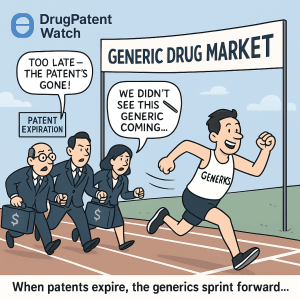
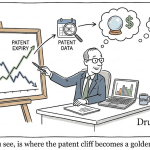
Between 2025 and 2030, branded drugs generating $217-236 billion in annual global sales are scheduled to lose market exclusivity. That is the primary fuel. It is not speculative.
The Patent Cliff Quantified
Key loss-of-exclusivity (LOE) events driving the near-term pipeline include ustekinumab (Stelara; J&J) with U.S. biosimilar entry beginning in 2025, representing a reference product valued at approximately $10 billion in peak annual U.S. sales, and vedolizumab (Entyvio; Takeda) whose biosimilar pathway opens up the Crohn’s disease and ulcerative colitis indication for an estimated $25 billion combined oncology/immunology biosimilar opportunity by 2029. Dupilumab (Dupixent; Sanofi/Regeneron) remains under primary biologic patent through 2031 but secondary patent challenges are already filed in several jurisdictions.
Key Takeaways: Section 1
The market will grow. The debate is about which segments carry that growth and at what margin. Any strategic plan that uses a single blended CAGR is oversmoothing the data. For planning purposes: oral solid generics should be modeled at 3-5%; injectables at 6-7%; biosimilars at 15-17%; inhalables at 9-10%. The gap between those trajectories is where capital allocation decisions get made.
2. Segment Decomposition: Where the Money Actually Is
Therapeutic Areas: Chronic Care Stability vs. Oncology Growth
Diabetes and cardiovascular generics form the revenue base. Metformin, amlodipine, atorvastatin, lisinopril, and their many generic equivalents collectively account for hundreds of billions in annual dispensing volume globally. Margins are thin, entry barriers are low, and the competitive dynamics are essentially commodity chemicals logistics at scale.
Oncology is the highest-growth therapeutic area with a projected 9.21% CAGR through 2030. The mechanism here is structural: cancer incidence is rising (U.S. diagnoses exceeded 2 million in 2024), and the patent estate protecting the most widely used biologic oncology agents is deteriorating rapidly. Monoclonal antibodies like rituximab, trastuzumab, and bevacizumab already have biosimilar competition in most major markets. The next generation — pembrolizumab (Keytruda; Merck) with over $25 billion in 2024 global sales, and nivolumab (Opdivo; BMS) at roughly $9 billion — represent the biosimilar targets that will define the 2030s competitive map. Primary composition patents for pembrolizumab begin expiring around 2028-2036 depending on jurisdiction, making patent cliff analysis for this molecule one of the most consequential exercises in pharma IP today.
Central nervous system generics, including generic versions of branded extended-release formulations for ADHD, epilepsy, and depression, remain high-margin niches because the regulatory bar for demonstrating bioequivalence in modified-release CNS drugs is more demanding than for standard immediate-release tablets, and because the therapeutic index sensitivities create physician and patient resistance to substitution.
Route of Administration: The Complexity Premium
Oral solids hold the majority of generic revenue globally by volume, but the growth vector has definitively shifted. Injectable generics are expanding faster, driven by the biologic patent cliff and the hospital formulary demand for sterile IV alternatives to expensive branded drugs. The manufacturing requirements for sterile injectables, particularly lyophilized formulations and complex emulsions, are dramatically more capital-intensive than tablet manufacturing. A sterile fill-finish line requires a minimum investment in the $50-150 million range and several years to qualify. That capital intensity itself becomes an IP-equivalent moat.
The inhalable generics segment is projected to grow at 9.89% CAGR through 2030, the fastest rate in the industry. This is not simply a demand story. It is a regulatory complexity story. The FDA’s Product-Specific Guidances (PSGs) for dry-powder inhalers (DPIs) and metered-dose inhalers (MDIs) require in vitro aerosol characterization studies, orally inhaled nasal drug product (OINDP) studies, and in many cases device equivalence testing. Demonstrating that a generic Advair (fluticasone/salmeterol) DPI delivers the same fine particle fraction to the same pulmonary regions as the reference listed drug requires years of analytical work and the development of proprietary in vitro testing methods. The first successful entrant into a complex inhaler generic market routinely maintains near-duopolistic pricing for 12-24 months before a second competitor qualifies, which is the definition of a de facto exclusivity window.
Distribution Channels: PBMs, GPOs, and the Rise of Digital
Retail pharmacies hold the dominant distribution share, but their pricing authority has eroded significantly as pharmacy benefit managers (PBMs) have consolidated into a structure where the three largest (CVS Caremark, Express Scripts, and OptumRx) control roughly 80% of U.S. commercial pharmacy benefit lives. For a generic manufacturer, winning formulary placement with these three entities is more commercially determinative than any other single factor. The PBM rebate architecture, designed to favor high-list-price brands, has created the paradox of biosimilars launching at lower list prices and achieving slower market uptake than economically rational models would predict — a dynamic made starkly visible in the Humira biosimilar launches of 2023-2024.
Hospital pharmacies account for nearly half of global generics revenue (47.8%) and operate primarily through Group Purchasing Organizations (GPOs). The GPO model, where large hospital systems aggregate purchasing power to negotiate national contracts, creates winner-take-most dynamics for sterile injectable generics. A single GPO contract can represent hundreds of millions in annualized volume; losing it to a competitor by a fraction of a cent per unit is catastrophic. This consolidation of channel power is a direct driver of the margin compression that leads manufacturers to exit markets and ultimately causes drug shortages.
Online pharmacy is the fastest-growing distribution channel. The global e-pharmacy market exceeded $107 billion in 2024. In markets like India, where platforms like 1mg and PharmEasy function as both retailers and data aggregators, digital channels are reshaping price discovery for generic drugs in ways that will ultimately compress the branded generic premiums that Indian manufacturers have historically relied on.
Key Takeaways: Section 2
The revenue base is in oral solids; the growth and margin opportunity is in injectables, inhalables, and biosimilars. PBM and GPO relationships are the actual commercial moat in the U.S. market, not just a sales execution detail. The digital channel shift will compress branded generic premiums in emerging markets faster than most regional manufacturers’ planning models currently assume.
3. Competitive Landscape: Corporate IP Valuations and Strategic Postures
The Global Leaders and Their IP Asset Bases
The top tier of the global generic industry — Teva, Sandoz, Viatris, Sun Pharma, Dr. Reddy’s, Cipla, Lupin, and Aurobindo — controls an estimated combined ANDA portfolio of several thousand approved applications, which represent the core IP-equivalent asset base for generic manufacturers. Unlike innovator companies where IP value resides in granted patents, generic manufacturer IP value resides in ANDA approvals, first-to-file PIV exclusivity positions, and proprietary manufacturing know-how.
Sandoz: IP Valuation as a Pure-Play Biosimilar Bet
Sandoz, spun out from Novartis in October 2023, is the clearest example of a company that has repositioned its IP asset base as a biosimilar pipeline. With 70% of revenues from generics and a declared pipeline of 28 biosimilar molecules in various stages of development, Sandoz’s IP strategy centers on acquiring early-stage biosimilar development rights, prosecuting secondary patents on proprietary manufacturing processes and formulations, and building the clinical data packages needed to pursue biosimilar interchangeability designations in the U.S.
In terms of IP valuation mechanics, the Sandoz biosimilar pipeline is worth assessing on a risk-adjusted net present value (rNPV) basis per molecule. For a high-value target like pembrolizumab, where the reference product grosses $25+ billion annually, even a 2-3% market share at heavily discounted biosimilar pricing could represent $500-750 million in annual revenue per biosimilar entrant. With four to six major competitors anticipated in the pembrolizumab biosimilar market, first-mover advantage in securing interchangeability designation and early PBM formulary placement will determine which companies capture the bulk of that value. Sandoz’s reported double-digit biosimilar growth in 2024, driven by MS and plaque psoriasis launches (likely referencing ofatumumab and risankizumab biosimilars), suggests early execution capability.
Investment Strategy Note: Sandoz trades as a pure-play biosimilar growth story. The valuation premium over traditional generic peers is defensible if the biosimilar pipeline executes on interchangeability designations and secures PBM contracts, but carries binary regulatory risk on individual molecules. Analysts should model downside scenarios that incorporate delayed interchangeability timelines and PBM rebate structures that favor branded products.
Teva: IP Valuation as a Hybrid Portfolio
Teva’s IP asset base is the most complex to value because it spans three categories: a legacy ANDA portfolio of thousands of approved generic products (which generates cash but erodes); an innovative drug pipeline anchored by fremanezumab (Ajovy) for migraine prevention; and an emerging biosimilar portfolio that includes FDA-approved biosimilars for adalimumab (Humira) and ustekinumab (Stelara), both approved in 2024.
The innovative pipeline is the swing factor in Teva’s valuation. Ajovy competes in the CGRP inhibitor class with Aimovig (Amgen/Novartis) and Emgality (Eli Lilly). Peak sales estimates for Ajovy range from $600 million to $1.2 billion annually, which at standard pharma valuation multiples of 3-4x revenue represents an IP asset worth $1.8-4.8 billion on its own. Teva’s ‘Pivot to Growth’ strategy is explicitly predicated on using the cash generation of its generic base to fund the R&D required to build this kind of innovative IP asset base, rather than remaining purely dependent on the commoditizing ANDA portfolio.
Investment Strategy Note: Teva’s debt-reduction trajectory is the gating factor for re-rating. Net debt stood at approximately $17 billion in 2024, down significantly from peak. Analysts should track the quarterly generic-to-innovative revenue split as the leading indicator of whether the ‘Pivot to Growth’ strategy is translating from stated intent to financial reality.
Viatris: IP Divestiture as Value Unlocking
Viatris’s decision to divest its biosimilar business to Biocon and its OTC division represents a deliberate IP asset simplification. By shedding those platforms, Viatris concentrated its IP asset base on its core ANDA portfolio, complex generics pipeline, and a portfolio of branded products in markets where generics penetration is structurally lower. The company’s complex generic pipeline, including products in ophthalmic suspensions, dermatological formulations, and modified-release injectables, is the primary source of near-term IP value creation.
Sun Pharma: Specialty IP as the Margin Driver
Sun Pharma’s IP asset base is bifurcated: a high-volume generic business with over 40 manufacturing facilities provides scale and cash, while a growing specialty medicines portfolio generates margin. The specialty business includes Ilumya (tildrakizumab) for plaque psoriasis, licensed from Almirall and developed through U.S. regulatory approval, and Cequa (cyclosporine ophthalmic solution 0.09%) for dry eye disease. These specialty assets, protected by regulatory data exclusivity and formulation patents, represent the higher-margin component of Sun Pharma’s portfolio and are increasingly the focus of analyst attention. The strategy of using a robust generic infrastructure to fund and commercialize specialty molecules is a capital-efficient model for companies that already have U.S. regulatory and commercial infrastructure in place.
Key Takeaways: Section 3
The IP valuation logic for generic companies has evolved beyond ANDA counting. For biosimilar-heavy portfolios, rNPV modeling per molecule with interchangeability probability weighting is now the required analytical framework. For mixed portfolios, the innovative pipeline value must be assessed separately from the generic base. The diverging corporate strategies — Sandoz’s pure-play versus Teva’s hybrid — represent competing hypotheses about where long-term value accrues in the off-patent sector, and the next five years will stress-test both.
4. The U.S. Regulatory Battleground: Hatch-Waxman Mechanics and Litigation Economics
The Architecture of Hatch-Waxman
The Drug Price Competition and Patent Term Restoration Act of 1984 constructed a system that reduced the pre-market requirement for generic entry from full clinical trials to a bioequivalence demonstration against the Reference Listed Drug (RLD). This single change made the economics of generic development viable and drove generic prescription share from 19% in 1984 to over 90% of all U.S. prescriptions dispensed today.
The architecture’s true complexity lies in the patent certification framework. When submitting an Abbreviated New Drug Application (ANDA), the generic applicant must certify for each patent listed in the Orange Book. The Paragraph IV (PIV) certification — an assertion that a listed patent is invalid, unenforceable, or will not be infringed by the generic — is the operative legal mechanism that drives the industry’s competitive dynamics.
The PIV Litigation Trigger and the 30-Month Stay
A PIV certification constitutes a technical act of patent infringement by statute, specifically to create justiciable controversy before market entry. The generic applicant must notify the NDA holder and patent owner. If the brand files an infringement suit within 45 days, a 30-month automatic stay prevents the FDA from granting final ANDA approval. The stay can be extended or shortened by a court. Critically, the FDA has no discretion here: the stay is automatic upon timely filing of the brand’s lawsuit.
During the stay period, the brand and generic are engaged in patent litigation. The three possible outcomes are: the brand wins and generic entry is delayed until patent expiration; the generic wins and can enter after FDA approval; or the parties settle, often through a ‘reverse payment’ or ‘pay-for-delay’ arrangement where the brand compensates the generic for delaying entry. The Supreme Court’s 2013 FTC v. Actavis ruling established that reverse payment settlements are subject to antitrust scrutiny under a rule-of-reason analysis, which has deterred but not eliminated the practice.
The 180-Day Exclusivity: Economics and Gaming
The first ANDA applicant to submit a ‘substantially complete’ ANDA with a PIV certification earns 180 days of marketing exclusivity. During this window, the FDA cannot approve any subsequent ANDA for the same drug. The resulting temporary duopoly between the first generic and the brand is typically the most profitable phase of a generic product’s lifecycle. FTC data indicates that first-filer revenues can range from tens of millions to over a billion dollars during the exclusivity window, depending on the drug’s market size and whether the brand deploys an authorized generic (AG).
The exclusivity can be ‘parked’ — held unused by the first filer while additional patent litigation proceeds — which effectively blocks all subsequent generics even when those later challengers have won their own PIV battles. The FDA Reauthorization Act of 2017 and subsequent guidance have addressed some parking scenarios, but the legal architecture still provides strategic flexibility for well-resourced first filers.
Multiple ANDAs can share first-to-file status if they are deemed ‘substantially complete’ and filed on the same day. In competitive markets, the filing of dozens of ANDAs on the same day for high-value targets has created a regime where 180-day exclusivity is shared among multiple applicants, dramatically reducing the per-filer economic benefit.
Orange Book Patent Listing: Strategic IP Capture and Abuse
The Orange Book functions as a patent registry for approved drug products. Listing a patent in the Orange Book is a unilateral act by the NDA holder; the FDA conducts no substantive review of whether a listed patent claims the approved drug or a use thereof. This asymmetry has been exploited. The FDA’s 2023 rules on product hopping and the FTC’s increased scrutiny of Orange Book listings have begun to address the practice of listing device patents, manufacturing process patents, and other patents with a tenuous connection to the drug product. Improper Orange Book listings that trigger automatic 30-month stays are now actionable under FTC Section 5 authorities, as demonstrated by the FTC’s 2023 challenges to listings by AstraZeneca, Novo Nordisk, Boehringer Ingelheim, and others.
Key Takeaways: Section 4
The U.S. generic entry process is fundamentally a legal strategy problem with a scientific execution component. The ability to identify vulnerable Orange Book-listed patents, assess litigation risk, and execute a ‘substantially complete’ ANDA ahead of competition determines which companies capture 180-day exclusivity on the most valuable drugs. Patent intelligence tools that track Orange Book listings, litigation history, PIV filing dates, and exclusivity status are operational infrastructure, not optional analytics.
Investment Strategy Note: For investors evaluating generic companies, the PIV pipeline is a forward-looking IP asset. A company with five ‘first-to-file’ PIV positions on drugs with combined annual brand sales of $10 billion represents a risk-adjusted future cash flow stream that should be reflected in valuation, discounted by litigation risk and the probability of authorized generic launches.
5. European Union: Harmonized Approval, Fragmented Access
EMA Approval Pathways for Generics
The European Medicines Agency’s centralized procedure (CP) generates a single marketing authorization valid across all 27 EU member states plus EEA countries. For generic applicants, the CP is accessible — and often mandatory — when the reference branded drug was itself approved centrally. This is the standard pathway for biosimilars and for generics referencing biologics approved under EMA’s centralized route.
For drugs not approved centrally (many older small-molecule originator products), generics proceed through the decentralized procedure (DCP) for new simultaneous multi-country applications, or through mutual recognition procedure (MRP) to extend an existing national authorization. The DCP is the more common route for generics targeting older products with large generic markets across multiple member states.
SPCs: The EU Patent Extension Mechanism
The Supplementary Protection Certificate (SPC) extends effective market exclusivity for up to five additional years beyond a drug patent’s 20-year term, with a further six-month pediatric extension (PUMA) available under specific conditions. SPCs are granted at the national level, so expiry dates can differ by months across member states — a critical factor for launch sequencing.
The SPC calculus is more strategically complex than the basic 5-year extension suggests. The SPC is calculated based on the date of first marketing authorization in the EU, meaning drugs that took longer to gain EMA approval receive longer SPCs. A drug approved via EMA five years after its patent filing date would receive the maximum five-year SPC. One approved ten years after filing receives zero additional protection. For generic launch planning, the effective exclusivity calendar in Europe often looks quite different than in the U.S., where patent term restoration under Hatch-Waxman uses a different calculation method.
The EU’s 2023 pharmaceutical legislation revision proposed changes to the SPC framework, including the SPC manufacturing waiver that allows EU-based generic and biosimilar manufacturers to produce for export outside the EU while the SPC remains in force. This waiver, now adopted, is a competitive response to manufacturing cost disadvantages versus Asia-based producers and represents a meaningful shift in EU pharmaceutical IP policy.
Market Access: The Real Post-Approval Barrier
EMA approval is the regulatory permission to sell. Commercial access requires separate negotiations with each member state’s national health authority and health technology assessment body. Germany’s AMNOG process, France’s HAS (Haute Autorite de Sante), England’s NICE, and Spain’s AEMPS each operate under different criteria for generic and biosimilar reimbursement.
For biosimilars specifically, EU member state reimbursement policies range from automatic substitution at the pharmacy level (notably in Nordic countries) to physician-controlled prescribing that effectively requires active switching programs. A biosimilar company that gains EMA authorization but fails to secure favorable national reimbursement listings in Germany, France, Italy, and the UK — the four largest EU markets by pharmaceutical spend — may be technically approved for the entire EU but commercially locked out of the majority of its addressable market.
Key Takeaways: Section 5
EU market access is a bottom-up exercise, not a top-down one. EMA approval removes the regulatory barrier. It does not move a single unit. The country-by-country HTA and reimbursement process is the commercial battlefield. For biosimilars, the variance in national automatic substitution policies is the single biggest determinant of market uptake speed after launch.
6. The Indian Paradigm: Section 3(d), Compulsory Licensing, and Global Price Arbitrage
Section 3(d): Anti-Evergreening as Industrial Policy
India’s Patents Act Section 3(d), as amended in 2005, establishes a higher patentability bar for pharmaceutical compounds by explicitly excluding from patentability the ‘mere discovery’ of a new form of a known substance unless that new form demonstrates enhanced therapeutic efficacy. The enumerated forms — salts, esters, ethers, polymorphs, metabolites, pure forms, particle sizes, isomers, and combinations thereof — map almost precisely onto the toolkit of pharmaceutical evergreening strategies used globally.
The Supreme Court’s 2013 ruling in Novartis AG v. Union of India cemented the interpretation. Novartis sought a patent for the beta-crystalline polymorph of imatinib mesylate, which it argued had superior bioavailability compared to the alpha-crystalline form already in the prior art. The Court rejected the patent, holding that ‘efficacy’ under Section 3(d) means therapeutic efficacy in treating disease, and that improved bioavailability is not by itself sufficient to establish enhanced therapeutic efficacy. The ruling was 7 years of litigation and remains the most cited pharmaceutical patent decision by any non-U.S., non-European court.
The strategic implication for generic manufacturers is direct: imatinib (Gleevec/Glivec) was available as a generic in India while Novartis was still collecting $4-5 billion annually in global branded sales. Indian-made generic imatinib reached patients in dozens of countries at a fraction of the brand price. That export dynamic is replicated across many cancer drugs, HIV antiretrovirals, and hepatitis C treatments where the Indian patent landscape diverges from the U.S. and EU.
Compulsory Licensing: The Natco-Bayer Precedent
India’s compulsory licensing framework under Section 84 of the Patents Act allows a third party to produce a patented drug if three conditions are met: the drug is not available in adequate quantities; it is not available at a reasonably affordable price; or it is not being worked in India. The Controller General of Patents has granted exactly one compulsory license since the TRIPS-compliant 2005 amendments: Natco Pharma’s 2012 license for sorafenib (Nexavar, Bayer).
Bayer was selling Nexavar at approximately Rs 2.84 lakh (roughly $5,600) per month in India at the time. Natco’s compulsory license allowed it to sell the generic at Rs 8,880 ($175) per month, a 96.8% price reduction. Bayer’s court challenges to the license failed. The license was limited to the Indian market but its global signaling effect was substantial: it demonstrated that India’s compulsory licensing framework is operational and enforceable, which has influenced pricing negotiations for patented drugs in multiple other jurisdictions.
India’s Global Price Influence
India’s combination of Section 3(d) restrictions and a robust generic manufacturing export base effectively sets a global price floor for many off-patent and selectively patented molecules. When Indian manufacturers can legally produce a generic version and export it to sub-Saharan Africa, Southeast Asia, or Latin America, the resulting import prices create political pressure on innovator companies in those markets to reduce their own pricing. This dynamic played out clearly for hepatitis C direct-acting antivirals, where sofosbuvir (Sovaldi) priced at $84,000 per course in the U.S. was available through Indian generics in many developing countries for under $1,000. The political and public health pressure generated by that disparity was a direct factor in Gilead’s voluntary licensing decisions.
Key Takeaways: Section 6
Section 3(d) is not merely domestic patent policy. It is a mechanism that creates a two-tier global market for many drugs, with India functioning as the low-cost price anchor that constrains innovator pricing globally. For pharma IP teams at innovator companies, understanding which drugs are patentable in India (and under what conditions) is as strategically important as the U.S. Orange Book strategy. For generic companies, India’s manufacturing infrastructure combined with its patent law framework creates a global export platform that is structurally unique.
7. China’s VBP Disruption: A Global Deflationary Force
The VBP Mechanism: Volume for Price
China’s Volume-Based Procurement (VBP) program began as the ‘4+7’ pilot in 11 cities in 2018 and expanded nationally in 2019. The government acts as a single consolidated buyer for its public hospital system — which covers the majority of pharmaceutical volume in China — and conducts competitive tenders for off-patent drugs. The winner takes a guaranteed, centrally allocated volume representing 60-80% of the hospital market for that molecule. Companies that do not win the contract are effectively excluded from public hospitals for the contract duration.
The 4+7 pilot produced an average price reduction of 52%, with individual drugs seeing cuts exceeding 96%. Subsequent national rounds have maintained this trajectory: the eighth VBP round in 2023 produced average price reductions of 56%, and by 2024, over 430 drugs had been included across multiple rounds. For context, prior to VBP, many drugs sold by both multinational and domestic companies in China had significant marketing-driven price premiums over their global generics market equivalents. VBP has eliminated those premiums in the hospital channel.
VBP’s Effect on Global Cost Structures
The mechanism by which VBP exports deflation is through economies of scale and cost engineering. A Chinese manufacturer that wins a national VBP contract for a drug like metformin, atorvastatin, or amlodipine at dramatically reduced unit prices must restructure its entire cost base — API sourcing, manufacturing throughput, quality systems, and overhead allocation — to produce profitably at those prices. The manufacturers that successfully execute this cost re-engineering establish a new global cost baseline for those molecules.
When those same manufacturers then compete for generic contracts in European tenders (Germany’s Lauer-Taxe reference pricing system, French price negotiations, UK NHS tender volumes), they enter with a cost structure that Western manufacturers built to operate at pre-VBP margin levels cannot match. This is the mechanism by which a policy change in the Chinese hospital procurement system creates competitive pressure for manufacturers in Germany and Italy who have no direct China exposure.
VBP’s Innovation Stimulus: The Unintended Consequence
The evisceration of marketing-driven generic margins in China is creating a structural incentive for Chinese pharmaceutical companies to invest in innovative drug development. Hengrui Medicine, Zymeworks (through its China operations), and a cohort of VC-backed Chinese biotech companies are investing in novel molecular entities and biologic drugs precisely because innovative drugs are excluded from VBP. This incentive structure — destroy margins on generics, create premium margins on innovation — mirrors the logic behind Hatch-Waxman’s original design. The Chinese government appears to be using VBP deliberately to accelerate the transition of its pharmaceutical industry from generic manufacturing to innovative drug development.
Key Takeaways: Section 7
VBP has permanently altered the global cost structure for hundreds of commodity generics. Any Western manufacturer that models its competitive cost position without accounting for VBP-optimized Chinese competitor cost structures is operating with outdated assumptions. For portfolio managers, Chinese pharma companies with VBP-winning products and growing innovative pipelines represent an underappreciated category: companies that have been forced through a profit-margin compression exercise that is simultaneously building their competitiveness in global tender markets and their innovative drug capabilities.
Investment Strategy Note: Multinational generic companies with high revenue exposure to older commodity molecules that compete with VBP-hardened Chinese producers face structural margin pressure. The investment thesis for maintaining such exposure requires a credible cost reduction or product upgrade roadmap. Absent that, capital should be redeployed toward complex generics and biosimilar platforms where Chinese competition, while growing, has not yet established the scale advantages that exist in oral solid generics.
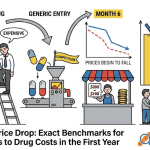
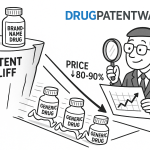
The entry of generic competition into a previously monopolized drug market follows a well-documented price decay curve. With a single first-to-file generic in market, price discounts relative to brand are often modest — 20-30% — because the brand retains formulary positioning and patient inertia. As additional competitors enter, prices fall more sharply. With two to three competitors, discounts reach 20-40%. At six or more competitors, prices have typically fallen 95% or more relative to the pre-expiry brand price. At ten or more suppliers, price stabilizes at 70-90% below the pre-expiry level.
This curve has steepened over time. IQVIA data shows that oral generics entering the U.S. market in 2011-2013 fell an average of 79% in price within 12 months of launch. The comparable figure for generics launching a decade earlier (2002-2004) was 44%. The acceleration reflects both increased ANDA filing activity (more competitors entering the market faster) and the increasing sophistication of PBM and GPO sourcing practices.
Evergreening: A Technical Taxonomy
The ‘evergreening’ label is applied to a range of distinct strategies that share the goal of extending effective exclusivity beyond primary composition-of-matter patent expiry. Each has different legal durability and commercial effectiveness.
Polymorph patents claim a specific crystalline form of an active ingredient and are common but relatively vulnerable to PIV challenge, as courts have generally required clear evidence of non-obvious advantages. Formulation patents covering extended-release or modified-release delivery systems are more defensible because the development work to achieve modified release is often genuinely inventive. Method-of-use patents claiming a new therapeutic indication can extend exclusivity for that indication even after the composition-of-matter patent expires, but a generic approved for original indications can be prescribed off-label, significantly limiting the commercial value of the method patent. Device patents covering an injector pen, inhaler, or autoinjector are the most recently evolved evergreening tool and the subject of the FTC’s current Orange Book listing challenges, as the nexus between the delivery device patent and the drug product is legally ambiguous.
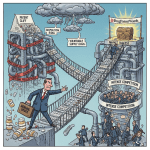
The AbbVie Humira example is the canonical case study. AbbVie constructed a patent thicket of over 165 U.S. patents covering adalimumab’s formulation, manufacturing process, dosing regimens, and delivery device. This architecture delayed U.S. biosimilar entry until January 2023, five years after European biosimilar entry began in 2018. The estimated cost of that delay to the U.S. healthcare system, measured by the difference between brand list price and biosimilar prices multiplied by volume over the delay period, has been estimated at $38-58 billion, depending on methodology.
Authorized Generics: Quantifying the Impact
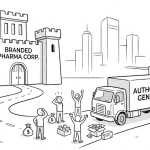
An authorized generic (AG) is a generic version of a branded drug marketed under the original NDA by the brand company or its licensee. It requires no separate ANDA and can be launched without FDA approval, as it is the same product under the same NDA. The AG disrupts the economics of first-filer 180-day exclusivity by immediately creating competition within what would otherwise be a duopoly.
FTC analysis of AG impact is quantified. The presence of an AG reduces first-filer exclusivity revenues by 40-52%. Retail prices during exclusivity periods with an AG present are 4-8% lower; wholesale prices are 7-14% lower. The FTC has documented over 100 AG launches between 2003 and 2017. The strategic calculus for a brand company deploying an AG is nuanced: the AG captures some generic market share but also accelerates price erosion on the brand. Companies with a large retail pharmacy market share (through their own pharmacy network or strong PBM relationships) can use the AG to direct volume to their own product.
Case Study: Lipitor (atorvastatin) — The Textbook Patent Cliff
Pfizer’s atorvastatin (Lipitor) reached peak annual global sales exceeding $12 billion, making it the world’s best-selling drug for multiple consecutive years. The primary U.S. composition-of-matter patent expired November 30, 2011. Pfizer’s litigation strategy had successfully delayed generic entry for years through a combination of Orange Book listings and litigation, but the cliff was ultimately unavoidable. In Q1 2012, atorvastatin’s U.S. sales fell 71% year-over-year. Analyst projections at expiry forecast an 87% reduction in U.S. revenues in the first year post-expiry. Pfizer launched an authorized generic (branded as Atorvastatin Pfizer) and executed ‘Project LEAP,’ a commercial program that offered retail pharmacies bundled purchasing arrangements for branded Lipitor and the Pfizer AG. The strategy retained Pfizer’s share within the new generic market but could not meaningfully offset the revenue cliff. The Lipitor LOE remains the single most studied patent expiry event in generic market history.
Case Study: Plavix (clopidogrel) — The At-Risk Launch Gamble
Clopidogrel (Plavix) was co-marketed by Bristol-Myers Squibb and Sanofi and generated approximately $9 billion in annual U.S. revenues at peak. The first PIV challenger was Canadian generic manufacturer Apotex. A settlement agreement between Apotex and the brand companies that would have delayed generic entry was challenged by the DOJ under antitrust grounds and ultimately collapsed. With no settlement in place and litigation unresolved, Apotex launched its clopidogrel generic ‘at risk’ in August 2006. The at-risk launch allowed Apotex to accumulate significant revenue in the months before a final judgment. The court ultimately ruled in the brand’s favor on the underlying patent validity question. Apotex was ordered to pay $442.2 million in damages. The lesson encoded in this case study: at-risk launch is profitable only if you win the litigation or settle favorably before judgment. If you lose, the damages calculation includes all profits earned during the at-risk period plus potential enhanced damages. The Plavix case has remained the defining risk calibration reference point for at-risk launch decisions for nearly two decades.
Key Takeaways: Section 8
Price erosion is faster than most brand defense planning models assume. At six or more generic entrants, 95% price reductions are the norm, not an exception. Evergreening strategies vary significantly in legal durability. Polymorph and method-of-use patents are increasingly vulnerable to both PIV challenges and FTC Orange Book challenges. Device patents are the current contested frontier. AG deployment reduces first-filer economics by roughly half and should be modeled as a baseline scenario in any PIV economics analysis, not a tail risk.
A PIV challenge on a high-value brand drug requires an integrated decision framework that the generic company’s legal, regulatory science, commercial, and finance functions must execute in parallel. The target selection analysis evaluates patent vulnerability (claim scope, prior art, obviousness arguments, enablement issues), market size and timing (how much revenue is at stake and when the patent expires if no challenge is brought), competitive landscape (how many other generics are likely to file and whether first-to-file status is achievable), and manufacturing feasibility (whether a non-infringing formulation or the standard formulation can be approved within a commercially relevant timeframe).
The ‘total addressable revenue’ for a 180-day exclusivity position is calculated as: reference brand annual sales divided by the expected number of generic entrants during exclusivity, multiplied by the expected generic pricing discount, multiplied by the market share the filer can realistically capture. For a $5 billion brand drug with two co-first-filers, a 30% generic price discount, and an estimated 40% market share capture during exclusivity, the expected revenue is approximately $1.5 billion over six months — before accounting for an authorized generic, which would reduce that figure by roughly half to $750 million.
Litigation Execution: The Anatomy of a PIV Lawsuit
Once a PIV-triggering ANDA is filed and the brand files its infringement suit, the litigation proceeds through claim construction (Markman hearing), fact discovery, expert discovery, and trial or summary judgment. Pharmaceutical patent cases are among the most technically complex in federal litigation. The typical timeline from PIV filing to trial verdict is three to six years. The 30-month stay provides the initial protective buffer, but if the case has not resolved by the end of the stay, the generic may launch at-risk or wait for trial resolution.
Key litigation theories for invalidity include anticipation by prior art (the claimed compound or formulation was disclosed before the patent’s priority date), obviousness (the combination of prior art references would have motivated a skilled chemist to make the claimed invention), lack of written description (the patent specification does not adequately describe the claimed invention), and enablement challenges (the patent does not enable a person of ordinary skill to make or use the invention across the full scope of claims). For biologics patents, where many secondary patents claim manufacturing process variables, obviousness and enablement arguments are particularly potent.
Key Takeaways: Section 9
The economics of the PIV pathway are calculable but require precise inputs: expected number of co-first-filers, authorized generic probability, expected generic pricing discount, and litigation risk-weighting for each patent claim. The most common strategic error is underestimating the authorized generic probability and overestimating the achievable market share during exclusivity. For any drug where the brand has a retail pharmacy channel and sufficient margin, the AG probability should be treated as high unless there is a specific contractual or business reason to conclude otherwise.
10. Complex Generics and Biosimilars: Technology Roadmaps
Complex Generics: The Regulatory and Development Roadmap
The FDA defines a complex generic as one that has a complex active ingredient, complex formulation, complex route of administration, complex drug-device combination, or is otherwise complex. The development roadmap for a complex generic typically involves four stages before FDA submission.
Stage one is reference product characterization. This requires exhaustive analytical work to fingerprint the innovator product’s physical, chemical, and biological properties — particle size distribution, polymorphic form, viscosity profile, release kinetics, and where relevant, aerodynamic particle size distribution. For some products (notably ophthalmic suspensions, transdermal patches, and inhalation products), reference characterization can require two to four years of analytical work and may consume multiple lots of the reference product for destructive testing.
Stage two is formulation development and matching. Using the reference product characterization data as the target, the generic company develops a formulation that replicates the reference product’s critical quality attributes. For formulations where the delivery system (inhaler device, injection pen, transdermal matrix) is integral to the drug product, the generic formulation must either use an equivalent device or demonstrate that a different device delivers equivalent drug performance. FDA’s Product-Specific Guidances (PSGs) for many complex formulations specify which studies are required and what acceptance criteria apply.
Stage three is bioequivalence/biosimilarity demonstration. For complex generics where traditional pharmacokinetic bioequivalence (AUC and Cmax matching) is insufficient, FDA may require in vitro studies to demonstrate equivalence at the site of action. For DPI inhalers, this includes cascade impactor studies measuring aerodynamic particle size distribution at multiple impactor stages. For topical creams and ointments, FDA has developed the ‘Q1/Q2/Q3 approach’ requiring qualitative sameness (Q1: same ingredients), quantitative sameness within specified ranges (Q2: same quantities), and microstructural equivalence (Q3: same physical form and texture characteristics).
Stage four is manufacturing scale-up and process validation. Complex formulations often have narrow manufacturing windows. Small deviations in mixing time, temperature, or shear rate can produce significant differences in critical quality attributes. Process validation for complex generics requires formal design-of-experiment studies (DoE) to map the manufacturing design space and establish proven acceptable ranges (PARs) for each process parameter.
Biosimilars: Development Economics and the Interchangeability Standard
Biosimilar development economics differ fundamentally from small-molecule generic development. Total development cost for a biosimilar ranges from $100-250 million depending on molecular complexity and the extent of clinical data required. Development timelines run five to seven years from molecule selection to BLA submission. The primary biological comparability exercise requires an extensive analytical characterization package (the ‘fingerprint analysis’), clinical pharmacology studies comparing pharmacokinetics and pharmacodynamics to the reference biologic, and in most cases Phase III efficacy and safety data in at least one indication.
The interchangeability designation is a separate, higher standard in the U.S. than basic biosimilarity. An interchangeable biosimilar can be substituted for the reference product at the pharmacy level without physician intervention, subject to state pharmacy practice laws. To achieve interchangeability, the sponsor must provide data from switching studies — clinical studies where patients alternate between the biosimilar and the reference product — to demonstrate that switching does not produce greater safety risks or diminished efficacy than continuous use of the reference product. Switching studies add approximately $30-80 million and 18-36 months to development timelines. The commercial payoff for interchangeability designation is direct formulary access at the pharmacy level, bypassing the physician-level prescribing decision, which is the principal mechanism by which biosimilar market share is built in pharmacy-benefit drugs.
The Humira Biosimilar Lesson: PBM Rebate Architecture vs. Price
The U.S. adalimumab biosimilar experience from 2023-2024 is the most instructive case study in biosimilar commercialization strategy. Nine biosimilars launched in 2023, including products from AbbVie (an authorized biosimilar, Hyrimoz/Hadlima through licensing arrangements), Amgen (Amjevita), Samsung Bioepis/Organon (Hadlima), Coherus/Sandoz (Hyrimoz), Fresenius Kabi (Idacio), and others. The reference product (Humira) retained a surprisingly high market share in the first 12-18 months post-biosimilar entry.
The mechanism behind this counter-intuitive outcome is PBM rebate economics. Humira’s list price is approximately $6,500 per monthly carton. AbbVie provides rebates to PBMs that can reach 60-80% of list price. The effective net cost to PBMs and payers after rebates is much lower than the list price suggests. A biosimilar priced at a 25-35% discount to Humira’s list price may actually cost payers more on a net basis than Humira after rebates are factored in. PBMs responded to this economic reality by maintaining Humira on preferred formulary status in many plans during the initial exclusivity period, effectively blocking biosimilar uptake. The BCG analysis quantified that meaningful biosimilar market penetration took approximately 18 months from first launch.
The corrective implication for biosimilar strategy: list price discounting is not sufficient for commercial success in the U.S. pharmacy benefit market. Biosimilar companies must negotiate rebate contracts with major PBMs and offer either comparable rebates to Humira (requiring a high list price with high rebate, similar to the ‘high list’ strategy adopted by some Humira biosimilars) or a genuinely lower net price combined with formulary exclusivity agreements. Organon and Sandoz pursued the high-list/high-rebate strategy; several others pursued low-list/low-rebate. Both strategies can work, but they require fundamentally different financial models and PBM negotiation approaches.
The biosimilar market is projected to grow from $34.75 billion in 2024 to over $175 billion by 2034 (CAGR of 17.3-17.6%), driven by the following high-value LOE events:
Ustekinumab (Stelara; J&J) U.S. biosimilar entry began September 2023 with several approved biosimilars. Reference product annual revenues were approximately $10 billion at peak. Multiple biosimilar sponsors including Amgen, Celltrion, and Samsung Bioepis are competing in this market.
Vedolizumab (Entyvio; Takeda) patent protection begins to expire around 2026-2028 depending on jurisdiction. Peak global revenues are approximately $5 billion annually. The IV formulation creates sterile manufacturing requirements that limit the supplier field.
Dupilumab (Dupixent; Sanofi/Regeneron) is the largest single near-term biosimilar opportunity not yet in play. 2024 global revenues exceeded $13 billion. Primary biologic patent protection runs to approximately 2031-2036 depending on jurisdiction and secondary patent challenges. The size of the ultimate biosimilar market opportunity here is large enough that several well-resourced companies are investing in development now despite the long timeline to commercialization.
Pembrolizumab (Keytruda; Merck) with $25+ billion in 2024 global revenues is the largest single drug revenue target for biosimilar developers. Primary composition patents expire in stages, with U.S. composition-of-matter patent expiry around 2028. Given the 5-7 year biosimilar development timeline, companies seeking first-wave biosimilar entry would need to have active programs running now.
Key Takeaways: Section 10
Complex generics command better margins because technical barriers to entry sustain a limited competitive field. The development investment is front-loaded and the regulatory timeline is long, but the return per entrant is substantially higher than for simple generics. Biosimilar interchangeability designation is the correct strategic target for self-administered biologics in the U.S.; without it, the commercial pathway runs through physician detailing and PBM negotiation rather than automatic substitution. The Humira launch experience has permanently changed how sophisticated biosimilar companies model U.S. commercial strategy.
Structural Concentration and the Fragility It Creates
The global pharmaceutical supply chain exhibits a level of geographic concentration that creates systemic fragility. India accounts for approximately 20-25% of global generic medicine volumes by quantity and supplies roughly 40% of U.S. generics by prescription volume. China produces an estimated 80-90% of the key starting materials (KSMs) used in API manufacturing, including precursor chemicals for antibiotics, cardiovascular drugs, and steroids. By some estimates, 90-95% of sterile injectable generics in the U.S. rely on materials sourced from China or India.
This concentration is a direct product of two decades of cost optimization. Generic manufacturers, operating on thin margins, consolidated sourcing to the cheapest qualified suppliers, which systematically pointed toward Indian finished-dose manufacturers and Chinese API and KSM producers. The economic logic was sound. The supply chain risk logic was not.
The Shortage-Price Paradox
The HHS white paper on drug shortages identifies the core mechanism: price erosion in commodity generics drives margins to levels where manufacturers cannot economically justify maintaining redundant capacity or carrying safety stock. A manufacturer producing a sterile injectable for $0.30 per vial in a market where three other manufacturers produce the same drug cannot invest in a second manufacturing line as insurance against quality failures. When a quality event occurs, the manufacturer may choose to exit the market entirely rather than invest in remediation. If the remaining suppliers cannot absorb the volume, a shortage results.
The drug shortage problem is therefore structurally embedded in the generic market’s success at driving down costs. Higher-priced drugs have more suppliers competing for the market. Drugs with extremely low prices have fewer suppliers, often a single qualified source, with no economic incentive for new entrants to build capacity. This is the shortage paradox: the drugs most likely to go short are precisely the ones where cost containment has worked best.
Geopolitical Risk Layers
The supply chain’s structural fragility is compounded by geopolitical exposure. The Russia-Ukraine conflict disrupted supply chains for excipients and packaging materials sourced from Eastern Europe. More significantly, U.S.-China trade tensions have introduced tariff uncertainty on pharmaceutical imports and raised the prospect of API export controls. India has demonstrated willingness to restrict pharmaceutical exports during domestic supply shortages (as during early COVID-19 phases). These export restriction events are low-probability but high-impact: a single decision by the Indian government to restrict API exports during a domestic shortage could simultaneously disrupt pharmaceutical supply across dozens of importing countries.
The FY2025 NDAA and IRA provisions include incentives for domestic pharmaceutical manufacturing, including tax credits and procurement preferences for domestically produced essential medicines. The Securing America’s Medicine Cabinet (SAMCare) Act framework and similar legislative proposals represent the U.S. government’s attempt to de-risk critical pharmaceutical supply chains through on-shoring incentives. The economics of domestic API manufacturing remain unfavorable relative to Indian and Chinese costs in most cases, but regulatory compliance advantages, supply security premiums from government procurement, and the availability of IRA tax credits are beginning to shift the calculation for some critical categories.
Reshoring Economics: The Breakeven Analysis
Domestic API manufacturing for a commodity antibiotic like amoxicillin trihydrate costs an estimated 3-5x the comparable Indian production cost. On pure cost terms, the reshoring case does not close. The case changes when supply security has an explicit value — for example, in a government procurement context where the buyer is willing to pay a supply security premium, or when the total cost of a shortage (patient harm, reputational damage, regulatory risk) is incorporated into the capital allocation decision.
Several manufacturers including Phlow (partnered with Civica Rx and the U.S. government) and Resilience have built domestic fill-finish and API manufacturing capabilities with explicit supply security mandates. These facilities operate under government offtake contracts that provide the revenue certainty needed to justify the capital investment at above-market unit costs. This model — government-backed domestic manufacturing capacity as a public good, subsidized to exist outside normal market economics — is likely to expand rather than contract as geopolitical risk awareness increases in congressional and executive branch procurement policy.
Key Takeaways: Section 11
Supply chain risk is no longer primarily an operational issue. It is a board-level strategic and reputational issue, and increasingly a regulatory and government relations issue. Companies with single-source critical API dependencies that run through geopolitically exposed manufacturing nodes (China API plus India finished dose) carry risk that is not currently priced into most generic company financial models. Supplier diversification, safety stock requirements, and multi-source qualification programs are the standard risk mitigation tools, but they carry costs that pressure margins in an already compressed segment.
Investment Strategy Note: Generic companies that are actively investing in supply chain diversification or domestic manufacturing positions — even at above-market cost — are building a long-term competitive asset as government procurement shifts toward supply security requirements. This is not captured in current-quarter earnings but represents real option value in a supply chain risk environment that is structurally deteriorating.
12. AI, Real-World Evidence, and Digital Competitive Advantage
AI in Generic Drug Development: Where It Actually Helps
The application of artificial intelligence and machine learning to pharmaceutical development is often overstated in generalist coverage. In the generic drug context, the relevant applications are specific, technically defined, and commercially significant.
In formulation development, ML models trained on physicochemical property data (solubility, permeability, pKa, logP, melting point) and historical formulation outcomes can accelerate excipient selection and predict dissolution profiles. For extended-release formulations where the release mechanism is a matrix polymer system, ML-guided formulation design can reduce the number of prototype formulations required to match a reference product’s release profile from dozens to a handful, compressing development timelines by six to twelve months in some cases.
In bioequivalence study design, PK modeling and simulation tools (PBPK models) are increasingly accepted by regulatory agencies as a basis for waiving food-effect studies or predicting drug-drug interaction risk. The FDA’s Center for Drug Evaluation and Research has issued guidance on PBPK modeling applications that explicitly contemplate using model outputs to support ANDA submissions. This represents a meaningful reduction in clinical study requirements for some products.
In manufacturing, AI-driven process analytical technology (PAT) applications monitor critical process parameters in real time and use predictive models to identify deviations before they result in out-of-specification batches. In sterile injectables manufacturing — where an OOS batch means a batch loss potentially worth $500,000-$5 million — PAT-enabled early detection has direct financial returns. It also reduces FDA 483 observations related to process understanding, which has regulatory compliance value.
Real-World Evidence: The Biosimilar Market Access Tool
Real-World Evidence (RWE) is clinical evidence derived from Real-World Data (RWD) sources — electronic health records, insurance claims, patient registries, wearable device data — rather than from controlled clinical trials. FDA guidance on RWE use (FDA Framework for RWE Program, 2018) and EMA’s Real-World Evidence Framework establish the conditions under which RWE can support regulatory decisions.
For biosimilars, the primary current regulatory application of RWE is post-market pharmacovigilance. But the commercial applications are broader and arguably more impactful. A biosimilar company that generates robust post-market RWE showing comparable patient outcomes, safety profiles, and persistence rates versus the reference biologic across thousands of real-world patients has a set of data that no clinical trial can match in sample size and generalizability. This data package, presented to hospital pharmacy and therapeutics committees, specialty society guidelines groups, and payer medical directors, directly addresses the ‘nocebo effect’ concern — the documented tendency for patients and physicians to attribute new symptoms to a medication switch even when no pharmacological basis exists.
RWE demonstrating successful switching outcomes is particularly powerful for the indication extrapolation question. Biosimilar approvals in the EU and U.S. allow for extrapolation of indications: a biosimilar approved for one indication can be approved for all indications held by the reference biologic, based on a scientific rationale, without requiring separate clinical trials in each indication. This regulatory principle has been accepted but remains controversial among prescribers. RWE from real-world switching experience in, say, plaque psoriasis can support prescriber confidence in using the same biosimilar for rheumatoid arthritis or Crohn’s disease through indication extrapolation, without requiring the company to conduct separate trials in each indication.
Key Takeaways: Section 12
AI’s near-term generic industry impact is in formulation development compression and manufacturing quality. The long-term disruptive potential is in PBPK-supported bioequivalence waivers that reduce clinical study requirements for some complex generics. RWE is a commercial and market access tool for biosimilars that creates sustainable competitive advantage beyond the clinical trial data package. The biosimilar company that systematically generates, analyzes, and disseminates RWE is building an evidence base that its competitors cannot easily replicate, which is a durable differentiator in a market where multiple biosimilars often have similar regulatory approvals.
13. Master Key Takeaways and Investment Strategy
Key Takeaways: Full Market
The global generic drug market will grow from roughly $490 billion in 2024 to over $900 billion by 2034. That growth is not uniformly distributed. Oral solid generics grow at 3-5%; biosimilars at 15-17%; complex inhalables at 9-10%. The companies that capture above-average returns are those that have made the capital commitments and built the technical capabilities to compete in the high-barrier-to-entry segments.
Regulatory frameworks are not background information. They are competitive determinants. The U.S. PIV litigation system rewards well-resourced legal strategies and first-to-file discipline. The EU’s fragmented market access structure rewards deep country-by-country commercial infrastructure. India’s Section 3(d) framework is a global price arbitrage mechanism that benefits Indian manufacturers and creates pricing pressure on innovators worldwide. China’s VBP is exporting commodity deflation globally and rewarding manufacturers that can operate at dramatically compressed margins.
Patent thickets are growing in complexity and cost. The era of a single PIV challenge that cleanly invalidates a brand’s entire IP estate is largely over for the most valuable drugs. Modern PIV litigation targets the weakest links in multi-patent estates. This requires more sophisticated legal teams, better patent intelligence infrastructure, and larger litigation budgets. The effect is to concentrate the most lucrative PIV challenges among the largest, best-capitalized generic companies.
Supply chain risk is not priced in. Most generic company valuations do not reflect the full cost of a supply chain disruption event. This is an asymmetric risk: the probability of a material disruption in any given year is low, but the impact when it occurs — recalls, consent decrees, market exit, patient harm, congressional scrutiny — is severe and long-lasting.
Investment Strategy: Framework for Portfolio Managers
For institutional investors and pharma/biotech portfolio managers, the generic drug market in 2025-2035 offers the following investment thesis framework:
The highest-risk-adjusted return opportunity is biosimilar platform companies with credible paths to interchangeability designations for high-value reference products (pembrolizumab, dupilumab) and demonstrated PBM commercial capabilities. The risk is binary on individual molecules (regulatory rejection, unexpected immunogenicity, PBM contract losses), which requires either concentration in a single high-conviction position or diversification across multiple biosimilar pipelines.
Complex generics specialists — companies with proprietary manufacturing platforms in DPI/MDI inhalation, sterile injectables, or drug-device combinations — represent a more stable growth profile than simple generic manufacturers. The capital barriers to entry in these manufacturing platforms provide durable margin protection. The risk is regulatory: FDA warning letters or Form 483 observations on complex manufacturing sites can have catastrophic stock price consequences.
Geopolitically diversified API and manufacturing companies with reshoring positions in critical categories have option value that is not currently reflected in generics industry valuations. As government procurement shifts toward supply security requirements and regulatory scrutiny of single-source critical drug manufacturing increases, domestic and near-shore manufacturers will access government contract premiums that change their financial models.
Pure-play commodity oral solid generic manufacturers with high China/India-competing product exposure and no complex generics pipeline face secular margin compression. Capital redeployment toward complex products or acquisition of biosimilar capabilities is the required strategic response. Absent that, the investment thesis depends on cost efficiency and scale alone, which is a thin long-term competitive moat.
14. FAQ: Analyst-Level Questions
How do biosimilars change the traditional generic business model?
Biosimilars require $100-250 million in development capital and five to seven years of development time, compared to $1-5 million and two to four years for a standard oral solid generic. The commercial model shifts from automatic pharmacy substitution toward physician and payer engagement. The risk profile is fundamentally different: a standard generic has modest development downside and limited upside per product; a biosimilar has large development downside (failed clinical comparability, FDA Complete Response Letter) and large upside (hundreds of millions in annual revenue for a successful interchangeable product). This changes the type of company that can compete: biosimilar development requires biopharmaceutical-scale clinical, regulatory, and commercial infrastructure.
Is there still a viable market for multinationals in China post-VBP?
Yes, but in fundamentally different segments. VBP has eliminated the marketing-driven premium market for off-patent small molecules in public hospitals. The viable remaining opportunities are innovative patented drugs (exempt from VBP), complex generics not yet included in VBP tenders, and the private market and non-urban channels where VBP pricing does not apply. For any multinational currently competing in commodity Chinese generic markets on the basis of brand premium alone, the strategic options are to exit, to compete on cost by restructuring the supply chain, or to migrate the portfolio toward VBP-exempt categories.
What is the biggest underappreciated risk in generic drug strategy?
Export controls on APIs used as geopolitical leverage. Most supply chain risk models focus on quality failures and natural disasters as disruption mechanisms. The emerging and more dangerous scenario is a deliberate export restriction imposed by a major KSM or API producing country during a trade dispute or political conflict. A sudden API export ban from China during a U.S.-China trade escalation could halt production of dozens of critical generic drugs within weeks. Companies with single-source Chinese KSM dependencies for essential medicines carry this risk without adequate disclosure or mitigation planning in most cases.
How does AI reshape the competitive balance between large and small generic companies?
Large companies have proprietary data advantages: decades of formulation and manufacturing data that can train predictive models more effectively than any commercial dataset. This advantages them in AI-driven formulation optimization and process control. Smaller companies can access cloud-based modeling platforms and outsourced PBPK modeling services that partially close this gap for specific applications. The net effect is likely to be increased productivity across the industry rather than a decisive advantage for either size tier. The more important AI competitive advantage may be in patent intelligence: companies that deploy ML tools for automated Orange Book monitoring, PIV filing tracking, and litigation outcome analysis will identify first-to-file opportunities faster than those relying on manual processes.
As patent thickets grow more complex, does the PIV pathway remain viable?
Yes. Patent thickets raise the cost and complexity of PIV challenges but do not eliminate the pathway’s viability. They change the strategy. The target in a patent thicket is the weakest link, not the entire estate. Legal teams now conduct ‘thicket mapping’ exercises that score each patent in a complex estate on invalidity probability, claim scope relevance to the proposed generic, and litigation cost. The PIV filing then challenges a selected subset of patents rather than the full estate. For the very largest patent estates (Humira-scale), the realistic generic strategy is to wait for the most commercially significant patents to expire or to negotiate a settlement for early entry, rather than litigating all 165 patents to trial. The practical effect is to concentrate PIV activity on drugs with more manageable IP estates and to defer entry on the most aggressively protected blockbusters.
This analysis incorporates market data from NovaOne Advisor, Custom Market Insights, Towards Healthcare, Mordor Intelligence, IQVIA, and HHS as cited in publicly available research. The IP case studies draw on publicly available court records, FDA databases, and regulatory guidance documents. This is not investment advice. All projections are estimates subject to revision.