The generic pharmaceutical market saves the U.S. healthcare system approximately $445 billion a year. Generics account for 90% of all prescriptions filled. The global market sat at roughly $435 billion in 2023 and is on track to cross $655 billion by 2028. By volume, this is the largest segment of the entire pharmaceutical industry.
None of that makes it easy to survive in.
The gold rush era of reverse-engineering blockbuster oral solids like Lipitor or Zocor and filing an Abbreviated New Drug Application (ANDA) is largely over. The margin on a mature, multi-source tablet product has collapsed to fractions of a cent per unit for many incumbents. What has replaced that relative simplicity is a web of interconnected, technically demanding, and capital-intensive challenges that have fundamentally altered what it costs to bring a generic drug to market, what it takes to keep it there, and what it means to make money doing so.
This guide does not offer a simple list. It is a structured, analyst-grade deep dive into ten critical challenge domains: the regulatory maze, the bioequivalence gauntlet, patent litigation mechanics, commodity price destruction, manufacturing compliance risk, supply chain fragility, the complex generics pivot, the biosimilar frontier, international competitive dynamics, and the shifting policy and technology landscape. Each section examines IP valuation implications, includes a Key Takeaways block, and, where relevant, provides an Investment Strategy section for portfolio managers and institutional analysts.
The intended audience is anyone whose decisions depend on understanding not just what the problems are, but what they cost, why they persist, and how companies with the right strategy can exploit them.
Challenge 1: The Global Regulatory Maze — Beyond the ANDA Submission
Regulatory affairs used to be a downstream function. A team would handle submissions after the science was done. That model no longer reflects commercial reality. Today, regulatory strategy shapes portfolio selection from day one, governs capital allocation across geographies, and determines whether a product’s total addressable market is viable before a single milligram of API is procured.
FDA vs. EMA: Divergent Pathways at Scale
The U.S. pathway for a generic is the ANDA, structured to allow the applicant to rely on the safety and efficacy data of the reference listed drug (RLD), requiring proof of pharmaceutical equivalence and bioequivalence. The European equivalent is the Marketing Authorisation Application (MAA), pursued through centralized, decentralized, or mutual recognition procedures depending on the product and the company’s geographic ambitions.
The agencies share the same fundamental scientific premise. Their execution differs substantially. Bioequivalence study requirements diverge on the fasting vs. fed state protocol, the source and identity of the reference medicinal product (the EU requires sourcing from within the European Economic Area), and the statistical treatment of highly variable drugs. The EMA’s criteria for granting BCS-based biowaivers, which allow companies to skip expensive in vivo human studies for certain drug classes, are more conservative than the FDA’s for Class III compounds, particularly around excipient composition and dissolution rate thresholds. The FDA accepts ‘very rapid’ dissolution for Class III biowaivers; the EMA applies that requirement more stringently, meaning a formulation passing FDA criteria may still require a full pharmacokinetic study in Europe.
A 2017-2020 comparative analysis found 95% concordance in final approval outcomes for products filed with both agencies simultaneously, but approval timing diverged by years in a substantial share of those cases. For a generic company, a two- or three-year lag between FDA and EMA approval does not simply delay revenue. It can render the European filing economically unviable if the U.S. market has already commoditized to the point where European development costs cannot be recovered.
Table 1: FDA vs. EMA Generic Approval Pathways — Key Commercial Implications
Feature
FDA
EMA
Commercial Implication
Application Type
ANDA
MAA (Centralized / DCP / MRP)
Separate dossier architecture; no single global submission package
Reference Product Source
U.S. RLD
EEA-sourced RMP
May require separate purchase, import, and storage of EU reference product
BE Acceptance Range
80.00-125.00% CI for Cmax and AUC
Same range; stricter for NTI drugs, narrower widening allowance for HVDs
Products that pass FDA criteria for HVDs may require additional EU study arms
BCS Biowaivers
Class I and III with specific excipient and dissolution criteria
Class I and III; stricter dissolution requirement for Class III
Minor excipient differences acceptable to FDA may invalidate EU biowaiver
NTI Drug Standards
Tighter CI (75.00-133.33% scaled)
More conservative; additional pharmacokinetic data often required
NTI generics require separate statistical planning per jurisdiction
Total EMA time-to-market can exceed FDA timeline despite shorter scientific review
Post-Market Pharmacovigilance
MedWatch / FAERS
EudraVigilance + country-level PSURs
EU pharmacovigilance requires ongoing country-specific compliance resources
GDUFA: Fee Structure as a Portfolio Filter
The Generic Drug User Fee Amendments (GDUFA), first enacted in 2012 and now in their third iteration (GDUFA III), gave the FDA sustained funding to hire reviewers, clear backlogs, and improve review predictability. The mechanism was a schedule of fees paid by industry.
For FY2025, those fees are:
ANDA filing fee: $321,920
Drug Master File (DMF) fee: $95,084
Annual program fee (large company): $1,891,664
Domestic API facility fee: $41,580
Foreign finished dosage form (FDF) facility fee: $246,952
These fees are non-refundable regardless of whether the application is approved, withdrawn, or refused filing. A mid-size generic company running a portfolio of 20 active ANDAs, multiple DMF dependencies, and three manufacturing facilities will absorb GDUFA costs well into the eight-figure range annually. That structure functions as a portfolio filter: it pushes companies toward products with larger revenue potential, which concentrates competition among well-capitalized players and leaves niche or smaller-market products underserved.
The practical implication for R&D teams is that every candidate evaluation must include a fully-loaded regulatory cost model before the formulation program begins, not after the bioequivalence study fails.
The Nitrosamine Crisis: A Systemic Quality Event and Its Ongoing IP Fallout
The discovery of N-nitrosodimethylamine (NDMA) contamination in valsartan in 2018 reshaped regulatory expectations for the entire off-patent drug industry. NDMA is classified as a probable human carcinogen. The contamination originated from specific API synthesis pathways at facilities primarily in China and India, where the interaction of dimethylformamide solvent with sodium nitrite under acidic conditions produced NDMA as an unintended reaction byproduct. The contamination had gone undetected for years because standard pharmacopeial testing protocols did not include this impurity.
The regulatory response has been comprehensive and expensive. The FDA’s current framework requires a three-phase approach: proactive risk assessment of every product’s API synthesis route; confirmatory testing using validated analytical methods including gas chromatography-mass spectrometry (GC-MS) and liquid chromatography-high resolution mass spectrometry (LC-HRMS); and remediation through either process modification, reformulation, or, where neither is practical, discontinuation.
The August 2025 deadline for completing confirmatory testing and submitting required changes for Nitrosamine Drug Substance-Related Impurities (NDSRIs) created a major bottleneck. NDSRIs are structurally more complex than the simple alkyl nitrosamines found in the original valsartan recalls and require more sophisticated risk assessment frameworks. Several smaller generic manufacturers facing high analytical and reformulation costs for low-revenue products have opted for market withdrawal rather than compliance investment, shrinking supply for affected molecules and in some cases triggering shortages.
The IP valuation dimension of the nitrosamine crisis is underappreciated. Any acquirer or investor evaluating a generic manufacturer’s portfolio today must assess the nitrosamine compliance status of each product as a line-item risk. Unresolved NDSRIs represent either an unbudgeted remediation cost or a latent recall liability. Neither belongs in a clean valuation model.
IP Valuation Dimension: Regulatory Exclusivity as a Core Asset
Regulatory exclusivity is distinct from patent protection, and understanding the difference is essential for accurate IP valuation. An Orange Book-listed patent can be challenged via a Paragraph IV certification. Regulatory exclusivity cannot be challenged — it is a statutory right granted by the FDA as a condition of approval.
For generic manufacturers, the most financially material regulatory exclusivity is the 180-day first-filer exclusivity under Hatch-Waxman. During this window, the FDA cannot approve any other ANDA for the same product, creating a duopolistic market with only the brand and one generic competitor. This exclusivity can be worth hundreds of millions of dollars for a major product, making it the core IP asset that justifies the entire litigation cost of a Paragraph IV challenge.
Valuing this asset requires modeling: the probability of securing first-filer status (which depends on the filing date relative to competitors), the probability of winning or settling the patent litigation, the likely launch date, the brand’s pre-generic revenue run rate, and the speed of price erosion once additional generics enter. A discounted cash flow analysis built on these inputs is the standard framework, though the litigation probability inputs are where most models diverge.
Key Takeaways: Regulatory Strategy
Divergent FDA and EMA requirements mean a single global development program is rarely achievable in practice — the reference product sourcing rule alone can force duplicative bioequivalence studies. GDUFA fees have transformed regulatory compliance from a technical cost into a portfolio-shaping capital allocation decision. The nitrosamine crisis has permanently added process chemistry risk assessment to standard due diligence for both product development teams and M&A analysts. The 180-day first-filer exclusivity remains the single highest-value regulatory asset available to a generic company, and its valuation requires a probabilistic model that accounts for litigation outcomes, launch timing, and market erosion rate.
Investment Strategy: Regulatory Arbitrage
Analysts evaluating generic pharma should distinguish between companies with passive ANDA pipelines and those with active regulatory arbitrage strategies. The latter category includes companies that have built proprietary formulation platforms specifically to qualify for BCS biowaivers across both the FDA and EMA, eliminating costly in vivo studies and shortening development cycles. It also includes companies with an in-house nitrosamine testing and remediation capability, which has become a competitive advantage rather than a compliance cost — they can rescue products that smaller competitors withdraw, adding pipeline assets at below-development cost. Any company with multiple unresolved NDSRI submissions past the August 2025 deadline warrants a discount to portfolio value until compliance status is confirmed.
Challenge 2: The Bioequivalence Minefield — Proving Sameness in a Complex World
Bioequivalence is the scientific foundation of the ANDA pathway. The concept is straightforward: demonstrate that your generic drug delivers the same active ingredient at the same rate and extent as the reference listed drug. The clinical and formulation science required to prove that, however, has grown considerably more demanding as the industry moves toward complex molecules and novel delivery systems.
The Pharmacokinetic Study as a Financial Bet
For most systemically absorbed drugs, bioequivalence is demonstrated in a pharmacokinetic (PK) study conducted in healthy adult volunteers. The statistical requirement is that the 90% confidence interval of the geometric mean ratio for Cmax (peak plasma concentration) and AUC (total drug exposure, expressed as area under the plasma concentration-time curve) must fall within the 80.00% to 125.00% acceptance range. Meeting that standard requires careful study design, appropriate sample size, and a formulation that performs consistently.
Two categories create outsized study failure risk. The first is highly variable drugs (HVDs), defined by intra-subject coefficient of variation (CV) of 30% or greater for Cmax or AUC. Standard two-period, two-sequence crossover designs require an impractically large number of subjects to achieve adequate statistical power for HVDs. The scaled average BE approach, which widens the acceptance limits proportionally to the observed variability, partially addresses this, but requires careful documentation and regulatory acceptance. The FDA’s guidance on HVDs is more mature than the EMA’s, creating another point of regulatory divergence for companies pursuing global filings simultaneously.
The second category is drugs where plasma concentration does not reflect therapeutic effect at the target tissue. Locally acting drugs — topical corticosteroids, ophthalmic products, inhaled bronchodilators, vaginal products — fall here. For these, the FDA typically requires a clinical endpoint bioequivalence study: a full comparative efficacy trial that produces evidence of equivalent clinical performance rather than equivalent blood levels. These studies carry development costs of $2 million to $6 million and failure rates that make many companies avoid the segment entirely. That risk tolerance creates opportunity for the few players willing to invest in clinically-proven topical or inhaled generics, where competition is limited precisely because the entry barrier is so high.
Reverse-Engineering Without a Blueprint: The Formulation Problem
Generic developers work with published pharmacopeial specifications, analytical characterization of the reference product, and their own formulation intuition. They do not have access to the innovator’s patent-protected process, proprietary excipient grades, or manufacturing parameters. The task is not copying a formula; it is reproducing a performance outcome.
This means managing several interlocking technical variables simultaneously. API particle size and polymorphic form affect solubility and dissolution rate directly. More than 40% of new drug candidates are BCS Class II or IV, meaning poor aqueous solubility is the rate-limiting factor in absorption. More than half of all APIs exist in multiple solid-state forms (polymorphs, solvates, amorphous states), each with distinct solubility and stability profiles. A generic formulated with an unintended polymorph will behave differently in a dissolution test and potentially in a bioequivalence study. Polymorph control is not a formulation footnote; it is a core technical risk that should be documented in the pharmaceutical development report (CTD Section 3.2.P.2) from the earliest development stage.
Excipient selection compounds the complexity. The binders, fillers, disintegrants, lubricants, and coating materials that constitute the bulk of a tablet formulation are not biologically inert in all contexts. Certain excipients interact with APIs through ionic or hydrogen bonding, altering release profiles. High-magnesium-stearate concentrations can retard dissolution. Surfactants in the formulation can accelerate it. A company that uses a different grade of microcrystalline cellulose or a different concentration of hydroxypropyl methylcellulose (HPMC) than the reference formulation may see a dissolution profile that passes internal specification but fails to demonstrate bioequivalence in vivo.
Quality by Design: Predictive Science as Cost Avoidance
The FDA has embedded Quality by Design (QbD) principles into its ANDA review expectations through the Pharmaceutical Quality for the 21st Century initiative and subsequent guidance documents. QbD requires developers to define a Quality Target Product Profile (QTPP) before formulation work begins, then systematically identify Critical Quality Attributes (CQAs) — the physical, chemical, biological, and microbiological properties that must be controlled to ensure the product meets the QTPP.
From that foundation, QbD requires mapping Critical Material Attributes (CMAs) and Critical Process Parameters (CPPs) to the CQAs through risk assessment tools (FMEA, Ishikawa diagrams) and experimental design methodologies like Design of Experiments (DoE). The output is a Design Space: a validated, multidimensional envelope of input conditions that reliably produces a product meeting all CQAs. Within the Design Space, manufacturers can adjust process parameters without prior regulatory notification, providing manufacturing flexibility not available under a traditional fixed-process ANDA.
The commercial argument for QbD is straightforward: a failed bioequivalence study typically costs $500,000 to $2 million in direct study costs plus months of reformulation time and program delay. Investing $200,000 to $500,000 in structured DoE work upfront to optimize the formulation and understand the design space is cost-effective by almost any model. Yet adoption of QbD principles in the generic sector remains uneven, largely because it requires a more scientifically sophisticated development organization than many ANDA-focused manufacturers have historically built.
IP Valuation Dimension: Formulation Patents and the Lifecycle Defense
For innovator companies, formulation patents represent a second layer of IP protection beyond the compound patent. They cover specific polymorphic forms, salt forms, particle size distributions, controlled-release polymer systems, and proprietary excipient combinations. These are the patents that get listed in the Orange Book after the compound patent and that generic challengers must either design around or litigate.
For generic developers, understanding this formulation patent landscape determines whether a product can be reverse-engineered into a bioequivalent formulation that does not infringe — or whether the formulation space is so fully enclosed by patent claims that any stable, bioequivalent product will necessarily infringe. Products where the innovator has patented all viable solid-state forms of the API present the toughest design-around challenges. Generic IP teams should conduct a polymorph freedom-to-operate analysis early in development, before formulation work begins, rather than discovering an infringement risk at the ANDA filing stage.
Key Takeaways: Bioequivalence
Clinical endpoint BE studies for locally acting products are the primary reason many generic markets have little to no competition — the entry cost is a $2-6 million comparative efficacy trial with meaningful failure risk. Polymorph control and excipient selection are not formulation details; they are risk management decisions that directly affect BE study success probability. QbD is the most reliable mechanism for reducing the rate of late-stage development failures, but it requires upfront investment in analytical capability and experimental design expertise. Formulation patent analysis must be integrated into the development plan before the first milligram is dispensed.
Challenge 3: The Patent Gauntlet — Litigation as a Structured Business Strategy
Patent law is not a constraint on the generic drug business. It is the arena where the business is actually competed. The Hatch-Waxman Act of 1984 built an intricate system that simultaneously incentivizes generic patent challenges and protects brands long enough to recover R&D investment. Every major strategic decision in the generic pharmaceutical space — product selection, launch timing, market entry structure, settlement terms — flows through the mechanics of that system.
Hatch-Waxman Architecture: How the Machine Works
When a generic company files an ANDA, it must certify the status of each patent listed in the FDA’s Orange Book for the reference listed drug. A Paragraph I certification states the patent has expired. A Paragraph II states the drug will not be marketed before expiration. A Paragraph III commits to waiting until patent expiry. A Paragraph IV (P-IV) certification is the aggressive position: a declaration that the listed patent is invalid, unenforceable, or will not be infringed by the generic product.
A P-IV certification is, under U.S. statute, an act of artificial infringement. It triggers a mandatory notice requirement to the patent holder and the NDA holder, who then have 45 days to file suit. If they file within that window, an automatic 30-month stay prevents the FDA from granting final approval to the ANDA, regardless of the patent’s ultimate validity. The stay gives brands at minimum 2.5 years of continued market exclusivity while litigation proceeds through district court.
The 180-day first-filer exclusivity works as follows: the first company to file a substantially complete ANDA with a P-IV certification earns the right to a six-month period during which no other ANDA for the same drug can receive final FDA approval. This exclusivity runs from the date of first commercial marketing or a court decision of invalidity or non-infringement, whichever comes first. During those 180 days, only two products are on the market — the brand and the first-filer generic. That duopoly structure, on a drug with several hundred million dollars in annual branded revenue, can generate 180-day profits in the $100 million to $500 million range for major products.
The 180-day exclusivity is the single most valuable financial asset created by the Hatch-Waxman system for generic companies. It is the prize that makes multi-million-dollar patent litigation rational.
Litigation Economics: What the Success Rate Numbers Actually Mean
The frequently cited 76% ‘success rate’ for generic companies in P-IV challenges overstates the outcome. That figure includes settlements, voluntary dismissals, and cases where the brand chose not to sue after receiving notice. When isolated to trials that proceeded to a final judicial decision, generic win rates drop to approximately 48% — a coin flip.
The cost of each case is substantial. A typical P-IV trial runs two to three years and costs each side $5 million to $10 million in legal fees. For a blockbuster drug with multiple asserted patents and international parallel litigation, total legal spend on a single program can exceed $50 million per party. These costs are fixed and non-recoverable regardless of outcome.
The economic calculation that makes this rational is straightforward. Take a brand drug with $800 million in annual U.S. net sales. The 180-day exclusivity, even at a 50% price discount and with some managed care resistance to switching, might generate $150 million to $250 million in gross profit for the first-filer. With a 76% ‘success’ probability (mostly driven by settlements that allow market entry on a defined timeline), the expected value of the P-IV challenge exceeds $100 million. Against a $10 million litigation cost, the risk-adjusted return justifies the investment.
This calculus only works for large products. For a drug with $100 million in annual brand sales, the math becomes much less compelling, which is why P-IV activity concentrates around the top revenue products.
Evergreening: The Innovator’s Patent Lifecycle Roadmap
Evergreening is the practice of building a layered patent estate around a drug product so that, as the original compound patent approaches expiry, subsequent patents maintain market exclusivity. It is not a single tactic; it is a systematic IP lifecycle strategy. Understanding it is essential for generic companies planning P-IV challenges, because evergreening determines how many patents must be challenged, what technical arguments are available, and how long the litigation may run.
A complete evergreening roadmap typically includes the following layers:
Composition of matter patents covering the active pharmaceutical ingredient itself, usually expiring 20 years from the priority filing date. These are the foundational patents. When they expire, Hatch-Waxman exclusivity for the compound ends. Everything downstream is an attempt to extend practical market exclusivity beyond that point.
Salt and polymorph patents covering specific salt forms or crystalline structures of the API that may have superior bioavailability, stability, or manufacturability compared to the original form. These are frequently listed in the Orange Book and require a P-IV challenge. Generic companies must either design around to a non-infringing form or demonstrate invalidity on grounds of obviousness or lack of unexpected properties.
Formulation patents covering specific dosage forms, controlled-release systems, oral disintegrating technologies, or proprietary excipient compositions. AstraZeneca’s transition from omeprazole (Prilosec) to esomeprazole (Nexium) used a combination of these strategies, replacing the racemic mixture with a single enantiomer, generating new composition of matter protection, and surrounding it with formulation patents. The FTC has argued that this type of authorized generic and reformulation strategy delays competition by two to four years on average.
Method of treatment patents, covering specific dosing regimens, patient populations, or therapeutic indications. These are less frequently listable in the Orange Book under current FDA interpretation but remain available as litigation tools. The ‘skinny label’ strategy — carving out patented indications from the generic label to avoid infringement — has become an important generic response to method patents, but it is not risk-free. The GSK v. Teva litigation over carvedilol (Coreg) demonstrated that a generic manufacturer can face induced infringement liability even with a carve-out label if its marketing materials reference the patented indication.
Pediatric exclusivity, while not a patent, provides six additional months of market protection when a brand company conducts FDA-requested pediatric studies. It stacks onto top of all other exclusivities and patents, creating an additional barrier to generic entry. Generic companies tracking patent expiry dates must account for pediatric exclusivity, which does not appear in the Orange Book but is tracked in the FDA’s public database.
The Mechanics of ‘Pay-for-Delay’: FTC v. Actavis and Its Limits
Reverse payment settlements — where a brand company pays a generic challenger in exchange for the generic delaying market entry — received a definitive but imprecise legal treatment from the Supreme Court in FTC v. Actavis (2013). The Court rejected the categorical approach, ruling that reverse payments are not per se illegal but must be evaluated under a ‘rule of reason’ standard. What this means in practice is that neither the FTC nor the defendant knows with certainty whether a given settlement violates antitrust law until a court rules on it.
The economic harm from these settlements has been quantified by the FTC and academic researchers. A 2020 study estimated that pay-for-delay settlements delay generic entry by an average of 4.7 years, costing consumers and payers approximately $3.5 billion annually across the product classes affected. The FTC has maintained that any payment from brand to generic, whether in cash, authorized generic rights, or other value, that exceeds the saved litigation costs is presumptively anticompetitive.
The practical implication for a generic company’s legal team is that settlement terms must be reviewed by antitrust counsel before execution. A settlement that provides ‘something of value’ — including the right to sell an authorized generic, a side licensing deal, or a supply agreement — may be scrutinized by the FTC. Companies that have faced FTC investigations post-settlement have spent multiples of the original settlement value on antitrust legal costs.
IP Valuation Dimension: Paragraph IV Filing History as a Lead Indicator
For investors and IP analysts, a company’s P-IV filing history is one of the most informative public data points available. It reveals which therapeutic areas the company is prioritizing, the quality of its legal and regulatory teams (based on litigation win rates against specific patent types), and the expected timeline and economics of pipeline entry. Companies that consistently file early P-IV certifications and achieve first-filer status are demonstrably building portfolio value — the 180-day exclusivity rights for even two or three major products can represent hundreds of millions in forward enterprise value.
Patent intelligence platforms that track Orange Book listings, P-IV certifications, litigation docket activity, and exclusivity status provide the underlying data for this analysis. The key metrics are: number of active first-filer positions held, litigation stage (pre-suit, stay period, post-trial), settlement frequency relative to trial frequency, and distribution of challenged patent types (compound vs. formulation vs. method of treatment). A company with a high proportion of formulation patent challenges in crowded therapeutic areas is more exposed to invalidity arguments; a company challenging compound patents where prior art is strong has a different risk profile.
Key Takeaways: Patent Strategy
The 30-month automatic stay is the brand’s most powerful Hatch-Waxman tool — it guarantees at minimum 2.5 years of continued exclusivity even against a weak patent. The 180-day first-filer exclusivity is the generic sector’s highest-value IP asset, capable of generating triple-digit millions on major products. Evergreening through salt, polymorph, formulation, and method of treatment patents is a structured strategy, not an accident; generic challengers must plan to fight multiple patent layers simultaneously. The ‘skinny label’ strategy for method of treatment patents carries residual induced infringement risk that must be evaluated at the product level. Pay-for-delay settlements require antitrust review before execution.
Investment Strategy: Patent Cliff Mapping
Analysts building a generic company model should map the patent expiry calendar for the top 30 revenue drugs over the next seven years, overlay current ANDA filings and P-IV certifications from public FDA databases, and identify which products the company holds first-filer status on. That analysis will produce a more accurate forward revenue forecast than company guidance alone. The key adjustment to make is litigation probability weighting: not all first-filer positions will survive to commercial launch. Apply a probability discount based on the historical win rate for the specific patent types being challenged and the strength of the brand’s litigation track record. The resulting risk-adjusted 180-day exclusivity revenue pipeline is the most defensible methodology for valuing a generic company’s ANDA-stage IP assets.
Challenge 4: Commodity Price Erosion and Buyer Consolidation
The generic industry’s social value proposition is low prices. Its commercial problem is that it has been remarkably successful at delivering them. The same competitive dynamics that make generic drugs cheap to patients make them difficult to profitably manufacture for companies that have not built cost structures suited to near-zero margins.
The Price Erosion Curve: Quantitative Benchmarks
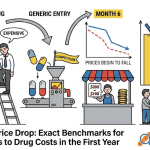
Price erosion after generic entry follows a predictable structural pattern:
Single generic entrant: price drops 30-39% relative to brand
Two to three entrants: price drops 50-70%
Five to six entrants: price drops roughly 85%
Ten or more entrants: price drops 70-95%, with many mature products settling below the cost of manufacturing for all but the most efficient producers
The speed at which the market moves through these stages varies by therapeutic area, dosage form complexity, and whether any of the entrants are authorized generics (branded generic products marketed by the innovator itself or under license, which do not consume the 180-day first-filer exclusivity but do add an immediate price competitor at entry). Authorized generic programs are one of the innovator’s most effective tools for limiting the financial value of the first-filer exclusivity period: by entering the market simultaneously with its own generic at a lower price point, the brand cuts the first-filer’s market share and profit pool without eliminating its own revenue.
Table 2: Generic Market Price Dynamics by Competitor Count
Competitor Count
Approximate Price vs. Brand
Typical Margin Environment
Strategic Position
1 (first-filer)
61-70% of brand price
High margins; the primary financial prize of P-IV litigation
Time-limited; protect with launch velocity
2-3
30-50% of brand price
Moderate; viable for efficient manufacturers
Speed of entry for second filer is paramount
5-6
~15% of brand price
Thin; price is the sole variable
Manufacturing cost dominates all strategy
10+
5-30% of brand price
Negative margins for many participants
Market exit cycle begins; shortage risk increases
GPO and PBM Power: The Demand-Side Problem
Competition among manufacturers is one source of price pressure. Buyer consolidation is the other, and it operates independently of how many generic manufacturers are in a market.
Group Purchasing Organizations (GPOs) aggregate demand from hospitals and health systems to negotiate volume-based pricing contracts. Pharmacy Benefit Managers (PBMs) manage formulary placement and reimbursement rates for hundreds of millions of covered lives across commercial and government health plans. A 2018 analysis found that three large buying groups, each structured as joint ventures between drug wholesalers and retail pharmacy chains, collectively controlled 72-81% of generic drug purchases in the United States.
When a single GPO controls formulary access for a significant portion of the U.S. market, generic manufacturers are effectively price-takers. The buyer runs a competitive bidding process, awards the contract to the lowest-cost compliant bidder, and the losing manufacturers either accept the new market price or exit. Because the contract represents access to a large and otherwise inaccessible volume of dispensing activity, manufacturers routinely bid below their fully loaded cost in the hope that volume will compensate for thin margins. Often, it does not.
This dynamic contributes directly to the withdrawal problem. When a product’s market price falls below the variable cost of production — raw materials, direct labor, energy, batch testing — there is no business rationale to continue manufacturing. The product exits the market. If that manufacturer was supplying a significant share of national volume, a shortage follows.
The Withdrawal-Shortage Feedback Loop
Approximately 3,000 generic drug products have been withdrawn from the U.S. market over the past decade primarily because they were unprofitable to produce. The correlation between prolonged price erosion and eventual shortage is not incidental — it is the mechanical outcome of a market structure that has no mechanism for rewarding supply reliability or penalizing market exit.
Sterile injectable generics are the most acutely affected segment. They require expensive manufacturing infrastructure (cleanrooms, filling lines, validated sterilization processes), have higher batch failure rates than oral solids, and carry complex stability and container-closure integrity requirements. Their margins have been compressed to the same degree as oral solids, but their fixed manufacturing cost base is far higher. A cisplatin shortage in 2023 — triggered by the shutdown of a single Indian manufacturing facility that supplied roughly 50% of U.S. volume — forced oncologists across the country to delay or modify chemotherapy regimens. Cisplatin costs approximately $10 per vial. The price is not the problem; the concentration of supply in a single facility at that price is.
IP Valuation Dimension: ANDA Estate Value Under Price Pressure
When valuing a portfolio of approved ANDAs, the relevant question is not how many approvals a company holds but how many generate positive contribution margin at current market prices. An ANDA approval for a product with 15 competitors and a market ASP of $0.03 per tablet has no meaningful asset value. A first-filer ANDA approval with 180-day exclusivity intact, a launch date within six months, and a branded product doing $500 million in annual net sales, is a high-value asset.
Analysts should periodically run a margin screen across a company’s approved ANDA portfolio using market price data, facility overhead allocations, and estimated API costs. The proportion of the portfolio that is ‘value-negative’ at current market prices — products that the company is manufacturing at a loss or has written down to minimal value — is a leading indicator of both future withdrawal risk and supply chain fragility at the company level.
Key Takeaways: Pricing and Competition Dynamics
The full commoditization of a generic market (ten-plus competitors) produces prices that are below the manufacturing cost of all but the lowest-cost producers. GPO and PBM consolidation gives buyers the leverage to enforce those prices through competitive bidding. Market withdrawal by unprofitable manufacturers is not a supply chain accident; it is a predictable financial outcome of the pricing model. Sterile injectable generics face the most acute margin-to-fixed-cost mismatch and generate the most clinically damaging shortages when supply exits. ANDA portfolio valuation must account for contribution margin at current market prices, not at peak-period launch economics.
Companies that can demonstrate a structural shift in revenue mix toward higher-barrier products — complex generics with fewer than five competitors, 505(b)(2) NDA products with three-year market exclusivity, biosimilars with interchangeability status — trade at materially higher multiples than companies concentrated in oral solid ANDAs with commodity pricing. The key analytical question for any generic pharma investment is what percentage of EBITDA comes from products where the company has structural pricing power (first-mover exclusivity, high technical barriers, limited competitor count) versus products priced by competitive bidding. Companies shifting toward the former should be modeled with margin expansion assumptions; companies concentrated in the latter should be stress-tested against continued price deflation of 8-12% annually.
Challenge 5: Manufacturing Compliance and the Quality Risk Premium
Thin margins and quality investments are in direct tension. A manufacturing organization that cannot fund routine equipment qualification, process validation revalidation cycles, and continuous quality system improvement is a manufacturing organization accumulating latent risk. That risk eventually surfaces as a Warning Letter, an FDA Form 483 observation report, a consent decree, or a recall — each with dramatically different financial consequences.
Global GMP Oversight: The Inspection Gap
Current Good Manufacturing Practice (cGMP) regulations apply uniformly to all facilities supplying the U.S. market, domestic or foreign. The FDA’s inspection capability does not apply uniformly. Domestic facilities receive unannounced inspections; foreign facilities have historically received scheduled inspections, which reduces their effectiveness as a compliance enforcement mechanism.
The inspection data is revealing. A 2010 analysis found that 64% of foreign manufacturing plants supplying the U.S. had never received an FDA inspection. That proportion has improved substantially under GDUFA-funded inspection program expansion, but the structural challenge of conducting surprise inspections on facilities 10,000 miles away remains. The COVID-19 pandemic demonstrated this acutely: the FDA’s overseas inspection program essentially halted for approximately 18 months, creating a gap in quality oversight precisely when supply chain stress was highest.
The geographic concentration of manufacturing in India and China (covered in detail in Challenge 6) makes this oversight challenge a systemic risk. Warning Letters issued to Indian API or FDF facilities have cascaded into U.S. market shortages for affected products within 60 to 90 days of issuance in multiple documented cases, because there were no qualified alternative suppliers with available capacity.
Case Study: The ARB Nitrosamine Recall and Process Chemistry Failure
The valsartan recall that began in 2018 provides the clearest case study in how a process chemistry failure becomes a global public health event. Zhejiang Huahai Pharmaceutical, a major Chinese API manufacturer, had modified its valsartan synthesis process in 2012 to recover and recycle solvents, a cost-saving measure. The modification introduced conditions under which NDMA formed as a byproduct. The impurity was not identified in standard release testing because testing protocols did not include NDMA analysis. The contaminated API was incorporated into finished tablets supplied by multiple finished-dose manufacturers globally.
The regulatory response extended well beyond valsartan. Regulators applied the same risk assessment framework to all sartan-class ARBs, then to ranitidine (where the molecule itself degrades to NDMA under storage conditions), then to metformin, then to a broad range of APIs with synthetic routes involving secondary amines or nitrosating agents. The total financial impact on the industry, including recall costs, remediation investment, lost revenue from discontinued products, and litigation exposure, is estimated in the billions of dollars across affected companies.
The lesson for both manufacturers and investors is that quality risk in generic manufacturing is not always visible in current GMP inspection scores. A facility can pass an FDA inspection while harboring a latent process chemistry risk that no standard release test detects.
Case Study: Glenmark and Systemic Quality Breakdown
In early 2025, Glenmark Pharmaceuticals executed a voluntary recall of nearly 40 generic drug products manufactured at one of its Indian facilities. The trigger was not a specific contamination event but an FDA inspection that identified systemic failures in the facility’s quality management system: inadequate cross-contamination prevention controls between products sharing equipment, deficient investigation procedures for out-of-specification batch results, and a quality control unit that lacked the authority and resources to fulfill its compliance oversight function.
The breadth of the recall — across 40 separate products — reflects how systemic quality failures work. When the root cause is a failed quality system rather than a defective batch, the contamination or risk is not product-specific. Every product manufactured in the affected facility during the period of non-compliance carries potential quality risk, which is why regulators and manufacturers must treat it as a portfolio-level problem.
For Glenmark, the financial impact included recall logistics costs, loss of market share across 40 product lines during the recall period, investment in remediation, and reputational consequences with GPO buyers. The broader market impact was supply disruption for patients dependent on the affected medications.
Advanced Manufacturing Technology: The Investment Trap
Continuous manufacturing technology, Process Analytical Technology (PAT) systems, and AI-driven quality monitoring represent the most significant advances in pharmaceutical manufacturing over the past two decades. Continuous manufacturing in particular eliminates the batch-to-batch variability inherent in conventional manufacturing, allows real-time quality monitoring rather than endpoint release testing, and offers the potential to produce smaller volumes more efficiently without the economies-of-scale constraints of batch production.
The FDA has actively promoted continuous manufacturing adoption through guidance documents, the GDUFA science and research priorities framework, and expedited review pathways for ANDAs using continuous manufacturing processes. Several major branded manufacturers, including Eli Lilly, Pfizer, and Vertex, have implemented continuous manufacturing at commercial scale.
Generic manufacturers have largely not followed. The capital cost of converting a conventional manufacturing facility to continuous manufacturing is $10 million to $50 million per production line, depending on dosage form and throughput. For a company manufacturing a product with a market ASP of $0.05 per tablet on thin margins, the return on that investment cannot be calculated to make sense. The market structure that creates thin margins also blocks the capital investment needed to modernize manufacturing. Regulatory incentives have not been sufficient to overcome this economic constraint.
The investment trap creates a two-tier manufacturing ecosystem: well-capitalized companies that invest in advanced manufacturing and achieve quality and efficiency advantages, and undercapitalized companies that maintain conventional manufacturing operations, accumulate compliance risk, and eventually face the withdrawal-or-recall decision described above.
Key Takeaways: Manufacturing and Quality
The FDA’s inspection infrastructure cannot provide the same oversight intensity for overseas facilities as for domestic ones, creating a persistent compliance gap for the majority of U.S. generic drug supply. The nitrosamine crisis established that process chemistry risk can exist undetected in compliant facilities, requiring proactive risk assessment that goes beyond standard release testing. Systemic quality management failures, as in the Glenmark case, are more dangerous than isolated batch failures because they implicate entire portfolios simultaneously. The capital economics of advanced manufacturing technology make adoption rational for only well-capitalized players, further concentrating quality advantage in the companies that least need the margin protection it provides.
Investment Strategy: Quality as a Due Diligence Variable
Due diligence on any generic pharmaceutical acquisition or partnership should include an independent assessment of manufacturing quality history: Warning Letter frequency and remediation track record, FDA inspection classification history (Voluntary Action Indicated vs. Official Action Indicated vs. Warning Letter), annual quality event rate, and current NDSRI compliance status. A facility with a history of repeat FDA observations in the same category is demonstrating a cultural or structural quality problem, not a one-time deviation. Discount the enterprise value of any acquisition target with unresolved Warning Letters or open consent decree compliance programs proportionally to the expected remediation cost and revenue disruption.
Challenge 6: Supply Chain Fragility and the Strategic Onshoring Problem
The generic drug supply chain is one of the most geographically concentrated critical infrastructure networks in the world. It has been optimized for cost efficiency over multiple decades, with each optimization reducing redundancy and increasing fragility. The COVID-19 pandemic exposed this fragility at a systemic level. The geopolitical and trade environment of 2025-2026 has made supply chain resilience not just a public health concern but an active legislative and regulatory priority.
Geographic Concentration: The API Dependency Chain
The scale of concentration is significant enough to require specific numbers:
China and India together supply an estimated 70-80% of total U.S. generic drug volume by units. China controls 80-90% of global production for key API starting materials used in antibiotics (specifically, 6-aminopenicillanic acid, 7-aminocephalosporanic acid, and related beta-lactam intermediates). India, which manufactures the largest share of finished generic drugs entering the U.S. market, sources 70-80% of its own API requirements from China.
The dependency structure is sequential: Chinese chemical manufacturers produce key starting materials (KSMs) and advanced intermediates; Indian API manufacturers convert these into active pharmaceutical ingredients; Indian and some Chinese finished dosage form (FDF) manufacturers formulate and package the final product; U.S. wholesalers distribute it. A disruption at any stage cascades downstream. A disruption at the Chinese KSM stage cascades through the entire chain.
The U.S. government has undertaken multiple analyses of this dependency. A 2019 FDA Drug Shortages Task Force report identified that the geographic concentration of API production was the primary structural driver of drug shortage vulnerability. The Defense Health Agency has classified certain essential medicines — antibiotics, controlled substances, oncology drugs — as national security-relevant because of this concentration.
Anatomy of a Shortage: The Cisplatin Case
The 2023 cisplatin shortage illustrates how concentration risk materializes in clinical harm. Cisplatin is a platinum-based chemotherapy agent, off-patent for decades, priced at approximately $10 per vial, and used in treatment regimens for bladder, lung, ovarian, and testicular cancers. When a single manufacturing facility in India that supplied roughly 50% of U.S. volume experienced a manufacturing shutdown related to FDA compliance issues, the market had no mechanism to rapidly absorb the volume loss.
No domestic manufacturer held idle capacity. Alternative international suppliers lacked FDA registration for U.S. market supply. The FDA’s expedited pathway for addressing shortage-related supply expansion (21 CFR 314.81(b)(2)(iii)) allowed for accelerated review of manufacturing site additions, but the qualification timeline still ran to months. During the shortage period, hospital pharmacists rationed cisplatin, oncologists modified standard-of-care regimens, and some patients experienced treatment delays. The National Comprehensive Cancer Network (NCCN) issued clinical guidance on cisplatin rationing — a document that should not need to exist for a $10 vial of off-patent medicine.
At scale, the U.S. experienced an average of 301 ongoing drug shortages per quarter in 2023, the highest level in a decade. Manufacturing and quality problems accounted for over 60% of shortage root causes. Sterile injectables, which made up 69% of active shortage products in 2024, are the most vulnerable category because their manufacturing infrastructure is expensive, their margins are compressed, and qualified suppliers are few.
The Onshoring Argument: Economics vs. Security
Reducing dependence on foreign manufacturing requires either incentivizing domestic production economically (through purchase price premiums for domestically manufactured products, tax incentives, or direct manufacturing subsidies) or mandating domestic sourcing for designated essential medicines (a more aggressive policy intervention). Both approaches have been proposed and partially implemented.
The BIOSECURE Act, passed in 2024, restricts federal health program contracting with certain Chinese pharmaceutical and biotechnology companies identified as national security risks. The effect is to pressure U.S. government procurement away from specific Chinese manufacturers without a blanket prohibition on Chinese-sourced supply. Tariff proposals from 2025-2026 have threatened to add 10-25% cost increases to imported pharmaceutical inputs, which would either raise drug costs for patients or further compress manufacturer margins.
True onshoring — rebuilding a domestic API manufacturing base for generic drugs — requires confronting the economic reality that drove manufacturing offshore in the first place. Labor costs in the U.S. are 5 to 10 times higher than in India or China for equivalent pharmaceutical manufacturing roles. Environmental compliance costs are higher. Facility construction timelines are longer. Without a sustained price premium or direct subsidy for domestically manufactured essential medicines, the economic case does not close. The market structure that rewards the lowest price above all else is structurally incompatible with rebuilding a domestic supply base for commodity generics.
Some progress exists in targeted segments. The nonprofit Civica Rx, established in 2018 by a consortium of health systems, has committed to building U.S. manufacturing capacity for sterile injectable generics in chronic shortage. The Department of Defense has funded domestic API production capacity for select antibiotics through Defense Production Act authorities. These are meaningful steps, but they cover a small fraction of the product categories at risk.
IP Valuation Dimension: Supply Chain as a Competitive Moat
A generic company with a diversified, multi-geography API sourcing strategy and qualified secondary manufacturing sites holds a competitive advantage that is not fully reflected in traditional financial metrics. During shortage periods, companies that maintain supply earn premium pricing from hospital systems willing to pay above-contract rates for reliable delivery. They capture competitor market share when the competitor’s single-source supply chain fails. The ability to maintain supply through disruptions is a genuine, if under-monetized, competitive moat.
Investors and acquirers should assess supply chain resilience as a valuation input: how many qualified API suppliers per molecule, what is the geographic distribution of those suppliers, does the company hold strategic API inventory above normal safety stock levels, and does it have qualified secondary manufacturing sites for its top revenue products. These factors do not appear in standard financial statements but represent material differences in earnings stability and downside protection.
Key Takeaways: Supply Chain
The 70-80% concentration of U.S. generic supply in China and India is a systemic vulnerability, not a company-level risk. The sequential dependency (Chinese KSMs, Indian API, Indian or Chinese FDF) means a Chinese supply disruption propagates through the entire chain within weeks. The market’s incentive structure — rewarding the lowest-cost supplier, penalizing inventory holding, discouraging multi-source qualification — has systematically produced fragility. Sterile injectables are the highest clinical-risk shortage category and face the worst structural economics for maintaining supply. True supply chain resilience requires accepting a cost premium for reliability that the current purchasing model does not support.
Challenge 7: The Complex Generics Pivot — Scientific Differentiation as a Commercial Strategy
The companies that have navigated the oral solid commodity trap most effectively have done so by directing R&D resources toward products where the inherent technical difficulty of development limits the number of competitors and sustains margins through multiple years of market participation. The FDA classification of ‘complex generics’ encompasses this strategic territory.
Defining the Complex Generic Taxonomy
The FDA’s working definition of a complex generic covers four primary dimensions:
Complex active ingredients: peptides, protein fragments, complex natural-source mixtures (e.g., heparin, glecaprevir/pibrentasvir coformulations), and drugs where the chemical structure is difficult to characterize analytically.
Complex formulations: liposomal drug products (e.g., liposomal doxorubicin), polymer-drug conjugates, oil-in-water emulsions (e.g., cyclosporine ophthalmic emulsion for dry eye), long-acting injectable microsphere formulations (e.g., naltrexone extended-release injectable, risperidone microspheres), and controlled-release oral dosage forms with sophisticated polymer matrix systems.
Complex routes of administration: topical products where dermal pharmacokinetics govern therapeutic effect (corticosteroids, acne treatments, antifungals), inhalation products (metered-dose inhalers, dry powder inhalers, nebulized solutions), ophthalmic products, and nasal delivery systems.
Complex drug-device combinations: auto-injectors with proprietary needle systems, prefilled syringes requiring matched container-closure performance, metered-dose inhalers where the device is integral to dose delivery and must be functionally equivalent to the reference device.
Each of these categories requires specialized development capabilities, analytical instrumentation, and regulatory expertise that are not standard components of an oral solid ANDA operation. That specialization is precisely what limits competitor count and supports margins.
Liposomal Doxorubicin: An IP Valuation Deep Dive
Doxil (liposomal doxorubicin HCl injection) illustrates both the opportunity and the complexity of the complex generic market. Doxil is a PEGylated liposomal formulation of doxorubicin approved for ovarian cancer, multiple myeloma, and Kaposi’s sarcoma. Its innovator patents covered the liposome composition, PEGylation chemistry, and manufacturing process. When those patents expired, the FDA issued product-specific guidance (PSG) requiring generic applicants to demonstrate pharmaceutical equivalence through a combination of physicochemical characterization (particle size distribution, zeta potential, drug-to-lipid ratio, encapsulation efficiency) and bioequivalence in a human PK study.
Sun Pharma received the first generic approval for liposomal doxorubicin in 2013 after years of development investment. The generic market for this product has never exceeded five or six qualified suppliers, because the analytical and manufacturing requirements for liposomal products are accessible to very few organizations. The IP estate around the liposomal platform itself — covering the specific lipid compositions, PEGylation density, and sterile manufacturing processes — remains commercially relevant even as compound patents expire, because any alternative formulation that avoids existing patents may no longer be bioequivalent.
Investors evaluating companies with liposomal pipeline assets should assess whether the development program has generated proprietary characterization data that constitutes a defensible IP position, or whether it is purely follow-on development with no residual exclusivity. A generic approval without any exclusivity period may still deliver significant value if the manufacturing barriers are high enough to limit competition to two or three players.
The 505(b)(2) Pathway: Strategic Architecture and IP Mechanics
The 505(b)(2) New Drug Application is the regulatory framework most relevant to value-added generic development. It allows an applicant to rely on the FDA’s previous findings of safety and effectiveness for an already-approved reference product, conducting only the bridging studies necessary to support the specific modification being developed. Modifications that qualify for the 505(b)(2) route include new dosage forms, new routes of administration, new formulations, new strengths, new patient populations, new combinations of approved active ingredients, and new delivery technologies.
The critical commercial advantage is exclusivity. Because a 505(b)(2) product is approved as an NDA, not an ANDA, it is eligible for the full range of New Drug Application exclusivities. Three years of new clinical investigation exclusivity applies when the application requires at least one new clinical study essential to approval. Seven years of orphan drug exclusivity applies when the product is designated for a rare disease affecting fewer than 200,000 U.S. patients. A new molecular entity (NME) exclusivity of five years applies when the active moiety has never been approved before in any form.
The IP architecture around a successful 505(b)(2) product combines these regulatory exclusivities with patents covering the new formulation, delivery system, or clinical indication. The resulting protection period can approach or exceed the protection available for a genuinely novel small molecule, at a fraction of the development cost. Companies like Assertio (formerly Depomed), Horizon Therapeutics (now part of Amgen), and Iroko Pharmaceuticals built significant market positions using 505(b)(2) reformulations of established molecules, demonstrating that the pathway can generate substantial enterprise value without discovering a new drug.
Inhaled Products: Technical Barriers and Regulatory Complexity
Inhaled generic products represent one of the most technically demanding and commercially valuable segments of the complex generic market. The reference products include major franchise assets: AstraZeneca’s Symbicort (budesonide/formoterol fumarate), GlaxoSmithKline’s Advair Diskus (fluticasone/salmeterol), Boehringer Ingelheim’s Spiriva (tiotropium), and various other inhalers collectively representing tens of billions of dollars in annual global sales.
The FDA’s bioequivalence requirements for inhaled products go far beyond a standard PK study. The current aggregate weight of evidence (AWE) approach requires: in vitro aerosol characterization demonstrating equivalence in aerodynamic particle size distribution and delivered dose across the entire dose counter range; formulation equivalence or justification for any differences; device equivalence in design and performance; and, for products where in vitro data is insufficient to predict in vivo performance, a pharmacokinetic and/or pharmacodynamic clinical study.
This regulatory framework means that developing a generic inhaler requires demonstrating equivalence at the level of the individual components (drug, formulation, device) and at the system level (clinical performance). A company that can match drug and formulation but cannot manufacture an equivalent device — because the reference device involves proprietary components or assembly processes — cannot complete the AWE package and cannot obtain approval. Device manufacturing capability is, therefore, a hard technical prerequisite for participation in this market.
Hikma Pharmaceuticals, Mylan (now Viatris), and Sandoz have invested in the device manufacturing and analytical capability needed to compete in inhaled generics. Their first approvals in this space have generated returns that justify the investment, because competition remains limited to companies with the full capability stack.
Key Takeaways: Complex Generics
The commercial rationale for the complex generics pivot is sustained margins through structural competitor limitation. Technical difficulty is the moat. Products requiring clinical endpoint BE studies, sophisticated analytical characterization (liposomics, particle physics, aerosol dynamics), or specialized device manufacturing stay contested among a small number of capable players. The 505(b)(2) pathway provides regulatory exclusivity equivalent to a branded drug for products that modify existing approved molecules — three to seven years of protection that is not available to an ANDA filer. The full capability stack for complex categories (inhalation, liposomal, ophthalmic, transdermal) requires capital investment that most oral solid manufacturers cannot fund internally.
A company’s stated complex generic pipeline is only as valuable as its demonstrated capability to execute. Analyst diligence should identify which products in the pipeline require capabilities the company has already deployed commercially and which require new capability development. A long-acting injectable pipeline from a company that has successfully commercialized at least one long-acting injectable is a qualitatively different asset than the same pipeline at a company that has never manufactured microspheres at commercial scale. Apply a capability execution discount to pipeline products that require new manufacturing, analytical, or clinical capabilities — and a premium to products where the company has existing, validated infrastructure.
Challenge 8: The Biosimilar Frontier — A Distinct Competitive Market
Biosimilars are not generic drugs. That sentence is the most important framing point in the entire biosimilars discussion, and it is routinely ignored by analysts and policymakers who expect biosimilar market dynamics to mirror the oral solid generic market. They do not, and understanding why requires examining the science, the regulatory framework, the manufacturing requirements, and the commercial environment as separate but interconnected barriers.
The Science of Biosimilarity: Analytical Characterization at Molecular Scale
Small-molecule drugs are defined chemical entities. Aspirin is aspirin. The generic developer synthesizes the same molecule and proves it reaches the bloodstream at the same rate and extent as the reference product. Biological drugs — monoclonal antibodies, fusion proteins, cytokines, growth factors — are large, complex proteins produced by living cell systems. They cannot be chemically synthesized. They are grown in bioreactors, purified through multi-step chromatographic and filtration processes, and characterized by their three-dimensional structure, post-translational modifications (glycosylation patterns, charge variants), and functional properties.
Two manufacturers using different cell lines, bioreactors, or purification trains will produce molecules that are highly similar but not identical. This is inherent variability, and it exists even between batches from the same manufacturer. The regulatory standard for biosimilarity — ‘no clinically meaningful differences’ in safety, purity, and potency relative to the reference product — acknowledges this reality and sets a threshold that is higher than the simple pharmaceutical equivalence required for small-molecule generics.
Demonstrating biosimilarity requires a hierarchical analytical exercise: a comprehensive physicochemical and functional characterization package comparing hundreds of structural and biological attributes between the biosimilar and the reference product, followed by preclinical pharmacokinetic and safety studies in relevant animal models, followed by at least one human clinical pharmacokinetic study, and typically at least one comparative clinical trial demonstrating equivalent efficacy and safety. The full program runs seven to eight years from cell line development to approval and costs $100 million to $250 million. No other regulatory pathway in pharmaceutical development asks for this level of investment to establish ‘sameness’ to an existing product.
The Interchangeability Standard: FDA’s Switching Study Requirement
In the United States, a biosimilar approval does not automatically authorize a pharmacist to substitute the biosimilar for a prescribed reference biologic, as a generic substitutes for a brand-name small molecule. Automatic substitution requires a separate FDA designation of ‘interchangeability,’ which carries its own data requirements: the manufacturer must demonstrate through switching studies that alternating between the reference product and the biosimilar does not increase safety or efficacy risk compared to continued use of the reference product alone.
The practical impact is that most biosimilar prescribing in the U.S. requires an active decision by the prescribing physician or the patient’s insurance formulary, not an automatic pharmacy-level substitution. This shifts the commercial dynamic from passive capture of dispensed volume (which is how generic oral solids gain market share) to active persuasion of prescribers, payers, and health systems. A biosimilar manufacturer must run a branded-product commercial operation — medical affairs teams, key opinion leader engagement, payer contracting teams, patient support programs — to gain market share. This is a structurally different cost model than the generic ANDA business.
The Humira Biosimilar Saga: How Rebate Walls Work
AbbVie’s adalimumab (Humira) was the world’s best-selling drug for more than a decade, generating approximately $20 billion in annual global revenue at its peak. When its core patents expired in the U.S. in late 2023, a cohort of biosimilar developers — including Amgen (Amjevita), Samsung Bioepis/Organon (Hadlima), Pfizer (Abrilada), Boehringer Ingelheim (Cyltezo), and others — launched what was expected to be a transformative moment for U.S. drug pricing.
The transformation did not materialize at the expected pace. Eighteen months after the first biosimilar launches, combined biosimilar market share in adalimumab remained below 25%, despite a near-doubling in the number of available biosimilar options. The mechanism was the ‘rebate wall.’
AbbVie had pre-negotiated contracts with major PBMs that tied large volume-based rebates on Humira to formulary exclusivity or preferential placement. Under these contracts, a PBM that moved adalimumab coverage to a biosimilar would forfeit its Humira rebates. Given that Humira’s list price was above $7,000 per month and rebates represented a substantial fraction of that, the economic calculation for many PBMs favored keeping Humira on formulary over promoting biosimilars at 20-30% lower net prices. The rebates were greater in absolute dollar terms than the biosimilar savings.
This is the commercial reality that biosimilar developers must navigate in the U.S. market. It is not a technical problem. It is a contracting and incentive alignment problem that requires either regulatory intervention (the FTC has scrutinized rebate wall practices under its merger review framework, and there are ongoing legislative proposals to reform PBM contracting practices) or biosimilar developer pricing and contracting strategies sophisticated enough to compete with the brand’s rebate offers.
Manufacturing Complexity: Cell Lines, Bioreactors, and the Scale-Up Problem
A biosimilar developer does not start with the innovator’s cell line. That cell line is proprietary and protected by trade secrets that outlast any patent. The developer must engineer its own expression system — typically Chinese hamster ovary (CHO) cells for monoclonal antibodies — select a clone with appropriate protein expression characteristics, develop a nutrient media and bioreactor protocol, and build a purification train that consistently produces a molecule meeting the analytical similarity specifications.
Every step introduces potential variability. Glycosylation patterns — the sugar residues attached to the protein backbone that influence immunogenicity and functional activity — are particularly sensitive to cell culture conditions. Small changes in glucose concentration, dissolved oxygen level, or temperature in the bioreactor can shift the glycan profile of the expressed protein. If that shift moves the biosimilar outside the acceptable comparability window for a critical quality attribute, the entire production process requires adjustment.
Commercial-scale bioreactors for monoclonal antibodies run from 10,000 to 25,000 liters. The capital cost of a commercial-scale biologics manufacturing facility is $200 million to $500 million. Few generic pharmaceutical companies have this infrastructure. The biosimilar competitive set is therefore drawn from a different pool than generic pharmaceuticals: Amgen, Samsung Bioepis, Sandoz, Pfizer’s global sterile injectables division, Viatris, and a small number of Indian companies (Biocon, Dr. Reddy’s through Fresenius Kabi partnership) that have invested in biologics infrastructure.
Biosimilar Technology Roadmap: From Discovery to Commercial Launch
The biosimilar development timeline follows a structured sequence that reflects the regulatory and manufacturing requirements:
Year 0-1: Reference product characterization. Extensive analytical characterization of commercially available batches of the reference biologic using orthogonal methods including mass spectrometry, glycan mapping, surface plasmon resonance, and cell-based potency assays. This fingerprint defines the target analytical profile.
Year 1-2: Cell line development and upstream process development. Engineering of the expression system, clone selection, fed-batch process development, and initial comparability studies demonstrating that the molecule produced matches the reference analytical profile.
Year 2-3: Downstream process development. Protein A affinity chromatography, ion exchange chromatography, viral filtration, and ultrafiltration/diafiltration process development. Comparability studies at pilot scale.
Year 3-4: Preclinical development. Toxicology studies in relevant animal models, initial pharmacokinetic characterization.
Year 4-5: Clinical development. Phase I pharmacokinetic study in healthy volunteers or patients demonstrating PK similarity to the reference. Phase III comparative clinical trial in the reference indication demonstrating equivalent efficacy and safety.
Year 5-7: Process validation and scale-up. Commercial-scale batch manufacturing, process performance qualification, scale-up comparability studies.
Year 6-8: Regulatory submission and review. BLA filing, FDA review under the 351(k) pathway, potential advisory committee meeting for complex molecules, approval.
The innovator biologic IP estate is typically more complex than the small-molecule Orange Book. AbbVie filed over 165 patents related to adalimumab covering composition, formulation, manufacturing processes, analytical methods, and methods of treatment. The adalimumab patent thicket has been extensively litigated, and a substantial number of these patents have been found invalid or non-infringed. But the sheer volume of patents, and the cost of litigating each one, created a multi-year barrier to U.S. entry even after the core European patents expired in 2018.
Biosimilar developers must conduct a freedom-to-operate analysis across the entire patent estate before filing, identify which patents are listable in FDA’s Purple Book (the biologics equivalent of the Orange Book), which can be challenged through the Biologics Price Competition and Innovation Act (BPCIA) patent dance, and which require separate district court action. The BPCIA’s patent dance — a structured information exchange and litigation sequence between biosimilar applicant and reference product sponsor — has been navigated differently by different developers, with some electing to opt out of the dance and others using it as a strategic information-gathering tool.
Key Takeaways: Biosimilars
The $100-250 million development cost and seven-to-eight-year timeline for a biosimilar make it a fundamentally different investment than an ANDA. The U.S. interchangeability designation requirement means that pharmacist-level automatic substitution — the mechanism that drives rapid generic market penetration — is not available for most biosimilars without additional costly switching studies. The Humira biosimilar experience demonstrates that the rebate wall is currently the dominant commercial barrier to biosimilar uptake, exceeding the scientific and regulatory barriers in practical impact. Building a branded-product commercial infrastructure is a prerequisite for competitive success in biosimilars, not an optional add-on to the development budget.
Biosimilar pipeline assets should be valued using a different framework than ANDA assets. Key valuation inputs include: development stage and remaining investment required to reach BLA filing; interchangeability status (pursued vs. not pursued, and the incremental switching study cost); the commercial infrastructure required (does the developer have an existing biosimilar commercial operation, or does it need to build or partner for one); and the specific payer contracting strategy for the target molecule’s therapeutic area. Oncology biosimilars (infused products purchased directly by hospital and oncology clinic pharmacies) have shown faster uptake than self-administered biologic biosimilars because the rebate wall dynamic is weaker in the hospital channel. Developers with oncology biosimilar experience and hospital sales infrastructure warrant a commercial execution premium relative to developers entering the market with their first biosimilar.
Challenge 9: The International Competitor Equation
The competitive pressure from Indian and Chinese generic manufacturers is not simply a story of cheaper labor. It is a story of scale, vertical integration, regulatory expertise built over decades of U.S. and European market participation, and an API supply chain structure that gives certain manufacturers structural cost advantages that cannot be replicated by labor cost reduction alone.
India’s Structural Role in U.S. Generic Supply
Indian pharmaceutical companies supply approximately four of every ten prescriptions filled in the United States. In the generic segment specifically, Indian manufacturers account for an estimated 47% of approved ANDAs supplying U.S. dispensing. This market position was built over 30 years of deliberate investment in FDA compliance infrastructure, U.S. regulatory affairs capability, and formulation development capacity.
The major Indian generic companies — Sun Pharma, Dr. Reddy’s Laboratories, Cipla, Aurobindo, Lupin, Glenmark, Zydus (Cadila), and Mankind — have collectively invested billions of dollars in U.S.-compliant manufacturing facilities, domestic API production, and U.S. regulatory filings. Their scale creates cost advantages that go beyond labor arbitrage: large-volume API procurement at negotiated prices, shared regulatory infrastructure across broad product portfolios, and the ability to sustain low prices on individual products that would be commercially unviable for smaller competitors.
The 2025 study finding that Indian-manufactured generics were associated with a 54% higher probability of causing a severe adverse event compared to U.S.-manufactured equivalents is a data point that requires careful interpretation. The aggregate finding may reflect the performance of lower-quality facilities within the Indian manufacturing base, not a uniform quality differential. Facilities operating under consent decrees or with recent Warning Letters in the Indian manufacturing base likely account for a disproportionate share of the adverse event signal. The implication for payers and regulators is not to categorically avoid Indian-manufactured products but to better differentiate quality within the Indian supply base — a capability that the current FDA inspection and rating system does not fully provide.
China’s Role: Upstream Leverage and Strategic Vulnerability
China’s role in the generic supply chain is primarily upstream rather than finished product. Chinese chemical and pharmaceutical manufacturers dominate global production of key starting materials (KSMs) and advanced intermediates for a range of API classes. For antibiotics, China controls production of the core beta-lactam intermediates; for vitamins, China produces the vast majority of global supply; for heparin, Chinese porcine intestinal mucosa is the primary raw material source.
This upstream concentration gives China a leverage point over the entire global generic supply chain that does not require China to manufacture a single finished drug. A policy decision, natural disaster, or industrial disruption at the KSM stage propagates within weeks to API shortages in India, then to finished drug shortages in the U.S. The 2020 pandemic period previewed this dynamic when Chinese manufacturing shutdowns during the initial COVID response caused API supply disruptions across multiple drug classes.
The BIOSECURE Act and proposed pharmaceutical tariffs reflect a U.S. policy response to this vulnerability. Whether tariffs achieve supply chain diversification or simply raise costs for American patients — a point of active debate among health economists — depends on whether domestic or third-country alternatives exist at commercially viable price points. For most KSM categories, they currently do not.
The Codependency Model
The relationship between U.S.-based generic developers and Chinese and Indian manufacturers is not simply competitive. It is structurally codependent. A U.S.-based generic company developing a new ANDA candidate will in almost all cases source the API from a Chinese or Indian manufacturer, because no U.S.-based API manufacturer produces it competitively. The finished dose formulation may be done domestically. The product is then marketed against the same Indian manufacturer’s finished dosage form — which is formulated from the same API, possibly from the same supplier.
Both competitors face common upstream risk. Both rely on the same small set of Chinese KSM manufacturers. A supply disruption hits both simultaneously. A regulatory action at the shared API supplier affects both product approvals. The risk is not bilateral; it is shared across the industry because the supply base is the same.
IP Valuation Dimension: Country of Origin as a Supply Chain Risk Factor
For IP and portfolio analysts, country of origin of manufacturing matters for two reasons beyond quality. First, it determines regulatory inspection risk: a facility in a jurisdiction with limited FDA inspection history carries higher compliance uncertainty. Second, it determines geopolitical supply risk: a product relying on a Chinese sole-source API is more exposed to trade policy disruption than one with a multi-geography API supply.
Products with diversified API sourcing (multiple qualified suppliers across geographically distinct regions) carry lower supply interruption risk and warrant a premium to net present value relative to products with single-source concentration. This premium is not currently priced into most generic product valuations, but the frequency and economic cost of drug shortages suggest it should be.
Key Takeaways: International Competition
Indian manufacturers supply approximately 47% of U.S. generic prescriptions and have built U.S. regulatory compliance capability over three decades of market participation. China controls upstream API intermediate production for multiple critical drug classes, making its manufacturing sector a systemic input to the entire global generic supply chain. The apparent quality differential between some Indian-manufactured and U.S.-manufactured generics likely reflects quality variance within the Indian manufacturing base rather than a uniform national quality level. U.S.-based generic developers are not simply competing with Indian manufacturers — they are structurally dependent on the same upstream supply networks, creating shared risk profiles that generic company risk models rarely reflect accurately.
Challenge 10: Policy Headwinds, the IRA, and the Technology Inflection
The economic model that has governed generic pharmaceutical competition since 1984 is under simultaneous pressure from three directions: new legislation that alters the pricing incentives underlying patent litigation economics, geopolitical forces reshaping supply chain policy, and emerging technologies that will change the cost and speed of drug development. Companies that treat these as background factors rather than near-term strategic inputs will be unprepared for the competitive environment of 2027-2030.
The Inflation Reduction Act: First-Order Effects on Patent Litigation Economics
The Inflation Reduction Act of 2022 granted Medicare the authority to negotiate prices directly with pharmaceutical manufacturers for a defined set of high-expenditure drugs. The first tranche of negotiated drugs includes small-molecule products that have been on the market for seven or more years without generic competition. The negotiated prices become effective in 2026.
The impact on generic patent litigation economics is structural. The entire Paragraph IV system is premised on the financial value of the gap between brand price and generic price: the larger the brand price, the larger the potential savings from generic entry, and the larger the potential profit for the first-filer during the 180-day exclusivity period. When Medicare negotiates a brand price down to 40-60% of the prevailing market price before generic entry, two things happen simultaneously. The generic manufacturer’s potential price premium over the negotiated brand price narrows. The total profit pool available during the 180-day exclusivity period shrinks.
If the expected value of first-filer exclusivity falls below the cost of P-IV litigation for drugs selected for Medicare price negotiation, rational generic companies will decline to challenge those patents. The drugs will stay under brand exclusivity until their patents naturally expire, which can be many years later. The IRA’s drug pricing provision, designed to lower costs, may perversely extend market exclusivity for a subset of drugs by eliminating the financial incentive to challenge their patents.
The Association for Accessible Medicines and several economic analysts have modeled this dynamic. The effect is most pronounced for high-revenue drugs with relatively weak patents — precisely the category where P-IV challenges have historically been most successful and most financially rewarding. Legislative proposals to modify the IRA’s small-molecule drug selection criteria to preserve P-IV incentives have been introduced but not yet enacted.
The Tariff Variable: Trade Policy as Pharmaceutical Supply Chain Risk
The tariff environment of 2025-2026 has introduced cost uncertainty across pharmaceutical raw material supply chains. Proposed pharmaceutical import tariffs of 10-25% on Chinese-manufactured APIs and starting materials would raise input costs for generic manufacturers — costs that cannot easily be passed to buyers in a competitive bidding environment. The practical effect would be further margin compression on already thin products, accelerating market exit for economically marginal products and intensifying shortage risk.
The policy tension is between domestic manufacturing promotion (the objective of tariffs) and drug affordability and supply stability (the objectives they may undermine). Unlike semiconductors or electric vehicles, where tariff-driven cost increases can be passed to industrial buyers or consumers who will absorb them to access a valued product, pharmaceutical generics face a demand-inelastic pricing environment where any cost increase either compresses manufacturer margins to zero or triggers product withdrawal. There is no pricing mechanism in the generic market to absorb a 15-25% input cost increase on a $0.05 per tablet product.
Artificial Intelligence in Generic R&D: Where the Applications Are Real
AI has generated more noise in pharmaceutical development commentary than actual deployed application. Distinguishing between genuine commercial application and speculative capability is essential for analysts evaluating AI-driven pharmaceutical companies.
In generic R&D specifically, the highest near-term commercial value for AI is in formulation development and ANDA preparation efficiency, not drug discovery (which is primarily a branded drug problem). Specific applications with demonstrated value include:
Physicochemical property prediction: machine learning models trained on large datasets of drug-excipient interaction and dissolution performance can predict the likely dissolution behavior of a new formulation from first principles, reducing the number of empirical formulation experiments required before a candidate enters bioequivalence testing. Companies including Simulations Plus and Certara have commercial PBPK modeling platforms with this capability.
Bioequivalence failure risk modeling: regression models built on historical BE study outcome data can assign probability scores to proposed generic formulations based on the known risk factors (API solubility class, particle size variability, excipient compatibility, manufacturing process parameters). A higher predicted failure probability triggers additional development work before the study, reducing the expensive late-stage failure rate.
Patent landscape analysis and P-IV opportunity identification: large language models trained on patent databases, Orange Book data, and litigation history can identify patterns in expired or weak patent claims, flag compositions of matter patents with prior art vulnerabilities, and generate initial freedom-to-operate assessments faster than human patent teams can manually. This does not replace expert legal analysis but accelerates the initial screening that determines which candidates enter full FTO review.
The global AI in pharmaceutical market was estimated at $1.94 billion in 2025 and is projected to reach approximately $16.5 billion by 2034 at a compound annual growth rate near 27%. Generic manufacturers that invest in AI-driven formulation and regulatory efficiency tools now will accumulate proprietary training datasets and model performance advantages that are difficult for later entrants to replicate.
Digital Therapeutics and the ‘Generic Plus’ Opportunity
Digital Therapeutics (DTx) — FDA-cleared software-based medical interventions delivered through smartphone applications or connected devices — is a nascent but commercially validated segment. Pear Therapeutics, Voluntis, and Cognoa demonstrated the regulatory pathway for prescription DTx products, though the commercial reimbursement model for DTx remains immature.
For generic pharmaceutical companies, the DTx intersection creates an opportunity that the current product development framework does not anticipate. A patient taking a generic chronic disease medication — metformin for type 2 diabetes, lisinopril for hypertension, sertraline for depression — may derive substantially more clinical benefit from that medication combined with a behaviorally validated digital adherence and monitoring tool than from the medication alone. A company that packages an approved generic with a cleared DTx application and pursues a 505(b)(2) NDA for the combination creates a product that: competes on clinical value rather than price; can be listed as an NDA product with its own exclusivity; and is not directly substitutable by pharmacists under existing state substitution laws.
This ‘generic plus’ model is not purely theoretical. Novo Nordisk’s connected insulin delivery systems and Abbott’s continuous glucose monitoring integration with insulin management apps demonstrate the commercial feasibility of pairing a pharmaceutical product with a digital monitoring or adherence layer. The key regulatory question for generic companies pursuing this model is whether the digital component constitutes a ‘new clinical investigation’ under 505(b)(2) or whether it is considered a companion product requiring a separate device clearance. FDA guidance in this area is evolving.
IP Valuation Dimension: IRA-Adjusted P-IV Valuations
Any valuation model for a generic pipeline that includes products with significant Medicare revenue exposure must be adjusted for IRA price negotiation risk. The adjustment methodology involves: identifying whether the target brand drug is eligible for Medicare price negotiation based on market age and revenue; estimating the probability and magnitude of negotiated price reduction; and recalculating the expected 180-day exclusivity value under the negotiated pricing scenario. Products where Medicare accounts for more than 40% of brand revenue and where the IRA negotiation would reduce the brand net price by more than 30% warrant a significant reduction in P-IV litigation expected value, potentially below the threshold that justifies pursuing the challenge.
This does not mean generic companies should abandon P-IV programs for Medicare-heavy products. It means the strategic calculus must explicitly account for IRA dynamics, and the hurdle rate for initiating P-IV litigation on these products should be higher than historical norms.
Key Takeaways: Policy and Technology
The IRA’s Medicare price negotiation provision creates a structural erosion of P-IV litigation expected value for high-Medicare-revenue small-molecule drugs, with the most acute effect on drugs that would otherwise be challenged based on their large brand revenue. Pharmaceutical tariffs present a cost increase that generic market pricing structures cannot absorb without accelerating margin compression and market exit. AI delivers near-term R&D value in formulation prediction, BE failure risk modeling, and patent screening — areas where the generic industry’s data-intensive workflows are well-suited to machine learning application. The ‘generic plus’ DTx combination product model is an underexplored avenue for escaping commoditization through clinical value differentiation and 505(b)(2) exclusivity capture.
Analysts building generic pharmaceutical equity models for 2026-2030 should incorporate three explicit policy adjustments. First, apply an IRA discount to 180-day exclusivity valuations for any P-IV candidates targeting drugs with meaningful Medicare revenue concentration. Second, run a tariff sensitivity analysis on gross margin assumptions for companies with Chinese API sourcing concentration above 40% of portfolio volume. Third, weight favorably companies with active investments in AI-driven formulation and regulatory efficiency tools — these companies will lower development costs and accelerate pipeline velocity relative to peers using conventional approaches, generating compounding advantages over a five-year horizon.
Master Key Takeaways: The Ten-Challenge Summary
The ten challenges described in this guide are not independent problems. They are interconnected dynamics that reinforce each other. Price erosion drives manufacturing underinvestment, which produces quality failures, which reduce available supply, which generates shortages that allow the few remaining suppliers to charge higher prices briefly before competition returns. Regulatory complexity raises barriers to entry, which concentrates the market among larger players, which increases their leverage in GPO negotiations, which further pressures margins across the industry. Patent litigation absorbs capital that could otherwise fund manufacturing investment or complex product development.
The companies that have built sustainable positions in generic pharmaceuticals over the past decade share common characteristics: they have moved up the technical value chain toward complex generics and biosimilars; they have built robust supply chain architectures with genuine geographic diversification; they have invested in quality systems that go beyond minimum compliance requirements; they have constructed sophisticated legal and regulatory organizations capable of managing global filings and multi-front litigation simultaneously; and they have demonstrated the financial discipline to exit unprofitable product lines before the manufacturing loss becomes a compliance liability.
No company in the industry has solved all ten challenges simultaneously. But the companies that address more of them more effectively, over more years, are the ones that will still be competitive when the next generation of patent cliffs arrives.
Analyst FAQ: Ten Critical Questions
1. How should a mid-sized generic company reallocate its R&D budget in 2026?
Shift away from oral solid ANDAs where the competitive field is likely to exceed eight players at approval. Prioritize products where technical barriers — clinical endpoint BE study requirements, complex formulation development, specialized device manufacturing — will limit the competitive field to fewer than five players at steady state. Build internal capabilities in QbD formulation science, physiologically-based pharmacokinetic (PBPK) modeling, and advanced analytical characterization. Pursue 505(b)(2) opportunities that capture regulatory exclusivity unavailable to ANDA filers. Use CDMO partnerships for capabilities that would require more than two years and $50 million to build internally. The talent investment — formulation scientists with controlled-release expertise, regulatory affairs professionals experienced in NDA submissions, and clinical scientists capable of designing comparative efficacy studies — is the rate-limiting factor in executing this transition.
2. What is the most critical non-obvious risk in evaluating a new ANDA candidate?
API supply chain concentration and chemical synthesis risk. Due diligence must identify: how many qualified API suppliers exist globally and in which geographies; whether the synthesis route involves reagents or conditions with known nitrosamine formation risk; and whether any of the qualified suppliers have open FDA Warning Letters or import alerts. A product with a single Chinese sole-source API and a high-risk synthesis route carries a latent shortage and recall risk that will not appear in standard patent and market analyses.
3. Is the small-molecule oral solid market still commercially viable?
Selectively yes. Niche products with modest revenue profiles that attract fewer large-volume manufacturers, drugs with complex API specifications that limit qualified supplier count, and products where the formulation barrier (controlled release, specific particle engineering requirements) restricts competition to technically capable players can still generate reasonable returns. The mass-market, high-volume blockbuster generic oral solid segment — where the top five competitors include at least one major Indian manufacturer and price is the sole competitive variable — is not viable as the core of a growth strategy.
4. How can a U.S. or European manufacturer compete against Indian cost structures?
Not on direct production cost for simple oral solids. The structural wage and operating cost differences are not closeable. The viable strategies are: specialize in sterile injectables and complex dosage forms where technical and quality requirements limit Indian competition; invest in Advanced Manufacturing Technology (continuous manufacturing, real-time release testing) to reduce batch failure rates and testing costs; market supply chain reliability and quality history as differentiated value to hospital systems and specialty GPOs willing to pay a small premium for supply security; and compete through product complexity rather than product cost.
5. Does the IRA fundamentally change P-IV litigation strategy?
For drugs with Medicare revenue concentration above 40% of brand revenue, yes. The expected value of 180-day first-filer exclusivity must be recalculated under a range of negotiated price scenarios. At a 40% negotiated price reduction from current brand net pricing, the 180-day exclusivity value may fall below the cost of litigation for many products. The practical strategic response is to concentrate P-IV challenges on products with high commercial insurance revenue concentration, where IRA price negotiation does not apply, and to set a higher minimum expected-value threshold for challenging the patents of Medicare-heavy drugs.
6. What does genuine biosimilar commercial readiness look like?
Three things must be true simultaneously. The company must have manufacturing infrastructure at commercial bioreactor scale with a validated purification process and a track record of batch release success. It must have a payer contracting team with experience negotiating in the specific therapeutic area of the reference biologic — oncology biosimilars require hospital system and GPO contracting capability; anti-TNF biosimilars require PBM and specialty pharmacy contracting capability; these are different commercial muscles. And it must have a medical affairs organization capable of generating and communicating real-world evidence on biosimilar performance to prescribers, because clinical inertia in the prescriber community remains a meaningful adoption barrier beyond the formulary access problem.
7. How material is the nitrosamine compliance backlog to current portfolio valuations?
Material for companies with large oral solid portfolios that include drugs with amine-containing APIs or synthesis routes using nitrosating reagents. Any unresolved NDSRI submission past the August 2025 FDA deadline represents either an enforcement risk (the FDA has indicated it will take action against products not in compliance) or a confirmed remediation cost that has not been reflected in forward earnings guidance. Analysts reviewing a generic company’s portfolio should request a line-item disclosure of NDSRI compliance status across the top 50 revenue products. Absence of this disclosure should be flagged as a material information gap.
8. What does a ‘generic plus’ DTx product actually require to execute?
At minimum: an approved generic product with a patient adherence problem that a digital intervention can measurably address (chronic disease management is the primary target); a cleared or approvable DTx application with clinical evidence of the behavioral intervention’s efficacy; and a 505(b)(2) regulatory strategy that frames the combination as a new clinical investigation eligible for three-year exclusivity. The commercial model requires a reimbursement pathway for the DTx component — either as a separately reimbursed software product under a HCPCS code, or bundled into the drug price, or covered under a value-based contract. Without a clear payer reimbursement mechanism for the digital component, the ‘generic plus’ model generates development costs without matching revenue.
9. How should supply chain resilience be quantified for investment due diligence?
Build a supply chain resilience scorecard with four dimensions: API source geography (number of qualified suppliers and their geographic distribution, scored from zero for single-source Chinese API to full score for three or more suppliers across geographically distinct regions); regulatory standing of qualified API suppliers (Warning Letter history, recent inspection classifications); strategic inventory levels (weeks of API safety stock relative to industry average); and finished dose manufacturing redundancy (number of qualified FDF sites). Score each product in the portfolio on this framework and aggregate a portfolio resilience score. Companies with resilience scores in the bottom quartile should be stress-tested for shortage-related earnings disruption risk.
10. What competitive advantages will define the leading generic companies by 2030?
The companies that will lead the next generic market cycle share predictable characteristics: AI-assisted formulation development that reduces BE study failure rates by 30-40% relative to conventional development approaches; biosimilar manufacturing capability for at least one major therapeutic class with interchangeable designation; a 505(b)(2) NDA pipeline that generates three to seven years of market exclusivity per approved product; supply chain architecture with qualified API sources in at least three geographies for top revenue products; and an organizational culture that treats manufacturing quality investment as a competitive asset rather than a compliance cost. The cost structure of that model is higher than a conventional ANDA-focused generic company. The earnings stability, margin durability, and resistance to supply chain disruption that it produces justify the premium.
This guide incorporates public data from the FDA Orange Book, GDUFA fee schedules, Association for Accessible Medicines savings reports, HHS ASPE economic analyses, and peer-reviewed pharmacoeconomic literature current. It is intended for informational and strategic planning purposes. It does not constitute legal, regulatory, or investment advice.