1. The Market Breakdown: Why the Classic Generic Model Is Financially Insolvent
The Core Paradox of the Generic Industry
The U.S. generic drug market carries a structural contradiction that every portfolio manager should understand before allocating capital to any company operating primarily in commodity generics. Generics account for over 90% of all prescriptions dispensed in the United States and saved the healthcare system $445 billion in a single year. Despite that volume dominance, they represent only 13.1% of total prescription drug spending. High utilization, near-zero pricing power — that is the business model in plain terms.
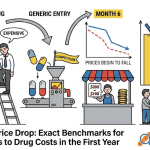
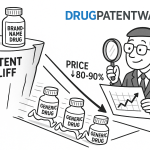
The price erosion mechanics are well-documented but bear precise quantification. When the first generic competitor enters a market, the brand price drops 30% to 39%. A second and third entrant push it down a cumulative 50% to 70%. Once ten or more manufacturers compete, the price trades at 5% to 30% of the original brand price. For companies running on manufacturing margin rather than IP margin, that arithmetic is fatal.
Drug Shortages as a Market Signal, Not an Anomaly
The 323 drug shortages recorded in Q1 2024 — 84% of which involved generics — are not a supply chain failure. They are a pricing signal. When a manufacturer cannot recoup the cost of ongoing compliance, process validation, and raw material sourcing from a product priced at $2 per unit, it discontinues. The market clears the product, not the demand. This is particularly acute post-nitrosamine crisis, where companies were required to implement N-nitrosodimethylamine (NDMA) and related impurity controls across dozens of active pharmaceutical ingredients simultaneously, adding millions in testing and remediation costs to products with no price flexibility.
For an IP or strategy team, a drug shortage in a therapeutic area is an early indicator that the incumbent supply base is contracting. That contraction creates a structural opening — either through a value-added medicine that commands a premium, a complex formulation with high technical barriers, or a first-to-file Paragraph IV opportunity on a newly exposed brand.
Key Takeaways — Section 1
The generic industry’s volume-to-value paradox is structural, not cyclical. Companies that continue to compete purely on manufacturing efficiency in crowded commodity categories face margin destruction at scale. The shortage crisis simultaneously signals opportunity: where the commodity supply base retreats, a strategically positioned VAM or first-filer can capture durable margin. The question for any leadership team is whether their pipeline reflects that reality.
2. What a Value-Added Medicine Actually Is: Definitions, Distinctions, and IP Implications
VAM vs. Generic vs. Branded Generic: Getting the Taxonomy Right
The industry uses these three terms interchangeably, which creates confusion at the strategy level. The distinctions matter because they determine the regulatory pathway, the IP protection available, the price premium achievable, and the time horizon for investment return.
A standard generic — filed as an Abbreviated New Drug Application (ANDA) under 505(j) — must demonstrate bioequivalence to the reference listed drug (RLD). It requires no new clinical data. It generates no new intellectual property on the active ingredient or formulation. It competes entirely on price and manufacturing efficiency from day one.
A branded generic is a bioequivalent copy sold under a proprietary trade name. The branding may confer some prescriber stickiness and a modest price premium in certain markets, but there is no underlying IP protection on the product itself. In the U.S. market, branded generics command limited durability because mandatory substitution policies in most states allow pharmacists to dispense any AB-rated equivalent.
A value-added medicine (VAM), sometimes called a ‘super generic,’ is based on a known, off-patent or near-patent active pharmaceutical ingredient (API) but delivers a clinically relevant improvement — a new route of administration, an improved pharmacokinetic profile, a new indication supported by clinical bridging data, or a novel fixed-dose combination. The VAM files through the 505(b)(2) NDA pathway, can qualify for three to seven years of market exclusivity independent of the original compound’s patent status, and — critically — generates its own proprietary IP portfolio.
The IP Value Creation Framework for VAMs
When a pharma company develops a VAM, it is not just creating a better product. It is creating a new IP asset that sits on the balance sheet with a defined exclusivity window, a defensible patent portfolio, and a price point that reflects clinical differentiation rather than manufacturing cost. That IP asset can be licensed, partnered, or divested — none of which is possible with a standard ANDA product.
The IP layers available to a VAM developer include formulation patents (covering the specific composition, particle size distribution, polymer matrix, or encapsulation technology), method-of-use patents (covering the new indication, dosing regimen, or patient population), device patents (where the VAM incorporates a delivery device, as in a drug-device combination), and manufacturing process patents (covering the synthesis route or manufacturing method for the improved formulation). Each layer adds to the total patent estate and extends the effective market exclusivity period beyond any single patent’s expiry date.
For IP valuation purposes, the net present value of a VAM’s patent estate should be modeled as a sum of the probability-weighted exclusivity periods across each independent patent layer, discounted at a rate that reflects litigation risk. A VAM with a primary formulation patent expiring in 2031, a method-of-use patent expiring in 2034, and a device patent expiring in 2033 does not have a single cliff — it has a staggered erosion profile that is far more defensible than a single-patent asset.
Key Takeaways — Section 2
VAMs create IP assets where standard ANDAs create none. The distinction between a bioequivalent generic, a branded generic, and a VAM is not primarily commercial — it is structural, determining the type and duration of IP protection, the regulatory pathway, the clinical data requirements, and the eventual asset valuation. IP teams should maintain a clear internal taxonomy and apply it consistently to pipeline decisions.
3. Drug Repurposing: The IP Architecture Behind One-Molecule, Multi-Indication Strategies
The Repurposing Model — De-Risking Without Abandoning Returns
Drug repurposing identifies a new therapeutic use for an existing molecule. The financial logic is straightforward: a compound with an established human safety profile, known pharmacokinetics, existing manufacturing processes, and documented toxicology data can bypass the most expensive and time-consuming phases of development. Phase I dose-escalation studies, the most resource-intensive early-stage work, are either unnecessary or dramatically compressed. The FDA’s literature-supported 505(b)(2) pathway allows an applicant to reference previously published safety data, further reducing the data generation burden.
The canonical example is sildenafil. Pfizer developed it as a PDE5 inhibitor for angina pectoris and hypertension. Phase I trials showed modest cardiovascular effects but a pronounced effect on penile erection. Rather than discarding the compound, Pfizer repurposed it, resulting in Viagra (sildenafil citrate) for erectile dysfunction in 1998 and later Revatio for pulmonary arterial hypertension in 2005. Two separate, fully patented indications from one molecule. The Revatio indication carried its own new-use patent and a separate clinical program, extending sildenafil’s commercial life well past its original composition-of-matter expiry.
Memantine (originally a Parkinson’s disease treatment later repositioned to Alzheimer’s disease) and propranolol (from cardiovascular indications to infantile hemangioma) follow the same architecture. Each repositioning generates a new method-of-use patent on the new indication, a new regulatory exclusivity period, and — where a new dosing form is required — a formulation patent stack as well.
IP Valuation Specific to Repurposed Compounds
When valuing a repurposing asset, the IP team must distinguish between the exclusivity available on the new indication and any residual protection on the original molecule. The composition-of-matter patent on the original API may already be expired or near-expiry. What the repurposing program generates is a new method-of-use patent, typically carrying 20 years from filing date with potential Patent Term Extension (PTE) of up to five additional years under 35 U.S.C. § 156 for regulatory review time.
The strategic risk is that method-of-use patents are more vulnerable to Paragraph IV challenges than composition-of-matter patents. A challenger can argue that physicians prescribing the generic version of the original drug for the new indication constitutes label skinny-carving — prescribing for an unpatented indication while the generic label omits the patented one. The enforceability of method-of-use patents in the context of skinny labeling has been litigated extensively, most prominently in GlaxoSmithKline LLC v. Teva Pharmaceuticals USA, Inc., where the Federal Circuit ruled that a generic’s skinny label could still induce infringement of a method-of-use patent if the generic actively promoted the product for the patented use. That ruling matters enormously to the IP valuation of any repurposing program: the value of the method-of-use patent is not theoretical, but it is contingent on effective enforcement strategy.
AI-Accelerated Repurposing: Specific Tools and Data Sources
The practical application of AI to repurposing has moved from academic to commercial. Researchers at Harvard Medical School deployed a machine learning model trained on genomic, proteomic, and clinical trial data to identify drug candidates across more than 17,000 disease states, including rare diseases with no existing approved treatments. The model identifies shared disease mechanisms between well-characterized conditions and less-understood ones, generating repurposing hypotheses that human researchers would take years to develop through conventional literature review.
For a pharma IP team, the actionable implication is not that AI replaces medicinal chemistry — it is that AI reduces the timeline from patent expiry identification to IND-stage repurposing hypothesis. Where a conventional literature review and mechanism-of-action analysis might take 18 to 24 months, a well-configured AI platform working from a comprehensive biomedical knowledge graph can generate ranked candidate lists in weeks. The quality of the output depends heavily on the training data and the curation of the disease ontology, but the directional compression of the discovery timeline is real and well-documented.
Platforms with demonstrated repurposing capabilities include Insilico Medicine’s Chemistry42, BenevolentAI’s biomedical knowledge graph, and Recursion Pharmaceuticals’ phenomics-based screening approach. Each uses a different primary data type — synthetic chemistry optimization, literature-derived relationships, and cell imaging phenotypes, respectively — and each generates repurposing hypotheses with different evidence bases and confidence levels.
Investment Strategy — Repurposing Assets
Institutional investors evaluating pharma companies with active repurposing programs should look for three things: the breadth of the new method-of-use patent claims (narrow claims are more vulnerable to skinny labeling workarounds), the clinical data package supporting the new indication (full Phase III data is significantly more defensible than surrogate endpoint studies), and the strength of the branded commercial infrastructure to enforce indication-specific prescribing. Companies that can credibly point to all three command a materially higher IP asset valuation multiple than those relying on method-of-use patents alone.
Key Takeaways — Section 3
Repurposing generates new IP on known molecules, de-risking development without sacrificing exclusivity. Method-of-use patents are the primary IP instrument, but their enforceability depends on skinny labeling litigation strategy and commercial execution. AI tools compress the hypothesis-generation timeline from years to weeks, but the IP team must validate mechanism-of-action claims before committing to a 505(b)(2) program.
4. Reformulation and Novel Delivery Systems: Technology Roadmap and Patent Strategy
Reformulation as Systematic IP Engineering
Reformulation is the highest-volume VAM strategy in commercial pharma, and it is frequently mischaracterized as incremental or low-value. The characterization is wrong. A well-executed reformulation program generates a multi-layer IP estate, qualifies for three years of market exclusivity under the 505(b)(2) pathway (or five years if it creates a new clinical investigation of the active ingredient), and can command a price premium of 2x to 10x over the commodity generic equivalent.
The technology options available to a reformulation team are broad. The choice among them is not primarily scientific — it is IP strategic. Each technology platform generates a different type of patent with a different validity risk profile and a different competitive moat.
Extended-Release and Modified-Release Systems: Technology-to-Patent Mapping
Extended-release (ER) and modified-release (MR) formulations are the most common reformulation category. The underlying technologies include matrix systems (hydrophilic, hydrophobic, or lipid-based), reservoir systems (membrane-controlled coated pellets or tablets), osmotic systems (elementary osmotic pump or push-pull osmotic systems), and multi-particulate systems (pellets, mini-tablets, or microbeads).
Each technology generates a distinct patent type. A hydrophilic matrix using hydroxypropyl methylcellulose (HPMC) generates a composition patent on the polymer concentration range, the drug-polymer ratio, and the target release rate. An osmotic pump system (as used in OROS technology) generates patents on the semipermeable membrane composition, the orifice geometry, and the push compartment polymer. Multi-particulate systems generate patents on the individual bead composition, the coating polymer, and the blending ratio for modified vs. immediate-release fractions.
The IP implication is that an osmotic pump patent is structurally harder to design around than a matrix patent, because osmotic systems require precise membrane engineering that is difficult to replicate with different polymers while maintaining the same performance. For a reformulation team selecting a delivery platform, the question is not just ‘which technology performs best?’ but ‘which technology generates the hardest-to-design-around patent claims?’
Routes of Administration: Subcutaneous vs. Intravenous Reformulation
Switching a biologic or small molecule from intravenous (IV) to subcutaneous (SC) administration is one of the highest-return reformulation strategies in the current market. The clinical rationale is real: SC administration eliminates the need for infusion center visits, reduces healthcare system costs, and improves patient quality of life for chronic disease populations. The IP rationale is equally compelling.
An IV-to-SC switch generates patents on the SC formulation (covering the concentration, excipient profile, and viscosity reduction technology necessary to achieve injectability at therapeutic doses), the delivery device (autoinjector or prefilled syringe), and the administration method (covering dose, frequency, and titration schedule). In biologics, the formulation work is particularly complex: achieving the protein concentration required for a practical SC injection volume — typically under 2 mL — without aggregation, instability, or unacceptable injection site pain requires extensive formulation science using hyaluronidase coformulation (Halozyme’s ENHANZE technology), proprietary buffer systems, and stabilizer packages.
Halozyme’s ENHANZE platform, which uses recombinant human hyaluronidase PH20 (rHuPH20) to temporarily degrade subcutaneous hyaluronan and enable higher volume injection, is licensed to multiple large-cap biologic companies and illustrates the commercial value of a single delivery technology patent. The rHuPH20 enzyme patent itself represents an IP asset valued in the hundreds of millions of dollars based on the royalty streams it generates from partners including Johnson & Johnson, Roche, Pfizer, and Argenx.
Drug-Device Combinations: The Regulatory and IP Complexity Layer
Drug-device combination products — inhalers, autoinjectors, prefilled syringes, transdermal patches with electronic monitoring — add a layer of IP complexity that most reformulation teams underestimate. The drug component files through CDER and generates pharmaceutical patents. The device component files through CDRH and generates utility patents and design patents on device geometry. The combination generates additional patents on the human factors performance, the drug-device interface, and the container-closure system compatibility.
For a VAM developer, this complexity is a competitive advantage if your team has the cross-functional capability to manage it, and a risk if it does not. Large generic companies with device engineering capability — companies like Hikma, Amneal, and Catalent — have structural advantages in combination product development that smaller developers cannot easily replicate.
Taste Masking and Pediatric Formulations: An Underutilized IP Strategy
Pediatric formulations receive specific IP and regulatory incentives that are chronically underutilized by generic companies. The Pediatric Research Equity Act (PREA) requires sponsors of certain applications to conduct pediatric studies. The Best Pharmaceuticals for Children Act (BPCA) provides six months of additional market exclusivity for any drug that completes FDA-requested pediatric studies — a meaningful period for high-revenue products.
Beyond the exclusivity incentive, pediatric reformulations generate patents on taste-masking technologies (ion-exchange resin complexes, cyclodextrin inclusion, microencapsulation with enteric polymers), age-appropriate dosage forms (oral dispersible tablets, mini-tablets, oral suspensions), and drug concentration ranges appropriate for weight-based dosing in pediatric populations. These are narrow but enforceable patents, particularly because taste-masking of bitter APIs is a technically demanding formulation challenge that cannot be easily replicated with a different technology while meeting the same palatability standard.
Key Takeaways — Section 4
Reformulation is IP engineering, not product line extension. Technology platform selection determines patent claim structure, which determines the competitive moat. The IV-to-SC switch is currently one of the highest-ROI reformulation strategies in biologics. Pediatric formulations are structurally underexploited as an IP generation strategy despite carrying both BPCA exclusivity incentives and robust formulation patent opportunities.
Investment Strategy — Reformulation Assets
When evaluating a company’s reformulation pipeline, investors should map each candidate to its specific delivery technology and the patent type that technology generates. An extended-release portfolio built on HPMC matrix technology is more IP-vulnerable than one built on osmotic pump or multiparticulate coating systems. Pay particular attention to whether the company holds device patents on any drug-device combinations — device patents are structural barriers that delay generic combination product entry by years, independent of the pharmaceutical patent status.
5. Fixed-Dose Combinations: Synergy Science, Regulatory Mechanics, and IP Valuation
The Science and Regulatory Case for FDCs
A fixed-dose combination (FDC) combines two or more active pharmaceutical ingredients in a single dosage form. The clinical rationale can be pharmacokinetic synergy (where the combined PK profile of two agents is superior to either given alone), pharmacodynamic synergy (where the mechanism of action of each agent amplifies the other’s effect), or compliance-driven (where reducing pill burden improves adherence in chronic disease management).
Regulatory agencies distinguish between FDCs with demonstrated pharmacodynamic or PK synergy — which may qualify for five-year new clinical investigation exclusivity under 505(b)(2) — and FDCs whose primary benefit is convenience, which typically qualify for three-year exclusivity. This distinction matters enormously for IP valuation: a five-year exclusivity window allows a full return-on-investment cycle for a clinical development program, while a three-year window requires a faster commercial ramp.
The FDA’s guidance on FDCs requires the sponsor to demonstrate that each component contributes to the claimed effects, typically through a factorial design clinical study comparing the combination to each monotherapy and to placebo. This requirement filters out trivially co-packaged combinations from the market exclusivity benefits available to genuinely innovative FDCs.
IP Valuation for FDC Assets
An FDC generates IP at multiple levels. The combination patent covers the specific ratio of the two active ingredients, the specific polymorphic forms of each, the combined release profile, and the single dosage unit design. Importantly, a combination patent on two off-patent molecules is a new composition-of-matter patent — not a method-of-use patent — which gives it stronger standing against Paragraph IV challenges. A challenger must argue not that the indication is unpatented (as with skinny labeling), but that the specific combination formulation is either anticipated or obvious, which is a higher evidentiary burden.
Consider the IP structure of DuoResp Spiromax (budesonide/formoterol) as an illustrative model. The individual active ingredients — budesonide and formoterol — are off-patent. AstraZeneca’s Symbicort combination product had its own patent estate, but AstraZeneca also developed Spiromax specifically for the DPI (dry powder inhaler) device platform. The Spiromax device patent, the formulation patent covering the drug-lactose blending ratio and particle size distribution required for DPI performance, and the method-of-use patent on the specific dosing regimen collectively created an IP estate independent of the original Symbicort patents. Each layer contributed to an extended commercial window beyond what any single patent would have supported.
Key Takeaways — Section 5
FDCs generate combination composition-of-matter patents that are structurally harder to challenge than method-of-use patents. The FDA’s five-year vs. three-year exclusivity distinction creates a strong incentive to design FDCs with demonstrable PK or pharmacodynamic synergy rather than compliance-only rationale. The IP valuation model for an FDC should map all patent layers separately and model each layer’s probability-weighted contribution to the total exclusivity period.
6. The 505(b)(2) Pathway: A Deep Technical and Financial Analysis
Regulatory Mechanics — What ‘Partial Reliance’ Actually Means
The 505(b)(2) New Drug Application is defined by section 505(b)(2) of the Federal Food, Drug, and Cosmetic Act. It allows an applicant to rely, in part, on data not generated by the applicant — specifically, the FDA’s previous findings of safety and efficacy for an approved reference listed drug (RLD), published literature, or both. ‘In part’ is the operative phrase. The applicant must still generate its own data to bridge from the RLD to its modified product.
The bridging data requirement is product-specific but typically includes pharmacokinetic bridging studies (demonstrating that the modified formulation achieves the same systemic exposure as the RLD under the proposed dosing conditions), any safety data required to characterize new risks introduced by the modification (for example, local tolerability data for a new route of administration), and clinical efficacy data if the modification cannot be fully characterized by PK bridging alone.
The comparative financial and timeline advantage over a full 505(b)(1) NDA is substantial. A full NDA for a new chemical entity requires a complete clinical program typically running 10 to 15 years and $1 billion to $2.6 billion in capitalized costs. A 505(b)(2) program typically requires two to five years of development work and $10 million to $50 million in total development costs, depending on whether Phase II or Phase III efficacy data are required in addition to PK bridging studies.
Exclusivity Periods Under 505(b)(2): Three-Year, Five-Year, and Seven-Year Scenarios
The market exclusivity available under 505(b)(2) depends on the nature of the innovation, not the size of the clinical program.
Three-year exclusivity applies when the applicant has conducted a new clinical investigation essential to FDA approval. This covers new formulations, new combinations, new dosage forms, new routes of administration, and new indications, provided the sponsor has run at least one new clinical study. Three-year exclusivity blocks approval of a subsequent ANDA or 505(b)(2) application for the same conditions of approval during the exclusivity period, but it does not block approval of applications referencing a different aspect of the RLD.
Five-year exclusivity applies to new chemical entities (NCEs) — new active moieties not previously approved in any form. Most VAMs do not qualify for NCE exclusivity because they use previously approved APIs, but a VAM using a new polymorphic form, a new ester, or a new complex that the FDA classifies as a new molecular entity could potentially qualify.
Seven-year orphan drug exclusivity applies where the drug has been designated as an orphan product for a rare disease or condition affecting fewer than 200,000 people in the U.S. Orphan designation is available for repurposed drugs treating rare conditions, making it a highly valuable strategy for any repurposing program targeting a rare disease population. Orphan exclusivity, combined with the development cost tax credit (currently 25% of qualified clinical testing expenses), makes rare disease repurposing programs among the highest risk-adjusted return opportunities in the VAM space.
The 505(b)(2) Pathway vs. ANDA: A Rigorous Comparative Financial Model
Parameter
505(j) ANDA
505(b)(2) NDA — Reformulation
505(b)(2) NDA — New Indication
Development Cost
$1M–$5M
$10M–$30M
$20M–$50M
Development Timeline
2–4 years
3–5 years
4–7 years
Clinical Data Required
None (bioequivalence only)
PK bridging ± safety studies
PK bridging + clinical efficacy
Market Exclusivity Available
180-day first-filer (Para IV only)
3 years
3–7 years
Patent Protection Available
None on product
Formulation, device, method-of-use
Method-of-use, new indication
Price Premium vs. Brand
-30% to -95% at entry
-10% to +20% vs. existing generic
Premium pricing vs. no existing treatment
IP Asset Created
None
Yes — licensable, partnerable
Yes — orphan designation possible
Key Takeaways — Section 6
The 505(b)(2) pathway converts a regulatory process into a capital efficiency mechanism. The three-year vs. five-year exclusivity distinction drives program design choices: developers should structure clinical programs to maximize the exclusivity category, not just the minimum required data package. Orphan designation on a repurposing program can stack seven-year exclusivity with a 25% tax credit and premium pricing rights — the highest-return regulatory strategy in the VAM toolkit.
7. Patent Thicket Deconstruction: From Passive Monitoring to Proactive IP Attack
The Anatomy of a Patent Thicket
A pharmaceutical patent thicket is a deliberately constructed web of overlapping secondary patents around a single drug product. The number of patents per drug has tripled over the past two decades. AbbVie’s adalimumab (Humira) had at one point 136 active U.S. patents. Auvelity (dextromethorphan/bupropion), approved in 2022, had more than 122 filed patents by early 2024. Stelara (ustekinumab) carried 57 patents across its U.S. Biologics License Application when biosimilar developers began challenging its estate.
These thickets are not organic accumulations of innovation. They are engineered. Companies file patents across formulation variants, manufacturing processes, impurity profiles, container-closure systems, and dosing regimens, each patent independently listed in the FDA’s Orange Book (for small molecules) or Purple Book (for biologics). Each Orange Book-listed patent triggers a 30-month stay on ANDA or 505(b)(2) approval upon a Paragraph IV challenge. With enough patents, an innovator can stack multiple sequential 30-month stays, extending effective market exclusivity years past the expiry of the primary composition-of-matter patent.
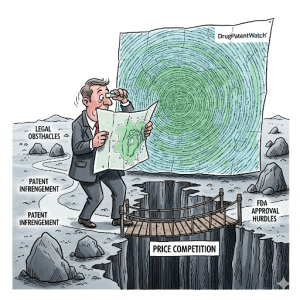
The financial asymmetry is stark. Filing a secondary patent costs approximately $25,000 in prosecution fees. Challenging that patent in an IPR (Inter Partes Review) proceeding before the USPTO’s PTAB costs a generic company an average of $774,000. A district court challenge costs multiples of that. An innovator willing to file 50 secondary patents has effectively spent $1.25 million to create a legal obstacle course that costs competitors $38.7 million or more to run. Understanding this asymmetry is prerequisite to any rational Paragraph IV strategy.
Reading the Orange Book as a Strategic Intelligence Document
The FDA’s Orange Book lists every patent the innovator has submitted as covering the RLD, organized by drug product. For a VAM or generic developer, it is the primary IP intelligence document. Each entry includes the patent number, expiry date, and patent code (drug substance, drug product, or method of use).
The patent code matters enormously for challenge strategy. Drug substance patents (code ‘DS’) cover the active ingredient itself and are the hardest to design around for a standard generic, but largely irrelevant for a 505(b)(2) applicant if the active ingredient is already off-patent. Drug product patents (code ‘DP’) cover the formulation and are the primary target for a 505(b)(2) applicant developing a different formulation. Method-of-use patents (code ‘MU’) can often be avoided through skinny labeling for a standard generic but present a more complex challenge for a 505(b)(2) applicant seeking approval for the same indication.
Sophisticated IP teams use Orange Book data to construct a patent expiry waterfall for each target drug — mapping the earliest possible unencumbered entry date if all patents are respected, the first challengeable expiry if weak secondary patents can be invalidated, and the litigation risk profile for each challenge scenario. Tools like DrugPatentWatch automate much of this mapping, but the interpretation requires experienced IP counsel with PTAB and district court litigation history.
IPR Petitions as Market Entry Tools
Inter Partes Review is the fastest mechanism for invalidating a weak secondary patent before committing to a full ANDA or 505(b)(2) filing. An IPR petition filed with PTAB must demonstrate a reasonable likelihood that at least one claim is unpatentable based on prior art. PTAB institutes review in approximately 60% to 70% of cases, and of those instituted, approximately 70% to 80% result in at least one claim being cancelled or amended.
For a generic or VAM developer, a successful IPR on a key secondary patent can reduce the effective thicket from an impassable barrier to a manageable litigation calendar. The strategic sequence is to identify the two or three Orange Book-listed patents with the weakest prior art bases — typically late-filed secondary patents on obvious formulation variants or manufacturing process tweaks — and file IPR petitions to clear them before the ANDA or 505(b)(2) filing triggers the 30-month stay clock.
Key Takeaways — Section 7
Patent thickets are engineered financial instruments, not scientific achievements. The filing cost vs. challenge cost asymmetry means that innovators can maintain exclusivity with portfolios of legally fragile patents. The Orange Book, read systematically against prior art databases and IPR petition history, identifies which thickets are real barriers and which are manufactured delays. PTAB’s IPR mechanism is the most cost-efficient challenge vehicle for clearing weak secondary patents prior to market entry.
8. The Paragraph IV Playbook: Filing Strategy, First-Mover Economics, and Litigation Risk
The Hatch-Waxman Framework: Mechanics and Strategic Logic
The Drug Price Competition and Patent Term Restoration Act of 1984 — the Hatch-Waxman Act — created the modern generic market’s fundamental architecture. For a generic developer, the most valuable mechanism it established is the Paragraph IV certification pathway.
When an ANDA applicant certifies that a listed patent is either invalid or will not be infringed by the proposed generic product (a Paragraph IV certification), the applicant must notify the patent holder, who then has 45 days to file a patent infringement suit. If the patent holder files suit within 45 days, the FDA is automatically prohibited from approving the ANDA for 30 months — the 30-month stay — while the litigation proceeds. If no suit is filed, or if the applicant prevails in litigation, approval proceeds on the normal timeline.
The 30-month stay is both the main risk and the main opportunity in this system. It delays the applicant but simultaneously delays every subsequent applicant who files on the same patent, because the first applicant’s 180-day exclusivity period does not begin running until the applicant launches. This creates a powerful option value for the first filer: if they win the litigation, they own a 180-day exclusivity window on a product they delayed competitors from developing for 30 months.
First-Mover Economics: Quantifying the Para IV Advantage
The financial returns from a successful first-to-file Paragraph IV strategy are substantial and durable. The first generic entrant captures an 80% market share advantage over the second entrant and a 225% advantage over the third. That is not a transient benefit that fades within months — it persists for three to ten years due to pharmacy substitution habits, formulary positioning, and prescriber default behavior.
The Barr Pharmaceuticals generic fluoxetine (Prozac) case is the most-cited precedent. Barr captured 65% of the fluoxetine market within the first two months of launch and saw gross profit margins nearly double during the 180-day exclusivity window. The case was documented in research published in the Journal of Health Economics and remains the benchmark for modeling first-filer economics on a major para-brand.
For a company considering a Para IV filing, the break-even analysis is relatively straightforward. The ANDA filing fee alone exceeds $321,920 as of current rates, with total development, bioequivalence, and legal costs typically ranging from $2 million to $15 million depending on complexity. Against a potential 180-day window on a drug with $500 million to $3 billion in annual brand sales, the NPV of a successful first-filer position is frequently $50 million to $500 million — before accounting for the long-tail market share advantage.
Litigation Risk Management
The 30-month stay does not guarantee a favorable litigation outcome. Approximately half of Paragraph IV litigations result in a finding of patent validity and infringement — meaning the generic developer loses the case, loses its investment, and is barred from market entry until patent expiry. IP teams must conduct rigorous invalidity and non-infringement analyses before committing to a Paragraph IV challenge.
Invalidity analysis focuses on the prior art base. Secondary patents covering formulation variants, manufacturing processes, or obvious dosing regimen modifications are particularly vulnerable. Non-infringement analysis focuses on claim construction — whether the generic product’s proposed formulation literally infringes each claim of each listed patent, or does so under the doctrine of equivalents.
Companies with strong PTAB track records and experienced Hatch-Waxman litigation counsel convert Para IV investments into predictable revenue streams. Companies without that infrastructure treat Para IV as speculative betting.
Key Takeaways — Section 8
First-filer economics on a major Para IV filing can generate $50 million to $500 million in NPV from a single exclusivity window, with a decade-long market share tail. The 30-month stay is a strategic lever, not just a delay mechanism. Litigation loss rates of approximately 50% mean that rigorous invalidity analysis before filing is a prerequisite, not an optional refinement.
9. Evergreening and Product Hopping: Full Tactical Breakdown for Challengers
How Product Hopping Works — The Mechanics
Product hopping is the innovator strategy of shifting patient demand from a drug facing imminent generic competition to a newly patented formulation of the same molecule. It works because prescribers default to the product they know, and when the innovator reformulates and relabels, prescribers update their prescription habits before generic developers have a chance to file on the new formulation.
The tactic has two variants. ‘Hard switches’ involve withdrawing the original product from the market entirely, forcing prescribers to the new formulation. ‘Soft switches’ leave the original available but aggressively shift formulary positioning, patient assistance programs, and detailing resources to the new version. Both variants create the same end result: by the time generics enter the market for the original formulation, the prescription base has migrated to the new one.
The FTC published a detailed report on pharmaceutical product hopping in October 2022, identifying it as a prevalent and cost-escalating practice. The report analyzed 17 case studies of product hopping between 2015 and 2021, documenting total excess cost to the healthcare system across those cases in the billions of dollars.
The Copaxone Case: A Full Quantitative Post-Mortem
Teva’s glatiramer acetate (Copaxone) is the benchmark product-hopping case study. The original 20mg daily injection had a composition-of-matter patent expiring in 2015. Before that expiry, Teva launched the 40mg three-times-weekly formulation in January 2014 and actively shifted prescriptions to it. By the time Mylan and Sandoz had generic 20mg approvals in 2015 and launched products, the 20mg market had shrunk substantially.
The patent estate protecting the 40mg formulation was extensive — multiple patents covering the concentration, the dosing schedule, and the manufacturing process. Mylan and Sandoz challenged these patents through Paragraph IV filings, but the litigation proceeded for years. The combined effect of the product hop and the subsequent patent litigation delayed meaningful generic penetration by approximately two and a half years. A study published in the Journal of Law, Medicine & Ethics calculated that payers paid approximately $5 billion more than they would have absent the delay.
For a generic company analyzing a product-hopping scenario, the key variables are the prescription migration rate (what percentage of prescriptions have already shifted to the new formulation), the patent strength of the new formulation, and the timeline to the first possible ANDA approval. In the Copaxone scenario, the combination of a high migration rate and a strong secondary patent estate meant that generic entry on the 20mg product was largely commercially irrelevant by the time it occurred.
Defensive Strategies for Generic and VAM Developers
Monitoring early signals of a product hop is possible with the right IP intelligence infrastructure. When an innovator begins filing secondary patents on formulation variants of a major product within two to three years of the primary patent expiry, it is a predictive signal of a planned product hop. Simultaneously, an uptick in clinical trial registrations for the reformulated product, new Orange Book listings for the reformulated version, and changes in detailing patterns are converging evidence.
The proactive response for a generic or VAM developer is to file on the new formulation simultaneously with — or even before — the original generic ANDA. This requires identifying the new formulation’s patent vulnerabilities early enough to prepare a Para IV certification on the reformulated product’s patents. Companies that execute this parallel strategy can preserve their market position even after a successful product hop.
Key Takeaways — Section 9
Product hopping is a quantified financial threat, not just a competitive nuisance. In the Copaxone case, it cost payers $5 billion in excess payments. Predictive signals — secondary patent filings, new clinical trial registrations, Orange Book updates — are detectable 18 to 36 months in advance with systematic IP monitoring. Generic developers who file on the new formulation simultaneously with the original retain commercial relevance through the product transition.
10. Advanced Manufacturing as a Differentiation Vector
Continuous Manufacturing: Financial and IP Analysis
Continuous manufacturing (CM) replaces discrete batch production — where raw materials are charged, processed, and discharged as separate batches — with an uninterrupted flow of material through the entire manufacturing process, from API to finished dosage form. The FDA has actively encouraged CM adoption as a quality and supply reliability mechanism, approving the first CM-manufactured drug product, Vertex’s Orkambi (lumacaftor/ivacaftor), in 2015.
For a VAM developer, CM is relevant in two ways. First, it generates process patents on the specific continuous manufacturing configuration, including the blend feed rate, the in-process monitoring system, and the real-time release testing protocol. These process patents provide a manufacturing moat that a competitor using conventional batch processing cannot readily replicate. Second, CM enables in-process quality control at a resolution impossible in batch manufacturing — real-time release testing (RTRT) based on process analytical technology (PAT) can monitor content uniformity, dissolution behavior, and impurity profiles continuously, generating a product quality record that is difficult to match with batch testing.
The capital cost of a CM line ranges from $5 million to $50 million depending on throughput and dosage form complexity. For generic companies manufacturing high-volume oral solid dosage forms, the economics favor CM only where long production runs can amortize the capital cost. For VAMs with premium pricing and longer commercial life, the ROI calculus is more favorable.
3D Printing: From the First FDA Approval to Commercial Reality
The FDA approved the first 3D-printed drug product, Aprecia Pharmaceuticals’ Spritam (levetiracetam), in 2015, using ZipDose technology to produce an ultra-rapid-dissolving tablet with a porous internal structure. The approval demonstrated that 3D printing is not a laboratory curiosity — it is a viable manufacturing platform for approved drug products.
For VAM development, 3D printing enables product designs that are structurally impossible with conventional compression or coating equipment. A 3D-printed dosage form can embed multiple release layers within a single tablet, creating a sequential release profile — for example, an immediate-release dose followed by an extended-release phase — without the physical separation required in conventional multi-layer tablet technology. It can also print tablets with drug combinations that are chemically incompatible when mixed in a conventional granulation process but can coexist in physically separated 3D-printed compartments.
The IP implications are significant. A 3D-printed dosage form’s architecture — the geometry of drug distribution within the matrix, the layer sequence, the porosity gradient — constitutes patentable structure. Because no conventional manufacturing process can replicate that geometry, design-around is structurally constrained, giving 3D-printed formulation patents a robustness that polymer matrix or coated pellet patents often lack.
Key Takeaways — Section 10
Advanced manufacturing is not just an efficiency play — it is an IP generation and competitive moat strategy. CM process patents and 3D-printed formulation structure patents create manufacturing barriers that are independent of, and additive to, the formulation IP estate. For VAM developers with the capital to invest, these technologies represent a long-term differentiation pathway with durable IP protection.
11. AI in Drug Repurposing and Formulation: Specific Applications, Not Hype
What AI Actually Does in Each Development Phase
AI has legitimate, commercially demonstrated applications across the VAM development lifecycle. The applications differ by phase, and confusing them generates unrealistic expectations and misallocated R&D investment.
In the target identification and repurposing hypothesis phase, AI knowledge graph platforms (BenevolentAI, Insilico, Cyclica) analyze biomedical literature, protein interaction databases, and phenotypic screening data to identify disease-gene-drug relationships that human review would miss. The Harvard Medical School model referenced earlier generated repurposing candidates for more than 17,000 disease conditions by cross-referencing disease mechanism similarity scores across the full catalog of approved drugs. This type of output is genuinely transformative for a repurposing team: it compresses hypothesis generation from an 18-to-24-month manual review process to a two-to-four-week computational analysis.
In the formulation development phase, AI models trained on excipient-drug interaction databases and solubility data predict the optimal formulation composition for a target PK profile. Tools like Schrödinger’s physics-based modeling platform and Chemaxon’s formulation predictor use molecular dynamics simulation to predict polymer-drug interaction energy, swelling kinetics in simulated gastric and intestinal fluid, and permeability across biological membranes. These predictions are not perfect — bench validation is still required — but they reduce the number of experiments needed to reach a stable, manufacturable formulation from dozens to single digits.
In the bioequivalence prediction phase, physiologically based pharmacokinetic (PBPK) models (Simcyp, GastroPlus) simulate the absorption, distribution, metabolism, and excretion of a candidate formulation in a virtual human population. The FDA accepts PBPK data as supplementary evidence in 505(b)(2) applications and, in some cases, as a waiver for in vivo bioequivalence studies in specific populations (pediatric, renal impairment, drug-drug interaction scenarios). A successful biowaver based on PBPK modeling can eliminate a clinical PK study costing $500,000 to $2 million.
Key Takeaways — Section 11
AI’s value in VAM development is phase-specific and measurable. It does not replace formulation scientists or clinical pharmacologists — it reduces the number of experiments and clinical studies required. The PBPK biowaver pathway is the most immediate financial payoff: eliminating one in vivo PK study can save $500,000 to $2 million in development costs and six to twelve months in timeline.
12. In-Depth Case Studies: IP Valuation, Market Outcomes, and Strategic Lessons
Copaxone (Glatiramer Acetate): IP Valuation of a Product-Hop Defense
Glatiramer acetate is a heterogeneous mixture of synthetic polypeptides — not a single defined molecule — which created unique IP challenges for both Teva and its generic challengers. Teva’s composition-of-matter IP was weaker than for a conventional small molecule because glatiramer acetate’s molecular heterogeneity made exact replication difficult to demonstrate and harder to patent precisely.
Teva’s IP valuation strategy compensated by filing manufacturing process patents (covering the polymerization conditions, the molecular weight distribution, and the deprotection chemistry), method-of-use patents (covering the specific 20mg dosing regimen and treatment duration), and formulation patents (covering the excipient profile and concentration of the 20mg injection). The 40mg formulation added patents on the new dosing schedule and the specific polypeptide ratio optimized for reduced injection frequency.
The total economic value of Teva’s IP estate on glatiramer acetate can be approximated from the $5 billion in excess payer costs attributed to the delayed generic entry. That figure represents the revenue premium Teva sustained for approximately 2.5 years beyond what a timely generic entry would have allowed — a direct measure of the patent thicket’s financial value to the innovator.
Intuniv (Guanfacine Extended-Release): PK Science as IP Foundation
Guanfacine hydrochloride was a standard-release antihypertensive before its central alpha-2A adrenergic receptor agonism was identified as therapeutically relevant in ADHD. The standard-release formulation had a half-life requiring twice-daily dosing with peak-trough fluctuations that produced hypotension and sedation at peak concentrations while losing efficacy at trough.
The extended-release (ER) formulation developed for Intuniv used a matrix technology to achieve 20-to-24-hour drug delivery, reducing peak-trough fluctuation by approximately 60% compared to immediate-release. The clinical bridging data for the 505(b)(2) application demonstrated that the ER formulation’s PK profile was distinct from the immediate-release product in a clinically meaningful way — not just bioequivalent at steady state — which supported a new clinical investigation finding and qualified for three-year market exclusivity.
The IP estate included formulation patents on the specific HPMC matrix composition and drug loading, method-of-use patents on the ADHD indication with the specific ER dosing schedule, and PK data establishing that the ER profile was non-obvious compared to existing guanfacine formulations. That estate supported Shire’s (later acquired by Takeda) premium pricing for several years post-launch before generic ER formulations entered the market.
Narcan Nasal Spray (Naloxone): 505(b)(2) as a Public Health Accelerator
Naloxone’s injectable form had been available since the 1960s. The IV and IM formulations were effective for hospital use but required trained administration. The nasal spray formulation developed by Adapt Pharma (later acquired by Emergent BioSolutions) was designed for layperson use during an out-of-hospital opioid overdose — the product had to be operable by a bystander with no medical training, within seconds, in a high-stress environment.
The 505(b)(2) filing leveraged the FDA’s existing findings on naloxone’s safety and efficacy from decades of IV use. The bridging data package included PK studies demonstrating that the nasal formulation achieved therapeutic plasma concentrations comparable to the IV reference product within the clinically required timeframe (approximately 10 minutes), plus usability studies conducted with lay users to support the human factors performance requirement for drug-device combinations.
The IP estate covered the nasal formulation (naloxone concentration, pH, and penetration enhancer profile for mucosal delivery), the device design (nasal actuator geometry, spray plume characteristics), and the container-closure system. The combination of three-year market exclusivity from the 505(b)(2) approval and device patents on the delivery system provided a commercial window that supported the pricing necessary to fund continued distribution and public health access programs.
Sildenafil (Viagra/Revatio): The Canonical Multi-Indication IP Architecture
Pfizer’s sildenafil is the most frequently cited example of successful drug repurposing, but the IP architecture deserves precise analysis rather than myth. The original composition-of-matter patent on sildenafil citrate covered the compound itself. The erectile dysfunction indication was protected by a separate method-of-use patent. The pulmonary arterial hypertension indication (Revatio, approved 2005) was protected by yet another method-of-use patent covering the use of PDE5 inhibitors in PAH at the specific dosing regimen established in clinical trials.
When the composition-of-matter patent expired, generic sildenafil entered the market for both indications simultaneously — but the PAH indication carried additional regulatory data exclusivity from the Revatio NDA, and the Revatio formulation (20mg tablet, distinct from the 25/50/100mg Viagra doses) had its own formulation patent. Pfizer was able to maintain a premium price for Revatio for longer than for Viagra specifically because the PAH patient population is smaller, more clinician-managed, and less subject to pharmacy substitution than the erectile dysfunction market.
The lesson for repurposing programs: structuring the second indication with a distinct dosage form and filing strength, a separate NDA with fresh data exclusivity, and a formulation patent that physically differentiates the product from the first-indication dosage form maximizes the total patent estate value and the pricing durability of each commercial product.
Auvelity (Dextromethorphan/Bupropion): 122+ Patents on an FDC of Two Off-Patent Molecules
Axsome Therapeutics’ Auvelity, approved in 2022 for major depressive disorder, combines dextromethorphan (DXM) and bupropion in a fixed-dose combination. Both active ingredients are off-patent. Dextromethorphan is the active in common OTC cough suppressants. Bupropion is generic Wellbutrin, available for years. Yet Axsome built a patent estate exceeding 122 filed patents around this combination.
The IP strategy centered on the clinical mechanism: bupropion inhibits CYP2D6, the enzyme responsible for metabolizing DXM, allowing DXM to reach therapeutic plasma concentrations at doses otherwise subtherapeutic. The FDC exploits this PK interaction to achieve NMDA receptor antagonism and sigma-1 receptor agonism at clinically relevant levels — a mechanism of action that neither component achieves alone at commercially viable doses.
Patents covered the specific DXM:bupropion ratio, the IR tablet formulation, the method of treating MDD with the specific combination, the dose titration schedule, and numerous manufacturing and stability-related claims. The thicket ensures that a competitor cannot replicate the clinical program’s outcome by simply co-administering the two generics at the same doses — they would need a bioequivalent FDC that infringes the formulation and combination patents.
Investment Strategy — Case Study Synthesis
Across these five cases, the investment pattern is consistent. Companies that generate IP estates with multiple independent patent layers — composition, formulation, device, method-of-use, dosing regimen — sustain pricing power two to five years longer than companies relying on a single patent type. Portfolio managers should weight IP estate depth (number of independent patent layers, not total patent count) over IP estate breadth when evaluating branded or VAM assets.
13. Portfolio Selection Framework: Scoring Matrices and Capital Allocation
Moving from Intuition to Quantitative Discipline
Capital allocation decisions in generic and VAM development are high-stakes, long-cycle commitments. An ANDA filing fee alone currently exceeds $321,920, and the fully loaded development cost — including bioequivalence studies, stability testing, scale-up, and legal review — ranges from $2 million to $15 million for a standard oral solid and $10 million to $50 million for a complex product. Against a development pipeline of dozens of candidates, selection criteria that rely on intuition and precedent are insufficient.
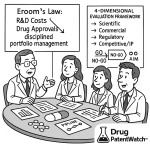
Leading generic companies apply multi-factor scoring matrices to candidate selection, converting qualitative judgments into quantitative scores that allow consistent comparison across dissimilar opportunities. The matrix scores each candidate on its IP landscape (primary and secondary patent expiry dates, IPR petition history, Para IV litigation precedent), its regulatory complexity (simple or complex bioequivalence, 505(b)(2) bridging data requirements, global harmonization risk), its market size and competitive dynamics (peak brand revenue, number of anticipated generic competitors at entry, historical price erosion rate for the therapeutic class), the company’s technical and manufacturing competency match, and the fully loaded risk-adjusted cost to achieve and maintain global market access.
The regulatory risk score deserves specific attention. U.S. FDA and European EMA requirements for the same generic or VAM product often diverge on bioequivalence methodology, impurity limits, and excipient acceptability. A product approved under FDA bioequivalence criteria may require an entirely separate bioequivalence study for EMA submission, adding cost and timeline. The regulatory risk score should capture this divergence explicitly: a product with high FDA-EMA regulatory divergence has a materially higher global development cost than the domestic cost model suggests.
Candidate Scoring Matrix Template
Scoring Parameter
Weighting
Score (1–10)
Weighted Score
IP Landscape Strength (para IV vulnerability, thicket depth, IPR history)
25%
Regulatory Complexity (FDA, EMA, divergence risk)
25%
Market Size and Competitive Dynamics
20%
Technical and Manufacturing Competency Match
15%
Payer and Reimbursement Environment
10%
Strategic Portfolio Fit
5%
Total Weighted Score
100%
Key Takeaways — Section 13
A scoring matrix converts the portfolio selection decision from a committee opinion exercise to an auditable, repeatable capital allocation process. The regulatory risk score — capturing FDA vs. EMA divergence for international development programs — is the most frequently underweighted parameter in generic portfolio models and the one most likely to generate surprise cost overruns.
14. Proving Value to Payers: Real-World Evidence and Formulary Strategy
The Payer Evidence Problem
Developing a VAM is commercially viable only if payers reimburse it at a price premium over the commodity generic. That requires evidence that the improvement in formulation, route, or indication translates into measurable clinical or health-economic outcomes — reduced hospitalizations, fewer adverse events, improved adherence, lower total cost of care. At launch, that evidence rarely exists in its most compelling form (prospective, large-sample, peer-reviewed) because real-world evidence requires the product to have been on the market.
This creates a bootstrapping problem: payers demand RWE before granting preferred formulary status, but RWE requires broad dispensing before it can be generated. The practical solution is to design a pre-commercial evidence generation plan before the product launches, embedding RWE data collection mechanisms into the launch infrastructure — patient registries, pharmacy dispensing data partnerships, and electronic health record integration agreements with major health systems.
For VAMs targeting populations where disease perception is strong and patient advocacy groups are active — inflammatory bowel disease, ADHD, rare neurological conditions — advocacy group partnerships can provide both early patient access and the patient-reported outcome data needed to populate the RWE program faster than a hospital-based registry would.
Formulary Positioning and Managed Care Access
Formulary positioning is a binary commercial outcome for most VAMs. A product on the preferred tier of a major PBM formulary (Express Scripts, CVS Caremark, OptumRx) reaches the dispensing volume needed to generate RWE quickly and to achieve market share that justifies ongoing commercial investment. A product on a non-preferred tier — requiring prior authorization, step therapy, or high patient cost-sharing — reaches a fraction of the potential population and generates insufficient data to improve its formulary position in the next contracting cycle.
The managed care access strategy for a VAM should be developed concurrently with the clinical development program, not after approval. Key inputs include the comparative effectiveness data package required by each PBM’s clinical review committee, the budget impact model demonstrating that the VAM’s total cost of care is competitive with the commodity generic alternative, and the contracting terms (rebates, access conditions, utilization management protocols) that allow the VAM to reach preferred positioning without eroding the price premium that justifies its development.
Key Takeaways — Section 14
Payer access is determined before launch, not after. Embedding RWE data collection into the launch infrastructure and developing the managed care access strategy during late-stage clinical development — not post-approval — is the difference between formulary access and restricted utilization.
15. Regulatory Risk Management: FDA/EMA Divergence and the Nitrosamine Crisis
FDA vs. EMA: Key Points of Divergence for VAM Developers
The FDA and EMA share many regulatory principles but diverge in specific technical requirements that create real cost and timeline risk for companies pursuing global VAM launches.
Bioequivalence methodology is the most common divergence point. The FDA and EMA have different standards for highly variable drugs (HVDs) — compounds where intrasubject variability in AUC or Cmax exceeds 30%. The FDA accepts reference-scaled average bioequivalence (RSABE) for HVDs, which allows wider acceptance intervals based on the reference product’s variability. The EMA uses a different reference-scaled approach with tighter constraints. A bioequivalence study designed to FDA standards may not meet EMA RSABE criteria, requiring a separate study with a larger sample size or a different study design.
Excipient acceptability is a second divergence. The FDA’s Inactive Ingredient Database lists maximum acceptable quantities of common excipients for specific routes of administration, but the EMA may impose different limits or require additional safety data for excipients not on the EMA’s established guidelines list. A formulation acceptable to FDA may require reformulation or additional safety studies for EMA submission.
The Nitrosamine Crisis: Compliance Cost as a Competitive Differentiator
The ongoing nitrosamine impurity crisis — initiated by the 2018 recall of valsartan tablets contaminated with NDMA from a manufacturing solvent process — has created a compliance burden across dozens of APIs and hundreds of marketed products. FDA and EMA have required manufacturers to demonstrate control of nitrosamine impurities in every affected product, through a combination of root-cause analysis, risk assessment, confirmatory testing, and in some cases reformulation to eliminate the impurity source.
For commodity generic manufacturers running on thin margins, the cost of nitrosamine compliance — analytical method development, validation, batch testing, regulatory submission — can exceed the product’s annual profitability. This has accelerated the market exit of economically marginal generic products, contributing directly to the shortage dynamics described in Section 1.
For a VAM developer designing a new product, nitrosamine compliance is a product design requirement, not an afterthought. Formulations using nitrosamine-generating excipients (certain amines, reducible sugars in combination with nitrogen-containing APIs) should be reformulated to eliminate the precursor before the product is manufactured at scale, not after marketing authorization is obtained.
Key Takeaways — Section 15
FDA/EMA divergence on bioequivalence methodology, excipient limits, and impurity standards is a material cost driver for any global VAM launch. Companies that design for global regulatory standards from the first formulation iteration — rather than the FDA standard alone — avoid costly reformulation and repeat bioequivalence studies. The nitrosamine crisis has reset impurity control requirements across much of the generic portfolio and should be treated as a product design baseline, not a remediation event.
16. Investment Strategy for Analysts and Portfolio Managers
Screening for VAM-Oriented Companies: The IP Depth Score
For institutional investors, the fundamental question when evaluating a generic or specialty pharmaceutical company’s pipeline is not ‘how many products’ but ‘what is the IP architecture of each product?’ A company with 10 ANDAs and no VAMs has a portfolio that will trade at commodity margins within 24 months of each launch. A company with four VAMs, each carrying multi-layer IP estates and three-to-seven years of exclusivity, has a portfolio with durable cash flows and an asset base that can be refinanced, licensed, or sold.
The IP depth score for a VAM candidate should assess: the number of independent patent layers (composition, formulation, device, method-of-use, dosing regimen), the strength of the lead patent’s claim construction (broad generic claims vs. narrow specific claims), the expiry date waterfall across all patent layers, the IPR petition history (has anyone attempted challenge and failed, or succeeded?), and the regulatory exclusivity period available.
Catalysts and Risk Events
The standard drug development catalyst calendar applies to VAMs — IND filing, Phase II readout, NDA submission, PDUFA date — but VAM-specific catalysts add to this schedule. Para IV challenge notifications trigger the 30-month stay clock and signal a company’s intent to challenge the innovator’s IP, which is a newsworthy event with stock price implications for both the challenger and the innovator. PTAB institution decisions on IPR petitions are binary risk events: institution means a court has found a reasonable likelihood of invalidity, which is a material negative for the innovator and a positive for the challenger. FDA’s tentative and final approval letters for first-filer ANDAs are high-value catalysts because they confirm the company’s right to the 180-day exclusivity window.
LOE-Driven M&A: Identifying Acquisition Targets Before the Patent Cliff
Patent expiry data drives M&A activity in pharma as reliably as any other single variable. Companies whose revenue is concentrated in products approaching loss of exclusivity (LOE) face a predictable revenue decline that makes them acquisition targets either for strategic buyers seeking branded revenue to protect or generic companies seeking Para IV opportunities. Drug patent expiry data, accessed through platforms like DrugPatentWatch, can identify these LOE windows 18 to 36 months in advance — ahead of most public market pricing.
The optimal M&A target for a VAM-oriented acquirer is a company with one or two branded drugs approaching LOE where the acquirer has already identified a strong 505(b)(2) VAM opportunity on the same molecule. The acquisition brings both the customer relationships and distribution infrastructure of the branded product and the product data package that can accelerate the VAM development program. The post-acquisition strategy is to own both sides of the transition: maintain the brand as long as it is economically viable while launching the proprietary VAM as the replacement before commodity generic erosion destroys the entire revenue base.
Key Takeaways — Section 16
Investors should evaluate generic and specialty pharma companies on IP depth, not pipeline count. The presence of multi-layer IP estates on VAM assets, the company’s Para IV filing history and win rate, and the LOE calendar for both owned products and prospective acquisition targets are the three most predictive variables for long-term portfolio performance. Patent cliff data is a leading indicator — acted on proactively, it identifies M&A targets before the market prices in the revenue risk.
17. Frequently Asked Questions
What distinguishes a value-added medicine from a life cycle management extension?
Life cycle management (LCM) is the broader category; a value-added medicine is a specific subcategory. LCM includes any strategy an innovator uses to extend commercial returns on an existing product — including line extensions, combination products, new indications, and authorized generics. Not all LCM produces clinical value. A VAM specifically delivers a clinically relevant improvement in efficacy, safety, convenience, or indication that benefits the patient, not just the manufacturer’s exclusivity calendar. The distinction matters for reimbursement: payers are increasingly scrutinizing LCM products for evidence of clinical differentiation before granting formulary coverage.
How does orphan drug designation interact with the 505(b)(2) pathway for a repurposing program?
An orphan drug designation, granted by FDA’s Office of Orphan Products Development, provides seven years of market exclusivity from the date of approval (not the date of designation), a 25% tax credit on qualified clinical testing expenses, prescription drug user fee waivers, and priority review eligibility. When combined with a 505(b)(2) pathway for a repurposed drug, the applicant can leverage existing safety data from the original indication to reduce the clinical data generation burden while obtaining seven years of exclusivity on the new orphan indication. This stacking of regulatory incentives makes rare disease repurposing the highest risk-adjusted return strategy in the VAM pipeline for companies with the required disease biology expertise.
What happens to the 180-day exclusivity if the first filer fails to launch within the exclusivity period?
The 180-day exclusivity period begins running from the first commercial marketing of the first-approved generic or from a court decision finding all listed patents invalid or not infringed — whichever comes first. If the first filer fails to launch within 75 days of the date it could have launched (the ‘forfeiture’ trigger), it can forfeit its 180-day exclusivity, allowing subsequent filers to obtain final approval. Common forfeiture triggers include failure to obtain tentative approval within 30 months of filing, withdrawal of the ANDA, and commercial agreements that delay launch. Managing the forfeiture risk is a specific legal and business discipline in first-filer Para IV strategy.
How does the EMA’s ‘well-established use’ application pathway compare to the FDA’s 505(b)(2)?
The EMA’s well-established use (WEU) application under Article 10a of Directive 2001/83/EC allows a company to reference published scientific literature documenting at least 10 years of medicinal use in the EU to support a marketing authorization application, rather than conducting new clinical trials. It is conceptually similar to the FDA’s literature-supported 505(b)(2) in that it leverages existing evidence, but the WEU pathway requires the published literature to specifically document use in the EU — not just in the U.S. or globally. For drugs with a long EU prescription history, WEU can be a cost-efficient entry pathway. For drugs with primarily U.S. or non-EU evidence bases, it requires a supplemental evidence generation program to create the EU-specific literature record.
Why do nitrosamine recalls disproportionately cause drug shortages rather than just reformulations?
When a manufacturer receives a nitrosamine contamination finding, it has several options: recall and remediate, reformulate, or discontinue. For commodity generic products with margins of $0.02 to $0.10 per unit, the analytical method development, validation, and regulatory submission required for remediation or reformulation can cost $500,000 to $2 million per product, which is not recoverable from existing pricing. The economically rational decision for many manufacturers is discontinuation. Because multiple manufacturers of the same commodity generic often use the same API supplier and manufacturing process, a single nitrosamine finding at a shared API source can simultaneously trigger market exit by all active manufacturers, creating an immediate shortage with no short-term replacement.
What is the strategic significance of a product’s Orange Book patent listing status?
Only patents for which an NDA holder has certified to the FDA that the patent claims the drug substance, the drug product, or a method of use for which approval is being sought can be listed in the Orange Book. The listing is not automatic or mandatory — the NDA holder submits it. This creates a strategic lever: an NDA holder can list a patent after the original approval to add it to the protective wall around the product, triggering a new 30-month stay for any ANDA or 505(b)(2) applicant who then files a Paragraph IV certification on the newly listed patent. Monitoring Orange Book updates — new patent listings, patent delistings, and patent expiry dates — on target products is a core function of any serious generic IP intelligence program.
Price Erosion Reference Table: Generic Entry and Market Dynamics
Near-commodity pricing; unsustainable for most manufacturers
Regulatory Pathway Decision Tree for VAM Developers
A VAM developer selecting the regulatory filing strategy should ask: Does the product use a new molecular entity not previously approved? If yes, 505(b)(1). Is the product bioequivalent to an existing drug with no formulation or indication differences? If yes, 505(j) ANDA. Is the product a modified version of an existing drug — new formulation, new route, new combination, new indication — with clinical data to bridge the modification? If yes, 505(b)(2).
Within the 505(b)(2) pathway: Does the new indication qualify for orphan designation? If yes, pursue designation before NDA submission to secure seven-year exclusivity and tax credit. Does the modification constitute a new clinical investigation? If yes, three-year exclusivity is available. Does the modification require only literature support and PK bridging, with no new clinical efficacy data? If yes, three-year exclusivity may still be available but is less certain; confirm with FDA pre-IND meeting.
This article is for informational purposes only and does not constitute legal, regulatory, or investment advice. Patent landscapes, regulatory requirements, and market data are subject to change. Consult qualified IP counsel and regulatory advisors for specific product strategies.