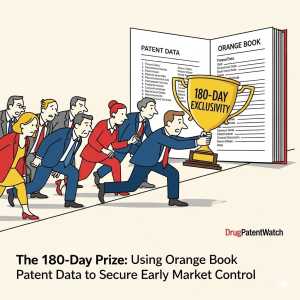
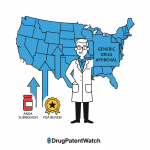
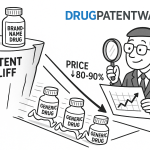
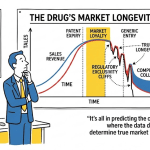
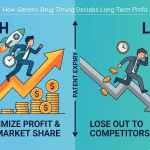
Economic success in the generic pharmaceutical industry depends on timing. Between 2026 and 2030, blockbuster drugs representing an estimated $236 billion in global revenue are set to lose patent protection.1 This period involves intense competition for the 180-day exclusivity period, a six-month window of limited competition that allows the first successful patent challenger to capture the majority of a product’s lifetime profit.2 The transition from a branded monopoly to a competitive market is a coordinated race governed by the regulatory mechanics of the Paragraph IV certification.4
The 180-day exclusivity serves as the primary incentive for generic firms to undertake the significant legal risks and scientific costs associated with challenging branded drug patents. When the Hatch-Waxman Act was enacted in 1984, generic medicines accounted for 18% of all prescriptions in the United States; today, generic medicines comprise 91% of all prescriptions dispensed.5 This shift resulted from the regulatory framework that allows generic manufacturers to enter the market before patent expiration by asserting that those patents are invalid, unenforceable, or will not be infringed.4
The Regulatory Architecture of the Hatch-Waxman Act
The Drug Price Competition and Patent Term Restoration Act, known as the Hatch-Waxman Amendments, established a compromise between pharmaceutical innovation and generic competition. It provided innovators with mechanisms for patent term extension to compensate for time lost during the FDA review process, while creating the Abbreviated New Drug Application (ANDA) pathway for generic competitors.7 The ANDA pathway allows a generic manufacturer to seek approval without conducting independent clinical trials to prove safety and effectiveness, relying instead on the FDA’s previous finding for the Reference Listed Drug (RLD).9
To utilize this pathway, the generic applicant must prove bioequivalence—demonstrating that the generic version delivers the identical amount of active ingredient to the bloodstream over the same period as the RLD.4 This framework includes a “safe harbor” provision under 35 U.S.C. § 271(e)(1), which permits generic companies to begin research, formulation, and bioequivalence testing while the brand’s patents are still in force.7
The Financial Stakes of Generic Entry
The value of the 180-day exclusivity period is rooted in the predictable trajectory of price decay. In a duopoly with the branded manufacturer, the first-filer can price its product at a modest discount—typically 10% to 20% below the brand price—capturing significant market share while maintaining high margins.1 Once the market becomes fully competitive with multiple generic entrants, prices typically plummet by 80% to 95%.12
Number of Generic Competitors
Approximate Price Reduction vs. Brand Price
1 (First-to-File)
15% – 39%
2
50% – 55%
3 – 5
60% – 80%
6 – 10+
80% – 95%
Source: Synthesized data from FDA and DrugPatentWatch analyses.6
For a blockbuster drug, this six-month window can generate hundreds of millions of dollars in revenue. In the case of generic atorvastatin, the product earned an estimated $1.9 billion in gross profits during its six-month exclusivity period, a figure that nearly matched the $1.8 billion it earned over the subsequent three and a half years.3 This dynamic makes the 180-day period the most profitable phase of a generic drug’s lifecycle, often accounting for 60% to 80% of total product profit.2
Deconstructing the Orange Book for Strategic Advantage
The FDA’s Approved Drug Products with Therapeutic Equivalence Evaluations, popularly known as the Orange Book, identifies drug products approved on the basis of safety and effectiveness and includes detailed patent and exclusivity information.15 For business development and IP teams, the Orange Book is the central registry for patent disputes between branded and generic firms.17
Patent Listings and Use Codes
Innovators must list patents that claim the drug substance (active ingredient), the drug product (formulation or composition), or a method of using the drug.17 However, FDA regulations explicitly exclude patents covering manufacturing processes, packaging, metabolites, or intermediates from being listed in the Orange Book.17
Method-of-use patents are linked to specific patent use codes, which describe the FDA-approved indication or dosing regimen covered by the patent.18 Branded manufacturers often utilize a strategy of proliferating these use codes to create hurdles for generic challengers. For example, Cycloset, a treatment for type 2 diabetes, was associated with 116 different use codes filed across 12 patents, while Imbruvica had 41 active patents linked to 407 use codes.18
Therapeutic Equivalence Evaluations
The Orange Book provides therapeutic equivalence (TE) codes, such as the common “AB” rating. This rating indicates that the generic drug is considered therapeutically equivalent to its brand-name counterpart and can be automatically substituted by a pharmacist.17 The coding system allows users to determine whether the Agency has determined that a particular strength, dosage form, and route of administration is therapeutically equivalent to other approved drugs.15
The Paragraph IV Trigger: Artificial Infringement
Every ANDA applicant must address the patents listed for the RLD in the Orange Book through one of four certifications. A Paragraph IV certification asserts that the listed patent is invalid, unenforceable, or will not be infringed by the manufacture, use, or sale of the proposed generic drug.4
Filing an ANDA with a Paragraph IV certification is considered an “artificial act of infringement” under 35 U.S.C. § 271(e)(2).2 This legal construct provides the branded manufacturer with the standing to sue the generic applicant before any commercial harm has occurred.21 This mechanism allows for the resolution of patent disputes before generic entry occurs, preventing the market chaos that could result from at-risk launches.8
The Notice Letter Requirement
Upon filing a Paragraph IV certification, the generic applicant must provide notice to the NDA holder and the patent owner.9 This notice letter must include a detailed statement of the factual and legal basis for the applicant’s opinion that the patent is invalid or not infringed.4 A well-drafted notice letter signals the strength of the generic’s position and can influence the brand’s litigation strategy or settlement posture.8
Timing the Entry: The NCE-1 Strategy
For drugs classified as New Chemical Entities (NCEs), the FDA provides a five-year period of market exclusivity. During this time, the FDA is generally prohibited from accepting an ANDA for a generic version.4 However, the statute allows an ANDA containing a Paragraph IV certification to be submitted four years after the RLD’s approval—a strategy known as the NCE-1 filing.14
The “first applicant” status is often determined by a race to file on the very first possible day. If multiple applicants file on the same day and their applications are determined to be “substantially complete,” they may be required to share the 180-day exclusivity period.20 Missing this narrow filing window can delay a product launch by years.23
The Litigation Gauntlet and the 30-Month Stay
When a branded manufacturer initiates a patent infringement lawsuit within 45 days of receiving a Paragraph IV notice, it triggers an automatic 30-month stay of FDA approval for the ANDA.7 This stay provides the innovator with a period of protected revenue while the case is litigated in court.2
For a blockbuster drug, this 30-month delay preserves billions in revenue regardless of the patent’s ultimate validity.1 This period gives the brand company a predictable timeframe to execute defensive strategies, such as preparing for trial, developing next-generation products, or negotiating a settlement.8
The Court Decision Trigger
The 180-day exclusivity clock is triggered by either the first commercial marketing of the drug or a court decision finding the patent invalid or not infringed, whichever occurs first.19 Historically, the FDA interpreted “court” to mean a final judgment from which no appeal could be taken.26 However, courts have since determined that a district court decision is sufficient to trigger the 180-day clock.19
This interpretation introduces risk for the generic manufacturer. If the clock is triggered by a district court decision while an appeal is pending, the manufacturer must decide whether to launch “at risk.” If the district court’s decision is reversed on appeal, the manufacturer may be liable for treble damages for willful infringement.19
Defining the First Applicant and Shared Exclusivity
A “first applicant” is the earliest filer that submits a substantially complete ANDA containing at least one Paragraph IV certification.27 The MMA 180-day exclusivity provisions recognize the possibility of multiple first applicants, particularly when several firms file on the exact same day.29
The Mechanics of Shared Exclusivity
When multiple generics share the 180-day window, competition among them causes prices to erode faster than in a duopoly.1 In shared exclusivity scenarios, prices typically drop to approximately 50% of the brand price during the 180-day period, compared to the 80% to 90% share maintained by a sole first-to-file.1
Exclusivity Scenario
Market Impact
Revenue Implication for Generic
Standard Launch
First filer enjoys 6 months of duopoly with Brand.
Peak profitability; captures ~40-50% market share at high margin.
Shared Exclusivity
Multiple generics file PIV on the same day.
Exclusivity is shared; prices erode faster (to ~50% of brand).
Authorized Generic (AG)
Brand launches its own generic during the 180 days.
First filer revenue drops by 40-52% due to immediate price competition.
Forfeiture
First filer loses exclusivity; market opens to all approved generics.
Immediate price collapse to commodity levels (<20% of brand price).
Source: Synthesized data from DrugPatentWatch.1
The Forfeiture Minefield: Use It or Lose It
The Medicare Prescription Drug, Improvement, and Modernization Act (MMA) of 2003 introduced forfeiture provisions to prevent first-filers from creating a bottleneck to approval for later ANDA filers.30 If a first applicant forfeits its eligibility, the FDA can grant final approval to any other generic that has filed a Paragraph IV ANDA, though subsequent filers do not receive their own period of exclusivity.25
The Six Forfeiture Events
Failure to Market: The first applicant fails to market the drug within 75 days of a final court decision or 30 months after submission, whichever is later.1
Withdrawal of Application: The first applicant withdraws its ANDA or the FDA deems it withdrawn.9
Amendment of Certification: The applicant amends or withdraws the Paragraph IV certifications that qualified it for exclusivity.9
Failure to Obtain Tentative Approval: The first applicant fails to obtain tentative approval within 30 months of filing, unless the delay is caused by a change in FDA requirements.29
Antitrust Agreement: The applicant enters into an agreement with the brand or another applicant that is determined to be anticompetitive.9
Expiration of All Patents: All patents with respect to which the applicant submitted a Paragraph IV certification expire.9
The “Failure to Obtain Tentative Approval” trigger is a common pitfall. Missing this 30-month milestone resets the competitive clock, potentially allowing the market to open to all approved generics immediately upon the brand’s expiration.29
Authorized Generics: The Innovator’s Counter-Attack
A branded manufacturer can launch its own “Authorized Generic” (AG)—the brand drug sold in generic packaging—at any time.14 Because an AG is marketed under the brand’s original NDA, it is not blocked by the 180-day exclusivity provided to ANDA filers.33
An AG launch during the 180-day period essentially cuts the first-filer’s market share in half and reduces expected profits by 40% to 52%.1 Brands often use this tactic to discourage Paragraph IV challenges by diminishing the “brass ring” incentive.1 From a consumer perspective, the presence of an AG during the 180-day period leads to lower prices through immediate competition in the generic space.20
The Skinny Label Tightrope: Section viii Carve-Outs
Generic manufacturers can sometimes avoid patent infringement by utilizing a “skinny label” under Section viii of the Hatch-Waxman Act.34 This allows a generic to omit indications protected by method-of-use patents while seeking approval for non-patented uses.35
The GSK v. Teva Precedent
The legal viability of this strategy was tested in GlaxoSmithKline (GSK) v. Teva. Teva marketed a generic version of carvedilol with a skinny label that carved out the indication for congestive heart failure (CHF).36 However, the court found Teva liable for induced infringement because its marketing materials and press releases promoted the drug as therapeutically equivalent to the brand for all uses.37
This decision implies that a skinny label alone is not sufficient to prevent liability. Generic firms must coordinate their marketing efforts and all public statements to avoid causing physicians to prescribe the drug for patented uses.4
Strategic Analysis and Portfolio Mastery
Successful participation in the Paragraph IV race requires a holistic strategy that fuses commercial intelligence with regulatory precision. The most consequential decision is selecting the right target drug based on market potential and manageable risk.2
Risk-Adjusted Net Present Value (rNPV)
Generic firms utilize rNPV models to value pipeline assets under uncertainty. These models incorporate the probability of litigation success, the forecasted number of competitors, and the likely price erosion curve.39
Risk Factor
Description
Weighting in Model
Technical Feasibility
Complexity of formulation, manufacturing, and API sourcing.
25%
Legal & Regulatory Risk
Strength of brand patents, P-IV litigation probability, BE study complexity.
20%
Commercial Opportunity
Market size, historical sales, and payer matrix analysis.
55%
Source: Synthesized data from DrugPatentWatch portfolio mastery frameworks.39
Competitive Intelligence (CI) Platforms
Platforms such as DrugPatentWatch allow strategists to move beyond static reporting to dynamic simulation. These tools identify which competitors are likely to file, when they are likely to file, and which patents they are likely to challenge.2 Advanced CI teams use these platforms to monitor litigation status and anticipate “gatekeeper” patents that must be invalidated to clear a path to market.40
Case Study: The Atorvastatin (Lipitor) Launch
The launch of generic atorvastatin is the definitive study for understanding the interplay between exclusivity, compliance, and branded defense strategies. At its peak, Lipitor was the best-selling drug in the world, generating nearly $13 billion annually.14
Ranbaxy Laboratories was the first generic manufacturer to file an ANDA for atorvastatin, making it eligible for sole first-to-file exclusivity.11 However, Ranbaxy faced significant manufacturing problems and fraud allegations, leading the FDA to bar 30 of its products from the U.S. market.43 This created a regulatory paradox: Ranbaxy held the 180-day exclusivity, but it could not launch because its application was frozen due to compliance failures.14
While Ranbaxy was delayed, Pfizer restructured to maximize profits through life cycle management, including emerging market units and product line extensions like Caduet.42 When Ranbaxy eventually launched in late 2011, it captured nearly 50% of the market and earned an estimated $234 million in its first quarter.43 The delay allowed Pfizer to retain significantly more revenue than it would have under a standard generic launch, demonstrating that manufacturing quality is a strategic asset in the race to file.14
The Rise of Complex Generics and Biosimilars
As the “patent cliff” for simple oral medications stabilizes, the market is shifting toward injectables and complex biologics.14 Biosimilars represent the next wave of loss-of-exclusivity opportunities, but they operate under the Biologics Price Competition and Innovation Act (BPCIA) rather than Hatch-Waxman.1
Feature
Generic Drugs (Hatch-Waxman)
Biosimilars (BPCIA)
Pathway
505(j) ANDA
351(k) BLA
Exclusivity
180 days for first P-IV challenge
12 months for first interchangeable product
Entry Dynamics
Rapid price cliff (80%+ drop)
Gradual price slope (20-50% drop)
Substitution
Often automatic at pharmacy level
Requires “interchangeable” designation
Source: Synthesized from DrugPatentWatch and industry analyses.1
The Humira (adalimumab) launch wave in 2023 provided current data on this divergence. With over $200 billion in lifetime sales, Humira faced competition from multiple biosimilars, demonstrating that the future belongs to firms that can master both the legal challenge and the biological manufacturing complexity.14
Conclusion: Data as a Strategic Weapon
The pharmaceutical monopoly model is eroding. To turn patent data into a competitive advantage, firms must move beyond reactive filing to proactive market modeling. Success in the Paragraph IV race requires more than scientific capability; it requires the masterful integration of regulatory precision, legal acumen, and strategic business intelligence.
Securing the 180-day exclusivity period remains the single most important value driver in the generic industry. However, this exclusivity is fragile and subject to dilution by authorized generics and the risk of forfeiture. Meticulous planning—including the use of intelligence platforms like DrugPatentWatch to track NCE-1 dates and monitor rival litigation—is essential for preserving the return on investment in the high-stakes race to the market.
Key Takeaways
The 180-Day Prize: Securing exclusivity is the most critical driver of profitability, allowing for high-margin sales before the market commoditizes.3
The NCE-1 Timing: Precision on the “first day of year four” is mandatory to secure first-filer status. Missing this window can delay generic entry by years.23
Forfeiture Vigilance: Maintaining status requires meeting statutory milestones, particularly the 30-month tentative approval window.29
Authorized Generic Impact: Anticipate a 40% to 50% revenue reduction during exclusivity if the branded manufacturer launches its own generic version.1
Skinny Label Risks: Induced infringement liability can exist even with a carved-out label if marketing materials suggest therapeutic interchangeability.4
Intelligence is Non-Negotiable: Platforms like DrugPatentWatch transform raw patent data into actionable intelligence, identifying vulnerabilities in patent thickets and competitor timelines.2
FAQ
1. Can multiple generic companies share the 180-day exclusivity period? Yes. When multiple companies file a substantially complete ANDA with a Paragraph IV certification on the same day (usually the NCE-1 date), they are all considered first applicants and share the exclusivity period. This shared exclusivity typically leads to faster price erosion than a sole-filer scenario.24
2. What triggers the start of the 180-day exclusivity clock? The clock begins on the date of the first commercial marketing of the drug by any first applicant or on the date of a court decision finding the patent invalid or not infringed, whichever is earlier.19
3. Does an Authorized Generic (AG) need its own 180-day exclusivity? No. An AG is marketed under the branded manufacturer’s original New Drug Application (NDA). Because it is not an ANDA, it is not subject to the 180-day exclusivity rules and can enter the market at any time, including during a generic’s exclusivity period.14
4. How does the 30-month stay affect the 180-day exclusivity? The 30-month stay is a freeze on FDA approval triggered by a brand’s lawsuit. While it delays market entry, it does not necessarily prevent the first applicant from receiving exclusivity once the stay expires or the patent dispute is resolved.7
5. What is the difference between a Paragraph IV certification and a Section viii statement? A Paragraph IV certification challenges the patent’s validity or asserts non-infringement to win 180-day exclusivity. A Section viii statement seeks approval for a non-patented indication by “carving out” protected uses from the label, avoiding a direct patent challenge but not granting exclusivity.27
Estimating the Value of Adding 30 Days to the 180-Day Market Exclusivity of the First-to-File Generic Drug Manufacturer – PMC – NIH, accessed January 31, 2026, https://pmc.ncbi.nlm.nih.gov/articles/PMC12796020/