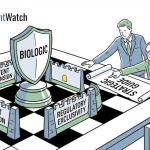
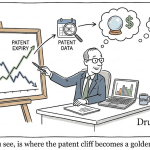
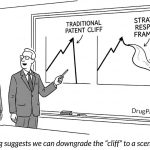
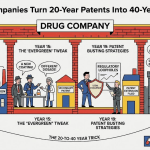
The pharmaceutical landscape in the United States is currently defined by a paradox: a system designed to foster innovation has become a masterclass in rent-seeking and strategic stagnation. For the uninitiated, the 1984 Hatch-Waxman Act was the “Grand Bargain” of the century—a legislative handshake that promised drug innovators twenty years of monopoly in exchange for a clear path for generic competitors thereafter.1 Yet, as any seasoned strategist navigating the K Street corridors or the regulatory labyrinths of the Food and Drug Administration (FDA) will attest, that bargain has been subtly, and perhaps systematically, rewritten. The “patent cliff” that once loomed over blockbuster medications has been smoothed into a “patent slope,” a managed decline where the sun never truly sets on a brand-name monopoly.3
The instrument of this transformation is the “patent thicket”—a dense, overlapping web of intellectual property rights that wraps around a single drug like a legal fortress.5 While the primary patent on a molecule’s active pharmaceutical ingredient (API) is the cornerstone, the modern thicket is built from the “drip-feed” of secondary patents covering everything from crystalline polymorphs and manufacturing steps to the mechanical firing pins of an autoinjector.3 This strategy is not merely a legal maneuver; it is the central pillar of contemporary pharmaceutical lifecycle management (LCM).3 For a business audience in Washington, D.C., the implications are as much about political economy as they are about patent law. The cost of this strategic complexity is staggering, with Americans spending an estimated $167 billion on just three drugs—Humira, Avastin, and Rituxan—after their primary patent protection had already expired.7
The Taxonomy of the Thicket: Deconstructing the Legal Fortress
To challenge a patent thicket, one must first possess the tools to map its topography. A thicket is rarely the result of a single “Eureka!” moment; rather, it is the product of a thousand incremental filings.6 Statistics reveal the sheer scale of this effort: drugmakers file an average of 140 patent applications per product, with a remarkable 66% of these filings occurring after the drug has already received FDA approval.7 This suggests that the thicket is not built to protect the discovery of the drug, but to protect the market share of the drug.6
Primary vs. Secondary Patents
The strategist must distinguish between the “Crown Jewels” and the “Picket Fence.” The primary patent, typically the Composition of Matter (CoM) patent, is the most robust and difficult to challenge. It protects the core molecule itself.10 However, once this core protection nears expiration, the innovator deploys an array of secondary patents to maintain the status quo.4
Patent Type
Technical Focus
Strategic Utility
Relative Vulnerability
Composition of Matter (API)
The active molecule or compound.
Foundation of the monopoly.
Very Low; usually scientifically robust.10
Polymorph/Crystalline
Alternative physical forms of the API.
Blocks generics from making stable versions.
Moderate; often result of routine screening.4
Formulation
Specific combinations of excipients or release mechanisms.
Forces generics to develop difficult “sameness”.4
High; can be bypassed with clever chemistry.10
Method of Use (MoU)
Treating a specific condition or using a specific dose.
Basis for “skinny labeling” litigation.
High; vulnerable to “obviousness” challenges.9
Manufacturing Process
Synthesis, purification, or stabilization steps.
Increases cost and complexity for competitors.
High; difficult to prove infringement without discovery.4
Device/Mechanical
Inhaler dose counters, injector springs, or caps.
Triggers 30-month stays on non-drug features.
Very High; currently under FTC scrutiny.13
The strategic intent behind these filings is clear: to ensure that as one patent expires, another is waiting to take its place, creating a layered defense that extends the effective patent life well beyond the 20-year statutory term.11 For example, Novo Nordisk’s semaglutide products (Ozempic, Wegovy, and Rybelsus) have amassment of 320 patent applications and 154 granted patents, potentially securing monopoly protection for an estimated 49 years.4
The Orange Book as a Strategic Weapon
The FDA’s “Orange Book”—formally known as Approved Drug Products with Therapeutic Equivalence Evaluations—is the registry where brand-name manufacturers must list patents that claim the drug substance, the drug product, or a method of using the drug for which approval was granted.13 While ostensibly a database for transparency, in the hands of a skilled innovator, it is a tool for tactical delay.1
The Mechanics of the 30-Month Stay
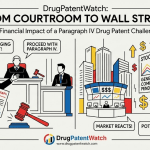
The true power of an Orange Book listing lies in the 30-month stay. When a generic manufacturer submits an Abbreviated New Drug Application (ANDA), they must provide a certification for every patent listed in the Orange Book for the reference drug.1 A “Paragraph IV” (PIV) certification asserts that a listed patent is invalid or will not be infringed by the proposed generic.1 This act is considered a “technical act of infringement,” allowing the brand-name company to sue.1
If the brand-name manufacturer files suit within 45 days of receiving the PIV notice, the FDA is statutorily barred from granting final approval to the generic drug for up to 30 months.1 This stay is an automatic injunction that requires no proof of irreparable harm, making it a “guaranteed extension of exclusivity”.2 Sophisticated brands often time the listing of new patents to maximize this delay, stacking stays to keep competitors at bay even when the underlying patents are weak.3
The Rise of the “Junk” Listing
In recent years, the definition of what constitutes an “Orange Book-listable” patent has become a point of intense conflict. Manufacturers have increasingly listed patents for the mechanical components of delivery devices—such as the dose counter on an asthma inhaler—in the Orange Book.3 The logic is simple: if a generic cannot copy the inhaler device without infringing the dose counter patent, and the dose counter patent is in the Orange Book, the generic’s PIV challenge will trigger a 30-month stay.13
The Federal Trade Commission (FTC) has identified this as a form of gamesmanship that keeps drug prices artificially high.13 In a significant policy shift spanning late 2023 to early 2025, the FTC issued warning letters to pharmaceutical giants, disputing over 500 patent listings across dozens of products.13 The agency’s stance is that a patent on a “firing mechanism” or a “dose counter” does not claim the drug itself and therefore has no place in the Orange Book.13
The Regulatory Counter-Offensive: A New Era of Enforcement
For a Washington audience, the shifting tectonic plates of regulatory enforcement are the most critical data points. Under both Democratic and Republican leadership, the FTC has signaled that it will no longer tolerate the “bogus” listing of patents to delay competition.13
The Teva Inhaler Precedent
The watershed moment in this regulatory war occurred in December 2024. The U.S. Court of Appeals for the Federal Circuit affirmed a lower court decision requiring Teva Pharmaceuticals to delist five patents from the Orange Book.13 These patents were directed at mechanical features—specifically dose counters—of inhaler devices. The court ruled that these patents did not meet the statutory requirements for Orange Book listing because they did not claim the drug substance or a method of use.13
The impact was immediate. By May 2025, the FTC, under Chair Andrew Ferguson, renewed its challenges against more than 200 patent listings, citing the Teva ruling as the legal bedrock for its actions.13 This enforcement trend has real-world consequences: several major manufacturers, including AstraZeneca and GlaxoSmithKline, responded to earlier FTC challenges by delisting patents and committing to cap out-of-pocket costs for inhalers at $35.21
The FDA’s “Ministerial” Role and the 30-Day Clock
It is vital to understand that the FDA does not “police” the Orange Book for patent validity. Instead, it views its role as “ministerial”.13 When the FTC or a generic manufacturer disputes a listing, the FDA simply forwards the dispute to the brand manufacturer.20 The manufacturer then has 30 days to either withdraw the patent, amend the listing, or certify under penalty of perjury that the listing is accurate.13 While the FDA remains passive, the threat of FTC antitrust scrutiny—or “perjury” charges—acts as the primary deterrent.13
The Litigation Toolkit: Dismantling the Thicket
When diplomacy (and regulatory pressure) fails, the generic competitor must resort to the “machete” of litigation. Identifying the right forum and the right targets is an exercise in risk-adjusted net present value ($rNPV$) modeling.10
The PTAB: A Faster, Cheaper Surgical Strike
The Patent Trial and Appeal Board (PTAB), established by the America Invents Act, remains a preferred venue for challenging secondary patents.11 The PTAB uses a “preponderance of evidence” standard for invalidity, which is significantly lower than the “clear and convincing” standard required in federal district courts.11
Technology Sector
Petition Filing % (FY24)
Institution Rate % (FY24)
Success Rate (Unpatentable) %
Bio/Pharma
6%
73%
27% (of all patents reached outcome).23
Electrical/Computer
69%
69%
26% (of total petitions).23
Mechanical/Business
22%
66%
27% (of total patents).23
While Bio/Pharma accounts for a small slice of the PTAB’s caseload, it boasts one of the highest institution rates (73%), suggesting that patent challengers are successfully identifying “junk” patents for review.23 However, there is a stark divergence in outcomes between molecule types. For biologic patents that reach a final written decision, a staggering 70% have all challenged claims invalidated.11 In contrast, Orange Book patents for small molecules are more resilient, with only 33% of instituted claims found unpatentable.11 This suggests that while PTAB is a lethal weapon against biosimilar barriers, it is a more nuanced tool for small-molecule strategists.
The “Skinny Label” (Section viii) Minefield
For methods of use still under patent protection, generic manufacturers frequently employ the “Section viii carve-out,” creating what is known as a “skinny label”.22 This allows the generic to launch for indications that are off-patent while explicitly omitting the patented uses from their labeling.22 Strategically, this is a powerful move because, unlike a Paragraph IV certification, a Section viii statement does not trigger a 30-month stay.16
However, recent case law has turned this “safe harbor” into a liability minefield. In GlaxoSmithKline (GSK) v. Teva, the Federal Circuit reinstated a $235 million jury verdict against Teva, finding that Teva’s marketing materials and press releases “induced infringement” of GSK’s patent for congestive heart failure, even though the indication was carved out of the label.22 The court’s logic rested on Teva’s promotional activities that touted the generic as “therapeutically equivalent” to the brand-name drug for all uses.27
The Induced Infringement Risk Framework
Action Type
Risk Level
Mitigation Strategy
Press Releases
High
Avoid phrases like “therapeutically equivalent” without qualification.28
Product Catalogs
Moderate
Ensure catalogs list only the FDA-approved (non-carved-out) indications.28
Safety Labels
Moderate
Carve out clinical study data that cross-references patented uses.30
Sales Force
High
Train reps to strictly adhere to the skinny label; avoid mentioning off-label use.22
The Supreme Court is set to review Amarin v. Hikma in 2026, which may clarify whether common “generic version” statements are enough to plead induced infringement.25 Until then, the “clean launch” requires obsessive hygiene in all market communications.
Strategic Intelligence: Modeling the Prize with DrugPatentWatch
In the high-stakes game of generic entry, the “when” is as important as the “how.” Predicting when a thicket will be dismantled requires more than just looking at expiry dates; it requires “predictive intelligence”.32 Platforms like DrugPatentWatch have become indispensable for this synthesis, allowing analysts to track litigation dockets, supply chain signals, and regulatory shifts in real-time.12
The Math of Monopoly: $rNPV$ and Erosion
For a generic firm, the ROI of challenging a thicket depends on the “size of the prize” and the number of competitors. Statistical models show that 55% of new small-molecule drugs face patent challenges within the first year of eligibility, and market value is the strongest predictor of whether a drug will be challenged.33
To calculate the risk-adjusted Net Present Value ($rNPV$), strategists must define the Probability of Success ($POS$) for each patent in the thicket.10 DrugPatentWatch aids this by providing historical litigation outcomes for similar “secondary” patents, such as polymorphs or specific dosages.10
Entrant Status
Market Share Capture
Price Erosion
First Generic (FTF)
40–60% within 12 months.
15–30% discount (temporary duopoly).10
2nd–4th Entrants
Rapid “competitive collapse.”
50–70% discount from brand price.10
5+ Entrants
Full commoditization.
80–90% discount (commodity pricing).10
The “Brass Ring” remains the 180-day exclusivity granted to the “First-to-File” (FTF) applicant who submits a substantially complete ANDA with a PIV certification.1 During this six-month window, the generic can command high prices with limited competition, generating the lion’s share of the lifetime profit for that product.1
The Washington Horizon: The ETHIC Act and Legislative Reform
For the business leader in Washington, D.C., the future of the patent thicket may be written in the Senate Judiciary Committee. The Eliminating Thickets to Increase Competition (ETHIC) Act, introduced in 2025 by a bipartisan group including Senators Welch (D-VT) and Hawley (R-MO), seeks to fundamentally alter the rules of patent assertion.36
Limiting Assertion to One Patent per “Patent Group”
The core of the ETHIC Act is a limit on “overwhelming” defendants. The bill would amend 35 U.S.C. § 271(e) to restrict a patent holder to asserting not more than one patent per “Patent Group” in an infringement action against a generic or biosimilar developer.37 A “Patent Group” is defined as patents that are linked by terminal disclaimers—legal filings used to overcome “obviousness-type double patenting” rejections.38
If the single patent asserted from a group is found invalid or not infringed, the brand manufacturer would be barred from filing additional lawsuits using other patents from that same group.39 This would force brand-name firms to be far more selective in their litigation, potentially speeding up market entry and reducing the “chilling effect” of having to defend against dozens of overlapping claims.40
The Innovation Counter-Argument
While the ETHIC Act has strong support from generic manufacturers and the Biosimilars Council, it faces fierce opposition from the pro-patent community.40 Groups like C4IP argue that the term “patent thicket” is a misnomer and that many patents are necessary to protect the “full scope” of inventions in complex biologics.40 They warn that limiting patent rights will “choke off” future cures and discourage the massive R&D investments—often exceeding $2 billion per drug—required to bring new medicines to market.40
Detailed FAQ: Tactical Guidance on Thickets and Generic Entry
What constitutes a “patent thicket” according to current U.S. law?
Legally, there is no single statutory definition, but the term is widely used by the FTC, USPTO, and in case law to describe a “dense web of overlapping intellectual property rights” on a single product.3 It involves amassing dozens or hundreds of patents on secondary features—like formulations or delivery devices—after the original drug is approved.5
Why are 30-month stays considered a “strategic weapon”?
Because they provide an automatic injunction that prevents the FDA from approving a generic version of a drug while patent litigation is ongoing.1 By listing multiple patents in the Orange Book and suing challengers, brands can “stack” or delay generic entry regardless of whether the patents are actually valid.2
How do “polymorph” patents contribute to a thicket?
Polymorphs are different crystalline forms of the same drug molecule.4 If an innovator patents the most stable or bioavailable polymorph, a generic manufacturer is effectively blocked, even if the core molecule patent has expired.4 Challengers often argue these forms are “obvious” results of routine screening.9
What is the “skinny label” strategy, and is it still viable?
The Section viii carve-out (skinny label) allows generics to launch for unpatented uses while omitting patented ones.22 While it remains a key tool, it is no longer a “safe harbor.” After the GSK v. Teva decision, generics can be found liable for “induced infringement” if their marketing materials or press releases imply therapeutic equivalence for the carved-out use.22
How does the FTC challenge “improper” Orange Book listings?
The FTC sends warning letters to manufacturers and notifies the FDA that it disputes the “accuracy or relevance” of certain listings—primarily those covering non-drug features like inhaler dose counters.13 The manufacturer then has 30 days to withdraw or verify the listing under penalty of perjury.13
What is the “Paragraph IV Certification” and why is it important?
It is a certification filed by an ANDA applicant stating that an Orange Book-listed patent is invalid or not infringed.1 This act allows the generic to challenge the thicket and, if they are the first to file, potentially earn 180 days of market exclusivity.1
How much can a generic entry reduce drug prices?
The first generic typically offers a 15–30% discount. However, once there are four or more generic competitors, prices typically plummet by as much as 80–90%.10 This is known as the “competitive collapse” of brand revenue.10
What is “product hopping”?
Product hopping occurs when a manufacturer switches patients to a new, reformulated version of a drug (e.g., from a tablet to an extended-release capsule) just before the old version faces generic competition.15 A “hard switch” involves removing the old product from the market entirely to force the switch.15
What is the ETHIC Act?
The “Eliminating Thickets to Increase Competition Act” is proposed legislation that would limit a patent holder to asserting only one patent from a “Patent Group” (linked by terminal disclaimers) in a single infringement lawsuit.37 It aims to stop manufacturers from overwhelming competitors with dozens of related patents.38
How does the PTAB handle pharmaceutical patents?
The PTAB allows for Inter Partes Review (IPR) of patents. In FY2024, Bio/Pharma patents had a 73% institution rate, although only 27% of challenged patents reaching an outcome were found “all unpatentable”.23 Biologic patents are significantly more vulnerable at the PTAB than Orange Book-listed small molecule patents.11
Why are “terminal disclaimers” relevant to patent thickets?
A terminal disclaimer is filed to overcome an “obviousness-type double patenting” rejection. It makes multiple related patents expire at the same time.39 The ETHIC Act uses these disclaimers as the legal marker to define a “Patent Group” that would be limited in litigation.37
Can a generic be sued for “induced infringement” even with a skinny label?
Yes. If the generic’s marketing, press releases, or catalog descriptions encourage doctors to prescribe the generic for the patented use that was carved out, they can be held liable for triple damages.22
What is “at-risk” launch?
An “at-risk” launch is when a generic company enters the market after the 30-month stay has expired but before a court has ruled on the validity of the brand’s patents.2 If the generic later loses the case, the financial penalties can be existential.2
How do I use DrugPatentWatch for competitive intelligence?
The platform synthesizes raw patent data, litigation dockets, and regulatory filings to provide a “predictive roadmap” of generic entry.32 It helps analysts identify “weak” secondary patents and time their legal challenges for maximum strategic benefit.10
What are the main findings of the AAM 2024 Savings Report?
Generic and biosimilar medicines saved the U.S. healthcare system $445 billion in 2023, representing 90% of prescriptions but only 13% of total drug spending.35 Despite these savings, the report warns that “patent thickets” and PBM policies are threatening the long-term sustainability of the generic market.35
Conclusion: The New Strategist’s Mandate
The pharmaceutical industry’s “Grand Bargain” has evolved into a high-stakes chess match where the rules are constantly being contested. For the Washington-based executive and the generic strategist, navigating “patent thickets” is no longer just a legal hurdle—it is the core challenge of the business model. The era of passive reliance on the patent cliff has ended; it has been replaced by a landscape that demands deep-tier intelligence, aggressive regulatory engagement, and a surgical approach to litigation.
As the FTC continues to prune the “junk” from the Orange Book and Congress debates the limits of patent assertion, the advantage will go to those who can master the data. Platforms like DrugPatentWatch provide the “machete” needed to hack through the thicket, transforming a “Billion-Dollar Blockade” into a manageable, albeit complex, pathway to market. In the end, the winner will not be the company with the most patents, but the company with the most insight into the fragility of their opponent’s fortress.