How the incentive architecture behind pharmaceutical R&D shapes pipeline decisions, drug pricing, access policy, and $2 trillion in annual investment, and what every pharma strategist needs to know before the next patent cliff hits.
Executive Summary
The debate over how to fund pharmaceutical R&D has been running for more than a century. It has never been more consequential than it is right now. The Inflation Reduction Act of 2022 gave the U.S. government the authority to set prices on Medicare drugs for the first time in history. The Longitude Prize for antimicrobial resistance paid out its £8 million award in June 2024 to a Swedish diagnostics firm. The Congressional Budget Office projects that the IRA will reduce the number of drugs reaching market over the next three decades, though by how many is still being argued.
These are not isolated events. They are inflection points in a structural shift in how society rewards, prices, and distributes pharmaceutical innovation. For IP teams, portfolio managers, R&D leads, and institutional investors, understanding the mechanics of this shift is not optional. It is the job.
This guide goes deeper than the standard overview. It maps the full legal, economic, and strategic architecture of the patent system, stress-tests the prize model against real-world evidence, models the IP valuation implications for specific drug classes and evergreening strategies, and provides a decision framework for navigating the hybrid incentive landscape that is already taking shape.
Key statistics to anchor the analysis:
The global pharmaceutical industry spent approximately $269 billion on R&D in 2023, up from $83 billion in 2019. Deloitte’s 2025 report on pharmaceutical R&D returns placed the average cost of developing a single new asset at $2.23 billion for large-cap companies, though this figure reflects the full portfolio cost including failures, not just successful drugs. The FDA approved 12% of drug candidates entering Phase I trials in the most recent decade-long analysis. More than 150 million children received pneumococcal vaccines through the first Advance Market Commitment. Sysmex Astrego’s PA-100 AST System can return antibiotic susceptibility results in 45 minutes against a traditional lab culture time of 48 to 72 hours. These numbers frame everything that follows.
Part I: The $2.23 Billion Question: Why the R&D Cost Matters More Than Most People Think
The True Cost of Drug Development Is a System-Level Number, Not a Drug-Level Number
When Deloitte reported a $2.23 billion average development cost per approved asset in 2024, the figure circulated widely, often stripped of its crucial methodological context. That number is a portfolio average. It accounts for the fully loaded cost of all the failures a company incurs before one drug crosses the approval finish line. A company that runs 20 Phase II programs and gets two approved drugs has, in effect, paid for 18 failures as part of the cost of those two successes.
This is not an accounting trick. It is the correct way to think about R&D economics in a high-attrition industry. The 12% Phase I-to-approval success rate means that a company investing in 100 Phase I programs can, on expectation, plan for roughly 12 approved drugs, while absorbing the full cost of 88 programs that fail at various stages. The cost of each approved drug therefore includes 8.3 failed programs’ worth of sunk costs, on average.
The composition of that $2.23 billion breaks down roughly as follows: approximately $1.4 billion reflects out-of-pocket clinical and preclinical costs, and the remaining $830 million reflects the time cost of capital, i.e., the opportunity cost of tying up money in a 10-to-15-year development cycle at a discount rate of roughly 10.5%. Strip out the cost of capital and direct R&D costs are closer to $1.4 billion per approval. Critics of high drug pricing, who argue that industry R&D cost estimates are inflated, are correct that the raw out-of-pocket number is lower than the headline figure. The industry, in turn, is correct that the time-value-of-money component is a real economic cost that any rational investor must account for.
The practical implication: the debate about “how much it really costs to develop a drug” is partly definitional. Both sides are using real numbers. They are answering different questions.
IP Valuation: How Drug Patents Translate Into Balance Sheet Assets
For IP teams and portfolio managers, the economic value of a pharmaceutical patent is not the drug’s therapeutic efficacy. It is the net present value of the cash flows that the patent’s exclusivity period makes possible, discounted for probability of approval, time to market, competitive displacement, and regulatory risk.
The standard approach used by most major pharma companies and their investment banks is a risk-adjusted NPV (rNPV) model. The model takes projected revenues during the exclusivity window, applies a discount rate (typically 8% to 12% in pharma), deducts projected costs including manufacturing, sales force, and post-approval studies, and probability-weights the entire cash flow stream by the current clinical-stage success rate. A drug in Phase II oncology, for example, carries roughly a 35% probability of approval, which is applied as a scalar to the full NPV of the projected cash flows.
The patent’s role in this model is specific: it defines the outer boundary of the exclusivity window. A primary composition-of-matter patent expiring in 2029 means that unconstrained monopoly pricing lasts, at most, until 2029. Any secondary patents layered on top of the primary, covering formulations, dosing regimens, manufacturing processes, or new indications, extend the period during which generic or biosimilar entry is legally constrained. Each additional year of exclusivity has a concrete, calculable NPV value, which is why lifecycle management is not a rounding error in pharma strategy. It is, for many franchises, the difference between meeting guidance and missing it.
The R&D ROI Problem Is Getting Worse, Not Better
Deloitte’s 2019 report pegged the average IRR on pharma R&D portfolios at 1.8%, down from 10.1% in 2010. By 2022, the figure had fallen to 1.2%, the lowest ever recorded. The 2025 data shows a modest recovery to approximately 4.5%, driven partly by GLP-1 blockbusters and oncology biologics restoring near-term cash flow projections for a handful of large-cap firms. The recovery is real but narrow. Across the broader industry, the cost of developing new assets continues to rise faster than revenues.
The structural driver is not just attrition. It is the fact that the easiest therapeutic areas have already been addressed. The remaining unmet needs are in disease areas where clinical proof of concept is harder, trial populations are smaller, regulatory endpoints are more complex, and payers require more differentiation evidence. Every remaining hard problem in medicine is a hard problem precisely because previous attempts at easier solutions have already been made.
Key Takeaways: Part I
The $2.23 billion average development cost is a portfolio-level metric that includes the cost of all failures, not just the winning drug. Time-adjusted out-of-pocket costs run closer to $1.4 billion. Pharma R&D ROI declined from 10.1% in 2010 to 1.2% in 2022 before a partial recovery to roughly 4.5% in 2025, driven by a small number of blockbuster product classes. Patent exclusivity defines the NPV window that makes the entire R&D investment economically rational. Secondary patents extending that window have measurable, model-able balance sheet value. The industry’s remaining innovation targets are structurally harder than what came before.
Investment Strategy: Part I
Large-cap pharma companies showing consistent improvement in Deloitte’s IRR metrics, driven by a concentrated set of high-revenue biologics, carry a fundamentally different risk profile than mid-cap companies whose pipeline NPV depends on a single or dual patent expiry timeline. For institutional investors, the single most important IP due diligence question is not “when does the primary patent expire?” but “what is the realistic effective exclusivity period, inclusive of secondary patents, and what is the probability that each secondary patent survives a Paragraph IV challenge?” That is an analytical question, not a legal question, and it can be modeled with the right patent intelligence data.
Part II: The Patent System, Fully Mapped
A. The Legal Architecture From First Principles
From ‘Bilious Pills’ to Global IP Infrastructure: A 230-Year Trajectory
The first American patent for a pharmaceutical product was granted on April 30, 1796, to Samuel Lee, Jr. for his ‘Bilious Pills.’ It was a patent on a specific composition. The industry that followed ignored that model almost entirely. For the next century, the commercial logic of patent medicines had nothing to do with molecular novelty and everything to do with brand ownership. Manufacturers secured copyrights on names, trademarks on packaging, and patents on bottle designs. They disclosed nothing about their actual formulas, because disclosure was commercially suicidal.
The 1906 Pure Food and Drug Act began dismantling the nostrum economy by requiring ingredient disclosure for certain classes of products. The 1938 Federal Food, Drug, and Cosmetic Act added safety requirements after the sulfanilamide disaster killed more than 100 people. The 1962 Kefauver-Harris Amendment introduced efficacy standards, requiring clinical proof that a drug actually did what it claimed. Each of these legislative inflection points increased the cost and complexity of drug development, which in turn increased the commercial premium on exclusivity, which intensified the industry’s reliance on patent protection as its primary business model.
By the mid-20th century, pharmaceutical patents had evolved from packaging novelties into the foundational assets of multibillion-dollar enterprises. The patent on a single chemical entity could be worth more than the entire tangible asset base of the company that held it.
The 20-Year Term: What It Says Versus What It Means
A standard utility patent in the United States, the European Union, Japan, and all WTO member states grants exclusive rights for 20 years from the date of filing. For pharmaceutical compounds, this 20-year clock starts running before the molecule has been tested in a single human being.
The sequence is roughly as follows. A company identifies a promising compound and files a patent application, typically two to four years into preclinical development. The patent publishes after 18 months of examination. The compound then enters Phase I clinical trials, which take one to two years. Phase II takes two to four years. Phase III takes three to six years. Regulatory review adds one to two years. By the time the FDA grants approval, eight to twelve years of the 20-year patent term have elapsed. The effective patent life at market launch is therefore eight to twelve years, not twenty.
The Hatch-Waxman Patent Term Extension (PTE) mechanism, discussed below, can restore some of that lost time, up to a maximum of five additional years, but the total post-approval exclusivity for a given compound rarely exceeds 14 years and is often closer to 9 to 11 years. This compressed effective life is the primary driver of evergreening strategy. If you have spent $1.4 billion developing a drug and have nine years to recoup it before generic competition arrives, the commercial logic of building secondary patent protection around the primary compound is not complex.
The Hatch-Waxman Act: The Deal That Built Two Industries
The Drug Price Competition and Patent Term Restoration Act of 1984, the Hatch-Waxman Act, is the most commercially consequential piece of pharmaceutical legislation in American history. It created the regulatory and legal infrastructure for the modern generic drug industry while simultaneously providing innovator companies with tools to partially compensate for pre-market patent erosion.
For innovator companies, the Act created Patent Term Extension. Under PTE, a company can apply to the USPTO and FDA for restoration of up to five years of patent term, representing a portion of the time lost during regulatory review. PTE is calculated as half the time spent in Phase I, II, and III clinical trials plus the full time of FDA regulatory review, capped at five years. Only one patent per drug product is eligible for extension. Post-extension, the total remaining patent term cannot exceed 14 years from FDA approval. The PTE calculation is precise, formulaic, and litigable. Generic companies have challenged PTE grants on the grounds of incorrect calculation, and those challenges have succeeded.
For generic companies, the Act created the Abbreviated New Drug Application (ANDA) pathway. An ANDA applicant does not need to run full Phase I, II, and III trials. It needs to demonstrate bioequivalence to the reference listed drug, a pharmacokinetic equivalence showing that the generic achieves the same blood concentration curve as the brand within a defined statistical tolerance (the standard 90% confidence interval for the ratio of geometric means must fall within 80% to 125%). The ANDA route cuts generic development costs from hundreds of millions to single-digit millions for most small-molecule drugs.
The Paragraph IV certification mechanism is where Hatch-Waxman gets genuinely interesting. When an ANDA applicant believes that an innovator’s listed patent is invalid or not infringed by the generic formulation, it can file a Paragraph IV certification challenging the patent. The innovator then has 45 days to sue for patent infringement. If the innovator sues within 45 days, an automatic 30-month stay of ANDA approval kicks in, giving the innovator time to litigate. If the generic company wins the litigation or the stay expires without resolution, the ANDA may proceed to approval. The first ANDA applicant to file a successful Paragraph IV certification against a given patent gets 180 days of generic market exclusivity, during which the FDA cannot approve any other generic.
That 180-day exclusivity is economically extraordinary. During those six months, the first filer and the innovator share the market, often with the generic priced at 20% to 40% below brand. The subsequent entry of additional generics typically drives prices down 70% to 90%. For a blockbuster drug with annual sales of $5 billion, the first filer’s 180-day period can generate $500 million to $1 billion in revenue. The race to file first against major patents is one of the most financially high-stakes competitive dynamics in the entire pharmaceutical industry.
The Orange Book and Purple Book: Patent Listing Strategy as Competitive Weapon
The Orange Book (Approved Drug Products with Therapeutic Equivalence Evaluations) is the FDA’s official registry of approved drugs and their associated patents and exclusivities. Every innovator that obtains ANDA-triggerable patent protection must list those patents in the Orange Book, or lose the ability to trigger the 30-month stay against generic challengers.
Which patents get listed is a legal and strategic decision of the first order. The statute requires listing of patents claiming the drug substance, the drug product, or a method of use for an approved indication. Patents on manufacturing processes, on metabolites, or on methods of use not approved by FDA are not listable. But the outer boundaries of listability have been contested in litigation many times over. The FTC has alleged that some companies list non-qualifying patents as a deliberate strategy to trigger fraudulent 30-month stays.
For biologic drugs, the comparable registry is the Purple Book, established under the Biologics Price Competition and Innovation Act (BPCIA) of 2009. The Purple Book lists approved biologics and their reference product status, but the BPCIA’s patent dance mechanism is more complex than Hatch-Waxman’s straightforward Paragraph IV framework. Under the BPCIA, a biosimilar applicant and the reference product sponsor engage in a multi-stage exchange of patent lists, with overlapping rights to sue and counter-sue at different stages of the process. The result is a patent litigation framework that is meaningfully harder to navigate than the small-molecule Hatch-Waxman system, which is one structural reason why biosimilar competition to branded biologics has been slower and less price-effective than small-molecule generic competition.
TRIPS and the Global Patent Floor: Where Access and Trade Policy Collide
The 1995 Agreement on Trade-Related Aspects of Intellectual Property Rights established a global minimum standard for pharmaceutical patent protection across all WTO member states. Before TRIPS, many countries, including India, Brazil, and China, either did not offer product patents for pharmaceuticals or offered them on highly restricted terms. This allowed domestic industries in those countries to produce chemical copies of patented drugs and sell them cheaply, both domestically and, in some cases, to other developing nations. TRIPS closed that option for most products, requiring a minimum 20-year patent term and substantive patentability standards for pharmaceutical compounds.
TRIPS does include flexibilities. Article 31 permits compulsory licensing: a government can authorize a third party to produce a patented drug without the patent holder’s consent, subject to remuneration requirements, if defined public health criteria are met. The 2001 Doha Declaration on TRIPS and Public Health clarified that these flexibilities include the right to issue compulsory licenses for any public health purpose. The 2003 ‘Paragraph 6’ decision and subsequent 2005 amendment to TRIPS created a mechanism for countries without domestic manufacturing capacity to import compulsory-licensed generics from other nations.
In practice, compulsory licensing remains politically fraught. When Brazil issued compulsory licenses for Merck’s efavirenz (an HIV antiretroviral) in 2007, Merck accepted a negotiated price reduction rather than contest the legal action. When Thailand issued compulsory licenses for Abbott’s lopinavir/ritonavir and for Novartis’s imatinib, the diplomatic fallout included threatened trade sanctions. The legal right to issue compulsory licenses is clear. The political cost of exercising it against a major U.S. or European pharmaceutical company remains substantial.
India’s Section 3(d) of the Patents Act provides a different model entirely. It excludes from patentability new forms of known substances (salts, polymorphs, esters, ethers) unless the applicant can demonstrate significantly enhanced efficacy. When the Indian Patent Office denied a patent to Novartis’s imatinib mesylate (Gleevec) under Section 3(d) in 2013, confirmed by the Indian Supreme Court, it established the most explicit legal barrier to pharmaceutical evergreening in any major jurisdiction. The Gleevec case is the canonical reference point for the intersection of patent law, drug access, and development-country sovereignty over IP standards.
Key Takeaways: Part II
The 20-year statutory patent term typically translates to 9 to 14 years of post-approval exclusivity for pharmaceutical compounds. Hatch-Waxman Patent Term Extension restores up to five years of pre-approval patent life, with the cap set at 14 total post-approval years. The Paragraph IV certification mechanism, and its 180-day first-filer exclusivity, is one of the highest-return litigation strategies in the pharmaceutical industry. Orange Book patent listing is itself a strategic decision with legal consequences for both innovators and generic challengers. TRIPS harmonized global patent protection upward but retained compulsory licensing flexibilities whose political cost limits their practical use. India’s Section 3(d) remains the most explicit statutory barrier to biologic and small-molecule evergreening outside the U.S. and EU.
Investment Strategy: Part II
For portfolio managers assessing innovator company risk, the critical data points are: the effective exclusivity date for each major revenue-generating asset, inclusive of Patent Term Extensions; the number and strength of secondary patents covering that asset; the history of Paragraph IV challenges filed against those patents; and the outcome of any Orange Book listing disputes. For generic and biosimilar investors, the Paragraph IV filing date, the first-filer status, and the anticipated 180-day exclusivity window define the entry economics model. Patent intelligence platforms aggregating this data across all filed ANDAs and BPCIA applications are among the most operationally useful data sources in the sector.
Part III: Evergreening, Patent Thickets, and Lifecycle Management: The Full Tactical Playbook
A. The Strategic Logic of Secondary Patenting
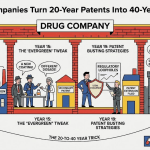
When critics call evergreening a distortion of the patent system, they are correct, but they are often imprecise about the mechanism. Evergreening is not one thing. It is a family of legal strategies, varying in legitimacy and effectiveness, all aimed at the same goal: extending the period during which a pharmaceutical company can charge supracompetitive prices for a drug. The strategies range from genuinely inventive improvements that happen to extend exclusivity, to the filing of marginal secondary patents whose primary commercial purpose is to create litigation fodder for 30-month stays against Paragraph IV challengers.
Understanding the taxonomy matters for IP teams constructing portfolio strategy and for analysts assessing the quality of a company’s reported “patent protection” for a given drug.
B. Technology Roadmap: Small-Molecule Evergreening Tactics
The following is a structured overview of the principal small-molecule lifecycle management strategies in commercial use, ordered roughly from highest to lowest success rates in surviving generic challenge.
Stage 1: Composition-of-Matter Patents. The foundational patent covers the active pharmaceutical ingredient (API) at the molecular level. This is the hardest patent to design around and the hardest for generic companies to challenge on invalidity grounds, because it covers the molecule itself, not a specific application of it. Composition-of-matter patents for genuinely novel chemical entities are strong. The challenge is that they expire first, and they are the ones for which the Hatch-Waxman Patent Term Extension applies.
Stage 2: Polymorph Patents. Most APIs exist in multiple solid-state forms, including crystalline polymorphs, amorphous forms, hydrates, and solvates. Different polymorphs can have different physical properties including solubility, dissolution rate, and bioavailability. Patents on specific polymorphs of an API are listable in the Orange Book if the approved drug product uses that polymorph. These patents are frequently challenged by generic companies either as anticipated by the prior art (the polymorph was known before the patent filing) or as obvious (generating multiple polymorphs of a known compound and selecting the most stable one is routine pharmaceutical science).
Stage 3: Salt Form Patents. A patent on a pharmaceutically acceptable salt of an active molecule, such as a hydrochloride or maleate salt, can extend exclusivity if the formulated drug uses that specific salt form. The validity risk is high. Salt selection is a standard part of pharmaceutical formulation development, and patent offices in Europe, the United States, and India have all been skeptical of salt patents that do not demonstrate meaningfully enhanced therapeutic performance relative to the parent compound.
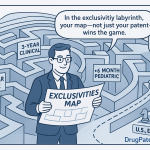
Stage 4: Formulation Patents. Patents on specific drug formulations, covering the combination of an API with particular excipients, coatings, binders, or release mechanisms, are commercially significant when they correspond to a clinically or pharmacokinetically meaningful improvement. Extended-release (ER) formulations are the most commercially successful example. Moving a twice-daily immediate-release product to a once-daily ER formulation genuinely reduces pill burden and can improve adherence. The patent on the ER formulation is listed in the Orange Book under the ER drug product, not the immediate-release version. If the innovator can migrate the patient population to the ER product before the IR compound goes generic, the revenue impact of the cliff is substantially reduced.
Stage 5: Method-of-Use Patents. Patents on specific indications for an approved drug, new patient populations, new dosing regimens, or new treatment combinations are listable in the Orange Book when they correspond to an FDA-approved indication. These patents can extend effective exclusivity for a specific use even after the compound itself has gone generic, though they create complex authorized generic and formulary management challenges.
Stage 6: Pediatric Exclusivity. Not a patent, but functionally equivalent. The Best Pharmaceuticals for Children Act allows companies that conduct qualifying pediatric studies of a drug, at FDA’s written request, to receive six additional months of exclusivity on all formulations of that drug. For a blockbuster with $3 billion in annual sales, six months of additional exclusivity is worth $1.5 billion in preserved revenue, at trivial cost. Almost every large company with a blockbuster nearing patent expiry has used this mechanism.
Stage 7: New Chemical Entity Exclusivity. Separately from patents, the FDA grants five years of data exclusivity to new chemical entities (NCEs) upon approval. During this period, the FDA will not accept ANDAs referencing the NCE, and generic companies are prohibited from filing Paragraph IV certifications until the last year of NCE exclusivity (when they can file, but approval cannot come until the exclusivity expires). This FDA-granted exclusivity runs in parallel to patent protection but provides an independent barrier to generic entry regardless of patent status.
C. Technology Roadmap: Biologic Lifecycle Management
Biologics present a fundamentally different lifecycle management challenge. The Biologics Price Competition and Innovation Act (BPCIA) created the 351(k) biosimilar pathway, analogous to the ANDA route for small molecules, but the patent and competitive dynamics are distinct.
Step 1: Reference Product Exclusivity. The BPCIA grants 12 years of reference product exclusivity to the first approved biologic using a given biological molecule. During the first four years, the FDA will not accept 351(k) applications. After four years, applications can be submitted, but biosimilars cannot be approved until the 12-year exclusivity expires. This 12-year period is independent of any patent coverage and is the baseline protection for every biologic, regardless of the patent portfolio built around it.
Step 2: The Patent Dance. The BPCIA mandates a structured multi-stage patent exchange process between innovators and biosimilar applicants. Within 60 days of filing a 351(k) application, the biosimilar applicant must provide the reference product sponsor with its application and manufacturing information. The sponsor then has 60 days to identify all patents it believes are infringed. The parties negotiate over which patents to litigate in the first wave (Bin 1 patents) and which remain in reserve (Bin 2 patents). This process typically results in a narrow initial litigation over the most critical composition-of-matter and manufacturing patents, with additional patents held in reserve for potential future litigation as the biosimilar enters the market.
Step 3: Manufacturing Process Patents. Biologic drugs are large, complex molecules produced by living cells under precisely controlled conditions. The manufacturing process is itself a source of molecular characteristics that affect the drug’s safety and efficacy profile. Patents on cell lines, fermentation conditions, purification processes, and formulation components are often granted, listed in the Purple Book, and included in the BPCIA patent dance. These patents create a barrier to biosimilar competition that has no analog in the small-molecule world, where a generic manufacturer can synthesize the API by multiple routes. A biosimilar manufacturer that uses a different cell line or a different purification process may produce a molecule with subtly different glycosylation patterns, which the FDA must evaluate for clinical significance.
Step 4: Biosimilar Interchangeability. Biosimilar interchangeability is a regulatory designation that allows pharmacists to substitute a biosimilar for the reference product without physician intervention, the same as generic substitution for small-molecule drugs. Achieving the interchangeability designation requires demonstrating, through switching studies, that alternating between the reference product and the biosimilar does not produce greater safety or efficacy risks than continued use of the reference product alone. Interchangeability is commercially critical for biosimilar uptake in pharmacy-dispensed products, but its value is more limited for hospital-administered biologics where physician preference drives the prescribing decision regardless of interchangeability status.
Step 5: The Humira Patent Thicket: A Case Study in Biologic IP Valuation
AbbVie’s adalimumab (Humira) holds the record for the most extensive patent portfolio in pharmaceutical history. By AbbVie’s own count, the portfolio included more than 250 patents covering the molecule, its manufacturing, its formulations, and its methods of use across more than a dozen indications. The composition-of-matter patent on adalimumab itself expired in 2016 in the United States. AbbVie’s subsequent patent thicket strategy delayed the entry of biosimilar competitors until January 2023, a seven-year extension of effective exclusivity beyond the primary composition-of-matter expiry.
During that seven-year window, Humira generated roughly $120 billion in revenue. The NPV of those cash flows, even heavily discounted, dwarfs the estimated cost of maintaining and litigating the secondary patent portfolio. This is the arithmetic that makes biologic evergreening economically rational at the scale of resources invested.
The AbbVie-Amgen settlement, in which Amgen’s adalimumab biosimilar (Amjevita) was licensed to enter the U.S. market in January 2023, with the settlement terms undisclosed but widely interpreted as including a royalty arrangement, set the template for how major biologic patent disputes resolve. Rather than litigating all 250 patents to final judgment, the parties reached a commercial settlement with defined market entry terms. The IP valuation embedded in this deal structure is the implicit capitalized value of AbbVie’s remaining patent runway, converted into a royalty stream owed by Amgen.
Step 6: Revlimid and the S-Curve Restriction Strategy
Bristol Myers Squibb’s lenalidomide (Revlimid) avoided standard patent thicket litigation through a different mechanism. Rather than building its protection on composition-of-matter patents, BMS defended Revlimid’s exclusivity through REMS (Risk Evaluation and Mitigation Strategy) distribution restrictions. Because lenalidomide is a thalidomide analog with severe teratogenicity risks, FDA requires all dispensing through a tightly controlled distribution program. The question of whether a generic company can conduct bioequivalence studies using a drug with REMS restrictions without triggering REMS liability became a legal battleground, with the FTC ultimately concluding in 2020 that BMS had illegally used the REMS program to delay generic entry.
The Revlimid case is instructive because it illustrates the outer boundary of acceptable lifecycle management. Using legitimate regulatory safety programs as de facto patent extensions crosses from IP strategy into what regulators classify as anticompetitive conduct.
D. The IP Valuation Implications of Patent Thicket Strategy
For IP valuation purposes, the relevant question about a company’s secondary patent portfolio is not how many patents it contains, but how many patent claims are likely to survive inter partes review (IPR) at the USPTO, and how many will defeat a Paragraph IV challenge in district court. Both are empirically answerable questions using historical success rates by patent type and claim category.
The USPTO’s Patent Trial and Appeal Board cancels approximately 60% of petitioned claims in IPR proceedings. District court outcomes on Paragraph IV challenges show innovators prevailing in roughly 40% of cases that reach final judgment. Applying those success rates to a company’s disclosed secondary patent portfolio gives a probability-weighted effective exclusivity extension, which is a more analytically rigorous number than simply reading the latest Orange Book expiry date.
Key Takeaways: Part III
Evergreening is a family of strategies, not a single tactic, ranging from genuinely inventive formulation improvements to marginal secondary patents filed primarily to trigger 30-month stays. Biologic lifecycle management is structurally harder to dismantle than small-molecule evergreening because manufacturing process complexity creates patent and regulatory barriers with no generic equivalent. The Humira patent thicket extracted roughly $120 billion in revenue during a seven-year post-primary-patent-expiry window. Revlimid’s REMS-based restriction strategy crossed into FTC-defined anticompetitive conduct, establishing a legal precedent for where lifecycle management ends and market abuse begins. IP valuation requires probability-weighting secondary patent portfolios by IPR cancellation rates and Paragraph IV litigation success rates, not simply reading the Orange Book expiry date.
Investment Strategy: Part III
For analysts modeling branded pharma NPVs, the correct effective exclusivity date is a probability-weighted average across the secondary patent portfolio, not the latest listed patent date. Applying a flat 60% IPR cancellation rate and a 40% innovator win rate in Paragraph IV litigation to each secondary patent cluster gives a defensible probabilistic effective exclusivity range. Companies whose branded asset NPVs depend on secondary patents with weak claim differentiation from prior art, particularly polymorph and salt form patents, carry higher patent cliff risk than their latest Orange Book dates imply.
Part IV: The Patent Cliff: Financial Mechanics and Market Structure
A. What Actually Happens When a Major Drug Goes Off-Patent
The term ‘patent cliff’ is vivid but slightly misleading. What happens to drug prices after patent expiry is not a uniform cliff. It is a variable slope whose steepness depends on the number of generic entrants, the speed of generic market entry, whether the innovator launches an authorized generic, and the formulary management decisions of pharmacy benefit managers and payers.
For a typical oral small-molecule drug with broad generic competition, the post-expiry price trajectory follows a well-documented pattern. The first generic entrant, during its 180-day first-filer exclusivity window, typically prices at 70% to 85% of the brand price, splitting the market with the authorized generic if one is launched. After the 180-day window, multiple additional generics enter, and prices compress rapidly to 10% to 20% of the original brand price within 12 to 18 months of multi-source competition. In high-volume categories, prices can fall below 10% of the original brand price as commodity manufacturing economics take over.
This is what a patent cliff looks like for omeprazole, atorvastatin, or metformin: rapid, deep, and predictable.
Biologics face a structurally different post-exclusivity dynamic. Biosimilar entry is slower, concentrated among fewer approved competitors (typically two to five for most biologics, compared to ten or more for blockbuster small molecules), and produces more modest price reductions. The price premium of reference biologics over biosimilar alternatives typically sits at 15% to 30% in hospital and clinic settings, compared to 80% to 90% price reductions for small molecules. Several factors drive this differential.
The regulatory and clinical validation cost for a biosimilar is roughly $100 million to $250 million, compared to $2 million to $10 million for a small-molecule ANDA. This higher entry cost limits the number of biosimilar applicants. Physician switching inertia in biologic-dosed products is real, as clinicians are cautious about switching stable patients between biologics even after interchangeability designation. Payer rebate structures that reward manufacturers for high list prices with large rebates to PBMs create perverse incentives that sometimes favor branded biologics over lower-list-price biosimilars. The Humira case made this dynamic explicit: AbbVie raised Humira’s list price by more than 60% after biosimilars entered the market, while simultaneously increasing rebates to PBMs, maintaining net price stability and formulary position.
B. The Patent Cliff as NPV Signal
For financial markets, patent cliff events are not surprises. They are priced in, to varying degrees, from the moment a drug’s exclusivity timeline becomes determinable. The market’s reaction to a patent cliff announcement depends primarily on three factors: the fraction of total company revenue at risk, the degree to which the cliff has already been reflected in consensus estimates, and the credibility of the company’s pipeline as a replacement revenue source.
A company deriving 80% of revenue from a single asset facing patent expiry in 18 months, with no pipeline stage 3 assets approaching approval, faces an existential NPV problem, not merely a revenue headache. This is the classic “patent cliff exposure” scenario that has driven emergency M&A transactions across the industry for decades: Bristol Myers Squibb’s acquisition of Celgene in 2019, AbbVie’s acquisition of Allergan in 2019, and Pfizer’s acquisition of Seagen in 2023 all had, as a partial rationale, the need to replace revenue streams from assets approaching exclusivity expiry.
C. Biosimilar Market Dynamics and the Delayed Cliff
The biosimilar cliff is shallower and arrives later than the small-molecule patent cliff. For the analyst community, this means that the NPV models for large-cap biologic franchises should reflect not just the primary patent expiry date but also the expected number of biosimilar entrants, the price erosion curve from each cohort of entrants, and the probability that biosimilar interchangeability designation will shift formulary dynamics.
The insulin market is the clearest case study in delayed biosimilar dynamics. Eli Lilly’s insulin lispro biosimilar of Humalog entered the U.S. market in 2019 at a 50% list price discount. Despite this, Humalog maintained significant market share for more than two years post-entry, partly because PBM formulary structures were built around the higher-list-price, higher-rebate original product. The insulin market was not an efficiency failure. It was a demonstration of how deeply embedded rebate structures can resist biosimilar penetration even after regulatory and commercial barriers to entry are removed.
Key Takeaways: Part IV
Small-molecule generic entry drives 80% to 90% price reductions; biosimilar entry typically produces 15% to 30% reductions, reflecting higher development costs, fewer entrants, and physician switching inertia. The patent cliff is predictable at the product level and is therefore priced into equity valuations well in advance, with the residual surprise coming from unexpected patent litigation outcomes or regulatory decisions. AbbVie’s post-biosimilar list price increases on Humira, funded by PBM rebate increases, illustrate that the biologic post-cliff market structure can temporarily resist the competitive dynamics that small-molecule investors expect. Insulin market dynamics post-biosimilar entry are the most complete real-world case study of the gap between list price competition and net price competition in biologic markets.
Investment Strategy: Part IV
Patent intelligence platforms that provide verified expiration dates, PTAB review filings, and Paragraph IV certification records are essential for constructing accurate patent cliff models. The key variables for a biologic cliff model are the number of approved biosimilar applicants, whether any have achieved interchangeability designation, the PBM formulary tier placement for each competitor, and the reference product sponsor’s rebate history. For small molecules, the 180-day first-filer expiry date, the number of ANDA approvals outstanding, and the authorized generic status of the innovator are the priority data points.
Part V: The Prize Model: Theory, Evidence, and Why It Remains Unproven at Scale
A. The Delinkage Argument, Precisely Stated
The prize model rests on one foundational economic claim: the patent system links the size of an innovator’s reward to the price of the final product, and this link is the root cause of both drug access failures and R&D misallocation. Delinkage is the proposal to cut that link by replacing the reward-via-monopoly mechanism with a reward-via-fixed-payment mechanism.
The mechanics are as follows. A public entity, whether a government, an international institution, or a philanthropic consortium, pre-commits to paying a defined monetary prize to any innovator that develops a drug meeting specified therapeutic criteria. The criteria can be defined by clinical endpoints (a vaccine with at least 80% efficacy against a specified pathogen), health system metrics (number of QALYs generated per treated patient), or technical specifications (a rapid diagnostic test achieving defined sensitivity and specificity thresholds). Upon meeting the criteria and receiving regulatory approval, the innovator collects the prize and surrenders any IP claims to the drug or its underlying technology. The formula, manufacturing process, and clinical data enter the public domain. Any qualified manufacturer can produce the drug, and market competition drives the price toward marginal production cost.
The appeal of this model to health economists is structural. In a well-designed prize system, the innovator’s incentive to invest in R&D is proportional to the prize size, which the prize-setter calibrates to the drug’s estimated social value, not to the drug’s commercial market potential. A disease affecting 400 million people in low-income countries, currently offering near-zero commercial return, can be given a prize sized to its social value and thereby attract private R&D investment that the market alone would never generate.
Nobel laureate Joseph Stiglitz has advocated strongly for this model, arguing that the pharmaceutical patent system generates a double distortion: it creates deadweight loss through monopoly pricing while simultaneously directing R&D toward commercially attractive diseases rather than socially important ones. The prize model, in his framing, eliminates both distortions simultaneously.
B. The Valuation Problem: Why Prize-Setting Is Harder Than It Looks
The fatal practical difficulty of the prize model is not conceptual. It is informational. How does a prize-setting authority determine what a new drug is worth before it is widely used?
The patent system delegates this valuation problem to the decentralized market. Individual payers, PBMs, insurance companies, national health systems, and patients make purchasing decisions that aggregate into a market price. This price is imperfect, it is a monopoly price, not a social value price, and it excludes consumer surplus, but it is a real market signal reflecting actual willingness-to-pay by agents with skin in the game.
A prize committee must estimate this value administratively, before market launch, under conditions of profound uncertainty about long-term efficacy, the size of the treatable population, the drug’s displacement of existing treatments, and the emergence of competing therapies. The principal analytical tools available are: QALY-based health technology assessments (the methodology used by NICE in the United Kingdom), cost-effectiveness modeling relative to standard of care, and epidemiological projections of disease burden. Each of these methods is useful. None of them produces a number with the informational quality of a market-validated revenue stream.
The most honest way to state the valuation problem: a prize committee asked to price the social value of a new Alzheimer’s drug in 2024 would need to project the number of patients who would benefit over the next 30 years, the QALY gains relative to current standard of care (which includes the recently approved anti-amyloid agents lecanemab and donanemab, whose own value remains contested), the probability that superior treatments will emerge within the prize’s payback horizon, and the appropriate social discount rate for future health gains. Getting any one of these parameters wrong by a meaningful margin produces a prize that either fails to incentivize investment or wastes public funds on overpayment.
C. The Funding Mathematics
Senator Bernie Sanders’ Medical Innovation Prize Fund, the most specific U.S. legislative proposal in recent years, called for an annual prize fund equal to 0.55% of U.S. GDP, which equated to roughly $80 billion annually at the time of the proposal. That figure was intended to approximate the annual private R&D investment that the fund would partially replace. Current global private pharmaceutical R&D expenditure is approximately $269 billion annually. A prize fund sized to replace this investment would require an annual public commitment of that order of magnitude, sustained indefinitely.
For comparison, the entire NIH budget in fiscal year 2024 was approximately $47 billion. The total discretionary health spending across the U.S. federal government is roughly $100 billion annually. A prize fund sized to replace private pharmaceutical R&D at current scale would require a new, permanent appropriation roughly equal to the current NIH budget times five. The political feasibility of that commitment, in any country or international consortium, is, at minimum, untested.
This is not a decisive argument against the prize model. It is a sizing argument. If the question is “should we use prize mechanisms to address specific, well-defined market failures where the prize can be sized to the specific problem,” the answer is yes, and the evidence supports it. If the question is “should we replace the patent system entirely with a prize fund,” the funding math alone suggests the answer is not viable without a level of sustained international political commitment that has never been achieved for any public health objective.
D. The Historical Track Record: The Khan Analysis
Economic historian B. Zorina Khan’s comprehensive review of historical prize systems in 18th- and 19th-century Britain, France, and the United States reached a conclusion that prize advocates tend to minimize: administered prize systems were consistently outperformed by the patent system as an innovation mechanism, and they fell out of favor precisely because of observed failures in governance, pricing, and incentive alignment.
Historical prizes suffered from several systematic pathologies. Prize judges applied arbitrary and inconsistent criteria. Awards were subject to personal favoritism and what would today be characterized as regulatory capture. Prizes were frequently set too low to incentivize genuinely difficult innovations, creating a selection effect where only low-hanging fruit attracted prize-seeking R&D. The Longitude Prize itself, probably the most famous historical prize in science, took 43 years to pay out and required an Act of Parliament to force the award after the judging commission stonewalled the actual winner. It is an imperfect advertisement for the administrative prize mechanism.
None of this is fatal to modern prize proposals. Modern institutions are more capable of disciplined, transparent administration than 18th-century prize boards. The Longitude Prize for AMR, completed in 2024, ran for a decade under a structured judging process and reached a defensible winner. But the historical record does establish that the prize model is not a simple fix to a broken patent system. It trades one set of distortions for a different set, and the historical evidence suggests those distortions are real and recurring.
E. The ITIF Critique: Delinkage Debunked, or at Least Complicated
The Information Technology and Innovation Foundation published a thorough critique of the delinkage model in 2020, arguing that the theoretical case for replacing patents with prizes depends on assumptions that do not hold in practice. The ITIF critique makes several specific points worth engaging directly.
First, the prize model assumes that prize-setters can accurately determine socially optimal R&D investment levels in advance. The ITIF argues that this is not a technical problem with a technical solution. It is a fundamentally political problem. Once a prize fund exists, it becomes a lobbying target. Disease advocacy groups, pharma companies, and academic researchers will all compete to have their preferred therapeutic areas designated as prize targets. The resulting prize portfolio will reflect political economy, not social value optimization.
Second, the prize model assumes that public R&D funding can replace private R&D with comparable efficiency. The ITIF argues that private pharmaceutical R&D carries speed, risk tolerance, and commercial acumen that government-funded R&D has historically struggled to replicate at scale. Operation Warp Speed, which used public funding and advance purchase commitments to accelerate COVID-19 vaccine development, is often cited as a counterexample, and it is a genuinely powerful one. But Warp Speed worked by contracting with private companies that had proprietary platform technologies, not by replacing private R&D with government-run science. The hybrid model of public funding plus private execution is not the same as a pure prize model.
Key Takeaways: Part V
The prize model is economically coherent but practically demanding. It requires solving a valuation problem that is genuinely hard, a funding problem that requires sustained political commitment at unprecedented scale, and a governance problem that the historical record shows is susceptible to administrative failure and political capture. The delinkage mechanism works at the theoretical level: severing price from R&D reward would, in principle, eliminate deadweight loss and redirect innovation toward unmet needs. The practical question is whether prize-setting authorities can determine social value with sufficient accuracy to set prizes that actually incentivize the right R&D without either undershooting (failing to induce investment) or overshooting (overpaying for innovation that would have occurred anyway). Neither the historical track record nor the current institutional landscape offers strong grounds for confidence that this problem is solved.
Part VI: Head-to-Head: The Full Comparative Framework
Comparative Analysis of Patents vs. Prizes as Innovation Drivers
Dimension
Patent System
Prize System
Incentive Mechanism
Market-driven; reward is proportional to commercial success and realized over years
Goal-driven; reward is a fixed, predetermined sum paid upon meeting defined criteria
Innovator Risk Profile
Full financial risk; no guarantee of market success or profitability after $1.4B+ in R&D
Reduced financial risk; prize is guaranteed upon technical success, but technical success itself is uncertain
Funder Risk Profile
Low direct financial risk; cost borne by patients and payers through monopoly pricing
High direct financial risk; government or foundation must commit and disburse massive prize funds upfront
Innovation Type Encouraged
Both breakthrough and incremental ‘me-too’ drugs; market size determines investment rationale
Targeted breakthroughs on pre-specified problems; no reward for unspecified innovation
R&D Direction
Market-driven; skews toward diseases with large, affluent, paying patient populations
Policy-driven; can target neglected diseases, antimicrobial resistance, or other market failures
Valuation Mechanism
Decentralized; market signals aggregate to determine drug value through actual purchasing behavior
Centralized; government or prize committee must estimate social value administratively before launch
Access and Affordability
Poor during exclusivity; monopoly pricing creates access barriers, particularly in LMICs
Excellent from day one; marginal cost pricing with immediate generic competition after prize award
Knowledge Sharing
Discourages sharing; trade secrets and proprietary data are competitive assets
Can mandate sharing; open-science requirements can be built into prize eligibility criteria
Global Equity
Structurally inequitable; innovation value accrues to high-income country patients able to pay monopoly prices
Potentially equitable; prize can be designed to solve global health problems with universal access to results
Incentive for Post-Approval Work
Continuous; patent-protected revenue funds manufacturing scale-up, pharmacovigilance, and indication expansion
Uncertain; prize is paid upon approval, but subsequent work on manufacturing, distribution, and physician education may lack financial incentive
Risk of Government Failure
Low; government is not responsible for R&D allocation decisions
High; prize-setting is subject to political capture, incorrect social value estimation, and systematic underpricing or overpricing
Implementation Complexity
Low; system is embedded in global legal infrastructure via TRIPS and bilateral trade agreements
Very high; requires new institutions, sustained appropriations, valuation methodologies, and governance frameworks at international scale
Evidence Base for Effectiveness
Strong historical evidence of producing commercially viable drugs at scale; weak evidence of producing drugs for unmet needs
Limited evidence at full scale; strong evidence for targeted market-shaping applications (AMCs, diagnostic prizes) in defined problem areas
The Central Informational Trade-Off
Both systems are ultimately trying to solve the same information problem: how to determine the social value of a new information good (a drug) under conditions where that value is uncertain, the innovator has private information that others lack, and the costs of production are divorced from the costs of creation.
The patent system delegates this valuation to the market. The market’s signal is monopoly profit, which is a genuinely noisy proxy for social value. It captures what paying customers will give up to access the drug, but not the consumer surplus of patients who would benefit but cannot afford the monopoly price. It over-weights the health needs of affluent patients and under-weights the health needs of the poor, because their willingness-to-pay reflects purchasing power, not medical need.
The prize system brings valuation in-house. It gives this information problem to an administrative body that lacks the distributed knowledge advantages of the market and that operates in a political environment with systematic incentives to distort the valuation. This is not a dismissal of the prize model. It is a description of what both systems are actually doing and why neither solves the information problem cleanly.
The practical implication is that the most defensible hybrid approaches use the market to generate value signals and then use prize-like mechanisms to correct for the specific, well-documented failures of those market signals.
Key Takeaways: Part VI
Neither system is superior on all dimensions. The patent system is an effective but inequitable commercial engine. The prize model is an access-friendly but governance-intensive alternative. The choice is not which system is better in the abstract, but which combination of mechanisms best addresses the specific market failures in a given therapeutic area, at a given stage of the innovation pipeline, for a given patient population.
Part VII: Hybrid Models, Pull Mechanisms, and What the Evidence Actually Shows
A. Advance Market Commitments: The Pneumococcal Case Study
The $1.5 billion pneumococcal vaccine Advance Market Commitment, launched in 2009 by Gavi, the Bill & Melinda Gates Foundation, and bilateral donors, remains the most rigorously studied pull mechanism in pharmaceutical policy. The AMC did not commission new vaccine development. It provided a binding guarantee to purchase pneumococcal conjugate vaccines at an initial “top-up” price above what LMICs could otherwise afford, in exchange for a long-term commitment from manufacturers to supply the vaccine at a sustainable low price after the AMC funds were exhausted.
The quantified results are as follows: more than 150 million children immunized, an estimated 700,000 lives saved, and accelerated introduction timelines in recipient countries compared to historical norms for new vaccine rollout. Two manufacturers, GSK with Synflorix and Pfizer with Prevnar 13, committed manufacturing capacity to the AMC market within years of the program launch.
MSF’s critique of the AMC, published in 2010 and updated through 2020, focuses on price and competition design. MSF argued that the top-up price guaranteed to innovator manufacturers was set too high, representing an excessive transfer of public funds to firms that might have entered the market at lower prices, and that the AMC design did not adequately incentivize entry from emerging-market manufacturers who might have produced the vaccine at lower costs. These are legitimate design criticisms, not refutations of the AMC concept. They say that the pneumococcal AMC could have been structured to transfer less rent to large-cap pharma, not that AMCs do not work.
The lessons for future AMC design are specific: the tail price, the sustainable price that manufacturers must commit to post-AMC, should be set via competitive tendering where possible; the initial top-up price should be calculated against multiple manufacturer cost-of-goods estimates, not just the two incumbents; and the AMC should include provisions for technology transfer to eligible LMIC manufacturers to develop the competitive manufacturing base that reduces long-term dependence on high-income-country innovators.
B. The Longitude Prize for AMR: Diagnostic Innovation as Market Creation
The Longitude Prize on Antimicrobial Resistance was not a drug prize. It was a diagnostic prize, targeting a specific technical bottleneck in the antibiotic stewardship system rather than directly funding new antibiotic development. This distinction is strategically important.
The rationale is as follows: new antibiotics are commercially unattractive because the optimal use policy for a novel last-resort antibiotic is aggressive conservation, minimizing sales to preserve efficacy. This creates what economists call a revenue-stewardship mismatch: the private return to developing a new antibiotic is inversely correlated with the appropriate public health use of that antibiotic. The prize correctly identified that this mismatch could be partially addressed by investing in point-of-care diagnostics that enable rational, targeted antibiotic prescribing. If a physician can determine in 45 minutes whether a patient’s infection is bacterial, which specific bacterium is responsible, and which antibiotic is active against that bacterium, the clinical case for conservation of broad-spectrum last-resort agents is much stronger.
Sysmex Astrego’s PA-100 AST System, the June 2024 prize winner, uses microfluidic technology to process a urine sample in a smartphone-sized cartridge, returning a bacterial identification and antibiotic susceptibility profile in 45 minutes. The competitive benchmark is traditional laboratory agar dilution culture, which requires 48 to 72 hours and access to a clinical microbiology facility. In primary care settings in LMICs, that facility is often unavailable.
The IP valuation implications are interesting. Sysmex Astrego, by winning the £8 million prize, presumably surrendered IP exclusivity over at least the prize-winning device configuration, though the precise terms of the IP transfer were not publicly disclosed. The commercial opportunity for the company in the point-of-care diagnostics market, which does not depend on antibiotic stewardship subsidies, may be substantial regardless of any IP sharing requirements. Diagnostics markets are driven by device cost, reagent pricing, and distribution partnerships with hospital procurement systems and primary care networks.
The broader AMR innovation ecosystem is moving toward hybrid models combining the PASTEUR Act (Pull Anti-microbial Special Subscriptions to End Unyielding Resistance Act, proposed but not yet enacted in the United States), which would create subscription-based pull payments for approved last-resort antibiotics, with AMR Action Fund push grants to reduce early-stage development costs, and prize mechanisms for diagnostic innovation of the Longitude Prize type. No single mechanism addresses all the barriers simultaneously.
C. BARDA and the Push Mechanism Model
The Biomedical Advanced Research and Development Authority (BARDA) operates at the push end of the spectrum: it provides direct federal funding for the development of medical countermeasures against biological, chemical, nuclear, and radiological threats, including pandemic pathogens and antimicrobial-resistant bacteria. BARDA does not replace patent-backed commercial incentives. It funds early-stage development in areas where commercial incentives are structurally insufficient, with the expectation that the resulting products will eventually have commercial markets supplemented by government procurement.
BARDA’s pandemic preparedness work, including its role in Operation Warp Speed (OWS) for COVID-19 vaccine development, demonstrated that government funding combined with large advance purchase commitments can accelerate vaccine development timelines from historical multi-year baselines to less than one year for mRNA platforms. OWS spent approximately $18 billion in public funds, generating COVID-19 vaccines that the Congressional Budget Office estimated saved 3.2 million American lives in the first year of deployment.
The IP structure of OWS-funded products was not a pure prize model. Pfizer/BioNTech, Moderna, and J&J all retained their IP. The government’s leverage was the size of the advance purchase commitment, not a requirement for IP surrender. Moderna’s mRNA-1273 vaccine was developed using NIH-co-invented spike protein technology, and the NIH asserted co-inventor status over the foundational antigen design. The resulting IP dispute between NIH and Moderna over royalty sharing illustrates the complexity of IP ownership in publicly co-funded innovation, and it is a template for how future hybrid push-pull mechanisms will need to address IP allocation explicitly.
Key Takeaways: Part VII
AMCs are most effective as market-shaping and access-acceleration mechanisms for late-stage or existing technologies, not as stimulants for early-stage blue-sky R&D. Their design parameters, particularly the tail price and competition provisions, materially affect cost-effectiveness and should be set via competitive analysis rather than bilateral negotiation with incumbent manufacturers. The Longitude Prize for AMR is a case study in targeting prizes at technical bottlenecks that create downstream market failures, not just at end products. BARDA’s push funding, combined with advance purchase commitments, produced the most compressed vaccine development timeline in history during OWS, demonstrating that hybrid push-pull models outperform either pure mechanism in pandemic preparedness contexts. IP ownership in publicly co-funded innovation needs explicit contractual governance, as the NIH-Moderna dispute over mRNA-1273 makes clear.
Investment Strategy: Part VII
For investors assessing companies that benefit from BARDA, OWS-type, or AMC-type contracts, the key valuation question is: what portion of the company’s revenue from these programs reflects permanent government procurement commitments, and what portion is one-time emergency spending that will not recur? mRNA platform companies (Moderna, BioNTech) are the most prominent example of firms whose revenue durability depends on their ability to convert pandemic-era platform validation into a sustainable commercial pipeline of non-COVID products. The IP position on underlying platform technologies, including the NIH co-inventor dispute, directly affects royalty structures and barriers to platform licensing.
Part VIII: The IRA and the Structural Reordering of Drug Innovation Incentives
A. What the Inflation Reduction Act Actually Does to Drug NPVs
The Inflation Reduction Act of 2022 contains three provisions with direct consequences for pharmaceutical IP valuation and R&D investment strategy.
First, the Medicare Drug Price Negotiation Program authorizes the Secretary of Health and Human Services to negotiate prices for high-expenditure drugs that lack generic or biosimilar competition and have been approved for a defined number of years: nine years for small molecules, thirteen years for biologics. The negotiated price (called the Maximum Fair Price, or MFP) applies to Medicare Part D drug spending beginning in 2026 for the first ten drugs selected, expanding to a larger universe of drugs in subsequent years.
Second, the Inflation Rebate provision requires drug manufacturers to pay rebates to Medicare if they raise the list prices of their drugs faster than the Consumer Price Index (CPI). This does not directly cap prices but removes a source of incremental revenue growth from annual list price inflation, which has been a consistent contributor to branded pharma revenue even on mature, post-launch products.
Third, the redesign of Medicare Part D cost-sharing, including a $2,000 annual out-of-pocket cap on drug spending, shifts catastrophic claim costs from beneficiaries to drug manufacturers and insurers, altering net price dynamics for high-cost specialty drugs.
The NPV implications of the negotiation program are asymmetric by molecule type. A small molecule reaching year nine of its commercial life with no generic competition will become eligible for MFP negotiation, capping its remaining revenue potential at the MFP level rather than the unrestricted market price. The MFP is expected to be substantially below current Medicare list prices for the initial set of drugs: early analysis projects 40% to 60% reductions for the first cohort selected. For drugs with substantial Medicare sales volumes, this repricing of the years-nine-and-later revenue stream significantly reduces the long-tail NPV of small-molecule assets.
For biologics, the 13-year negotiation clock gives four additional years of unconstrained revenue relative to small molecules, assuming the primary biologic reference product exclusivity expires within that window. This creates a structural differential in the NPV treatment of biologic versus small-molecule assets under IRA, which pharmaceutical companies and their analysts are already translating into portfolio strategy.
B. How the IRA Changes R&D Portfolio Strategy
The most direct portfolio consequence of the IRA’s asymmetric treatment of small molecules and biologics is a further shift in R&D investment toward biologics. This trend predated the IRA, driven by the biologic price premium over small molecules and by scientific advances in antibody engineering, bispecifics, and cell and gene therapies. The IRA accelerates it by extending the period during which biologic revenue is unconstrained by government price-setting.
Beyond the small molecule/biologic differential, the IRA creates a second structural incentive: early approval for chronic disease drugs now has a lower long-tail NPV than before, because the negotiation clock starts running from first approval. A drug approved for a large chronic disease indication in year one will be negotiation-eligible in year nine or thirteen, before the full commercial potential of the franchise has been extracted. Companies may respond by prioritizing assets in therapeutic areas where the treated population is smaller (limiting Medicare expenditure eligibility for negotiation selection), where the patent estate is more durable against generic or biosimilar challenge, or where orphan drug designation provides a seven-year market exclusivity separate from patent protection.
The Congressional Budget Office’s analysis of the IRA projects a reduction of approximately 15 new drug approvals over 30 years relative to the counterfactual without the IRA. Industry-funded analyses project larger reductions. Academic economists studying the relationship between expected revenue and R&D investment project reductions in the range of 1% to 5% of new drug approvals per 10% reduction in expected revenue. The magnitude is genuinely uncertain. The direction, fewer drugs at the margin, is not.
Key Takeaways: Part VIII
The IRA’s Maximum Fair Price negotiation program caps the long-tail revenue potential of small molecules after year nine and biologics after year thirteen of commercial life. The NPV impact is concentrated in the years nine-to-patent-expiry window for small molecules, which represents a meaningful but not devastating share of total product NPV for most assets. The biologic/small-molecule differential in negotiation eligibility creates a structural portfolio incentive to favor biologic development. Orphan designation, which provides seven-year market exclusivity and exempts drugs from IRA negotiation eligibility for their orphan indication, has become a more valuable regulatory pathway than it was pre-IRA, creating a new incentive to pursue narrow-indication approvals even for drugs with potential broader use.
Investment Strategy: Part VIII
For analysts building pharmaceutical company models incorporating IRA impact, the key variables are: the Medicare share of revenue for each major asset (drugs with low Medicare penetration are minimally affected by MFP), the expected year of eligibility for MFP negotiation relative to the patent expiry date (if negotiation eligibility arrives after patent expiry, the IRA provision is irrelevant for that asset), and the biologic/small-molecule classification of each major pipeline asset. Companies with heavy small-molecule portfolios concentrated in high-Medicare-spending therapeutic areas such as diabetes, cardiovascular disease, and rheumatology carry the greatest IRA-driven NPV headwind.
Part IX: The Biosimilar Battlefield: Interchangeability, Market Access, and IP Valuation
A. The 351(k) Pathway and the Three Tiers of Biosimilar Status
The BPCIA created a tiered regulatory framework for biosimilar products. A 351(k) application can achieve one of two regulatory designations: biosimilar, meaning the product is highly similar to the reference biologic with no clinically meaningful differences in safety, purity, and potency; or interchangeable, a higher standard that also requires demonstration that the biosimilar can be expected to produce the same clinical result in any given patient and that switching between the reference and the biosimilar does not increase safety or efficacy risk relative to continued use of either product alone.
The interchangeability designation matters commercially because it determines pharmacy substitution rights. In states that have adopted pharmacy substitution laws for biologics (the majority as of 2024), an interchangeable biosimilar can be substituted for the reference product at the pharmacy counter without the prescribing physician’s active consent, the same as a generic substitution for small molecules. A biosimilar without interchangeability designation requires physician authorization before a pharmacist can substitute.
For pharmacy-dispensed biologics, adalimumab subcutaneous being the highest-profile example, interchangeability designation is the key to capturing the substitution-driven market share that drives volume for small-molecule generics. For hospital-administered biologics, including most oncology monoclonal antibodies, interchangeability matters less because substitution decisions are made at the formulary committee level, not the pharmacy counter level.
B. The Biosimilar Interchangeability Landscape
As of early 2026, the FDA has approved interchangeability designations for several adalimumab biosimilars, including Cyltezo (adalimumab-adbm, Boehringer Ingelheim), Hadlima (adalimumab-bwwd, Samsung Bioepis/Organon), and Hyrimoz (adalimumab-adaz, Sandoz). The commercial uptake of adalimumab biosimilars has been closely watched as the bellwether case for U.S. biologic market dynamics post-patent-expiry.
The result has been mixed. Biosimilar adalimumab captured approximately 25% of total adalimumab prescriptions by mid-2024, substantially below what generic penetration achieves for small molecules in the same timeframe. The constraints are multiple: PBM rebate structures that create formulary incentives favoring the branded reference product at higher list prices; patient assistance programs that subsidize Humira for commercially insured patients who would otherwise face biosimilar-favoring formulary cost-sharing; and physician inertia in switching stable patients on immunosuppressant therapy.
The lesson for IP valuation of reference biologics is that interchangeability designation by itself does not guarantee the rapid market share erosion that small-molecule patent expiry produces. Post-exclusivity biologic revenue durability depends critically on PBM contract terms, patient assistance program design, and formulary committee relationships that are not captured in patent data alone.
Key Takeaways: Part IX
Biosimilar interchangeability designation is the critical regulatory threshold for pharmacy substitution in biologics, but it is a necessary, not a sufficient, condition for achieving small-molecule-comparable market share erosion of reference products. PBM rebate structures and patient assistance programs create commercial barriers to biosimilar penetration that persist even after regulatory and IP barriers are removed. Adalimumab biosimilar market dynamics, with approximately 25% biosimilar penetration 18 months post-entry, establish a realistic base case for other major biologic franchises approaching their BPCIA exclusivity cliffs.
Part X: Neglected Diseases, AMR, and the Market Failure Problem
A. The AMR Market Failure, Precisely Stated
Antimicrobial resistance is not a standard pharmaceutical market failure where the commercial opportunity exists but is simply too small. It is a structurally inverted incentive problem. The greater a new antibiotic’s clinical value as a last-resort agent, the more rigidly stewardship guidelines will restrict its use, and therefore the lower its sales volume. The most effective novel antibiotic against carbapenem-resistant Klebsiella pneumoniae is precisely the antibiotic that public health authorities most want to use as rarely as possible.
This inversion means that the patent system’s standard reward mechanism, proportional to commercial sales, actively rewards the wrong behavior: a new antibiotic developer wants high-volume prescribing, while public health policy requires low-volume prescribing. The result is a pipeline with approximately 40 antibiotics in clinical development globally as of 2024, fewer than at any point in the last 50 years, and most of those in clinical development are near-analogs of existing classes rather than mechanistically novel agents.
The economic literature on optimal antibiotic incentives has converged on a subscription payment model as the most theoretically sound mechanism. Under a subscription model, a government pays an annual fee for the right to access a novel antibiotic, regardless of how many doses are actually used. This decouples revenue from prescribing volume, allowing the drug to be conserved as a last resort while still generating enough revenue to justify its development cost. The PASTEUR Act, introduced in multiple congressional sessions though not yet enacted, would create exactly this mechanism within the U.S. Medicare and Medicaid system. The UK launched a subscription payment pilot for two antibiotics, cefiderocol (Shionogi) and ceftazidime-avibactam (Pfizer/AstraZeneca), in 2022, paying fixed annual fees independent of volume.
B. Neglected Tropical Diseases and the Population Payment Problem
The term ‘neglected tropical diseases’ covers a group of 20 infectious diseases identified by the WHO as chronically underfunded relative to their global disease burden. Chagas disease, leishmaniasis, sleeping sickness, schistosomiasis, and lymphatic filariasis are the most consequential by DALY impact. Combined, they affect more than one billion people, predominantly in LMICs with limited purchasing power.
The patent system’s response to neglected diseases has been near-silence for most of their history. Between 1975 and 2004, only 1.1% of newly approved drugs were indicated for neglected diseases, despite these diseases accounting for approximately 12% of global disease burden. The Drugs for Neglected Diseases Initiative (DNDi), established in 2003, operates as a product development partnership using a mix of public funding, philanthropic grants, and in-kind contributions from academic and industry partners to develop treatments for neglected diseases outside the commercial patent model. DNDi’s cost per approved new treatment is estimated at $100 million to $200 million, well below the commercial average, reflecting the absence of marketing expenditure, the use of open-access scientific collaborations, and the focus on diseases where academic understanding of the biology is often further advanced than commercial investment.
Prize mechanisms have a theoretical advantage in neglected disease contexts: they can be sized to the disease burden and public health value rather than the commercial market, directly addressing the market-size failure that the patent system cannot solve. The practical challenge is that the affected governments, who have both the medical need and the moral claim for prize funding, typically lack the fiscal capacity to fund meaningful prizes. The prize-setters must be high-income country governments or international institutions, whose political constituencies have limited direct stake in the disease outcomes.
Key Takeaways: Part X
AMR represents an inverted patent incentive problem where the drug with the greatest public health value has the lowest commercial value, because stewardship requires restricting its use. Subscription payment models that decouple antibiotic revenue from prescribing volume are the most theoretically sound solution and are already in pilot at the UK level. Neglected tropical diseases illustrate the structural mismatch between disease burden and commercial market size, which the patent system cannot address without supplementary mechanisms. DNDi’s open-collaboration model, operating outside the standard commercial patent framework, demonstrates that development costs for neglected disease drugs can be reduced to the $100 million to $200 million range when marketing costs are eliminated and academic partnerships provide foundational science.
Part XI: Strategic Patent Intelligence as Competitive Infrastructure
A. What Patent Data Actually Tells You
For most pharmaceutical companies, patent data exists in multiple silos: the legal department tracks USPTO filings and prosecution, the BD team monitors competitor pipelines through conference abstracts and FDA submissions, and the commercial team tracks revenue per product without a systematic view of the IP runway supporting that revenue. The integration failure is common and costly.
Comprehensive patent intelligence, combining Orange Book and Purple Book listings, ANDA filing dates and Paragraph IV certification records, USPTO grant and rejection data, PTAB inter partes review filings, and district court patent litigation outcomes, provides a continuous, integrated view of both the offensive and defensive IP landscape for any therapeutic area.
For generic manufacturers, the critical data points for portfolio selection are: the primary composition-of-matter patent expiry (with PTE), the secondary patent cluster and its estimated litigation vulnerability, the number of existing Paragraph IV filers and their filing dates, the first-filer’s 180-day exclusivity window (which defines the peak revenue opportunity), and any pending PTAB IPR petitions that could accelerate or collapse the exclusivity timeline. Platforms aggregating all of these data streams in real time are operationally essential for any generic company running a competitive first-to-file Paragraph IV strategy.
For innovator companies, the equivalent intelligence need is defensive: tracking Paragraph IV certifications against their own patents, monitoring competitor Paragraph IV filings in adjacent therapeutic areas that might produce a first-to-market generic in a category where the innovator has an authorized generic strategy, and identifying patent thicket gaps in their own portfolios where generic challengers might argue non-infringement.
The Orange Book is public. ANDA filing records are partially public through FDA disclosure databases. PTAB filing records are fully public. PACER district court records are public. The challenge is not access to individual data points but integration, quality control, and analytical interpretation of a massive, continuously updating dataset. This is precisely the problem that purpose-built pharmaceutical patent intelligence platforms are designed to solve.
B. The Role of Patent Expiry Data in Supply Chain Strategy
Drug buyers, hospital group purchasing organizations, pharmacy benefit managers, and wholesale distributors all face a specific commercial challenge at patent expiry events: transitioning from branded product procurement contracts to generic supplier relationships quickly and cleanly, without either overstocking expensive branded inventory that will shortly lose pricing power or understocking and facing supply gaps during the generic market development period.
Accurate patent expiry forecasting is therefore a supply chain optimization input, not just an IP strategy tool. The difference between transitioning to generic procurement three months before patent expiry versus three months after has direct cost implications for any high-volume drug buyer. For a hospital system purchasing $50 million per year of a branded drug priced at $200 per unit, moving to a generic at $20 per unit requires identifying qualified generic API suppliers, executing purchasing contracts, and managing the formulary transition before that option is available. Patent expiry timelines, supplemented by ANDA approval tracking and authorized generic launch monitoring, allow procurement teams to plan these transitions in advance rather than reacting to them.
Key Takeaways: Part XI
Patent intelligence is not just a legal function. It is a commercial strategy input for generic manufacturers, a portfolio valuation tool for investors, a supply chain optimization resource for drug buyers, and a defensive competitive intelligence function for innovator companies. The value of patent data lies in integration: Orange Book listings, ANDA records, PTAB filings, and district court outcomes must be tracked as a unified dataset to produce actionable intelligence rather than isolated data points.
Part XII: The Future Architecture of Pharmaceutical Innovation Incentives
A. AI, Machine Learning, and the Changing Cost Curve of R&D
AI-assisted drug discovery has moved from a research curiosity to a commercial reality. As of 2024, more than 50 drugs designed with significant AI input are in clinical trials. Insilico Medicine’s INS018_055 (a first-in-class TRAF2- and NCK-interacting kinase inhibitor for idiopathic pulmonary fibrosis) entered Phase II trials having been identified and optimized using AI-driven target identification and molecular generation tools. Recursion Pharmaceuticals operates a fully integrated AI-biology discovery platform that has generated over 100 programs from target identification to IND. Alphabet’s Isomorphic Labs, spun out from DeepMind after the AlphaFold2 protein structure prediction breakthrough, has signed discovery collaboration agreements with Eli Lilly and Novartis valued at up to $3 billion.
The cost implications of AI-driven discovery are real but still emerging. McKinsey’s analysis of AI-assisted discovery projects estimates a 30% to 50% reduction in preclinical development time and cost, which would translate to a meaningful reduction in the total out-of-pocket R&D cost per approved drug. Whether this cost reduction will eventually challenge the economic rationale for long-duration patent monopolies depends on how large the reduction ultimately becomes and how widely the tools are distributed.
If AI tools are proprietary to well-resourced large-cap companies, the cost savings will be captured as margin improvement rather than redistributed as price reduction, and the innovation incentive argument for strong patent protection will remain intact. If AI tools become widely available, including through open-source platforms such as ESMFold, OpenFold, and ChemBERTa, the cost of drug discovery will fall for all participants, potentially enabling prize-funded models to become more feasible at smaller prize sizes.
B. The Mosaic Incentive Landscape: What the Next Decade Looks Like
The practical policy trajectory for pharmaceutical innovation incentives over the next decade is not a binary switch between the patent system and the prize model. It is an accumulation of targeted policy instruments layered on top of a reformed patent system.
The baseline patent system will persist as the primary incentive mechanism for commercially viable innovation. TRIPS makes wholesale replacement politically infeasible at the international level, and no major pharmaceutical market has the institutional capacity to administer a full prize-fund replacement for private R&D at the necessary scale. What will change is the margin: stricter standards for secondary patent patentability, more aggressive use of inter partes review to challenge weak patent thickets, and IRA-style reference pricing in Medicare that truncates long-tail revenue on mature branded products.
Layered on top of this reformed patent baseline: subscription payment models for novel antibiotics, expanding the UK pilot to other high-income countries or through coordinated G7 action; AMC extensions for vaccines and biologics in LMIC markets, using the pneumococcal AMC design improvements identified by post-hoc evaluations; prize mechanisms for specific technical bottlenecks in neglected disease and AMR diagnostics, building on the Longitude Prize model; and BARDA-style push funding for pandemic preparedness countermeasures, using advance purchase commitments rather than prize-and-IP-surrender mechanisms.
This is a messy, heterogeneous, institution-intensive policy landscape. It does not have the theoretical elegance of a pure prize system. It also does not carry the access failures and market misalignment of a pure patent system. For pharmaceutical strategists, IP teams, and investors, the practical skill required is not adherence to one model’s ideology. It is the ability to navigate a landscape where the incentive structure varies by therapeutic area, molecule type, geography, and payer system simultaneously.
Key Takeaways: Part XII
AI-assisted drug discovery is reducing preclinical development costs and timelines, with the magnitude of savings still emerging but potentially reaching 30% to 50% in preclinical phases. If AI tools become widely accessible, they could eventually alter the economic rationale for the duration and strength of patent monopolies, but that reordering is not imminent. The practical future of pharmaceutical incentive policy is a heterogeneous mosaic: a reformed patent system as the baseline for commercially viable innovation, supplemented by subscription payments (AMR antibiotics), AMCs (LMIC vaccines), technical prizes (diagnostic tools), and push funding (pandemic preparedness). For practitioners, navigating this mosaic requires both IP legal expertise and a working knowledge of health economics, payer policy, and regulatory strategy simultaneously.
Part XIII: Frequently Asked Questions
Why hasn’t the patent system been replaced despite its documented flaws?
Three reasons. The patent system is embedded in international trade law through TRIPS, making unilateral replacement by any single country commercially suicidal. It is self-funding: the cost of rewarding innovators with monopoly pricing falls on payers, not directly on government budgets, making it politically easier to sustain than an explicit prize fund. And despite its inefficiencies, it has produced thousands of approved drugs that have meaningfully extended and improved human lives, creating a high political bar for replacing a flawed system that demonstrably works with a theoretically superior system that has not been tested at scale.
How do you set a prize correctly?
There is no complete answer to this question, which is why the valuation problem is the prize model’s most fundamental challenge. The most defensible approaches combine: QALY-based health technology assessment using endpoints that can be measured post-approval rather than estimated pre-approval; competitive benchmarking against the prize’s likely opportunity cost (what would private investment have produced in the same therapeutic area without the prize?); and a dynamic prize structure that adjusts payouts based on realized health outcomes over a defined post-award period rather than a single upfront payment. Even with these refinements, prize-setting requires administrative judgment under uncertainty that market mechanisms do not.
Are ‘me-too’ drugs worthless?
No. The category lumps together genuinely incremental products with limited added value and products that provided meaningful clinical advances that were only recognized in retrospect. More than 60% of the drugs on the WHO Essential Medicines List would be classified as ‘me-too’ by structural criteria. Follow-on drugs in a class generate competitive pricing pressure that benefits patients even before patent expiry. Some ‘me-too’ drugs proved superior to the pioneer in subpopulations identified in post-marketing studies. The legitimate critique is not that follow-on drugs are worthless but that the patent system provides equivalent incentives for low-value incrementalism and high-value breakthrough innovation, which is a misallocation of R&D resources from a social efficiency standpoint.
How does cell and gene therapy change the patents vs. prizes debate?
Cell and gene therapies add a layer of complexity that neither the pure patent model nor the pure prize model handles well. These therapies, including approved products such as Novartis’s Kymriah, Gilead’s Yescarta, bluebird bio’s betibeglogene, and Pfizer’s Hemgenix, are priced at $1 million to $3.5 million per treatment course, reflecting both the R&D cost and the small treatable populations in most approved indications. The one-time or short-course nature of these therapies creates a new access problem: a $3.5 million one-time drug (Hemgenix for hemophilia B) may be cost-effective over a lifetime horizon compared to annual prophylactic factor replacement at $400,000 per year, but no payer system is designed to make multi-million-dollar single payments for treatments whose durability over decades is still being established. Neither a patent model nor a prize model resolves the installment payment problem for cell and gene therapies. The policy solutions being developed, including annuity payment agreements, outcomes-based contracting, and multi-payer risk pools, are commercial contract innovations, not IP structure innovations.
What role could open-science platforms and data-sharing mandates play?
Open-science platforms, such as the Critical Path Institute’s disease-specific consortia, the TransCelerate Biopharma data-sharing network, and the NCATS National Center for Advancing Translational Sciences drug repositioning programs, demonstrate that pre-competitive data sharing between industry competitors can accelerate development in areas where individual companies lack sufficient data. These platforms do not replace patent protection for the resulting proprietary drugs. They operate in the pre-competitive space, sharing biomarker data, clinical trial protocol templates, and negative results that each company would otherwise generate independently, at collective cost. Mandating this kind of sharing, as the NIH’s 2023 Data Management and Sharing Policy does for federally funded research, reduces duplicative early-stage spending without touching the patent protection downstream.
Glossary of Key Terms
ANDA (Abbreviated New Drug Application): The FDA application pathway for generic drugs, requiring demonstration of bioequivalence to the reference listed drug but not full clinical trial data.
Biosimilar interchangeability: A regulatory designation allowing pharmacist substitution of a biosimilar for a reference biologic without physician intervention, requiring switching study evidence beyond standard biosimilarity.
BPCIA (Biologics Price Competition and Innovation Act): The 2009 U.S. legislation creating the 351(k) biosimilar approval pathway and 12-year reference product exclusivity for biologics.
Compulsory license: A government authorization allowing third-party production of a patented product without the patent holder’s consent, permitted under TRIPS Article 31 subject to remuneration requirements.
Delinkage: The policy principle of separating R&D incentives from drug prices, most commonly implemented through prize mechanisms where the innovator receives a fixed reward and surrenders IP rights.
Effective patent life: The period of post-approval market exclusivity actually available to an innovator, typically 9 to 14 years, accounting for pre-approval patent term consumption and any Patent Term Extensions.
Evergreening: A family of lifecycle management strategies using secondary patents on formulations, polymorphs, new indications, or combination products to extend effective market exclusivity beyond the primary composition-of-matter patent expiry.
Maximum Fair Price (MFP): The price determined through the IRA Medicare Drug Price Negotiation Program, applicable to high-expenditure branded drugs without generic or biosimilar competition after defined years of commercial availability.
Orange Book: The FDA’s Approved Drug Products with Therapeutic Equivalence Evaluations, listing patents and exclusivities for small-molecule drugs and triggering the Hatch-Waxman Paragraph IV challenge mechanism.
Paragraph IV certification: A certification by an ANDA applicant that a listed Orange Book patent is invalid or not infringed by the generic, triggering the innovator’s right to sue for infringement and an automatic 30-month stay of ANDA approval.
Patent Term Extension (PTE): Hatch-Waxman mechanism restoring up to five years of patent term consumed during regulatory review, capped at 14 total years of post-approval patent life.
Purple Book: The FDA’s registry of licensed biological products, analogous to the Orange Book for small molecules, listing reference biologics and their biosimilar and interchangeable counterparts.
rNPV (risk-adjusted net present value): The standard valuation methodology for pharmaceutical pipeline assets, discounting future cash flows by both a cost-of-capital rate and a probability-of-success rate reflecting clinical and regulatory attrition.
Reference product exclusivity: The BPCIA’s 12-year period during which the FDA will not approve biosimilars referencing a first-approved biologic, independent of any patent coverage.
TRIPS (Trade-Related Aspects of Intellectual Property Rights): The 1995 WTO agreement requiring all member states to provide a minimum 20-year pharmaceutical patent term and substantive patentability standards.
References
Research and Development in the Pharmaceutical Industry. Congressional Budget Office, 2021. https://www.cbo.gov/publication/57126
Measuring the Return from Pharmaceutical Innovation 2024. Deloitte, 2024. https://www.deloitte.com/us/en/industries/life-sciences-health-care/articles/measuring-return-from-pharmaceutical-innovation.html
Measuring the Return from Pharmaceutical Innovation 2025. Deloitte, 2025.
Drug Development Cost Pharma $2.2B per Asset in 2024. Fierce Biotech, 2024. https://www.fiercebiotech.com/biotech/drug-development-cost-pharma-22b-asset-2024-plus-how-glp-1s-impact-roi-deloitte
The Impact of Patent Expiry on Drug Prices: A Systematic Literature Review. DrugPatentWatch. https://www.drugpatentwatch.com/blog/the-impact-of-patent-expiry-on-drug-prices-a-systematic-literature-review/
The Role of Patents and Regulatory Exclusivities in Drug Pricing. Congressional Research Service, R46679. https://www.congress.gov/crs-product/R46679
Delinkage Debunked: Why Replacing Patents With Prizes for Drug Development Won’t Work. Information Technology and Innovation Foundation, 2020. https://itif.org/publications/2020/02/03/delinkage-debunked-why-replacing-patents-prizes-drug-development-wont-work/
Advance Market Commitments: Insights from Theory and Experience. Harvard University, Kremer et al. https://scholar.harvard.edu/files/kremer/files/amc_pp_20_20_01_13.pdf
Analysis and Critique of the Advance Market Commitment for Pneumococcal Conjugate Vaccines. MSF Access Campaign, 2020.
Press Release: Longitude Prize on AMR Winner Announced. Challenge Works, June 2024. https://amr.longitudeprize.org/press-release/rapid-test-uti-wins-8m-longitude-prize-on-amr/
Explaining the Prescription Drug Provisions in the Inflation Reduction Act. Kaiser Family Foundation, 2023. https://www.kff.org/medicare/issue-brief/explaining-the-prescription-drug-provisions-in-the-inflation-reduction-act/
Addressing the Trade-Off Between Lower Drug Prices and Incentives for Pharmaceutical Innovation. Brookings Institution. https://www.brookings.edu/articles/addressing-the-trade-off-between-lower-drug-prices-and-incentives-for-pharmaceutical-innovation/
Pharmaceutical Patents and Economic Inequality. PMC, 2023. https://pmc.ncbi.nlm.nih.gov/articles/PMC10733756/
An Efficient Reward System for Pharmaceutical Innovation. Love & Hubbard, KEI. https://www.keionline.org/misc-docs/drugprizes.pdf
Inventing Prizes: A Historical Perspective on Innovation Awards. NBER Working Paper 21375. https://www.nber.org/system/files/working_papers/w21375/w21375.pdf
Strategic Patenting by Pharmaceutical Companies. PMC. https://pmc.ncbi.nlm.nih.gov/articles/PMC7592140/
A Patent and a Prize. Boston University Scholarly Commons. https://scholarship.law.bu.edu/cgi/viewcontent.cgi?article=4398&context=faculty_scholarship
Market Size in Innovation: Theory and Evidence from the Pharmaceutical Industry. MIT Economics. https://economics.mit.edu/sites/default/files/publications/market-size-in-innovation-pharmeceutical-industry..pdf
CBO’s Model of New Drug Development. Congressional Budget Office. https://www.cbo.gov/system/files/2022-01/57450-Drug.pdf
The Impact of Drug Patent Expiration: Financial Implications, Lifecycle Strategies, and Market Transformations. DrugPatentWatch. https://www.drugpatentwatch.com/blog/the-impact-of-drug-patent-expiration-financial-implications-lifecycle-strategies-and-market-transformations/
Prizes and Patents: Using Market Signals to Provide Incentives for Innovations. Yale Department of Economics. https://economics.yale.edu/sites/default/files/2022-10/prizes-patents.pdf
Alternative Approaches to Reducing Prescription Drug Prices. Congressional Budget Office. https://www.cbo.gov/publication/60812
Antimicrobial Resistance: Invest in Innovation and Research. World Health Organization. https://cdn.who.int/media/docs/default-source/antimicrobial-resistance/iacg-amr-invest-innovation-research-boost-rd-and-access-110618.pdf
This analysis is intended for informational purposes for pharmaceutical industry professionals, IP strategists, and institutional investors. It does not constitute legal advice. Patent-specific decisions should be made in consultation with qualified patent counsel.