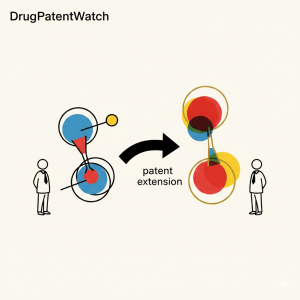
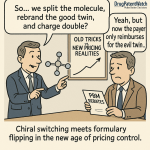
The pharmaceutical industry operates at the confluence of high-stakes molecular innovation and rigorous intellectual property fortification. Among the most sophisticated strategies employed by innovator firms to manage product lifecycles and mitigate the impact of the impending “patent cliff” is the chiral switch. This practice, defined as the development and marketing of a single enantiomer of a previously approved racemic drug, represents a masterclass in regulatory arbitrage and strategic patenting. By isolating the therapeutically active enantiomer, or eutomer, from its less active or potentially detrimental mirror image, known as the distomer, pharmaceutical companies can claim enhanced efficacy, reduced toxicity, and superior pharmacokinetic profiles. Yet, beyond the clinical justifications lies a formidable economic imperative: the ability to reset the clock on market exclusivity, often transforming incremental chemical refinements into multi-billion dollar revenue extensions.
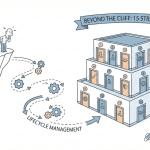
The strategic landscape for chiral switching has evolved from a niche chemical curiosity into a central pillar of pharmaceutical lifecycle management. As primary patents on blockbuster small molecules approach expiration, the development of a single enantiomer offers a pathway to secure new patents, obtain regulatory exclusivities, and execute “product hopping” maneuvers that transition patient populations to a newer, protected asset before generic versions of the original racemate can gain traction. This report provides an exhaustive analysis of the chiral switch phenomenon, examining its chemical foundations, regulatory frameworks, intellectual property strategies, and the profound economic implications for global healthcare systems.
The Scientific and Biological Imperative of Chirality
To appreciate the strategic value of a chiral switch, one must first understand the fundamental properties of chirality in drug action. Chirality, derived from the Greek word for hand, refers to molecules that exist in two forms that are non-superimposable mirror images of each other, much like a left and right hand.1 These mirror-image molecules, called enantiomers, possess identical physical and chemical properties in an achiral environment but behave quite differently when introduced to the chiral environment of the human body.
The human body is built from chiral building blocks, including $L$-amino acids and $D$-sugars, making biological receptors, enzymes, and transport proteins inherently stereoselective.1 Like a hand fitting into a glove, a drug molecule must align precisely with its biological target to elicit a therapeutic response. In many cases, only one enantiomer (the eutomer) fits the “lock” of the receptor, while the other (the distomer) may be inactive, act as “isomeric ballast,” or, in some instances, produce toxic side effects.1
The Narrative of Isomeric Ballast and Distomer Toxicity
Historically, roughly 56% of drugs in use have been chiral, and of those, nearly 90% were initially marketed as racemates—equimolar mixtures of both enantiomers.1 This was largely due to the technical difficulties and high costs associated with large-scale chiral separation during the mid-20th century. However, the legacy of racemic drugs is fraught with examples of the potential dangers of the distomer. The most infamous case is that of thalidomide, where one enantiomer provided the intended sedative effect, while the other was tragically teratogenic, leading to severe birth defects.1
This historical context provides the narrative foundation for the chiral switch. Manufacturers reframe the original racemate not as a single drug, but as a 50% pure drug combined with a 50% impurity—the “isomeric ballast”.1 By developing the single enantiomer, companies claim to purify the therapeutic intervention, potentially reducing the metabolic burden on the patient and simplifying the drug’s journey through the body. This “purification” narrative is a powerful tool for convincing regulators, physicians, and payers of the value of the switch.
Biological Interactions: Pharmacodynamics and Pharmacokinetics
The differentiation between enantiomers manifests at every stage of a drug’s interaction with the body. In pharmacodynamics, the three-point interaction model explains why one enantiomer might bind more effectively to a receptor than its mirror image. The eutomer aligns perfectly with three binding sites, whereas the distomer may only align with two, resulting in a significantly weaker or non-existent interaction.1
In pharmacokinetics, stereoselectivity influences how a drug is absorbed, distributed, metabolized, and excreted. For example, enzymes like the cytochrome P450 family often show a strong preference for one enantiomer. In the case of omeprazole, the switch to its $(S)$-enantiomer, esomeprazole, was justified by the fact that esomeprazole is metabolized differently by the CYP2C19 enzyme. This metabolic difference allows esomeprazole to remain in the bloodstream longer and provide more consistent acid suppression than the racemic mixture.3
Interaction Type
Description of Stereoselectivity
Strategic Justification for Switch
Pharmacodynamics
Preferential binding to receptors or enzymes (Lock and Key).
Improved potency and therapeutic index.1
Pharmacokinetics
Selective metabolism (e.g., by CYP enzymes) or transport.
Slower clearance, better bioavailability.3
Toxicology
Specific adverse events caused by the distomer.
Enhanced safety profile; reduction of side effects.1
Metabolism
Formation of active or toxic metabolites from one isomer.
Simplifying the metabolic profile and avoiding toxicity.1
The Regulatory Framework: A Blueprint for Market Exclusivity
The strategic execution of a chiral switch is governed by a complex set of regulations that have shifted from a passive acceptance of racemates to a clear preference for single enantiomers. This shift has inadvertently created a statutory roadmap for manufacturers seeking to extend their market dominance.
FDA and EMA Policy Evolution
The regulatory landscape was fundamentally altered by the FDA’s 1992 “Policy Statement for the Development of New Stereoisomeric Drugs” and the EMA’s 1993 directive on chiral active substances.5 These policies mandated that developers of new chiral drugs characterize each enantiomer’s pharmacologic activity and toxicological profile. While these policies were intended to improve drug safety, they provided a clear signal to innovator companies that single enantiomers would be favored.
For drugs already on the market as racemates, these policies opened the door for manufacturers to revisit their compounds. The FDA’s New Chemical Entity (NCE) exclusivity provisions became the ultimate prize. NCE exclusivity grants five years of market protection, during which the FDA cannot approve, or in some cases even accept, an Abbreviated New Drug Application (ANDA) or 505(b)(2) application from a generic competitor.6
The 505(b)(2) Pathway: The Engine of Incremental Innovation
Most chiral switches are pursued via the 505(b)(2) regulatory pathway. Established by the 1984 Hatch-Waxman Act, this pathway allows an applicant to rely on safety and efficacy data not personally conducted by the applicant—specifically, data from the original racemic drug’s approval or from published literature.7
The 505(b)(2) pathway offers a “hybrid” approach that combines the speed of a generic approval with the market protection of a brand-name drug. It is significantly faster and less expensive than a full 505(b)(1) New Drug Application (NDA) for an entirely new molecule. While an NME might take 8 to 10 years and cost upwards of US$1 billion to develop, a 505(b)(2) project for a chiral switch can often be completed in 2 to 3 years for US$8 million to US$50 million.9
Development Aspect
505(b)(1) NME
505(b)(2) Chiral Switch
505(j) Generic
Typical Cost
US$1 Billion+ 11
US$8M – US$50M 9
US$1M – US$5M
Timeline to Market
10 – 15 Years 11
2 – 5 Years 9
2 – 3 Years
Data Reliance
Entirely own data 8
Reliance on RLD/Literature 7
Bioequivalence only 8
Exclusivity Potential
5 Years (NCE) 6
3 – 5 Years 9
180 Days (First Filer) 14
Section 505(u) and the NCE Status Controversy
A major battleground in chiral switch IP is whether a single enantiomer qualifies as a “new” active moiety if the racemate was previously approved. For years, the FDA maintained that if the racemate was already approved, its constituent enantiomers were not “new”.6 However, the 2007 FDAAA introduced Section 505(u), which provided a specific mechanism for enantiomers to receive NCE exclusivity.
To qualify under 505(u), the enantiomer must be approved for a new indication in a different therapeutic class than the previously approved racemate.6 This provision has incentivized “chiral repurposing,” where a company switches to a single enantiomer while simultaneously targeting a new disease state. The antidepressant levomilnacipran (Fetzima) was the first drug to receive NCE exclusivity under this provision in 2013, having been derived from the racemate milnacipran, which was approved for fibromyalgia.6
The Strategic Playbook of Intellectual Property Fortification
Securing a regulatory green light is only half the battle. To maintain high-margin revenue, innovator companies must build a “patent thicket” that is resilient to generic challenges. The chiral switch is often the centerpiece of a broader lifecycle management (LCM) strategy designed to build layers of protection around a successful franchise.
Secondary Patents and the Art of the Tweak
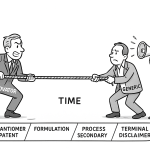
While the primary composition of matter patent for a racemic drug is the most difficult to defend as it nears expiration, the chiral switch allows for the filing of “secondary patents” on the single enantiomer. These patents do not just cover the molecule itself but extend to its physical and therapeutic manifestations.
Novel Formulations: New delivery systems, such as controlled-release pellets or enteric coatings, can be patented separately. In the case of omeprazole/esomeprazole, AstraZeneca secured numerous patents on the specific magnesium salt and enteric coatings of the pellets.3
Crystalline Polymorphs: A drug molecule can exist in different crystalline structures, known as polymorphs, each with unique properties like stability and solubility. Companies frequently patent the specific polymorph of the single enantiomer used in the final product.2
Methods of Use: Patents can be obtained for treating specific indications or using specific dosing regimens that were not part of the original racemic product’s patent portfolio.16
Process Patents: If a company develops a unique, non-obvious way to synthesize the pure enantiomer on an industrial scale, that process can be patented, potentially blocking competitors who cannot find a non-infringing way to manufacture the drug.2
The sheer volume of these patents creates a formidable barrier. The top-selling drugs in the U.S. are protected by an average of 74 granted patents each.19 This “layering” ensures that even if a generic manufacturer successfully invalidates one patent, they must still contend with dozens of others, each requiring its own litigation and time.
Product Hopping and the “Double Switch”
A chiral switch is most effective when combined with “product hopping”—the practice of aggressively moving the market from the old, expiring product to the new, patent-protected one. This is often executed through heavy marketing and physician education campaigns that highlight the supposed superiority of the new version.
AstraZeneca’s transition from Prilosec to Nexium is the gold standard for this maneuver. The company engaged in a “double switch”: it launched the enantiopure Nexium for prescription use while simultaneously transitioning the racemic Prilosec to over-the-counter (OTC) status.3 By moving Prilosec to OTC, AstraZeneca ensured that it would not be automatically substituted by generic versions in pharmacies, while its massive marketing of Nexium as “The Purple Pill” successfully transitioned the bulk of its prescription revenue to the new, more expensive product.3
Landmark Litigation: Defining the “Obviousness” Threshold
The legal validity of chiral switch patents frequently hinges on the concept of “obviousness” under 35 U.S.C. § 103. Generic challengers argue that if a racemic drug is known, it is “obvious to try” to separate its enantiomers using standard chemical techniques like HPLC or chiral crystallization. The outcome of these cases defines the boundaries of what constitutes true innovation versus mere lifecycle management.
Forest Laboratories v. Ivax Pharmaceuticals: The Lexapro Case
In the 2007 case Forest Laboratories v. Ivax Pharmaceuticals, the Federal Circuit upheld the validity of the patent for escitalopram (Lexapro), the $(S)$-enantiomer of the antidepressant citalopram (Celexa).20 The court’s decision was based on several critical factors that have since become a guide for defending chiral patents:
Technical Difficulty: The court found that at the time of the invention, separating the enantiomers of citalopram was considered highly difficult and unpredictable. Evidence showed that other researchers, including experts in chiral HPLC, had failed to achieve the separation.21
Unexpected Results: Forest successfully argued that escitalopram provided unexpected benefits, specifically that it was more potent than could have been predicted based on the activity of the racemate alone.21
Experimental Failure by Others: The history of failed attempts by others in the field provided strong evidence of the non-obviousness of the achievement.21
Commercial Success: The massive market uptake of Lexapro was used as a secondary consideration to support the claim that the drug represented a significant and non-obvious advancement.21
Sanofi-Synthelabo v. Apotex: The Plavix Case
The litigation over clopidogrel (Plavix) also highlights the importance of “unexpected results.” Sanofi scientists had previously attempted to separate enantiomers in the same chemical class and found that one isomer was typically toxic while the other was inactive, providing no therapeutic advantage.23 When they discovered that clopidogrel’s active enantiomer was both more potent and less toxic than the racemate, they were able to claim that this was a non-obvious and highly valuable discovery. The court agreed, upholding the patent for the single enantiomer.23
Case Study
Racemate
Enantiomer
Key Legal Argument
Outcome
Forest v. Ivax
Citalopram
Escitalopram
Technical difficulty; failed attempts by others.
Patent Upheld.21
Sanofi v. Apotex
PCR 4099
Clopidogrel
Unexpected potency and reduced toxicity.
Patent Upheld.23
Apotex v. Pfizer
Sildenafil (Viagra)
–
“Obvious to try” vs. “more or less self-evident”.
Patent Upheld (Canada).24
These cases demonstrate that the threshold for obviousness in chiral chemistry is not merely whether a separation is possible, but whether a person of ordinary skill in the art would have had a “reasonable expectation of success” in achieving it and whether the results of that separation would have been predictable.21
The Economic Reality: ROI and the Burden on Payors
The financial impact of the chiral switch is staggering, reflecting its status as one of the most successful commercial tactics in the history of the pharmaceutical industry. For innovator companies, the ROI on a well-timed switch can be unprecedented.
Manufacturer ROI and Market Share Retention
The ability to maintain monopoly pricing on a drug that would otherwise face generic competition allows for massive revenue preservation. By 2010, Nexium sales reached US$5.63 billion, successfully replacing the revenue of its predecessor, Prilosec, which had been the world’s best-selling drug.3 Similarly, Lexapro and its racemic precursor citalopram combined accounted for over 60% of Medicaid spending in their class during the 2001-2011 period.26
Analysis of 78 products approved via the 505(b)(2) pathway between 2013 and 2018 shows that these products reached average peak sales of approximately US$200 million.[10] With an estimated average R&D spend of only US$15 million, these products realized an average ROI of 26 times their investment over five years.10 Some products, such as Bendeka, achieved nearly US$2 billion in sales within just three years.10
The Financial Burden on Healthcare Systems
While the chiral switch is a boon for manufacturers, it places a heavy financial burden on patients and payors. Single-enantiomer drugs are typically priced significantly higher than the generic versions of their racemic predecessors. In the United States, patients using esomeprazole (Nexium) spent approximately US$111 more than those using generic omeprazole for a six-week course of treatment.3
In England, the NHS spent £42 million on esomeprazole in 2009 alone, despite the drug being 11 times more expensive than other available PPIs and offering no proven clinical advantage.3 In Geneva, Switzerland, the use of esomeprazole instead of generic omeprazole resulted in an additional cost of €5.2 million between 2000 and 2008.3 These costs are often borne by public programs like Medicaid, which spent an estimated US$6.3 billion on nine single-enantiomer drugs between 2001 and 2011.26
Drug (Enantiomer)
Payor Impact (Medicaid 2001-2011)
Market Dynamics
Esomeprazole (Nexium)
US$3.5 Billion 26
Remained market leader until 2010 despite OTC generic.26
Escitalopram (Lexapro)
US$1.8 Billion 26
Outnumbered generic citalopram until late 2009.26
Total (9 Identified Drugs)
US$6.3 Billion 26
Represents 60% of total class spending for these drugs.26
Leveraging Intelligence: The Role of DrugPatentWatch
In the high-stakes environment of pharmaceutical IP, information is the most valuable currency. Strategic players—both innovators defending their territory and generic challengers seeking entry—increasingly rely on specialized business intelligence platforms like DrugPatentWatch to navigate the complex patent and regulatory landscape.
Forecasting the Patent Cliff
DrugPatentWatch allows analysts to transform disparate legal and regulatory signals into actionable intelligence. By monitoring the FDA’s Orange Book and tracking Paragraph IV certifications, the platform provides a rigorous methodology for forecasting the “precise moment” of generic entry.18 For a blockbuster drug, a forecast error of a single quarter can represent a variance of hundreds of millions of dollars in revenue.28
The platform’s capabilities include:
Litigation Tracking: Monitoring PIV cases to predict the end of the mandatory 30-month stay or identifying early signals of a settlement.14
Patent Landscaping: Utilizing machine learning to map technology clusters and identify the “patent thickets” protecting a brand.19
Generic Entry Forecasting: Applying advanced statistical models like “Naïve with Drift” or ARIMA to estimate price erosion and market share shifts following a generic launch.14
Tentative Approval Monitoring: Identifying which generic manufacturers have received tentative approval from the FDA, a critical indicator of future competition.14
Anticipating the Next Chiral Switch
For generic companies, identifying potential chiral switch candidates early is essential for formulating a challenge strategy. DrugPatentWatch enables competitors to scan the landscapes of successful racemic drugs and identify patents filed by the innovator on single isomers or specific polymorphs. This early warning system allows for “evented” forecasting, where a baseline market model is combined with legal signals to predict when a “product hop” might occur.28
Future Trends: Chiral Repurposing and Technical Innovations
The “classical” chiral switch—the simple move from racemate to enantiomer—is becoming more difficult to execute as courts raise the bar for non-obviousness. In response, the industry is evolving, adopting more complex strategies that combine chirality with other forms of innovation.
The Rise of Chiral Repurposing
As mentioned previously, combining a chiral switch with a new medical use (drug repurposing) is a powerful way to secure NCE exclusivity and defend against obviousness challenges.5 This strategy is particularly effective because it addresses an unmet medical need while leveraging a known safety profile. The development of ketamine to its $(S)$-isomer, esketamine (Spravato), for depression is a prime example of this trend.5
Deuterium-Enabled Switches
A major technical hurdle for some chiral switches is “in vivo racemization,” where the body’s metabolic processes convert the pure enantiomer back into a racemic mixture. To overcome this, companies are using deuterium—a heavier isotope of hydrogen—to stabilize the chiral center.5 Replacing hydrogen with deuterium can create a “kinetic isotope effect” that slows the rate of racemization, allowing for the development of stable single-enantiomer versions of drugs that were previously impossible to isolate effectively.32
Fixed-Dose Combinations (FDCs)
Manufacturers are also increasingly launching chiral switches as part of an FDC. This strategy builds a “fortress” by combining the new enantiomer with another active ingredient. Under current FDA guidelines, if one component of an FDC is a new active moiety (such as a new enantiomer), the entire product may be eligible for NCE exclusivity.6 This allows companies to create complex, highly protected assets that offer improved patient outcomes through synergy and simplified dosing.7
Strategic Conclusions for the IP Professional
The chiral switch remains one of the most effective and controversial strategies in the pharmaceutical industry’s lifecycle management playbook. For innovator companies, it represents a high-return, lower-risk method of maintaining market dominance and funding future R&D. For generic manufacturers, it is a formidable barrier to entry that requires sophisticated legal and technical strategies to breach.
The success of a chiral switch is not guaranteed by chemistry alone; it is the result of a coordinated effort involving R&D, regulatory affairs, patent attorneys, and marketing departments. For the IP audience, several key takeaways emerge from this analysis:
The Power of the Narrative: Successful switches are anchored in a compelling scientific story, often revolving around the removal of “isomeric ballast” or the reduction of distomer toxicity.1
The Importance of Technical Hurdles: Evidence of difficulty in separation and failures by others in the field are the strongest defenses against obviousness challenges.21
The Value of Secondary Patents: Building a thicket of patents around formulations, polymorphs, and methods of use is essential for creating a resilient IP fortress.2
The Utility of Intelligence Platforms: Tools like DrugPatentWatch are critical for both identifying opportunities for a switch and forecasting the timing and impact of generic competition.14
As the pharmaceutical industry faces a period of “tectonic” patent expirations, with up to US$400 billion in annual sales at risk by 2030, the chiral switch will continue to be a primary tool for those seeking to navigate the patent cliff.13 Whether viewed as a legitimate scientific advancement or a shrewd tactic for “evergreening,” the chiral switch demonstrates that in the world of drug development, a subtle change in molecular geometry can have a multi-billion dollar impact.