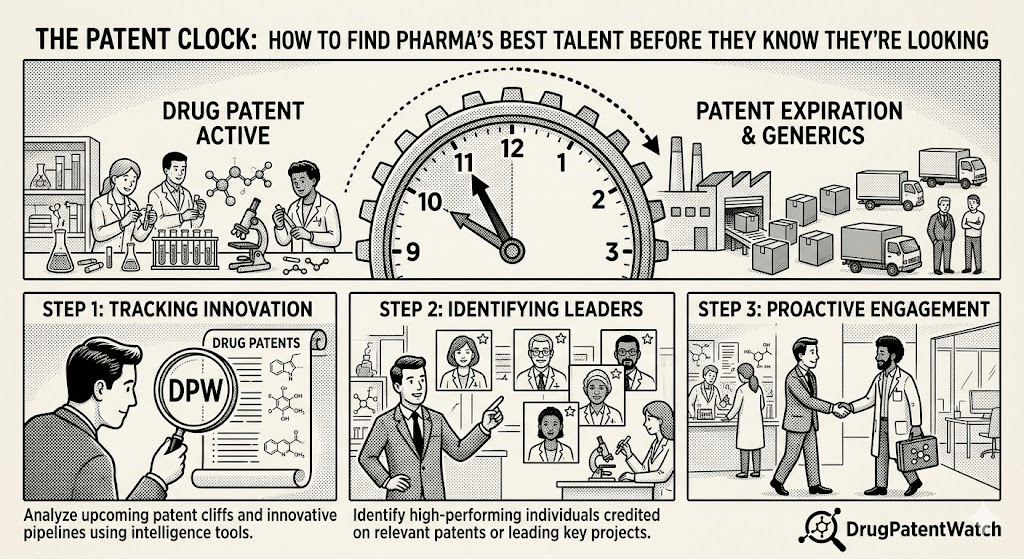
Track drug development pipelines and patent filings to surface passive candidates six to eighteen months before your competitors do.
When Pfizer’s oral GLP-1 candidate danuglipron quietly exited Phase II in early 2024 after disappointing weight-loss data, the news barely registered outside the diabetes specialist community. But inside three well-resourced biotech recruiting firms, alerts had already fired. They weren’t watching for the clinical failure itself — they were watching the patent landscape around it. Six months before the top-line data dropped, danuglipron’s associated filings had stopped accumulating. No new composition-of-matter extensions. No process chemistry applications. No pediatric exclusivity filings. The pipeline was drying out, and the people working on it — medicinal chemists, PK/PD modelers, regulatory affairs leads — were about to become available.
Those recruiters made calls. They got meetings. They placed candidates.
That is not a coincidence. It is a repeatable method.
This article explains how pharmaceutical talent acquisition teams, executive search firms, and competitive intelligence units can build a systematic framework for tracking drug development pipelines and patent activity to identify passive candidates before those candidates have updated their LinkedIn profiles, before their program has made the news, and often before they themselves have decided to leave.
The pharmaceutical industry moves on a timeline that most recruiters do not exploit. Drug development is long, expensive, and brutally public — every IND filing, every clinical hold, every FDA action is a data point. Patent activity is even more granular. When you align what a company is filing with where a drug sits in its clinical journey, you get a predictive signal about talent availability that is six to eighteen months ahead of the conventional recruiting cycle.
The tools exist. The data is public. The method is underused.
Part I: Why Pharma Talent Moves the Way It Does
The Program Life Cycle Drives Career Decisions
A medicinal chemist at a mid-size oncology biotech does not decide to leave because they checked salary benchmarks on a Tuesday afternoon. They leave because their program failed. Or because it succeeded — and the acquisition that followed put their job into an integration process managed by someone who doesn’t know their work. Or because their lead compound advanced to Phase III and the next two years are going to be clinical operations, not chemistry, and that is not what they want to do.
Every one of those transitions is legible in public data before the candidate sends a single resume.
The career arc of a pharmaceutical professional tracks the arc of a drug program. This is not an analogy. It is a direct operational relationship. Consider the lifecycle of a typical small-molecule oncology program:
Discovery and lead optimization: medicinal chemists, computational chemists, structural biologists, in vitro pharmacology scientists
Phase III: clinical operations directors, data management leads, regulatory submission writers, health economics researchers
NDA/BLA submission: regulatory affairs directors, medical writers, CMC leads
Launch and post-market: medical science liaisons, HEOR analysts, market access specialists, pharmacovigilance teams
Each stage requires a different population of specialists. When a program moves between stages, it creates demand for some professionals and terminates the active engagement of others. When a program fails, it terminates the engagement of an entire cohort at once.
Recruiters who understand this structure can predict where the cohorts are, when they will be displaced or seeking new challenges, and what their next logical role would be.
Why Passive Candidates Are the Pharma Norm
Passive candidates — people not actively job-searching — represent a larger share of the desirable talent pool in pharmaceuticals than in most other industries. There are several reasons for this.
First, the compensation and benefits structures at large pharma companies are genuinely competitive, with significant unvested equity, defined-contribution pension top-ups at companies like AstraZeneca and Roche, and deferred bonus structures that create strong stay incentives for people between performance review cycles. A principal scientist at Genentech, Amgen, or Eli Lilly is not casually scrolling job boards.
Second, pharmaceutical development requires deep institutional knowledge. A clinical pharmacologist who has spent three years building the PK/PD model for a specific compound is not easily replaced, and they know it. That creates psychological security that suppresses active job-searching behavior even when dissatisfaction exists.
Third, the regulatory environment creates long vesting windows around programs. Scientists who have contributed to an NDA are named on documents. Their professional identity is tied to the program. Leaving before submission — even if the leaving is rational — feels like abandoning the work.
This means that the passive candidate pool in pharma is deep, skilled, and relatively inaccessible through conventional job-posting strategies. You reach it through intelligence, not advertising.
The Signal-to-Noise Problem in Conventional Pharma Recruiting
Most pharmaceutical recruiting operates reactively. A hiring manager submits a requisition. The recruiter posts the role on LinkedIn Talent Solutions, Biocom, and BioSpace. Applications arrive from active job-seekers, which in pharma is often a population skewed toward people between roles — meaning the candidate has already been through at least one involuntary transition — or people so dissatisfied with their current role that they’ve stopped caring about exit timing.
That pool is not bad. But it excludes the people running successful programs, the people with the most current domain expertise, the people whose next transition will be on their terms.
The way to reach those people is to be present before they decide to move. That requires knowing, based on leading indicators in the public domain, which programs are approaching an inflection point that will displace or liberate talented professionals.
Pipeline and patent data provide those leading indicators. Neither source is complete on its own. Together, they give you a picture that is specific, timely, and — when used well — accurate enough to justify proactive outreach.
Part II: Reading Drug Development Pipelines as Talent Intelligence
Where Pipeline Data Lives and What It Actually Tells You
Pharmaceutical pipeline information is distributed across multiple public sources, each with different levels of granularity and different update frequencies.
ClinicalTrials.gov is the most granular public source for clinical-stage programs. Every study conducted in the United States that meets the definition of an ‘applicable clinical trial’ must be registered, updated, and — upon completion — have results posted within 12 months. The database contains more than 500,000 studies as of early 2026, with fields covering sponsor name, study phase, condition, intervention, estimated enrollment, primary completion date, and a detailed eligibility and protocol summary [1].
What ClinicalTrials.gov tells you about talent: the sponsor is running a program of this type, in this therapeutic area, at this phase, with this expected completion timeline. That is a staffing implication. A Phase II oncology study with 300-patient enrollment listed by a 200-person biotech requires, at minimum, a clinical operations infrastructure that didn’t exist at the discovery stage. When that study’s primary completion date is 18 months out, you can estimate when the clinical team will either transition to Phase III planning or dissolve.
FDA regulatory databases provide a different layer. The Drugs@FDA database covers approved drugs and their associated regulatory history. The FDA’s PDUFA (Prescription Drug User Fee Act) action date calendar, published by the agency and tracked in real time by outlets including FiercePharma and BioCentury, tells you when a regulatory decision is imminent. An NDA under review at FDA with a PDUFA date 90 days away represents a specific talent situation: the regulatory affairs team that managed submission is approaching a natural program conclusion. If the drug is approved, they may be absorbed into the launch infrastructure or may be redundant to incoming commercial operations staff. If rejected, the situation is more acute.
Company pipeline pages are the most accessible source and also the least reliable. Large companies like Pfizer, Johnson & Johnson, Roche, AbbVie, and Bristol Myers Squibb maintain pipeline tables on their investor relations pages. Smaller biotechs usually maintain a pipeline page in their ‘Science’ or ‘Programs’ section. These pages show you the current status of programs — what phase each asset is in — but they are updated infrequently, often lag actual program status by one to two quarters, and are curated to look favorable. A drug that disappears from a pipeline page has usually been dead for months before the page was updated.
That gap between actual program status and public representation is where patent data becomes essential.
Phase Transitions as Talent Displacement Events
The transitions between development phases are the most productive moments to identify passive candidates. Each transition is a predictable event that reshapes the staffing needs of a program.
Discovery to IND-enabling: When a company files an Investigational New Drug application with FDA, it signals that the lead compound has been selected and early safety data are sufficient to begin human studies. The chemistry team that ran lead optimization — often dozens of people across medicinal chemistry, structural biology, and ADMET assay development — transitions to a support role. Some move into process chemistry for manufacturing scale-up. Others become available for new programs or new companies.
Phase I to Phase II: This is the talent transition most underappreciated by recruiters outside the industry. Phase I completion means the compound has demonstrated an acceptable safety profile in humans and, for most oncology drugs, some signal of efficacy. The Phase II decision requires different scientific thinking: trial design becomes more complex, biomarker strategy becomes essential, the translational medicine function becomes central. Companies that lack internal Phase II capabilities hire aggressively at this point. Companies whose Phase I failed — and approximately 54% of Phase I oncology drugs fail to advance [2] — release the Phase I clinical team.
Phase II to Phase III: The largest talent expansion event in a drug’s lifecycle. Phase III registration studies can enroll thousands of patients across hundreds of sites in multiple countries. The operational infrastructure required is qualitatively different from anything needed earlier. Data management, clinical site management, patient advocacy, biostatistics, regulatory affairs for multiple geographies — all of these functions scale up dramatically. This is when large pharma companies are most aggressively absorbing talent, and when the smaller biotech running its first Phase III is most likely to be recruiting senior clinical operations leadership from large pharma — meaning large pharma’s clinical operations directors are, however briefly, reachable.
Phase III completion to submission: The period between last patient visit and NDA/BLA submission is often described by people inside it as the most exhausting in the industry. It involves synchronous work from medical writing, biostatistics, data management, regulatory affairs, and CMC (chemistry, manufacturing, and controls) teams. The workload is intense and finite. After submission, these teams are often too large for the post-submission work. Attrition at this stage is predictable, and many of the people coming out of an NDA submission are simultaneously exhausted, accomplished, and ready for something new.
Approval and launch: The regulatory approval event triggers a wave of commercial talent acquisition. The company needs medical science liaisons, market access specialists, managed care account directors, and health economics and outcomes research (HEOR) analysts at scale, rapidly. This is well understood by commercial recruiting firms. What is less understood is that approval simultaneously displaces much of the regulatory and clinical science infrastructure that built the NDA. Those people are often looking within 90 days of approval.
Program failure: The most acute talent release event. When a Phase III program fails — as happened with Biogen’s aducanumab Phase III failures (before the controversial approval), with Sanofi’s dupilumab competitors, with numerous NASH programs throughout the early 2020s — large cohorts of highly trained scientists and clinicians become available simultaneously. Companies that can identify these failure events before the public announcement, or immediately upon announcement, can reach these candidates before the market catches up.
Using Pipeline Data Operationally: A Framework
To use pipeline data as a talent intelligence tool, you need a systematic monitoring process rather than ad hoc searches. Here is the structure of an effective pipeline monitoring program:
Step 1: Define the talent segment you want to reach. This is not ‘pharma scientists.’ It is something like ‘Phase II oncology clinical scientists with experience in IO/checkpoint inhibitor programs at US-based biotechs with 50-500 employees.’ The more specific your talent target, the more precisely you can filter pipeline data to find the relevant programs.
Step 2: Map the companies running programs in your target segment. Use ClinicalTrials.gov, company pipeline pages, and databases like Citeline (formerly Pharmaprojects), Evaluate Pharma, and GlobalData Pharma to identify every company with an active program matching your criteria. For a typical oncology sub-specialty, this will produce a list of 40 to 150 companies.
Step 3: Identify the phase-transition inflection points. For each company on your list, note where each relevant program sits in development and what the expected timeline to next phase transition is. ClinicalTrials.gov primary completion dates give you the clinical timeline. Patent data, covered in detail in Part III, gives you the underlying compound lifecycle signals.
Step 4: Build a 12-month transition calendar. Overlay the expected phase transitions onto a timeline. Identify which programs will hit an inflection — advancement, failure, submission, approval — within your 12-month horizon. These represent your highest-priority target cohorts.
Step 5: Identify individuals within those cohorts. This requires combining pipeline data with professional network data. LinkedIn is the primary tool, but for senior scientific talent, publication databases (PubMed, Google Scholar), conference attendance records, and patent inventor databases provide additional signal. An individual who is a named inventor on the composition-of-matter patent for a drug entering Phase III is a specific person, working on a specific program, at a known company, approaching a known inflection point.
Step 6: Time your outreach to the inflection. Outreach that arrives 6 to 9 months before an expected phase transition is most effective. It reaches candidates before they are in active mode — before they’ve updated their resume, before their internal network is mobilized, before competing recruiters have identified them. At 6 months out, a skilled recruiter can have an exploratory conversation framed around the candidate’s career trajectory rather than a specific job, building rapport that converts to placement when the inflection arrives.
Part III: Patent Activity as a Talent Predictor
Why Patents Are a Better Leading Indicator Than Pipeline Disclosures
Pipeline disclosures — the tables on investor relations pages, the pipeline updates in earnings calls — are lagging indicators. They tell you where a program was two quarters ago, curated to tell the most favorable story. Patents are different.
Patent filing activity is a real-time signal of program health, investment, and strategic intent. Companies file patents to protect investments they are actually making, not investments they are hoping to appear to be making. A pharmaceutical company does not spend $50,000 to $200,000 in legal and filing fees on a patent application for a compound it has quietly abandoned. When patent activity around a compound stops — no new applications, no continuation filings, no PCT entries in new geographies — that is a direct signal that the investment has stopped.
Conversely, when patent activity accelerates — new formulation patents, new method-of-use patents, pediatric extension filings, patent term restoration applications — that signals a program approaching a significant milestone. New process chemistry patents often precede scale-up for Phase III or commercial manufacturing. Pediatric exclusivity filings (required to receive six months of additional exclusivity under the Pediatric Research Equity Act) signal that an NDA is being prepared for submission.
The patent record also contains information about the people involved. Every patent lists its inventors. Inventors are the scientists who made the claimed inventions — the people doing the actual science. Cross-referencing inventor names with patent records gives you a high-confidence map of who is working on what, at which company, and at what stage of development.
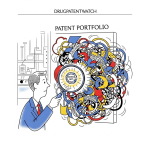
The Architecture of a Pharmaceutical Patent Portfolio
To use patent data effectively, you need to understand the typical structure of pharmaceutical patent protection and what each layer of patents signals about program status.
Composition-of-matter patents cover the molecule itself. These are the foundational patents — the ones that, when they expire, trigger generic entry. A composition-of-matter patent is typically filed early, often before or during lead optimization, and represents the company’s broadest claim on the compound. Seeing a new composition-of-matter patent means a company has identified and is protecting a new compound, usually at the discovery stage.
Method-of-use patents cover specific therapeutic applications of the compound. A company might file a composition-of-matter patent on a molecule and then, as clinical data accumulate, file additional method-of-use patents covering specific dosing regimens, patient populations, or combination therapies. Accumulating method-of-use patents on a compound suggest the clinical program is generating data worth protecting — a signal of Phase II or Phase III progress.
Formulation patents cover how the drug is physically delivered — tablet formulation, extended-release mechanism, injectable vehicle, patch technology. Formulation patents often appear when a company is moving from clinical to commercial manufacturing, because achieving commercial-grade, patient-convenient formulation requires development work worth protecting.
Process chemistry patents cover how the drug is manufactured at scale. These appear when a company is scaling up for Phase III or commercial production. A cluster of process chemistry filings around a compound is a reliable indicator that a Phase III trial is being planned or is underway.
Pediatric exclusivity and Orange Book patents are filed as part of the NDA process. Their appearance in patent databases signals that submission is imminent or underway.
Patent term restoration applications (filed under the Hatch-Waxman Act) are filed after drug approval to recover patent life lost during the regulatory review period. Seeing a patent term restoration application means the drug is approved, and the company is completing its post-approval IP housekeeping.
Each layer in this stack corresponds to a specific stage in drug development. Reading the stack tells you where a program actually is, independent of what the company is saying in its press releases.
Where Patent Data Lives: The Databases That Matter
The US Patent and Trademark Office (USPTO) and the European Patent Office (EPO) maintain public patent databases that are free to access. The USPTO’s Patent Full-Text Database (PatFT) and its Patent Application Full-Text Database (AppFT) cover all US patents and published applications. The EPO’s Espacenet covers European patents and has strong international filing data through the Patent Cooperation Treaty (PCT) system.
For pharmaceutical-specific patent intelligence, several specialized databases structure this data in clinically meaningful ways.
DrugPatentWatch is a pharmaceutical patent intelligence platform that tracks the patent protection status of marketed and pipeline drugs, generic entry timelines, patent expiration dates, and Paragraph IV litigation activity. Unlike the raw USPTO database, DrugPatentWatch organizes patent data around drug products, making it straightforward to look up all patents associated with a specific compound, brand, or active ingredient — including FDA Orange Book patents, method-of-use patents, and formulation patents. For talent intelligence purposes, the platform’s value is in connecting patent activity to specific compounds and companies, providing a faster path from ‘there’s patent activity here’ to ‘this specific program is at this specific stage.’
Cortellis (Clarivate) integrates patent data with clinical trial information, regulatory records, and published literature, giving users a single view of a drug’s development history across all public sources. Citeline’s Pharmaprojects database tracks pipeline compounds from discovery through approval with estimated timelines for phase transitions.
Google Patents is underappreciated as a competitive intelligence tool because its full-text search across all published applications is faster than USPTO’s own interface for exploratory searches. Searching a drug name, active ingredient, or mechanism of action across patent full text often surfaces relevant filings that are not yet indexed in more structured databases.
Derwent Innovation (Clarivate) covers global patent families — meaning it tracks a single invention across all the countries in which it has been filed. For talent intelligence, global filing patterns tell you where a company is planning to market the drug, which indicates the scale of the commercial build-out that will be needed.
Reading Patent Signals: A Practical Interpretation Guide
The following are the most practically useful patent signals for talent intelligence purposes, with interpretation notes for each.
Signal: New PCT filings on a compound not yet in clinical trials. This suggests a company has identified a lead compound and is seeking international protection before IND filing. The discovery team is still actively engaged. The compound is 18 to 36 months from first-in-human dosing if development continues. This is too early for most talent outreach but useful for mapping the company’s discovery talent for future reference.
Signal: New method-of-use filings covering additional indications or combination regimens. Clinical data are coming in that support expanded claims. The trial is probably in Phase II or early Phase III. The clinical science team is actively engaged and generating data. This is a productive time to establish relationships with clinical scientists who will eventually be looking for their next program.
Signal: A cluster of process chemistry and formulation patents filed within a 6-month window. The company is preparing for Phase III or commercial manufacturing. This is the most reliable single indicator of a Phase III transition. The chemistry and manufacturing team is under significant pressure and may be growing through outside hiring.
Signal: Pediatric exclusivity filings and Orange Book patent listings appearing. NDA preparation is underway or complete. The regulatory and clinical submission team is in the most intense phase of their engagement. Six to twelve months from now, they will be looking for new programs. Begin establishing relationships.
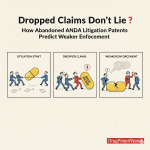
Signal: Patent activity on a compound drops to zero after a period of regular filings. The company has stopped investing in IP protection for this compound. The program is likely discontinued, on hold, or has been out-licensed in a way that shifted IP responsibility. The team working on the program may be available or soon will be. This is an outreach signal.
Signal: A Paragraph IV certification appears. A generic manufacturer has challenged one or more of the listed patents for an approved drug. This triggers automatic 30-month stays and patent litigation. The brand company’s IP legal and regulatory teams will be heavily engaged. The litigation is also public, meaning you can identify the attorneys and expert witnesses involved — often senior scientists who consult on patent validity questions and who may be available for full-time roles.
Signal: The Orange Book listings for a drug are suddenly reduced. The innovator company has allowed patents to expire or lapsed the listings, often because litigation revealed patent weakness or because the exclusivity strategy has changed. This can signal that the company is preparing to transition the drug to a new generation or has changed its commercial strategy, either of which reshapes the talent needs.
Part IV: Aligning Pipeline Stage and Patent Activity — The Combined Signal
Why Single-Source Signals Are Insufficient
Pipeline data without patent data gives you the company’s preferred narrative about program status. Patent data without pipeline data gives you IP filing behavior with no clinical context. Together, they are substantially more powerful than either alone, because they allow you to detect divergences — situations where what a company is saying publicly differs from what its patent behavior suggests.
The most exploitable divergences for talent intelligence purposes are:
The Silent Failure: A company’s pipeline page still lists a compound in Phase II. But patent activity stopped 18 months ago. No new applications, no prosecution activity, no conference presentations from the team. The compound is almost certainly abandoned, but the announcement hasn’t been made yet. The team is already in limbo — technically employed by a program that no longer has momentum. They are reachable, and they are motivated.
The Stealth Acceleration: A company’s pipeline page shows a compound in ‘pre-IND studies.’ But a cluster of new process chemistry and formulation patents appeared in the last six months, and the PCT filing just designated 40 countries. This compound is further along than the public pipeline page shows. The company may be preparing a competitive surprise. The team is moving fast and may be stretched thin — meaning senior positions may open up as the company prepares to staff up for Phase III.
The Acquisition Setup: A small company’s compound has accumulated a strong, clean patent portfolio — broad composition-of-matter coverage, solid method-of-use claims, no Paragraph IV challenges, pediatric filing in progress. And then the company goes quiet. No new patent filings. No conference presentations. No new clinical registrations. This pattern can indicate that the company is in acquisition discussions. Post-acquisition, programs are often deprioritized, delayed, or discontinued, and talent becomes available — sometimes by the hundreds, as in the mass layoffs that followed Pfizer’s acquisition of Seagen, where approximately 500 employees were cut in early 2024 [3].
The License Signal: A company files a new patent application on a compound, but the assignee is different from the original sponsor. The compound has been licensed. Depending on the deal terms — whether the licensee is a larger company that will integrate the team or a separate entity that will rely on the original team for transition support — this can signal either talent absorption (people moving to the licensee) or talent release (the original team completes the technology transfer and disperses).
A Step-by-Step Framework for Combined Signal Analysis
The following framework is designed to be operationalized by a talent intelligence analyst using free or low-cost tools, with optional premium database access.
Step 1: Select your therapeutic area and talent target. Define the specific function and experience profile you are recruiting. The narrower your definition, the more signal you can extract. For this example, assume your target is: ‘Lead clinical pharmacologist with small-molecule oncology experience, currently at a US biotech in Phase I or Phase II.’
Step 2: Pull all active Phase I and Phase II oncology trials from ClinicalTrials.gov. Filter by sponsor type (industry), intervention type (drug), condition (neoplasms), phase (Phase I, Phase II), and status (recruiting, active not recruiting). Export the sponsor list.
Step 3: For each sponsor with fewer than 500 employees (a proxy for ‘biotech’ as opposed to ‘large pharma’), identify the compound name and INN (International Nonproprietary Name) or USAN (United States Adopted Name) if assigned. The compound name is in the ClinicalTrials.gov intervention field. The INN/USAN assignment, if it exists, means the compound is advanced enough that WHO and USAN have received naming applications — itself a development milestone.
Step 4: Search each compound in DrugPatentWatch, Google Patents, and USPTO AppFT. Note: (a) how many patent families are active; (b) when the most recent application was filed; (c) whether any process chemistry or formulation patents appear; (d) whether any PCT applications have recently been filed.
Step 5: Classify each compound’s patent trajectory. Using the signals described above, classify each compound as: (a) Accelerating — patent activity increasing, new layers of protection appearing; (b) Stable — regular filing activity consistent with ongoing development; (c) Decelerating — patent activity declining or stopped; (d) Flat — no patent activity detected (either very early or already abandoned).
Step 6: Cross-reference phase and patent trajectory. Your highest-priority outreach targets are people on programs where the patent trajectory and pipeline phase are misaligned in ways that suggest near-term change. Specifically:
Phase II compound with decelerating patent activity: potential failure, team may be available in 6 to 12 months
Phase I compound with rapidly accelerating formulation and process chemistry patents: Phase III planning underway, team is expanding and may be competitive for your talent
Phase II compound with accelerating international patent filings: preparing for global Phase III or BD activity, senior clinical positions may be opening
Step 7: Identify specific individuals within the target cohorts. For each high-priority compound, search the patent filings for inventor names. Cross-reference inventor names with LinkedIn, PubMed, and ClinicalTrials.gov (where principal investigators and study contacts are named). Build a list of individuals who are directly involved with the program, with their current title and company confirmed.
Step 8: Segment by function and seniority. Not all inventors are clinical pharmacologists. A medicinal chemist and a regulatory affairs lead may both be named inventors on different patents for the same compound, but they represent completely different talent pools. Segment your target list by the specific function you are recruiting.
Step 9: Execute phased outreach. Begin with relationship-building outreach — sharing an industry report, commenting on a publication, connecting without a specific ask — for candidates on accelerating programs where your window is 9 to 12 months. Begin more direct outreach for candidates on decelerating programs where your window may be 3 to 6 months.
Part V: Applying the Framework Across Therapeutic Areas
Oncology: The Highest-Volume Signal Environment
Oncology represents the largest and most patent-active segment of pharmaceutical development. In 2024, oncology accounted for approximately 37% of all active clinical trials globally [4], and oncology patent filing volumes have increased by more than 60% over the past decade as precision medicine approaches — targeting specific mutations, resistance mechanisms, and biomarker-defined populations — have multiplied the number of addressable clinical questions.
For talent intelligence purposes, oncology’s density creates both opportunity and noise. The opportunity: any given therapeutic area within oncology — KRAS-mutant lung cancer, for example, or HER2-low breast cancer, or BTK-inhibitor-resistant CLL — has enough active programs to generate a meaningful cohort of target candidates. The noise: the field moves fast, and a patent filing that looks like an acceleration signal may reflect competitive IP positioning rather than genuine program advancement.
The effective filter in oncology is biomarker specificity. Oncology drugs that require a specific biomarker — a mutation, an expression level, a chromosomal rearrangement — have a defined patient population, and the size of that population constrains how many programs can simultaneously succeed in Phase III. When multiple programs are competing for the same biomarker-defined population, patent activity from one competitor’s coalition of programs can be used to triangulate which programs are ahead and which are falling behind. The teams on programs that are behind are more reachable.
Case study: the KRAS inhibitor wave. After Amgen’s sotorasib (Lumakras) received accelerated approval in May 2021 for KRAS G12C-mutant non-small cell lung cancer — the first approved therapy against a target previously considered undruggable — a wave of competitive programs followed. Mirati Therapeutics (adagrasib), Roche/Genentech (divarasib), Boehringer Ingelheim, Novartis, BI, and multiple smaller biotechs all had active KRAS G12C programs or pan-KRAS programs in various stages of development.
A recruiter tracking this space in 2022 and 2023 could have used patent data to identify which programs were building out formulation and process chemistry IP (signaling Phase III preparation) and which were generating only method-of-use continuations (signaling clinical data accumulation but not yet Phase III commitment). That analysis would have flagged Mirati’s program as most advanced among the non-Amgen competitors — consistent with adagrasib’s NDA approval in December 2022. It also would have flagged Mirati’s vulnerability as a standalone company, which was resolved when Bristol Myers Squibb acquired Mirati for $4.8 billion in January 2024, resulting in post-acquisition workforce restructuring that made dozens of scientists available to the market [5].
Immunology: Platform Patents and Team Stability
The immunology and autoimmune space operates differently from oncology, in ways that affect the talent intelligence approach.
Immunology drugs — particularly biologics like IL-17 inhibitors, IL-23 inhibitors, and JAK inhibitors — often share platform technology across multiple compounds. A company like AbbVie, operating the global leader in immunology revenue (Humira, risankizumab/Skyrizi, upadacitinib/Rinvoq), does not have separate teams for each drug in the way a small oncology biotech has a single team for its single compound. The talent intelligence challenge is to identify the specific programs within these large platform portfolios where talent transitions are occurring, which requires tracking at the compound level rather than the company level.
The most useful patent signals in immunology are mechanism-of-action expansions — new indications, new patient populations — and biosimilar defense activity. When a company files a thicket of new patents around an existing biologic (new formulations, new dosing regimens, new manufacturing processes), it is preparing its biosimilar defense strategy. This activity is well documented; the Humira biosimilar litigation is perhaps the most studied example in pharmaceutical history, involving more than 240 patents in a portfolio assembled by AbbVie that delayed US biosimilar entry until 2023 [6]. The patent attorneys and regulatory affairs specialists who built that defense have specialized skills that are valuable across the industry.
CNS: Long Timelines and the Pipeline Graveyard
Central nervous system drug development has the highest failure rate of any therapeutic area — roughly 88% of CNS drugs that enter clinical development fail to receive approval [7]. This failure rate, combined with the notoriously long development timelines (12 to 15 years from IND to approval for CNS drugs versus 8 to 12 years for other areas), creates a distinctive talent environment.
CNS researchers have often spent years on programs that failed. The psychological cost is real, and it shapes their receptivity to outreach. CNS scientists who have worked through one or two major failures are often more open to conversations about new programs than their counterparts in oncology, where the pace of development and the faster failure cycles create a different career rhythm.
Patent signals in CNS are harder to interpret than in oncology. CNS drugs often require longer Phase II programs (18 to 24 months versus 12 to 18 months for oncology) to detect efficacy signals in endpoints like cognitive function or depression symptoms. Patent activity can therefore be sustained for longer without a corresponding clinical advancement. The most reliable CNS talent intelligence signal is the intersection of patent deceleration with a Phase II primary completion date that has passed — meaning the data have been collected but no Phase III announcement has been made. That gap often indicates that the data are being analyzed and are not good enough to proceed.
The period between Phase II completion and Phase III decision announcement, which can last 3 to 9 months in CNS, is when the clinical team is most reachable. They know what the data are. They know what the decision is likely to be. But the company hasn’t announced it publicly, so they are technically still employed by a functioning program. This is the best window for outreach: the candidate is available emotionally and intellectually, even before they are available literally.
Rare Disease: Patent Designations as Social Proof
Rare disease drug development is shaped by a different regulatory framework than standard pharmaceutical development. Drugs for conditions affecting fewer than 200,000 people in the United States qualify for Orphan Drug Designation (ODD) from FDA, which confers seven years of market exclusivity after approval (in addition to standard patent protection), access to tax credits for clinical trial costs, and expedited regulatory review.
Orphan designations are publicly searchable through FDA’s Orphan Drug Products database. Every designation lists the condition, the sponsor company, the active moiety, and the date of designation. For talent intelligence, orphan designation events are highly specific signals: the company is committed to developing this drug for this condition, has made the regulatory investment to seek designation, and has enough development confidence to trigger the orphan clock.
Patent activity in rare disease often follows a slightly different pattern from large-indication drugs. Because the market size is smaller, companies often file leaner patent portfolios — fewer method-of-use variations, fewer formulation variations — and rely more heavily on orphan exclusivity for market protection. This means that in rare disease, the patent-as-leading-indicator approach needs to be calibrated: a thinner patent portfolio does not necessarily signal program weakness, only a different exclusivity strategy.
The talent pool in rare disease is also distinctive. Rare disease drug development requires deep patient advocacy experience, genetic counselor expertise, and understanding of natural history studies and endpoint development for diseases with no validated clinical endpoints. These are small talent pools and rare disease programs often attract scientists who are personally connected to the disease community through family experience. That psychological investment makes them simultaneously the most committed and the most emotionally available for conversations when their program is in trouble.
Part VI: Operationalizing the Method — Building a Pipeline Intelligence Practice
The Technology Stack for a Talent Intelligence Team
Running a pipeline-and-patent talent intelligence practice at any meaningful scale requires integrating data from multiple sources. The following stack represents the combination of free, freemium, and premium tools that provides the best coverage for most talent intelligence teams.
Monitoring layer (free):
ClinicalTrials.gov RSS feeds by condition, phase, and sponsor
FDA’s approval and action alert emails (available through FDA’s email subscription service)
Google Alerts on company names, compound names, and key scientific terms
USPTO’s Patent Full-Text Database (PatFT) email alerts on assignee names
Patent intelligence layer (freemium to premium):
Google Patents: Full-text search across all published US and international applications, free
Espacenet (EPO): PCT filing search, free
DrugPatentWatch: Drug-specific patent status and generic entry tracking, subscription
Derwent Innovation (Clarivate): Global patent family coverage, enterprise pricing
Clinical intelligence layer (premium):
Citeline/Pharmaprojects: Pipeline tracking with estimated timelines, enterprise pricing
GlobalData Pharma: Competitive intelligence with patent and pipeline integration, enterprise pricing
LinkedIn Recruiter: Standard tool; most useful when layered with patent inventor data to target specific individuals
PubMed/Google Scholar: For identifying prolific researchers and their institutional affiliations
Conference databases: Society for Clinical Oncology (ASCO) abstract archives, American Society of Hematology (ASH), Society for Immunotherapy of Cancer (SITC) — all searchable by compound name or mechanism
Integration layer:
A CRM or ATS that allows custom tagging by program, patent stage, and anticipated transition date
A spreadsheet or lightweight database for tracking program status over time, with change alerts
The investment required to run this practice at a functional level is not primarily financial — the free and low-cost tools are sufficient for most purposes. The investment is in analyst time. A dedicated talent intelligence analyst spending 15 to 20 hours per week on pipeline and patent monitoring can maintain meaningful coverage of one to two therapeutic areas and surface 10 to 20 high-quality passive candidate opportunities per month.
Structuring the Intelligence Workflow
The workflow needs to be systematic enough to catch signals consistently but flexible enough to respond to unexpected events. A structure that works in practice:
Weekly:
Scan ClinicalTrials.gov for new registrations, status changes, and primary completion updates in target therapeutic areas
Review FDA action calendar for upcoming PDUFA dates
Check Google Alerts for company and compound names on your active watch list
Scan USPTO AppFT for new publications from assignees on your watch list
Monthly:
Conduct a full patent search refresh for each compound on your priority list using DrugPatentWatch and Google Patents
Review any pipeline page changes at the companies on your watch list
Update the phase/patent trajectory classification for each compound
Generate a monthly outreach target list from the updated classifications
Quarterly:
Conduct a full review of the company and compound watch list, adding new entrants and removing resolved situations
Attend or review abstracts from major therapeutic area conferences
Update the 12-month transition calendar with revised timelines based on latest data
Event-driven:
When a Phase III failure announcement is made, begin immediate outreach within 24 to 48 hours — this is the window before the broader recruiting community mobilizes
When an acquisition is announced, map the talent implications within the first week — post-acquisition layoff plans are typically developed in the first 30 days but announced 3 to 6 months later
When a PDUFA date approaches within 90 days, begin relationship-building with the regulatory and clinical submission team at the drug’s sponsor
The Outreach Frame: What to Say and When
The intelligence is only as valuable as the conversations it enables. Reaching out to a passive candidate with a message that reads like a conventional recruiter pitch wastes the competitive advantage that the pipeline and patent analysis created.
The effective outreach frame for pipeline-and-patent-identified candidates has three elements:
Specific domain knowledge. Reference the candidate’s actual work — the compound they are working on, the mechanism, the indication. This signals that you are not sending a mass message. ‘I’ve been following the [compound name] program since the Phase I data were presented at ASCO last year’ is a credible opening. ‘I saw your name on the recent PCT filing’ is even more credible, because it tells the candidate that you have actually looked at their work.
No immediate ask. The first contact should not be a job pitch. It should be a relationship-building interaction — sharing relevant intelligence, asking a substantive question, or requesting a 20-minute conversation about the broader therapeutic area. Passive candidates in pharma respond poorly to direct job solicitation because it signals that you see them as a commodity. They respond to being seen as an expert.
Timing signal. Subtly signal that you understand their career timeline. ‘I know the [compound] Phase III is in active enrollment right now, so I’m not looking to disrupt anything — but as you’re thinking about what comes next, I’d love to stay connected.’ This tells the candidate that you are thinking ahead with them, not asking them to make a decision now.
Part VII: Legal, Ethical, and Competitive Considerations
Using Public Data Responsibly
Everything described in this framework uses publicly available data. Patent filings are public by design — the patent system’s social contract is public disclosure in exchange for temporary exclusivity. Clinical trial registrations are publicly mandated under the FDA Amendments Act of 2007. Company pipeline pages are marketing materials. Conference abstracts are published by the scientific societies that host them.
There is nothing illegal, unethical, or improper about using this data for talent intelligence purposes. Pharmaceutical companies use competitive intelligence based on the same patent and pipeline data to make R&D investment decisions worth billions of dollars. Applying the same data to talent strategy is a defensible use.
What creates ethical and legal risk is crossing into personal information that is not publicly available. Hiring from a specific company because you know their program has failed — even before that failure is publicly announced — is not problematic, as long as you learned about the failure from public data sources and not from a confidential source. Contact with candidates should respect their stated wishes: if a candidate says they are not interested, that is the end of the interaction.
Non-solicitation agreements between companies are a distinct concern. Many pharmaceutical professionals are covered by non-solicitation clauses that prevent them from actively recruiting former colleagues for a period of 12 to 24 months after leaving their previous employer. This is between the candidate and their former employer; it does not restrict your outreach, though it should inform your awareness of what the candidate can and cannot do in terms of bringing teammates along.
Competitive Intelligence Ethics in a Small World
The pharmaceutical scientific community is genuinely small in most therapeutic areas. A senior oncology medicinal chemist at a mid-size biotech knows most of the other senior oncology medicinal chemists in the same geography. Your intelligence activities will be known to the community, at least directionally. If your practice becomes known as one that provides genuinely valuable intelligence to the scientists it contacts — sharing real insights about the field, not just fishing for candidates — that reputation is a recruiting asset. If it becomes known as one that uses intelligence to manipulate scientists into conversations they didn’t want to have, that reputation will close doors.
The most sustainable version of this practice looks like a genuine informational resource: sharing patent landscape analyses with scientists who find them useful, connecting people across programs who share research interests, providing early signal about competitive pipeline developments that are relevant to the candidate’s work. The recruiting outcome follows from the relationship, not the other way around.
Part VIII: Advanced Applications and Emerging Signals
Using Patent Continuation Patterns to Predict M&A
Patent continuation filings — applications that claim priority to an earlier application while adding new claims — have a specific pattern around acquisitions. When a company is acquired, the acquirer typically conducts a 90-day IP audit in which it reviews all pending patent applications and decides which to continue prosecuting, which to abandon, and which to accelerate. The result is a detectable change in the continuation filing pattern: a burst of new claim sets, then a long pause, then either abandonment or resumed prosecution with a different law firm.
Tracking law firm changes on pharmaceutical patent portfolios is a useful secondary signal. When a portfolio that was being prosecuted by an independent IP boutique suddenly switches to an in-house counsel at a large pharma company, that is a reliable indicator that an acquisition or license deal has closed. The talent implication is that the acquired or in-licensing company’s team is now in integration mode.
Conference Abstract Archaeology
Major pharmaceutical conferences publish their abstracts before the conference date. These abstracts — searchable at ASCO, ASH, AACR, ADA, and others — often represent the first public disclosure of Phase I or Phase II data that had not previously been discussed. Tracking abstract submissions can give you 60 to 90 days of advance notice on clinical data readouts.
Cross-referencing abstract authors with patent inventor lists gives you a high-resolution picture of individual contributors. A scientist who is both a named inventor on the compound’s composition-of-matter patent and the presenting author of the Phase I data abstract is deeply embedded in the program — they are the most knowledgeable person on the drug, and also the person whose next career move will be most consequential.
SEC Filings as a Pipeline and Talent Intelligence Tool
Publicly traded pharmaceutical companies file extensively with the Securities and Exchange Commission. The 10-K (annual report), 10-Q (quarterly report), 8-K (material event report), and S-1 (IPO registration) filings all contain pipeline information, risk factors, and business descriptions that are often more candid than investor relations pipeline pages.
Risk factors in particular are useful. A company that describes a specific compound’s Phase III as ‘critical to our business strategy’ while simultaneously noting ‘significant uncertainty about clinical success’ is telling you that failure of that program would be existential. In that context, any negative patent signal on that compound is an urgent outreach trigger — the entire organization may be at risk, and the talent should be identified before the crisis materializes.
8-K filings covering ‘clinical development updates’ are the most immediate data source for program announcements. FDA approval decisions, Phase III results, and program discontinuations are all reported through 8-K filings, typically within four business days of the event. Companies with programs approaching major milestones can be monitored through SEC EDGAR’s EDGAR Alert system for real-time notification of 8-K filings. <blockquote> “According to a 2023 IQVIA Institute report, the average cost of bringing a new drug to market has risen to approximately $2.3 billion in capitalized research and development expenditure, with a 90% probability of failure at some stage of clinical development.” [8] Every failed program represents a talent release event, and those events are trackable. </blockquote>
Using Biosimilar Patent Litigation as a Talent Signal
The biosimilar space — biological drugs losing exclusivity to lower-cost copies — has generated a substantial patent litigation ecosystem since the Biologics Price Competition and Innovation Act (BPCIA) of 2010 established the regulatory pathway for biosimilar approvals. The patent dance provisions of the BPCIA require innovator and biosimilar companies to exchange information about patents and biosimilar applications, leading to a defined litigation sequence that is entirely public.
Companies involved in BPCIA litigation have specific, high-value talent needs: biologics-experienced regulatory affairs specialists, biologics patent attorneys and experts, process chemistry and analytical sciences leads with characterization expertise. The litigation itself names expert witnesses — often senior scientists who work on these questions as independent consultants. Those experts, when not consulting, are working in industry roles and can be identified through the public court record.
Several significant BPCIA litigations involve drugs with approaching patent cliffs or ongoing battles. AbbVie’s Humira biosimilar situation concluded with US entry in 2023, but litigation continues in various international markets. Roche’s Herceptin (trastuzumab) and Avastin (bevacizumab) biosimilars introduced complex interchangeability and payer-contracting dynamics. The regulatory and commercial talent that managed these market entries for both innovator and biosimilar companies is exceptionally experienced and may be between programs.
Part IX: Measuring the ROI of Patent-Informed Recruiting
The Metrics That Matter
Any recruiting practice that requires additional analyst time and data investment needs to justify that investment. The metrics for patent-informed talent intelligence are different from those for standard recruiting.
Lead time: The primary value proposition is advance notice. Measure the average time between your first outreach to a candidate (triggered by pipeline/patent intelligence) and the candidate’s availability date. An effective practice should consistently achieve 6 to 12 months of lead time over the candidate’s formal availability.
Passive candidate conversion rate: Track what percentage of candidates you contacted through patent-informed outreach — people who were not actively job-searching — converted to placed candidates within 18 months. Compare this to the conversion rate for candidates sourced through standard job postings. The pipeline-informed passive candidate pool should show a substantially higher conversion rate, because the outreach timing aligns with natural career inflection points.
Quality of placement: Measure the performance ratings and retention rates of candidates placed through patent-informed sourcing versus other channels. The hypothesis — which is consistently supported by recruiting firms that run this practice — is that candidates who are identified at natural career inflection points, and who have time to make a thoughtful decision about their next role, perform better and stay longer than candidates who are rushed through a decision by sudden availability.
Pipeline coverage: Track what percentage of major phase-transition events in your target therapeutic area you captured in your intelligence system before they were publicly announced. A mature practice should capture 70 to 80% of phase-transition events before the broader market becomes aware.
The Cost-Benefit Calculation
A dedicated talent intelligence analyst running this practice costs approximately $90,000 to $130,000 per year in salary (depending on market), plus $30,000 to $80,000 in premium database subscriptions. The total annual investment is $120,000 to $210,000.
A single successful placement of a senior Vice President of Clinical Development in oncology generates $80,000 to $150,000 in placement fee (at standard 25-30% of first-year compensation for a $350,000 to $500,000 role). A practice that generates 8 to 12 additional placements per year through patent-informed sourcing — above what would have been achieved through conventional methods — has a positive return within 6 to 9 months.
For in-house talent acquisition teams, the calculation is different but the direction is the same. The cost of an unfilled senior scientific role — estimated at 1.5 to 3x annual salary in delayed program milestones, management distraction, and team productivity loss — is substantial. If the intelligence practice allows you to fill three to four senior roles per year that would otherwise have taken 6 to 9 additional months to fill, the time-to-program-milestone savings alone justify the investment.
Part X: Case Studies in Patent-Informed Talent Intelligence
Case Study 1: The NASH Collapse
Non-alcoholic steatohepatitis (NASH) was, from approximately 2015 to 2022, one of the most intensely pursued therapeutic areas in pharmaceutical development. More than 20 major programs were in Phase II or Phase III at the peak, involving companies including Intercept Pharmaceuticals, Madrigal Pharmaceuticals, Genfit, Gilead Sciences, AbbVie, and Pfizer.
The patent landscape for NASH drugs was complex and competitive, with composition-of-matter patents covering FXR agonists, THR-beta agonists, ACC inhibitors, FGF21 analogs, and combination approaches. Patent filing activity across the NASH space peaked around 2019 and 2020, when multiple Phase III programs were active simultaneously.
Beginning in late 2019, a pattern of Phase III failures began. Intercept’s obeticholic acid (OCA) received a Complete Response Letter from FDA for NASH cirrhosis in June 2020, citing concerns about the benefit-risk profile [9]. Genfit’s elafibranor failed its Phase III primary endpoint in May 2020 [10]. Gilead discontinued selonsertib for NASH fibrosis in 2019. AstraZeneca discontinued its NASH program. Viking Therapeutics, Akero Therapeutics, and others saw their stocks whipsaw on clinical updates.
A recruiter tracking patent activity in the NASH space would have seen the signals:
By 2021, new NASH patent filings from Intercept, Genfit, and Gilead had dropped sharply. Process chemistry patents — the signal of Phase III manufacturing preparation — had stopped entirely. The only accelerating patent activity was from Madrigal Pharmaceuticals, which was advancing resmetirom (later approved as Rezdiffra in March 2024 for NASH/MASH [11]) and from Akero Therapeutics, which was advancing efruxifermin with strong Phase II data.
A recruiter using this analysis in 2021 could have identified the entire cohort of NASH clinical scientists at failing programs — Intercept alone had employed more than 400 people before its NASH program failure precipitated a series of workforce reductions [12] — and initiated outreach while these scientists were still employed but clearly transitioning. The candidates were deeply experienced in NASH biology, liver endpoint assessment, and the specific regulatory science of metabolic liver disease. Their next roles — at Madrigal, at Akero, at early-stage MASH programs at Viking and others — were highly predictable.
Case Study 2: The Alzheimer’s Patent Landscape and the Lecanemab Moment
The Alzheimer’s disease therapeutic landscape has been shaped by a series of high-profile failures that, for two decades, made the space notorious for career risk. The Biogen/Eisai collaboration on aducanumab was approved through the controversial accelerated approval pathway in June 2021, despite an FDA advisory committee vote of 10 to 0 against approval [13] — a regulatory controversy that itself generated significant expert witness and regulatory consulting activity.
Lecanemab (brand name Leqembi), also from Biogen and Eisai, changed the picture when it received traditional FDA approval in July 2023 based on positive Phase III data from the CLARITY AD trial [14]. The approval validated the amyloid-removal hypothesis and immediately shifted the talent landscape.
Patent activity around lecanemab had been accelerating through 2021 and 2022, with method-of-use patents covering specific patient populations (early AD, MCI due to AD, biomarker-confirmed disease), dosing regimens, and companion diagnostic approaches. A recruiter tracking this activity would have anticipated the approval timeline and begun outreach to: (a) the clinical team at Biogen/Eisai preparing for the commercial launch, and (b) scientists at competing programs — Eli Lilly’s donanemab, which received traditional FDA approval in July 2024 [15]; Roche’s gantenerumab, which had already failed Phase III — who would be either celebrating or transitioning.
The donanemab approval for Eli Lilly created a specific talent event: Lilly’s Alzheimer’s team, successful and experienced, was now managing a successful commercial program, which required different skills than development. The scientists who had been most deeply involved in the clinical development — not the commercial operations — were potentially interested in returning to development-stage work. Their pipeline/patent fingerprint was entirely visible, and their likely career trajectory was predictable.
Case Study 3: Tracking GLP-1 Competition for Talent
The GLP-1 agonist space — Novo Nordisk’s semaglutide (Ozempic, Wegovy) and Eli Lilly’s tirzepatide (Mounjaro, Zepbound) — became the most commercially valuable drug development story of the 2020s. Their success attracted essentially every large pharmaceutical company and dozens of biotechs to develop competing or complementary agents.
Patent activity in the GLP-1 space became extraordinarily dense. Novo Nordisk and Lilly each assembled large portfolios covering composition of matter, formulation, delivery device, manufacturing process, and method-of-use for obesity, diabetes, cardiovascular disease, and emerging indications including NASH/MASH, sleep apnea, and addiction. New entrants filed their own composition-of-matter patents on novel peptide sequences, small-molecule GLP-1 agonists (a distinct and highly watched category), and combination approaches.
For talent intelligence purposes, the GLP-1 space presents a specific challenge: it is so active that the signal-to-noise ratio is low without careful filtering. The most useful application is tracking the smaller players — the biotechs developing oral small-molecule GLP-1 agonists, or the companies developing next-generation dual and triple agonists — where patent activity can be more readily interpreted and where the talent pools are smaller and more identifiable.
Pfizer’s oral GLP-1 program (danuglipron) is illustrative. Pfizer filed aggressively on danuglipron through 2021 and 2022, including composition-of-matter and method-of-use patents. By late 2023, when Phase II data showed disappointing weight loss (approximately 9.4% body weight reduction with twice-daily dosing, compared to 15 to 20% with injectable semaglutide), patent filing activity on danuglipron slowed, and Pfizer announced in December 2023 that it would discontinue the twice-daily formulation [16]. A later once-daily formulation study was also discontinued in June 2024 after liver enzyme elevation findings [17].
Recruiters tracking danuglipron’s patent activity through 2023 would have seen the slowdown in new filings. The once-daily formulation patents that appeared in early 2023 — a signal that looked initially like acceleration — turned out to be a reformulation effort, not a Phase III advance. By the time the discontinuation was announced, the chemistry and clinical pharmacology teams working on danuglipron had been identifiable for 6 to 9 months. Those individuals had specific small-molecule GLP-1 expertise that was extremely valuable to competitors.
Part XI: The Future of Pipeline-Informed Talent Intelligence
AI Tools Are Changing the Data Layer
Machine learning and natural language processing tools are rapidly improving the accessibility and interpretability of patent and clinical trial data. A generation of pharmaceutical intelligence platforms — including some built on large language model foundations — can now parse patent claim language, flag clinically relevant claims, and track patent activity across global databases at a scale and speed that was not achievable through manual analysis three years ago.
For talent intelligence teams, these tools reduce the analyst time required for routine monitoring and allow focus on interpretation and outreach strategy. They do not replace the human judgment required to understand why a patent pattern matters in the context of a specific drug program and a specific talent pool. A model can flag that patent activity on compound X stopped six months ago. It cannot tell you that the principal chemist on that program has two children in high school and is unlikely to relocate to San Francisco for a new role without a substantial equity package. That context still requires human relationship intelligence.
The practical implication: the barrier to entry for running a pipeline-and-patent intelligence practice is declining. Recruiters who build the human relationship competency — who become known as genuine experts in the therapeutic areas where they recruit — will maintain a competitive advantage over those who rely on algorithmic outputs alone.
Regulatory Data Integration Is Getting Better
The FDA’s Center for Drug Evaluation and Research (CDER) has progressively improved the machine-readability and timeliness of its public databases. The CDER Drug Database, the Drugs@FDA portal, and the FDA’s structured data on clinical pharmacology are all more useful to programmatic analysis than they were five years ago. The European Medicines Agency’s clinical data transparency initiative has similarly improved access to European clinical data.
As these databases improve, the combined signal from regulatory data, patent data, and clinical trial data becomes more interpretable without premium database subscriptions. This democratizes the practice but also means that the advantage lies increasingly in how you use the signal rather than whether you have access to it.
Global Expansion of the Signal
The pharmaceutical talent market has internationalized substantially over the past decade. The centers of pharmaceutical R&D now extend well beyond the US, UK, and Switzerland to include significant hubs in China (particularly the Shanghai and Beijing areas), South Korea (Samsung Biologics, Celltrion), and Australia (where the tax incentive regime for clinical trials has attracted significant Phase I activity).
For patent intelligence purposes, tracking PCT filings into Asian markets is increasingly meaningful. A company that files PCT extensions into China, Japan, South Korea, and Australia — as well as the US and Europe — is planning for a genuinely global program, with the commercial scale to require a much larger talent infrastructure than a US-focused program. These global filings can be tracked through WIPO’s PATENTSCOPE database.
For talent intelligence teams currently focused on the US and European markets, this creates an opportunity: monitoring Asian patent filings for US-based scientific inventors who have moved to companies with significant Asian operations, and tracking the reverse — Asian scientists at Asian biotechs who have filed US patents and may be interested in US-based roles.
Conclusion: The Intelligence Advantage
Patent data and pipeline data have been used for competitive intelligence, M&A strategy, generic drug development, and investor analysis for decades. Their application to pharmaceutical talent intelligence is newer and less systematized — which is precisely why it works.
The pharmaceutical scientists and executives you want to recruit are not on job boards. They are working on drugs. Some of those drugs are going to succeed, and the scientists working on them are going to be in high demand from competitors who want to understand how they did it. Some of those drugs are going to fail, and the scientists working on them are going to be looking for a new program, whether they admit it yet or not.
The patent record tells you which is which, months before the market consensus catches up. The clinical trial database tells you where those scientists are in their program’s journey. The combination tells you who to call, when to call them, and what to say.
That is not a recruitment gimmick. It is an intelligence practice applied to a talent problem.
The recruiters and talent acquisition leaders who build this capability will reach the best candidates before they know they’re looking. The ones who don’t will be hiring from the candidates those recruiters passed on.
Key Takeaways
Drug development phase transitions are predictable, multi-month events that displace or liberate specific cohorts of pharmaceutical professionals — and they are visible in public data before they happen.
Patent filing patterns are a more accurate real-time indicator of program health and stage than company pipeline disclosures, which are curated for investor relations and updated infrequently.
The combination of pipeline phase (from ClinicalTrials.gov and company disclosures) and patent trajectory (from USPTO, DrugPatentWatch, and Google Patents) creates a leading indicator of talent availability that is typically 6 to 18 months ahead of conventional recruiting timelines.
Named inventors on pharmaceutical patents are directly identifiable individuals, working on specific programs, at specific companies, at known development stages — providing the most specific targeting information available for passive candidate identification.
Divergences between what a company’s pipeline page says and what its patent behavior indicates — the Silent Failure, the Stealth Acceleration, the Acquisition Setup — are the most exploitable signals for proactive outreach.
Outreach to patent-identified candidates should be framed around specific domain knowledge of their actual work, build the relationship before the ask, and signal an understanding of their career timeline rather than an immediate opportunity.
The return on investment from this practice is measurable through lead time on candidate availability, passive candidate conversion rate, and quality and retention of placements.
FAQ
Q1: Is it legal and ethical to use patent inventor lists to identify and contact potential recruits?
Patent inventor data is publicly disclosed by law — the patent system is premised on public disclosure. Identifying individuals who are named inventors on published patent applications and reaching out to them through professional channels is entirely legal. It is no different, legally or ethically, from reaching out to someone based on a published journal article or a conference presentation. The ethical obligation is to respect the individual’s response: if they are not interested in a conversation, that is the end of it.
Q2: How do I distinguish between a patent that reflects genuine program progress and one filed defensively with no clinical development behind it?
Defensive patents — filed to block competitors rather than to protect genuine development activity — tend to have broad, abstract claims and are rarely accompanied by clinical trial registrations for the claimed compound. When you see a patent on a compound with no corresponding ClinicalTrials.gov registration, no IND evidence (IND numbers are not public, but CDER’s drug database sometimes reflects IND submissions through drug approval applications that reference them), and no published scientific literature, treat it as a potential defensive filing. The presence of clinical evidence alongside patent activity is the most reliable signal of genuine development investment.
Q3: What is the best entry point for a talent acquisition team starting this practice from scratch?
Start with a single therapeutic area where you have existing placement activity and some domain knowledge. Use ClinicalTrials.gov to identify all Phase II and Phase III programs in that area sponsored by companies of 50 to 500 employees. For each program, run a basic patent search on Google Patents using the compound’s name or the sponsor company name. Classify each program as accelerating, stable, or decelerating based on the recency and type of filings. Identify the top 10 programs to watch and begin tracking them monthly. Within 90 days, you will have a structured view of the talent landscape that most of your competitors lack.
Q4: How far in advance of a program failure can patent data provide a reliable signal?
Patent activity deceleration can precede a formal program discontinuation announcement by 6 to 18 months, depending on the company’s IP management practices. Companies that manage their patent portfolio actively — filing aggressively during development and abandoning quickly upon discontinuation — produce cleaner signals with shorter lag times. Companies with less disciplined IP management, or those that allow portfolios to lapse through maintenance fee non-payment rather than formal abandonment, may produce signals with longer lag times. The most reliable confirmation that a signal is real is when two independent indicators converge: patent deceleration plus a primary completion date that has passed on ClinicalTrials.gov with no Phase III announcement.
Q5: How should talent intelligence teams handle situations where their analysis of a company’s pipeline leads them to believe a failure is imminent before it’s publicly announced?
Act on the analysis but do so through legitimate means. Reach out to individuals on the identified program through professional channels, framing the conversation as relationship-building rather than immediate opportunity. Do not represent that you have inside information about the program’s status. You are using public data — patent records, clinical trial databases, regulatory documents — to inform your timing. The candidate may well know more about their program’s status than you do; your role is to be present in their professional network when they decide their next step. What you should not do is attempt to confirm non-public program information by inducing the candidate to violate any confidentiality obligations they have to their employer.
References
[1] U.S. National Library of Medicine. (2026). ClinicalTrials.gov: About the database. https://clinicaltrials.gov/about-site/about-ctg
[2] Wong, C. H., Siah, K. W., & Lo, A. W. (2019). Estimation of clinical trial success rates and related parameters. Biostatistics, 20(2), 273–286. https://doi.org/10.1093/biostatistics/kxx069
[3] Sagonowsky, E. (2024, February). Pfizer to cut 500 more jobs from Seagen acquisition. Fierce Pharma. https://www.fiercepharma.com/pharma/pfizer-cut-500-jobs-seagen-integration
[4] IQVIA Institute for Human Data Science. (2024). Global oncology trends 2024: Outlook to 2028. IQVIA. https://www.iqvia.com/insights/the-iqvia-institute/reports-and-publications/reports/global-oncology-trends-2024
[5] Herper, M. (2024, January). Bristol Myers Squibb closes $4.8 billion acquisition of Mirati Therapeutics. STAT News. https://www.statnews.com/2024/01/23/bristol-myers-squibb-closes-acquisition-mirati/
[6] Hernandez, I., Good, C. B., & Shrank, W. H. (2020). The AbbVie patent thicket and the delay of Humira biosimilars. JAMA, 323(17), 1689–1690. https://doi.org/10.1001/jama.2020.4237
[7] Cummings, J., Morstorf, T., & Zhong, K. (2014). Alzheimer’s disease drug-development pipeline: Few candidates, frequent failures. Alzheimer’s Research & Therapy, 6(4), 37. https://doi.org/10.1186/alzrt269
[8] IQVIA Institute for Human Data Science. (2023). The changing landscape of research and development: Innovation, drivers of change, and evolution of clinical trial productivity. IQVIA. https://www.iqvia.com/insights/the-iqvia-institute/reports-and-publications/reports/the-changing-landscape-of-research-and-development
[9] U.S. Food and Drug Administration. (2020, June). FDA issues complete response letter for Intercept Pharmaceuticals’ obeticholic acid for the treatment of liver fibrosis associated with NASH [Press release]. https://www.fda.gov/news-events/press-announcements/fda-issues-complete-response-letter-intercept-pharmaceuticals-obeticholic-acid-treatment-liver
[10] Genfit. (2020, May 9). GENFIT reports results from RESOLVE-IT Phase 3 clinical trial of elafibranor in adults with nonalcoholic steatohepatitis (NASH) [Press release]. https://www.genfit.com/press-releases/
[11] U.S. Food and Drug Administration. (2024, March 14). FDA approves first treatment for adults with noncirrhotic nonalcoholic steatohepatitis with moderate to advanced liver scarring [Press release]. https://www.fda.gov/news-events/press-announcements/fda-approves-first-treatment-adults-noncirrhotic-nonalcoholic-steatohepatitis
[13] Knopman, D. S., Jones, D. T., & Greicius, M. D. (2021). Failure to demonstrate efficacy of aducanumab: An analysis of the EMERGE and ENGAGE trials as reported by Biogen, December 2019. Alzheimer’s & Dementia, 17(4), 696–701. https://doi.org/10.1002/alz.12213
[14] U.S. Food and Drug Administration. (2023, July 6). FDA grants traditional approval to Alzheimer’s disease treatment [Press release]. https://www.fda.gov/news-events/press-announcements/fda-grants-traditional-approval-alzheimers-disease-treatment
[15] U.S. Food and Drug Administration. (2024, July 2). FDA approves treatment for adults with Alzheimer’s disease [Press release]. https://www.fda.gov/news-events/press-announcements/fda-approves-treatment-adults-alzheimers-disease
[16] Pfizer Inc. (2023, December 22). Pfizer provides update on danuglipron clinical program [Press release]. https://www.pfizer.com/news/press-release/press-release-detail/pfizer-provides-update-danuglipron-clinical-program
[17] Pfizer Inc. (2024, June 3). Pfizer provides update on once-daily danuglipron clinical program [Press release]. https://www.pfizer.com/news/press-release/press-release-detail/pfizer-provides-update-once-daily-danuglipron-clinical-program