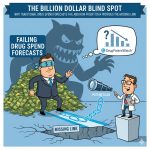
1. The Strategic Imperative of Loss of Exclusivity Forecasting
In the high-stakes theater of the global pharmaceutical industry, the lifecycle of a blockbuster asset is a narrative arc defined by a single, seismic event: the Loss of Exclusivity (LOE). Industry analysts project that between 2025 and 2030, the sector will witness a “patent cliff” of tectonic magnitude, placing nearly $236 billion in annual branded revenue at risk.1 For the executive leadership of an innovator company, LOE represents a predictable yet existential financial shock—a “regime change” in time-series terms where a monopoly state collapses into a competitive equilibrium.2 For the generic challenger, it is the precise moment where years of legal maneuvering and formulation science transmute into market share. For the investor, it is the inflection point where valuation models are stress-tested against the brutal reality of price erosion.
Forecasting this event is no longer a matter of simple arithmetic or checking a date in the FDA’s Orange Book. The modern pharmaceutical landscape is characterized by “patent thickets,” complex litigation settlements, regulatory exclusivities that overlap and extend beyond patent terms, and the emergent disruption of the Inflation Reduction Act (IRA). A forecast error of a single quarter for a franchise like Eliquis (apixaban) or Stelara (ustekinumab) does not merely represent a rounding error; it represents a variance of hundreds of millions of dollars, a swing capable of altering stock valuations, forcing R&D restructuring, or triggering hostile takeovers.2
This report provides an exhaustive, granular examination of the methodologies, legal frameworks, and strategic variables required to accurately forecast generic drug launches and the subsequent erosion of branded market share. We move beyond the rudimentary “Naïve” models to explore advanced parametric simulations, the impact of biosimilar “slopes” versus small-molecule “cliffs,” and the utilization of cutting-edge intelligence platforms like DrugPatentWatch to transform opaque legal data into actionable commercial foresight.
1.1 The Anatomy of the Regime Change
To forecast a generic launch, one must first understand the economic physics of the event. Standard econometric models often fail to capture the nuances of a generic launch because they assume continuity. A generic launch is a singularity—a discontinuity where historical brand performance becomes instantly irrelevant as a predictor of future volume.
When a generic enters the market, the demand curve does not merely shift; it bifurcates. The brand manufacturer moves from being a price-setter in a monopolistic environment to a price-taker (or volume-loser) in a commoditized oligopoly. Research into pharmaceutical life cycles suggests that strategic accuracy requires matching the methodology to the forecast horizon.2
The forecasting challenge is dual-pronged:
The Date: When, exactly, will the barrier to entry fall? This is a legal and regulatory question governed by the Hatch-Waxman Act, patent litigation, and settlement negotiations.
The Curve: How fast will the brand erode once the barrier falls? This is a commercial question governed by the number of entrants, the therapeutic class, and the presence of authorized generics.
For the strategist, understanding this bifurcation is not merely academic; it is the foundation of defensive planning. If a brand team anticipates a “cliff,” they may cease promotion entirely months before LOE to harvest maximum profit. If they anticipate a “slope,” they may invest in patient loyalty programs or complex delivery devices to retain share. The error bars on these forecasts are expensive. A naive moving average model, looking backward at a stable growth trend, will project continued success right over the cliff’s edge. It provides a rearview mirror perspective when a forward-looking radar is essential.2
2. The Legal Determinants of Launch Timing
In the modern pharmaceutical industry, the launch date is not fixed; it is a variable dependent on the outcome of a high-stakes chess match played in federal courts.2 Relying solely on the nominal expiration date of a patent listed in the FDA’s Approved Drug Products with Therapeutic Equivalence Evaluations (the “Orange Book”) is a fundamental error. The “true” launch date is a function of the interplay between patent terms, regulatory exclusivities, and litigation outcomes.
2.1 The Hatch-Waxman Framework and Paragraph IV
The Drug Price Competition and Patent Term Restoration Act of 1984 (Hatch-Waxman) created the modern generic industry by establishing the Abbreviated New Drug Application (ANDA). Crucially, it established the Paragraph IV (PIV) certification, which allows a generic applicant to challenge a brand’s patents before they expire.3
When a generic files an ANDA with a PIV certification, they are asserting that the brand’s patents are invalid, unenforceable, or will not be infringed by the generic product.3 This filing is the “starting gun” for the forecasting timeline. It signals that a competitor has not only developed a bioequivalent product but has also invested significantly in legal counsel to break the brand’s monopoly. For the forecaster, the filing of a PIV certification is the first tangible data point that the nominal patent expiration date is under threat.
2.2 The 30-Month Stay: The Provisional Floor
Upon receiving notice of a PIV certification, the brand manufacturer has 45 days to file a patent infringement lawsuit. This filing triggers an automatic 30-month stay of FDA approval.2 For a forecaster, this 30-month period acts as a provisional “floor” for the generic launch date. The FDA is legally barred from approving the generic until this stay expires, or until a district court rules in favor of the generic.2
However, the 30-month stay is rarely the final word. Litigation often extends beyond this period, or settles before it concludes. Data shows that PIV certifications are often filed a median of 5.2 years after the brand drug’s approval, but the median time between the stay expiration and actual launch is 3.2 years, indicating that litigation or settlements often delay entry well past the statutory stay.5 The forecaster must therefore model the likely duration of litigation, which varies by court district (e.g., the “rocket docket” of the Eastern District of Texas vs. the slower District of Delaware) and the complexity of the patent estate.
2.3 The 180-Day Exclusivity: The Forecasting “Step”
To incentivize generics to undertake the risk of litigation, the Hatch-Waxman Act grants the first company to file a substantially complete ANDA with a PIV certification (the “First-to-File” or FTF) 180 days of market exclusivity.2 During this six-month window, no other generic can enter the market (unless they have also secured a court victory or the FTF forfeits rights).
For the forecaster, this creates a distinct “step function” in the erosion curve:
Phase 1 (The Duopoly): During the 180-day exclusivity, there is only one generic competitor (plus potentially an Authorized Generic). The price erosion is moderate (20-30%), and the brand retains some share.
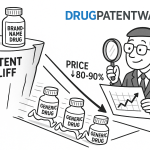
Phase 2 (The Cliff): Once the 180 days expire, the “floodgates” open. Multiple generics enter, and prices collapse by 90% or more.7
Table 1: The Impact of Generic Entrants on Price Erosion
Number of Generic Competitors
Approximate Price Reduction (vs. Brand Price)
Market Dynamics
1 (Exclusivity Period)
20% – 30%
Duopoly; Brand retains some volume; “Step” phase.
2
50% – 54%
Competitive pressure begins; rapid share shift.
3 – 5
60% – 79%
Commoditization accelerates.
6 – 10+
80% – 95%
“The Cliff”; Price approaches marginal cost of production.
Sources: 7
This table illustrates the brutal arithmetic of competition. If a forecaster assumes a linear degradation of price, they will severely overestimate revenue in the first six months (if they model a cliff immediately) or underestimate the cliff (if they model a smooth decline). The “step” is a distinct structural feature of the U.S. market that must be hard-coded into any uptake model.
2.4 Patent Term Extensions and Adjustments
Forecasters must also account for Patent Term Extensions (PTE) and Patent Term Adjustments (PTA). PTE compensates innovators for the time lost during the FDA regulatory review process, potentially adding up to five years to the patent life.10 PTA compensates for delays caused by the USPTO during patent prosecution.11 These are not “bonus” years; they are statutory rights that restore the effective patent life eroded by bureaucracy.
DrugPatentWatch plays a critical role here, as its dashboard features allow analysts to calculate these adjustments precisely, ensuring that the “base case” expiration date is accurate before litigation scenarios are applied.11 A manual calculation error here—missing a 400-day PTA adjustment, for instance—can shift a forecast by over a year, a disastrous error for a blockbuster drug.
3. Quantitative Methodologies for Launch Forecasting
Once the potential launch dates are bounded by legal parameters, the analyst must select the appropriate quantitative engine to model the uptake. Research indicates that simple models often fail in the face of the “singularity” of LOE. The choice of model is not just a statistical preference; it is a strategic decision that determines how much risk the organization is willing to tolerate.
3.1 The Failure of Naïve and Moving Average Models
At the foundational level, analysts often employ Naïve Forecasting, assuming sales in the next period will mirror the most recent period. While useful as a benchmark to test more complex models, this is catastrophically inadequate for the dynamic shock of a generic launch.2 Similarly, moving averages suffer from significant “lag.” When market share flips by 80% in 90 days, a moving average provides a “rearview mirror” perspective. It smooths out the very volatility that defines the event, leading to massive over-projections of brand revenue in the critical first quarters post-LOE.
3.2 ARIMA: Handling Non-Stationarity
Auto-Regressive Integrated Moving Average (ARIMA) models offer a significant improvement. By “differencing” the time series to stabilize the mean and variance, ARIMA can model the complex autocorrelation structures found in prescription data.2 ARIMA is particularly useful for modeling the pre-LOE baseline, capturing seasonality (e.g., allergy seasons for antihistamines) and secular trends (e.g., population aging). However, purely statistical models struggle with the event nature of a launch if there is no historical data for that specific drug’s erosion. An ARIMA model trained on ten years of monopoly data cannot “predict” a cliff it has never seen; it requires external intervention or “eventing” to introduce the shock.
3.3 Analog Forecasting: The Industry Standard
To address the lack of direct historical data for a specific drug’s erosion, the industry relies heavily on Analog Forecasting. This method involves selecting historical “twins”—drugs that share key characteristics with the target asset—and using their erosion curves as a proxy.2
Key Variables for Analog Selection:
Therapeutic Area: Chronic medications (e.g., statins) tend to erode differently than acute medications (e.g., antibiotics). Patients on chronic meds may be “sticky” due to fear of destabilization, whereas acute meds are often initiated at the pharmacy counter where substitution is easiest.
Route of Administration: Oral solids (tablets/capsules) erode fastest because substitution is mechanically simple. Injectables, inhalers, and patches (“complex generics”) erode slower due to device differences and patient training requirements.
Competitive Density: The number of expected entrants, derived from ANDA filing data, is the single strongest predictor of price erosion.2
Payer Mix: Markets dominated by commercial payers with aggressive formulary management switch faster than protected classes (e.g., Medicare Part D “protected classes” like antipsychotics).
By utilizing databases to filter thousands of historical launches, analysts create an “evented” forecast: combining a baseline market volume forecast (growing due to demographics) with an analog-derived market share curve.2 This approach grounds the forecast in empirical reality rather than theoretical abstraction.
3.4 Parametric Simulation and Innovation Diffusion
For a more mathematical approach, analysts utilize diffusion models (like the Bass Diffusion Model), modified for “dis-adoption” or erosion. The standard Bass model describes the adoption of a new technology; the “Inverse Bass” describes the abandonment of the old one.
The Innovation Coefficient ($p$): In the generic context, this models the rate at which pharmacies and payers force an immediate switch—the “cliff” effect driven by formulary mandates. This coefficient is typically very high for small molecules.2
The Imitation Coefficient ($q$): This represents the slower, word-of-mouth adoption often seen in complex generics or biosimilars where physician confidence determines the switch rate. For a drug like Advair (inhaler), the imitation coefficient is significant; for Lipitor (tablet), the innovation coefficient dominates.2
3.5 Risk-Adjusted Net Present Value (rNPV)
For valuation purposes (M&A or Portfolio Management), the risk-adjusted Net Present Value (rNPV) is the gold standard.14 Unlike standard DCF, rNPV explicitly incorporates the probability of success (POS) at each stage. In the context of generic forecasting, the “risk” is not clinical failure (the drug is already approved), but legal failure (patent invalidation) or commercial failure (at-risk launch damages).
Where $P(Legal Outcome)$ is derived from the probability of winning Paragraph IV litigation or the likelihood of a settlement entering at a specific date.16 The forecast must run multiple scenarios—Early Entry (generic win), Late Entry (brand win), and Settlement Entry—and weight them by probability. This provides a “blended” valuation that reflects the true uncertainty of the asset.
4. The Erosion Curve: Small Molecules vs. Biologics
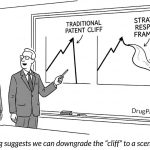
A critical distinction in modern forecasting is the divergence between small molecule generics and biosimilars. The “Patent Cliff” applies strictly to small molecules; biologics face a “Patent Slope.” This distinction is not merely semantic; it represents two fundamentally different market structures.
4.1 Small Molecule Dynamics: The Cliff
For traditional small molecules, generic entry is a true cliff. Erosion is breathtakingly fast. It is not uncommon for 80% of the brand’s market to vanish within 30 to 90 days of the first generic launch.7 This is driven by automatic pharmacy substitution laws in the U.S., where pharmacists are mandated or heavily incentivized to dispense the AB-rated generic without physician intervention.7 The patient often does not even know a switch has occurred until they see a different shaped pill. The “decision maker” here is the pharmacy benefit manager (PBM) algorithm, not the doctor or patient.
4.2 Biosimilar Dynamics: The Slope
Biosimilars do not enjoy automatic substitution (unless designated as “interchangeable,” a high regulatory bar that few have cleared). Adoption relies on payer formularies and physician comfort. Consequently, the erosion curve is “scalloped” or gradual.7
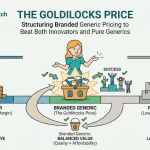
Price Erosion: Slower decline, bottoming out at ~50-70% of brand price (vs. 5-10% for generics).7
Competitor Count: Lower density (2-5 entrants vs. 10+ for generics) due to high development costs. Developing a biosimilar can cost $100M-$200M, whereas a small molecule generic might cost $1M-$5M.17 This high barrier to entry prevents the hyper-fragmentation that destroys margins in the small molecule space.
Defensive Tactics: Innovators use “patent thickets” and rebate walls to slow uptake. By offering volume-based rebates to PBMs, brands can make it financially disadvantageous for a payer to switch to a slightly cheaper biosimilar, effectively locking the market.18
Table 2: Small Molecule vs. Biosimilar Erosion Dynamics
Characteristic
Small Molecule (Generic)
Biosimilar
Erosion Speed
Very Rapid (“Cliff”)
Gradual (“Slope”)
Substitution
Automatic (Pharmacy Level)
Prescriber/Payer Driven
Price Floor
~5-10% of Brand Price
~50-70% of Brand Price
Competitor Count
High (10+)
Low to Moderate (2-5)
Key Driver
State Substitution Laws
Payer Contracting/Rebates
Source: 7
4.3 The Humira Case Study: Engineering the Slope
The defense of Humira (adalimumab) by AbbVie is the definitive case study in managing the slope. By constructing a fortress of over 100 patents (“patent thicket”) covering formulation, manufacturing processes, and dosing regimens, AbbVie delayed biosimilar entry in the U.S. until 2023, years after European entry.18 Even after entry, AbbVie utilized deep rebate contracting to maintain formulary position, slowing the erosion curve significantly compared to a traditional generic launch. For the forecaster, Humira teaches that legal strategy can effectively “flatten” the curve, transforming a potential cliff into a manageable decline.
5. Strategic Variables: Settlements, Authorized Generics, and At-Risk Launches
Advanced forecasting requires modeling the strategic “game theory” played between brand and generic companies. The numbers on a spreadsheet are often the result of fierce negotiation and brinkmanship.
5.1 Authorized Generics (AG): The Brand’s Trojan Horse
An Authorized Generic is a brand-manufactured drug sold under a generic label. It is a strategic weapon used to mitigate revenue loss. By launching an AG during the 180-day exclusivity period of the first-to-file generic, the brand captures a portion of the generic market and destroys the generic’s profit margin.21
Impact: The presence of an AG reduces the first-filing generic’s revenues by 40% to 52% during the exclusivity period.21
Forecasting Adjustment: If an AG is expected (high probability for blockbusters), the forecast for the independent generic entrant must be aggressively discounted. The AG effectively splits the generic market in half during the most lucrative period, acting as a spoiler.
5.2 Settlement Strategies and Volume Restrictions
Litigation often ends in settlement. A modern trend, exemplified by the Revlimid (lenalidomide) case, is the “volume-limited” license. Bristol Myers Squibb settled with generics (Natco/Teva) allowing them to launch in 2022, but restricted their volume to a small percentage of the market (e.g., <10%), scaling up gradually until full entry in 2026.24
Implication: Forecasters cannot simply toggle from 0% to 100% generic share. They must model a “controlled release” of generic volume, where the brand retains the majority share for years post-launch. This turns the forecasting exercise into a tracking of confidential settlement terms (where public) and estimation of volume caps.
5.3 The “At-Risk” Launch: High Risk, High Reward
An “at-risk” launch occurs when a generic launches after FDA approval but before patent litigation is resolved. If the generic loses the court case later, they are liable for massive damages—typically the brand’s lost profits, not just the generic’s gained profits.1
Case Study: Plavix (Clopidogrel)
Apotex launched a generic Plavix at risk in 2006. The court later found the patent valid. Apotex was ordered to pay $442 million in damages to Sanofi/BMS.27 This effectively wiped out the gains from the launch and served as a stark warning to the industry.
Case Study: Protonix (Pantoprazole)
Teva and Sun Pharma launched at risk. After losing the patent case, they paid a staggering $2.15 billion in settlement damages.26 This remains one of the largest patent damages settlements in history.
These catastrophic failures have made at-risk launches rarer, but they remain a “black swan” variable in forecasting. Advanced models use Monte Carlo simulations to weigh the probability of an at-risk launch against the magnitude of potential damages.2 If the patent is weak (e.g., a method-of-use patent rather than composition of matter), the probability of at-risk launch increases.
6. The Role of Competitive Intelligence and Data
The difference between a mediocre forecast and a precise one often lies in the quality of the underlying intelligence. Tools like DrugPatentWatch have become indispensable for this purpose, providing the structured data required to feed rNPV and ARIMA models.
6.1 Leveraging DrugPatentWatch for Forecasting
DrugPatentWatch aggregates and structures data that is otherwise siloed in disparate government databases. Key applications for forecasters include:
Litigation Tracking: Monitoring PIV cases to predict the end of the 30-month stay or identify settlement signals. A sudden quiet period in a docket often precedes a settlement announcement.12
Tentative Approvals: Identifying which generics have received FDA tentative approval. This is a crucial signal; it means the generic is scientifically ready and only waiting for the legal barrier to fall.11
Patent Expiration Dashboards: Providing adjusted expiration dates that account for PTE and PTA, preventing the “base case” errors common with manual USPTO searches. A dashboard that flags a change in exclusivity status can alert a forecaster to a new delay or acceleration.10
Prior Art & FTO Analysis: Helping generic companies assess the strength of a brand’s patent thicket to calculate the Probability of Success (POS) for a PIV challenge. By analyzing citation networks, analysts can see if a patent is frequently cited as prior art, indicating its foundational status, or if it is isolated and potentially weak.31
6.2 Freedom-to-Operate (FTO) Analysis
For the generic challenger, forecasting their own launch capability requires a rigorous Freedom-to-Operate analysis. This involves dissecting the brand’s claims to ensure the generic product does not infringe. A “Clean Launch” strategy is essential to avoid the treble damages associated with willful infringement.31 This is not just a legal box-checking exercise; it is a vital input for the “Probability of Launch” variable in the forecast model.
7. The New Variable: The Inflation Reduction Act (IRA)
The Inflation Reduction Act of 2022 has introduced a massive distortion into the forecasting landscape, specifically regarding the “Pill Penalty.”
7.1 The Small Molecule vs. Biologic Distortion
The IRA authorizes Medicare to negotiate prices for top-spending drugs. However, the timeline differs significantly between modalities:
Small Molecules: Eligible for negotiation 9 years after approval.
Biologics: Eligible for negotiation 13 years after approval.33
This creates a “Pill Penalty” where small molecules face a government-mandated revenue cliff (price negotiation) before they face the patent cliff. The effective commercial life of a small molecule is capped at 9 years, regardless of its patent estate.
Forecasting Impact: For small molecules, the terminal value in DCF/rNPV models must be truncated or severely discounted at Year 9, even if patents run to Year 14. This fundamentally alters the ROI of developing small molecule drugs and may shift industry investment toward biologics.34 The “tail” of the revenue curve is no longer a gentle decline; it is chopped off by regulation.
7.2 Negotiation as a Generic Deterrent
The IRA’s negotiated “Maximum Fair Price” (MFP) effectively lowers the ceiling for generic pricing. If the brand price is already forced down by 40-60% via negotiation, the margin available for a generic entrant is compressed. This reduces the incentive for generics to file PIV challenges, potentially leading to fewer generic entrants and a slower erosion curve (a “softer” cliff) but a lower overall market value. The “size of the prize” for the generic challenger shrinks, which may paradoxically extend the brand’s volume dominance (albeit at a lower price) by discouraging competition.35
8. Advanced Analytical Techniques: AI and Machine Learning
The future of forecasting lies in the integration of Artificial Intelligence (AI) and Machine Learning (ML). The sheer volume of data—thousands of patents, court dockets, and pricing data points—exceeds human processing capacity.
8.1 Generative AI for Patent Analysis
Generative AI models are now being used to scrape and synthesize unstructured text from thousands of patent documents and court dockets. These tools can predict the likelihood of a patent being invalidated based on the judge’s history, the specific claims, and prior art citations. Instead of manually reading 100 patents in a thicket, AI can generate a “heat map” of vulnerability.37
8.2 Predictive Analytics for Litigation Outcomes
Machine learning algorithms (e.g., Random Forest, Gradient Boosting) are applied to litigation data to forecast the probability of a settlement vs. a trial verdict. Features such as the court venue (e.g., the “rocket docket” of the Eastern District of Texas), the specific law firm involved, and the citation network of the patent are used to train these models. A model might flag that “Judge X in District Y rules for the generic 70% of the time on method-of-use patents,” allowing the forecaster to adjust the POS variable in their rNPV model accordingly.30
9. Conclusion: The Art of the Evented Forecast
Forecasting generic launches and market erosion is no longer a linear extrapolation exercise. It is a multidimensional discipline that requires the synthesis of legal intelligence, econometric modeling, and strategic game theory. The “Naïve” forecaster sees a patent expiration date. The expert forecaster sees a probability distribution of launch dates, shaped by 30-month stays, PIV challenges, and settlement negotiations.
The transition from the “Cliff” of the small-molecule era to the “Slope” of the biologic era, compounded by the regulatory distortions of the IRA, demands a new level of sophistication. Tools like DrugPatentWatch provide the raw intelligence, but the strategic edge comes from the analyst’s ability to model the human and legal decisions that drive the numbers—from the boardroom decision to launch an Authorized Generic to the courtroom gamble of an at-risk launch.
In this environment, the most valuable forecast is not a single number, but a dynamic array of scenarios—a “wargame” simulation that allows the organization to prepare for the regime change, however and whenever it arrives.
Key Takeaways
The Date is a Distribution: Never rely on a single Orange Book patent expiration date. The actual launch is a variable determined by the 30-month stay, PIV litigation, and settlements.
Litigation Drivers: For high-value drugs, courtroom outcomes (and settlements) matter more than clinical data. The “At-Risk” launch is a rare but high-impact “black swan” event (e.g., Plavix, Protonix).
Biosimilars $\neq$ Generics: Biologics face a “slope,” not a “cliff.” Erosion is driven by payer contracting and rebate walls, not just pharmacy substitution.
The IRA Distortion: The Inflation Reduction Act introduces a “Pill Penalty,” capping small molecule revenue at 9 years, effectively creating an artificial cliff before patents expire.
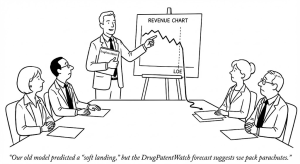
Strategic Defense: Innovators use Authorized Generics and volume-limited settlements (e.g., Revlimid) to engineer a “soft landing,” retaining revenue long after nominal LOE.
Data is Critical: Platforms like DrugPatentWatch are essential for accurate PTE/PTA calculations and monitoring litigation triggers that standard models miss.
Frequently Asked Questions (FAQ)
Q1: How does the Inflation Reduction Act (IRA) specifically alter the “Terminal Value” calculation in an rNPV model for a small molecule drug?
A1: The IRA fundamentally truncates the revenue tail. Previously, models assumed peak revenue could be sustained until patent expiry (e.g., year 12-14). Under the IRA, small molecules are eligible for price negotiation at Year 9. This means the rNPV model must assume a forced price reduction (potentially 40-60%) starting in Year 9, regardless of patent status. This significantly lowers the Net Present Value and forces companies to recoup R&D investment faster.
Q2: Why do “At-Risk” launches usually result in lost profits damages rather than reasonable royalties, and how does this affect generic strategy?
A2: Courts typically award “lost profits” because the generic’s entry directly cannibalizes the brand’s sales. Since the brand sells at a high margin and the generic at a low margin, the brand’s lost profit is far higher than the generic’s gained profit. As seen in the Protonix case ($2.15B damages), this creates an asymmetric risk profile. Consequently, generics are increasingly risk-averse, preferring settlements over at-risk launches unless the patent case is overwhelmingly strong.
Q3: What is the “Scalloped Curve” in generic price erosion, and when should I use it in my forecast?
A3: The “Scalloped Curve” describes a stepwise price decline rather than a smooth exponential decay. It occurs when new competitors enter in waves. For example, the first 180 days (1 entrant) see a 20% drop. The next wave (2-3 entrants) pushes it to 50%. The final flood (6+ entrants) pushes it to 90%. You should use a scalloped model when forecasting “First-to-File” scenarios where the 180-day exclusivity creates a distinct duopoly phase before full commoditization.
Q4: How does a “Volume-Limited Settlement” like the one for Revlimid impact the standard generic uptake curve?
A4: A volume-limited settlement artificially flattens the uptake curve. Instead of the generic capturing 80% share in Year 1, the settlement might cap them at 10% volume. This effectively turns a “cliff” into a negotiated “slope.” Forecasters must manually override standard erosion algorithms (like Bass Diffusion) to reflect these hard caps, modeling the specific volume tranches agreed upon in the settlement until the unrestricted date.
Q5: In Analog Forecasting, why is “Route of Administration” often a more predictive variable than “Therapeutic Area”?
A5: Route of Administration dictates the friction of substitution. Oral solids (tablets) are easy to substitute (automatic pharmacy dispensing). Injectables, inhalers, or patches are “complex generics” where device differences or patient training create stickiness. A cardiologist might switch a tablet instantly, but a pulmonologist might hesitate to switch an inhaler if the device mechanics differ. Therefore, an oral oncology drug erodes faster than an inhaled asthma drug, even if the therapeutic area suggests high urgency.