1. The Billion-Dollar Illusion of the Binary Event
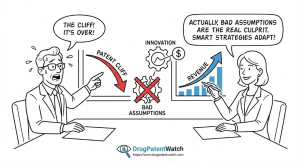
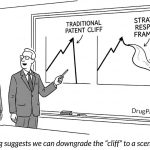
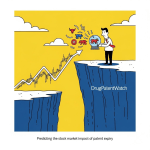
In the lexicon of pharmaceutical finance, few terms evoke as much visceral dread as the “patent cliff.” The metaphor itself suggests a sudden, violent, and irreversible drop—a moment where the ground beneath a blockbuster franchise simply vanishes, sending revenue plummeting into an abyss of generic erosion. For decades, this imagery served as a useful shorthand for the lifecycle of small-molecule drugs. It captured the brutal efficiency of the Hatch-Waxman Act, where the expiration of a primary patent could trigger an 80% to 90% collapse in market share within weeks. Executives and investors were conditioned to view the Loss of Exclusivity (LOE) as a singular, binary event: a date on a calendar that marked the transition from monopoly to commodity.
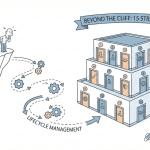
This binary view, however, has become a dangerous anachronism. It is a relic of a simpler era, ill-suited to the complex, multi-layered reality of the modern biopharmaceutical landscape. Today, the expiration of a patent is rarely a cliff in the traditional sense. Instead, it is the opening move in a protracted endgame of litigation, regulatory maneuvering, payer negotiation, and lifecycle management. The revenue curve that follows is not a vertical line, but a jagged slope—sometimes gentle, sometimes steep, but always shaped by strategic choices made years in advance.
The persistence of the “cliff” narrative is not merely a linguistic laziness; it is a source of profound analytical failure. It leads to what might be termed the “Assumption Trap”: the tendency to model future revenue based on statutory patent terms rather than commercial realities. Analysts and executives frequently assume that a patent grant equals market exclusivity, that all competitors face identical barriers to entry, and that the regulatory environment is static. These assumptions are demonstrably false.
Consider the landscape of 2025. The industry is bracing for a wave of expirations that puts over $200 billion in annual branded revenue at risk. Yet, the companies that will weather this storm are not necessarily those with the longest patent terms, but those with the most sophisticated understanding of the “grey zone” between patent expiry and effective competition. The true killer of revenue is not the expiration date itself, but the bad assumptions that leave organizations blindsided by the nuance of the erosion curve.
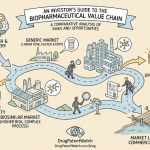
This report dismantles those assumptions. By dissecting the anatomy of modern exclusivity, we reveal that the “cliff” is an engineered phenomenon, subject to manipulation through legal “thickets,” regulatory settlements, and manufacturing trade secrets. We explore why the rise of biologics has fundamentally altered the physics of market entry, transforming the cliff into a slope. We examine how new regulatory forces—from the Inflation Reduction Act to the FTC’s Orange Book crackdown—are creating “artificial cliffs” that defy traditional IP forecasting. And crucially, we demonstrate how granular competitive intelligence, leveraged through platforms like DrugPatentWatch, can transform patent data from a historical record into a predictive strategic weapon.
The stakes could not be higher. For the pharmaceutical strategist, the difference between a “cliff” and a “slope” is not just a line on a chart; it is the difference between an existential crisis and a managed transition that preserves billions in shareholder value.
2. The Evolution of Exclusivity: From Hatch-Waxman to the Biological Era
To understand why our forecasting models fail, we must first understand the legal and economic architecture that underpins them. The pharmaceutical market is not a free market; it is a government-granted monopoly limited by time. The rules governing that time have shifted tectonically over the last forty years, yet many forecasting models remain rooted in the logic of the 1980s.
2.1 The Small-Molecule Paradigm: The Brutal Efficiency of Hatch-Waxman
The Drug Price Competition and Patent Term Restoration Act of 1984, commonly known as Hatch-Waxman, was designed with a dual purpose: to incentivize innovation by restoring patent terms lost during clinical trials, and to accelerate the entry of generic competitors once those patents expired. For small-molecule drugs—chemically synthesized compounds like statins, antidepressants, and proton pump inhibitors—the Act created a frictionless pathway to market destruction.
A generic manufacturer does not need to prove safety or efficacy from scratch; they merely need to prove bioequivalence. This low barrier to entry means that the moment a patent expires, multiple competitors can flood the market. The resulting price war is swift and merciless. State-level substitution laws mandate that pharmacists dispense the cheaper generic version unless a doctor explicitly writes “dispense as written.” This mechanism decouples the purchasing decision from the patient and the prescriber, placing it firmly in the hands of the pharmacy and the payer.
The result is the classic “Lipitor Cliff.” When Pfizer’s atorvastatin lost exclusivity in 2011, it wasn’t just a decline; it was an evaporation. The market efficiency was nearly perfect. This creates a psychological anchor for the industry: we expect LOE events to be catastrophic.
2.2 The Rise of Biologics and the BPCIA
The pharmaceutical industry of 2025, however, is dominated by biologics. These are large, complex molecules derived from living cells—monoclonal antibodies, fusion proteins, and gene therapies. They are orders of magnitude more complex than their small-molecule predecessors.
The regulatory framework for biologics, the Biologics Price Competition and Innovation Act (BPCIA) of 2009, reflects this complexity. Unlike the Hatch-Waxman pathway, the biosimilar pathway (351(k)) requires a demonstration that the new product is “highly similar” to the reference product, with no clinically meaningful differences. This is a far higher hurdle than bioequivalence.
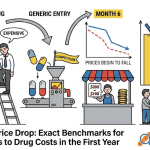
Table 1: The Structural Divergence of Exclusivity
Feature
Small Molecule (Hatch-Waxman)
Biologic (BPCIA)
Nature of Asset
Chemical Synthesis (Simple)
Biological Expression (Complex)
Development Cost (Generic/Biosimilar)
$2M – $10M
$100M – $250M
Development Timeline
2 – 3 Years
7 – 8 Years
Barrier to Entry
Low (Multiple entrants day 1)
High (Few capable competitors)
Substitution
Automatic (Pharmacy Level)
Restricted (Interchangeability required)
Price Erosion (Year 1)
80% – 90%
15% – 40%
Revenue Curve Shape
Vertical Cliff
Gradual Slope
This structural divergence creates a “manufacturing moat.” Even if a patent expires, a competitor cannot simply reverse-engineer a biologic in a garage lab. They must build a sophisticated fermentation and purification facility, often costing hundreds of millions of dollars. This limits the pool of potential competitors to well-capitalized players like Amgen, Sandoz, and Samsung Bioepis, preventing the “race to the bottom” pricing dynamics seen in small molecules.
Consequently, forecasting a biologic LOE using a small-molecule decay curve is a mathematical error. The revenue erosion is stickier, slower, and far more dependent on payer contracting than on pharmacy substitution.
2.3 The “Effective Patent Life” Fallacy
A critical concept in this evolution is the distinction between “nominal” patent life and “effective” patent life. A patent grants 20 years of protection from the filing date. However, the grueling marathon of clinical trials and FDA review consumes 10 to 12 years of that term before the drug ever generates a dollar of revenue.
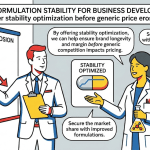
The “effective life”—the period of commercial exclusivity—is often just 7 to 10 years. Bad assumptions occur when analysts look at the patent expiration date (20 years out) without adjusting for the regulatory delays or the Patent Term Extensions (PTE) that can restore up to five years of lost time. Platforms like DrugPatentWatch are essential here because they do not just track the calendar date; they calculate the adjusted expiration, factoring in PTE, pediatric exclusivity (an extra 6 months), and orphan drug exclusivity (7 years). Ignoring these statutory adjustments can lead to revenue forecasts that are off by hundreds of millions of dollars.
3. The Psychology of Forecasting: Why We Get It Wrong
If the data is available, why do forecasts fail so frequently? The answer lies not in the numbers, but in the psychology of the people interpreting them. The pharmaceutical industry is rife with “Optimism Bias”—a cognitive distortion where decision-makers consistently overestimate the likelihood of positive outcomes and underestimate the probability of negative shocks.
3.1 The Invincibility Delusion
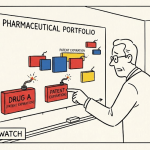
When a company builds a “patent thicket”—a dense web of secondary patents covering formulations, dosages, and manufacturing methods—executives often fall into the trap of believing the thicket is impenetrable. They confuse the existence of a patent with its enforceability.
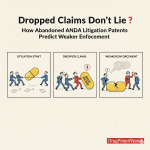
In reality, patent thickets are often “paper tigers.” A competitor does not need to invalidate every patent in the thicket; they only need to invalidate the few that block their specific path to market, or “design around” the others.
“The optimism bias refers to our tendency to overestimate our likelihood of experiencing positive events and underestimate our likelihood of experiencing negative events.” — The Decision Lab1
In the context of pharma, this bias manifests when management assumes that a secondary patent on a “new crystalline form” will provide the same 30-month stay of execution as the primary composition-of-matter patent. They forecast revenue out to 2032 based on a flimsy formulation patent, ignoring the high probability that a generic challenger will successfully file a Paragraph IV certification and invalidate it.
3.2 The Linear Projection Fallacy
Another common error is the assumption of linearity. Analysts often project revenue growth in a straight line, applying a standard “decay rate” post-LOE. But biological systems and markets are non-linear. They are subject to “tipping points.”
For example, a drug might hold its price steady for years despite generic competition, only to collapse overnight when a single major PBM (Pharmacy Benefit Manager) like CVS Caremark or Express Scripts removes it from the formulary. This happened to Lantus (insulin glargine) and increasingly to Humira. The revenue curve looked flat right up until the moment it fell off a cliff—not because of patents, but because of a contracting decision. Linear models fail to capture these binary commercial shocks.
3.3 The “Sunk Cost” of R&D
Optimism bias is compounded by the “sunk cost fallacy.” Having spent $2.5 billion developing a drug, organizations are psychologically desperate to believe in its longevity. This leads to “defensive forecasting,” where internal teams produce optimistic models to justify the initial R&D investment or to support the stock price. It is a form of corporate dissonance reduction: We cannot have spent ten years on this for only five years of revenue.
This is why independent, data-driven intelligence is crucial. An external platform like DrugPatentWatch does not care about sunk costs; it cares about valid claims and litigation statistics. It provides a “cold shower” of reality that internal teams often cannot provide for themselves.
4. The Strategic Fortress: Thickets, Hopping, and the Art of Delay
If the “cliff” is the threat, the “thicket” is the response. Over the last decade, innovator companies have developed sophisticated strategies to engineer the erosion curve, converting a sudden drop into a managed decline.
4.1 The Humira Masterclass: Weaponizing Complexity
The definitive case study in defensive IP strategy is AbbVie’s management of Humira (adalimumab). The primary composition-of-matter patent for Humira expired in 2016. In a simple world, competition should have arrived immediately. instead, AbbVie maintained its U.S. monopoly until 2023.
How? By filing over 130 patents covering every conceivable aspect of the drug:
Method of Treatment: Patents on using the drug for specific conditions like Crohn’s disease or uveitis.
Formulation: Patents on high-concentration versions that reduce injection volume.
Manufacturing Process: Patents on the specific pH, temperature, and stirring speeds of the fermentation tanks.
Device: Patents on the firing mechanism of the autoinjector pen.
This “thicket” created a legal minefield. A biosimilar competitor might invalidate the formulation patent but still be blocked by the manufacturing patent. AbbVie used this leverage to settle with competitors. They allowed Amgen, Sandoz, and others to launch at specific dates in 2023, effectively “licensing” the competition. This turned an unpredictable cliff into a predictable, tiered entry, allowing AbbVie to harvest billions in “bonus” revenue between 2016 and 2023.
4.2 Product Hopping: The “Hard” vs. “Soft” Switch
Another strategy is “product hopping”—moving patients to a new, patent-protected version of the drug just before the old one loses exclusivity.
The Soft Switch:
The company introduces a new formulation (e.g., extended release) and markets it aggressively, hoping physicians will switch voluntarily.
Example: AstraZeneca switching patients from Prilosec (omeprazole) to Nexium (esomeprazole). They marketed Nexium as superior (“the purple pill”) while leaving Prilosec on the market. This is generally legal and relies on persuasion.
The Hard Switch:
The company withdraws the old product from the market entirely, forcing patients to switch to the new one because the old one is no longer available.
Example: Forest Laboratories with Namenda (memantine). They attempted to withdraw Namenda IR to force patients onto Namenda XR before generics arrived.
The Failure: The courts intervened. In New York ex rel. Schneiderman v. Actavis PLC, the Second Circuit ruled that withdrawing a product solely to block generic competition violates antitrust laws. Forest was forced to keep the IR version available.
Forecasting Implication: Analysts assuming a “hard switch” will succeed are betting against antitrust precedent. A forecast that assumes 100% conversion to a new formulation is likely flawed; a realistic model must account for “leakage” back to the generic version of the old product.
4.3 The Settlement Game
Settlements are the “dark matter” of pharmaceutical forecasting. They are often confidential, yet they dictate the timeline of entry. Innovators often agree to let a generic launch early in exchange for a delay that is less than the full patent term but longer than an “at-risk” launch.
Case Study: Revlimid (lenalidomide). Bristol Myers Squibb faced a cliff for its multiple myeloma blockbuster. Instead of a free-for-all, they negotiated “volume-limited” licenses. Generics launched in 2022, but were capped at a small percentage of the market, ramping up slowly until full entry in 2026.
The Result: Revlimid revenue declined, but it did not crash. In 2024, revenue fell only 5.3% to $11.54 billion—a managed erosion that preserved immense value.
5. Regulatory Disruption: The New “Artificial Cliffs”
If historical data is losing its predictive power, it is largely because the rules of the game are being rewritten in Washington. Two major regulatory shifts—the Inflation Reduction Act (IRA) and the Federal Trade Commission’s (FTC) crackdown on the Orange Book—are introducing “artificial cliffs” that have nothing to do with traditional patent expiration.
5.1 The IRA: Negotiation as Expropriation
The Inflation Reduction Act of 2022 fundamentally alters the lifecycle of top-selling drugs. It grants Medicare the power to “negotiate” (effectively set) prices for drugs that have been on the market for a certain period without generic competition.
Small Molecules: Eligible for negotiation 9 years after FDA approval.
Biologics: Eligible for negotiation 13 years after FDA approval.
This creates a “regulatory cliff” that overrides the patent term. A company might hold a valid patent that runs for 16 years, but if the drug is selected for negotiation at year 9, the revenue curve will bend downward regardless.
The Strategic Distortion:
This policy explicitly penalizes small molecules. The four-year difference (9 vs. 13 years) creates a massive incentive to develop biologics.
Insight: We are likely to see a decline in small-molecule R&D for chronic conditions, as the ROI window is too short. Forecasters must apply a “negotiation discount” to small-molecule assets in their DCF models, effectively truncating their terminal value.
5.2 The FTC’s Orange Book Purge
For decades, pharma companies listed patents for drug delivery devices (inhalers, injectors) in the FDA Orange Book. This was strategic: under Hatch-Waxman, listing a patent triggers a 30-month stay on generic approval if the patent is challenged. A device patent could thus delay a generic drug even if the drug molecule itself was off-patent.
In 2024, the FTC declared war on this practice. They issued warning letters to companies like Teva, GSK, and Boehringer Ingelheim, demanding the delisting of “junk” device patents. The argument: these patents do not claim the drug, and thus do not belong in the Orange Book.
The Impact: Teva delisted patents for its ProAir HFA inhaler. GSK delisted patents for Flovent.
The Forecast Shock: Analysts who had modeled exclusivity based on these device patents saw their timelines evaporate. The 30-month stay is no longer a guaranteed shield for device-heavy products. This represents a structural break in the data; historical delays caused by device patents can no longer be projected into the future.
5.3 The “Skinny Label” Minefield
Another emerging risk is the erosion of the “skinny label” safe harbor. Historically, a generic could launch by carving out patented indications from their label (e.g., launching for heart failure but not for a patented diabetic use).
The Shift: Recent court rulings (e.g., GSK v. Teva) have found generics liable for “induced infringement” if their marketing or implied use encourages doctors to prescribe for the patented indication.
The Result: Generics are becoming more cautious about using skinny labels, which might paradoxically delay generic entry in some cases, or lead to massive litigation damages that alter the risk/reward profile of challenging a patent.
6. The Supply Chain as a Hidden Patent Risk
In 2025, a new variable has entered the risk equation: geopolitics. The BIOSECURE Act represents a non-patent threat that can kill revenue just as effectively as a generic launch.
The Act aims to prohibit U.S. federal contracts with “biotechnology companies of concern”—primarily Chinese CDMOs (Contract Development and Manufacturing Organizations) like WuXi AppTec and WuXi Biologics. These firms are integral to the global pharmaceutical supply chain, manufacturing the active ingredients for countless blockbuster drugs.
The “Supply Chain Cliff”:
If a pharma company relies on a blacklisted CDMO, they may be forced to sever ties. Transferring the manufacturing of a complex biologic to a new facility is not a matter of moving boxes; it is a “tech transfer” process that can take 18 to 24 months and requires FDA re-validation.
The Risk: A regulatory “blackout” where the company cannot sell its drug because it cannot legally manufacture it.
Forecasting Blind Spot: An analyst looking only at patent dates would see a secure asset. An analyst looking at the supply chain bill of materials would see an existential risk. Revenue could go to zero not because of a generic, but because of a congressional ban.
7. Competitive Intelligence: Turning Data into Strategy
In an environment characterized by thickets, slopes, and regulatory minefields, passive monitoring is negligence. Competitive Intelligence (CI) must transition from a reactive function—checking dates—to a predictive engine.
7.1 Mastering “Freedom to Operate” (FTO)
The most critical strategic question is not “Is my patent valid?” but “Do I have Freedom to Operate?” FTO analysis assesses whether launching a product will infringe third-party patents.
For a generic or biosimilar developer, FTO is the roadmap. It identifies the “white space” where a product can be launched. However, this requires looking beyond the Orange Book.
The “Hidden” Patents: Many process and manufacturing patents are not listed in the Orange Book. A superficial search will miss them.
The Solution: Platforms like DrugPatentWatch are indispensable here. They aggregate global patent data, including non-listed process patents, litigation history, and family status. They allow strategists to map the entire “patent landscape,” identifying not just the cliff, but the landmines on the way to it.
“A truly intelligent search and analysis system… must integrate both patent and regulatory datasets to construct an accurate, holistic picture of a drug’s total market exclusivity landscape.” — DrugPatentWatch2
7.2 Probability-Weighted Litigation Modeling
Forecasting requires quantification. It is not enough to know a patent is challenged; one must model the probability of that challenge succeeding.
Innovator Win Rate: Historically, innovators win patent cases or achieve favorable settlements ~60-70% of the time.
IPR Risk: Inter Partes Review (IPR) at the USPTO has a higher “kill rate” for patents than district court litigation.
The Model: A sophisticated forecast applies a Monte Carlo simulation. Scenario A (Settlement): 50% probability, entry in 2027. Scenario B (Loss): 20% probability, entry in 2025. Scenario C (Win): 30% probability, entry in 2029. This yields a risk-adjusted revenue curve, rather than a misleading single-point estimate.
8. Case Studies: The Divergence of Outcomes
The theory of the “slope” vs. the “cliff” is best understood through the autopsy of real-world events.
8.1 The Managed Descent: Revlimid (Lenalidomide)
The Context: BMS’s multiple myeloma drug was a massive target for generics. A standard “cliff” model predicted a collapse in 2022.
The Strategy: BMS executed a volume-limited settlement strategy. They allowed Natco and others to launch in 2022, but restricted their market share to mid-single digits, ramping up to ~33% by 2025, with full entry in 2026.
The Result: A perfectly engineered slope. Revenue erosion was gradual, allowing BMS to pivot its portfolio to new drugs like Opdualag. The “cliff” was smoothed into a manageable ramp.
8.2 The Pricing Paradox: Lantus (Insulin Glargine)
The Context: Sanofi’s insulin glargine faced biosimilar competition from Basaglar (Lilly) and Semglee (Viatris).
The Expectation: Prices would crash, and Sanofi would lose the market.
The Reality: Sanofi used its incumbent position to offer massive rebates to PBMs. In exchange for keeping Lantus on the preferred formulary tier, they lowered the net price while keeping the list price high. PBMs, who profit from rebates, favored the brand.
The Insight: In the UK, Lantus actually became the cheapest option on the market to fend off biosimilars.3 In the US, it held share through rebate walls. The revenue declined, but market share remained stickier than models predicted.
8.3 The Stock Market Verdict: Viatris vs. AbbVie
The Comparison: Viatris (the generic spin-off of Pfizer/Mylan) vs. AbbVie (the branded giant facing the Humira cliff).
The Logic: Viatris should thrive on the cliffs of others; AbbVie should suffer from its own cliff.
The Reality: AbbVie stock outperformed. Why? Because AbbVie successfully navigated the “slope” of Humira while launching successors (Skyrizi, Rinvoq) that filled the gap. The market rewarded the management of the cliff. Viatris, conversely, struggled with the commoditization of generics—the “race to the bottom” on price meant that winning a cliff often resulted in low-margin revenue.4
9. Valuation in the Face of Uncertainty
For the investor, the ultimate question is valuation. How does one price a company facing these uncertainties?
9.1 The P/E Contraction
Typically, a pharmaceutical company’s Price-to-Earnings (P/E) ratio contracts as a major LOE approaches. The market discounts the future earnings stream, assuming it will evaporate.
The Opportunity: If the market assumes a “Lipitor Cliff” (90% drop) but the company has engineered a “Humira Slope” (gradual erosion), the stock is undervalued. Smart investors look for the “thicket premium”—the extra years of revenue secured by secondary patents that the general market ignores.
9.2 The DCF Adjustment
Discounted Cash Flow (DCF) models must be updated for the new reality:
Terminal Value: Must be bifurcated. Biologics have a longer “tail” value than small molecules.
IRA Tax: Apply a cap on price growth after Year 9 (small molecule) or Year 13 (biologic).
Biosimilar Uptake Rate: Adjust down from generic rates. Use a curve that assumes 50% erosion over 3 years, not 90% over 1 year.
Conclusion: The New Paradigm of Exclusivity
The “patent cliff” is a metaphor that has outlived its usefulness. In the modern pharmaceutical industry, revenue does not simply fall off a cliff; it navigates a complex topography of regulatory hurdles, biological complexities, and strategic counter-measures.
The companies that succeed—and the investors who profit—are those who discard the bad assumptions of the past. They understand that a patent is not a guarantee of revenue, but a tool in a broader arsenal. They recognize that a “thicket” is more powerful than a single claim, that a “slope” is more profitable than a cliff, and that regulatory compliance (FDA/FTC/BIOSECURE) is just as critical as patent validity.
By utilizing granular data from platforms like DrugPatentWatch and integrating legal, regulatory, and commercial intelligence, stakeholders can turn the chaos of patent expiration into a calculated, manageable, and profitable phase of the drug lifecycle. The cliff doesn’t kill revenue; blindness to the nuance does.
Key Takeaways
“A truly intelligent search and analysis system… must integrate both patent and regulatory datasets to construct an accurate, holistic picture of a drug’s total market exclusivity landscape.” — DrugPatentWatch2
The “Cliff” is a “Slope” for Biologics: Unlike small molecules which lose ~90% of revenue rapidly, biologics face a slower erosion (30-70%) due to manufacturing complexity, “interchangeability” hurdles, and prescriber inertia.6
The IRA is the New IP: The Inflation Reduction Act creates an artificial “price cliff” at 9 years (small molecules) and 13 years (biologics), often overriding the statutory patent term. This incentivizes a shift toward large-molecule R&D.8
Thickets Trump Individual Patents: Assessing risk based on a single “primary” patent expiry is flawed. Innovators use “patent thickets” (dozens of secondary patents) to delay entry or force settlements, extending effective exclusivity by years (e.g., Humira).9
The “Orange Book” is Under Siege: The FTC’s 2024-2025 crackdown on improper device patent listings is removing the 30-month stay protection for many inhalers and drug-device combinations, accelerating generic entry.10
Supply Chain is a Revenue Risk: The BIOSECURE Act introduces a non-patent risk factor. Reliance on restricted foreign CDMOs can force costly tech transfers and supply disruptions that mimic a loss of exclusivity.12
Intelligence Must Be Predictive: Passive tracking of expiry dates is insufficient. Success requires “Freedom to Operate” analysis and probability-weighted modeling of litigation outcomes using specialized intelligence tools like DrugPatentWatch.14
FAQ
1. How does the Inflation Reduction Act (IRA) specifically change the value of small molecule vs. biologic patents?
The IRA fundamentally alters the time-to-value equation. Small molecule drugs become eligible for government price negotiation just 9 years after approval, whereas biologics get 13 years. This four-year difference creates a massive financial incentive to develop biologics, as they enjoy a longer period of unfettered pricing power, regardless of the underlying patent term. It effectively truncates the commercial value of small molecule patents earlier than patent law alone would dictate.8
2. Why didn’t the launch of Humira biosimilars cause an immediate revenue collapse like Lipitor?
Humira is a biologic, and its market defense relied on a massive “patent thicket” and aggressive commercial contracting. AbbVie secured volume-limited settlements that delayed entry and then used rebate walls to disincentivize payers from switching to biosimilars immediately. Unlike Lipitor (a small molecule with automatic pharmacy substitution), Humira biosimilars often require a new prescription or lack “interchangeability,” slowing adoption.16
3. What is a “skinny label” and how does it affect patent risk?
A “skinny label” allows a generic company to seek approval for a drug only for indications not covered by valid patents (carving out the patented uses). This allows generics to enter the market for unpatented uses while the brand still holds patents on other uses. However, recent court rulings have increased the liability risk for generics using skinny labels if they induce doctors to prescribe for the patented uses, making this a complex legal minefield.18
4. How does the “BIOSECURE Act” impact pharmaceutical revenue forecasting?
The BIOSECURE Act targets biotechnology companies deemed national security risks (mostly Chinese CDMOs). If a pharma company relies on such a vendor, they may be forced to switch manufacturers. This creates a risk of supply interruption and necessitates a “tech transfer,” which is expensive and time-consuming. Revenue forecasts must now account for the risk of being unable to manufacture the drug, even if the IP is secure.12
5. How can investors detect a “patent thicket” before it becomes public knowledge?
Investors cannot rely solely on the FDA Orange Book, as it often omits manufacturing and process patents which are central to thickets. Utilizing specialized intelligence platforms like DrugPatentWatch allows investors to see the volume of continuation applications and secondary patents being filed (process, polymorph, formulation) well in advance. A surge in secondary patent filings is a leading indicator that a company is constructing a thicket to extend exclusivity.2