The average capitalized cost to develop a new drug now exceeds $2.23 billion. The effective market exclusivity that investment buys, once the patent clock is whittled down by 10-15 years of preclinical and clinical development, often runs 7 to 10 years. That math leaves no room for reactive IP management. Every patent filing decision, every maintenance fee payment, every licensing negotiation either compounds or erodes the return on that original investment.
This guide covers the complete ROI optimization framework for pharmaceutical patent portfolios: how to calculate what your IP is actually worth, how to architect layered protection from day one, how to execute dynamic lifecycle management through the patent cliff, how to monetize non-core assets, how to prune the portfolio without cutting muscle, and how to prepare for the coming disruptions of AI-assisted discovery and biologic dominance. It draws on real litigation outcomes, specific drug case studies, and the regulatory mechanics of Hatch-Waxman, the BPCIA, and the PTAB to give IP teams, portfolio managers, and R&D leads the analytical depth this topic requires.
Section 1: The Strategic Value Proposition of a High-ROI Patent Portfolio
Two Information Goods, Two Exclusivity Clocks
Pharmaceutical R&D does not produce a single product. It produces two distinct information goods. The first is knowledge of the chemical or biological compound itself — the molecule, its structure, its synthesis. The second is knowledge of that compound’s safety and efficacy in humans, generated through clinical trials at enormous cost and validated by regulatory review. Patents primarily protect the first. Regulatory exclusivities — the five-year new chemical entity (NCE) exclusivity under Hatch-Waxman, the 12-year data exclusivity for biologics under the BPCIA, orphan drug exclusivity — protect the second.
This distinction drives nearly every advanced lifecycle management decision. A company filing only a composition-of-matter patent on its API is protecting one of two separate exclusivity clocks. A company that layers method-of-use patents, formulation patents, and manufacturing process patents on top of the foundational API patent, while simultaneously leveraging regulatory exclusivities, is managing two interlocking systems of protection. The practical gap between these two approaches, in terms of effective market exclusivity and the revenue that flows from it, can be measured in years and billions of dollars.
The 20-year patent term runs from the filing date. Regulatory approval for a new molecular entity typically arrives 10 to 12 years after that filing. Patent term extension (PTE) under 35 U.S.C. § 156 partially compensates for regulatory delay, extending protection by up to five years, with a cap of 14 years of post-approval exclusivity. Pediatric exclusivity, granted by the FDA for completing qualifying studies in pediatric populations, adds six months on top of all listed Orange Book patent protections and applicable regulatory exclusivities. A high-ROI IP strategy treats each of these mechanisms not as administrative formalities but as financial levers whose precise timing and application can move the effective loss-of-exclusivity (LOE) date by months or years.
IP as a Signaling Mechanism for Capital Allocation
For early-stage biotechs, intellectual property is often the primary asset on the balance sheet. Investors, particularly those in venture and crossover rounds, evaluate patent portfolios not just as legal protection but as proxies for management quality and strategic foresight. A portfolio that covers only the lead compound signals a team that is not thinking about the full commercial arc of the asset. A portfolio that already anticipates second-generation formulations, combination therapy claims, and manufacturing process protection signals a team that understands how to preserve the value of a successful development program long-term.
This matters concretely. Term sheets in biotech financing routinely include representations and warranties about the status, ownership, and freedom-to-operate profile of the company’s IP portfolio. A single cloud on IP title — an unresolved inventorship dispute, an unpaid maintenance fee that caused a patent to lapse, a prior art disclosure that was never considered during prosecution — can delay or derail a financing round, a licensing deal, or an M&A transaction. The ROI implications extend well beyond the protection of any single product: the portfolio is the instrument through which capital enters the business.
Key Takeaways: Section 1
The pharmaceutical patent portfolio is not a compliance cost. It protects two separate exclusivity clocks — patent-based and regulatory — whose strategic layering determines the length and profitability of market monopoly. For development-stage companies, the portfolio’s quality is a primary capital-raising instrument. Managing it with financial discipline is a prerequisite for every other value-creation activity in the business.
Section 2: Calculating Patent ROI — A Precision Framework
The $40 Billion Blind Spot
Companies collectively spend over $40 billion annually on patent prosecution and portfolio maintenance. The majority do so without applying structured ROI analysis. The patent portfolio appears in the legal budget as a cost center, subject to periodic pressure to cut maintenance fees, reduce the number of active jurisdictions, or shrink the filing program. The problem is that these decisions are made without a clear model of what value each patent is actually delivering or protecting.
This creates specific failure modes. Maintenance fees get cut on a patent that turns out to be the only obstacle to a generic Paragraph IV challenge two years later. The filing program deprioritizes a formulation patent that would have enabled a product hop before LOE. A promising non-core asset sits dormant when it could have been out-licensed for seven-figure milestones. None of these failures are recoverable once the window closes.
The solution is to treat the patent portfolio as an investment portfolio and to apply the same financial rigor to IP decisions that the business applies to capital allocation, clinical program prioritization, and commercial launch planning.
The Full Investment Denominator
Most ROI discussions for patents focus on the return side of the equation and undercount the investment. A complete accounting of the investment behind a patented pharmaceutical asset includes:
Capitalized R&D costs. The Tufts Center for the Study of Drug Development’s widely cited estimate puts the full capitalized cost of a new drug at $2.6 billion, with roughly half representing time costs and opportunity costs of capital tied up during development. This risk-adjusted figure reflects not just the direct spending on the successful compound but the pro-rata cost of the many failures that precede it. For any ROI model, this is the foundational investment the patent must enable recovery of.
Lifetime IP costs. Filing a patent family across the U.S., the EU (through the European Patent Office), Japan, China, Canada, and key emerging markets generates costs that accumulate throughout the 20-year term. Initial filing fees, prosecution costs, national phase entry fees in each jurisdiction, translation costs in countries where the patent office requires local language submissions, and annual renewal fees in each country the patent is maintained can total hundreds of thousands of dollars per patent family over its life.
Contingent litigation and IPR defense costs. For any patent protecting a drug with peak annual revenues above $500 million, the probability of a Paragraph IV challenge or an Inter Partes Review (IPR) petition is not low. Budget conservatively. The median total cost of a high-stakes pharmaceutical patent case through trial and appeal runs $4 million to $5.5 million. An IPR, while faster and typically less expensive than district court litigation, still requires substantial legal resources. A realistic ROI model includes these costs as probability-weighted contingent liabilities from the day the patent issues.
The Full Return Numerator
The return side of the calculation has four components, not one.
Direct revenue protection. The primary return is the net revenue from product sales during the period of patent-enforced exclusivity. Quantifying this requires modeling the revenue curve with current patent protection against a counterfactual that assumes generic or biosimilar entry at a specific earlier date. Upon LOE, branded drug revenues typically drop 80-90% within the first 12 months of generic competition. For a drug generating $3 billion annually, a single year of additional exclusivity represents approximately $2.4-$2.7 billion in protected revenue.
Direct IP revenue. This covers incoming royalties from out-licensing agreements, milestone payments from licensing deals, and proceeds from patent sales or divestments.
Litigation deterrence value. A formidable patent thicket can prevent a potential challenger from filing suit at all — either because the cost and risk of navigating dozens of patents are prohibitive, or because the likely outcome of litigation is unfavorable to the challenger. This deterrence value is real but difficult to quantify precisely. One practical method is to survey the patent positions of competitor products in the same class and estimate the cost any challenger would have to incur to clear your IP. Patents that are demonstrably hard to design around or challenge carry higher deterrence value and should be weighted accordingly in the ROI model.
Strategic enablement value. This covers the contribution of the patent portfolio to investment rounds, licensing partnerships, and M&A transactions that would not have occurred without the IP foundation. For development-stage companies, this component can dwarf all others. Attribution is complex, but a reasonable approach is to survey the specific IP representations made in the relevant transaction documents and assign a portion of the deal value to the patent assets that supported those representations.
The Pharmaceutical Patent ROI Matrix
Value Component
Quantification Method
Data Sources
Strategic Weight
Revenue Protection (LOE delay)
Modeled revenue delta vs. generic entry date
Sales forecasts, DrugPatentWatch expiry data
Critical
Licensing Revenue
Contracted or projected royalty streams
License agreements, financial projections
High
Asset Sale Proceeds
Market value on divestment
Comparable transaction analysis
Moderate
Litigation Deterrence
Estimated competitor litigation cost to clear IP
Litigation analytics, legal assessment
High
Investment Enablement
Capital raised attributable to IP strength
VC term sheets, M&A deal documentation
Critical (early stage)
Partnership Enablement
Deal value enabled by IP licensing rights
Partnership agreements, deal valuations
High
Capitalized R&D
Risk-adjusted full development cost
R&D budgets, Tufts CSDD model
Denominator
Lifetime IP Prosecution Costs
All filing, prosecution, translation, annuity fees
Legal invoices, annuity service data
Denominator
Contingent Defense Costs
Probability-weighted litigation/IPR budget
Litigation analytics, legal forecasts
Denominator
Investment Strategy Note for Portfolio Managers
When conducting due diligence on a pharmaceutical asset acquisition or a biotech investment, request a litigation history for each material patent in the portfolio. Paragraph IV certifications already filed, IPR petitions already instituted, and prior art of record at the PTAB are not just legal risks — they are direct deductions from the ROI model. A patent that has already survived one IPR round carries demonstrably higher defensive value than one that has never been tested. Conversely, a patent facing its second PTAB challenge after having claims canceled in the first has a materially degraded deterrence profile and should be discounted accordingly in any valuation.
Key Takeaways: Section 2
The full investment in a pharmaceutical patent includes capitalized R&D, lifetime prosecution costs, and probability-weighted litigation defense, not just attorney fees. The return includes direct revenue protection, IP revenue, litigation deterrence, and strategic enablement. Modeling the revenue delta between patent protection and counterfactual generic entry is the single most powerful way to communicate IP value to finance leadership and the board.
Section 3: Architecting the Fortress — Multi-Layer Patent Protection
First-to-File Timing: The Provisional Application as a Strategic Instrument
U.S. and international patent systems operate on a first-to-file basis. The filing date determines priority. In pharmaceutical development, where a novel compound may be identified years before clinical proof-of-concept, timing the initial filing requires balancing two competing objectives: securing the earliest possible priority date against the need to preserve the maximum portion of the 20-year term for the post-approval revenue period.
The provisional patent application resolves much of this tension. A provisional establishes a priority date for 12 months without starting the 20-year patent clock. During that 12-month window, the company can conduct additional synthesis work, run early ADMET studies, and assess whether the compound has sufficient commercial potential to justify the cost of a full PCT and national phase prosecution. If the compound fails early, the provisional lapses without cost. If it advances, the priority date is secured and the full non-provisional application captures that date.
For compounds where competitive intelligence suggests a crowded space with multiple players pursuing similar targets — PD-1/PD-L1 antagonists being the canonical recent example — provisional filing and aggressive PCT prosecution are the appropriate response. For compounds where the relevant prior art is thin and competitive threat is low, a delayed filing strategy can be considered. Filing the composition-of-matter patent after Phase II data are in hand maximizes the revenue-generating tail of the patent term. The tradeoff is real: the company accepts the risk of a competitor filing first in exchange for a longer post-approval monopoly. This is a quantitative decision, not a categorical one, and it should be modeled explicitly.
The Composition-of-Matter Patent: Crown Jewel, Single Point of Failure
A composition-of-matter patent on the active pharmaceutical ingredient is the most powerful form of pharmaceutical IP protection. It covers the molecule itself. Any product containing that molecule infringes, regardless of its formulation, dosage form, or indication. This breadth is why composition-of-matter patents command premium valuations in IP transactions and why generic manufacturers focus their Paragraph IV and IPR challenges on invalidating them first.
The vulnerability of a composition-of-matter patent is proportional to its value. A successful challenge — whether through an IPR that cancels claims on obviousness grounds, or a district court judgment of invalidity — eliminates the foundational layer of the fortress. Everything built on top of it can still provide protection, but the strongest and broadest exclusivity is gone.
This reality has a specific implication for prosecution strategy. Claims in a composition-of-matter application should be drafted to capture not just the specific compound but the broadest structurally-defined genus that the specification enables. A patent claiming only the single lead compound is a single point of failure. A patent claiming a genus of structurally related compounds — with the lead compound as a specific example — forces a challenger to invalidate the entire genus or work around it. Building that genus claim set requires more upfront investment in specification drafting and prior art analysis, but it is a materially stronger asset.
Secondary Patent Architecture: The Reinforcing Layers
The term ‘evergreening’ is used critically by health economists and policymakers to describe the practice of filing secondary patents to extend effective exclusivity beyond the composition-of-matter patent term. From an IP management perspective, the same practice is lifecycle protection — the systematic filing of patents on improvements, alternative forms, and new therapeutic applications that are independently patentable and independently valuable.
The secondary patent landscape for any mature pharmaceutical product typically includes several distinct layers.
Formulation and drug delivery patents. These cover how the drug is prepared for administration: extended-release formulations that reduce dosing frequency, specific excipient combinations that improve stability or bioavailability, novel delivery devices like prefilled autoinjectors or metered-dose inhalers, and proprietary nanoparticle or liposomal encapsulation technologies. These patents are valuable for two reasons. First, they protect product-specific formulations that generic manufacturers must either replicate or design around to reach bioequivalence. Second, they enable product differentiation — an extended-release formulation can support a new NDA filing, its own Orange Book listing, and its own regulatory exclusivity period.
Method-of-use patents. These cover specific therapeutic applications of the drug: a particular dosing regimen, a specific patient population, a combination therapy, or a new indication discovered after initial approval. Method-of-use patents are the legal foundation of drug repurposing. Pfizer’s sildenafil (Revatio) in pulmonary arterial hypertension, discovered when patients in the original erectile dysfunction trials reported cardiovascular benefits, is a classic example of a method-of-use patent opening a new, independently protected market.
Polymorph and salt form patents. A drug’s active ingredient can exist in multiple crystalline forms (polymorphs) or as different salts, each with potentially different solubility, stability, and bioavailability profiles. The most pharmaceutically useful polymorph or salt form can be patented. These patents create manufacturing barriers because generic manufacturers must demonstrate bioequivalence without using the patented form. The AstraZeneca litigation over omeprazole (Prilosec) and its metabolite esomeprazole (Nexium) — where the company patented the S-enantiomer of omeprazole and obtained a separate approval — is a well-documented example of how polymorph and isomer strategy can extend effective exclusivity substantially.
Manufacturing process patents. For complex molecules and biologics, the synthesis or bioprocessing route is itself a novel invention. Process patents cover specific synthesis steps, reaction conditions, purification methods, or cell culture parameters. For small molecules, these patents matter at the manufacturing cost level — competitors must either use the patented process and infringe, or develop a non-infringing route that may be less efficient. For biologics, the manufacturing process is so integral to the product’s quality attributes that process patents are among the most commercially significant assets in the portfolio.
Deep Dive: AbbVie’s Humira Patent Fortress and Its IP Valuation
No case study in pharmaceutical IP history better illustrates the commercial power of a systematic secondary patent strategy than AbbVie’s management of Humira (adalimumab). Humira held the position of the world’s best-selling drug for several consecutive years, generating peak annual revenues exceeding $20 billion globally. Its composition-of-matter patent in the U.S. expired in 2016. Biosimilar competition did not reach U.S. patients until 2023. That seven-year gap was entirely a product of IP strategy.
The Initiative for Medicines, Access & Knowledge (I-MAK) documented that AbbVie and its predecessor companies filed 247 patent applications on Humira in the U.S. alone. Critically, 89% of those applications were filed after Humira received FDA approval in 2002. Nearly half were filed after 2014 — more than a decade into the product’s commercial life. The portfolio covers manufacturing processes, formulations, autoinjector devices, and methods of use across Humira’s approved indications, which include rheumatoid arthritis, Crohn’s disease, psoriasis, ankylosing spondylitis, and others.
The IP valuation implications of this strategy are concrete. Each year of delayed U.S. biosimilar entry, at Humira’s 2016-2022 average annual U.S. revenues of approximately $14 billion, represents a protected revenue contribution in the range of $12-13 billion after estimated discounts and rebates. Across the seven years of extended exclusivity, the IP fortress effectively protected somewhere in the range of $80-90 billion in cumulative U.S. revenues that would have been at risk without that secondary patent portfolio.
The antitrust dimensions of the Humira strategy are real and ongoing. AbbVie has faced litigation from attorneys general, payers, and managed care organizations alleging anticompetitive conduct in its patent settlement agreements with biosimilar manufacturers — specifically, the ‘reverse payment’ structure by which biosimilar competitors agreed to delayed market entry in exchange for licenses and payments. The FTC’s scrutiny of pay-for-delay settlements, established as potentially anticompetitive in FTC v. Actavis (2013), applies to these structures. Companies replicating elements of the Humira strategy should model not just the revenue protection value of settlement agreements but the antitrust litigation exposure those agreements carry.
For IP teams and portfolio managers, the Humira case establishes a specific analytical framework. The question is not whether to file secondary patents — the answer is yes, systematically and early. The question is which secondary patent types deliver the highest ROI relative to filing and maintenance cost in the specific competitive context of each product. Manufacturing process patents may be the highest-value layer for a biologic with complex glycosylation. Autoinjector device patents may be less valuable if the relevant competitor market already contains multiple non-infringing device designs.
Investment Strategy Note: Valuing the Patent Thicket in M&A
When valuing a biologic or small-molecule asset in an M&A transaction, the depth and composition of the secondary patent portfolio is a primary determinant of the LOE date and, therefore, the net present value of the asset. A target with a composition-of-matter patent expiring in 2027 and a deep secondary portfolio extending formulation and manufacturing process protection to 2033 should be valued on the 2033 LOE scenario, not the 2027 scenario, with appropriate probability discounts applied to each patent’s survival of challenge. DrugPatentWatch’s Orange Book and patent linkage data provide the raw material for this analysis, mapping each listed patent against its expiry date and any pending Paragraph IV certifications already on file.
Key Takeaways: Section 3
Composition-of-matter patents protect the molecule but represent a single point of failure. A high-ROI portfolio adds systematic secondary layers — formulation, method-of-use, polymorph, and process patents — whose combined effect is to push the effective LOE date years beyond the API patent expiry. The Humira case quantifies this value at potentially $80-90 billion in protected U.S. revenue across seven years of extended exclusivity. M&A due diligence must evaluate the full secondary patent architecture, not just the primary composition claim.
Section 4: Dynamic Lifecycle Management — From Peak Sales to the Cliff
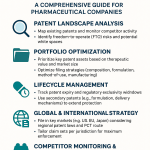
The Cross-Functional Portfolio Audit
Patent portfolio management fails when it remains solely within the legal function. An IP portfolio that is not regularly mapped against the commercial strategy, the clinical pipeline, and the competitive landscape cannot be managed for ROI. It can only be managed for cost minimization, which is a materially worse objective.
The cross-functional portfolio audit — conducted annually or biannually, with participation from IP counsel, R&D leadership, business development, and commercial strategy — asks a specific set of questions for each material asset in the portfolio. Is this patent listed in the Orange Book or the Purple Book (the FDA’s reference for licensed biological products)? If so, what is the most recent Paragraph IV certification or biosimilar patent dance notification against it? What is the current litigation or IPR status? What would generic or biosimilar entry on this date mean for the product’s revenue model? What secondary patents are in prosecution that could extend protection? Are there pending clinical programs that would support new method-of-use filings?
These questions require data that spans patent databases, FDA regulatory records, clinical trial registrations, and competitive intelligence on competitor pipeline activities. The integration of these data sources — rather than siloed management of each within its respective function — is the operational foundation of effective lifecycle management.
Competitive Intelligence Through Patent Monitoring
Patent applications publish 18 months after filing. This means that a competitor’s R&D decisions from 18 months ago are visible today in published applications, if you know where to look and what patterns to identify. A competitor filing a cluster of applications on extended-release formulations of a drug in the same class as yours is signaling a product line extension strategy. A competitor filing multiple applications on a new synthesis route for an API in your portfolio may be preparing a Paragraph IV challenge, building freedom-to-operate for a generic formulation, or exploring a non-infringing manufacturing process.
Systematic competitor monitoring through patent intelligence platforms converts this published information into actionable signals. The workflow is straightforward: set up automated alerts on competitor assignees and relevant technology classifications (IPC and CPC codes), review new publications on a defined cadence, and feed findings into the cross-functional audit process. The output is an early warning system that identifies competitive threats and market opportunities before they become crises.
The Patent Cliff: Scale of the Problem and the $300 Billion Pressure
By 2030, an estimated $200-300 billion in annual branded pharmaceutical revenues globally face patent expiration risk. This figure, cited across BCG analysis and industry reporting, understates the actual revenue at risk because it does not fully account for the secondary patent portfolios that will be challenged simultaneously with primary patent expirations. For individual companies, the patent cliff is not an abstraction: Merck faces significant LOE pressure on Keytruda (pembrolizumab) beginning in the late 2020s; Bristol Myers Squibb has worked to extend Eliquis (apixaban) through formulation and manufacturing patents; Sanofi and Regeneron continue to layer Dupixent (dupilumab) protection.
For product teams and portfolio managers, the cliff is a multi-year financial planning problem that requires a tiered response, calibrated to the time remaining before the primary LOE date.
Five or more years out, the portfolio should already have secondary patents in prosecution. Clinical programs for new indications, new dosing regimens, or pediatric studies should be funded and active, with IP strategy synchronized to the clinical data generation timeline. The target is to have at least one material patent whose expiry post-dates the primary LOE by three or more years, backed by clinical data sufficient to maintain formulary position.
Three to five years out, product lifecycle decisions — extended-release reformulation, combination product development, OTC switch assessment — should be in active development, not just scoped. Each of these strategies requires its own regulatory pathway (a new NDA or 505(b)(2) filing, a combination product submission, an OTC monograph or NDA) with its own timeline and its own IP filing program.
One to three years out, the authorized generic strategy and the commercial response to early generic entry should be finalized. Authorized generic agreements allow the innovator to capture a portion of the generic market revenue rather than ceding it entirely. Formulary rebate strategies, co-pay assistance programs, and PBM contracting for the post-LOE period must account for the reality that formulary preference for the branded drug disappears rapidly once a generic alternative achieves AB-rated substitutability at a significantly lower cost.
Deep Dive: Pfizer’s Lipitor LOE Management — A Tactical Anatomy
Lipitor (atorvastatin) was, at its peak, the best-selling drug in history, generating over $12 billion annually for Pfizer. Its primary composition-of-matter patent expired in the U.S. in November 2011, triggering the most closely watched patent cliff in pharmaceutical history. Pfizer’s response was a multi-component tactical program that has become a standard case study in late-stage lifecycle management.
The ‘Lipitor for You’ co-pay card program reduced the out-of-pocket cost of branded Lipitor for commercially insured patients to as low as $4 per month at launch. This price, engineered to be at or below the typical co-pay for the first available generic versions, temporarily disrupted the standard formulary substitution dynamic. PBMs and pharmacy benefit managers typically incentivize generic substitution based on the spread between the brand co-pay and the generic co-pay. When the brand co-pay matches the generic, the incentive for substitution at the pharmacy counter weakens. Pfizer simultaneously offered substantial rebates to large managed care organizations to maintain Lipitor’s formulary position during the initial 180-day period in which Ranbaxy (as the first Paragraph IV filer) held the 180-day first-filer exclusivity under Hatch-Waxman and no other generic was yet available.
The authorized generic element — executed through an agreement with Watson Pharmaceuticals (subsequently absorbed into Teva) — allowed Pfizer to sell an authorized generic version of atorvastatin starting on the day generic entry began. Reports at the time indicated Pfizer captured approximately 70% of the authorized generic revenue on this agreement. This transformed what would have been 100% revenue loss to competitors into a partial revenue retention through participation in the generic channel.
Pfizer also pursued, though did not ultimately succeed with, an application to the FDA to market a low-dose version of atorvastatin OTC. The OTC switch strategy was designed to leverage the Lipitor brand name in a consumer market that would have its own exclusivity and its own commercial positioning independent of the prescription market. The regulatory hurdle — demonstrating that patients could safely self-select for and manage statin therapy without physician oversight — proved too high for the FDA, and the application was not approved.
The aggregate financial outcome of Pfizer’s LOE response for Lipitor was a meaningfully more gradual revenue decline than the typical 80-90% first-year collapse. The program did not prevent the cliff; it managed the descent rate. For the IP team, the lesson is that lifecycle management strategy must begin years before LOE, that the authorized generic is a readily available financial instrument that should be modeled as a baseline LOE assumption rather than a novel option, and that OTC switch, while high-risk, can be a material value preservation play for drugs with established consumer brand recognition.
Investment Strategy Note: Modeling the LOE Scenario
Analysts modeling the LOE impact for a branded pharmaceutical asset should run at least three scenarios: a base case using the primary patent expiry date, a bull case using the effective secondary patent portfolio expiry date with a probability-weighted assessment of each patent’s survival of challenge, and a bear case assuming accelerated generic entry through an IPR win or an adverse Paragraph IV judgment. The spread between these scenarios defines the range of terminal year revenue projections and has a material impact on DCF valuations. DrugPatentWatch expiry data, combined with active PTAB docket monitoring, provides the input data for this modeling.
Key Takeaways: Section 4
Dynamic lifecycle management requires cross-functional integration of IP, R&D, commercial, and regulatory strategy on a continuous basis. The $200-300 billion global patent cliff by 2030 is not a future problem — it requires active portfolio action starting now for products with LOE dates in that window. The authorized generic strategy, systematic method-of-use filings tied to ongoing clinical programs, and co-pay assistance programs are the primary financial instruments for managing the LOE transition. Each requires years of lead time to execute.
Section 5: Active Monetization — Turning the Portfolio into a Profit Center
The Out-Licensing Framework
The standard view of pharmaceutical patent licensing positions it as a tool for large companies to share technology with regional partners or for startups to generate near-term cash from assets they cannot develop internally. A more expansive view recognizes out-licensing as a proactive monetization strategy for any patent that is more valuable to another party than it is in its current use within your portfolio.
Identifying out-licensing candidates begins with the portfolio audit. The question is: which patents protect technologies that are core to another company’s products or pipeline, even if those technologies are not core to ours? A manufacturing process patent held by a large innovator company may have limited value internally if the company has moved to a superior process. To a generic manufacturer attempting to replicate the process without infringement, that patent may be worth a significant licensing fee.
Structuring licensing deals requires clarity on four variables: the scope of the license (exclusive, non-exclusive, or sole; field-of-use limitations; territorial limitations), the financial terms (upfront payment, milestone payments tied to development or sales thresholds, royalty rate as a percentage of net sales), the sublicensing rights (whether the licensee can further license to third parties), and the maintenance and enforcement obligations (who pays to keep the patent in force and who has the right or obligation to enforce it against infringers).
For biologics, cross-licensing agreements — in which two companies exchange access to their respective patent portfolios, typically to ensure mutual freedom to operate — have become increasingly common as the biosimilar landscape has grown more complex. The dense, overlapping patent thickets that characterize major biologic franchises mean that any new market entrant faces multiple potential infringement claims simultaneously. Cross-licensing agreements can resolve multiple IP conflicts in a single transaction, reducing litigation costs for both parties while creating a structured competitive environment.
Royalty Monetization and Non-Dilutive Capital
Royalty monetization — selling the rights to a future royalty stream in exchange for an upfront lump sum — has become a mainstream financial instrument in pharmaceutical IP over the past decade. Royalty Pharma, the largest company in this space, has completed royalty transactions exceeding $18 billion in cumulative deployments as of recent years, covering drugs including cystic fibrosis therapies (ivacaftor, lumacaftor, elexacaftor/tezacaftor/ivacaftor from Vertex), HIV treatments, and oncology products.
For the IP holder, a royalty monetization transaction converts an uncertain future income stream into immediate capital. This capital is non-dilutive — it does not require issuing equity — and it de-risks the income stream by transferring the sales performance risk to the royalty purchaser. For a company in active clinical development, the use of proceeds from a royalty monetization can fund a Phase III trial without requiring a dilutive equity offering in a potentially unfavorable market environment. The tradeoff is straightforward: the company gives up participation in the upside of the royalty stream above the agreed-upon payment in exchange for certainty and immediacy.
The valuation of a royalty stream for monetization purposes typically employs a discounted cash flow approach applied to projected future royalties, with discount rates adjusted for commercial risk (is the licensed product already generating revenues, or is it pre-approval?), IP risk (is the underlying patent facing challenge?), and counterparty risk (what is the financial strength of the licensee?). Royalty monetization is most efficiently priced for royalties on products that are already commercialized, in large markets, with established revenue trajectories and low remaining IP risk.
Patent Sales and the Divestment Market
Outright patent sales — as distinct from licensing, where the original owner retains title — are appropriate when the patent has no ongoing strategic use within the selling company’s portfolio and when an identifiable buyer market exists. IP brokers and marketplaces including IAM Market, Richardson Oliver Insights, and specialized life sciences IP intermediaries can facilitate buyer identification and price discovery.
Valuation for a patent sale uses one of three methodologies, often in combination. The cost approach estimates the value based on what it would cost a buyer to independently develop a patent with similar scope and quality — useful as a floor price but generally not the primary method for high-value pharmaceutical assets. The market approach relies on comparable transaction data from prior patent sales in similar technology areas and with similar claim scope — useful when comparable data exist, which is more frequently the case for small-molecule chemistry patents than for early-stage biologic or platform technology patents. The income approach discounts projected future royalties or revenue protection attributable to the patent at an appropriate risk-adjusted rate — the most analytically rigorous method for patents with identifiable commercial applications.
One specific category of patent divestment deserves separate mention: the sale of patents to non-practicing entities (NPEs) that intend to monetize the IP through licensing campaigns. This is a contested strategy. Companies that sell patents to NPEs retain immediate sale proceeds but lose control over how those patents are subsequently used. If the NPE asserts the divested patents against the seller’s suppliers, customers, or partners, the reputational and relationship damage may outweigh the sale proceeds. Any patent divestment to an NPE should include carefully negotiated representations about intended use and, where feasible, carve-outs from the NPE’s license campaign that protect the seller’s freedom to operate.
Enforcement-Based Monetization: The ‘Stick License’
Proactive patent enforcement — identifying infringers and offering a license or litigation as the two available outcomes — is a legitimate monetization strategy when the portfolio contains strong, well-examined patents and the company has the financial resources and appetite for protracted litigation. The pharmaceutical context is specific: in the branded drug space, enforcement typically takes the form of Hatch-Waxman litigation triggered by a Paragraph IV certification, with the 30-month stay providing a structured timeline. Outside the Hatch-Waxman framework, enforcement against unlicensed commercial activity requires filing in district court.
The financial calculus for enforcement as monetization requires modeling the probability of success, the litigation cost, the time to resolution, and the net present value of the resulting license or injunction. For a patent that survives challenge and results in an injunction, the value is the revenue from the additional exclusivity period. For a patent that results in a license, the value is the royalty stream. Against the upside, the company must model the probability that the asserted patent is invalidated — in which case the primary asset is damaged or destroyed — and the cost of parallel IPR challenges that the defendant will almost certainly file.
Key Takeaways: Section 5
Out-licensing, royalty monetization, strategic patent sales, and active enforcement each convert a different type of IP value into cash. Royalty monetization through structured transactions is the most sophisticated and capital-efficient mechanism for converting future royalty streams into immediate, non-dilutive capital. Patent sales to NPEs require specific contractual protections. Enforcement monetization requires a high probability of patent validity and the financial capacity to absorb parallel PTAB challenge costs.
Section 6: Strategic Pruning — The Discipline of Subtraction
The Arithmetic of Portfolio Bloat
A single patent family maintained across 15 major jurisdictions — the U.S., the EU’s member states via the European Patent, Japan, China, Canada, Australia, Brazil, India, South Korea, and a handful of others — can cost $50,000 to $100,000 or more over its lifetime in prosecution and annuity fees. A portfolio of 200 such families costs $10-20 million in maintenance fees alone over their respective lifetimes, before any litigation is considered. If 30-40% of those families cover technologies that have no connection to the current business strategy, that is $3-8 million in preventable costs.
The number that frames the pruning opportunity is the oft-cited estimate that as many as 90% of granted patents are commercially valueless. Even if the true figure for a well-managed pharmaceutical portfolio is closer to 40-50%, the implication is clear: a meaningful portion of every pharmaceutical patent portfolio is consuming resources that could be redeployed into prosecuting patents on technologies that actually matter.
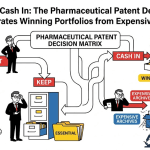
The Three-Tier Classification System
Effective pruning requires a classification system that distinguishes between patents worth fully maintaining, patents with monetization potential that warrant active management, and patents that should be abandoned. The following three-tier framework aligns IP decisions with business strategy.
Tier 1 patents are mission-critical. They protect current commercial products or late-stage pipeline candidates with high clinical and commercial probability. They are listed in the Orange Book or Purple Book. They are the primary targets of existing or anticipated generic or biosimilar challenges. These patents require full jurisdictional coverage, active prosecution of any pending continuations, and dedicated legal resources for defense. Maintenance fees should never be the basis for a coverage decision on a Tier 1 patent.
Tier 2 patents protect technologies with commercial potential that lies outside the company’s current core focus — either early-stage pipeline technologies that may be out-licensed or divested, formulation innovations that could be licensed to generic manufacturers, or manufacturing processes that could be relevant to contract development and manufacturing organizations (CDMOs). These assets warrant maintenance in key jurisdictions while an active monetization process is conducted. If no licensing or sale transaction has been executed within 18-24 months of Tier 2 classification, these assets should be reclassified for pruning.
Tier 3 patents are candidates for abandonment. They cover technologies that are not connected to current or planned products, not viable monetization candidates, or superseded by subsequent innovations within the portfolio. These should be formally abandoned at the USPTO (or the relevant national offices) through an express abandonment filing, or allowed to lapse by non-payment of maintenance fees.
The Abandonment Mechanics
Abandoning a patent is an affirmative act with specific procedural requirements. At the USPTO, an issued patent can be abandoned by filing a written declaration of abandonment or, more commonly, by simply not paying the required maintenance fee, which triggers a 6-month grace period before the patent lapses. Once lapsed for non-payment, a patent can be revived within 24 months on a showing of ‘unintentional delay,’ subject to a revival fee. After 24 months, revival is generally not available. Companies should document the abandonment decision — including the strategic rationale — to create a clear record that the decision was intentional and informed, not inadvertent.
Before abandoning a patent, conduct a final monetization check. Even a patent with no internal strategic use may have value to a specific buyer or licensee. A brief marketing effort through an IP broker or direct outreach to known industry players in the relevant technology area costs relatively little and can occasionally surface a transaction that funds the pruning process itself.
Key Takeaways: Section 6
Portfolio pruning is a financial discipline, not a sign of strategic weakness. Maintaining patents with no commercial connection to the business wastes resources and obscures the portfolio’s true strategic assets. A three-tier classification system — mission-critical, monetizable, abandoned — provides the analytical framework for systematic pruning. The mechanics of abandonment at the USPTO are straightforward; the governance requirement is a documented, cross-functional decision process that distinguishes intentional strategic pruning from inadvertent lapse.
Section 7: Litigation, Risk, and the PTAB — The Full Battlefield
Hatch-Waxman: The Structured Litigation Framework for Small Molecules
The Drug Price Competition and Patent Term Restoration Act of 1984 — universally known as Hatch-Waxman — created the modern generic drug industry and, simultaneously, created the structured framework within which nearly all small-molecule pharmaceutical patent litigation occurs. The Act established the Abbreviated New Drug Application (ANDA) pathway, which allows generic manufacturers to reference the clinical data in an innovator’s NDA without conducting their own clinical trials, so long as they demonstrate bioequivalence.
The patent certification system under Hatch-Waxman has four options. Paragraph I certifies that the patent is not listed in the Orange Book. Paragraph II certifies that the patent is expired. Paragraph III commits to waiting until the listed patent expires before launching. Paragraph IV — the financially consequential one — certifies that the listed patent is invalid, unenforceable, or will not be infringed by the proposed generic product. A Paragraph IV filing is a legally constructed act of patent infringement, which gives the innovator the right to sue immediately, before the generic product has entered commerce.
If the innovator files suit within 45 days of receiving notice of the Paragraph IV certification, an automatic 30-month stay prevents the FDA from granting final ANDA approval during that period. This stay — irrespective of the ultimate litigation outcome — provides the innovator a substantial additional period of exclusivity while the legal dispute is resolved. The first generic filer to submit an ANDA with a Paragraph IV certification typically receives 180 days of first-filer market exclusivity under the statute, creating a shared incentive structure in which innovators sometimes enter into settlement agreements with first-filers that license entry at a defined future date in exchange for payment.
The FTC’s Actavis decision in 2013 established that ‘reverse payment’ settlements — where the innovator pays the generic challenger to delay entry — are subject to antitrust scrutiny under the rule of reason. Post-Actavis settlements have become more carefully structured, with licensed entry dates and commercial terms that must be defensible under rule-of-reason analysis. IP teams handling ANDA litigation must coordinate closely with antitrust counsel on any settlement discussions.
The BPCIA’s Patent Dance and Biosimilar Litigation
For biologics, the Biologics Price Competition and Innovation Act created an analogous, though substantially more complex, litigation framework. The ‘patent dance’ — the multi-step information exchange process specified in 42 U.S.C. § 262(l) — requires the biosimilar applicant and the reference product sponsor to exchange information about the biosimilar’s manufacturing process and the relevant patents before litigation begins.
Participation in the patent dance is optional for the biosimilar applicant in most respects, following the Supreme Court’s Sandoz v. Amgen (2017) decision, which held that the BPCIA does not require participation and that the patent dance provisions are primarily procedural tools that determine the timing of litigation, not substantive rights. In practice, most biosimilar applicants engage in a modified version of the information exchange to manage litigation timing.
The BPCIA’s 12-year data exclusivity period — which prevents FDA approval of a biosimilar application for 12 years from the date of first licensure of the reference biologic — operates independently of the patent portfolio. This creates a combined protection period that, when layered with a deep secondary patent portfolio, can extend effective biologic exclusivity well beyond what the composition-of-matter patent alone would provide.
The IPR Threat: PTAB as a Second Front
Inter Partes Review was created by the America Invents Act of 2011 and took effect in September 2012. The IPR is an administrative proceeding before the Patent Trial and Appeal Board (PTAB) at the USPTO in which any party can petition to cancel claims of an issued patent on the grounds of anticipation or obviousness in light of prior art (patents or printed publications only — not prior commercial use, which is a ground available in district court but not at the PTAB).
The IPR changes the litigation calculus for pharmaceutical patents in several specific ways. First, the standard of proof at the PTAB is preponderance of the evidence — the petitioner must show that it is more likely than not that the challenged claims are unpatentable. In district court, the challenger must prove invalidity by clear and convincing evidence, a materially higher bar. Second, claims at the PTAB are given their broadest reasonable interpretation, which can expand the scope of prior art that is relevant to patentability. Third, PTAB judges are administrative patent judges with technical backgrounds, making them more receptive to detailed scientific arguments about whether a claimed invention was obvious to a person of ordinary skill.
Statistical outcomes at the PTAB for pharmaceutical patents are instructive. Approximately 50% of IPR proceedings that reach a final written decision result in cancellation of at least some challenged claims. For Orange Book-listed patents — those that are the primary targets of Paragraph IV challenges — the institution rate and ultimate cancellation rate are roughly consistent with the general pharmaceutical average. The implication for portfolio management is that any patent protecting a high-revenue asset should be treated as having a meaningful probability of partial or full invalidation at the PTAB, and the revenue model should be probability-weighted accordingly.
The IPR’s procedural interaction with Hatch-Waxman litigation creates additional complexity. A generic challenger can file a Paragraph IV certification and an IPR petition simultaneously, creating parallel proceedings in district court and at the PTAB. The district court has discretion to stay its proceeding pending the IPR outcome. If the IPR cancels the relevant patent claims, the Paragraph IV lawsuit in district court becomes moot, but the 30-month stay may already have expired. IP counsel managing ANDA litigation must track both proceedings and adjust strategy as each develops.
Drafting for PTAB Survival: Prosecution Implications
The existence of the IPR process has fundamentally changed best practices for pharmaceutical patent prosecution. A patent drafted and prosecuted solely to achieve grant — minimal claims, limited specification data — is inadequate in a post-IPR landscape. Patents must be drafted from the outset to withstand aggressive post-grant challenge.
Specific prosecution practices that improve IPR survivability include: conducting thorough prior art searches before filing, not just during examination, so that the most relevant prior art is in the prosecution record and has been addressed by the applicant’s arguments; drafting claims with a clear and explicit articulation of why the invention is non-obvious, including unexpected results data wherever available; building a specification that provides substantial data support for every claim limitation, so that the PTAB cannot find claims unsupported by written description; and filing dependent claims that provide fallback positions if independent claims are canceled, preserving some protection even in an adverse IPR outcome.
Global Enforcement Challenges
The IP enforcement environment outside the major markets — the U.S., the EU, Japan, and increasingly China — varies dramatically and creates specific strategic challenges for global portfolio management. India’s Section 3(d) of the Patents Act, which bars patents on new forms of known substances that do not demonstrate enhanced efficacy, has been applied to deny or limit patent protection for several major pharmaceutical products, including Novartis’ Glivec (imatinib) in a Supreme Court of India decision that received global attention. Brazil’s ANVISA review process adds a layer of patentability scrutiny beyond the standard INPI examination, creating delays and uncertainty for pharmaceutical patent prosecution in a significant emerging market.
Compulsory licensing — a government’s authorization of patent use without the patent holder’s consent, typically invoked under TRIPS Article 31 for public health emergencies — remains a live enforcement risk in markets including Brazil, India, Thailand, and several African jurisdictions. Companies should model compulsory licensing probability into the ROI calculation for products in therapeutic areas with high public health relevance and significant price sensitivity in middle-income countries.
Key Takeaways: Section 7
Hatch-Waxman’s Paragraph IV framework is the primary litigation mechanism for small-molecule patent protection, with the 30-month stay as the central financial instrument. The BPCIA’s patent dance governs biologic patent disputes. The IPR’s preponderance-of-evidence standard and PTAB’s technical expertise create a materially higher validity challenge risk than district court alone. Pharmaceutical patents must be drafted and prosecuted to survive IPR from the outset. Global enforcement requires jurisdiction-specific strategy, with compulsory licensing risk requiring explicit modeling in middle-income markets.
Section 8: AI, Biologics, and the Next Generation of Pharmaceutical IP
AI-Assisted Drug Discovery: The Inventorship Problem and the Non-Obviousness Ratchet
Artificial intelligence platforms are now integrated into drug discovery at multiple stages: target identification through genomic and proteomic data analysis, de novo molecular generation through generative chemistry models, ADMET property prediction, and clinical candidate selection. Insilico Medicine reported in 2023 that it had progressed an AI-identified and AI-designed candidate for idiopathic pulmonary fibrosis (INS018_055) into Phase II clinical trials in approximately four years from target identification — a timeline that would have been considered implausible under traditional discovery programs. Recursion Pharmaceuticals has disclosed that its AI platform has mapped over 2.2 trillion biological and chemical relationships, with multiple candidates progressing into clinical development.
These timelines and scales create a specific IP challenge. U.S. patent law, as confirmed by the Federal Circuit in Thaler v. Vidal (2022), requires that all inventors be human. An AI system cannot hold or obtain a patent. The practical question for companies using AI in discovery is whether the human scientists involved in an AI-assisted program made the kind of ‘significant contribution’ to each claim required for valid inventorship under the standard established in Pannu v. Iolab Corp. (1998).
The contribution required is not trivial. Merely running an AI model and selecting the output does not constitute inventorship — a scientist who simply pushes a button to generate a list of molecules and picks one is not, under current doctrine, an inventor in the meaningful sense. The inventive contribution must relate to conceiving the claimed invention. This means that for AI-assisted programs, the inventive contribution typically lies in: defining the specific problem for the AI to solve (which itself requires scientific judgment and may involve non-obvious technical insight), designing or training the AI model in a way that incorporates domain-specific knowledge, exercising scientific judgment to identify which AI-generated candidates are promising and why, and designing and interpreting the experimental studies that validate the AI’s output and confirm the properties claimed in the patent.
Documentation of this human contribution is not optional — it is the foundation of inventorship. Companies running AI-assisted discovery programs should implement laboratory notebook protocols that specifically capture decision points at which human scientists exercised judgment about the AI’s outputs. Without this documentation, inventorship challenges and patent invalidation proceedings become materially more difficult to defend.
The non-obviousness problem created by AI is distinct from, and in some respects more fundamental than, the inventorship problem. The Graham v. John Deere (1966) framework asks whether an invention would have been obvious to a hypothetical person having ordinary skill in the art (PHOSITA) at the time of invention. As AI tools become standard equipment in pharmaceutical research, the capabilities of the hypothetical PHOSITA are implicitly expanding. An invention that required novel creative insight from a human chemist five years ago may now be something that a PHOSITA, equipped with standard AI tools, could have readily generated.
The strategic response to this ratcheting non-obviousness standard is to emphasize unexpected results. A compound that performs substantially better than the AI’s model predicted — in terms of selectivity, potency, or pharmacokinetic profile — has a non-obviousness argument that is independent of the AI’s generative capabilities. The AI predicted the compound was promising; the claim is that the compound exceeded those predictions in a non-obvious way. This argument requires data: head-to-head comparisons against the closest prior art compounds, with statistical analysis demonstrating the unexpected magnitude of the improvement.
The longer-term IP strategy for AI-assisted discovery will likely bifurcate. The drug candidates themselves — the specific molecules that emerge from AI programs and demonstrate clinical benefit — will be patented in the conventional way, with human inventorship documented and non-obviousness established through unexpected results data. The AI models, training datasets, and platform architectures that generate those candidates will increasingly be protected as trade secrets rather than patents, given the difficulty of claiming them in a way that does not inadvertently teach competitors how to replicate the platform.
Biologics IP: The Technology Roadmap for Antibody and Cell Therapy Portfolios
The shift in pharmaceutical revenue toward biologics is accelerating. As of recent years, biologics account for approximately 40% of global pharmaceutical sales by value and a majority of the top-selling drugs by revenue. Keytruda (pembrolizumab), Dupixent (dupilumab), Opdivo (nivolumab), Darzalex (daratumumab), Stelara (ustekinumab), and Eliquis (apixaban, a small molecule, but an outlier in a biologic-dominated top 10) each generate billions in annual revenues. The IP architecture for these products differs from small-molecule drugs in several specific and commercially significant ways.
Sequence and structural patents. The foundational protection for a monoclonal antibody typically covers the amino acid sequences of the complementarity-determining regions (CDRs) — the portions of the antibody that bind to the target antigen — and the variable domain sequences. These claims are roughly analogous to composition-of-matter claims for small molecules, but their scope is determined by sequence identity thresholds and structural homology, not chemical formula. Claims that cover antibodies with CDR sequences ‘substantially identical’ to the disclosed sequences, or claims that define the antibody by its binding epitope rather than its precise sequence, provide broader protection but face higher written description and enablement challenges.
Manufacturing process patents for biologics. The production of a monoclonal antibody requires a specific cell line (typically Chinese hamster ovary cells), specific cell culture media and conditions, a specific purification process, and specific analytical characterization methods. The cell line itself can be patent-protected if it was developed through novel genetic engineering. The culture conditions — specific combinations of temperature, pH, dissolved oxygen, and media composition — can be patented if they represent non-obvious innovations that improve yield or product quality. Downstream purification processes, including specific chromatography steps and viral inactivation methods, are patentable.
These manufacturing process patents are particularly valuable in the biologic context because the FDA requires biosimilar manufacturers to demonstrate not just chemical equivalence but functional similarity to the reference product — including comparable post-translational modifications, glycosylation profiles, and aggregation behavior. A biosimilar that infringes the reference product’s manufacturing process patents cannot achieve approval using that process; if it uses a different process, it faces the challenge of achieving the required similarity to the reference product’s quality profile. This creates a higher technical and commercial bar for biologic market entry than the bioequivalence standard applicable to small-molecule generics.
Platform and modality patents. For companies with biologic platform technologies — ADC linker-payload chemistry (AstraZeneca’s MEDI-3726, DS-8201 platform; Pfizer/Seagen’s vedotin platform), bispecific antibody engineering (Genentech/Roche’s CrossMAb technology; Regeneron’s IgG4-based bispecific platform), CAR-T cell engineering approaches — platform patents protect not just individual products but the manufacturing and design infrastructure that generates a pipeline of products. The patent portfolio value calculation for a platform-based biologic company must include the pipeline optionality that the platform patents protect, not just the value of the lead product.
Cell and gene therapy IP. CAR-T cell therapies, viral vector gene therapies, and CRISPR-based gene editing represent the frontier of biologic IP complexity. The CRISPR IP landscape — specifically the ongoing dispute between the Broad Institute and UC Berkeley over foundational CRISPR-Cas9 patents — has generated billions of dollars in licensing revenue and litigation costs and remains one of the most closely watched patent disputes in life sciences history. Companies developing gene editing therapeutics must conduct exhaustive freedom-to-operate analyses before entering clinical development, as the foundational IP is broadly held and the licensing terms for access to CRISPR platform technologies remain a source of significant commercial uncertainty.
Regulatory and Legislative Headwinds
The Inflation Reduction Act of 2022 introduced Medicare drug price negotiation for a subset of high-expenditure, off-patent-exclusivity drugs, with the first negotiated prices taking effect in 2026. The IRA’s ‘negotiation eligibility’ criteria tie directly to patent expiry: a small-molecule drug is eligible for negotiation nine years after first approval; a biologic is eligible 13 years after first approval. This creates a specific and quantifiable devaluation of exclusivity for drugs in large Medicare-covered populations, particularly in high-prevalence chronic diseases.
The IP valuation implication is direct. A drug approaching its IRA negotiation eligibility window has a different revenue trajectory than one outside that window, and this must be reflected in any ROI model. The relationship between patent term extensions, lifecycle management strategies, and IRA eligibility timelines is already shaping R&D prioritization decisions at major pharmaceutical companies — with some analysis suggesting that companies may shift investment toward biologics (13-year eligibility vs. 9-year), rare disease indications (smaller Medicare populations with lower negotiation impact), and diseases where public payer exposure is lower relative to commercial insurance. These strategic shifts will in turn reshape the patent landscapes in each therapeutic area over the next decade.
Investment Strategy Note: AI Platform Company Valuation
When valuing an AI-driven drug discovery company, the key IP due diligence question is not just ‘what candidates are in the pipeline’ but ‘what protects the platform that generates the pipeline.’ If the platform’s value rests primarily on trade secrets — proprietary datasets, model architectures, training processes — rather than patents, the IP moat is real but fragile. Trade secrets can be reverse-engineered, and key scientists who leave the company take a significant portion of the tacit knowledge with them. A company that has converted at least portions of its platform into defensive patents — covering novel computational methods, specific training data preparation approaches, or AI-assisted molecular design architectures — has a more durable IP foundation. This distinction matters materially when calibrating the risk-adjusted value of an AI platform company in an M&A or investment context.
Key Takeaways: Section 8
AI-assisted discovery creates two specific IP challenges: the human inventorship requirement demands meticulous documentation of human scientific contribution, and the expanding capabilities of a PHOSITA equipped with AI tools raise the non-obviousness bar. The strategic response is unexpected results data and trade secret protection for the underlying platform. Biologic IP architecture is significantly more complex than small-molecule protection, with manufacturing process patents, platform patents, and cell line IP providing layers of protection that biosimilar entrants must clear. The IRA’s Medicare negotiation provisions directly devalue exclusivity for drugs in large Medicare-covered populations and are reshaping R&D prioritization in ways that will reshape patent landscapes over the next decade.
Section 9: The Integrated ROI Framework — Putting It Together
From Audit to Action: The Annual IP Strategy Cycle
The framework described across the preceding sections is not a one-time exercise. It is an annual cycle, with each component feeding into the next. The cycle begins with the cross-functional portfolio audit in Q1, producing a tiered classification of every material patent family and a strategic assessment of each Tier 1 and Tier 2 asset. Q2 is the monetization execution quarter: out-licensing discussions are advanced, Tier 2 assets are marketed, and royalty monetization transactions are evaluated for any assets generating significant licensed royalties. Q3 is the litigation risk management quarter: IPR exposure assessments are updated, Paragraph IV monitoring is reviewed, and litigation budgets are calibrated against the probability-weighted model. Q4 is the portfolio architecture quarter: filing decisions for the next 12-18 months are finalized, provisional applications on pipeline candidates are reviewed, and the secondary patent filing roadmap for products within five years of their primary LOE date is confirmed.
This cadence creates accountability. Each quarter’s output becomes an input for the next. The IP strategy is not a static document prepared once and filed; it is a living model that is updated as the competitive landscape, the regulatory environment, and the portfolio itself evolve.
The Technology Roadmap: Secondary Patent Filing by Drug Type
The specific secondary patents that deliver the highest ROI differ by drug type and development stage. The following roadmap outlines the filing priorities for the two most commercially significant drug categories.
For a small-molecule oral drug targeting a chronic disease in a large patient population — cardiovascular, metabolic, central nervous system — the secondary patent roadmap typically runs as follows. At IND filing, a composition-of-matter patent on the API should already be in prosecution or issued. At Phase I completion, polymorph and salt form patents should be filed, based on formulation work conducted during early development. At Phase II completion, formulation patents should be filed covering the final tablet or capsule design, specific excipient combinations, and any modified-release technology being advanced. At NDA submission, process patents covering the final commercial synthesis route should be in prosecution. Post-approval, method-of-use patents should be filed for any additional indications identified in Phase III or post-marketing studies. At each stage, patent term extension eligibility should be tracked and the PTE application prepared for filing at approval.
For a monoclonal antibody targeting an oncology or immunology indication, the roadmap is broader. Sequence patents on CDR and variable domain regions should be filed with or immediately after the IND. Cell line and culture condition patents should be filed as the commercial manufacturing process is finalized. Formulation patents — covering the specific buffer, stabilizer, and surfactant combination in the drug product — should be filed at Phase II completion. Delivery device patents for any co-packaged prefilled syringe or autoinjector should be filed at NDA submission. Biosimilar-specific manufacturing characterization patents — covering the analytical methods used to establish comparability — can provide additional barriers to biosimilar entry by requiring competitors to develop non-infringing characterization approaches. Post-approval, combination therapy patents and new indication method-of-use patents should be filed as clinical data from investigator-sponsored and company-sponsored studies support new claims.
The Five Questions Every IP Team Should Be Able to Answer
Any IP team that cannot immediately answer the following questions about its portfolio is operating with insufficient analytical infrastructure.
What is the effective LOE date for each of our top five revenue-generating products, accounting for all secondary patents and applicable regulatory exclusivities, and what is the probability-weighted revenue loss in the first 12 months following that date?
What pending Paragraph IV certifications, IPR petitions, and opposition proceedings are currently active against our Orange Book-listed and Purple Book-listed patents, and what is the current litigation budget and timeline for each?
Which of our non-core patents have been identified as monetization candidates in the past 18 months, what actions have been taken on each, and what is the projected net revenue from those actions over the next 36 months?
How many of our currently maintained patents are classified as Tier 3 under our portfolio tiering system, what is the combined annual maintenance cost of those patents, and what is the timeline for their abandonment?
What is our documentation protocol for human inventorship in AI-assisted discovery programs, who is responsible for its implementation, and when was it last audited?
Frequently Asked Questions
Our lead compound’s composition-of-matter patent expires in five years. What is the most direct action we should take immediately?
Audit every secondary patent in prosecution and identify gaps. The highest-priority gap is typically a robust formulation patent tied to the specific commercial product design. If you do not have a formulation patent application pending whose claims cover the commercially approved product, file one now. Simultaneously, identify whether any clinical data generated since approval support a new method-of-use filing — either a new indication, a new patient population, or a new dosing regimen. A method-of-use patent filed today on data that already exist costs relatively little and can add years of protection for a specific clinical use.
How do we establish that our AI-assisted discovery program produced a patentable, human-invented compound?
Implement a documentation protocol immediately. For each discovery program using AI tools, record at each decision point who made the decision, what the AI recommended, why the human scientists accepted or deviated from that recommendation, and what additional experiments were designed and interpreted by humans to validate the AI output. This documentation should be contemporaneous — created at the time of the decision, not reconstructed afterward. It is the primary evidence base for defending inventorship and non-obviousness in any future challenge.
What is the right approach to valuing a biologic franchise’s patent portfolio for M&A purposes?
Build a complete patent landscape for the franchise: every issued patent, every pending application, every regulatory exclusivity period. Segment by patent type (sequence, manufacturing, formulation, delivery device, method-of-use) and by expiry date. Identify any active Paragraph IV certifications or BPCIA patent dance notifications. For each material patent, run an IPR exposure assessment: how strong is the patent’s prior art profile, has it ever been challenged, are there published prior art references that a petitioner could deploy against it? The LOE scenario for the franchise is the probability-weighted average of scenarios ranging from the earliest patent expiry to the latest. The difference between those scenarios, discounted at an appropriate rate, is the value range attributable to the IP portfolio.
We have 400 patents in our portfolio and have not conducted a formal audit in three years. Where do we start?
Start with the maintenance fee schedule for the next 12 months. Identify every patent with a maintenance fee due in the next year, pull the product connection for each one, and flag any whose connection to a current product or pipeline program is unclear. Those unclear patents are the first pruning candidates. Run them through a rapid product-linkage analysis: is this patent listed in the Orange Book? Is it connected to any ongoing clinical program? Is it in a technology area that appears in the current business development target list? Patents that answer ‘no’ to all three should be formally reviewed for abandonment at the next renewal date.
We are a biotech startup with two patents and a Phase II asset. What should our IP roadmap look like for the next three years?
Your Phase II completion date is the critical milestone. Before that date, ensure your composition-of-matter patent has been prosecuted to issue in the U.S. and is in national phase in the EU, Japan, and China. At Phase II completion, file formulation patents based on your clinical formulation work and process patents based on your current synthesis route. If your Phase II data support a specific dosing regimen or patient population that is narrower or different from your original claims, consider a method-of-use patent covering that specific use. Draft your IP roadmap document — a forward-looking narrative of what patents you plan to file at each clinical milestone — and include it in your next fundraising data room. Investors want to see that the current portfolio is the foundation, not the ceiling, of your IP protection.
Summary: The High-ROI Pharmaceutical Patent Portfolio
The pharmaceutical patent portfolio generates its highest ROI when it is managed as a financial instrument, not a legal archive. That means calculating the full investment and the full return, including defensive value and strategic enablement. It means architecting layered, multi-patent protection from the first provisional filing to the last post-approval method-of-use claim. It means conducting continuous, data-driven lifecycle management that treats the cross-functional portfolio audit as a core business process, not an annual legal compliance exercise. It means actively monetizing non-core assets through licensing, royalty transactions, and strategic sales rather than letting them consume maintenance fees. It means pruning the portfolio of low-value assets with the same discipline that a portfolio manager would apply to underperforming equity positions. And it means preparing now for the specific challenges that AI-assisted discovery and biologic dominance create for patent validity, inventorship, and enforcement.
Every day of additional effective market exclusivity on a blockbuster drug is worth hundreds of millions of dollars in protected revenue. The difference between a reactively managed patent portfolio and a strategically optimized one is often measured in years of LOE date and billions of dollars of enterprise value.