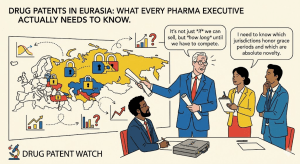
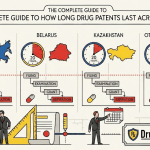
There is a persistent gap between what Western pharmaceutical executives think they know about drug patent protection in Eurasia and what is actually happening on the ground in Moscow, Almaty, Minsk, and Baku. Most IP strategy meetings in London, Basel, or New Jersey treat the region as a monolithic bloc—”the CIS countries”—and assign a single expiry date to a Eurasian patent, as if the rules in Tajikistan are functionally the same as those in Kazakhstan. They are not. The differences matter commercially, because the Eurasian pharmaceutical market is large and growing, and because the interplay between patent law, marketing approval timelines, data exclusivity, and political risk in this region is unlike anything in the United States or Europe.
In 2024, the total value of the Russian pharmaceutical market alone reached 2.85 trillion roubles, representing a 10% year-on-year expansion in local currency terms—equivalent to approximately $30.9 billion in dollar terms. The five members of the Eurasian Economic Union (EAEU)—Russia, Kazakhstan, Belarus, Armenia, and Kyrgyzstan—collectively represent a consumer base of roughly 185 million people with accelerating healthcare spending. Add the three other Eurasian Patent Convention (EAPC) member states that are outside the EAEU (Azerbaijan, Tajikistan, and Turkmenistan), and you have a territory where a single Eurasian patent can theoretically confer simultaneous protection across eight nations through one centralized application. That is a powerful commercial tool—when you understand how to use it.
This guide covers the mechanics of drug patent duration across every country in the Eurasian region: the core 20-year baseline, the patent term extensions (PTEs) available in most member states, the data exclusivity regimes layered on top of patent protection, the countries that sit outside the Eurasian Patent Organization (EAPO) entirely, and the geopolitical realities that have reshaped enforcement since 2022. It also covers the tools—including DrugPatentWatch’s international patent surveillance capabilities—that IP professionals use to track expiry dates and monitor competitive activity across this sprawling and legally complex territory.
Part I: The Architecture of Eurasian Patent Protection
The Eurasian Patent Convention: Foundation of the System
The Eurasian Patent Organization (EAPO) is an international organization set up in 1995 by the Eurasian Patent Convention (EAPC) to grant Eurasian patents, with its headquarters in Moscow. The founding logic was sound: the post-Soviet states shared a common legal and linguistic heritage, a common scientific vocabulary, and—crucially—a common language in which to prosecute patents (Russian). Rather than forcing every innovator to file separately in eight national offices, the EAPO created a centralized examination system that produces a single patent valid across all member states simultaneously.
The Eurasian patent system provides a uniform application procedure for physical and legal persons to protect inventions on the basis of a single Eurasian patent valid in the territory of nine states party to the Eurasian Patent Convention: Turkmenistan, the Republic of Belarus, the Republic of Tajikistan, the Russian Federation, the Republic of Kazakhstan, the Republic of Azerbaijan, the Kyrgyz Republic, and the Republic of Armenia.
Understanding the EAPO requires separating two distinct functions it performs. First, it acts as an examination authority—conducting prior art searches, assessing novelty and inventive step, and granting or refusing patents. Second, it acts as a maintenance authority—collecting annual renewal fees on behalf of all member states and distributing them accordingly. This dual function means that once a Eurasian patent is granted, the patent holder does not validate it separately in each country the way you would validate a European Patent in individual EU member states. The Eurasian patent is a unitary right from the moment of grant.
That unitary character, however, is softer than it appears. A granted Eurasian patent produces what lawyers call “a bundle of national rights.” Each member state enforces the patent through its own courts under its own procedural rules. If Pfizer’s Eurasian patent is infringed in Belarus, Pfizer goes to a Belarusian court. If the same patent is infringed in Kazakhstan, it goes to a Kazakh court. The EAPO cannot adjudicate infringement disputes. It can only grant, maintain, and (in limited circumstances) revoke patents through its administrative procedures.
The Eight Member States: Who’s In and Who’s Out
The current eight EAPC member states are Armenia, Azerbaijan, Belarus, Kazakhstan, Kyrgyzstan, Russia, Tajikistan, and Turkmenistan.
Although Ukraine and Georgia were original signatories to the Eurasian Patent Convention, they have not ratified it. Moldova was a member until 2012, when it denounced the EAPC and aligned itself with the European Patent Office (EPO) instead. These three countries—Ukraine, Georgia, and Moldova—now operate entirely on national patent systems, but they still matter commercially: Ukraine had one of the largest pharmaceutical markets in the former Soviet space before the 2022 war, and Georgia has become a significant pharmaceutical transit and manufacturing hub. A separate section of this guide covers them.
The distinction between EAPC membership and EAEU membership is important for understanding both patent rights and regulatory pathways. The current members of the Eurasian Economic Union (EAEU) are Armenia, Belarus, Kazakhstan, Kyrgyzstan, and the Russian Federation, plus three observer states: Cuba, Moldova, and Uzbekistan. Azerbaijan, Tajikistan, and Turkmenistan are EAPC members but not EAEU members. Uzbekistan is an EAEU observer but belongs to neither the EAPC nor (yet) the EAEU. This matters because the EAEU has its own pharmaceutical regulatory harmonization framework—the unified drug registration system—that overlaps with but is not identical to the EAPO patent system.
How a Eurasian Patent Differs From a National Patent
When a pharmaceutical company files a national patent application in, say, Kazakhstan’s national patent office (Kazpatent), it gets a Kazakh patent that is only enforceable in Kazakhstan. When it files a Eurasian patent application with the EAPO, it gets a single patent that is, by default, enforceable in all eight EAPC member states—though maintaining that breadth requires paying annual renewal fees for each designated country.
After a patent is granted, it becomes valid in all EAPO countries by default. To maintain patent rights in these countries, a patent owner must pay relevant annual fees for each. With payment of annual fees, a patent owner may decide to cover all eight countries, or even just one of them. Annual fees are paid simultaneously for all countries to the Eurasian Patent Office.
This fee structure creates a practical commercial decision: a patent holder facing patent expiry can decide to maintain coverage in high-value markets like Russia and Kazakhstan while allowing the patent to lapse in lower-revenue markets like Tajikistan or Turkmenistan by simply not paying those countries’ annual fees. For pharmaceutical companies managing large, aging portfolios across dozens of active ingredients, this granular maintenance control is commercially significant.
The official language of the EAPO is Russian. If the Eurasian application is filed in any other foreign language, the translation into Russian must be provided within two months from the filing date. This Russian-language requirement is not merely administrative: it shapes the enforceability of claims. When an infringement action is brought before a member state court, the Russian-language text of the claims controls. Any ambiguity introduced by translation from English, German, or Japanese could affect the scope of protection. Pharmaceutical companies frequently underestimate this risk.
The EAPO Pharmaceutical Register: A New Tool for Transparency
The EAPO Pharmaceutical Register came into force on March 1, 2021. It covers the member countries of the EAPC and lists Eurasian patents relating to the active pharmaceutical ingredients of drugs, methods of their production, and the uses thereof.
The Register is modeled loosely on the U.S. Food and Drug Administration’s Orange Book, though it operates differently. Inclusion in the Register is voluntary, not mandatory. Patent holders submit an application requesting that their Eurasian patents be listed, and the EAPO then links those patents to the International Nonproprietary Names (INNs) of the active ingredients they cover.
The Register provides up-to-date information, in Russian, on the legal status of these patents, as well as information on patent term extensions, licensing agreements, and medicinal products registered in the EAPO member states.
The Register does not automatically create a linkage system like the U.S. one, where an Orange Book listing triggers automatic approval delays for generic applicants. In Russia specifically, the Unified Pharmaceutical Register—the national-level linkage mechanism—is the more operationally relevant tool for generic entry. But the EAPO Register is significant for portfolio surveillance: it provides a centralized, publicly searchable database of which Eurasian patents cover which drugs across all eight member states. Drug patent surveillance platforms such as DrugPatentWatch have incorporated this data into their international coverage, allowing IP analysts to search for Eurasian patent status, expiry dates, and extension information alongside U.S. and European patent records in a single workflow.
Part II: The Baseline 20-Year Term—And Why It Rarely Delivers 20 Years of Revenue
The Standard Term: Filing Date as the Clock Start
The term of the Eurasian patent is 20 years from the filing date of the Eurasian application, with a possible extension of up to 25 years in all EAPO countries except Tajikistan and Turkmenistan.
The 20-year clock runs from the actual filing date of the Eurasian application, not from the grant date and not from the priority date of an earlier application. This is consistent with global TRIPS norms and mirrors the approach of the U.S., EU, and most other jurisdictions. But it creates a structural problem for pharmaceutical companies: drugs are typically patented at the earliest stages of research, often years before regulatory approval, which means a substantial portion of the patent term is consumed by clinical trials, regulatory review, and manufacturing scale-up.
Russian patent law grants 20 years of protection from the filing date for medicinal products, aligning with international standards under TRIPS. However, effective market exclusivity often shortens to 7-12 years due to regulatory review periods. That shortfall—eight to thirteen years of economic protection lost to the approval process—is the core commercial problem that patent term extensions are designed to solve.
The filing date is also distinct from the priority date, which matters for PCT applications. A company filing under the Patent Cooperation Treaty (PCT) and then entering the EAPO regional phase will have an international filing date that serves as the 20-year clock start. The 31-month PCT deadline for entering the EAPO regional phase is a hard limit: the deadline for entering the Eurasian regional phase is 31 months from the priority date. Missing this deadline without an unintentional-failure excuse means losing the ability to pursue Eurasian protection based on that PCT application entirely.
The Prosecution Timeline: 2-4 Years From Filing to Grant
It takes an average of 2-4 years to get a patent granted in the EAPO. For a complex pharmaceutical composition claim, the examination timeline can push toward the longer end of that range, particularly after the EAPO began applying stricter standards to pharmaceutical applications in alignment with Rospatent’s post-2015 approach. The EAPO conducts a search report and substantive examination centrally, meaning that the same examiner handles the application for all eight member states. This is efficient in cost terms but means that a negative ruling from one examiner—possibly based on idiosyncratic prior art interpretations—affects all eight markets simultaneously.
During prosecution, the applicant can amend claims in response to examiner objections. What cannot happen is the conversion of a broad Markush-type chemical genus claim into a specific species claim without potential loss of scope protection. Pharmaceutical IP professionals filing in the EAPO region should draft applications with the EAPO’s specific approach to pharmaceutical claims in mind from the outset, rather than adapting European or U.S. claim formats wholesale.
For biopharmaceutical inventions, patentability requirements are applied with specific considerations. Under Article 4 of the Eurasian Patent Convention, methods for treatment of the human or animal body by surgery or therapy and diagnostic methods practiced on the human or animal body are not considered inventions for purposes of patentability. However, products—in particular substances or compositions—for use in any of these methods are patentable.
This method-of-treatment exclusion has practical consequences. A pharmaceutical company that relies heavily on method-of-treatment claims in its U.S. or European patent portfolio will find that those claim types do not translate directly into Eurasian protection. The enforceable protection comes from product claims (compounds, compositions) and, in some cases, first and second medical use claims framed in the “substance X for use in treating disease Y” format that the EAPO accepts under European-style “purpose-limited product” claim drafting.
The Effective Patent Life Calculation
The standard patent term of 20 years, while seemingly substantial, can be significantly eroded by the time-consuming processes of clinical trials and securing marketing authorizations.
A typical drug patent filing happens around Phase II clinical trials. Phase III trials take three to seven years. Regulatory review in Russia currently averages around three to four years for a standard marketing authorization application. That means a drug might first appear on the Russian market ten to twelve years after its patent was filed. From a 20-year term, this leaves eight to ten years of meaningful commercial exclusivity—before considering whether any patent term extension is available.
Part III: Patent Term Extensions Country by Country
<blockquote> “The approval and registration of pharmaceutical and agrochemical products usually takes place between five and 10 years after the corresponding patent application has been filed. This substantially reduces the period during which the rights holder may profit from its patented invention.” — Gorodissky & Partners, “Extending Patent Terms in Russia and CIS Countries” [1] </blockquote>
Patent term extensions (PTEs) exist in this region specifically to address that erosion. Provisions for patent term extensions for pharmaceutical and agrochemical products have been introduced into the national patent laws of Azerbaijan, Armenia, Belarus, Georgia, Kazakhstan, Kyrgyzstan, Moldova, Russia, Turkmenistan, Uzbekistan, and Ukraine. Tajikistan is the notable exception: it provides no PTE mechanism.
PTE procedures are set out in the Eurasian Patent Convention and are available in the following signatory states: Russia, Belarus, Kazakhstan, Kyrgyzstan, Azerbaijan, Armenia, and Turkmenistan.
The ceiling on extensions is consistent across the region: the maximum PTE in every CIS country is five years. This gives the region a maximum theoretical patent term of 25 years, matching the outer limits available under the EU’s Supplementary Protection Certificate (SPC) system. But the similarity to the EU system ends there. The calculation formulas, eligibility criteria, procedural deadlines, and scope of the extended protection differ significantly from country to country.
Russia: The Most Important PTE Market
Russia is where the rules are most sophisticated, most frequently litigated, and most consequential commercially. It is also the jurisdiction where the system has changed most dramatically in the past decade.
What Article 1363(2) Actually Says
The PTE procedure was first introduced in Russia in 2003. It is currently regulated by Article 1363(2), Part IV of the Civil Code of the Russian Federation, which came into effect on January 1, 2008, with the latest amendments introduced on January 1, 2015. This article establishes a PTE of up to five years for a patent covering an invention relating to medicines, pesticides or agrochemicals whose use requires marketing approval.
The Russian PTE calculation works as follows: the extension equals the time elapsed from the patent filing date to the first marketing authorization in Russia, minus five years. In other words, the law presumes that five years of the patent term were “free” for the patentee to develop the drug. If the gap between filing and marketing authorization is eight years, the PTE is three years. If the gap is twelve years, the PTE is five years (the maximum). If the gap is five years or less, no PTE is available.
In Armenia, Belarus, Kyrgyzstan, Moldova, Russia, and Uzbekistan, PTE applications must be submitted within six months of receipt of the first marketing authorization or the patent grant date, depending on which expires later. Missing that six-month filing window is fatal to the PTE application. There is no grace period.
How Rospatent Tightened Its Grip After 2015
Since 2015, Rospatent has adopted a significantly stricter policy on granting PTEs. Previously, it was often possible to extend the full, broad scope of a patent’s claims. Now, Rospatent issues a supplementary patent with considerably more restricted claims, narrowed to precisely cover only the specific medicinal product for which marketing authorization has been granted.
This shift in practice is commercially significant. Before 2015, a company with a broad compound patent could obtain a PTE that covered a wide genus of chemical compounds. After 2015, the PTE covers only the specific salt, polymorph, or formulation for which the Russian marketing authorization was granted. A drug approved in Russia as the hydrochloride salt of compound X would receive a PTE covering only the hydrochloride salt—not the free base, not the maleate, not the phosphate. Generic manufacturers who develop alternative salt forms of the same active ingredient may be able to enter the market at the end of the original 20-year patent term, arguing that the narrowed PTE claims do not cover their specific salt.
Claims directed to methods of treatment, processes for preparing a compound or composition, or new uses of a known product typically do not qualify for PTEs in Russia. The rationale is that the extension compensates for time lost in obtaining marketing authorization for the product itself, not for the methods used to produce it or the ways in which it might be used.
The Geropharm vs. Novo Nordisk Precedent
The introduction of a new legal mechanism to challenge granted PTEs and SPCs, as evidenced in the Geropharm vs. Novo Nordisk case, reflects the inherent tension between safeguarding the rights of innovator companies and promoting generic competition to enhance affordability.
In that dispute, a Russian generic insulin manufacturer successfully challenged the validity of a PTE held by Novo Nordisk, opening the door to post-grant PTE challenges before the Patent Dispute Chamber of Rospatent. This was a significant development: previously, PTE challenges in Russia were rare and procedurally cumbersome. The Geropharm case established that Russian domestic generic companies have both the legal tools and the political will to contest extended protection, particularly in therapeutic areas like insulin where the government has an explicit policy interest in reducing prices.
A parallel case illustrated the enforcement risk from the other direction. The Russian Intellectual Property Court (IPC) recently revoked an extension (SPC) of Pfizer’s Eurasian patent No. 012666 relating to the composition of tofacitinib in relation to the Russian Federation. The SPC was revoked due to alleged non-compliance with the industrial applicability requirement due to insufficient evidence of therapeutic effect. The evidence in question included a scientific article authored by the inventors that had been filed during examination—but the Patent Dispute Chamber refused to consider it as admissible supplementary data because it was published after the application filing date. This outcome highlights how the evidentiary standards applied at the PTE/SPC extension stage can be more demanding than those applied at the original patent grant stage.
Russia’s Pediatric Extension
Russia has a pediatric extension provision analogous to—but narrower than—the EU’s six-month pediatric extension. Pediatric extensions add 6 months for studies involving children, though these provisions are rarely invoked due to bureaucratic hurdles. The practical utility of the Russian pediatric extension is limited by the difficulty of qualifying studies and the limited number of therapeutic areas where pediatric use represents a meaningful revenue opportunity. Most multinational pharma companies do not currently plan their Russian IP lifecycle strategies around the pediatric extension.
Kazakhstan: A Different Formula, a Different Clock
Kazakhstan is the second-largest pharmaceutical market in the EAEO region and increasingly an independent market with its own regulatory character. Its patent term extension rules differ from Russia’s in one important respect: the calculation formula.
In Azerbaijan and Kazakhstan, the PTE is calculated as the period from the filing date of an application for a product state registration to the date of the first marketing authorization receipt. In other words, the Kazakh formula measures the delay specific to Kazakhstan’s own drug registration process, not the gap between patent filing and approval. This means that a drug approved quickly in Kazakhstan (where the regulatory authority, Kaznex, has in recent years adopted mutual recognition procedures with Russia for EAEU-approved drugs) might be entitled to only a very short PTE. Conversely, a drug with a particularly slow Kazakh approval could generate a longer extension than the same drug would receive in Russia.
In Kazakhstan, PTE applications must be submitted within the last (i.e., the 20th) year of a patent’s term of validity. This late-stage filing requirement differs from Russia’s six-month rule and is an easy procedural trap for companies whose docketing systems are calibrated for the Russian approach.
Annual renewal fees in Kazakhstan start from the first year of the patent’s validity, unlike Azerbaijan, Belarus, Kyrgyzstan, Russia, and Tajikistan, where annual maintenance fees are payable starting from the third year of the patent’s validity. Kazakhstan’s earlier fee schedule increases the cost of maintaining protection for slow-to-develop drug candidates.
Belarus
Belarus is an EAEU member and an EAPC signatory. Its patent term extension rules broadly track Russia’s, but with some procedural differences. In Armenia, Belarus, Kyrgyzstan, Moldova, Russia, and Uzbekistan, PTE applications must be submitted within six months of receipt of the first marketing authorization or the patent grant date, depending on which expires later.
Belarus has implemented the EAEU’s unified drug registration pathway, meaning that a drug registered through the EAEU centralized procedure is simultaneously valid in Russia, Belarus, Kazakhstan, Armenia, and Kyrgyzstan. This regulatory harmonization should, in theory, simplify PTE applications by creating a common “first marketing authorization” date across the five EAEU states. In practice, the national patent offices of each EAEU member still process PTE applications independently, and national discretion in applying extension rules means that a single approval event can result in different PTE outcomes across different EAEU member states.
The Belarusian pharmaceutical market is relatively small—the country has a population of approximately nine million—but its role as a regional generic drug manufacturing hub gives it strategic importance disproportionate to its size. Belarusian manufacturers regularly supply drugs to Russia and Kazakhstan under the EAEU’s mutual recognition framework.
Armenia
Armenia joined the EAEU in 2015 and has aligned its pharmaceutical regulatory framework with EAEU standards. In Armenia, Georgia, Kyrgyzstan, Turkmenistan, Ukraine, and Uzbekistan, the PTE is calculated as the period from the filing date of the patent application—for international applications, this would be the international filing date—to the first marketing authorization receipt date.
Armenia’s PTE formula is thus similar to Russia’s but uses the “first marketing authorization anywhere” date rather than specifically the Russian authorization date. This matters: a drug first authorized in the EU or the U.S. before being approved in Armenia would have a shorter PTE in Armenia than in Russia, where the formula runs to the first Russian authorization specifically.
In Armenia, annual maintenance fees are payable from the second year of the Eurasian patent’s validity—one year earlier than in Russia, Belarus, Kyrgyzstan, and Tajikistan, but one year later than in Turkmenistan and Kazakhstan. Armenia’s relatively sophisticated pharmaceutical sector, supported by a diaspora with strong connections to Western research institutions, has meant that the country has seen more complex patent litigation than its size might suggest.
Kyrgyzstan
Kyrgyzstan’s PTE rules follow the same formula as Armenia: the extension equals the period from the patent application filing date to the first marketing authorization, capped at five years, with applications due within six months of the authorization. The Kyrgyz pharmaceutical market is small and predominantly generic, with the national regulatory authority (State Inspection for Sanitary, Veterinary, and Phytosanitary Safety) operating a relatively streamlined approval process for drugs already registered in Russia or elsewhere in the EAEU.
The practical significance of a Kyrgyzstan-specific PTE is limited for most innovator companies. The total prescription pharmaceutical market in Kyrgyzstan is worth well under $500 million annually. For most drug portfolios, maintaining Eurasian patent coverage in Kyrgyzstan by paying the annual renewal fees is a low-cost, low-return proposition that is routinely evaluated against the alternative of letting the patent lapse in Kyrgyzstan while maintaining it in Russia and Kazakhstan.
Azerbaijan
Azerbaijan is an EAPC member but not an EAEU member, meaning that its pharmaceutical market operates under a different regulatory framework from the five EAEU states. In Azerbaijan and Turkmenistan, PTE applications can be submitted at any time during the patent’s validity. This flexible filing window is unusual by regional standards and accommodates pharmaceutical companies whose initial development programs did not prioritize the Azerbaijani market.
The Azerbaijani PTE calculation mirrors Kazakhstan’s: it runs from the filing date of a registration application in Azerbaijan to the date of approval. This registration-focused formula ties the extension length directly to the efficiency of the Azerbaijani regulatory process, which has historically been more variable than Russia’s. Azerbaijan’s pharmaceutical market is predominantly import-dependent, with domestic manufacturing concentrated in generic solid dosage forms.
Tajikistan: No PTE Available
A possible extension of up to 25 years is available in all EAPO countries except Tajikistan and Turkmenistan. Wait—that’s partially misleading. Let me clarify: Tajikistan provides no PTE for pharmaceutical patents. Tajikistan does not provide for PTEs. A Eurasian patent maintained in Tajikistan expires at the end of its 20-year term, full stop.
The Tajik pharmaceutical market is among the smallest in the region, with limited generic competition and heavy dependence on imported medicines, predominantly from Russia, Kazakhstan, and India. From a portfolio management standpoint, most multinational pharmaceutical companies simply assess whether the Tajikistan annual renewal fees justify the protection provided, given that no extended exclusivity is possible.
Turkmenistan
Turkmenistan allows PTEs with the flexible filing window mentioned above (any time during patent validity), using the calculation formula of filing date to first marketing authorization, capped at five years. Turkmenistan’s pharmaceutical market is highly state-controlled, with drug procurement dominated by government purchase programs. The country’s relative insularity from international pharmaceutical supply chains and the limited footprint of multinational brands make PTE strategy here a low priority for most innovator companies.
Part IV: Data Exclusivity—The Second Line of Defense
What Data Exclusivity Is and Why It Matters
Patent protection and data exclusivity are legally distinct mechanisms that can operate concurrently, sequentially, or independently. Data exclusivity laws confer, depending on the country, 5 to 10 years of exclusive rights over safety and efficacy data submitted for the registration of new medicines by regulatory agencies. When a pharmaceutical company submits preclinical and clinical trial data to obtain a marketing authorization, data exclusivity prevents a generic manufacturer from referencing that data to support its own abbreviated marketing authorization application during the exclusivity period.
The key distinction: data exclusivity runs from the date of marketing authorization, not from the patent filing date. If a drug is approved after a long development period, patent protection and data exclusivity periods can overlap substantially. But if a drug’s patent expires before the data exclusivity period ends, the data exclusivity can block generic entry even when the patent no longer does—and vice versa. A robust exclusivity strategy stacks both layers to maximize the total period of commercial protection.
Russia’s Six-Year Data Exclusivity Regime
The right of data exclusivity became effective on August 22, 2012, the official date of Russian Federation accession to the WTO. The concept was introduced into Article 18 of Federal Law No. 61-FZ “On the Turnover of Medicines.” According to the law, data exclusivity was defined as follows: receipt, disclosure, and use for commercial purposes and for the purposes of medicine state registration of the information of the results of preclinical and clinical studies provided by an applicant for the registration of the medicine is not permitted without the applicant’s consent during 6 years from the date of the medicine state registration.
Data exclusivity prevents generic manufacturers from relying on the originator’s preclinical and clinical trial data to gain their own marketing approval for a set period. In Russia, the law provides for a six-year term of data exclusivity for reference medicines.
Six years is a shorter data exclusivity period than the EU’s eight-year standard (with an additional two-year market exclusivity period and an optional one-year extension for new indications, known collectively as “8+2+1”). It is also shorter than the United States, where new chemical entities receive five years of data exclusivity (twelve years for biologics). For pharmaceutical companies accustomed to EU and U.S. exclusivity frameworks, the Russian six-year term requires recalibration of commercial launch sequence strategies.
The Novartis case established an important limitation on Russian data exclusivity: Russian authorities treat the right of data exclusivity only in connection with undisclosed, non-public information of the results of preclinical and clinical trials of an original medicine. If a drug’s clinical trial data has been published—in peer-reviewed journals, regulatory agency publications, or elsewhere—Russian courts and regulatory authorities may conclude that the data is no longer “undisclosed” and therefore not subject to exclusivity protection. This creates a tension with the scientific community’s norms around open publication of trial results.
EAEU Harmonization: Does It Standardize Data Exclusivity?
The EAEU has harmonized many aspects of pharmaceutical regulation across its five member states. The Agreement on Common Principles and Rules of Circulation of Medicinal Products, adopted in 2014, created a unified registration pathway and harmonized Good Manufacturing Practice standards. However, data exclusivity periods are not fully harmonized across the EAEU. Russia’s six-year term applies specifically in Russia; Kazakhstan, Belarus, Armenia, and Kyrgyzstan have their own national data exclusivity provisions that are structured similarly but not identically.
Kazakhstan, as an EAEU member, provides data exclusivity for registered pharmaceuticals, but the specific term and conditions can differ from Russia’s implementation. Companies operating across the EAEU should not assume that a single Russian marketing authorization combined with data exclusivity provides equivalent protection in all five EAEU states.
For the three EAPC members outside the EAEU—Azerbaijan, Tajikistan, and Turkmenistan—there is no common data exclusivity framework. Azerbaijan has a national data exclusivity provision that was introduced as part of its WTO commitments, but enforcement has been inconsistent. Tajikistan and Turkmenistan have limited practical experience with data exclusivity enforcement.
The Interaction Between Patents and Data Exclusivity
In Russia, the most commercially significant exclusivity configurations for an innovator drug look like this:
Configuration 1 — Late-developing drug: A drug filed in 2005 and approved in Russia in 2017 would have a 20-year patent expiring in 2025, eligible for a PTE of up to five years (giving a maximum patent expiry of 2030), plus data exclusivity running from the 2017 approval until 2023. In this scenario, the data exclusivity expires before the PTE, making the PTE the dominant protection during the critical generic competition window.
Configuration 2 — Fast-developing drug: A drug filed in 2010 and approved in Russia in 2013 would have a 20-year patent expiring in 2030. No PTE is available because the gap between filing and approval (three years) is less than five years. Data exclusivity runs from 2013 to 2019. The patent dominates throughout, and the data exclusivity provides early overlap protection during the first six years post-approval.
The first scenario is far more common for novel pharmaceuticals. Understanding which exclusivity layer dominates in each scenario requires the kind of country-specific patent status tracking that platforms like DrugPatentWatch provide for Eurasian markets alongside their U.S. and European coverage.
Part V: Non-EAPO Countries That Still Matter
Ukraine
Ukraine was an original signatory to the Eurasian Patent Convention but never ratified it. Its pharmaceutical patent system operates exclusively under national law, administered by the State Intellectual Property Service (SIPSU). Before the 2022 war with Russia, Ukraine was the third-largest pharmaceutical market in the former Soviet space. Production has been severely disrupted, but the market has not ceased to function.
Article 6 of the Ukraine Law on the Protection of Rights to Inventions and Utility Models, adopted on June 1, 2000, provides for extensions of up to five years for patents covering inventions relating to drugs designed to protect animals and plants whose use requires marketing approval. Ukraine calculates its PTE in the same way as Armenia, Georgia, and Uzbekistan: filing date to first marketing authorization, minus five years, capped at five years. Applications must be submitted at least six months before the patent expires.
Ukraine has been working toward alignment with the EU’s patent framework as part of its EU accession process, a trajectory that intensified after 2022 and that may, in coming years, see Ukraine adopt an EU-style SPC system that would extend pharmaceutical patent terms on EU terms rather than the current CIS-style terms.
Georgia
In Armenia, Georgia, Kyrgyzstan, Turkmenistan, Ukraine, and Uzbekistan, the PTE is calculated as the period from the filing date of the patent application to the first marketing authorization receipt date. Georgia’s national patent office, the National Intellectual Property Center (Sakpatenti), handles all IP matters. Like Ukraine, Georgia is on an EU accession trajectory, and its pharmaceutical regulatory framework is aligning with the EU more than with the EAEU. Georgia signed an Association Agreement with the EU in 2014, and its drug registration standards increasingly reference EMA guidelines.
In Georgia, PTE applications must be submitted within one year of the first marketing authorization issue date. This more generous one-year filing window distinguishes Georgia from most of its regional neighbors. Georgia has become a regional pharmaceutical hub, with several international manufacturers establishing GMP-compliant production there partly because of its business-friendly regulatory environment.
Uzbekistan
Uzbekistan is geographically and economically central to Central Asia. With a population of approximately 37 million—the largest in Central Asia—and a rapidly growing pharmaceutical market, Uzbekistan matters commercially even though it is outside both the EAPO and the EAEU.
In accordance with Article 5 of the Patent Law of Uzbekistan, which was adopted on October 2, 2002, the term of a patent covering an invention directed to a medicine, pesticide, or agrochemical requiring marketing approval can be extended. Uzbekistan uses the same formula as Armenia, Georgia, and Ukraine (filing date to first marketing authorization, capped at five years), and applications must be filed within six months of receiving the marketing authorization.
Uzbekistan has observer status in the EAEU and has engaged in negotiations about potential accession. If and when it joins the EAEU, its regulatory and patent frameworks will likely converge further with Russian standards.
Moldova
Moldova is a former EAPC member that departed in 2012. Since then, it has been working toward EPC validation status, which would make European Patents valid in Moldova through the EPO rather than the EAPO. Moldova has adopted an SPC mechanism modeled on EU law rather than the Russian PTE framework, reflecting its westward regulatory pivot.
The Moldavian Law on the Protection of Inventions of March 7, 2008 states that the owner of an invention patent for a pharmaceutical or phytopharmaceutical product can apply for a supplementary protection certificate (SPC) after receiving marketing approval, for the parts of the patent corresponding to the marketed product. Moldova’s SPC system is explicitly EU-modeled and operates differently from the CIS-style PTE systems described above. The maximum protection term remains five years.
Part VI: Evergreening in Eurasia—How Innovators Push Beyond 25 Years
The Basic Strategy: Secondary Patents
The term “evergreening” covers a collection of patent filing strategies designed to extend effective market exclusivity beyond a drug’s primary compound patent. The strategy involves filing patents on:
New crystalline polymorphs or amorphous forms of the active ingredient
New formulations (modified-release tablets, injectables, transdermal patches)
New salt or ester forms
Specific dosing regimens or therapeutic methods
In the United States and EU, evergreening is pervasive and well-documented. In Eurasia, the strategy is present but operates under different constraints.
Second Medical Use Claims in the EAPO
Second and subsequent medical use claims are patentable in the EAPO. They are formulated as “Substance X for use in treating disease Y,” and similar to first medical use, further uses of already known compounds are patentable.
This means that a compound whose primary compound patent is expiring can receive additional protection through second-indication patents that cover specific diseases or patient populations. The commercial relevance depends on how differentiated the new indication is from the original one. A second-indication patent for an already widely-used drug in a new oncology indication may have real exclusivity value. A second-indication patent for an antibiotic in a slightly different bacterial species may be commercially trivial.
Polymorph and Formulation Patents
The EAPO applies a strict novelty and inventive step analysis to crystalline polymorph patents—stricter, in many practitioners’ experience, than either the EPO or the USPTO. Examiners frequently reject polymorph patents on the grounds that the claimed polymorph would have been obvious to prepare given knowledge of the original compound, particularly where the polymorph does not demonstrate any unexpected technical advantage (such as superior bioavailability or stability) over the known form.
For inventions relating to a method of treatment, medical application, or pharmaceutical composition, the EAPO shows a marked preference for in vivo studies, often to the detriment of other data such as in vitro, ex vivo, or theoretical justifications and modeling.
This preference for in vivo evidence applies not just to original compound patents but to secondary pharmaceutical patents. A modified-release formulation patent claiming improved pharmacokinetics needs in vivo clinical or pharmacokinetic data demonstrating the improvement to survive EAPO examination. Filing formulation patents on the basis of in vitro dissolution data alone—a strategy sometimes successful at the EPO—is risky at the EAPO.
The Limits Rospatent Is Setting on Secondary Patents
Russia’s 2015 PTE reforms were part of a broader shift in how Rospatent approaches pharmaceutical patent scope. The same stricter approach that narrowed PTEs to the specific marketed product has also raised the bar for secondary pharmaceutical patent grants. Rospatent examiners are more frequently citing prior art in secondary patent rejections, and the Patent Dispute Chamber has shown a greater willingness to invalidate granted secondary patents on post-grant review. The FAS (Federal Antimonopoly Service of Russia) has also taken an active interest in pharmaceutical patent portfolios, investigating whether secondary patent filings by originator companies constitute anticompetitive behavior under Russian competition law.
Part VII: Biosimilars and the Eurasian Patent Landscape
The Regulatory Framework for Biosimilar Entry
The EAEU has developed dedicated biosimilar guidelines as part of its pharmaceutical regulatory harmonization program. Unlike small molecules, where generic entry is relatively straightforward once patents expire, biosimilars face additional regulatory hurdles: comprehensive characterization studies, clinical pharmacology data, and often clinical efficacy studies demonstrating comparability to the reference biologic.
The EAEU’s biosimilar pathway broadly mirrors the European Medicines Agency’s framework, which itself requires clinical data packages substantially larger than those required by the U.S. FDA’s BPCIA pathway. This regulatory burden extends the practical timeline for biosimilar entry in Russia and the broader EAEU, meaning that biologic drug patents can enjoy effective market exclusivity for several years beyond their formal expiry date simply because no biosimilar manufacturer has completed the required regulatory package.
Biologic Patents and Their Specific Challenges
The patent landscape for biologics in the EAEU is less dense than in the United States or the EU for two reasons. First, many early biologic drugs—particularly first-generation monoclonal antibodies, interferons, and erythropoietins—were developed and patented before the EAPO developed a robust framework for protecting biotechnology inventions. Second, Russia has a history of producing domestic biologic drugs under its own development programs, with varying degrees of relationship to Western reference products.
Russian biosimilar manufacturers, including Biocad (part of the R-Pharm group), Generium, and Pharmstandard, have developed biosimilar versions of major biologic drugs including adalimumab, trastuzumab, bevacizumab, and rituximab. In several cases, these domestic manufacturers challenged the validity of Eurasian patents held by Western originators as a precursor to or concurrently with their biosimilar approval applications.
Part VIII: Generic Entry Dynamics—What the Timelines Look Like in Practice
Russia: The Dominant Generic Market
Russia’s generic pharmaceutical market is the largest in the EAEU and one of the largest in the non-EU European region. The competitive dynamics have accelerated since 2022, when Western companies withdrew from Russian government procurement tenders and created market share voids that domestic generic manufacturers moved quickly to fill.
The Federal Anti-Monopoly Service (FAS) reported 412 patent challenges in 2024 alone, with generics succeeding in 63% of cases through non-infringement arguments, demonstrating alternate salt forms or polymorphs. This 63% success rate for generic patent challengers is substantially higher than the comparable success rates in European patent opposition proceedings and reflects both the stricter Rospatent examination standards that have produced narrower, more vulnerable patents and the political environment in which Russian domestic companies have strong institutional support for challenging foreign patent holders.
The typical generic entry pathway in Russia involves three sequential steps: a freedom-to-operate (FTO) analysis against all active Eurasian patents covering the relevant active ingredient in Russia; pre-filing monitoring of the EAPO Pharmaceutical Register and Russia’s Unified Pharmaceutical Register; and, if blocking patents are identified, a choice between a patent challenge strategy (filing an invalidity proceeding at Rospatent’s Patent Dispute Chamber) or a design-around strategy (developing a formulation or salt form that falls outside the blocking claims).
Russian companies often coordinate to ensure at least two domestic entities participate in major tenders to trigger the exclusion of Western competitors. For drugs on the Strategically Significant Medicines (SSM) list, the government has introduced a “Second Extra” rule: if one bidder offers a full-cycle domestic product synthesized from the API stage within the EAEU, all other bids offering products made from foreign APIs are rejected.
This government procurement preference for domestic manufacturing creates a commercial environment where even a validly held, not-yet-expired patent may not provide meaningful commercial exclusivity in the Russian public procurement market if domestic manufacturers have developed full-cycle production capability.
Kazakhstan’s Growing Generic Sector
Kazakhstan’s pharmaceutical market has grown substantially in recent years, driven by government investments in domestic manufacturing under the national pharmaceutical industry development program. Kazakh generic manufacturers have benefited from preferential procurement rules similar to Russia’s, with domestic producers receiving price preferences in state tenders.
Patent enforcement in Kazakhstan has historically been less vigorous than in Russia. The number of pharmaceutical patent disputes adjudicated by Kazakh courts is a fraction of the Russian figure. This is partly a function of market size (fewer commercial stakes) and partly a function of legal infrastructure (fewer specialized IP attorneys and fewer precedent-setting decisions). Companies tracking patent expiry in Kazakhstan can use the EAPO database, Kazakhstan’s national patent office (Kazpatent) registry, and DrugPatentWatch’s international coverage to monitor both Eurasian patents and national patents covering their product portfolios.
Smaller Markets: Armenia, Kyrgyzstan, and Belarus
For patent holders in the three smallest EAEU markets, generic entry dynamics are driven less by formal patent challenges than by practical market realities. The pharmaceutical markets in Armenia, Kyrgyzstan, and Belarus are predominantly generic, with very limited domestic innovation. Generic manufacturers rarely need to challenge patents formally when the patented drug has a limited market presence or when the originator has already begun voluntary price negotiations with government payers.
In Belarus, the pharmaceutical sector’s strong connection to Russia means that generic entry patterns there often mirror Russian ones with a one-to-two year lag. A drug that faces successful generic competition in Russia typically sees Belarusian generic entry follow once the Russian generic receives EAEU-wide registration or Belarusian national registration.
Part IX: Geopolitical Risk and IP Enforcement After 2022
The Post-Sanctions Patent Landscape in Russia
The geopolitical events of 2022 created a new category of pharmaceutical IP risk in Russia that no IP strategy framework developed before that year fully anticipated. Russia’s response to Western sanctions included the introduction of mechanisms to compulsorily license patents held by entities from “unfriendly countries”—a list that included all EU member states, the United States, the United Kingdom, Japan, South Korea, and others.
The Russian Civil Code was amended to permit the government to authorize the use of a patented invention from an “unfriendly country” without the patent holder’s consent or normal compensation. The mechanism is Article 1360, which previously provided for compulsory licensing only on public health and national security grounds but was broadened in scope and simplified in procedure by the 2022 amendments.
The June 2024 EU sanctions package prompted Russian courts to reject reciprocity claims from Western patent holders and to accelerate invalidation proceedings against “unfriendly” countries’ patents. The Pfizer tofacitinib case cited earlier is one example of a broader pattern: post-2022 Russian adjudicative bodies have been more willing to find procedural or substantive grounds to narrow or invalidate pharmaceutical patents held by Western companies, particularly in therapeutic areas where domestic alternatives exist or can plausibly be developed.
Pharmaceutical companies with significant patent estates in Russia face a difficult strategic choice. They can continue to enforce their patents aggressively, accepting the reputational and regulatory risks of confrontational IP enforcement in a politically hostile environment. They can seek licensing arrangements with Russian companies, preserving some royalty revenue while accepting diminished market exclusivity. Or they can write off Russian revenue entirely and focus resources on the EAEU markets outside Russia where enforcement conditions remain more consistent with international norms.
Compulsory Licensing: The Mechanism and Its Limits
Compulsory licensing is not new to the Russian pharmaceutical framework. Even before 2022, the government had considered compulsory licensing for several high-cost medications—including Sofosbuvir (hepatitis C) and certain HIV antiretrovirals—on public health grounds. The post-2022 amendments lowered the threshold for invoking compulsory licensing dramatically, making it available not just for public health emergencies but as a response to the economic impact of sanctions.
In practice, compulsory licensing has been invoked selectively rather than systematically. The Russian government appears to have used the threat of compulsory licensing as a negotiating tool with Western pharmaceutical companies more than as a routine production authorization mechanism. Several multinational companies have reached accommodation with Russian authorities through licensing negotiations rather than formal compulsory license proceedings.
EAPO Enforcement Across Non-Russian Member States
For the seven non-Russian EAPC member states, the geopolitical disruptions of 2022 have had less direct impact on patent enforcement, but indirect effects are substantial. The weakening of multinational pharma companies’ commercial presence in Russia has reduced their resources and organizational bandwidth for patent enforcement in smaller regional markets. Simultaneously, the disruption of supply chains through Russia has created market voids in which regional generic manufacturers—particularly those in Azerbaijan, Kazakhstan, and Belarus—have expanded their market presence.
Part X: Tracking Patent Expiry Across Eurasia—Tools and Databases
The EAPO Online Register
The EAPO maintains a publicly accessible online register at eapo.org that covers all granted Eurasian patents. The register provides patent number, applicant, title, filing date, grant date, publication date, claims (in Russian), current legal status, and annual fee payment history by country. The fee payment history section is particularly useful for monitoring whether a patent holder has maintained coverage in all eight member states or has allowed protection to lapse in some of them.
The EAPO register can be searched by patent number, applicant name, INN, or keyword. It is the authoritative primary source for Eurasian patent legal status, but it has limitations: updates to legal status can lag behind actual events, and the register does not track national-level PTE grants, which are processed by national patent offices and not always reflected promptly in the EAPO database.
DrugPatentWatch and International Patent Surveillance
DrugPatentWatch, which is widely used by pharmaceutical industry professionals for U.S. patent expiry tracking and competitive intelligence, has expanded its coverage to include international patent landscapes—including the Eurasian region. For IP analysts monitoring competitive drug portfolios across multiple jurisdictions, this capability addresses a structural gap: historically, tracking patent status in Russia required Rospatent searches; in Kazakhstan, Kazpatent; in Armenia, the Intellectual Property Agency; and so on, each through separate interfaces and often in Russian. An integrated platform that aggregates Eurasian patent data alongside U.S. Orange Book and European patent register data significantly reduces the research burden and the risk of missed expiry dates.
DrugPatentWatch’s coverage of the EAPO Pharmaceutical Register data means that analysts can identify which Eurasian patents are listed for specific INNs, check their current legal status, and set expiry alerts—functions that are standard for U.S. drug patent monitoring but have historically been unavailable for the Eurasian region in a single workflow. For pharmaceutical companies deciding whether to enter the Russian or Kazakh market with a new generic, or for originator companies defending their Eurasian portfolio, this kind of centralized intelligence is operationally valuable.
National Databases: Rospatent, Kazpatent, and Others
For detailed patent prosecution history and PTE records, the national patent office databases provide information that the EAPO register does not:
Rospatent (Russia): The Federal Service for Intellectual Property maintains a comprehensive online database covering both national Russian patents and Russian PTEs (supplementary patents). Post-2015 PTE grants are documented with the narrowed claims that Rospatent now requires. The database is searchable in Russian and is the authoritative source for Russian national IP records.
Kazpatent (Kazakhstan): The Kazakhstan Institute of Intellectual Property maintains a searchable database of national Kazakh patents and PTE records. International patent families that entered Kazakhstan through national filing (rather than through the EAPO) are covered here.
IPPO Armenia, NCIP Belarus, NIIS Kyrgyzstan: Each EAPC member state maintains a national IP office with database coverage of national patents and extension records. The quality and searchability of these databases varies significantly, with Belarus having the most developed online infrastructure and Kyrgyzstan and Tajikistan the least.
For systematic portfolio surveillance across all eight EAPC member states, most large pharmaceutical companies maintain standing relationships with regional patent counsel who monitor the relevant national databases and the EAPO register on a continuous basis.
Part XI: Strategic Implications for Pharmaceutical IP Planners
Filing Strategy: EAPO vs. National Patents
The core strategic question in Eurasian patent filing is whether to use the EAPO regional route, national routes, or both.
Arguments for the EAPO route: It is more cost-effective than filing nationally in all eight member states. A single application, a single examination, and a single grant process covers the entire EAEO territory. The 31-month PCT entry deadline is aligned with standard international patent prosecution timelines. The centralized annual fee payment is administratively simpler.
Arguments for national routes: In Russia specifically, it is sometimes strategically advantageous to have both a Eurasian patent (with EAPO-examined claims) and a Russian national patent (with Rospatent-examined claims) covering the same drug. The claim scopes can differ based on different prior art treatments during examination. Having two overlapping patents with different claim structures gives more options for asserting infringement against design-around generics.
For drugs where Russia is the primary market and other EAPC states are secondary, some companies file a national Russian patent application through Rospatent while also pursuing a Eurasian application through the EAPO. The two are not mutually exclusive. This dual-filing approach is more expensive but provides strategic redundancy.
For drugs where broad regional coverage across all eight states is important from a commercial standpoint, the EAPO route is generally more efficient.
Building an Exclusivity Stack: Patent + PTE + Data Exclusivity
The maximum theoretical exclusivity period available in Russia for a novel pharmaceutical can be calculated as follows:
Base patent term: 20 years from filing date
Maximum PTE: 5 years (bringing total to up to 25 years from filing date)
Data exclusivity: 6 years from first Russian marketing authorization
If a drug is filed in Year 0 and approved in Russia in Year 12, the company has:
Patent expiry: Year 20
PTE (12 years minus 5 = 7 years, but capped at 5): Year 25
Data exclusivity: Year 12 to Year 18
In this scenario, the PTE (ending in Year 25) is the binding constraint on generic entry based on the patent estate. Data exclusivity (ending in Year 18) provides no additional protection in the final years because the PTE extends beyond it.
If the same drug is approved in Russia in Year 8:
Patent expiry: Year 20
PTE (8 years minus 5 = 3 years): Year 23
Data exclusivity: Year 8 to Year 14
Here, neither the PTE nor data exclusivity extends to Year 25. An additional secondary patent—a formulation patent filed in Year 3, for example—could extend effective exclusivity if it survives validity challenges.
Understanding the interaction between these layers is essential for commercial planning and for determining when to initiate life-cycle management activities (new indication development, new formulation patents) to fill exclusivity gaps.
Priority Country Selection: Where to Spend Enforcement Resources
With eight EAPO member states plus several non-EAPO countries in the region, pharmaceutical companies routinely make triage decisions about where to invest enforcement resources when patents are challenged or infringed. The analysis involves at minimum four variables:
Market size: Russia (approximately $31 billion) and Kazakhstan (approximately $4 billion) represent the overwhelming majority of the regional patent value. Belarus, Armenia, Azerbaijan, and Kyrgyzstan together represent a small fraction. Tajikistan and Turkmenistan are commercially marginal for most specialty drugs.
Enforcement infrastructure: Russian courts, particularly the specialized Intellectual Property Court (IPC) established in 2012, have become technically sophisticated in pharmaceutical patent disputes. Kazakh courts are developing but have fewer specialist judges. Enforcement in Tajikistan and Turkmenistan is challenging due to limited judicial infrastructure.
Geopolitical exposure: For companies from “unfriendly countries,” Russian enforcement is complicated by the post-2022 compulsory licensing mechanism and the demonstrated willingness of Russian courts to find against Western patent holders in IP disputes. Non-Russian EAPO states present lower geopolitical risk.
Generic competitive pressure: Enforcement resources should be concentrated where the actual or anticipated generic competition is most commercially significant.
Practical Recommendations for IP Counsel
Based on the legal and commercial landscape described in this guide, IP counsel working on Eurasian pharmaceutical portfolios should consider the following practices:
Claim drafting: Draft Eurasian applications with specific product claims supported by in vivo data from the outset. Include backup claims covering specific salt forms, polymorphs, and formulations that might be the basis for future PTE applications.
PTE calendar management: Set PTE filing deadlines at six months post-marketing authorization, not as a last-minute item. In Russia and Kazakhstan specifically, late filing is absolutely fatal. Automate deadline tracking for every country in the portfolio.
Register monitoring: Monitor the EAPO Pharmaceutical Register quarterly for competitor patent listings covering your active ingredients. Use DrugPatentWatch and other international patent surveillance platforms to integrate EAPO data with US and European patent landscape analysis.
Enforcement triage: Maintain a priority tier list for enforcement actions by country, with Russia and Kazakhstan in the first tier and the smaller markets in a second tier for ongoing monitoring rather than active litigation.
Geopolitical scenario planning: For Russia specifically, prepare contingency analyses for compulsory licensing scenarios, including potential voluntary licensing terms that would be acceptable under different geopolitical scenarios. Do not assume that the 2021 IP enforcement environment will prevail through the end of a patent’s commercial life in Russia.
Part XII: The EAEU Regulatory Framework and Its Patent Interactions
The Unified Drug Registration Pathway
The EAEU’s Agreement on Common Principles and Rules of Circulation of Medicinal Products created a centralized drug registration pathway parallel to the European EMA system. Under this pathway, a pharmaceutical company can obtain a single EAEU marketing authorization that is valid in all five EAEU member states, with the registration procedure coordinated by the Eurasian Economic Commission (EEC).
This regulatory harmonization has IP implications. A single EAEU-wide marketing authorization creates a single “first marketing authorization date” for calculating PTE terms in the five EAEU member states. But as noted above, the PTE applications are still submitted to and processed by each member state’s national patent office. So while the trigger event (EAEU authorization) is unified, the downstream PTE proceedings remain national.
The EAEU pathway also accelerates generic competition: a generic drug approved through the EAEU centralized process is immediately available for marketing in all five member states, removing the barrier that national-only approvals previously created. From a patent holder’s perspective, this means that generic challengers who complete the registration process can threaten all five EAEU markets simultaneously rather than one at a time.
The EAEU Pharmaceutical Register and Its Relationship to Patent Protection
The EAEU has introduced its own pharmaceutical register, distinct from the EAPO Pharmaceutical Register, that links marketing authorizations to reference product designations for generic applications. Unlike the U.S. Orange Book, the EAEU register does not automatically stay or delay generic approvals based on patent listings. Patent protection must be asserted through separate legal proceedings.
The Unified Pharmaceutical Register now automatically stays ANDA approvals for 30 months if patent disputes arise. This observation, made in the context of Russia’s developing regulatory framework, suggests that Russia is moving toward a more Orange Book-like linkage mechanism—but the implementation is still evolving and differs from country to country within the EAEU.
Part XIII: Specific Case Studies in Eurasian Patent Life Cycles
Case Study: A Blockbuster Oncology Drug
Consider a hypothetical blockbuster oncology compound—a kinase inhibitor—patented under a Eurasian filing in 2008, approved by Russia’s Roszdravnadzor in 2016, and launched commercially in Russia that year. The following exclusivity analysis applies:
The 20-year Eurasian patent expires in 2028. A Russian PTE application, filed within six months of the 2016 marketing authorization, was granted for 3 years (the gap between filing date and authorization date is 8 years; 8 minus 5 = 3). The PTE supplementary patent covers only the specific salt form approved in Russia, running until 2031.
Data exclusivity ran from 2016 to 2022. After 2022, generic manufacturers could reference the originator’s clinical data, though they still could not market a competing product while the PTE remained in force without demonstrating non-infringement of the narrowed PTE claims.
A Russian domestic manufacturer, having developed a different polymorph of the same compound, challenged the PTE claims in 2023 on the grounds that the polymorph was not covered. The dispute was heard by the IP Court. Meanwhile, the original compound patent—covering the compound itself—remains in force through 2028, creating a separate patent obstacle that must also be addressed.
In Kazakhstan, the PTE filing was missed because the PTE application was not submitted within the 20th year of the patent term (the company’s docketing system was calibrated for Russia’s six-month rule). The Kazakhstan patent expired in 2028 with no extension. Kazakh generic manufacturers entered the market in 2029 while Russian market exclusivity continued under the PTE until 2031.
Case Study: A Generic Manufacturer Planning Entry
A Kazakh generic manufacturer wants to launch a generic version of a leading antihypertensive drug. Their FTO analysis, using the EAPO register and Rospatent database, reveals four relevant patents: a compound patent (expiring 2026), a salt-form patent (expiring 2028), a formulation patent for modified-release tablets (expiring 2030), and a Russian PTE on the compound patent (expiring 2031).
The generic manufacturer’s analysis, with assistance from a patent surveillance platform incorporating DrugPatentWatch’s international patent data, identifies that:
The compound patent expires in 2026 in all EAPO member states where maintenance fees have been paid.
The salt-form patent covers only the besylate salt. The generic’s development program uses the maleate salt, which is not covered by the salt-form patent.
The formulation patent covers only the specific modified-release matrix technology. The generic’s formulation uses a different extended-release mechanism.
The Russian PTE covers only the besylate salt in its specific approved tablet formulation.
Conclusion: the generic maleate tablet, using a different extended-release technology, can be launched in 2026 in all EAPO member states as soon as the compound patent expires, without infringing the salt-form patent, formulation patent, or PTE. The same analysis identifies that a second generic manufacturer has already filed for market authorization in Kazakhstan with a besylate formulation, suggesting they plan to challenge the salt-form patent’s validity rather than design around it.
Part XIV: What a Well-Constructed Eurasian Patent Strategy Looks Like
Year 0 to Year 5: Filing and Early Development
Filing decisions should account for Eurasian markets from the outset of clinical development. PCT applications entering the EAPO regional phase are the standard mechanism for most multinational companies. The claim strategy should include broad genus claims, specific species claims on the development candidate, and backup claims on likely salt forms and formulations.
At this stage, the question of whether to file national Russian patents in parallel with EAPO filing should be considered. For high-priority drugs targeting the Russian market as a primary revenue source, dual filing provides strategic redundancy. For drugs where Russia is a secondary market, the EAPO route alone is sufficient.
Year 6 to Year 15: Regulatory Strategy and Pre-Launch
During the period between patent filing and anticipated Russian marketing authorization, companies should monitor the Russian and EAEU regulatory approval timeline closely to build the PTE eligibility calculation. Every month of regulatory review delay is potentially a month of PTE eligibility.
File secondary patents (new formulations, new indications, combination patents) through the EAPO during this period, ensuring they are supported by the in vivo efficacy data that EAPO examiners require.
Engage with the EAPO Pharmaceutical Register team to ensure the primary compound patent is listed upon marketing authorization.
Year 15 to Year 25: Commercial Exclusivity and Defense
From the point of marketing authorization onward, the active defense phase begins. Monitor the EAPO register and the Russian Unified Pharmaceutical Register for generic marketing authorization applications. Track all FTO opinions being sought by known generic manufacturers. Maintain standing in the Russian IP Court and have counsel prepared to respond to Patent Dispute Chamber invalidity challenges.
At Year 19-20, evaluate the PTE options country by country. File PTE applications with sufficient lead time and documentation to satisfy each national patent office’s requirements. For Russia specifically, ensure that the PTE application is based on the first Russian marketing authorization (not EU or U.S.) and that it references the specific approved product.
After the PTE is granted, monitor for challenges by generic manufacturers using the Geropharm vs. Novo Nordisk case strategy. Maintain comprehensive evidentiary files documenting the therapeutic effect of the specific approved salt/form in anticipation of industrial applicability challenges.
Key Takeaways
1. The baseline is 20 years, but effective exclusivity is shorter. Eurasian patents—like all drug patents globally—run 20 years from the filing date. Given that regulatory approval typically occurs seven to fourteen years after filing, commercial exclusivity is compressed to as few as six years in some cases. Mapping this compression at the individual drug and country level is non-negotiable for commercial planning.
2. Patent term extensions are available in almost every EAPO state. Seven of the eight EAPC member states (all except Tajikistan) allow PTEs up to five years. The maximum theoretical patent term is therefore 25 years. But “maximum theoretical” is not “typical actual”: the five-year ceiling is only reached if the gap between patent filing date and marketing authorization exceeds ten years.
3. Each country calculates PTEs differently. Russia and most CIS states calculate PTEs from the filing date to the first national marketing authorization, minus five years. Kazakhstan and Azerbaijan calculate from the registration application date to the approval date. These different formulas produce different PTE durations for the same drug in different countries. Do not use Russia’s PTE duration as a proxy for Kazakhstan’s.
4. Data exclusivity adds a second, independent layer. Russia provides six years of data exclusivity from the marketing authorization date. This runs independently of the patent term. In scenarios where the patent expires before data exclusivity ends, data exclusivity blocks generic entry on its own. In scenarios where the PTE outlasts data exclusivity, the PTE dominates. Both layers require active monitoring.
5. The 2015 Rospatent reforms materially narrowed Russian PTEs. Since 2015, Russian PTEs cover only the specific marketed product—the specific salt, polymorph, and formulation approved in Russia. The broad claim scope that earlier PTEs sometimes covered is gone. Generic manufacturers can and do exploit this narrowing by developing alternative forms.
6. Post-2022 Russia is a different IP enforcement environment. Compulsory licensing amendments, courts demonstrating greater willingness to find against “unfriendly country” patent holders, and the withdrawal of Western companies from Russian government procurement have collectively changed the risk profile for Western pharmaceutical IP in Russia. Enforcement strategies developed before 2022 need reassessment.
7. Ukraine, Georgia, and Uzbekistan matter despite being outside the EAPO. Each operates a national PTE system with a five-year maximum. Georgia and Ukraine are aligning with EU patent norms. Uzbekistan has observer status in the EAEU and may join in the coming years.
8. Tracking Eurasian patent expiry requires dedicated tools. The EAPO Online Register, national patent office databases, and platforms like DrugPatentWatch’s international coverage are all necessary components of a comprehensive Eurasian patent surveillance program. No single database covers the full picture.
9. Strategic claim drafting for the EAPO requires in vivo evidence. The EAPO’s preference for in vivo pharmacological evidence in pharmaceutical patent examination means that applications lacking this data face materially higher rejection rates. Applications designed for the EPO or USPTO cannot be transposed to the EAPO without review by EAPO-experienced counsel.
10. The most valuable protection in Eurasia stacks compound patents, secondary patents, PTEs, and data exclusivity in a coherent timeline. A drug with a robust exclusivity stack can maintain 20+ years of practical market protection in Russia and Kazakhstan. A drug relying solely on its primary compound patent faces generic competition from the day it enters the market if that patent is granted late in its term.
FAQ
Q1: Can a pharmaceutical company obtain both a Eurasian patent through the EAPO and a separate national Russian patent for the same drug? What is the strategic rationale?
Yes, a company can simultaneously hold a Eurasian patent (examined and granted by the EAPO) and a separate Russian national patent (examined and granted by Rospatent) covering the same compound or formulation. The two patents are legally independent and will not necessarily have identical claims, because the EAPO examination and the Rospatent examination may produce different outcomes based on different prior art searches, different examiner assessments of inventive step, and different claim amendments during prosecution. The strategic rationale is redundancy: a generic challenger that successfully invalidates the Eurasian patent claims before the IP Court may still be blocked by different claims in the Russian national patent, and vice versa. This dual-patent strategy is more expensive to prosecute and maintain but is used by some innovator companies for their highest-value Russian assets.
Q2: How does the 2021 EAPO Pharmaceutical Register interact with Russia’s Unified Pharmaceutical Register, and which one actually blocks generic entry?
The two registers serve different functions. The EAPO Pharmaceutical Register, which became operational in March 2021, is an informational registry linking Eurasian patents to INNs. It does not automatically block generic marketing authorizations; it is primarily a transparency and surveillance tool. Russia’s Unified Pharmaceutical Register—the domestic linkage mechanism—is where the practical generic entry linkage operates. When a generic manufacturer applies for Russian marketing authorization for a drug listed in the Unified Pharmaceutical Register, a 30-month dispute period can be triggered if the originator files a patent infringement claim. The EAPO Register supports this by providing publicly accessible information on the existence and status of Eurasian patents, which originator companies can then invoke in Russian litigation. Companies should ensure their Eurasian patents are listed in both registers to maximize visibility and procedural options.
Q3: A drug received EU marketing authorization in 2020 but Russian authorization only in 2023. For the purpose of calculating Russia’s PTE, which authorization date counts?
Russia’s PTE calculation uses the first Russian marketing authorization date. The EU authorization date is irrelevant to the Russian PTE calculation. This is distinct from, for example, the formulas used in Armenia, Georgia, Kyrgyzstan, and Ukraine, which use the “first marketing authorization receipt date” globally—meaning the earliest authorization anywhere in the world. In those countries, the 2020 EU authorization date would be the starting point for the PTE calculation, potentially resulting in a shorter or zero PTE because the EU authorization may have occurred less than five years after patent filing. For Russia, the later 2023 national authorization date is used, which typically produces a longer PTE because more time will have elapsed since the filing date.
Q4: What happens to a Eurasian patent when a company from an “unfriendly country” stops paying annual maintenance fees due to sanctions-related banking restrictions?
If annual maintenance fees are not paid to the EAPO, the patent lapses in the member states for which fees were not paid. The EAPO does allow a six-month grace period for late payment of annual fees, with an additional surcharge. If the grace period passes without payment, the patent enters lapsed status. Once lapsed, the patent can potentially be restored if the failure to pay was “unintentional”—but the restoration procedure requires demonstrating unintentional failure and paying restoration fees, which may itself be subject to banking restrictions. Practically, several Western companies facing sanctions-related payment barriers have delegated fee payment responsibilities to regional counsel or licensees based in neutral countries that can route payments through accessible banking channels. The risk of inadvertent patent lapse due to payment failures in sanctioned environments is a real portfolio management concern that should be addressed through explicit contingency procedures.
Q5: For a biosimilar manufacturer outside Russia seeking to enter the Russian market, how do the Eurasian patent landscape and Russia’s data exclusivity interact with the EAEU biosimilar regulatory pathway?
A non-Russian biosimilar manufacturer must navigate two independent barriers: regulatory and patent. On the regulatory side, the EAEU biosimilar pathway requires comprehensive characterization, clinical pharmacology, and often clinical efficacy data demonstrating comparability to the reference biologic. This regulatory package typically takes two to five years to assemble after a decision to develop a biosimilar is made, independent of any patent constraints. On the patent side, the manufacturer must assess whether the reference biologic is covered by an active Eurasian patent, a Russian national patent, a Russian PTE, or a Russian data exclusivity period. Biologic data exclusivity in Russia runs for six years from the marketing authorization date. If the reference biologic received Russian authorization in 2018, data exclusivity expired in 2024, meaning that from 2024 onward a biosimilar applicant could reference the originator’s clinical data in its registration application. But any active Eurasian patent covering the biologic molecule, its production process, or its formulation could still block market entry even after data exclusivity expires. A thorough FTO analysis before investing in the biosimilar development program is essential, and patent surveillance platforms including DrugPatentWatch’s international tools can help prioritize which patents represent the most material blockage to entry in each EAEO market.
Citations
[1] Gorodissky & Partners. (n.d.). Extending patent terms in Russia and CIS countries. Retrieved from https://www.gorodissky.com/publications/articles/extending-patent-terms-in-russia-and-cis-countries/
[2] Crane IP Law Firm. (2023, January 28). Eurasian Patent Organization (EAPO). Retrieved from https://craneip.com/eurasian-patent-organization-eapo/
[3] Eurasian Patent Office. (n.d.). Procedures. Retrieved from https://www.eapo.org/en/documents-2/eurasian-patent-procedures/procedures/
[4] IP-Coster. (n.d.). IP Guide: Patent in EAPO. Retrieved from https://ip-coster.com/IPGuides/patent-eurasia
[5] Wikipedia. (2021, February). Eurasian Patent Organization. Retrieved from https://en.wikipedia.org/wiki/Eurasian_Patent_Organization
[6] DrugPatentWatch. (2025, May 8). Getting the most out of pharmaceutical patent-term extensions in Russia. Retrieved from https://www.drugpatentwatch.com/blog/getting-the-most-out-of-pharmaceutical-patent-term-extensions-in-russia/
[7] National Law Review. (2015). Current state of data protection and exclusivity in Russia. Retrieved from https://natlawreview.com/article/current-state-data-protection-and-exclusivity-russia
[8] DrugPatentWatch. (2025, November 30). Russian pharmaceuticals: An overview of a growing global market. Retrieved from https://www.drugpatentwatch.com/blog/russian-pharmaceuticals-an-overview-of-a-growing-global-market/
[9] Gowling WLG. (2021, November 2). How to register on the Eurasian Patent Organisation’s new Pharmaceutical Register. Retrieved from https://gowlingwlg.com/en/insights-resources/articles/2021/eurasian-patent-organisation-register
[10] Fross Zelnick. (2022, October 14). Developments: Eurasian Economic Union agreements on intellectual property. Retrieved from https://www.frosszelnick.com/developments-eurasian-economic-union-agreements-on-intellectual-property/
[12] Gorodissky & Partners. (n.d.). Navigating the Eurasian patent system: a view from Kazakhstan. Retrieved from https://www.gorodissky.com/publications/articles/navigating-the-eurasian-patent-system-a-view-from-kazakhstan/
[13] Kluwer Patent Blog. (2023). Sufficiency of disclosure: unresolved issues in Russia. Retrieved from https://legalblogs.wolterskluwer.com/patent-blog/sufficiency-of-disclosure-unresolved-issues-in-russia/
[14] Anuation.com. (n.d.). PCT national phase entry EAPO. Retrieved from https://www.anuation.com/worldwide-patent-filing/eapo
[15] DrugPatentWatch. (2025, April 22). The Russian pharmaceutical industry: A definitive guide to strategic evolution, geopolitical realities, and market sovereignty. Retrieved from https://www.drugpatentwatch.com/blog/the-russian-pharmaceutical-industry-strategic-evolution-key-players-and-technological-innovation/
[16] Medicines Law & Policy. (2018, July). How patents, data exclusivity and SPCs interact to extend market exclusivity of medicines: the example of Truvada. Retrieved from https://medicineslawandpolicy.org/2018/07/how-patents-data-exclusivity-and-spcs-interact-to-extend-market-exclusivity-of-medicines-the-example-of-truvada/
[17] IAM Media. (n.d.). Extending patent terms in Russia and CIS countries. Retrieved from https://www.iam-media.com/extending-patent-terms-russia-and-cis-countries
[18] WIPO/INSPIRE. (n.d.). EAPO—EA jurisdiction—general information. Retrieved from https://inspire.wipo.int/system/files/juri/EAPO.pdf
[19] DrugPatentWatch. (n.d.). Eurasian Patent Organization drug patents, expiration dates and freedom-to-operate. Retrieved from https://www.drugpatentwatch.com/p/international/index.php?country=Eurasian+Patent+Organization
[20] PMC/NIH. (2023). Patent and marketing exclusivities 101 for drug developers. Retrieved from https://pmc.ncbi.nlm.nih.gov/articles/PMC10242760/