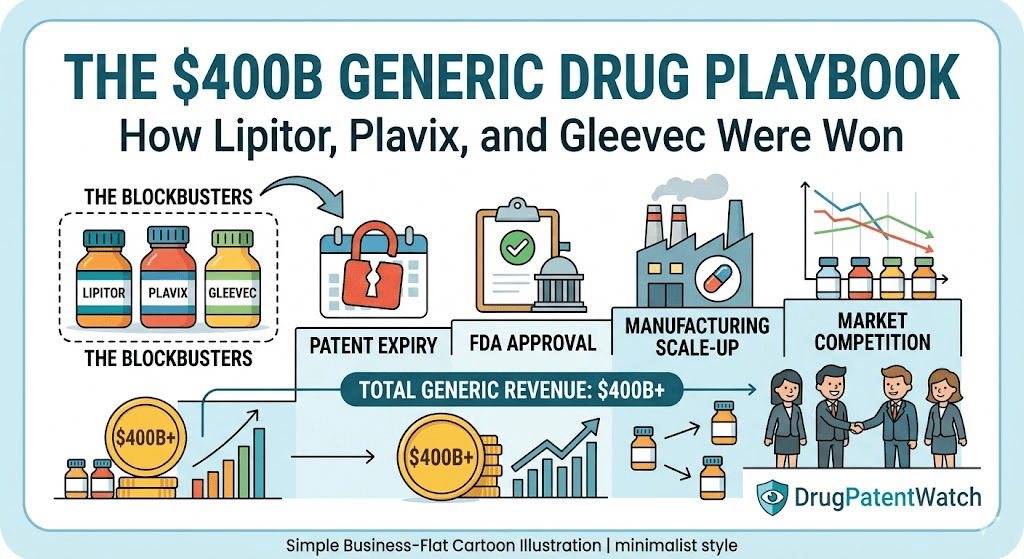
The three most consequential generic drug launches in pharmaceutical history share almost nothing in surface mechanics. One ended in a negotiated settlement that kept antitrust lawyers busy for years afterward. One was a 23-day market blitz that ended in a $442 million damages payment. One defied every pricing convention the generic industry had established. What they share is a common substrate: the Hatch-Waxman Act as strategic terrain, the 180-day marketing exclusivity as the prize, and the Paragraph IV certification as the weapon.
This analysis deconstructs all three cases with the granularity that pharma IP teams, portfolio managers, and commercial strategists actually need: not what happened, but why it happened the way it did, what each party’s decision tree looked like, and what the financial residue tells us about how the next generation of patent cliff events will play out.
Why the Generic Drug Market Is Bigger Than Most Analysts Think
The global generic drug market sits at roughly $450-500 billion in 2025 and is tracking toward $700 billion by the early 2030s. Multiple research firms project compound annual growth rates between 5% and 8.35%, which is unusual for what institutional investors still sometimes describe as a commodity business.
The growth is not speculative. It is mechanically tied to patent expiry calendars that are largely fixed.
Between 2025 and 2030, branded drugs generating an estimated $217-236 billion in annual sales face loss of exclusivity. That is the largest patent cliff in a decade, and it creates a predictable, multi-year transfer of revenue from innovator balance sheets to the generic sector. The companies that have already filed their Paragraph IV certifications against the most vulnerable targets in that cohort are executing strategies that began in 2020 or earlier.
Key drugs facing loss of exclusivity through 2030:
Drug
Active Ingredient
Approximate Annual Sales
Primary Patent Holder
Keytruda
Pembrolizumab
~$29.5B
Merck
Eliquis
Apixaban
~$12.0B (BMS share)
BMS / Pfizer
Stelara
Ustekinumab
~$10.9B
Johnson & Johnson
Opdivo
Nivolumab
~$9.3B
Bristol Myers Squibb
Xarelto
Rivaroxaban
~$6.0B
Bayer / J&J
Entresto
Sacubitril/Valsartan
~$5.8B
Novartis
The revenue at stake for generic challengers on Keytruda alone, a PD-1 inhibitor with the largest oncology franchise in history, is staggering. Unlike Lipitor, pembrolizumab is a biologic, which shifts the legal and regulatory framework from Hatch-Waxman to the Biologics Price Competition and Innovation Act (BPCIA). But the core strategic logic, identifying weak patents, filing first, securing exclusivity, remains structurally identical.
What the $408 Billion Savings Figure Actually Means for Generic Strategy
Generic and biosimilar medicines saved the U.S. healthcare system a record $408 billion in 2022, according to the Association for Accessible Medicines. Over the prior decade, the cumulative figure reached $2.9 trillion. Generics account for over 90% of prescriptions filled in the U.S. but only about 17.5% of total prescription drug spending.
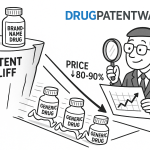
That ratio is the core economic fact that drives generic company strategy. The sector generates enormous societal value through price compression, but because that same compression is relentless and immediate after the 180-day exclusivity window closes, individual product profitability collapses quickly. Six or more generic competitors on a single molecule routinely drives prices down by more than 95% from the brand reference. This is the generic paradox: the industry’s value to the healthcare system scales inversely with the long-term commercial value of its individual products.
The implication for capital allocation is direct. Generic companies that depend on steady-state commodity business erode over time. The ones that invest in legal infrastructure, regulatory science, and patent intelligence to consistently capture 180-day exclusivity periods — and win it on high-value targets — are structurally different businesses.
How the Hatch-Waxman Act Created the Modern Generic Industry
Why the ANDA Pathway Changed Everything After 1984
Before the Drug Price Competition and Patent Term Restoration Act of 1984, a generic manufacturer had to conduct full clinical trials to prove its product’s safety and efficacy independently of the innovator’s data. The practical effect was that generic entry often arrived years after patents expired, because the economics of duplicating clinical programs on off-patent drugs rarely justified the investment.
The Abbreviated New Drug Application, created by Hatch-Waxman, eliminated that barrier. A generic applicant demonstrates bioequivalence to the brand-name reference drug — same active ingredient, same route of administration, same dosage form, bioequivalent plasma concentration-time profiles — and relies on the safety and efficacy findings already generated by the innovator’s NDA. The development cost and timeline dropped dramatically. The primary barrier shifted from clinical to legal.
That shift is the fundamental reason why the generic industry today is as much a legal operation as a manufacturing one. A generic firm’s litigation department is as strategically critical as its chemistry, manufacturing, and controls function. Sometimes more so.
The Paragraph IV Certification: What It Is and Why It Triggers Litigation
The FDA maintains the Orange Book — formally the Approved Drug Products with Therapeutic Equivalence Evaluations — which lists the patents that brand-name companies assert cover their approved products. When a generic applicant submits an ANDA, it must make a patent certification for each Orange Book-listed patent.
The Paragraph IV certification is the most aggressive option. It states that, in the generic applicant’s legal judgment, the listed patent is invalid, unenforceable, or will not be infringed by the generic product. Under the Act, filing this certification constitutes an artificial act of infringement — granting the patent holder the right to sue immediately, before any product reaches the market.
The PIV certification is not just a regulatory checkbox. It is a formal declaration of patent invalidity or non-infringement, filed under penalty of perjury, and it automatically makes federal patent litigation available to the brand company. Every generic product that reaches the market before its brand’s last patent expires got there through this mechanism.
The 180-Day Exclusivity: Why Being First to File Is Worth Hundreds of Millions
The first ANDA applicant to file a substantially complete application containing a Paragraph IV certification earns the right to 180-day marketing exclusivity. During that period, the FDA cannot approve any subsequent ANDA for the same drug from any other generic competitor.
The financial consequence of this structure is extreme. During the exclusivity period, only the brand and the first generic are on the market. Prices hold at 15-25% below brand. Margins are high. Volume is large. After day 181, multiple competitors enter, and pricing begins its downward spiral toward the 90%+ discount range.
For a blockbuster drug, the 180-day window can represent $300 million to $1 billion in revenue concentrated into six months. The race to file, where being ahead of a competitor by a single day determines who captures this value, drives frantic investment in regulatory affairs, patent monitoring, and ANDA manufacturing readiness. Missing first-to-file status on a major target is not a small setback. It can be the difference between a product that generates transformative returns and one that generates commodity margins.
The 30-Month Stay: The Innovator’s Automatic Defensive Moat
When a brand-name company receives a Paragraph IV notice letter from a generic applicant, it has 45 days to file a patent infringement lawsuit. If it does, a 30-month stay of FDA approval for the generic’s ANDA goes into effect automatically.
This provision gives innovators roughly two and a half years of protected revenue from the moment a PIV certification lands, regardless of the ultimate merits of their patent claims. It does not require the brand to win in court. It only requires the brand to file suit. The stay is therefore exercised almost universally — declining to invoke it would amount to voluntarily accelerating a competitor’s entry.
The 30-month stay’s predictability has a second-order effect: it makes the settlement window between PIV filing and FDA approval highly structured. Both parties know the litigation timeline. Both can model the financial scenarios. Settlement negotiations that produce authorized generic agreements, negotiated entry dates, or reverse-payment arrangements typically occur within this window, often within the first 12-18 months after the PIV notice.
Case Study 1 — Atorvastatin (Lipitor): How Pfizer and Ranbaxy Divided a $150 Billion Franchise
How Lipitor Became the Best-Selling Drug in Pharmaceutical History
Pfizer’s atorvastatin, approved by the FDA in December 1996, is the largest commercial franchise in the history of the pharmaceutical industry by cumulative revenue. Total global sales exceeded $150 billion over its patent life. Peak annual revenue hit $12.9 billion in 2006. In 2010, the year before its primary U.S. patent expired, Lipitor still accounted for $10.7 billion in sales — roughly one-sixth of Pfizer’s total revenue.
The drug’s pharmacological profile explains its dominance. As an HMG-CoA reductase inhibitor, atorvastatin demonstrated greater LDL reduction at equivalent doses compared to earlier statins. The ASCOT-LLA trial and subsequent cardiovascular outcome data solidified its role as the standard of care for primary and secondary prevention across an enormous patient population. Physicians became habituated to prescribing it at the doses studied in clinical trials. The brand’s commercial infrastructure — a sales force of several thousand representatives at peak, aggressive direct-to-consumer advertising — entrenched it in prescriber behavior for a generation.
Pfizer’s patent portfolio on Lipitor included composition of matter patents, formulation patents, and method-of-use patents. The primary compound patent on atorvastatin calcium was set to expire in March 2010, with a pediatric exclusivity extension pushing effective exclusivity to June 2011. Secondary patents provided additional protection through November 2011 — but those secondary patents were the target of Ranbaxy’s legal challenge.
Ranbaxy’s First-to-File Strategy Against Pfizer’s Core IP
Ranbaxy Laboratories, at the time one of the most aggressive generic challengers globally, filed the first ANDA with a Paragraph IV certification against Lipitor’s Orange Book patents. The move positioned Ranbaxy as the sole contender for 180-day exclusivity on generic atorvastatin — a market whose first-to-file prize was unprecedented in generic drug history.
Pfizer immediately invoked the 30-month stay, triggering multi-jurisdictional litigation. The legal battle extended to the United Kingdom, Germany, the Netherlands, Canada, and Australia, as Pfizer defended its IP globally. This was not unusual for a drug of this scale — losing in a single market while winning in others would still mean billions in revenue at risk.
Ranbaxy’s core argument targeted the validity of Pfizer’s secondary patents on atorvastatin, particularly the hemicalcium salt form. The theory was that these secondary patents represented obvious extensions of prior art and should not have been granted. If correct, the argument would collapse Pfizer’s exclusivity roughly five months ahead of schedule and deliver those months of exclusivity to Ranbaxy.
Why Pfizer and Ranbaxy Settled — and What the Deal Actually Said
In June 2008, after years of litigation, Pfizer and Ranbaxy signed a global settlement. The central provision was a license granting Ranbaxy the right to launch generic atorvastatin in the U.S. on November 30, 2011 — the date Pfizer’s last relevant patent expired. In exchange, Ranbaxy agreed to drop all of its patent challenges.
Pfizer framed the deal as commercially neutral: the settlement simply confirmed the existing patent timeline. Ranbaxy received certainty of launch. Pfizer received certainty that no at-risk generic entry would occur ahead of schedule.
What the settlement also did was convert a binary legal risk — either Pfizer’s secondary patents stood or they didn’t — into a contractual guarantee. If Ranbaxy had pressed its invalidity arguments in court and won, Pfizer could have faced generic competition five months earlier than the settlement provided. For a drug generating more than $800 million per month at that point, those five months represented roughly $4 billion. Settlement at the cost of a guaranteed November 2011 entry was rational insurance.
The antitrust dimensions were less clean. Class-action plaintiffs alleged the settlement was a reverse payment arrangement — that Pfizer’s agreement to allow Ranbaxy’s launch in exchange for dropping the patent challenges was economically equivalent to paying a competitor to stay out of the market. The litigation ground on for years. Pfizer ultimately settled antitrust claims for several tens of millions of dollars without admitting liability. West Virginia’s attorney general extracted a $17 million settlement as recently as January 2025.
Ranbaxy’s Launch: $600 Million in 180 Days, Then Collapse
Ranbaxy received final FDA approval and launched generic atorvastatin on December 1, 2011. The commercial outcome was initially spectacular. Over the 180-day exclusivity period, Ranbaxy captured more than 50% of total atorvastatin market volume and generated approximately $600 million in revenue. The launch was coordinated across multiple European markets simultaneously, including Italy, the Netherlands, and Sweden, where Ranbaxy was also first to market.
Then came the manufacturing failure.
In November 2012, Ranbaxy issued a voluntary recall of multiple atorvastatin lots following the discovery of glass particle contamination originating from a defective glass-lining removal process in manufacturing equipment. Production was halted temporarily. The FDA scrutiny that followed was severe. Ranbaxy’s market share in generic atorvastatin fell from above 42% to below 8% within weeks. Competitors that had been locked out during the exclusivity period — Mylan, Watson (now Teva), Dr. Reddy’s, and others — moved into the vacuum.
The recall did not erase the $600 million earned during exclusivity. But it destroyed Ranbaxy’s long-tail position in what should have been a multi-year commodity revenue stream, and it accelerated the regulatory scrutiny that culminated in Ranbaxy’s broader consent decree issues with the FDA in subsequent years. Supply chain integrity is not a secondary concern in generic launch strategy. For Ranbaxy, it was ultimately more damaging than any of the legal risks taken.
Pfizer did not simply accept the loss of exclusivity as terminal. Its commercial strategy during and after Ranbaxy’s exclusivity period became a widely studied model for brand defense.
The company launched a consumer-facing campaign built around the line ‘Only Lipitor is Lipitor,’ explicitly positioning the brand as qualitatively distinct from the generic and encouraging patients to request it by name despite higher sticker prices.
More material were the structural deals Pfizer struck with pharmacy benefit managers and insurance plans. By offering deep rebates and patient co-pay assistance cards, Pfizer made the net cost of branded Lipitor to payers and the out-of-pocket cost to patients comparable to the generic equivalent. This undercut the primary mechanism by which pharmacies and PBMs would normally push toward generic substitution.
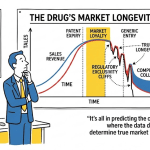
The result was that Pfizer retained approximately 30% of total atorvastatin market share at the end of Ranbaxy’s 180-day exclusivity period. That figure far exceeded what brand manufacturers typically hold post-genericization. Standard generic erosion models predicted brand share in the 10-15% range by the six-month mark.
The long-term economics were still unforgiving. Once six or more generic manufacturers entered the market, price compression toward a 90%+ discount off the brand was inevitable. The introduction of generic statins broadly is credited with saving the U.S. healthcare system approximately $11.9 billion annually. Pfizer’s co-pay strategy slowed the erosion but did not stop it. It bought time and managed investor expectations. That was its purpose.
Case Study 2 — Clopidogrel (Plavix): The $442 Million At-Risk Launch That Failed
Why Plavix Was Bristol-Myers Squibb and Sanofi’s Most Critical Asset
Plavix — clopidogrel bisulfate — was the second best-selling drug in the world by the mid-2000s, trailing only Lipitor. At peak, it generated nearly $10 billion in global annual sales. Cumulatively, the franchise exceeded $83 billion in lifetime revenue before patent expiry. For Bristol-Myers Squibb and its co-promoter Sanofi-Aventis, Plavix was not just a major product — it was the foundational revenue stream on which corporate operating plans were built.
The pharmacological profile supported this dominance. Clopidogrel is a thienopyridine-class antiplatelet agent that irreversibly inhibits the P2Y12 ADP receptor on platelets, reducing the risk of myocardial infarction and stroke in patients with acute coronary syndrome or established peripheral artery disease. The CAPRIE and CURE trials established its clinical utility across a large and growing patient population. By the mid-2000s, millions of patients were on long-term clopidogrel therapy, generating a recurring revenue base that was largely insulated from treatment switching absent a significant clinical or economic trigger.
BMS and Sanofi shared commercial rights under a co-promotion agreement, with each company responsible for marketing in distinct geographies. The patent protecting clopidogrel in the U.S., U.S. Patent No. 4,847,265, was a composition of matter patent held by Sanofi (then Sanofi-Synthelabo). Its expected expiration was May 2012. BMS and Sanofi defended it aggressively as the primary IP asset of both companies.
Why Apotex Filed a Paragraph IV Certification Against Plavix
In November 2001, Apotex Inc. — a privately held Canadian generic manufacturer with a reputation for pursuing high-risk, high-reward patent challenges — filed the first ANDA with a Paragraph IV certification for clopidogrel, positioning itself as the potential holder of 180-day exclusivity on a drug that, by the mid-2000s, would be generating nearly $10 billion annually.
Apotex’s legal theory was substantive rather than merely technical. It did not rely primarily on non-infringement. Instead, it attacked the composition of matter patent’s validity directly: the argument was that the ‘265 patent was anticipated by an earlier, expired patent disclosing a broader class of thienopyridine compounds, and that the selection of the specific enantiomer described in the ‘265 patent was obvious to a person of ordinary skill in the art at the time of filing. If the court accepted this argument, the patent would be invalidated — not just worked around.
This invalidity theory required Apotex to demonstrate that the prior art contained clear and convincing disclosure of the compound or that its synthesis was within routine skill. Patent invalidity litigation on composition of matter claims for small molecules is expensive, expert-intensive, and rarely brief. Apotex was prepared for a long campaign.
How the Collapsed Settlement Led to an At-Risk Launch
By 2006, the parties had reached a tentative settlement. Under the proposed deal, Apotex would delay its U.S. generic launch in exchange for a payment from BMS and Sanofi. The FTC and the offices of multiple state attorneys general reviewed the agreement and signaled that they viewed it as a potentially illegal reverse payment arrangement. Faced with that regulatory opposition, the deal collapsed.
On August 8, 2006, with its ANDA approved and no settlement in place, Apotex launched its generic clopidogrel into the U.S. market at-risk — meaning litigation over the ‘265 patent’s validity remained unresolved in court.
The at-risk launch is the most aggressive tool in the generic playbook. A company that launches at-risk before patent litigation is resolved exposes itself to treble damages under 35 U.S.C. § 284 if the court ultimately upholds the brand’s patent. The damage calculation is based on the brand’s lost profits — for a drug generating nearly $10 billion in annual revenue, those potential damages could reach into the billions.
Apotex made a probabilistic bet. Its legal team assessed the invalidity arguments as strong. The potential profit from even weeks of uncontested market presence on a $10 billion drug vastly exceeded any plausible damages scenario. And if the launch created enough market chaos to force a better settlement, that outcome was also acceptable.
23 Days: The Market Impact of Apotex’s At-Risk Launch
The market impact was immediate. Apotex flooded the distribution system, shipping an estimated $500 million in generic clopidogrel and reportedly generating orders for more than $1 billion in additional product within days. BMS and Sanofi described in court filings that the move wiped approximately $10 billion from their combined market capitalization. BMS swung from a net profit of $499 million in Q4 2005 to a net loss of $134 million in Q4 2006, with the loss of Plavix revenue cited as the primary driver.
BMS and Sanofi sought and received a preliminary injunction. On August 31, 2006 — 23 days after the at-risk launch began — the court order halted Apotex’s sales.
The damage to BMS and Sanofi was not reversed. The distribution channels were saturated with generic product. Pricing expectations had been permanently reset in the minds of payers and pharmacy benefit managers. The generic’s existence as a viable alternative was now demonstrated fact, even if temporarily unavailable.
Why Apotex Lost in Court — and What the $442 Million Damages Award Means
In 2007, the U.S. district court upheld the validity of the ‘265 patent, finding that Apotex had not carried its burden of proving invalidity by clear and convincing evidence. The Federal Circuit affirmed on appeal. Apotex’s legal thesis, while aggressive and well-resourced, did not prevail.
In February 2012, Apotex paid $442.2 million in damages to BMS and Sanofi — roughly half of the $884 million in sales it had generated during its 23 days on the market.
The arithmetic here is worth sitting with. Apotex made approximately $884 million in sales in 23 days on a drug that had not yet lost patent protection. After paying $442 million in damages, it retained net revenue of approximately $442 million. If the at-risk launch had not happened and Apotex had simply waited for Plavix’s patent to expire in 2012, it would have entered a commoditized generic market among multiple competitors with no exclusivity and margins in the single digits.
The at-risk launch failed legally and still generated net hundreds of millions of dollars. This is why the strategy is not extinct. It is recalibrated for expected value, not simply for probability of legal victory.
What Investors Should Understand About At-Risk Launch Economics
Portfolio managers holding brand-name pharma companies must model at-risk launch risk explicitly. The Plavix event demonstrated that a brand company’s stock exposure to a multi-billion-dollar drug is not simply a function of the patent expiry date. It is also a function of the probability that a generic company will calculate that at-risk entry is expected-value-positive, regardless of ultimate legal outcome.
For BMS, the at-risk launch was not a scenario that a standard patent expiry analysis would have captured. The shock to BMS’s market cap — approximately $10 billion on the day of Apotex’s launch — arrived years ahead of the scheduled loss of exclusivity.
The conditions that increase at-risk launch probability: a drug with large annual revenue, a patent with documented validity vulnerabilities (prior art exposure, secondary patent status), a generic challenger with strong capital reserves and high confidence in its legal position, and a regulatory environment hostile to reverse-payment settlements that would otherwise create a negotiated exit.
Eliquis, with BMS and Pfizer as co-holders, has faced sustained Paragraph IV challenges. The patent estate and the litigation dynamics are different from Plavix, but the revenue scale — roughly $12-13 billion annually — creates economic incentives for at-risk entry that any holder of BMS equity should understand.
Case Study 3 — Imatinib (Gleevec): Why Specialty Generic Strategy Breaks All the Standard Rules
What Made Gleevec Different from Every Drug That Came Before It
Novartis’s imatinib mesylate, approved by the FDA in May 2001 under the brand Gleevec, is not a blockbuster in the conventional sense. It is a proof of concept that reshaped oncology: the first major commercially successful targeted cancer therapy designed around a specific molecular driver of disease rather than broad cytotoxicity.
Gleevec’s target is BCR-ABL, the constitutively active tyrosine kinase generated by the Philadelphia chromosome translocation in chronic myeloid leukemia. By binding to the ATP-binding pocket of BCR-ABL and blocking its kinase activity, imatinib inhibits the signaling cascade that drives CML cell proliferation. The drug converted CML from a disease with a five-year survival rate of 31% in 1993 to one with a five-year survival rate exceeding 90% by the early 2020s. In gastrointestinal stromal tumors (GIST), where KIT and PDGFRA mutations are frequent drivers, it became the first effective systemic therapy.
The commercial consequence of this clinical profile was a franchise that reached peak annual sales above $4.6 billion. Unlike statins or antiplatelets, Gleevec served a smaller, more defined patient population — roughly 50,000 to 70,000 CML patients in the U.S. — for whom the drug was effectively curative management therapy. Patients stayed on it indefinitely, or until second-generation TKIs (nilotinib, dasatinib, bosutinib) offered improved molecular response rates.
Novartis managed Gleevec’s pricing with particular aggression. The drug launched in 2001 at an annual cost of under $25,000. By 2016, Novartis had raised the U.S. list price to approximately $123,000 per year — a nearly fivefold increase over fifteen years, with no corresponding change in the molecule, the indication, or the manufacturing process. A congressional oversight investigation documented these increases in detail.
The Indian Supreme Court Ruling That Changed Global Patent Law
The most significant legal event in Gleevec’s patent history was not a U.S. court decision. It was a 2013 ruling by the Supreme Court of India.
Novartis had sought a patent in India for the beta crystalline form of imatinib mesylate — the specific polymorphic form used in Gleevec tablets. India’s patent law, specifically Section 3(d), requires that a new form of a known substance demonstrate significantly enhanced efficacy over the previously known form to be patentable. The Supreme Court of India found that Novartis had not met this standard and rejected the patent application.
The ruling had no direct legal effect on Novartis’s U.S. patent position. But its significance was global. It established that secondary patents on known molecules — patents covering a specific salt, polymorph, or formulation — face heightened scrutiny in jurisdictions with Section 3(d)-equivalent provisions. It made India a market where generic imatinib manufacturers could operate without infringing Novartis’s secondary patents. It gave Indian generic manufacturers — including Sun Pharmaceutical, Cipla, and Natco Pharma — a clear lane into the CML market.
The ruling accelerated access to affordable imatinib across developing markets and created reputational pressure on Novartis in developed markets, where the pricing practices it engaged in for Gleevec were increasingly visible to congressional investigators and the press.
How the U.S. Settlement with Sun Pharma Structured Generic Entry
In the U.S., Novartis settled its patent litigation with Sun Pharmaceutical Industries, the first-to-file Paragraph IV challenger, under terms that permitted Sun to launch its generic imatinib on February 1, 2016 — roughly seven months after the expiration of the basic compound patent in July 2015.
The settlement gave Novartis the standard benefit: a confirmed end-date for brand exclusivity, no risk of early at-risk entry, and time to execute a commercial defense. Sun received confirmed 180-day exclusivity as first-to-file, giving it the right to be the only generic on the market from its launch through July 2016.
Novartis’s statement described the settlement as one that ‘validates the Novartis patents while allowing Sun Pharma’s subsidiary to enter the market with its generic product.’ That framing was accurate as far as it went. It did not address the pricing dynamics that followed.
Why Sun Pharma Launched Generic Gleevec at Near-Parity With the Brand
The standard generic launch playbook calls for entering at a price meaningfully below the brand to incentivize payer and pharmacy substitution. Sun Pharma did not follow this script.
At launch, Sun’s generic imatinib was priced at approximately $140,000 per year. Novartis’s branded Gleevec was approximately $146,000. The discount was roughly 4%.
This counterintuitive strategy made sense for the specific market structure Sun was operating in. CML is a specialty oncology indication. The patient population is small but highly persistent — patients who respond to imatinib typically take it for the rest of their lives. The treating physicians are hematology-oncology specialists with deep familiarity with the brand product. The prescribing and dispensing channels run through specialty pharmacies and oncology pharmacy benefits rather than the retail pharmacy PBM networks that handle high-volume primary care drugs.
In this context, Sun’s rational objective during the 180-day exclusivity period was margin maximization, not volume capture. A 4% discount triggers limited automatic substitution in specialty oncology. A 40% discount drives faster substitution but at much lower revenue per unit. Sun chose the former. Internal Novartis documents reviewed by congressional investigators described Sun’s near-parity pricing as ‘good news’ from Novartis’s perspective — it meant the genericization of Gleevec would be slow and the brand could retain share longer than in a standard commodity competition.
How the Gleevec Price Erosion Curve Differs from a Primary Care Generic
The eventual price decline for generic imatinib was steep in percentage terms but slow in absolute timeline. One analysis showed that the wholesale acquisition cost of generic imatinib fell by as much as 89% within two and a half years of the February 2016 launch. But a separate analysis found it took two full years for payers to realize substantial savings — and many state Medicaid programs were still paying prices well above acquisition cost for the generic throughout that period.
The slower burn has several causes. The limited number of generic competitors in oncology specialty markets, relative to high-volume primary care segments, reduces the intensity of price competition. The reimbursement architecture, where specialty pharmacy contracts, oncology GPOs, and carve-out pharmacy benefit structures create multiple pricing layers, delays the transmission of manufacturer price reductions to final payers.
The distinction between bioequivalence and therapeutic equivalence also matters in this context. A bioequivalence demonstration for oral imatinib is achievable and was achieved by Sun and subsequent generics. But oncology specialists who had managed patients on Gleevec for years, tracking molecular response rates by PCR, were cautious about substitution for life-sustaining therapy in patients with controlled disease. That clinical inertia translated into brand retention that would not exist for atorvastatin or clopidogrel.
What the Gleevec Pricing Investigation Revealed About LOE Planning
The House Committee on Oversight and Accountability’s investigation into Novartis’s pricing of Gleevec produced documents showing that the company had implemented dozens of list price increases over the drug’s patent life, with final prices exceeding $130,000 per year in the U.S. market by the end of exclusivity. Internal documents showed Novartis executives were aware that price increases were not correlated with new clinical data or manufacturing improvements.
The investigation also documented Novartis’s approach to loss of exclusivity planning. The company had modeled generic entry scenarios years in advance and identified the pricing and access levers that would preserve brand revenue for the maximum period after Sun’s entry. The Gleevec case is one of the cleanest available examples of an innovator treating price maximization before LOE as the mechanism for front-loading returns, with the understanding that generic competition after LOE would eventually compress margins regardless.
For generic companies analyzing specialty drug targets, the Gleevec case demonstrates that the pricing strategy at launch should be calibrated to the specific payer and prescriber dynamics of the therapeutic area, not imported wholesale from the primary care generic playbook.
How the Hatch-Waxman Settlement Economy Works: Pay-for-Delay Under the Actavis Standard
What the Supreme Court’s FTC v. Actavis Decision Changed for Generic Settlements
For two decades after Hatch-Waxman passed, the pharmaceutical industry operated under interpretive ambiguity about whether brand-generic patent settlements with reverse payment provisions — where the brand effectively pays the generic to delay entry — were per se legal, per se illegal, or subject to something in between.
In 2013, the Supreme Court resolved this in FTC v. Actavis. The Court held that reverse payment settlements are not immune from antitrust scrutiny, but neither are they automatically illegal. They are subject to the rule of reason — courts must weigh the competitive harms of delayed generic entry against the potential procompetitive justifications for settlement.
The practical effect was to raise the litigation risk for settlements with large unexplained cash payments from brand to generic. The structure of settlements shifted toward non-cash consideration: authorized generic licenses, supply agreements, co-promotion rights, and access to other products. These forms of value transfer are harder to quantify and harder to challenge under rule of reason analysis.
The Pfizer-Ranbaxy settlement antitrust cases, which continued to generate litigation years after Actavis, illustrate how the pre-Actavis settlement structure can create long-tail legal exposure. Generic companies and brand companies that negotiated LOE timelines in the 2005-2013 period are still managing antitrust risk from those agreements.
Authorized Generics: The Brand’s Counter to 180-Day Exclusivity
One tool innovators use to dilute the financial value of the 180-day exclusivity period is the authorized generic. The brand-name company licenses a generic subsidiary or a third-party generic manufacturer to sell an AB-rated generic version of its own product at a lower price during the first-to-file’s exclusivity period.
The authorized generic competes directly with the PIV challenger’s product. It does not consume the first-to-file’s 180-day period — the FDA exclusivity provision only restricts ANDA-based approvals from other applicants. An authorized generic is sold under the NDA holder’s approval and bypasses this restriction entirely.
The commercial impact on a first-to-file challenger can be severe. Ranbaxy faced authorized generic competition during Lipitor’s exclusivity period. The presence of an authorized generic at a price point between the brand and Ranbaxy’s generic compressed Ranbaxy’s margins and market share during what should have been an uncontested exclusivity window.
For generic companies evaluating the financial return on a first-to-file strategy, modeling authorized generic probability is a required input. Brand companies with large consumer franchises and manufacturing capacity are likely to deploy this tool. Smaller brands in specialty segments with limited manufacturing flexibility are less likely to do so effectively.
What Investors Are Watching: Key Patent Expiry Dates and Revenue at Risk Through 2030
Why Keytruda’s Biosimilar Timeline Is the Most Watched Event in Pharma
Merck’s pembrolizumab (Keytruda) generated approximately $29.5 billion in global revenue in 2023, making it the largest-selling pharmaceutical product in the world. Its primary composition of matter patent expires in 2028 in the U.S. (with potential pediatric extension to early 2029). A 12-year exclusivity period under the BPCIA means biosimilar approval cannot come before 2033 absent a patent-based challenge. But the Paragraph IV analog in the BPCIA framework — a patent dance followed by litigation — has already been initiated by multiple biosimilar developers.
The financial exposure for Merck is direct. A 40% biosimilar penetration of the Keytruda market at a 20% average selling price discount would represent approximately $2.4 billion per year in revenue shift. At 70% penetration — the long-term steady state for many immunology biologics — the revenue impact could reach $4-5 billion annually.
Merck’s pipeline strategy around Keytruda LOE includes subcutaneous formulations, fixed-dose combination approvals with chemotherapy and other oncology agents, and indication expansions. Each new approval creates a new data exclusivity period and potentially extends the effective commercial franchise beyond the core pembrolizumab composition patent.
Eliquis Patent Expiry: What BMS and Pfizer Investors Need to Know
Apixaban (Eliquis) is co-marketed by Bristol-Myers Squibb and Pfizer. BMS’s share of Eliquis revenue exceeded $12 billion in 2023, making it the company’s largest asset. Pfizer records its own substantial share separately.
The primary U.S. patent on apixaban expired in November 2022. Multiple generic manufacturers had filed Paragraph IV certifications and been involved in patent litigation for years before that. The settlement landscape for Eliquis is complex: Bristol-Myers and Pfizer have reached agreements with multiple generic challengers setting entry dates in the 2026-2028 range, subject to the outcome of pending litigation on secondary patents.
The secondary patents — covering specific polymorphic forms of apixaban and certain manufacturing processes — are the contested terrain. If any of these patents are upheld through the litigation period, generic entry could be delayed past the primary patent expiry. If invalidated, the path clears earlier.
BMS’s revenue exposure is acute. Eliquis and Opdivo together represent the majority of BMS’s top-line revenue. Both face loss of exclusivity within the current decade. The market’s pricing of BMS equity reflects significant LOE discount, but the timing uncertainty on Eliquis secondary patent litigation adds scenario dispersion to the earnings forecast.
How Stelara’s Loss of Exclusivity Is Playing Out in 2025
Ustekinumab (Stelara), J&J’s IL-12/23 antagonist indicated in plaque psoriasis, psoriatic arthritis, and inflammatory bowel disease, lost its primary U.S. exclusivity protections by end of 2023, with biosimilar approvals arriving in 2023-2024. By 2025, multiple biosimilars including products from Amgen (Wezlana), Teva, and Samsung Bioepis are on the U.S. market.
Biosimilar penetration of Stelara has been faster than many analysts predicted, driven by payer formulary management and aggressive biosimilar contracting. J&J has defended with co-pay assistance and authorized biosimilar arrangements, but the revenue trajectory for Stelara is now in steep decline. The drug generated $10.9 billion annually at peak; current sales are tracking materially below that figure.
The Stelara case will be studied alongside Humira as the two clearest data points on how IL-class biologic franchises respond to biosimilar competition. Humira’s biosimilar entry beginning in 2023 generated faster-than-expected erosion in Europe but slower erosion in the U.S., primarily due to AbbVie’s formulary contracting strategies with major PBMs. Stelara’s smaller scale and J&J’s less aggressive contracting posture have produced a different curve.
How Patent Thickets Delay Generic Entry — and When They Fail
What a Patent Thicket Is and How It’s Built
A patent thicket is the accumulation of multiple overlapping patents on a single pharmaceutical product covering different aspects of the molecule, formulation, manufacturing process, method of administration, and method of treatment. The individual patents may have limited independent value, but as a portfolio they create a barrier that a generic challenger must either design around or challenge one by one.
AbbVie’s Humira (adalimumab) patent thicket is the most discussed example in contemporary pharmaceutical IP. AbbVie filed more than 250 patents related to adalimumab, creating a protection structure that extended meaningful market exclusivity in the U.S. well beyond the basic compound patent expiration. The settlement agreements with biosimilar developers, which set U.S. entry dates in early 2023, came roughly a decade after the primary composition patent expired — meaning the patent thicket delivered approximately ten years of additional protected U.S. revenue.
Biosimilar manufacturers challenging a patent thicket face a different strategic calculus than small-molecule generic challengers. Each patent in the thicket must be addressed independently. The litigation cost is multiplicative. The time required to resolve all challenges through the patent dance and subsequent litigation exceeds the typical Hatch-Waxman timeline significantly.
The FDA has taken steps to reduce the strategic utility of patent thickets in some contexts, including through the Purple Book (the biologic equivalent of the Orange Book) and BPCIA provisions that limit which patents can be included in the patent dance. But the fundamental dynamic — that a sufficiently large portfolio of secondary patents is expensive and time-consuming to challenge comprehensively — remains operative.
When Secondary Patents Fail: The Nexium and Prilosec Lesson
AstraZeneca’s experience with esomeprazole (Nexium) and omeprazole (Prilosec) provides a case study in secondary patent strategy that failed. AstraZeneca developed Nexium as the S-enantiomer of omeprazole after Prilosec’s primary patent faced expiry. The company patented the single enantiomer and the method of using it to treat acid reflux.
Generic manufacturers challenged the validity of the Nexium patents on grounds of obviousness — arguing that isolating the more active enantiomer of a known racemate was a routine step that any skilled chemist would perform. The courts ultimately agreed, and Nexium faced generic competition ahead of what AstraZeneca’s secondary patent strategy was designed to deliver.
The esomeprazole litigation is a standard reference case in Paragraph IV obviousness arguments for secondary patents. Any generic challenger evaluating a single-enantiomer drug, a new polymorph of a known molecule, or a new formulation of an existing active pharmaceutical ingredient should build an obviousness argument modeled on the reasoning in the Nexium decisions.
How Biosimilar Launch Timing Works Under the BPCIA
The Biosimilar Patent Dance: Why It’s Different from Paragraph IV
The Biologics Price Competition and Innovation Act created the biosimilar approval pathway in 2010. Like Hatch-Waxman, it includes a mechanism for early patent challenges, but the mechanics are substantially different.
The BPCIA’s patent resolution process, informally called the patent dance, requires a biosimilar applicant to share its application and manufacturing information with the reference product sponsor. The sponsor then identifies the patents it believes would be infringed. The parties negotiate over which patents to litigate immediately. If they cannot agree, the applicant can unilaterally proceed to litigation on a defined subset of patents.
There is no direct equivalent to the 180-day exclusivity for biosimilars. Multiple biosimilar applications can proceed simultaneously, and there is no guaranteed exclusivity period for a first-to-file. First-to-launch biosimilars can negotiate for a limited period of market exclusivity with the reference product sponsor as part of settlement, but this is a contractual right, not a statutory one.
The 12-year reference product exclusivity period under the BPCIA is distinct from patent protection. It means the FDA cannot approve a biosimilar based on the reference product’s safety and efficacy data for 12 years from the reference product’s approval, regardless of patent status. This provides an effective exclusivity floor for biologics that is longer than anything available for small molecules under Hatch-Waxman.
Why GLP-1 Manufacturing Complexity Matters for Generic and Biosimilar Entry
Semaglutide (Ozempic, Wegovy), liraglutide (Victoza, Saxenda), and tirzepatide (Mounjaro, Zepbound) are the dominant commercial products in the GLP-1 receptor agonist class. Novo Nordisk and Eli Lilly hold the primary patents and the manufacturing infrastructure for these compounds.
The manufacturing complexity of GLP-1 peptide drugs is not simply a regulatory hurdle — it is a functional barrier to entry. GLP-1 agonists are synthetic peptides requiring solid-phase peptide synthesis, complex purification steps, and sterile fill-and-finish manufacturing in specific formulations designed for subcutaneous self-injection. The API supply chain for these compounds depends on a small number of contract manufacturing organizations with validated synthetic peptide capabilities.
Generic entry for semaglutide under a small-molecule regulatory pathway is not straightforward — Novo Nordisk classifies Ozempic and Wegovy as biologics eligible for the BPCIA pathway, though there is ongoing regulatory and legal debate about the appropriate pathway for peptide-based drugs below a certain size threshold. If a 505(b)(2) or ANDA pathway is available, the generic version would still require a manufacturer capable of producing synthetic peptide API at commercial scale with acceptable purity profiles.
The effective barrier to GLP-1 entry is therefore a combination of patent protection (composition patents on semaglutide extend to approximately 2032), manufacturing capacity constraints, and regulatory pathway ambiguity. No generic challenger has demonstrated the capability or filed the regulatory submissions that would suggest near-term generic entry is realistic.
Most Important Ongoing Litigation: Paragraph IV Challenges and PTAB Proceedings
Key Patent Challenges Currently in Litigation for Major U.S. Drug Franchises
Inter Partes Review proceedings at the Patent Trial and Appeal Board have become a parallel track to district court Paragraph IV litigation. IPR petitions allow generic manufacturers and third parties to challenge the validity of issued patents before the USPTO’s administrative tribunal, often at lower cost and faster timeline than federal district court litigation.
The institution rate for IPR petitions on pharmaceutical patents has been significant. Patents covering dosing regimens, formulation characteristics, and method-of-use claims are particularly vulnerable. Composition of matter patents, especially for small molecules, are harder to invalidate through IPR.
Proceedings currently active or recently resolved for major franchises include:
Eliquis secondary patents covering specific apixaban crystalline forms and processes are subject to multiple IPR petitions filed by Unichem, MSN Pharmaceuticals, and others. The outcome of these proceedings affects the entry dates that BMS and Pfizer have settled on with generic challengers.
Dupixent (dupilumab, Regeneron / Sanofi) has seen early-stage biosimilar development with patent dance notifications beginning. The primary composition patent expires in 2031 in the U.S. but secondary patents and manufacturing patents may extend the effective exclusivity.
Skyrizi (risankizumab, AbbVie) and Rinvoq (upadacitinib, AbbVie) are next-generation immunology assets that AbbVie has built out to replace the Humira revenue base. Both have active patent portfolios and early-stage ANDA or biosimilar competition filings.
What Happens After Exclusivity Ends: The Post-LOE Commercial Playbook
Why Brand Manufacturers Launch Authorized Generics Before the Competition Does
The authorized generic strategy — in which the brand-name NDA holder launches its own generic version of the product, often through a subsidiary or white-label arrangement — serves multiple commercial purposes.
First, it limits the first-to-file generic challenger’s exclusivity-period profits. The authorized generic creates a three-way market (brand, authorized generic, first-to-file generic) during the 180-day period rather than the binary duopoly the Hatch-Waxman exclusivity was designed to produce. This reduces the financial incentive for future Paragraph IV challenges on similar compounds.
Second, it gives the innovator a position in the post-LOE generic market. As branded market share erodes, the authorized generic maintains the NDA holder’s presence in the product category and captures a share of the growing generic volume.
Third, it can be deployed strategically in settlement negotiations. Offering an authorized generic license as partial consideration in a Paragraph IV settlement is a non-cash form of value that the FTC has difficulty quantifying under Actavis rule of reason analysis.
How Brand Companies Use Reformulation to Extend Effective Exclusivity
Extended-release formulations, new delivery mechanisms, and fixed-dose combination products are the primary reformulation tools available to innovators managing LOE on core assets.
The extended-release strategy was used effectively by Pfizer on several occasions. Extended-release venlafaxine (Effexor XR) maintained commercial viability well beyond the loss of exclusivity on the immediate-release formulation because the XR formulation required its own patent challenge and bioequivalence demonstration. The commercial franchise shifted patient volumes toward the XR version in the years before LOE, maximizing the fraction of revenue protected by the new formulation’s exclusivity.
The Fixed-dose combination strategy is increasingly used in cardiovascular and metabolic disease. By combining two off-patent molecules in a single tablet with a new patent on the combination product, brands can maintain patient inertia and payer formulary presence even when each component is separately available as a low-cost generic. Caduet (amlodipine/atorvastatin) and Vytorin (ezetimibe/simvastatin) are examples from the cardiovascular class.
The FDA’s patent certification requirements apply to combination products in the same way as single-agent drugs, so generic challengers can file Paragraph IV certifications against combination product patents. But the clinical value proposition of a single-pill regimen provides a commercial barrier that pure generic manufacturers, who typically lack a sales force to argue clinical differentiation, struggle to overcome.
Why Manufacturing Complexity Is Now a Competitive Moat
How Sterile Injectable Manufacturing Limits Generic Entry in Oncology
The shift in pharmaceutical innovation toward parenteral oncology products — intravenous infusions, subcutaneous injectables, lyophilized formulations — has created a manufacturing barrier that functions as a de facto exclusivity extension for many products that have technically lost patent protection.
Sterile injectable manufacturing requires aseptic processing, specialized filling lines, validated sterilization cycles, and container closure systems that meet stringent FDA and EMA requirements. The capital cost of establishing a compliant sterile injectable facility exceeds $300 million. Generic manufacturers entering this space must demonstrate process validation that satisfies the agency’s expectations for each specific product and formulation.
The FDA’s manufacturing inspection process has become a significant gating factor for ANDA approvals in sterile injectables. Warning letters and import alerts triggered by Current Good Manufacturing Practice deficiencies at generic manufacturing facilities — predominantly in India — have delayed ANDA approvals by 12-36 months in multiple cases. This effectively extends a brand’s exclusivity beyond the patent protection window.
For oncology products where the molecule itself is no longer protected, the manufacturing barrier is often the dominant entry barrier. Products like cytarabine liposome injection (DepoCyt), which has complex lipid encapsulation manufacturing requirements, have limited generic competition long after compound patent expiry simply because few manufacturers have the technical capability to produce a bioequivalent product.
What Complex Drug Products Mean for the Next Patent Cliff
The next patent cliff includes a higher proportion of complex drug products — monoclonal antibodies, peptide drugs, oral modified-release formulations with complex absorption profiles, and drug-device combination products — than any prior cycle. The transition from the simple small-molecule blockbusters of the 1990s and 2000s to the complex specialty products of the 2010s and 2020s means the strategic dynamics of LOE events will increasingly involve manufacturing barriers alongside legal ones.
Generic companies that have invested in biologics manufacturing, peptide synthesis, lyophilization, and complex formulation capabilities are better positioned for the next cliff than those that have remained in conventional solid oral dose manufacturing. The capital investment required is substantial, but the competitive advantage it creates is durable in a way that legal strategies alone are not.
Common Investor Questions About Generic Competition and Drug Company Valuations
Does patent expiry always mean immediate revenue loss?
No. As Pfizer demonstrated with Lipitor, and as every innovator with commercial resources now plans for, aggressive brand defense through co-pay assistance, PBM contracting, and authorized generic deployment can maintain meaningful brand market share for 12-24 months after loss of exclusivity. The rate of erosion depends on the therapeutic area, the payer mix, the number of generic competitors, and the strength of the brand’s commercial relationships.
How do ANDA filing timelines translate into generic entry dates?
The typical timeline from first ANDA filing with a Paragraph IV certification to potential market entry is 2.5 to 5 years. The 30-month litigation stay accounts for the base period. Most patent cases settle before trial. A settled case involving an agreed entry date of three years from PIV filing is common for large-scale drug franchises. Cases that go to trial and appeal can extend the timeline further.
What is the financial value of a single 180-day exclusivity position?
It depends entirely on the size of the brand market. For a drug with $1 billion in annual U.S. sales, a first-to-market generic with 50% market capture at a 20% discount to brand during the exclusivity period generates approximately $50-60 million. For a drug with $10 billion in annual U.S. sales, the same capture rate generates $500-600 million. The Ranbaxy Lipitor exclusivity — approximately $600 million — is close to the theoretical maximum for the volume and market structure of that franchise.
What does loss of exclusivity mean for a brand company’s earnings per share?
The EPS impact depends on the drug’s operating margin contribution and the company’s ability to offset the revenue loss with pipeline products. For AbbVie, the loss of Humira exclusivity has been partially offset by growth in Skyrizi and Rinvoq, but total company revenue growth has required sustained pipeline execution. For BMS, which faces LOE on both Eliquis and Opdivo within this decade, the EPS exposure is more acute, and the market’s forward P/E multiple on BMS equity reflects the expected revenue cliff.
Is first-to-file always the right strategy for generic companies?
Not necessarily. First-to-file captures the exclusivity prize but requires the highest legal investment and carries the greatest litigation risk. Some generic companies deliberately file second or third, accepting that they will miss exclusivity but reducing litigation exposure. In highly contested patent environments where first-to-file is already taken, subsequent filers enter a competitive post-exclusivity market where manufacturing cost and supply chain reliability determine commercial success. The decision is an explicit expected-value calculation that depends on legal assessment, capital availability, and manufacturing readiness.
Key Takeaways
The three case studies examined here — atorvastatin, clopidogrel, and imatinib — cover the full range of strategic options available to a generic challenger in the U.S. market: negotiated settlement with authorized entry, at-risk launch with litigation still pending, and specialty market entry with a near-parity pricing strategy. Each generated different financial outcomes and different risk profiles.
The consistent lesson across all three: the 180-day exclusivity period is the economic engine of generic strategy, and every commercial and legal decision is ultimately oriented around capturing it or maximizing its value once captured. Ranbaxy earned $600 million in six months on Lipitor by getting the settlement right. Apotex earned $884 million in 23 days on Plavix by taking a legal risk the market hadn’t priced and paying $442 million in damages afterward. Sun Pharma earned returns well above typical generic margins on Gleevec by understanding that specialty oncology pricing operates under different rules.
The next patent cliff — centered on Keytruda, Eliquis, Stelara, Dupixent, and a series of complex biologics — will produce the next generation of these case studies. The companies executing them are building their legal and regulatory infrastructure now. The patent filings, ANDA submissions, and IPR petitions that will determine who wins those franchises are already in process.
Investment Strategy: Positioning Around the Patent Cliff
How to Think About Brand Pharma Exposure to LOE Risk
Equity analysis of brand pharma companies requires modeling the LOE discount with more granularity than headline patent expiry dates typically allow. The variables that determine actual EPS impact include the probability of at-risk entry before official LOE, the terms of settlement agreements with first-to-file challengers, the commercial effectiveness of the brand’s LOE defense strategy, and the growth rate of pipeline replacement products.
For Merck, the Keytruda LOE creates a scenario where the company’s largest asset faces biosimilar competition in the late 2020s and early 2030s. Merck’s pipeline includes several molecules in late-stage development, but replicating $29 billion in annual revenue from a single product is exceptionally difficult. Market pricing of Merck equity implies partial LOE discount but likely not full discounting of a scenario where Keytruda biosimilar penetration reaches 50%+ within three years of first entry.
For generic and biosimilar companies, the investment thesis around the patent cliff is a function of which companies have filed first on the highest-value targets. Viatris, Teva, Biocon Biologics, Amgen Biosimilars, Samsung Bioepis, and Sandoz have active biosimilar development programs across the key biologic LOEs. Their commercial exposure to Keytruda, Stelara, and subsequent biologic cliff events is measurable through their public pipeline disclosures and regulatory submission records.
The structural difference between the small-molecule patent cliff of 2010-2015 (dominated by Lipitor, Plavix, Seroquel, Singulair, Plavix and Zyprexa) and the biologic patent cliff of 2025-2032 is manufacturing complexity and capital requirements. Generic companies that cleared FDA manufacturing inspections, built sterile injectable capacity, and developed biosimilar development capabilities over the past decade are positioned for the next cycle. Those that stayed in conventional oral dose manufacturing are not.
This analysis is intended for institutional investors, pharma IP teams, and commercial strategists. All financial figures cited are based on publicly available company disclosures, industry research databases, and regulatory filings. Patent expiry dates are subject to change based on litigation outcomes, term extension applications, and regulatory exclusivity grants.