The rules of pharmaceutical competition in Europe are no longer a matter of simple patent filing and clinical success. By early 2026, the simultaneous arrival of the EU Pharmaceutical Package and the operational maturity of the Unified Patent Court (UPC) has replaced a predictable regime with a complex, conditional system of rewards and penalties. For pharmaceutical executives, the primary objective is no longer merely obtaining a patent but navigating a modulated regulatory environment where exclusivity is earned through specific market behaviors. Success requires turning patent data into predictive intelligence. Failing to adapt to the new “8+1(+1)(+1)” regulatory formula or the UPC’s rapid-fire injunction standards will result in an immediate erosion of asset value and a faster slide toward the generic cliff.1
The End of Automatic Eight-Plus-Two
The bedrock of European pharmaceutical investment was the “8+2+1” rule: eight years of data exclusivity, followed by two years of market protection, with a potential one-year extension for new indications. That stability is gone. The new EU Pharmaceutical Package, agreed upon in late 2025, shifts the burden of proof to the innovator.3 Under the new baseline, companies receive eight years of data protection but only one year of market protection.4 To reclaim the traditional ten-year window or reach the new eleven-year cap, firms must meet rigorous conditionality requirements. This transition from a “right” to a “reward” means that a product’s commercial life is now tethered to its launch strategy and clinical trial design.1
Modulating Regulatory Data Protection for Profit
The 2026 framework introduces a menu of extensions that firms must actively pursue. Each extension adds 12 months of protection, but the criteria are strict. One extension targets products addressing an unmet medical need (UMN), defined as conditions with no current treatment or where the new medicine offers a “breakthrough” improvement.3 Another extension rewards the conduct of comparative clinical trials—a costly and risky endeavor that many firms previously avoided to minimize the risk of being proven less effective than a competitor.3 Finally, a 12-month extension is available for new therapeutic indications that offer significant clinical benefit compared to existing therapies.3
Extension Type
Duration
Primary Condition
Baseline RDP
8 Years
Standard Marketing Authorization (MA) grant.3
Market Protection
1 Year
Automatic follow-on to RDP.4
Unmet Medical Need
+12 Months
Breakthrough status or addressing untreated disease.3
Comparative Trials
+12 Months
New active substance with comparative EU data.4
New Indication
+12 Months
Significant clinical benefit over existing therapies.3
Total Maximum Cap
11 Years
Combined RDP and market protection limit.3
The Launch Trap and the Cost of Non-Compliance
Perhaps the most aggressive tool in the EU’s new kit is the launch obligation. Historically, companies staggered their European launches to preserve pricing power, starting in high-price markets like Germany before moving to lower-price regions. The new rules attempt to force a pan-European launch. Member States can now require a company to launch a newly authorized product on their national market within three years of a request.1 Failure to comply—without a valid “exceptional circumstance” fully outside the company’s control—results in a two-year reduction in regulatory data protection in that specific country.1
“The out-of-pocket research-and-development costs amount to only 7% of the overall cost of drug development; the majority of costs are represented by financing costs (53%) and by out-of-pocket ‘failure costs’ (40%). This uncertainty is already being considered to affect the rNPV of many pipeline products.” — European Consultancy Study.1
Calculating the rNPV of Pipeline Assets
Business development teams must now re-calculate the risk-adjusted Net Present Value (rNPV) of every asset in their portfolio. If a Member State forces a launch at a “cost-plus” price that ignores the global cost of failure and financing, the profitability of that asset vanishes.1 Furthermore, if the United States implements Most Favored Nation (MFN) drug pricing policies, a forced low-price launch in an EU Member State could trigger a chain reaction of price drops globally.1 This makes the “launch conditionality” not just a European regulatory hurdle, but a global financial risk that investors are watching with skepticism.8
The Expanded Bolar Exemption: Day One Entry Becomes Reality
The Bolar exemption has long allowed generic and biosimilar firms to use patented inventions to seek regulatory approval. However, the 2026 reform expands this “safe harbor” significantly. It is no longer limited to the “necessary studies and trials” for an MA application.9 The new wording explicitly covers activities related to Health Technology Assessments (HTA), pricing and reimbursement (P&R) submissions, and participation in public tenders.4
API Suppliers Gain Legal Immunity
A critical shift in the Bolar expansion is the inclusion of third-party suppliers. Previously, an Active Pharmaceutical Ingredient (API) manufacturer could be sued for patent infringement if they supplied a generic firm before patent expiry. The new package provides legal certainty and “comfort” to these suppliers, allowing them to produce and sell API to generic firms for Bolar-exempt activities without fear of litigation.9 This removes one of the final bottlenecks to “Day One” generic entry. Competitors can now have their supply chains fully primed and their pricing negotiated before the innovator’s patent or SPC even expires.4
The Unified Patent Court: A New Speed of Enforcement
The UPC has transformed European patent litigation from a multi-year marathon across several countries into a high-speed sprint. As of early 2026, the court’s preference for speed is evident. Preliminary injunctions (PIs) are being granted at rates that exceed those in the United States.11 In the German local divisions of Düsseldorf and Munich—which handle the majority of PI requests—the success rate for patentees is as high as 80%.11
Measuring the Success of the Centralized Bench
By January 2026, the UPC has recorded nearly 900 cases, with over 25% involving the pharma and biotech sectors.12 The Court of Appeal (CoA) has maintained a patentee-friendly stance, with a grant rate for preliminary injunctions holding steady around 60%.11 For innovators, this provides a “powerful, centralized enforcement” tool.2 A single PI can now effectively halt a generic launch across 17 Member States simultaneously.12
UPC Division
PI Success Rate
Strategic Profile
Düsseldorf Local
~80%
Highly favorable to patentees; tech-heavy bench.11
Munich Local
~67%
Balanced approach; strong emphasis on urgency.11
Court of Appeal
~60%
Focuses on “imminence” and “irreparable harm”.11
Overall UPC
>60%
Significantly higher than US PI rates.11
The Urgency Requirement: Acting Before the Clock Runs Out
The UPC is not for the patient. A key lesson from the 2025 case of Cilag v. Rivolution is that delay is fatal to an injunction request. Cilag waited five months after learning of a potential infringement to file for a PI; the court refused the request, ruling that the delay proved a lack of “urgency”.14 In the UPC, “urgency” is a procedural requirement, not just a description of the situation. Once a competitor “sets the stage” for infringement—for example, by completing national pricing procedures—the innovator must act within weeks.14
Defining Imminence: Lessons from Boehringer Ingelheim v. Zentiva
The Boehringer Ingelheim v. Zentiva ruling in August 2025 established the standard for when a threat becomes “imminent.” The Court of Appeal determined that while merely applying for an MA does not constitute an imminent infringement, completing national procedures for pricing, reimbursement, and hospital acquisition does.14 For originators, this means monitoring national regulatory databases is as important as monitoring the patent office. The moment a generic competitor enters a price negotiation, the “imminence” trigger is pulled, and the time to file at the UPC has arrived.11
The Central Revocation Risk: A Double-Edged Sword
The Unitary Patent (UP) offers simplicity and cost-savings, but it introduces the risk of central revocation. A single ruling by the UPC can invalidate a patent across the entire 17-state territory.2 This “all-or-nothing” risk has led many originators to adopt a “split portfolio” strategy. They use Unitary Patents for core territories but maintain national patents in jurisdictions where they want to preserve procedural flexibility or avoid the risk of a single, catastrophic loss.12
Divergence in the Lab: Why the UPC and EPO Disagree
Investors and IP teams are currently struggling with the “Sanofi problem”—a divergence between the European Patent Office (EPO) and the UPC on the definition of an “inventive step.” In 2025, the EPO Board of Appeal upheld Sanofi’s cabazitaxel patent, finding that a skilled person would not have had a “reasonable expectation of success” based on a Phase III trial protocol.15 Months later, the UPC Munich Local Division revoked the same patent.15
How the UPC Redefines Success
The divergence stems from how “success” is defined. The EPO focuses on the clinical primary endpoint—in this case, whether the drug would improve “overall survival”.16 The UPC took a broader view, ruling that merely providing a “therapeutic option” or palliative treatment was enough to satisfy the expectation of success.15 This lower threshold for “success” makes it significantly easier for generic firms to argue that an invention was obvious.16
The Unitary SPC: Centralizing the Extension Game
The final component of the European reform is the Unitary Supplementary Protection Certificate (SPC). Currently, SPCs are national rights, requiring 27 separate applications.19 The proposed Unitary SPC would create a single, centralized certificate examined by the EUIPO in Alicante.19 While this reduces “red tape” and administrative burden, it concentrates power in an office that critics argue lacks patent expertise.20
The EUIPO as Patent Examiner
Trilogue negotiations in early 2026 are focusing on the EUIPO’s role. Some stakeholders advocate for the EPO to handle SPC examinations instead, citing its deeper technical experience.20 Regardless of the outcome, the centralized SPC will align with the Unitary Patent, meaning that if the basic patent is revoked at the UPC, the SPC likely falls with it.12 This creates a high-stakes environment where the entire post-patent commercial life of a drug rests on a single centralized right.22
Contractual Hardening: Preparing for the Unitary Injunction
Licensing and development agreements are evolving to reflect these new risks. “UPC injunction buffer clauses” are now standard in cross-border transactions.12 These pre-negotiated terms allow partners to immediately adapt their launch or marketing plans if a unitary injunction is issued against one of them. They also clarify who bears the financial burden if a central revocation occurs, ensuring that a single UPC ruling does not trigger a cascade of contractual defaults across the industry.12
Turning Data into Competitive Advantage with DrugPatentWatch
In an environment where “imminence” and “urgency” dictate the success of an injunction, and where RDP is modulated by filing dates, manual monitoring of patent data is insufficient. Business professionals are now treating IP data as a “predictive intelligence tool”.2 Services like DrugPatentWatch allow teams to aggregate data from the EPO, the UPC, and national regulatory bodies to foresee revenue events and accurately forecast pipelines.23
Hawklike Intensity in Regulatory Tracking
Effective lifecycle management requires tracking the “Testing Phase” (IND to NDA) and the “Approval Phase” with “hawklike intensity”.23 This data is not just for lawyers; it informs R&D teams on which projects to prioritize and helps finance teams model the rNPV of assets facing the new “90-day” global filing rule.23 Companies that can decode patent filings and anticipate market shifts will be the “market leaders” who dictate the terms of competition.25
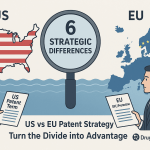
The Atlantic Divide: Strategic Differences with the US
The US and EU systems are no longer “regional variations of the same rulebook”.26 The US system focuses on “patent thickets”—a dense web of overlapping patents designed to delay generic entry.26 In Europe, the UPC’s central revocation mechanism and the new modulated RDP formula act as a counterbalance to thickets. While the US standard for an injunction has become “much more difficult” to meet, the European standard at the UPC is actively patentee-friendly.11
Summary of Strategic Divergence
Feature
United States Approach
EU (2026) Approach
Injunction Bar
High (“Irreparable Harm” is difficult).11
Lower (Price erosion often suffices).11
Exclusivity
Fixed durations for most RDP.26
Modulated 8+1(+1+1) formula.3
Revocation
PTAB (Institution rates are dropping).28
UPC (Centralized, all-or-nothing).2
Day-1 Entry
Safe Harbor for FDA-related activities.23
Expanded Bolar covering HTA/tenders.4
Key Takeaways
RDP is no longer a fixed asset. The shift to the 8+1(+1+1) model means innovators must meet specific UMN and comparative trial criteria to maximize protection.3
Launch obligations create financial traps. Failure to launch in all Member States within three years of a request can lead to a two-year loss of protection, undermining rNPV.1
The Bolar “Safe Harbor” is wider than ever. Generic firms can now negotiate prices and participate in tenders while the patent is in force, supported by immunized API suppliers.4
The UPC is the fastest enforcer in the world. Patentees enjoy a >60% PI success rate, but they must act within weeks of a competitor “setting the stage” for infringement.11
Information is the only shield. Utilizing platforms like DrugPatentWatch to monitor imminence and calculate RDP extensions is now a core requirement for pharmaceutical business development.23
FAQ
1. How does the 90-day filing rule impact global clinical trial strategy? Innovators must now coordinate their global filings with precision. If an MA application is filed in the US or China, the EU application must follow within 90 days to qualify for the 12-month RDP extension. This forces firms to accelerate their European regulatory submissions, often before they have full clarity on pricing and reimbursement across the continent.3
2. Can an innovator lose RDP in one Member State but keep it in another? Yes. The new launch obligations are Member State-specific. If a company fails to comply with a launch request in Portugal, it may lose two years of protection in that country while maintaining full protection in Germany or France. This creates a fragmented exclusivity map that complicates pan-European generic defense.1
3. Why did the UPC Court of Appeal grant a PI to Boehringer Ingelheim if Zentiva hadn’t sold any product? The CoA ruled that “imminent infringement” is established when a competitor has removed all administrative hurdles. By completing pricing and reimbursement procedures and appearing on public tender lists, Zentiva had “set the stage” for immediate sale. The court recognized that waiting for the actual sale would cause “irreparable harm” through price erosion.11
4. Does the expanded Bolar exemption cover studies for markets outside the EU? Currently, the wording is ambiguous. While some jurisdictions like Germany have historically had a broad exemption, the new EU-wide directive primarily focuses on facilitating entry into the Union market. Only HTAs explicitly refer to the EU Regulation, leaving a “point of debate” regarding trials for non-EU MA applications.9
5. What is the “14-year rule” and how does it limit SPCs? The 14-year rule is a cap on the “total effective patent life.” Even if a patent is extended via an SPC, the total duration of protection from the date of the first marketing authorization cannot exceed 14 years. This often Misunderstood constraint ensures that even the most complex drugs eventually face competition within a set timeframe.23